Author - ab_mnbr

REBUILDING LIBYA’S ECONOMY ON NEW AND SUSTAINABLE GROUNDS (2)

Amal Bourhrous

PART (II)

Putting renewables at the centre of post-conflict economic reconstruction

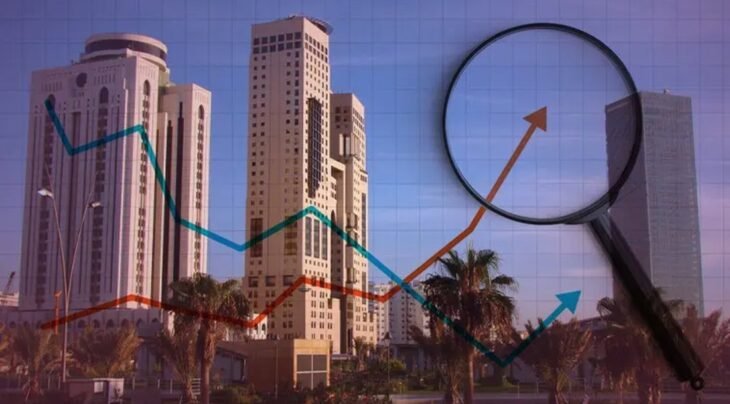
Reducing dependence on hydrocarbons demands placing a diversification process at the heart of economic reconstruction, thus moving away from the rentier state model towards a more sustainable political economy. Such a call for diversification in Libya is not new. Read More

The weaponisation of Libya’s elections

Anas El Gomati

Libya was supposed to hold elections early this year. Instead, it now has two rival political administrations — a return of the divisions of the past. 
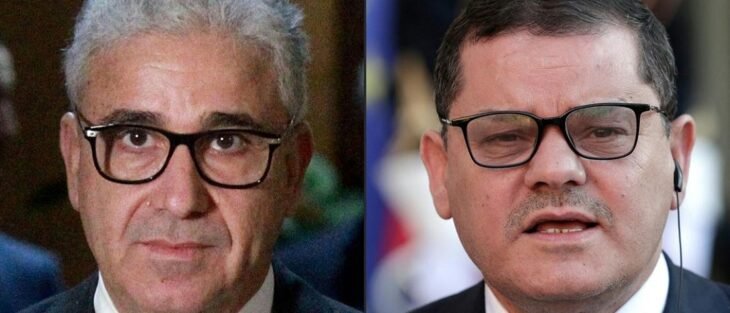
Libya is entering a new cycle of its political crisis. In December 2021, a mere 48 hours before polls were supposed to open, the elections were postponed. Emad Sayah, the head of Libya’s High National Election Committee (HNEC), declared it to be a case of force majeure. He then proposed to Libya’s parliament, the House of Representatives (HoR), to reschedule the elections for 24 January 2022. This deadline has now also passed. But rather than resolve and reschedule elections, the HoR appointed a new rival Prime Minister Fathi Bashagha on 10 February, dividing Libya between two rival political administrations.

Read More

Five things to know about Libya’s political crisis

A deepening political deadlock has raised fears of further instability in the oil-rich, conflict-torn country.

Libya has been mired in instability since a NATO-backed uprising removed longtime ruler Muammar Gaddafi in 2011.

The oil-rich country split between warring factions in the east and the west in 2014, but last year the transfer of power to a new interim Government of National Unity (GNU) raised hopes for peace and the reunification of the country and its institutions.

Now, a new power struggle has raised fears of further instability, including the return of parallel administrations and the risk of an armed confrontation.

Why did elections fail?

Abdul Hamid Dbeibah was installed in March last year as head of the United Nations-backed GNU in the capital, Tripoli, and was tasked with leading the country to national elections on December 24.

But after months of uncertainty, the electoral commission on the eve of the polls suggested they be pushed back, as a parliamentary committee tasked with overseeing the process said it was impossible to hold the vote as originally planned.

The vote was ultimately cancelled amid disputes between rival factions on laws governing the poll and disagreements over the candidates. The Tobruk-based parliament, which mostly backed eastern forces during the country’s war, declared the GNU invalid.

Parliament speaker Aguila Saleh, who was a presidential candidate, had issued a law setting a first round of the presidential election followed by parliamentary polls a month later.

Political institutions rejected the law, accusing Saleh of passing it without a proper parliamentary process, while others rejected holding the presidential vote first, saying it would mean the election would come down to a winner-take-all contest.

What’s the latest power struggle?

On Thursday, the Tobruk-based House of Representatives appointed former interior minister Fathi Bashagha as the new prime minister, saying this decision followed Dbeibah’s failure to hold the polls.

Bashagha flew to Tripoli from Tobruk, thanking Dbeibah for his work and pledging “to open a new chapter” and “reach out to everyone”. But Dbeibah, who this week survived an apparent assassination attempt, has rejected the attempts to replace him. He has said he would “accept no new transitional phase or parallel authority” and would hand over power only to an elected government.

He also described the parliament’s move as an attempt to enter Tripoli by force and promised to draft a new election law to solve the political crisis.

What does the East-based administration want?

Saleh and other east-based legislators on Thursday voted in favour of a set of constitutional amendments that put forward a new plan for the country’s transition to a democratically elected government.

The legislators have also argued the mandate of Dbeibah’s government ended on December 24. They say the interim leader became a polarising figure since he announced in November his presidential bid, breaking his pledge not to run in elections when he was appointed as interim prime minister.

Bashagha stands as a powerful figure in western Libya, and is believed to have links to armed militias in Misrata that played a key role in defending Tripoli against a 2019 military offensive from the east led by renegade military commander Khalifa Haftar.

What steps has Dbeibah taken so far? 

Dbeibah has warned that naming a new prime minister would lead the country back to “division and chaos” after nearly two years of relative calm.

He also called for street protests to denounce the appointment of a new transitional government, adding that he has started consultations to agree on a new roadmap to hold elections in June, the date the UN mission in Libya wants for a rescheduled vote.

How has the UN reacted?

The UN, Western powers and even some members of parliament had previously called for Dbeibah to stay in his role until the election.

Asked during a daily press briefing on Thursday whether the UN continued to recognise Dbeibah as interim prime minister after Bashagha’s appointment, spokesman Stephane Dujarric said “the short answer is yes”.

“We are trying to get details of the decision made by the other legislative body,” Dujarric said.

________________

Read More

Moving Libya Forward

Fathi Bashagha

Libya has again reached a crossroads. Against great odds, the Libyan people have persevered to move our country forward on a path of stability, unity and prosperity. It is in this spirit, and out of respect for the desires of more than 2 million Libyans who believe our country’s road to democracy starts at the ballot box, that I have accepted the support of my fellow countrymen to hold the position of Prime Minister. Read More

Partition, war, or democracy: Where is Libya heading?

Ufuk Necat Tasci
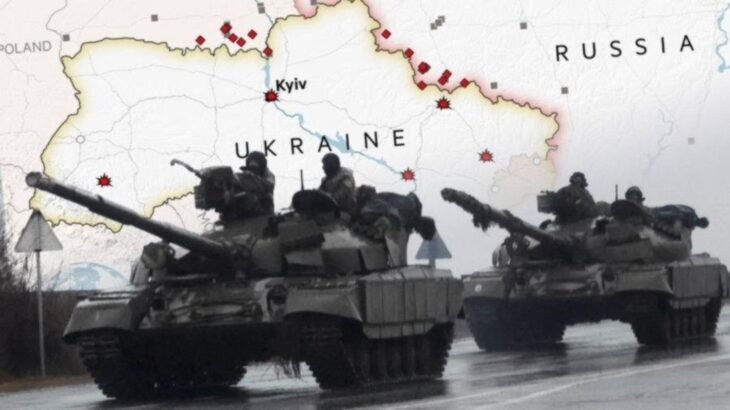
While the world’s attention is focused on the Ukraine crisis, another hot spot of the last decade, Libya, could be on the brink of partition following attempts by the eastern-based Tobruk Parliament, the House of Representatives (HoR), to select a new PM and install a rival government.

Since the elections of 24 January were postponed following the failure to establish a constitutional basis for the vote, and the candidacies of controversial figures like Saif Al-Gaddafi and Khalifa Haftar, various political fronts have formed both internally and externally. 

Last week, it was announced by the HoR that the UN-backed Government of National Unity’s (GNU) mandate had expired, despite the UN-sponsored Libyan Political Dialogue Forum (LPDF) roadmap making it crystal clear that the mandate is valid until June 2022. 

In January, the UN’s special advisor in Libya, Stephanie Williams, said it is still “very reasonable and possible” for the country’s 2.8 million voters to cast their ballots by June in line with the UN-brokered 2020 roadmap.

Despite this, the speaker of the HoR, Aguila Saleh, last week announced that the eastern-based parliament will be installing what they call a “new government” to replace the UN-backed and internationally recognised GNU and its head, Prime Minister Abdul Hamid Dbeibah, on 8 February.

“Since the elections of 24 January were postponed, various political fronts have formed both internally and externally”

Another official from the HoR, Abdullah Blehiq, also called on the UN and other international actors not to intervene in Libya’s domestic affairs or try to oppose the HoR’s move.

In response, Libya’s PM Dbeibah said Aguila Saleh was taking the country to the brink of division, while Libya’s High Council of State (HCS) also called the move “unacceptable and inapplicable”. 

Williams, likewise, criticised the announcement, saying she wants the HoR to set out a credible political process as quickly as possible that answers the question that almost three million Libyans are asking: what has become of our elections? 

“The attempts by the House of Representatives (mainly those members controlled by Aguila Saleh and Khalifa Haftar) and more recently (those aligned with Bashagha and other western politicians who pledged support to Haftar) to create a new government is a way to confuse the situation even further and put an end to the aspirations for elections once and for all,” Abulkader Assad, a Libyan journalist, told The New Arab.

Dr Guma El-Gamaty, a Libyan academic and politician who heads the Taghyeer Political Party in Libya, said that there certainly exists a risk of going back to square one with another parallel government in the east.

“However, it will be difficult for the GNU to be replaced as the majority in the west of Libya, [which] will reject a change of government at this time and will insist on the need to hand over to an elected government,” he told TNA

“Saleh is rallying all tribal and political support for making a scene by forming a parallel government to twist the arms of the international community, especially those of UN adviser Stephanie Williams, and the only gain he wants is taking Dbeibah and Saif Al-Islam Gaddafi out of the presidential race,” Assad says. 

According to Dr El-Gamaty, Saleh and Haftar will not succeed in changing the PM as several countries and the UN will not recognise any new government. 

The role of Haftar

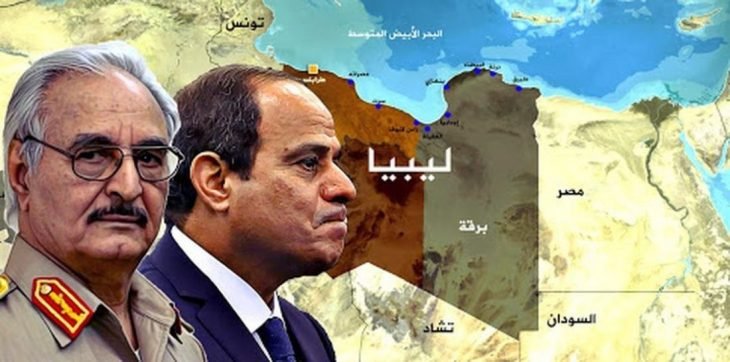
“Saleh has control over the HoR and there are few voices inside parliament that are trying to block his agenda. Egypt, France, and Russia back Saleh, and ultimately everything he does is in line with Haftar’s interests that help him to pursue his agenda too,” El-Gamaty told The New Arab

Furthermore, Assad thinks that the PM card is now being used by Saleh and Haftar to appease their new allies in the western region, particularly former interior minister Fathi Bashagha and former vice chairman of the Presidential Council Ahmed Maiteeq. 

“They (Aguila Saleh and Khalifa Haftar) find a way for themselves to infiltrate west Libya and probably a way to get Haftar a tour in Tripoli”.

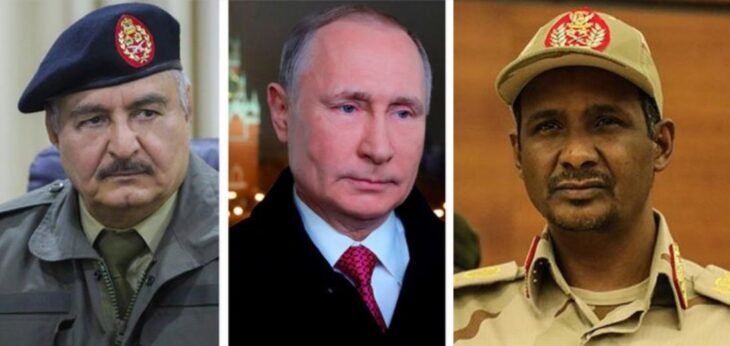
During the pre-election process, Russia-backed Saif Al-Islam Gaddafi’s candidacy, along with the massive support for Dbeibah among the Libyan public, were the two biggest dangers Haftar faced. When you consider the fact that Haftar’s candidacy was enabled mainly by the US, France, and Egypt, it seems that Washington, Paris, and Cairo are no longer on the same page as Moscow. 

On the other hand, the notion of ‘infiltrating the west’ could be a possibility, as many believe that either Bashagha or Ahmed Maiteeq will try to establish what they call ‘new PM’. Another possible scenario could be to abandon the rhetoric of ‘unification’ and instead try to establish another distinct administration in the east that would enjoy the support of the UAE, Egypt, and France.

France will most likely not be on the same page with Russia following the threat of the Moscow-backed Wagner mercenary group’s increasing presence in West African countries like Mali. 

Before the agreement between Mali and the Wagner Group, which is owned by Putin’s henchman and chief, Yevgeny Prigozhin, Macron’s France was working in collaboration with the Wagner Group in Libya in support of warlord Khalifa Haftar.  

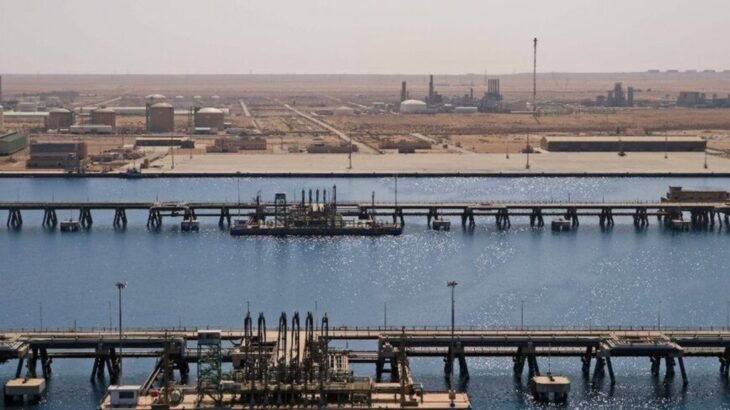
Therefore, it could be likely that Aguila Saleh and Khalifa Haftar eventually abandon Tripoli to those who support the UN-backed and internationally recognised GNU while trying to establish a different ‘authority’ in the east which would enjoy the wealth of Libya’s oil crescent, which is mainly controlled by Haftar’s forces.  

“A possible scenario could be to abandon the rhetoric of ‘unification’ and instead try to establish another distinct administration in the east that would enjoy the support of the UAE, Egypt, and France”

Wagner’s aim has been to increase Moscow’s opportunities in becoming a main player in the oil industry and reconstruction projects as, through Haftar, they have managed to position themselves in the oil crescent region and in a very strategic geographical area.

Now, following divisions between France and Russia in light of the Ukraine crisis, Aguila Saleh and Khalifa Haftar’s strategies seem aimed at enabling them to gain future bargaining power.

Those who submitted their candidacy documents to head the HoR’s ‘new government’, like Bashagha, Maiteeq, Aref Al-Nayeed, and many others, are all on the same side. This combination of former western officials and eastern-based figures will try to reflect Saleh and Haftar’s ambitions in the form of a widely held consensus.

In any case, they know that the new cabinet will not be able to remove Dbeibah from power because of the stance taken by the UN, the US, Turkey, the UK, Qatar, and the overwhelming majority of Libyans. So, they could instead cause a crisis of legitimacy while acting together with former western figures like Bashagha and Maiteeq.

“Saleh and Haftar are fully aware that they can’t legitimise a new PM without either going to war again against the western region, a seemingly impossible choice now because Russia and the UAE have bigger fish to fry in Ukraine and Yemen, respectively, or using it as a pressure card on the UN to spoil the political process,” Libyan journalist Abulkader Assad told TNA.

Amid all of this, it has also been announced that Haftar has returned to his so-called position as leader of the General Command of his self-styled Libyan National Army (LNA).

At this point, it should not be forgotten that despite the long-lasting crisis between western Libya and Haftar, the GNU under the leadership of Dbeibah has paid most of the wages of LNA members. So, Haftar needs to make sure that there is no crumb of sympathy left for the Libyan PM. 

The militias and leaders of eastern Libya have seen that they have no chance of getting enough votes to legitimise themselves. A third scenario could be forming a new parallel government, with Fathi Bashagha being the east’s PM, a so-called military headed by Haftar, and foreign affairs led by Maiteeq and advised by France, the UAE, and Egypt, as per the rumours.

In each case, what awaits Libya seems to be either war, uncertainty, or parallel administrations that will take the country back to square one in the future. 

A struggle between the west and east is almost certain to continue. Tensions between the US, Russia, France, and European countries could also exacerbate divisions in eastern Libya, with foreign powers engaging with rival eastern leaders.

***

Ufuk Necat Tasci is a political analyst, journalist, and PhD Candidate in International Relations at Istanbul Medeniyet University. His research focuses on Libya, proxy wars, surrogate warfare, and new forms of conflict.

________________

Read More

Drugs Stamped With Putin’s Portrait Wash Up on Libyan Beach

The Moscow Times

A huge batch of drugs stamped with portraits of Russian President Vladimir Putin washed up on the beach in a Libyan coastal town, the Libya Observer outlet reported on Sunday. 

Police in Al-Marj in the northeast of the country said 323 blocks of hashish, each wrapped in plastic and imprinted with the Russian president’s face, had been found by a local resident. 

They didn’t disclose the weight of the haul and said it probably washed ashore after a boat containing smuggled drugs sank. 

Photos of famous people and logos of large companies often decorate packages of smuggled drugs, Russian news agency Znak reported. 

Just a few days before this discovery, residents found large amounts of hashish washed up on beaches in the Libyan towns of Talmitha and Boutraba. 

Instead of Putin, these packages were stamped with pictures of the notorious Colombian drug lord Pablo Escobar.

The best of The Moscow Times, delivered to your inbox.

******

Libya: Police pounce on drugs stamped with Putin portrait

Local resident discovered 323 of the hashish bars wrapped with images of Russian president washed up on a beach
Libya’s anti-drug squad on Monday announced the discovery of 323 bars of hashish wrapped with images of Russian President Vladimir Putin.

The 250-gram bars were found in Al-Marj in the country’s northeast, an anti-drugs authority official told AFP.

The bars were reported to have washed up on a beach and been discovered by a local resident.

Pictures of the pot cache were passed around on social media, each bar wrapped in cellophane and topped with a photograph of the Russian leader with a grim expression and black tie.

Photos of famous people and logos of large companies often decorate packages of smuggled drugs, according to the Libya Observer.

Just a few days before the Putin discovery, large amounts of hashish washed up on beaches in Talmitha and Boutraba. 

The packages were stamped with pictures of the Colombian drug lord Pablo Escobar.

Drug and alcohol trafficking have exploded since Libya collapsed into lawlessness after a 2011 revolt that toppled longtime leader Muammar Gaddaf

________________


Libya’s parliament to appoint new PM, increasing tensions

Samy Magdy 

Libya’s parliament said Monday it will name a new prime minister this week to head the transitional government, a move that will likely lead to parallel administrations in the already chaotic nation.

Two candidates — former Interior Minister Fathi Bashaga and Minister-Counsellor Khalid al-Baibas — have submitted their bids to replace Prime Minister Abdul Hamid Dbeibah. They appeared in a parliamentary session Monday in the eastern city of Tobruk to present their plans.

Parliament Speaker Aguila Saleh said a vote to name one of them as prime minister will take place Thursday, following consultations with the High Council of State, an advisory body based in the capital of Tripoli.

The effort to replace Dbeibah stems from Libya’s failure to hold its first presidential election during his watch. It has been a major blow to international efforts to end a decade of chaos in the oil-rich Mediterranean nation.

Dbeibah has repeatedly said he and his government will remain in power until “real elections” take place. He has accused Saleh, the speaker, of fueling the division in the country.

The prime minister, who hails from the powerful western city of Misrata, also urged the crafting of a new constitution before heading to elections.

Saleh, the influential speaker, said lawmakers adopted a roadmap to hold the presidential election within 14 months after agreeing on constitutional amendments.

He said a parliamentary committee will hold consultations with the High Council of State to craft the needed amendments within a week. Libya is governed by a constitutional declaration since the 2011 Arab Spring uprising.
“We approved the parliament’s demand to change the government, but it is necessary to determine the constitutional path for the elections first,” he told a news conference Sunday in Tripoli.

The parliament’s move to appoint a new government is a setback to the U.N. mission in the country, which advocates for rescheduling the presidential vote as early as June.

U.N. deputy spokesperson Farhan Haq said Monday negotiations were ongoing with Libyan parties to try to avoid a return to “the sort of discord and disarray that has marked the past decade.”

“We do implore the Libyan parties to take a look back at what the last years have brought and see in that, that there’s really no future to that approach,” he said when asked about concerns that Libya could return to rival political authorities.

Armed groups in western Libya have already announced their objection to changing the government. They called for local and international parties to help agree on a roadmap with a specific timeframe to make changes to the constitution, achieve national reconciliation and unify the military.

Dbeibah, a powerful businessman from Misrata, was appointed prime minister in February last year as part of a U.N.-brokered, Western-backed political process. His government’s main task was to steer the deeply divided country toward national reconciliation and lead it through elections.

Libya has been wrecked by conflict since the NATO-backed uprising toppled then killed longtime dictator Moammar Gadhafi in 2011. The country was for years split between rival administrations in the east and west, each supported by militias and foreign governments.

The presidential vote has faced many deep-rooted challenges, which remain unsolved. Those include controversial candidates and disputed laws governing elections as well as the deep mistrust between rival factions.

***

Associated Press writer Edith M. Lederer contributed from the United Nations.

ِ____________________

Read More

Embarking on Libya’s Noble Foray Into the Future

Khaled Sari
On Saturday the 22nd of January, activists from across the civil society spectrum in Libya gathered over Zoom with one purpose in mind; publicly declaring their support for the 1951 Libyan Independence Constitution.

Despite the political turmoil which has engulfed the country since the Arab Spring began in Tunisia in 2011, a strong civil society movement which supports a return to our historical constitution, has always existed in Libya. These supporters, who represent a significant number of Libyans from across the country, see the restoration of the 1951 constitution as the only way to shape their future.

Libya has been through an immeasurable amount of internationally led initiatives, all aimed at providing Libya with long term “solutions”. Only over the course of the past decade, one can count the UN-brokered Skhirat agreement in December of 2015, the 2017 Paris meeting, the 2018 Palermo conference alongside Mohammed bin Zayed’s Abu Dhabi gathering in February 2019. Followed by Putin and Erdogan’s joint call for a ceasefire in 2020, alongside the first (2020) and second (2021) Berlin conferences alongside UN-sponsored talks in Geneva, each and every one of these efforts amounted to nothing.

The main reason behind these, perhaps well-intentioned but failed attempts, was the simple fact that none of these efforts had any grounding in Libyan history or the support of the Libyan people. Reaching consensus in a society as heavily divided as that of Libya, is a significant challenge. However, placing our faith in our history will undoubtedly provide us with a solution that is closer to the hearts of citizens of our nation and which has the potential to assist in competing factions finally putting their differences aside.

This was the catalyst of Saturday’s meeting which sought to once and for all provide an authentically Libyan solution to the issues which have been plaguing the country for over a decade. The first of these is the preservation of our territorial integrity which has for too long been challenged by foreign actors. It is high time that a long term resolution for our country’s ills is found that ensures the exclusion of foreign elements from shaping the future of our great land.

The second issue the gathering sought to underscore was the need to build an inclusive future for all members of Libyan society. For far too long, our country has excluded citizens of certain political persuasions, cultural backgrounds or those who hold different opinions. Every Libyan deserves equal opportunities, protection of basic rights alongside access to justice. This has been impossible in a country which for so long has lacked a cohesive national identity.

These two issues are indeed intertwined with the third issue which the conference sought to highlight, namely, our demand to return to constitutional legitimacy under the leadership of our Crown Prince Mohammed El Hasan el Rida el Senussi. As the sole heir to the throne of King Idris, passed down through the late Crown Prince Hassan, Prince Mohammad is the leader our country has yearned for.

With leadership claims grounded in historical fact that cannot be upended by foreign or domestic elements, from an ideological standpoint, Prince Mohammad serves as an anchor, offsetting challenges to stability posed by foreign elements. This is strengthened by his position as  the scion of a family which has been in Libya for centuries and founded the Senoussia movement, briniging with it Islam, to the country. Furthermore, historical memories of the reign of King Idris, which saw religious tolerance, gender equality and security for its citizens, reflects the future which Libyan’s would like to see for themselves today.

Bringing together journalists, academics, human rights defenders and political activists, Saturday’s gathering was indeed revolutionary. It would have been unimaginable that such a gathering would even have taken place a mere decade ago. Representing not only themselves, but a wide range of segments of Libyan society, those attending over Zoom broadcasted a powerful message; a rejection of foreign attempts top shape the future of the country alongside a return to historical, constitutional, legitimacy under the leadership of the only man who can help Libya exit the current quagmire and begin its noble foray into the future.

***

Khaled Sari is Co-ordinator of the National Movement for the Restoration of Constitutional Legitimacy in Zliten, Libya.

_____________

Read More

Conditions remain ‘hellish’ as EU marks 5 years of cooperation agreements

Over 82 000 refugees and migrants returned to Libya since deals were struck

Conditions for refugees and migrants in Libya ‘hellish’

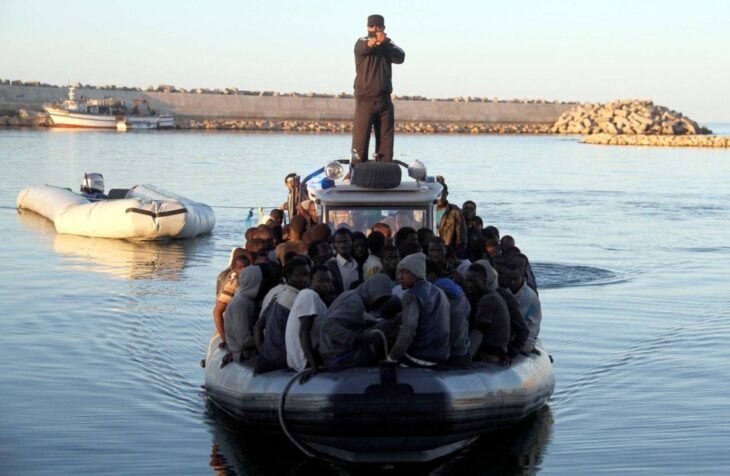
The European Union must stop helping to return people to hellish conditions in Libya, Amnesty International said today as the bloc marks five years of formal cooperation to intercept refugees and migrants attempting to cross the Mediterranean. The number of people intercepted at sea and returned to Libya in the last five years is over 82 000.

Men, women and children returned to Libya face arbitrary detention, torture, cruel and inhuman detention conditions, rape and sexual violence, extortion, forced labour and unlawful killings. Instead of addressing this human rights crisis, the Libyan Government of National Unity (GNU) continues to facilitate further abuses and entrench impunity, as illustrated by its recent appointment of Mohamed al-Khoja as director of the Department for Combating Illegal Migration (DCIM). Al-Khoja was previously in effective control of the Tariq al-Sikka detention centre, where extensive abuses have been documented.

“EU leaders’ cooperation with Libyan authorities is keeping desperate people trapped in unimaginable horrors in Libya. Over the past five years, Italy, Malta and the EU have helped capture tens of thousands of women, men and children at sea, many of whom ended up in horrific detention centres rife with torture, while countless others were forcibly disappeared.”

Matteo de Bellis, Researcher on Migration and Asylum at Amnesty International

“It is high time to put an end to this callous approach, which shows a complete disregard for people’s lives and dignity. Instead, rescue efforts must ensure people are taken to a place of safety, which, as reiterated by the UN Secretary-General just days ago, cannot be Libya.”

The EU started assisting the Libyan Coast Guard in 2016, and interceptions began the same year. Cooperation increased with the adoption of a Memorandum of Understanding between Italy and Libya on 2 February 2017 and the adoption of the Malta Declaration signed by EU leaders in Valletta just a day later.

The agreements provide the bedrock for continuing cooperation that outsources the patrolling of the central Mediterranean to Libyan coastguards by providing speedboats, a maritime coordination centre, and training. The agreements were followed by the establishment of a large sea area where the Libyan Coast Guard is responsible for coordinating search and rescue operations. These arrangements, overwhelmingly funded by the EU, have since enabled Libyan authorities to disembark people intercepted at sea in Libya, despite it being unlawful to return anyone to a place where they face serious abuse.

Migrants and refugees both in and outside of detention in Libya are systematically subjected to a litany of abuses by militias, armed groups and security forces with impunity. On 10 January 2022, militias and security forces fired live ammunition at refugees and migrants camped in front of the Community Day Centre of UNHCR in Tripoli, and arbitrarily arrested hundreds. They are held in overcrowded and unsanitary conditions in the Ain Zara detention centre in Tripoli, where guards subject them to further abuses and deny them adequate food and water. The migrants and refugees had been staging a sit-in outside the Community Day Centre building since October 2021 calling for protection in response to a previous raid by militias and security forces that saw thousands rounded up and many others left homeless.

“Italy and the EU must stop aiding these appalling abuses and start ensuring that people at risk of drowning in the central Mediterranean are rescued promptly and treated humanely,” said Matteo de Bellis.

“The EU and its Member States must suspend any cooperation leading to the containment and human rights abuses of people in Libya, and instead focus on opening urgently needed legal pathways for the thousands trapped in Libya in need of international protection.”

Matteo de Bellis

Background

In 2021, Libyan coastguards — supported by Italy and the EU — captured 32,425 refugees and migrants at sea and returned them to Libya. This is by far the highest figure on record and three times the number recorded the previous year. During the year, 1,553 people died or disappeared at sea in the central Mediterranean.

Libya: ‘No one will look for you’: Forcibly returned from sea to abusive detention in Libya

Europe: Plan of Action – Twenty steps to protect people on the move along the central Mediterranean route

In a report dated 17 January 2022, the Secretary-General of the United Nations said he felt “grave concern” at continuing human rights violations against refugees and migrants in Libya, including instances of sexual violence, trafficking and collective expulsions. The report confirms that Libya is not a safe port of disembarkation for refugees and migrants” and reiterates a call to relevant Member States “to re-examine policies that support interception at sea and return of refugees and migrants to Libya”. The report also confirms that the Libyan Coast Guard has continued to operate in ways that put the lives and well-being of migrants and refugees attempting to cross the Mediterranean Sea at grave risk.

Despite acknowledging this, an internal report by the Commander of the EU naval operation Eunavfor Med Irini, leaked by the Associated Press on 25 January 2022, confirms plans to continue capacity-building programmes for Libyan coastguards.

Italy’s current deal with Libya expires in February 2023 but will renew automatically for another three years unless authorities cancel it before this November, as Amnesty International is calling on the Italian government to do.

___________________ Read More

UN experts: Darfur rebel groups make money in Libya

 EDITH M. LEDERER

U.N. experts say rebel groups in Darfur that signed a peace agreement with the Sudanese government in 2020 continue to operate in Libya and profit from opportunities provided by the civil war and lack of government control in the oil-rich north African nation. Read More

Will the UN allow a parallel government to be established in Libya?

Nothing is certain and everything is debatable in Libya following the postponement of elections.

Since the long-awaited presidential elections of Libya – originally scheduled for December 24, 2021 – were postponed due to lack of constitutional basis and the candidacies of controversial figures, divisions in the north African country have worsened. 

Most recently, the eastern-based Tobruk Parliament, House of Representatives (HoR), has announced that the UN-backed Government of National Unity’s (GNU) mandate has expired and it will be installing a rival government.

Announcing the decision, speaker of the HoR, Aguila Saleh, on Monday, said his parliament kicked off the submission process for candidates’ paperwork for the prime ministry to replace the internationally-recognised GNU’s head, Prime Minister Abdulhamid Dbeibah and install what they called a ‘new government’ on February 8. 

The spokesman of the HoR, Abdullah Blehiq, on the other hand, said candidate documents will be accepted until the hearing session on February 7 and the official list to be announced a day after.

Blehiq also said the HoR would call on stakeholders such as the UN and foreign countries to not intervene in the domestic affairs of Libya in case they oppose the process. 

Commenting on the technical side of the process, the head of HoR’s roadmap committee, Nasser Al-Deen Mahana said the elections can be held between 10-12 months adding that during this period Libya needs a stronger government which operates throughout the country. 

Libyan PM Dbeibah responded by saying that the HoR speaker, Aguila Saleh, is trying to take the country to the brink of division and further fragmentation.

The Libyan PM told Al Jazeera his government will continue its work until elections and added that following a series of conversations with all international actors he had been assured that they would oppose the attempts of HoR and Saleh to create a parallel transitional process. 

Libya’s High Council of State (HCS) also rejected the development saying that it pursues one track and ignores the paths initially agreed on by all parties. The HCS stated its opposition to the attempts and called them ‘unacceptable and inapplicable’. 

Based on the initial agreements which were accepted by both the GNU and HoR, the parliamentary and presidential elections must take place after the amendment of a new constitution agreed by all parties.

Amid the debates around the fate of Libya’s long-awaited elections, the special adviser to the UN secretary general, Stephanie Williams said; “My fear is that some people may now manoeuvre for a prolonged period of delay. The HoR exists off a mandate that it was given in elections 3,700 days ago. It has been seven years, seven months since Libya went to the national polls. The other chamber, the High State Council, was elected 10 years ago. Their shelf life has long expired. This is ultimately a struggle over assets, power and money. That is quite a motive to hang on.”

“I want the HoR as quickly as possible to set out a credible political process that answers the question that almost 3 million Libyans have asked, which is: what has become of our elections? It is entirely possible for the HoR to put elections back on track, and for an electoral event to happen by June,” Williams added. 

Criticising the HoR while reminding it of its main responsibilities, she said, “Instead they have turned their attention to the musical chairs game, and the formation of a new government to replace the GNU. Before discussing a new government whose mandate would be unknown, the HoR should set an election date.”

The special adviser also added that the possible formation of two governments in the country could trigger the re-emergence of Daesh in the south of Libya. 

Amid the unprecedented rise of tensions in the war-torn country, even the fate of Stephanie Williams is uncertain as Russia and the US last week were at odds over extending the UN mission in Libya that ended on January 31. 

Moscow and Washington were deadlocked when the UK proposed a resolution vote to extend UNSMIL’s mission until September 15 as Russia intended to veto the text before proposing its own resolution for a vote, which could have also been vetoed by the US.

During a Security Council meeting on Libya on January 24, Russia’s Ambassador to the UN, Dmitry Polyanskiy, offered to appoint a new mediator in Libya. In the following days, UN spokesperson, Stephane Dujarric, reaffirmed Un Secretary-General Antonio Guterres’s full support for Williams.

_______________
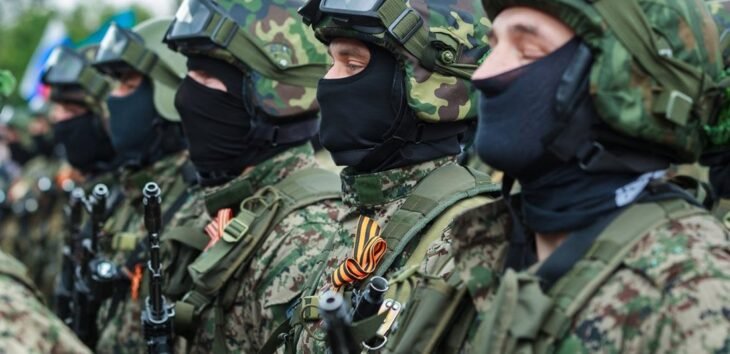
Source: TRT World

Read More

What next for world powers in war-torn Libya?

The presence of both Turkish and Russian forces in the North African country is deeply unsettling to European powers, unlike the United States, analysts say.

At the start of this year, French officials announced the completion of the first phase of a withdrawal of foreign mercenaries from eastern Libya.

Read More

Will Turkish and Russian forces really leave Libya?

Turkey and Russia have gained various levels of leverage in Libya by virtue of their military presence on the ground, with no signs that their forces will leave anytime soon. 

On 16 January, Stephanie Williams, the United Nation’s special adviser on Libya, stated that it is still “very reasonable and possible” for the country’s postponed elections to occur before June, in line with a roadmap agreed upon in 2020 which the UN helped to broker. 

But, even if elections do occur by June, the presence of foreign fighters and mercenaries will likely be a factor that endangers the sensitive political situation. As part of the agreement, all foreign forces, including Turkish personnel, Turkish-backed Syrian mercenaries, and fighters in the Kremlin-linked Wagner Group, must leave Libya.

However, three months after rival parties reached an initial agreement on the withdrawal of foreign fighters and mercenaries, only the first phase of the withdrawal has been completed. Those 300 mercenaries came from Chad, according to diplomats.

Despite repeated calls from the UN and international community, the Turks and Russians have shown no sign of leaving Libya.

“Ankara has established itself as a kingmaker in the Libyan civil war”

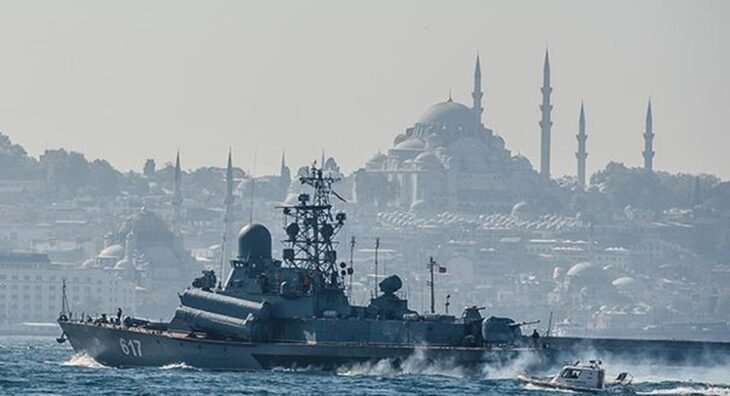
The Turkish military and Wagner Group’s presence on the ground provides important footholds for Ankara and Moscow as both vie for influence, shares of the country’s vast energy wealth, multi-billion dollar reconstruction contracts, and long-term access to strategic military bases after the new Libyan government is established.

But the Turks and Russians have both approached the war-torn North African country very differently.  

Turkey’s overt role 

Ankara has thus far leveraged its public support with the current and previous UN-supported governments to remain in Libya.

Ankara began initial military deployments to Libya in support of the then-UN-supported Government of National Accord (GNA) in January 2020. Yet immediately after General Khalifa Haftar’s westward assault on Tripoli began in April 2019, Ankara started providing the GNA with drones and armoured personnel carriers.

“The GNA called for support from the United States, Britain, Italy, Algeria, and Turkey to help them defend their positions,” remarked Ferhat Polat, a Deputy Researcher at the TRT World Research Centre, in an interview with The New Arab. “Turkey was the only country who stepped up and offered practical support to the previous UN-backed GNA.”

After Turkish forces and GNA-allied militias successfully pushed Haftar’s Libyan National Army (LNA) several hundred miles east of Tripoli – the outskirts of which the renegade general’s forces reached at the peak of “Operation to Liberate Tripoli” – Ankara established itself as a kingmaker in the Libyan civil war.

Ankara leveraged its alliance with the GNA, and later the Government of National Unity (GNU), to wield control over several ports and military bases, and secure new economic, military, and reconstruction deals.

Also important to Turkey was its maritime demarcation agreement with the GNA, signed in November 2019. The degree to which Ankara managed to turn the tide of the Libyan civil war against Haftar was impressive and highlighted Turkey’s rise as a drone power.

Turkish officials have thus far denied that their forces need to evacuate the country. Ankara claims that the Turkish military’s continued presence in Libya has a legal basis.

“It should not be forgotten that the Turks, and consequently also their mercenaries, are in Libya at the request of the GNA and subsequently of the GNU, both governments supported by the United Nations because they were born through their effort,” Dr Frederica Saini Fasanotti, a non-resident fellow at the Center for Security, Strategy, and Technology in the Foreign Policy program at the Brookings Institution, told TNA.

This is a detail that cannot be underestimated. Their presence will be guaranteed at least until Prime Minister Dbeibah is sacked from his role.”

It currently appears that despite the LNA-aligned eastern-based parliament ending GNU Prime Minister Abdul Hamid Dbeibah’s mandate on 25 December, Dbeibah has no intention of leaving office. 

Other experts agree. “Turkey’s military presence is highly likely to remain in the country as long as the Libyan legitimate government needs,” according to Polat. “Turkey will presumably continue to provide assistance and training as well as advisory support to Libyan Army forces so they can reach global standards.”

Russia’s clandestine influence  

Whereas Turkey’s military maintains a highly overt presence in Libya, Russia asserts hard power influence in the North African country in far more shadowy ways.

Unlike Ankara, which is open about the contingent of Turkish forces in Libya, President Vladimir Putin’s government denies that the Kremlin has any relation to the Wagner Group’s activities in Libya. Yet there is strong evidence that the organisation is affiliated with the Russian government.

“Wagner is a means, a tool, or an instrument, but it should never be referred to in isolation from the Russian state,” explained Jalel Harchaoui, a senior fellow at the Global Initiative Against Transnational Organized Crime, in an interview with TNA. “The connection between the Wagner Group and the Russian state is exemplified every week when we see Russian air force planes taking care of the logistics of this presence in Libya.”

Harchaoui continued, “Wagner is just a manifestation of a project that is not just tolerated by the Russian state but is actually deemed desirable and it is also assisted and coordinated by the Russian state.”

Ultimately, by denying that Moscow has any relation to the Wagner Group or other foreign fighters in the country, Russian officials can claim that they support the withdrawal of mercenaries without actually taking responsibility for the Wagner Group’s continued role in the country. 

“Whereas Turkey’s military maintains a highly overt presence in Libya, Russia asserts hard power influence in the North African country in far more shadowy ways”

For years, the Wagner Group has been supporting Haftar’s LNA. Composed of former military personnel who are mostly Russian (but also Ukrainian, Serbian, and Syrian), Wagner members have advised the LNA, trained local Libyan forces, and undertaken operations. Presently, roughly 7,000 Wagner Group armed personnel are in Libya, according to the head of Libya’s High Council of State.

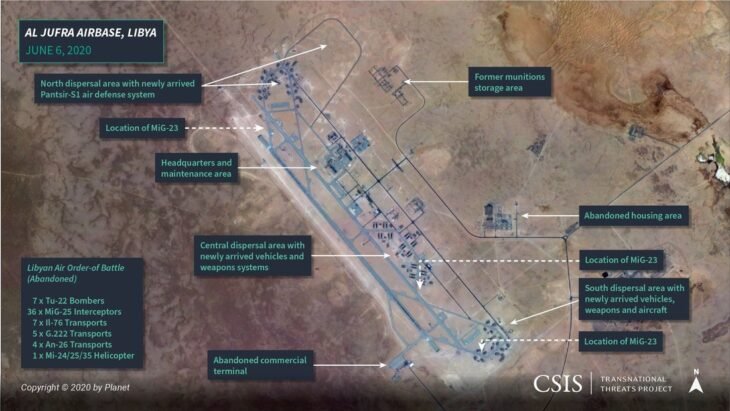
Although Moscow publicly denies any connection to the Wagner Group, Russia benefits from the Wagner Group’s presence on the ground. The arrangement gives Moscow access to the al-Jufra airbase and control over some of the country’s oil resources.  

However, the bigger inflection point is that the Wagner Group’s presence in Libya is an important part of the Russian government’s expansion into Africa. “For Russia instead, the presence of the Wagner Group in Libya must be seen in a broader perspective that takes into account Moscow’s expanding military foothold in North Africa and the Sahel,” said Dr Umberto Profazio, a Maghreb analyst at the NATO Defense College Foundation.

“Given the confirmed presence of Wagner assets into Mali as well, Libya could well serve as a bridgehead in North Africa from where Russia can disturb European powers (France in particular) using hybrid means such as private military companies and contractors in the soft underbelly represented by the Sahel, diverting Europe’s attention from other fronts.”

Looking ahead, European countries realise that Turkey and Russia’s military presence in Libya will likely remain a reality for at least a considerable period. As the US remains largely uninvolved in Libya, there is no power that Europeans can turn to pressure the Turkish military and the Wagner Group to leave.

Within this context, the Turks and Russians have gained various levels of leverage vis-à-vis Europe by virtue of their positions on the ground in Libya. If, when, or how either Ankara or Moscow takes advantage of this new reality, in which Turkey and Russia are the two kingmakers in Libya, to the dismay of Brussels remains to be seen. 

***

Giorgio Cafiero is the CEO of Gulf State Analytics. 

Emily Milliken is Senior Vice President and Lead Analyst at Askari Associates

________________

Read More

Democracy and Kleptocracy

Ramadan Jerboa

Banditry is an attempt to Arabize the Greek word ‘Kleptocracy‘, which was fabricated in the early nineteenth century and serves to describe the system of government in which thievery (theft of public and private money) prevails through the exploitation of administrative and political positions by those in charge of its offices.

The term, although is not scientific, But it used with contempt and bitter irony, but it remains a descriptive term and is sometimes considered as a classification in extreme cases of practices of exploiting the position to achieve personal material or political benefits or for the league of participating practitioners or collaborators.

The term when it is used to refer to a state, even if it is an exaggeration, but it indicates a tragic and very dangerous matter that calls for stopping and searching for the connotations and causes.

Causes of the adjective

Undoubtedly, the first reason for launching the epithet is the spread of corruption, and corruption in government circles all over the world is a common occurrence throughout the ages.

Corruption is a human phenomenon that cannot be completely eradicated, regardless of the procedures, legislations and tools of law enforcement.

There are always opportunities available to be exploited by some, as long as corruption practices remain limited in quantity and quality (meaning the low indicator of the percentage of loss of GDP, as well as the frequency and number of cases investigated).

These practices will continue to be considered scams (the five percent is considered fairly acceptable, controlled and can be dealt with, and may be less than that).

This situation is enjoyed by a number of countries (highest on the list are Denmark, New Zealand and Singapore).

when it gets worse

But when corruption becomes rampant and rebounds, it may reach thirty percent, and this often occurs from the lower levels in government departments and public institutions, and the reason is primarily due to low income and the level of poverty, and an amount of salaries that does not guarantee a decent living, not to mention legitimate aspirations.

The second most important reason is the slack and deteriorating administration, poor enforcement of the law, and the spread of nepotism.

This level can be reduced when the supreme political will is available and the absolute and irreversible adoption of the principle that “no one is immune”, to be followed in succession by reconsidering the administrative, economic, planning, tax and development structures, and then enforcing the requirements of integrity and transparency at its highest level.

This requires an active civil society in accordance with international standards, a free media and press with absolute dedication to the right to information.

This is done according to a long-term strategy that serves as a ‘guidebook’ aimed at preventing corruption and enhancing transparency.

Requirements

Of course, this will require superior training and qualification for those who carry out this task, ie the implementation of the strategy starting with the specialized training of investigators, prosecution and judicial bodies, and it goes without saying that the ‘judicial’ must be independent and compatible with international standards also in terms of personnel, procedures and implementation (the least of which is the famous Bangalore principles and standards).

We point out that all of this requires a good choice of who performs the required work in terms of competence, qualification, integrity (which must exclude those who bear ‘suspicion of corruption’ in the first place) and a strategic understanding of the manifold dimensions of the task.

To ensure good performance in accordance with the law and without media ‘pops’. And the work to be consecutive and vigorous enough to reduce the proportion to a reasonable extent.

When talking about raising the standard of living to ensure the fulfillment of needs, we will enter into another area related to the state’s economic status, resources and potential.

One article may not meet the requirement, but it must remain firmly in mind that one of the causes of corruption is the poverty of public cadres and the obscenity of private wealth.

Signs of the thieves coming

If you leave things alone, what will happen? The germs of corruption will infiltrate the upper classes in the administration, especially those that occupy major positions with powers to sign and acknowledge spending, and here will appear what is known as the greatest corruption, which is not only stolen to meet a need, but also a greed for obscene wealth and the enjoyment of millions.

The greatest corruption cannot be practiced individually, but rather occurs by consensus of several influential people in various bureaus (we may say a mutual corruption association). We call it the ‘Federation of Corruption Associations’, which may also evolve to reach unions.

Alien’s Arrival

Given the size of these funds, the foreign partner will be taken into account, or, to put it explicitly, ‘foreign interests or companies that are not good for us’ than non-national (some of which are fabricated for the ‘corrupt’ purpose) that once they agree to the principle of corruption (and for them this lies in their approval of the size of Commissions unfair to the wealth and resources of the country), what will happen?

These foreign interests will need a state of compromise in what is at the heart of national issues, and they will need to intervene through “patriotic partners of corruption” to amend legislation and regulations, and perhaps even draw up projects, works, and even policies that the country does not need in the first place.

Before reaching a conclusion about what may happen, we point out that the national elements (with their associations and federations) will also need to have the upper hand in matters of investigation, prosecution and judiciary. In other words, they need not to be covered by a law, i.e. to a kind of ‘immunity’, but how is this done?

Immunity by seizing some power

Immunity is achieved by the members of these gangs seizing the most important means of combating and preventing corruption, and dispersing its effects that may appear to the public. In other words, it will be important for them to be among the owners of the political decision, and the political decision is not necessarily the one related to the general policies of the state.

But it is sufficient for them to control the sources of wealth and its spending, and then to ensure that there is no accountability or prosecution, which are numerous.

Exactly here where it is correct to call the term ‘thieves’ for the state that reaches this level, but the risks do not stop at that, so what will happen?

In one way or another, the matter of managing the helm of the state will be confined to the hands of certain “persons” who rarely change, and if they change, it will only be like playing the game of musical chairs (it is said that “Zayd” was dismissed from the ministry and took over the quorum of the public ministry and “Amr” replaced him) and so on..

The aforementioned persons do not bear the traits of thief explicitly, several tools of theft, such as a mask over the eyes, invisibility, a lamp or a candle, and perhaps a knife. Rather, they wear the latest fashion, drive the most luxurious vehicles and live in the most pompous palaces, and they no longer deserve the name “technocrats”, rather they are closer to “thieves” .

When the upper class that is in charge of the state reaches this level, and remains in it for years, this will be reflected in the society you run, a kind of acceptance will occur, because people want to live and have no power to change the existing structure, and if acceptance occurs, corruption will spread more and more, it becomes a reality of the situation

There will be no development, education will collapse, and with it health, infrastructure and superstructure, the state will include governance and freedom of the media at the bottom of the lists of transparency, and so on.

State Security?

The greatest danger will remain the security of the state, its independence and the well-being of its people. When ‘thieves’ control the affairs of a state, it is doomed to failure as a project and an entity.

Our Arab countries suffer to varying degrees (and sometimes close according to income) from corruption and its laws. In order to emerge from underdevelopment, it requires sincerity of intention and good preparation to fight ‘our corruption’ before undertaking the tasks of our development.

_____________

How Middle Eastern conflicts are playing out on social media

Daniel L. Byman

The Middle East has always been rife with enmity and rivalry, and its regimes have long taken advantage of the region’s many linguistic, religious, and cultural connections to shape the overall political environment. Regimes that do not control the information space risk being destroyed by it. Read More

A decade later, no end in sight for Libya’s political transition

Jacob Mundy

Two days before Libyans were to go to the ballots for a new interim president on December 24, the country’s election officials finally admitted what had become obvious: the first-round vote would not take place. Citing legal, logistical and security issues, the officials proposed a new date one month later to coincide with already-postponed legislative elections. Read More

Help build solid basis for Libyan elections and don’t fixate on dates

EPHREM KOSSAIFY
Lawyer and activist Elham Saudi condemned “weak” vetting that resulted in candidates implicated in corruption and crimes against humanity being cleared to stand.
US envoy highlighted concerns about deteriorating human rights situation in the country and continuing reports of violence and abuse targeting migrants, asylum seekers and refugees.

***

Mediators need to take into account the lessons learned in Libya in the past two years and focus on “creating milestones” for the country’s political transition, rather than fixating on the time frame involved, according to Elham Saudi, co-founder and director of Lawyers for Justice in Libya.
These milestones include an electoral law, a code for conducting elections, and a solid constitutional basis “that appropriately sequences presidential and legislative elections in line with the broader road map to complete (the) transition effectively,” he said.
Addressing the UN Security Council on Monday during its regular meeting about developments in Libya, Saudi said that when these steps are implemented, elections will naturally follow and will be “far easier to manage, protect and successfully deliver.”
Stephanie Williams, UN Secretary-General Antonio Guterres’s special adviser on Libya, recently reiterated the importance of holding elections “in the shortest possible time frame.” She said this month that “it is possible, and needed, to have elections before the end of June.”
However, Saudi said that “focusing on the dates for the elections instead of a clear process to facilitate them risks once again compromising due process for the sake of perceived political expediency.”
Growing polarization among political powers in the country and disputes over key aspects of the electoral process — including shortcomings in the legal framework for the elections, contradictory court rulings on candidacies, and political and security concerns as cited by the High National commission for Elections — resulted in the postponement of the elections, which had been scheduled to take place on Dec. 24 last year.
Saudi reminded members of the Security Council that “accountability is a prerequisite to political progress. Poorly defined and fundamentally weak vetting criteria applied to candidates applying for elections resulted in individuals implicated in corruption or crimes against humanity and human rights violations, including persons who have been indicted by the ICC (International Criminal Court), being accepted as candidates.”
Following the postponement of polling in December, Libya’s House of Representatives established a “road map committee” to develop a new path toward national elections. The committee will present its first report for debate on Tuesday in Tripoli.
Rosemary DiCarlo, the UN’s under-secretary-general for political and peacebuilding affairs, welcomed what she described as renewed efforts by Libya’s Presidency Council to advance national reconciliation but lamented the political uncertainty in the run-up to the elections. which she said has “negatively impacted the overall security situation, including in Tripoli, resulting in shifting alliances among armed groups affiliated with certain presidential candidates.”
She expressed concern about the human rights situation in Libya, citing “incidents of elections-related violence and attacks based on political affiliation, as well as threats and violence against members of the judiciary involved in proceedings on eligibility of electoral candidates, and against journalists, activists and individuals expressing political views.”
DiCarlo added: “Such incidents are an obstacle to creating a conducive environment for free, fair, peaceful and credible elections.”
Taher El-Sonni, Libya’s permanent representative to the UN, told the Security Council that while some people had been surprised by the postponement of elections, it had been widely expected.
“In light of the crisis of trust and the absence of a constitution for the country, or a consensual constitutional rule as advocated by most political forces now, it will be very difficult to conduct these elections successfully because the elections are supposed to be a means of political participation and not a means of predominance and exclusion, and a means to support stability and not an end in itself that may open the way for a new conflict,” he said.
El-Sonni called on the UN to offer more “serious and effective” support to the electoral process and send teams to assess the requirements on the ground.
“This would be a clear message to all about the seriousness of the international community in achieving elections that everyone aspires to, without questioning it or its results,” he said.
The Libyan envoy invited the council to “actively contribute” to the processes of national reconciliation and transitional justice, “two concomitant and essential tracks that have unfortunately been lost during the past years, although they are the main basis for the success of any political solution that leads to the stability of the country.”
He also once again called on the African Union to support his country’s efforts in this area.
Ambassador Jeffrey DeLaurentis, senior advisor for special political affairs to the US mission at the UN, said it is time for the wishes of the millions of Libyans who have registered to vote to be respected.
“It is time to move beyond backroom deals between a small circle of powerful individuals backed by armed groups, carving up spoils and protecting their positions,” he said “The Libyan people are ready to decide their own future.
“Those vying to lead Libya must see that the Libyan people will only accept leadership empowered by elections and that they will only tolerate so much delay.”
Like many other ambassadors at the meeting, DeLaurentis also addressed the migrant crisis and reports of violence and abuses directed at migrants, asylum seekers and refugees in Libya.
“Libyan authorities must close illicit detention centers, end arbitrary detention practices and permit unhindered humanitarian access to affected populations,” he said.
 _______________
Read More

An exceptional phase in Libya

All the Libyan stakeholders must place the welfare of their country first if they are to capitalise on the opportunities given by the postponement of last year’s elections, writes Ahmed Eleiba.

Read More

Photographer explores vibrant cultures of Libya

A Libyan photographer has made it her mission to share the country’s people and stories with the world. The work of Libyan photographer Nada Harib is all about hope in the face of adversity and beauty in the midst of pain.  

With her work today widely exhibited in and outside Libya, from the Institut du Monde Arabe in France to the Tropen museum in Amsterdam, Harib’s work tells stories that have been forgotten or repressed during her country’s many turbulent phases. 

Harib’s eyes sparkle as she talks about discovering all the cultural aspects of her fast-changing country, from the disappearance of the military uniforms she used to wear in the public high school as a child to the tlaba worn by women from the Nafusa mountains. A deep sadness descends on her as she recalls the destruction the civil war has left behind, the dark corners of recent history she laid her eyes and camera on. 

“But you know, it’s Libya,” she often concludes, whether she is talking of the country being unprepared to face the COVID-19 pandemic — she had just recovered from it herself — or about the incredible treasure trove of culture and humanity she has encountered in its unexplored corners. 

As Harib gave a Zoom interview from her home in Tripoli, the warm light streaming through the curtains revealed postcards and prints of Renaissance paintings on the wall.

“In 2018 I stayed for six months in Italy, studying Italian. I spent much of my time going to bookstores and looking at photography books. I saw the work of many photographers, telling stories from different countries around the world. But I couldn’t find any Libyans speaking about Libya — no storytelling, no photographs, no art. I felt incredibly disappointed,” she remembered. “This motivated me to begin the task of creating a book of stories from Libya to share with the world.”

For many years, photography was a passion Nada cultivated on the side, taking pictures of friends, nature or weddings.

Living abroad, she noticed that Libya was somehow a blind spot in the collective consciousness. “No matter who I would ask, no one could guess my nationality!” she said in disbelief. “They would think I’m from Tunisia, Egypt, Morocco, never from Libya!”

When she was later forced to go back to Libya because her visa and scholarship expired, she was deeply frustrated. But she was able to turn the setback into an opportunity, starting a photography project on Libyan women.

She started “Women of Libya” by photographing her family. The experience helped her hone her people skills to convince her subjects to pose: “There is not a wide knowledge of photography in Libya yet, so many women were not very keen to participate in the beginning.”

However, she soon felt the need to go beyond the urban environment and explore southern Libya, an area of the country that had historically been neglected under deposed dictator Moammar Gadhafi as well as by the subsequent administrations.  

Right before the civil war, which started on April 4, 2019, she arranged a trip to Ubari on a plane transporting oil. It was then that she came into contact with the Tuareg culture, radically different from the people in Tripoli: “Tuareg culture is much more colorful than Tripolitanian culture. The women wear not only black abayas, but also a traditional costume called melhafa. This tradition transforms a lifeless town into a vibrant swirl of different colors.”

In the middle of the civil war, she managed to go through another life-changing experience, participating in the VII Academy Foundry Photojournalism Workshop in Kigali, Rwanda. “I wrote them that I wanted to investigate the infamous genocide through the perspective of the process of pacification,” she recounted. “I went to Rwanda in August 2019. The workshop lasted seven days but went there three days earlier, and after the workshop then I traveled to Uganda before being back in war-torn Libya.”

Traveling and researching another country with such a painful history not only honed her photographer skills in the workshop but made her question what had happened in Libya in previous years. “Rwanda was a transformative experience. Back home, I was a completely different person.”

She talked about going through the civil war. “We live not far from the airport road. I would hear explosions near my house and I thought our building would be next.” At the end of the war, she was eager to visit the places that were hardest hit and discover what really happened. 

In Tarhuna, 92 kilometers (57 miles) from Tripoli, she saw and photographed the mass graves, a testament to the atrocities of the civil war. Crushed, she decided to take a two-month break from the project. 

“When I came back from the graves, I just laid in bed and didn’t want to talk about the subject. I just watched funny videos and let the emotions wane down. I sometimes cried at night. Tarhuna is only a few kilometers away from Tripoli. If they hadn’t stopped them before they came to the city, it could have been us. The realization really hit me. It could have been us in those graves. It’s a lot. But then as soon as I processed the emotions, all I wanted was to go back.”

“These kinds of projects are not just about showing up in a place and taking all the pictures on the first trip,” she pointed out. “You might do one or two trips where you don’t even take out your camera. But it’s in those first stays that you start building trust, and that’s very important.”

All these experiences converged into Harib’s ongoing series “Unearth,” which is becoming a book. In this series, she tells the story of her homeland, where the grand narrative meets the intimate memories of her childhood as well as her current work as a photojournalist. It encompasses a time frame that goes from Gadhafi’s regime to the present day, including the Feb. 17 revolution, the civil war and the rise of a new dictator.

While she is aware that the word “unearthing” evokes sadness and death, she says it is also a necessary process to help the truth come out and bring with it beauty and hope. She said, “There are still many buried layers and truths for us to face.”

“I’m grateful for the revolution. Before, with Gadhafi, we felt we didn’t have any problem. We didn’t know about democracy; we didn’t even know about our own culture. It was all flattened. There was only one color, green, and no cultural alternative to Gadhafi’s system. But the history that has come out from the revolution is incredibly rich. In the time after it, I didn’t know on which subject to concentrate, there was just so much to talk about!”

Despite the acknowledgments and prestigious collaborations, they are not what motivates Harib. Emotion, curiosity and a sense of deep responsibility seem to propel her: “I see so many photographers limiting themselves to cover cultural events and not being willing to go any further from the safe path. But the really interesting things are just around the corner, and you have to be willing to turn it.”

Even when it’s painful, she can’t help but dig deeper. Even when she depicts death, there’s always a sense of life that can’t help but arise. “And, you know, this is Libya. It’s all Libya.”

_____________

Read More

Libya’s Once-Great Oil Industry Is Facing A Plethora Of Challenges

Felicity Bradstock 

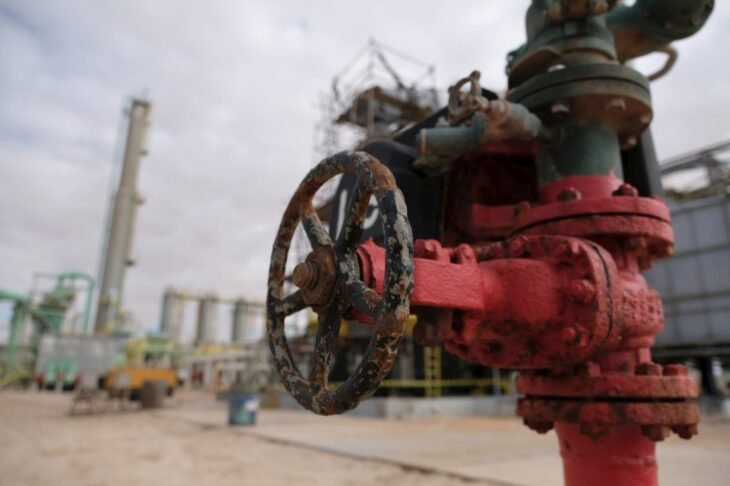
  • Libya’s oil industry has suffered for years through a civil war, political uncertainty, and a lack of investment, but there is still hope for the country 
  • The country aims to boost its oil production from 1.3 million bpd to 1.8 million bpd in 2022, an ambitious increase that will require domestic stability 
  • The first presidential election since 2011 was postponed for a month in December, and is the first and most important hurdle Libya’s oil industry must clear if it is to bounce back

Read More

Which Libyan-led process will lead to elections in 2022?

Jonathan M. Winer – Non-Resident Scholar

Since the late December collapse of the promised Dec. 24, 2021 elections in Libya, the recently-appointed special advisor to the U.N. secretary-general, Stephanie Williams, has undertaken the mission of finding a path forward to restart and fulfill the process of electing a Libyan president and parliament by June.

Williams has undertaken a flurry of January meetings with foreign actors, traveling to Cairo and Ankara to meet with Egyptian and Turkish leaders, and is on her way to do the same in Russia. These followed her late December efforts to corral Libya’s own power-brokers, including Prime Minister Abdul Hamid Dbeibah, warlord Khalifa Hifter, and former Interior Minister Fathi Bashagha, into supporting the election process regardless of what happened next.

Meanwhile, the Tobruk-based House of Representatives (HoR) and the Tripoli-based High State Council (HSC) have continued their efforts, originally announced on Jan. 2, to create a new election roadmap of their own based on consultations with other Libyan bodies. Success in this would constitute a true Libyan-led process, initiated and chaired by Libyans, rather than by the U.N. But based on past performance, there are substantial grounds for skepticism that the dinosaurs actually want to see free and fair elections that could lead to their own extinction.

These include the head of Libya’s HoR, Aguila Saleh Issa, who on Jan. 17 again took up his position of speaker, from which he had resigned to run for president. On doing so, he immediately convened the HoR to announce that the Dbeibah government’s mandate had expired, and called on the Central Bank of Libya to halt all government spending until such time (if any) as it was approved by the Finance Committee of the HoR. Such chaos-inducing behavior was a major factor ensuring the ineffectiveness of the prior U.N.-facilitated Government of National Accord that was succeeded by Dbeibah last year.

For his part, the patronage-savvy Dbeibah, selected through the Libyan Political Dialogue Forum (LPDF) process shepherded by Williams last year, maintains good reason not to fall in line with the HoR-HSC initiative aimed at depriving him of his position. Dbeibah might be happier to see the LPDF reconvene and, as the 75-person body that elected him, either develop rules enabling him to run for president and win, or at the least, create a process that competes with the HoR-HSC one so that nothing happens.

A minimum pre-requisite for any election process, “Libyan-led” or otherwise, to succeed, is to have the internationals align. Currently, Egypt, Russia, and Turkey face major issues with greater political salience to their domestic constituencies than the future of Libya. The desire of international actors to see Libya no longer create unpredictable political and security risks for others may be the one factor most likely to help Williams secure some form of success in 2022.

_____________

Source: 2022 trends and drivers to watch in the Middle East

Home

ANNUAL REPORT : HEALTH SECTOR IN LIBYA (2021)

Overall context  (Full Report)

Libya is at a critical juncture. Since the de facto truce was established in June 2020, the UNSMIL-facilitated peace process has achieved several key milestones (ceasefire agreement signed in October 2020; an interim Government of National Unity (GNU) selected by the Libyan Political Dialogue Forum (LPDF) in February 2021; national presidential and parliamentary elections scheduled for 24 December 2021).

The unification of the Ministry of Health (MoH) has gone smoothly: The Minister of Health of the interim government in the east has handed over responsibilities to the Minister of Health of the GNU. However, the political and peace-building landscape remains fragile. The marked divide between the east and west will take time to resolve.

The Libyan authorities define the top challenges as follows: fragmentation of health sector institutions, weak governance, lack of accountability, extreme shortages of medical supplies and health staff; a badly disrupted PHC network, and severe funding shortages. 

Libya remains classified as an L2 emergency country. Approximately 1.3 people were in need in 2021 (a 40% increase compared with 2020). Regular, prolonged power and water cuts and fuel shortages kept disrupting critical social services and affecting people’s health and livelihoods. The uncertainty of national as well as international investment for humanitarian and developmental health care programs hinders short- and longer-term reforms.

Libya remains one of the most vulnerable countries in the region due to the presence of foreign armed groups, trafficking of drugs and migrants, uncontrolled borders, organized crime and corruption.

The crisis has a strong protection dimension, with violations of international human rights and humanitarian law against civilians, including conflict-related sexual violence and grave violations against children and attacks on civilian infrastructure. Moreover, hundreds of thousands of migrants and refugees in Libya have limited access to health care services.

 Strategic challenges (2021 major health system challenges of the continued largely disrupted health system)

As of today, there is no health policy in Libya. The 2009 Millennium Development Goals (MDG) Report for Libya stated that the country was on track to attain the MDGs by 2015. Reliance on lifesaving and life-sustaining health care services supported by the humanitarian response will continue across the country amidst chronic insecurity and COVID-19
pandemic.

  Recently unified the Ministry of Health (MoH) is committed to lead the process of developing a national health sector recovery strategy with support from health sector organizations while facing challenges when the provision of equitable, effective and efficient health care and public health services in Libya have continued to decline.

Governance in health system required introduction of structural reforms (decentralization), empowering the lower levels in the health system hierarchy. Earlier designed comprehensive organizational structure of the Ministry of Health at national, regional and municipal level has not yielded positive results. The current protracted crisis in Libya prevents a proper recovery of the health system and the implementation of meaningful reforms.

Health service delivery envisaged universal health access by all to the quality and safe health services without facing financial risk. It also required safe, effective, quality and affordable essential medicines and vaccines were available to all.

  Revision, harmonization and costing of the Libyan Essential Package of Health Services (sexual, reproductive, maternal and new-born health; child health and immunization; public nutrition; communicable and non-communicable diseases; mental health and psychosocial support mainstreaming in all health related services as well as MHPSS stand-alone services/disability; a community component; the regular supply of essential drugs and medical products and workforce training and supportive supervision) is a must, based on a data-driven approach in its governance and decision-making processes.

Reorganization of health services, establishment of regional/district health authorities and the municipal health offices is yet to be completed. The health facilities are not mapped within their geographical boundaries. Catchment area are not identified and registered. There is a need for the comprehensive plan for revamping (infrastructure and basic amenities, equipment and supplies) and revising the current number of facilities in the health care delivery network.
     
The situation has been exacerbated by the mismanagement of many health facilities. In 2021, reports indicated that in some areas, up to 90% (out of all existing) of primary health care (PHC) centres remained closed. One third of all health facilities in the south and east of Libya are not functional while 73% in the south and 47% in the east are partially functioning mainly due to the shortage of medical supplies and lack of human resources.

Out of the total facilities assessed in 2021, 37% (80) health facilities were reported damaged (fully and partially damaged). Outsourcing services of public health facilities to private companies is of alarming concern. Only 20% of communities have child health and emergency services, 25% – general clinical services, and 15% – services for reproductive health care and
noncommunicable and communicable diseases.

Health facilities across the country had to be closed due to increasing transmission of COVID-19 among health workers, lack of PPE and supplies. Of those remaining functioning, 80% of PHC centers did not have any of the essential medicines.

Treatment of non-communicable diseases become largely unavailable, including medicines for diabetes (e.g., insulin). Support for disability services for more than 100,000 people is one of the most common requests. No disability-specific surveys took place from the national level.

Libya continued to face repeated stockouts of critical routine immunization vaccines, compounded by difficulties securing funds from the Central Bank of Libya to place new procurement orders. There are acute shortages of medicines for child cancer patients and patients with life-threatening diseases such as TB and HIV/AIDS.

The banking system remains dysfunctional and international organizations have only limited ability to withdraw cash in Libyan dinars to fund its humanitarian operations and COVID-19 response. 

A majority of regularly assessed communities report high rate of incidence of diarrhoea, lice and scabies and influenzalike illnesses. Absence of data highlights the seriousness of the actual situation on the ground.

Levels of support for rehabilitation of health facilities in remote rural areas were not sufficient, including roll of mobile medical teams in those locations. While the health workforce the overall number exceeds the WHO/SDG standards. However, inadequate skills mix, maldistribution between geographic areas and the different levels of health care, the traditional fact of over excessive HR registered for Libya are of highest concerns.

Proliferation or over excessive traditional present health infrastructure should
be reviewed: Tertiary Care Medical Centers (5); Secondary Care (97) (Rural Hospitals (32), General Hospitals (23), Teaching Hospitals (31), Specialized Hospitals (11); Primary Health Care (1355) (PHC Units (728), PHC Centers (571), Polyclinics (56).

The efficiency of the workforce is also impacted by irregular payment, internal displacement. Establishment of the staffing norms is necessary for different levels of care as a tool for deploying adequate numbers of health workers in health service delivery network equitably across regions.

In 2021 the first steps were initiated to support enhancement of health human workforce. Pharmaceuticals and other health technologies – There are chronic shortages of medicines, equipment and supplies, and very few public health facilities are offering a standard package of essential health care services.

Medicines that are supplied through specialized centers, such as tuberculosis and HIV medicines, as well as mental illness and family planning medicines, are limited or not available in health facilities.

Health information system – Despite years of support and investment from international community, there is still no national system to gather and analyze health information and monitor and assess needs, absolute lack of population/health data and the lack of data culture. There is no data available with the health authorities on a number of functioning and
non-functioning public health facilities.

Health system financing commits the government defining a formula for the equitable distribution and allocation of financial and human resources, health care network, training institutions and such entities between regions, municipalities and between facilities, including hospitals at different levels of care. Authorities have not been approving the health
budget for 2021 for months.

Although health care at public sector facilities is free for all citizen, distrust and disruption of services have led to a growing private sector. It is also a challenge to distinguish between the public and private sectors because dual practice is prevalent in Libya. In the private sector, payments are out of pocket, making fee-for-service the dominant method of
payment with very limited regulation. Out of pocket expenditure as a percentage of total health expenditure keep increasing. There is minimal oversight and regulation of pharmacies.

  At present, the Government’s financial inputs are mainly limited to the disbursement of salaries with no or very little allocation for drugs, diagnostics tests and equipment. Health sector continues to advocate for an adequate amount of Libya’s GDP and part of its huge assets to be spent on health. The government must find a way to tap into these resources to cover urgent and increasing health needs and strengthen the weak health system to achieve Universal Health Coverage.

Some of key systematic obstacles in health Devaluation of the Libyan currency in the beginning of 2021 and situation with public health funding deteriorated due to outstanding debts of hundreds of millions LYD for previously procured medicines, supplies, equipment and construction works and delays to approve the 2021 national budget by the end of 2021. 

Field missions across the country detected remaining structural systematic challenges in overall health governance with recognized humanitarian needs linked to the disrupted network of public health facilities, lack of supplies (medicines, consumables and equipment), lack of specialists.

Roll out of COVID-19 vaccination was significantly delayed in the country with the first COVD-19 vaccine reaching the country on 8 April 2021 with nationwide vaccination campaign started on 10 April.

The national COVID-19 preparedness and response plan has not been developed for 2021 while the plan comprised of UN and INGOs inputs was updated and disseminated (an estimated of 52 million USD).

2021 illustrated remaining needs across the country, including support to rapid response teams, procurement and distribution of PPE, procurement of lab diagnostic kits and supplies, equipment, establishment and support to the isolation sites/wards, provision of continuous capacity building support, risk communication and community engagement. 

Situation with funding and support to the isolation centers remained critical. The number of earlier planned isolation centers was significantly reduced while a main number of facilities could not activate the work due to the absence of government’s support, including HR support. 

Health situation deteriorated largely in some parts of the country. In the south closure of health facilities, absence and decreased testing capacities, absence of a comprehensive surveillance system, social stigma, spreading COVID-19 infection among health workers.

Proliferation of various emergency committees to respond to COVID-19 response across the country required the necessity for more centralized coordination and management with significant revision of the overall process. In this situation health sector continued its pandemic response while supporting the health authorities’ efforts to respond to COVID-19 in Libya through key response pillars defined in a comprehensive UN/INGO COVID-19 preparedness and
response plan, including normative technical guidance to help Libya rebuild its health system (working across the humanitarian/development divide).

Health sector continued to receive continuous requests for assistance from different health facilities and municipalities. A remaining challenge is to activate the health information system maintaining its data collection and analysis across the country. Libya remains one of few countries not reporting on key health performance indicators despite all earlier launched initiative.

_______________

Reliefweb


Why Libya’s Hard-Won Peace Hangs in the Balance: QuickTake

 Mirette Magdy

Libya’s decision to postpone a landmark presidential vote has damaged efforts to rebuild a nation riven by conflict since the overthrow of strongman Moammar Al Qaddafi a decade ago. Foreign powers that waged a proxy war there still appear to support a transition to democracy. But the delay has weakened the authority of the interim government and left Libyans wondering if their country will slip back into violence, potentially disrupting vital oil exports and choking the economy. 

1. What lies behind the years of unrest?
Libya’s state institutions evaporated during Qaddafi’s 42-year dictatorship, so his removal left a void that was filled by a multitude of armed groups, many of them based on tribal affiliations. A succession of governments failed to restore order or stop weapons flooding into the country. National elections in 2014 that were supposed to unify Libya only split it down the middle, with a Government of National Accord (GNA) based in the capital, Tripoli, in the west vying with an eastern coalition of troops and irregular fighters known as the Libyan National Army, led by Khalifa Haftar. Haftar secured major oil resources by extending his grip in the east and south before moving to capture Tripoli in 2019 with the help of Russian mercenaries. Turkey, backing the GNA, sent in troops the following year and Haftar’s men were forced to abandon the effort after battles that left more than 2,000 people dead and tens of thousands displaced. A cease-fire was declared in August 2020 after Egypt threatened to intervene. 
  

2. Why are the region’s governments so interested in Libya?

Egypt and the United Arab Emirates backed Haftar in the hope that he could end the chaos and defeat Islamist groups including the Libyan branch of the Muslim Brotherhood — a sworn enemy of Egypt’s government. Turkey found common cause with the GNA as both had close ties to the Brotherhood. Russia also joined the fray, as part of a broader effort to challenge Western interests in weak Arab states. At first Moscow kept contacts with both sides while promoting Qaddafi’s son, Saif al-Islam Qaddafi, as a future president. In 2019, however, it also threw its weight behind Haftar. More than 1,000 mercenaries with the Wagner group, which is headed by a confidant of Russian President Vladimir Putin, entered Libya to support the general. Russia’s actions prompted the U.S. to push more forcefully for a peace deal. Western companies including France’s TotalEnergies SE, Eni SpA of Italy and Royal Dutch Shell Plc are considering investing billions of dollars to exploit Libya’s vast oil and natural gas reserves, as well as its potential for solar power. The country’s proximity to Europe makes it all the more attractive to them.  

3. How has the fighting affected the country?

4. What was the plan for the election?

Two months after their cease-fire declaration, the adversaries signed a formal truce at the UN in Geneva. In February 2021, Libyan delegates nominated a unified interim national executive to steer the country until a presidential vote. They chose eastern Libya’s Mohamed Mnefi to head a three-person Presidency Council and a businessman from the coastal city of Misrata, Abdul Hamid Dbeibah, as prime minister. The vote was initially scheduled for Dec. 24 and almost 100 candidates put their names forward, including divisive figures such as Haftar and Saif al-Islam. Election authorities rejected about two dozen of them and others faced legal challenges. Days before the vote was due, the national election commission announced that holding it as planned was impossible because the election law was inadequate to deal with disputes over candidacies. It proposed a delay of one month, but the reunified parliament hasn’t approved a new timetable. 

Egypt, the UAE and Turkey have so far honored a pledge to support Dbeibah’s interim government and the plan to elect a new leader. While no one appears ready to abandon the democratic process, some observers have questioned the decision to allow divisive candidates onto the original ballot and are calling for a new electoral law and even a new constitution — a process that could take years. Some political players, including lawmakers, may quietly welcome a postponement that leaves their privileges and the country’s power structures untouched. Dbeibah remains as prime minister, although it’s unclear how long his mandate will last, while tensions persist between his administration and parliament. With the government unable to impose its authority nationwide, the true power brokers are the country’s restive militias. 

_____________
Read More

Will the Search for Consensus Prevent Hostilities in Libya?

Sami Hamdi

Although the Libyan elections scheduled for December did not materialize, there is hope for a peaceful political solution as various factions explore possible compromise to form a new government, even as they resist international attempts to impose a new election date.

Libya’s electoral commission postponed for one month the elections promised to Libyans on December 24, 2021, plunging the war-torn country into a deep uncertainty about a peaceful resolution of its longstanding civil war. The Government of National Unity’s (GNU) agreed-upon-term (per the UN-brokered Libyan Political Dialogue Forum (‘LPDF’) technically ended at the end of 2021, and the House of Representatives in Tobruk is not inclined to sanction an extension of that term.

Ex-General Khalifa Haftar, the leader of the Libyan National Army (LNA), is mobilizing disgruntled politicians across the country, from both East and West, to jumpstart his own political trajectory and capitalize on the failure of the UN-brokered process. Armed militias have begun flexing their muscles as they strongarm the GNU, while government forces have been deployed to cut off access to the capital by other militias intent on sparking a conflict. Turkish Bayraktar drones have also reportedly been deployed in the capital in order to fortify security as uncertainty spreads.

The UN dispatched Stephanie Williams to Tripoli shortly before the announcement of the election delay to rescue the political process.

The situation has been compounded by the apparent lack of preparation among the UN envoys and international policymakers for the unfolding scenario. The UN dispatched Stephanie Williams to Tripoli shortly before the announcement of the election delay to rescue the political process, but there is now increasingly vocal resistance and antagonism across the board to her efforts. A testy tweet from the UK embassy in Libya took aim at Haftar’s bid to launch his own independent political track in Libya, asserting that it would not recognize any authority except the GNU until elections take place.

What is now unfolding in Libya is a tense political wrangling that has the potential to spill over into skirmishes. But it does not mean that Libya is necessarily heading towards renewed conflict.

Pushing for a new government

Three important dynamics are at play.

First, the original election date was set not via consensus between the Libyan parties. Rather, it was imposed by Washington frustrated by Russia’s gains and the increasing unilateralism by regional powers that have undermined US influence in the region.

Second, the prime minister selected by the UN-brokered Libyan Dialogue Forum to lead the GNU emerged, not from common accord, but out of a collective desire of the Libyan participants to prevent former interior minister Fathi Bashagha and Speaker of the House of Representatives Aguila Saleh from becoming the major powers.

Third, Libyan factions did not want elections. They strived over the intervening months to ensure that elections would not take place.

These three dynamics remain crucial underpinnings of the attitudes of the powerbrokers in this next chapter in Libya’s troubles. The US also announced that in the meantime it would not recognize any government other than the GNU.

Yet, the US is scrambling to impose a new election date and to impress upon the Libyan factions that elections should take place at the soonest possible date, and spoilers will be held to account. The US also announced that in the meantime it would not recognize any government other than the GNU.

The fact of US insistence on the GNU currently led by Prime Minister AbdulHamid Al-Dabaiba is significant because that is precisely what many Libyan factions in both the East and West are seeking to change.

On December 21, 2021, Haftar received the former interior minister Fathi Bashagha, and former deputy Prime Minister Ahmad Maitiq in Benghazi looking to foster a new consensus that might lead to the formation of a new government entirely, or at least pressure Dabaiba in Tripoli into a government reshuffle under which he would give up key posts.

To the chagrin of Dabaiba’s rivals, his unique position as the Prime Minister of the internationally recognized GNU has allowed him to amass power at their expense. Moreover, they believe that Dabaiba has no intention of leaving following the interim period as required by the terms of the dialogue agreement. The fear is that he will instead use his newfound authority to mount a bid for the Presidency, and will have another year or more to do so as a result of the absence of any agreement.

The distrust of Dabaiba is beginning to give rise to a new agreement similar to that which delivered him to power in the first place at the expense of the once-influential Bashagha.

Dabaiba has found himself facing challenges within Tripoli. His decision to change the city’s police chief resulted in an open challenge by militias led by Abdul Ghani al-Kikkli, known as Ghneiwa, who has deployed artillery in Southern Tripoli. Dabaiba also allegedly positioned forces to block off roads into Tripoli to prevent other militias from making their way to the capital and take advantage of the unrest.

There have also been concerns that the emerging consensus led by Haftar might draw support from Western-based militias. It is partly for this reason that allied militias from Misrata have been making their way over the past week to Tripoli to bolster Dabaiba’s position.

Elections

It is important to stress that the different compromise that is being sought has nothing to do with facilitating an environment for elections. Instead, it is about reshuffling the power dynamics and entrenching resistance to elections.

The different compromise that is being sought has nothing to do with facilitating an environment for elections.

In an interview with Al-Araby TV, the Chairman of the High Council of State Khalid Al-Mishri dismissed the efforts of Stephanie Williams to resume the track towards elections, and asserted instead the need to establish a consensus and constitutional framework before any election date could be set. This argument was repeated in Turkey, which remains the most powerful force on the ground in Western Libya and a firm backer of the GNU.

Whether such arguments are sincere are debatable. Al-Mishri was part of the bid by Parliament in late 2013 to unilaterally extend its own term and avoid elections, as well as the successful efforts of armed groups in 2014 to overturn the contested election results.

However, there is some truth in the assertion that the absence of a political accord renders elections a moot exercise. There is little point in voting if armed groups will violently resist the results and return to civil war.

Meanwhile, regional powers are consulting with their allies over how to adapt to the increasingly fluid dynamics in Libya. The Speaker of the House of Representatives Aguila Saleh is believed to have flown last week to consult with Abu Dhabi, and then to Morocco on January 2 for mediated talks with rival Chairman of Libya’s High Council of State in Tripoli, Khalid al-Mishri.

Nevertheless, it is clear that the aim of the Libyan factions is to prevent elections from taking place, or at least to delay them as long as possible. Dabaiba seeks to entrench himself using his position as Prime Minister. Al-Mishri tries to delay as long as possible to avoid the fate of his ideological allies in Morocco, Tunisia, Egypt, and elsewhere. Haftar does not want to recognize any political authority in Tripoli and needs time to build and establish one that he can then present as a contender for a new consensus government.

Turkey meanwhile does not want any elections that might produce a government that reverses the treaties and agreements it has secured in Libya. France, UAE, and Egypt do not wish for any elections that offer an avenue for the Islamists to win power and allow Turkey to stay on as a significant influence in Libya.

Notwithstanding the US’ insistence on elections, its history of pragmatism in Libya offers enough encouragement for these different regional players that they might convince Washington to push for elections, or recognition, in a manner that benefits them. Washington’s late scramble to prevent the son of former ruler Moammar Gaddafi Saif al-Islam Gaddafi, who announced his intention to run in November, from participating in elections revealed that the US desire for elections is not absolute, but is open to being molded.

For now, the jockeying is not about election dates, but about the continuing standing of the GNU.