 A country that has undergone immeasurable hardships in recent years, Libya’s fortunes are at last showing signs of changing. Read More
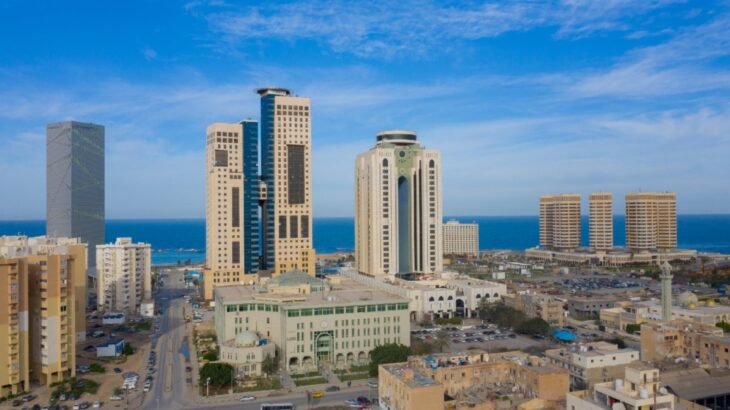
A country that has undergone immeasurable hardships in recent years, Libya’s fortunes are at last showing signs of changing. Read More
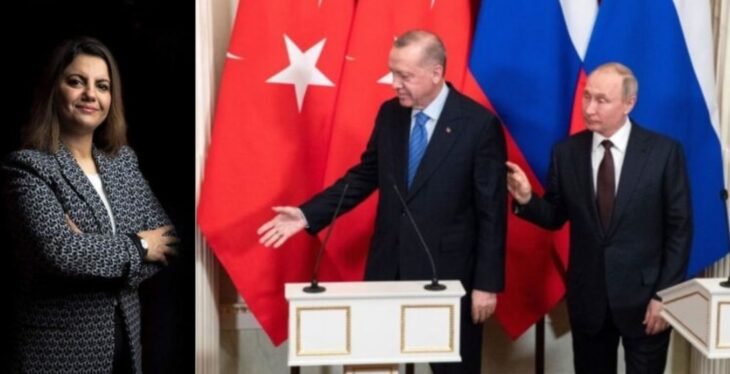
Igor Yanvaryov
 In Tripoli, demand the immediate withdrawal of all foreign forces. Read More
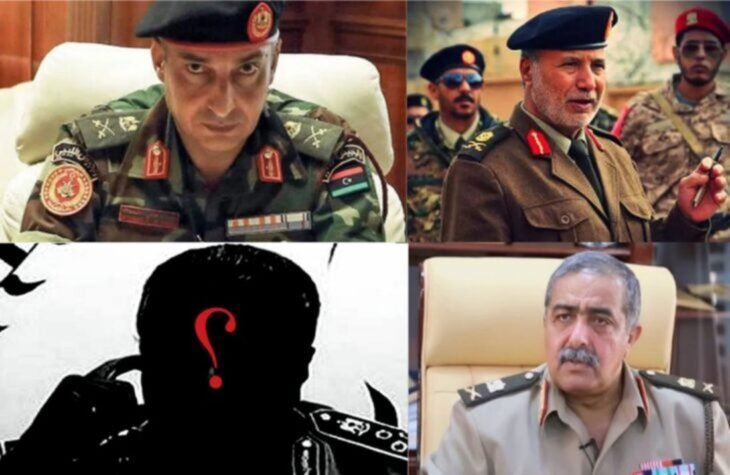
Osama Dali

Uncertainty looms over defense portfolios despite recent positive developments in Libya. The formation of a new Presidency Council and national unity government in Libya represented an important step towards unifying the country and its institutions. Read More
Jodi Vittori
 What a UN report on Libya reveals about the nexus of private security operators and illicit financial flows. Read More
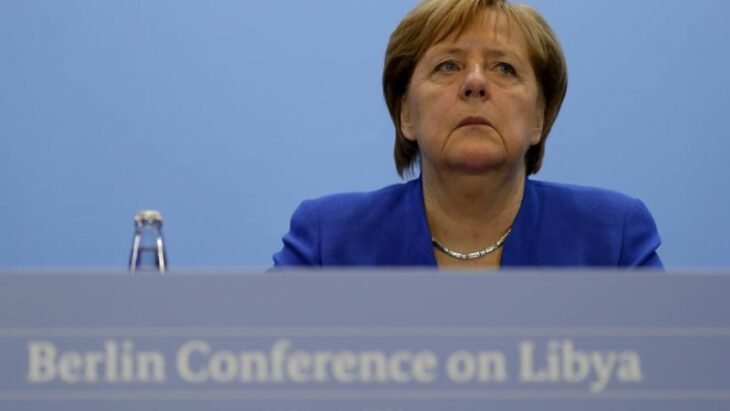
By Tarek Megerisi.
 Germany’s involvement in Libya was not a legacy policy but a reflection of how many of its foreign policy pillars were shaken by events across the Mediterranean, writes Tarek Megerisi, calling for Italy and France to work alongside Germany in creating a unified and credible approach to help Libya.
In a world where stereotypes frame so many perspectives, it’s usually memorable when they get torn down. So, January 2020 and the Berlin conference on Libya was the moment that should have triggered a rethink of Germany’s image as frustratingly reticent on the global stage and Chancellor Merkel as boringly conservative.
After all the long-ruling Chancellor did gamble her foreign policy legacy on this uncertain process which saw Germany lead the world to redefine a tired conflict. Unfortunately, for too many, it simply passed under the radar.
The deliberate diplomacy which preceded and followed it was just too mundane and slow-paced for the news cycle. But, by failing to stop and appreciate the novelty of the moment, we also failed to appreciate its gravity.
It is odd after all, for Germany and her careful Chancellor to have put reputations on the line for Libya. Germany isn’t burdened by the social or economic entanglements other Europeans have in the region, let alone their colonial legacies.
Germany’s involvement in Libya was not a legacy policy, it was a reflection of how many of Germany’s foreign policy pillars were shaken by events across the Mediterranean.
Unbeknownst to many Libya was the stereotype for the Trumpian world order. Its highly fractured state and polity had become the laboratory for a host of regional powers to trial devastating political and military tactics with impunity as the proving ground for a 21st century ‘great game’.
The result was a moral travesty that left the heart of Europe’s southern neighbourhood erratically pumping instability.
Academically speaking someone needed to protect the international norms and principles on which a global order had once been founded. Strategically speaking, Europe needed to protect its influence and shut Libya’s pandora box before too many of its devils escaped.
While the shores of Tripoli can seem awfully far from the bustle of Berlin, it is still too close for Germany or Europe to ignore Libya’s calamity in comfort.
We already saw in 2015 how Libyan instability can drive migrants and refugees by the hundreds of thousands towards Europe, and drive Europe’s political climate to the right thereafter.
We also see the dangers of sacrificing control to friends like Turkey who exploit Europe’s fear of migration so savvily. But far more ominous than approaching migrants, is an encroaching Russia.
Recently, the bete noire of NATO and the liberal world order has been establishing military bases and extending influence over the oil and gas infrastructure of the land once referred too as Europe’s soft underbelly. It is a strategic threat for sure, one that has disturbed the Pentagon, but for now, at least, it is still reversible.
The Berlin process which birthed January’s conference has been a qualified success. Diplomatic successes are rarely spectacular events but rather victory by a thousand tweaks, small alterations to the trajectory of a country or process that combinedly divert it from crisis.
Over Summer last year the Berlin process demonstrated that it had nudged Libya away from its most catastrophic possibility as the forum Germany had created acted as a safety net, providing the familiarity and contact between all the intervening states that allowed a negotiating process to replace direct conflict between them as one side’s Libyan proxy faltered.
The Berlin process may have shifted Libya’s trajectory away from the catastrophic war that could have, but there are many perils still to be avoided.
Just as Libya once represented an opportunity to shelter valuable principles from the Trumpian storm, now it represents another opportunity to catalyse European foreign policymaking into something fit for the current, contentious age.
If Chancellor Merkel is to finish what she started and finesse a true foreign policy legacy, then she should now turn the dynamic of the Berlin process inwards, creating a tripartite European coalition for engaging Libya.
Drawing senior representation from Italy and France alongside Germany is the only way to create credible, workable, cohesion between those Europeans who are currently leading European Libya policy in divergent directions.
Internally agreeing a path for Europe to sidestep the many secondary issues preventing unity on Libya, is the only way to attain the gravity for Europe to play an effective game of realpolitik in this 21st century proving ground, let alone to draw Libya from an orbit of crisis onto a path of opportunity.
***
Tarek Megerisi is a policy fellow with the North Africa and Middle East programme at the European Council on Foreign Relations.
___________

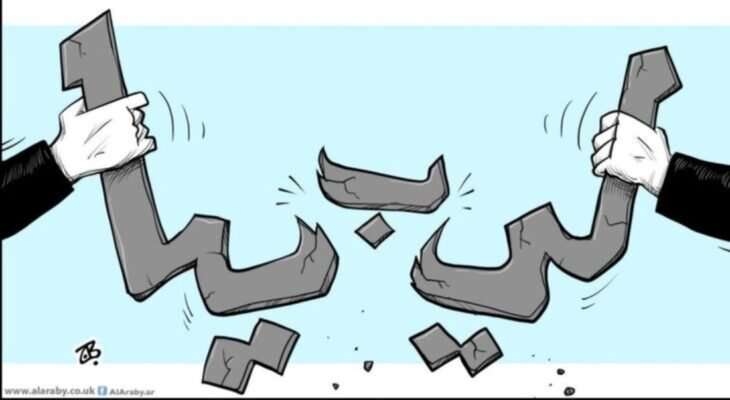
The challenges facing Libya’s new government
Emadeddin Badi
 On 10 March 2021, Libya’s Government of National Unity (GNU), led by Prime Minister Abd al-Hamid Dabaiba, won a parliamentary vote of confidence with a sweeping majority.
This is the country’s first new government since 2015, when the interim Government of National Accord (GNA) was established. Although there is optimism over the GNU’s prospects, the new government faces complex challenges.
After the revolution in 2011, Libya’s economy became captured by widespread armed group predation. As a result, criminal economies such as fuel, arms, migrant smuggling and drug trafficking thrived beyond levels that had been experienced before in Libya and had a significant destabilizing impact on the region and beyond.
These illicit dynamics both fed off Libya’s political fractures and helped to further them, compounding the GNA’s inability to provide effective governance and security throughout the country.
In part because of the ineffectiveness of its predecessor to address illicit dynamics, the advent of the GNU has been met with significant optimism, especially from the international community. Though its planned duration is short, with elections expected in December, there are hopes that the new government will start addressing Libya’s myriad of issues.
The new government faces three significant challenges around changes that are needed.
The first relates to the dynamics that brought the GNU about.
The second is the continued entrenchment of hybrid armed groups that hold de facto power, have infiltrated institutions and benefit from Libya’s licit and illicit economies through their criminal business models.
The third is the empowerment of foreign actors, whose interventions in Libya have become more overt.
Political alliances
The GNU’s first challenge is political and comes about from how Dabaiba navigated the UN-led Libyan Political Dialogue Forum (LPDF) process that created the government. The LPDF process was meant to reshuffle patronage networks, help avert further conflict and create an environment where elections could be held.
Dabaiba was not initially seen as a front-runner. His victory over better-known contenders hinged on his willingness to accommodate the maximum number of factions across the country’s political landscape, by promising government positions in exchange for support and allegedly even going to the extent of offering bribes.
This strategy produced an overstaffed cabinet that Dabaiba formed from among personal associates and elites, with parliamentarians lobbying him to appoint friends and relatives. Rather than competence or incorruptibility, ministerial selection hinged on muhasasa: a process whereby governmental positions are proportionally allotted to factions based on local and regional origins.
Politically, Dabaiba’s coalition-building approach may be justified. It was what the LPDF set him up for, as it sought to transcend Libya’s conflict divides and to keep spoilers at bay.
Yet, in its execution, his approach risks exacerbating corruption and compounding institutional weakness. The numerous ministerial portfolios and the parochial way they have been filled opens the government to exploitation by actors intertwined with illicit economies.
Connections between senior politicians and armed groups will most likely lead the latter to seek to exert influence over government affairs, stymieing state-building and institutional development initiatives. Heightened influence by armed groups will also in all likelihood impede efforts to address illicit economies, which many armed groups profit from or are directly involved in.
And continued corruption and impunity risk further alienating ordinary Libyans from the ruling elite, undermining the trust-building that is desperately needed after a decade of worsening governance.
Finally, while Dabaiba’s muhasasa approach to power-sharing arrangement may avert a relapse into conflict in the short term, it could sow the seeds for conflict in the medium term, as many of the factions in the new government and external allies have a vested interest in delaying elections.
A continuation of the current government would maintain, if not expand, these actors’ access to the state’s resources or protection from state interference.
This protracted stay in power would, however, compromise the GNU’s very purpose – readying Libya for elections – and enable those sidelined by the new government to mobilize local constituencies and armed actors against it. This risks exacerbating instability and state weakness, which are conducive to the growth of illicit economies and predation by armed groups.
Armed groups
The second key challenge for the new government is how to address Libya’s constellation of large, well-equipped armed groups. These challenges emanate from choices made by the previous government and Dabaiba’s strategic approach to government formation.
In Tripoli, the previous government placed numerous armed groups under the Presidency Council in a bid to pre-empt the LPDF’s possible failure.
This made these groups quasi-official – holding mandates, organizational autonomy and access to government budgets – without real oversight or inhibitors on their predation and their involvement in criminal economies.
Tripoli’s armed groups backed Dabaiba’s election as a means to sideline former interior minister Fathi Bashagha, who publicly declared his intentions to mount a campaign against corruption and crime, reining in these groups and dismantling them.
Dabaiba’s win forced him into a deeper alliance with the groups under the Presidency Council, in part to guarantee a smooth transition and help the government establish itself in the capital.
The alignment is fundamentally opportunistic, with its longevity dependent on these groups’ perceived interest in upholding this government.
These dynamics place the new government in a particularly weak position, as armed groups will be able to leverage a mantle of quasi-legitimacy as cover for predation – much as they did under the GNA. Efforts to address human smuggling, drug trafficking and other forms of criminality are unlikely to be vigorously prosecuted in the short term by the GNU.
Its term in office could present a window in which various forms of criminality increase in scale and scope, likely posing a particularly steep challenge to governance and security.
The Prime Minister faces similarly fraught challenges in dealing with eastern Libyan factions, including Khalifa Haftar, leader of the Libyan Arab Armed Forces (LAAF), the largest armed group in the country.
Haftar, while weakened by his failed 2019–2020 war to take Tripoli, is nonetheless still expected to rebuff the GNU’s attempts to subordinate him to civilian rule. For Haftar, autonomy is critical, as the LAAF’s constituent armed factions risk fragmentation if his supremacy is compromised.
Dabaiba has so far avoided addressing armed group issues in the east by refraining from appointing a minister of defence, instead taking on the role himself. This move signals ambivalence towards Haftar and allows the inclusion of other eastern factions in his cabinet.
The GNA adopted a similar strategy towards eastern Libya in 2016. That gambit failed, in part because of Haftar’s extensive foreign support, which allowed him to violently retain control.
Dabaiba’s efforts to sideline Haftar are likely to face similar challenges, owing to the same combination of foreign influence and Haftar’s reliance on repression to retain relevance.
As in western Libya, the inability of the GNU to assert control in the east is likely to further enable illicit economic activity. Components of the LAAF are deeply involved in illicit economies in the areas under their control, including human smuggling from eastern Africa into Libya, and overland and maritime drug trafficking. Appropriation and predation of government resources is commonplace.
Haftar is likely to become more reliant on illicit economies to stabilize his control more than ever before. He is dependent on the funds he derives from this to keep constituencies in the east that are challenging him – aggrieved by insecurity and unfulfilled promises of benefits – from taking further action. In turn, Haftar may well take advantage of Dabaiba’s expected inability to quell the muhasasa–driven competition over illicit rents to enable his reassertion of authority over eastern Libya.
Foreign meddlers
The final key challenge for the GNU is the range of foreign actors operating in Libya. In the west, Turkey and mercenaries under its control are consolidating their positions; in the country’s centre are Russian mercenaries; and the United Arab Emirates (UAE) continues to pour military supplies into the east via Egypt.
And although Russia, Turkey and the UAE have acquiesced to the Dabaiba government, they have not significantly altered their activities or signalled a withdrawal of their forces.
The medium- and long-term interests of these foreign actors differ. Russia and Turkey expect the costs of their respective military actions to be underwritten by the Libyan government and aim to leverage their presence for pecuniary interests.
By contrast, the UAE’s meddling in Libya is less driven by economic considerations. If it perceives the GNU’s action as running counter to its strategic interests, it will be far more willing to act, irrespective of economic or political consequences.
No foreign entities are known to be involved in illicit economies in Libya in any significant way, though in some cases forces aligned with them – such as Sudanese and Chadian mercenaries – are implicated in protecting or extorting a variety of criminal enterprises.
The challenge foreign actors pose is their interest in sustaining a status quo in which the Libyan government remains weak in order to maximize their power to influence events.
Dabaiba’s efforts to balance political and armed factions, and to organize elections is complicated by their presence. As long as foreign actors remain involved in Libya and are able to wield influence, efforts to address core issues salient to Libyans – such as functional governance, safety and security, and the power of armed groups and criminal actors – will remain particularly difficult for the new government.
Conclusion
The government’s broad international support may enable it to tackle some of Libya’s systemic challenges in ways that its predecessors were not. Yet, having appeased numerous factions to get endorsed, Dabaiba will be constrained in his ability to achieve these goals.
Politicians and armed groups who expect that they will benefit from his tenure risk paralyzing Dabaiba’s government and delegitimizing it with the Libyan public. The same applies to foreign actors’ expectations and the temptation by the new government to appease them.
Similarly, efforts to tackle Libya’s illicit and criminal economies are likely to suffer if the current status quo is sustained. Government capacity could decline further if armed groups increase their predation of state resources.
Weak government institutions and law enforcement bodies would remain challenged in their ability to arrest or deter criminal actors who are often protected by, or integrated into, armed groups.
Meanwhile, in the absence of reform, economic disparities will widen, which may well force more ordinary Libyans to rely on black markets and cross-border smuggling and trafficking.
Addressing these challenges will be an uphill battle but a necessary one to avert protracted instability in the country. To achieve that goal, the new government will need to focus on state capacity-building during its mandated term, steering away from the temptation to prolong its mandate.
To counter Turkey, Russia and the UAE’s focus on maintaining a status quo, with complete disregard for the implications, the US, the EU and member states should redouble efforts to assist Dabaiba in meeting his government’s mandate to hold elections and prepare the ground for a functional Libyan government to follow.
***
Emadeddin Badi is an independent consultant that specializes in governance, post-conflict stabilization, hybrid security structures and peacebuilding. With over 8 years of experience, Emad regularly provides consultancy to international organizations, agencies and civil society organizations on ways to enhance the efficiency of their development programming and activities through capacity building, research and strategic planning.
___________
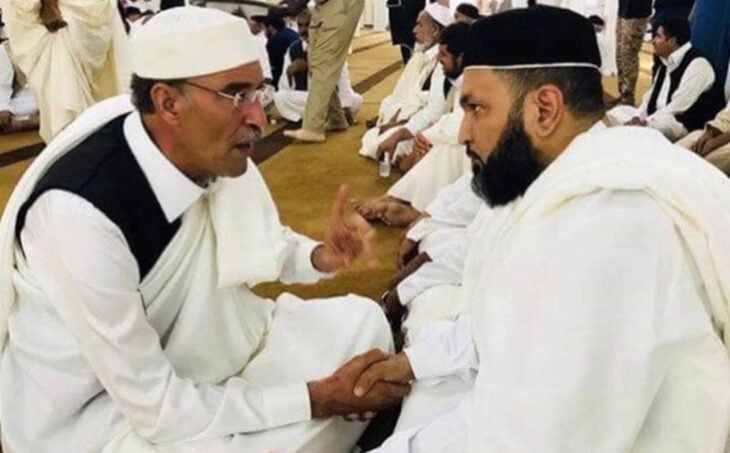
By Noura Doukhi
 By gaining the confidence of Parliament almost two weeks ago, the new transitional government appears to have taken an important step forward in the continuation of the political unification process. However, many challenges remain to be overcome. Read More
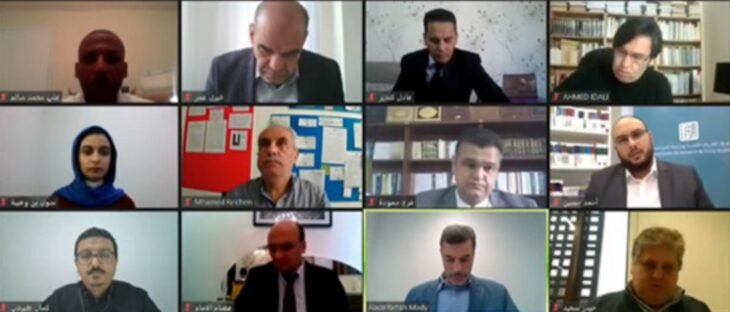
 The ACRPS Democratic Transformation Seminar welcomed several Libyan and Arab researchers to discuss the Libyan transition and the political transformations it has undergone since the outbreak of the 2011 revolution. Read More
Prioritize Justice, Accountability Ahead of Vote
 The newly confirmed Government of National Unity (GNU) should commit itself to significantly improve human rights conditions in Libya and ensure that elections planned for December 2021 are free and fair, Human Rights Watch said today. Read More
 Ten years ago, the United Nation’s no-fly zone over Libya marked the beginning of the Libyan revolution and the West’s bombing campaign. Read More
Editors: Nadja Berghoff and Anas El-Gomati

 A decade on from the February 17th revolution, how the global disorder transformed Libya into a battleground for interest, ideology and influence.
By Sarah Vernhes
 In Libya’s new interim government, voted in on 10 March, Khalifa Haftar and the Muslim Brotherhood are poorly represented, while prime minister Abdulhamid al-Dabaiba has managed to strengthen his position. Read More
Hopes ride on new wheeler-dealer leader
By Taylor Luck

After seven years of civil war, Libyans have finally found a leader to head a united government and end their country’s chaos. Read More
 Last week, a new unity government was sworn in by the House of Representatives, formed largely by international actors. In his speech, the interim Prime Minister Abdulhamid Dbaiba made a number of promises, one of which is to ‘move away from the [three] regions’ and towards decentralization. Read More
By Karim Mezran
 In early 2021, Libya’s Islamists were divided by ideology as well as geography. There were at least four major groups of Islamists: Read More
Editors: Nadja Berghoff and Anas El-Gomati
A decade on from the February 17th revolution, how the global disorder transformed Libya into a battleground for interest, ideology and influence.
 The Rome MED This Week newsletter provides expert analysis and informed comments on the MENA region’s most significant issues and trends. Read More
David Hearst

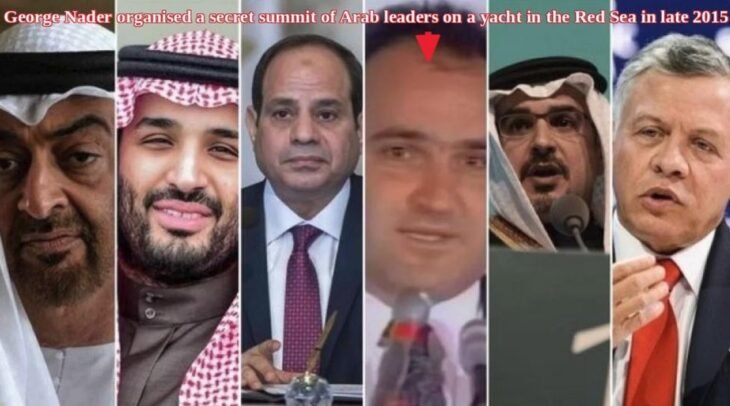
An alliance of regional rulers that put so much effort into suppressing democracy is weakening now as its participants bear substantial grudges against each other. Read More
Editors: Nadja Berghoff and Anas El-Gomati
A decade on from the February 17th revolution, how the global disorder transformed Libya into a battleground for interest, ideology and influence.
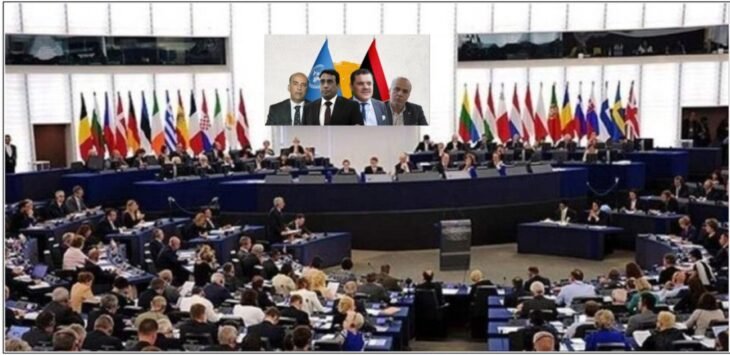
On Wednesday, the Libyan parliament approved an interim government headed by Prime Minister Abdulhamid Dbeibeh. The parliament voted in the cabinet following consultations with the Libyan Dialogue Forum, which selected Dbeibeh as Prime Minister last February. Read More
Sami Hamdi
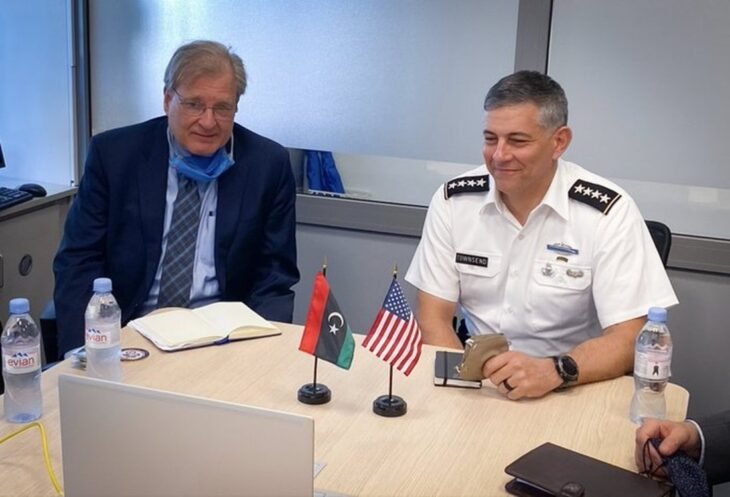
 The reality is that throughout the conflict in Libya, the U.S. has not had a clear vision over what it wants to achieve, or how it wants to achieve it. Read More
 Dodgy deals in Jordan and the suspicious presence of Sudan’s Rapid Support Forces are some of the details revealed by a United Nations panel of experts. Read More
Editors: Nadja Berghoff and Anas El-Gomati
A decade on from the February 17th revolution, how the global disorder transformed Libya into a battleground for interest, ideology and influence.
By Colum Lynch
 The 2011 Libyan intervention pitched the region into a decade of chaos and undermined U.S. confidence in the wisdom of using military force to save lives.
By Colum Lynch
The 2011 Libyan intervention pitched the region into a decade of chaos and undermined U.S. confidence in the wisdom of using military force to save lives.
Anas El-Gomati
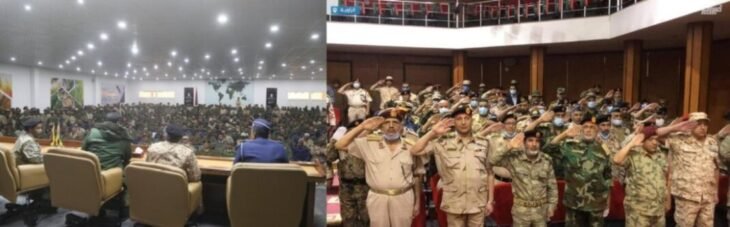
 Libya’s October 2020 permanent ceasefire agreement legitimizes the two-tiered military of the Qaddafi era, dimming the prospects for peace and stable civil-military relations. Read More
Rita Trichur
 This article was published more than 2 years ago. Some information in it may no longer be current.
Editors: Nadja Berghoff and Anas El-Gomati
A decade on from the February 17th revolution, how the global disorder transformed Libya into a battleground for interest, ideology and influence.
Rita Trichur
This article was published more than 2 years ago. Some information in it may no longer be current.
Editors: Nadja Berghoff and Anas El-Gomati
A decade on from the February 17th revolution, how the global disorder transformed Libya into a battleground for interest, ideology and influence.
Salma El Wardany
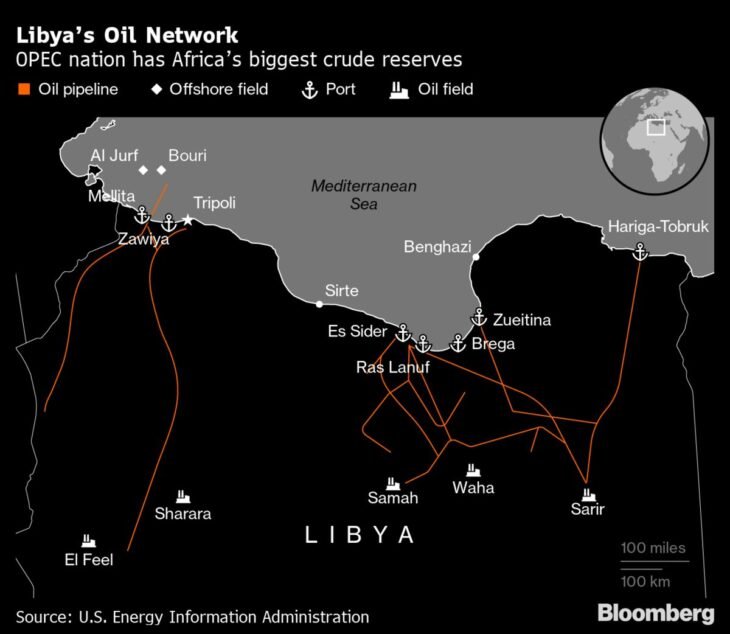
 Libya’s back in the oil game after years of false starts and setbacks. Energy facilities shut or damaged during its civil war were reopened last year and the OPEC member has managed to keep its production above 1 million barrels a day since November. Read More
Editors: Nadja Berghoff and Anas El-Gomati
A decade on from the February 17th revolution, how the global disorder transformed Libya into a battleground for interest, ideology and influence.
By Emadeddin Muntasser
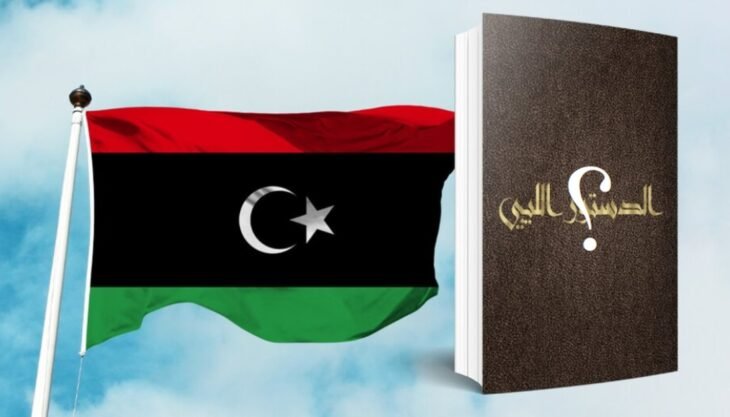
 As the United Nations Support Mission in Libya (UNSMIL) organizes dialogue between the country’s warring factions, many Libyans are voicing concerns that this process is a replay of the past, failed attempts to form a unity government and stop the bloodshed. Read More
Hafed Al-Ghwell

Libya’s “parliament” (whose legitimacy is questionable) has endorsed the new transitional executive authority appointed by the Libyan Political Dialogue Forum (LPDF), a UN-chosen body that will itself be accused of corruption in a UN report to be released in the next few weeks. Read More

The ‘unapologetically Muslim’ Libyan-American who believes Americans deserve more
Sarah Essa
 Muad Hrezi grew up in a Libyan-American household. Read More
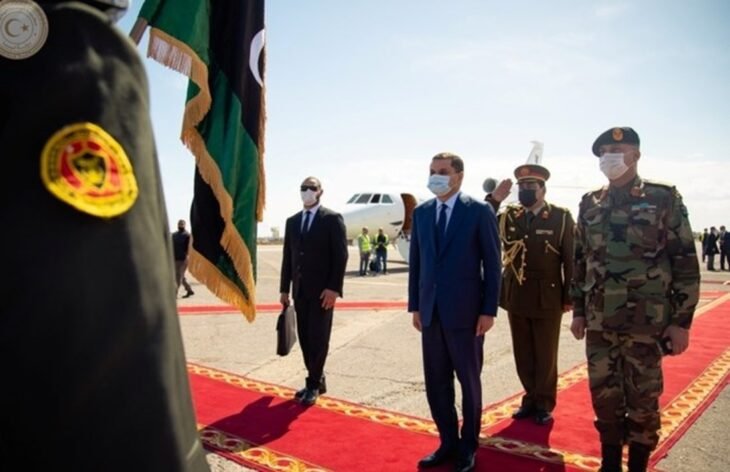
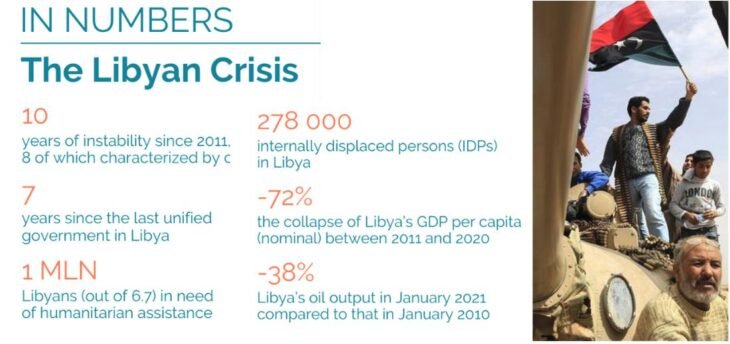
 Libya’s new government, approved in a “historic” parliamentary vote this week, faces a long list of challenges to unite the country after 10 years of strife. Read More