Author - ab_mnbr

Conflict Zones in the Time of Coronavirus (2)

War and War by Other Means

By Jarrett Blanc & Frances Z. Brown

The coronavirus has devastated fragile and conflict-affected states, exacerbating suffering and, in some cases, shifting power dynamics in ways that are likely to influence politics or the conflicts even when the pandemic subsides. Read More

Libyan Music

Music is an upheld tradition in Libya and is the centre of both personal and public celebrations.

Even in national celebrations such as the anniversary of the February 17 revolution, the traditional musical band called a noba took centre stage and beckoned ripples of spectators to surround the makeshift dance floor.

Folk music comes in different styles; some overshadow others in the modern scene. The noba can be thought of as a mobile musical band, usually comprising of three or more young men with a special skill in playing the drums, flute, or cymbals. The noba is a band called on whenever a celebration is in order.

At the sound of the traditional beat, neighbors and passerby gather to join the clapping and dancing. The happiest or bravest of the crowd assume a position in the middle, and whirl their hips the Libyan way – in harmony to the drum beats that pound harder in response to the crowd’s excitement.

The noba is a type of music that has to be witnessed. It is more about experiencing the harmonic moment, rather than hearing the melody.

Zimzamat is another form of live band. Its most obvious distinction from the noba is that it is comprised of female musicians instead.

This traditional band is a group of women, not necessarily older in age, who make appearances at events for females; singing rhyming lines that richly and often candidly convey Libyan culture.

For someone unaccustomed to the hype that comes along with the female band, it takes some focus to hear the words being sung.

The rhymes often describe the young dancers, or praise the bride and groom and their families. Like the noba, the female band livens up the party and entices guests to provide the main source of entertainment on the dance floor.

The instruments used by zimzamat bands are goblet and frame drums. The vocals are meant to be high-pitched; as if in competition with the drum reverberations that conclude each rhyming verse.

Back in the day, Libyan women catered to their own events; made their own music, entertained themselves, and served their own guests. Now special occasions are not as often hosted in the home.

Even the skill of memorizing traditional song lyrics is a talent absent in the younger generations. Women now need paid-help to do the things that family and friends used to do themselves.

Nowadays, hiring a band of zimzamat ensures that a party will be upbeat, entertaining, and up to the standards of tradition and societal expectations when it comes to music.

Interestingly, zimzamat are not only found at events hosted at home, but can also been found in Tripoli’s most decadent event halls. Often, wedding halls have a stage for the bride and groom, as well as one for the live band.

When present at the same time, it is stiff competition. The band often attracts more attention than the bride who is, traditionally, expected to remain collected and more reserved than brides in western cultures.

The contrast of having an electronic stereo system used by a live band, seated on cushions upholstered in tribal patterns is one of the ways Libyan tradition has used modern technology to its benefit.

In Libya, the expectations of tradition are not simply met, they are valued. Tradition has managed to withstand a position of esteem in the Libyan culture, and it is what makes following it as appealing as it is.

_____________
Previously published in ‘Tripoli Post’ on 22 September 2012


How Joe Biden must view Libya

By Michael E. O’Hanlon & Federica Saini Fasanotti

How should the new administration of Joe Biden think about Libya? That country has tried for a decade to create some semblance of stability in the aftermath of the fall of Gaddafi almost a decade ago. Read More

Conflict Zones in the Time of Coronavirus (1)

War and War by Other Means

By Jarrett Blanc & Frances Z. Brown

The coronavirus has devastated fragile and conflict-affected states, exacerbating suffering and, in some cases, shifting power dynamics in ways that are likely to influence politics or the conflicts even when the pandemic subsides. Read More

Bus Culture

A public transportation vehicle in Tripoli, more commonly known as a microo or effiko, is a mini bus, often with a blasting stereo and a young, male driver whose tan line hits the cuff of his left sleeve.

The bus tail often rocks as the vehicle maneuvers wildly through traffic. However, the initial impression of the vehicle’s durability may prove deceitful.

Decorated with photography, soccer team logos, and Arabic calligraphy that read “Allahu Akbar” or “Mashallah,” the inside of each microo has its own personal flare.

Though public transportation is run by independent enterprises, prices are set to 50 dirham or half a dinar per person during the day. Starting at dusk, the price increases by 100% to 1 dinar per person.

Buses in Tripoli can ensure a ride, but not always a seat as the cap of admitted passengers often exceeds the number of available seats. Passengers who are later in joining the route may find all of the seats on the bus full.

Instead of getting off to wait for the next bus, passengers stand in the narrow aisle on the bus. It is not until the aisle is completely crowded that passengers are no longer permitted on the bus.

Without signs, or a number system under which buses operate, the efficiency of bus culture in Libya is impressing in the sense that designated routes are understood by residents. So, too is common bus etiquette.

Out of respect or, as I like to see it, chivalry, male passengers give up their seats to standing females even though it means leaning uncomfortably over seated passengers and squeezing here and there for passengers who want off.

Bus routes almost always follow a straight line up and down main streets. The end location of the designated route is what is used to identify the bus route. A specific hand gesture that symbolises the final destination is signalled to residents waiting by the side of the road.

Other than few well-known locations, the city lacks any official bus stops. That means that locals may catch a ride with the wave of a hand. On the bus, passengers simply call out, “To your right,” and the bus pulls over.

Locals standing to the side of the road, but with no intention of catching a bus, often have to wave off signalling bus drivers.

The creative appeal of Tripoli’s bus culture is a result of the culture’s evolution to modern flare, and coveys the improvisation that were made in order to compensate for public transportation’s lacking resources.

Though bus culture in Libya obviously lacks any sort of written or official protocol, it doesn’t mean the underdeveloped system doesn’t work in its own way.

The tendency of buses in Libya to stop haphazardly every half a block, not to mention the negligence for the safety of standing passengers, may seem to depict an unstable public service system. However, Libyans would admit it does the job, nonetheless.

The mentality, “if it ain’t broke, don’t fix it” will not necessarily help improve public transportation in Libya or any other public service for that matter.

However, the inclination to accept life’s small frustrations has long been seen as the only solution to maintaining a level of order in the country. That is no longer the general perspective in the changing Libya.

What fails to improve, will be left behind and forgotten. For this reason, silence is often interpreted less as a form of defeat and more as an optimistic anticipation for the improvements to come.

____________
Previously published in ‘Tripoli Post’ on 30 July 2012


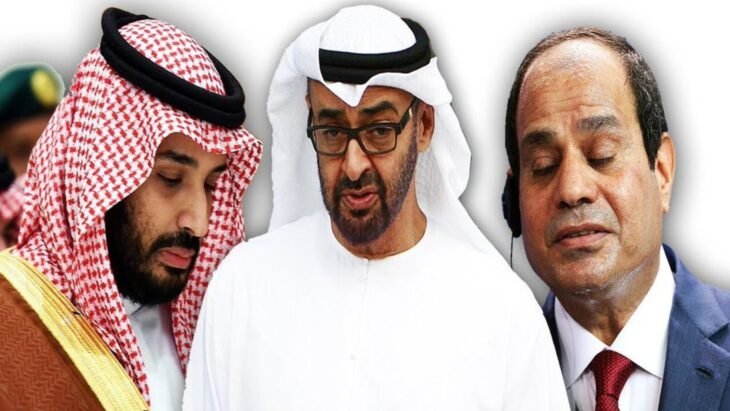
Outsourcing Disinformation

By Shelby Grossman & Khadeja Ramali

In December 2019, Twitter suspended 88,000 accounts that were pushing narratives aligned with positions of the government of Saudi Arabia. Read More

Libyan Beauty

What people constitute as beautiful differs depending on the physical preferences of the given society. Experts caution against the over-generalization of beauty in science, as Darwin believed that physical beauty, because of the variations of looks across the globe, has very few universals.

Different physical traits appeal to different human groups; from the preference of tans in Western societies to small feet in the male Chinese population, what is considered to weigh down the overall beauty scale of an individual is a shared mentality, and may or may not relate to larger, more complicated social or political issues.

What is beauty when Libyans are holding the gavel?

Libyans’ preference to fair skin is not always confessed but can be concluded from common sayings said in passing. Statements such as, She is cute but too bad she is tan, do imply a preference to fair skin and also suggest a negative general perception of darker complexions.

The term indeefa which is used by older generations in Libya to describe a fair girl can literally be translated as the adjective, “clean”.

There are those who will argue that such a preference does not exist in Libya, as it connotes a deeper racial issue; and that beauty is subjective to the preference of each individual. However, it has been my experience that statements that praise fair skin are not seen as unusual as they would if said in another country.

Being relatively new to Libyan culture and similar statements, my initial reaction to the term was that of confusion, coupled with a certain degree of denial. I assumed my interpretation of the term was faulty, knowing well that cleanliness is a trait required of every Muslim and is not considered a cause for praise.

The famous saying by physicist Niels Bohr, “The opposite of a great truth is also true” came to mind. Does that mean that dark people are considered the opposite of indeefa?. I did not like what my altered interpretation suggested.

To clarify the situation I asked what was meant by the term. Of course, those in my company were offended with what my question suggested; that their perception of fair skin as beautiful also means they are in a way, racist. I realized that I unknowingly put them in a defensive position.

The appeal of fair skin not only is apparent on the social level but on the main market as well. Whitening creams are sold in most shops that carry beauty and hygienic products, and most women buy facial foundations that are shades lighter than their actual skin tone. If the foundation does not succeed in making the skin lighter, than the foundation is seen as useless.

Beauty, like all loaded terms, is hard to put in words. Its subjective and altering nature makes its meaning instinctive but hard to explain or describe.

If I stopped ten Libyans on the street and asked what their idea of beauty is, each would likely have a different answer. However, if I asked if he or she would ever sit out in the sun for a healthy intake of Vitamin D, the majority would likely find the suggestion odd.

The sun, like sand in Libya, is apparent in copious amounts and is avoided at any cost; a drastic contrast from the Western obsession with tanning. What extent societies are willing to reach to maintain or achieve specific physical traits is a result of society’s overall judgement of beauty, and the general pressure of meeting those expectations.

There is no doubt that Libyans believe beauty is deeper than a person’s skin, and this is precisely why the suggestion that the existence of racism in Libyan society is seen as offensive. However, the preference to fair skin cannot be denied either.

For whatever symbol fair skin held in the past – perhaps an implication of a comfortable work-free life, one enjoyed shaded from the harsh desert sun; I believe aspects of this inherited mentality are beginning to alter, or at least be rightfully questioned.
____________

Previously published in ‘Tripoli Post’ on 23 July 2012

A Country of Poets

2012 historical Election Day was the first since before the rise and fall of the former regime’s four-decade dictatorship. The prediction on the street was that the long-awaited day would be like Libya’s wedding; and like the romantic notion, the celebrations across the country proved to be a nationwide festivity of Libya’s first real union with democracy.

Schools across the country opened shortly after dawn. A total of 1,453 polling stations opened and welcomed voters. Early risers waited anxiously for the 8:00 o’clock bell to announce the launch of Libya first Election day. Most of all, what seemed apparent were people’s contentment with their position in line, and for having claimed their part in the historical event which older generations had long been deprived of.

The elderly were skipped to the front of lines, and it was with their spoken prayers and feminine ululations that Election Day launched. Elder women wearing the traditional farashiya, a traditional white cloth, showed off their dyed fingers. Throughout the day, people referred to the electoral stain as “patriotic henna” because it symbolised the change that has already happened and that cannot easily be washed away.

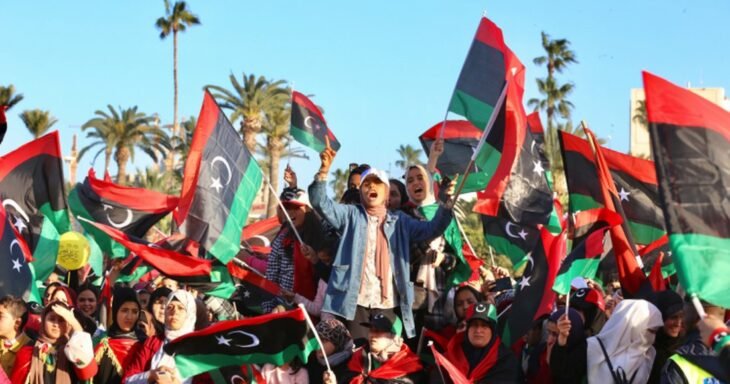
After participating in the official part of Election Day Libyans took to the streets in celebration. The festivities were a reenactment of the previous October’s liberation day, and the revolution’s first anniversary in February; only it seemed the celebration this time around was magnified by a renewed optimism.

Martyrs Square was the centre of Tripoli’s celebrations. Children played on bouncing moonwalks, ate cotton candy and danced to live music of musical bands known as a noba. A small group of teenage boys pounded on different types of drums including the goblet, creating the music that attracted passersby. The youngest of the band led in song, proving skilled vulgarly and lyrically.

The far ripples of crowd sung along to his original rhymes that highlighted the moment. Occasionally the chants were initiated from within the crowd and then followed along by the band. The language of the rhyming lines was colloquial – and interesting mesh with the classical Libyan drum beat.

Together, the joint effort of the people’s clapping and the band’s drum pounding resulted in the creation of beautiful music. Songs were being made on the spot, helping mark the moment in history.

The performance made for a fascinating correlation of the tradition’s past and present influences of the Libyan culture. For outsiders, aspects of musical culture in Libya’s celebrated moment helped characterise the society.

Like the inspiring survival of poetry in Libyan culture, patriotism has also found itself a pedestal in the new Libya. Libyans of all ages seemed to connect instinctually to their own sense of nationalism that was not felt under the previous torturous regime.

It was this strong sense of patriotism that came as a surprise to many across the world and even to older generations in Libya. No doubt, this is what the rest of the world saw on Libya’s Election Day.

Back in Martyrs Square, the youth led the celebrations. Barriers of societal distinctions in the crowd like gender or age group were broken by the beckoning sound of Libya’s youth, singing and dancing to the beat of their country.

Parents stood at the furthest ripples of the celebrating crowd, enjoying the sight of Libya’s potential in their children’s smiling eyes. It was a day that celebrated country, culture and community.

________________________

Previously published in ‘Tripoli Post’ on 16 July 2012

Libyan Pastime

After the passing of afternoon, also known as the bored hours of the day, Libya’s main streets are crowded by shoppers, men sitting in outside cafes drinking tea and smoking hookah, and children in dirt alleys playing soccer, using their own creativity to create goal posts.

However, Fridays are like no other day in Tripoli in the sense that the streets lack the normal rhythm of life that the city is known to beat to. Rows of beeping cars do not crowd lanes 2 to 1, nor do the frequent construction sites sound their systematic hammering. Fridays are quiet days often spent at home in the company of family.

Streets sleep in on Fridays in the way inanimate objects can, stirring only at the appearance of an occasional car and finally by the call of Friday prayers. After the men complete their mandatory attendance at the mosque, they return home where family and extensions of it, spend time with one another.

What Libyans do for fun, and more importantly when they are bored are interesting displays of what society constitutes as appropriate and desirable forms of pastime.

Different to how more individualistic societies entertain themselves – delving in independent activities like surfing the internet when bored – most activities in Libya considered fun and entertaining seem to depend on the number of people in attendance.The more people, the better.

A zarda, or the famous word for picnic, drives Libya’s central entertainment system. When there is reason to celebrate a small success or a change in climate is in order, multiple family entities and friends get together in a distant lot of land and spend the quiet day in each other’s company, eating homemade macaroni, watermelon, and more junk food than normal.

Tasks are split by gender or age group; the men assigned to barbecuing busy themselves with talk of soccer and politics, the women slice the watermelons and pour tea, and the children try to stay out of everyone’s way. The overall picture of the get-together is an effusive display of Libyan culture and its value system.

Cultural values such as community and family are highlighted by these small, simplistic performances of Libyan pastime. Members seemed to enjoy the idea of temporarily leaving aspects of modern society behind in order to cook a meal over ad hoc burners with those they find deserving of the time.

Outsiders might find it surprising that Libyans should prefer the outdoors on summer days considering its desert climate, but Libyans are accustomed to the weather and have learned small tricks from older generations of how to control it; like watering the surrounding sand in order to cool the earth and prevent the sand from lifting to air dust.

On picnics like these, the length of Libya’s days seem to extend passed their infamous durability. Libyans enjoy feeling the passing of time, if only to spend the length of it with family. Not doing anything at all is considered relaxing. Unfortunately, that often means that luxurious chunks of time pass without effect. Many families fail to come up with activities that will be both entertaining and beneficial.

The great thing about Libyan pastime is that it plays as the perfect window for tradition to preserve it’s role in a modernizing society. This, however, does not mean that adopting modern trends would, in any way threaten that tradition.

Forming an activity such as story time can be beneficial to children, and no doubt, would bring family members together. It can also preserve Libya’s diminishing oral tradition. After time, this could be an example of a new tradition that younger family members will follow.

What Libyans do while waiting for a doctor’s appointment, while riding a public bus, or on Fridays are the clearest display of Libya’s tradition of pastime. It is important to value tradition, and respect the value of family and community, however that should not be seen as a task on its own. Many families complain that there are not enough recreational sites geared towards families, and this is a change they’d like to see in the developing country.

A Most Irregular Army (8)

The Rise of Haftar’s Forces 

By Wolfram Lacher

This paper analyses Haftar’s rise and the concomitant transformation of his forces. The prevailing view sees the LAAF as a “core of regulars, many from the Qadhafi era, surrounded by an informal coalition of militias”.

. Read More

Ideological Impetus of Libya’s Foreign Meddlers (2)

Essential Driver, Trivial Factor or Something in Between?

By Inga Kristina Trauthig & Amine Ghoulidi

This paper does not seek to determine who is Islamist or how blurred the lines are between Islamists and “anti-Islamist” forces. Instead, the question of the role of ideology and how it might drive or shape the actions of certain foreign meddlers in Libya will be tackled. Read More

Ideological Impetus of Libya’s Foreign Meddlers (1)

Essential Driver, Trivial Factor or Something in Between?

By Inga Kristina Trauthig & Amine Ghoulidi

This paper does not seek to determine who is Islamist or how blurred the lines are between Islamists and “anti-Islamist” forces. Instead, the question of the role of ideology and how it might drive or shape the actions of certain foreign meddlers in Libya will be tackled. Read More

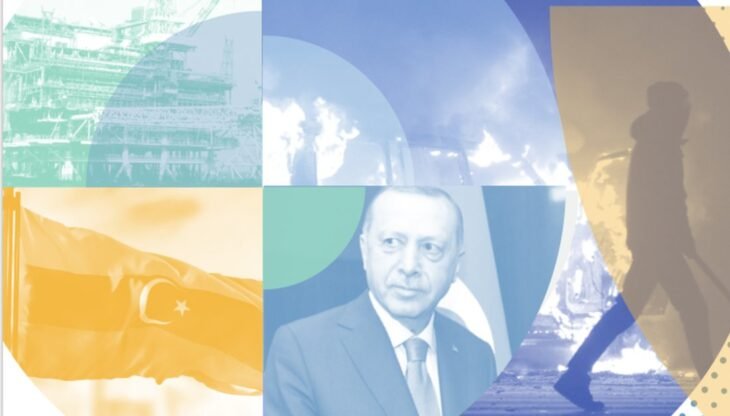
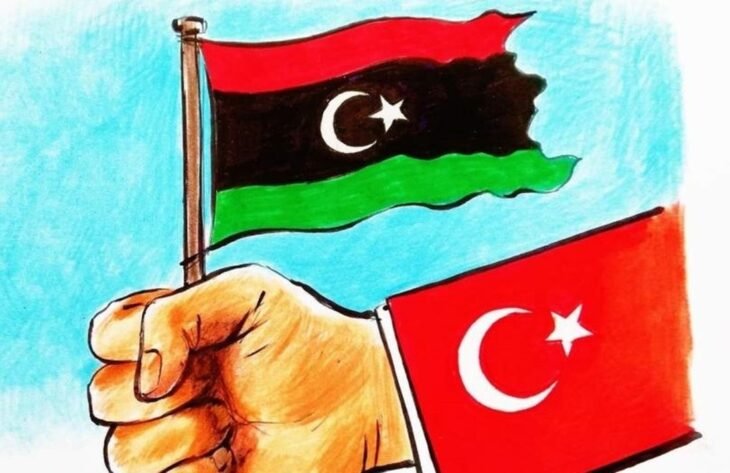
Turkey’s Multiple Roles in the Libyan Conflict (2)

Manoeuvring Regional and Domestic Dynamics

By Pınar Ipek

Turkey’s assertive foreign policy over its sovereign rights in maritime jurisdiction areas in the Eastern Mediterranean is the immediate reason for Turkey’s involvement in the Libyan conflict.

. Read More

A Most Irregular Army (7)

The Rise of Haftar’s Forces

By Wolfram Lacher

This paper analyses Haftar’s rise and the concomitant transformation of his forces. The prevailing view sees the LAAF as a “core of regulars, many from the Qadhafi era, surrounded by an informal coalition of militias”.

. Read More

School is Out

Libyans are neat freaks – this is a fair generalization. Households, as well as shops, undergo thorough cleaning routines every morning in the battle against the country’s sandy terrain. The susceptibility to floating dust keeps Libyans on their feet, literally. Though most households hold a large number of family members, the inside appearance does not often give off that impression.

However, one has to question why the Libyan’s general obsession with cleanliness falters one step away from the threshold, where trash litters sidewalks and street verges like cigarette butts. Unfortunately, this lack of concern for the appearance of public places is highlighted in schools in Tripoli.

I debated on whether or not to write this article because it tells a hard truth about the physical state of many schools in Libya, none of which I personally attended. However, The Bifocal is not about pointing out society’s mistakes but is meant to open dialogue from as many varying perspectives as possible in order to find the small ways we might each help make improvements.

We can only share our personal experiences, and it is my hope that more of the wonderful readers of the Bifocal share their opinions and views as many have taken the liberty already. As the school year comes to a close, I thought it is fitting to share my perception on trash in Libyan schools.

What I saw not too long ago when visiting a high school as well as two university campuses in Tripoli was this:

Deteriorated buildings, deserted stairways buried in waste mounds, restrooms with stenches that drove away all visitors except those with no other choice, and an overall sense of disregard for the upkeep of campuses.

At the university campus students did not seem to allow the appearance of their campus to stand in the way of their education. Hundreds of students walked the hallways, manoeuvring around puddles that seemed to originate from the bathroom.

I could not help but interpret their evading nature as a form of disdain or neglect of their share of responsibility in maintaining their campus.

It was hard to tell if they noticed the stench at all, but I realised, after staying long enough, that I too began to grow accustomed to the smell and the overall appearance of the campus. I realised that this place of oblivion was a desired state of mind; a place that students wanted to reach in order not to be bothered by what they felt hopeless in changing.

Suggesting a clean-up day in this article would hardly be effective, as the real problem is not the trash on the floor but the learned habit of littering. Unfortunately, this is displayed in the appearance of high schools as well where I witnessed the problem be put to practice.

Trash sat on classroom window sills at the high school, on exposed desk drawers, and in empty class corners. The door was kept open by a leaning broomstick, kept by the door just for that reason. And, wobbly desks vandalized by bored doodles threatened to collapse.

Despite all these distractions, I noticed the students’ undeniable eagerness to learn, their enthusiasm to participate, and an admiring display of their respect for teachers.

One must consider what effect that the physical appearance of school campuses has on attending students. By keeping the appearance of academia looking the way it does, we may unintentionally be teaching students to devalue their own education.

Students see the wrong, often participate in perpetuating the bad habit, and are not properly taught better. The one cleanliness rule pertaining to school cleanliness that was followed under the late regime only seemed to enable the habit further.

The rule: the student cleans his own school, put both responsibility and fault on students; often taking away students from their studies in order to scrub classroom floors. A junior high school student described to me what the weekly task of cleaning her classroom entailed: missing lunch break and often the following class period, small groups of students took their alternating turn in cleaning behind fellow students.

No one cared about cleaning unless it was their day,” the student explained. “We bought cleaning supplies with our money because the school did not provide any.” The only lesson the student seemed to learn was not to argue with authority. She had only to look forward to the day that she would be old enough to ignore civil responsibilities without rebuke.

The million dollar question is who is responsible? More importantly, who should be held responsible? The curious thing is that the answers to both have not always been the same in Libya – a contradiction we are teaching our children. What do we have to say about that?

_____________

Previously published in ‘Tripoli Post’ on 30 June 2012

Turkey’s Multiple Roles in the Libyan Conflict (1)

Manoeuvring Regional and Domestic Dynamics

By Pınar Ipek

Turkey’s assertive foreign policy over its sovereign rights in maritime jurisdiction areas in the Eastern Mediterranean is the immediate reason for Turkey’s involvement in the Libyan conflict.

. Read More

A Most Irregular Army (6)

The Rise of Haftar’s Forces

By Wolfram Lacher

This paper analyses Haftar’s rise and the concomitant transformation of his forces. The prevailing view sees the LAAF as a “core of regulars, many from the Qadhafi era, surrounded by an informal coalition of militias”.

. Read More

The EU and The Libyan Walk-Up Call (3)

By Dario Cristiani

February 17, 2021 marks the tenth anniversary of the revolution that toppled the regime of Muammar Gaddafi, whereas the country is as divided as ever. European countries played a crucial role in bringing Gaddafi’s regime to an end.

.

Read More

“Rami”

Previously in the Bifocal column, we discussed the responsibility of members of Libyan society to attend special occasions such as weddings and funerals.

But, what are the traditions that members are obliged to perform while at those occasions; that, if not followed would be considered an inappropriate disregard of custom?

Much of the way Libyan society runs is centered on satisfying societal expectations and maintaining relationships – a clear display of the role that regionalism plays in the country today.

Some of the traditions that are considered unavoidable are those of offerings, as they convey the care for the other person, and symbolise the desire to continue sharing societal ties.

In occasions such as weddings or the celebration of a new child, all the food, and servings of nut-based sweets are displays of hospitality. In return, the acceptance of an invitation and the attendance of a guest solidify the mutual desire for that relationship to continue.

This is important to understand about Libyan culture, as one could unintentionally send the wrong message.

Not showing up to a special occasion can be interpreted as a lack of concern for the host of the party, and may result is the host virtually erasing the no-show guest off her list for future occasions.

A reasonable explanation, of course, would excuse the no-show and would prevent tension from building. (It’s not like you need a doctor’s note, but you could say attendance is almost taken as seriously as school attendance.)

As for the guests who do attend, among the expectations they face include the offering of what is known as rami – a small fortune of money that is given to the host of the party. The amount of the rami differs depending on the guests’ financial capabilities.

For the middle-class Libyan female, the average range amounts to about 5 – 10 LD. For men, or for occasions in the family, the amount increases depending on the person’s generosity.

In short, the normal gift to present in celebratory events is cash. And, interestingly, the money is often offered to the families of the marrying couple, not the couple themselves.

During parties that celebrate the birth of a new child, the rami may be offered at the baby’s grand entrance – when the mother, holding her baby in a white silk outfit, enters the venue and offers a peek to family and friends of her new-born.

While awing over the baby’s cuteness, bills are stashed between wrinkles of white cloth by guests. The mother smiles but pays close attention to what amount was given by whom because the rami is a gift expected to be offered back when the roles reverse, and the guests host their own events.

No doubt, the most fascinating aspect of the custom is when the host of a wedding, often the mother of the bride, performs the exchange.

The mother of the bride – an elder woman wearing a traditionally wrapped striped, silk dress – can be found near the exit of the wedding hall.

While bidding guests farewell and thanking them for attending, the mother of the bride is slipped bills while shaking hands with guests.

The mother resists at first, looking sincerely embarrassed. Her polite refusals are overwhelmed by the guests’ insistence. Meanwhile, their hands remain locked, as they refuse and insist some more.

Under the blare of music that keeps the party alive behind them, the guest and mother of the bride look as if they are playing a small game of tug-a-war.

Finally, the mother submits to the inevitable and thanks the person before moving on to the next exiting guest. The mother never noticeably looks down at her hand, but forming a system of stashing the bills in separate pockets, or looking when no one is paying attention, helps the mother remember which bills were given by whom.

Memories prove quite remarkable in Libya, as hosts often recall how much they were gifted years after the occasion takes place.

The elder women help their younger and growing generations with this tradition, often reminding daughters how much they were given in order for an equal or greater amount to be offered in return.

Tradition can carry on long enough to make it hard to remember how or why it began. But the answers to those questions hold less meaning than what the tradition signifies.

Most Libyans will tell you that with rami, the money is not what matters, but it is the thought that counts.

Every culture has its own version of how to convey feelings for another member of society. I’d say Libya’s version is quite affordable.

____________
Previously published in ‘Tripoli Post’ on 23 June 2012