By Larisa Brown
US ‘is set to charge spy chief who was Gaddafi’s brother-in-law’ over 1988 plane bomb horror. Read More
By Larisa Brown
US ‘is set to charge spy chief who was Gaddafi’s brother-in-law’ over 1988 plane bomb horror. Read More
By Dario Cristiani
February 17, 2021 marks the tenth anniversary of the revolution that toppled the regime of Muammar Gaddafi, whereas the country is as divided as ever. European countries played a crucial role in bringing Gaddafi’s regime to an end.
By Wolfram Lacher

This paper analyses Haftar’s rise and the concomitant transformation of his forces. The prevailing view sees the LAAF as a “core of regulars, many from the Qadhafi era, surrounded by an informal coalition of militias”.
By Emadeddin Badi
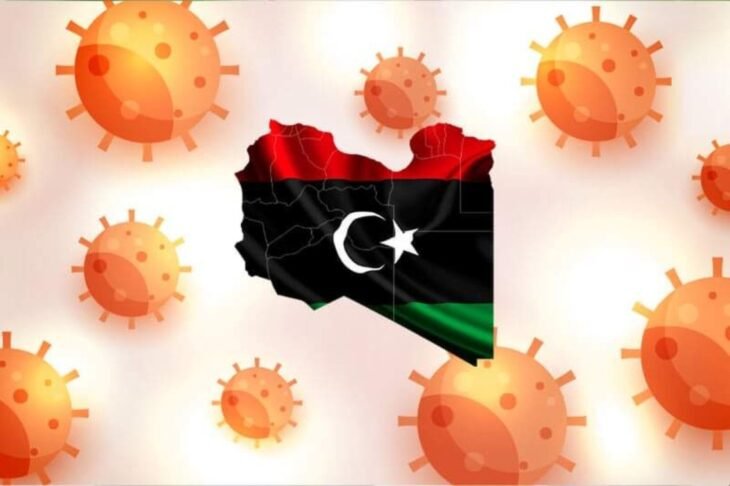
Libya’s conflict was already an internecine struggle before Covid-19 gripped the North African country and brought its citizens more suffering.
.
By Virginie Collombier
This paper attempts to make sense of the ‘Political’ and ‘Quietist’ Salafis currents’ relationships with ‘politics’ and state institutions in times of turmoil.
By Dario Cristiani
This paper will explore several options that can help European countries develop a more consistent, coherent and genuinely European approach to the region.
By Emadeddin Badi
Libya’s conflict was already an internecine struggle before Covid-19 gripped the North African country and brought its citizens more suffering.
The Rise of Haftar’s Forces
By Wolfram Lacher
This paper analyses Haftar’s rise and the concomitant transformation of his forces. The prevailing view sees the LAAF as a “core of regulars, many from the Qadhafi era, surrounded by an informal coalition of militias”.
By Virginie Collombier
This paper attempts to make sense of the ‘Political’ and ‘Quietist’ Salafis currents’ relationships with ‘politics’ and state institutions in times of turmoil.
Nothing has changed in Libya aside from the flag and national anthem.
I’ve heard this statement a number of times in frustrated debates, or quoted by international journalists interviewing Libyan residents. Though, the statement conveys a personal opinion and the person’s right to express it, I can’t help but think that, that’s just it.
This column is not going to convince those in doubt that Libya has, in fact changed. Stating the obvious would be redundant. Instead it is to change the way we have come to perceive the term ‘change’, at least for the reading-length of this article.
Last year’s uprising was the birth of the only form of change the country has seen in 42 years. In many ways, the revolution has had a lasting-impression on Libyans’ understanding of the term.
Change now connotes national transformations, whereas there are various degrees of the term to be appreciated.
I recently found myself in a tense, heated discussion over the current state of the country in its shaky transition phase, not all of the issues discussed were political. I agreed with as much of what was being said as I disagreed.
However, it was hard to express anything at all since one too many people were competing for the floor – a clear display of Libyans practicing a right that has been long refused to them.
While holding sweating teacups, the group openly and simultaneously voiced all of the things that needed to be changed in Libya. However, very few solutions were suggested except that the government should take responsibility.
I watched animated hands, and heard decibels grow higher until finally the sound in the room dwindled. It seemed that the group managed to make each other feel even less hopeful than they had been at the start of the discussion.
“It’s good that you know where change should happen,” I said. “What are you doing to help that?”
I expected the type of responses before I spoke. There’d be a display of shock and no response at all; or, denial and the argument that I’m still stuck in the “American dream” and should stop comparing Libya and America in my head.
However, I was pleasantly surprised by one girl’s honest response, “We didn’t think of it that way.”
One has to question why there have been such conflicting views of how the country is transitioning from a brutal dictatorship. There are the people who have great analytic skills, and know where to point the finger. Then, there are many optimistic individuals who expected the transition phase to be shaky, and have adopted small responsibilities that make them a part of the change they’d like to see.
Under democratic terms, both people have equal right to express their opinions. And, together they represent Libya’s respect for the individual’s freedom of speech.
Change in its most impactful form is change in self.
To embody all the values and morals that you believe every person should possess is one step toward the world reaching that goal. To assume an active stance not only allows you to make your mark in the historical phase that Libya is now undergoing, but it also changes your own outlook on how Libya is changing.
Change always begins as an individual choice. Those choices in large numbers can lead to national transformations like the one we saw last year in Libya’s revolution. Hence, what we express in regards to Libya’s current state says something about ourselves, too.
So, what are you saying about yourself without realizing? Do you believe in change, or do you really believe in change? There is a small difference, and that is a big difference.
_____________
Previously published in ‘Tripoli Post’ on 18 June 2012
By Jalel Harchaoui
Through a historical analysis of Turkey’s military intervention in Libya, this essay identifies the various motivations, reasonings, and threat perceptions underlying Ankara’s current Libya strategy.

Summary: UN efforts to get foreign forces and mercenaries out of the Libya conflict are doomed to failure. Read More
The Rise of Haftar’s Forces
By Wolfram Lacher
This paper analyses Haftar’s rise and the concomitant transformation of his forces. The prevailing view sees the LAAF as a “core of regulars, many from the Qadhafi era, surrounded by an informal coalition of militias”.
Avoiding the Risks of Politicisation
By Jalel Harchaoui
This chapter takes as an implicit starting point the security-related initiatives in Libya between 2011 and 2020, none of which was a full success. Against that backdrop, it delineates lessons for future Security Sector Reform (SSR) efforts, the primary goal being to avoid past mistakes. Read More
If you want to take a snapshot of Tripoli culture, learn the elaborate and often complex customs, and discover the role that tradition continues to play on society, then attend a traditional wedding. But, if you want to see the raw social truths that often go overlooked in the hype of celebration, witness a funeral.
Though it seems odd to compare these two very different, yet equally important occasions, both weddings and funerals are ubiquitous and a part of Libyans’ daily lives. When new to Libya, the prevalence of both occasions may come as a shock.
Making an appearance to each is considered a societal responsibility, so it is not unheard of for people to attend one funeral and one wedding on the same day.
It is important to note early in this column that wedding and funeral customs differ depending on the region in Libya. This article focuses on Tripoli.
Weddings are embellished displays of a society’s past and musical culture. The traditional customs that take place in weddings in Tripoli such as the application of bridal henna, the dressing in traditional striped silk, the men’s musical tadreeja, and women’s female singing band known as zimzamat, are confirmations of society’s preservation of tradition.
All the wedding details from the bride’s pink, striped silk dress worn for the pre-wedding party to the groom’s twine of jasmine petals around his neck on the wedding day are displays of Tripoli’s valued culture.
There are also clear influences of modern culture, such as the dresses imported from Europe and America that brides, as well as guests wear. Or, the use of wedding halls, as opposed to ad hoc tents set up near or on the family’s property.
Traditional weddings have a little something for every age group, which make them exciting for all members of the family. Funerals, however tend to be more exclusive.
Children tend not to be seen in funerals that last three days, if not more. Tradition also restricts unmarried females, despite their age, from attending. One interpretation of this that I received was: Girls should experience their own happiness before witnessing sadness.
Of course, when the deceased is a family relative or a very close friend, that rule is no longer applicable.
Just until recently, what happened in the privacy of a funeral tent was a mystery to me.
The heart-wrenching tears were hard to see, but it was the moaning, gasping and wailing that were hard to bear. It was exactly what I had been warned to expect.
But after the initial shock of losing a loved one faded with the hours of the morning, family and friends seemed to enjoy each other’s company.
I had heard the saying: Weddings do not come without tears, and funerals without laughter. I understood how tears of joy could be shed in a wedding, but laughter in funerals?
Conversations in the funeral did not always mention the deceased, and at some points it seemed guests were trying to avoid the topic all together. Initially, I was extremely offended to be a relative of the deceased and have guests speak to me about their latest purchase. However, I realised that I may be experiencing a culture clash at perhaps, the worst timing.
My friends and relatives had good intentions. I knew that. This was their way of helping me move on; to be reminded of the little things in life that might make me smile. For them, this was their way of showing their love. It didn’t cross their minds that I might misunderstand their behaviour as a lack of consideration.
Having hosted both a wedding in the family and a funeral, I understand how less societal pressure is placed on funerals in Tripoli.
Looking closely at the customs expected of a Libyan funeral, it is less work all around. Rules for serving guests are apparent – the family of the deceased are expected to cook three meals a day and serve dates and butter cream to guests – however, these expectations are simplified significantly in comparison to what is customary in weddings.
Society’s obsession with fashion also refrains from playing its normal role. Most women wear casual clothing, and refrain from removing their hijab, religious headscarf. However, that doesn’t mean they won’t talk about fashion while at the funeral.
Funerals, despite the mournful cause, are less complicated, and less-costly occasions where family and friends sit without societal pressure to look good and present well because in the situation, it is actually expected.
What does this say about society? Perhaps it is hard to conclude anything at all since weddings and funerals are so different. Many people may find my observation relatable, or at least interesting, but in the end it remains mine. What’s yours?
___________
Previously published in ‘Tripoli Post’ on 9 June 2012
By Wolfram Lacher
This paper analyses Haftar’s rise and the concomitant transformation of his forces. The prevailing view sees the LAAF as a “core of regulars, many from the Qadhafi era, surrounded by an informal coalition of militias”.
A fragile ceasefire signed in October is holding in Libya, and thus far renewed conflict has been averted. Read More
Libya’s Post-Conflict Political And Security Governance Dilemma
By Amanda Kadlec
Libya’s competing armed factions have reached yet another critical turning point in the country’s six-year-long conflict that peaked in the battle for the capital throughout 2019 and the first half of 2020. Read More
By Jalel Harchaoui
Through a historical analysis of Turkey’s military intervention in Libya, this essay identifies the various motivations, reasoning, and threat perceptions underlying Ankara’s current Libya strategy.
Shinu ghdakum? I was asked this question once just after arriving at a gathering in Libya. As I leaned in to greet a woman the traditional way – four kisses, twice on either cheek; I was confused to be asked about what I ate for lunch that day.
The timing of the question took the place of a, How are you? So, I assumed my interpretation of the phrase was flawed. However, the woman did in fact want to know what I had for lunch. A question I found oddly considerate, and well, a bit nosy.
It was this first experience with the question that I began to realize the importance of food in Libyan culture, and the emphasis that is placed on the preparation and serving methods in even the most ordinary events in Libyan society.
One can be introduced to Libya’s food system at just about any gathering. Libyan women rarely give up the chance of displaying their cooking skills in order to fulfill the value shared by most Arab cultures, hospitality.
The average Libyan diet is a short-listed menu of main dishes with few modifications made between the cities and suburban areas in Libya. It comprises of a number of savory dishes, all of them red and made from what are considered essential ingredients: onions, tomato paste, potatoes, oil, salt, red pepper and turmeric.
It wouldn’t be an exaggeration to say that almost every Libyan dish is dependable on the availability of these key ingredients. These ingredients contribute to the creation of the marga, or main sauce.
Dishes are thereafter distinguished by the starch base, either rice, couscous, macaroni and even barley.
The results: steaming bowls of the familiar tastes of childhood. The smell of ground cinnamon sprinkled over the finished product balances the spicy marga, and beckons Libyan families to gather round to share another meal with another.
Food, in every culture brings family and friends together. To understand the food of a culture is to better understand the people themselves and their taste.
The older generations in Libya share a common fondness to the meals they have grown old eating, and they often reject the idea of diversifying their meals when the younger generation introduces new dishes.
Unfortunately, many of the newer dishes that Libyans have come to enjoy are fried finger-foods and with as little health benefits as Libya’s red dishes.
According to an FAO analysis, the Libyan diet’s staple ingredient is wheat. The source of 62-67% of daily energy supply is carbohydrates, 22-27% is fat, and 10-11% protein. In comparison to other Maghreb countries, Libya has the highest fat and meat intake.
These numbers, along with a report written by Dr. Yousef M. Elshrek that averages the energy consumption rates in 1999 at a little over 3,700 kcal daily (a rate that exceeds the standard needs for any age), the risk of obesity developing as a future national concern is apparent.
Not only will this be detrimental to Libya’s already weak health system, but it will also be an economic blow, which is why it is so important to take the necessary actions of preventing it from developing.
In 2000, the total cost of obesity in the United States for children and adults was estimated at 117 billion USD. Libya could spend a mere fraction of that in preventive and educational services, and it would be saving the country health problems and money in the long-run.
There is no doubt that Libyan food tastes good. It is part of the problem, and it is why Libyans tend to eat so much of it. Although ignorance of calorie intake sounds like bliss, the hard truth is that a lack of nutritional concern has cost other nations billions of dollars in reversal measures.
Libyans all over the country and abroad share a love for Libyan food. The recipes that have been passed down for generations aren’t going anywhere, and we don’t want them to.
The Libyan diet may lack a sense of diversity that other cultures have; however, that also means diverse Libyans have something to relate to. If we don’t modify our eating habits by adding greens, or perhaps by eating less bread with that macaroni, at least we can all be fat and happy together!
____________________
Previously published in ‘Tripoli Post’ on May 31st 2012
By Wolfram Lacher
This paper analyses Haftar’s rise and the concomitant transformation of his forces. The prevailing view sees the LAAF as a “core of regulars, many from the Qadhafi era, surrounded by an informal coalition of militias”.
By Virginie Collombier
This paper attempts to make sense of the ‘Political’ and ‘Quietist’ Salafis currents’ relationships with ‘politics’ and state institutions in times of turmoil.
By Jalel Harchaoui
This chapter takes as an implicit starting point the security-related initiatives in Libya between 2011 and 2020, none of which was a full success. Against that backdrop, it delineates lessons for future Security Sector Reform (SSR) efforts, the primary goal being to avoid past mistakes.
By Emadeddin Badi
Libya’s security sector has become virtually unrecognizable from what it was a decade ago owing to the transformations brought about since the 2011 revolution.
This evolution has implications for any attempt to usher in short-term and interim security arrangements – including brokering ceasefires or improving security provision and policing capabilities – as well as longer-term security sector reform (SSR) efforts. Read More
To introduce every new day in Libya, even before the coming of light, is the call to prayer. From mosques in separate directions and varying distances come the simultaneous recitations of the Athan, making pre-dawns sound like rhythmic rounds of overlapping melody.
The voices, distinguishing in depth, recite God’s name. Their elongated notes collide, leaving only the name to resonate in the silent streets. Sandals shuffle sleepily to the nearest mosque because the day in Tripoli has begun.
This is something I missed living in a non-Muslim country – this natural role that religion assumes in daily life. But, after moving to Libya, I was surprised to discover the extent to which prayer seems to shape life; how it influences the pace at which people live.
Aside from starting the day, prayer schedules the day in Libya where 100% of the country’s population is affiliated to Islam. It organizes daily life, and has a great influence on the people’s general perception of time.
Time, more often than not, is based on the sections of day, or the gaps between the five mandatory Islamic prayers. Instead of referring to time based on the clock, Libyans often base time on the most recent prayer.
I’ve found that this structure is luxuriously laid-back, and is structured around a loose system that takes getting used to.
Activities are deemed culturally appropriate in specific prayer slots, and plans are made based on the same standards. For example, most wedding invitations I’ve seen do not write an arrival time for guests since the time is considered to be a given.
Social visits are ordinarily planned in the evening, between Asr and Maghrib prayers – a thee-hour time gap. Showing up anytime within that time frame is considered appropriate.
This perhaps is the hardest thing for outsiders to grow accustomed to, simply because it distinguishes drastically from the hurried and meticulously scheduled days in other parts of the world. Leisurely activities there are planned at specified times, and punctuality is always expected. Not following the clock in Western countries is interpreted as a lack of respect for the other party’s time.
When I first discovered Libya’s system, it seemed that Libyans didn’t care to be punctual. Either that or I was missing what everyone else found obvious. I had a lot of questions for female relatives who seemed to be experts on the structure of Libyan social life. How did they know when guests would arrive? Why didn’t they just agree on a time to meet? Wouldn’t it be easier?
Their answers were simple. It would be rude to designate a specific time when inviting guests since it would risk make them feel unwanted before then.
Instead, women seem to possess an internal sense of the rhythm of life in Libya, almost a sixth sense. They can prepare and expect guests without ever letting time complicate the occasion.
There is a degree of convenience in the structure, I have found. In the afternoon (the hottest time of day), more commonly known as the Thuhria, the bustle of the streets dwindle down to workers going home, and to people who are out only because it is absolutely necessary.
This is a luxury I have learned to enjoy since convenience is expensive abroad. Praying in fitting rooms at shopping malls, in parking lots at work, or in an empty classroom are examples of convenience where Muslims are a minority.
Though, this nonchalant take on time in Libya does negatively affect the swiftness of jobs getting done, for the most part I find myself envious of this mentality. It seems Libyans enjoy a more natural lifestyle, where family and social responsibilities are prioritized over work or an individual’s career-obsessed goals.
Libyans are able to structure their days around their religious duties and what they find convenient considering their North African climate.
So, to respond to the many curious Libyans who ask me, “Ama kheir?” – Which is better? I’d say that living in Libya definitely has its advantages.
____________
Previously published in ‘Tripoli Post‘ on May 27, 2012
By Cedric D’Hondt
History sheds a light on the ambivalent relationship between the military and civil government. A mere glance at 20th-century events confirms Zoltan Barany’s observation that ‘[…]the military is potentially one of the most consequential institutional actors in postauthoritarian transitions […].’ Read More
By Jalel Harchaoui
This chapter takes as an implicit starting point the security-related initiatives in Libya between 2011 and 2020, none of which was a full success. Against that backdrop, it delineates lessons for future Security Sector Reform (SSR) efforts, the primary goal being to avoid past mistakes.
By Emadeddin Badi
Libya’s security sector has become virtually unrecognizable from what it was a decade ago owing to the transformations brought about since the 2011 revolution.
This evolution has implications for any attempt to usher in short-term and interim security arrangements – including brokering ceasefires or improving security provision and policing capabilities – as well as longer-term security sector reform (SSR) efforts. Read More
You’re sitting in a traditional Libyan gathering, sipping red tea and served an array of date-filled and sugar-powdered sweets.
The conversations in the room overlap and though it is hard to focus on one in specific, the overall sound has a unique order to it. When you are asked a question, silence falls over the room.
This moment you spend thinking of what to say can feel like a full minute to someone new to Libya, and halting in Arabic or, specifically the Libyan dialect. Whether you are a foreigner or a Libyan from abroad whose tongue feels and sounds heavy when pronouncing the elegant Arabic “R”, your speech will stand out, and so will you.
It wouldn’t be right to launch The Bifocal column without addressing the most important topic relating to the insider/outsider complex. A language barrier is the first thing that distinguishes a person in a given society.
How you speak has a great influence on people’s initial impressions of you, but you can also learn a lot about a person’s reception to diversity. How open-minded a listener is, can be conveyed in his or her reaction to how you speak.
Even within Libya there are distinguishable sub-dialects. Libyans who live in Tripoli but originate from the inner rural cities of Libya have expressed to me their hardships of being expected to match Tripoli jargon.
There are plenty of Tripoli residents, who will express their appreciation of your developing speech or different dialect, and I’d like to think they compose of the majority; however, almost every newcomer experiences the unfortunate situation where the “barrier” in the common term “language barrier” is built right before their eyes.
Normally, the term refers to a verbal barrier between two people who do not share a common language and which prevents them from communicating effectively. However, the “barrier” in the unfortunate situations to which I am referring has less to do with the listener’s failure in understanding your meaning. Barriers here are built voluntarily.
A Listener may impolitely point out the mistakes you make, or in extreme cases, laugh at you for making them. The Listener’s intention may be to teach you something, but the only thing succeeded with this type of reaction is that an implicit barrier between the two of you was created.
Recently, I found myself in one such unfortunate situation. While speaking fluently to an acquaintance at a wedding in Tripoli, Arabic words not belonging to the Libyan dialect found their way into my speech – a natural result of having learned Arabic by Syrian and Palestinian Arabic teachers abroad. The Acquaintance found my usage of these words funny.
Because I don’t like to take myself too seriously, I joined in the laughter. Her intentions seemed innocent at first but her tendency to focus on the actual words I was speaking, as opposed to what I was saying was inconsiderate. However, she seemed oblivious that her actions might hurt my feelings or cause me to withdraw all together from the conversation.
This language barrier is the hardest thing to overcome for newcomers. Surveys conducted in cultures around the world, including one by Statistics Canada show that immigrants reported language barriers as their biggest difficulty next to finding adequate jobs.
For someone new to a culture, what you learn from the quick interactions in a grocery shop or when meeting someone new, can prove influential on the general judgment you make of the society.
It takes time to realize that unfortunate situations like the one described, are not ill-intended as they seem. Instead, they are representative of the restrictions Libyan society was subjected to in the past.
For a long time, under the former regime’s rule, it had been one way or the highway. If you didn’t sound, act and think exactly like the people around you, you didn’t belong. Now that restrictions have been lifted in the new Libya, it is a matter of overcoming that backwards mentality.
We don’t have to sound exactly like each other to understand or connect with one another. Libya’s discomfort with the “different” is evolving. In the new Libya, we have to bridge the gaps one awkward situation at a time.
____________
Previously published in ‘Tripoli Post‘ on May 17, 2012
By Virginie Collombier
This paper attempts to make sense of the ‘Political’ and ‘Quietist’ Salafis currents’ relationships with ‘politics’ and state institutions in times of turmoil.
By Yasmina Abouzzohour
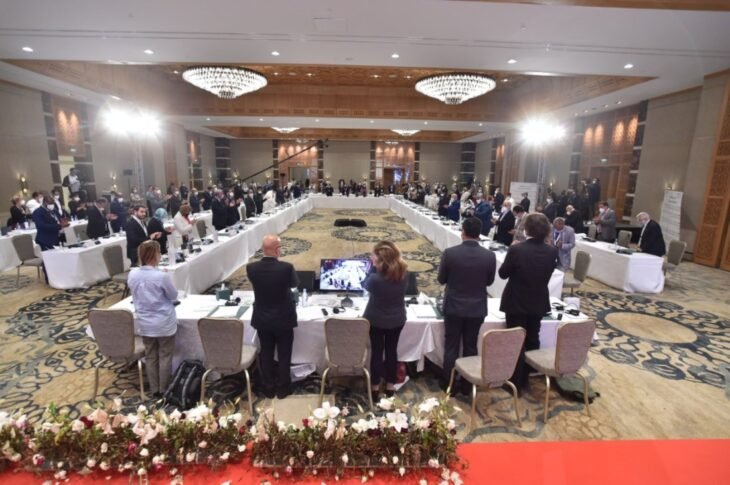
Starting on November 30, representatives of Libya’s House of Representatives (HoR) and State Supreme Council participated in a two-day meeting in Tangier mainly dealing with the question of sovereign appointments. Read More

Could talks that recently resulted in a cease-fire and set a date for an election finally help push dangerous international players out of Libya? Read More
By Jalel Harchaoui
This chapter takes as an implicit starting point the security-related initiatives in Libya between 2011 and 2020, none of which was a full success. Against that backdrop, it delineates lessons for future Security Sector Reform (SSR) efforts, the primary goal being to avoid past mistakes.
By Virginie Collombier
This paper attempts to make sense of the ‘Political’ and ‘Quietist’ Salafis currents’ relationships with ‘politics’ and state institutions in times of turmoil.
The Tripoli Tribune is happy to republish this opinion column that will explore the cultural, societal, and sometimes political aspects that make up Libyan society today. Read More
By Emadeddin Badi and Karim Mezran

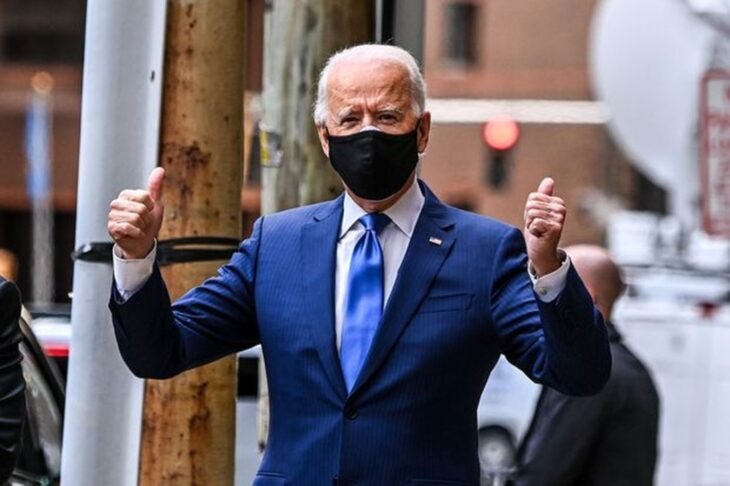
Upon assuming power, President Joe Biden and his administration will face a still-chaotic Libya despite the many political maneuverings afoot among Libyans and their respective outside backers. Read More