Archive - August 2025

Türkiye and Libya: From military support to political partnership

Fatih Mehmet Küçük

Türkiye strives for a ‘United and Single Libya’ through military, political and diplomatic support

The Second Libyan Civil War, which began in 2014 and lasted for approximately six and a half years, involved a power struggle that divided the country into two main axes. On one side is the U.N.-recognized Government of National Accord (GNA), based in Tripoli, while on the other is the House of Representatives (HoR) in the east, backed by the Libyan National Army (LNA) led by putschist Gen. Khalifa Haftar.

This internal conflict in Libya quickly turned into an international proxy war. Haftar’s forces received significant military and financial support from countries such as Egypt, the United Arab Emirates (UAE), Russia, France and Saudi Arabia. These countries have supported Haftar through air strikes, mercenaries (Wagner Group) and the supply of weapons and ammunition. In contrast, the GNA, which holds international legitimacy, has received political and military support from countries such as Türkiye, Qatar, Italy and, to a lesser extent, the United Kingdom.

The long-running war reached a new turning point in 2019 when Haftar launched a major offensive to capture the capital, Tripoli, but failed due to Turkish support. The failure of the offensive and increased international mediation efforts forced the parties to seek a cease-fire. With the permanent cease-fire approved on Oct. 23, 2020, widespread fighting in Libya effectively came to an end. However, this did not mean that peace had been established. The end of the war was the result of a stalemate, as neither side achieved absolute military victory. Therefore, the peace process froze the fighting on the military fronts, leaving the resolution of underlying disputes to a political transition process.

Although armed struggle gave way to different conflicts, small-scale clashes continued throughout the country. For example, the capital, Tripoli, was shaken on May 12, 2025, by the outbreak of fighting between two powerful armed groups affiliated with the Government of National Unity: the 444th Infantry Brigade and the Stability Support Agency (SSA).

Triggered by the assassination of an SSA commander, the clashes resulted in at least eight civilian deaths and more than 70 injuries before a cease-fire was declared on May 14. These clashes are a critical indicator that the nature of the “civil war” has undergone a significant shift. The primary conflict is no longer a clear confrontation between East and West. Instead, it has become a complex, unpredictable struggle for power and influence within each faction’s own territory.

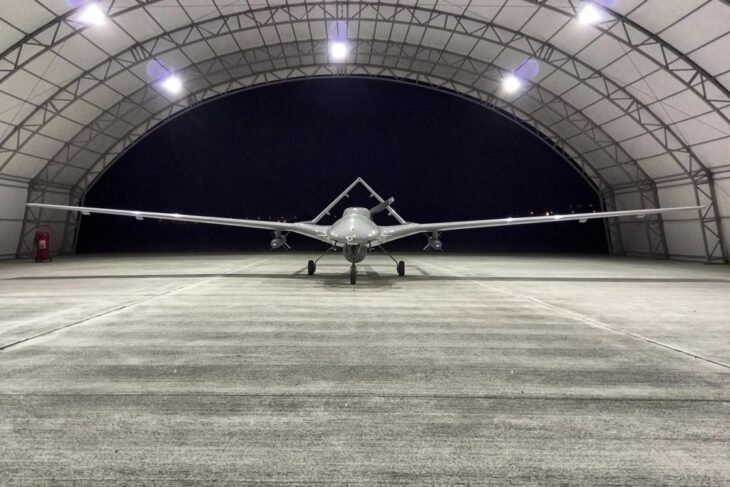
The internationally recognized Government of National Accord (GNA) formally requested military support from Türkiye on Dec. 26, 2019. In response to this request, the Turkish Parliament approved a presidential decree on Jan. 2, 2020, authorizing the deployment of troops to Libya. This decree granted the President the authority to deploy the Turkish Armed Forces (TSK) in Libya for a period of one year, which has been extended in subsequent years. In addition to sending Turkish troops to Libya, it is known that various products developed by the Turkish defense industry, primarily the Bayraktar TB2, are being used in Libya.

5+5 Joint Military Committee

Türkiye provides comprehensive support in the political and military fields to achieve the goal of a “United and Single Libya.” This support is carried out through military talks, technical delegation visits and naval activities.

A key aspect of the cooperation between Turkey and Libya is the 5+5 Joint Military Committee (JMC) talks. These meetings were held in Ankara in 2021 and 2024. In December 2021, during a meeting held by the United Nations Support Mission in Libya (UNSMIL), steps that could be taken to promote peace and stability in Libya were discussed, and information was shared about the Action Plan announced in Geneva on Oct. 8, 2021.

Another meeting in November 2024 focused on additional steps to promote Libya’s peace, stability, and security. The talks emphasized the importance of Libya’s territorial integrity and national unity. Statements made by Libya indicated that Türkiye approached the matter not with a colonialist attitude, but with a friendly and supportive stance. These meetings confirmed both sides’ commitment to the goal of a “United and Single Libya.”

Agreement on intelligence sharing

The establishment of relations between Türkiye and Libya has not been limited to the military sphere. In this context, an agreement was signed in October 2024 to develop intelligence sharing and law enforcement cooperation. The agreement outlines cooperation in areas such as counterterrorism and the prevention of organized crime. The signed agreement establishes a secure communication channel for the real-time sharing of intelligence between Turkish and Libyan law enforcement agencies.

In addition, under the agreement, Türkiye commits to providing joint training programs and technical assistance to modernize Libya’s security infrastructure. In other words, Türkiye will provide logistical and technical support to Libyan law enforcement agencies to increase operational efficiency. Thus, in addition to efforts to restore Libya’s military stability, Türkiye is also working to ensure the country’s internal security.

Building contacts with LNA

In line with its determination to cooperate with all parties in Libya, Türkiye has also increased its contacts with the eastern-based Libyan National Army (LNA). In this context, on April 4, 2025, the son of Gen. Khalifa Haftar and Deputy Commander of the LNA, Col. Gen. Saddam Haftar, paid an official visit to Ankara to meet with Minister of National Defense Yaşar Güler. This visit was considered a “new, important strategic step” toward the goal of “ending the fratricidal conflict” and establishing a “United and Single Libya.”

During the visit, Hafter praised Türkiye’s operational experience, discipline and high technological capacity, emphasizing the competence of the TSK in border security. Following this visit, between June 15 and 28, 2025, three military technical delegations from eastern Libya conducted inspections at various military headquarters and training institutions in Türkiye.

Güler and Hafter also met at the IDEF 2025 Defense Industry Fair, where they continued their bilateral contacts. It is also worth noting that Saddam Hafter met Güler previously, when he attended the “Saha Expo 2024” International Defense and Space Fair, held on Oct. 22, 2024. In this regard, it is also possible to say that Libya is interested in Turkish defense industry products.

Turkish, Libyan navies side by side

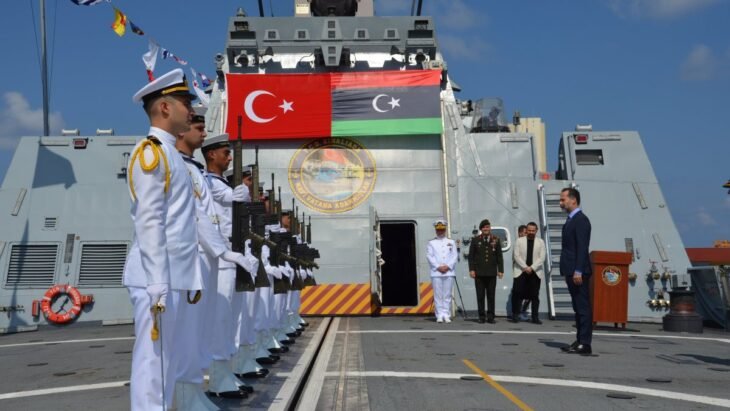
Türkiye’s efforts to bring stability to Libya also continue by sea. In this context, the TCG Kınalıada corvette visited both the ports of Tripoli and Benghazi in August 2025. During the visit to the Port of Tripoli on Aug. 17-18, 2025, meetings were held with several high-level Libyan officials, including the Libyan minister of Defense, the chief of the general staff, and the commander of the navy. It is stated that these visits demonstrate Türkiye’s inclusive approach to its “One Libya” goal and its determination to develop relations with all Libyan officials.

In addition, the Turkish Naval Task Group operating off the coast of Libya conducted various training exercises with the Libyan Navy and students from the Libyan Naval Academy. Such training exercises are interpreted as another element supporting Türkiye’s efforts in the region.

Türkiye’s ambassador to Tripoli, Güven Begeç (2nd R), visited the TCG Kınalıada Corvette and met with naval commanders in Tripoli, Libya, Aug. 17, 2025. (AA Photo)

From support to partnership

Türkiye’s involvement in the Second Libyan Civil War has not only changed the course of the conflict but has also been a strategic move that reshaped the regional equation in the Eastern Mediterranean. The main motivations for the intervention can be summarized as Libya’s geopolitical and economic potential, as well as the prevention of policies that exclude Türkiye in the Eastern Mediterranean.

The most critical impact on the ground was the transformation of the conflict dynamics in favor of the GNA, as Turkish UAVs targeted Khalifa Haftar’s forces’ air superiority and logistical lines. This military success paved the way for Haftar’s defeat and a lasting cease-fire. In this context, Türkiye’s actions in Libya constitute an important case study demonstrating the impact of technological superiority on proxy forces in modern warfare.

Recently, Türkiye’s role in Libya has evolved from a military presence to an economic and political partnership. Military support has paved the way for a political solution, laying the groundwork necessary for Türkiye to maintain its economic and political influence in the long term. Although the political process in Libya remains uncertain, Türkiye’s steps reflect a multifaceted and determined foreign policy approach that integrates hard and soft power elements. This strategy supports Türkiye’s goal of increasing its power and influence in the region.

______________________
With mass arrests and punishment of all dissent, a new wave of repression is gripping both rival regions of Libya

Hanaa Mohamed

According to the United Nations Support Mission in Libya (UNSMIL), at least 60 people have been arbitrarily detained in the first half of 2024 alone.

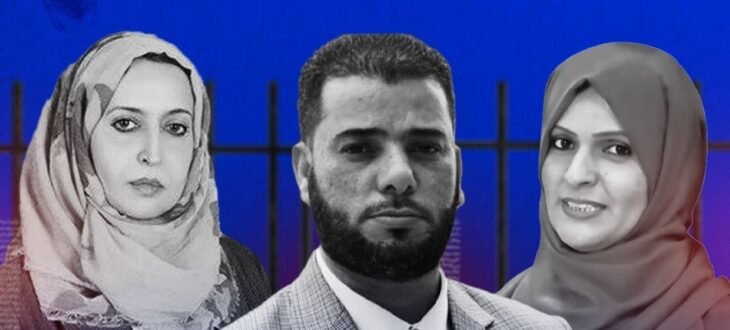
For more than a year, Jumaa al-Darsi, 40, has scoured Benghazi and beyond for any trace of his brother, Libyan lawmaker Ibrahim al-Darsi, 47, who disappeared in Benghazi in 2024, after attending a military parade marking the tenth anniversary of “the Dignity Revolution,” the uprising led by Field Marshal Khalifa Haftar, commander of the Tobruk-based Libyan National Army (LNA). 

Al-Darsi has knocked on doors and called in old favours. He has followed whispers and chased rumours. But every path has led to silence. His family still does not know why he was taken, or if he will ever come home. His brother’s disappearance is among the countless cases in Libya, where abductions have become a weapon against dissent, utilised by the rival factions and infighting militias that have carved up the country since 2011.

“We still cling to any hope of finding Ibrahim, but the security and human rights authorities aren’t cooperating with us on my brother’s case,” al-Darsi told The New Arab. “His situation remains unknown. We don’t know which entity or individuals kidnapped him or the reason behind it.”

According to the UN human rights office and United Nations Support Mission in Libya (UNSMIL), at least 60 people have been arbitrarily detained in the first half of 2024 alone for peacefully expressing their political views. The practice, entrenched under Muammar Gaddafi to muzzle critics, has endured even after his ouster through years of upheaval and division. 

Today, both the Tripoli-based Government of National Unity (GNU) and the eastern Government of National Stability (GNS), alongside their affiliated armed groups and militias, continue to detain opponents in secret locations, cutting them off from their families and denying them legal counsel. The UN has noted that “these unlawful practices have created a climate of fear, shrinking civic space, and eroding the rule of law.”

No safety in Libya

According to human rights activist Ahlam al-Warfali, the systematic violations committed by law enforcement and security agencies in detention centres and prisons in eastern and western Libya against activists, journalists, and human rights defenders constitute “crimes against humanity punishable under international law.”

“There’s no safety in Libya,” she said to TNA. “Everyone is vulnerable to kidnapping, torture, and sometimes killing, for refusing the presence of certain groups or publishing political posts criticising the current political landscape.” Media outlets and social media users had circulated photos and video footage reportedly of al-Darsi, showing him chained and stripped of his clothes in a secret prison in eastern Libya.

Al-Darsi refused to comment on the widely shared images, saying only: “My brother is still missing, and the security authorities aren’t providing us with any information about his condition or whereabouts.”

Most recently, the abduction of human rights activist Youssef al-Taweel in Misrata—seized from his workplace after he criticised Fathi Bashagha, the former interior minister in Fayez al-Sarraj’s Government of National Accord, the predecessor to the GNU, and a powerful militia leader who later rose to become prime minister under Libya’s Parliament in 2021—sent shockwaves through the city. “This confirms that Libya has neither freedom of opinion nor expression,” she added.

Security expert Mohamed al-Mahshash argues that impunity for perpetrators of these crimes increases the severity of these brutal acts, considering that security and executive agencies do not operate according to laws but according to orders and instructions they receive from dominating figures heads in either eastern or western Libya.

“These acts don’t only affect Libyans, activists, and journalists, but also foreigners, migrants, and asylum seekers, often committed out of revenge or to obtain confessions under duress, or based on political or ideological affiliation, despite repeated demands and calls for the necessity of putting an end to such operations,” he remarked. 

The Libyan watchdog Monitoring Crimes in Libya reported that in November, security forces linked to the GNU in Tripoli arrested more than 200 asylum seekers, mostly Sudanese and Nigerian nationals, among them women and children.

The organisation also held the GNU responsible for the wave of arbitrary arrests, pointing most recently to the case of Abdel Moneim Rajab al-Marimi, a 51-year-old activist and journalist who died from severe injuries after falling from the third floor of the Public Prosecutor’s office in Tripoli. He had been seized in Tripoli in July by armed men and handed over to the Internal Security Agency over his critical political and human rights views. 

Social media users have also circulated in August leaked footage showing the conditions inside prisons run by the Special Deterrence Forces, known as Rada, a hard-line Islamist paramilitary unit that controls Mitiga International Airport. The videos appear to reveal the violence and torture inflicted on detainees within the airport. The group is also accused of torturing and killing Sharaf al-Din Hamdan, who had been arbitrarily detained for more than 11 years without trial. 

Prime Minister Abdul Hamid Dbeibah’s government ordered an assault on Rada in May, after the militia affiliated with the Presidential Council had expanded its grip over parts of Tripoli. The government also demanded the release of all detainees held in its prisons without legal justification. But after the recent cease-fire, their fate remains uncertain. 

In a 6 July interview, Dbeibah insisted that the inmates of Mitiga prison be referred to the Office of the Attorney General and that control of Mitiga International Airport be transferred to the Ministry of Transport.

Unknown fates

Women, girls, and female human rights activists and journalists face enforced and arbitrary disappearance and various forms of torture, violence, and assault in the absence of legal protection for women. 

Among them is Libyan lawmaker Siham Sergiwa, who has been missing for more than six years, and whose alleged leaked photos recently reignited debate about her unknown fate since her kidnapping. The circulated images showed a body believed to be MP Sergiwa after being assaulted and killed by forces affiliated with the LNA in Benghazi.

These leaks sparked condemnation from the Council of Elders and Notables of Misrata over what Sergiwa was subjected to after being taken from her home and tortured. 

Council member Khalifa Lamloum told TNA that this act was committed by gangs operating outside the law, executing authorities’ instructions without recourse to law, calling on the Attorney General and judicial authorities to “open an investigation into the leaked photos, verify their authenticity, and urgently hold those involved accountable.”

“If these acts go unpunished, they will only entrench impunity and reinforce the dominance of armed force and violence,” al-Warfali warned. 

“There are no reliable figures on the kidnapped, detained, or missing across Libya, and the victims range from activists and journalists to community elders, targeted for their political or tribal affiliation or simply for views critical of the authorities in both east and west. Many are even coerced into recording false confessions to crimes that may not exist,” al-Warfali concluded. 

______________________

China’s New Expansion to North Africa

Sema Kalaycioglu  

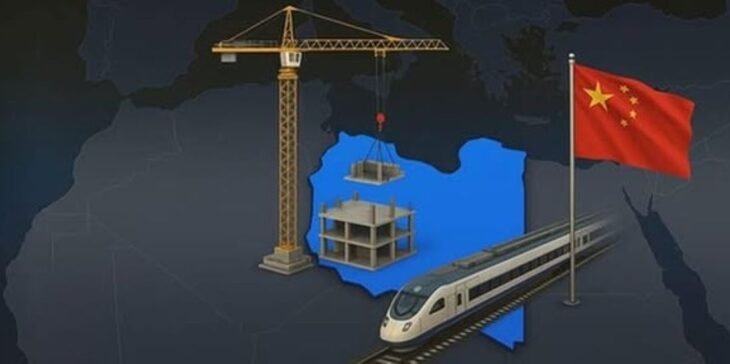
As of 2024, China has increased its interest in North Africa again and has started a comprehensive opening to the region, especially through Libya. Its approach based on the principle of political neutrality allows it to establish simultaneous relations with the Tobruk and Tripoli administrations. Within the framework of the Belt and Road Project, rail system, energy, infrastructure and port investments come to the fore, while high-cost initiatives such as the Benghazi Metro Project are a symbol of China’s return to Libya. …

Return to Libya

China’s interest in North Africa has increased again as of 2024. The Trump administration’s lack of focus on the region has paved the way for new initiatives for Beijing. With Libya, which needs support, meeting this interest, political and military contacts, especially economic projects, have started to revive since the spring of 2023. China’s Libya policy is based on the principle of political neutrality.

This approach offers the opportunity to establish simultaneous relations with the Tobruk and Tripoli administrations. Although it does not seem possible to achieve reconciliation between the two sides in the short term, it can contribute to the reduction of tensions through investments in housing, infrastructure, employment and industry.

In particular, the rail system investments to be initiated within the scope of the Belt and Road Project will not only strengthen the logistical ties between Tobruk and Tripoli, but will also enable regional integration for Algeria, Morocco, Tunisia and Egypt, which has not been implemented for a long time. Thus, China will also gain access to new market opportunities.

Concrete project initiatives have been on the agenda under the umbrella of the China-Arab States Cooperation Forum (CASCF) for the past year. China, which effectively used Libya’s influence on the African Union during the Gaddafi era, aims to revive this legacy by increasing its influence in Libya today. Although economic goals seem to be a priority in Beijing’s Libya policy, the political consequences cannot be ignored.

China’s orientation towards development projects simultaneously with Tobruk and Tripoli meets the common interest of different political groups within the country in the reconstruction processes. While this approach has the potential to reduce the influence of Western Europe in the region, it also carries the risk of the US-China rivalry moving to North Africa via Libya. In this context, it remains unclear whether Washington will turn to an intervention again.

Multiple Projects and Investment Areas

China is acting with a long-term strategy rather than taking unplanned steps in Libya. It has simultaneously submitted project proposals to central and local governments and diversified them. Within the framework of the Belt and Road Project, infrastructure investments, renewable energy initiatives, renewal of oil pipelines, increasing refinery capacities and port construction are prominent topics.

In eastern Libya, the Libyan Fund for Development and Reconstruction, established by Khalifa Haftar to rebuild the infrastructure destroyed by the floods, is trying to attract Chinese investments to the country. In this context, the Chinese BFI Consortium has put solar power plants, water treatment plants and railway line projects that will connect Benghazi to the city of Musaid on the border with Egypt on the agenda.

In addition, the Benghazi Metro Project, which is planned to be largely financed by China and whose cost is estimated to be 24-30 billion euros, draws attention. The implementation of the project in cooperation with China Railways International Group Company (CRI), Germany’s Siemens and Britain’s Arup International Engineering Company will be one of the first examples of China-Europe partnership in North Africa. In addition, housing and workplace projects in Derna and Benghazi have also come to the fore.

Security Dimension

For China, Libya is important not only economically but also geopolitically. It has a strategic location, especially in terms of being an alternative to the India-Middle East-Europe Economic Corridor (IMEC) announced in 2023.

In this context, China has included Algeria and Tunisia in the scope of the Belt and Road Project. Excluding Turkey from IMEC may make it attractive for Ankara to support China’s expansion into North Africa. However, the fact that Turkey’s military presence in Libya remains relatively in the background makes the possibility in this direction uncertain.

China’s opening up to Africa is not limited to economic initiatives; The security dimension is also becoming more and more prominent. Beijing, which has developed military and security cooperation with more than 100 countries within the framework of the Global Security Initiative, carries out military training activities with Egypt, Algeria and Sudan. Although there is no clear agenda for direct arms sales yet, this possibility cannot be ruled out in the long term. The concretization of China-Libya military cooperation in the near future is not limited to Libya but can reshape the balances in North Africa.

_______________________

Libyans turn out for local elections as officials condemn ‘unacceptable’ obstructions

Voting in a number of cities has been delayed over ‘irregularities’, says the electoral body.

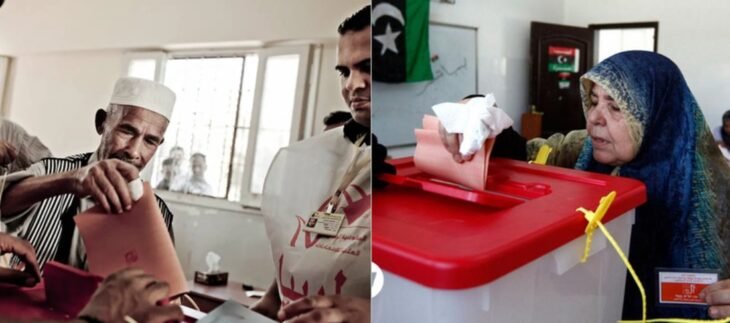
Hundreds of thousands of Libyans went to the polls on Saturday as officials condemned “unacceptable” obstructions that prevented voting in some areas.

Fifty cities across the fractured country, including the capital Tripoli, took part in the local elections. Polling stations opened as early as 9am [7am GMT] for the 380,000 registered voters, with security provided in the west by the interior ministry of the Tripoli-based Government of National Unity (GNU).

The High National Election Commission (HNEC) said voting had been postponed in several polling stations after incidents and irregularities were reported.

Libya remains divided between two authorities. Prime Minister Abdul Hamid Dbeibah, based in Tripoli, leads the internationally recognised GNU, while the east is controlled by Khalifa Haftar, head of the Libyan Arab Armed Forces.

After a first phase in November across 58 cities, voting was scheduled to take place in 63 municipalities – 41 in the west, 13 in the east and 9 in the south. But the HNEC was forced to suspend the election at the end of July in 11 cities after reports of “irregularities”.

In a statement on Saturday, Dbeibah praised those who came out to vote and criticised the reported disruption.

“There is no doubt that obstructing the electoral process, preventing it in a number of municipalities within this phase, and blocking citizens from reaching the ballot boxes to choose those who will manage their local affairs is an unacceptable act. It puts those responsible to the test regarding future entitlements, including parliamentary and presidential elections,” he said.

“Direct elections remain our firm vision and the only option we seek to realise across the entire country. They are the path to overcoming political division and ending the long and burdensome transitional stages that have weighed heavily on our nation and our people.”

On Saturday, HNEC said voting had been postponed in seven municipalities until 23 August after arson attacks destroyed election materials in Zawiya and Sahel al-Gharbi.

The commission also reported an “armed attack” on its offices in Zliten, 150km from Tripoli, on Tuesday.

Dbeibah was appointed in 2021 as a consensus prime minister with a mandate to lead Libya into elections that never took place. Since then, there have been regular protests against his rule.

Libya has been divided since the Nato-led removal of long-time ruler Muammar Gaddafi in 2011. The civil war became a proxy conflict with Russia, the UAE, Egypt and France backing Haftar and Turkey supporting the government in Tripoli. 

________________________

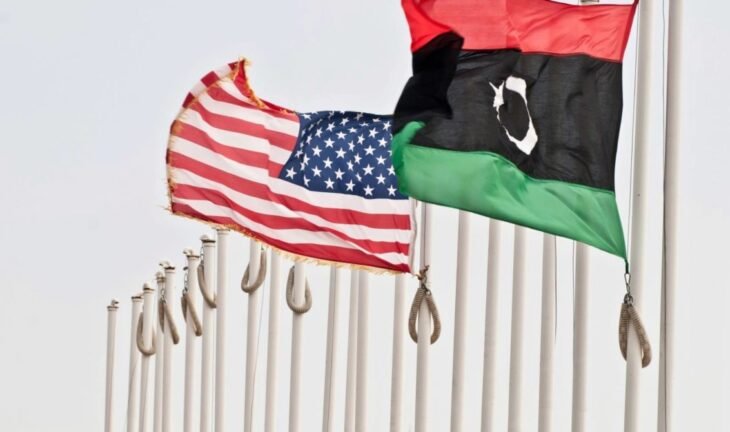
Libya’s Partnership with the United States

Abdul Hamid Dbeibeh

A Decisive Moment for Libya’s Transition

For more than fourteen years, Libya has been an open arena for international political experiments, marked by rotating initiatives, missions, and temporary agreements that have failed to produce lasting stability or institutions capable of enforcing the rule of law.

This prolonged phase has not been merely the product of internal divisions; it is the cumulative result of international approaches that prioritized managing crises over resolving them, and procedural formalities over measurable results.

Such conditions allowed parallel power networks—combining illicit economic resources with armed capabilities—to penetrate state institutions, eroding centralized decision-making.

The outcome has been the prolongation of the transitional phase and the entrenchment of a fragile political reality in which instability perpetuates itself.

Recent regional experience shows that implementable solutions do not necessarily start as long-term frameworks, but derive their value from their ability to create a “moment of agreement” that can shift the trajectory of conflict.

In this context, the U.S.-brokered agreement between the Democratic Republic of the Congo and Rwanda illustrates how swift understandings and direct agreements can deliver short-term political breakthroughs and reset security and economic priorities, even if structurally fragile.

This approach—combining decisive political pressure with investment incentives—is particularly relevant to Libya, where targeted, politically-backed agreements could recalibrate the equation and open a path toward measurable stability.

In recent years, Libya has undergone a strategic shift away from exclusive reliance on open-ended UN-led processes toward direct understandings with capable regional actors.

Within this framework, the Government of National Unity has developed a strategic plan with partners such as Turkey, Italy, and Qatar to reduce irregular migration through strengthened border enforcement, advanced technical tools, rapid return mechanisms, and dismantling smuggling networks on both shores of the Mediterranean.

This plan is more than a security response; it is a broader vision to transform Libya from an unregulated transit point into a platform for security and economic cooperation that delivers measurable results and offers a regional model combining deterrence with development.

At the heart of this vision lies a clear strategic triad: consolidating legitimate state authority by unifying and strengthening security forces under a single command; combating the parallel economy and illicit networks that undermine investment and trust; and activating justice and governance institutions to ensure accountability and transparency.

These are not political slogans but essential preconditions for any transition to a “profitable and effective Libya” and the foundation for productive partnerships with the United States or other allies.

____________________


UNSMIL deepened Libya’s crisis

 Libyan Express

Political analyst accuses UNSMIL of prolonging division as Libyans demand constitution and elections.

Libyan political analyst Sami Radwan has accused the United Nations Support Mission in Libya (UNSMIL) of bearing significant responsibility for the stalled political process and deepening divisions in the country, arguing that its performance in recent years has fallen well below expectations.

Speaking to Libyan Express, Radwan said Libyans had hoped the mission would act as a bridge for consensus and a neutral mediator to help foster a stable political environment. Instead, he argued, reality has shown the opposite: “Initiatives multiplied, proposals diverged, and no process was ever completed — only prolonging the crisis.”

He added that UNSMIL’s initiatives consistently ran up against entrenched domestic rivalries and external interference, leaving the mission unable to impose a clear course or guarantee the implementation of agreements. As a result, Radwan noted, Libyans have grown sceptical of any new roadmap that lacks credible guarantees for delivery.

He stressed the need for a comprehensive reassessment of the mission’s role, away from narrow calculations and foreign pressures, and aligned instead with the aspirations of Libyans for stability and a definitive end to transitional phases through free and transparent elections.

Foiled attack on UN mission

headquarters

Meanwhile, the Interior Ministry of the Government of National Unity said early on Friday that it had thwarted an attempt to strike the UN mission’s compound in Janzour, west of Tripoli, with an SPG-type rocket.

According to the ministry, the rocket hit a nearby house without causing casualties. Security forces later seized a vehicle carrying two additional rockets and the launch platform.

The ministry said investigations are under way to identify those involved, stressing its commitment to protecting UN and diplomatic facilities and warning that it will not tolerate any attempt to undermine security or stability.

The UN mission confirmed that its premises were not affected and praised the readiness of Libyan security forces. It reiterated its determination to continue supporting peace efforts and the rule of law despite ongoing challenges.

A new political roadmap

The incident came only hours after UN Special Representative Hanna Tetteh briefed the Security Council on a new roadmap for Libya built on three pillars:

  • Establishing a technically sound and politically feasible electoral framework to pave the way for presidential and parliamentary elections.
  • Unifying state institutions through the formation of a new government.
  • Launching a broad, structured dialogue engaging all segments of Libyan society.

Tetteh explained that the plan would unfold gradually over 12 to 18 months. The first stage involves restructuring the board of the High National Elections Commission and filling vacant positions, alongside revising the legal and constitutional framework that blocked the December 2021 elections.

She said the following stage would focus on reaching consensus on a unified government capable of preparing the environment for elections while tackling security, economic, and reconciliation issues. The structured dialogue, she added, would bring in political, civil, and academic actors, as well as youth, women, and people with disabilities, to produce actionable recommendations to address the root causes of conflict.

Dbeibeh welcomes but warns

against delays

Prime Minister Abdul Hamid Dbeibeh welcomed the UN envoy’s briefing, describing electoral legislation as “the most important step” in removing obstacles to the long-awaited polls.

In a statement on social media, Dbeibeh said Tetteh’s remarks confirmed that flawed electoral laws were the main reason the 2021 elections collapsed. He added that any process opening the path to elections and institutional unification “is a step in the right direction.” However, he cautioned that institutional unification must not be used as a pretext to postpone elections.

Constitution first, then elections

to end division

Analysts note that many Libyans are no longer willing to tolerate the recycling of interim governments. They argue that the real solution begins with adopting the long-delayed Libyan constitution as the sole legitimate reference, followed by transparent elections to produce a government with full popular legitimacy. They warn that any attempt to prolong transitional phases will only weaken state institutions further and deepen national divisions.

______________________

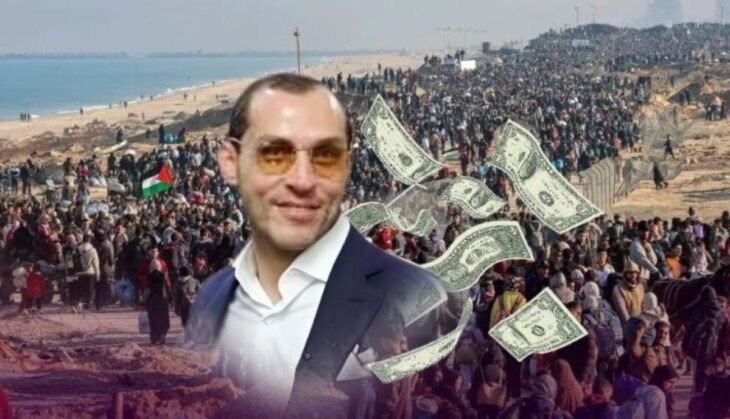
Powerful Libyan official in talks with Israel to resettle Palestinians from Gaza

Faisal Edroos

National Security Adviser Ibrahim Dbeibah, a relative of Prime Minister Abdul Hamid Dbeibah, has quietly held talks with Israeli officials over deal that would see US release $30bn in frozen assets, sources say

A senior official in Libya’s internationally recognised government has held talks with Israeli officials over a proposal to resettle hundreds of thousands of Palestinians expelled from Gaza, multiple sources have told Middle East Eye.

Speaking on condition of anonymity due to the sensitive nature of the issue, Libyan, Arab and European officials told MEE that National Security Adviser Ibrahim Dbeibah, a relative of Prime Minister Abdul Hamid Dbeibah, was spearheading the talks despite Palestinians in Gaza flatly rejecting US President Donald Trump’s postwar plan for the enclave.

One Libyan source said that “practical talks” had already taken place but the specifics were vague. “The mechanisms and implementation have not yet been spoken about,” the source said. Another Libyan source said that discussions were still ongoing and that members of the Tripoli-based parliament were deliberately being kept in the dark as pro-Palestine sentiment runs deep in the country.

The source said that in an attempt to placate some Libyan leaders, the US was prepared to confer economic support or other benefits in exchange for the country taking in Palestinians. The source said that Ibrahim Dbeibah had already received guarantees that the US Department of Treasury would release some $30bn in frozen state assets.

In May, separate sources had told MEE that Massad Boulos, an adviser to Trump and father-in-law to his daughter Tiffany, had held discussions with Ibrahim Dbeibah about unlocking billions of dollars in sanctioned frozen wealth funds.

The assets were frozen in early 2011 by former US President Barack Obama, several months before the Nato-backed ouster of Muammar Gaddafi. Boulos flatly denied that he was involved in talks over the resettlement of Palestinians, telling MEE that the reports were “inflammatory and totally false”.

However, White House Deputy Press Secretary Anna Kelly said that Trump had “long advocated for creative solutions to improve the lives of Palestinians, including allowing them to resettle in a new, beautiful location while Gaza rebuilds”.

Seeking legitimacy from the US

The idea of Libya serving as a possible new home for expelled Palestinians comes amid reports that Khalifa Haftar, a powerful military leader who also oversees a rival rubber-stamp parliament in the country’s east, was offered greater control over the country’s oil resources if he agreed to resettle hundreds of thousands of Palestinians.

Haftar, who has played a seminal role in the widespread destruction and instability in Libya, as well as the ensuing civil war in neighbouring Sudan, has denied the reports. Meanwhile on Monday, hours after receiving a request for comment from MEE on the issue of resettling Palestinians, Prime Minister Abdul Hamid Dbeibah said that his government would not engage in the “crime” of resettling Palestinians.

He reiterated a line from a statement by the US embassy in Tripoli in May which dismissed reports that Washington was pursuing a relocation plan for Palestinians in Libya. Israel has publicly mulled expelling Palestinians from Gaza and last week, Prime Minister Benjamin Netanyahu said Israeli officials were in contact with “several countries” about absorbing displaced civilians from the war-torn territory.

“I think this is the most natural thing,” Netanyahu said. “All those who are concerned for the Palestinians and say they want to help the Palestinians should open their doors to them. What are you preaching to us for? We’re not pushing them out – we’re enabling them to leave… first of all, [leaving] combat zones, and also the Strip itself, if they want to.”

Recently, Israel’s Agriculture Minister, Avi Dichter, singled out Libya as “the ideal destination” for Palestinians saying they would “happily leave” Gaza if the necessary international support was provided. “Libya is a huge country, with vast areas and a coastline similar to Gaza’s,” he said. “If the world invests billions to rehabilitate Gazans there, the host country will also benefit economically.”

Israeli officials have long advocated expelling Palestinians from Gaza and within a week of the 7 October attacks, Israel’s intelligence minister at the time, Gila Gamliel, presented the cabinet with her “voluntary migration plan” where she hoped 1.7 million Palestinians would leave the enclave. Forced displacement, as observed in Gaza, violates international humanitarian law, notably Article 49 of the Fourth Geneva Convention, which prohibits the forcible transfer of protected persons by an occupying power. 

The European source told MEE that Dbeibeh and Haftar were “simultaneously negotiating with the Israelis” in the hope of getting “more legitimacy from the Americans”. The source said that if the resettlement plan was forcibly imposed on Libya, Palestinians would find themselves moving out of the frying pan and into the fire. “It will be catastrophic at multiple levels,” the source said. 

“Firstly, for the Palestinians themselves, who would have just about made it out of the Strip alive and escaped an obliterated life in Gaza, facing forced expulsion to a country like Libya which is in deeply complicated political turmoil with divided governments, where systems and society is broken by its civil war.”

“The Palestinians will not be getting any care from those governments, which will push them to the following catastrophe, [which] will lead to a new wave of migration towards the shores of Europe. And this is also a scary thought, firstly because the past decades have proven to us that many of them will only make it halfway through the Mediterranean, like many of those boats that capsized. And those that would eventually get to Europe, I do not think that Europe would be welcoming of another one million Arabs arriving at its shores, as the Syrians who just made similar journeys just few years ago.”

The Arab official, who was intimately aware of the latest talks, warned that complicity in Israel’s ethnic cleansing plan could provoke widespread anger across all of Libya. “This will be a shock to the Libyan people,” he said. Mohamed Mahfouz, a Libyan political analyst, echoed his remarks, telling MEE that the US was acutely aware that discussions around Libya resettling Palestinians could cause great distress for Libyan authorities.

“Accepting Palestinians could come at a high price for any of the parties that will engage with the United States on this matter. This in itself may explain why neither [Libyan] government is yet to normalise relations.”

Outreach to Africa

In recent weeks Israeli officials have publicly said, then later denied, reaching out to leaders from across Africa and Asia to use their territories as potential destinations for expelling Palestinians. Plans have been mooted for Palestinians to be resettled in Sudan, South Sudan and the breakaway region of Somalia known as Somaliland, despite all of the territories being plagued by violence.

Sudan has been gripped by intense violence since its civil war broke out in 2023, with an estimated 150,000 people killed in the past two years. South Sudan has struggled to recover from a civil war that broke out after independence, with more than seven million people facing food insecurity and at least 2.3 million children at risk of malnutrition.

Meanwhile, Somaliland continues to face threats from the armed group al-Shabab over the region’s memorandum of understanding with Ethiopia – one of the greatest enemies of the group. A Libyan political analyst, who requested anonymity due to fear of reprisal attacks by government-aligned militias, said that it was “unsurprising” that Ibrahim Dbeibah was leading the outreach efforts with Israel.

“[Ibrahim] Dbeibah, like the Libyan government, is marked by self-interest. He is well aware of the benefits of ingratiating himself with the US and Trump.” While Libya does not officially recognise Israel, the Tripoli-based government, known officially as the Government of National Unity (GNU), is known to have held several secret meetings with Israeli officials in recent years.

In 2023, Najla al-Mangoush, then foreign minister under Dbeibah, secretly met Israeli Foreign Minister Eli Cohen in Italy. The revelation sparked outrage in Libya, resulting in angry protests and her suspension. In a later interview with Al Jazeera Arabic, Mangoush claimed she had attended the meeting on direct orders from Abdul Hamid Dbeibah, and that it was coordinated between his government and Israel.

Arabic Post later reported that Ibrahim Dbeibah had orchestrated the meeting, citing unnamed sources. 

Middle East Eye reached out to the prime minister’s office and the GNU for comment but did not receive a response by time of publication.

______________________
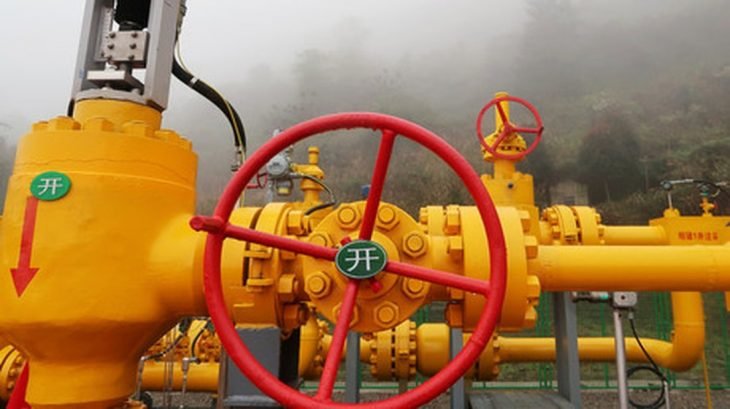
Cheap Fuel, Endless Crisis in Libya

Hassuna Baishu

Under the scorching sun, Libyans wait in long lines at fuel stations, sometimes for hours or even days, just to buy a few liters for their cars or household generators.

Meanwhile, heavy oil tankers speed down highways toward ports, where smugglers load shipments bound for global markets.

Libya, one of the world’s major oil producers and home to Africa’s largest reserves, has seen generous subsidies turn fuel into a prime target for organized smuggling rather than a relief for its citizens.

Fuel smuggling drains an estimated $5 billion from Libya each year, according to the World Bank. More critically, revenues lost outside the state budget have become a key funding source for militias that control vital distribution routes, fueling the armed struggle for power.

In October 2024, a World Bank report noted that “southern Libyan regions repeatedly experience fuel shortages, with prices on the parallel market reaching 7 dinars per liter when available,” while the official price is less than 0.15 dinar.

“We cannot find fuel, and when it is available, it’s sold at higher prices because gas station owners trade it on the black market,” said Mohamed al-Sayyid, a resident of the southern city of Sabha.

With queues stretching outside the few stations that still open, many citizens return home with nearly empty tanks. Families, al-Sayyid explained, are forced to buy from smugglers at exorbitant prices to keep their cars and generators running — “while government subsidies remain only theoretical, with no tangible benefit for ordinary citizens in the south.”

The latest International Monetary Fund figures show Libya paid a steep price for energy subsidies in 2024, allocating $9 billion for fuel alone. The electricity sector — which uses part of that fuel — consumed several more billions.

“When the cost of domestically refined crude oil and natural gas used for power generation is added — estimated at $3.9 billion and $4 billion respectively — the total energy subsidy bill in 2024 reaches about $17 billion, or 35% of GDP,” the IMF said.

Sleepless Ships

On the eastern coast, Benghazi’s old port has become a hub of illicit trade, transformed into a complex center for organized fuel smuggling.

A 2024 United Nations expert report offered a stark picture of the port, controlled by the Libyan army. While Libyans live with chronic fuel shortages, large vessels remain busy, laden with smuggled oil.

The UN documented at least 137 smuggling operations between October 2022 and September 2024, involving 48 ships that called at the port more than 185 times. These were not small shipments: the average cargo per vessel rose from 5,700 tons to 9,970 tons of diesel, bringing the total smuggled volume to about 1.125 million tons.

The ships were often chartered or carried no clear registration, relying on forged or fictitious documents, the report said.

“Benghazi port now reflects a different equation: a strategic location that should support the national economy but has instead become a lifeline for fuel smuggling to foreign markets,” political analyst Ahmed al-Saadi told Alhurra.

Since May 2022, the National Oil Corporation has filed repeated complaints with the prosecutor general about fuel smuggling to Turkey, Spain, Malta and Italy via vessels such as the Queen Majeda, which was seized in Albania carrying shipments worth more than $2 million, al-Saadi added.

“The continuation of this pattern means the port operates with two faces: an official, public activity and another illegal one under the table, doubling state losses and adding pressure on citizens who stand daily in fuel queues.”

In western Libya, smuggling also flourishes through coastal towns such as Zuwara, Zawiya, Sabratha and Khoms.

A 2023 United Nations expert report documented several maritime smuggling cases and identified routes including Sidi Ali near the Tunisian border.

“The situation in Khoms, Zuwara, Zawiya and Sabratha reflects a recurring pattern,” al-Saadi said. “Fuel allocations meant for citizens are diverted through intermediaries to smugglers, who transport them by land toward Tunisia or by sea across the Mediterranean.”

Al-Saadi warned that these towns will remain hubs of the shadow economy — funding armed groups and undermining stability — unless strict oversight is imposed on distribution chains and ports.

Barter Deals: Fuel Outside the Budget

Until 2021, Libya’s central bank imposed a strict ceiling on fuel import allocations, leaving the National Oil Corporation (NOC) up against a financial wall each year.

“Often these allocations ran out before year’s end, and the bank refused the NOC’s requests for more, citing budget violations. This happened amid volatile oil production and low prices, causing liquidity crises and foreign currency shortages alongside rising domestic demand for fuel,” economist Mohamed al-Safi told Alhurra.

To cover the shortfall, the Tripoli-based Government of National Unity authorized the NOC to use a mechanism known as “barter,” exchanging crude oil with intermediaries for refined fuel delivered directly to Libya without cash payments.

“The barter system was fast and effective in supplying fuel, bypassing bureaucratic hurdles such as financial approvals and transfers,” al-Safi said. “But the fuel Libya obtained was not officially recorded in the state budget or accounts.”

“The absence of accurate data on quantities or value opened the door to a lack of transparency and corruption,” he added.

The Libyan Audit Bureau’s 2021 report noted that the National Oil Corporation “exported crude shipments without collecting revenues, instead swapping them for fuel outside the state budget without disclosing the process to the Ministry of Finance.”

The report also said the NOC delayed collecting taxes and royalties from foreign companies worth 10.4 billion dinars that should have been counted as 2021 revenue.

Warnings continued. In its 2023 report, the bureau revealed that spending on subsidized fuel purchases had more than doubled, rising from $2.9 billion (16 billion dinars) in 2021 to more than $7.6 billion (41 billion dinars) in 2023, justified as covering market demand and power plants.

In January 2025, the prosecutor general intervened, sending an official letter to the NOC demanding an end to the barter system. The mechanism was suspended after an agreement between the central bank, the Audit Bureau and the NOC, which created a committee to review all crude-for-fuel transactions during 2024.

War on the Western Coast

Along Libya’s western coast, a silent, undeclared war has raged since mid-2023. Using Turkish drones, forces aligned with the Tripoli government have launched repeated airstrikes on suspected fuel smuggling and storage sites, particularly in Zawiya, home to the country’s largest refinery and a key export port.

The most recent strike took place in August 2025. But images and videos posted by activists on social media showed some raids hitting not only alleged smuggling dens but also residential neighborhoods and civilian facilities. With Tripoli remaining silent, suspicions grew over the campaign’s motives. Observers described it as politically driven, aimed at eliminating militias believed to be loyal to the eastern-based Libyan National Army.

“The airstrikes on smuggling hideouts deterred some armed groups, but they weren’t enough,” political analyst Ibrahim Belqasim told Alhurra.

“There is selectivity in these campaigns. They target groups opposed to Prime Minister Dbeibah’s government, while pro-government militias receive clear military and logistical support, including uniforms, weapons and training,” Belqasim added.

He linked this selectivity to the absence of army and security institutions in western Libya since Abdulhamid Dbeibah came to power, fueling militia dominance in cities such as Zawiya.

Jalal al-Haroushi, a Libya expert at the Royal United Services Institute, was even more skeptical. He argued the campaign lacked credibility from the outset because armed groups were notified in advance of strike times.

Writing on X, al-Haroushi added that Zawiya refinery has been under the control of Dbeibah’s political rivals, the Awlad Bu Hamira tribe, since 2013 — making the strikes less about combating smuggling and more about local power struggles.

Subsidy Reform: Shock or

Gradual Change?

At the start of 2024, talk of lifting Libya’s fuel subsidies moved from rumor to public declaration.

Prime Minister Abdulhamid Dbeibah presented the step as necessary to “stop smuggling losses” and stabilize the market. He sought to reassure citizens with three proposed compensation mechanisms: direct cash payments, salary increases, or fuel cards with limited subsidized amounts.

In the east, the position was similar despite political divisions. Parliament-appointed Prime Minister Osama Hammad’s government endorsed ending subsidies but gave no clear timetable.

Public protests and political criticism, however, were swift. In Tripoli, Benghazi and even smaller towns, fear of rising prices dominated daily discussions.

Economists argue that any subsidy reform in Libya must be gradual, paired with compensation for low-income groups and tighter controls on borders and ports to curb smuggling. Others contend a “shock” approach would be more effective for security, swiftly cutting off smuggling networks.

“Gradual subsidy removal has economic benefits. Studies show the inflation from a one-year shock equals the inflation from gradual removal over five years. Gradualism allows citizens to diversify income and adapt to inflation, while shock may push them below the poverty line,” economist Mohamed al-Safi explained.

“The shock method, however, has security advantages, as some politicians argue. It cuts off legal profiteers from subsidies and contains street anger that could pressure the government to back down. But Libya needs a study to determine which option is best,” he said.

Caught between sacrificing the familiar and risking the unknown, Libyans fear the reforms may be a false mask hiding deeper deterioration in living conditions. They face a stark choice: accept a decision that could curb corruption draining the country’s wealth but add a heavy economic burden amid weak guarantees — or remain trapped in a cycle of crises fueled by smuggling networks, with cheap fuel continuing to drive an endless national crisis.

***

Hassuna Baishu – Libyan journalist based in Washington with over a decade of experience in strategic communications and media work across the United States, the Middle East, and North Africa. He has worked with international and media organizations including Voice of America, the Middle East Broadcasting Networks (MBN), and the United States Agency for International Development (USAID), focusing on Libya and regional politics.

______________________
UAE and Haftar behind RSF capture of Sudan’s triangle border region

Mohammed Amin

In June, the Rapid Support Forces captured Sudan’s wild border frontier with Libya and Egypt. This is how they did it.

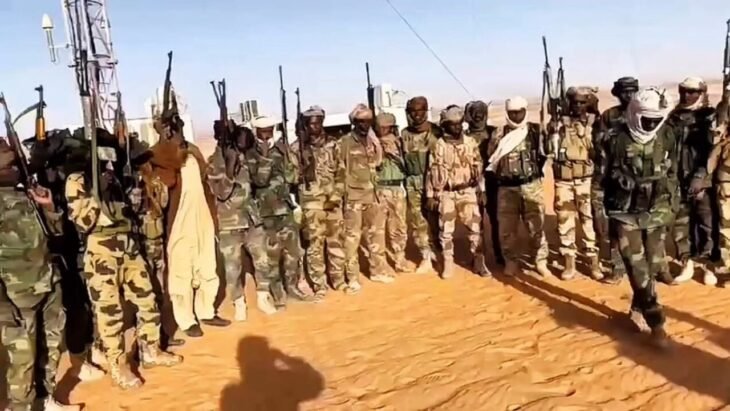
On 10 June, Ismail Hassan, an artisanal gold miner and trader in the triangle border region that straddles Sudan, Egypt and Libya, watched as more than 250 fully equipped military vehicles entered his local market, al-Katma. The vehicles carried fighters from the Rapid Support Forces (RSF), the Sudanese paramilitary group that has been at war with Sudan’s army since April 2023, alongside a host of Libyan mercenary groups connected to the eastern military commander Khalifa Haftar.  

“The RSF and Libyan forces entered the area and advanced into the market, declaring control of the region,” Hassan told Middle East Eye, referring to the Sudanese part of the triangle.  The Libyans then moved out, Hassan said, leaving the RSF to loot the area’s markets, making off with gold, money, cars, mobile phones and much more. 

Hassan was one of many miners who fled the area following the attack, before speaking exclusively about it to MEE over the phone.  The Sudanese Armed Forces (SAF) and their allied Joint Forces militia were forced to leave in the wake of the RSF-led attack. Two days later, on 12 June, the RSF announced that it successfully taken “control of the strategic Almuthallath ‘triangle’ area, which constitutes a pivotal junction between Sudan, Libya and Egypt”. 

As the army has taken Sudan’s capital, Khartoum, and made inroads in other parts of central Sudan, the takeover of the Sudanese part of the border triangle region has cemented the RSF’s hold on western Sudan, where it holds almost all of Darfur. According to satellite imagery, flight tracking data seen by MEE, and interviews with gold miners and other eyewitnesses, this success in the wild, lawless border regions would not have been possible without Haftar’s Libyan forces and the patronage of the United Arab Emirates and Russia. 

The involvement of the UAE has brought Abu Dhabi into further conflict with Egypt, which has tried – and so far failed – to mediate better relations between Haftar and Abdel Fattah al-Burhan, the head of the Sudanese Armed Forces. At the beginning of July, MEE revealed a secret meeting hosted by Egypt between the Sudanese general and the Libyan commander, both of whom are its allies. The meeting did not go well.

RSF attack

Key to the RSF’s capture of the Sudanese part of the triangle region was Subul al-Salam, a Libyan militia affiliated with Haftar’s forces. A cousin of Hassan, who works with him as a gold miner and trader, told MEE that forces from Subul al-Salam “helped the RSF until it reached the market and controlled the entire area”. 

He said that the group, alongside RSF fighters, carried out ethnically motivated killings. Another miner, Abu Zar, said there were Libyan fighters inside the main market at al-Katma. He told MEE that an armed group called the Tariq Ben Zeyad brigade, which is believed to be controlled by Saddam Haftar, Khalifa’s son, was also part of the attack on the triangle border region.

“We heard that Saddam Haftar, the strong son of the Libyan commander, was closely monitoring the military operation before he ordered the forces to withdraw back to Libyan territory,” another miner, who asked for anonymity, said. The RSF then advanced into Sudan’s northern state, seizing Karb al-Toum, an oasis near the Jebel Arkenu mountain range, as well as a host of other small villages. 

The Joint Forces – Darfur rebels fighting alongside the Sudanese army – were forced to withdraw from areas in the northern desert, while some of them had to retreat through Egypt alongside army soldiers. It was reported that RSF fighters also crossed the border into Egypt but that they were ordered by senior commanders to withdraw.

The UAE’s project

Libyan sources, Sudanese officials and a former US diplomat all told MEE that Haftar’s forces and the RSF had been given the green light and logistical support from the UAE to take control of the triangle border region. Though it denies it, the UAE has been the RSF’s main patron throughout the war in Sudan.

An unpublished study leaked to MEE by a Libyan researcher reported that two Emirati planes landed at southeastern Libya’s al-Kufra airport on 10 July, unloading weapons and supplies that were then transported to the RSF in Darfur through the Chadian-Libyan border. The dossier revealed that the UAE ordered Haftar to move his Libyan National Army (LNA) forces from Camp 87 in Benghazi to support the RSF “with hundreds of vehicles in its attack on the SAF and Darfur rebels in the desert”. 

This movement of Haftar’s forces comes partly in response to resistance in Chad to the continued supply of the RSF through the country’s desert regions. A Libyan source close to the issue, who did not want to be named, said the “recent interference by Haftar through its allied militia Subul al-Salam” had changed the balance of power in the triangle region, which has a Sudanese, Libyan and Egyptian component. 

Egypt, the source said, was “looking suspiciously at the UAE and Haftar”, with the region vital to Cairo’s national security. “Subul al-Salam matters, but this is an Emirati project,” Jalel Harchaoui, an analyst focusing on Libya, told MEE. “The big event is the fact that the RSF now controls the Sudanese part of the triangle… Subul al-Salam was instrumental because the Libyan part of the triangle was very permissive until mid-May. The SAF, the Joint Forces and civilians from Egypt were all able to access it.” 

“What was necessary, as preliminary step, was for Subul al-Salam to shut all of that down – and this is how the RSF was able to use that platform to carry out that incursion and take over the Sudanese part of the triangle,” Harchaoui said. Former US diplomat and CIA expert Cameron Hudson believes the UAE is still working to ensure the victory of the RSF in Sudan’s war. 

“The RSF’s control of its border areas will worsen and extend Sudan’s war, making it even more difficult to resolve. This has been the UAE’s plan, not just in Libya, but in Chad, the Central African Republic, and South Sudan. Control of borders gives them free access to weapons, to recruit fighters and to smuggle out gold,” Hudson, who is also a senior associate at the Centre for Strategic and International Studies Africa programme, told MEE.  

“It is no coincidence that the UAE maintains bases in all these countries near the border with Sudan to help facilitate that military and economic trade,” he said. Libyan researcher and political analyst Islam Alhaj said that the UAE was exploiting the security vacuum in southern Libya to send the weapons to the RSF and support other illegal activities, including gold smuggling, in the region. 

Russian planes

Satellite imagery reported by Nova Italian news agency disclosed that two Russian-made cargo planes were recently tracked flying from al-Kufra airport to RSF areas in Sudan. According to previous reporting by MEE and the imagery provided by the Copernicus programme, the IL-76 plane is typically used for transporting military personnel and equipment, as well as for medium-range logistical operations.

The shipment was part of an Emirati-directed flow of arms shipments from southeastern Libya to the RSF that has been in operation since May, a month before the paramilitary’s capture of the Sudanese part of the border triangle. Harchaoui told MEE that the “brand new phenomenon” was the act of flying supplies from UAE bases outside Libya directly in al-Kufra, rather than transporting them overland or by air from within other parts of Libya.   

The airport at al-Kufra plays a key operational role, serving as a logistical base to facilitate the flow of supplies to RSF forces through remote and lightly monitored corridors. Russia, as MEE has reported before, is most interested in securing a naval base at Port Sudan, with the government in Moscow building ties with the Burhan-led Sudanese administration now based in the Red Sea city. Wagner, the former Russian paramilitary group, left Sudan at the end of 2023, but ties between Moscow and Abu Dhabi remain strong.

Regional power plays

With Turkey recently stepping up its help for the Sudanese army and other regional powers, including Egypt and Saudi Arabia, aligned with Burhan, external actors continue to struggle for control and profit in Sudan, which still contains vast untapped natural resources and an expansive and strategically positioned coastline. The RSF has declared a parallel government in Nyala, South Darfur. This self-declared entity would border five countries, including South Sudan, Central African Republic, Chad, and now – following the capture of Sudan’s triangle border area – Libya and Egypt. 

“The new government will face many challenges to carry any civilian duties including the good governance, protecting the civilians and oversight the finance and this will lead to big failure which will threat the other neighbouring countries,” Suliman Baldo, the executive director of the Sudan Transparency and Policy Tracker, told MEE. “I don’t think it will be able to stop the smuggling of gold and crops from Sudan and maintain the other supplies coming from neighbouring countries towards Sudan as its big investments for the RSF commanders,” he said.

***

Mohammed Amin is a Sudanese journalist specialising in geopolitics and human rights abuses in Sudan and South Sudan, as well as elsewhere in northeast Africa.

_______________________

Freeze Libya’s financial transactions to end migration blackmail

NIkoletta Kritikou

One way for the EU to escape from Khalifa Haftar’s and Abdul Hamid Dbeibeh’s migratory stranglehold, would be to freeze all financial transactions with Libya until the Libyan state is represented by a unified government, stresses Jason Pack, author of “Libya and the Global Enduring Disorder,” in an interview with Kathimerini.

The host of the Disorder Podcast points out that parts of the Libyan state use migration as blackmail – while Ankara plays the Tripoli card to challenge the sovereign rights of Greece and Cyprus.

Jason Pack

Barack Obama described the handling of the post-Gaddafi era in Libya as “the biggest mistake of his presidency,” placing overall blame on the Europeans for their inaction in reconstruction. What is the reason behind the international community’s complacency?

The West failed to coordinate effectively to safeguard its strategic interests in Libya. A telling sign: After the collapse of the Libyan state, nine out of the 10 key actors involved have been pursuing different goals. Even within the EU, there have been profound divisions. Greece and Italy ended up on opposing sides.

Italy and France militarily supported rival factions during the 2014 and 2019-2020 post-Gaddafi Libyan civil wars – something unprecedented since 1945: NATO countries training opposing forces in the same civil conflict. The West chose not to intervene as it did in Iraq, but rather it accepted to support a no-fly zone and then to adopt a hands-off posture in the reconstruction phase.

NATO didn’t intervene, but there was a popular uprising demanding an international no-fly zone. Most strategic failures in Libya’s power transition were made by Libyans themselves – and were worsened by an international landscape of weak coordination. As Colin Powell’s Pottery Barn rule suggests: You break it, you own it. The West didn’t break it, but has also failed to own it.

Is the illegal Turkey-Libya memorandum a Trojan horse for Turkey’s geopolitical policy?

Turkey is using Libya to directly challenge Greece’s and Cyprus’ sovereign rights in the southeastern Aegean and southeastern Mediterranean. Turkey saved western Libya’s government from Haftar’s conquest of Tripoli in late 2019 and has since gained de facto influence, securing financial influence and oil trading agreements.

After winning the battle for Tripoli, Turkey became the dominant military power in western Libya. It can operate drones and block Haftar or other pro-Russian forces from capturing Tripoli. Turkey is using Libya to directly challenge Greece’s and Cyprus’ sovereign rights in the southeastern Aegean and southeastern Mediterranean. It completely disregards the existence of Crete, violating the UNCLOS convention. It links Turkish territorial waters to Libya as if Crete, and the Greek and Cypriot EEZs, do not exist.

Haftar opens the migration floodgates to pressure Europe. Is he acting alone or under Ankara and Moscow’s guidance?

Haftar is betting on the EU’s fear, following Gaddafi’s strategy. He understands that [Italian PM Georgia] Meloni is a politician who has no interest whatsoever in rebuilding Libya – only in telling her neo-populist voters that she reduced migrant numbers. This emboldens Haftar. We are experiencing what I call “enduring disorder” – a period when, unlike past eras, major powers don’t promote new orders but invest in destabilizing the current one. One way of promoting that disorder is mass migration.

Russia has long sought to promote mass migration from sub-Saharan Africa and the Sahel into Europe using many means, including the Wagner Group. They see that destabilizing Europe this way is effective. Similarly, Turkey learned during the Syrian crisis that pushing Syrian migrants toward Europe gives it strong bargaining power.

Recently, a diplomatic incident occurred in Benghazi where Haftar declared a European delegation personae non gratae. Can the international community negotiate with such a fractured power structure?

Even the idea of immediate elections is a major mistake. You cannot solve Libya’s crisis without addressing its root cause, the dysfunctional economic structures. What Europe should have done long ago is focus on reforming Libya’s economy.

Suspend financial dealings with Libya until the vast subsidies are eliminated and broken economic structures are reformed. As long as Libyans pay 1 euro cent per liter of gasoline, smuggling networks will thrive – transporting fuel to Tunisia, Malta or Algeria – and will continue profiting from corruption and disfunction.

Given the current conditions, do you foresee national reconciliation or elections?

In my view, no. All discussions about elections since the government split in 2014 – including the ones announced in 2021 – have been empty rhetoric. Libya is simultaneously two countries and no country at all. It is terra nullius.

There are semi-sovereign institutions like the central bank, the National Oil Corporation, and the state electricity provider, all stronger than the central government. This is not a Sudan-type civil war with two armies clashing. In Libya, there are multiple centers of power, various militias, and institutions like the central bank that pay salaries in both eastern and western Libya. The situation is far more complex than a typical civil war with clear geographic boundaries.

________________________

How to govern around fragmentation

Hafed Al-Ghwell

Libya has since become a brutal case study in the consequences of institutional and governance collapse. The 2011 rebellion shattered Muammar Qaddafi’s hyper-centralized state but failed to replace it with a functional alternative. Instead, the international community’s fixation on centralized power-sharing deals with warlords and loose militia coalitions continues to neglect the crucial work of subnational institution-building.

Thirteen years of political limbo have not yielded a single coherent local governance framework, enabling parallel power structures to metastasize. To date, Libya remains split between the Tripoli-based, UN-recognized Government of National Unity and a rogue eastern fiefdom dominated by the warlord Khalifa Haftar and his sons. These, in turn, also compete with more than 100 autonomous militias, including tribal-affiliated groups exploiting administrative vacuums.

A conspicuous absence of well-defined, legally enforceable administrative boundaries is the principal accelerant. Law 59 of 2012 envisaged governorates as intermediaries between municipalities and the state, but zero have been operationalized. Proposed maps, like the Government of National Unity’s 2022 blueprint for 19 provinces, remain theoretical amid venomous disputes over territorial jurisdiction.

Meanwhile, tribal councils fill service-delivery voids in regions like Fezzan, where public structures have simply vanished. Elsewhere, municipalities consequently shoulder functions spanning healthcare, policing and infrastructure without budgets or coordination mechanisms, resulting in woeful outcomes such as crippled hospitals and extremely high dropout rates in schools. Such an operational vacuum is now fueling resource predation as local factions continue to seize parts of Libya’s petroleum sector. 

Tribal and militia leaders have also become adept at exploiting institutional ambiguity, converting geographic influence into lucrative monopolies. Illicit economies and networks are now generating sums close to one-tenth of Libya’s pre-2011 gross domestic product via ports and desert crossings administered by de facto warlords. At the same time, boundary disputes between Zintan and Gharyan municipalities have frozen $120 million in reconstruction funds for three years.

Such paralysis is not incidental; it is structural.

The persistent failure to establish legitimate subnational governance structures, particularly resolving the question of administrative boundaries, entrenches division and dims prospects for a unified, sovereign state. Delaying the resolution of this cartographic standoff means that Libya’s fragmentation risks becoming irreversible at the cost of more than 2 million Libyans who require humanitarian aid in a country that once boasted high life expectancy, literacy rates and per capita income.

There is some precedence to the depth of the challenge Libya faces now.

The country’s territorial administration has always been unstable, from the Ottoman sanjaks designed for tax extraction, to Italy’s colonial divisions, to King Idris’ short-lived federal experiment (1951-1963) balancing Cyrenaica, Tripolitania and Fezzan. Qaddafi’s 1969 coup replaced provinces with “people’s districts,” eviscerating local capacity. Post-Qaddafi, the 2012 Local Administration Law envisioned governorates, municipalities and sub-municipal tiers, yet the critical governorate level remains non-existent. This absence cripples coordination on regional transport, resource management and security, overburdening a weak central authority and leaving municipalities isolated.

Current proposals for administrative boundaries reveal crippling tensions. 

Advocates of three regions (Cyrenaica, Tripolitania, Fezzan) invoke historical legitimacy but ignore perilous realities. Similar “federalizations” around the world with minimal regional units, e.g. Bosnia (two entities), Comoros (three) and Pakistan (1973: four) all exhibit chronic instability. In addition, Nigeria’s post-independence shift from three to 36 states deliberately diluted ethnic domination. Libya’s three-region model risks entrenching the very divisions that fueled past civil strife: Fears of secessionism, resource-hoarding by dominant cities like Benghazi or Misrata, and the marginalization of smaller tribes within macro-regions. 

Alternative frameworks, for instance, 12 provinces or 13 units based on electoral districts, aim for balance but face legitimacy deficits. Electoral districts, drawn for technical convenience, often ignore deep-seated tribal animosities or socioeconomic ties. Proposals for “economic regions” coordinating multiple governorates require robust planning institutions and fiscal autonomy that Libya lacks. Crucially, all models stumble on the core political schism: Federalists demanding regional autonomy vs. centralists fearing state fracture. This deadlock paralyzes reforms while illicit economies flourish; fuel-smuggling alone generates at least half a billion annually for militias, entrenching rule-by-gun-barrel. 

However, there is still some hope yet.  

South Africa’s post-apartheid boundary delimitation offers curious parallels. Facing similar risks of ethnic polarization, it established a technocratic Commission on Demarcation and Delimitation guided by clear criteria: Historical boundaries, economic viability, infrastructure and cultural realities. 

Crucially, it embedded this within a Multi-Party Negotiating Forum, separating technical work from political bargaining. Four months of consultations yielded 780 written submissions and 157 oral testimonies, with hearings translated into 11 languages. The result: Nine provinces replacing apartheid’s racial Bantustans, validated through inclusive participation. 

Libya’s path demands a similarly structured process, not just a map. 

A boundary commission must integrate multidisciplinary expertise, such as demographers to quantify population distributions, economists to model resource allocation and geographers to assess topographical constraints, as seen with South Africa’s commission, which included 16 specialists across seven fields. Crucially, such a body must derive its mandate from an inclusive political forum representing Libya’s fragmented power centers, ensuring decisions reflect negotiated consensus rather than unilateral imposition. 

Historical continuities must be weighed alongside contemporary realities: Tribal land claims governing 65 percent of southern territories, hydrocarbon reserves concentrated in three basins and population disparities where Tripoli hosts 2 million residents while southern municipalities average 30,000. Resource distribution formulas must be codified to prevent rent-seeking, particularly given Libya’s lucrative oil revenues. 
Public consultations require robust methodologies, not tokenism. Besides, imposing boundaries without tribal and community buy-in guarantees rebellion. Yet Libya’s context demands added safeguards: Independent dispute-resolution mechanisms and explicit rejection of referendums, which magnify polarization in fractured societies. 

Lastly, dispute resolution necessitates permanent architecture. Nigeria’s National Boundary Commission, operational since 1987, offers a template: A neutral technical body empowered to adjudicate inter-provincial conflicts and manage cross-boundary resources. However, in Libya, where 40 percent of proposed boundaries overlap with militia territories, such a commission will require authority to deploy verification teams and impose binding arbitration, backed by international guarantors to prevent politicization. 

A tall order, given the current context, but the cost of inaction escalates daily. 

Libya’s chief export — oil, remains hostage to blockades by armed groups, even as 1.5 million people lack healthcare access, while municipalities, starved of funds and authority, cannot provide basic services. Each year of fragmentation deepens kleptocratic networks, radicalizes marginalized populations and erodes faith in public institutions. 

Strangely, the 2011 rebellion demanded dignity and equitable development. Redrawing administrative boundaries should therefore not be a mere cartography exercise but the very foundation for dismantling militias, redistributing resources and rebuilding social contracts. 

Without this, Libya’s sovereignty will remain a fiction sustained only by foreign patrons and kleptocrats.

***

Hafed Al-Ghwell is a senior fellow and program director at the Stimson Center and senior fellow at the Center for Conflict and Humanitarian Studies. 

______________________
Is Haftar Really that powerful? (2)

Gregory Holyoke

Family at home, friends abroad

Over the decades, Haftar had built up close relationships in Cairo, but when he returned to Libya, Egypt was also in the midst of revolutionary fervour, tending towards the Islamist Muslim Brotherhood group. As Gazzini explained, “There was a jihadist threat in Libya and then we have Egypt, which was very weak.”

“If you go back to before 2013 before (President Abdel Fattah) El-Sisi, there was this fear that Egypt could implode … And the Europeans also didn’t want Egypt to collapse,” she explained. Faced with difficult choices and fearing the likes of the self-proclaimed IS group spreading their influence in North Africa, some analysts believe that European leaders gave Haftar — whose power and army grew in strength — the silent nod of approval to do what he thinks is right.

“They needed a new Gaddafi, someone who could stop democracy from becoming contagious. Haftar fit the mould: ruthless, ambitious, and willing to trade sovereignty for support,” El Gomati believes. Egypt also backed him as a known known, someone in the immediate neighbourhood who understood the context, but also the perils the region was facing.

The list of backers, silent or otherwise, only continued to grow from there on out. In addition to Cairo, Haftar gained the support of governments ranging from Moscow to Washington, even though the UN did not recognise his wider authority as a legitimate head of state. However, according to Gazzini, it was Abu Dhabi and Paris who ended up as his most unquestioning supporters. While the Emirates saw the allure of Libya’s oil reserves — the largest in Africa — France and Europe more widely were dealing with an influx of refugees through the Mediterranean, hundreds of thousands of whom were hoping to reach the continent via Libya.

In all that, Haftar saw his chance to utilise the international support and finally become the ruler of Libya — and who knows, maybe even bigger than Gaddafi himself. When Haftar announced his intention to overthrow the Tripoli-based, internationally recognised Government of National Accord on the day UN Secretary General António Guterres arrived in the capital in 2019, even Egypt warned him against it.

“But he was full of hubris from the Emiratis who wanted to do it. They were giving him aerial cover. The French also wanted to do it,” Gazzini told Euronews from the IRG offices in Rome. It is a hubris that some have compared to his ally Russian President Vladimir Putin’s full-scale invasion of Ukraine. Yet similarly, Haftar’s attempts also failed. Tripoli refused to fall into Haftar’s troops’ hands, and Libya fell back into a form of stalemate.

Divided we stand

Throughout this time, Haftar was accumulating extraordinary wealth for his family, whom he had installed in various positions, experts say. As Eaton told Euronews, “There was a debate on whether when Khalifa (Haftar) died, could his sons come in and take over. It seems that they have come in and started creating their own portfolios even before.” And it is all in the family and the hands of his children, as El Gomati succinctly outlined.

“Saddam runs the ground forces. Khaled commands the personal guard. Belkacem controls the billions in Libya’s reconstruction fund. Sedig runs the reconciliation file,” he explained. The family has amassed a portfolio estimated to be worth billions. Despite his failure to seize the wider country, Haftar and his sons continue to run much of Libya. “He controls everything that matters in eastern Libya,” El Gomati said.

“Oil fields, ports, airports, military bases, and the central bank’s printing press. He has his own air force, controls cross-border smuggling routes… It operates like a state within a state.” As shown by the EU’s lack of retribution over the past week, the self-proclaimed field marshal also maintains significant international backing. He was recently in Russia for talks with Putin – a trip he was rumoured to have died on, but once again, he miraculously recovered.

The “humiliation” of the EU delegation also isn’t the first time Haftar has managed to push around supposed allies in Europe. The analysts Euronews spoke to put this down to Europe’s domestic wranglings over “irregular migrations,” and the simple fact that “there’s no way migrant boats would be leaving the east without Haftar knowing.”

Gazzini gave the example of her native Italy: “At some point, a lot of migrants were going to the coast of Italy about a year and a half ago, he let it be known that he wanted an official visit and an official invitation to Rome. And he got that.” At the end of his interview, El Gomati did not mince words about the European approach to the Libyan commander. “Europeans keep volunteering as victims. Haftar treats EU diplomats like desperate suitors because that’s exactly what they are.”

It is a point that Eaton also touches upon, albeit somewhat more diplomatically. “There’s a real imbalance,” he concluded. However, Europe is not acting in a vacuum either. It is often trying to play by international rules and conventions in an arena where shady actions speak much louder than words and agreements on paper.

Sometimes, it is better to have a strongman on your side — or at least his ear. “We have very little leverage compared to other states. Compare it with the Russians, who have MiGs and have fighter jets that are at Haftar’s disposal,” Gazzini admitted. “Compare us to the Emiratis who bring in reinforcements and ammunition in violation of the embargo.”

When a senior EU delegation travelled to the eastern Libyan city of Benghazi last Tuesday, they were hoping to discuss ways to limit the increasing numbers of migrants leaving Libya heading north to Europe. However, shortly after their jet touched down at Benghazi Airport, the cluster of EU foreign ministers – as well as European Commissioner for Migration Magnus Brunner – were sent packing.

There was no agreement, not even a meeting. They were unceremoniously kicked out and declared “personae non gratae,” a source on the European side told Euronews at the time, adding that the delegation was caught in a diplomatic “trap” in which Haftar tried to force them to take a photo with, and tacitly legitimise, his Benghazi-based government.

While the EU itself has been remiss to publicly comment on what one senior Libyan analyst said was outright “humiliation,” it is understood that the man they were hoping to strike a deal with was General Khalifa Haftar.When a senior EU delegation travelled to the eastern Libyan city of Benghazi last Tuesday, they were hoping to discuss ways to limit the increasing numbers of migrants leaving Libya heading north to Europe.

However, shortly after their jet touched down at Benghazi Airport, the cluster of EU foreign ministers – as well as European Commissioner for Migration Magnus Brunner – were sent packing. There was no agreement, not even a meeting. They were unceremoniously kicked out and declared “personae non gratae,” a source on the European side told Euronews at the time, adding that the delegation was caught in a diplomatic “trap” in which Haftar tried to force them to take a photo with, and tacitly legitimise, his Benghazi-based government.

While the EU itself has been remiss to publicly comment on what one senior Libyan analyst said was outright “humiliation,” it is understood that the man they were hoping to strike a deal with was General Khalifa Haftar.

________________________

What we know about Libyan soldiers trained in Italian bases

They are part of two units of General Haftar’s military forces, but probably not of the most important brigade: the one led by his son Saddam.

As the Post revealed last Thursday, Italy has been training Libyan soldiers of Khalifa Haftar, a general who effectively controls Libya’s eastern government, for some time in its military bases in Sardinia and Tuscany.

The news is important because officially Italy recognizes as legitimate only the other Libyan government, that of Tripoli, which controls the western half of the country and which has fought with the eastern government on several occasions. The Italian army also trains the military forces of Tripoli with a parallel program which, however, does not have the same problems as the one designed for Haftar’s soldiers, precisely because Italy recognizes the Western government.

A new and relevant detail is that according to the information collected, the soldiers trained in Italy do not belong to the Tariq ben Ziyad brigade, which is the prized piece of Haftar’s army. This is important information, but still to be confirmed with absolute certainty, because Tariq ben Ziyad is commanded by the son of General Haftar himself, Saddam Haftar, who is also the chief of staff of the Benghazi forces, i.e. the eastern government of Libya.

This suggests that with the training program the Italian government on the one hand did not want to completely displease Haftar, considering that it has a political and economic interest in not antagonizing those in charge in eastern Libya; on the other hand, that he wanted to avoid greater embarrassment and problems with his allies and with the government in Tripoli, which would have come if he had directly trained the brigade commanded by the general’s son.

The Tariq ben Ziyad brigade is involved in a number of crimes against Haftar’s opponents such as arbitrary arrests, disappearances and torture. An Amnesty International report published in December 2022 called the crimes committed by its soldiers “a catalogue of horrors”. Haftar’s soldiers trained in Italian bases are part of two units, the al Saiqa, which means “lightning” in Arabic, and the 155th brigade. Before we continue there are a couple of name warnings.

Haftar’s military forces call themselves the Libyan National Army to give the idea that Benghazi is the only legitimate power in Libya and that sooner or later they will absorb, perhaps after submission, even the military forces of Tripoli. But for now there is still no Libyan National Army, because as mentioned Libya is not a unified country.

The second caveat is that Libyan militias often adopt formal names, with ordinal numbers, to give the idea of a well-structured and organized army, but they are just names. In reality, the two armies, and this applies to both Tripoli and Benghazi, are an assortment of militias and armed factions.

The al Saiqa is a special force and was held in high esteem during the regime of Colonel Muammar Gaddafi, a Libyan dictator killed in 2011 while trying to escape from the rebels who had deposed him. After the revolution against Gaddafi, al Saiqa aligned himself with General Haftar and participated in the long urban battle that was fought between 2014 and 2017 to drive out of Benghazi some Islamist and jihadist factions that also included the Islamic State.

Special forces from Western countries were also present during the battle for Benghazi, according to a Reuters article. There were French, British, American and Italian soldiers and they were based inside the airport of Benina, a city in Cyrenaica (in the eastern part of Libya). They didn’t fight, but they were there in the role of military advisors. It is a bit of a constant: foreign governments often offer some kind of assistance to Libyan governments, with the aim of becoming privileged interlocutors. There is a recent video of al Saiqa soldiers marching inside the Pisano barracks in Capo Teulada; and there is another video, also recent, of al Saiqa soldiers training for urban combat inside a building together with an instructor from the Italian army.

Among al Saiqa’s soldiers there are may Salafists, therefore Muslim believers who follow a rigid version of Islam. They belong to a current of Salafism that preaches obedience to the authorities, because if they are authorities – it is a crude summary – it means that they have been put in the command post by Allah. The current that opposes theirs is that of the revolutionary jihadist Salafists, who instead preach armed revolt against the authorities, seen as accomplices of the enemies of religion.

Al Saiqa soldiers were also charged with war crimes by the International Criminal Court in 2017, notably for a couple of videos in which one of their commanders, Mahmoud al Werfalli, made some prisoners kneel in a row and killed them with a shotgun shot to the head. Al Werfalli was murdered in 2021.

The 155th brigade, on the other hand, is a conventional unit, created with soldiers who come from the areas of Libya on the border with Egypt, Chad and Sudan. Its task is to control a large territory also crossed by migration routes and where terrorist groups are hiding. It does so also thanks to the good local and family relations of its soldiers. It is one of Haftar’s strategies to control the very large areas in the southeast of the country with a relatively small number of men.

_______________________

Putin’s warlord ally flying migrants into Europe

Joe Barnes

Libyan strongman helping Kremlin trigger fresh crisis on EU’s eastern borders, flight records suggest

Vladimir Putin appears to have teamed up with a Libyan warlord to trigger a fresh migrant crisis in the European Union.

The European Commission has tracked an increased number of flights between the eastern Libyan city of Benghazi and Minsk, the capital of Belarus.

Officials said the pattern suggested possible co-ordination with Gen Khalifa Haftar, the military strongman who controls much of eastern Libya, to facilitate a wave of illegal migration into the bloc.

It could mark a repeat of the summer of 2021, when tens of thousands of would-be asylum seekers were helped across the borders of Belarus in what officials warned was a Russian-orchestrated attempt to destabilise the EU.

“We are monitoring recent Minsk-Benghazi flights operated by Belavia Airlines,” a commission official told The Telegraph.

“The frequency and nature of these flights, particularly within a short timeframe, raise questions about potential co-ordination or facilitation of irregular migration flows.”en-source data reviewed by The Telegraph shows a spike in flights between the Libyan city and the Belarusian capital on the flag-carrying airline in recent months.

In May, there were just two flights between the cities, jumping to five in June and four in July.

In the past, Alexander Lukashenko, the Belarusian dictator, had been accused of allowing migrants to land in Minsk on similar flights before helping transport them to makeshift camps on the borders with Poland, Lithuania and Latvia.

From the camps, the migrants were said to have been advised by Belarusian officials on how to cross the frontier without being detected.

Analysts have since said this was done in co-ordination with Putin to distract from his forces massed on the borders with Ukraine before his invasion in February 2022.

After launching the bloodiest conflict since the Second World War, the Russian president has ordered a series of hybrid attacks on Nato and EU nations supporting Kyiv’s defence.

In the first seven months of this year, the EU has recorded around 5,000 illegal crossings at its eastern land borders.

While this is down from last year, the few flights between Libya and Belarus could lead to a new influx of arrivals across the frontier.

Some in Europe say Putin could use his growing influence in Libya to once again target the continent.

The Russian president has invested efforts in building a presence in the North African country since the fall of Bashar al-Assad in Syria.

As Russia evacuated its Syrian bases, there was evidence equipment was being moved from the port of Tartus to Libya.

When Haftar held a parade of his Libyan Arab Armed Force last month, it showcased hundreds of Russian armoured vehicles and air defence systems.

He is known to control a small army of people smugglers operating out of Libya, one of the main crossing points from Africa to Europe across the Mediterranean.

“The fact that Russia is increasing its influence in Libya is precisely our concern, and that’s why we must also engage with Libya,” Magnus Brunner, the EU’s migration commissioner, told Politico last month.

“There is certainly a danger that Russia will use migrants and the migration issue as a whole as a weapon against Europe. This weaponisation is taking place, and of course we also fear that Russia intends to do the same with Libya.”

Mr Brunner was one of a group of high-ranking EU officials on an ill-fated visit to Benghazi last month, which was abruptly scrapped after the delegation landed at the city’s Benina airport before being told they were persona non grata.

Belarus has been identified by Frontex, the agency that polices the EU’s external border, as one of the main challenges the bloc faces in its fight against illegal migration this year.

The evidence suggests that Lukashenko, Putin and Haftar have teamed up to exploit the frontier once again.

“Migrants are used as an instrument by the regime to put pressure on the European Union’s borders, and our neighbours are really suffering from this,” Sviatlana Tsikhanouskaya, Belarus’s exiled opposition leader, told The Telegraph.

“This is all the actions of Lukashenko and just business for his regime and a tool to put pressure on the EU for the principled and strong position in supporting democracy.”

______________________
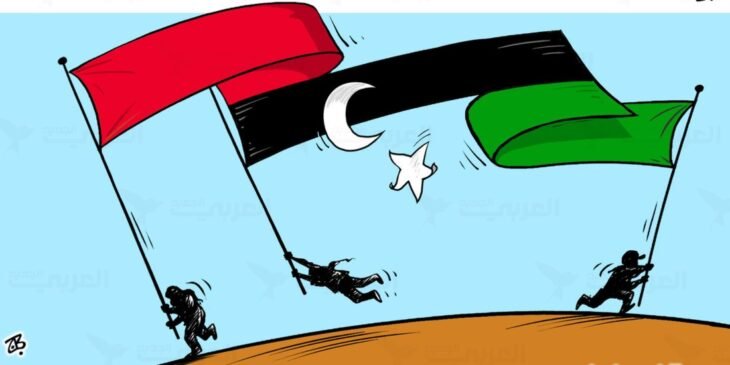
Is Haftar Really that powerful? (1)

Gregory Holyoke

After an EU delegation was humiliated by the commander in control of large swaths of eastern Libya, Euronews explores Haftar’s fall, then rise to power and who is helping him maintain it. When a senior EU delegation travelled to the eastern Libyan city of Benghazi last Tuesday, they were hoping to discuss ways to limit the increasing numbers of migrants leaving Libya heading north to Europe.

However, shortly after their jet touched down at Benghazi Airport, the cluster of EU foreign ministers – as well as European Commissioner for Migration Magnus Brunner – were sent packing. There was no agreement, not even a meeting. They were unceremoniously kicked out and declared “personae non gratae,” a source on the European side told Euronews at the time, adding that the delegation was caught in a diplomatic “trap” in which Haftar tried to force them to take a photo with, and tacitly legitimise, his Benghazi-based government.

While the EU itself has been remiss to publicly comment on what one senior Libyan analyst said was outright “humiliation,” it is understood that the man they were hoping to strike a deal with was General Khalifa Haftar.

As the head of the powerful Libyan National Army, despite not leading the internationally recognised government, Haftar has become the de facto ruler of vast swathes of the North African country, which has lacked a unified state since the fall and assassination of notorious dictator Muammar Gaddafi in 2011.

Although Haftar is arguably the most powerful person in Libya today, he was once persona non grata himself, living quietly in exile right up to Gaddafi’s demise.

Keep your friends close…

Born to an Arab Bedouin family in northeastern Libya at the start of Britain’s eight-year occupation of the country, Khalifa Belqasim Omar Haftar was, even according to his allies, “a very quiet young lad who did not do much work.”

However, he managed to gain admission to the Benghazi Military University Academy, where friends from his time there reportedly also refer to him as “a very stern boy”. “He would not ask for a fight, but if it came to him, he knew how to handle it,” Haftar’s friends described him. It was at the academy where Haftar got to know a student in the year above — one Muammar Gaddafi.

They became fast friends, with Haftar even labelling Gaddafi an “angel”. The two united over their revolutionary spirit, fomented by a recent political coup that toppled the monarchy and political class in Libya’s neighbour, Egypt. “We were massively affected by Jamal Abdel Nasser’s era and what was going on in Egypt,” Haftar later explained.

Haftar was also said to be a massive admirer of the Iraqi vice president at the time — soon to become another household name. “Khalifa’s most important son is named Saddam, who by the way is named after Saddam Hussein. He’s the most like his father, I think that tells you all you need to know,” Tim Eaton from the Chatham House Institute said during an interview with Euronews from London.

It is also likely that he chose his title, field marshal, as a nod to Yugoslav socialist leader Josip Broz Tito, experts believe. Just three years after his graduation, Haftar was instrumental in the 1969 coup, which toppled King Idris and replaced him with Gaddafi, who had expansionist ambitions of spreading his Islamic socialist ideology — also known as Jamahiriya — beyond Libya’s borders.

In subsequent years, Haftar trained in the Soviet Union and rose through the ranks of Gaddafi’s military, commanding the Libyan troops supporting Egyptian troops entering Israeli-occupied Sinai during the Yom Kippur War in 1973. This cemented what was to become an enduring relationship between the Libyan military commander and leaders in Cairo.

But keep your enemies closer

In 1986, Haftar was made a colonel before becoming the military chief of staff. As the Gaddafi regime became increasingly authoritarian and rogue, his rise seemed inexorable. However, his luck suddenly turned: Gaddafi’s favourite commander led a disastrous mission in the late 1980s into neighbouring Chad, which led to the capture of almost 700 Libyan soldiers, including Haftar himself.

He was jailed, along with his men. Then it was the US, not Libya, that secured his release, which Libyan analyst Anas El Gomati contends was a turning point in the Haftar-Gaddafi relationship. “Haftar was like Gaddafi’s chosen sword until he became his sharpest blade turned inward,” the founder of Libya’s self-described first think tank told Euronews.

As El Gomati explained, Haftar “was abandoned as a scapegoat, then spent two decades in Virginia plotting revenge.” “He didn’t just oppose Gaddafi, he became his dark mirror, learning every lesson about authoritarian control,” El Gomati pointed out.

In fact, Haftar spent the next 24 years in exile and working with Libyan opposition movements, living just kilometres away from Washington, in Langley, the home of the CIA. In 2019, a former advisor to Haftar in the mid-2010s, Mohamed Bouzier, concurred with El Gomati in an interview with the BBC. “He was inhabited by Gaddafi. He was inhabited by envy of Gaddafi. How Gaddafi ruled this country,” Bouzier said.

However, some Libya insiders privately told Euronews of rumours that Gaddafi had actually gifted his former military chief an opulent mansion in Cairo during this time — the same house in which Haftar’s most powerful son, Saddam, grew up.

Back in the fold

When protests erupted across the Arab world in 2011, Libyans took to the streets in cities across the country. After decades of discussing plots to overthrow Gaddafi with willing Western ears and, as Libya expert Claudia Gazzini describes it, “sort of defecting to the Americans”, Haftar finally saw cracks emerging and soon went to the Libyan capital Tripoli.

However, the International Crisis Group’s senior analyst pushed back on the idea that Haftar was a key US puppet in the Libyan revolution. “I haven’t heard anybody make it so explicit. It would make sense, but nobody has said the Americans told him to go back there,” Gazzini said. Even if they did, it would not have been a short-term success, she continued.

“In 2012-2013, he based himself in Tripoli, but he wasn’t a big name at the time, because there were just so many different armed groups in Tripoli an the power was balanced out between all these people.” El Gomati was less diplomatic: “Haftar was a footnote, a Cold War fossil.”

It was not until 2014 that Haftar’s head really appeared above the parapet, when he announced an operation which he said was to root out extremists in Benghazi. Even then, Gazzini contends that he was not taken seriously. “It was very pathetic. He actually came on TV with a big map behind him saying: ‘Hey, you know, we need to rebel against these bad Islamists.’”

A claim that both Gazzini and Eaton doubt, with the latter telling Euronews that “for Haftar, there’s always been good Islamists and bad Islamists.” “There’s actually a lot of Salafists (Islamist extremists) in his ranks, just ones who can take orders,” Eaton explained.

However, Operation Dignity, as it was known, helped consolidate Haftar’s power over Libya’s second biggest city and much of the country’s east. Over the following years, he built up his power and became the supreme commander of the Libyan National Army in 2015.

None of this happened in a vacuum.

______________________

Libya’s Peace Paradox: Less Violence, More Fragility 

Julia Fengler

Since 2020, Libya has recorded the largest improvements in the Global Peace Index. However, ongoing challenges, fragmented governance, foreign interference, and institutional weaknesses, continue to undermine stability, explains Julia Fengler.

After nearly a decade of civil war, Libya in the past few years has substantially reduced its levels of open conflict. However, this relative peace belies its extreme social fragility and fractured military and political landscape, which leaves it at heightened risk of renewed conflict. 

After nearly a decade of civil conflict that followed the 2011 overthrow of long-time ruler Muammar Ghaddafi, Libya has recently experienced a notable improvement in peacefulness. Since 2020, it has registered the largest improvement of any country in the Global Peace Index (GPI), improving by 25 places in the global rankings.  

Yet Libya’s progress in reducing outward manifestations of violence belies the country’s extreme social fragility amid its deeply fractured military and political landscape. This fragility is reflected in Libya’s ongoing deteriorations in Positive Peace, IEP’s measure of social and institutional resilience. While Libya’s recent reductions in violence are welcome, they have come as the result of an untenable socio-political stalemate. Unless Libya’s fractures can be overcome and its institutional resilience can be strengthened, peace will remain unsustainable, as shown in the outbreaks of violence earlier this year.

Historical context  

Libya’s present-day instability is deeply rooted in the legacy of Gaddafi’s four-decade rule. Coming to power in 1969 through a military coup, Gaddafi established an authoritarian regime that dismantled formal institutions. His jamāhīriyyah system replaced traditional government structures with a complex network of people’s committees and revolutionary councils. Political dissent was harshly repressed, and opposition groups were exiled. While Gaddafi used oil wealth to fund social programs and infrastructure, his rule left Libya without functioning political institutions or a clear succession plan.  

In the context of the Arab Spring, civil war broke out in the country in 2011, causing tens of thousands of deaths and leading to the regime’s collapse. This created a major power vacuum, in which militias, tribes and rival political factions competed for control.  

Without strong institutions or a unified national army, Libya struggled to transition to democratic governance. Elections in 2012 initially brought hope, but growing tensions between Islamist and secular factions, along with the rise of powerful militias, led to renewed violence. This fragmentation triggered a second civil war in 2014, with frequent clashes and the involvement of external actors costing thousands more Libyan lives.  

After six years of intensive fighting, this second civil war ended through a ceasefire agreement in 2020. These successive conflicts of the 2010s, combined with a substantial upsurge in terrorist activity, drove the massive deterioration in the country’s peace score, and their cessation has driven its subsequent improvement.

The records of the Uppsala Conflict Data Program, for example, count around 4,000 deaths from internal conflict in 2011. And from 2012 to the end of the decade, the country averaged more than 1,100 conflict fatalities per year, but it has recorded fewer than 15 conflict deaths each year since 2021.  Similarly, according to the Global Terrorism Index 2025, terrorism peaked in Libya in the mid-2010s. There was a high of 234 terrorism-related deaths in the country in 2015. But there have been no recorded terrorist attacks or deaths since 2022.

Contemporary challenges 

While negative peace, defined as the absence of violence or fear of violence, has recently improved in Libya, this trend has not been accompanied by corresponding gains in Positive Peace. Positive Peace encompasses the social systems, institutions and governance structures that support long-term stability. By this metric, Libya has been on a largely consistent deteriorating trajectory for more than a decade. As of 2024, it ranks 145th out of the 163 countries in the Positive Peace Index (PPI).

Libya’s dearth of Positive Peace has been reflected in, and exacerbated by, the country’s fractured political landscape. In recent years, it has effectively been ruled by two governments, each controlling a large portion of its territory. The internationally recognised Government of National Unity (GNU) is based in Tripoli and controls the western part of the country, while a rival authority backed by Commander Khalifa Haftar controls Benghazi and the eastern part of the country.  

Both factions claim legitimacy, but neither has been able to carry out the long-promised national elections, originally scheduled for December 2021. This stalemate has frozen reform efforts and left much of the country in a state of political uncertainty. Unless meaningful steps toward unity are taken, this persistent fragmentation of governance will leave the country vulnerable to renewed eruption of violence.  

In early May 2025, for example, Tripoli experienced its most severe outbreak of violence in over a year, following the assassination of Abdel Ghani al-Kikli, a commander affiliated with the Government of National Unity. His death triggered armed clashes between government-affiliated forces and non-state actors. The violence quickly escalated in densely populated neighbourhoods, resulting in the deaths of both combatants and civilians. Although a UN-brokered ceasefire was reached by mid-May, the incident revealed the fragile nature of Libya’s security landscape.

Future prospects 

Since that ceasefire, militia mobilisations have continued, particularly around Tripoli. These movements have prompted the United Nations Support Mission in Libya (UNSMIL) to issue repeated warnings, most recently in July. While the overall conflict intensity has declined, the risk of future violence remains high. 

Foreign involvement has further complicated this picture. Türkiye backs the GNU, while Russia, through proxies and private military contractors, supports Haftar’s forces. Though these powers may bring temporary stability to certain regions, they also obstruct national reconciliation.  

Libya’s post-2011 trajectory reflects the gap between the absence of war and the presence of peace. While the country has moved beyond the peak of open conflict, the underlying drivers of instability – fragmented governance, foreign interference, and institutional collapse – remain in place. As a result, gains in peacefulness may prove temporary without deeper structural reforms and a resolution to the political and military deadlock.

______________________

The Sarkozy-Gaddafi Trial Exposes Corruption’s Devastating Effect on Libyans (2)

Chiara-Lou Parriaud and Grace Spalding-Fecher

JUST SECURITY

France’s Dangerous Game in Libya

In his dealings with the Libyan regime, Sarkozy strayed away from the more restrained foreign policy approach of his predecessor, Jacques Chirac (1995-2007), and instead pursued a more assertive stance.

This shift culminated in the French- and British-led NATO intervention that toppled Gaddafi in 2011. Yet France’s interventionist legacy did not end with Sarkozy’s defeat in the 2012 presidential election.

His successors, François Hollande (2012-2017) and Emmanuel Macron (2017-present), despite their criticism of the NATO operation, have continued to meddle in Libya’s political process at the expense of Libyans’ fundamental freedoms.

Since 2011, France has officially backed the U.N. Support Mission in Libya (UNSMIL), supporting efforts to hold free elections, rebuild public institutions, and prevent armed conflict.

Yet as the U.N.-brokered Libyan Political Agreement in December 2015 was leading to the formation of the GNA, France’s domestic priorities shifted as the country was hit by multiple Islamist terrorist attacks in its capital.

The national security crisis reinforced the Middle East strategy of then-Defense Minister Jean-Yves Le Drian, under former President Hollande, who prioritized a security approach in Libya at the expense of democratic considerations.

Le Drian saw a pragmatic ally in Haftar, especially because of his victories against ISIS and al-Qaeda. For France’s counterterrorism operations in the Sahel region, Haftar appeared capable of imposing order and stability in a fragmented Libya that had become a haven for jihadist groups.

The Libyan Political Agreement called for broad inclusion of Libyan factions in the political process and civilian oversight of the military. In contrast to these terms, France began quietly bolstering Haftar’s eastern regime.

Since early 2015, it provided support via special forces, advisers, and clandestine operations. The death of three French secret service agents in a helicopter crash near Benghazi in 2016 forced Hollande to confirm France’s military presence in the country.

France’s meddling and double standards in Libyan political affairs became more blatant under Macron, who hosted Haftar and the GNA’s then-Prime Minister Fayez al‑Sarraj for peace talks in July 2017, circumventing the established U.N. peacebuilding efforts.

Though both pledged support for a ceasefire and prompt national elections, Macron’s move – making him the first European leader to host Haftar – granted the warlord international legitimacy, despite EU, NATO, and U.N. support for the rival GNA.

Although professing support for the Libyan Political Agreement, Macron failed to include other factions in the talks and made no demands on Haftar.

In May 2018, Macron continued to sideline the U.N.-led process by convening Haftar and Sarraj along with Libyan parliamentary leaders, where he proposed a plan to hold elections by December 10, a timeline widely seen as unrealistic at the time.

Macron’s unilateral initiative only incentivized the U.N. plan’s detractors to stall negotiations. After this plan fell apart, U.N. special envoy Ghassan Salamé postponed elections till spring 2019, but Haftar derailed the process by launching an offensive on Tripoli.

In response to the offensive, France leveraged diplomatic protection to thwart the EU from condemning Haftar, downplayed the humanitarian toll, and portrayed the warlord’s opponents as terrorists.

On the ground, U.N.-backed forces found four American-made Javelin anti-tank missiles, supplied by France, in a Haftar-controlled stronghold south of Tripoli. Meanwhile, France’s Emirati allies hired Russian mercenaries, cementing a long-term Russian presence in Libya. Through the end of 2019, Haftar’s forces made fast territorial advances until Turkey sent troops to bolster opposing GNA forces, prompting the GNA to declare a unilateral ceasefire in October 2020.

Going Beyond Counterterrorism

Paris’ adulation of the Libyan war general goes beyond counterterrorism; it is also rooted in its strategic alliances with key military partners across the wider Middle East, primarily Egypt and the United Arab Emirates, both major buyers of French weapons and backers of Haftar’s LNA.

The warlord also enjoys support from Russia, Jordan, and Saudi Arabia, while the GNU is backed by Turkey and Qatar. Marginalizing Haftar could jeopardize lucrative military contracts with Egypt and the UAE, two of France’s most important clients.

Although the Franco-Emirati relationship has deteriorated since 2021, Sisi and Macron’s ties remain strong.

Natural resources also dictate France’s presence in Libya, as the French energy company Total holds exploration rights in several oilfields in the West and a share of one of Libya’s main oil companies.

Furthermore, as Ali Albayaa, a research fellow specializing in the Middle East and North Africa region at the Human Rights Foundation, told us, “We should not overlook Macron’s personal ambitions of projecting France as a guarantor of European continental security.”

Libya is a crucial piece in France’s puzzle, as Haftar controls the majority of the country’s territory and, by extension, the masses of immigrants pouring into France in search of a safer future.

Haftar’s capacity to shape immigration realities in Europe partly explains France’s tacit support to the dictator.

The Costs of French Realpolitik

Not only does France’s diplomatic and military support for Haftar delegitimize the U.N. political process, but it also abets the perpetuation of human rights abuses by Haftar’s LNA.

In fact, Haftar himself was convicted by a U.S. judge in 2022 of war crimes for his role in ordering extrajudicial killings and torture in Libya. The militias that make up the LNA are no better and have been accused of a host of human rights abuses.

The Tareq Bin Zeyad Brigade (TBZ), led by Haftar’s son Saddam, has been accused of crushing any opposition to the LNA. Amnesty International has documented the TBZ’s links to a “catalog of horrors,” particularly against migrants, including torture, mistreatment, and forced expulsions in total impunity.

Haftar’s 2019 offensive on Tripoli, which France tirelessly sought to shield from international condemnation, was marred by significant human casualties, killing at least 430 civilians and displacing 250,000 more.

Rampant corruption and mismanagement further infringe on the local populations’ fundamental freedoms. One example is the collapse of two dams in September 2023 in the city of Derna after a storm brought heavy rains to the country’s northeastern coast. The resulting devastation killed at least 4,000 people and left tens of thousands of people missing to this day. Corruption within both the GNU and the LNA is to blame for the floods’ cataclysmic impact.

The dams collapsed after over a decade of warnings about their degrading state and a half-hearted attempt to fix them by Libyan politicians on both sides. The widespread protests that erupted following the disaster were met with the eastern regime’s brutal retaliation and arbitrary arrests of activists.

Jalel Harchaoui, an analyst on Libya security and associate fellow at the Royal United Services Institute for Defense and Security Studies, pointed out to us that these authoritarian tactics are not unique to the Eastern regime; in fact, the GNU in the West has adopted more totalitarian actions in recent months, with little objection from the international community.

France’s Pervasive Legacy

“What started out as military aid in the context of France’s fight against terrorism ended with Haftar managing to transform that technical aid into political and ideological support,” Harchaoui explained in an interview. “Once Haftar gained absolute control of Benghazi from ISIS, al-Qaeda, and Libyan political opponents in 2017, France should have ended its support.

Instead, under Macron’s presidency, it continued to support Haftar diplomatically.” Harchaoui concluded, “It’s in the name of realpolitik that France lacked realism in Libya.

By solely backing Haftar, France left key players out of its unilateral vision for the country’s future. As a result, France does not hold the same relevance that it did in 2019. Libya has turned into a playing field for non-Western powers.”

Despite its waning influence, the damage France has done will persist. The Libyan civil and political spaces are rife with human rights violations, as both regimes deploy authoritarian practices to repress any form of dissent and political pluralism.

Libya’s window of opportunity for nationwide elections, which briefly opened in 2021, is not available today due to the partisan nature of foreign interference that has sown divisions rather than the unity sought by the U.N.-led political process. France needs to bear responsibility for the long-term consequences of foreign interference.

With the Sarkozy-Gaddafi trial, French democracy upholds its commitment to holding its former leaders accountable for their wrongdoings. France owes this self-healing, in large part, to its civil society.

Without the Médiapart journalists who first uncovered the affair, or anti-corruption organizations like Sherpa, Transparency International, and Anticor, which coalesced as civil parties in the trial “to underscore the systemic mechanisms facilitating financial flows and the associated repercussions on the populations of impacted states,” and without the French Association of Victims of Terrorism (AfVT), which also joined as a civil party to represent the families of the DC10-UTA flight victims, France’s judiciary would not have had the tools to address the complex web of corruption weaved by Sarkozy, Gaddafi, and their respective ministers.

If Libyans are to have a real chance at democracy, France must stop undermining the U.N.-led peace process by legitimizing warlords through backchannel diplomacy. Instead, it should hold perpetrators of violence in both Libyan regimes accountable for their human rights abuses through individualized and targeted sanctions.

On the commercial front, any lucrative contract passed between France and its Middle East allies should be conditioned on the respect of human rights.

Repression should not be rewarded. And at the grassroots level, in light of civil society’s vital role in democratic processes – as witnessed during the Sarkozy trial – France should support and fund civil society efforts in Libya to ensure diverse voices are included in a viable political solution.

Although Libyan civil society organizations, such as Together We Build It, are working to address the absence of women’s participation in peace-building processes, foreign powers should also empower an intergenerational, gendered approach to peace-building. It is only by pushing for accountability, transparency, and letting Libyan voices be heard that France will truly play a constructive role in ensuring Libyans’ access to their fundamental freedoms.

_______________________

Libya’s GNU strikes smuggling networks with Turkish drones in message to rivals

Rayhan Uddin

Strikes were carried out on Wednesday in the northwestern coastal cities of Sabratha and Zwara, the Government of National Unity (GNU) announced. 

The strikes were “part of a systematic security campaign and comprehensive strategic plan aimed at intensifying operations to degrade and dismantle the criminal gangs and networks trafficking in human lives and people-smuggling into Europe,” Abdulsalam Al-Zoubi, the GNU’s deputy defence minister, said on Thursday.

“These operations, which included the inaugural use of UAVs [unmanned aerial vehicles], demonstrate the determination and zero-tolerance approach of the GNU in tackling these criminal networks and disrupting their illegal activity.” A source within the GNU told Middle East Eye that the drones were “Turkish UAVs owned and operated by the Libyan Ministry of Defence”. 

While authorities have previously carried out air strikes against such groups, this was their first use of drones. The defence ministry said it targeted factories used to manufacture boats and other equipment essential to people and weapon-smuggling schemes.

‘No civilian casualties’

For several years, criminal organisations have operated along Libya’s coast, particularly in the northwest, facilitating irregular migration for people trying to reach Europe from the African continent. The ministry said it issued warnings to residents in Sabratha and Zwara ahead of the strikes, and that no civilian casualties were reported. 

Emadeddin Badi, an expert on Libyan security and politics, said Zoubi’s involvement in these strikes was significant. “He recently visited Turkey and is the person that has coordinated these strikes with Turkish support,” Badi told MEE. 

“His involvement, especially from Mitiga, is a signal that he’s asserting operational autonomy, even within the GNU’s own command structure.” Mitiga is an airport in Tripoli that was the source of tension recently between the GNU and Rada, a powerful armed group.

“Their coordination from this base is a big signal that is key to unpacking [the strikes’] significance,” said Badi. The analyst added that while some reports, citing GNU officials, had framed the strikes as being carried out by Turkish Akinci drones, he had received information to suggest that Bayraktar TB2 drones had been used. 

“Akincis are based between Wutiya and Misrata, whereas the recent strikes originated from Mitiga, which only hosts TB2s,” he said. Zoubi stated that the strikes sent a clear message to non-state actors in Libya that all measures, including military actions within international law, would be taken to “re-establish border control, strengthen national security, and reaffirm the sovereignty of the state”.

Over the past decade, trafficking and smuggling along the coast has been a key tool used by militias and non-state actors in Libya to wield political and financial influence. Eastern Libya is controlled by a rival administration dominated by Khalifa Haftar, a military commander. Two years ago, people smugglers in the east linked to Haftar were accused of involvement in a deadly shipwreck off the coast of Greece that killed more than 500 people. 

Badi said that as well as targeting smugglers, Wednesday’s operation also targeted those loyal to Mohamed Bahroun, known as al-Far (the rat), a prominent militia leader and known GNU opponent. “It also serves as a deterrent message to rivals in the west coast,” he said. “That kind of signalling aligns closely with Ankara’s broader goal in Libya: avoiding another armed confrontation in Tripoli.” 

***

Rayhan Uddin is a Middle East Eye journalist based in London, with an interest in geopolitics, conflict and human rights. He has previously contributed to The Guardian, The Spectator and New Statesman

_______________________

The Sarkozy-Gaddafi Trial Exposes Corruption’s Devastating Effect on Libyans (1)

Chiara-Lou Parriaud and Grace Spalding-Fecher

Just Security

The corruption trial of former French President Nicolas Sarkozy in France is testing the country’s democratic resilience and the judiciary’s capacity to act as a counter-power to leaders bending democratic rules.

Sarkozy, who led the country from 2007 to 2012, is accused of illegally funding his 2007 presidential campaign with millions of euros from one of Africa’s most notorious dictators, former Libyan leader Muammar Gaddafi, in exchange for France strengthening its ties to Libya and reexamining its terrorism charge against Gaddafi’s brother-in-law and Libyan intelligence chief Abdullah al-Senussi.

In March, French prosecutors demanded that if Sarkozy is found guilty, he must serve seven years of detention, pay the equivalent of $340,000 in damages, and be banned from political office.

The case marks the culmination of a decade-long judicial investigation into a sprawling corruption scheme “fanned by ambition, lust for power and greed, weaving its web in the highest levels of government,” according to the prosecution. Judges of the Paris Criminal Court heard arguments from Jan. 6 to April 10, and will deliver their verdict on Sept. 25.

In the meantime, much of the media attention has focused on how the “Sarkozy-Gaddafi affair” is challenging France and its democratic institutions, with too little coverage of how the corruption has harmed the people of Libya.

Since NATO’s intervention in 2011 and Gaddafi’s resulting death, two competing factions emerged from the power struggle that followed the regime’s fall: the internationally backed Tripoli-based Government of National Accord (GNA) turned Government of National Unity (GNU) in 2021 in western Libya and the Government of National Stability (GNS), led by de facto leader warlord Khalifa Haftar and his Libyan National Army (LNA) in Benghazi in the East.

A civil war raged between these factions until October 2020. Since then, numerous United Nations-led attempts at a more permanent peace have failed to materialize on the ground. Tensions remain high and elections have not been held.

Libyans continue to endure the consequences of decades of political instability, worsened by foreign interference, institutionalized corruption, and escalating repressive authoritarianism.

As the Sarkozy trial nears its conclusion this fall, it should provoke deeper scrutiny of how democracies engage with dictatorships – pushing policymakers to critically consider the real-world consequences of Western actions on the lives of local populations.

Acknowledging Sarkozy’s legacy in Libya, France should go beyond its lip service to the U.N.-led peace process and work to foster democracy and fundamental freedoms Libyans crucially need, holding both the GNU and the LNA accountable.

Alongside its democratic commitments, France should also reckon with the human rights consequences of its Libya foreign policy and interference in the post-Sarkozy era.

The Sarkozy-Gaddafi Affair

The Sarkozy-Gaddafi affair first hit French headlines in 2011, when French investigative news website Médiapart published exclusive confidential documents exposing the scandal.

Over the next 14 years, outlets published more than 190 articles on the topic. The evidence appears overwhelming: secret meetings in Tripoli in 2005 between Sarkozy’s ministers and Senussi.

In 1999, a French court convicted the intelligence chief of masterminding the 1989 terrorist attack on a French plane, killing 170 people. Journalists uncovered bank transfers between Libya and France in offshore bank accounts. 

An agenda note was found in 2012 on the corpse of Libya’s former prime minister, Choukri Ghanem, ordering a transaction of 6.5 million euros for Sarkozy’s campaign. Mountains of cash piled up in Sarkozy’s campaign headquarters, as confirmed by anti-corruption officers.

Sarkozy’s motivation appears to be simple: his campaign would receive millions of euros, strengthening his chances of becoming president. Gaddafi, on the other hand, sought judicial, diplomatic, and economic gains.

First, Gaddafi wanted to exonerate Senussi from the life sentence he’d received in France for his role in the 1989 attack.

Second, in the 2000s, Libya was attempting to shed its reputation as a “terrorism-state” and wanted sanctions lifted. France’s public support of Gaddafi’s regime could help foster increasing legitimization for the dictator.

Third, French ministers and Libyan dignitaries negotiated a deal to provide Libya with surveillance equipment in the 2000s.

The accumulation of evidence in the public sphere instigated a judicial investigation into the Sarkozy-Gaddafi affair in 2013, which lasted until 2023, when judges sent Sarkozy and three of his former ministers back to court for this year’s historic trial.

The Cost to the Libyan People

Sarkozy’s trial is finally drawing attention to corruption’s devastating costs on Libya’s civilian population. Notably, the trial sheds light on the role of Amesys, a French cybersecurity firm that sold technology to the Libyan regime to intercept electronic communications and monitor online activities of Libyans between 2007 and 2011.

A 2011 Wall Street Journal investigation into the Tripoli Internet monitoring center, a highly sophisticated surveillance apparatus built by Gaddafi, found that in 2009 Amesys had equipped this security unit with Eagle, one of the most intrusive technologies for tracking online activities at the time. 

Eagle had the ability to conduct “strategic nationwide interception” that could monitor emails from Hotmail, Yahoo, and Gmail and see chat conversations on MSN instant messaging and AIM. Users in Libyan intelligence could “request the entire database” of Internet traffic “in real-time.”

Following the Wall Street Journal’s findings, two French NGOs – the International Federation of Human Rights and the League of Human Rights– lodged complaints with French courts in 2011.

Two years later, French authorities launched an inquiry into the French cybersecurity firm. Six Libyan victims testified before the courts, arguing that their arrest and torture were directly linked to the spyware program.

In 2021, the Crimes Against Humanity and War Crimes Unit of the Paris Judicial Court indicted the company and four of its executives for complicity in torture in Libya, which was later confirmed by an appellate court.

The Sarkozy-Gaddafi trial has shed further light on these claims. The meetings in 2005 between Sarkozy’s ministers and Senussi, organized by businessman and alleged middleman Ziad Takkieddine, likely facilitated Amesys’ commercial contracts.

At the time, France lacked any regulatory measures covering the sale of such technology, which enabled these discussions to go largely unnoticed by French regulators.

With this French technology, Gaddafi was able to heavily monitor and hunt down government opponents who were subsequently arrested, arbitrarily detained or forcibly disappeared, and tortured with little consequence despite the implications for France.

The alleged corruption between Sarkozy and Gaddafi undermined French democracy, but it also empowered Gaddafi’s brutal crackdown of Libyan dissidents and activists.

Even more so, the allegations that Sarkozy accepted millions in Libyan taxpayer money indicate that those who paid the largest price were the Libyan people, victims of an embezzlement scheme and of foreign support for a crackdown against those who spoke out.

They faced economic hardship, political instability, and even violence as a result of corrupt dealings at the highest levels of power.

________________________
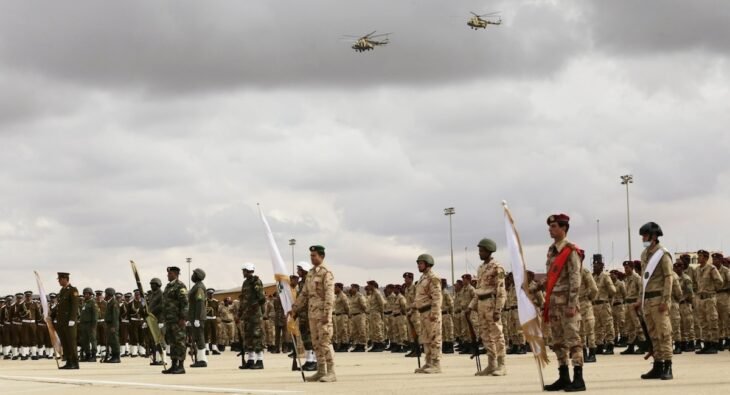
Libya’s crypto boom goes underground

Saddam Haftar linked to crypto farms

In the midst of Libya’s volatile political divide, a new and largely invisible economy is taking root—one that is decentralised, lucrative, and increasingly beyond the reach of state control.

Bitcoin mining, officially banned and inherently power-hungry, is surging across the country, transforming Libya into one of the most active, though unofficial, cryptocurrency mining hubs in the Arab world and Africa.

This unlikely boom is fuelled by a unique confluence of factors, foremost among them being Libya’s heavily subsidised energy sector. With electricity priced as low as $0.004 per kilowatt-hour—among the cheapest globally—miners enjoy near-unprecedented profit margins. Their operations run continuously, solving complex cryptographic puzzles that secure blockchain transactions in exchange for Bitcoin rewards.

“Electricity in Libya is virtually free for most consumers, and diesel is similarly subsidised,” said economic analyst Sami Radwan. “This creates an economic environment unlike anywhere else. It’s no surprise that both Libyan and foreign actors are rapidly setting up mining farms across the country to exploit these conditions.”

Although the Central Bank of Libya outlawed virtual currencies in 2018—citing risks related to money laundering and terrorism financing—cryptocurrency mining has thrived in a legal vacuum. By 2021, Libyan miners were estimated to account for around 0.6% of the global Bitcoin hash rate, placing the country ahead of every Arab and African state, and surpassing several European nations. Yet this unregulated digital gold rush has come at a steep cost.

At its peak, Bitcoin mining was believed to consume up to 2% of Libya’s total electricity supply. Individual sites reportedly draw between 1,000 and 1,500 megawatts—equivalent to the demand of several medium-sized cities. This surge in consumption has further strained an already fragile power grid, triggering widespread blackouts and exacerbating public discontent.

More troubling still is the increasing involvement of armed factions—most notably militias loyal to Saddam Haftar, son of eastern commander Field Marshal Khalifa Haftar. In eastern and southern regions under their control, mining operations are not only tolerated but actively protected.

Sources familiar with the matter told Libyan Express that many of these operations are sophisticated and deeply entrenched. Militias provide secure locations, unimpeded access to electricity and internet infrastructure, and logistical support in exchange for a share of the profits—often converted into hard currency through informal financial networks.

“These groups operate with near-total impunity,” one official said. “Local authorities are either powerless or unwilling to intervene.” Operators are also reportedly using elaborate methods to evade detection, including burying equipment beneath layers of concrete to obscure thermal signatures and concealing rigs within fortified compounds guarded by armed units.

While the General Electricity Company of Libya (GECOL) has made progress in stabilising the grid—especially in Tripoli, where outages have significantly declined since mid-2023—officials warn that illegal mining continues to undermine national energy security.

At the same time, Libya’s growing internet penetration has accelerated crypto adoption. As of early 2024, an estimated 6.13 million Libyans—roughly 88% of the population—were online. Despite the official ban, a 2022 study estimated that more than 54,000 Libyans owned cryptocurrency. That figure is expected to rise, fuelled by digital awareness and weak enforcement.

Authorities have carried out intermittent raids, seizing mining equipment and detaining foreign technicians—particularly Chinese nationals—but without a national regulatory framework, these actions remain reactive and largely ineffective. Experts have called for comprehensive legal reform to regulate the industry through licensing, taxation, and incentives for renewable energy use. Yet many caution that any attempt to formalise the sector will fail unless the state can reassert control over territory currently dominated by militias.

“This isn’t just about electricity,” a Tripoli-based energy official told Libyan Express. “It’s about sovereignty over the next phase of Libya’s economy. Right now, that power lies not with the state—but with those who control the generators, the networks, and the guns.”

_________________________