Author - ab_mnbr

LIBYA’S FRAGILE DEADLOCK

Jalel Harchaoui

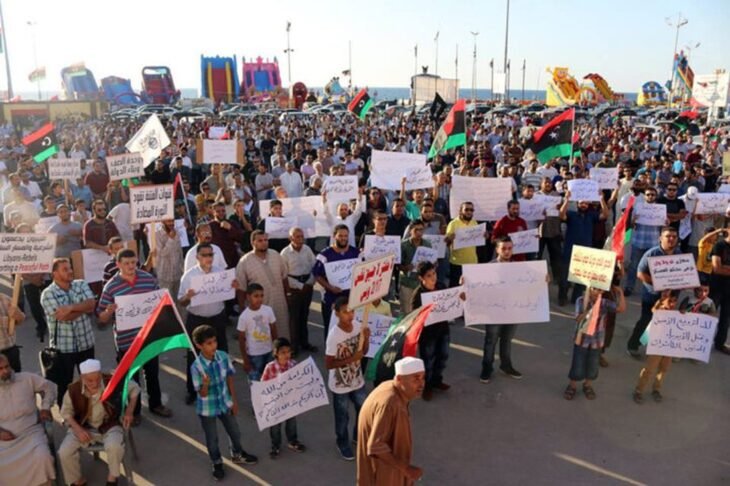
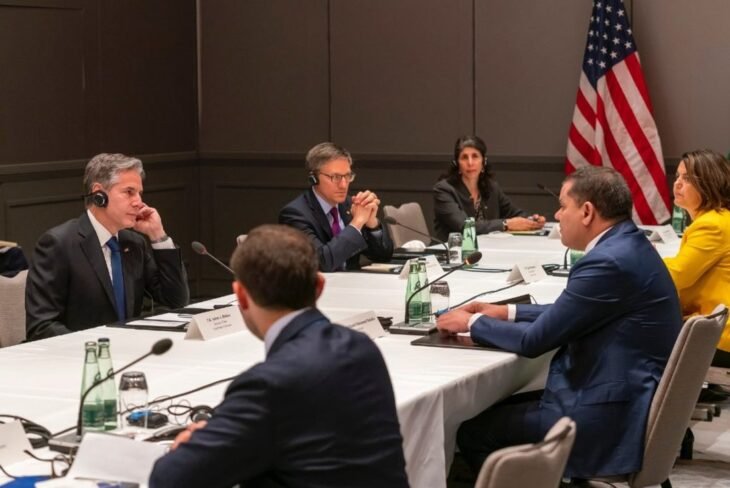
Central Intelligence Agency Director Bill Burns made whirlwind visits to Benghazi and Tripoli on January 12, asking contending Libyan leaders to expel roughly a thousand Russian personnel and help organize nationwide elections. But despite being the most senior U.S. official to set foot in Libya in years, Burns is unlikely to get his wishes any time soon.

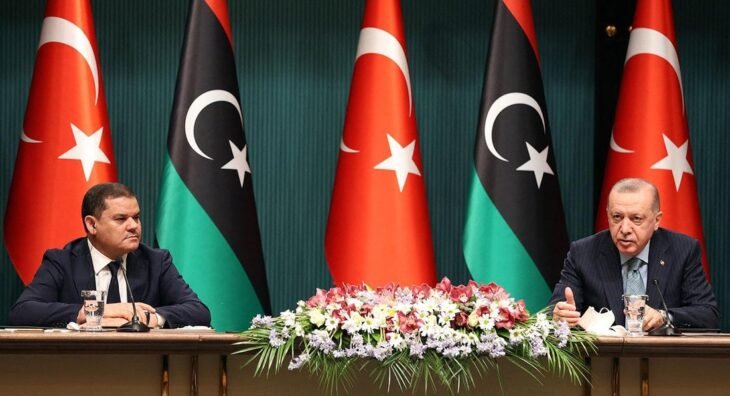
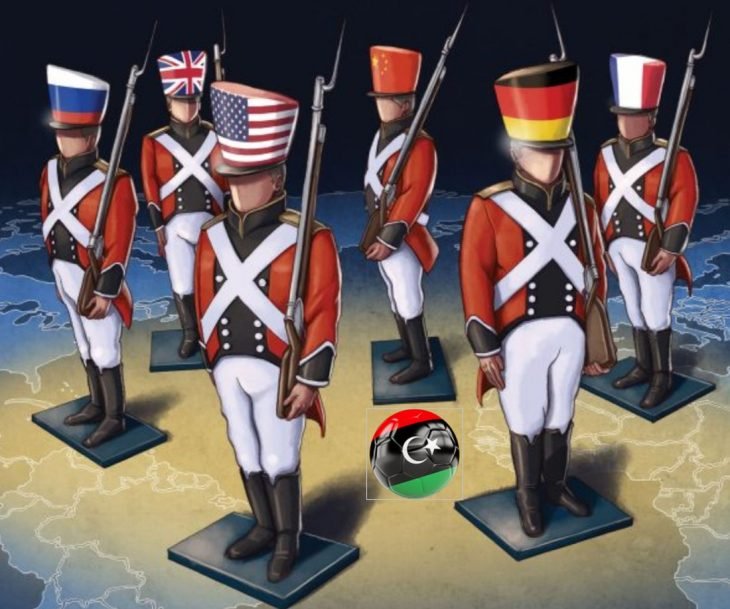
What stands in the way is an intricate deadlock that has lingered across the divided country for months. Part of that can be attributed to the geographic distribution of hydrocarbons, which favors rebel commander Field Marshal Khalifa Haftar and his so-called Libyan National Army. The Field Marshal’s failure in his 2019-2020 attempt to take Tripoli did little to jeopardize his control in the oil-rich east and south. Today, irrespective of Burns’ requests, Haftar refuses to share his strategic territories with Libyan rivals. In doing so, he enjoys the support of not only Russia but also U.S. partners Egypt and Saudi Arabia, not to mention France and Greece. Meanwhile, in the country’s northwest, Turkey uses its military presence to keep incumbent Prime Minister Abd al Hamid Dabaiba in power, long past the expiration of his mandate.

Against such a rigid backdrop, any attempt to force a diplomatic breakthrough could upset the ongoing calm and plunge parts of the country back into prolonged conflict. Yet, if Washington is serious about Burns’ objectives, it should convince leaders on both sides that sticking to their current practices and strategies will cost them. In addition to coercive measures targeting Libyan decision-makers, this requires bringing Washington’s main regional partners, namely Turkey, Egypt, and the United Arab Emirates, on board. 

Getting Better at Dividing the Enemy

Since his military debacle on the outskirts of the Libyan capital almost three years ago, Haftar has proved unexpectedly resilient in weathering financial strains and attracting new allies. In 2021, mere months after the Tripoli civil war ended, a U.N.-backed process designated Dabaiba as prime minister for a brief term in Tripoli pending general elections in December of that year. Haftar’s camp helped Dabaiba win the interim prime ministership, then weakened him by refusing to give him further recognition or even permission to visit Benghazi. The U.N.’s election plans eventually crumbled — allowing Dabaiba to hold onto office in the west. Both sides proceeded to build up their respective military forces while engaging in some economic cooperation through an Emirati-sponsored dialogue between Prime Minister Dabaiba’s nephew, Ibrahim, and Saddam Haftar, the most assertive of the veteran commander’s six sons.

Since his accession to the prime ministership, Dabaiba has often proclaimed a willingness to use his influence over the state’s ministries and economic institutions to accommodate other political factions — but regardless, his staunchest foes want him out of Tripoli. In February 2022, the eastern-based House of Representatives, which is more or less aligned with the Libyan National Army, appointed a rival prime minister: Fathi Bashagha. A prominent anti-Haftar leader during the 2019-2020 war, Bashagha, like Dabaiba, hails from the western city of Misrata.

After the fighting ended, Bashagha and other high-profile northwesterners did a U-turn by embracing the Field Marshal and rejecting the authority of the new boss in Tripoli. Several times last year, armed groups in the city tried to help Bashagha challenge Dabaiba. One key Bashagha ally in that context was the Nawassi Brigade, which then controlled prime areas along the waterfront, including the commercial port.

On August 27, when Nawassi and other militias clashed with their pro-Dabaiba counterparts, Ankara played a decisive role in helping maintain the sitting prime minister in power. According to three Tripoli-based sources, not only did Turkey provide coordination, advice, and surveillance, but it also deployed its TB2 drones to assist pro-Dabaiba militias in more accurately targeting their adversaries.

Now, Nawassi’s and other pro-Bashagha leaders no longer even have access to downtown Tripoli. “Fathi Bashagha is our dearest friend,” Ankara’s chief diplomat explained later to the press. “But we informed him that, in our opinion, Dabaiba’s current administration is the legitimate one … until a new one comes along.”

Turkey Really Needs Cyrenaica

Notwithstanding all its stubborn support for Dabaiba, Ankara harbors many economic and geopolitical aspirations in Libya that will require sway in the eastern province of Cyrenaica. To realize them, Turkey prefers to woo the leaders already in place there rather than resort to armed violence. This wasn’t always the case. In June 2020, Turkish-backed forces tried to overtake the coastal city of Sirte, which separates Tripolitania from a series of five prized oil terminals in Cyrenaica. At the time, Haftar repelled the assault with the assistance of Russian forces.

Now, the Haftar-aligned Prime Minister Bashagha and part of his cabinet are based in that same Libyan National Army-controlled municipality. I met Bashagha on a visit to Libya earlier this winter. Sitting in his brand-new office, next to Sirte’s grandiose Ouagadougou Conference Hall, he appeared serene, as though confident Dabaiba’s tenure would not be allowed to outlast his own. “My government was born out of a Libyan-Libyan process within Parliament, but some foreign states haven’t accepted letting us govern from the capital,” he said, in an indirect jab at Turkey.

As of now, Turkish President Recep Tayyip Erdogan faces general elections in mid-May. The high-stakes contest makes it difficult for Erdogan’s government to engage in any protracted warfighting in Libya this year. He’d rather portray his permanent expedition across the Mediterranean solely as a source of economic rewards — an outcome that has not yet materialized.

To be sure, since 2020, Turkey has won some electricity-plant and other construction contracts, mainly confined to the greater Tripoli area. But it is determined to go further and clinch billions’ worth of business across all three provinces. In Libyan waters, Turkey’s state-owned oil company has been seeking permission to explore for undersea gas reserves off of the eastern city of Derna, without any success to date. Unless it acquires access to the easternmost stretch of the Libyan littoral, Turkey cannot exploit the southern parts of the maritime Exclusive Economic Zone that it has endeavored to impose at Greece’s expense.

On land, other Turkish energy companies are eager to become involved in major oil facilities, including in southern Cyrenaica. Another coveted market is Benghazi’s reconstruction, which has already begun in earnest. To fulfill these goals, Ankara needs to improve its relations with the Haftar family and its allies.

On the ground, several clues indicate Turkey’s lack of appetite for any new fighting. The village of Buerat al Hsun, west of Sirte, is now demilitarized, and no Turkish-backed force has conducted military exercises anywhere near the demarcation line in a long time.

That is one reason why Bashagha seemed less angry at Turkey than his Greek or Egyptian colleagues as he shrugged off the maritime memorandum of understanding that Ankara signed with the Dabaiba government in October. Even before a Libyan Appeals Court suspended its implementation earlier this year, Dabaiba’s main opponents understood that, for practical reasons, Ankara wouldn’t move forward without their consent.

The most vocal of those Dabaiba opponents is arguably the Egyptian-backed Speaker of the House of Representatives, Aqila Saleh. His proposed constitutional case for general elections by year-end ignores the U.N.’s preferred framework, and thus could lead to an impasse.

When queried about Turkish interference, the shrewd former judge betrayed no animosity towards Ankara, preferring to lambast his Libyan nemesis, whose departure from office he demands as a precondition to any vote. “I came away from my [August 2] encounter with President Erdogan in Ankara convinced that his immediate entourage just doesn’t let him in on how minuscule the territory controlled by Dabaiba is,” Saleh told me at his compound, 30 miles west of Derna. “If Turkey truly cares about doing business in our region, then we, the eastern authorities, not Tripoli, should be its guarantors.”

The United States Has Worked With Both Sides in Libya

Cyrenaica isn’t the only province where the Tripoli government’s influence is thin. Most of the country’s southwest, called the Fezzan, is beyond its reach, too. For that reason, Washington — which has worked closely with Dabaiba on setting up a new U.S. embassy in Tripoli and transferring a Lockerbie attack suspect — nonetheless cooperated with his rivals to combat extremist groups in the Libyan Sahara.

“Our joint work with the Americans has contributed to weakening the Islamic State in Libya,” said Salem al Zedma, Bashagha’s Deputy Prime Minister in charge of the Fezzan, in a late-evening interview in Sirte. “We are, unquestionably, counterterrorism partners of the United States.” From a village just to the east of Sirte, Zedma belongs to the Awlad Suleiman, an important Arab tribe of the Fezzan. His younger brother Hassan leads the 128th, a sprawling mega-brigade that became part of the Libyan National Army in 2016. With both al-Qaeda and the Islamic State thriving in nearby countries such as Mali and Burkina Faso, Washington will continue to need security cooperation with forces like Hassan’s — and its leverage over them will diminish as a result.

The same goes for a special-forces unit unofficially spearheaded by Saddam Haftar called the Tareq bin Ziyad Brigade, with whom the United States has coordinated on counterterrorism. Throughout my recent visit in Cyrenaica, from the tarmac of Benina Airport to various key locales in and outside Benghazi, the brigade’s red-bereted men were ubiquitous reminders of Saddam’s growing importance.

Saddam’s policies have been somewhat distinct from — but so far always within — those of the larger power structure built by his father over the years. The 36-year-old colonel’s bold ambitions help explain Dabaiba and Ankara’s enduring attempts to cultivate him.

Disjointed Public Debt

If the map of geographic control in Libya is largely static, the institutional and economic realms aren’t. Increasingly, both sides of the Libyan divide are able to fund themselves by tapping into the nation’s public finance system through different channels. This disincentivizes current rulers from taking steps toward reunification or accepting the risk of change that would come with any genuine electoral contest.

One definite advantage that the Tripoli government still has over Haftar and his allies is its political closeness to Libya’s Central Bank, which controls access to public coffers and formal foreign exchange. But on my visit to Sirte, I saw nascent rehabilitation work underway in parts of the scarred city.

This prompted me to ask Bashagha how he managed to raise funds without the official approval of Sadiq al Kabir, the all-powerful governor of the Central Bank. Bashagha indicated that his administration had begun borrowing from commercial banks in Cyrenaica, receiving a first installment of 1.5 billion dinars ($300 million) in the fourth quarter of 2022. “There is lots of money deposited in those balance sheets,” he added. In the first quarter of 2023, the Bashagha government borrowed an additional 2.8 billion dinars ($560 million), part of which has gone to the Committee for the Reconstruction of Benghazi.

Although Tripoli formally oversees Libya’s entire banking system, the latter has, in practice, been split for nearly a decade between east and west. In 2014-2020, the long-standing fracture enabled the eastern authorities to borrow 71.4 billion dinars (then equivalent to $53 billion) without consulting Tripoli. So long as public finances remain bifurcated, this will continue to exacerbate the country’s divisions.

To make matters worse, last November saw the dismissal of Ali al Hibri, a veteran functionary and economist who had been running the Central Bank’s eastern branch for eight years. Hibri had been sympathetic to Haftar, and often willing to act in defiance of Kabir.

Despite that track record, Saleh’s House of Representatives — eager for even greater regional autonomy and more rapid mobilization of reconstruction funds —  replaced Hibri with an eastern-Libyan banker close to Saddam Haftar. The maneuver backfired: two board members resigned in protest, thereby further strengthening the governor in Tripoli. Still, the Central Bank’s eastern branch may potentially raise several billion for the Libyan National Army through the sale of new bonds to commercial banks in Cyrenaica. This borrowed money would come on top of state funds that the Central Bank in Tripoli has funneled to Haftar’s armed coalition, according to two eastern-Libyan businessmen with inside knowledge.

Perhaps unsurprisingly in view of the enormous discretionary authority that Central Bank governor Kabir has wielded since 2011, Saleh says he intends on replacing him, “but the international community keeps blocking any change” — an allusion to the United States, Turkey, the United Arab Emirates, and other countries. “When households go hungry because of delays in salary payments and because of runaway inflation, are you going to speak to them about democracy? Or do you work on replacing the heads of all sovereign institutions?”

No Equilibrium Below the Calm

In recent remarks, White House Coordinator for the Middle East and North Africa Brett McGurk praised the “strengthening relations between Turkey and the United Arab Emirates.” In Libya, this rapprochement may be preferable to the strife that preceded it — but it is not conducive to Washington’s proclaimed objectives. Both Ankara and Abu Dhabi indulge Moscow. Both foster parochial quid pro quos between Libyan incumbents — and, in so doing, help the latter deepen their entrenchment in power.

The United Arab Emirates, previously the most aggressive booster of the Libyan National Army, has shown a keen interest in accommodating Dabaiba. It sees his transactional style of governance as an opportunity to build influence in Tripoli without abandoning Haftar.

In July, Emirati mediation between Saddam Haftar and Ibrahim Dabaiba brought about the installation of a new National Oil Corporation chairman, whose financial decisions are already being scrutinized by several Libyan watchdogs. Doubling down on the same Dabaiba-Haftar channel, the Emiratis hope to bring about more economic bargains and security arrangements.

To preempt critiques, Dabaiba once promised to stay away from “shady deals that are worked out here and there behind the scenes” but his reassurance was unconvincing. By encouraging secretive conversations between current Libyan powerbrokers, the Emirates and Turkey aren’t delivering any political reconciliation or stabilizing settlement. They are only sapping what remains of Libya’s formal state institutions and undermining the U.N.’s efforts to facilitate authentic elections.

In sum, almost every member of Libya’s present-day ruling class leans on foreign support and resists any fundamental change. Each is busy tweaking the current deadlock to their own benefit while hoping that the shift won’t be so transformative that their existing privileges might be diminished. Meanwhile, in the country’s west, unresolved enmity between Tripoli militias may still erupt in ways that Turkey’s combat drones cannot suppress.

Left to their own devices, neither Turkey, Egypt, nor the United Arab Emirates will tolerate any substantive departure from the current status quo. If constructive change in Libya is an actual priority for Washington, it should be prepared to spend political capital to jolt its regional friends out of their dogged inertia.

***

Jalel Harchaoui is an associate fellow at the Royal United Services Institute, London. His work focuses on the security and political economy of North Africa, with an emphasis on Libya.

_______________
Libya’s Missing and Murdered Women

Mustafa Fetouri

Just before midnight on july 16, 2019, seham sergewa, a member of libya’s parliament and outspoken rights activist, was in her benghazi home and on the phone as a panelist on a live tv talk show. She was discussing the already underway military operation launched by Libya’s eastern-based General Haftar’s Libyan National Army (LNA) to take the capital Tripoli from the then Government of National Accord. She was critical of that afternoon’s parliament session that backed Haftar’s attack on Tripoli, allegedly to liberate it from the armed militias. General Haftar, blessed by then U.S. President Donald Trump and National Security Adviser John Bolton, attempted to topple the country’s only U.N.-recognized government. His campaign, which lasted for 13 months, was defeated at the gates of the capital. 

A FATAL CALL FOR DIALOGUE

Sergewa opposed the military attack on Tripoli and called for dialogue. A few hours after that TV talk show, her home was surrounded and her entire neighborhood was cut off from the rest of Benghazi. Unidentified armed men stormed her house, shot her husband in the leg while he tried to defend his family, and beat her 14-year-old son. Sergewa was taken away and no one has heard from her since.

Three years later no one knows her whereabouts or even if she is alive. In 2021, in a leaked phone conversation, one of her colleagues can be heard talking about her murder. However, no one has claimed responsibility for her abduction, there is no confirmation of her death, investigations into the matter have led nowhere and no one has been charged. 

The kidnapping of such a high-profile member of parliament shocked the country. The former minister of interior in eastern Libya tried, without evidence, to cast the crime as “terror” related. Indeed, between 2011 and 2016 Benghazi was dominated by different terror groups including Ansar al-Sharia, which is accused of murdering the U.S. ambassador and three other Americans in Benghazi in 2012.

By 2017 Haftar’s LNA had wiped out all adversaries, including extremists, and had become the de facto ruler of the entire eastern region of Libya. In April 2019 LNA marched on Tripoli itself, some 620 miles (1000 km) west. Empowered by such a costly victory, he and his supporters were in no mood to tolerate any dissent, let alone public criticism of the military operation. Sergewa never really stopped criticizing Haftar personally, and it was only a matter of time before the inevitable happened. Many observers believe a group associated with LNA is responsible for her disappearance. 

Another female MP, Fariha Barkawi in Derna—further east from Benghazi—was killed on July 17, 2014. She was one of the few women elected to the parliament after the 2011 NATO-backed armed revolt that ended the rule of Muammar Qaddafi in 2011.

Violence against women used to be a rarity in this mostly conservative Muslim country. However, after the 2011 Arab Spring everything changed drastically—alas, for the worse. The collapse of the Qaddafi government left a political and security vacuum, and all successive governments after 2011 have so far failed to solve that problem. 

OTHER WOMEN VICTIMS

The crime committed against Sergewa was not the first for a high-profile woman or activist. Salwa Bugaighis, another Benghazi lawyer and activist, was shot dead in her home after casting her vote in the parliamentary elections on June 25, 2014. No one has been held accountable for her murder. 

On Nov. 10, 2020, at around 2 p.m. on a busy Benghazi street, lawyer, campaigner, and single mother Hanan Al-Barassi, known as the “Granny of Burqa,” was shot dead by unidentified masked men after she resisted their attempt to kidnap her. 

The “Granny of Burqa” (Burqa is the old name of eastern Libya) was famous for her YouTube videos in which she criticized corruption, nepotism and lack of security. The day before her murder she released one such video, apparently recorded while she was driving. In it she accused General Haftar and his two sons of corruption and interfering in civil affairs. She signed off that clip by saying that the people of Libya “do not want a family role” in public affairs. The Haftar family is feared in eastern Libya and enjoys huge influence dominating life in the region. 

More than two years later, no one talks about who killed her and why. Many observers believe that her killers are linked to the LNA, which denies any responsibility. Some observers believe she was killed because of that video. The interior minister at the time, Ibrahim Bushnaf, ordered all security agencies to find Al-Barassi’s murderers, but no arrests have been made and the case went into deep freeze. The day after her murder Human Rights Watch called for an urgent investigation and accountability. 

There has been a rise in homicide in the country compared to a decade earlier. In 2021 Libya’s ministry of interior reported 353 murders across the country, but observers think the real figure is higher. Hussein Ahmed, a Tripoli-based penal code specialist, said Libya is “awash with weapons while the judiciary is paralyzed and inefficient.” Accountability, he said, works both as a “deterrent and punishment.” According to the most recent 2015 World Bank figure, Libya has registered 2,500 homicides per 100,000 population. The overall crime rates, according to 2022 figures, have increased by more than 63 percent.

RISE IN HONOR KILLINGS

The rise in homicide and domestic violence particularly targeting women has also increased over the last decade. In less than a week in July 2022, seven women were killed in seven different cities and towns across the country. According to the Ministry of State for Women’s Affairs in Libya, the victims were in their early 20s to 40s. Most of the killings were carried out by family members or relatives for matters related to “honor” crimes or drugs. 

Bushra and Yasmina Al-Tuwair, two sisters living in Benghazi with their mother, were shot dead by their estranged father on Eid al-Adha, July 9, 2022. It took the police some three weeks to catch him. He has been in jail ever since without being formally charged with the double murder. He claimed that his older daughter, married with children, had been having an extramarital affair. Zeinb Abedi, a legal expert following the case, blames Libya’s penal code itself for the lack of proper accountability and prevention of violence against women. She said that “Article 375 of the current penal code” mandates a maximum of eight years’ prison term for those who kill for their “family honor.”

Honor crimes include murder of a woman accused of “fornication,” whether she is married or not. Abedi thinks eight years or less in prison is too lenient a punishment; it is not a ”strong deterrent” for potential murderers. She also pointed out that the mandated sentence for murder is life imprisonment, but not in cases of “honor crimes.” She said “murder is murder” even if it’s carried out for “family honor.” Family Law Professor Al-Hadi Ali, from the University of Zawia, thinks “family and criminal laws” are outdated and should be reformed “urgently.” 

In the past Libyan women, in general, were more empowered and more represented in the country’s political affairs. Today their overall situation is worse than it was a decade ago. Leaving home without a headscarf, for example, used to be normal in a country that does not have a dress code. However, this is not the case anymore, thanks to the rise and widespread religious messages propagated by more extreme Islamic preachers—something Libya never experienced before. 

Accountability and effective policing are rarely discussed by the dysfunctional legislature. Militias have thus become part of the state organs, accountable to no one.

***

Mustafa Fetouri is a Libyan academic and freelance journalist. He received the EU’s Freedom of the Press prize. He has written extensively for various media outlets on Libyan and MENA issues. He has published three books in Arabic.

____________________

How Libya’s Gaddafi-Era Graft Saddled Sierra Leone

Sana Sbouai, Khadija Sharife, and Mustapha Sesay

In 2006, Muammar Gaddafi set out to invest billions in oil money across the continent, but even a simple project to add a Libyan-owned ferry line to Sierra Leone was undermined by nepotism and corruption. The factional chaos that followed Gaddafi’s fall has meant that nobody ever faced a reckoning.

Key Findings

  • A Libyan state investment fund allocated $4 million to buy a new ferry for Sierra Leone, but a relative of Gaddafi, Abdusalam Abulghasem Abughila, appears to have siphoned off $1.4 million, and used the rest to buy an old ferry in poor condition.
  • A joint venture between Abughila and the Libyan government was supposed to purchase the ferry, while the government would own it, but he allegedly had the money sent to his personal bank account and bought the boat through his Panamanian offshore company instead.
  • In a separate deal, Abughila is accused of failing to repay a $7-million loan from a state fund.
  • Efforts to reclaim the lost ferry funds have been stymied by the chaos surrounding Libya’s civil war and factional disagreements over who controls Libyan state investments.

Bordered by beaches and forested mountains, Sierra Leone’s capital Freetown juts out from the west African coast like an island onto itself. The location makes for idyllic views, but it also isolates the city from the country’s interior — and from its only international airport.

The ferry between the airport and mainland is a critical piece of national infrastructure, serving thousands of Sierra Leonians who can’t afford the fare for more expensive water taxis. Yet for years the line generally ran on two aging and dilapidated crafts that broke down frequently.

The story of how Sierra Leone came to depend on these rickety vessels began more than 2,000 miles away — far from the country’s lush hills, in the oil-rich deserts of Libya, where the former dictator Muammar Gaddafi once dreamed of building a grand pan-African alliance.

The ferries were supposed to help achieve Gaddafi’s vision by investing Libya’s oil wealth in poorer African countries like war-battered Sierra Leone. Instead, the saga became a symbol of the cronyism and nepotism that sapped billions in Libyan public funds under Gaddafi and helped feed the discontent behind the 2011 uprising that toppled him.

Drawing on confidential documents and banking records, as well as court filings in Belgium, OCCRP has discovered how Gaddafi’s brother-in-law, Abdusalam Abulghasem Abughila, a general turned businessman, sat at the heart of what Libyan authorities claim was a scheme to pocket much of the investment set aside to buy the ferry. Journalists also found a separate case in which Abughila’s company was accused of failing to repay a $7-million loan from Libyan authorities.

Together, the cases illustrate the once-murky mechanics of Gaddafi-era graft, and how the consequences of that graft have complicated the struggle for control over the country’s substantial assets in the civil war that followed the dictator’s fall.

Foreign assets controlled by Libya’s sovereign wealth fund have often been viewed “as a means of obtaining personal enrichment for elites and a currency of doing political deals,” said Tim Eaton, a researcher at the London-based think tank Chatham House.

“The reason these assets are so desirable is that they provide a route to offshoring money to locations seen as more secure, where it’s safer for their families,” he told OCCRP.

Abughila could not be reached for comment. His lawyer told OCCRP that he could not comment on confidential matters related to a client. Belgian authorities declined to comment. The Libyan state companies involved did not respond to questions.

The Ferry Switcharoo

In the late 1990s, with his dream of achieving unity in the Arab world in tatters, Gaddafi turned to a new vision: pan-Africanism.

As part of this aim, his government launched the Libyan African Investment Portfolio (LAIP) in 2006, with a mandate to invest Libya’s oil wealth into projects across Africa. LAIP subsidiaries set up shop in Ghana, Chad, Liberia, and other countries in Africa.

While the aim was ostensibly to bring economic growth and improve the continent’s infrastructure, in reality the LAIP was used to shore up loyalty among African leaders.

“If you look at its history, it is very political,” Eaton said. He pointed out that the LAIP was only made part of Libya’s sovereign wealth fund, the Libyan Investment Authority, in 2010, and even then was “never meaningfully integrated” within it.

Sierra Leone, recovering from an 11-year civil war and badly in need of foreign investment, looked like a perfect destination for LAIP investment. And Libya already had a presence there: In 2004, Tripoli had provided a ferry to Sierra Leone, the MV Murzuk.


The ferry was operated by Afrimpex Navigation Co. Ltd., the local subsidiary of a Maltese company of the same name, which Gaddafi’s relative Abughila controlled. In March 2008, Abughila wrote to LAIP to recommend that a second ferry be added to the line to reduce the burden on the first boat.

LAIP went into business with Abughila, the husband of Gaddafi’s first wife’s sister, agreeing to invest $4 million to purchase a new ferry and to become his partner in a new version of Afrimpex which Abughila had already incorporated in Belgium.

Abughila owned three-quarters of the Belgian Afrimpex, while an LAIP subsidiary called the Libyan African Investment Company (LAICO) owned the rest, making the state fund an official partner in the venture.

The deal was signed in June 2008 by LAIP’s general manager, Bashir Saleh Bashir, who was often known as “Gaddafi’s banker” and hailed from the same southern Libyan region as Abughila. The terms stipulated that the Belgian Afrimpex would procure the ferry, operate it, and pay 60 percent of the net profits to LAIP each year, while LAIP would own the ferry since it had put up the money for it.

But instead, the $4 million sent by LAIP to buy the ferry was deposited into Abughila’s personal bank account in Malta, not an Afrimpex company bank account.

The ferry was then purchased through Almuhit, an offshore company in Panama controlled by Abhughila, rather than Afrimpex, according to documents obtained by OCCRP and a filing by LAIP to a Belgian court.

Although $4 million had been allocated for the purchase, bank statements showed that Abughila paid just 1.75 million euros ($2.6 million) for the boat, sent in two installments, one from his personal bank account and one via the offshore company. In the physical delivery statement for the boat, the owner of the asset was listed as Almuhit — not LAIP, as had been agreed.

Shortly after the payment, Abughila drew up an agreement for the Malta-registered Afrimpex Navigation Co. Ltd. to lease the ferry from Almuhit for $120,000 a year from 2010 through 2014.

This means that not only had Abughila allegedly siphoned off $1.4 million from the money sent to him by the Libyan government to buy the ferry, but he also secretly arranged for his own offshore company to own the vessel and to make money by leasing it back to Afrimpex. (It’s unclear why he used the Malta-registered Afrimpex for this.)

A lawyer for Afrimpex declined to comment. Abughila could not be reached for comment.

How the Money Moved

A paper trail shows how Abughila received funds for the ferry into his personal account, and then paid less than intended for it.

In June 2008, LAIP agreed to send Afrimpex $4 million to buy the ferry. Abughila had the money routed to his personal account instead.

The state-run Libyan Foreign Bank transferred the money to Abughila’s account at the Malta-based FIMBank in July 2008.

Abughila’s Panamanian company, Almuhit, was set up on August 24, 2009.

A first payment of $175,000 was sent to the Greek shipping company’s account on August 27, 2009.

A second payment of $1,575,000 — described as “LAST PAYMENT 90 PCT” — was made from Abughila’s personal account to Almuhit on September 25.

In early October, the vessel was delivered to Almuhit.

Factional Conflict

In 2012, the year after Gaddafi’s fall, Libya’s interim government appointed a new chief to oversee Libya’s sovereign wealth fund. He launched multiple investigations into alleged Gaddafi-era corruption.

For a while, it looked like Abughila might face a reckoning. In November 2014, after having commissioned a private investigation into the ferry’s ownership, LAIP discovered that the funds for the ferry had been paid into Abughila’s private accounts. LAICO had also been asking for the Belgian Afrimpex for payments on a $7-million loan the fund had extended to the company in 2007, which it was supposed to be paying back with interest.

But then Libyan politics swerved again, introducing yet another twist into the ferry saga — and taking the heat off Abughila.

Will the Real Sovereign Wealth Fund Please Stand Up?

Read more about the leadership rivalries within the Libyan sovereign wealth fund and its subsidiaries, including LAICO.

Libya began descending into a new round of civil war. Rival political factions, backed by different militias, began to struggle for dominance, effectively splitting the country in two. Rival versions of state institutions also emerged.

The Libyan Investment Authority’s leadership decamped for Malta — and then, in 2015, another leadership emerged in Tripoli and began to vie for legitimacy. Different sets of claimants also emerged for both LAIP and LAICO, some in Malta and some in Tripoli, often with unclear and shifting allegiances and relationships to one another.

Anas El Gomati, founder of the Sadeq Institute, a Libya-focused think tank, told OCCRP that the divisions within Libya’s sovereign wealth fund “gave time and plausible deniability for countries, companies and hedge funds that have misappropriated Libya’s funds to be able to instrumentalize Libya’s crises.”

“This division also accelerated an economic phenomenon that was already in place,” he added. “Corruption.”

In the midst of these leadership disputes, one faction of LAICO officers agreed to buy out Abughila’s shares in Afrimpex. A rival group then challenged the move, sparking a court case in Belgium when they filed a request for Belgium’s KBC Bank S.A. to freeze Afrimpex’s accounts. They asked the bank to seize the $4 million that had been paid by the Libyan government for the ferry, as well as the $7 million loan Afrimpex had never repaid.

This division [within Libya’s sovereign wealth fund] also accelerated an economic phenomenon that was already in place: Corruption.” – Anas El Gomati, Founder of the Sadeq Institute

Still further divisions continued on the ground in Libya, and in 2019 another set of officials began arguing that they were in fact the legitimate successors to the LAICO that had loaned out the money. These eastern officials wrote to Belgian officials warning them to watch out for “impersonating companies” who were trying to “loot Libyan funds abroad.”

The intense factionalization in Libya “changed the priority of the Libyan Investment Authority and its subsidiaries from ensuring their continued growth, or at least the stability of Libya’s public assets, and the deeper question … — has there been any illegal use of Libya’s funds? — to a new question: the legitimacy of the Libyan body asking the questions,” Gomati said.

Amid the chaos, Abughila sealed the buyout deal with one version of LAICO. This netted him one last payout: He received 450,000 euros as a settlement for unpaid salaries and remunerations due to him. It is not clear how much was paid for Afrimpex’s shares.

An early agreement showed that LAIP was also supposed to take over the Freetown ferry, which was owned by the Abughila-controlled Almuhit, but it is not clear how this worked in the final arrangement. Today both the Freetown and Murzuk are operated by the Sierra Leone-registered Afrimpex Navigation, which is ultimately owned by LAICO, although the exact ownership structure of the ferries is unclear.

Abughila did not respond to multiple requests for comment, and his current whereabouts are unknown. Ibrahim El-Danfour, the LAICO official who cut the deal with Abughila, defended the buyout, saying that LAICO had been prevented from playing an active role in Afrimpex — or recovering the interest on its $7 million loan — because Abughila had taken “unilateral control” of the joint venture amid the chaos of the past few years. “We believe that buying Abug[h]ila out was the right move,” he said.

However, his rivals have insisted that his status as head of LAICO was illegitimate, and that he had no right to cut the deal. As recently as 2020, a representative of an opposing faction wrote to Belgian authorities to complain about the share buyout, and once again sought a freeze of Afrimpex’s assets.

But their claims don’t appear to have led to a resolution. The Belgian court cases are now dormant, having been taken off the docket since neither party to the dispute has filed a motion for several years.

As for the ferry at the heart of the fight, the MV Freetown showed signs of deterioration for years, due partly to an apparent lack of maintenance. A breakdown in 2019 left passengers stranded on the water for more than five hours, according to local media.

The ferry finally underwent repairs in mid-2020, but it continued to experience difficulties, and was sent to a junkyard. That left travelers dependent on vessels such as the other Libyan ferry, the MV Murzuk, which is now over three decades old.

The MV Freetown did continue to serve some use — although not as it was intended. Resting in a junkyard on the outskirts of the capital, the ferry had apparently become a home to squatters. When a reporter visited the site in November, he found clothes drying on the hull. Before he could get any closer, however, Afrimpex’s manager arrived and he was asked to leave.

The dilapidated Freetown was put into operation again not long after that, but quickly broke down again, stranding passengers at sea for hours in March, according to local media.

________________

Organized Crimes and Corruption Reporting Project

The Libyan Banking Sector: A Microcosm Of Global Enduring Disorder (2)

Jason Pack & Stefano Marcuzzi

Part 1) Setting the Stage for a Story of Banking Dysfunction: The Inscrutability and Semi-sovereignty of Libya’s Banking Sector

This section seeks to provide a brief summary, drawing on previous work,1 of how the conditions of the Global Enduring Disorder and the post-Gadhafi transition facilitated the CBL becoming Libya’s most powerful semi-sovereign institution and why it is a “black box” beyond governmental scrutiny/ regulation. The Gadhafi regime was toppled as the Global Enduring Disorder came into full swing.

This had various implications:

1) Allied countries’ policies towards post-Gadhafi Libya were poorly coordinated — France and Italy taking opposite sides in the post-2014 Wars for Post-Gadhafi Succession is a case in point;

2) non-transparent financial transactions and misinformation flowed seamlessly in and out of Libya;

3) rival actors that nonetheless could have cultivated certain shared interests in Libya — such as Turkey/Egypt, Russia/the U.S., Qatar/the UAE — chose to extend their global struggles into the new post-conflict vacuum rather than coordinating on shared interests;

4) another less known dynamic is the extent to which post-Gadhafian Libyan leaders as well as international actors prioritized political state-building over economic reform, misunderstanding Libya’s conflict economy as a symptom of its state-implosion rather than one of its driving factors.

The Libyan economy remains the most poorly understood aspect of the country and its ongoing civil war. It is also highly dissimilar to other Middle Eastern oil states.

Gadhafian economic structures, similar to those of the Soviet Union or Omar al-Bashir’s Sudan, were not “inefficient” when judged against their actual goals.

They were not created to produce profit and avoid loss. They were constructed to maintain political control, avoid scrutiny, facilitate the flow of corrupt money into and out of the international financial system, and convert their counterparties into advocates for the status quo — tasks in which they performed admirably.

These perverse structures were bequeathed en masse to the post-Gadhafian state without meaningful reform. Only global collective action to adjudicate competing claimants could ever have succeeded in improving the situation, yet the Enduring Disorder inhibits that form of coherent collective action from getting started.

As a result, Libya remains trapped with its Gadhafian legacy institutions and the ensuing proxy conflict, because major corporations, governments, and international institutions lack the coordination mechanisms to work with pioneering Libyan reformers to devise and implement something better.

During the 2011 Uprisings, no consensus existed among either the fighters or the political leaders as to the economic system that should be implemented post-Gadhafi.

It should therefore come as no surprise that when Tripoli fell in August of that year and the Temporary Constitutional Declaration was issued earlier that same month, it did not directly address Libya’s economic institutions.

Similarly, the topic was not extensively discussed or legislated by post-Gadhafi Libya’s first authority, the unelected National Transitional Council (NTC), or by its first elected body, the General National Congress (GNC).

This behavior was justified at the time by the fact that first the NTC, then the GNC, and later the elected HoR and U.N.-appointed Government of National Accord (GNA) understood themselves as transitional governance authorities and lacked either unfettered sovereignty or domestic legitimacy.

Amidst this vacuum of legitimacy, they wished to remain in the good graces of the populace who had shed blood allowing them to come to power.

Therefore, the new authorities resorted to appeasement: putting militias on the government payroll, more than doubling state salaries, increasing subsidies on consumer goods, and creating new semi-independent institutions, such as the Warriors Affairs Commission, to dispense billions of dollars in an attempt to purchase the loyalty of the most potentially disruptive segments of the population.

These payments were routed through the Central Bank and required many Libyan men to be added to its payrolls. Hence, for many Libyans after the fall of Gadhafi, the Libyan social contract entails the state providing their economic livelihood in exchange for political quiescence via an indirect rentier model.

Given that vision of a social contract, pre-existing economic institutions — such as the CBL, the General Electric Company of Libya (GECOL), and the National Oil Company (NOC) — whose ostensible roles were to help the Libyan populace by wiring money, generating electricity, or producing oil, had a greater degree of legitimacy than the new political bodies, which were not overseen by a constitution and whose electoral legitimacy or governance mandate was frequently challenged.

As a result of the political vacuum, the alphabet soup of Libya’s economic institutions saw their degrees of sovereignty and independence increase over the course of the post-Gadhafi period. Libya’s political class has neither the authority nor the competence to police, or sometimes even understand, their activities.

In effect, these institutions have had no genuine domestic oversight and no effective way for government to control or even monitor their actions, or replace their leaderships. This is a situation in which Libya’s Central Bank is its most powerful institution, able to hold and move money in whatever ways it sees fit.

It is illegal to wire dinars outside of Libya and forbidden to pay employees inside Libya in non-dinar currencies. Internally, salaries cannot be paid and government budgets doled out except through Central Bank lump-sum transfers. All money that flows through the Libyan economy passes through the Central Bank.

This raises the interlocked questions:

  • Who regulates and supervises the CBL?
  • What governmental entities define its policy objectives?
  • Who sees that its technical competencies improve or that it adopts international best practices or that it polices suspect transactions?

The CBL’s extensive legal mandate grants it a de facto monopoly over foreign exchange.

As such, money cannot flow in and out of Libya without passing through the Central Bank.

This point was vividly illustrated by a Libyan legal expert we spoke with: “There is no unified procedure for repatriating profits from Libya from joint venture companies or branch offices of foreign firms. Contracts and payments, yes … but there is total opacity about how to handle things like moving your local company’s profits out of Libya, so the only way to do it is through cultivating a close relationship with the management of the Central Bank.

The bank’s wide remit and perception of vast discretionary powers is part of the reason it is fought over so extensively. Clearly, future reforms to the bank’s mandate and discretionary powers could help alleviate some of the drivers of the narrative and physical wars over the bank.

The CBL is thought of by many interviewed for this report as an omnipotent black box, Libya’s most powerful, yet most opaque institution. Paradoxically, international law has combined with the prevailing conditions of the Enduring Disorder to further this situation and this perception.

The semi-sovereignty of Libya’s institutions was not much affected by the 2014-15 First War for Post-Gadhafi Succession. In fact, international community actions ring-fenced Libya’s institutions, particularly the Central Bank and NOC, from the fighting, further increasing their semi-sovereignty even though the leaderships of those institutions were contested as Libya’s governance bifurcated into rival eastern and western claimants (associated with the HoR and the GNC/GNA, respectively).

The Dec. 17, 2015 Skhirat Agreement refers to the CBL as a sovereign institution. The central banks of other countries are not traditionally thought of as possessing sovereignty even if they are legally independent. This conception might be because the CBL owns the vast majority of the banking sector and as such its influence over finance and banking in Libya is potentially greater than that of any other central bank.

Annex 5 of the treaty reads, “Libya’s sovereign institutions play an essential role in upholding the long-term interests of the Libyan people. The Government of National Accord will safeguard the Central Bank of Libya … and other independent institutions and will ensure that these institutions are permitted to fulfil their recognized role of safeguarding Libya’s resources for the benefit of all Libyans.”

Rather than appointing the government to supervise the bank, the treaty calls upon the government to protect it from political oversight or interference. The bank’s “recognized role” is not further spelled out in the document; therefore, the agreement appears to simply enshrine Gadhafian legal precedents about various economic institutions as permanent and immutable for both the international community and Libya.

***

Jason Pack is a former non-resident scholar at MEI, author of Libya and the Global Enduring Disorder, and the president of LibyaAnalysis LLC. He is the Director of the NATO & THE GLOBAL ENDURING DISORDER Project and a Senior Analyst for Emerging Challenges at the NATO Defense College Foundation.

Stefano Marcuzzi is a Research Fellow at the Center for Higher Defense Studies (CASD), Rome, a Senior Analyst at Libya Analysis LLC, an Adjunct Fellow at University College Dublin (UCD) and Boston University (BU), and an Emerging Challenges Analyst at the NATO Defense College Foundation (NDFC), Rome. He is the author of The EU, NATO and the Libya Conflict. Anatomy of a Failure.

________________

Libya: Revoke Repressive Anti-Cybercrime Law

Release People Held Merely for Peaceful Expression


The Libyan House of Representatives should repeal a 2022 Anti-Cybercrime Law that restricts freedoms of speech, Human Rights Watch said today.

The authorities in eastern Libya should immediately release anyone they are holding under this law for peaceful expression.

Eastern-based authorities on February 16, 2023, announced that they would start enforcing an Anti-Cybercrime Law passed by the Libyan House of Representatives in September 2022. Four United Nations experts have criticized the law as infringing the rights of free expression, privacy, and association and said it should be revoked.

On February 17, the Libyan authorities arrested a singer and an online content creator, both women, for allegedly violating that law and for violating “honor and public morals.”
“Libyans should have the right to free expression whether online or offline,” said Hanan Salah, associate Middle East and North Africa director at Human Rights Watch. “It is not OK to trample on that right in the name of fighting cybercrime.”

In their March 2022 commentary, the UN experts said the bill under consideration at that time “could have a grave impact on the enjoyment of the right to freedom of opinion and expression and the right to privacy.”

The experts are the special rapporteurs on the promotion and protection of the right to freedom of opinion and expression; the rights to freedom of peaceful assembly and of association; the situation of human rights defenders, and the right to privacy.

The eastern-based House of Representatives, which remains the country’s legislative authority since its election in 2014, did not consult civic groups, technologists, or cybercrime experts, and, though a draft version of the law was leaked, no version was formally published before it was adopted.

Two authorities vie for national political legitimacy and control in Libya; The Tripoli-based Government of National Unity (GNU) nominated by delegates in March 2021 after UN-facilitated political talks, and the rival eastern and Sirte-based administration, the Government of National Stability (GNS), nominated by the House of Representatives in March 2022 and allied with the Libyan Arab Armed Forces (LAAF).

The Benghazi-based Interior Ministry under the GNS announced on February 17, 2023, the arrest and detention in Benghazi of Ahlam al-Yamani, a popular folk singer, and Haneen al-Abdali, a blogger and content creator, “in connection with cases against honor and public morals and for violating the Cybercrime Law No. 5 of 2022.”

The announcement provided no details about the arrests or the objectionable content.
It said they had been arrested “for insulting the status of the chaste and dignified Libyan woman in our conservative society with acts and behaviors that are foreign to us and offend our customs, traditions and true religion.” There has been no further news about their judicial status.

The law as adopted is close to the draft the UN experts criticized, though with some changes such as length of prison terms and amount of fines.

While there is no global common understanding of what constitutes cybercrime or how to address it, cybercrime can pose significant threats to people’s lives and livelihoods with significant implications for human rights.

Yet governments – in the guise of fighting cybercrime – have used vague cybercrime laws to shut down online platforms, imprison bloggers, attack members of marginalized communities, and crush dissent.
Efforts to counter cybercrime often criminalize online expression and conduct protected under international standards, and authorize the use of intrusive tools to investigate crimes without proper safeguards such as judicial oversight and support for independent data protection regulators.

These negative trends prompted the UN General Assembly to decry the misuse of vague cybercrime laws to target human rights defenders on two separate occasions.
The key shortcomings of the Libyan Anti-Cybercrime Law include vague and overbroad definitions that could invite prosecution for peaceful expression and punishment with prison terms of up to 15 years and stiff fines.

In one example, the law stipulates that the use of the internet and new technologies is lawful only if “public order and morality” are respected.

The law grants the National Information and Security and Safety Authority (NISSA), the body responsible for monitoring and surveillance of information and communication technologies, extensive authority to block access to websites and censor online content without a judicial order in cases of “security requirement or urgency” or when the content in question is counter to “public morality.”

The law does not define “public morality” in this context. The agency can also block content if it is deemed to contain “racial or regional slurs and extremist religious or denominational ideologies that undermine the security and stability of the society.” Again, the law does not define these terms.

It provides the agency with far-reaching authority to conduct targeted or mass surveillance in a way that could violate the right to privacy as it includes surveillance of electronic messages between individuals or conversations without a clear description of when this would be permissible.

In addition, state institutions including data protection authorities and the judiciary should be fully independent. In Libya, the justice system is weak and partially dysfunctional.

Judges, prosecutors, and lawyers are under constant threat of harassment, intimidation, and physical attacks by armed groups and militias, which limits their ability to be neutral adjudicators in cases of executive overreach.
The law allows Libyans to use encryption technologies or related tools only if NISSA gives its explicit consent after obtaining a license.

The law also requires the agency’s approval for the production, acquisition, distribution, marketing and exportation and importation of encryption tools or related tools.

It stipulates that anyone who “through the world-wide web or the use of any other electronic means, propagates or publishes information or data threatening public security or peace” in Libya or any other country, could face a lengthy prison term.

Phrases such as “threatening public security or peace,” which also appear in other Libyan legislation, are unacceptably broad in any law governing speech acts.

The law also gives Libyan authorities wide-ranging powers of prosecution for acts committed abroad, as long as the reverberations are felt in Libya.

This would also include people in countries that would not consider those activities illegal.
Because of its overbroad definitions of offenses, the anti-cybercrime law violates the International Covenant on Civil and Political Rights (ICCPR), ratified by Libya in 1970.

In its General Comment No. 34, the UN Human Rights Committee, the independent expert body that interprets the ICCPR and monitors state compliance with it, states that restrictions on free expression should be constructed and interpreted narrowly, and “may not put in jeopardy the right itself.”

It says a government may impose restrictions only if they are prescribed by legislation and meet the standard of being “necessary in a democratic society,” are proportionate and not overbroad.

Further, restrictions to protect national security “are permissible only in serious cases of political or military threat to the entire nation,” and that “harassment, intimidation or stigmatization of a person, including arrest, detention, trial or imprisonment for reasons of the opinions they may hold,” violates the covenant.

“The Anti-Cybercrime Law adds to the slew of existing laws in Libya that violate basic rights and freedoms and that need to be reformed, including on freedom of speech, assembly, association and so-called crimes against the state,” Salah said.
__________________________

Middle East’s dilemma: authoritarianism vs Western hypocrisy

Arab rulers won’t organically evolve toward democracy

Mohammed Nosseir

The news that China has reconciled the relationship between Iran and Saudi Arabia is a clear gesture that China will be playing a leading role in shaping the future of the Middle East, a role that was previously driven exclusively by the United States, backed by other Western nations.

For many years, Arab governments have been accustomed to the Western model combining rhetoric on human rights while looking the other way for economic gain, while the regional crisis intensifies.

On the other hand, authoritarian rulers have a single clear mission: Remain in power endlessly. Being unaccountable for their failures is empowering the world’s autocrats to take bolder initiatives than Western politicians who always have to consider the effect of economic ramifications on citizens’ votes.

For these Western politicians, maintaining certain domestic economic outcomes has proven to be more important than a sound foreign decision based on values.

“Strategic ambiguity” is an acknowledged policy of the United States in which it offers two equally opposing messages, which is best exhibited in the present China-Taiwan conflict. This approach means that the US could either stand with Taiwan if it engaged in a war with mainland China or apply realpolitik and let Taiwan confront the Chinese on its own.

This ambiguity dilemma has resulted in growing distrust in the rest of the world toward the United States, whose present leader often talks about the significance of spreading democracy in the world.

One of the largest misperceptions of Western nations is believing that Arab rulers are aligned with their policies. In fact, Arabs, who largely admire Western lifestyles and technology, are not necessarily happy with their equivocality approach.

This is best exhibited in the recent manipulation of the Gulf states’ security vis-à-vis the Iranian regime, a move that was sufficient to drive the Arab leaders to explore a new approach to national security, followed by a search for a more reliable strategic partner. 

In fact, Western nations have been heavily engaged in almost every single political dialogue in the region, beginning with the long-standing Arab-Israeli conflict and ending with the present crises and conflicts in Iraq, Iran, Lebanon, Libya, Sudan, Syria and Yemen. They have no significant achievement to show for their efforts with the exception of the Egypt-Israel Camp David Accord that is now close to half a century old. 

All of these intense struggles have been addressed by rhetorical conferences that enable participants to address their concerns without having tangible outputs. The US Summit for Democracy, the second version of which has recently concluded, is a clear example.

It sometimes appears that Western politicians advance their careers by engaging in these unaccountable meetings. Moreover, sanctioning Iran will never transform it to democracy; on the contrary, it expands support for extremism, increases the economic burden on Iranian citizens, who will naturally escalate their dislike toward the West.

Meanwhile, China’s influence is more constructive than the United States’. It is achieved by offering competitive products to the world and investing in developing nations’ infrastructure, which is complemented by the Belt and Road Initiative. 

Egypt, my country and a major recipient of funding from the United States Agency for International Development (USAID), often has a “gloomy” relationship with the US that is driven by shortsighted American political interests of either the Democrats or Republicans.

While the US has always been generous in its economic aid to Egypt – opening special doors for Egyptian products to the United States – these policies have never helped advance the relationship between the two nations either at the state or citizens’ level.

“Which side is of more value to Egypt, Russia or Ukraine?” a famous Egyptian scholar asked me. Well, if we put the immoral aspects of the war aside, along with the fact that Russia has invaded a sovereign nation, certainly siding with Russia could work in reducing the United States’ hegemony in the Middle East.

Arab conspiracy theorists tend to accuse the United States of triggering all regional conflicts. But even the “Great Satan” itself, as the US is referred to by the government of Iran, wouldn’t be able to design all the evil afflictions affecting the Arab world.

However, it seems clear that Western nations, deliberately or carelessly, don’t expend the right efforts to address the Middle East’s conflicts. This is compounded by the lack of democracy in the Arab world. 

Moreover, Arab citizens have been confronting a number of economic, political and religious struggles; poverty is rising, violence is spreading widely, rule of law is declining, and voicing an opinion that may differ with the ruler may lead to prison. These complications naturally produce extremely frustrated Arab citizens who could be easily manipulated by terrorists. 

Middle Eastern citizens need genuine assistance in developing democracy, peace and prosperity; the three values are linked. The Western approach in promoting prosperity, such as the Abraham Accords, at the expense of genuine peace and democracy is simply wasted effort.

Western nations’ proud unification that is shaped in the North Atlantic Treaty Organization or Group of Seven, for example, is meaningless for the rest of the world as long as it results in inefficient policies. Economic aid is relevant, but must have an impact on ordinary citizens rather than enriching elites who further empower the regional dictators.  

Arab rulers won’t organically evolve toward democracy, and are anticipated increasingly to stand shoulder to shoulder with their authoritarian bigger brothers, China and Russia.

Western nations will need to decide whether they want to serve their interests by cozying up to Arab autocrats for economic or domestic political gain or genuinely promote democracy, a long-term approach that has an economic cost, but will have a better impact on the citizens of the world than a double-face policy. 

***

Mohammed Nosseir is an Egyptian liberal politician who advocates political participation and economic freedom. Nosseir was member of the higher committee at the Democratic Front Party from 2007 to 2012, followed by being a member of the political bureau of the Free Egyptian Party until 2013.

The Libyan Banking Sector: A Microcosm Of Global Enduring Disorder (1)

Jason Pack & Stefano Marcuzzi

Summary:

We no longer inhabit the post-Cold War era. There is no global hegemon unifying its allies to adopt consensus positions on issues of shared interest like climate change, tax havens, or the reconstruction of post-conflict states.

This era of Global Enduring Disorder makes it particularly difficult for wealthy, geostrategically important post-conflict states to transition to stable governance as myriad external and internal conflict actors pull them in a range of directions, making real reform or peacebuilding nearly impossible.

This leads to a situation where post-conflict states (such as the post-Arab Spring states) have inherited their dysfunctional economic institutions from the prior regimes without meaningful hegemonic supervision.

Furthermore, a core feature of this new era is the rapid spread of media narratives stigmatizing various institutions or elites for participation in “conspiratorial” activities. Conspiracy theories and wars to control the narrative are not new. However, the ability of non-experts to spread their opinions and the sheer amounts of misinformation constitute a quantitively and qualitatively new phenomenon.

All of these core dynamics are at play in Libya’s post-Gadhafi transition. In fact, it may be the first theater in which all of the relevant dynamics of the Enduring Disorder initially came together.

In this paper, we investigate the ongoing Libya conflict through the Enduring Disorder paradigm focusing on the financial and banking sectors, honing in on stakeholder perceptions of the Central Bank of Libya (CBL), its transparency/opacity, and the “narrative wars” over who is to blame for, and who benefits from, Libya’s economic dysfunction, the lack of an annual budget, and the current lack of a quorum on the CBL board.

This paper concludes with policy recommendations. The international community shouldn’t get lost in debates around elections and new interim governments.

Fixing the CBL’s irregular board structure and bifurcation is crucial to solving the narrative war around Libya’s finances, yet it is not possible without intermediate steps towards reform.

On Feb. 5, 2023, the regional spokesman for the U.S. Department of State, Samuel Warburg, said that the U.S.’s current priority in Libya is to “achieve Libyan aspirations to have a transparent management of oil revenues.”

As such, we advocate for the U.S. to lead international efforts pushing for transparency and international best practices to be brought to Libya’s finances.

The Enduring Disorder is here to stay. Misinformation, disinformation, and narrative wars prevail on most complex and divisive issues of our day. Policymakers need to take this into account as they devise new interventions to mitigate the disorder and isolate sensitive and essential institutions, like the CBL, from larger conflict dynamics, by promoting transparency and best practices.

Key Points:

  • The CBL is at the center of a range of outlandish conspiracy theories about the underlying causes of Libya’s ongoing conflict. We found that the bank has used the misinformation against it as an excuse to not initiate genuine reforms, but rather to undertake “window dressing” measures to allay critics.
  • Most Western policymakers we spoke to cited the reunification of the CBL as a paramount concern, yet among businesspeople the security situation and the lack of trusted contacts, not the lack of structural reforms or reunification, remains the main impediment to doing business in Libya.
  • We propose quick wins to disentangle technical matters from media optics, while better informing Libyans and Libyawatchers about the actual state of Libya’s finances, hence blunting the potential impact of misinformation. We counsel a “follow the money” approach: Western officials should not get lost in the media debates concerning the constitutional basis for elections. In reality, the root causes of most status quo attempts to block political progress are financial opacity and corruption.
  • The Biden administration has recently taken steps indicating that it will continue its efforts to bring transparency and accountability to Libya’s finances, while simultaneously confining itself to the margins of the Libyan elections debate — allowing the U.N. to call the shots on that file. We applaud this approach and advocate for American policymakers to use carrots and serious sticks in their push for transparency and accountability in Libya’s banking sector.

Introduction:

Narrative Wars, Misinformation, and the Battle over the Libyan Banking Sector

The banking sector is crucial to Libya’s conflict economy and how the CBL’s core operational procedures facilitate the continuation of the ongoing low-grade civil war and incentivize many parties to maintain the status quo.

The CBL is also essential to doing business in Libya and making sure Libyans have basic services from electricity to infrastructure to food imports to drinking water. Simply put, the Central Bank conducts its legally mandated functions in the economy. It may also do a lot more than that.

The CBL implicitly continues the Gadhafian indirect rentier tradition of funding all sides of Libya’s conflict economy and underwriting the subsidy system on which it is based.

It is also the key portal through which most foreign businesses interact with Libya, even if they are not in banking. Foreign actors like Turkey, Russia, the Gulf states, the U.S., and the European Union (EU) have core equities in how the Libyan banking sector operates.

Companies within those countries are also all owed money by various Libyan entities and their hopes of recovering those debts or backpayments depend on CBL actions.

At the same time, the CBL is also at the center of a range of outlandish conspiracy theories about the underlying causes of Libya’s conflicts.

Various conflict actors wish to blame most injustices on CBL policy and Governor Kabir, in a similar way that QAnon supporters wish to blame a cosmopolitan elite and Hillary Clinton for all that is wrong in America and the world.

These are both disinformation campaigns built upon deliberate misinformation and conspiratorial thinking. This is not to say that a cosmopolitan elite in America is not indirectly benefiting from certain advantages of neoliberal economic policies or that CBL policy does not implicitly favor certain Libyan social segments over others.

All successful conspiracies are built around a tiny grain of truth. But on the whole, conspiracy theories painting the CBL as the puppet masters and ultimate beneficiaries of Libya’s conflict economy are an exaggeration and vast oversimplification.

The CBL largely carries out its legal mandate and functions with the woefully poor transparency standards common among Libyan institutions.

It may also go beyond its legal remit, but it is impossible for even the most knowledgeable outsiders to determine this. At present, the CBL board lacks a legal quorum due to resignations and backroom deals.

This unsustainable situation is likely to persist for some time as new board members can only be appointed as part of a broad consensus between the House of Representatives (HoR) and the High State Council (HSC).

Achieving such a consensus would be as easy, or as difficult, as agreeing upon electoral procedures or a constitution for Libya.

As a result, the disorder is likely to endure and deepen. None of the Libyan and Western stakeholders we talked to could point to any conclusive evidence that the CBL is directly involved in corruption.

Many pointed to incidents when CBL statements and actions indicated an overstepping of its mandate or the expressing of political partisanship. Yet for the businesspeople and policymakers we spoke to, that remains a far cry from financial malfeasance of the sort that “is frequently alleged and rarely if ever demonstrated.”

The academic, journalistic, and think tank community we spoke to demonstrated an interest in the particularly damning AB report of 2016 and the 2021 Global Witness report “Discredited,” which allege corruption in letters of credit allocations, but we found these reports had very limited cut through with businesspeople and policymakers as their “allegations” were simply understood as being part of a larger narrative war and not viewed as conclusive in any way.

These differences in perception are a critical part of the ongoing narrative war and they allow for a false equivalency that enables eastern Libyan attempts to “penetrate” the banking sector via coerced personnel resignations and backroom deals.

In November 2022, HoR Chairman Aguila Saleh and Khalifa Hifter’s inner circle sacked Ali al-Hibri, the deputy CBL governor and parallel eastern CBL head, for not releasing a budget to the HoR, coerced resignations from eastern CBL board members, and sought to siphon funds from eastern commercial banks.

These are real-world outcomes of the narrative war.

At present, without a functioning board the CBL cannot legally undertake its core function of providing liquidity to the economy, yet it is continuing to do just that. Therefore, its governor finds himself hamstrung by a conspiracy hatched against him. Just as happened on Jan. 6, 2021 in the U.S., when Congress and the Electoral College were lampooned in social media and misinformation reigns supreme, it becomes far easier for opponents to ignore laws and manipulate norms to attack it.

Despite the CBL largely being on the defensive in the narrative war, we have found that the bank has used the misinformation against it as an excuse to not initiate genuine reforms or major transparency initiatives, but rather to undertake “window dressing” measures to allay critics.

These “media reforms” help the CBL and its allies counter the narrative war against it, while not fundamentally changing matters. Had the CBL established more regular board meetings and governance practices it might not now find itself in the current situation.

In this, the CBL is no different from other Libyan actors and institutions that, when attacked for corruption or blocking elections, simply try to “play ball” with reforms or elections while fundamentally doing very little to change actual dynamics.

As a result many Libyan institutions and key decision makers find themselves hamstrung by spoilers.

The dynamics of the Enduring Disorder make genuine reforms nearly impossible until the narrative war is disentangled from the actual technical, legal, and political challenges.

Given how narratives of reforms have frequently obscured the lack of implementation of actual solutions, we conclude the paper by proposing a series of genuine reforms that are calculated with the complexities of our era in mind.

They serve to fight misinformation, promote transparency, and defend technocracy, so as to remove Libya’s financial and banking sector from the maelstrom of conflict that has engulfed the country and the international system.

***

Jason Pack is a former non-resident scholar at MEI, author of Libya and the Global Enduring Disorder, and the president of LibyaAnalysis LLC. He is the Director of the NATO & THE GLOBAL ENDURING DISORDER Project and a Senior Analyst for Emerging Challenges at the NATO Defense College Foundation.

Stefano Marcuzzi is a Research Fellow at the Center for Higher Defense Studies (CASD), Rome, a Senior Analyst at Libya Analysis LLC, an Adjunct Fellow at University College Dublin (UCD) and Boston University (BU), and an Emerging Challenges Analyst at the NATO Defense College Foundation (NDFC), Rome. He is the author of The EU, NATO and the Libya Conflict. Anatomy of a Failure.

________________

A Libyan artist’s love for the blues

Hasan Dhaimish – known as ‘The Cleaver‘ – was famous for satirical cartoons depicting Muammar Gaddafi, but he also had a passion for jazz

The Libyan city of Benghazi is perhaps the unlikeliest place to discover Motown’s classic soul and funk music.

Yet it was there in the north African city as the dust was still settling from the September 1969 coup d’état – spearheaded by Muammar Gaddafi – where the late Libyan artist Hasan Dhaimish first discovered his life-long infatuation for music.

***

The then 14-year-old was on the rooftop of his home when he first tuned into his shortwave radio and the soulful music of Smokey Robinson and Marvin Gaye came floating out of his speakers.

It was in a language he did not understand at the time, but the influence of Motown, the record company that propelled African-American musicians into the US global spotlight against the backdrop of the civil rights movement, was undoubtedly universal. 

Hasan became known for building friendships through a mutual love of music, where he would create mixed tapes for friends, personalising cassette covers with cartoon sketches he became synonymous with in his work as an artist.

Renowned in Libya for his acerbic cartoons depicting morose politicians as animal caricatures, Hasan’s satirical cartoons, or Alsatoor (The Cleaver) as he was known, became the voice of the Libyan opposition rallying against Gaddafi’s government. 

Gaddaffi himself was typically depicted as the formidable dictator who was reduced to comical cartoons wearing Mickey Mouse ears, pointed high-heels, and sometimes he was portrayed as a writhing snake. 

Inspiration for art

To those familiar only with his work as his alter-ego, his art – which was simple, witty, yet incisive in its political commentary – was driven by a love for Libya and buttressed by a resolute anger towards the dictatorship that was crippling its socio-economic and political infrastructure.

Another creative well, however, from which Hasan drew inspiration for his art was from his insatiable love for music. Dressed in flared trousers, waistcoats and sporting an afro, like a moth to a musical flame he found himself drawn to Glastonbury and reggae festivals across the UK. But it was the vivacious and soulful cadences of jazz, blues, and soul in particular, which he discovered in the 1990s, that came alive in his artwork in a series of paintings.

At the centre of a new exhibition organised by his son Sherif called “Breezin,” which was held at the Pendle Heritage Centre in Lancashire from 23 March to 2 April, Hasan’s jazz and blues-inspired art pays homage to musical titans such as Billie Holiday. 

Hasan’s son Sherif grew up observing his father and the ways in which he drew inspiration as a cartoonist from seemingly unremarkable moments.

“My dad was very unorthodox. He was constantly drawing in situations where people don’t usually draw. When we were having breakfast in a hotel in Doha once, without me even realising, he had drawn a cartoon of every single person sitting around me. Whenever he was on the phone, even if it was the bank, he’d throw a piece of paper at you where he’d drawn you while you were sitting watching TV,” he said.

The son of the respected Sheikh Dhaimish, who was the adviser to King Idris, Libya’s monarch from 1951 to 1969, Hasan watched his father sketch pigeons directly on the tiles of their home.

Catharsis

It wasn’t until Hasan was a teenager and his older sister was getting married that he began drawing.

What began as a form of catharsis, dealing with the departure of his sister from the family home, eventually turned into a form of political resistance against Gaddafi and his associates.

Like many young Libyan men at the time, a then 19-year-old Hasan left Benghazi in 1975 to avoid mandatory conscription in an Air Force loyal to Gaddafi. However, he also hoped that one day he would return once Gaddafi was removed.

In 1977, he settled in a post-industrial town in the north, called Burnley, in Lancashire, England, as an asylum-seeker.

In 1979, he married his wife Karen Waddington. After waitressing at restaurants over the years and eventually securing permanent residency, he went on to study his A-levels and undergraduate degree in Art and Design at the University of Bradford, eventually becoming a graphics and photography teacher at Nelson and Colne College.

As the title of the exhibition suggests, his style “breezed” from cartoons, paint splatters, and pentimenti, a technique where paintings are painted one on top of another.

The “Funky 16 Corners” painting is one such example where Hasan used this technique. Almost three years in the making, Sherif said his father was rarely sentimental over his paintings, but this particular painting would undoubtedly have been the one he would have refused to part with. 

Jazz and blues

Hasan’s paintings burst with colour and the Herculean personalities of jazz singers such as Sarah Vaughan and Robert Johnson, whose musical expressions are defined and frozen with subtle strokes of black.

One portrait depicts a radiant, young Billie Holiday against a backdrop of flowers exploding with warmth and ochre shades, a warmth Sherif says is a manifestation of his father’s own personality.

“My dad lived a pretty chaotic, free-spirited life. He did things on his own terms and he was a colourful soul. He loved to express himself, and I think he managed to do that on the canvas,” he said.

As a student at Bradford, he was exposed to other fellow artists and music enthusiasts. His belated entry into higher education became an unlikely doorway into the music of the legendary trumpet player Miles Davis in particular, whose album Doo-Bop became the focal point of his paintings. This musical journey led him down a time-warp in which he began to look at the history of blues.

For Hasan, jazz and blues music was more than something that sounded pleasing to the ear, according to Sherif.

“He connected with it not just on a musical level, but the narratives that were behind blues and jazz music. With the blues, it’s very sombre music that comes from the soul, and I think he appreciated that. He connected with that feeling of being an anomaly around here (Burnley) especially. It was a form of escapism for him.”

Strong influences

For Hasan, who was himself a man exiled from his homeland, the narrative of struggle, of loss, and overcoming adversity resonated deeply. It was intrinsic to blues music, a genre born from slaves who toiled in the southern plantations of America, where singing away one’s troubles came floating out of their lungs as a form of catharsis but also a form of resistance. 

Sherif said Hasan took influences even from the clothing of the musicians he followed so ardently.

“Dad loved the clothes that they wore too. He himself mimicked it later in life when he wore a lot of shirts, waistcoats and [newsboy] caps. In the 70s and 80s, he had an Afro. He was very hip, very cool, he had a great dress sense.”

Flitting between dualities is how Hasan spent most of his life, alternating from his role as a teacher, encouraging individuality and creativity within his students, to the life of a political dissident masquerading under the pseudonym Alsatoor.

In 1979 in London, outside Earls Court tube station, he spotted a Libyan opposition magazine on a newsstand. He had gone there to attend a demonstration against the Libyan government.

The birth of Alsatoor

Upon returning home, he contacted the magazine and started publishing satirical cartoons for them, thus beginning his career as one of Libya’s most prolific political cartoonists where he went on to create his own magazine after his moniker Alsatoor.

Sitting in front of the television in the evenings, while consuming Arabic-speaking Libyan news, is when Dhaimish would create the searing, unapologetic cartoon sketches that would cause seismic ripples in Libya to the delight of its people but to the ire of the Libyan government.

Though he was fearless, Hasan’s work was not without risk. Hasan was never attacked, but the shadow of Gaddafi loomed as far as the UK where his informants were said to be hiding, and where his death squads assassinated those in opposition to him.

Amnesty International reported dozens of such assassinations of Libyan dissidents outside Libya in the 1980s.

It wasn’t until the advent of social media that his work became popularised. Hasan never officially disclosed his identity of Alsatoor, but followers of his work inevitably began to draw the link after the Libyan revolution in 2011, as he posted the cartoons he sketched on his Facebook page which has over 40,000 followers.

After the Arab revolutions

As much as Hasan thrived on sketching his cartoons, his life as a cartoonist eventually became somewhat of a burden.

He secured a job as a cartoonist with a Libyan news channel in Doha and also 216 TV in Jordan, following the Arab revolutions in 2011.

Sherif said his father felt trapped and creatively sapped in the torrid Middle Eastern heat and sanitised surroundings of hotel rooms in Doha and Amman.

“In the last five years of his life, the satire work took up a lot of his time. In Doha he felt he didn’t have the inspiration to paint. It was a place that lacked soul. Even as rainy and as miserable as it can be here in Burnley, it was home for him. He found painting and walking in this kind of weather very inspiring.

“After the revolution, there were so many times where it was two steps forward, ten steps back with Libya. He just wanted to go back to Benghazi, put his feet in the water, and say, ‘I can see it’s a mess here, but I’m back now, I’ve done it and now I can just carry on with my life.’ He was constantly clawing towards going back, but unfortunately it never materialised. He was never able to go back because it was too dangerous. There were too many assassinations.”

Hasan passed away in 2016 at the age of 60. 

Although many of Hasan’s students and friends were unable to say goodbye to him because of his itinerant life travelling between Burnley, Doha and Amman, for Sherif, the exhibition isn’t simply a “curtain closing” ceremony on his father’s work.

“I wanted to show people who only knew of his satire work what other work he did and where it was rooted. In the last few years of his life, he left the UK and his family behind for the Middle East because he felt it was his duty to do that. His satire wasn’t just sticking donkey’s tails on politicians who were buffoons.”

Sherif explains that his father left a mark on his followers, especially young Libyans.

“Talk to any of his former students, and they’ll tell you what a true teacher he was. He passed on wisdom and he shared ideas with young teenagers who had an interest in art. He tried to open people’s minds, and I think he was successful in doing that.”

___________________

Flight to Benghazi, boat to Europe: a people smuggling network’s brochure

Kurt Sansone

Intelligence shows how migrant smuggling groups use chartered flights from Damascus to lure Bangladeshi people to Libya for the dangerous boat crossing to Europe.

Criminal groups are using chartered flights operated by Cham Wings between Damascus and Benghazi to smuggle people from Bangladesh and Syria into Libya from where they are assigned to boats for the dangerous sea crossing to Europe.

Hundreds of Bangladeshi migrants are being smuggled aboard charter flights into Libya where they get onto boats to reach Europe, according to intelligence seen by MaltaToday. 

Criminal groups are charging migrants €1,500 each for the transfer between Damascus in Syria and Benghazi in Libya, using flights operated by Syrian airline Cham Wings. 

A €500 ‘administration fee’ is also levied, which is probably the money made by the criminal organisations off each smuggled person. 

In Libya, the migrants are then assigned to boats that embark on the perilous journey across the Mediterranean in an attempt to reach Italy. 

Migrants are given the flight tickets at the airport and these can only be bought in cash from a particular travel agency. Intelligence suggests that smugglers take the migrants’ passports and book the flights on their behalf. 

The information comes from intelligence gathered by Frontex, the European border agency, and Italian and Maltese police debriefing sessions with rescued migrants. A report giving details of this smuggling network was presented to the European Commission and made available to EU home affairs ministers last year. 

Eyebrows were raised over the past year on the sheer number of Bangladeshi migrants attempting to cross from Libya to Italy in boats that often end up in difficulty. 

On 12 March, one such boat capsized in bad weather around 177km northwest of Benghazi with 47 people on board. 

In the incident, 30 people went missing and 17 were rescued by the Italian coastguard after an initial attempt by a merchant vessel failed due to the bad weather. 

Information suggests that the majority of people on board were Bangladeshi nationals. 

The incident prompted Home Affairs Minister Byron Camilleri to raise the issue in parliament three days later. Camilleri spoke about the chartered flights operated by Cham Wings without giving much detail. He also informed the House that Malta wrote to the European Commission to take action against the airline, which was facilitating people smuggling. 

Cham Wings 

Cham Wings is owned by Syrian businessman Issam Shammout. The airline is part of his family business, the Shammout Group, which is active in the automotive, steel, aviation, freight forwarding, construction, and real estate sectors. 

On 20 July last year, the EU lifted sanctions against Cham Wings, after the company was blacklisted in December 2021 for its alleged role in ferrying migrants seeking to cross illegally into Poland from Belarus that summer. 

However, a day later the EU placed Shammout on its sanctions list, calling him a “leading business person operating in Syria”. 

Shammout is contesting the sanctions against him at the European Court of Justice. 

Cham Wings, which does not operate to EU countries, remains subject to US sanctions and pressure is building within the EU to follow suit. 

Flight to Benghazi and the police notebook 

Benghazi in eastern Libya is the only entry point by air used by criminal networks that adopt this method of transferring migrants. Eastern Libya is administered by the House of Representatives, a parliament not recognised by the international community, and General Khalifa Haftar and his forces. 

The intelligence suggests the air link to Benghazi is also used for Syrian nationals, although both nationalities are smuggled separately. Given the nature of the flights, the migrants do not have assigned seating and according to information gathered from rescued people, the crew’s behaviour on the aircraft is not pleasant towards passengers. 

Once landed in Benghazi there are no proper border control checks. Libyan officers check the passports and register the names in “a notebook”. The migrants are then assigned to their respective smuggler, who takes them to the safe house. 

Some attempt the dangerous sea crossing from Libya’s eastern shores, while others are transferred to the western Libyan coast for the shorter but no less perilous sea voyage to Lampedusa. 

Sources privy to the smuggling network have told MaltaToday that once in Libya, Bangladeshi and Syrians are paying higher rates than other nationalities. 

“This is leading criminal groups to prefer Bangladeshi and Syrian migrants over other nationalities on the Libyan corridor,” they said. 

Third most common nationality 

According to the UN’s refugee arm, UNHCR, 24,647 Bangladeshi people arrived in Europe, mostly Italy, since January 2021. They account for 15.2% of all arrivals in the Mediterranean, making them the third most common nationality. 

Between January and February this year, Italy received 1,342 Bangladeshi migrants. Rescue operations in which Malta was involved saw the arrival of around 200 Bangladeshi people last year, most of whom were deported. 

Bangladeshi nationals are not entitled to international protection and those that enter Italy or Malta through these illegal channels are sent back to their country. Yet hundreds opt for this riskier route rather than legal channels because it gives them quicker access to Europe. 

Some rescued migrants have reported that the whole journey from the Bangladeshi capital Dhaka to Italy could last five days, which pales into insignificance when compared to the lengthier process involved when going through the legal channels. 

***

Kurt Sansone is Executive Editor of MaltaToday. He was formerly deputy editor of MaltaToday on Sunday and later editor of Illum, before joining The Times of Malta.

_______________

In Africa, Here’s How to Respond to Russia’s Brutal Wagner Group

Joseph Sany

Moral condemnation won’t help. The U.S. and West should enable African-led changes for better governance and security.

***

The United States is rightly concerned at the growing role in Africa of Russia’s Wagner Group, which operates as an auxiliary of President Vladimir Putin’s authoritarian regime. Where African governments have asked Wagner for security assistance, the group deploys military, economic and political interventions that deepen violence, corruption and authoritarian governance. Wagner’s role disrupts Africans’ efforts to move their countries from violent conflict to stability. Yet many Western responses are ineffective, even playing into Kremlin messaging to Africa and the Global South. An effective alternative requires that we listen to Africans’ voices and respond based on our shared values.

The Sahel’s ‘Wagner Problem’

The Wagner Group expanded its role in Africa’s Sahel by seizing on the region’s years-long slide into chaos: widened extremist and ethnic insurgencies, seven military coups, populations uprooted and unsuccessful international security interventions. These conditions have let Wagner offer weapons, mercenaries and other support to a half-dozen authoritarian (mostly military-led) governments that face isolation, including sanctions, from African and international communities.

Past interventions by private military companies such as South Africa’s Executive Outcomes or the U.S. firm Blackwater also have complicated efforts to stabilize countries in conflict. But Wagner, run by cronies of Russian President Vladimir Putin, seeks a broader intervention in the conflicts, governance and economies of its client states. Wagner brings not simply private soldiers, but political operatives, mining and business specialists and even social media producers — all to build influence and profits for itself and the Kremlin. Its effect in Africa is to strengthen rule by force rather than by democracy and law; to promote corruption over transparency; to drain, rather than bolster, local business and government revenues; and to parasitically keep authoritarian regimes dependent on Wagner’s presence.

Anecdotal evidence and data on violence show that Wagner’s brutal efficiency can help militarily secure client regimes — but in ways that will only intensify the longer-term corrosion of states, alienation of populations, extremist responses and spread of insecurity.

The Central African Republic (CAR) is the biggest example. Wagner sent “military instructors” in 2017 who morphed into security guards for President Faustin-Archange Touadera and then into a combat force that is now “one of the dominant agents of political violence in CAR,” according to the violence monitoring group ACLED. The state granted concessions to Wagner-linked shell companies to extract diamonds, gold from the country’s main mine and high-value timber from Congo Basin forests, according to investigations by journalists and anticorruption groups. In Bangui, entrepreneurs recently lamented to USIP that Wagner is taking over sectors of the economy — reports cite cocoa, coffee, sugar, alcohol and transport — crowding out local businesses and diverting income from Central Africans to Russia.

In Sudan, Wagner partnered first with dictator Omar Al-Bashir and then with the generals who ousted him, providing advisors and riot control gear against a grassroots democracy movement. Sudanese authorities gave a Wagner-linked shell company rights to refine gold-bearing ore and export the gold, untaxed by the government, according to the Organized Crime and Corruption Reporting Project, the New York Times and other news organizations. In Mali, France responded to military coups by drawing down its troops backing the state against insurgents. Wagner sent fighters to support the ruling military, and a U.N. human rights experts’ group says Wagner’s fighters are implicated in “persistent and alarming accounts of horrific executions, mass graves, acts of torture, rape and sexual violence, pillaging, arbitrary detentions and enforced disappearances.”

Russian Foreign Minister Sergei Lavrov, touring the Sahel in February, vowed to expand Russian assistance “against terrorism” to more countries. “This concerns Guinea, Burkina Faso and Chad and the Sahel region generally and even the coastal states on the Gulf of Guinea,” he said. In Chad, U.S. officials leaked what they said is U.S. intelligence that Wagner has planned attacks to kill President Mahamat Idriss Déby and his top aides in a bid to win acquiescence to a Wagner deployment from their successors. In Burkina Faso, where French troops ended their support mission against insurgents following two coups d’état last year, the interim prime minister and legislative speaker visited Moscow to seek “logistical … and other different support” against terrorism.

To Africans, Offer an Option, Not Judgment

U.S. and international condemnations of Wagner as an evil enterprise are understandable, notably amid its central role in Russia’s brutal assault on Ukraine. This moral condemnation resonates among European allies that also suffered invasion or oppression from Moscow.

But in Africa, Western condemnation of immoral Russian violence and corruption are tone-deaf — tainted with hypocrisy by the West’s history in the continent. Africans still struggle to recover from centuries of violence and corruption inflicted not by Russia, but by Western colonial powers and their African proxies. They also feel that Western powers often have not leapt with the singular urgency to rescue Africans — for example in the long wars of the eastern Democratic Republic of Congo — as they now justly support Ukrainians.

For many Africans, Wagner is a choice not of preference but of desperation following years of failed international efforts to help end violent crises. “When your house is burning you don’t judge the quality of the water you spray to stop the flames,” one Sahel official noted ruefully in a recent conversation with USIP.

Africans’ pain over Western assaults on their sovereignty make them adamant about protecting it now. Malian Foreign Minister Abdoulaye Diop rejects U.S. and French criticism of Mali’s invitation to Wagner, saying “we are open to all partners” who “respect Mali’s sovereignty.” Senegal’s President Macky Sall underscores that Africa “does not want to be the breeding ground of a new Cold War” between the West and Russia.

U.S. messaging that overlooks the inevitable opposition of worldviews between a Europe of former imperial powers and an Africa of former imperial colonies only hobbles the West’s ability to ally with the Global South in strengthening international law and institutions that are now under assault from authoritarian-ruled states large and small. Building that fairer, more effective system requires the partnership with Africa promised by the U.S. government. Such partnership relies on Secretary of State Antony Blinken’s critical recognition that “too often African nations have been treated as instruments of other nations’ progress rather than the authors of their own,” that “they have been told to pick a side in great-power contests that feel far removed from daily struggles of their people,” and that “the United States will not dictate Africa’s choices.”

Build Off-Ramps from Dependence on Wagner

Wagner and Vladimir Putin will hope that, by deepening the Sahel’s chaos, they can persuade the United States and other democracies to abandon the region. An effective response by democracies, Western and African, will require offering Wagner’s clients our own broader, more realistic and respectful relationships with them than in prior international efforts to counter insurgency and extremism. In the United States, a sober, bipartisan assessment found past U.S. policies too short-term and too narrowly focused on building Sahel states’ military skills rather than improved governance and economies. That reevaluation produced the 2019 Global Fragility Act — and weaning African states from dependence on Wagner will mean applying the principles of that reform within the equal partnership promised by U.S. leaders. Western and African democracies must join in four vital steps:

  • Intensify diplomacy and dialogue with Sahel states, including Wagner’s clients, even while opposing and sanctioning the corruption and human rights abuses that Wagner advances.
  • Work not just with governments, but with whole societies, including in Wagner client states. Support and seek guidance from opposition, civic, religious and communal groups, women and youth leaders — and critically, the business sectors — on specific steps in each country to better meet populations’ needs through democratically elected governments. This whole-of-nation engagement must model the inclusion that democracies advocate for improved governance — and for transitions back to democracy by states under military rule.
  • Demonstrate to Sahel nations the opportunities to build their economies through the rule of law that invites domestic and foreign investment. For the United States, this means streamlining and speeding up the work of policy tools such as the Millennium Challenge Corporation and the International Development Finance Corporation. A basic step must surely be to staff more U.S. embassies in Africa with commercial attachés.
  • Work with neighboring countries in the Sahel, with the African Union and the regional commissions such as the Economic Community of West African States (ECOWAS) to build security responses that are designed or led not by the United States or France (as in the past), but from within Africa, with the United States and other Western democracies as enablers. African-led approaches can build on ECOWAS interventions in Liberia (in the 1990s) or in Gambia (in 2016-17) to replace foreign military-led models.

This transition to African-led and U.S.-enabled solutions will require sustained engagement and the real partnership promised by the U.S. government. Such equal African-Western partnerships offer the only path to reversing the ills of governance and unmet African needs (rooted heavily in the damage from past Western-African relationships) that have opened the door to Wagner’s brutality and exploitation.

***

Dr. Joseph Sany joins USIP as the vice president of the newly established Africa Center. Dr. Sany has been working at the forefront of peace building with civil society, governments, businesses, and international organizations in Africa for over 20 years.

____________________

Libya’s Institutional Legitimacy Crisis

Andrew Cheatham

As Libya’s cease-fire continues to hold, the country can take the next step toward long-term stability by addressing its institutional legitimacy crisis. Without public trust in decision-making bodies, the country will struggle with crucial issues at the heart of the conflict, such as Libya’s vast oil wealth and how to distribute it. Democratically elected leadership is the best way forward — but elections remain elusive amid a political and military stalemate.

USIP’s Andrew Cheatham spoke with Can Dizdar, the director general for the Middle East and North Africa at the Turkish Ministry of Foreign Affairs; Abdoulaye Bathily, the U.N. special representative of the secretary-general for Libya and head of the U.N.’s Libya mission; and Ambassador Richard Norland, the U.S. special envoy to Libya, to discuss the current state of Libya’s political and security crises, the hurdles in developing a credible and transparent electoral process, and what the international community can do to support Libyans going forward.

_____________________
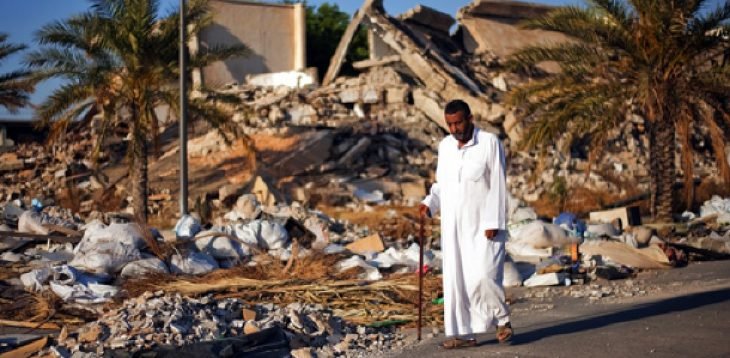
Can Libya’s Stalemate Be Overcome?

Patricia Karam

After riveting the world in 2011 with a revolution that led to the fall of Muammar Qaddafi, one of the world’s most brutal dictators, Libya has largely receded from the public eye. The revolution there quickly turned into chaos, fueled by external interventions that have hampered the fragmented and tribal nation’s transition toward a more democratic trajectory.

The United Nations’ newest special envoy for Libya, Abdoulaye Bathily, has recently attempted to reinvigorate support for a stalled election process by launching an initiative that would ostensibly end the country’s political stalemate after more than a decade of conflict and divisions.

In 2021, a UN-sponsored process successfully led to the formation of a new Libyan Government of National Unity (GNU), headed by businessman-turned-politician Abdul Hamid Dbeibah; but his legitimacy was thereafter challenged when elections, initially scheduled for December that year, were indefinitely delayed because of disputes over their constitutional basis and voting rules.

In response, the House of Representatives, a rival government based in Benghazi in the country’s east, appointed its own prime minister, former Interior Minister Fathi Bashagha, and the country was once again pulled apart by dueling administrations, each claiming power and legitimacy.

In a last-ditch effort to get parties to adopt a roadmap for elections in 2023, Bathily will establish a high-level steering panel to provide a forum for opposing Libyan stakeholders to come together and agree on a legal framework, mechanism, and timeframe for holding presidential and legislative elections, ensuring broad national ownership of the process.

But while organized and democratic elections are necessary to reconfigure Libya’s political and economic institutions, a true resolution to the country’s troubles must start by rebuilding trust, not only between Libyans and their government but also between citizens themselves. Indeed, Libya’s relative peace at this time may be the best guarantee to prevent partition and further chaos, which would threaten the security and stability of the entire North Africa region.

Local Tensions and Foreign Meddlers

In the roughly 12 years since Qaddafi’s ouster, Libya’s stability has been rocked by fragmentation, warfare, external rivalries, and the proliferation of innumerable abusive armed militias operating with impunity.

Violence spiraled further in 2014, when renegade commander of the Libyan national Army (LNA) Khalifa Haftar, a one-time CIA asset who had directed military opposition to Qaddafi, launched an offensive that left him in control of large swaths of territory in the east.

After disputed elections the same year, the country’s governance broke up into two administrations, the Tripoli-based internationally-backed Government of National Accord, led by former Prime Minister Fayez al-Sarraj and primarily reliant on Turkey, Qatar, and Italy, and another government based in the east and under the de facto control of forces loyal to Haftar, with support from Egypt, Saudi Arabia, the UAE, Russia, France, and others.

Divisions intensified, especially after a second Haftar-commanded attack on Tripoli in April 2019 that laid siege to the city before eventually being driven back with Turkey’s intervention. With the continued postponement of elections, Libya is again gridlocked over the legal basis for said elections and over the nature and composition of a new political arrangement.

The security vacuum created by the 2011 intervention in Libya was quickly filled by regional and international powers and foreign mercenaries.

Meanwhile, the security vacuum created by the 2011 intervention in Libya was quickly filled by regional and international powers and foreign mercenaries, transforming the country into a site of great power competition, exacerbating instabilities, and prolonging the crisis.

While the UAE and Russia continue to support Haftar’s LNA, a ragtag mix of military units and regional armed and tribal groups, Turkey is on the side of the UN-recognized government. Being motivated by a combination of ideology, geopolitics, and commercial interests, no powers have shown any inclination toward retracting.

Indeed, Turkey has significant financial interests in Libya that predate the uprising and thus stands to profit from future reconstruction efforts. It also hopes to benefit from a controversial maritime deal on energy exploration that would allow it to exploit resources in Libya’s territorial waters in the Mediterranean.

Russia, which is aspiring to play the role of power broker in the region, has maintained a military footprint in Libya through the Wagner Group, the de facto private army of Russian President Vladimir Putin, which is notorious for its cruelty and predatory acts. As many as 2,000 heavily-armed Russian military contractors have been deployed, and a large number of Syrian mercenaries have been hired by both Russia and by Turkey, playing combat and non-combat roles and providing security services, training, and battlefield expertise.

Russia today still retains a vast amount of leverage in Libya, wielded through a sophisticated combination of hard and soft power: a network of military airbases and camps and spies on the ground on the one hand, and the use of disinformation and diplomacy on the other, enabling rogue actions such the illegal injection of Russian-printed banknotes to the LNA, which helped bolster its operations and keep it afloat and independent of the Libyan Central Bank.

Russia has particularly penetrated the oil-rich portions of the country, expanded its influence within or around significant oil installations (including the country’s largest, the El Sharara oil field) to secure key facilities, future hydrocarbons concessions, and a naval base in Benghazi granting it a Mediterranean outlet.

In the process, Russia has established the ability to apply a stranglehold on strategic oil production and export facilities. This underscores how little control local actors may have over their foreign patrons, regardless of how keen they might be to solicit and sway foreign support for their own ends.

While efforts have been made over the course of the conflict to quell foreign intervention by reducing foreign arms transfers, including by the 2011 UN embargo on the supply of arms and military equipment to and from Libya, such attempts failed to stick, and foreign powers continued to equip and bolster allied militias at great cost to Libyan civilians.

There is well-documented evidence of unrestrained air, land, and sea shipments of illicit items to opposing sides, including drones, aircraft, missiles, artillery, and armored vehicles. Meanwhile, the US has adopted an approach that has been at best inconsistent, if not confused, remaining on the sidelines of any solution to the crisis.

Libya’s Economic Outlook

Prolonged instability and conflict in Libya have led to severe human rights abuses, massive destruction of infrastructure, a displacement crisis that is aggravated by every spell of violence, and tremendous civilian losses.

Economic decline has disproportionately affected vulnerable groups, especially internally displaced persons and migrants who face poverty, widespread shortages, and rising prices on essential goods. Inflationary pressures, which have been exacerbated by the Ukraine war, have led to a corrosion of household security and welfare.

Poverty rates in Libya today are extremely high, and in the absence of social protection systems, around 800,000 people are deemed in urgent need of humanitarian aid. Citizens struggle daily with extended electricity cuts, as well as fuel and water shortages.

Rising unemployment, last estimated at around 20 percent, though at more than 50 percent among youth, mostly impacts the public sector, which employs the majority of the population.

Libya’s private sector, which was decimated by Qaddafi-era socialist-style economic policy and was largely overshadowed by a large oil revenue-fueled public sector, barely functions.

While the country’s production of crude oil has recently risen again to a robust 1.2 million barrels per day, the economy remains in disarray, hampered by poor governance, bureaucratic restrictions, and ravaged infrastructure.

The splintering of the Central Bank in 2014 along the country’s broader political fault lines has also hindered the development of a unified monetary policy, leading to differing exchange rates, liquidity shortages, and swelling public debt, all of which further damage Libya’s beleaguered economy.

Despite a rebounding of Libya’s trade balances in 2022 due to a jump in oil production and prices, the country’s economic outlook has been hindered by persistent political volatility leading to deteriorating living conditions.

Oil: The Battle for Libya’s Chief Resource

Libya’s resource wealth has been one of the most powerful factors contributing to the protracted nature of the conflict. Libya sits on the African continent’s largest crude oil reserves (48 billion barrels), and the hydrocarbons sector is the country’s main source of income.

Prior to 2011, oil revenues accounted for 95 percent of export earnings and 96 percent of the government’s income. The abundance of hydrocarbons had always been a tool to either control or fuel tensions stemming from the country’s intricate social fabric.

But the importance of oil became especially tangible after the outbreak of the civil war and the country’s division into separate spheres of influence, with the realization taking hold that whoever controls the oil also holds political power.

The battle to dominate energy sources fueled tensions between belligerent factions, including the slew of militias seeking to take advantage of the country’s fragmentation.

Because of the ongoing centralization of oil revenue distribution (and therefore of economic power) in the capital, ruling over Tripoli became equated with access to valued assets, thereby incentivizing factions to try to seize control of it, or at least of some critical infrastructure, such as oil or water pipelines, that would provide leverage over Tripoli.

In the east, this most prominently took the form of the domination of the oil crescent and other oil infrastructure by armed groups who, as they routinely blockade pipelines or shut down oil terminals, have become more and more powerful. And as long as control of Tripoli remains a means to influence the distribution of oil revenue, the incentive to resolve the conflict continues to lessen, making any agreement between parties improbable.

Elections: A Panacea for Libya’s Ills?

Despite controversies over voting eligibility and substantial legal and constitutional disagreements, the international community has continued to brandish elections as an opportunity to bring peace and stability to the battle-scarred country.

During the last attempt in 2021, Dbeibah, who was supposed to unify competing cabinets and oversee a transitional national unity government in Tripoli, clung to power after the failure of elections.

Now the country is once again stuck in a standoff between rival executives in the western city of Tripoli and the eastern city of Sirte, with no consensus on the way forward.

The persistent failure of the international community to resolve the crisis has considerably undermined both the legitimacy of imposed transitional entities like the GNU and the value of the political process itself. Accordingly, the perspective that elections will not fix the country’s woes, let alone Libya’s deep-seated corruption and economic dysfunction, has regained currency.

For now, Libya has come full circle from brutal dictatorship to a new kind of despotism by scores of militias that are on the state payroll simply because of the danger they pose, leading to unprecedented embezzlement of state funds.

The most attractive job for young Libyans since the eruption of the civil war has been to join militias, which employ more than 10 percent of the country’s workforce.

The continued political stalemate has seen militias grow stronger as they simultaneously hold governmental office, terrorize civilians on the street, and engage in illicit and lucrative activities such as the smuggling of people, drugs, and fuel, and in the process impede the state’s ability to deliver public services.

Hope for a Resolution?

More than a decade of war in Libya has entrenched an elite that is operating with no accountability and that has no interest in altering a status quo that guarantees it unfettered access to state resources.

And while this and myriad other factors—including the role and agendas of foreign actors, and more mundane bickering on elections rules and processes—are disrupting the possibility of a political transition, the reality is that all institutions and actors embodied by this political elite have lost the faith and support of a population that is simply fed up. Libya’s citizens have intermittently but increasingly expressed their anger and discontent by demonstrating across the country against deteriorating economic conditions, the collapse of public services, and an endless unstable status quo.

Here, the opaque management of the country’s wealth, the inequitable distribution of resources, and the lack of basic services are especially pertinent for any movement toward greater political and economic welfare.

To find a way out of the current stalemate, Libyans need to agree on a vision for their country.

Libya’s fundamental political crisis indeed reaches all the way to the hidden debate on its existence as a unitary state—and oil revenues and economic structures further exacerbate the political dilemma.

Beyond the critical issues of weeding out dysfunction and corruption, in order to find a way out of the current stalemate Libyans need to agree on a vision for their country that overcomes the fears and factors that split Libya up in the first place.

Until then, national unity governments and ensuing power-sharing arrangements can introduce temporary fixes. But they ultimately overlook the necessary precondition for a political resolution: the need, after decades of a deliberate weakening of the political framework by a cruel and frivolous dictatorship, followed by years of survival within a dystopian collapse, to rebuild trust between citizens and government, but also among and between Libya’s citizens themselves.

Even though the current power configuration of rampant warlordism fueled by misconceived external interference can be expected to resist, deflect, and subvert any attempt at reform—including through meaningful elections—Libya’s saving grace may ultimately be in its resilience in opposing systematic efforts to dismantle it.

The only way to extract Libya from its conundrum is through a long-term incremental approach that empowers those very Libyan actors who are invested in a citizen-centered Libya focused on advancing the interests of its people.

***

Patricia Karam is a Non-resident Fellow at Arab Center Washington DC. She held multiple senior managerial positions in nongovernmental organizations over the past 20 years, working at the nexus of problem analysis, policy formulation, and impactful program implementation aimed at social and policy change in a range of complex, conflict-ridden settings across the globe.

Most recently, Karam was Middle East North Africa (MENA) Regional Director at the International Republican Institute, where she was responsible for the strategic oversight and leadership of a multimillion-dollar portfolio of programs focused on citizen-responsive governance, political party development, legislative strengthening, and civil society capacity-building.

_____________________

For Libyans, Elections Are Just Part of the Path to Peace

The international community has lined up in support of the U.N.’s new election initiative, but Libyans have their own ideas of who should lead.

Thomas M. Hill

In mid-March, a delegation of prominent Libyans traveled to Washington carrying an important message: a new U.N. initiative focused on holding elections is welcome but it must be part of a bigger, comprehensive reconciliation effort to bring peace and stability to Libya. According to the deputy head of Libya’s Presidential Council, Abdullah Al-Lafi, reconciliation — and elections — can only be achieved by Libyans themselves.

In Washington, Al-Lafi and the members of his delegation presented their own initiative for a national reconciliation project in order to create a Libyan-led process that complements the plan for elections proposed by U.N. Special Representative of the Secretary-General for Libya Abdoulaye Bathily.

Over a decade into Libya’s conflict, the war’s dividing lines seem frozen in place. The U.N.-backed Government of National Unity based in Tripoli (the west) vies for power with the Tobruk-based House of Representatives (the east), backed by warlord Khalif Haftar.

A mélange of foreign powers continues to support one side or the other, focused on advancing their own interests to the detriment of peace and security in Libya. A prior U.N. plan to hold elections in 2021 failed, but east-west fighting has largely subsided in recent years. Still, with no plan for national reconciliation in the offing, the current stable status quo could be disrupted at any time.

Al-Lafi traveled to Washington with Muftah Nasib, the head of the National Planning Council, and Aymen Seifennaser, a member of the House of Representatives (HoR), to engage U.S. policymakers on the need for a renewed focus on national reconciliation and solicit deeper U.S. diplomatic involvement. USIP coordinated and supported their visit.

A Strategic Vision for National Reconciliation

The proposal Al-Lafi presented in Washington — produced with the support of Libya’s National Planning Council and the University of Benghazi Centre for Law and Social Studies — outlines five “governing principles” or points of emphasis that should be undertaken to promote national reconciliation:

  1. Addressing the root causes of the conflict; the report identifies 33 issues, grouped into five categories, that are at the heart of the Libya’s civil war;
  2. Respecting the rule of law, especially as it pertains to passing and implementing legislation that protects individuals (and businesses) from vigilante justice, exploitation and corruption, retributive justice and arbitrary application of the law;
  3. Safeguarding individual freedoms and protection against discrimination based on race, tribe, geographic origin, gender or political beliefs;
  4. Addressing public needs with clear and consistent effort; and
  5. Coordinating efforts that promote reconciliation and restorative justice, incorporating best practices and lessons learned throughout the process.

Throughout the document, several key points respond to some of the most controversial and vexing problems that prevent political progress in Libya today. For instance, how would responsibilities and authority be shared with a central government and the regions?

The proposal recommends a decentralized system, with a new constitution detailing how the institutions and functions of the administrative state are devolved to local authorities. While calling for devolution, the proposal also asserts that Libya should remain a unitary state, not broken up into three (or more) regions as some have foreshadowed.

On the role of religion, the proposal clarifies that Shariah law would serve as a primary basis for legislation, enshrined in the constitution. As for the executive branch’s authority, the report emphasizes the need for a balanced distribution of power among government branches with an entirely independent judiciary, to be clearly defined in the anticipated new constitution.

Elections Alone Are Not the Answer

Many Libya observers agree with Al-Lafi and his delegation that Bathily’s new initiative places too much emphasis on elections — particularly given the failed effort to hold them in 2021 — while overlooking other more urgent concerns.

Two years ago, unresolved questions about candidate eligibility and constitutional ambiguities presented significant obstacles. These issues remain unresolved today. However, Bathily contends that the current political class suffers from a crisis of legitimacy and that most state institutions lost their authority in the eyes of ordinary Libyans years ago.

As such, successful elections are necessary to legitimize and empower a new Libyan government to tackle the country’s toughest challenges, like the disarmament of militias, oil-revenue sharing, reconstruction, the presence of foreign militaries and mercenaries inside the country, political representation and citizenship especially for historically marginalized communities, irregular migration and border security, among others.

In response to queries in Washington about Bathily’s new initiative, Al-Lafi took a cautious stance, advising observers to withhold judgement until more details of Bathily’s plan — particularly the proposed “high-level steering panel” — are revealed. In February, Bathily said that “all relevant stakeholders” (rumored to be 40-45 Libyans) would be convened to facilitate the adoption of a legal framework and time-bound roadmap for holding elections in 2023.

As Al-Lafi pointed out, the selection of these stakeholders may itself be controversial, complex and time consuming, potentially delaying elections into 2024 or beyond. Indeed, elections may not materialize, as the steering panel may never be formed.

Al-Lafi’s approach includes a timeline for reconciliation beginning with the Presidential Council adopting a national reconciliation resolution to serve as the basis of any new laws.

As new legislative measures emerge, the National Planning Council will lead the process of circulating proposed new law drafts to relevant parties including civil society and legal experts. A final draft of any new laws will then be consolidated into a single bill for consideration by the House of Representatives under a “national conference” convened by the Presidential Council.

Libyans Need to Talk to Each Other

While Al-Lafi’s proposal does not provide details on the national conference, this would not be the first such effort to convene Libyans at a national scale. In 2019, the United Nations planned to hold a national conference with 120-150 Libyan leaders in the city of Ghadames, but it was scuttled by a Haftar-led military offensive. Spoilers may try to undermine Bathily’s high-level steering panel this time, too, and it’s not clear that Al-Lafi’s national conference would be any more successful. Nevertheless, there seems to be a consensus that Libyans need to talk to each other to rebuild trust.

Al-Lafi noted that there is an extreme trust deficit among Libyans. This has fostered a very real sense that the next elections will be zero-sum, with the winners using their new power and resources to exact retribution and “justice” on the losers.

It’s understandable, then, that Al-Lafi strongly advocates for a comprehensive amnesty for politicians and others that might be targets of such retaliatory actions. It’s an interesting idea that is not without precedent in other war-torn countries. However, blanket amnesty programs that make no differentiation between the severity of crimes can create an impediment to reconciliation.

If an amnesty agreement is reached between rival Libyan factions, it will be crucial to ensure that it is not perceived by the public as a self-serving attempt by political elites to shield themselves from justifiable prosecution.

In the wake of the war in Ukraine, international attention has largely shifted away from Libya. Today, concern over Libya in Washington primarily revolves around the the activities of the Russian-backed Wagner Group.

The withdrawal of some Wagner Group forces and the current pause in fighting has lulled many into thinking the situation in Libya is stable and not warranting close attention.

Europe and the United States have determined that resolving the Libyan conflict is now the responsibility of the United Nations and all of their effort is directed at supporting the new U.N initiative.

The Libyan delegation was warmly received in Washington by U.S. policymakers, who are keen to see Libyans take the initiative to resolve their internecine conflict. However, the United States has made clear that all of its energy and support will go toward Bathily; parallel or alternative paths to peace are not being entertained, at least not yet. Bathily will be given every opportunity to be successful but if he stumbles or his initiative loses momentum, there could be an opportunity to shift course.

The fact that Al-Lafi and his colleagues have put forward a plan puts them in a strong position to pick up the mantle if elections fail to materialize or produce a functional government.

***

Thomas Hill is the senior program officer for North Africa at USIP. He most recently served as a visiting fellow at the Brookings Institution where his research focused on reforming civilian U.S. foreign policy agencies. 

________________

Why Did UN Envoy Travel To Southern Libya?

Miral Sabry Al-Ashry

Bathily, Special Representative of the Secretary-General for Libya and Head of the United Nations Support Mission in Libya, began an official visit to the countries of southern Libya to support stability and remove mercenaries and foreign fighters from Libya, including those from Sudan, Chad, and Niger, in pursuit of the mission.

During his meeting in Khartoum with the head of the Sudanese Sovereignty Council, Abdel Fattah Al-Burhan, Ali stressed the intensification of efforts to monitor and secure borders and to prevent the entry of terrorists, and he wants to unify the Libyan military and security institutions through the evacuation of foreign armed movements and foreign fighters.

Hence, we conclude that Bathily is trying to put pressure on the countries of southern Libya to control the borders, that he realizes that the Libyan crisis is a security crisis in the first place, and that he is trying to reach the elections that will not come until the security crisis that the country is suffering from is resolved.

Abdoulaye Bathily’s intensive meetings in the countries of southern Libya aim to remove mercenaries from Libya. His efforts came in coordination with the United States, which began to put pressure on countries that have no interests in Libya and have mercenaries.

If the legislative bodies in Libya fail to reach an agreement on election laws in a timely manner, “we will consider the alternative procedure that we can take.” this is what America wants now: stability in the region. It will not accept any moves to obstruct the holding of elections.

There are many attempts by him, such as announcing a new initiative to speed up the political process, which prompted the two legislative bodies, the House of Representatives, and the Supreme Council of State, to form a committee to look into election laws.

There are meetings with the 6+6 committee of the State Council. The committee is expected to complete its tasks before the end of May and hold the first meeting of the joint committee to prepare electoral laws.

Previously, an attempt to hold elections in December 2021 failed due to disagreements over election laws, including the eligibility of each of the main candidates. But the committee set up by the two legislative bodies must approve election laws in June in order to hold elections this year.

They will be accountable to the Libyan people, the international community, and the regional leaders who support them in this process.

Many Libyans “expressed doubts about the ability of the House of Representatives and the High Council of State, and many Libyans also doubted the possibility of holding elections in a country where most of its territory is controlled by armed factions that may support or oppose the candidature of certain people, even if the political bodies were able to agree on election laws.” But Abdoulaye Bathilyis trying to have “free and fair elections” in light of the current division of the security services.

A state of anticipation prevails as the High Council of State calls on all members of the committee to meet in the capital, Tripoli, this week, in the framework of seeking to complete the presidential and legislative elections in accordance with the thirteenth constitutional amendment before the end of this year.

The head of the government appointed by Parliament, Fathi Bashagha, confirmed his intention to call on all Libyan parties to a conciliatory speech and to put aside differences at this sensitive stage. Libya has suffered for a long time due to wars, conflicts, divisions, and the existence of two governments in the East and the West.

Fathi Bashagha’s concern reflects the return of the American role in the Libyan file. It is expected that Abdul Hamid al-Dbeibeh will respond to Bashagha’s invitation given the changing circumstances. Also, Dbeibeh is forced to conform to international conditions and desires.

Bashagha stressed the continuation of the election effort and the need for the House of Representatives and the Supreme Council of the State to complete the procedures entrusted to them, and the UN envoy to Libya, Bathily, confirmed that the Tripoli meeting was an important confidence-building process for the security and military leaders.

The UN mission considered that the Tripoli meeting aimed to follow up on the commitment expressed by the participants during a similar meeting in Tunis, regarding working together to create conditions conducive to holding elections.

France also affirmed its support for the efforts of the UN envoy, Abdoulaye Bathily , as well as the “5 + 5” joint military committee aimed at unifying the military establishment and securing elections.

We find that Abdoulaye Bathily learned from the previous mistakes made by the UN mission and focused this time on achieving security consensus among the security institutions in the country.

The recent American moves towards the Libyan file strongly indicate the desire of the United States and the Western community to prepare the country for a procedure election and reach a state of stability.

***

Prof. Miral Sabry AlAshry is Vice Dean at Future University in Egypt (FUE), and Chairwoman of Alumni in the Middle East at DW Deutsche Welle Akademie.

__________________

What Does Libya Need for Elections to Succeed?

Tarek Megerisi

Interviewed by Thomas M. Hill

Abdoulaye Bathily, the U.N. secretary-general’s special representative for Libya, recently announced his new plan for elections in Libya, which he hopes will take place later this year. But the plan itself was light on implementation, and after similar plans collapsed in 2021, the U.N. will need to learn from past shortcomings to ensure there is not only a solid basis for elections, but a strong foundation for what comes after as well.

USIP’s Thomas Hill spoke with Tarek Megerisi, a senior policy fellow at the European Council on Foreign Relations, about the path toward successful elections in Libya. Their conversation looks at how to safeguard major decisions — such as election monitoring, security and who can run for office — from corruption and delves into why the current international cohesion around Libya makes this one of the best, and possibly the last, chances for establishing stable democracy in the country.

_________________
Can the UN’s new plan for Libya overcome the ‘chicken or egg’ paradox?

Hafed Al-Ghwell

Libya is once again in the headlines, following a recently announced plan by the UN’s special envoy to the North African country, Abdoulaye Bathily, to re-energize the stalled political process and bring to a decisive end a decade-long, extremely turbulent transitional period.

Incumbent elites have repeatedly resisted attempts to reach an accord as it would be tantamount to relinquishing their monopolies on power, wealth, the use of force, and the ability to leverage foreign interference to further their narrow interests.

In addition, the leading actors want to avoid any accountability from any potential transitional justice initiatives.

This staunch defense of the status quo serves only to promote the antithesis of what most Libyans, and the global community, hope to achieve through a free, fair and credible election process.
Bathily’s plan to hold elections this year was well-received, save for some apprehensive voices lamenting its lack of implementability, and the whiff of a woefully familiar insistence on the ballot being some kind of cure-all for Libya’s woes.

The UN has nothing concrete to show for nearly 12 years of mediation but now, for the first time in a long while, experts are hopeful that this latest gamble might just turn things around for good.

After all, without such ambitious plans — which hint at introducing an alternative path from the existing corrupt institutions, buoyed by a rare international cohesion and shared understanding of the need for elections — a Libya adrift will likely result in renewed conflict.

Heavily armed actors have had time to gather their forces, ingratiate themselves with enterprising external meddlers and consolidate gains from the brief scuffles between the Tripoli-based Government of National Unity and the eastern coalition led by Khalifa Haftar.

Meanwhile, with neighboring Tunisia also undergoing unprecedented crises, sparking a surge in north-bound migration, a return to armed conflict in Libya would have devastating implications for the sub-region, as well as the Central Mediterranean region, and must be avoided at all costs — which probably explains the rare convergence of support for Bathily’s plan.

But what exactly is this proposal that is being hailed as a promising first step?

Bathily wants to convene an electoral steering committee of up to 40 members drawn from across Libya’s sociopolitical scene.

This would include civil society, activists, community leaders, and even prominent figures among the current political elites. Such a diverse group would be empowered to lay the groundwork for, and map a path to, elections.

The process would require settling squabbles over the constitutional basis for electoral laws, security planning, logistics, and dispute resolution.

It is a plan eerily similar to the 2021 road map that resulted in the once highly-touted Libyan Political Dialogue Forum, which eventually collapsed due to corruption, coercion, intimidation  and malign influences, robbing Libya its previous best hope for stabilizing its transition.

For some reason, Bathily’s plan is light on such details, which observers find concerning not only for the glaring vulnerabilities this reveals in its implementability but also for the lack of a credible plan for what will happen after Libyans cast their ballots.

They should not only be fully cognizant of what they are voting for; they should also be aware how the resulting government will act, thereby granting it both legitimacy and a much-needed decisive mandate.

Insisting on elections that are credible enough to confer impeachable legitimacy requires existing good governance, which Libya desperately lacks.

Unfortunately, as successive UN special envoys have discovered, Libya is trapped in a strange “Which came first: the chicken or the egg?” paradox that would confound even the most hardened elder statesmen.

Insisting on elections that are credible enough to confer impeachable legitimacy will require existing good governance, which Libya desperately lacks.

That level of technocratic competence can only be preceded by a well-established electoral regime, constitutionally empowered to welcome a plurality and diversity of candidates to campaign unhindered.

It would also cultivate trust in its processes and results, which is key to staging peaceful transitions of power.

However, Libya lacks that, too, due in part to a ruling elite that is not keen on the idea of potentially relinquishing its power to newly elected representatives, or being stripped of ill-gotten gains in transitional justice proceedings.

As a result, even if the international community glad-hands Bathily’s encouraging proposals, average Libyans remain, for the most part, unconvinced because the plans do not resolve the paradox or provide a suitable road map for dealing with it in an appropriate time frame.

Thus, the prevailing sentiment among the public is a familiar sense of despair as once-promising aspirations quickly give way, yet again, to nihilism and indignation.

In Libya, repeating the same process many times over and expecting a different result has only left a beleaguered public feeling resigned in the face of feuding elites, because the alternative is a peace imposed by the force of arms.

So, what will happen next?

Provided Bathily manages to leverage international support and can shepherd the next iteration of the Libyan Political Dialogue Forum, elections could, technically, take place this year.

That will depend on whether deeply involved actors such as Egypt and Turkey follow up on their diplomatic assurances with actual action by pressuring their Libyan proxies to take a seat at the negotiating table.
Next, the UN Security Council would also need to do more than just issue statements or draft impotent resolutions. Elections are not easy even at the best of times and all the harder in a country ravaged by conflict, political divisions and crisscrossed by competing external interests.

If this “new” plan is to succeed in seating the next government, as well as sparking the restoration of functional state institutions after years of neglect or usurpation, it will need a more involved Security Council that is not distracted by geopolitical tensions elsewhere.

A key challenge, among several others, is of course security. It is still unclear how Bathily hopes to steer a political process in a bifurcated country where the east and south are controlled by a hostile coalition made up of thousands of foreign fighters and mercenaries, including the infamous Wagner mercenary group.

In addition, for controversial figures such as Haftar and Saif Al-Qaddafi, as much as the ballot is a threat, it also offers a relatively bloodless alternative to state capture, provided they can influence electoral outcomes either during closed-door deliberations by Bathily’s proposed high electoral steering panel, or by endlessly litigating its resolutions.

Worse, they could also resort to ballot-stuffing, voter intimidation and unattributed attacks on voting locations, all to create dubious pretexts for contesting election results after the forceful disenfranchisement of Libyans in areas they control.

For now, it can only be hoped that whatever manner of elections transpire will restore some stability and, more importantly, grant legitimacy to a unified executive authority, and not produce another dictator who will dismiss any constitutional basis for future elections.

Setting aside the shaky foundations of Bathily’s plans, reenergizing Libya’s stalled transition in this way will at least restore some momentum in the parallel tracks aimed at fixing the country’s security architecture, finalizing a constitution-drafting process, and initiating a national reconciliation underpinned by robust transitional justice.

***

Hafed Al-Ghwell is a senior fellow and executive director of the Ibn Khaldun Strategic Initiative at the Foreign Policy Institute of the Johns Hopkins University School of Advanced International Studies in Washington, DC, and the former adviser to the dean of the board of executive directors of the World Bank Group.

_______________
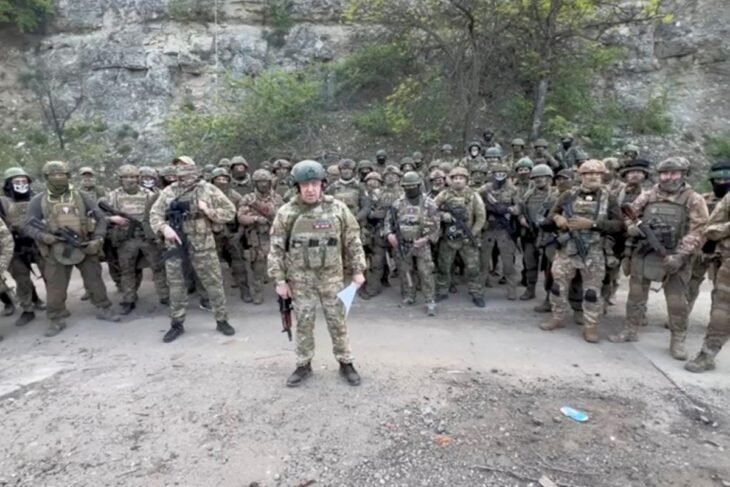
The race to grab the election file

Abdullah Alkabir

The UN Security Council’s statement supporting UN envoy’s initiative was slightly delayed, but it was finally released confirming Bathily’s plan to form a High-Level Panel for Elections, in order to finalize the outcome of the House of Representatives (HoR) and the High Council of State (HCS), regarding the legal basis for elections.

Release of the statement with consent of all Security Council members, without objection of neither Russia nor France, means the wording of the statement was acceptable and satisfactory to all.

SC Members must reach consensus despite their different positions and conflicting interests, especially between the US and Britain on the one hand, and Russia on the other, as well as the French position which is different from the rest of its Western allies, in order for the Security Council not to lose its role in addressing international issues. This necessitates that Security Council members reach a minimum degree of consensus, at the very least, before voting to avoid the veto.

The statement was disappointing for both the HoR and the HCS- except for some representatives and members of both houses- and for political and military parties that do not want elections, and seek to extend the transitional period, as the statement directly provides for elections. 

It neither referred to the unification of the executive authority nor the formation of a new government, or unification of institutions and the naming of new personalities for sovereign positions, which are the starting point for the presidents of the two houses, as well as for some political figures, who organized several forums to market a proposal for a political solution that guarantees success of elections, by forming a unified government to supervise them.

However, such proposal did not resonate with the effective international actors, who realize that opening this door means continuing obstruction, as forming a new government will not be easy in light of this fierce competition, and then the path to elections will be difficult, because any new government will not differ from its predecessors in seizing the opportunity to continue in power as long as possible.

The race between the HoR and HCS alliance on the one hand, and the UN envoy and his initiative on the other, is still at its early stage. The two chambers seek to continue their dominance over the election file, and to bridge any gap that other parties may infiltrate through.

Therefore, they rushed to submit the constitutional amendment, and they are now working on finalizing election laws through a joint committee, in a bid to abort Bathily’s plan, and to abrogate the issue of the High-Level Panel for Elections.

Meanwhile, the latter (Bathily) continues on his way towards activating his initiative through several meetings, with active local and regional parties.

The last of which brought together leaders of security services and groups with the Military Committee, to discuss security plans to secure the elections.

In any case, it will be difficult for the two chambers to pass their vision in full, because consensus on the Constitutional Amendment No. 13 has not been achieved at the HCS.

Therefore it may not access the joint committee on election laws, due to the presence of a large bloc objecting to the constitutional amendment, and even if it participated in the work of the committee it may not agree on controversial issues, so it is not possible to thwart the Bathily’s plan, which will start from where the two councils end.

Even what the international community has accepted from them, considering it a progress that can be built upon, the HLPE may amend, and delete.

The clause of the 13th constitutional amendment, that abrogates the elections altogether, if the presidential elections fail, cannot be accepted, because the cancellation of the elections, and prolonging the current entities would shatter the hopes for change, and might prompt reoccurrence of armed conflict.

Visits by US officials to Libya are endless, as elections are a phasal goal that leads to curtailing the Russian influence in Libya as far as the US administration is concerned, and in light of this insistence, with full support for Bathily’s initiative, it will be difficult for HoR and HCS to keep the keys to the political solution in their hands.

Then, the race will end by entrusting the finalization of the path towards elections to the High-Level Panel for Elections, under direct supervision of the UN mission.

***

Abdullah Alkabir, Libyan political writer and commentator

______________

The dual face of migrant smuggling in Libya

Lubna Yousef & Tim Eaton

In Libya’s northwestern city of Zawiya, where migrants make up a quarter of the population, those involved in human smuggling and trafficking present themselves as the solution to the very crisis they helped create, write Lubna Yousef and Tim Eaton.

The UN fact finding mission to Libya this week stated that the European Union had “aided and abetted” the commission of the crimes in Libya as a result of its support to Libyan authorities to crack down on irregular migration. Their conclusions echo long held allegations made by human rights organisations.

The international narrative on migration in Libya – like the migrant experience itself – is one of abuse and exploitation. Despite the numbers of Mediterranean crossings from Libya remaining lower than the heights of 2016, many migrants and refugees still lose their lives as they attempt to reach Europe.

Yet, criticism of those engaged in human smuggling and trafficking rarely includes the voices and perceptions of Libyan society, where local smugglers and traffickers burrow. How do Libyans feel about the sector? And how can they reconcile themselves to what is going on?

To help answer these questions, Chatham House researchers have spoken to residents of Zawiya, a city in the country’s northwest.

“Criticism of those engaged in human smuggling and trafficking rarely includes the voices and perceptions of Libyan society, where local smugglers and traffickers burrow”

Zawiya manifests all the challenges of the post-2011 period: it has an unruly and competitive security sector that has mushroomed in size, its public services and infrastructure have declined, and its licit economy has stagnated while its illicit economy has grown uncontrollably due to human smuggling and trafficking.

 It has also seen a new set of actors come to dominate the city through their control of armed groups.

Local perceptions of migration

With an estimated population of 186,000, Zawiya’s 46,000 migrants are impossible to miss. As the number of migrants have increased over the past decade, local perspectives on migration have started to shift.

Zawiya’s residents are torn between sympathy for the plight of migrants and hostility towards them for being different. Their sentiments are often influenced by colourism, historical racism against foreigners from Africa, and factors like nationalism and religion – Arab Muslim migrants are typically better accepted due to shared values.

Locals struggle to differentiate between trafficking and smuggling, claiming that trafficking in humans does not exist in the city. This difficulty in identifying human trafficking as a separate illegal act is perhaps wilful.

While residents recognize the role smugglers play in their city’s current situation, their anger is mostly directed towards the migrants themselves, who are viewed as unwanted temporary guests.

And although some locals understand the circumstances that push migrants and refugees to flee their homes, they fear foreigners might compromise the fabric of their conservative community.

Apathy has grown in Zawiya over the past few years, said Mariam, a stay-at-home mother. The sight of dead bodies, including children, washed up on the shore has left a lasting psychological impact on locals.

“It is painful to see them, but we have also gotten used to it,” she admitted. Zawiyans are aware of the danger migrants endure and the risks they take, but in a country rife with violence and political divide, there is little capacity to dwell on migrant experiences.

The presence of migrants in public spaces has further unsettled locals, as entire migrant neighbourhoods have cropped up in their city. This has fuelled anxiety among residents, who are uncomfortable with their city’s changing face.

Creating a local narrative

Arguably, the most significant factor influencing local sentiments towards migrants is pervasive information asymmetry. Knowledge of the migration sector mostly circulates among men, some of whom work in the migration space, during informal gatherings where stories are exchanged between acquaintances or family members.

Despite their informality, these social interactions are where narratives on migration develop. The storytellers themselves may be security officials, armed group members, coastguards, aid workers, activists, or civilians who have heard second-hand accounts related to migrants.

The result is that the narratives they create infiltrate the wider community and help influence local perspectives in their favour.

It can be difficult to label those involved in the migration ‘business’, as they often wear many hats. They can be part of state-affiliated security forces while also maintaining an outward appearance in the community as civil servants, humanitarians, and community leaders.

“Zawiya’s residents are torn between sympathy for the plight of migrants and hostility towards them for being different”

Having a legally and socially legitimate public profile is critical in enabling these actors to shape the narrative on migrant smuggling in two ways.

First, it allows them to improve their standing in the communities where they operate by presenting themselves as the solution to the migration crisis – even when locals know they helped smuggle migrants into Libya in the first place.

With no solutions offered by the Libyan government or the international community, smugglers and traffickers are often the only option for migrants to reach Europe. Locals therefore tolerate smuggling for its perceived benefit: getting migrants out of the city.

Second, these actors use their resources and influence to present themselves as job providers for local youth, usually through their armed factions. They also help facilitate public service provision.

Local perceptions versus international narratives

The international community does not share this local narrative. The EU in particular has taken several steps over the past decade to combat trafficking and smuggling networks. It has provided support to Libyan state agencies, such as the Libyan Coast Guard and the Department for Countering Illegal Migration while also supporting aid and humanitarian work for local and international NGOs in the country.

However, these same state agencies are the ones that stand accused of being involved in human rights abuses and smuggling activities. Some state-run detention centres have benefitted from EU-sponsored capacity-building support, lending them more legitimacy and a cover for some of the human rights violations – and trafficking activity – that take place there.

The result is a fragile equilibrium: the number of migrants leaving Libya from the northwest coastline is reduced but not eradicated, while state-affiliated armed groups and officials are now regulating the sector rather than seeking to shut it down.

This has led to the establishment of informal rules of conduct, including setting quotas among rival smuggling networks. Meanwhile, the treatment of migrants differs by their country of origin and how much they pay the smugglers.

Some are exploited for forced labour and have their documents confiscated, while others are treated well and even offered snacks and beverages on their boat trips to Europe. The ‘business’ has become highly regulated.

In such circumstances, it is unsurprising to find significant differences between local perceptions and international narratives of human smuggling and trafficking in Libya. Zawiya’s new elite have found a way to bridge the gap between the two.

Western policy currently offers no alternatives and doesn’t even extract a political price from Zawiya’s elite – who hold significant interests and influence in political negotiations for high office in Libya – for its double dealing.

***

Lubna Yousef is the research associate for the Middle East Program at the Center for Strategic and International Studies (CSIS). 

Tim Eaton is a Senior Research Fellow within the Middle East and North Africa Programme at Chatham House. His research focuses on the political economy of conflict in Libya and the broader MENA region. 

_______________________
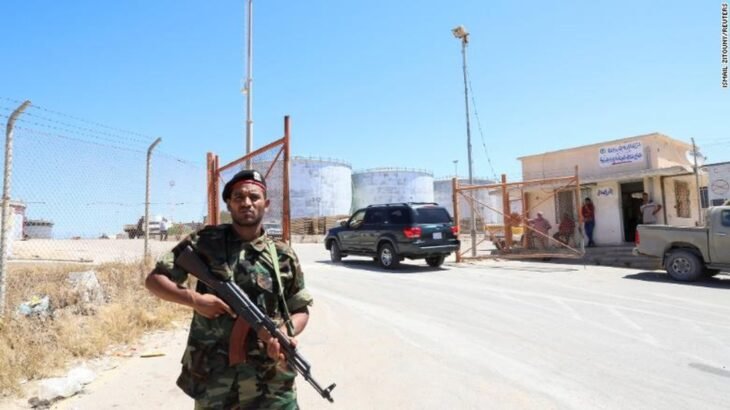
Libya: Urgent action needed to remedy deteriorating human rights situation, UN Fact-Finding Mission warns in final report

The UN Independent Fact-Finding Mission on Libya expressed deep concern over the country’s deteriorating human rights situation in its final report today, concluding there are grounds to believe a wide array of war crimes and crimes against humanity have been committed by State security forces and armed militia groups.

The investigation, which outlines a broad effort by authorities to repress dissent by civil society, documented numerous cases of arbitrary detention, murder, rape, enslavement, extrajudicial killing and enforced disappearance, and said that nearly all survivors interviewed had refrained from lodging official complaints out of fear of reprisals, arrest, extortion and a lack of confidence in the justice system.

Migrants, in particular, have been targeted and there is overwhelming evidence that they have been systematically tortured. The report said there were reasonable grounds to believe that sexual slavery, a crime against humanity, was committed against migrants.

“There is an urgent need for accountability to end this pervasive impunity,” said Mohamed Auajjar, the Mission’s chair. “We call on Libyan authorities to develop a human rights plan of action and a comprehensive, victim-centred roadmap on transitional justice without delay, and hold all those responsible for human rights violations accountable.”

Libya’s Government is obligated to investigate allegations of human rights violations and crimes in areas under its control in accordance with international standards. But “the practices and patterns of gross violations continue unabated, and there is little evidence that meaningful steps are being taken to reverse this troubling trajectory and bring recourse to victims,” the report said.

The UN Human Rights Council established the FFM in June 2020 to investigate violations and abuses of human rights by all parties since the beginning of 2016, with a view to preventing further deterioration of the human rights situation, and to ensuring accountability. Since then, the FFM has undertaken 13 missions, conducted more than 400 interviews, and collected more than 2,800 items of information, including photographic and audio-visual imagery.

“The Mission’s mandate is ending when the human rights situation in Libya is deteriorating, parallel State authorities are emerging and the legislative, executive and security sector reforms needed to uphold the rule of law and unify the country are far from being realized,” the report said. “In this polarizing context, armed groups that have been implicated in allegations of torture, arbitrary detention, trafficking and sexual violence remain unaccountable.”

The FFM’s investigations found that Libyan authorities, notably the security sectors, are curtailing the rights to assembly, association, expression, and belief to ensure obedience, entrench self-serving values and norms, and punish criticism against authorities and their leadership.

“Attacks against inter alia human rights defenders, women rights activists, journalists, and civil society associations have created an atmosphere of fear that has sent persons into self-censorship, hiding or exile at a time that it is necessary to build an atmosphere that is conducive to free and fair elections for Libyans to exercise their right to self-determination and choose a representative government to run the country,” the report said.

The report said that trafficking, enslavement, forced labour, imprisonment, extortion and smuggling of vulnerable migrants generated significant revenue for individuals, groups and State institutions, and incentivized the continuation of violations.

There are reasonable grounds to believe migrants were enslaved in official detention centres well as “secret prisons,” and that rape as a crime against humanity was committed.

In the context of detention, State authorities and affiliated entities – including the Libya’s Deterrence Apparatus for Combating Organized Crime and Terrorism (DACOT), the Libyan Arab Armed Forces (LAAF), the Internal Security Agency (ISA), and the Stability Support Apparatus (SSA), and their leadership – were repeatedly found to be involved in violations and abuses.

Detainees were subjected regularly to torture, solitary confinement, held incommunicado, and denied adequate access to water, food, toilets, sanitation, light, exercise, medical care, legal counsel, and communication with family members.

The report also said women are systematically discriminated against in Libya and concluded that their situation has markedly deteriorated over the last three years. The enforced disappearance of MP Sihem Sergiwa and killing of Hannan Barassi remained issues of deep concern for the FFM, and the Experts reiterated their call on the authorities in Benghazi to adequately investigate these violations and hold accountable those responsible.

The Mission called on the Human Rights Council to establish a sufficiently resourced, independent international investigation mechanism, and urged the Office of the UN High Commissioner for Human Rights (OHCHR) to establish a distinct and autonomous mechanism with an ongoing mandate to monitor and report on gross human rights violations “with a view to support Libyan reconciliation efforts and assist the Libyan authorities in achieving transitional justice and accountability.”

To strengthen accountability, the FFM will share with the International Criminal Court, according to standards of international cooperation in criminal matters and the UN-ICC Relationship Agreement, relevant material and findings it has collected throughout its mandate and a list of individuals it has identified as possible perpetrators of human rights violations and international crimes.

_______________________
Book Review: “Challenges to Democratic Transition and the Crisis of State-Building in Libya”

The ACRPS has published Challenges to Democratic Transition and the Crisis of State-Building in Libya (392 pp.) by multiple authors and edited by Ahmed Qasem Hussein, a contributing author.

The book is an attempt to close the gap in Arab knowledge production on the Libyan crisis, whose various dimensions are difficult to contain within a single volume.

Thus, it sheds light on the core issues relating to the crisis of Libyan state-building on the eve of the revolution that erupted on 17 February 2011 across three sections:

  • The first focuses on the challenges facing the Libyan state;
  • The second discusses the economic dimensions of the crisis; and
  • The third addresses the foreign component and its effect on Libyan state-building.

The challenges of state-building

In the first chapter, “The Crisis of the Desired Libyan Constitution and its Consequences for the Political Process”, Abdelhafid Kandir illustrates the contexts that paved the way for the crafting of a new Libyan constitution and its impacts on the country’s political process.

He argues that the legal, political, and cultural disputes that accompanied the crafting of the constitution deepened the political crisis.

The project caused greater division, tension, and state-building difficulties during the post-Gadhafi stage, instead of being a historic turning point toward democracy.

Khayri Omar discusses the electoral system and the laws governing the electoral process in Libya since the 17 February revolution in the second chapter, titled “The Electoral System and Crises of the Transitional Phase in Libya”.

The holding of elections for the General National Congress, the Constitution Drafting Assembly, then the House of Representatives highlighted various dimensions of the electoral system’s impact on political participation and the stability of state institutions.

Meanwhile, Najwa Wheba considers transitional justice part of the success of democratic transition, by doing justice to marginalised and oppressed groups and making reparations by revealing the mistakes of the past, working to avoid repeating them, and institutional reform.

In chapter three, titled “Transitional Justice and Its Effect on the State-Building Process and Democratic Transition in Libya”, she presents the Libyan case as a model for the foundering of this justice, traces the reasons for the disruption despite the passage of much legislation on the issue, and clarifies the impact on the democratic transition process in Libya from 2014-2020.

In chapter four, “Islamist Forces in Libya: Transformations during the ‘Transition’ Phase (2011-2014)”, Omar Ashour discusses the role of Islamist political and military forces in the armed revolution that, with the help of NATO, toppled the Gadhafi regime.

These forces were inseparable from the political process during the transition stage, which included electoral competition, constitution drafting, and civil society activity.

Economic dimensions of the Libyan crisis

Faraj Suleiman Hammouda begins the fifth chapter, “The Division of Sovereign Economic Institutions and its Impact on Libyan State-Building”, by discussing the political fragmentation in Libya since the June 2014 House of Representatives elections, whose legitimacy was disputed to such an extent that the Libyan Supreme Court intervened and ruled them unconstitutional, leading to the division of the government. The relationship between the division of these sovereign economic institutions, the state-building crisis, and problems associated with democratic transition was, according to the author, one of cause and effect.

The division occurred only after the country entered a political crisis that would later devolve into armed struggles from 2014 onward.

In chapter six, “The Libyan Crisis: The Political Economy of Escalation and Pacification”, Adel Zeggagh clarifies the insights that the perspective of political economy can provide toward better understanding the dynamism of the Libyan conflict, focusing on the following issue:

how might we thwart mobilisation among those who are undermining efforts to resolve the Libyan crisis and drive them toward a peaceful resolution?

Zeggagh departs from the assumption that the success of pacification efforts must address this issue more seriously by redirecting economic interests from rewards and sanctions to target leaders at the intermediate level, not the top.

The foreign component and its impact on Libyan state-building

In the seventh chapter, “The Bowl and Those It Feeds: Post-Arab Spring Foreign Interference in Libya”, Ahmed Qasem Hussein and Mohammed Hemchi address foreign interventions and their effect on the Libyan crisis, arguing that to move forward in examining the foreign element in Libya’s transition toward democracy beyond its preliminary role in overthrowing the Gadhafi regime, then in disrupting the transition itself, will not be of analytical use, unlike in Tunisia and Egypt.

For Libya and Yemen, things are entirely different; foreign military intervention, whether directly via military operations or indirectly via support and armaments, played a twofold role: first by foiling the transition to democracy, then by stirring up civil war.

The eighth and final chapter, “International Mediation Efforts in the Libyan Conflict and the Failure of Democratic Transition (2011-2020)”, by Abdelhamid Siyam focuses on the role of the UN support mission in Libya and international envoys.

It explores the reasons for the stalling of those efforts and the inability to move from internal conflict to stability and democratic transition.

_____________________

UN Experts Find War Crimes, Crimes Against Humanity in Libya

Continued Investigation of Rights Situation in the Country Remains Essential

Hanan Salah

United Nations experts have concluded that security forces and armed groups in Libya may have committed a “wide array of war crimes and crimes against humanity” against Libyans and migrants, making an urgent call for “accountability to end this pervasive impunity.”

The final report by the UN Independent Fact-Finding Mission on Libya (FFM) documented sweeping abuses including “repression of civic groups, arbitrary detention, murder, rape, enslavement, extrajudicial killing and enforced disappearance.”

Human rights conditions in Libya are precarious, and restrictions imposed by authorities on the work of humanitarian groups and other organizations threaten to make things worse.

Libyan authorities have imposed unworkable conditions on civic groups in terms of registration, financial reporting, and activities. The Tripoli-based Government of National Unity (GNU) recently imposed severe restrictions on international organizations and civic groups’ ability to obtain visas to enter Libya, including Human Rights Watch. This could lead to withholding of vital humanitarian aid and support to vulnerable communities.

In its report, the FFM also cited that authorities did not grant its specialists access to all regions, nor to any places of detention around the country.

For these reasons and more, it is crucial that scrutiny of Libya should continue.

The anticipated end of the FFM’s mandate this month without the option of renewal and increasing restrictions on the work of civic groups in Libya will drastically reduce visibility into what is happening in the country.

That makes the FFM’s recommendation to the UN Human Rights Council (UNHRC) to establish an independent international investigative mechanism crucial, as well as the call for the Office of the UN High Commissioner for Human Rights to establish an autonomous, ongoing mechanism to monitor and report on gross human rights violations.

A resolution on Libya at the current session of the UNHRC falls drastically short of these calls, focusing instead on capacity building and technical assistance to Libyan authorities.

Libyan nongovernmental groups have called on the international community to ensure Libya remains under the UNHRC’s scrutiny and the subject of independent international investigations.

If not, there’s a risk that entrenched warlordism and perpetual conflict will only increase abuses and shrink civic space even further. The international community should heed their call.

***

Hanan Salah – Associate Director, Middle East and North Africa Division

*********

UN investigation says EU ‘aided’ crimes against humanity in Libya

The report, based on interviews with hundreds of people, will be presented to UN Human Rights Council

A UN fact-finding mission has said the European Union “aided and abetted” Libyan authorities’ crimes against migrants.

A new report from the UN will be released and presented to the Human Rights Council later this week.

According to the report, crimes against humanity were carried out against migrants in detention centres.

The report is based on interviews with 400 people including migrants and witnesses, along with photographs and videos.

“Although we’re not saying that the EU and its member states have committed these crimes.

The point is that the support given has aided and abetted the commission of the crimes,” Chaloka Beyani, one of the independent mission’s members, said. 

The EU and member states have supported and trained the Libyan coastguard, which returns migrants to detention centres.

They have also funded Libyan border management programmes. 

The vast majority of people attempting the Mediterranean crossing pass through war-torn Libya.

According to Human Rights Watch (HRW), 32,450 people were intercepted by Libyan forces in 2021 and “hauled back to arbitrary detention and abuse” in the country.

The UN mission said it would pass any evidence of war crimes and crimes against humanity to the International Criminal Court.

According to the mission,  militia groups have carried out murders, rapes, enslavement, judicial killings, and forced disappearances.

“The violations and abuses investigated by the mission were connected primarily to the consolidation of power and wealth by militias and other state-affiliated groups,” the report said.

“Trafficking, enslavement, forced labour, imprisonment, extortion and smuggling of vulnerable migrants generated significant revenue for individuals, groups and state institutions.”

In 2022, the EU was criticised for using a drone to help Libyan forces intercept boats carrying migrants in the Mediterranean. 

The drone, which operated out of EU member Malta, played a “crucial role” in detecting boats leaving Libya, information that the EU’s border agency, Frontex, then hands to the Libyan coastguard, HRW said.

“Frontex claims the surveillance is to aid rescue, but the information facilitates interceptions and returns to Libya… [despite] overwhelming evidence of torture and exploitation of migrants and refugees in Libya,” HRW said in a statement.

____________
New law urgently required to protect freedom of association Libya (3)

Nothing can be gained by turning back to Gaddafi-era law

III- Nothing can be gained by amending Gaddafi-era legislation: Formal amendments to a void law

It is unfortunate that the Libyan House of Representatives has failed once again to fulfill its constitutional obligation to enact a new law that guarantees the freedom and independence of civil society in Libya.

Instead, it has turned back to Law 19 of 2001, merely proposing formal amendments to the law that essentially amount to changing the name of the administrative body that will be in charge of restricting civil society organizations.

References to the General People’s Congress or Committee are now replaced by references to “the General Commission for Civil Society”, without any amendments significantly changing the nature of the broad, unconstitutional powers vested in this body.

According to the amendment proposed by the House of Representatives, this new Commission, which has a legal personality and an independent budget, will be subordinated to the legislative authority and its members are to be chosen by the Presidency of the House of Representatives.

It will be allowed to unilaterally accept or reject the registration of an CSO, suspend or dissolve the CSO, veto the decisions of the organization’s board of directors and issue new decisions, and pre-approve any activity or funding for the CSO.

It will not be required to give any reasons or secure judicial authorization for any of this. The Commission will also have discretionary powers to grant all permits for activities and events and supervise legal and administrative procedures of local and international non-governmental organizations.

Once again, the broad and oppressive powers given to the Civil Society Commission by Law 19 of 2001 do not only jeopardize the freedom and independence of civil work, which are protected by Libya’s Constitutional Declaration, they also violate the principles of freedom of association endorsed by the International Covenant on Civil and Political Rights, and the guarantees of freedom of association according to Article (10/1) of the African Charter on Human and Peoples’ Rights.

Furthermore, Law 19 fundamentally violates the basic standards required in any national law regulating civil society activity, as contained in the report of the UN Special Rapporteur on freedom of association issued in May 2012.

In addition, this national law still lacks legitimacy according to the Libyan judicial authority, according to Constitutional Appeal No. 57/01 issued in December 2013, reaffirming that “an international convention ratified by the Libyan legislative authorities is superior to national law. If there is a contradiction between national laws and international conventions, the latter [international convention] should be applied directly before the national courts”.

In December 1991, Libya’s Supreme Court ruled that an “executive act loses its correctness and validity” and is considered null if the act belongs “under the jurisdiction of the legislature or judiciary”, according to Administrative Appeal: 37-39 /1991. Similarly, the Administrative Appeal ruling 49-163 /2005 by the Libyan Supreme Court states that: “the executive decision, if tainted by the defect of lack of jurisdiction, is null for the reason of a severe defect and can be challenged without time limit”. Accordingly, the executive-issued administrative decisions regulating CSOs are invalid because such legal decisions fall under the jurisdiction of the legislative authority, not the executive authority.

The court’s ruling effectively prevents the executive authority from interfering in the work of NGOs and civil society organizations in Libya and guarantees their independence, in support of Article 15 of the 2011 Constitutional Declaration. This ruling became binding on 18 July 2022, while the merits of the case remain under consideration by the competent court.

IV-A new law is urgently required to protect the freedom of association in Libya

The Cairo Institute for Human Rights Studies considers that any national law regulating the work of civil society organizations in Libya should be based primarily on the civil and political rights guaranteed by the International Covenant on Civil and Political Rights (ICCPR), to which Libya acceded. It must also be consistent with the right to freedom of association guaranteed under Libya’s 2011 Constitutional Declaration and with the interpretations of the Human Rights Committee of the Office of the UN High Commissioner for Human Rights.

Special attention should be given to the nature of the restrictions or exceptions that may be imposed on freedom of association and the directives of the United Nations Special Rapporteur on freedom of peaceful assembly and association.

In this context, Libyan organizations have proposed the draft Associations Law, which would regulate the right to form civil society organizations in a manner guaranteeing their freedom and independence and restore the legislative authority’s rightful jurisdiction over free association.

The proposed draft law would provide legal protection against the current onslaught of draconian decisions and regulations issued by governing authorities in east and west, all aiming to suppress civil society and take punitive action against its members.

The proposed Law was drafted by specialized committees of Libyan legal experts and civil society representatives, and subject to review and amendment several times over the past ten years by Libyan and international experts.

It has garnered widespread support from Libyan organizations amid in-depth discussions of its merits with experts and other relevant officials. In June 2021, it was submitted to the Legislative Committee of the House of Representatives for discussion and approval in the plenary session.

Nearly two years later, the civil society organisations that submitted the proposal have not received any response from Parliament.

The proposed draft law guarantees the right to establish civil society organizations with a simple notification system. It protects them from arbitrary dissolution and from interference by the state and security agencies in their work and guarantees their right to access funding or to communicate and cooperate with international and UN agencies, while setting appropriate regulations to ensure transparency and accountability.

The proposed law also provides for the formation of a “Civil Society Support and Welfare Commission,” which is an independent administrative and regulatory body that guarantees the independent and free exercise of the right to form associations, and to assemble peacefully. The proposed law also introduces the right to petition, tasking the Libyan authorities with responding to popular petitions submitted by organizations and citizens.

As the Cairo Institute for Human Rights Studies announces its support for the proposed draft law on civil society organizations, it calls on other Libyan civil society organizations to likewise join and support this initiative by reviewing the draft law, with the aim of improving it and advocating for its adoption by the Libyan legislative authorities.

The legislative authorities must promptly enact a law that guarantees the freedom and independence of civil society work and the formation of associations. Otherwise, its constitutional obligation, set forth more than ten years ago by Article 15 of the 2011 Constitution Declaration, will remain unfulfilled. The absence of such legislation protecting the right to association in Libya for more than a decade, continues to leave civil society vulnerable to repression by governing authorities in the east and west of the country.

____________

Can Libya Really Double Its Oil Output?

Simon Watkins

Libya’s oil production has stabilized at around 1.2 million bpd in recent months. Libya’s NOC is looking to raise production to 2 million bpd within the next three to five years.

Investment from international oil companies will be crucial in realising this production capacity hike.

Before the removal of its long-time leader, Muammar Gaddafi, in 2011, Libya had easily been able to produce around 1.65 million barrels per day (bpd) of mostly high-quality light, sweet crude oil.

Production had been on a rising production trend at that point, up from about 1.4 million bpd in 2000, and the country still had around 48 billion barrels of proved crude oil reserves – the largest in Africa.

Although this output level was well below the peak levels of more than 3 million bpd achieved in the late 1960s, the National Oil Corporation (NOC) had plans in place before 2011 to roll out enhanced oil recovery (EOR) techniques to increase crude oil production at maturing oil fields.

These plans were put on hold due to an increase in sectarian hostilities across the country but they are back in place now.

A new ‘Strategic Programs Office’ (SPO) has been created by the NOC and it will orchestrate a rise in Libya’s production capacity to 2 million bpd in the next three to five years, according to a recent comment from NOC chairman, Farhat Bengdara.

Key to this plan succeeding will be the investment of international oil companies (IOCs), but there is a foundation of IOC interest to build upon. Prior to the removal of Gaddafi in 2011, numerous high-profile IOCs were either operating in Libya or had plans to. Given the civil war that has been raging on and off since Gaddafi’s removal, this number has dwindled, but a few hardy IOCs are still there, currently with a focus on Libya’s gas.

One such company is Italy’s Eni, which – along with France’s TotalEnergies and the UK’s BP and Shell – have been at the vanguard of Europe’s efforts to secure alternative energy supplies to those from Russia, following the invasion of Ukraine in 2022.

The government in Rome has pledged to eliminate Russian gas by 2025 and, to this end, has announced several new short- and medium-term measures to boost liquefied natural gas (LNG) and pipeline flows from other sources.

Recently, the Italian oil and gas giant signed an agreement with the NOC that would see it invest around US$8 billion to produce about 850 million cubic feet per day (mmcf/d) from two offshore gas fields in the Mediterranean Sea.

The deal – as stated by the NOC’s Bengdara – would involve the renewal of an existing agreement originally struck in 2008. Eni currently produces gas in Libya from its Wafa and Bahr Essalam fields operated by Mellitah Oil & Gas, a joint venture between the Italian company and the NOC.

According to Eni, gas from the fields is transported to Italy through the 520 kilometre 8 billion cubic metres per year (bcm/y) Green Stream pipeline that crosses the Mediterranean Sea and lands in Gela in Sicily.

These gas flows were interrupted at the beginning of the year due to unscheduled maintenance at the Mellitah Complex, according to Eni, but have since been restored to full capacity. It may be, therefore, that Italy is seeking to secure the stability of its gas supplies from Libya through further investment from its key oil and gas companies into the country and, more broadly, into other target suppliers in the region. 

Prior to this, Bengdara had also stated that he expected a separate program of offshore and onshore drilling to start within the coming months, under the leadership not just of Eni but of BP and TotalEnergies too.

Back in April 2021, at a meeting between then-NOC chairman, Mustafa Sanalla, and the chief executive officer of TotalEnergies, Patrick Pouyanne, the French firm agreed to continue with its efforts to increase oil production from the giant Waha, Sharara, Mabruk and Al Jurf oil fields by at least 175,000 bpd. It also agreed to make the development of the Waha-concession North Gialo and NC-98 oil fields a priority, according to the NOC. 

The Waha concessions – in which the then-Total took a minority stake in 2019 – have the capacity to produce at least 350,000 bpd together, according to the NOC. The NOC added that the French firm would also “contribute to the maintenance of decaying equipment and crude oil transport lines that need replacing.”

Having said this, the security and financial risks for IOCs working in Libya remain exceptionally high. Quite aside from the disjointed government apparatus and the ongoing civil war, the threat of further force majeures being implemented in key oil and gas hubs in the country remains ever present and is not likely to diminish any time soon.

The root cause of this dates back to the lack of clarity in the agreement of 18 September 2020 as to how funds from Libya’s gas and oil sector would be divided up between the various warring political factions there. 

On that date just over two years ago, a deal was struck between Khalifa Haftar, the commander of the rebel Libyan National Army (LNA), and elements of the United Nations-recognised Government of National Accord (GNA). In the deal, Haftar made it clear that the resultant lifting of the oil blockade then in place would not last unless a precise framework was agreed upon about precisely how oil revenues would be divided up between various groups from then on.

Such a framework has still not been agreed and the failure to do so has resulted in a series of blockades of various ports and installations. These included most the 60,000 bpd Brega operation, and the Zueitina port, with crude loadings average around 90,000 bpd.

Production also stopped at Abuatufol, Al-Intisar, Anakhla, and Nafura. Just prior to this, the Sharara field in the west of the country, which can pump around 300,000 bpd, was also shut down and before this the El Feel oil field, which produces 70,000 bpd, was closed.

At various other points since then, farcical scenes have emerged at the top of the political structure in the country. July last year saw the GNU Prime Minister, Abdul Hamid Dbeibah, replace the widely-respected Mustafa Sanalla as chairman of the NOC with Bengdara, who is a long-time associate and friend of Dbeibah’s.

Sanalla – who had received backing from both of Libya’s opposing legislative bodies – rejected Dbeibah’s authority to sack him, and warned Dbeibah not to touch the NOC or the oil revenues and contracts that it manages. Bengdara then held his own news conference at the NOC headquarters building and received the backing of two major NOC affiliate companies – Al Waha Oil, and Arabian Gulf Oil – before Al Waha then deleted its message of support.

All of this followed the failed attempt by Fathi Bashagha – appointed prime minister of the ‘alternative government’ in the east of the country three months before – to seize power in Tripoli. This occurred amid the ongoing refusal of the Dbeibah – who was appointed through a United Nations-led process in 2021 – to hand over power until such a time as a properly elected government was voted into office by the people of Libya. 

It might be that the need of the West to keep securing alternative energy supplies away from Russia may lead to pressure being brought to bear on the NOC and the various political factions causing mayhem in Libya.

The key to this would be to finally push forward on the terms of the original September 2020 agreement signed by Haftar and Maiteeq that included the formation of a joint technical committee to deal with the oil money disbursements. According to the official statement at the time on the role of the proposed technical committee: “It will oversee oil revenues and ensure the fair distribution of resources… and control the implementation of the terms of the agreement.”

In order to address the fact that the GNA effectively holds sway over the NOC and, by extension, the Central Bank of Libya (in which the revenues are physically held), the committee would also “prepare a unified budget that meets the needs of each party… and the reconciliation of any dispute over budget allocations… and will require the Central Bank [in Tripoli] to cover the monthly or quarterly payments approved in the budget without any delay, and as soon as the joint technical committee requests the transfer.”

***

Simon Watkins is a former senior FX trader and salesman, financial journalist, and best-selling author. He was Head of Forex Institutional Sales and Trading for Credit Lyonnais, and later Director of Forex at Bank of Montreal.

_________________

A never-ending crisis in Libya

Paul Martial

Since the French intervention in Libya, the country has been plagued by violence. Supported by foreign powers, two main forces are fighting each other and are joined by a multitude of militias, turning the country into a succession of political enclaves.

There is intense diplomatic activity around organizing elections in Libya, which are then constantly postponed for lack of consensus. The 36th session of the African Union sent Sassou-Nguesso, the dictator of Congo-Brazzaville, to organise a national reconciliation conference. As for the United Nations, its special envoy Abdoulaye Bathily is trying to set up a panel of key figures to define the rules governing future elections.

A divided country

There are two opposing poles of authority. On the one hand, the Government of National Unity (GUN) in Tripoli led by Abdel Hamid Dbeibah and recognised by the United Nations, and on the other hand, the one in Sirte, led by Fathi Bachagha and defended by Marshal Khalifa Haftar at the head of his Libyan National Army. The two sides are supported by different rival militias with their own agenda. Both governments benefit from foreign support. Turkey and Qatar support the GNU, while Field Marshal Haftar can count on the Russians who have dispatched mercenaries from the Wagner company, Egypt and the United Arab Emirates (UAE). The war has become more deadly through the massive use of heavy weapons including aviation and the use of new technologies with the appearance of drones.

This regional conflict attracts many Sudanese, Chadian and Syrian fighters. Although it is difficult to count the exact number of mercenaries, most experts estimate that there are around 20,000, half of whom are Syrians.

Neither war nor peace

At the beginning of April 2019, Haftar tried to seize Tripoli by force. He was counting on some militias to rally or at least refuse to fight. He believed that the superiority of his weaponry would allow him to defeat the GNU. Considered a poor strategist, Haftar will not deviate from his reputation. Not only will all the militias defend the Libyan capital but the Turkish government of Recep Erdogan will send armed drones that will be decisive in this battle.

There is now a consensus that it is impossible for one side to win militarily. But, in the absence of political will to make peace, the country has been in a state of low-intensity civil war for two years. This situation has led to the perpetuation of militias that are becoming increasingly fragmented. They tend to cultivate their power, control territories and engage in a whole range of lucrative activities, most of which are illegal. Civilian populations, primarily migrants, are victims of this latent conflict where the rule of law disappears in favour of force.

The diplomatic “at the same time”

France officially supports the GUN and all peace initiatives that emanate from the United Nations or the African Union. But the Macronian concept of “at the same time” applies since Paris supports Marshal Haftar. Diplomacy is caught between several requirements: to comply, on the one hand, with the decisions of the international community, which leads to supporting the government in Tripoli, but also, on the other hand, to maintaining its relations with the UAE – considered strategic in the region.

Indeed, since 2009, French troops are stationed in this country. About 650 soldiers of the three branches are present there. Another element: the government of Chad, another strategic country for France in the Sahel, maintains very close ties with Haftar. Finally, the Quai d’Orsay, in line with its African policy, unofficially sees in Haftar the strong man capable of bringing order and stability to the country. This remains the main objective for Paris, as it would allow border control to avoid infiltration of jihadist fighters on the continent and to effectively prevent immigration.

The French intervention in Libya in 2011 destabilized the Sahel. It also made Libya a strategic issue. Thus, the numerous foreign interferences have put any prospect of peace at risk, despite the will of the majority of Libyans.

__________________
New law urgently required to protect freedom of association Libya (2)

Nothing can be gained by turning back to Gaddafi-era law

Libya ratified the International Covenant on Civil and Political Rights (ICCPR) in 1970 and the African Charter on Human and Peoples’ Rights in 1986; Article 10(1) of which guarantees freedom of association.

Libya’s international obligations supersede any national legislation, as affirmed by constitutional appeal 57/01 on 23 December 2013 reaffirming that “the international convention ratified by the Libyan legislative authorities is superior to national law.

If there is a contradiction between national laws and international conventions, the latter [international convention] should be applied directly before the national courts”.

According to Article 4 of the International Covenant on Civil and Political Rights, the right to freedom of association is not considered absolute; in exceptional cases, restrictions may be placed on it, provided they are legal and necessary in democratic societies.

The UN Human Rights Committee’s 1999 General Comment No. 27 on freedom of movement notes: “The law itself has to establish the conditions under which the rights may be limited. State reports should therefore specify the legal norms upon which restrictions are founded”.

In other words, there are conditions that must all be met when States wish to limit this right, and any limitations must be justified on the basis of one of the limited interests referred to above (legal and necessary). The exception must have a legal basis (i.e. to be created by law or by a time-bound amendment to a law), be formulated with sufficient precision, and provide the necessary justifications. For example, according to the International Labour Organisation (ILO)’s jurisprudence, decisions to dissolve labour organizations “should only occur in severe cases; such dissolutions should only happen following a judicial decision so that the rights of defence are fully guaranteed”.

The Commission on the African Charter on Human Rights has found that any blanket restrictions on who can form associations are essentially illegal.

There is no further provision on how or when this right may be restricted, as stipulated in Article 10 of the Charter and the Guidelines on Freedom of Association and Peaceful Assembly issued by the African Commission on Human and Peoples’ Rights at the 60th session of the Commission in Niamey, Niger, from May 8 to 22, 2017.

The prolonged absence of a new law on civil society, required by the Constitutional Declaration ten years ago, has opened the door for the executive authorities to encroach upon the jurisdiction of the legislative authorities in regulating civil work and forming national and international civil society organizations.

From 2016 to March 2023, governing authorities in the East and West of Libya issued four decisions and administrative regulations that violate the right to form local and international CSOs, especially targeting human rights organizations that expose violations. These regulations and decisions, which are indicative of the persistent executive overreach seeking to undermine the fundamental right to association, are;

  • Regulations 1 and 2 of 2016 issued by the head of the Eastern Government, Abdullah Al-Thani
  • Decree No. 286 of 2019 issued by the Presidential Council in Tripoli headed by Fayez al-Sarraj
  • Resolution No. 5 of 2023 of the Civil Society Commission affiliated to the Presidential Council in Tripoli, headed by Muhammad Al-Manfi

These decrees circumscribed local and International organizations’ operation and restricted individuals’ freedom to form civic associations by instituting a licensing regime requiring approval from administrative authorities (the Civil Society Commission) instead of a notification system.

When they register, organizations are requested to sign a pledge that they will not enter into communication with any embassy or international entity without prior authorization from executive authorities.

These regulations and decisions also give the executive-led administrative authority the right to storm and ransack the headquarters of CSOs, temporarily suspend their activities or dissolve them, and freeze their bank accounts, all without a court ruling. CSOs must obtain the approval of the Civil Society Commission to receive any funding for their projects, or to implement any of their activities. Egregious overreach by the Commission into the work of CSOs is facilitated by these executive regulations, to the extent that victims of rights violations can be put at grave risk if they interact with civil society.

An organization can even be compelled by the Civil Society Commission, as the administrative authority, to disclose the names of victims of violations, violating their privacy and jeopardizing their safety.

These executive decisions and regulations are entirely invalid because they are issued by the Executive, which is not the competent authority.

The conclusion of Administrative Appeal No. 39/37 of 1991 issued by the Libyan Supreme Court, applies to these executive acts: the “executive act loses its correctness and validity” and is considered null if the act exercised belongs “under the jurisdiction of the legislature or judiciary”.

Similarly, Administrative Appeal ruling 49-163 /2005 by the Libyan Supreme Court considered that: “the executive decision, if tainted by the defect of lack of jurisdiction, is null for the reason of a severe defect and can be challenged without time limit”. In sum, the executive-issued administrative decisions regulating CSOs are invalid because such legal decisions fall under the jurisdiction of the legislative authority, not the executive authority.

The same assessment was concluded by the Urgent Matters Department of the South Benghazi Court on 18 July 2022, which approved the suspension of Decree 286 of 2019 issued by the Presidential Council of the Government of National Accord, which regulates the work of the Civil Society Commission.

The decree’s suspension followed an appeal against the decree by organizations of the Libya Platform, human rights coalition established in 2016 currently comprised of 14 human rights organizations.

The acknowledgment of the illegality of these decisions and executive regulations was the only acceptable aspect of the legal opinion issued on 7 March 2023 by the Libyan Department of Law[8], which acknowledged the illegality of Resolution 286/2019 and similar decisions issued by non-competent executive authorities.

The opinion included a statement that clearly threatens the freedom of association: “All organizations registered before the revolution according to Law No. 19 of 2001 are valid and their registration is still valid, while all local and international organizations and associations registered after 2011 are considered null and void.”

Article 6 of the executive regulations for the creation of the Department of Law states that its legal opinion “is binding unless it contradicts the principles of the Supreme Court”.

In fact, the Department of Law’s opinion regarding revoking the license of CSOs registered after 2011 contradicts the principles set out by the Supreme Court in Constitutional Appeal 57/01 of December 2013. 

It also contradicts the opinion of the United Nations Special Rapporteur on freedom of association, in Recommendation No. 96 of his report, which prohibits ICCPR signatory states from criminalizing the work of unregistered CSOs, even under national law, because the ICCPR takes precedence over national law, and Libya’s executive authorities must abide by the international legal framework to which they are signatory.

On 13 March 2023, General Decree 5803 was issued, which stipulates that all CSOs established after 2011 are illegal and must stop working.

CSOs that continue to work are subject to Internal Security raids of their headquarters and the prosecution of their members on charges of belonging to an illegal organization, through which they can incur severe penalties including a death sentence, as upheld by Article 206 of the Penal Code and the amended Law No. 80 of 1975.

On 21 March 2023, the Government of National Unity headed by Abdul Hamid Dbeibeh issued a Decree (No. 7/2023) that allows local and international CSOs in Libya to continue their work temporarily and recognizes their (temporary) legality until they can adapt and conform to the provisions of Law 19/2001 to regulate CSOs.

Thus, this repressive law, contrary to international standards (and which has become unconstitutional and invalid since 2011), is becoming the legislative framework regulating the work of local and international CSOs in Libya once again, twelve years after the 2011 revolution.

______________________

CIHRS

The U.S. Strategy to Prevent Conflict and Promote Stability (SPCPS)

10-Year Strategic Plan for Libya

BUREAU OF CONFLICT AND STABILIZATION OPERATIONS

***

Summary

The United States is committed to helping Libyans in their ongoing struggle for a more peaceful, stable, unified future. 

Since the fall of the Qadhafi regime in 2011, Libya has faced division and violent conflict.  A nationwide ceasefire agreement in October 2020 paused the fighting, creating space for the UN-facilitated Libyan Political Dialogue Forum (LPDF) to select a new unified interim government and produce a political roadmap to hold national elections. 

While that roadmap has since stalled and militia tensions around Tripoli increased, U.S. and international partners are actively engaged in diplomacy to help Libya take concrete steps toward a unified government, inclusive and democratic governance, and political stability. 

External actors, including Russia, continue to exploit the unstable situation in Libya, posing a threat to NATO’s southern flank and further destabilizing the Sahel region. 

Southern Libya is of particular focus as malign actors take advantage of fragile local governance systems to seek safe havens for terrorist and illicit activities.

In April 2022, President Biden announced the United States would prioritize engagements and partnerships with Libya under the U.S. Strategy to Prevent Conflict & Promote Stability (SPCPS). 

While Libya was originally selected with the hope to capitalize on the nationwide ceasefire and LPDF-led political roadmap, the SPCPS still provides a useful impetus for reorienting and channeling U.S. support to buttress ongoing diplomatic efforts and incentivize Libya’s progress toward a democratically elected, unified government. 

The U.S government (USG) is using the SPCPS focus on Libya to convene local stakeholders, the USG interagency, and international partners to develop concrete steps to create conditions for Libya’s long-term peace and stability – building upon identified resiliencies and promising initiatives. 

Furthermore, this plan supports an integrated, cross-regional approach to USG prevention efforts across the Sahel, Maghreb, and Coastal West Africa by fostering a more stable, peaceful, and prosperous Libya.

The U.S. Libya External Office (LEO) and interagency partners developed this strategic framework and plan through rigorous analysis and extensive consultation with a range of bilateral and multilateral counterparts, who will serve as important partners in its implementation. 

These discussions identified areas of common interest and possible collaboration, such as with the African Union (AU) on national reconciliation and the United Nations (UN) and European Union (EU) on demobilization, disarmament, and reintegration (DDR).  The team further engaged more than thirty-five civil society organizations, who provided valuable and practical feedback on areas for sub-national partnership amid Libya’s ongoing transition. 

Continued, iteractive multi-stakeholder engagement is central to this plan.

The plan orients U.S. efforts toward the ultimate U.S. long-term political goal that Libya is “governed by a democratically elected, unified, representative, and internationally recognized authority that is able to ensure human rights, deliver public services, promote inclusive and sustainable economic growth, secure its border, and partner with the United States and international community on shared priorities.”   

However, the plan acknowledges the need for an incremental, tailored, and scalable approach given the current national-level political uncertainties and practical limitations for U.S. engagement and assistance within Libya. 

In the near-term the plan focuses on a “grass-roots,” localized approach to support citizen-responsive democratic local governance and nascent but promising locally led reconciliation initiatives. 

Southern Libya is the focal point of initial sequenced efforts which incrementally build toward progress in all three major regions of Libya and ultimately through the critical sub-regions of the Sahel and Coastal West Africa.

The plan will focus over time on creating the necessary conditions to hold democratic elections over the longer-term (e.g., citizen engagement, consensus-building, constitutional reform, violence mitigation, and reconciliation efforts) and addressing political roadblocks that have obstructed credible elections to date. 

The plan will promote inclusion, seeking to increase the participation and representation of women, youth, and other groups traditionally marginalized and underrepresented in Libya’s polity. 

Fostering more inclusive political and economic processes in Libya will help build the resilience needed for longer-term peace and stability.

This plan’s tailored and scalable approach will be applied across four overarching objectives that will guide diplomatic, development, and security engagement:

Objective 1:

Libya advances its transition to a unified, democratically-elected, stable political system that has broad participation by, and acceptance from, Libyan society, and can effectively and equitably deliver targeted public services and protect the human rights of all Libyans.

Objective 2:

Libya better integrates the historically marginalized South into national structures, leading to broader unification and securing the Southern border.

Objective 3:

Libya progresses towards a civilian-controlled, unified military and security apparatus with a monopoly on the legitimate use of force that is capable of maintaining stability and contributing to regional security goals.

Objective 4:

Libya’s economic and business environment fosters sustainable and equitable economic growth, mitigates corruption, and enables better management of revenue.

The United States will marshal and align diplomacy, foreign assistance, and other tools to advance these four objectives in a sequenced fashion. 

The U.S. government will work to increase engagement with and support for sub-national, local municipal, and civil society actors, especially in Southern Libya at the start, who are advancing reconciliation, community-based dialogues, and inclusive service delivery. 

This support will inclusive new efforts to boost economic opportunity and financial inclusion for marginalized groups.  At the same time, the U.S. government will continue to marshal support, including through the UN-led political process, for a political solution among Libya’s leaders that can pave the way for broader reconciliation and eventual elections.

Partnerships with reform-minded actors and institutions are key to realizing the vision outlined in this plan and scaling-up U.S. efforts over time. 

The United States will continue to pursue high-level diplomacy to encourage political processes that can create openings for expanded engagement and assistance across these objectives. 

Inherent in the strategic approach are strong learning and feedback loops that will engage Libyan perspectives throughout implementation, leverage local capacity, strengthen coordination mechanisms with local actors for strategic planning and evaluation, and support local buy-in and oversight. 

The U.S. government will invest in working groups with local partners, as well as other international donors, to facilitate ongoing dialogue and coordination.

In line with the SPCPS and based on lessons learned from the Stabilization Assistance Review (SAR) and other processes, the United States is committed to promoting integration and innovation in advancing this plan in several ways:

Explicit focus on addressing drivers of conflict and instability.  The plan explicitly focuses on identified drivers of conflict and instability and proposes specific early focus areas to confront those drivers – namely:

  1. engagement in southern Libya;
  2. disarmament, demobilization, and reintegration (DDR) of armed actors; and
  3. national reconciliation.

Incorporation of local stakeholders throughout implementation. 

Building upon the consultations used to inform this plan, the U.S. government will seek to engage local actors more systematically throughout implementation to foster ownership of and buy-in for objectives.

Integrated interagency planning and implementation approach. 

The plan reflects a whole-of-government approach to planning and implementation, with substantial input from across the diplomatic, development, and defense (“3Ds”) sectors.

Strategic monitoring, evaluation, and learning (MEL) approach. 

The plan provides a common framework to monitor progress toward advancing the strategic objectives through jointly owned metrics and milestones, enabling the U.S. government to pursue iterative and adaptive implementation, better anchor efforts in local communities, and make strategic adjustments based on evidence.

Commitment to strategic communications. 

Recognizing that the SPCPS and implementation of the 10-year plan can serve as an important convening mechanism for local and international stakeholders, the plan includes a robust strategic communications approach.

The plan explicitly acknowledges and seeks to address many assumptions and risks inherent to the plan which, unmitigated, could hinder achievement of the objectives.  This includes the overall political and security situation and U.S. ability to gain greater access into Libya to engage in diplomatic and development efforts. 

The plan outlines a series of mitigation measures to address identified risks, including if the situation remains fluid. 

It recognizes the importance of a flexible implementation approach to enable adjustment of USG efforts toward our objectives as needed.  Continuing engagement and consultation with Congress will be essential to create conditions for success, including support of the President’s Budget necessary for implementing this plan.

_____________________

UN Envoy Struggling To Solve Challenges As Rebels Sabotage Peace Plans

Miral Sabry AlAshry

UN Envoy Abdullah Bathily identified new tasks for the committee that were proposed according to his initiative last February regarding holding Libyan elections in 2023.

As stated, Bathily said that the elections in Libya not only need a constitutional and legal framework, but also require addressing many issues, which include providing a safe environment for elections, ensuring freedom of movement for candidates during electoral campaigns, and providing an equal ground for free and honest competition between candidates. The tasks included agreeing to accept the election results, adopting a code of conduct that everyone adheres to, approving a transparent and fair government spending mechanism, and addressing any political or social issues.

Focusing on the possibility of developing a clear road map based on the preparation of the security and military tracks to ensure the safety of the environment surrounding the elections. And the establishment of a committee working to bring together various Libyan stakeholders, including political institutions, prominent political figures, tribal leaders, civil society organizations, security agencies, and women’s and youth’s representatives.

Moreover, while civil society plays an important role, Mohamed Manfi, President of the Presidential Council, and the co-chairs of the Working Group on International Humanitarian Law and Principles of International Human Rights Law made recommendations based on consultations with more than 500 Libyan citizens. The document included human rights issues in addition to the measures required to protect gains and overcome obstacles, leading to the promotion of human rights in Libya, according to what was published by the United Nations Support Mission in Libya (UNSMIL). The dialogue focused on impunity and stressed the need to reform and strengthen the justice system, with a focus on investigating and prosecuting perpetrators of human rights violations. Violations and abuses on human rights issues, exclusion, and marginalization are among the causes of conflict and instability in Libya.

Nevertheless, the dialogue focused on concerns about the armed groups that have proliferated in all parts of Libya, which emphasizes that the security file is a requirement and important for the next stage. While the focus of the next stage is on the importance of ensuring basic rights, such as access to basic services, freedom of expression, assembly, association, and political rights, including the right to vote and political participation.

Likewise, civil society organizations and non-governmental organizations rejected it due to its lack of legitimacy, and NGOs and NGOs confirmed in a statement that the inference made by the Law Department of the Supreme Judicial Council regarding Articles (15) and (34) contained in the Interim Constitutional Declaration is misplaced and contradicts the outcome of the opinion.

The two articles call for guaranteeing the protection of rights and freedoms and ensuring the formation of civil society organizations and the freedom of their work. It also described civil society organizations as committing violations, distortions, and betrayals that posed a threat to rights and freedoms in Libya, calling on the Supreme Judicial Council as the guarantor and protector of rights.

In addition, other attempts at external reform, as Foreign Minister Mevlüt Çavuşoğlu’s stated that Turkey’s agreement with Libya regarding the areas of maritime authority does not contradict Egypt’s interests. Egypt and Greece do not conflict with the interests of Ankara. And that

Turkey is now working for the stability of Libya. Egypt objects to the hydrocarbon exploration agreement in the eastern Mediterranean because the current government in Libya cannot sign the agreements because its mandate has expired and it is no longer legitimate, and Turkey asserts that it is not a problem as each country can sign hydrocarbon agreements with any other country.

As Cavusoglu confirmed, Ankara is negotiating with western and eastern Libya, and communication with the Libyan parties and Khalifa Haftar does not change the fact that we only recognize the legitimate government, that there are various forces currently in Libya, and our military presence in this country comes within the framework of an agreement.

This presence is currently the most legitimate in Libya, and it is necessary to establish a regular army for the sake of the unity of Libya. Turkey still wants to stay in Libya, but through illegal agreements and methods with illegal governments.

While Haftar’s role in the region has an impact, Barbara A. Leaf, the United States Department of State, and a delegation headed by Special Envoy Richard Norland and Chargé d’affaires Leslie Erdman arrived Monday in Benghazi and met with Khalifa Haftar to discuss political developments.

Supporting the efforts of the United Nations Support Mission in Libya, through coordination with the High Council of State and the House of Representatives, to develop the necessary legislation for holding elections before the end of 2023 and drafting election laws Barbara announced the names of the members of the House of Representatives who were elected to represent the House of Representatives in the joint “6 + 6” committee with the Supreme Council of State, which will undertake the preparation of electoral laws in accordance with the thirteenth constitutional amendment.

The head of the United Nations mission also stressed that Libyan women must support the elections and include female election candidates, academics, members of municipal councils, civil society actors, and activists to discuss his new initiative regarding elections.

Women must participate in the political field, far from harassment or any form of threat. He stressed that Libya has all the resources and capabilities to go out on the path of peace, but people must assume responsibility and work to increase the representation of women in the political process, including in preparing for elections and as candidates.

***

Miral Sabry AlAshry is Vice Dean at Future University in Egypt (FUE), and Chairwoman of Alumni in the Middle East at DW Deutsche Welle Akademie.

___________________

New law urgently required to protect freedom of association Libya (1)

Nothing can be gained by turning back to Gaddafi-era law

Legal Commentary

The right to free association in Libya is at a critical juncture. On 21 March 2023, the Government of National Unity headed by Abdul Hamid Dbeibeh issued a Decree (No. 7/2023) that allows local and international civil society organizations (CSOs) in Libya to continue working temporarily while recognizing their (temporary) legality until they can conform to Law 19/2001 to regulate civil society organizations.

Law 19/2001, issued under the previous Gaddafi regime, is annulled and invalid according to the 2011 Constitutional Declaration.

That same day 21 March, members from the House of Representatives proposed amendments to Law 19/2001. The decision to return to this Gaddafi-era law represents the executive authority’s exploitation of the political vacuum in Libya; since 2011, there has been no legal framework regulating civil society and protecting the right to free association.

The amendment of Law 19 is just the latest in a series of encroachments by the executive authorities upon the jurisdiction of the legislative authorities. From 2016 to March 2023, governing authorities in east and west issued four decisions and administrative regulations that flout the freedom to form local and international associations, especially targeting and restricting human rights organizations that expose violations.

In this legal commentary, CIHRS examines the evolution of the legal framework regulating civil work in Libya, and the extent of the constitutionality and legitimacy of its legislation, decisions and executive regulations and their compatibility with Libya’s international obligations. We underscore the danger represented by the absence of national legislation affirming the right to association in accordance with internationaland constitutional standards.

We re-introduce the draft law on civil society proposed by Libyan human rights organizations and submitted to the House of Representatives in June 2021 as an alternative to the current Law 19 of 2001.The memorandum further examines the criteria in both international and national law for exceptional cases or circumstances under which the fundamental right to freedom of association can be restricted, including the judicial precedents in Libya’s legal system that guarantee the protection of this right even in times of exception; under the following headings:

  1. Law 19 of 2001: Repressive Gaddafi-era legislation
  2. Legislative vacuum since 2011 as executive authorities encroach upon jurisdiction of House of Representatives
  3. Nothing can be gained by amending Gaddafi-era legislation: Formal amendments to a void Law
  4. New law urgently required to protect freedom of association in Libya

***

I- Law 19 of 2001: Repressive Gaddafi-era legislation

Freedom of association was historically a constitutionally protected right in Libya, under Article 26 of its 1951 constitution. Yet by the time the country’s authoritarian leader Muammar Gaddafi was assassinated in 2011, his dictatorial regime had essentially eliminated freedom of association as a right enshrined in the nation’s constitution and laws.

The 1969 Constitutional Declaration issued by Gaddafi omitted reference to the right to freedom of association, thus erasing the recognition afforded to this right in the preceding constitution. Shortly thereafter, the legal framework regulating freedom of association was upended by the General People’s Congress under Gaddafi, which issued Law No. 111 in 1970. The law abolished the articles (64-68) regulating free association in the 1953 Civil Code.

Then in 2001, Gaddafi’s General People’s Congress issued Law No. 19, which only recognizes civil society organizations that provide social, cultural, sports, charitable, or humanitarian services and placed these organizations under its own strict supervision.

According to this law, the establishment of associations is contingent upon executive approval; executive authorities must approve the organization’s activities, its statutes or regulations, and its membership.

The Executive can annul the decisions and policies of the organization, and it has the right to close, dissolve, or merge the organization with another; or assign a temporary management committee to run the organization – all of this without judicial authorization. Any and all of the organization’s fundamental operations – whether it be obtaining funding, engaging in an activity, or holding a meeting – is subject to the supervision, attendance, and approval of the General People’s Congress.

In addition to Law No. 19, the Gaddafi regime used Law No. 80 of 1975 amending and repealing provisions of the Penal Code to facilitate the repression of free association through the use of vague wording defining types of behavior punishable by law, and which can bear penalties up to capital punishment (article 206), for instance, acts that seek to “change the basic rules of the social structure by illegal means”.

These “rules” and “means” are not specified or precisely defined by the law and are thus vulnerable to broad interpretation and overreach. Law No. 80 contravenes international agreements ratified by Libya, especially articles 6, 7, 15, 18, 19, 21 and 22 of the International Covenant on Civil and Political Rights.

***

II- Legislative vacuum since 2011 as executive authorities encroach upon jurisdiction of House of Representatives

In 2011, the right of individuals to freely form an association was guaranteed by Libya’s newly issued constitutional declaration: its Article 15 guaranteed the right of individuals to form civil society organizations under the regulation of a law to be issued by the nation’s legislative authority. Thus, the Constitutional Declaration of 1969 came to an end, and with it, all legislation, decisions and laws of the Gaddafi regime and its executive bodies. Moreover, Article 6 of Law No. 29 on transitional justice, issued in 2013, established the illegitimacy of unjust legislation issued before 2011.

This fully applies to Law No. 19 of 2001 on the freedom of association, and Law No. (80) of 1975 amending and repealing provisions of the Penal Code, which criminalized the exercise of freedom of association with harsh penalties, up to death (Article 206).

The legislative authority was expected at the time to issue a new law regulating the work of civil society organizations in compliance with Libya’s 2011 Constitutional Declaration.

This new law was to comply with Libya’s international obligations regarding freedom of association, even in exceptional cases, and to be consistent with the basic principles required in any national law regulating the work of CSOs, which were endorsed by the United Nations Special Rapporteur on the freedom of association in his 2012 report, including:

  • Civil Society organizations should be able to register with the competent administrative body through a declarative non-authorization process.
  • If a CSO commits any violation, executive authorities, including security institutions, should contest the registration before an impartial judicial authority and cannot refuse the registration without judicial oversight.
  • CSOs should have the right to open a bank account without authorization from the executive authority, this bank account cannot be frozen unless there is a judgement from the judicial authority.
  • Authorities should not ask CSOs to register again if they have already registered; the obligation of renewing the registration violates freedom of association.
  • Authorities should allow CSOs to meet with domestic and international communities without prior approval.
  • Authorities cannot suspend or dissolve a CSO without a judgment from the judiciary respecting a fair trial.

__________________

Libya and the Western powers

Kamel Abdallah

The Western powers are trying to steer Libya towards elections against a background of important differences among Libyan stakeholders and participants in the UN process.

The West is once again confronted with the problem of how to advance the UN drive to steer Libya to long-awaited elections.

Despite repeated resets of interim phases in this process, Western mediating efforts have yet to be crowned with any noteworthy success.

On 16 March, the UN Security Council adopted a presidential statement in support of the plan proposed by Abdoulaye Bathily, Special Representative of the Secretary-General (SRSG) for Libya and head of the UN Support Mission in Libya (UNSMIL), to launch a High Level Panel to facilitate progress towards developing the constitutional and legal frameworks for presidential and parliamentary elections in the country and to assist in creating a safe environment for them.

The statement reiterated a warning that all who attempt to obstruct or undermine the political process or the elections in Libya will risk sanctions. The fact that it came more than two weeks after Bathily’s Security Council briefing in which he outlined his proposed plan is a sign that the main powers in the UN body are still at odds over how to resolve the Libyan conflict.

The statement was also not consistent with the changes that had been introduced to the incomplete plan, according to US Special Envoy to Libya Richard Norland in an interview on Libyan television on 16 March.

On the eve of Bathily’s briefing, the Libyan House of Representatives (HoR) in Tobruk and the High Council of State (HCS) in Tripoli adopted a controversial 13th amendment to the 2011 Libyan Transitional Constitutional Declaration that defines the roles of the president, prime minister, and parliament and a constitutional path to elections.

With this amendment, the two authorities deferred their differences over the eligibility criteria for the presidential elections to the phase of drafting the electoral laws, thereby facilitating the task of formulating the constitutional basis for the elections. The HoR and HCS then agreed to form a joint 6+6 committee to deliberate on the required constitutional and legal provisions.

Bathily had little alternative but to bow to these decisions, even though originally he had a different concept for the High Level Panel.

In his 27 February briefing, he had told the Security Council that the proposed mechanism would include representatives of Libyan political institutions, tribes, civil society, women and youth and would be tasked with drafting the constitutional basis and electoral laws for the elections and reaching a consensus around related matters, such as security and the adoption of a code of conduct for all candidates.

The actions by the HoR and HCS effectively preempted this, and when combined with the lack of enthusiasm among the international powers for Bathily’s plan as well as the US declaration of support for the HoR’s and HCS’s actions, he was forced to recalibrate a plan that had essentially been an attempt to circumvent the HoR and HCS.

In a press conference in Tripoli on 11 March, Bathily said that the High Level Panel would serve as a consultative body for the joint committee that the HoR and HCS would form. “The UNSMIL team and I stand ready to support the 6+6 in any way (technical, human resources, logistics) to accomplish their tasks,” he said.

His proposed Panel, once it has been selected by local stakeholders, will work together with the Libyan security authorities and presidential and parliamentary candidates to generate and sustain a safe environment conducive to the elections.

Although the US had accepted the HoR’s and HCS’s 13th amendment and decision to create a 6+6 committee, it still hoped to curb Libyan opposition to the UN plan and to push for the completion of the constitutional basis for the elections.

On 2 March, Norland tweeted that Bathily’s proposed “elections-enabling mechanism is galvanising the Libyan body politic and will build on progress made between the HoR and HSC on the legal basis for elections. We urge key Libyan leaders to approach the SRSG’s plan in a constructive spirit. Now is an opportunity for them to show that they are truly dedicated to serving the needs of the Libyan people.”

In his 11 March press conference, Bathily gave the 6+6 committee until the end of June to agree on the constitutional basis and electoral laws. However, he did not discuss what action he might take if the HoR and HCS did not resolve these matters by that deadline.

The UN anticipates that the two authorities will fail, which would automatically abrogate the 13th amendment.

On 26 February, UN Secretary-General Spokesman Farhan Haq told reporters that the UN had other alternatives it could implement in the event that the Libyans failed to reach a consensus on the constitutional basis and electoral laws, though he did not mention what these might be.

Despite their differences, the key political forces in Libya appear to be tacitly agreed on deferring the elections, even if they claim otherwise. Their actions since last year have been more telling than words.

Afterwards, instead of focusing on the elections, the political forces moved to reconstitute Libya’s executive authority (the Presidential Council and the cabinet). The ostensible justification for this was the return to institutional bifurcation after the HoR withdrew confidence from the Government of National Unity (GNU) led by Abdel-Hamid Al-Dbeibah and designated Fathi Bashagha as prime minister in February 2022, with the result that the GNU could not assert its authority over the whole country.

Elections could not be held under such conditions, the political forces argued, even though the June 2014 elections had taken place amid a political rift and military operations.

It was also surprising to see the political stakeholders reverse their positions on a number of issues. For example, when originally voted into power, the HoR held that dual nationals should not be allowed to run for president, a stance that led to the dismissal of many officials in 2014 and 2015.

The HoR’s predecessor the General National Conference (GNC) held the opposite view. Today, the HoR holds that dual nationality should not disqualify a potential presidential candidate, whereas the HCS (which evolved from a reconstituted GNC) thinks it should.

At his press conference, Bathily did not address how the members of the High Level Panel would be chosen, but he did outline the panel’s duties as a consultative entity on “critical issues that need to be addressed for the elections to take place and be successful.”

The mechanism “will operate in a flexible and dynamic manner. It is designed to engage the major stakeholders constructively around the main issues to enable inclusive, secure, peaceful, and fair elections this year, to meet the expectations of the people of Libya,” he said.

“The actors of the High Level Panel will not be designated or selected by UNSMIL.

The stakeholders and constituencies concerned with the different subject matters will designate who will speak on their behalf in the course of my shuttle diplomacy between the Libyan actors.

This is to say that the players on the ground who are concerned with different issues will be requested to negotiate directly or through their representatives. UNSMIL will facilitate the negotiations to secure compromises.”

If Bathily is to succeed in propelling his plan forward, he will need stronger support from the Western powers. But this would also require them to unify their positions on the political arrangements they envision.

_____________________

Containing Wagner: Rome looks to counter Moscow’s hybrid war in Africa

The Meloni government is highlighting the link between migratory pressure and the destabilising activities of the Russian mercenaries in the continent. While Enterprise Minister Urso called out Moscow’s (and Beijing’s) impact on Africa, Italy looks favourably upon a budding Libyan plan

The joint army approach to Libya. 

In the latest round of diplomatic meetings in Tunis (attended by Italian diplomats along with UN Envoy Abdoulaye Bathily), the Libyan Joint Military Committee sketched out a plan to build a joint rapid intervention force to deploy in the Southern regions.

  • As Agenzia Nova anticipated, this entity – operating under the UN-backed National Unity Government in Tripoli and the self-proclaimed Libyan National Army – could comprise three battalions representing Tripolitania, Cyrenaica and Fezzan, i.e. all parties involved in the ongoing, difficulty-ridden reunification process.

Hopes and issues. 

Arming such a force would require relinquishing the ongoing UN arms embargo preventing European countries from supplying weapons and poses the dual risk of clashes between parties and losing high-tech equipment to terrorist actors.

  • When presented with the idea, US Secretary of State for the Near East Barbara Leaf stressed that it could only happen if the Kremlin-affiliated Wagner Group left the region. To which the Cyrenaican General Khalifa Haftar replied by requesting alternative military guarantees against possible attacks by Tripoli and its sponsors.
  • Italy, on its part, expressed interest in the plan for a joint mission – not least because such a task force would aid in controlling one of the main spigots of migratory trafficking from the Sahel to the Italian coast.

Why Putin lingers in the South. 

“The hybrid war against the West uses all systems, from grain to energy, from water to immigration”. The reminder was issued by Enterprise Minister Adolfo Urso through the daily Libero to highlight the overlap between migration and the Kremlin’s foreign policy aims.

  • The minister recalled when thousands of Syrian, Iraqi and Afghan refugees were airlifted to Belarus and then directed by local authorities to the European border – namely Poland and the Baltic countries, “which were and are the main supporters of Ukraine.
  • It all happened on behalf of Russia, stressed the minister, “to get Europe into a crisis before invading Ukraine”. In parallel, Russian gas exports dwindled for the same reason.
  • “So, if that happened in Europe’s northeastern border, do you think it won’t happen in the southern border, Africa’s, where there is no border, where there is the Mediterranean Sea?”

It’s a matter of policies. 

As Minister Urso pointed out, much of Africa “is now in Russia and China’s orbit.” And the respective leaders, he stressed, “just held a summit in Moscow to plan how to penetrate and dominate some continents to condition the West.”

  • That’s why Europe and Italy must consolidate their policy towards Africa, he stressed, recalling Enrico Mattei’s example to push for a “win-win policy” towards Mediterranean countries.
  • “We must resume that policy to grow together with them and free the African continent from the Chinese and Russian penetration that today risks encircling Europe, basically taking the monopoly of what we need in our transition, of our economic, social and industrial development.”

_______________

Libya Wants Elections but Needs More Than a Ballot Box

Robbie Gramer and Liam Scott

More than a decade after the country’s plunge into chaos, there are two governments and little governance.

***

A high-level delegation of Libyan officials and parliamentarians traveled to Washington last week to rally U.S. support for a stalled election process in a bid to end their country’s decadelong cycle of conflict. Without an end to the political gridlock over a U.N. proposal to hold elections, the country could spiral into another wave of conflict, these Libyan officials warned, with far-reaching implications for North Africa and southern Europe. 

Libya is split politically between two rival governments, one based in the country’s capital of Tripoli, and another based in the country’s east and nominally backed by a Libyan warlord, Khalifa Haftar. The United Nations recognizes the Tripoli-based Government of National Unity (GNU). 

“The situation in Libya now is calm, but with the armed elements in the east and west, if there is a delay in reaching an agreement,” the country could break out in conflict again, said Abdullah al-Lafi, the deputy head of the Presidential Council, a U.N.-backed GNU body, during the visit to Washington this month. “The lack of elections will only lead to more divisions.”

Yet other regional experts warn that the international community’s fixation on elections is misguided, as elections won’t fix many of the country’s underlying sources of political instability, deep-seated corruption, and economic malaise.

The debate underscores how Libya has devolved into a political quagmire and left its population of nearly 7 million with little hope for a fix to the country’s decade of violence. A bevy of rival powers vying for influence within Libya, including Russia, Turkey, Egypt, the United Arab Emirates (UAE), and major European countries, has exacerbated the instability and served to prolong the crisis. The UAE and Russia support Haftar’s Libyan National Army in the conflict, whereas Turkey intervened in support of the U.N.-recognized government.

“Driving foreign forces from Libya is a basic component for the success of the elections project,” Al-Lafi said. 

The Libyan delegation that traveled to Washington this month met with Biden administration officials in the White House and State Department, as well as staff members of the Senate Foreign Relations Committee, in a bid to rally more U.S. support for the U.N.-brokered elections. Libya has been mired in political limbo since a U.N.-brokered peace plan in 2021 established an interim government—one meant to be replaced by an elected government in December of that year, but elections never took place. The U.N. deal halted most of the fighting that had plagued the country for a decade, after a popular uprising and NATO air campaign led to the ouster and killing of longtime Libyan dictator Muammar al-Qaddafi in 2011.

“The country is now nearly 10 years into this violent conflict, and I suspect that public interest in the democratic process is losing—if they haven’t lost it already—momentum,” said Thomas Hill, an expert on North Africa with the U.S. Institute for Peace. “Another failure only increases the probability that Libyans resign themselves to the belief that only a ‘strongman,’ capable of imposing peace through military force, is the way forward.”

While experts believe that a majority of Libyans want elections, the country’s two dueling administrations have been deadlocked in negotiations for years over the legal basis for elections and the composition of the new political system. Russia, which backs Haftar, has maintained a military footprint in Libya through the shadowy mercenary Wagner Group. Western officials have warned that Russia could play a spoiler role in Libyan elections if it doesn’t throw its support behind the U.N.-brokered election plan. Al-Lafi echoed those fears.

“Today we notice that there are military forces from Russia in the region. This represents a major risk even to the success of the elections,” he said. “We need international support for an agreement of the departure of foreign armed forces that are in Libya.”

The top U.N. envoy for Libya, Senegalese diplomat Abdoulaye Bathily, said in a press conference this month in Tripoli that the country could hold elections this year if both rival legislative bodies hash out clear electoral laws and a road map for elections by June. The alternative, he said, would be more chaos and gridlock that heighten the risk of conflict. “Successive interim arrangements, endless transition governments, legislative bodies whose terms of office have expired are a source of instability,” he said.

U.S. Deputy Secretary of State Wendy Sherman in late February hosted Bathily and senior officials from Egypt, France, Germany, Italy, Qatar, Turkey, the UAE, and the United Kingdom to discuss international support for the elections. The meeting failed to make progress on the negotiations. 

But elections alone can’t fix Libya’s problems, said Claudia Gazzini, an expert on Libya at the International Crisis Group. For starters, Libya still needs to unify its financial institutions, military, and executive branch, all of which are divided, she said. 

Good government, not more ballots, is what the country needs, Gazzini said, but that’s not forthcoming.

“Rather than money being used for better governance, essentially, it’s a downward slope of bad governance, corruption, and a thriving illicit economy,” Gazzini said. “There’s a very naive idea of the transformative power of elections.”

On the other hand, Libya can’t get good governance until it has good government, and that is going to require elections at some point. “Elections solve nothing on their own; instead, they are the key that unlocks the door so problem-solvers can get to work,” Hill said.

One sticking point over election negotiations for both rival governments underscores the problem: Neither side wants to move forward with a vote unless current members of the legislatures are given immunity from prosecution for crimes they may have committed while in office. Al-Lafi said negotiations over that point are still being conducted. 

But that sticking point is turning into a sticky wicket. A decade of war has entrenched de facto leaders who have enjoyed immunity and impunity, a lack of accountability that has helped lead to the current crisis and could preclude elections, said Hanan Salah, a Libya researcher at Human Rights Watch.

“The prospects are rather dim,” she said, primarily because “the different groups that are currently vying for control have absolutely no interest in changing the status quo.” A decade of fighting and division has left scars on more than bodies.

“We have seen interim governments come and go, but nobody was held to account over the unlawful killings, over the disappearances and mass arbitrary detentions,” Salah said. “This gave people the idea that you can commit a crime at zero cost. What’s the incentive to now come together and actually agree on a plan, on a roadmap, to hold elections in a free and fair way, to bring the country onto a democratic path?”

For the entrenched elite, the tenuous present is more profitable than a renewed war, especially without the prospect of large-scale foreign support, Gazzini suggested. “They’re—cynically speaking—happier now doing business than war.”

But for the bulk of ordinary Libyans, the political stasis is hardly an oasis, Salah said. Electricity is unreliable at best. Libyans wait hours in line to fill their cars up with gasoline. And parents fear that their children may face shellings while at school.

“The loser here really is ordinary Libyans who just want to go about their daily lives and have a normal life,” Salah said. “People really want the situation to normalize. People want to have a dignified existence.”

***

Robbie Gramer is a diplomacy and national security reporter at Foreign Policy, covering the State Department. Before he joined FP in 2016, he managed the NATO portfolio at the Atlantic Council, a Washington-based think tank, for three years. He’s a graduate of American University, where he studied international relations and European affairs.

Liam Scott is an intern at Foreign Policy.

_________________

Foreign Policy

Discourse on Libya remains fixated on the lethal and the lucrative

Hafed Al-Ghwell

Even after 12 years, discourse on Libya remains fixated on the lethal and the lucrative — sidelining the role that the North African country’s finance and banking sector plays in perpetuating, even exacerbating, dysfunction mostly stemming from its discordant politics.

Entrenched political elites share a disinterest and, at times, outright hostility, toward reforming the entire sector as a state-rebuilding priority since the root cause of almost all lack of progress — political, economic, security, or otherwise — in Libya remains financial opacity and corruption.

Thus, even entities such as the country’s own central bank end up incentivizing a woeful status quo instead of fulfilling its mandate to ensure Libyans retain access to public services and uninterrupted flow of goods to preserve what is left of Libya’s economic integrity.

Even prior to the post-2011 political instability, Libya’s financial sector was not sufficiently developed nor fully exorcised from the crippling legacy of decades of economic centralization. The enduring dominance of oil revenues underwrote a highly centralized economy that sourced liquidity from state-owned banks (where the central bank was the principal shareholder), to finance public projects with depositor funds.

There was little incentive to modernize banking, bolster the financial sector and adopt better risk-management strategies. Unsurprisingly, the pre-2011 attempt to decentralize the economy, following sanctions relief and declining oil prices, was doomed from the start given severely limited non-bank financing, private property and no capital markets.

On one hand, these attempts at opening up the economy did open the floodgates for alternative financing such as the launching of a stock market and the introduction of private banking. Yet, by the time Libyans took to the streets in a preamble to the fall of Muammar Qaddafi, the country’s finance sector remained weak, disorganized and atrophied by the inherent structural weaknesses of decades of centralization.

As a result, any window-dressing reforms were never going to upend a finance sector heavily influenced by poorly run state banks with no competition, in addition to being well-insulated by the central bank.

The Libyan central bank dominates national finance as a majority shareholder in state-owned banks, despite also being the regulator of the banking sector, presenting obvious conflict-of-interest issues. These range from granting generous credit terms benefitting the well-connected to insulating public banks from the consequences of reckless financial decisions via potential forbearance.

In a nutshell, being both a principal banker to the state and to the Libyan public is reminiscent of a Qaddafi-era centralization that continues to resist reforms, hiding behind a political crisis to excuse weakening levels of financial inclusion and intermediation.

However, resisting reforms to the Qaddafi-era rentierism, Libya’s central bank continues to fund the conflict-economy as well as underwrite a generous subsidy system that also invites corruption, abuse and other types of malfeasance. Nonetheless, it is an extremely vital situation in a fragile country on the verge of slipping back into episodes of sporadic violence and mass unrest as both economic and political grievances mount.

The specter of renewed violence in this climate of deepening fragmentation is especially worrisome since it weighs heavily on Libya’s financial and economic development, potentially creating new challenges or worsening existing ones. Libya’s financial sector, as troubled as it is, remains the sole mechanism by which the state keeps a disordered conflict-economy functioning — even to the point of avoiding shutting down unprofitable operations lest they increase the country’s many jobless.

Libya will — for now — remain crippled by a finance sector inclined to subvert calls for its reform.

In a population of nearly 7 million with a labor force of just under 3 million, nearly one in five Libyans — half of its youth and a quarter of its women — are out of work. Despite this sobering statistic, Libya’s overall economy has surprisingly resisted total collapse on the back of a strong petrochemical industry and a services sector dominated by financial services that contribute roughly 77 percent and 21 percent to GDP, respectively.

Yet, Libyan firms are still struggling to access financing for rebuilding and resuming their operations, while an elevated risk environment makes an underdeveloped financial sector less likely to extend lines of credit.

It is even worse for the 667,000 refugees and migrants who are typically excluded from the formal sector. Limited access to financial services means they have trouble formally transacting in the economy, exposing them to significant risks, impacting their ability to plan adequately and even invest their earnings to safeguard their futures.

Surprisingly, two thirds of Libyans are “banked” — i.e., they hold an account at a financial institution, compared to under 50 percent in the wider Arab region, but most accounts are merely used to receive wages with very little to nothing left over for financial intermediation.

Meanwhile, the dual roles the central bank plays as both regulator and banker makes it difficult to urge banks it owns to offer cheap financing to maintain adequate liquidity levels, while also ensuring they remain solvent.

The end result is a very conservative, risk-averse financial environment that harms rather than helps Libya’s private sector — hamstrung by disrupted operations, income losses, collapsed supply chains and a very volatile Libyan dinar. Elsewhere, persistent instability and the lack of unified monetary policy also bottlenecks any initiatives of the central bank to make funding available for critical development projects, underscoring how political struggles continue to undermine Libya’s post-conflict stabilization and reconstruction.

Strangely enough, the international community has yet to move away from mere statements expressing “concern” and doing nothing else to deal with the Achilles’ heel of Libya’s transition, which remains an inscrutable, unaccountable and semi-sovereign central bank. It, much like the state oil parastatal, falls low on a totem crowded by rival governments, enterprising external actors, a rogue legislature, militia groups and a seemingly disoriented UN mission, no one can deny the centrality of Libya’s financial sector in maintaining control by facilitating the flow of money from oil revenues into the hands of dubious beneficiaries.

The central bank’s expansive footprint within the financial sector as well as the wider economy also enables it to turn its counterparties into willing advocates and defenders of the status quo in exchange for generous compensation or avoiding scrutiny.

The cursory attention Libya’s financial sector receives from actors that claim to have a stake in resolving its now 12-year-long quandary is perhaps due to the fact it is the only portal through which foreign entities can interact with and conduct business in Libya. Foreign actors such as Turkiye, Russia, the US and the EU have vested interests in how the Libyan finance sector operates, and that it continues to do so despite the political impasse, which destroys any impetus to promote and safeguard its integrity.

Even with warring factions, parallel government(s) infiltrated by hybrid actors or an oil crescent crisscrossed by fortified trenches manned by armed foreign fighters and mercenaries — the money must still flow. In addition, companies from overseas owed money by various Libyan entities are unlikely to back any push for transparency, accountability and crucial reforms to dislodge the sector from its antiquated role as it risks the recovery of those debts or any back payments.

Libya will, for now, remain crippled by a finance sector more inclined to subvert calls for its reform, aided by a disinterested coalition of major actors that are loath to devise something better — of course, in parallel with ongoing peace-building, security and reunification processes.

***

Hafed Al-Ghwell is a senior fellow and executive director of the Ibn Khaldun Strategic Initiative at the Foreign Policy Institute of the Johns Hopkins University School of Advanced International Studies in Washington, DC, and the former adviser to the dean of the board of executive directors of the World Bank Group.

___________________

Russia’s Wagner activities expanding in Libya despite growing Western scrutiny 

Mohamed Eljarh

The Wagner Group has sought to use Libya as a forward base for its activities in the Sahel region, particularly Chad and Niger, while building spheres of influence with local communities and smuggling networks in the southern border regions of Libya.

As the war in Ukraine enters its second year, both the United States and Europe have focused their attention on the Wagner Group, the Russian private military contractor, and its activities in Libya and other parts of Africa.

This scrutiny comes as the United States designated Wagner an international criminal organization in January and is seeking to isolate the group financially and politically. Europe is likely to follow suit, also seeking to increase pressure on Wagner and its backers.

Yet a closer look at the group’s operations in Libya indicates it is evolving tactics to adapt to increased Western scrutiny. 

Wagner’s origins in Libya

Although Wagner’s combat operations in Libya only started in the summer of 2019 to support the Libyan National Army’s (LNA) military offensive to capture Tripoli and dislodge the internationally recognized Government of National Accord (GNA), their non-combat operations started a few years prior.

Russian presence in Libya followed the 2014 bout of civil war and subsequent political and institutional split that resulted from the Tripoli-based General National Congress (GNC) and its allied armed groups rejecting the legislative elections. This period of turmoil was seen by Russia as the perfect opportunity to start intervening on the ground, especially since Moscow had successfully intervened in Syria in support of Bashar al-Assad’s regime.

From 2015 to 2019, Wagner Group operations in Libya focused on security-related files such as training to use and maintain Russian and Soviet weapons systems, including advanced air defense and command control systems, as well as de-mining services for the Libyan National Army (LNA) in Benghazi and Derna. Additionally, Wagner affiliates sought to develop business and cultural links with Libyan stakeholders and communities by dispatching to Libya social scientists and experts to conduct field research, interviews, and work on focus groups with local leaders and communities.

In late 2015, Libya’s eastern-based authorities reached a deal with Russia’s stock company Goznak to print banknotes for the cash-strapped eastern-based Central Bank, a development that followed British and German companies’ refusal to print such banknotes in fear that it would result in the split of Libya’s banking system.

At the time, Moscow saw an opportunity and took it, justifying it with the fact that the eastern-based authorities were recognized by the country’s internationally recognized legislature, the House of Representatives (HoR), and that for Russia’s Goznak, it was a simple business transaction. However, there is no denying that the printing of Libyan banknotes in Russia had a profound impact on the conflict dynamics in Libya as its consequences can still be felt today as far as the country’s ailing economy is concerned.

Politically, Moscow sought to develop relations with all Libyan factions, seeking in the process to empower former regime figures and loyalists. Moscow lobbied for the inclusion of Muammar Gadhafi-era generals, officers and soldiers in the LNA’s ranks, and lobbied the HoR’s leadership to issue an amnesty law that would allow the return of former regime loyalists and figures including Saif al-Islam Gadhafi to political life in Libya. Indeed, Saif al-Islam was released from captivity from Zintan in 2016 based on an amnesty law that was passed by the HoR in Tobruk at the time.

As such, Moscow managed in a few years to install itself as an economic, political and military partner for key Libyan factions including the HoR, LNA and former regime figures such as Saif al-Islam.  

A shift into the conflict

In 2019, with Abu Dhabi and Riyadh reportedly footing the bill, the Wagner Group took an active combat role in Tripoli to support the LNA’s stalled advance toward the capital. Hundreds of Wagner fighters arrived at the frontlines in Tripoli in the late summer of 2019. Wagner’s intervention tipped the balance of power in favor of the LNA and almost led to the collapse of the pro-GNA forces’ defenses in Tripoli. Subsequently, Turkey seized the opportunity to deepen its partnership with a collapsing GNA and imposed security and maritime deals on its ally — two deals that gave Ankara both an official military presence on the ground in western Libya through a security cooperation agreement, and a maritime claim in the eastern Mediterranean.

Despite backing opposing sides in the Libyan conflict, both Ankara and Moscow saw the benefits and importance of their coordination in Libya, making them the two states with actual tools on the ground to influence events in their own favor. Indeed, a few months after Turkey got militarily involved and tipped the balance of power in favor of the GNA’s forces, Ankara and Moscow reached an understanding to impose a cease-fire on the two warring sides in Libya.

The LNA’s Khalifa Hifter and the GNA’s Fayez al-Sarraj were summoned to Moscow to sign a cease-fire agreement on Jan. 13, 2020. Sarraj agreed to sign under Turkish pressure, but Hifter walked out and left Moscow without signing the deal in what was seen at the time as a huge embarrassment for Russian diplomacy. As such, Moscow sought to punish Hifter for his behavior and coordinated with the Turks to reshape the military and security landscape in Libya and impose a cease-fire on their own terms. Shortly thereafter, Wagner fighters withdrew from the frontlines without coordination with the LNA, and Turkey made sure that the GNA’s forces did not advance toward Sirte or al-Jufrah where Wagner fighters were based.

Taking advantage of a weakened LNA following its defeat and retreat from Tripoli, Russia brokered the Sochi deal in September 2020 on the management of Libya’s hydrocarbon resources and revenues. The deal resulted in the lifting of the oil blockade that had been imposed by factions loyal to the LNA and paved the path toward talks between the LNA and GNA military leaders in Geneva, where they reached a cease-fire agreement in October 2020. In turn, the cease-fire paved the way for the launch of the Libyan Political Dialogue Forum under the auspices of the United Nations in November 2020.  

Libya as forward base for Wagner

Throughout these years, Wagner-affiliated companies have sought to secure contracts with Libya’s authorities both in the east and west. Sectors that Wagner-affiliated companies showed interest according to official government documents Al-Monitor reviewed back in 2019 are wide-ranging. There is Wagner demand for the energy sector, including requests for concessions and development contracts in the east and southeast of the country. Security provisions for oil and gas installations as well as mining in the southern region also represent an important part of contracts being pursued by the Russians.

Currently, Wagner units are mostly present in the eastern region, specifically at al-Khadim air base near al-Marj city as well as in the cities of Sirte and al-Jufrah in the central region. This is where the majority of Wagner’s fighters and most valuable assets, including its advanced air defense systems and fighter jets, are believed to be located. As Moscow increases its reliance on the Wagner Group in Ukraine, the United States and other Western powers are putting more effort and resources into sanctioning and curtailing the group to deprive it of access to weapons and financing.

The Wagner Group has sought to use Libya as a forward base for its activities in the Sahel region, particularly Chad and Niger. Additionally, the Wagner Group has managed to build spheres of influence with local communities and smuggling networks in the southern border regions of Libya, where the group has helped provide weapons and at times extraction technologies for gold or other precious metals.

One key risk linked to the Wagner Group’s presence in the country is that it is mainly implanted in these oil-rich regions of central and southern Libya. There is a constant risk that the Russian PMC or an affiliated group will decide to target Libya’s energy production and infrastructure so as to retaliate against mounting Western pressure on Moscow, putting Europe’s energy security at greater risk. 

Sources in the LNA confirmed to me back in January that Wagner fighters have not been paid for over 10 months. This raises the question of how the Wagner Group is funded in Libya and by who. On the potential path to generate revenues in Libya today is through engagement with Libyan groups engaged in illicit activities such as the smuggling of fuel through the southern border to African countries or through the Mediterranean to Europe by collaborating with Libyan illicit networks across the country.   

US ramps up pressure

When CIA Director William Burns made a surprise one-day visit to Libya in January, the Wagner file was top of the agenda. Burns met with Hifter in Benghazi and the Government of National Unity’s Abdul Hamid Dbeibah in Tripoli. Sources within the LNA have said that Burns delivered a clear message to Hifter, saying that any kind of cooperation with Wagner in Libya will no longer be tolerated and will have consequences. This message was reportedly shared with other regional actors as well. The United States’ Jan. 26 designation of the Wagner Group as a “significant transnational criminal organization” has continued to solidify the message that the United States will be ramping up pressure on the group.

In Benghazi, according to LNA sources, the American delegation was caught off guard by Hifter’s openness and readiness to discuss Wagner’s departure from Libya. However, Hifter requested assurances and guarantees from the United States that measures be taken to ensure the Turks also depart from Libya and that the United States provide support for the LNA to replace military assistance provided by Wagner and the Russians — including the operation of advanced air defense systems that help secure Hifter’s headquarter in al-Rajma, south of Benghazi. It is unlikely that the United States can offer such guarantees regarding the Turks or any sort of direct military assistance, but Washington can potentially find third parties to play that role, such as France or Egypt.

Since Burns’ visit, local sources have confirmed increased movement by Wagner units in the various regions they are located. On Feb. 2, various local media reports and social media accounts claimed that airstrikes targeted Wagner assets at al-Khadim air base, near al-Marj, and also in al-Jufrah in central Libya.

Local security sources confirmed to me at the time that there were no airstrikes in al-Jufrah but indicated that there was an incident at al-Khadim that involved a military cargo plane immediately after landing that resulted in explosions on-site likely due to the explosive nature of the plane’s load. On March 9, a government source in Sirte confirmed to me that three cargo planes landed at al-Qardabia air base on that day without elaborating on the nature of their loads. The Wagner Group is known to have a presence in and around the Qardabia air base in Sirte. 

As the United States and its NATO allies move to curtail Wagner’s operations and influence in Libya, there is growing concern regarding how the group and its affiliates on the ground will retaliate. This situation raises the risk of attacks on Libya’s oil and gas infrastructure, or the triggering of another conflict between Libya’s opposite parties. In addition to its military, security and illicit operations, Wagner affiliates have also been active in the information operations sphere with the aim of influencing public opinion in Libya in favor of its allies and against the policies and actions of the United States and the broader West. In particular, Saif al-Islam and former regime factions benefit the most from these operations.

Recently, Wagner-affiliated groups accused the Tripoli-based armed factions, the United States and the United Nations of actively trying to deprive former regime loyalists and figures of participating in the upcoming elections. In particular, the United States is being accused of orchestrating a political process through the UN that would prevent Saif al-Islam from running in any upcoming elections. 

As the political scene in Libya shifts in light of the UN envoy to Libya Abdoulaye Bathily’s recent announcement for a plan to pave the way for the formation of a new high-level steering committee for elections, it is expected that Russia will use its permanent seat at the UN Security Council to influence the process in favor of its allies and find ways to disrupt the United States’ policies in Libya. This will be done in opposition to attempts by the United States, United Kingdom and France to influence the trajectory of the plans and efforts of Abdoulaye Bathily, special representative of the secretary-general for Libya.

All while Moscow will likely continue activate its assets on the ground in Libya to secure its interests in the upcoming phase of Libya’s conflict.

_______________

Libya’s hide-and-go-seek of its uranium

Damien Glez

The day after the International Atomic Energy Agency (IAEA) announced that several tonnes of natural uranium had disappeared, the Libyan National Army claimed to have found it.

***

There are certain events that are highly symptomatic of a country’s situation. There are also national transitions that make any satirical treatment derisory since the facts themselves contain all the elements of a wry comedy scenario. Post-Gaddafi Libya is not short of exhibitions that navigate between tragedy and burlesque. On 15 March, the International Atomic Energy Agency (IAEA) reported that about 2.5 tn of natural uranium had been missing from a Libyan site in the Sebha region since the previous day.

According to Director General Rafael Grossi, UN inspectors searched in vain for 10 containers of the concentrate known as “yellow cake” at a location indicated by the Libyan authorities.

In Vienna, a Western diplomat describes the risks associated with this disappearance of uranium as “limited but not negligible”. Even though this is a matter of nuclear safety, this episode is reminiscent of someone who no longer remembers where they left their glasses.

Gaddafi’s atomic temptation

Libyan General Khaled al-Mahjoub, commander of the communications department of Khalifa Haftar’s Libyan National Army (LNA) forces, quickly explained that the personnel in charge of monitoring the site were required to stand at a certain distance from the uranium, due to the lack of radiation protection.

On Facebook, he eventually posted an image showing 19 blue barrels and announced that the containers had been found about “five kilometres from the depot towards the Chadian border”.

The comical situation unfolds: a “Chadian faction” allegedly stole the merchandise “believing it to be arms or ammunition” and then abandoned it like rubbish. Although everything is officially “under control”, fears abound of chaos in Libya. The IAEA says it is “actively seeking to verify” the information.

The adventures of these containers demonstrate the difficulty in ensuring the protection of such sensitive sites in Libya, which have been in the grip of confusion since the fall of Muammar Gaddafi, the “guide” who was once tempted to develop atomic weapons.

Not only are two rival Libyan camps fighting for political legitimacy from the east and west, but several factions from neighbouring countries – Chad and Sudan – have made the southern part of the country the ideal place to set up their rear bases.

The UN has been waiting since 2021 for presidential and legislative elections to be held.

The IAEA has been concerned about the deterioration of the storage conditions of the “yellow cake” barrels since 2011.

Considering the size and weight of the barrels, the agency had ruled out that these materials could be… stolen.

___________________

Libya’s Captured Prosecutor?

Khaled Mahmoud

Attorney-General Al-Siddiq Al-Sour grabs the headlines for his anti-corruption purge, but critics say he’s hostage to shadowy interests.

Hardly a day goes by in Libya without the name of Al-Siddiq Al-Sour, the Attorney General, appearing in the headlines, sensationally cast as a man who goes after the corrupt and cracks down relentlessly on thieves of the public purse.

Al-Siddiq assumed his duties in May last year after being elected by the Libyan House of Representatives on 26 April at its headquarters in Tobruk in the far east of the country. The vote was unanimous from all the eight members of the judicial bodies nominated by the Supreme Judicial Council. In that sense, al-Siddiq, who had previously been rejected by the same Judicial Council, was validated for his years of service in the AG’s office where he had served as head of investigations.

The General National Congress (former parliament) appointed him to the post after Chancellor Abdul Qader Radwan retired and successfully negotiated to appoint his own replacement. On that day, Al-Siddiq informed local media that his previous rejection by the National Congress was, in effect, a reneging of the deal it had made with the Attorney General, which was bound by the laws and regulations governing the judiciary.

There have been criticisms of the Al-Siddiq as AG, the main one being a certain selectiveness in the choice of his prey. While cracking on civil servants and diplomats, charging them with financial and administrative corruption, the leaders of the armed militias continue to operate unchecked in the capital, Tripoli.

For example, he recently ordered the pre-trial detention of Mohamed Taher Siala, 80, the foreign minister of the former Government of National Accord between 2016 and 2021. The arrest in connection to an investigation that the AG’s office described as “malicious acts committed by some of the Libyan mission’s staff in Turkey”, citing the disbursement of some $2 million in “suspicious activities”.

Siala, who was arrested on his return from a recent visit to the Netherlands in which he was part of a Presidential Council delegation, was accused of failing to save and maintain public funds while he was in office.

Al-Siddiq has bet on issues of public interest, and he had previously announced that he would focus on the main issues of concern to the Libyan public, including terrorism and corruption. He was forced to admit that the justice system suffers from a lack of security, with both the headquarters and judicial officers lacking adequate physical protection.

The Attorney General has previously ignored official requests from the Administrative Control Authority, which included complaints and notifications from a number of members of the Political Dialogue Forum, to investigate the forgery of university degrees by Abdul Hamid Al Dubaiba, Chairman of the current interim Unity Government.

Important questions

However, Libyans have recently raised important questions about the crimes against humanity allegedly committed by warlords and armed militia leaders in their illicit trade in human beings, weapons and drugs. They consider it a top priority to investigate extrajudicial killings.

The Attorney General finds himself in many difficult situations. Impunity is the ruling ethos. Militias and assorted armed groups are the financial and economic centres of influence, dictating the dynamic of social pressures, whether tribal or regional, and the balance of local factional power.

It is worth noting that Al-Siddiq only announced his intention to open an investigation into the circumstances surrounding the abduction of former Gaddafi-era Libyan intelligence officer, Abu Ajila Masoud, 71, and hand him over to the US authorities on suspicion that he was the maker of the bomb that brought down the Lockerbie airliner. But the announcement, it now appears, was made only to placate local public opinion, offering no concrete steps toward recalling any of the officials involved in Masoud’s kidnapping three months ago from his home in Tripoli and his subsequent surrender to US authorities.

Al-Siddiq’s appearance with Abdul Salam al-Zoubi, commander of the notorious 301 Militia, infuriated Libyans, who publicly criticised him for being in the same picture as one of the men accused of being involved in Masoud’s kidnapping.

Wholesale criticism

Libyans have previously criticised the AG whom they deride as “Abu Barouka”, a common Libyan expression that loosely translates to a court jester.

Al-Saddiq was not known for any political activity against the regime of the late Colonel Muammar Gaddafi. Hailing from Misrata in the western part of the country, he worked for many years in the Libyan judiciary and held the position of prosecutor in his hometown before he headed the investigation office of the Attorney General.

There are rumours that Al-Saddiq has links to the Radaa Force, one of the armed militias that leads the military scene in Tripoli. However, officials in the Deterrence Agency and the Office of the Public Prosecutor refused to comment in response to these rumours.

“For at least a year we have heard that the Attorney General locked up a minister, an ambassador, a director of a bank… but not a single one of them [has ended up] in court,” one activist said via Twitter.

Others have gone further, remarking that “the position of Attorney General has no value in Libya”, and criticising Al-Saddiq’s claim that he could not apply the law because of the presence of militias, demanding that he resign and hand over the position to someone who can give value to it.

Abderrahmane Soueheli, a former premier in Tripoli, questioned the validity of the procedures used to select and appoint the country’s Attorney General. Khaled al-Mashri, the current head of the Judicial Council, defended the measures in turn and rejected a judicial appeal Soueheli recently filed in court.

While some close associates of the deposed Mufti of Libya claim that the public prosecutor’s only aim is to win over public opinion, the AG’s pledge that no criminal will go unpunished and that all security files will remain open until investigations are completed, appears to be no more than posturing.

Amnesty International noted that officials and members of militias and armed groups responsible for committing crimes under international law enjoy almost complete judicial immunity. They mention, for example, that the AG invoked his powers to release Abdul Rahman Milad (aka Bidja), who resumed his duties as head of the Libyan Coast Guard in Al-Zawiya, citing insufficient evidence despite the fact that the latter is subject to sanctions imposed by the UN Security Council in June 2018 regarding his involvement in human trafficking.

In Al-Saddiq’s recollection, an armed group stormed the Attorney General’s office in Tripoli to release a suspect in a murder case.

And while the Libyans are waiting for the final agreement between the House of Representatives and the State Council resolving the question of sovereign positions, including the position of the Attorney General, the official website of the Attorney General’s Office is still devoid of anything related to the militias, contenting itself with its call to all citizens to quickly submit their complaints. A dedicated email account is available for any information, accompanied by documentary evidence, related to past crimes perpetrated by the former regime’s agents.

There is a clear division about the man’s role in Libyan political life.

While some consider him a distinguished patriot by dint of his anti-corruption crusade, others consider that this campaign is meaningless as long as its mandate does not extend to armed militias and warlords who have become the dominant political force in a country buffeted by a severe political crisis and the absence of a national army and a unified security institution.

***

Khaled Mahmoud is an Egyptian journalist covering political and Arab affairs. He was born in Cairo in 1966 and received a BA in Mass Communication from Cairo University in 1988. He has corresponded for several Arabic newspapers in the Middle East.

____________

Libya elections: Has the UN lost the plot?

Tarek Megerisi & Emadeddin Badi

Despite identifying how the country’s political class lost its legitimacy, the UN is trusting it again with a critical vote

When it comes to Libya, the United Nations appears to have gone insane – at least according to the cliched definition attributed to Einstein.

With Libya dangerously devolving into the type of discord that already produced one regionally destabilising conflict, UN special representative Abdoulaye Bathily last month announced his eagerly anticipated new plan.

The problem is, it looks uncomfortably similar to the organisation’s previous plan that failed dismally in 2021. 

While the UN considers repeating this plan in a more difficult environment to be a sound idea, other observers are significantly more anxious. After all, should the plan fail, Libya will relapse into the condition that recently helped to drive Italy’s migration crisis, destabilise the Sahel, ignite the eastern Mediterranean, allow Russia a military hub in the central Mediterranean, and much more. 

Bathily’s plan to take Libya to elections this year was more than six months in the making. Despite Libya teetering on the edge of crisis and renewed conflict when he was appointed in September, the Senegalese academic and diplomat was adamant about being methodical. He had good cause to be careful, given that many consider this Libya’s last chance to get to elections. 

So, the new special representative spent months in “listening mode”. He toured Libya’s various political authorities, warlords, sterilised forums of pre-approved civil-society organisations, and countries involved in Libya to hear their proposals. Then, when the Libyan and diplomatic worlds could no longer take the suspense, he announced his plan to the Security Council on 27 February.

Bathily has well-diagnosed the underlying problems of Libya’s complex conflict. He has recognised Libyans’ frustration with their intransigent political class, the duplicity of that class, and the fact that elections require a sense of credibility, inclusivity and security to succeed. But his solution – creating a high-level steering panel to guide the country towards elections – seems mismatched to his diagnosis. 

This panel convenes a wide range of Libyan characters, from civil society, to corrupt politicians, to women’s rights advocates, to war criminals. It tasks this eclectic group with doing everything from resolving legal issues around elections, to crafting a detailed roadmap and security provisions for the vote, and even to reunifying Libya – all before the end of the year.

Despite identifying how Libya’s political class lost its legitimacy and drove the country’s demise, the UN is trusting it again to advance elections. 

Supercharged dynamics

Bathily’s electoral steering panel replicates the UN’s previous Libyan Political Dialogue Forum (LPDF) without learning lessons. Instead, it supercharges the dynamics that caused its failure. This large, diverse body will quickly become unwieldy, while the lengthy and poorly defined list of jobs will induce its stagnation. 

Meanwhile, there are no safeguards to prevent Libya’s powerful and crooked actors from corrupting the process and its outputs – as occurred with the LPDF. Worse, this body’s supreme authority and broad list of competencies means participants have no incentive to actually hold elections and relinquish their new powers – a common problem in Libya. 

Finally, despite their representation on it, Libya’s existing authorities will opportunistically contest the body as a violation of their legal authority, both for performative reasons to spoil the process, and because their powers will be diluted by this new panel.

Bathily, by placing himself as the only legitimising authority for the panel’s outputs, will only help opponents stoke resistance to the plan as a violation of Libyan sovereignty. 

The most likely outcome of Bathily’s plan is just another addition to Libya’s already complex stew of political institutions with questionable legitimacy, and a whole new platform for historic spoilers to continue their contest.

The UN’s fondness for trying the same thing and expecting different outcomes isn’t limited to within Libya. The pillar of the UN’s Libya security track, dubbed the Joint Military Commission (JMC), is inspired by a 2011 Gulf-sponsored Yemeni structure. There, the idea to clumsily select officers from two military factions to institute joint projects and support Yemen’s recovery eventually collapsed as the body grew irrelevant. 

Despite Libya’s JMC unsurprisingly following the same path towards irrelevance, Bathily is expanding its remit to secure elections, and even politicising it by involving it in the electoral panel’s work. The intention seems admirable, but the implementation is dangerously counterproductive. 

Civil society muzzled

Given the JMC’s weakness, expanding its authority will only result in the powerful forces who previously ignored it, attacking it. Moreover, civil society, which is already suffocated in Libya’s shrinking civic space, will be muzzled in a dialogue format shared with the military.

Lastly, militarising the political track undermines the principle of military subordination to civilian leadership, an idea the UN should promote, and which Libyans fought and died to defend. 

Bathily’s plan is symptomatic of a UN system that empowers bureaucrats to procedurally craft solutions behind closed doors for problems with which they’re unfamiliar. Unfortunately, it’s now also the only path to salvage the credibility of elections in the eyes of jaded Libyans, and to protect Libya’s democratic transition from its venal elite and their opportunistic backers.  

So, while this is clearly a bad plan, the United States and its other allies must work with it. To do otherwise would cause fractures that malicious actors could exploit to continue their zero-sum competition for the wealthy, yet fragile, Libyan state.

If this roadmap fails, Libya will relapse into contests over its oil and treasury, which could easily spark an intractable, internationalised war. 

So, those vested in Libyan stability or supporting regional democracy must make the best of this unnecessarily bad situation. This means lobbying to add expertise to the UN mission, mitigating against the plan’s flaws through its implementation, and building an international front to coerce spoilers into compliance.

Libya’s already precarious path to elections just got a lot shakier, but given there is likely only one more chance to get it right, those involved now have no choice but to fix it on the fly.  

***

Tarek Megerisi is political analyst and researcher specialising in Libya and the wider MENA region. He is also a Visiting Fellow at the European Council on Foreign Relations.

Emadeddin Badi is a nonresident senior fellow at the Middle East Program of the Atlantic Council and Senior Analyst at the GI-TOC. He specializes in conflict, development, nonstate actors, and governance in the Middle East and North Africa. He has worked extensively on Libya’s transition with multiple INGOs and research institutions.

_____________