Author - ab_mnbr

National Unity, Logistical Infrastructure Key To Holding Elections in Libya

Debbie Mohnblatt

Even though rival governments have expressed a desire for national reconciliation, elections in Libya are unlikely to take place in 2023

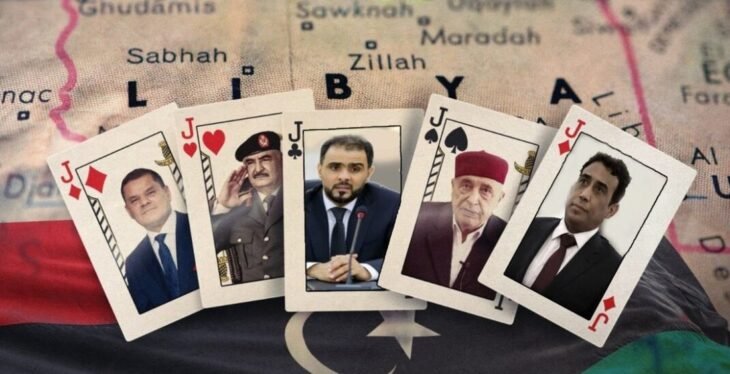
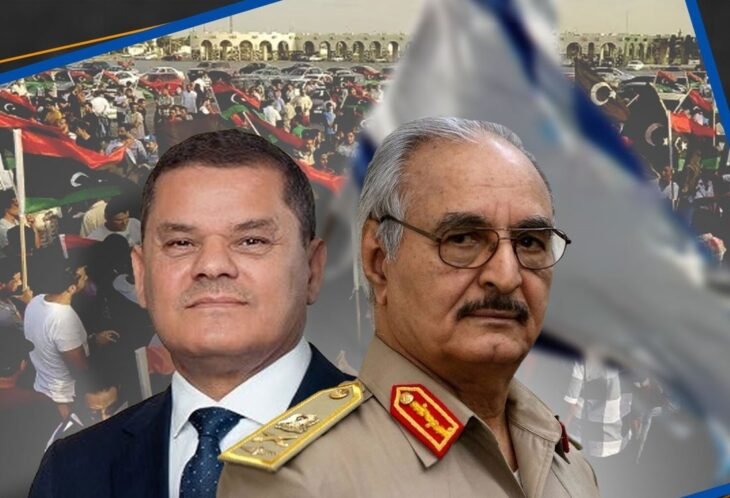
Abdul Hamid Dbeibah, prime minister of the Tripoli-based Libyan government, one of the two rival administrations in the country, vowed on Monday that 2023 will be the year in which Libya will finally unify and hold elections. However, Libya is lacking elements that are key to holding successful elections, which include: national unity, a constitutional basis to form a government and the infrastructure to run fair, credible and legitimate elections.

During the Arab Spring in 2011, the Libyan people ousted and killed the country’s 42-year ruling dictator Moammar Gadhafi. In the wake of his assassination, a deadly civil war erupted among the parties interested in filling the power vacuum Gadhafi left behind. In addition to the many casualties and the economic and social crises, the war resulted in the division of the country and the creation of two parallel governments: the internationally recognized Government of National Unity (GNU) based in Tripoli, and the eastern-based House of Representatives (HoR).

Dbeibah was appointed interim prime minister of the UN-backed GNU in February 2021 to oversee the national elections that had been scheduled to take place at the end of that year, but as yet have not been held.

After the attempt to conduct unified national elections failed to meet the deadline, the HoR, the GNU’s rival government in the east, backed by the Libyan National Army under the command of Khalifa Haftar, called for Dbeibah to step down and named Fathi Bashagha as interim prime minister until national elections are held. That means that the country continues to be fragmented by two parallel and rival governments, one in the east, and one in the west.

Last week, Haftar said there was one “final opportunity” to come up with a road map to hold elections in Libya in 2023.

However, the likelihood that elections will take place in 2023 has decreased, according to Valeria Scuto, a Middle East and North Africa intelligence analyst at the London-based risk consultancy firm Sibylline Ltd.

Scuto told The Media Line that a preparatory forum for national reconciliation will take place January 8-12, ahead of the official conference set for this March. This process, she explained, aims to bring the parties to binding political and executive decisions, set to improve the outlook of the political and security environment leading to elections.

However, she added that the dynamics in the country during the last year have worsened the chances of national unity. “Political manipulation and institutional polarization have significantly increased among competing factions in the country over the past year, elevating the risks of a continued political stalemate,” she said.

Andrew Cheatham, a senior expert at the United States Institute of Peace, told The Media Line that in order to hold fair, credible and legitimate elections that are free of violence, there are three key issues that must be resolved.

One is to achieve national unity. “They must move forward on the agenda for reconciliation,” he said. “In order for these elections to go forth without violence and without triggering more violence during the cycle, and to be credible and successful, there must be more efforts put forward to achieve national reconciliation between communities.”

Many different international actors as well as Libyans themselves want to tackle these very deep intra-Libyan issues that have emerged in the several cycles of war that they have lived through since 2011, he explained.

The second issue, according to Cheatham, is the need to reach an agreement on a constitutional basis to form a government and an electoral law to be the foundation for these new elections, which was not reached before the scheduled December 2021 elections, he said.

The final and probably one of the most undermined issues, according to Cheatham, is logistics. He says that the technical aspects of elections – including voting machines, adequate personnel in each district, having public affairs and civil society independent monitors – are lacking in Libya.

“All of the very costly technical aspects must be put in place, and I don’t think that they’re at that place right now, technically and institutionally,” he added.

He notes that the problem is not about the money since Libya trades oil and gas and earns significant revenues from that. “They have the money for elections, but they do not have the capability institutionally to run their elections yet,” he said.

Cheatham believes that the international community, which has been so enthusiastic in pushing for nationwide elections in Libya, is not well aware of this problem. “I don’t know if they [the international community] know the scale of the effort that is required,” he said.

Scuto says that the international efforts have not been sufficient to help the country hold elections and instead Libya has become an international battlefield.

“While the United Nations Support Mission in Libya has continued to engage in dialogue with international partners to revive the electoral track with Libyan and international stakeholders, efforts have produced overall limited results,” she said.

Libya, she added, “has become a direct proxy theater for foreign actors including France, Italy, the UAE, Egypt and, in particular, Turkey and Russia.”

Cheatham believes that both the international community and the actors in Libya that want elections should focus first on the how rather than the who.

“How are they actually going to conduct elections peacefully, credibly and successfully? I think it is a more important question that needs to be addressed,” he said, referring to the need to create an institutional legal basis for the elections, and the actual infrastructure and support to the high national election commission.

________________

Libya’s former ambassador, fearing corruption, kept documents for Saadi Gadhafi’s penthouse

Rita Trichur & Stephanie Chambers

Saadi Gadhafi’s Toronto penthouse rightfully belongs to the state of Libya, but to avert corruption it should remain subject to an international asset freeze until the North African country has a democratically-elected government, says a former diplomat.

Fathi Baja, who served as Libya’s ambassador to Canada from 2013 to 2017, said the likelihood of economic crime is the reason he refused to hand over confidential documents about Mr. Gadhafi’s condo to Libyan embassy staff in Ottawa or government officials in his home country after he was fired from his post. Instead, he took the cache of paperwork to Libya for safekeeping because of the risk of sanctions evasion in both countries.

Not only did he fear that corrupt politicians in Libya would try to exploit the penthouse for personal gain, but Mr. Baja was also aware of attempts – including by Libyan-Canadians connected to Mr. Gadhafi – to purchase the luxury property despite an asset freeze imposed by the United Nations Security Council in 2011.

Mr. Baja’s comments – made in an exclusive interview with The Globe and Mail – underscore how Canada’s reputation for weak enforcement of international sanctions emboldens bad actors operating at home and abroad.

“A lot of members [of Libya’s parliament], including their leaders, are – sorry for my language – but they are thieves,” Mr. Baja said in a telephone interview from Benghazi, Libya. “So, I was afraid to hand things like the apartment documentation to them.”

The Globe reported on Saturday that Mr. Gadhafi, the third-born son of former Libyan dictator Moammar Gadhafi, is trying to orchestrate a sale of his downtown residential suite that he originally bought for $1.55-million in 2008.

Specifically, the younger Mr. Gadhafi drew up a power of attorney appointing Karim Al-Murabit, a businessman of Libyan origin with connections to Canada, as his representative on all matters relating to the luxury condo, including a possible sale, the story said, citing the document and two people familiar with the matter.

The man named in that legal document, who also spells his surname as Murabet, confirmed to The Globe on Sunday that Mr. Gadhafi, 50, asked for his help to explore a sale of his condo. But Mr. Murabet said that he was unaware until recently that the apartment remains subject to a UN freeze order.

Mr. Baja – who has no knowledge of Mr. Gadhafi’s power of attorney or Mr. Murabet – said he gathered up documents concerning the penthouse after he was fired by an official working for then Libyan leader Fayez al-Sarraj in 2017.

At the time, Mr. al-Sarraj’s government of national accord was in power in Tripoli, but the eastern and southern regions of Libya were being controlled by a rival faction.

Instead of relinquishing those records to either group, Mr. Baja says he wrote a letter to Libya’s foreign ministry and an unnamed judge to outline his concerns about safeguarding the property, urging them to alert the UN.

The government of Libya has long claimed that it is the rightful owner of Mr. Gadhafi’s penthouse. A notice dated Oct. 10, 2012, which is backed by an Ontario court order, is listed on the property’s parcel register. But the title was never transferred because of the UN asset freeze.

Mr. Baja said that he was unable to complete that process because he abruptly lost his job as ambassador.

“It is belonging to Libyan state,” Mr. Baja said of the penthouse. “After they have an election, they should give it to the elected government. Otherwise, the United Nations should hold it until Libyans have an election.”

Libya, which is currently ruled by a provisional government headed by Prime Minister Abdulhamid al-Dbeibah, has been engulfed in conflict since a NATO-backed uprising in 2011 that ended the 42-year rule of Colonel Gadhafi.

In 2014, Libya was split in two by warring groups in the east and the west. Although a ceasefire was reached in 2020, those political divisions persist and threaten to derail a plan to hold long-delayed elections this year.

It is against that backdrop that Mr. Baja is speaking out about the threat of sanctions evasion involving Mr. Gadhafi’s apartment.

Specifically, Mr. Baja said that he has received information about different attempts to purchase the penthouse over the years. (In all instances that he cited, Mr. Baja either couldn’t recall or declined to identify his informants.)

While he was ambassador, for instance, Mr. Baja says a real estate broker in Ottawa, who worked with the embassy, offered his services to sell the penthouse, stressing there were willing buyers. But Mr. Baja said he told the man that a sale would violate the UN freeze order.

Then in 2022, Mr. Baja says a political contact in Cairo informed him that a group of Libyan-Canadians, people affiliated with Mr. Gadhafi, sought out the help of the contact’s Egyptian political party to help to obtain the keys to the Toronto penthouse.

“But this [Egyptian] political party, in fact, refused to work with Saadi’s group,” Mr. Baja said.

Also last year, Mr. Baja said he received another tip that a former top aide of Col. Gadhafi, a Libyan-Canadian named Ali Ibrahim Dabaiba, also expressed interest in purchasing the younger Mr. Gadhafi’s Toronto apartment.

In March of 2015, Mr. Baja wrote to the Department of Foreign Affairs, since renamed Global Affairs Canada, requesting that officials block the renewal of Mr. Dabaiba’s Canadian passport, The Globe reported in 2018.

Mr. Dabaiba is the former head of the Organization for Development of Administrative Centres, Libya’s infrastructure contracting department. During Col. Gadhafi’s rule, Mr. Dabaiba did business with numerous companies, including Montreal-based engineering firm SNC-Lavalin Group Inc., The Globe reported in that same 2018 story.

Mr. Dabaiba is also a relative of Mr. al-Dbeibah, Libya’s current Prime Minister. (There is no single way to translate an Arabic name into English, which is why spellings vary.)

The Globe tried to reach Mr. Dabaiba for comment about Mr. Fathi’s allegations by sending registered letters to four of his last-known addresses, two in Montreal and two in London, and via contact information for two of his adult children. But he has not responded.

Similarly, the Libyan embassy in Ottawa and the Libyan consulate in Istanbul did not provide responses to questions about Mr. Baja’s assertions or Mr. Gadhafi’s power of attorney.

Separately, Mr. Murabet said that Mr. Gadhafi has traveled to Cairo to visit his mother in recent years. But Mr. Murabet said he knew nothing of Mr. Dabaiba’s potential interest in Mr. Gadhafi’s apartment.

As for the keys to Mr. Gadhafi’s penthouse, Mr. Baja says he left those with the embassy’s Ottawa-based lawyer, Gar Knutson, before leaving Canada in 2017.

Back then, Mr. Knutson worked at Borden Ladner Gervais LLP. Now semi-retired, he no longer represents the Libyan embassy and doesn’t recall having the keys to the penthouse.

“Physical keys exist in the form of a fob,” Mr. Knutson said in a telephone interview. “The condo corp., they control the fobs.”

Mr. Knutson confirmed that he approached the condo corporation when he was the embassy’s lawyer and took Mr. Baja to visit the property for the first time when he was ambassador.

“It was very nice,” Mr. Knutson said. “I think there was cereal in the cupboards … It was like walking into a hotel room – a nice hotel room.”

Mr. Knutson, who was previously a cabinet minister in governments of Liberal prime ministers Paul Martin and Jean Chrétien, also said he worked with Global Affairs Canada to start the process of having the ownership transferred to the state of Libya.

“What’s happened since I left? I have no idea,” Mr. Knutson said.

Borden Ladner Gervais spokesperson Tamara Costa declined to comment on whether the law firm is still acting for the government of Libya.

As for Mr. Baja, he said that he has never had any direct conversations with Mr. Gadhafi about his Toronto penthouse, but he assumed responsibility for it while he was ambassador.

“I used to pay the electricity and the water there, even though nobody was living there. And also just to guard the place – I used to pay it monthly,” Mr. Baja said. “We have a monthly payment to the owner of the whole building.”

Mr. Baja said he visited the property on three occasions during his time as ambassador, adding that the glass building boasts views of the nearby Rogers Centre and Toronto’s island airport.

“The apartment is well-furnished,” said Mr. Baja. “Obviously, it’s a very, very, very, very beautiful place.”

In addition to Canada, Mr. Gadhafi also purchased properties in Britain, Mr. Baja said. The Libyan government reclaimed one of those properties, a London mansion estimated to be worth £10-million ($16.8-million), after a British court ruled in 2012 that Mr. Gadhafi had purchased it with stolen state funds.

_______________

The UN’s Failures Require a New Path in Libya

Constitutional monarchy, which attunes with Libya’s history, remains Libya’s path to democracy.

Khaled Assari

The UN Support Mission in Libya (UNSMIL) has failed in nearly every conceivable objective. Its shortcomings are concurrently structural and individual: a poorly designed mandate, an almost total disregard for Libyan political history, and rapid turnover of personnel. The lack of progress on the ground is wholly unsurprising. 

It is beyond time to move past the UN’s bureaucratic holding-pattern strategy and damaging “cookie-cutter” political formulae that simply don’t fit and therefore won’t work no matter how many times they are tried. Libya is deeply tribal and factional. To be  viable, the solution in Libya can only result from engaging robustly with Libya’s unique history to ensure it contains the necessary ingredients of national identity to be sufficiently unifying.

UNSMIL was established shortly after the end of Libya’s First Civil War. Muammar Gaddafi, Libya’s long-time dictator, was deposed in a brief internal conflict. Libya’s rebels received extensive air support from NATO along with intelligence and arms assistance from the most powerful Arab states, particularly Qatar and the UAE. Initially, the Libyan case was held up as an exemplary post-Iraq reaction, with the United States “leading from behind” and avoiding any ground commitment.   

Western air and naval assets, impervious to a response from Gaddafi’s forces, dismantled their enemy through a series of precision strikes which enabled a loose coalition of anti-regime units to topple Gaddafi.  Libyans themselves caused a transformation within their country, not the West.  Leading from behind was, seemingly, a wiser approach than the past decade’s blunders.

After the military victory, the baton was handed to the UN to midwife Libya into a democracy. UNSMIL was meant to be a short political support mission, meant to lay the groundwork for free and fair elections. Elections would then create a new government that would appoint a president and pass a constitution, thus ensuring Libya’s long-term political stability.

UNSMIL’s fundamental mistake, however, was to assume that democracy would work in post-Gaddafi Libya even if devoid of situational context. Ironically a similar mistake was made in Afghanistan and Iraq. 

In each of these cases, with the UN as the active and enthusiastic convener, there was a rush to a democratic transition that did not in fact result in democracy, but instead fuelled multiple rounds of conflict, entrenched political dysfunction and even civil war because ill-conceived political structures simply reflected divisions within society, highlighting them served to deepen them, rather than create the necessary binding glue for a new more united political culture. 

The form of democracy matters

There are different forms of democracy – parliamentary (many different models with several (e.g the UK, Sweden, Norway, Denmark etc) including a constitutional monarchy), presidential (a variety of different models) and semi-presidential (slightly less common but again a number of different models).

Just like switching round the French Presidential model and the UK’s Parliamentary model (a constitutional monarchy) would likely result in political and institutional dysfunction in both countries, imposing forms of democracy in Libya, Afghanistan and Iraq, that have little connection to each country’s own and unique national political history and demography is clearly a recipe for democratic failure.  The lesson is that the form of democracy matters. 

In this light, the General National Congress (GNC)—Libya’s elected transitional government—simply reflected the divisions within Libyan society between the country’s west and east, Islamists andThe UN’s Failures Require a New Path in Libya secularists, liberals and conservatives. UNSMIL oversaw and endorsed this process, all without engaging in the development of a new Libyan security system. 

The combination of UN inattention and a political structure without any organisational coherence created the space for newly-elected leaders to create private militias. By 2014, when the GNC unilaterally extended its mandate, its credibility had completely vanished, opening the way to a second civil war. 

The GNC’s failings, meanwhile, were entirely predictable in light of Libyan history. Libya was politically stable from independence in 1951 until 1969, under a democratic constitutional monarchy headed by King Idris al-Senussi, the head of the Senussi Sufi religious order that had brought sanity and unity to the country over the previous century.  The Senussi had eliminated the Libyan slave trade, brought enough social stability to enable economic flourishing, resisted French and Italian imperialism, supported the Allies during the Second World War and in doing all, helped build a strong but fledgling national identity.

King Idris established a system that gave Libyans space and time to acclimate to democratic structures, via a parliamentary democracy, while taking the core issue of national unity out of the realm of debate.  The 1951 Libyan Constitution’s broad protections for freedom of speech, religion, and conscience created a fundamentally liberal character of the state. Idris’ success and fundamental fairness as ruler explains his popularity, which continues to this day, despite Gaddafi’s concerted effort to wipe him from history. UNSMIL never recognised this history, and never once engaged with Libya’s political past or the lessons of what it could offer for the present. 

Libya’s Second Civil War was the result of a system that failed. The Tripoli-based Government of National Accord (GNA), the successor to the GNC, and the Tobruk-based House of Representatives, comprised of delegates elected in 2014, split the country. Politics became yet another area of contestation over fundamental differences between Libya’s internal actors. But despite the second war, UNSMIL’s mandate was not changed. Nor was its director given more time to become familiarised with the country.  Every UNSMIL chief has been rotated after one year.

Indeed, one of the most recent diplomats charged with leading UNSMIL, Stephanie Williams, did her most effective work during her unexpected acting extended term at UNSMIL. Her successor, Jan Kubis, resigned on the eve of the Libyan elections in 2021, reportedly because his impending retirement meant he was not willing to leave the comfort of European diplomatic residences to engage on the ground. 

UNSMIL’s current leader, African Union-backed Abdoulaye Bathily, reportedly has a brusque manner; but he is at least actually committed to his job. Nevertheless, the fact that the African Union has been given a significant stake in Libyan affairs through its preferred appointee is bizarre, as Libya is fundamentally a Mediterranean issue. Europe, North Africa, and the Middle East should take the lead, but has wasted its last shot.

Libya’s Second Civil War ended in 2020. But its two key factions still receive external support, primarily from Russia and Turkey, as well as attention from the international community. The pause on large-scale violence stems more from Turkish and Russian preoccupation with other issues—chief among them Ukraine— than a durable peace settlement. Re-escalation is possible at any time, with the attendant risks of refugee flows, broader terrorist attacks, and disruption to Mediterranean commerce and oil exports. 

Moreover, as Sudan’s crisis escalates, Libya will likely become a conduit for weapons and other support. After all, the LNA’s Khalifa Haftar has provided the Sudanese Rapid Support Forces – the group now in control of Khartoum – with weapons since 2019, likely with Russian backing. 

A new path forward would involve two major differences.  

First, whether under UNSMIL or another body, an external stabilising force must be charged with a broader mandate that includes security stabilisation and have  long-term staff.  Rotating leadership every 12 months is deleterious to any effective negotiations.

Second, and most critically, stabilisation efforts must reconceptualize their understanding of a political settlement.  The goal is not to broker a sustainable ceasefire.  This logic will lead to a rerun of 2011-2014, where the government became a battleground for factional interest that made renewed conflict nigh inevitable.  Rather, the goal should be to create and provide support for a government that is legitimately independent of Libyan factionalism, that unites the Libyan people, and that has the authority and means to act against threats to the country, the greatest of which will remain non-state armed groups with international backing.

The only government that can serve in this independent fashion is the democratic  constitutional monarchy, which attunes with Libya’s history. Any organisation engaged in Libyan political development must draw off the wealth of respect that the Senussi still command and create a system that removes the most fundamental questions of state from political debate.  The monarchy remains Libya’s path to democracy. In fact, in a very recent poll by the online Libyan news channel Akhbarlibya24, over 83% of voters back this option. It’s time the UN started to listen to ordinary Libyans as opposed to just its self-serving political incumbents.

_______________

MORROCO WORLD NEWS

Despite Libya’s Progress on Election Laws, Deep Divisions Remain

Gregory Aftandilian

Recent meetings in Morocco between representatives of Libya’s two main factions, the Government of National Unity (GNU) in the West and the House of Representatives (HoR) in the East, have yielded a tentative agreement on election laws that may pave the way for holding nationwide presidential and legislative elections at some point in the near future. However, this agreement has yet to be signed by the leaders of the two factions.

The leadership’s reluctance to nail down such laws is indicative of the deep divisions that remain in Libya, which benefit the political class and the militias associated with it, but which keep the country in political chaos and fail to resolve its myriad problems, including corruption that is rampant on both sides. Although elections may not be a panacea for Libya’s ills, they would at least begin a process of national reconciliation, which the country desperately needs in order to move forward.

The Long and Divisive Road to Elections

Since 2014, Libya has been divided between two rival governments, the House of Representatives in the East, backed by the so-called Libyan National Army of self-proclaimed Field Marshal Khalifa Haftar, and the government in the West, based in the capital city of Tripoli. In its latest incarnation, the latter is called the Government of National Unity, and is internationally recognized. Each of these governments is supported by various militia groups, as well as outside players.

After Haftar failed to take Tripoli by force in 2019–2020, the United Nations put in place a process that led to the appointment of an interim government in February 2021 and the promise of holding presidential and legislative elections in December 2021. However, these elections failed to materialize because of sharp disagreements on their rules, as well as eligibility criteria for presidential candidates.

In the aftermath of this debacle, the interim prime minister of the GNU, Abdul Hamid Dbeibah, declared that he would remain in office. The HoR charged that Dbeibah should no longer stay in this position because his tenure had expired at the end of 2021, and in February 2022, this faction appointed a rival prime minister, Fathi Bashagha. Ironically, Bashagha was interior minister in the Tripoli government when Haftar tried to take control of the city.

Bashagha thus became prime minister of the eastern faction, now called the Government of National Stability. Why Haftar and the HoR chose him as prime minister was the subject of considerable speculation, but it may have had to do with the fact that Bashagha was likely to have more legitimacy vis-à-vis Dbeibah because he once held a prominent position in the Tripoli government.

Backed by militias, Bashagha tried to enter Tripoli twice in the past year but was repelled by forces allied with Dbeibah, resulting in scores of civilian deaths. After these failures, Bashagha ensconced himself and his government in the central coastal city of Sirte.

The main reason that reconciliation has not taken place is that the opposing factions benefit from the status quo.

Then, in mid-May of this year, the HoR fired Bashagha, allegedly because of “poor performance and corruption,” but more likely because, in the words of one analyst, he had outlived his usefulness. Since he failed to take Tripoli, for the HoR faction Bashagha was no longer worth keeping on. Whether the corruption charges are true is anyone’s guess, but since most Libyan politicians are alleged to have their hands in the till, the corruption charges may have been raised simply to obfuscate other reasons for his dismissal.

One alternative theory is that Bashagha got into a dispute with members of the HoR over the budget, with him complaining that the money allocated by the Libyan Central Bank was insufficient to run his government. Another theory is that Haftar may have wanted to use Bashagha and his allied militias to try to take Tripoli without harming his own forces, and when that did not work, Bashagha was no longer needed. The HoR subsequently announced that Finance Minister Osama Hammad would temporarily take over Bashagha’s duties.

In the meantime, UN Special Envoy for Libya Abdoulaye Bathily has tried to get the election process back on track. In March 2023, he said that elections could be held by the end of the year if the two factions could iron out their differences by June. A steering committee was formed with equal representatives from the HoR and the High State Council, which is associated with the GNU. Negotiations began in Libya but were shifted to Morocco in the latter part of May.

Some Progress Announced on Elections, but Leadership Stays Aloof

On June 7, the steering committee announced from its meeting venue in Bouznika, Morocco that it had reached an agreement on presidential and parliamentary election laws. Although the details of this agreement were not revealed publicly, the announcement was the only positive news to have come out since the elections were postponed in late 2021.

A representative from the High State Council, Omar Aboulifa, claimed that, “All that is left is for parliament to ratify” the agreement. However, neither Aguila Saleh, speaker of the HoR, nor Khalid al-Mishri, leader of the High State Council, decided to sign it, thereby putting the agreement in doubt.

Indeed, according to Libyan press reporting, Saleh and al-Mishri were supposed to attend the press conference on the deal, but they chose not to because of disagreements over conditions for running for president. The two leaders had actually arrived in Morocco for the signing ceremony, but when al-Mishri reportedly left the meeting hall over the dispute the signing ceremony had to be cancelled.

It is possible that the eligibility criteria for presidential candidates may be at the root of the dispute. The GNU has maintained that dual citizens should not be allowed to run for president—a criterion that was clearly aimed at Haftar since, in addition to his Libyan nationality, he holds US citizenship based on his long residence in the United States prior to 2011.

Whether the representatives from the High State Council conceded on this point during the negotiations with the HoR representatives is hard to say; but if they did, that would account for al-Mishri leaving the meeting hall without putting his signature on the accord. For its part, the HoR is opposed to Dbeibah running for president, charging that he reneged on an earlier pledge that he would not do so when he threw his hat into the presidential ring in late 2021.

Behind-the-Scenes Talks and Entrenched Interests

Regardless of what happens with the election law agreement, it seems that Haftar and Dbeibah are exploring some type of power sharing arrangement on their own, outside of the UN process. Over the past year, Dbeibah’s nephew, Ibrahim Dbeibah and Haftar’s son, Saddam Haftar, have been engaged in an ongoing dialogue supposedly aimed at bringing about some form of reconciliation. But it is unknown whether these talks, some of which have reportedly been held in Egypt and the UAE, are serious or are just meant to buy time while each side tries to bolster its military and economic capabilities.

Dbeibah’s decision to replace the head of the Libyan National Oil Corporation in July 2022 with a Qaddafi-era official took place soon after Ibrahim Dbeibah and Saddam Haftar had a meeting in the UAE, suggesting some type of agreement on this issue. The reason behind this consensus may have had less to do with politics and more to do with illicit economic activity, according to one prominent analyst who noted that there has been an “uptick in corruption” involving the national oil corporation in recent months.

However, the main reason that reconciliation has not taken place is that the opposing factions benefit from the status quo. Neither side wants to give up power and the associated economic benefits that come along with it. Corruption is said to be widespread in both camps, to the point that the majority of Libyans see the political class as being only out for itself and not caring about the average citizen who is struggling financially.

Moreover, foreign patrons want the status quo to continue because it benefits them as well.  Despite the pledge by international actors at the Berlin Conference in January 2020 that foreign forces and foreign intervention in Libya should cease, this agreement has been widely flouted.

The Tripoli government is still supported by Turkey and its allied troops, while the eastern government has the support of Egypt, the UAE, and Russia’s notorious Wagner Group, made up of mercenaries who not only fight for a particular side in a given country but often engage in the economic exploitation of that country’s resources.

One report that circulated earlier this year among Libya observers said that the Libyan Central Bank sent the national oil corporation around $6 billion after the head of the corporation was replaced in 2022, but that this money was not used for any upgrades of Libyan oil facilities as one might expect. Instead, the money remains unaccounted for, and rumors have circulated that Haftar used part of these funds to pay the Wagner Group. These mercenaries, in addition to supporting Haftar’s 2019–2020 offensive against Tripoli, have reportedly been used to protect key military bases and major oil facilities in the eastern part of the country.

As for Turkey, it wants to stay in the good graces of the Tripoli government, in large part to maintain its support for gas exploration projects in the Mediterranean Sea that are being opposed by several neighboring governments that resent Ankara’s unilateral expansion of its maritime borders.

In addition, having friendly ties to Tripoli allows Ankara to project force in North Africa. The recent reelection of Turkish President Recep Tayyip Erdoğan will likely mean that Turkey will not depart from this policy, nor from Libya anytime soon. As for Egypt and the UAE, while paying lip service to Libyan reconciliation and occasionally hosting meetings of the two factions, they still favor Haftar and the HoR because of their opposition to Islamists.

The Militia Problem

Since the ouster of Libyan dictator Muammar Qaddafi in 2011, one of the main problems in Libya has been the proliferation of militias. These forces are usually allied with one political faction or the other and have been a major cause of violence and instability in the country. Efforts by the UN to undertake security sector reform through a disarmament, demobilization, and reintegration and integration process have largely gone nowhere, and as long as there is no unified national government, each side will see militias as useful allies in the power struggle.

Many of the militias have been involved in illicit activities, particularly in human trafficking and drug smuggling.

Many of the militias have also been involved in illicit activities, particularly in human trafficking and drug smuggling, and they sometimes turn on each other. In May 2023, the GNU’s military forces struck militias west of Tripoli in the town of Zawiya that it accused of trafficking in fuel, narcotics, and human beings. That same month, two militias, both loyal to Dbeibah, clashed in Tripoli after a member of one of the groups was arrested by GNU authorities. Although a cease-fire between the two main Libyan factions has generally held since October 2020, there have been occasional bouts of violence since then.

Unfortunately, the recent civil war in Sudan has the potential to make these matters worse.  Human trafficking, which was already a serious problem in Libya because destitute people from various African countries wanting to reach Europe often try to go through Libya, is likely to pick up as life becomes unbearable in neighboring Sudan. Some Libyan militias will undoubtedly see this development as an opportunity to exploit.

No Substitute for Elections

Although national elections may not end Libya’s myriad problems—and there is always the possibility that the losing side will not accept the results—it is hard to imagine that true national reconciliation can take place without them. Without a central national government brought about through free and fair elections, Libya will not be able to deal with its militia problem and create a true national army; nor will it be able address the corruption that is sapping the wealth of the country. But in order for these goals to be achieved, the international community must step up its efforts in Libya to persuade all foreign forces to leave and put pressure on the two main political factions to move ahead with elections.

Efforts by the steering committee in Morocco to agree on election rules seem to have been a good start, but pressure needs to be applied to both GNU and HoR leaders to accept the compromises reached in Morocco, to sign the agreement, and to set a new date for elections. After more than a decade of violence and instability, the Libyan people deserve a better future. The longer elections are postponed, the greater the chances that civil war will erupt again, with civilians continuing to suffer as they always do during conflicts.

***

Gregory Aftandilian is a Nonresident Fellow at Arab Center Washington DC. He is a Senior Professorial Lecturer at American University where he teaches courses on US foreign policy. He is also an adjunct faculty member at Boston University and George Mason University, teaching courses on Middle East politics.

________________

Ex-Trafficker Exposes Libya’s Underground Migrant Trafficking Empire

Ibrahim Gaddari

An ex-member of a trafficking gang based in Libya has given us a chilling insight into the criminal world of human-trafficking operations.

Lovin Malta recently secured a conversation with the ex-member, who was based in Zuwara, Libya, for a deep dive into this veiled world on the condition of anonymity.

In his own words, he describes the trafficking network as operating “like a drug empire” with transportation routes spanning the entirety of the African continent.

Now they have got so big, it is like a drug empire, they have a transportation network all over the continent before they used to only take money so they can get you from Libya to Europe, recently they can get you all the way from the Saharan border to the shores,” he explained. 

Two main trafficking channels exist, each with its own dangers and price tags. The first involves large cargo ships, a service that costs between €500- €2000.

This method, often used by locals from Libya and Tunisia, requires “good connections with the crew” and is considered the safer option of the two. Traffickers bribe crew members to hide the migrants until they reach Europe, usually Italy.

The second method, more widely known and used, relies on small, regular boats. For a fee ranging from €300- €500, migrants board dangerous and overcrowded vessels, often alongside others from African, Middle Eastern, and South Asian nations.

They do not pay the traffickers to get on the boat, any person can buy these cheap dinghy boats and head north, they pay them because they have connections with the corrupt Libyan and Tunisian coast guard so their vessels are purposely ignored until they reach Europe.”

Despite the risks – some boats don’t make it, and even when they do, a third of the passengers may not survive – the migrants are willing to face the dangers.

They do not care; it’s almost like they have nothing to lose,” he said, highlighting the desperation that fuels this trade.

Our source explained that these traffickers pay individuals to be ‘ambassadors’ who message specifically young people online or even in person and encourage them to attempt to go to Europe.

They are trying to target the youth because they are the ones who see on the internet what it is like in Europe compared to their torn country.”

For an additional fee, the traffickers will even connect migrants with individuals who can forge European passports, residence permits, and driving licenses.

But humans aren’t the only commodity being trafficked. Our informant tells us that these gangs also deal in cash, drugs, and petrol. Their operations are so lucrative that rivalries have erupted into full-blown gang wars.

It’s like the cartel in the Narcos movies.”

Shockingly, the heads of these gangs are not well-known figures. Their identities and locations are well-known, and yet most of them remain at large.

The heads of these gangs are well-known, they know who they are and where they are, yet for some reason, they are not sending anyone to capture them!”

“It is almost like people in power want them there, funny enough I know these kingpins of trafficking have luxury houses and yachts abroad and gets special visas to travel to Europe.”

This deep dive into the operations of human trafficking rings in Africa paints a horrifying picture of a ruthless industry that thrives on human desperation. It also raises questions about the complicity of those in power who allow these traffickers to operate with impunity.

However, with the courage of individuals willing to expose these operations, there may yet be hope for justice and an end to this human tragedy.

_______________

Libya: Foreign Parties Attempt To Foment Political Stability

Prof. Miral Sabry AlAshry

Halima Abdel Rahman, the Minister of Justice of the Government of National Unity, has discussed with Richard Norland, the US Special Envoy to Libya, many issues about human rights, national reconciliation, and the integrity of the Libyan judiciary.

When Caroline Hurndall, the United Kingdom’s (UK) ambassador to Libya, visited Benghazi, she met with Khalifa Haftar, House of Representatives’ Speaker Aqila Saleh, and a number of political and social leaders, activists, and representatives of a number of local companies in the region and eastern Libya. The discussion focused on the economy and strengthening relations between the UK and Libya.

Economic growth was a major subject, from visiting Benghazi’s port to meeting with local businesses. Also there was a call for greater transparency in government spending across Libya. Moreover, Hurndall emphasized that it is their responsibility to commit constructively to a political process that leads to elections and long-term stability for Libya.

While Mohammed Menfi, the head of the Presidential Council, discussed with Abdoulaye Bathily, the head of the United Nations Support Mission in Libya, developments in the work of the 6 + 6 joint committee to complete electoral laws leading to the achievement of freedom, he also discussed the active Libyan parties on the priorities of the stage.

In addition, the smuggling of migrants has not stopped in Libya. On May 31, 2023, 14 illegal migrants from African nationalities were found lost in the desert in the border area with Tunisia. The patrols of the border guards tasked with securing the Libyan-Tunisian border found the migrants between the two points “Dahr Al-Khas and Tawil Al-Ratba.” Migrants found in the headquarters of Al-Assa district after they were referred to the competent authorities after receiving health care.

The Italian Chief of Staff, Giuseppe Cavo Dragone, stated that the Russian military Wagner group has significant power in Libya, the Central African Republic, and Burkina Faso, as they are stationed near Libyan mines and oil fields.

Dragone added in a statement reported by the Italian news agency AKI that, with the passage of time, Wagner’s presence is increasingly becoming evident as a political and military force.

On the other hand, Abdul Hamid Dbeibah wanted to discuss the developments of the ongoing security operation in the western region to combat criminal gangs, the drug and arms trade, human trafficking, and fuel smuggling abroad in the presence of the Chief of the General Staff. Dbeibah invited the commander of the Coast Guard and Ports Security, the commander of the Western Region Intelligence.

Mohammed Haddad, the commander of the West Coast military zone and the commander of the security committee assigned by the Chief of Staff to develop the security plan in the western region. Dbeibah added the operations’ commitment to the precise professional rules undertaken by the Air Force, the  tasks assigned to it, and its coordination with the rest of the military elements and intelligence agencies. While 

Haddad noted the readiness of the armed forces to carry out their tasks in order to preserve the security of citizens, and rid the country of armed gangs and presented the airstrikes, their details, and the achieved goals.

The monitoring of security operations in the coming stages according to the security plan until achieving the desired goals also the military operations in the west coast region launched by the government on May 25 against the hideouts of fuel and drug smuggling gangs and human and weapons traffickers. The operations included the destruction of seven boats used for human trafficking, six warehouses for drug dealers, weapons and equipment, and nine tanks used to smuggle fuel abroad.

Aqila Saleh also stressed the need to form a government that has the ability to impose its authority at the national level, to work during the coming period to hold presidential and parliamentary elections in accordance with the decisions of the 6 + 6 joint committee in Morocco.

The meeting with UN envoy to Libya Abdoulaye Bathily and the Speaker of the House of Representatives (HoR) Aqila Saleh in Al-Gubba discussed the recent political developments to encourage the 6+6 Committee to keep their discussions exclusive to the Libyan people and make their announcement on Libyan soil as a sign of transparency and respect.

As a sign of transparency and respect, he agreed to complete the committee’s task, making sure laws were implementable because transparent elections are the only viable solution to overcome the current crisis and build a solid foundation for a prosperous future for all Libyans.

***

Prof. Miral Sabry AlAshry is Vice Dean at Future University in Egypt (FUE), and Chairwoman of Alumni in the Middle East at DW Deutsche Welle Akademie.

__________________

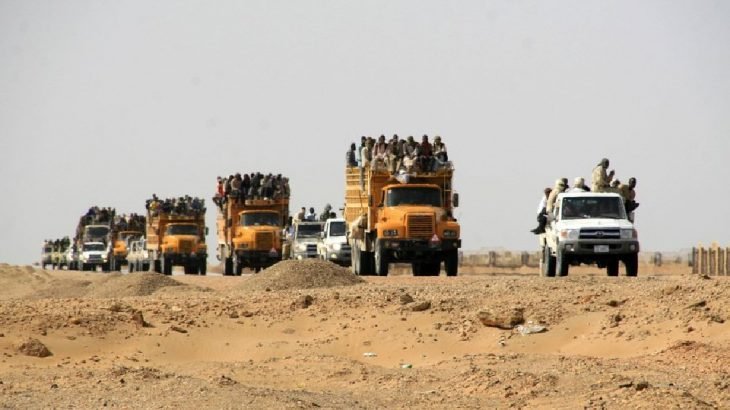
Libya forces thousands of Egyptians to leave the country on foot

Katherine Hearst

The deportations follow raids conducted on buildings allegedly used by human traffickers in eastern Libya.

Thousands of people, the majority of them Egyptians, have been forced to leave Libya by foot after being detained and deported, according to migrant solidarity groups and media reports.

The deportations have mainly taken place over the first few days of June, and followed mass raids on smuggler warehouses in border towns in eastern Libya.

The monitoring group Migrant Rescue Watch told Middle East Eye that deportations were ongoing as recently as Thursday night. 

“The migrants were loaded on several trucks,” said Rob Gowans of Migrant Rescue Watch. “Some were transferred to Benghazi and some deported to Egypt.” 

An Egyptian security source told Reuters that only 2,200 of the 4,000 people deported were in Libya illegally. Deportees were detained at the border and then marched 2km into Egypt, the Egyptian security source added.

A Libyan security source also put the number of those deported at 4,000, while migrant solidarity groups reported that an estimated 6,000 were being detained in conditions that they described as ‘tragic’ in a customs hangar at the Musaid border crossing to Egypt.

A Libyan security source reported that the raids were conducted following a shoot-out between smugglers and security forces.

Videos posted on Twitter, which could not be independently verified by MEE, appear to reveal the scale of the crackdowns in the eastern towns of Tobruk, Emsaed and Musaid. They show crowds of migrants being rounded up in detention centres, herded onto trucks and marched near what is described as the Libyan-Egyptian border.  

Human Rights Watch criticised the deportations and the behaviour of the Libyan forces during the operations. 

“The conditions under which these people are rounded up appear to be incredibly violent and inhumane,” said Hanan Salah, Human Rights Watch’s associate director for the Middle East and North Africa.

“This is absolutely unacceptable the way that people are being hoarded into a certain space and yelled at, with obscenities shouted at them… they are being forced to walk and run for long periods. They’re apparently not being given the basic necessities they need. The de facto authorities or those who conducted it need to explain themselves.” 

According to a 2021 UN report, the majority of Egyptians in Libya are forced to rely on smugglers to get across the border. Hussein Baoumi, an Amnesty International researcher who interviewed Egyptian migrants in Libya, previously told MEE that this puts the migrants at greater risk of arbitrary detention by trafficking groups, some of them connected to militia groups led by eastern-based commander Khalifa Haftar.

“They have told me about [being] subjected to torture, being held in conditions that would be considered forced disappearances and extortion. This was quite a common experience,” Baoumi told MEE.

Baoumi also spoke to people, some as young as 10, who reported being deported back to Egypt by forces based in eastern Libya.

The most recent deportations also follow crackdowns by security forces in western Libyan cities following violence between Nigerian and Sudanese migrants in Zuwara.

According to the International Organization for Migration, arrest campaigns of migrants have been happening routinely since April.

“Detention centres are overcrowded, [and] the international community is looking more at departures from the east given the increased [migration] numbers,” the IOM said.

‘Routinely at risk’

The UN has said that migrants in Libya are “routinely at risk of arbitrary or collective expulsion”, charting a rise in deportations, with at least 7,500 migrants expelled from Libya’s external land borders during 2019 and 2022. 

The report also found that collective expulsions were being conducted without due process, with migrants frequently being denied the ability to challenge the lawfulness of the deportation, and some facing expulsion to countries where they may face persecution, torture and ill-treatment. According to Carolina Hernandez, a UN adviser on migration and human rights, this practice constitutes refoulement, which is illegal under international law.

The mass expulsions come amid an increase in Egyptians moving to neighbouring Libya. According to a 2022 IOM report, there is an estimated 144,543 Egyptian migrants in Libya, accounting for 21 percent of the total migrant population, the second largest share after Nigerians.

According to Baoumi, despite the pervasive risk of arbitrary detention and extortion, many Egyptians in Libya intend to stay there, rather than attempt to cross the sea to Europe.

“One of the things that I remember, which was very surprising and shocking to me, is that many Egyptians that I met, have been living there for 10, 11 years… They were saying that present life was much better in Libya, than in Egypt… despite the risks, conditions and the threats,” Baoumi said.

Split between rival administrations in the east and west of the country, oil-rich Libya is home to an estimated 500,000 migrants, a workforce that powers its economy. Many of those workers were previously unable to find a job in their home countries. According to the IOM, 41 percent of Egyptians working in Libya had been previously unemployed in Egypt. 

In spite of all this, some Egyptian migrants still do attempt the journey across the sea to Europe, Baoumi said.

Though the majority of the people he spoke to intended to stay in Libya, Baoumi noted that younger migrants from Egypt were more likely to attempt the sea crossing to Europe, as they were more vulnerable to arbitary detention and extortion.

That leaves them open to the many dangers of crossing the Mediterranean by boat, with the IOM reporting that, within the first four months of 2023 alone, more than 440 people had drowned in the central Mediterranean.

***

Katherine Hearst is a writer, film maker and organiser. After graduating from the Royal College of Art in 2015, she has directed three animated shorts that have featured on the BBC and Sky Arts. Her journalistic writing has featured in Open Democracy and The New Internationalist.

_______________

Oil Majors Keen On Libya’s Untapped Potential

Felicity Bradstock

  • Libya is launching a strategic plan to rejuvenate its oil and gas sector, aiming to increase oil production from 1.2 million bpd to 2 million bpd in three to five years.
  • To attract foreign investment and improve transparency, Libya plans to offer new oil and gas blocks for exploration for the first time in over 17 years.
  • Despite the threat of the global green transition to Libya’s oil-dependent economy, there are positive indicators such as increased output at the Erawin oilfield and new discoveries in the Ghadames Basin.

Following the failed Presidential elections of December 2021 and its negative impact on the oil and gas industry, Libya’s oil production started to get back on track in the second half of 2022, aimed at boosting production in line with high global demand and elevated prices. And things are looking up for 2023, with increased foreign investment in Libya’s oil and gas sector, as well as support from the IMF. The government hopes to improve national industry standards to meet international expectations through its new strategic plan, helping to boost production and attract investment in new projects. 

In February this year, the NOC introduced a new strategic plan to revitalise Libya’s oil and gas sector, in collaboration with the U.S. firm KBR. It created the Strategic Programs Office to implement this plan to help the company “keep pace with developments in this sector worldwide.”

The strategy is expected to help the Libyan National Oil Corporation (NOC) increase Libya’s oil output to 2 million bpd in three to five years, from around 1.2 million bpd at present. The country’s output stood at around 1.6 million bpd prior to the 2011 Arab Spring but has been steadily decreasing ever since, due to political volatility and conflict. But to achieve this output increase, Libya needs to attract much more investment in its oil and gas industry, particularly in exploration, to ensure the longevity of the sector. 

Iliasse Sdiqui, associate director at Whispering Bell, a risk management company covering North Africa, stated: “The idea is that to draw foreign investment you need to be more transparent, and you need to enable IOCs to take a look at your books.” Sdiqui added, “This strategic program office is (set up) both to enable IOCs to be comfortable with channelling money into the east and also to satisfy the local communities in the region.” And “The pressure for more fiscal transparency comes from the top, from the US, and from the international community.”

Under the plan, new oil and gas blocks will be offered for exploration for the first time in more than 17 years. In May, three international oil majors, Italian Eni, French Total, and UAE-based Adnoc, entered into talks with the NOC about the potential development and exploration of oil and gas fields in the NC7 block in the Ghadames Basin. Eni continues to be the biggest foreign investor in Libya’s oil and gas sector, having begun operations in 1959. The company produced 198 Bcf of gas in Libya in 2021 and transported the gas to Italy via the 520-km Green Stream pipeline. 

In February, Eni became the first international oil company to announce a new project in Libya for more than two decades. Eni signed an agreement with the NOC to develop offshore operations aimed at producing 750 MMcf/d of natural gas by tapping estimated reserves of 6 trillion cubic feet.

The IMF expects Libya’s oil production to increase by around 15 percent in 2023 thanks to an output rise of 1 million bpd in 2022. The IMF stated, “Libya’s economic fortunes will hinge on oil and gas production for the foreseeable future.” The country has long been highly dependent on revenues from oil and gas production, holding around 3 percent of the world’s oil reserves and 39 percent of Africa’s.

At present, Libya’s financial stability is under threat from the global green transition, suggesting the need for greater economic diversification to ensure increased security in the future. But for now, the country’s oil and gas industry is performing much better than expected coming out of the turmoil of 2021. 

In May, Zallaf Libya Oil and Gas, a subsidiary of the NOC, announced that output at the Erawin oilfield has increased to more than 92,000 bpd. The company hopes to achieve 100,000 bpd of production at Erawin. And the Russian oil company Tatneft’s Libyan branch discovered an oil well in the Ghadames Basin, producing 1,870 bpd of at a depth of 8,500 feet. 

In addition to increasing output, Libya hopes to improve the standards of oil production to meet international expectations to enhance the export potential and attract greater investment in the sector. Farhat Bengdara, NOC’s chairman, stated that the company is aiming to increase production as well as to reach global standards in the sector. He suggested that raising output will help to boost the salaries of those working in oil and gas, as well as helping to stabilise the exchange rate of the dollar and boosting energy security. 

Thanks to the introduction of a new strategic plan, Libya has begun to boost its oil output as well as attract greater foreign attention. The hope is to improve standards to encourage new foreign investments in exploration and production operations while the global demand for oil and gas remains high. Revenues from new projects could also help Libya to pursue a strategy of economic diversification to enhance its financial stability in a global green transition. 

***

Felicity Bradstock is a freelance writer specialising in Energy and Finance. She has a Master’s in International Development from the University of Birmingham, UK.

_________________

Libya: Reasonable calm for now, but at what cost?

Hafed Al-Ghwell

Since 2012, Libya has experienced multiple failed political transitions, taking a heavy toll on its people. The complex internal divisions and external factors affecting the country have repeatedly threatened to send it into another spiral of crisis and violence. However, recent developments hint at a breakthrough in the decade-long political deadlock. Rival Eastern and Western governments are increasingly leaning toward discrete contacts to quietly develop some “new” compromise palatable to both East and West following the dismissal of Fathi Bashagha by the House of Representatives.

To some, the situation in Libya is seemingly a lot better than it was two years ago when repeated attempts to overrun the capital, Tripoli, featured waves of sporadic violence and needless upheavals. Today, the city appears largely peaceful, and fewer roadblocks impede traffic. In some areas, there are even infrastructure improvements, delivering a sense of relief and hope to average Libyans that the days of street-to-street gun battles are behind them.

However, if you scratch the surface of this “mirage of reasonable calm,” a deep sense of insecurity still grips a traumatized populace. Abductions, forced disappearances and extrajudicial detentions remain frequent, worsened by the consolidation of militias-turned-hybrid actors that source legitimacy from their close ties to the ruling elite. Other constant features of the Libyan crisis, such as miscarriages of justice, abuses of power and corruption, are still rampant, albeit not nearly as visible nor eliciting much public furor.

After all, even if unaccountable elements continue exercising enormous influence on Libyan security dynamics, politics, governance and, increasingly, the economy, most Libyans are just content to witness a relative improvement due to increasing oil and gas revenues now flowing freely in the economy. Besides, unlike neighboring Tunisia and Egypt, which were severely impacted by the knock-on effects of the war in Ukraine, Libya has escaped debilitating food inflation.

At the same time, fuel remains subsidized and thus cheap. The familiar anxieties caused by the friction between Libya’s rival governments are only discernible from the diplomats and international organizations that still operate as if they are under siege and only move around with armed guards.

This same faux calm dynamic is also playing out elsewhere in Libya’s other cities and regions, except in Fezzan. The continued marginalization and exploitation of people and resources there has transformed it into an additional “frontline” in a country crisscrossed by rivalries and opportunism, leaving the area vulnerable to transnational criminal networks and violent extremists.

In addition, porous borders with Algeria, Niger, Chad and Sudan pose genuine security threats, especially from the latter’s ongoing internal conflict that could significantly impact Libya. Finally, the illicit trafficking of arms, persons, and contraband into (and out of) the country via Kufra could benefit the eastern-based Libyan National Army, led by the warlord Khalifa Haftar.

In this strange climate, the UN is still trying to forge ahead and frame up a pathway to elections by the end of the year. The Special Representative of the Secretary-General for Libya, Abdoulaye Bathily, initially sought to broaden the negotiation process and establish an electoral roadmap with clear timelines, ensuring inclusive, accessible and fair elections.

However, it is becoming increasingly clear that these efforts will not address how Libya will sustain a peaceful and just transition once the votes have been tallied and its supposed new leaders are announced. And that’s not all.

Bathily’s “elections-first” plan to help Libya find an exit from its gridlock is still fraught with problems, even though it enjoys broad support from Western capitals. In their view, by holding elections first, Libya will temporarily postpone the messy, dead-end negotiations around the constitution and also side-step the preferred “solution” by Libyan elites to simply elect a new interim authority from within their own ranks.

Alongside any political progress, going to the polls will also be a way to provide all Libyans with incremental peace dividends to ensure their enduring support for the complex negotiations that were put off to facilitate the elections.

Moreover, elections allow outsiders to become part of the political process, breaking up the ruling elites’ monopoly on power with the blunt instrument that is the will of the people. Additionally, the “new” structures that form in their wake will help address grievances related to the rule of law, public services delivery, the delegation of authority to subnational bodies, local economic development and, more importantly, the normalizing of security in Libya.

Of course, such an undertaking would require significant investment from the global community to transfer negotiated arrangements into real change for the people. Yet, without a constitutional framework, the powers of the presidency and a future parliament will technically be undefined, creating a dangerous “fix-it-as-you-go” mentality, easily exploitable by enterprising actors or other malign elements that have grown exceedingly comfortable with the status quo.

This is not to say the UN’s efforts are doomed to fail. On the contrary, there is still a possibility to corral all stakeholders — including hardened “survivors” of constantly shifting allegiances and rivalries — to support Libya’s quest for peace, stability and a unified, fully functioning government, without repeating past mistakes. However, the current UN plan still has gaping holes that rival authorities on either side appear eager to exploit, of course, with their own plans.

With Bashagha no longer a useful pawn in the hands of the House of Representatives and Haftar, the latter’s entourage has since broached the subject of a new government. In it, Bashagha’s deputy, Osama Hamad, could become Dbeibah’s deputy prime minister, with full authority on all things “East,” especially finances.

Hamad is a particularly interesting choice because his stint as a finance minister in the Fayez Al-Sarraj government and his role as a former deputy of the eastern government’s finance minister has helped him straddle an uneasy divide. Thus, if some new deal or “unity” government materializes, according to the designs of those involved in the not-so-secret Haftar-Dbeibah discussions, Hamad — who is politically closer to the East than the West — will be right at the center of it.

For now, it is too early to predict where the ever-shifting sands of Libya’s political dynamics will go. Just a year ago, few would have envisaged today’s momentary calm, and fewer still would have believed that Dbeibah and Haftar camps could collude to manipulate the trajectory of Libya’s transition.

Yet, here we are. Whether the back-room deals will result in material changes is still debatable since several thorny issues still need to be solved.

For instance, it is unlikely the military coalitions in western Libya would quietly accept Haftar as the most senior military officer in a combined military. Will they even agree to join the Libyan National Army? Similarly, the head of the eastern parliament does not favor Dbeibah remaining in power, a view supported by rank-and-file members of the House of Representatives, making backtracking on that akin to political suicide.

Meanwhile, the Haftar-Dbeibah end-around is unlikely to garner support from Western capitals and the UN itself, given their stance of: “elections first, everything else after.” That the two factions are talking is reassuring, but the West does not want to see a deal materialize that would again postpone elections.

Moreover, to average Libyans, entrusting the country’s future to the Haftar-Dbeibah coalition is unthinkable since it means consolidating power for an indefinite period around two controversial figures with mixed track records. Haftar’s insistence on hand-picking the ministers for defense, interior and foreign affairs in this future government is even more concerning. At the same time, he serves as the commander-in-chief of the armed forces, making him the shadow head of state.

In conclusion, Libya is arguably in a more difficult situation then when the force of arms and unrestricted violence was the primary currency for negotiation. It is a frustrating paradox because, on the one hand, Libya is relatively in a better place with little to no violence, oil money flowing freely, and rival factions talking. However, the status quo remains unchallenged, shutting everyone else out and freezing Libya in place.

On the other hand, if the international community has its way and elections go ahead, their inevitable violent aftermath will upset the “reasonable calm” mirage currently lulling Libyans (and other stakeholders) with a false sense of stability. 

Why rock the boat when the state of affairs seems “better” than ever?

***

Hafed Al-Ghwell is a senior fellow and executive director of the Ibn Khaldun Strategic Initiative at the Foreign Policy Institute of the Johns Hopkins University School of Advanced International Studies in Washington, DC, and the former adviser to the dean of the board of executive directors of the World Bank Group.

The world cannot turn a blind eye to Libya’s crisis

Mohamed El-Muntasser

Solving Libya’s crises is an imperative for the whole region. In Libya now, hospitals lack basic medicine and schools lie empty. The power vacuum in Libya creates a fertile environment for organised crime.

***

Libya today stands at a precipice. It is an intricate tapestry woven with threads of a humanitarian crisis, governance failures, and human rights violations.

The world, seemingly drowned in its own crises, has looked the other way toward this beleaguered nation. But we can and must both recognise Libya’s plight and address the festering issues that threaten not only the country’s future but regional stability and global peace.

Since 2020, Libya’s internal turbulence has spiralled into a multi-faceted crisis.

A profound humanitarian disaster is at its heart, most notably evidenced by the crumbling health care and education systems.

Hospitals, already crippled by the lingering shadows of civil war, are chronically short of both essential medical supplies and staff. Once buzzing with the dreams of Libya’s future, schools lie in disrepair, their halls echoing the despair of a lost generation.

This is not just the failure of infrastructure; it is the failure of a nation’s soul.

The Government of National Unity (GNU), ostensibly the torchbearer of progress and reform, has fallen woefully short of its obligations. Instead of spearheading initiatives to rebuild Libya, the GNU appears entrenched in power politics, shunning the prospect of free and fair elections.

This dereliction of duty is a disheartening reminder of the unfulfilled promises of a democratic Libya.

Just off Libya’s coast, another crisis unfolds – the escalating immigration problem. Thousands of desperate souls, fleeing conflict and economic hardship, pour into Libya, hoping to cross the Mediterranean to Europe. Yet they find themselves trapped in a vicious cycle of abuse and exploitation, and their dreams of a better life become a nightmare.

If left unchecked, the migration crisis threatens to exacerbate strained relations between North Africa and Europe, paving the way for a more significant geopolitical crisis.

The deplorable state of human rights, particularly women’s rights, is another pressing issue that needs global attention.

Women in Libya are frequently subjected to violence and discrimination, their voices muffled by the heavy blanket of patriarchy. Their fight for equality is not merely a gender issue, but a human rights issue.

We cannot hope for a prosperous and equal Libya without ensuring their rights.

Meanwhile, lawlessness provides a fertile ground for illicit activities. Militias exploit the power vacuum to establish smuggling networks, transforming Libya into a hub for the drug trade throughout Africa.

This illegal industry fuels corruption, undermines governance, and perpetuates the cycle of instability.

It’s high time the international community sheds its indifference toward Libya. A stable Libya is crucial to a stable North Africa and, by extension, a stable world.

Ignoring the Libyan crisis today might save some diplomatic discomfort, but the future repercussions will be far more severe.

A shared commitment to democracy, human rights, and the rule of law can help steer Libya from its turbulent path and towards a brighter future.

The journey may be long and arduous, but the first step is to focus on the situation now more than ever.

***

Mohamed El-Muntasser is a Libyan businessman who represents the city of Misrata on the National Transitional Council.

_____________________


China Is Fueling Chaos and Funding Warlords in Libya—While Biden Stands Idly By

Gordon Chang

Some might call this progress: Libya now has only one prime minister.

Its second prime minister, Fathi Bashagha, had been appointed in March of last year by Libya’s eastern-based parliament. After an ill-conceived NATO-backed uprising toppled Muammar Gaddafi in 2011, Libya split into eastern, western, and southern portions in 2014. Bashagha’s military forces attempted—and failed—to seize Tripoli last August and depose Libya’s other prime minister, the U.N.-backed Abdelhamid Dabaiba. And earlier this month, the eastern parliament voted to remove its prime minister.

Make no mistake about it: This chaos is not happening in a vacuum. It’s being fueled by a country far across the globe. China has been fanning the flames by backing Bashagha’s military assault—while the Biden administration stands on the sidelines, allowing Beijing to continue to destabilize the divided country.

Fighting among the various sides and about 86 tribal factions mostly ended with a ceasefire in 2020. The U.N. had been working toward elections in 2021, but seemingly endless bickering over rules has been continually delaying a vote. Now some believe a new interim government is needed before any nationwide election is held. Others see such a move as merely a delay tactic designed to keep in power “political dinosaurs” who know they cannot win in free and fair contests.

Fortunately, there has been progress recently, in the form of a secret meeting of Libyan political figures—the so-called 6+6—which took place in Morocco and could pave the way for nationwide elections on December 24, Libya Independence Day. For now, there is even a preliminary agreement on issues such as candidate qualification, a hopeful sign, though there have been many false dawns before.

And yet, in this delicate moment, China has been intervening and trying to determine outcomes. Beijing has been openly pouring money into infrastructure such as a nationwide $33 billion rail-bus project, part of the troubled “Libya Tomorrow” program. China is the primary financier of the venture, which is associated with the just-removed Fathi Bashagha.

And that’s not all. As part of the rail-bus deal, China obtained the rights to mine Libyan gold in the southern part of the country, Jonathan Bass, a consultant at InfraGlobal Partners, told me. And it obtained those rights “on extremely favorable terms,” Bass says.

China is destabilizing Libya in other ways, too. Beijing has been supporting warlord Khalifa Haftar, leader of the eastern-based Libyan National Army. Haftar, whose fighters have been accused of war crimes, had attempted to seize Tripoli in 2019 and backed Bashagha’s unsuccessful attacks last summer.

And through it all, the United States is mostly missing in action.

Leaked secret U.S. intelligence documents exposed evidence of the Wagner Group in Libya, along with a one-off American action which “destroyed a Wagner logistics aircraft” in “a successful unattributed attack in Libya,” and C.I.A. Director William Burns visited Tripoli and Benghazi in January. But for the most part, the Biden State Department has shown little interest in what is occurring in North Africa in general and Libya in particular.

“We just can’t ignore it, which we are,” Thomas Riley, America’s ambassador to Morocco from 2003 to 2009, told me. “Doing nothing is not acceptable because doing nothing allows the worst elements to drive events.”

And not just in Libya. The concern is that Libya’s troubles spread westward to American partner Morocco, eastward into Egypt, and northward onto the continent of Europe. Libya and the other four countries of North Africa stand between European nations and the increasingly dangerous regimes immediately to their south. These five North African states can either protect Europe as a last line of defense or destabilize it as the pathway for the misery and terrorism now devouring Africa.

“Libya represents the most significant and dynamic area of strategic rivalry and maneuver in the Mediterranean basin,” Gregory Copley, the president of the International Strategic Studies Association and editor-in-chief of Defense & Foreign Affairs Strategic Policy, tells me.

That is all the more reason for Washington to engage in that country now.

***

Gordon G. Chang is the author of The Coming Collapse of China

_______________

Libya moderate Islamic interpretations under threat as more radicals penetrate government institutions

Mustafa Feituri

Hundreds of Libyans took to social media recently to express their anger and disappointment at the latest decision by the country’s General Authority for Awqaf and Islamic Affairs (GAAIA) to create what it calls “Guardians of Virtue“, supposedly to guard Islamic virtue in the Muslim society.

GAAIA’s chairman, Mohammed Al-Abani signed, 25 May, decree no 436/2023 launching what the Authority describes as an “awareness program” to, generally, protect and guard Islamic virtues and values in the already moderately-conservative Muslim country.

Opponents compare the “program” to secret police aiming at “policing minds of people” said Khalil Al-Hassi, anti-corruption activist and journalist.

How the “program” will be run and what legal and constitutional legitimacy the Authority has to police Islam in the country is a source of controversy. Many critics fear the new power GAAIA is gaining is illegal and unconstitutional because such issues are outside its scope of work.

However, GAAIA and its many followers defended the idea of creating “guardians of virtue” by pointing to allegations of many Libyans converting to Christianity. They claim that many “foreign” civil society organisations, disguised as aid agencies, are operating in the country with little to no proper government control. They accuse them of helping many young Libyans convert to Christianity.

They point to Libya’s Internal Security Agency’s crackdown, earlier this year, on such organisations which led to the detention of an unknown number of Libyans accused of abandoning Islam for Christianity, or becoming atheists.

Among the detainees were two American citizens who claim to teach English in private schools, but the security agency accused them of proselytising and helping many Libyan become Christians. Both were deported, while the Libyans remained in detention awaiting trial.

Proselytising in Libya is a serious crime and could be punishable by the death penalty.

Last March, Amnesty International called on the Libyan government in Tripoli to stop what it called “persecution of young Libyans by militiamen and security agents under the guise of protecting “Libyan and Islamic values”.

However, more liberal Libyans accuse GAAIA of being an extremist organisation controlled by religious radicals, including its chairman Mr. Al-Abani.

In its 2021 report, the National Audit Bureau accused the Authority of serious financial misconduct and its head of misuse of public funds. They also fear that such a wide range of powers given to the Authority erodes freedoms and threatens civil society, driving the country to become more “conservative and even radical”, said Mohssen, a law student in Tripoli, who does not want to publish his family name.

Beneath the surface, the story is about conflict between different religious teachings flourishing in the country. For example, Eid Al-Fitar, last April, was celebrated on two different days in the country – something that never happened in Libya throughout its history.

The country’s Fatwa House announced that Eid would be on Saturday, 22 April, while GAAIA said it was on the day before. Different parts and cities in Libya observed Eid on different days. Both institutions are, supposedly, part of the Tripoli-based Government of National Unity, led by Prime Minister, Abdulhamid Dbeibah.

This unprecedented event in Libya, many believe, is kind of spreading more divisions in the already divided country with two governments, one recognised by the United Nations in Tripoli, while another unrecognised one in the East.

GAAIA believes the threat to Islam in the country is very serious and should be tackled before it becomes a serious “deviation in faith”, difficult to treat, said Yahia Ben Halim, one of the leaders of the “guardians of virtue” program.

Speaking at a recent TV talk show, Mr. Ben Halim rejected the idea that there is any “fighting” among different religious groups in the country. He said they were not policing people’s beliefs but “we are the guardians of virtue, as God has commanded us to speak kindly”. At the same talk show, Wanis Mabrouk, member of the Association of Muslim Scholars in Libya, accused GAAIA of “violating” international law. He also questioned the legal grounds of “the program”, which he accused of “sowing” hate in the country.

Political division is, certainly, part of the story but the reality lies in the conflict raging beneath the surface between different interpretations of Islam in a usually harmonious country, with no different regional beliefs and very little ethnic diversity, that never was an issue before.

While the legal and constitutional debate goes on about what GAAIA can and cannot do, the ambiguity of “the program” and how it will be implemented raises further problems for the country and the entity behind it – GAAIA, in this case.

Undoubtedly, Libya is witnessing fundamental changes that run deep into the society and its way of life ever since 2011, when NATO supported rebels toppled Gaddafi.  Milad Abdelsalam, a sociologist in Benghazi, thinks what happened then was a “political and social tsunami” and, after such violent “shake ups, nothing stays the same”, he added.

Before 2011, interpretation of Islamic teachings was not an issue nor a reason for division but, since then, the country has seen a growing number of fanatic groups preaching their own, usually extreme, version of Islam,  completely foreign to Libya throughout its history.

In 2015, for example, Daesh took over Sirte in the middle of the country, imposing its harsh, supposedly Islamic Sharia on the population before it was expelled in 2016, while Al-Qaeda is still suspected to have sleeper cells in the virtually ungoverned southern region.

A few days ago, a court in Misrata, western Libya, sentenced 23 Daesh members to death, while many more are still awaiting trial. Between 2012 and 2017, in Eastern Libya, particularly Benghazi, Ansar Al-Shariah group almost completely controlled the region and took years to be defeated by General Haftar’s army.

The battle for Libya’s soul is not over yet and Islam is certainly part of it, when it should not be, actually.

Greedy politicians will always use Islam for their own political gains, at the expense of the wider society. However, Islam in its moderate interpretation will always be dominant among Libyans.

______________

Time to double down: ICC arrest warrants in Libya are a great start but Libyans deserve more

Christopher “Kip” Hale

On May 11, International Criminal Court (ICC) Prosecutor Karim Khan announced new arrest warrants for crimes in Libya. They were made public during a regular briefing to the United Nations Security Council (UNSC), which referred Libya to the ICC in 2011 during the start of the country’s internal conflict.

Specifically, ICC judges approved four sealed arrest warrants and are deliberating over two more arrest warrant applications. Such news represents a surge in ICC activity in the country after relative dormancy, which has been largely caused by persistent violence between Tripoli, Benghazi, and their affiliates. While these ICC arrest warrants may be the accountability spark Libya desperately needs, the country’s culture of impunity will require more than arrest warrants from The Hague if it is to be uprooted.

What do the ICC arrest warrants mean?

As these new ICC arrest warrants are under seal, only relevant Office of the Prosecutor (OTP) staff and law enforcement partners know details, such as the identity of the accused. The OTP has, however, requested the unsealing of all arrest warrants and judges are considering that request. While not possible to glean identities for certain, there are some indications that the targets may be high profile.

By way of context, the ICC does not have its own police to enforce its orders, relying on cooperation from states—meaning the law enforcement agencies of the ICC’s 123 states parties and other countries willing to assist—like all international tribunals do. As such, international prosecutors use the element of surprise provided by sealed warrants, where they believe an arrest in the not-so-distant future is feasible. It is possible that arrests are in the making, with authorities in Tripoli or Benghazi willing to arrest foes that enter their controlled territory. Police in Tunisia, an ICC state party, may assist, given that many travel from Libya to Tunis for leisure, business, or medical purposes.

Yet, there are compelling reasons to believe the OTP is targeting senior individuals. To unseal arrest warrants often indicate a belief that an arrest cannot be executed anytime soon. Unsealing is done primarily to isolate and delegitimize more senior—and often more well-protected—targets through the pressure that public indictments can generate. Most importantly, the ICC has limited resources for each of the seventeen countries it is involved in, meaning it often must focus on the most senior and/or most responsible individuals to make the greatest impact with the smallest investment possible. Adding six cases to its existing one Libyan case—Saif al-Islam Gaddafi, the son of Libyan dictator Muammar Qaddafi—means it is unlikely the OTP will have the wherewithal to open additional cases. So, assuming these arrest warrants are all the ICC can muster for the foreseeable future, the odds are that at least some of the accused individuals are well-known figures in Libya. 

Recommendations for policymakers

It is all too common for ICC arrest warrants to be interpreted as panaceas for larger societal ills or organic harbingers of change rather than as external attempts to foster positive change. These new warrants are no different and will not magically resolve the situation. To support these arrest warrants specifically and nurture their general catalytic effect, policymakers focused on Libya should consider the following recommendations.

The Ukraine-Russia conflict changed the global landscape across different sectors and international criminal justice is no exception. Antiquated US law on the ICC was overhauled significantly—including allowing the US government to support the ICC financially—and done so by strong bipartisan support. However, these changes were primarily limited to Ukraine. Both advocates on Capitol Hill and in the Biden administration should push for further amendments to US law to allow for Libyan victims to receive the same level of support as Ukrainian victims. This includes underwriting US in-kind support of ICC activities in Libya and providing grants for non-governmental organizations to support the work of the ICC and accountability writ large in Libya.

Separately, the mandate of the United Nation’s Independent Fact-Finding Mission on Libya (FFM) was not renewed and closed operations on March 31. Last summer, actors pushing for the FFM to continue until conditions change on the ground—most acutely the United States, European countries, and Libyan civil society—failed to come to an agreement with Libya and its African and Middle East allies, resulting in an unprecedented “non-renewable” mandate extension until the end of March 2023. Its closure means there are no independent, intragovernmental human rights entities carrying out investigative work in Libya at present. While it maintains jurisdiction and there are preliminary discussions of opening a field office, the ICC’s mandate and resources mean its focus will remain solely on mass criminality and on only a sliver of those involved.

By contrast, United Nations (UN) investigative bodies have broader mandates that include, for example, issues of state responsibility and a wide range of human rights violations—such as attacks on human rights defenders, women’s rights, and rights of minorities—that do not meet the threshold of, for instance, crimes against humanity. Khan and the OTP also publicly praised the FFM for the tangible support provided to its criminal investigation, most recently at the UNSC briefing.

UN investigative bodies like the FFM are the vanguard of interactions with and between affected communities and governments, vetting numerous kinds of allegations and providing the world with a full picture of what is truly happening in the country. For instance, despite several internal and external challenges, the FFM generated six well-received reports—including two optional longer ones—covering numerous categories of violations.

On top of losing such thorough reporting, the negative repercussions of the FFM’s closure are compounded by the fact that there was and remains zero justifications on the ground for its closure; to the contrary, all indicators of future violence and armed conflict are present. The reality is that geopolitics between the West and the Middle East and North African states led to its closure, not circumstances on the ground. Rectifying this error would reaffirm the international community’s commitment to positive change in Libya.

Another relatively recent development in international criminal justice has been the advent of UN investigative mechanisms, which are non-prosecutorial bodies that conduct their own investigations and act as a clearinghouse of evidence collection and analysis. Unlike the UN investigative bodies that have quite broad mandates that include non-criminal work, the primary purpose of these mechanisms is to build prosecution-ready casefiles for domestic and international jurisdictions that may have the power to prosecute atrocity crimes and human rights abuses. Temporary mechanisms have been created for Syria, Myanmar, and the Islamic State of Iraq and al-Sham’s (ISIS) crimes in Iraq.

Yet, momentum is building to evolve this concept, just like the temporary international tribunals for the former Yugoslavia and Rwanda led to the creation of the ICC. Calls to establish a global, standing investigative mechanism, with Libya as its first referral, have already been levied. Such a mechanism would not only enhance the global infrastructure on atrocity crimes accountability, but would also strengthen the prospects of justice across Libya by empowering both foreign courts with jurisdiction—e.g. European courts with authority over crimes committed in migration—and an international tribunal like the ICC, which relies on the support of such partners to augment their work.

One of the more striking findings by the FFM was that, unlike most other conflicts, Libyan judges and lawyers are trying to do their jobs in principled fashions. However, like most other conflicts, they experience significant repression from state and non-state actors. For example, the FFM interviewed many victims who had one or more judicial orders authorizing their release, which their captors ignored habitually, resulting in their brutal torture and detention in miserable conditions lasting for months, if not years. Additionally, judges and lawyers were regularly intimidated, punished, and/or subjected to violence for “unfavorable” judicial orders or for representing clients that authorities found undesirable. Policymakers should want to support these brave professionals through more robust rule of law projects in Libya, as well as through human rights defenders’ programs and advocacy campaigns.

Undoubtedly, these ICC arrest warrants are welcome developments. They help cement the importance of accountability in charting a better future for Libya and provide a glimmer of hope in a country currently possessing little of it. If well supported, these arrest warrants can serve as catalysts for the broader accountability and rule of law support needed across Libya. Yet, on their own, these arrest warrants will have a limited impact. If left unsupported, Libyan and international stakeholders will forsake this unique opportunity to change the culture of impunity that persists in the country’s East, West, and South. This must not be a case of another good opportunity in Libya going to waste.

***

Christopher “Kip” Hale has led investigations of atrocity crimes in conflict zones for the United Nations (UN) and a non-governmental organization, most recently as the Investigation Team Leader of the UN Independent Fact-Finding Mission on Libya.

Erdogan defeated all the hyenas on earth

Dr Amira Abo el-Fetouh

These were not the US elections that the entire world follows closely, that dominate the international media and that people around the world stay up late to learn the results to see who will rule the US and determine the course of the world during their presidency.

This time, it was the Turkish elections that preoccupied the whole world during the month of May because these elections not only concerned Turkiye, but could potentially change the face of the region. This is why most Western countries got involved in the elections and played a major role in the elections battle, giving themselves the right to vote as if they were citizens of Turkiye.

The major media outlets blatantly sided with the Turkish opposition and abandoned their professionalism and impartiality, becoming an integral part of the media team for presidential candidate Kemal Kilicdaroglu. They supported him with all their strength while fiercely and crudely attacking President Recep Tayyip Erdogan.

The media called Erdogan a tyrannical dictator who must be overthrown, to the point that British magazine The Economist put Erdogan’s picture on its cover featuring the headline “Erdogan Must Go”, simultaneously replacing its official Twitter account image with the slogan “Erdogan must go, vote”. The BBC wrote that Turkiye’s future would be more Islamic and darker if Erdogan won, while German Der Spiegel displayed an image of Erdogan sitting on a throne on its cover, with a broken crescent above him.

Most Western newspapers, such as The Washington Post, The New York Times, Financial Times, Le Figaro, The Telegraph, The Sunday Mail, CNN and others, have fallen into the quagmire of fraud and unprofessionalism. They’ve all come down with “Erdogan Syndrome”, a state of rabidness and hysteria that hit Western media all at once, resulting in them featuring images of Erdogan on their covers, covered in blood and with an X superimposed on him. Despite their different ideologies, they all united to agree on one goal: to bring down President Erdogan.

It was their last chance to overthrow Erdogan through the ballot boxes after the failure of the military coup in 2016, orchestrated and funded by the United Arab Emirates. Didn’t US President Joe Biden pledge during his election campaign to strengthen the Turkish opposition, vowing to topple Erdogan? Many Western leaders also noted that these elections would be the end of Erdogan, but the Turkish people disappointed them and re-elected him for a new presidential term ending in 2028. So what are they planning to do during these five years and what are they plotting?

President Erdogan, described as a tyrannical dictator, stands in line with the people to cast his vote. Meanwhile, in our Arab countries where tyrannical, dictatorial rulers afflict, red carpets are laid out for them when they enter polling stations, surrounded by guards from every angle. The public is not even allowed to enter until after the dictator leaves!

Erdogan couldn’t establish his victory in the first round and was forced to repeat for the sake of five out of ten per cent, equivalent to 5,000 votes. What about the authoritarian regimes in our Arab region, which the West strongly supports? Look at how they prepare the ballot boxes and fill them with cards that bear the image of the honourable president and esteemed leader and how they close them before polling day so that they get 99.999 per cent of the votes.

Turkiye witnessed a wonderful democratic wedding in which nearly 90 per cent of the voters participated. Despite the sharp polarisation among the Turkish voters and the small difference in votes, there were no violent incidents or attacks by any supporters against any candidates. This is to the credit of the Turkish government, which provided citizens with security and safety. These elections deserve to be labelled historic, and Turkiye came out winning.

These elections were defining for Turkish identity, as Turkish history was strongly present. The Turkish voters who voted for Erdogan recalled their honourable past, great civilisation and the glory of the Ottoman Empire that controlled the world. They dreamed and wished to restore the glory of their nation and see Turkiye as a great global power under Erdogan, who indeed took the first steps towards this two decades against both on the political and economic level, and he must continue to complete this path. These voters instinctively sided with their national history, culture and Islamic identity feared by the West.

Turkish voters who voted for Kilicdaroglu are proud of the secular history of Kemal Ataturk, who abolished the Ottoman caliphate and wanted to erase Islamic culture from Turkiye. However, this history carries many tragedies and extreme misery and is marred by mistakes, the army’s political intervention and many military coups before Erdogan’s rule.

The opposition coalition lost its bet on the fanatical nationalists who showed their hateful, racist face towards Arab refugees, especially the Syrians, whom Kilicdaroglu vowed to expel from Turkiye and return to the regime of killer Bashar Al-Assad if he won the elections. However, he fell, along with his exclusionary racist project. His political career ended and competitors for the leadership of the Republican People’s Party have emerged.

Fate has willed that the day following the elections coincided with the 570th anniversary of the Fall of Constantinople (Istanbul) by the Ottoman Sultan Mehmed the Conqueror so that the Turkish people can inhale the fragrance of their beautiful past as they taste the sweetness of their victory over all the enemies of Turkiye who want to be a weak state without its own independent will. They want it to remain as it was before Erdogan – a country dependent on the West revolving in the orbit of the US.

The hearts of the Arab people flew to Turkiye, and they remained, in spirit, with the Turkish people on the night of the elections. They were united in their anxiousness, hope and prayers to God that Erdogan would win. The man who made their dreams come true in another country, not only to escape and make up for their lost dream, but also in the hope that they would find an Arab Erdogan in their country.

Erdogan has become the dream of all the oppressed people on earth. They rejoiced in his victory, cheered for him and chanted his name. Just as they shared the Turkish people’s anxiety and hope on the night of the elections, they also shared their joy on the night of his victory. It was a night in which the Arab peoples rejoiced while the tyrannical regimes that conspired against Erdogan grieved after spending hundreds of billions in an effort to overthrow him.

There is no doubt that Erdogan is the most important political figure of the 21st century and Erdogan’s experience will be studied as one of the most important political experiences in the modern era, which the West, with all its might, could not abort.

______________________

Clashes rock streets of Libya’s capital Tripoli

Gunshots were heard in Libya’s capital amid clashes between two armed groups aligned with the U.N.-backed unity government.

Several residents in Tripoli were lightly wounded in the clashes, which began Sunday night and spread across several neighborhoods.

Fighters from rival militias – the Al-Raada Force and the 444 Brigade, both loyal to interim Prime Minister Abdul Hamid Dbeibah’s Tripoli-based government – clashed after a member of the 444 Brigade was arrested.

Libyan television and online media showed videos of the fighting posted online by social media users.

An elderly man “was injured in the arm by shrapnel as he fled his home in Ain Zara by car,” the Tripoli Rescue Service said on its Facebook page, condemning damage to ambulances during the gun battles.

On Sunday, armored vehicles and fighters were seen deploying in Jrabra Street, a busy commercial area in the capital’s east, and the central Ras Hassan residential district.

After a lull in the fighting, heavy and light weapons fire was heard, along with ambulance sirens, in the eastern suburbs of Ain Zara and Fornaj until 3 a.m. (01:00 GMT) Monday, according to an Agence France-Presse (AFP) correspondent.

The University of Tripoli said Monday it was forced to “close its doors” and suspend exams as a security measure.

The fighting was reportedly halted after the intervention of another armed group responsible for security, the Stabilisation Support Agency.

Calls for de-escalation

Libya is split between Dbeibah’s United Nations-backed government in the west and another in the east backed by putschist Gen. Khalifa Haftar.

The oil-rich country was plunged into chaos after a NATO-backed uprising toppled and killed Moammar Gadhafi in 2011.

Last August, 32 people were killed and 159 wounded in Tripoli when groups supporting the Haftar-backed government fought with Dbeibah’s forces.

The latest Tripoli fighting comes after Dbeibah’s government carried out drone strikes since Thursday near the western city of Zawiya, claimed to be on targets connected to fuel and drug smuggling and people trafficking.

On Sunday, drone strikes killed at least two people and hospitalized the nephew of legislator Ali Bouzribah, from the rival eastern parliament, whose home had reportedly been hit in strikes three days earlier.

The eastern-based Parliament on Monday denounced the strikes against Zawiya, saying it was an operation to “settle political scores rather than fight against traffickers as claimed” by the Dbeibah government.

In response, the U.S. embassy in Tripoli said it was monitoring the situation with “concern amid reports of weapons being used in civilian areas and the potential for further violence.”

“Libyan leaders should do everything they can to de-escalate and take every precaution to protect the lives of civilians,” it tweeted.

Britain branded it as “unacceptable” to use weapons that put civilian lives at risk and called on all those involved to de-escalate, its embassy said on Twitter.

Libya’s Tripoli govt vows to keep targeting smugglers despite criticism

Despite criticism, Libya’s Tripoli-based administration has said it will continue to strike smuggling networks and people traffickers.

Libya’s Tripoli-based government vowed Tuesday to keep fighting smuggling networks and people traffickers after a series of drone strikes sparked claims of political score-settling.

The divided country’s UN-backed administration has carried out attacks since Tuesday against what it labelled “gangs of fuel, narcotics and human traffickers” in and around the western city of Zawiya.

“The security operation will continue until the achievement of its objectives,” the Tripoli government said in a statement.

Drone strikes killed at least two people and wounded several others Sunday, including the nephew of a legislator from Libya’s rival parliament, whose home had reportedly also been hit in strikes three days earlier.

The airstrikes drew criticism Monday from Western embassies in Tripoli, with the United States’ mission calling for “de-escalation” and the safeguarding of civilians, and Britain branding the use of such weapons in civilian areas “unacceptable”.

But the Tripoli government defended the strikes, saying it had “successfully” completed the first phase of its operation and called on civilians to “cooperate with the armed forces and to move away from suspicious sites”.

“Seven migrant smuggling boats, six drug trafficking depots… and nine tanker trucks used for fuel smuggling” had been destroyed, it said, adding that the operation would now enter a “new phase”.

Libya is split between the UN-backed government of interim Prime Minister Abdulhamid Dbeibah’s, based in Tripoli, and another administration based in the east and backed by military strongman Khalifa Haftar.

The oil-rich country was plunged into years of chaos after a NATO-backed uprising toppled and killed strongman Muammar Gaddafi in 2011.

Armed groups have exploited the turmoil to fund their activities through fuel smuggling and the illegal trafficking of migrants.

On Monday, the eastern-based parliament denounced the Tripoli government’s operation as the “settlement of political scores rather than a fight against traffickers”.

_________________

Libya’s new political equation: With Bashagha out, what comes next?

Ufuk Necat Tasci

Following the suspension of the eastern-based parliament’s prime minister, different political actors are positioning themselves for changes to Libya’s status quo.

On 16 May, Libya’s eastern-based, pro-Haftar parliament suspended the self-appointed Prime Minister Fathi Bashagha from his role.

Considering Bashagha’s close relationship with prominent figures in the east, such as the House of Representatives (HoR) speaker, Aguila Saleh, and warlord Khalifa Haftar, the development came as a surprise to many, but close watchers of Libya were expecting it.

The HoR’s parliamentary spokesman, Abdullah Bilheq, said in a statement that the majority of the parliament suspended Bashagha due to “poor performance and corruption”.

“The House of Representatives’ dismissal of him, or more accurately Haftar’s dismissal of Bashagha, is to ensure he cannot vocally oppose a potential unification between Haftar and Dbeibah”

The development was followed by a meeting between the House of Representatives and the High Council of State’s 6+6 committee members, in which they agreed on 80 percent of articles regarding electoral laws. Per the agreement, dual nationals would not be able to run for the National Assembly, which would be an obstacle for US citizen Khalifa Haftar.

Since Bashagha’s unilateral appointment by the HoR in early 2022, he has failed to enter and capture Tripoli several times, with clashes between pro-Bashagha militia groups and Government of National Unity (GNU) forces killing dozens of people and wounding hundreds.

Since then, alternatives have been on the table for each side of the Libyan conflict, with reports emerging that PM Abdulhamid Dbeibah’s nephew, Ibrahim Dbeibah, and Haftar’s son, Saddam Haftar, had been organising meetings to negotiate potential collaboration between their seniors. 

With Bashagha’s suspension by the HoR, these rumours have become more serious, especially considering the CIA director Bill Burns’ visit in January, where he reportedly asked Dbeibah and Haftar to form a joint military force. 

So, what does Bashagha’s suspension mean for Libya?

Speaking to The New Arab, Anas El Gomati, founder and director of Libya-based think tank Sadeq Institute, said Bashagha’s political career was officially over a year ago when he failed to capture Tripoli.

“The HoR’s dismissal of him, or more accurately Haftar’s dismissal of Bashagha, is to ensure he cannot vocally oppose a potential unification between Haftar and Dbeibah,” he added. 

Jalel Harchaoui, an associate fellow at the Royal United Services Institute (RUSI), told TNA that Ibrahim Dbeibah and Saddam “have been in near-continuous talks since 2021, mainly with the active blessing of the United Arab Emirates”. These negotiations, however, “haven’t produced the unified government that some observers have hoped for,” he added.

“Because of this, both the Haftar and the Dbeibah families are now looking for additional leverage,” Harchaoui said.

According to Sami Hamdi, editor-in-chief of the International Interest, the point of appointing Bashagha in the first place was about trying to use his ties in Tripoli to orchestrate the toppling of the internationally recognised government, and Bashagha made multiple attempts to overrun the capital.

However, Hamdi believes that since Bashagha has failed, “his utility has accordingly dissipated”, and “he has now been discarded”.

Commenting on whether Bashagha’s dismissal signals a path to East-West reconciliation in Libya led by Dbeibah and Haftar, Anas El Gomati says these negotiations are not a reconciliation. 

“They are transactional, but the exact terms of a deal haven’t been worked out yet. It has very little to do with East vs West Libya,” he argued. 

Agreeing with El Gomati, Sami Hamdi also says there is no real intention of reconciliation.

“Although informal agreements have been brokered, there is no indication that either Dbeibah or Haftar have any intention of ceding power to each other or seriously surrendering their authority to any elections,” Hamdi told TNA.

“Both have been building their power with Dbeibah recently seeking to assert himself in Zawiya against antagonistic factions and Haftar asserting his military strength to reaffirm his grip on the East. There is a delicate balancing act taking place between the international push for elections and navigating increasingly entrenched interests.”

On the other hand, Harchaoui claims that Saddam Haftar has been communicating more often, and directly, with certain militia leaders in Tripoli, with a view to acquiring influence in the capital at the expense of Dbeibah.

“That is why it is a fundamental error to confuse Saddam’s toppling of Bashagha with a sign that the two rival governments are somehow merging spontaneously,” he said.

“A good way of understanding this is by noting that Zawiyah’s Ali Bouzeriba played a major role in helping Saddam persuade parliament to dismiss Bashagha. And Bouzeriba is none other but the very leader Dbeibah is currently bombing west of Tripoli,” Harchaoui said.

“At this delicate juncture, actors are rushing to position themselves ahead of a possible end of the last couple of years’ status quo – and the discarding of Bashagha is merely part of those preparations. So, there is no tangible convergence to speak of; to the contrary,” he added.

Since Libya’s status quo problem has been among the principal obstacles to having free and fair elections in Libya, experts believe that stability cannot take root if Libya’s political elites agree on having elections because of Haftar’s ambitions. 

Furthermore, in this context, experts are quick to point out that Haftar doesn’t do power sharing.

“Haftar’s end goal is to take control of the state through negotiations, not to have the East included, but to have his family’s financial, political, and military future secured in the state apparatus,” El Gomati says.

Sami Hamdi also argues that Haftar believes the possibility of toppling Dbeibah is still very real, given the fractious nature of his relationship with local militia groups.

“As long as Haftar holds onto this belief, it is difficult to imagine any serious reconciliation taking place.”

***

Dr Ufuk Necat Tasci is a political analyst, academic, and journalist. His research areas and interests include Libya, the foreign policy of Turkey, proxy wars, surrogate warfare, and new forms of conflict and history.

_____________________

The chimera of elections in Libya

Federica Saini Fasanotti

Putting dreams of democracy ahead of real-world stability, international efforts for new elections in Libya have so far failed. A ballot is unlikely to take place in the foreseeable future.

In a nutshell

  • Successive efforts to hold new elections in Libya have failed.
  • The country still lacks the strong institutions necessary for democracy.
  • Libya’s leadership will likely feign cooperation on any planned ballot.

There has been much talk about elections in Libya in recent years. The topic seems to have become an obsession for a group of diplomats and politicians – generally Western rather than Libyan – starting at the Paris Conference in July 2017, when speculation arose that a vote could be held within months. This well-intentioned hope was buttressed in May 2018, with a tentative election date set for December 10 of that year.

Many, however, particularly in Tripoli, took issue with the proposed timing and procedures. Their disagreement became apparent with the violent response of the Tripoli militias between August and September of 2018.

In February 2019, the international community made another attempt in Abu Dhabi. The response this time came from Libyan Field Marshal Khalifa Haftar, the military arm of a House of Representatives elected way back in 2014 – the most recent Libyan elections – and subsequently relocated to Tobruk that same year. Mr. Haftar’s group of eastern militias, known as the Libyan National Army (LNA), attempted to seize the capital just two months after the Abu Dhabi conference. This resulted in a siege that lasted for over a year, causing unnecessary death and despair.

This situation led to the resignation in March 2020 of the United Nations Special Envoy for Libya, the Lebanese professor Ghassan Salame, a man who had become profoundly disillusioned. Under the interim leadership of the American Stephanie Williams, the United Nations Support Mission in Libya (UNSMIL) has focused on fostering inclusive dialogue among various Libyan factions.

This effort materialized by late 2019 in the form of the Libyan Political Dialogue Forum (LPDF), whose main goal was to “generate consensus on a unified governance framework and arrangements leading to national elections within the shortest possible time frame, thereby restoring Libya’s sovereignty and the democratic legitimacy of Libyan institutions.”

Nation divided

December 24, 2021, was set as the tentative election date, but it was not specified whether the elections would be presidential, parliamentary or both. Furthermore, there would be no updates to the electoral law and, importantly, no constitution. It was unclear what powers the president and parliament would hold in a highly unstable environment where the state did not have a monopoly on force. At that time, the nation was divided between the HoR in Tobruk and the newly formed Government of National Unity (GNU), voted into power by the LPDF and installed in March 2021 with Abdul Hamid Dbeibeh as prime minister. This government was supposed to see the country through to the end-of-year elections and then yield to a new administration. Despite UNSMIL’s goodwill, many observers believed this would require a miracle – one that did not ultimately come.

With only a few days to go before the proposed election, there was still no official list of candidates, and no substantial electoral campaign had been initiated. And so, the long-anticipated elections were not held, despite the nearly three million citizens registered at polling stations. What was lacking was the will of Libya’s political class, which had been significantly stripped of its powers over the years.

The situation did not improve following this umpteenth political failure. Firstly, Mr. Dbeibeh refused to relinquish his position as the head of the GNU. This sparked the ire of the HoR, which appointed Fathi Bashagha, former interior minister of the previous Tripoli government, as its prime minister. After fighting vehemently against the Haftar siege, Mr. Bashagha decided to change allegiance and move to Cyrenaica, where the parallel Government of National Stability was born. This further deepened the divide between the two Libyan political entities and pushed the country closer to formal division, as evidenced by the duplication of fundamental institutions like the Libyan Central Bank.

The international community, faced with this latest failure, has not taken a clear stance, attempting to appease both sides. The ensuing months were filled with a barrage of accusations and offenses exchanged between the two factions. The international community, faced with this latest failure, has not taken a clear stance, attempting to appease both sides. The ensuing months were filled with a barrage of accusations and offenses exchanged between the two factions. But, in the end, Mr. Bashagha’s decision appears short-sighted, given how it was torpedoed by Field Marshal Haftar himself. On May 16, the HoR agreed to suspend the former prime minister and investigate him for failing to perform his duties.

On September 2, 2022, the new Special Representative of the Secretary-General for Libya and Head of the United Nations Support Mission in Libya was appointed: the Senegalese politician Abdoulaye Bathily. His intention was immediately clear: to arrange elections for Libya as soon as possible, because “giving the Libyan people the opportunity to choose their leaders through the ballot box is, without a doubt, the way towards peace, stability, and prosperity in the country. Elections are needed to restore and rebuild legitimate public institutions that represent and serve the people of Libya.” 

Mr. Bathily worked tirelessly for the next five months, speaking and meeting with parties in Libya and in the foreign offices of some of the concerned countries. He pushed for the creation of a fundamental constitutional basis for the elections. Following his lead, the HoR and the High Council of State in Tripoli, after adopting a legislative document – the 13th Amendment – appointed a joint “6+6” commission to deliberate on electoral laws. An electoral steering committee, composed of up to 40 Libyans from all elements of society, was also formed to pave the way for the elections. This committee is tasked with addressing the constitutional basis for the electoral law as well as the security situation.

Mr. Bathily’s plan is to establish a clear road map for the elections by mid-June. On paper, everyone agrees to hold them as soon as possible, likely by the end of the year. But how different is the current situation from that of 2021?

Institutional vacuum

According to the 2019 Fragile State Index, Libya had a ranking of 92.2 out of 120 (with Finland being the best-rated state at 16.9 and Yemen the worst at 113.5). Today, Libya’s score is 94.3, indicating a further decline. Currently, the country does not have one stable government, but rather two in fierce competition with each other. It lacks an institutional framework capable of managing any tensions between factions resulting from the vote, let alone an executive with a monopoly on force. What it does have is a political class that is ill-equipped for the task at hand and is so far uninterested in yielding to others; a multitude of heavily armed militias; and still significant work to be done in terms of a constitution. It is worth remembering that institutions, not elections, are the backbone of a stable modern democracy.

Furthermore, how will freedom of movement for candidates be guaranteed during the necessary electoral campaign? How will presidential candidates from Benghazi make themselves known in Tripoli, for example, if the security issue is not resolved in the coming weeks? And if a runoff occurs, will polling stations be targeted for attacks? While Mr. Bathily’s efforts are encouraging, many of these questions still require realistic answers.

Scenarios

Elections this year

This scenario, although it is the goal of UNSMIL, is highly unlikely unless certain issues are resolved. Tellingly, the country’s second civil war started just after the last election in 2014. Those results were heavily contested, and there was no international organization ready with evidence to validate the vote. What preparations are being made for elections that should take place within a few months? And how will the militias, which have been entrenched in the field for years, conduct themselves? Without clear and practical answers from UNSMIL to these crucial questions, elections could deliver nothing but more catastrophe for Libya.

No elections in 2023

While a government legitimized by fair elections would be an extraordinary gift for Libyans and could indeed address yet unresolved issues such as divided central institutions, corruption and a new constitution, achieving all this is extremely challenging. It would undermine those same parasitic entities that have thrived in this dysfunctional quagmire: the current ruling class and militia leaders. It is therefore much more likely that the Libyan leadership will feign cooperation, only to sabotage the process as they did in 2021.

Elections after 2023

Although Mr. Bathily has not yet proposed a detailed plan, suggesting that elections will not take place in the coming months, there is an unlikely possibility that efforts will continue to support them. However, for the election to be a success, it is essential that all spoilers are definitively resolved, and that there is extraordinary attention paid to ensuring each electoral step, especially those following the elections. Reflecting on the past 12 years, this scenario also appears to be a chimera for Libya.

***

Federica Saini Fasanotti – specializes in military history.

____________________

‘Cover the streets of London in blood’

The chilling order given by Colonel Gaddafi before the murder of WPC Yvonne Fletcher in 1984

John Murry & Matt Hohnson

In an intensely personal new book, the officer who cradled her as she lay dying outside the Libyan Embassy recounts the inside story of that terrible day.

***

The scream from behind me jolted me back to reality. ‘Get in, John!’, yelled a voice. Howard Turner, my sergeant, was ordering me into the ambulance. I hesitated, uncertainty paralysing my leg muscles as my brain tried to process what had happened. WPC Yvonne Fletcher, my tiny, cheeky, perpetually smiling friend, had been shot. I could not take it in.

Around me outside the Libyan Embassy my mates were getting stuck in, ripping open first aid kits, pressing hands onto wounds, calling on radios to warn others what had happened. One of the men they were treating was crying out in pain as he begged for help.

‘Wake up, mate. She needs you.’ Howard’s voice had become measured and calming. He placed a strong, encouraging hand on my shoulder. I glanced back, expecting to see his resolute face. What I saw was fear.

‘Now or never, lad,’ said a paramedic as he began closing the ambulance door. I looked inside. Yvonne was on her back on the bench behind the passenger seat.

Her hand reached out towards me, the fingers bloodied and trembling. As I stepped forward and into the cramped interior of the ambulance, the door slammed behind us.

The vehicle lurched forward and my feet skidded beneath me. I glanced down to see where my boots had left marks in the fresh blood streaked across the floor. ‘Talk to her, mate,’ said the paramedic. ‘Try and keep her conscious. I’ll be with you in a minute.’

On the opposite bench to Yvonne were two of the Libyans who’d been involved in what was supposed to have been a peaceful protest outside the Embassy against the murderous regime of their country’s leader, Colonel Muammar Gaddafi. Both looked deathly pale, the face of the nearest to me creased in pain. With every breath, he emitted a deep, rasping moan.

I squeezed past the paramedic, knelt beside Yvonne and took her hand. The ambulance weaved from side to side as we dodged through the traffic. One of the Libyans was muttering something in Arabic. He sounded frightened.

Yvonne pulled her hand away from me and reached across the aisle. ‘Everything will be OK,’ she said to him, with a smile. He nodded, seeming to appreciate the gesture.

The next moment, her face became lined with pain. The movement must have been too much and she began to pull at the waistband of her skirt. I checked her leather belt. It was tight, really tight, and I could see her face was becoming pale.

She’s bleeding internally, I thought, as I recalled my first aid training. This doesn’t look good. I felt for a button or zip, something to release the pressure. ‘My tummy hurts, John,’ she said, softly.

I had no idea how a uniform skirt worked and was struggling to find a solution when the paramedic leaned across.

He pointed at a small tray in a compartment above Yvonne’s head. ‘In there,’ he said. ‘Scissors.’ I found the scissors and, with fingers trembling, I undid Yvonne’s belt and then slipped the metal blade inside her waistband. As I cut, she let out a sigh. ‘Oh God, thanks,’ she whispered, her voice weak but still clear. ‘You’ll be OK,’ I said. ‘We’ll be at the hospital in a couple of minutes.’

‘What happened?’ she asked. I wasn’t sure what to say. I recalled being warned that shock is the greatest life-threatening risk to a casualty. ‘I don’t know,’ I said. ‘You’re hurt, but not too bad.’

‘It hurts like hell. Who did it?’

‘I don’t know. Someone from inside the Embassy, I think.’

‘Make sure you nick them.’

‘I will, I promise. I’ll find out who it was and I will get them for this.’ ‘We’ll get them, John. We’ll get them.’ Yvonne’s eyes locked on mine for a moment before rolling back in their sockets.

I held her hand and spoke to her again, but she’d slipped into unconsciousness. ‘Keep talking to her,’ said the paramedic as he began checking for life signs. ‘She’s a fighter, I’ll tell you that.’

The ambulance driver turned off the two-tones as we began slowing to a halt. We’d arrived.

Someone opened the rear doors and, next thing, a melee of uniforms and white coats were pushing past me. Within seconds, I was alone, standing by the ambulance. A nurse appeared at the hospital door. ‘Come and wait in here,’ she called. ‘They’ve taken your colleague through to resus.’

I followed and found myself alone in a small office near reception.

Another ambulance arrived. More casualties. More screams. More people in pain. More rushing around of uniforms.

The office door opened. A doctor in a green surgeon’s gown, cap and mask stood in the doorway for a moment, seemingly talking to a nurse further along the corridor. ‘PC Murray?’ he asked as he turned. I stood to greet him.

‘Your colleague’s been shot through the elbow and it appears the bullet has lodged in her abdomen,’ he said. ‘We’re taking her through to theatre now. We think she should be fine.’

My legs gave way. ‘Thank Christ for that,’ I said, as I sat down again. ‘She’s going to be OK.’

Yvonne Joyce Fletcher was born on June 15, 1958, in the pretty village of Semley, Wiltshire. The eldest of four sisters, she was just three when she told her parents she wanted to be a police officer. Aged 18, on March 14, 1977, she joined the Metropolitan Police.

Standing only five feet one-and-a-half inches tall, Yvonne had already been rejected by two forces on account of her height. But after her interview at the Met the panel decided to make an exception.

‘What Miss Fletcher lacks in height, she more than makes up for in personality and determination,’ the board chairman wrote. She was posted to Bow Street in central London, one of the country’s oldest police stations.

Yvonne was keen to learn and soon endeared herself to her new colleagues, among them John Murray, then 19. In 1981, when she and Murray were given the job of training and mentoring new recruits to Bow Street along with their beat duties, they became close friends.

Later that year John moved into a police house in East London with his future wife Julie-Ann.

Yvonne, meanwhile, began dating a fellow officer, Mick Liddle, in the autumn of 1983. Within a few months she and Mick had announced their engagement.

A former colleague, Pete Rogers, recalls that time. ‘Yvonne was friendly, conscientious and a popular member of staff,’ he says. ‘She was happy in her work and personal life. Everything seemed to be coming together for her.’

But in the background a series of sinister events that would lead to the Libyan Embassy shooting was already unfolding. In the months before, Gaddafi had sent assassins to punish Libyan dissidents and critics in exile across Europe and the U.S. His strategy was to lure the ‘stray dogs’, as he described them, to London, where they could be seized.

On April 15, 1984, two popular students critical of Gaddafi’s regime were publicly hanged at their universities in Libya, the executions transmitted live on TV.

The aim of this brutal act was to provoke Gaddafi’s UK-based critics into demonstrating outside the Embassy in London, where his followers would be waiting for them. The strategy worked.

Anti-Gaddafi protesters immediately applied for permission to gather outside the Embassy in St James’s Square, near Piccadilly. The Met agreed and began preparations, ordering steel barriers to be put up outside the building in the early hours of April 17.

At 12.30am that day, two Libyan diplomats turned up at the Foreign Office to complain about the demonstration. It later emerged that Gaddafi’s people inside the Embassy had been caught off guard by the timing of the protest and wanted more time to prepare their attacks on dissenters.

The Foreign Office duty officer explained they couldn’t stop the protest — in a democracy it was perfectly legal. They passed on the diplomats’ complaint to the Home Office and Special Branch.

But, for reasons that are unclear, the intelligence was not made available to the nearby police stations, including Bow Street, which would be responsible for maintaining order.

Meanwhile the CIA and GCHQ had intercepted a communication from Gaddafi to the London Libyan Embassy giving them three options: clash with the demonstrators and abduct ringleaders; get the British Government to prevent the demonstration; or shoot the demonstrators from inside the Embassy. But again the information was not received by police.

On the morning of the demonstration two Libyan men, one wearing a grey jacket, the other in a tweed jacket, came out of the Embassy and tried to stop contractors erecting the barriers. As fast as they were put up, the two men took them down again.

‘I’m not taking responsibility for you or these things,’ the man in the grey jacket told the contractors, indicating the barriers. ‘Because we have guns here and there’s going to be fighting today.’

Unsure of the seriousness of the threat but fearing trouble, police arrested the two, Dr Omar Sodani and Saleh Ibrahim Mabrouk, and took them into custody, despite both men claiming diplomatic immunity.

On being told that the demonstration was to go ahead, Colonel Gaddafi’s orders from Libya were chilling and ominous.

‘Cover the streets of London with blood,’ he said.

PC JOHN Murray had been expecting a routine day on April 17 and a chance to catch up on some jobs. But, shortly after his arrival at 8am, he was spotted by John Walters, the station’s duty sergeant, as he walked with Yvonne towards the staff canteen.

‘You two, what are you doing today?’ said Walters. ‘Can you do me a favour? There’s a demonstration at the Libyan Embassy and I’m two short. Can you fill in?’

The two agreed and Sergeant Howard Turner, in charge of the Bow Street contingent, told them they would, with four others from the station, be assisting with traffic control at what was expected to be a noisy but well-behaved protest outside the Embassy.

‘Although we’d heard it was an anti-Gaddafi demonstration, we didn’t know much about him,’ remembers Murray. ‘Instead of talking about what we were going to be doing that day, we chatted about everyday things and enjoyed a bit of banter. Mick and Yvonne sat together.

‘They’d just become engaged, so we were teasing them a bit. We were looking forward to an easy job, a couple of hours, and then back to Bow Street.’

Arriving at 9.30am, they took up positions outside the Embassy with their backs to the building. Because their journey had been slower than expected, the traffic duties on the periphery of the square to which they’d originally been assigned had now been reallocated to another group of officers.

Inspector Alex Fish, from nearby Vine Street station, asked for a volunteer to stand guard by the buses bringing the demonstrators to the square.

Yvonne Fletcher was one of those he approached. ‘I had two WPCs with me that morning,’ says Fish. ‘I remember Yvonne Fletcher said that if it was all going to kick off, she wanted to be with the lads. I didn’t know Yvonne well, but it didn’t surprise me. She returned to the barrier line [outside the Embassy] next to John Murray.’

Nearby, out of sight of the Embassy, a pro-Gaddafi counter-demonstration was building in the streets around the square. ‘We were surprised that one or two of them didn’t try to get closer,’ says Fish. ‘But they stayed where they were. It was as if they knew something was about to happen.’

At 10.18am, Fish looked up at the Embassy to see a black object poking out through an open window on the first floor. It was also spotted by a worker in a nearby office. ‘I was looking up at a window where I’d seen a man shaking his fist,’ PC Simon Withy told the later inquest. ‘At that very moment, a gun barrel appeared.’

David Robertson, a painter and decorator who had been working in an adjacent street, added: ‘I saw a movement and looked up at a window on the first floor to the left of the Libyan flag. I saw a man holding a gun, smaller than a rifle, larger than a pistol. I turned and spoke to someone who had also stopped to watch. ‘F*** me,’ I said. ‘He’s got a gun.’

Fish heard shots and saw flashes of light from the nozzle of the weapon pointing through the window. It was like ‘spitting fire’, he later told the inquest. He saw the crowd suddenly split apart, and Yvonne Fletcher collapse onto the Tarmac.

John Murray explains that it sounded like a jumping-jack firework had gone off. In front of him, people in the crowd dived and fell in all directions. To his left, he was aware of Yvonne collapsing. The square fell silent.

‘Everything seemed to freeze for a second or two,’ says PC Steve Marriott. ‘No sounds, no reactions.’ Alex Fish adds: ‘Many around me had no idea what had happened. We had no protocols to deal with a weapon being fired. It was a nightmare.’

Rob Collins, a worker from another nearby office, was watching the scene from four storeys up. ‘I saw the WPC was on the ground, apparently in agony, and behind the barriers, it looked like several people had been hit.

‘The police were standing still at that moment; all seemingly aware something had happened, but not what. One of them went immediately to help the WPC.

‘A second or two earlier, the square had been filled by deafening shouts. It was now silent.’

Something had happened that no police officer in mainland UK had ever seen before, something none had ever been prepared or trained for, something no one had ever imagined possible.

A machine gun had been fired at a demonstration. Slowly, as the reality of the situation began to dawn, people ran for cover or to help the injured. Demonstrators screamed in either pain or panic, with several bleeding badly.

Howard Turner was the first to reach Yvonne. At first, he didn’t realise she had been shot. John Murray then knelt beside his friend and cradled her in his arms.

Murray recalls: ‘I asked Yvonne what had happened. Where did it hurt? She didn’t reply. At first I thought she must have fallen over and hurt her leg.

‘It was then we saw the blood. Her eyes were open and she was trying to say something, but she was struggling for breath.’

Turner called for an ambulance and instructed Murray and another PC to get ready to carry Yvonne to safety. Murray, who had his back to the Embassy, glanced over his shoulder. He remembers thinking: ‘We were sitting ducks.

‘If the gunman shoots again, we’ve had it.’

JOHN Murray sat alone in the small hospital waiting room for about an hour and a half before the doctor he’d met earlier came back to see him. This time, the doctor had taken his mask and cap off and John could see he was young, around his own age.

‘I’m sorry,’ he said to John, his gaze fixed on the floor.

He began to cry. ‘Your friend died on the operating table. There was too much internal damage. Her spleen was in pieces.’

John stepped forward, held out his arms, and the two men embraced as they cried together.

A Chief Superintendent, who John had seen earlier, appeared with instructions for him to accompany Yvonne’s body to Westminster Coroner’s Court, where a Home Office pathologist would be waiting to meet him. Someone who was able to identify Yvonne to the pathologist had to go with her.

As John climbed into the rear of the van used by the Coroner Service, he discovered his friend was already inside, lying on a trolley, a shroud covering her from head to toe. Although the drive to the mortuary was just a few hundred yards, to John it felt like an eternity.

He felt unable to look at the outline of Yvonne’s features, to imagine it was actually her lying so close, warm but devoid of life.

It was only when they arrived that Murray realised that, rather than simply identifying Yvonne’s body, he was expected to remain for the whole of the post-mortem examination. ‘I couldn’t believe it,’ he says. ‘I just stood there, unable to speak. It was like something out of my worst possible nightmare.’

Afterwards, a car arrived to take Murray back to Bow Street police station. The first person to meet him was John Walters, the duty sergeant who’d assigned him and Yvonne to the demonstration.

‘John Walters kept repeating, ‘It was my fault. I sent you there,’ Murray recalls.

On the Tube going home later that day, Murray found himself sitting opposite a couple of female American tourists.

‘I remember one said to her friend, ‘Did you hear about this woman police officer that’s just been shot?’

‘I still had Yvonne’s blood on my shirt and I wanted to shout out, wanted to tell them that was my friend they were talking about.

‘I didn’t. I just sat brooding as I thought to myself, if only they knew.’

John Murray’s life would never be the same again. From that moment on, his pledge to Yvonne dominated his waking thoughts and actions.

But it would be almost 40 years before his relentless campaign saw British justice catch up with the man in the grey jacket.

_____________________

Can oil money and fancy shopping malls finally unite Libya?

Cathrin Schaer & Islam Alatrash

New roads, public parks and expansive reconstruction — Libya has recently seen an influx of cash from oil sales, and locals are hopeful. But all the economic progress also has a dark side.

***

After a difficult and turbulent time, there is hope,” Mustafa Abu Braidaa, a shopkeeper in Tripoli, Libya, enthuses. “Of course, there are still challenges,” he told DW. “Inflation, the currency is devalued and there are increases in costs. And yes, it’s taking a long time for things to get better. But there have been positive changes and I think all this contributes to an improvement for people like me,” the 32-year-old concludes optimistically.

Khadija Al-Buri, a 26-year-old nurse based in Tripoli, feels the same. “I’m worried that fighting could begin again, and there is lots of uncertainty and fogginess, but I do have hope for improvement,” she says. “I think what we are seeing now is really raising people’s spirits.”

A nation divided

Libya has been split into two since 2014, with opposing governments located in the east and west of the country respectively. A United Nations-backed administration known as the Government of National Unity is based in Tripoli in the west, and its rival, known as the House of Representatives, is based in the east, in Tobruk. Each is supported by a number of local militias and foreign powers, and each has tried to wrest control from the other.

However, after several years of fighting and instability, the violence has largely subsided and most recently, it is the country’s economic prognosis that has been getting all the attention.

Libya has the most oil deposits in Africa and last year earned $22 billion (€20.4 bilion) in oil revenues as prices rose, thanks to shortages caused by the war in Ukraine. Oil prices jumped from around $41 (€38) a barrel on average over 2020, to just over $100 (€93) a barrel last year, according to numbers from the Organization of Petroleum Exporting Countries.

All this meant that Libya’s state budget was in the black in 2022, the World Bank has noted. And for 2023, the International Monetary Fund, or IMF, expects Libya “to top the list of growth for Arab countries with 17.9%,” a monthly briefing published by Germany’s Konrad Adenauer Foundation reported.

This kind of growth in gross domestic product, or GDP, is partially due to much lower numbers in previous years. But it’s still a lot more than IMF forecasts for elsewhere in the region. For example, the Middle East’s average predicted GDP growth for this year is about 2.7%.

But is all that good economic news actually having any meaningful impact on ordinary Libyans’ lives?

Life is better, city residents say

There’s a lot of new and very noticeable construction and infrastructure in places like Tripoli and Benghazi, confirms Claudia Gazzini, the senior Libya analyst at the International Crisis Group think tank. “You have parks and roads that weren’t there before, and there are some astounding shopping malls,” says the expert, who was in Libya this month. “And by and large, that pleases many ordinary Libyans. When you’re in Tripoli, you’ll hear residents saying that day-to-day life is much better than it was two years ago. So there is no doubt that those who live in these big cities share some payback from all this recent economic activity.

However, much of the current economic growth mostly benefits the country’s elite, as they are the ones who dispense construction contracts and cash, Gazzini explains. “So the outlook for a major economic boost from which ordinary Libyans — especially those at lower levels of society — can benefit is still far away. It’s easy to see the glitzy construction in Tripoli and Benghazi and even to some extent in Misrata, but what about those Libyans on the periphery, in smaller towns, the mountains and the desert?”

The motto line is that Libya could not have asked for better circumstances than [those that existed] in 2022 or, so far, in 2023,” says political scientist Jalel Harchaoui, an associate fellow with the UK-based think tank the Royal United Services Institute. Oil is pumping, and prices currently offer the country a good income. And the population that’s sharing that money is comparatively small, at about 7 million.

Real reconstruction?

The population is not struggling with a Lebanon-type situation, and the situation should in theory be satisfactory,” Harchaoui told DW. But, he says, for many Libyans it is not.

As is the case in many countries dependent on oil revenues, almost three-quarters of Libya’s labor force is employed by the government, and the public sector wage bill is only growing. Youth unemployment remains high, sitting at around 51% in 2022.

What this means is that the income of the state is not actually benefiting its population,” the Libya expert explained, referring to the lack of transparency in infrastructure projects and dubious, or even nefarious, motivations for some of the new development.

For example, Egyptian companies were invited to build like a ring road near Tripoli,” he continued. “It’s very, very expensive and not particularly useful. It was all done to please Egypt from a political perspective. There was no transparency.

Similar concerns plague major reconstruction in downtown Benghazi, he says, where families who decided to remain in damaged homes are now being pushed out in a worrying way to make room for new building. “So what you have is reconstruction done in the interests of the elites,” Harchaoui noted, “but not based on popular demand.

‘Wheeling and dealing’

Despite all this, Libya’s current economic development might also offer a kind of opportunity, experts say.

Last July, the Tripoli-based government agreed to appoint Farhat Bengadra, a former head of the country’s central bank, to run Libya’s all-important oil company, the National Oil Corporation.

Bengadra is a supporter of Khalifa Hifter, who effectively controls the eastern Tobruk-based government. The appointment came after several months of politically motivated blockades of fuel production facilities and ports that substantially reduced the country’s oil output, and therefore its national income. Observers suggest that Bengadra got his new job as the result of a private agreement between the two opposing governments, one that seems to benefit both sides.

Since this informal, transactional agreement was made last July, we’ve seen much wheeling and dealing between the two camps ” the Crisis Group’s Gazzini points out. “Both camps are receiving very profitable kickbacks in shady ways — it’s all informal and involves individuals rather than institutions — but this transactional relationship is also keeping the peace on the ground. Because the actors involved have more interest in enabling these arrangements than in going to war with one another.

There have been calls for a general election in Libya for some time in the hopes that this would reunite the country under one democratic government. According to the United Nations’ plans for the country, another attempt at a national vote should take place later this year.

But elections are essentially a trigger for change,” Gazzini notes. “And these deals between the former enemies are very profitable for both sides. So this [the profit sharing and economic growth] clearly rubs up against the UN-backed road map.

An immediate solution is difficult.

Gazzini thinks formalizing the informal “wheeling and dealing” could help bring Libyan politicians on board for an election. Harchaoui worries that the current situation, even if it brings some hope, is only cementing existing corruption and lack of transparency among Libya’s political elites.

Only one thing seems to be clear, the experts agree: Despite all the shopping malls and new roads, volatility remains the overriding factor in Libya, whether that’s due to international oil prices or Libyan militias’ infighting.

Edited by Timothy Jones.

____________

What Is Russia’s Wagner Group Doing in Africa?

William Rampe

Russia’s Wagner Group has intervened in the affairs of several African countries, providing military and security support while expanding Moscow’s influence across the continent.

The Wagner Group, a thousands-strong private military force, has in recent years become one of Russia’s most influential foreign policy tools. It has played a significant role on the battlefields of Syria and Ukraine and, recently, has worked to expand its footprint in Africa. The group has operated in several African countries since 2017, often providing its clients with direct military support and related security services alongside propaganda efforts. 

What is the Wagner Group?

Founded by Russian businessman Yevgeny Prigozhin, the Wagner Group is a prominent Kremlin-linked private military company (PMC) [PDF]. It first emerged in 2014 during Russia’s annexation of Crimea and has since operated in Syria and at least a half dozen African countries. Rather than a single entity, Wagner is a complex network of businesses and mercenary groups whose operations have been closely tied to the Russian military and intelligence community. It is estimated to have some five thousand members stationed across Africa, a combination of former Russian soldiers, convicts, and foreign nationals.

Although PMCs are illegal under Russian law, the Kremlin uses Wagner to forward its foreign policy interests in Africa. “Russia’s main goal in Africa at this point is really to build up diplomatic support that it hopes to use in places like the United Nations,” says CFR’s Thomas Graham. “The Wagner Group got involved in Africa for its own reasons, [such as] private money making. But more recently, the Kremlin has found this a useful adjunct to what it’s trying to do diplomatically.” In January 2023, the U.S. government designated Wagner as a significant transnational criminal organization.

Where does it operate in Africa?

The Wagner Group has established operations in several African countries, where many of its operations focus on security issues. It has often provided security services and paramilitary assistance and launched disinformation campaigns for troubled regimes in exchange for resource concessions and diplomatic support. Wagner is most active in the Central African Republic (CAR), Libya, Mali, and Sudan, all of which have a tenuous relationship with the West due to colonial legacies and inherent political differences.

What does it do?

Wagner’s services vary based on the needs of its clients, which include rebel groups and regimes, and its funding ranges from direct payment to resource concessions.

Combat operations. Wagner troops have supported African governments in combat operations against rebel groups, and vice versa. Approximately one thousand Wagner troops entered CAR in 2018 to defend the government of President Faustin-Archange Touadéra against rebel attacks on the capital, Bangui. In return, Wagner subsidiaries received unrestricted logging rights and control of the lucrative Ndassima gold mine. Similarly, Wagner Group forces deployed to Mozambique in 2019 to help fight the self-proclaimed Islamic State in the northern Cabo Delgado province. However, the group failed to contain the insurgency and withdrew from the area after a few months. 

Security and training support. Wagner acts as a security service for vulnerable regimes. The group served as a part of a personal protection detail for Touadéra and helped train CAR’s army to prepare for possible coup attempts. Wagner has operated in Sudan since 2017, training Sudanese troops, guarding mineral resources, and suppressing dissent against the government of President Omar al-Bashir, all in exchange for gold exports to Russia. In many cases, Wagner’s support is supplemented by official Russian military assistance, such as in Mali, where the armed forces received combat and surveillance aircraft from Moscow.

Disinformation campaigns. Prigozhin also owns the Internet Research Agency (IRA), an online “troll farm,” and the Association for Free Research and International Cooperation (AFRIC), both of which are under U.S. sanctions and have worked alongside Wagner. The IRA previously outsourced work to individuals in Ghana and Nigeria that sought to inflame political divisions in the United States ahead of the 2016 presidential election, while AFRIC has sponsored “phony election monitoring” in several African nations, including Mozambique and Zimbabwe. Prigozhin has also been accused of co-opting Pan-Africanist movements to promulgate anti-French and anti-Western messages.

Why does it matter?

Wagner’s status as a PMC limits the financial costs of Russian intervention and gives the Kremlin plausible deniability, allowing it to hide personnel losses from the Russian public while simultaneously using Russian military infrastructure. In return, Prigozhin has emerged as a prominent figure in the war in Ukraine and among the Russian public. 

In some cases, Wagner’s involvement in Africa has resulted in alleged human rights violations and exacerbated regional insecurity. In Libya, Wagner troops who fought alongside the Libyan National Army during its 2019 Tripoli campaign have been accused of committing extrajudicial killings and planting landmines in civilian areas. More recently, the group has been reportedly supplying Sudan’s Rapid Support Forces militia with missiles during its war against the Sudanese army. Wagner troops also operate in the same areas as the UN peacekeeping mission in CAR, threatening the United Nation’s ability to protect civilians. 

Meanwhile, the group has continued to expand its foothold in the Sahel. Recently leaked U.S. intelligence has revealed that Wagner is working with Chadian rebels to oust the country’s transitional president, and some analysts predict that Burkina Faso could soon hire Wagner to help counter a growing jihadi insurgency after France withdrew its troops from the country earlier this year.

_______________________

 Libyan Warlord Exploits Sudan Crisis

  • The eastern Libya strongman, Libyan National Army (LNA) commander Khalifah Haftar, has actively backed the paramilitary Rapid Support Forces (RSF) against the Sudanese military and armed forces in the ongoing fighting in Khartoum and its surrounding environs.
  • As in Sudan, contending leaders in Libya, including Haftar, have refused to implement internationally-backed political transition agreements that would require them to cede power.
  • Haftar calculates that an RSF victory in the Sudan power struggle would secure valuable trade and smuggling routes through Sudan and potentially improve the prospects for Haftar and his allies in the domestic power struggle in Libya.
  • By supporting the RSF, Haftar is aligned with the United Arab Emirates (UAE) and the Russian mercenary Wagner Group, but is at odds with his key mentor, Egypt’s President Abdel Fattah El Sisi.

The post-dictatorship experiences of both two large countries in North Africa, Libya and Sudan, have been converging over the past several years. 

Deposing longtime Libyan dictator Muammar Qadhafi in 2011 and Sudanese military chief Omar Hassan al-Bashir in 2019 failed to produce peaceful transitions to unified civilian rule. Libya remains divided by rival administrations based in Tripoli in the west and Benghazi in the east.

In both Sudan and Libya, military and militia-backed leaders in both countries have refused to implement U.N.-brokered agreements to cede power to civilian rule or to hold elections, apparently perceiving that stepping out of their positions would render them vulnerable to prosecution, retribution, and loss of wealth. In Sudan, major fighting – still ongoing amidst the wreckage of several cease-fires – broke out in mid-April between the two top military leaders of Sudan – General Abdul Fattah al-Burhan, who commands the Sudanese Armed Forces, and General Mohammed Hamdan Dagalo (widely known as “Hemedti”), who leads the paramilitary Rapid Support Forces (RSF).

The fighting between the two forces appears to have no realistic conclusion other than the defeat and exile of one or the other. Libya has been plagued by similar armed conflict; in 2019, the eastern-based strongman, Field Marshal Khalifah Haftar, leader of the Libyan National Army (LNA), sought but failed to unify the country by force, despite backing from Russia, the United Arab Emirates (UAE), and Egypt. Haftar and his allies in eastern Libya have since – with limited success – turned to political means to try to gain control over Tripoli and the rest of western Libya.

As tensions between the Sudanese army and the RSF heightened during March and April, Haftar saw brewing conflict in Sudan as both a threat and an opportunity. Conflict could threaten his strategic and economic arrangements in Sudan if his key Sudanese contact, Hemedti, were defeated. Yet, Haftar could increase his value to two of his powerful backers, Russia and the UAE, if he could serve as a conduit through which to help Hemedti prevail.

Haftar, as well as his outside backers, depend on Hemedti to protect their lucrative trade, smuggling, and investment arrangements in Sudan. According to Jalel Harchaoui, a political analyst and an associate fellow at the Royal United Services Institute, “The Haftar family cares about the survival of illicit trade networks that exist between Sudan and eastern Libya…For the first time since 2014, Khartoum is a problem for Libya. Everything that is connected to the south might have to be altered [if Hemdti is defeated] and who knows what political change will come out of it.”

Fuel, Captagon (the stimulant drug produced extensively in war-torn Syria), hashish, gold, and stolen cars are among the illegal goods smuggled in and out of Sudan and Libya. Haftar also seeks to benefit strategically by helping the RSF, in the event that Haftar was to engage in further combat with his domestic foes; Hemedti reportedly sent some RSF fighters to Libya to fight alongside Haftar’s LNA during his armed effort to capture Tripoli in 2019, according to regional sources. Similarly, Russia and the UAE have looked to Hemedti to further their efforts to secure access to Port Sudan, a potential springboard for both Abu Dhabi and Moscow to extend their influence in the Red Sea, the Horn of Africa and beyond.

The Wagner Group has cooperated with Hemedti on gold mining and other commercial operations in Sudan. The UAE has supplied the RSF with military equipment and, in partnership with key UAE ally Saudi Arabia, looks to Sudan as a potential source of secure food supplies.

Gearing up to help Hemedti, Haftar’s LNA reportedly helped prepare the RSF for battle as tensions between Hemedti and Burhan rose. Days before the Army-RSF fighting erupted, one of Haftar’s sons, Sadeeq Haftar, was named the honorary president of one of two big Sudanese football/soccer teams, flew to Khartoum to announce a $2 million donation to the club, and subsequently visited Hemedti at his home. Haftar also ordered the arrest of a deputy of Musa Hilal, a Sudanese militia commander who is a bitter enemy of Hemedti.

Hilal’s forces were responsible for inflicting heavy losses on Wagner Group mercenaries in the neighboring Central African Republic in an ambush near the Sudanese border earlier this year. After fighting erupted, and partly at the reported instigation of Moscow, Wagner, and the UAE, Hafter began flying in planeloads of military supplies, reportedly including anti-tank weaponry, to the RSF. Cable News Network (CNN) has reported that weapons shipments from LNA-run airbases to the RSF have been organized by Wagner, which maintains a presence in both Libya and Sudan, that it has used to support Haftar and the RSF, respectively. Haftar also has delivered the RSF fuel from an oil refinery near the Libyan town of al-Jawf, in addition to medicines, amenities, and other supplies.

Regional sources have previously told journalists that LNA Battalion No. 128 was assigned to secure the transport of materiel to Hemedti due to the unit’s extensive familiarity with the border area between Libya and Sudan and its control of Kufra Airport. Yet, the political value to Haftar of supporting the RSF might exceed the practical military value: the U.N. Special Envoy to Sudan, Volker Perthes, has confirmed that Haftar is a supporter of “one of the two parties in the conflict in Sudan,” but added that “Haftar’s role is not decisive in this war.”

Haftar’s support for the RSF might augment his value to Russia/Wagner and the UAE, but it separates him from another one of his major patrons – President Abdel Fattah El Sisi of Egypt. Although Egypt has partnered with Russia and the UAE in supporting Haftar in Libya, Egypt has adopted the opposite stance in Sudan, where Cairo has actively supported Gen.

Burhan and the Sudan Armed Forces as a source of stability. Cairo’s critics have also accused President Sisi of allying with Burhan because of shared opposition to Ethiopia’s construction and unilateral control of the Grand Ethiopian Renaissance Dam (GERD), which Egyptian officials see as threatening Egypt’s water supply and agricultural production.

Egyptian pressure on Haftar appears to have compelled him to reduce or cease weapons shipments to the RSF after the first few days of the fighting in Sudan. If Haftar has decided to reduce his involvement in the conflict in neighboring Sudan, he might have calculated that neighboring Egypt, which has a powerful military on Libya’s borders and is not distracted by a failing war effort in Ukraine, is in a position to make him pay the price for defying Cairo’s wishes.

____________________

Why The High Council Of State Wants To Develop Political And Security Acumen Now?

Dr. Miral Sabry AlAshry

The High Council of State (HCS)  discussed political and security developments in Libya, including what it described as the divergence of the Government of National Unity (GNU) from the roadmap devised in the Geneva forum.

The country faces a lack of transparency, its failure to be subject to accountability sessions or hearings, and its violations towards the legislative competencies of the existing councils, which included the statement of oil production, its expenditures, and revenues, in addition to the opening of the real estate registry, which was closed by a law from the Transitional Council, and its failure to carry out the preliminary procedures for elections, especially with regard to purifying the registry, which was committed by the GNU by signing long-term agreements that are binding for the Libyan state.

A Libyan mobile phone was hacked. At first, the system was operating normally, but after the country’s development was discussed by Parliament, the company was hacked. But the Telecom Holding Company denied any data leakage related to the users of a company, but the company was subjected to electronic attacks, and the company explained that the data that was attacked was related to the internal system of the employees within it and not the call log or the social networking accounts of the users. We can see from this that the government used new technology to control the country.

The company has formed a cybersecurity team to confront such attacks and protect the data of Libyan citizens, but the power of the government and militias is much greater than the power of the internal system. The Libyan website was hacked. Hackers seized data related to financial and accounting documents, personal information, passport data, auditor reports, strategic information, marketing data, and non-disclosure documents. And contracts from the Libyan company, a record of correspondence and conversations with the company’s management.

The Prosecutor of the International Criminal Court issued four new secret arrest warrants for crimes allegedly committed in Libya, he applied for two additional arrest warrants, but the judges have not yet decided on these two requests.

The memoranda are currently being adhered to, stating that a team from the International Criminal Court will visit Libya in the coming days to discuss opening an office for the International Criminal Court in coordination with the Libyan authorities, stressing that the International Criminal Court is “in contact with the families of the victims and survivors of violations in Libya and that the International Court sent 20 missions and collected more than 500 pieces of evidence, including audio clips, videos, and satellite images documenting war crimes in Libya.

The International Criminal Court confirmed that the Libyan government of national unity must cooperate with the International Criminal Court.

On adherence to the arms embargo in Libya, the Secretary-General of the United Nations, António Guterres, affirmed his appreciation for the continued efforts of the European Union, under mandates from the Security Council, and that all Libyan, regional, and international parties take the necessary steps to ensure strict compliance with the arms embargo and the full implementation of the ceasefire agreement, including the action plan and the withdrawal of mercenaries, foreign fighters, and foreign forces.

“In accordance with paragraph 24 (b) of resolution 1973 (2011), the Security Council authorized the Panel of Experts to collect, examine, and analyze this information and to provide reports to the Council, relevant partners, and stakeholders, in particular the Libyan authorities that remain important in the implementation of authorizations.” That all member states can complete the efforts of Operation IRINI through inspection in their territories, including at ports and airports, of goods destined for or coming from Libya.

Focusing on training and building the capacity of members of the Libyan Coast Guard and Navy, as well as Libyan port and customs authorities, in accordance with the arms embargo, and the inclusion of safeguards to protect human rights, are important in this regard.

The Libyan Ministry of Interior also announced that the ministry’s border guards succeeded in rescuing 62 migrants near the Libyan-Tunisian border after they got lost in the desert.

The ministry confirmed that the desert security patrols of the border guards, which are in charge of securing the Libyan-Tunisian border with a length of 200 km, rescued the migrants from Ras Jedir to Wazen, and that the rescued migrants were of different nationalities, and the government found them in separate groups in the desert, and health care was provided. They were detained at the security border crossing until they were referred to the specialized authorities.

In the end, chaos is still going on in Libya, including oil, security, and illegal immigration, so the parliament must demand legislation on the internal security file.

***

Dr. Miral Sabry AlAshry is Vice Dean at Future University in Egypt (FUE), and Chairwoman of Alumni in the Middle East at DW Deutsche Welle Akademie.

______________
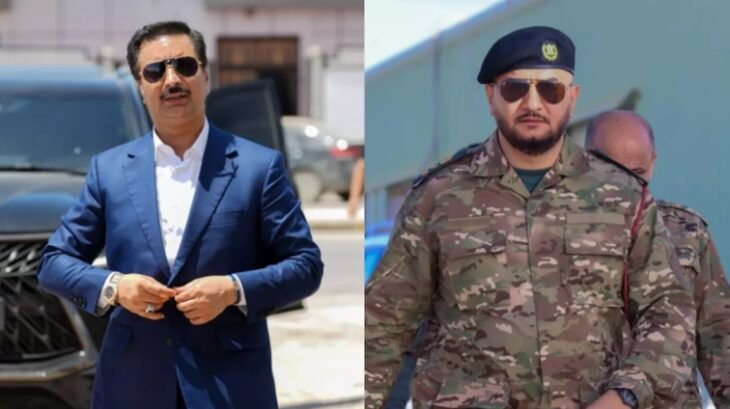
Demolition of Italian-era buildings in Benghazi seen as attack on city’s heritage

Giovanni Vigna

Officials say removal of war-hit structures paves way for reconstruction, but preservationists worry over historical identity of the old city.

The destruction of Italian colonial-era buildings in the old city of Benghazi in Libya has triggered warnings of the consequences for the city’s architectural heritage.

In March, soldiers affiliated with the armed group Tariq Ben Zeyad, led by Saddam Haftar, son of eastern Libya military commander Khalifa Haftar, demolished several properties that were built during the fascist occupation of the country in the early 20th century. Amongst the affected structures were some in the heart of the old city, specifically along Omar al-Mokhtar street.

Local sources reported that the troops belonging to the militia, which forms part of the Libyan National Arab Army under the command of General Haftar, were responsible for the destruction.

Notable landmarks such as the Berenice theatre, designed by architect Marcello Piacentini in the 1920s, along with the former headquarters of the Banco di Roma, the Cassa di Risparmio della Cirenaica (the Savings Bank of Cyrenaica), Silphium Square and the Prosdocimi palace have been targets for demolition.

video recorded by a local resident captured the sight of numerous bulldozers demolishing the monuments in the old Italian quarter. Over the years, these structures had already suffered damage due to bombings.

Appeals by writers, artists, and antiquities experts, who emphasised the importance of preserving these buildings as a crucial part of Benghazi’s heritage and as a legacy for future generations, went unheard.

However, the Italian consul in Benghazi, Francesco Saverio De Luigi, said that “this is not a real demolition campaign”.  In an interview with Middle East Eye, he said the military intervention was primarily aimed at removing the remnants of structures that had been severely damaged during the civil war, in preparation for a future reconstruction. The soldiers focused their efforts on bringing down those elements that had already suffered significant destruction due to bombings, he said. 

The historic centre of Benghazi suffered considerable damage during the intense battles that raged for several months in 2014, when Khalifa Haftar launched his Operation Dignity to capture the city from extremist militant groups. In late October and early November 2014, residents of the old city of Benghazi were instructed by the army to evacuate their homes. In July 2017, Haftar declared the liberation of the city, but many of its buildings were now in ruins.

The Italian consul said that the latest intervention aimed to safeguard the city’s historical memory, particularly the landmarks designed by Italian architects that incorporated Arab and other characteristic elements of Cyrenaica.

“These were structures that could hardly withstand the onslaught,” De Luigi said, referring to the affected buildings. “They included historically significant monuments as well as unauthorised houses built after World War Two. The military carried out the demolition to preserve and reconstruct the historical architectural evidence.”

The start of these operations “caught everyone by surprise, including the mayor,” he said. “However, the Libyan authorities later demonstrated their commitment to preserving the essential elements of the city centre and the waterfront.”

Army intervention sparks outrage

Not everyone shares the Italian diplomat’s optimism. 

The army’s intervention has sparked outrage amongst many Libyans, including Ghalb Elfituri, an activist and history expert residing in Ottawa, Canada. Elfituri, who created the website www.bengasino.ly, dedicated to preserving the heritage of Benghazi, has collected old photographs, maps, books, articles and volumes about his hometown, translated from Italian.

“As a ‘Bengasino’ [a term in Italian referring to a citizen of Benghazi], I cherish every street, alley and stone in the old city, which forms the heart of the great Benghazi we see today,” Elfituri told MEE. “I have always vehemently opposed any demolition in the name of rejuvenation and development.”

During the Italian era, Benghazi experienced a significant revival, Elfituri said. He reminisced about the Italian architecture that respected the essence of the city, resulting in a “unique Mediterranean heritage”, an Italian-Arab architecture that embodied an Italian physique with an oriental spirit.

“I hold an affection for Italian buildings, cultivated through old photographs, as well as the historical Ottoman and Arab structures that serve as testimonies to the city’s narrative,” the activist said.

In the past, Elfituri proposed various initiatives to preserve the city’s historical identity and transform it into a tourist destination.

“I doubt those conducting these demolitions comprehend the significance of these historical buildings. Heavy vehicles and trucks have entered the archaeological area housing Hesperides, the ancient Greek city,” he said.

Elfituri also highlighted the plight of residents who face humiliation, threats and forced evacuations without compensation. “This situation leads to their displacement once again, having already experienced it due to the 2014 war. The newly erected blue metal fence surrounding the old city now instils fear in people as it symbolises one thing: demolition.”

Professors Carlotta Coccoli and Alberto Arenghi from the University of Brescia, along with PhD student Francesca Tanghetti, have started an online appeal in Italy to prevent the demolition of Italian monuments in Libya.

Expressing their concern on Facebook, the architecture professors stated: “Disturbing reports have emerged from Benghazi regarding the commencement of a large-scale demolition campaign in the historic centre, targeting numerous Italian buildings.”

The Berenice theatre, the former headquarters of the Banco di Roma, and the Cassa di Risparmio della Cirenaica were mentioned in the appeal.

Karim Mezran, a Libyan political scientist and the director of the North Africa Initiative at the Atlantic Council in Washington, has also expressed scepticism regarding the demolition. He believes that the decision to demolish several buildings on the Benghazi corniche was swiftly carried out to serve the interests and business ventures of the military authorities in Cyrenaica, particularly mentioning Saddam Haftar.

“After facing complaints from foreign diplomats and prominent figures in the city, including the mayor, the regime appears to have changed its stance and agreed to some proposals for the ‘reconstruction’ of certain historic monuments and the ‘restoration’ of others,” Mezran told MEE.

He suggested that the fascist-era buildings do not offend the sensibilities of Benghazi’s citizens. Despite acknowledging their colonial origins, the residents have always considered them as part of their own cultural heritage, he said.

However, the relief resulting from the regime’s temporary change of heart may not last, he said. “Given the power dynamics at play in Benghazi, it is only a matter of time before another decision, which disregards the cultural sensitivities of the citizens, is proposed again.”

‘Collective memory’

In the absence of a published official plan for reconstruction, rumours have circulated in the city about the aftermath of the demolitions. Unverified reports, for example, suggest that the Libyan authorities, with funding from the United Arab Emirates, plan to construct a modern district with towers and skyscrapers instead of preserving the Italian-era buildings.

However, Osama Elkezza, project manager at the Benghazi Municipality, has cast doubt on these reports.

“I cannot confirm the authenticity of these unofficial reports,” he said. “The construction of skyscrapers in this area does not align with the architectural character of the city. While the demolished palaces fell victim to the war, there are currently no plans for building developments in this area,” he told MEE.

Elkezza did confirm that projects are underway to rebuild colonial-era monuments.

“We will strive to preserve all the properties that can undergo restoration,” he said. “Although I hope for immediate reconstruction of the destroyed buildings, our country is grappling with political divisions, making the situation challenging.”

The restoration efforts will start with three significant properties, he said: Al-Manar palace, where Libya’s independence was declared in 1951, Al-Hout market and the old town hall.

“The architectural style of the remarkable Italian engineers of that era harmoniously blends with the Libyan surroundings,” Elkezza said. “We consider these buildings as part of Benghazi because they embody the city’s spirit and collective memory.”

According to Elkezza, the reconstruction process will faithfully honour the architectural styles and historical identity of the past. “The rebuilding of Al-Hout market and the Berenice theatre will adhere to the original projects, incorporating more precise details.”

When contacted for comments, representatives from the local government and the army declined to provide any statements.

____________________

Libya Can Move Past Its Current Political Deadlock, But It Will Take Work to Maintain Any ‘Deal’

Andrew Cheatham

Since 2012, multiple failed political transitions have taken their toll on the Libyan people. The continued and increasingly complex internal divisions and external vectors affecting Libya threaten to send it into another spiral of crisis and violence. Local and national leaders working in good faith to stabilize the country have inevitably grown cynical as ruling elites and their international partners fail to deliver local security and good governance.

The social and political landscape remains fraught.

The convoluted divisions and alliances between Libya’s “political dinosaurs” block progress toward reunifying the rival eastern and western governments. Also, the continued marginalisation and instrumentalisation of the people and resources of the Fezzan—in Libya’s southwest—keep it the most depressed region of the country, vulnerable to transnational criminal networks and violent extremists. The social and political landscape remains fraught at a time when the UN has announced new plans to support Libya to move toward democratic national elections before the end of the year.

Internal and External Challenges

Putting aside complicated political ties, the porous borders with Algeria, Niger, Chad and Sudan continue to be genuine security threats.

The recent Eid al-Fitr holiday exposed how social tensions in Libya can be intertwined with toxic identity politics. The general religious authority for Awqaf in the East and the Dar al Iftaa in the West, which are aligned respectively with the Parliament in Tobruk and the Government of National Unity in Tripoli, disagreed on the day of the official Eid celebration, marking the first time such a division has taken place in Libya. This is just one highly visible example of how the disjointed politics are impacting civil society.

As part of work that started in 2020 under the Berlin Process, Libya’s Presidential Council is working with the UN and African Union on comprehensive reconciliation initiatives, designed to rebuild trust between all segments of society. While progress has been made, extensive resources will be required to advance many of the transitional justice arrangements necessary to fully heal from conflicts like the 2011-2012 battles between Bani Walid and Misrata; the internal fighting, slayings, and expulsions (including of known extremists) in Benghazi in 2014; and the more recent 2019 battles and atrocities in Tarhuna (southeast of Tripoli).

Regional dynamics are also worrying. Putting aside complicated political ties, the porous borders with Algeria, Niger, Chad and Sudan continue to be genuine security threats. Libya is likely to be greatly impacted by the raging conflict in Sudan, as the Rapid Support Forces (RSF), which have been responsible for securing the Sudanese side of the border, may increase illicit trafficking into Libya to help fund the war. For years, Sudanese Janjaweed militias, many of which are now integrated into the RSF, have fought and harassed civilians in the Fezzan. They have been accused of kidnapping, torture, and other human rights abuses. The collapse into civil war in Sudan now may make the problems worse.

In March, the UN Fact-Finding Mission on Libya (FFM) released its final report (A/HRC/RES/43/39) which is likely to put pressure on high-ranking officials and powerful armed group leaders. The report accuses individuals linked to groups, such as the Rada Special Deterrence Force, based in Mitiga Airport, the Tripoli-based Internal Security Agency, and the Libyan Arab Armed Forces (LAAF) of committing a multitude of crimes against humanity, including murder, rape, enslavement, and extrajudicial killings. The FFM predicts that things will only get worse in the near term.

These are just a few of the intensifying factors putting pressure on, and complicating, the political transition that the UN and the international community have now reinvested in.

Another Effort Toward Political Transition

If the United Nations Support Mission in Libya (UNSMIL) builds on past progress, accesses the breadth of its resources, and draws from strong partnerships, then much can be done this year.

At a recent gathering in Washington, Western and regional special envoys reiterated their unified support to the United Nations plans to help break the current political impasse in Libya. Much more importantly, the United Nations is the only body that can implement dividends at scale for the Libyan people in a way that ensures enough momentum for democratic elections, effective security and good governance.

Therefore, when Special Representative of the Secretary General (SRSG) for Libya Abdoulaye Bathily announced his plan to support a pathway to elections in 2023, it was met, however cautiously, with optimism by many Libyans and international stakeholders. His stated goal is to broaden the negotiation process and establish an electoral roadmap with clear timelines, ensuring inclusive, free, and fair elections.

Under the auspices of the Libyan Political Dialogue provisions of the 2015 Libyan Political Agreement, SRSG Bathily is forming a “High-Level Panel” to support Libyan-led efforts of the High National Election Commission (HNEC) and the parliamentary and executive bodies working on national reconciliation and an agreed constitutional basis for national elections, but if the United Nations Support Mission in Libya (UNSMIL) builds on past progress, accesses the breadth of its resources, and draws from strong partnerships, then much can be done this year.

So far, some analysts have described UNSMIL’s ongoing efforts as a two-track process. Track one is a “leadership track”, involving influential Libyan political actors helping to broker a deal that ensures that elections can proceed. UNSMIL is eager to collaborate with the Presidential Council in Tripoli to help facilitate track one. They believe a Presidential Council, unified among its three geographic representatives (East, West and South), is crucial for this Libyan-led initiative to gain credibility and international support.

Track two of UNSMIL’s initiative involves engaging political parties, civil society, women, youth, and minority groups to identify stakeholders who can actively promote national reconciliation and public support for the political process. Track two should aim to go even further than dialogue and outreach to broad constituencies. This has been done before—during the National Dialogue Process preparations from 2016-2019, and then quite successfully as part of the work of the Libyan Political Dialogue Forum in 2020 and 2021.

What these conversations do not address is how Libya will sustain peace.

Upon successful completion of both tracks, a high-level panel composed of stakeholders from both tracks will be established, with its responsibilities to be determined based on clear action points from the two tracks.

Track one undoubtedly garners the most attention. The UN and international community have LAAF leader Khalifa Haftar to accept parliamentary elections without insisting on presidential elections and eligibility for his own candidacy. Some have been trying to work through members of his inner circle to try to get crucial eastern buy-in for the UNSMIL’s discussions. To effectively execute a two-track strategy, SRSG Bathily will need to lead a strong UNSMIL team, with the mediation skills necessary to draw out a consensus from the famously obstinate Libyan elites.

Since 2012, there have been many national, regional, and international efforts to broker interim power sharing arrangements, transitional government, and constitutional parameters for elections. These efforts tend to rely on various models of elite bargaining, oscillating from one model to another depending on the political economy and the military/paramilitary capacities of the opposing parties in Libya.

But while many continue to argue about what models best describe the situation, the answer is too often narrowly focused on who should be empowered to usher Libya out of crisis. What these conversations do not address is how Libya will sustain peace.

Alongside any political progress supported by the SRSG’s high-level panel, there must be a way to provide all Libyans with incremental peace dividends to ensure their enduring support for political negotiations. When the fighting stops, and agreements are made for transitional arrangements, many Libyan people are infused with hope. Indeed, they hope for a clear pathway to democratic elections—but they also hope for the good governance required to address their long-held grievances related to security and rule of law, basic services, devolution of authority to subnational bodies, local economic development, and more. In addition to the disappointment from missed election deadlines, when political deals fail to deliver any change in people’s daily lives, the hope fades to cynicism. To stop these cycles of hope and cynicism, the political deals must be accompanied by meaningful reforms and development activities—starting with the security sector.

Normalising Security in Libya is a Must

Nothing can be done unless the political tracks are tightly connected to improving security.


Nothing can be done unless the political tracks are tightly connected to improving security. Both will require great investment from the international community to transfer negotiated arrangements between elites into real change for people’s everyday lives.

At the national level, there has been much success in maintaining a general cessation of hostilities since the October 2020 ceasefire brokered by the UN. As part of the ceasefire agreement, the 5+5 Joint Military Commission (JMC) was established with the mandate to monitor and enforce the ceasefire. The work of the JMC, alongside UNSMIL and within the Berlin Process has successfully upheld the ceasefire and kept the peace between the major security actors.

Maintaining the ceasefire and agreeing on productive confidence building mechanisms are critical.

This progress has continued into April of this year, when military units and security formations from the East, West, and South met and agreed on several confidence-building measures, including the LAAF release of six detainees from western Libya. Additionally, the two Chiefs of Staff of the Libyan armies, General Haddad and General Naduri, met in Benghazi on April 13 and affirmed their commitments to reconciliation and supporting the electoral process.

Maintaining the ceasefire and agreeing on productive confidence-building mechanisms are critical, but comprehensive security sector reform as well as disarmament, demobilisation, reintegration, and integration (DDR/I) of the armed groups is also essential for providing basic security throughout the country. Specifically, former UN Special Adviser to the Secretary General on Libya Stephanie Williams recently noted that DDR/I programs should focus on devolution of the processes to local communities, individual vetting, and human rights training, among other efforts.

Unfortunately, in Libya, this is a daunting task. There are numerous illegitimate armed groups aligned with the GNU, the LAAF and other smaller non-state actors. Alliances among government officials and non-state actors make it hard to fully understand the depth of the integration of illegitimate non-state armed groups and the state.

The real work of security sector reform and DDR/I [disarmament, demobilisation, reintegration, and integration] will be difficult, but not impossible.

Earlier this year, the JMC endorsed terms of reference for its Disarmament, Demobilisation and Reintegration Joint Technical Sub-Committee, which is mandated, among other things, to categorise the armed groups. This is a great start, but much more should be done in parallel with the political process.

The real work of security sector reform (SSR) and DDR/I will be difficult, but not impossible. It will require substantial programming resources from international donors on a number of fronts, but it is precisely because of this breadth and expense that SSR and DDR/I have been regularly discussed by policymakers since 2014, but rarely prioritised and never properly resourced.

In recent years, part of the problem has been a failure to adequately fund and activate programming jointly implemented by UNSMIL and the UN agencies. When the UN missions and agencies work together, they can establish a clear division of labor and complementary roles that allow for political and security agreements to materialise into tangible gains for people’s everyday lives. Missions can provide strategic direction and national buy-in at the highest levels, and they can provide political guidance and oversight.

The agencies, meanwhile, can take the lead in program implementation, manage local partnerships, and ensure that resources are allocated effectively. In terms of resource mobilisation, the UN missions and agencies can work together to identify funding sources and channel them to specific programs and initiatives that most suitably progress the political process.

In Libya, joint programs like this, including those in support of the security sector, have had success in the past. But over the last two to three years, many have been abandoned or vastly under-funded.

Despite the challenges, the JMC and UNSMIL have continued to work toward implementing DDR/I and SSR programs in Libya. This includes conducting consultations with local communities and armed groups, providing training and support to security sector institutions, and promoting dialogue and reconciliation between different groups. Now, they will need to garner support from generous donors to launch comprehensive, joint UNSMIL and UN agency programs.

Going forward, this is the only way a negotiated security agreement can transform into material gains for people on the ground. Without these tangible achievements, public support will also be absent. Any path toward sustained peace and stability for Libya will require leaders to deliver dividends to the Libyan people for their confidence and support—first and foremost in the form of basic security, and beyond that, in overall governance reforms and economic development.

_____________________
Libya needs more investment by Turkish firms

Murtaza Karanfil, the chairperson of the Foreign Economic Relations Board’s (DEİK) Türkiye-Libya Business Council has called for more investments in Libya stating that a large number of government industrial facilities from previous eras are not functioning.

“Currently, there are over 180 governmental industrial facilities from the era of previous governments that are idle in Libya,” Karanfil told Anadolu Agency (AA) on Thursday.

He went on to state that some of these facilities are in good condition, which attracted the attention of Turkish businesspeople.

“The state owns seven facilities in the industrial zone in Tajoura. In 1977, a facility was established to assemble and install trucks and pickup trucks here in Libya. The facility was built with the best equipment at that time,” he said.

Karanfil noted that he, along with a delegation of Independent Industrialists and Businessmen’s Association (MÜSİAD) from the central Turkish province of Konya, met a week ago with Libyan Deputy Prime Minister Ramadan Abu Jinnah, saying: “We held special meetings with cities in the country’s south and the Southern Development Agency.”

Karanfil said that Abu Jinnah invited the mayors of the Fezzan region to a meeting, adding that the Turkish delegation received a warm welcome and serious projects were discussed.

“We evaluated the trade route from the south to sub-Saharan Africa and other issues,” he said.

He said that over 20 mayors attended the meeting and that the mayor of the city of Marj, east of Benghazi, said that “Libya’s development will be with Türkiye.”

Karanfil confirmed that they have been working in Libya for 35 years and that they have created over 1,500 job opportunities in Türkiye, stressing that “Libya is a fertile place for investment.”

“We will open a second hospital in Tripoli after Misrata. We are able to establish the Libyan health infrastructure, and we are sure that there will be important changes in terms of health, tourism and trade, and the momentum will increase if Libya and Türkiye start granting entry visas mutually,” he said.

Chief Commercial Adviser at the Turkish Embassy in Tripoli, Yusuf Yıldız also told AA that they plan to organize an exhibition for exporting Turkish products in Benghazi, eastern Libya, from May 29 to June 1.

Yıldız added that about 35 companies from Türkiye will participate in the exhibition in Benghazi.

______________________
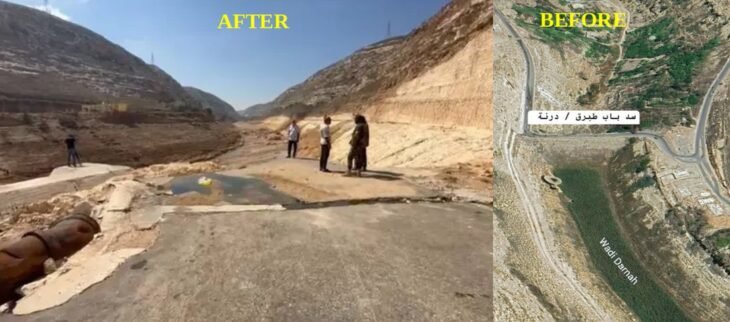
How the international community can help Libya’s political deadlock, according to local civil society actors

By Ali Alaspli, Fatima Omar, and Mohamed Salem

Libya is in its twelfth year of political turmoil. After almost a decade of civil war, the country currently faces the daunting challenge of selecting a representative government that can unite people from both the East and West of the country.

The United Nations (UN)-backed Interim Prime Minister, Abdul Hamid al-Dbeibeh, governs over Tripoli and the West, while General Khalifa Haftar rules Libya’s East.

Despite the UN’s pursuit of a mediated solution, there has been little success. Ultimately, the Libyan people suffer the most from the power vacuum and have yet to exercise their fundamental democratic right of electing their representatives through free and fair elections.

What comes next for Libya?

Can the international community make a tangible contribution to forming a rights-based democracy in Libya?

The Atlantic Council’s North Africa Program is collaborating with Lawyers for Justice in Libya (LFJL) to provide a platform for Libyan civil society. The hope is to amplify the voices of those working to support the Libyan people and to help restore justice for those who have suffered and continue to suffer severe human rights violations.

In this piece, three Libyan civil society representatives give their take on the international community’s role in Libya.

‘Accountability and redress are the first steps toward some kind of solution’

By Ali Alaspli, president of Libya Crimes Watch.

There can’t be an international solution given how the world deals with Libya. The international community is divided and politicized and the priorities of decision-makers shift depending on the circumstances. For example, since the start of the Russian invasion of Ukraine, Libya hasn’t been on the world’s agenda. Instead, it’s been on the back-burner as all energy is focused on Ukraine.

In just a year of that conflict, there have been resolutions, sanctions, and even an International Criminal Court (ICC) arrest warrant against a head of state: Vladimir Putin. Meanwhile, the conflict in Libya has lasted for nearly thirteen years and there’s no real will to resolve the crisis.

For example, when the ICC issued an arrest warrant for Mahmoud al-Warfali, a former Libyan general indicted on war crimes of murder and ordering the murder of non-combatants, there was a noticeable drop in the rate of abuses. Libyans stopped seeing video clips of mass executions and many militia leaders in the East disappeared.

The warrant made Haftar and the groups led by al-Warfali anxious. This shows that an arrest warrant was all that was needed from international actors. It was a simple deed that had a major impact and saved many lives in Libya.

I strongly believe that accountability and redress are the first steps toward some kind of solution; without them, there will be none. The international community should start by prioritizing Libya and working seriously to put an end to human rights violations, strengthening accountability, ending impunity, restoring the ruined judicial system, and setting up a mechanism or an independent court to bring people who have committed atrocities in Libya to justice.

This could be the start of a solution. There can be no solution without transitional justice and redress for the victims.

A solution must be overseen by the United Nations

By Fatima Omar, Lawyers for Justice in Libya partner and human rights advocate.

Given the state of political deadlock, insecurity, and division in Libya over the past twelve years, it has become almost impossible to reach a solution domestically. This means that the solution must be an international one overseen by the United Nations—not one simply determined by the interests of individual states.

Interference by foreign actors—Egypt, Turkey, the United Arab Emirates, and others—have had a negative impact on the Libyan crisis and directly or indirectly drawn it out. Certain states have stoked the conflict by providing warring parties with weapons, materiel, ammunition, and/or military vehicles. This is in clear violation of UN Security Council Resolution 1973, of 2011 which imposes a complete arms embargo to and from Libya, as well as Article 6 of the Berlin Conference Conclusions of January 2020, in which participants committed “to refraining from interference in the armed conflict or in the internal affairs of Libya” and called on all international actors to do the same. The international community should ensure the arms embargo is upheld.

Putting an end to corruption should also be one of the international community’s key priorities regarding Libya right now. Corruption is widespread across most of Libya’s institutions and is a major factor in prolonging the conflict. Currently, militias and warring parties are struggling for control over state resources and institutions to seize as much public money as possible. The UN Convention Against Corruption is a key international treaty that should be used to tackle corruption in Libya. The convention aims to promote and facilitate international cooperation in the battle against corruption through information sharing, preventative measures, asset recovery, and fighting money laundering. This convention could be a key deterrent to corruption within and outside Libya if states stepped up their efforts under UN auspices.

Civil society must play a genuine role in the process

By Mohamed Salem,* Lawyers for Justice in Libya partner and human rights advocate.

The international community should put pressure on all sides of the conflict—political and military—to start the process of holding elections and abide by their results. But, firstly, any political agreement among Libyan actors should include clear provisions to ensure civil society has a genuine role. This can be done by giving it a major voice in dialogue aimed at reaching a political solution.

It is clear that there has been a distinct lack of proper communication between the international community and Libyan civil society. Most importantly, it must be noted that the situation of Libyan civil society is deteriorating by the day. It has become increasingly more dangerous for civil society actors to continue their work. Simply working for a civil society organization can result in serious accusations, such as “spreading moral deviance” in society or spying on the Libyan state on behalf of foreign powers. This line of thinking has become widespread on the official level and among the public. Correcting it will require enormous effort.

The international community must guarantee the presence of Libyan civil society actors in political dialogue meetings. This would help give civil society a say in future political agreements. The international community should stipulate that civil society should be strengthened and protected in future agreements and compel the Libyan authorities to respect such agreements. This would, in turn, strengthen civil society and make it more effective.

Finally, the international community must support a mechanism for direct communication between civil society and the Libyan authorities when abuses are committed against civil society actors. This would allow the international community to obtain information about the abuses and seek an end to them.

International support in Libya should not be limited to ad hoc or short-term projects. Instead, they should be strategic and based on long-term, cohesive plans.

___________________

Is Wagner Pivoting Back to Africa? (2)

Ukraine Isn’t the Only Place Where America Must Counter Russia’s Mercenaries

By Colin P. Clarke, Raphael Parens, Christopher Faulkner, and Kendal Wolf

TOO LITTLE, TOO LATE?

Potential avenues for countering Moscow’s influence in Africa are limited by the choice of available partners, many of which are illiberal regimes with a track record of human rights violations.

The United States and its partners must strike a balance between countering violent extremism and avoiding the optics of empowering autocrats. Moreover, efforts to fight terrorism must be clearly separated from efforts to counter Russia’s malign activities, so that the Kremlin cannot claim credit for the positive results of Western counterterrorism efforts in areas where Russian forces, including Wagner, are colocated.

The United States should start by publicly articulating its objectives in Africa. Although certain goals, such as the deterrence of terrorist attacks on American and European soil, should remain central to U.S. policy in Africa, Washington needs to show African states that it is serious about investing in nonmilitary solutions that can materially improve people’s lives.

This means increasing development and humanitarian aid that can strengthen governments and civil society and thereby diminish the appeal and legitimacy of militant groups.

Washington should also signal that its commitment to the region will outlast any individual presidential administration. Democracies, especially those racked by hyperpartisanship, can suffer paralysis in the realm of foreign policy.

They often switch strategies between administrations or in response to shifts in public opinion. By contrast, authoritarian regimes, whose leaders need worry about appeasing only a small subset of elites, are better at sticking to strategies, even in the face of public opposition.

The United States and its partners need to find ways around this stumbling block in order to forge productive long-term relationships with African partners.

Although the United States is now paying more attention to Africa—as evidenced by its efforts to strengthen fragile states, including Burkina Faso, Libya, Mali, and Mozambique—these efforts may be too little, too late.

Russian mercenary forces have already embedded themselves in many of these countries and are rapidly working to expand their influence. Yet Wagner is not even mentioned by name in the U.S. Strategy Toward Sub-Saharan Africa, published by the White House in August 2022, and Russian private military companies receive only a single mention. 

HIT THEM WHERE IT HURTS

The United States must prevent Wagner from further destabilizing African states, since prevention is easier than rehabilitation. Doing so will require identifying and capitalizing on the group’s vulnerabilities.

Although Wagner has benefited from its position at the nexus of military and business, its economic relationships can also be weaknesses. Since it does not operate as a traditional military outfit, Wagner has a specialized logistics network that includes a variety of shell companies supporting its business and resource-extraction activities. These are soft points that can be targeted by Western sanctions.

Washington has already hit some Wagner subsidiaries, such as Lobaye Invest and Meroe Gold, with U.S. sanctions, but it should take action against others, including those involved in the group’s forestry operations in the Central African Republic.

Sanctioning each new Wagner shell company as it is discovered may seem like a game of Whac-a-Mole, but it is the only way to weaken Prigozhin’s criminal network.

Knocking out these predatory businesses may also help build goodwill in central and western Africa, where many entrepreneurs are concerned about Wagner affiliates pushing them out of business.

Beyond naming and sanctioning the companies themselves, U.S. and European authorities should work together to identify the end users of Wagner’s exports. Many of these exports—such as gold, diamonds, and timber—may be infiltrating American and European markets. Western governments must prioritize blocking such shipments, punishing actors that willfully work with Wagner, and deterring exports that benefit the group.

In addition to targeting Wagner’s business empire, Washington should deepen its relationships with African countries so they have less need of the Russian mercenary outfit.

The U.S. partnership with Niger offers a promising model, but Washington must refrain from recycling the same overly securitized approach that seeks to build military capabilities without tailoring them to the local environment.

Furthermore, the United States needs to train some of its military partners to a higher standard, working to ensure that their soldiers do not go on to abuse civilians or attempt to overthrow governments.

As the scholar Joseph Sany has argued, “For many Africans, Wagner is a choice not of preference but of desperation following years of failed international efforts to help end violent crises.

The group is also the choice of expediency, since Russia offers troops, weapons, and training with no strings attached. Washington’s selling point is quality. Unfortunately, however, African leaders often prefer an inferior product with few limitations to a superior one that is heavily restricted.

In addition to strengthening its security partnerships with African countries, the United States must increase its support for civilian government institutions. Depriving jihadi groups of manpower requires long-term investments in addressing the issues that help them recruit: corruption, lack of accountability, and unequal delivery of basic services—especially along ethnic, religious, or regional lines.    

Tackling the nonmilitary challenges that plague African governments will set the United States apart from its rivals in the region.

Doing so will not come at the expense of U.S. military objectives, and it will thwart Russia’s significantly easier and more limited goals, which include gaining access to resources, building connections with elites, and competing against Western countries for influence.

State building and long-term partnerships are not Russian priorities.

This is not a call for nation building to counter Russian influence in Africa. Rather, it is a call for an incremental, long-term effort to strengthen African institutions and address social, environmental, political, and economic challenges that destabilize countries and provide openings for actors such as Wagner to exploit.

In the absence of such an effort, Wagner’s failures in Ukraine may be a prelude to additional successes in Africa. 

***

  • COLIN P. CLARKE is Director of Research at the Soufan Group and a Senior Research Fellow at the Soufan Center.
  • RAPHAEL PARENS is a Eurasia Fellow at the Foreign Policy Research Institute.
  • CHRISTOPHER FAULKNER is an Assistant Professor at the U.S. Naval War College. The views expressed here are his own.
  • KENDAL WOLF is Senior Program Officer for Monitoring and Evaluation at Strategic Capacity Group. The views expressed here are his own.

________________

Disruptions and Dynamism in the Arab World (2)

Frederic Wehrey

A SHAKY NEW REGIONAL ORDER

Beyond their repercussions within Arab countries on societies, economies, and politics, the aftermaths of the three shocks—the pandemic, the Ukraine invasion, and the already felt threat of climate change—are also rippling across the region’s geopolitics, reshaping relations between Arab states. They are affecting how these states position themselves toward other Middle Eastern powers and within the broader global order—an order that itself is shifting toward multipolarity.

Most notably, longtime rivalries and disputes have been shelved, if not settled. The motives for this bridging of differences are varied: exhaustion from wasteful and fruitless military adventures, economic constraints imposed by the pandemic’s fallout, and the perception of American capriciousness and lack of protection from Iran are the factors most commonly cited.

Less noticeable, but perhaps more significant, is the newfound confidence Arab rulers have enjoyed since surmounting the internal political challenges of the 2011 uprisings and their aftermath—a confidence that makes these leaders less likely to project their insecurities onto regional rivals and more inclined to find common cause with like-minded autocrats. Such assuredness seems particularly evident in the recent halt to the famously personal and ideological discord between Saudi Arabia, Egypt, and the UAE, on the one side, and Qatar and Türkiye, on the other.

The split manifested itself in a harmful economic blockade and a low-level surrogate war. More recently, Saudi Arabia and Iran agreed in March 2023 to restore diplomatic relations and reopen their respective embassies, shuttered since 2016, in a deal that was brokered by China and that built upon previous mediation by Iraq and Oman. And, following similar moves by Abu Dhabi and other Gulf capitals, Riyadh also began talks on normalizing relations with Syrian President Bashar al-Assad—talks that were facilitated by Russia, illustrating Moscow’s continued clout in the Middle East, despite the battering it has suffered because of its war on Ukraine.

Still, the exuberant proclamations that accompanied these de-escalation moves—and the expectation of a new era of calm in the region—need to be tempered by a dose of reality. This is shown most recently and starkly by the April 2023 eruption of fighting in Sudan, where other Arab states have long had interests and influence and where two key players, the UAE and Egypt, find themselves on opposite sides of the factional divide.

The seemingly transformative Saudi-Iran accord also needs to be heavily caveated, since it hinges upon both powers fulfilling pledges of noninterference and is unlikely to completely resolve the rivalry between them. Nor has it addressed the two other axes of Iran’s confrontation in the Middle East: First, its shadow war with Israel could very well escalate. And second, its conflict with the United States, which Tehran clearly compartmentalized from its pact with Riyadh, has continued as Iranian-backed drone and rocket strikes in Syria in March 2023 killed a U.S. contractor and injured other U.S. personnel and elicited an immediate American retaliation.

The deal certainly signals Beijing’s desire to expand its influence in the Middle East from relationships based on trade, energy, and technology—where it has outpaced the West—to more robust political and security ties. That said, it is unlikely that China’s nascent activism in this direction—which some commentators inside and outside the region have lauded as a refreshing change from the militarized, interventionist approach of the United States—will offer a path toward lasting stability.

Like other great powers that have ventured into the Middle East, Beijing too will confront the challenge of balancing its relations with competing poles and interests. And it will likely discover that it is far easier to broker settlements than to institutionalize them and make them stick.

The Saudi-Iran agreement, then, is hardly the harbinger of a post-American moment in the Middle East that some breathless commentaries portray it. Measured by foreign aid, arms sales, and its downsized-but-still-present military forces, Washington still commands significant influence. It remains the security patron of choice in many areas for many Arab governments, some of which have perfected the game of courting other powers to extract concessions and more lenient deals from the United States.

For its part, U.S. President Joe Biden’s administration, in the wake of the Russian invasion of Ukraine, was drawn back into the Middle East, a region it had pledged to exit, as it sought to persuade Saudi Arabia to boost oil output and lower prices. The failure of that appeal, along with Riyadh’s decision to join with Moscow in cutting oil production, confronted the administration with the reality of growing agency and autonomy by its Arab partners—a trend that the Ukraine war did not create but rather clarified.

Looking ahead, it still not clear that the recent wave of moves toward reconciliation among Middle Eastern rivals or the region’s growing multipolarity will produce an enduring peace or sustainable domestic orders. Ultimately, these intraregional accords are a form of authoritarian consolidation by ever-repressive dynasties, dictators, and theocrats with little to no input from their societies.

Even the much-touted Abraham Accords and other Arab-Israel agreements accelerated a boost to Arab autocrats in the shape of surveillance technology transfer and other security assistance by Tel Aviv. Meanwhile, Israel’s democracy is itself fraying and its politics are lurching further to the right, which has had devastating consequences for Palestinians and is also prompting criticism from the Arab signatories of the Abraham Accords, whose citizens, according to polls, increasingly oppose the agreement. Still, these Arab regimes are unlikely curtail their burgeoning defense, trade, and energy ties with Israel.

Similarly, Gulf Arab outreach to China and Russia is not simply about pragmatic security considerations, hedging, and diversification. It is rooted in a shared illiberalism and common worldview which, for Arab states, translates into little-to-no conditions placed on sales and transfers—a welcome relief from the scrutiny on human rights that some U.S. presidential administrations and Congress have applied to U.S. interactions with Arab partners (albeit unevenly). China has long exerted a particular appeal for Arab regimes: the clichéd and o

ften vaguely defined “China model” promises economic growth and prosperity without meaningful reforms to existing ruling arrangements. But such a template, however applied, will be insufficient to meet the challenges many Arab governments face at home, including the long-standing problems of poor governance and socioeconomic exclusion that sparked the Arab uprisings, along with the effects from climate change and the difficulties of the transition to the post-oil era.

Left unaddressed, these impending challenges could very well flare up in the not-too-distant future, especially in weaker Arab states and as the traditional financial bailouts from wealthier Arab states and international donors become more constrained and subjected to stricter conditions. This, in turn, could jeopardize and possibly upset the current stability of the regional order—a stability that seems mostly bonded by the brittle mortar of authoritarian solidarity.

CLEARER VIEWS OF THE ARAB WORLD

Upon closer inspection, the shifting and complex tableau of Arab polities and societies defies simple narratives and comfortable tropes. Some of the Middle East’s headline-grabbing conflicts may have subsided, but this is a region still in the throes of great change, emanating from within and without. Capturing the contours and implications of this dynamism requires a lens that is at once granular, panoramic, and attuned to both local specificities and worldwide trends.

The authors of the ten essays in this collection do just that. Drawing from a range of disciplines and marshaling an array of sources, they analyze the forces that are reshaping the region, including shifts in the global economy, the transition away from hydrocarbons, climate change, advances in digital technologies and artificial intelligence, and great power rivalries.

The authors home in on the local Arab actors that are both affected by and contributing to this transformation: regimes, security institutions, publics, civil society actors and Islamists, and increasingly imperiled populations like refugees and migrants, among others. The essays offer no easy solutions or packaged prescriptions, nor do they claim to be definitive in their conclusions. At best, they aim to advance the conversation and propose new lines of inquiry in a way that is both rigorous and accessible for public audiences and policymakers—and most crucially for the people of the Arab world.

Collectively, the authors of this volume are grateful for the generous financial assistance provided by the Henry Luce Foundation and in particular for the support of Dr. Toby Volkman, the former director for policy initiatives at the foundation, and Dr. Jonathan VanAntwerpen, the foundation’s program director for religion and theology.

At the Carnegie Endowment for International Peace, we extend our deep thanks to Haley Clasen and Natalie Brase for adroitly editing the essays, to Madison Andrews for keeping the project on track, and to Jocelyn Soly for designing the compelling graphics.

***

Frederic Wehrey is a senior fellow in the Middle East Program at the Carnegie Endowment for International Peace, where his research focuses on governance, conflict, and security in Libya, North Africa, and the Persian Gulf.

___________________
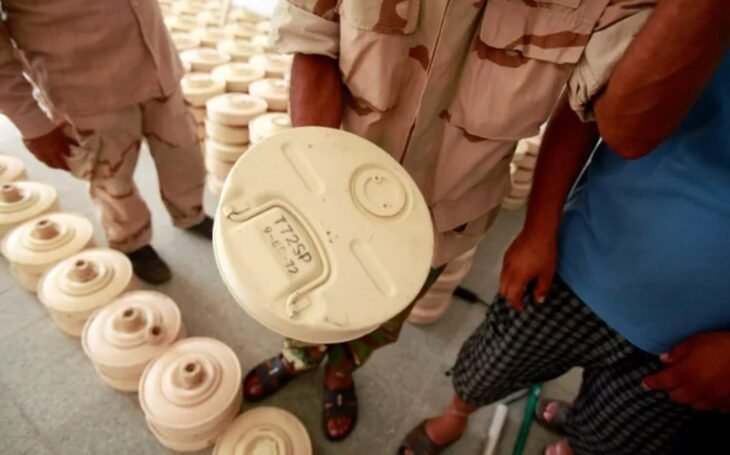
Arab dictators and theatrics: The emotional manipulation of the masses by authoritarian regimes

Kamel Riahi

Popular appeal and sympathy is one of the successful strategies employed for the continuation of rule in totalitarian regimes. It is the second weapon employed after the use of force and repression. In it, the ruler seeks to play on the emotions of the masses by showing himself to them in the position of the victim in order to make them accept his failures and turn them into another occasion to increase his popularity, in a great paradox.

History records that the most famous emotional blackmail operation that the people fell victim to, was the resignation of Abdel Nasser.

Often, issues published in international magazines list and analyze the tears of leaders and presidents, from the tears of Gaddafi during his arrest, to the tears shed by Saddam, then George W. Bush’s tears after the events of September, followed by the tears of Hosni Mubarak and before that, the tears of Abdel Nasser, and after him, the tears of Abdel Fattah el-Sisi, and finally, the tears of Algeria’s Bouteflika. However, the tears of Bourguiba were the most influential tears in political history.

Habib Bourguiba, the first president of the Republic of Tunisia, was a brilliant actor. As the story goes, he had climbed onto the theater stage as a young man and performed for some time, and he was also one of the few presidents who practiced writing in the press and wrote about the theater, and he was a devoted specter of the theatrical field and himself.

Therefore, emotional displays full of crying were part of his governing strategies to win over his people during difficult times and encourage them to rally around him in all circumstances and crises that Tunisia would be going through at the time, whether they were political or economic. Thus he would make the hungry and angry crowds turn into crowds cheering for “the nation’s beloved” and its greatest fighter.

Bourguiba was a brilliant actor. Emotional displays full of tears were part of his governing strategies to win over the masses during difficult political or economic times, turning hungry and angry crowds into crowds cheering for “the nation’s beloved leader”

On the other hand, the appearance of tears was not the only dramatic and theatrical method that Gamal Abdel Nasser adopted. In the aftermath of the 1967 defeat, while the people were boiling with anger and demanding that those responsible for the defeat be prosecuted, Nasser came up with a diabolical idea with Mohamed Hassanein Heikal: offer a poetic and dramatic resignation, since attack is the best form of defense. In a clever speech, he asked the angry masses to help him resign, thus extinguishing their anger, making them doubt themselves, and subtly urging them to turn their stance around, and consequently turning them into his supporters after the hostility.

The crowds then actually came out to protest for him to retract his resignation and to show their renewed confidence in him. All this took place through a plan to play on the fragile and changing emotions of the people based on their ruler’s position. The resignation ploy showed two genius moves: the genius of the political cunning of Abdel Nasser and the genius of the political writer Mohamed Hassanein Heikal.

Kais Saied and the coveted assassination

Since Kais Saied took power, he and his supporters have been repeating that he is under constant threat of assassination, once claiming it was done through poisoning his bread, another time through an explosion, while another was done via letters carrying toxic gases, and another time without giving any specific details. He just mentioned an attempt and attributed it to unknown individuals whom he alone knows.

Whenever he reached a critical point in his rule, he would pull out the assassination threat card to gain the sympathy of the masses, and help him get out of the dilemma, in a game that has become a well-known tactic due to its excessive repetition.

The latest example was his disappearance for more than ten days, making the narrative of his assassination become a standing hypothesis of the reason for his absence, and launching a campaign under the title “Where is the President?”, while lamenting the absence of the country’s “savior”.

Kais Saied disappeared after he left the people parched and thirsty after passing a law to cut off drinking water at night amid a severe drought, then he reappeared to insult his opponents while considering his absence for eleven days a normal occurrence in a world where regulatory and civil institutions require from the world’s officials mere minutes of work time, not days.

Those who contemplate Tunisia’s situation during the reign of Kais Saied can easily see that its worst enemy wouldn’t be able to do what Saied did in just 3 years, from destroying its economy and institutions to the daily violation of freedom of expression

Muammar Gaddafi was also obsessed with the narrative of assassination and worked to make it a part of his story. Yet, on the day he was assassinated, it was done at the hands of the people whom he had forced to taste the bitterness and whom he also bet on to strike his opponents through popular committees and militias. He worked on making the people more ignorant and fueling their bigotry, instead of building a civilized country.

Saddam Hussein also did the same by getting rid of his opponents by assassinating them every time. He did not even hesitate to hang a poet and novelist like Hassan Matlak on charges of plotting a coup and trying to assassinate him, but then ended up with his very own execution. While there is debate about the legitimacy of that execution, it did happen.

In contrast, President Kais Saied has thrown poet and researcher Shaima Issa to jail on charges of conspiring against the state, which in turn nominated her for the death penalty. This is how the man confirms his exceptional surreal face and does not hesitate to execute a poet because she raised the victory sign against him and held onto the dream of Tunisians to be free.

This alignment between the two rulers in their enmity towards creators and writers is quite evident, not only through their arrest and liquidation of those who rebel among them but also in their contempt for anything related to literature. Therefore, Kais Saied did not welcome a single writer since he assumed power, except for Taoufik Ben Brik, upon his direct request after he came to power, as he was a supporter of his rival Nabil Karoui.

As for Saddam Hussein, he recruited them to applaud him in Iraq and the Arab world, setting up tents for them in al-Murabba to praise him and handing them awards to glorify him and invent his imaginary victories such as ‘Saddam’s Qadisiyyah’ and a series of war stories.

However, those who contemplate Kais Saied’s situation discover that he is far from being assassinated, and that there are dozens of reasons that nominate him being in a suicide narrative rather than an assassination narrative.

***

Kamel Riahi – Tunisian novelist, journalist and critic.

_____________

Disruptions and Dynamism in the Arab World (1)

Frederic Wehrey

Since 2011, the Arab world has undergone massive upheavals—geopolitical shifts, climate shocks, mounting economic pressures, and authoritarian restructuring, to name a few. Dynamic responses from governments and citizens are laying the shape of the next decade.

An alluring narrative has arisen about the Arab world’s recent evolution that goes something like this.

The dislocations of the 2011 Arab uprisings, which dominated headlines and rippled across the region in the shape of crackdowns, civil wars, and so-called proxy conflicts, have largely subsided. Violent extremist groups that once held sway over vast tracts of territory and conducted spectacularly lethal attacks against local and foreign targets have been reduced to a shadow of their former selves.

Fierce debates among and within Arab states about political order—often centered around the role of Islamists and, more fundamentally, about participatory governance and democratization—have also faded to the margins. Old foes are now talking to one another, previously sacrosanct redlines have been breached, and pariahs have been welcomed back to the fold.

The winners of this contest, the argument continues, are the region’s autocratic rulers, led by the confident dynasties of the oil-rich Gulf, who spearheaded the counterrevolutionary wave with money, media, and military interventions and who have blocked the emergence of another moment like the one at Tahrir Square, using increasingly sophisticated forms of monitoring and social control.

Cowed by this repression, activists, dissidents, and oppositionists have all but abandoned the streets: some have fled into exile or cast their lot with the rulers they once challenged, while many languish in prison or have been executed with impunity.

Across the Arab world, a model of governance and economic development is said to be spreading, one that advertises itself as not only survivable but also adaptive and worthy of being emulated. Originating in the Gulf, it incorporates a purported reframing of the timeworn ruling bargain that engages new constituencies through dialogues and other forums, promising both well-being and social tolerance.

In tandem, the vanguards of this emergent Arab order are enjoying newfound assertiveness and maneuverability on the global stage amid the apparent retreat of a chastened and distracted America from the Middle East, skillfully playing the great powers off against one another. These Arab rulers are also basking in the nationalist glow of climate summitry and the hosting of the 2022 FIFA World Cup.

Like many storylines with a linear arc and satisfying ending, this one too is beguiling in its simplicity and clarity. It is also misleading and inaccurate.

ARAB STATES BEYOND THE VENEER OF STASIS AND STABILITY

To begin with, the political and socioeconomic grievances that fueled the Arab protests and revolutions of 2011 still remain and, in many instances, have only gotten worse. In fragile, conflict-scarred, and economically distressed states across the region, the livelihoods and human security of many citizens has sunk. Populations have swelled, inequalities have deepened, middle classes are increasingly squeezed, and unemployment is high, especially for youth and women.

Arab educational institutions are still struggling to prepare young people to compete in the interconnected global economy. Corruption is a grinding part of daily life for many people, while social safety nets are meager and fragmented. Private sectors are underdeveloped, and plans to restructure rent-based economies are fledgling. Though some Gulf countries have shown signs of improvement in this area, they remain heavily dependent on hydrocarbon export rents, which continue to be central in their economic and energy diversification plans.

In varying degrees, these deficiencies fueled the protests that rocked four Arab states from 2018 to 2019 and ousted the regimes in two of them, Sudan and Algeria. They underscore in stark terms that Arab citizens—especially jobless, discontented youth—have hardly reconciled themselves to the authoritarian order and are still pushing for more accountable governance and better economic opportunities, adjusting their tactics to new realities. And the maladies that drove these citizens into the streets have only been amplified by more recent shocks to the region.

At the forefront of these crises was the COVID-19 pandemic and its far-reaching socioeconomic fallout, which in the Arab world included diminished trade, tourism, remittances, and investment. Among those particularly affected were already vulnerable inhabitants, including youth, women, migrants, refugees, and those working in the informal labor sector. The pandemic also impacted state-society relations in ways that are still being felt—for instance, giving Arab autocrats new means of social control via digital technologies that were initially fielded for public health management.

Recovery from this ordeal has been uneven: the wealthier, oil-rich Gulf states led the way in terms of vaccine rollout and containment measures, benefiting as well from a surge in post-lockdown energy demand. Meanwhile, poorer, fractured, and post-conflict countries have unsurprisingly lagged behind. And while some Arab regimes may have won a supposed reprieve from criticism for their expedient handling of the crisis, the underlying vulnerabilities and problems of governance remain entrenched in many countries.

Then came the unexpected blow of Russia’s invasion of Ukraine in early 2022, a disruption that has had far-reaching effects on the global order. Here again, the impact on the Middle East has been uneven.

Among hydrocarbon-exporting states, particularly Qatar, Saudi Arabia, and the UAE, the resulting rise in global oil and gas prices has proved a boon, shrinking if not erasing their budget deficits. It has also enabled them to embark on public spending sprees and so-called megaprojects, allowing them to expand clean energy exports and badge themselves as leaders of greener and more diversified economies while providing opportunities for their citizens.

But in less-endowed countries, the spike in food, commodity, and energy prices produced by the war and the attendant rise in inflation has had deeply injurious effects on citizens. Governments in these states are being pressured to enact more social spending while simultaneously confronting already-high levels of public debt and rising costs of capital as a result of tightening monetary policy by central banks. The result, in many cases, is an attenuation of state capacity and the deliberate devolution of some governance functions to substate actors, especially those in peripheral regions and in borderlands.

In many respects, the shocks of the pandemic and the Ukraine war serve as a portent of the Arab world’s darkening horizon. Despite the recent surge in energy revenues, a future of diminishing global demand for hydrocarbons—the resource upon which much of the modern Arab order, for better or for worse, has been erected—is likely inescapable. With less demand for hydrocarbons, Arab regimes face dire consequences for the timeworn ruling bargain, in which autocratic governments maintain citizen quiescence through oil-funded welfare systems, repressive security sectors, and military support from foreign patrons.

The imperatives of mitigating global warming through decarbonization and the green transition are thrusting more challenges upon both oil-exporting Arab states and those that depend indirectly on hydrocarbon revenues. Arab governments have long been slow to appreciate the threats from climate change, even though their countries are among the most exposed to deleterious climate effects such as water shortages, rising temperatures and sea levels, and extended droughts and sandstorms, to name a few. In many instances, these effects will sharpen preexisting vulnerabilities and inequalities that arose through years of uneven development, exclusionary governance, corruption, war, and displacement.

Here, however, it is important to avoid an overly deterministic, monocausal frame in linking climate change to violent conflict or protests. Ignoring the intervening variables between a climate change and the outbreak of serious unrest—factors like governance and economic policies—could lead to a securitization of climate policy while also absolving Arab regimes of their own culpability in contributing to instability.

Many oil-rich states have made ambitious net-zero pledges, renewable energy targets, and plans for carbon capture, carbon reduction, and clean hydrogen exports, along with promises to slash household subsidies. Even many oil-importing states have set such goals. But these projects have been hobbled by the fact that the incentive structures in many export-driven, rent-dependent Arab economies remain unchanged. This status quo underscores the urgent need for more holistic economic, regulatory, and political reforms to make the green transition more feasible.

More importantly, though, inclusive socioeconomic policies for climate adaptation across the Arab world lag behind technical mitigation plans. Grassroots actors, such as civil society groups and municipalities, with both the will and capacity to promote climate resilience are in many cases cut out of the climate conversation because of the preference of Arab rulers for excessively centralized administration. To rectify this, governments will need to involve a broader swath of their citizenry in climate action and prioritize reforms that protect acutely vulnerable communities.

***

Frederic Wehrey is a senior fellow in the Middle East Program at the Carnegie Endowment for International Peace, where his research focuses on governance, conflict, and security in Libya, North Africa, and the Persian Gulf.

____________________

Is Wagner Pivoting Back to Africa? (1)

Ukraine Isn’t the Only Place Where America Must Counter Russia’s Mercenaries

By Colin P. Clarke, Raphael Parens, Christopher Faulkner, and Kendal Wolf

Russia’s infamous Wagner paramilitary company may be headed for defeat in Ukraine. The group has sustained enormous losses in the last five months, and its leader, Yevgeny Prigozhin, is embroiled in a high-stakes feud with Russia’s top military brass, who have accused him of indirectly aiding Ukraine by “sowing rifts” among Russian forces.

Late last week, Prigozhin publicly castigated Russia’s senior military leadership for not supplying Wagner with enough ammunition and threatened to withdraw his forces from the city of Bakhmut.

According to the British Ministry of Defense, the Kremlin may be looking to replace the Wagner contingent in Ukraine with forces from another private military company—one that it can more tightly control.

But even if it is sidelined in Ukraine, Wagner is unlikely to fade into obscurity. The group has demonstrated global ambitions—and much closer to American shores than many realize. It has considered working in Haiti and sought to purchase weapons from Turkey, a NATO ally. But the region where Wagner has made the deepest inroads—and where it is likely to refocus its efforts in the event of a setback in Ukraine—is Africa.

The group is probably already playing a role behind the scenes in the crisis in Sudan, where it has forged links with paramilitary leader Mohamed Hamdan Dagalo (also known as Hemedti) and his Rapid Support Forces, one of the two main factions in the brewing civil war.

Wagner has also entrenched itself in the Central African Republic and Mali, two former French colonies where it has largely filled the void left by departing French and international forces. And it has sent fighters to Libya and Mozambique, among other fragile states where governments and infrastructure need protecting.

Wagner’s growing presence in Africa poses a difficult challenge for the United States. Not only does the group bolster autocratic forces, stoke instability, and generally disregard human rights; it also acts as an agent of the Kremlin and helps reinforce its narrative.

Yet thanks in part to an aggressive Kremlin-backed disinformation campaign, Russia and its mercenary proxies remain popular in Africa (and much of the global South) even as most Western populations have turned against Moscow.

The challenges for the United States and its allies include countering Wagner in the countries where it operates, denying Russia access to new clients in the form of military juntas, and puncturing the narrative of authoritarian stability that has elevated Russia’s standing in Africa.

Washington has long struggled to respond effectively to Russian propaganda, but the Biden administration’s strategy of “pre-bunking” the Kremlin’s lies by declassifying intelligence has been a rare success.

The United States should continue to seek new and innovative ways to proactively counter Russian disinformation, denying Moscow the opportunity to win hearts and minds with its fire hose of falsehoods.

Wagner has enjoyed considerable success in Africa since its mercenaries first deployed to Libya and Sudan sometime between 2015 and 2017. (Experts disagree about the exact time and location of the group’s first African mission, in part because it initially kept a low profile.) Since then, Wagner has set up shop in more than a dozen African countries, destabilizing French and U.S. interests along the way.

If Prigozhin faces additional setbacks in Ukraine, he will likely pivot back to the kinds of missions in which Wagner enjoys a comparative advantage: conducting expeditionary operations and supplying muscle to fragile states in exchange for access to valuable resources.

THE AFRICA MODEL

Nowhere is that model more appealing than in Africa. The continent faces a new wave of jihadi and insurgent activity, stretching from the Sahel to parts of the Horn of Africa to Mozambique.

Wagner offers a Faustian bargain to those in need of security assistance: it will protect regimes and fight insurgents but demands its pound of flesh in return. Wagner kills civilians, operates exploitative business networks, exacerbates grievances between groups and among citizens, and ultimately leaves countries worse off than before its fighters arrived.

Africa is home to a variety of insurgencies and terrorist threats. The most dangerous are affiliates of al Qaeda and the Islamic State (also known as ISIS), but groups seeking national power or autonomy—such as various Tuareg organizations in the tri-border region of Burkina Faso, Mali, and Niger and the antigovernment Seleka coalition in the Central African Republic—have also sown chaos across much of the continent.

Many of these groups feed off popular grievances—whether ethnic, religious, political, or economic—and all of them thrive where governments are weak.

France’s decision to draw down several of its military operations in Francophone Africa, especially in the Central African Republic and Mali, has left a security vacuum that Wagner has ably exploited.

But the broader limits of Western security assistance in Africa have also benefited Wagner, which has built close relationships with governments and factions in Burkina Faso, Libya, and Sudan and is in discussions to provide training and equipment to Eritrea and information operations support to Zimbabwe, according to leaked U.S. intelligence documents reported on by The Washington Post.

The organization often protects coup leaders and fights insurgents in exchange for resource-extraction deals, acting as a conduit for Russian arms sales, military training, and investments, usually through shell companies. 

But for all the mystery surrounding Wagner, its counterinsurgency operations in the Central African Republic and Mali have been far from clandestine.

Its soldiers have taken part in raids and ambushes, as well as other offensive combat operations. This has cut both ways: African governments and citizens alike have touted security improvements, especially in the Central African Republic, but Wagner’s approach of shooting first and asking questions later has also angered civilians. (In Mali, the group stands accused of participating in a massacre of more than 300 people in March 2022, among other atrocities.)

Yet the hunger of many African leaders for tangible security gains, a top priority for obvious reasons, has often led them to look the other way in the hope of gaining short-term payoffs from Wagner.

But short-term solutions rarely work out in the long run. And Wagner’s campaigns in Africa aren’t built for enduring success. Its fighters were routed in Mozambique, where jihadis belonging to the local ISIS affiliate killed at least seven Wagner soldiers and forced the group to withdraw after just a few months.

In Libya, Wagner fighters failed to turn the tide in Tripoli, where they were deployed to support the warlord Khalifa Haftar and his Libyan National Army.

Even in the Central African Republic and Mali, Wagner fighters have contributed to the growth of jihadi groups by committing wanton violence against civilians and thereby helping al Qaeda affiliates such as Jamaat Nusrat al-Islam wal-Muslimin recruit.

***

  • COLIN P. CLARKE is Director of Research at the Soufan Group and a Senior Research Fellow at the Soufan Center.
  • RAPHAEL PARENS is a Eurasia Fellow at the Foreign Policy Research Institute.
  • CHRISTOPHER FAULKNER is an Assistant Professor at the U.S. Naval War College. The views expressed here are his own.
  • KENDAL WOLF is Senior Program Officer for Monitoring and Evaluation at Strategic Capacity Group. The views expressed here are his own.

________________
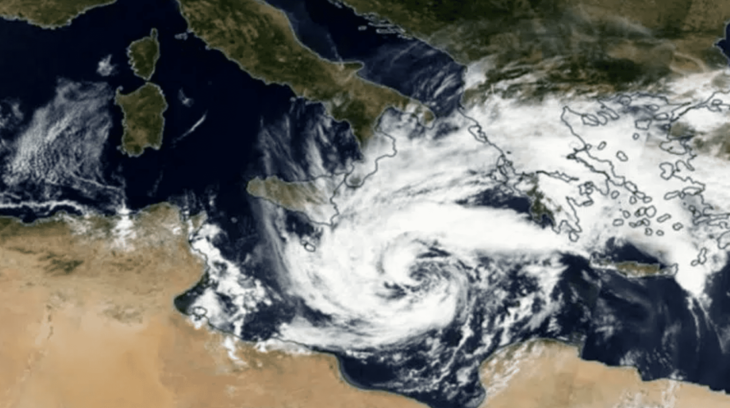
Haftar and Hemedti: Two sides of the same coin

Ufuk Necat Tasci

Since 15 April, hundreds of people in Sudan have been killed while more than 4,000 have been injured due to fighting between the Sudanese army and the paramilitary Rapid Support Forces (RSF).

After being ruled for decades by Omar al Bashir, pro-democracy protests in 2019 created a democratic opening that was eventually filled by military strongmen.

A coup in 2021 saw the army, led by Abdel Fattah al-Burhan, take control of the country and oust the transitional government with the help of the RSF, headed by Mohamed Hamdan ‘Hemedti’ Dagalo.

Now the two generals are fighting each other for control of the country.

“[Haftar and Hemedti] both covertly reject subordination to civilian leadership and have cultivated a ‘parallel’ military structure in Libya and Sudan”

On Sunday, both sides agreed to extend a humanitarian ceasefire by 72 hours. Despite lulls in fighting and international mediation, none of the previous ceasefires have been fully observed.

The strategic location of Sudan has attracted power plays by multiple regional powers, and further involvement by neighbouring countries is expected if fighting becomes protracted.

Given the close ties between Libyan National Army (LNA) chief Khalifa Haftar and Hemedti, and divisions between their respective regional sponsors, Libya’s influence could be critical.

But what is the link between Haftar and Hemedti? Who is backing whom in Sudan, and how could the conflict split the region and potentially change its political architecture?

Haftar and Hemedti

Since fighting in Sudan began, Haftar has reportedly provided military support to the RSF, dispatching at least one plane of military supplies. The LNA has denied these claims.

However, the relationship between both men dates back to before the fall of Omar al-Bashir’s regime, and in subsequent years RSF forces are thought to have played a critical role in supporting Haftar in Libya.

Speaking to The New Arab, Emadeddin Badi, a Senior Fellow at the Atlantic Council, says a deep relationship exists between Haftar and Hemedti.

“It is partly one that is the result of illicit transactional links via the Fezzan [region] between the LAAF & the RSF, but also the result of a recent history of shared Emirati military support between the two figures,” Badi said.

“That aside, there are similarities between the two characters – in that they both covertly reject subordination to civilian leadership and have cultivated a ‘parallel’ military structure in Libya and Sudan respectively – structures through which they carved themselves political roles,” he added.

According to Sami Hamdi, editor-in-chief of the International Interest, the relationship has less to do with Haftar and Hemedti specifically and is more about the UAE.

“As firm allies of the UAE and as key moving parts of UAE foreign policy, a network has been facilitated in which Haftar has helped train Hemedti’s forces, used soldiers from Hemedti to bolster his position in Libya, and established and benefitted from illicit trade routes that have been facilitated by Hemedti,” Hamdi told TNA.

He argues that Sudanese fighters have often been reported in Haftar’s territories, and these have long been considered to have been sent by Hemedti at the request of the UAE.

“As key moving parts of UAE foreign policy, a network has been facilitated in which Haftar has helped train Hemedti’s forces, used soldiers from Hemedti to bolster his position in Libya, and established and benefitted from illicit trade routes”

The analyst further believes that the aim of this network has been to establish cooperation between them that helps advance UAE aims.

Anas El Gomati, founder and director of Libya-based think tank Sadeq Institute, says Haftar acts as both an individual and as part of a network that is supporting Hemedti.

“As part of the network, Haftar is offering logistical support for the United Arab Emirates and Russia’s Wagner Group to channel weapons and train forces on behalf of Hemedti,” he told TNA.

“In addition, in a personal capacity, Haftar has delivered fuel supplies from Eastern Libya and passed intelligence to Hemedti.”

Although Egypt is officially remaining neutral in the fighting, Cairo has traditionally supported the army in Sudan and is seen as a key backer of Burhan.

Considered one of Haftar’s principal supporters in Libya, Egypt therefore has conflicting interests in Sudan not only with the warlord but also with the UAE, which could have political repercussions.

Going separate ways: Egypt and the UAE

Jalel Harchaoui, an associate fellow at the Royal United Services Institute (RUSI), says the relationship between Haftar and Egypt “has been unpleasant for years,” and has impacted several key issues, including Sudan.

“And yet, Egypt is not going to walk away from Haftar’s armed coalition. The latter is indeed the only security architecture in the eastern half of Libya, and Cairo cannot tolerate a scenario where that structure collapses,” Harchaoui told TNA.

“It is the only game in town. The second reason is that Egypt is undergoing a severe economic crisis, which means Cairo cannot contradict its potential and wealthy benefactor: Abu Dhabi, known for its organic links to both Hemedti and Haftar. Owing to those reasons, the notion that Egypt might get angry and turn against Haftar’s coalition is ludicrous,” he adds.

Hamdi, on the other hand, thinks that Sisi appears to be treading carefully and trying to find a way to ensure Hemedti does not win while at the same time not jeopardising his relationship with the UAE.

“Haftar will be gambling on this dynamic, that Sisi’s desire to preserve relations with the UAE will guarantee him immunity from any Egyptian backlash regarding his support for Hemedti,” he says.

“Haftar will be gambling on this dynamic, that Sisi’s desire to preserve relations with the UAE will guarantee him immunity from any Egyptian backlash regarding his support for Hemedti”


Sudan’s conflict casts a shadow on Libya

The key actors in Sudan’s fighting have also been involved in Libya’s political deadlock for years, with experts believing that Haftar’s support for Hemedti could lead to a protracted conflict in Sudan that could also negatively impact Libya.

According to Badi, it could affect Libya “either through instability spread from Sudan” or if “Sudanese, Chadians, and Russians with the LNA begin staging operations using Fezzan as a springboard”.

Anas El Gomati says that if the RSF and Hemedti fail, they could use southeastern Libya as a safe haven for their forces, not just a base for training.

“Over the long term, this will not only destabilise a post-conflict Sudan (if we ever get to it), but Libya too, which is awash with weapons and foreign fighters that have refused to leave despite a UN ceasefire deal that called for their exit in 2020”.

***

Dr Ufuk Necat Tasci is a political analyst, academic, and journalist. His research areas and interests include Libya, the foreign policy of Turkey, proxy wars, surrogate warfare, and new forms of conflict and history.

____________________

It’s Time to Seriously Revaluate America’s Flawed Libya Policy

Alamin Shtiwi Abolmagir

The recently published US strategic plan for Libya, termed a 10-year strategy document, demonstrates all the weaknesses of the American policy planning and diplomatic establishment.  A closer analysis of the plan reveals what it is: a strategic abdication, an instrument of surrender on Libya’s political future.  Once again, the US has abandoned a crucial opportunity to shape the Greater Middle East, at best in another act of policy laziness, which is at worst yet more evidence, as if it were needed, that US policy making in the region continues to be completely mistaken.  With another country, Sudan, on the brink of collapse, the US must seriously revaluate its Libyan approach or risk further disasters.

The Taliban’s victory in Afghanistan signalled the failure of two decades of American policy, not only in the context of counterterrorism, but also in that of broader geopolitics.  The failure stemmed from, at bottom, an inability to address root causes.  The root cause of Afghanistan’s instability from 2001 onwards was not some broader sociological issue with development or a lack of cultural cohesion.  Rather, it was that Pakistan, the US’ long-time ally and Afghanistan’s most consequential neighbour, never viewed a stable Afghanistan as in its interests, and therefore allowed the Afghan Taliban to reconstitute within Pakistani territory.  The Taliban insurgency was “defeated” multiple times, insofar as its immediate operational objectives were denied during Afghanistan’s fighting season.  But a strategic victory was impossible as long as Pakistan viewed a stable state ruled from Kabul as against its interests.

Perhaps Pakistan’s closely-held interests in Afghanistan advised against any sort of long-term commitment to security and stability in Kabul.  Perhaps it dictated a policy of far more active collaboration with India.  Or perhaps it implied a middle road approach with a lighter US footprint.  The point, however, is that traditional strategic considerations – those of geography and power – are at the heart of even those political confrontations that seem non-traditional, those within fragile states that include insurgencies.  The US refuses to grasp the fundamental similarities between these confrontations and more obviously military rivalries for a variety of reasons: political chauvinism, a lack of historical intuition, and simple bureaucratic inertia.

Yet in the context of Afghanistan, American failure, while bitter and undeniably corrosive to American deterrence, was not necessarily strategically disastrous simply because Afghanistan is far away.  Of course, the current Afghan government, the Taliban, remain close to al-Qaeda.  It is increasingly probable that al-Qaeda will stage some sort of attack in the West now that it again has a safe haven from which to reconstitute.  But because Afghanistan lies between central and south Asia, it is quite simply more difficult for Afghan-based terrorists to threaten the US and Europe, although they may cause significant strategic problems within India, China, and ironically enough Pakistan.

By contrast, Libya lies at the Mediterranean’s heart, within a geopolitical stone’s throw of Italy and the EU more broadly.  It has major resource deposits that remain integral to Europe’s energy mix.  It is viciously unstable, still deeply scarred by two civil wars.  The UN-brokered Libyan Political Dialogue Forum failed to generate a consensus between Tripoli and Benghazi.  Russia, Turkey, and the UAE remain thoroughly engaged in Libya.  The fact that fighting has not resumed stems overwhelmingly from the fact that all three powers have other strategic issues to confront, not from a congruence of interests or a constructive settlement between them, let alone between Libyans, who still lack a unifying figure or a mutually-agreed process for political progress.

Libya, in short, is primed to explode once any of the major external powers deem it reasonable to put a thumb on the scales once again.

Europe cannot afford another political-military explosion in the Mediterranean.  The last time such a fracture occurred, Turkey and France nearly exchanged fire over Libyan interests.  The instance before that, a refugee wave poisoned European politics with obvious ramifications still felt today.  An unstable Libya is inimical to European interests.

It is also inimical to American interests.  Winning the Ukraine War requires that the US preserve European unity, while winning the peace in Ukraine demands that the US present a coherent vision for Europe’s future that preserves the Atlanticist security network that has defined Europe since the Second World War.  A Libyan cataclysm would severely complicate both efforts by splitting strategic attention and providing Russia with more ammunition to meddle in Western societies.

Given the sheer importance of Libya to Western interests, both European and American, the US Plan for Libyan Stability is shockingly inept, and demonstrates a severe lack of strategic sense.  The text is primarily meaningless.  It is filled with vapid statements about promoting stability, security, and development, and creating a framework for Libyans to engage over time in a democratic transition but without any clues as to how to get there, and absent any detail or analysis of Libya’s history and political culture.  Libya was once a parliamentary democracy, Libya once had a legitimate constitution that protected minority rights and free expression, and Libya once had a political culture designed to enable a slow but inexorable shift towards democratic stability under a popular constitutional monarch.  None of these factors receive even brief consideration.

The plan’s attempt at regional nuance, its focus on the Libyan south, has little more substance than an undergraduate term paper composed for a class in a Western university’s sociology or history departments.  The south is not the key to Libyan political questions, nor is the south’s marginalisation acute, brutal, or systemic.  Libya is a country divided between east and west, stemming from the distinction between Tripolitania and Cyrenaica.  The only group to unite both parts of Libya and construct a coherent Libyan identity, the Senussi family, is not mentioned, nor is their strategy of depoliticisation and economic and social stability identified.  That would conflict with the bizarre narrative the Department of State has apparently manufactured without historical or contemporary evidence.

The results of the US’ inattention to Libya are on full display in Sudan.  Khalifa Haftar’s Libyan National Army, almost certainly with Russian assistance, has funnelled weapons to the Rapid Support Forces – reconstituted Janjaweed militias that executed the Darfur Genocide – that enabled the current rebel attack on Sudan’s capital.  A massive civil war appears imminent unless the RSF can win a Taliban-style overwhelming victory.  This will have an undeniable impact upon the long-term stability of the region and offer international revisionists the opportunity to disrupt African politics.  It all feeds the root issue, moreover, of Libyan instability.

In reality, the US plan constitutes an abdication of American strategic responsibility to articulate a real long-term framework to address a continuous political problem for the US and Europe.  The alternative is easy to identify, and requires only institutional will.  The US and Europe could engage with Libyans, could examine Libyan history, and could realise that Libya’s pre-1969 history, its democratic and constitutional past, holds a set of answers for its long-term future whilst providing a viable and practical path to achieving the transition to democracy.  But that would require knowledge of the situation beyond that of a cursory scan of colonial academic literature, the abandonment of a failed “cookie cutter” approach to foreign policy, and, of equal importance, an understanding of strategic interest.

***

Alamin Shtiwi Abolmagir is the Deputy Director of the Libyan Organization for the Return of Constitutional Legitimacy.

___________________

Seeking Justice for the Forcibly Displaced in Libya

Abdelrahman Zayid

Poorly designed reconciliation initiatives in Libya could perpetuate the cycle of abuse and hinder the reintegration of displaced populations.

***

The relationship between the security and justice sectors in Libya and internally displaced persons (IDPs) is existential. The existence of IDP communities is the direct outcome of the failure of these sectors to effectively perform their core mandates since the beginning of the civil war.

Despite the repeated promises of successive interim governments to restore the bond of national unity through a consensual social contract, the policies which these governments pursued have been detrimental to transitional justice mechanisms.

When, in 2017, the Government of National Accord (GNA) adopted a reconciliation agreement between Misrata and Tawergha, the agreement backfired because it was not based on an approach rooted in restorative justice or reconciliation.

Today, five years later, thousands of Tawerghans are still refusing to return home because the authorities are reluctant to provide basic services in the city.

Moreover, in May 2022, the displaced Tawerghans residing in Al Falah Camp 1 and Al Falah Camp 2 in the center of the capital, Tripoli, were shocked to receive an order for immediate eviction issued by the Public Prosecution and the Stabilization Support Agency, which is a armed group affiliated with the Presidential Council.

The decision was immediately condemned by local and international human rights organizations, which saw it as a direct result of the unimplemented policies adopted by the GNA towards IDPs. 

Furthermore, when programs for the disarmament, demobilization, and reintegration of former militants failed, and interim governments co-opted hybrid security governance to legitimize armed groups, it became even harder to adopt any security reform initiative that embraced the four main principles of justice: accountability, integrity, legitimacy, and citizen empowerment.

In fact, throughout the post-conflict period, legislative authorities seemed to be promoting immunity and impunity, and suppressing all legal approaches that would ensure accountability for the horrendous crimes against humanity that were committed by various Libyan actors.

The Amnesty Laws No. 35 and 38 of 2012 and No. 6 of 2015 were serious obstacles to addressing the legacy of human rights violations because, according to the findings of the International Commission of Inquiry in its 2012 and 2014 reports, they avoided prosecuting rebels who committed war crimes and crimes against humanity and expanded the scope of amnesty to include all Libyan parties. 

In addition to amnesty laws, the immunity article No. 69 of Libya’s penal code has been interpreted by some to include the obstruction of any vetting of members of the military, the security forces or the intelligence services.

This means that convicted perpetrators working within these groups could safely continue with their violations and human rights abuses against IDPs who will consequently lose all confidence in the legitimacy of these sectors.

Another major challenge to a sustainable solution to the situation of IDPs is ongoing conflict over the property and land of the forcibly displaced. The inability of IDPs to access their homes and properties is a manifestation of the extent to which armed groups can influence the reintegration process of the displaced.

In March 2023, non-governmental organizations in Benghazi denounced the large-scale demolition of numerous historic buildings in the city, a process which no official body had detailed publicly.

The demolitions led to the displacement of the residents of the area who were forced to sell their destroyed properties for very small sums of money. When large-scale protests erupted, Maher Elgheryani, the director of the media office of the Benghazi municipality, criticized the demolitions on his social media accounts. Immediately afterwards, he was arbitrarily arrested by the Tariq bin Ziyad Brigade, a militant group affiliated with Major General Khalifa Haftar’s forces. 

The arrest of Elgheryani was a reminder that, in spite of the warlords’ repeated public denouncement of the  theft of citizens’ property since the start of the second civil war, the significant role their armed militias play in looting and demolition shows otherwise.

As for the criminal justice system, which is supposed to play a vital role in developing a durable and peaceful reintegration process, it has not improved much from its days under Gaddafi’s rule.

The Libyan judiciary system is infamously corrupt and politicized, and the policies of the Supreme Judicial Council do nothing to ensure the legitimacy and integrity of the legislative body. Over the past decade, the Council has carried out arbitrary reshuffling and transfer procedures without specifying clear criteria for reallocation, and without obtaining the consent of the judges concerned. 

The local courts have been no better as they only prosecuted the Tawerghans (whom the revolutionary forces perceived as being loyal to the former regime) and turned a blind eye on those responsible for the forcible displacement of local populations and those who committed human rights violations ranging from torture and arbitrary detention to enforced disappearance.  

The situation of IDPs in Libya is different to that in other countries where long and violent conflict raged, like Bosnia, for example. In these countries, the success of the judicial re-selection helped remove many legal obstacles for the displaced and built the legitimacy that generated trust between IDPs and the justice sector, which encouraged the return of minorities. 

At the international level, the initiatives adopted by the United Nations Support Mission in Libya (UNSMIL) will potentially yield similar results to those adopted by local authorities.

During the 5+5 Joint Military Commission (JMC) Meeting with Military and Security Leaders in Benghazi on April 7, UNSMIL focused on the return of IDPs but failed to address the long legacy of violations that the forcibly displaced have had to endure. Such failure could result in a repetition of the outcomes of the Misrata and Tawergha agreement regarding IDPs from the Eastern Province.

It is clear that the failure to build trust between displaced communities and the security and justice sectors, and the disregard for effective vetting measures that ensure accountability, as well as the lack of a comprehensive approach to justice in the security sector, will jeopardize initiatives that encourage the return and reintegration of displaced people in Libya, especially if the current political division persists.

*** 

Abdelrhman Zayid is a Libyan freelance journalist and documentary producer who specializes in humanitarian issues and human rights.

__________________

U.N. Plan to Reunite Libya: Four Obstacles

As the United Nations Special Representative in Libya, Abdoulaye Bathily, presents his plan for paving a way out of the country’s political problems, Claudia Gazzini looks at four obstacles that his proposal will face.

What is the United Nation’s plan for a way out of political turmoil in Libya, and is it feasible? As the United Nations Special Representative in Libya, Abdoulaye Bathily, presents his plan for paving a way out of the country’s political problems, Claudia Gazzini looks at four obstacles his proposal will face. Chief among them: the influential factions within Libya that are opposed to the UN taking the lead.

______________________
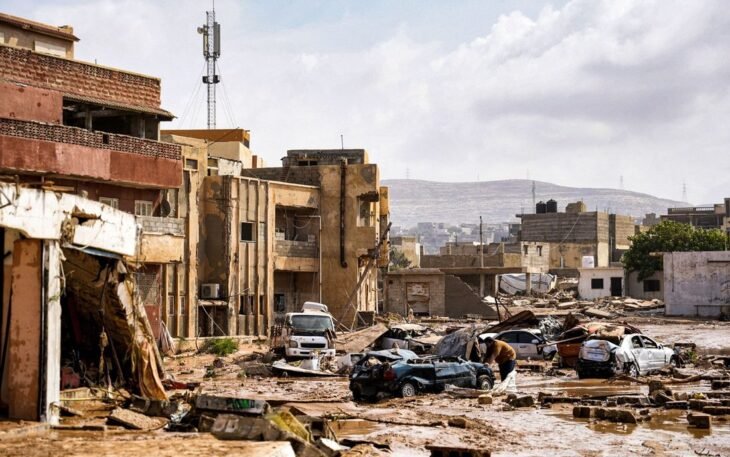
Europe’s mistakes in Libya

Federica Saini Fasanotti

Europe overestimated the prospects for rapid democratic transition in Libya, and will likely continue to face successive crises without a long-term strategy.

In a nutshell

  • European efforts have failed to stabilize Libya
  • The security situation has worsened
  • Politicians and militants benefit from the status quo

Europe failed Libya. As the internal situation in the country began to unravel in 2011, Europe had the opportunity to intervene and stabilize the deteriorating civil and security situation there. Instead, the ad hoc military attack that occurred, followed by the subsequent NATO operation against the forces of Muammar Qaddafi, only accelerated Libya’s descent into instability.

Civil wars

In early 2011, the Arab Spring uprisings swept across the Middle East-North Africa region. For some countries, like Libya, they acted like a tsunami – sweeping away existing regimes and returning several times to the same disaster area, each time bringing political, economic and social catastrophe.

The first uprisings in Libya broke out in Cyrenaica, between Tobruk and Benghazi, but then spread to Tripolitania, where they were violently suppressed with bloodshed. The international response took the form of United Nations Security Council Resolution 1973, which called for the use of every possible means to protect Libyan citizens, but not for regime change. The bombing of Libya began on March 19, 2011, as a unilateral decision of incumbent French President Nicolas Sarkozy, later developing under the NATO umbrella as Operation Unified Protector. This ended shortly after the October 20, 2011, capture of Muammar Qaddafi and his brutal killing. The dictator’s 42-year rule had come to an end, but nothing assured that what followed would be any better.

The UN Support Mission in Libya (UNSMIL), which was supposed to help the country in its arduous transition from autocracy to democracy, was activated almost immediately on September 16, 2011. But this did not guarantee success. The challenges were numerous and touched the pillars of any functioning state: economy, politics and security. The last one proved to be the most devastating. During the war, Qaddafi’s armaments depots, overflowing with light and heavy weapons, had been pillaged; despite the embargo, the population – which during the regime was not permitted even to approach these extensive arsenals – found themselves awash in weapons. Some of these stayed in Libya, while many others spilled over into international arms trafficking rings.

The situation did not improve over the years. In 2016, there were an estimated 20 million weapons in Libya for only 6 million people. The arms flowed through various channels, ending up in the hands of terrorists and local militias, mainly through the country’s porous borders. The trafficking and use of these arsenals gave Libyan militias the opportunity to develop their own status within the country’s broader social fabric. Weapons that should have been handed back at the end of the revolution remained in their hands, increasing the political clout of those fighters who, year after year, found an ideal base in a state lacking the monopoly of force.

With Qaddafi’s death, and the sudden collapse of the regime, Europe was faced not only with the urgency of confirming all the contracts signed with Tripoli in previous years but also with the age-old problem of uncontrolled migration. Qaddafi had clearly known this, and, over the decades, used it as leverage. By the beginning of the new millennium, he had become a major player in multilateral discussions on the issue of migration. His fearmongering over a supposed “black Europe” resonated with European public opinion and, consequently, with the continent’s political class. Italians in particular found themselves making many concessions to Qaddafi precisely because of this. The Libyan leader took a similar line on migration at home; at least on (constitutional) paper, African refugees were not protected in the country, and the 1951 Refugee Convention and its 1967 Protocol were never signed.

Then, when the revolution overthrew Qaddafi, the gateway to Europe lost its gatekeeper. Operation Hermes 2011 – the EU’s coordinated efforts on joint border patrols, linked to the 2009 Return of Illegals Directive – was not long in coming, but its results were minimal. Three years passed without a stable government in Libya, with an increasingly pronounced division between the Tripolitania and Cyrenaica regions. That led to another civil war in 2014 and the displacement of the House of Representatives to Tobruk.

After months of negotiations between the General National Congress (GNC) in Tripoli and the House of Representatives (HoR) in Tobruk, in December 2015, UNSMIL got the warring parties to reach the Skhirat Political Agreement, which proposed a Government of National Accord (GNA) chaired by Fayez al-Serraj as prime minister. The GNA immediately showed itself to be extremely weak in the face of the criminal cartels of the Tripoli militias. The GNA had taken office without actually resolving the complex issues of security and a state incapable of maintaining a monopoly on force. Instead, Libya faced an oligopoly of violence, with force distributed through various channels.

The situation in Cyrenaica was different but no better. There, Field Marshal Khalifa Haftar – an old Qaddafi acquaintance who, after the defeat of the Libyan army in Chad in the 1980s, decided to switch sides by collaborating with the Central Intelligence Agency – developed his own force, the Libyan National Army (LNA), from a patchwork of militias, to serve as the armed wing of the HoR.

Deep divide

These divisions, which have become more pronounced over time, have also sharply defined the supporters of the two factions. The GNA in Tripoli, backed by UNSMIL, was theoretically supported by the international community. But while Italy has taken a consistent stance regarding the UN’s choices – as has the United States – other nations, such as France, Russia, the UAE and Egypt have secretly supported the HoR and its armed LNA wing. In April 2019, Mr. Haftar’s LNA, after a long march of thousands of kilometers across the Fezzan desert, laid siege to the capital Tripoli under the pretext of ridding it of extremist Salafist militias (which are also present in the ranks of his army). After the first civil war in 2011 and the 2014 sequel, Libya was witnessing yet another armed conflict. Internal divisions had deepened even further, and the two political entities were also supported by foreign nations in terms of men and resources.

Between 2,000 and 4,000 soldiers from the Free Syrian Army came to support of the GNA in Tripoli. These troops were mainly from the Sultan Murad division, joined by Chadian mercenaries from the Fezzan. The poorly trained LNA forces were helped by a thousand mercenaries from Russia’s Wagner Group, a few hundred Syrians who had fought on behalf of Syrian President Bashar al-Assad, and about 3,000 Sudanese. GNA Prime Minister Serraj’s pleas for help were numerous, but they went unheeded until the intervention of a longtime partner: Turkey.

On November 27, 2019, a Memorandum of Understanding was signed in Istanbul by the two respective foreign ministers, Mohamed Siala and Mevlut Cavusoglu, enshrining the exclusive economic zones in the Mediterranean Sea of Libya and Turkey. The signing of this agreement – though disavowed by the HoR in January 2021 – paved the way for economic and (more importantly) military cooperation between the two countries, which materialized in a second agreement. The charter sanctioned Turkey’s military intervention in Libya in support of the GNA and was ratified by the Turkish parliament on January 2, 2020.

Meanwhile, the international diplomatic process was resumed in Berlin in January 2020, but did not lead to the longed-for truce. The defeat of the LNA ultimately hinged on the overwhelming firepower of the Turkish military, which Wagner Group mercenaries were unable to counter. On October 23 of that year, a cease-fire was reached, and talk of a real peace process began. The operation sought by Mr. Haftar had resulted in hundreds of civilian deaths in Tripolitania, nearly 150,000 people fleeing Tripoli and its environs, and nearly one million citizens (out of a total of six million) in need of humanitarian assistance. Added to this were continuing blockades of oil wells and extensive damage to water and electricity infrastructure that added up to a major economic crisis.

Another unelected government

Later in 2020, in Tunisia, UNSMIL brought together representatives of the warring parties and Libyan society in a framework known as the Libyan Political Dialogue Forum (LPDF). The election of a transitional cabinet was decided upon, which, after taking the place of the GNA, was to ferry the country to elections on December 24, 2021.

Members of the LPDF met in Geneva and voted for Abdul Hamid Dbeibeh as prime minister, who then formed the National Unity Government (GNU). Libya’s presidential elections, originally scheduled for December, were postponed indefinitely. The country faced increasing tensions when the HoR, opposing UNSMIL, declared the GNU invalid. It voted for a new prime minister, Fathi Bashagha, who had played a key role in defending the capital against the 2019 Haftar siege. 

On March 3, Mr. Bashagha unveiled his Government of National Stability. This was a complete misnomer, since the new cabinet brought no stability. Mr. Dbeibeh did not agree to resign, and Libya took a further step backward to a country under two antagonistic governments.  Meanwhile, in September 2022, UNSMIL was provided with a new special representative, the Senegalese Abdoulaye Bathily, who immediately set about organizing elections by 2023. Yet little seems to have changed.

Scenarios

In light of all these facts, the great mistake of the international community (and not only Europe) has been to count on Libyans to achieve a democratic path quickly. In the absence of functioning democratic institutions, the likelihood of a successful democratic process, seen by many merely through elections, had little chance of success. As a result of this failed electoral process, the country is as divided as ever and deeply unstable. So far, Brussels has tried to adapt to the situation on the ground.

Going forward, one scenario will see the domestic political situation stabilized, either through elections or the acceptance of the end of the term of one of the two present governments. This would allow Europe to strengthen both its political relations and economic partnerships with Libya, fostering a virtuous circle of foreign investment in the country and subsequent modernization. Unfortunately, this remains very unlikely, given the weakness of Libya’s political class and Europe’s misunderstanding of Libyan dynamics.

In a second scenario, following yet another election-related failure, nothing changes, including the relationship with Europe. This is the most likely outcome, as both politicians and militiamen have every interest in maintaining the status quo – to the detriment of democracy and any hope for national unity. Brussels, now disillusioned, will continue to cooperate locally but without any long-term strategy.

_____________________