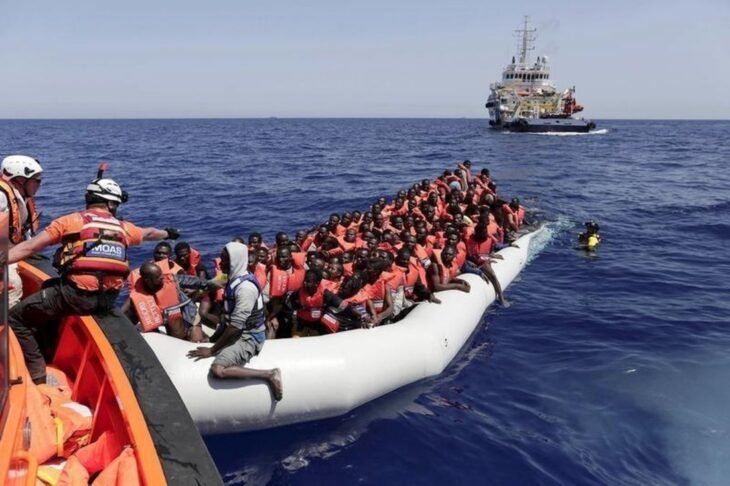
The European Union has voiced concerns of a surge in migrants from Africa, after the ruling military junta in Niger repealed a law that had previously criminalized the transport of migrants in the country.
Known as Law 2015-36, the legislation was drafted in 2015 in coordination with the EU and the United Nations Office on Drugs and Crime. At the time, Europe was facing a migrant crisis, as more than a million people entered the continent from Turkey and North Africa. The law was implemented the following year.
As part of the 2015 deal, the European Union pledged over $5 billion in aid to stabilize economies and governments in the Sahel region to stem the flow of migrants.
“These projects had a number of objectives, including combating illegal migration, improving public infrastructure, improving border capacity — but also assisting displaced populations,” explained Alia Fakhry, an expert on EU-Africa migration policy at the German Council on Foreign Relations in Berlin.
“One of these projects was the project that supported the Niger state to build its border capacity and to draft this new law that would criminalize irregular migration and its facilitation — the work of smugglers, basically. And it’s this law that’s now been revoked by the military junta,” Fakhry told VOA.
The EU said in September that 876 suspected people traffickers were prosecuted under the law from 2017 to 2023. However, on July 26, Niger’s military ousted democratically elected President Mohamed Bazoum in a coup. Junta leader General Abdourahamane Tchiani announced in November that the government was repealing the 2015 migrant law and said that all convictions under the legislation would be quashed.
Tchiani did not give a reason for the move, although observers say he is likely seeking to gain local support and retaliate against the EU’s decision to suspend aid payments following the coup. FILE – General Abdourahamane Tchiani, who was declared Niger’s new head of state by leaders of a coup, arrives to meet with ministers in Niamey on July 28, 2023. Speaking to reporters in Brussels on November 28, Ylva Johansson, European commissioner for home affairs, voiced fears of a new influx of migrants.
“There is a huge risk that this will cause new deaths in the desert. That’s the most concerning thing, but it would also probably mean more people coming to Libya, for example, and then maybe also trying to cross the Mediterranean today to the EU,” she said. In a discussion paper published in September, the Council of the European Union had already expressed concerns over cooperation with the Nigerien military junta following the July 26 coup.
“Given Niger’s role as a transit country, primarily through the Central Mediterranean route, as well as its status as a host country, it is crucial to direct our focus towards the aftermath of the events of 26 July,” the paper said. “The risk of the instrumentalization of migration exists in theory — although there is no evidence for this right now — or of a halt to cooperation on migration and border management with the EU. Various scenarios are now possible regarding the evolution of migratory flows transiting through Niger. Besides, close attention must be paid to other countries of the area, such as Mauritania, in which there could be migratory consequences of the coup in Niger,” the paper said.
Critics say the 2015 law forced migrants to divert to more dangerous routes through the Sahara desert to try to reach Europe and exposed the migrants to abuses by the Nigerien security forces. Local media report that the repeal of the law has been welcomed in Niger and that migrant traffickers are planning to resume operations. Its implementation in 2016 had devastated the local economy in migrant hubs such as Agadez, Fakhry said.
“A number of people simply went out of a job in the region,” said Fakhry. “So, smugglers, of course. People who were facilitating the travel and journey of migrants. But also, a bunch of people who benefited directly or indirectly from the presence of migrants. These are people who were preparing and selling food, people who were selling water, offering accommodation, any other kind of service to migrants.”
Before the law’s implementation, the Nigerien army had often accompanied migrant convoys through the desert and demanded their own cut of the profits. “There might be an objective to return to the pre-2015 situation where migrant smuggling created revenues for the military and for the state,” Fakhry said.
Analysts say several factors will determine how quickly the migrant flows could resume, including the situation in the migrants’ countries of origin and in transit countries north of Niger. The EU and individual European states have struck deals with Tunisia and Libya to clamp down on irregular migration across the Mediterranean Sea.
How Demobilization, Disarmament and Reintegration in Libya Will Require a Local Strategy
In early 2023, the U.N. special representative for Libya made national elections his top priority. The United States and other interested countries endorsed this strategy, pledging to push for elections before the end of the year. However, armed groups and political factions have divided Libya into fiefdoms, often with support from powerful patrons abroad. Right now, elections in 2023 seem unlikely, if not impossible — and elections in 2024 may also be wishful thinking.
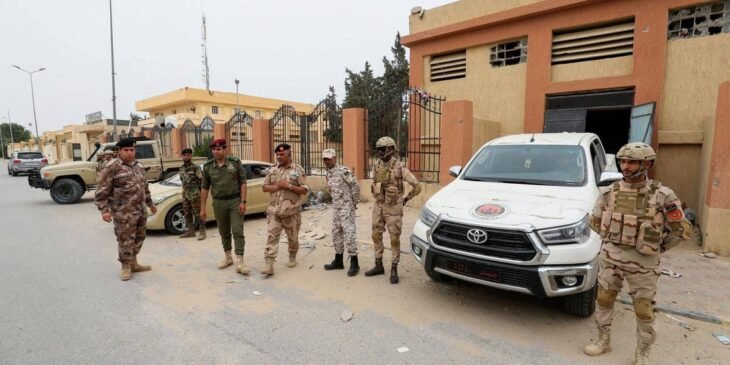
As these election efforts sputter, there is a temptation to shift focus to demobilization, disarmament and reintegration (DDR). However, as Tim Eaton explains in his latest report from Chatham House, a successful DDR process in Libya must be based on local security dynamics. His research looks at the development of three of Libya’s most influential armed groups — Misrata, Zawiya and Zintan — and the unique nature of their engagement with local communities.
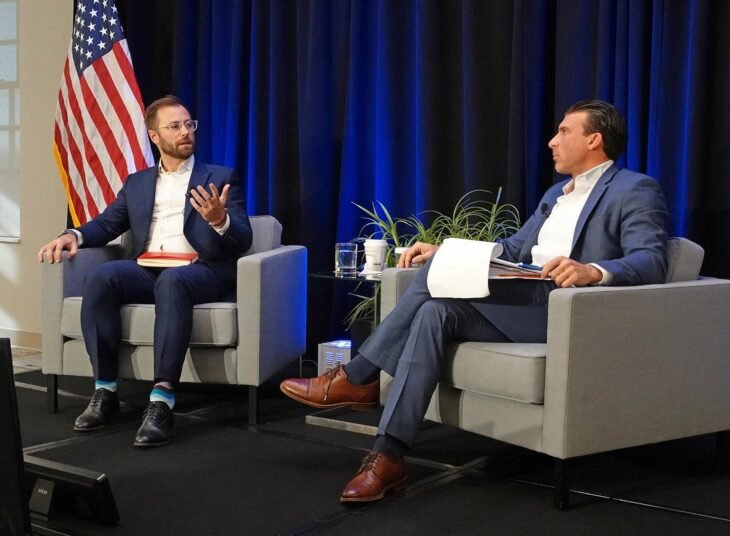
The following is a conversation with Tim Eaton on DDR in Libya. The discussion explored his report’s findings and the need to calibrate DDR efforts to local contexts in Libya — with the hope that a flexible program might be replicated in other locations and eventually expanded to the national level.
Speakers
Mona Yacoubian, introductory remarks Vice President, Middle East and North Africa Center, U.S. Institute of Peace
Gail Morgado, framing remarks Acting Deputy Assistant Secretary, Bureau of Conflict and Stabilization Operations U.S. Department of State
Tim Eaton Senior Research Fellow, Middle East and North Africa Programme, Chatham House
Andrew Cheatham, moderator Senior Expert, U.S. Institute of Peace
The recent coup in Niger threatens to unleash more private military and security companies on a continent where they have become steadily more powerful in recent decades.
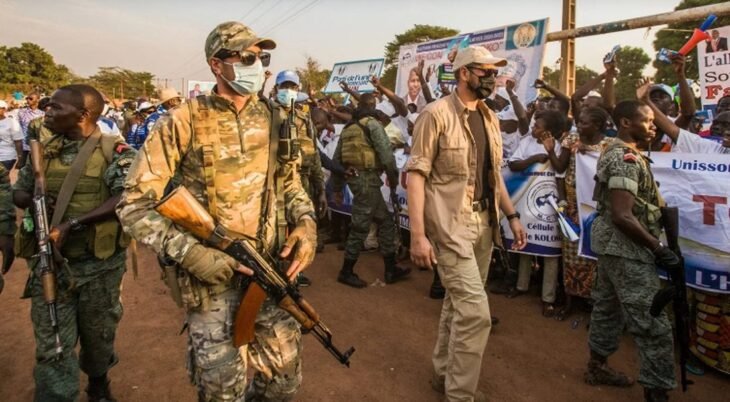
In the wake of the July 26 coup in Niger, the world’s spotlight has once again turned to the expansion of private military and security companies (PMSCs) across Africa. Following the removal of the relatively pro-Western government, Niger’s new military rulers asked Russian PMSC Wagner to help defend against a possible military intervention by the Economic Community of West African States (ECOWAS), with U.S. Secretary of State Antony Blinken warning of the PMSC seeking to exploit the instability.
In a continent marked by decades of post-colonial turmoil, PMSCs have steadily gained influence, evolving from their historical role as mercenaries into powerful, corporate-driven forces. As the Sahel region continues to grapple with instability and conflict, the strengthening of PMSCs, both domestic and foreign, will continue to reshape Africa’s security in profound and unpredictable ways.
Africa’s experience with PMSCs dates back to the decolonization period after World War II. Though mercenaries had been steadily sidelined in conflicts for centuries, rag-tag groups of privateers emerged as shadowy accomplices to colonial powers, aiding in suppressing rebellions and fomenting unrest while providing a degree of ambiguity. Britain’s “Mad Mike” Hoare and France’s Bob Denard came to exemplify this era through their active involvement in military operations that undermined the sovereignty of African states.
The end of the Cold War ushered in a new chapter for PMSCs. With millions of demobilized soldiers seeking employment and civil conflicts on the rise in the early 1990s, these entities evolved into more corporate forms. The South African PMSC Executive Outcomes (EO), founded in 1989 by Eeben Barlow, gained notoriety by accepting contracts to protect energy infrastructure in Angola and to fight Sierra Leone’s civil war.
Pressure from South Africa’s post-apartheid government led to the disbandment of EO in 1998. But other PMSCs had emerged, including Sandline International, also financed by EO backer Anthony Buckingham and Canadian businessman Rakesh Saxena, that helped gain control over mineral rights in Sierra Leone. And after Washington began to lean heavily on PMSCs during the wars in Afghanistan and Iraq, the taboo of using them was broken.
Existing in a legal gray zone, PMSCs have leveraged their strategic capabilities worldwide—no more so than in Africa. Fragile government institutions, powerful criminal and militant groups, international power struggles, and competition over Africa’s natural resources have nurtured an environment supportive of a growing network of PMSCs. Across the continent, they are used to secure energy facilities, government buildings, and private infrastructure, protect local actors and foreign personnel, and provide police and military training, intelligence, and active fire support to governments and corporate clients.
Through entities like the colossal PMSC Wagner, Russia has found an unconventional and effective way to assert influence in Africa’s security landscape. In the Sahel region, Russian PMSCs have filled a void left by departing French military forces and capitalizing on local anti-French sentiment in recent years.
Amid shifting allegiances, Wagner underscores how Russia’s indirect power projection allows the Kremlin to wield substantial influence without deploying conventional military forces. Wagner’s activities are believed to span across Mali, Sudan, Zimbabwe, Angola, Madagascar, Guinea, Guinea-Bissau, Mozambique, Burkina Faso, Chad, the Central African Republic (CAR), and the Democratic Republic of the Congo (DRC). Other Russian PMSCs, such as RSB Group, Moran Security Group, and Patriot, also operate across Africa.
At the center of Russia’s PMSC network in Africa stands Yevgeny Prigozhin, Wagner’s financier. The Russian tycoon celebrated the success of the coup in Niger and declared Wagner capable of handling the situation, though the Russian government declined to support it. Despite Prigozhin’s longstanding quarrels with the Russian military, which culminated in his insurrectionist march toward Moscow in June, Prigozhin was recently seen meeting with African dignitaries on the side of the Russia-Africa summit in St Petersburg.
As the Nigerien government grapples with its situation, Wagner could again act as a Kremlin surrogate, safeguarding Russia’s interests by filling the security vacuum left by the ousted French military. Already, there are fears that Niger may halt uranium exports, vital to both French and EU supplies, and forcing the West’s attention to the country. Russian media has criticized Prigozhin since his rebellion and officials have downplayed state connections to Wagner’s activities in Africa. But Prigozhin’s ongoing role in Africa suggests the Kremlin is relying on smoke and mirrors to obscure its true motivations.
Beyond Russia, numerous Western PMSCs have embedded themselves within Africa’s security. Unlike Russia’s PMSCs, most do not operate on the frontlines of conflict and primarily operate in security and training roles, though do coordinate with official military deployments. French PMSC Secopex made headlines in 2011 when its founder was killed in Libya during the country’s revolution, and it remains unclear as to what the PMSC’s role was.
Secopex had also been involved in the CAR and Somalia, while Corpguard (also created by the co-founder of Secopex, David Hornus) has been involved in training the Cote D’Ivoire’s military.
Other French PMSCs, such as Agemira, are active in the Democratic Republic of Congo (DRC). Though French-owned, Agemira is registered in Bulgaria to take advantage of the country’s lack of regulation and transparency. The UK’s Aegis Defence Services is believed to have worked in 18 African countries, while G4S, Erinys, and Olive Group are also active in Africa.
U.S. PMSCs have been active across the continent since the 2000s, with MPRI, CACI International, and Academi (previously the notorious Blackwater) among the most notable. Others, such as DynCorp, have provided training and logistical support to Liberia, Sudan, and Somalia, while Triple Canopy has been active in Niger. AdvanFort Co in turn offers anti-piracy maritime protection in East and West Africa. Germany’s Xeless and Asgaard are also active in Africa, with the latter having operations in Sudan, Libya, Mauritania, and Egypt.
PMSCs have increasingly begun to operate in the same conflict zones. Somalia, which lacked a functional state for more than two decades, provided fertile ground for PMSC expansion. PMSCs from the U.S., UK, China, UAE, and even Norway have helped Somalia train its official government forces and provide maritime protection from piracy and terrorism and ensure stability. But in Libya, PMSCs from or backed by Russia, France, the UK, the U.S., Turkey, the United Arab Emirates (UAE), and more have all been sent to the country since 2011 to exploit the chaos and advance their interests.
Active in Libya, Turkey’s SADAT group has also signed deals to train African troops while pitching itself as a Muslim alternative PMSC for Islamic-majority countries. The UAE-based Black Shield Security Company was accused in 2020 of promising Sudanese citizens security contractor jobs but instead sent them to conflict zones in Libya. Other UAE PMSCs have been active in East Africa, including in Somalia, while China has developed a multitude of PMSCs to secure its Belt and Road projects in Africa. Israeli PMSCs have their own African operations.
In 2014, the Nigerian government began hiring PMSCs to help defeat the Boko Haram insurgency. One of them, Specialized Task, Training, Equipment, and Protection (STTEP), was also set by EO’s Barlow and saw significant success that helped grant it additional contracts. Other modern South African PMSCs include Osprey, Blackhawk, and Dyck Advisory Group, the latter of which was hired by Mozambique to combat Al-Shabaab militants but was accused of killing civilians indiscriminately by the UN in 2020.
The use of PMSCs in Africa is likely to expand. They often offer African governments a quick, relatively inexpensive, and tailored way to manage crises instead of relying on ineffective state forces. PMSCs also enable international companies to protect themselves without relying on the fanfare of official military deployments by working with another corporate entity.
Nonetheless, this raises questions about sovereignty, a recurring issue in a continent where it has consistently been violated since African countries won their independence. The monopoly on the use of violent force by their police and military institutions has been steadily eroded by criminals, militants, foreign countries, and increasingly, PMSCs.
The dangers of commodifying security are evident. Foreign companies and powerful local actors can afford security, while the core issues of instability in countries or regions are not addressed. Furthermore, instability is often used by outside forces to their advantage. Many Africans also end up working for PMSCs outside the continent because they are cheaper than recruits from other parts of the world.
Furthermore, PMSCs, and the governments and companies that employ them, remain largely uncommitted to stronger regulation. The Montreux Document aimed to enforce greater rules for PMSCs, but has been criticized for its limited scope and lack of binding nature. Other countries, including the five members of the UN Security Council, have refused to ratify the UN International Convention Against the Recruitment, Use, Financing, and Training of Mercenaries.
Criticism of PMSCs in Africa is growing. In February 2023, the African Union (AU) commissioner for political affairs, peace, and security, Bankole Adeoye, called for the “complete exclusion of mercenaries from the African continent.” But U.S. PMSC Bancroft Global had already been hired by the AU to assess the risk of Somali forces trained by Blackwater founder Erik Prince to continue operating in the country.
These entities epitomize globalization. Aegis Defence Services was acquired by Canadian company GardaWorld in 2015, while DynCorp was bought by Amentum in 2020. Academi and Triple Canopy merged in 2014 to form Constellis Group, while Triple Canopy has outsourced work to Peru-based PMSC Defion International. Erik Prince, through the Hong Kong-based Frontier Services Group, has helped China train its own PMSCs for use in Africa and elsewhere. G4S was meanwhile bought by Allied Universal in 2021 and is now North America’s third-largest private employer. Allied Universal itself is owned by institutional investor Caisse de dépôt et placement du Québec and private equity firm Warburg Pincus.
Many PMSCs provide legitimate and needed security for civilians and government officials. But considering the wide-ranging motivations, means, and methods of so many PMSCs on the continent—and increasingly in the same spaces—it is critical for Africa’s governments, leaders, and populations to consider how comfortable they are in allowing this rapidly developing global PMSC network to continue expanding in their own backyards.
John P. Ruehl is an Australian-American journalist living in Washington, D.C. He is a contributing editor to Strategic Policy and a contributor to several other foreign affairs publications. His book, Budget Superpower: How Russia Challenges the West With an Economy Smaller Than Texas’, was published in December 2022. This article was produced by Globetrotter
***
John P. Ruehl is an Australian-American journalist living in Washington, D.C. He is a contributing editor to Strategic Policy and a contributor to several other foreign affairs publications.
How local factors shape Libya’s security sector, and what this means for disarmament, demobilization and reintegration.
In the absence of durable political and security institutions at national level, there can be no ‘one size fits all’ approach to disarmament, demobilization and reintegration (DDR) across Libya. But as the country’s sprawling security sector continues to grow, with fresh recruits signing up to join both state-affiliated and non-state-affiliated armed groups, it is clear that planning for DDR cannot wait for a ‘post-conflict’ situation.
Drawing on a set of interviews with key figures with close knowledge of Libya’s security landscape, along with in-depth interviews with residents of Misrata, Zawiya and Zintan, this research paper explores how the security apparatus of each of these three cities has evolved since the overthrow of Muammar Gaddafi in 2011. The case studies highlight that significant variation exists in each city’s security dynamics, reflecting its social composition; its experience of conflict; the structure of the local economy and economic opportunity; and relations with neighbouring locations as well as with the state’s formal institutions.
Such highly localized factors underscore the scale of the challenges to be overcome in efforts to reform Libya’s security sector. Even so, the fact that the country’s armed groups mainly operate in the areas where they originated ensures a degree of social accountability that should not be underestimated. This accountability has the potential to check the behaviour of the armed groups within their own communities, and to provide a foundation, where conditions allow, for DDR planning in line with specific local contexts.
Summary
Libya’s armed groups predominantly operate in the areas where they originated. This means that the security sector has developed since 2011 in accordance with distinctly local dynamics: the social composition of the area; the experience of conflict; the structure of the local economy and economic opportunity; and relations with neighbouring localities and the state’s formal institutions. This local factor is critical to understanding the country’s security sector, and the challenges for security sector reform (SSR) and disarmament, demobilization and reintegration (DDR), but has been relatively underexplored.
This research paper attempts to address this gap, through a close study of the development of the security apparatuses of Misrata, Zawiya and Zintan. It draws on a set of interviews with key figures with close knowledge of the security landscape, along with in-depth interviews with residents of the three cities.
Charting the evolving relationship of Libya’s armed groups to state authority must be done in the context of the developing political, economic and security landscape in the country. Misratan, Zawiyan and Zintani armed groups have obtained state affiliation through various routes and institutions, but these different affiliations have in most cases proved weak and subject to change.
Armed groups from the three cities, at their core, remain based on social networks. Focusing on the positioning of key social constituencies and commanders reveals that the formal structures of the security sector reflect local conditions, rather than being shaped by the central Libyan state.
SSR has remained the primary focus of policy efforts for Libyan and international policymakers, but – beyond cosmetic changes – there has been limited progress. State-led DDR has been largely dormant since 2015. Given Libya’s ongoing governance crisis, illustrated by the continuing existence of rival political institutions and a competitive and divided security sector, DDR has often been viewed as premature – but lessons from other contexts caution against such a view.
Policymakers considering action to support DDR in Libya should seek to calibrate efforts to local contexts and to mobilize resources into a flexible programme that might be replicated in other locations and eventually expanded to the national level. This will require concerted coordination and dialogue between the Libyan authorities, which remain focused on national-level programming, and international donors, who seem to broadly acknowledge that localized approaches are the most feasible interventions.
In cities like Misrata and Zintan, where most armed groups are not permanently mobilized, dialogue should seek to improve the management of weapons and ammunition as well as put in place measures to limit their use. The creation of committees that provide an interface between citizens and armed groups to mediate such discussions could be beneficial.
Programming efforts should seek to directly enhance local social accountability in accordance with a shared set of principles and rules. One way of achieving this is to pursue the agreement of a ‘core’ code of conduct that can be applied across Libya’s territories and that aims to provide citizens of any area with equal treatment, setting a common baseline for national SSR efforts.
A more ambitious route to pursue progress would be to provide economic incentives to local communities, via municipal councils, in return for progress on issues such as demobilization, weapons management and reducing community violence.
Training opportunities for members of armed factions should be based on assessments of the local context, rather than in accordance with a ‘one size fits all’ national programme. The creation of local units that are afforded a degree of autonomy to develop context-specific initiatives may be the most effective way of doing this.
Introduction
Libyan armed groups have been singled out as the key impediment to conflict resolution, but it would be a mistake to divorce them from their local context.
Libya’s struggles in the decade following the uprisings that led to the overthrow of Muammar Gaddafi are well known. At the national level, two major further outbreaks of conflict – in 2014, leading to a governance split and the emergence of rival authorities in the east and west of the country, and in 2019–20 as Field Marshal Khalifa Haftar’s Libyan Arab Armed Forces (LAAF) sought to capture Tripoli – underscored the challenges of securing a transition to more stable government. But violence has also been localized, most notably in the bloody battle for control of Benghazi, but also in other areas of the country, from Kufra in the southeast to Ubari and Sebha in the southwest. Turf wars among rivals in major cities have continued, with events in Tripoli dominating international news coverage.
Perhaps 25,000 Libyans participated in the civil war of 2011, yet the number of those armed subsequently swelled.1 A decade later, the number of armed security personnel was thought to exceed 400,000,2 although the true number of Libyans who are currently either members or auxiliaries of armed groups is unclear.
Defining the actors and groups within this armed landscape is challenging. Most armed groups are formally affiliated to the Libyan state but in reality are not subject to the authority of the state’s formal chain of command, with the result that many operate with significant autonomy. More widely, it should be noted that the formal elements of the Libyan state – i.e. its formal institutions – are controlled by an array of competing actors and their extended social networks.
This means that the Libyan state cannot be considered a unitary actor, and indicates why the policies of formal state institutions tend to reflect the parochial interests of the networks that control the institutions, rather than the broader national interests of the state.3 Relations between holders of executive office and these groups lean heavily on interpersonal connections rather than institutionalized systems and processes. This blurring of lines makes the distinction between ‘state’ and ‘non-state’ actors – which is of particular interest for anyone seeking to reform the security sector by empowering the former against the latter – problematic.
Libya’s security sector has thus come to be described as ‘hybrid’, because its armed actors have one foot inside and one outside the state’s formal structures.4 The term ‘hybrid’ helps to convey some of the complexity of Libyan armed groups’ networks and interactions.5 However, it also brings compromise: by accepting these organizations as operating in both state and non-state areas, a somewhat arbitrary separation of the formal state from the rest of society is created.
This creates a false binary division in parts of the Middle East and North Africa where a multiplicity of actors enjoy state power.6 Libya is one such context, as a close study of armed groups in Misrata, Zawiya and Zintan illustrates. Moreover, one of the aims of this research paper is to move away from understandings of Libyan armed groups primarily based on their formal – or lack of – state affiliation.
This paper explores the nature of Libya’s security sector through comparison of three local contexts, presenting case studies on Misrata, Zawiya and Zintan. While the security sector can be seen to ‘broadly comprise all institutions and other entities with a role in ensuring the security of the state and its people’,7 the analysis focuses specifically, in each of the cities studied, on the social networks of the armed groups that have some role in providing direct security functions in their city.
It is not the aim of the paper to redefine complex localized security environments in Libya, but rather to focus on the nature of their development. Moreover, expanding the analysis to cover a wide array of state institutions would have been too broad a scope of enquiry. Thus, for each of the case study locations, the paper will reference the security apparatus and the armed groups that apparatus comprises.
While political actors’ pursuit of self-interest has been much criticized as having contributed to Libya’s post-2011 failures, armed groups have been singled out in particular.8 Their growing presence across all aspects of Libyan life, their engagement in economic, and often criminal, enterprise, their penetration of state institutions and in a number of instances their widespread violations of human rights have led many to argue that the armed groups are the key block to a more accountable system of government. Discussion of the vested interests of ‘militias’ is widespread.9
Armed groups have significantly increased their power and influence since 2011. They have affiliated themselves with the state, obtaining access to salaries – perhaps as much as LYD15 billion in 2022 (equivalent to some $3.15 billion)10 – and other sources of revenue without becoming accountable to it. Rather than the state integrating the armed groups, the latter have integrated the state’s own forces into their structures.11 And the ambitions of Libya’s armed groups are growing. In 2023, for instance, the acting interior minister of the Government of National Unity (GNU) and the interior minister of the rival Government of National Stability (GNS) have risen to prominence on the basis of their ties to armed groups.
Armed groups have also consolidated their power on the ground. In key cities such as Tripoli and Zawiya, they have developed into powerful blocs, with smaller actors either subsumed within them or forced out. Moreover, armed groups are increasingly involved in the negotiation of political deals, and have set up direct lines of communication with one another despite the ongoing competition among them. Political agreements are unlikely to endure without the acquiescence of armed group leaders. Should elections be held, armed groups are likely to be directly represented in the legislature.
Nonetheless, it would be a mistake to entirely divorce armed groups from their social context. With some notable exceptions, Libyan armed groups predominantly operate in the areas where they originated, giving them a distinctly local character. This ensures a degree of social accountability that should not be underestimated – even if this varies from location to location, and a group’s constituency may comprise only a limited subset of the community. This local factor is critical to understanding the Libyan security sector, yet it has been relatively underexplored. In so doing, this research paper builds on previous work for Chatham House that has sought to understand post-2011 armed groups in Libya as extended social networks.12
Drawing on a wide range of key informant interviews of individuals with close knowledge of the security landscape conducted between January 2021 and March 2023, and 28 in-depth interviews with residents of the three cities,13 this paper seeks to address this gap through study of the development of the security apparatuses of Misrata, Zawiya and Zintan. The paper has been developed from the author’s research with a group of Libyan researchers, including Mohamed Abdusammee, Mohamed al-Gurj, Asma Khalifa, Mohamed Lagha and Ahmed Shalghoum, without whose contribution this paper would not have been possible. Other researchers have preferred to remain anonymous. All of the analysis, and any errors, are the responsibility of the author alone.
The study reveals that the security sector in each location has developed in accordance with distinctly local dynamics: the social composition of the area; the experience of conflict in the location; the structure of the local economy and economic opportunity; and relations with neighbouring areas and the state’s formal institutions.
Drawing on the analysis, the paper goes on to explore the implications for the disarmament, demobilization and reintegration (DDR) of armed groups in the three locations studied, and across Libya more widely. It should be noted, however, that the paper stops short of seeking to articulate any detailed form of programmatic DDR strategy, acknowledging that such work requires sustained engagement with experts in the DDR field, Libyan and international policymakers.
***
Tim Eaton – Senior Research Fellow, Middle East and North Africa Programme.
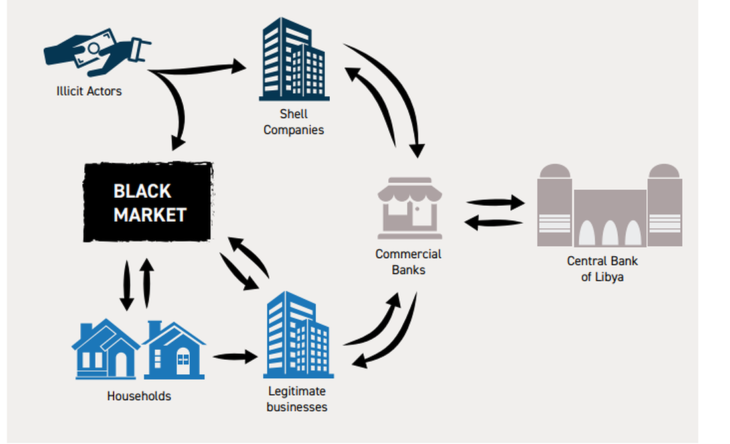
Subject to no formal governance or state control, Libya’s black market has matured into a pervasive, liquid platform through which participants can convert large quantities of Libyan dinars into dollars. In this way, substantial quantities of physical currency can change hands safely and without leaving a paper trail. Furthermore, the black market in Libya is linked to its counterparts in other countries, such as the UAE, Turkey, Syria, and Lebanon.
The array of mechanisms that enable diversion and personal enrichment developed in conjunction with the enlargement of the black market over the last decade. Between 2013 and 2016, in particular, long oil blockades in the east significantly reduced Libya’s dollar revenues from oil and gas, spurring a major crisis of confidence in the formal banking system.
The entire banking system was affected, and the dinar’s dollar value fell on the black market, while the official rate of exchange was left unchanged. This margin of difference, which lasted until late 2018, enabled massive profits, particularly via letters of credit (LCs). An adjustment of the official exchange rate in 2020 significantly reduced these opportunities. Yet LCs have carried on offering vital utility to Libyan factions as the only artery of access to foreign currency within the formal banking sector.
As black market operators, tycoons, and armed group leaders worked together to profit from the situation, the population at large suffered. The persistent, chronic shortage in banknotes made it difficult for Libyans o withdraw cash from their accounts, establishing the black market as vital to households and businesses for their everyday activities.
At the height of the liquidity crisis, from 2016 to 2019, households and merchants alike were so desperate to extract physical banknotes from their accounts that they wound up doing so on the black market, even though it required them to forgo a chunk of their bank check’s value. Only operators linked to armed groups could render this service, given the importance of physical logistics and armed might for anyone involved in accessing and distributing banknotes.
As a result of these dynamics, distinguishing between the licit and illicit sectors in Libya has become almost impossible. Cash moves constantly between the formal sector of the economy and the black market, making it easy for illicit actors to launder their dirty money by recycling it into seemingly legitimate commercial bank accounts and then sending it abroad in the form of dollars.
A study by the UN’s Inter-regional Crime and Justice Research Institute found that corruption and money laundering are cross-cutting issues that connect criminality in Libya with cross-border, international illicit financial flows. More broadly, the continued vulnerability of Libya’s banking system renders its licit economy vitally reliant upon the black market for basic movements of capital between the eastern and western parts of the country.
As the CBL’s eastern branch remains cut off from the Tripoli payment clearing system, the nation’s entire banking network remains dependent on ad hoc cash transfers coordinated by the CBL’s headquarters. Only a unified, digitized clearing system can close these loopholes. The UN has sought to utilize an internationally conducted financial review of the CBL as a means of supporting its reunification, but to no avail.
Unless and until progress is made on that front, Libya’s black market will continue to play an indispensable role in the nation’s licit economy, rendering efforts to combat money laundering difficult.
The Role of Letters of Credit (LCs)in Libya
Because the Libyan dinar is not a freely tradable currency, the CBL fulfills a crucial function when it comes to converting the dinar into US dollars and other hard currencies by providing a documentary LC program to commercial banks. The LC program is meant to let public institutions, private companies, and other bank customers convert dinars into dollars at the official exchange rate, which is fixed and published by the CBL.
Applicant companies must be registered to receive LCs from the CBL. Regulations require that companies deposit 100% of the value of the LC in Libyan dinars with the commercial bank through which they applied, although this seldom happens, according to insiders. Once the relevant documentation is approved by the commercial bank, the application is
assessed by a CBL committee through an electronic system. The governor himself eventually authorizes the list of LCs to be granted. The subsequent issuance of the LCs can take anywhere from a few weeks to several months, often depending upon the personal connections of the company in question. Correspondent banks are responsible for due diligence on the LCs, both of the transaction and of the partner bank. But given that so many Lcs are processed by CBL-owned banks, due diligence on the partner bank often equates to due diligence on the CBL and its subsidiaries.
Moreover, the CBL is also in charge of anti-money laundering checks in Libya on all completed transactions. Thus, in many cases, the CBL is present directly or indirectly at all stages of the transaction, from the applicant bank to domestic authorization, overseas execution, and subsequent scrutiny. In the context of the post-2011 Libyan crisis, access to LCs became strategically vital for any political or armed faction committed to prevailing over its rivals.
Because payments in dinars are not accepted outside the country, Libyan-based actors deprived of access to LCs would be isolated from foreign banks, unable to purchase vehicles, supplies, or other goods abroad. And given the small size of the markets inside Libya, their dinars would be of limited utility. However, LCs are also subject to misuse and abuse, including for money laundering purposes. For those who hold large quantities of ill-gotten dinars and have access to LCs, they can be employed as a convenient means of sending that wealth abroad, as Libya’s cash-based economy makes it difficult to distinguish between licit and illicit funds.
Moreover, when the black market exchange rate significantly differs from the official rate, large profits can be captured using fraudulent LCs and the complicity of willful or militarily coerced bank managers. In such instances, actors do not import the stated goods but instead present false bills of lading in order to have the CBL transfer the LC dollar amounts abroad. The foreign-based recipient of the dollars is an entity either working with or controlled by the Libyan purchaser, and the dollars thus generated are then pocketed as pure profit or sold on to black market traders at a higher rate.
The black market traders subsequently sell the hard currency to Libyan actors, including merchants and households, who need to move money internationally but cannot access the CBL’s formal foreign exchange program. This type of illegal arbitrage was particularly lucrative from 2015 through 2018.
***
The Sentry is an investigative and policy organization that seeks to disable multinational predatory networks that benefit from violent conflict, repression, and kleptocracy.
As the UN approaches the end of another year of trying to resolve the problems in the complex political landscape of Libya, it is apparent that the road to stability does not, and never did, follow a straight path leading to national elections.
Rather, it has always been a complex, winding route through an intricate web spun by a confluence of domestic and foreign interests, energized by armed groups in the country. The persistent post-2011 governance vacuum has spawned a mosaic of hybrid actors, all jostling for power and influence while remaining deeply embedded within local communities, creating a rather unique dynamic. These factions have progressively carved out their own fiefdoms, stifling the formation of the unified, civilian-led security institutions that are a critical component for long-term stability and effective governance. Their representatives are scattered throughout Libya’s military, security apparatus and civilian government. Simultaneously wielding considerable power over critical appointments and the allocation of state resources, these groups are easily capable of placing private gain above the national interest. Such a potent blend has left an indelible mark on the sociopolitical fabric and security landscape of the country, with the principal casualty being the prospect of holding national elections by the end of this year. It is highly unlikely that Libya’s apparent “Balkanization” will be resolved in the next few weeks and all the promises and endeavors in the world do not change the fact that the political impasse endures. A faux calm might have descended over the nation but this year, like the previous 11, has been one of multiple failed transitions that have taken their toll on Libyans.
Instead, there continues to be an entwining of internal divisions and external meddling that complicates any efforts to establish a unified, secure and stable Libyan state. Naturally, the local actors working to achieve such aspirations are now cynical patrons, drifting from one so-called peace plan to the next, while watching the international community chide the exclusive, self-appointed elites who have no intention of making good on the delivery of local security and better governance. Curiously, though, with elections unlikely to materialize, the focus now appears to be shifting back toward the previously abandoned process of demobilization, disarmament and reintegration, as part of broader security sector reform. However, a monolithic demobilization, disarmament and reintegration approach could do more harm than good in a nation where political power is not only divided but also deeply stratified.
But a tailored, context-specific form of demobilization, disarmament and reintegration that offers flexibility and local adaptability might well prove to be an innovative, perhaps even revolutionary, approach to achieving a sustainable peace in Libya and even beyond.
The unique nature of the armed groups in the country, specifically their deep integration with local communities, necessitates the adoption of such specially tailored approaches that take into account local security dynamics. Armed groups in Misrata, Zawiya and Zintan, for example, offer a clear example of this complexity. Their evolution and influence are intertwined with community engagement and any attempts to dismantle said groups must recognize and work with these ties.
For any demobilization, disarmament and reintegration efforts to succeed, government actors and citizens must be empowered to shape a strategic, inclusive and sustainable action plan. This requires support for efforts to develop the necessary resources, skills and mechanisms needed to spearhead such a comprehensive initiative.
The UN will be key to ensuring that such a shift in focus can succeed, but the fundamental approach to demobilization, disarmament and reintegration and reform of the security sector needs to be recalibrated, from a generic strategy to one that is more flexible and adaptable to the demands of particular local contexts.
This is not just a matter of expediency. It is also about laying the groundwork for a sustainable peace that can be replicated and expanded, not only within Libya’s borders but potentially in other conflict-ridden states. However, there is a material disconnect between the renewed interest in seeking unification of the military forces in the country as part of broader security sector reforms and the realities on the ground, which create unique challenges.
Given the politicization of armed units and the unrealistic expectation that state control might be established over private armies, the mere act of uniting them under a single command structure will not be effective. On the contrary, resolve is likely to increase among key actors to maintain their firepower so that they can secure and potentially expand their political influence, even as relationships with rivals become less hostile and more pragmatic.
Recognition of these complexities at a national level, and the influence of local communities on armed groups, mean that building effective demobilization, disarmament and reintegration strategies should emphasize local implementation efforts, in which crucial elements such as peace-building, governance and dialogue are integrated.
As most armed actors operate within their own communities, the trust of the local population must be gained and increased to persuade those communities and other stakeholders to be more receptive to new demobilization, disarmament and reintegration programs.
In addition, addressing the proliferation of hybrid and nonstate armed groups in Libya requires the creation of spaces for local governance, while overcoming the capacity and knowledge shortfalls that are inhibiting the state’s ability to respond to local needs and priorities. Key areas of focus must include the establishment of robust administrative structures, the delivery of services and revenue generation.
Moreover, increased coordination between national, subnational and local governments will be a crucial factor in reaching remote areas and solidifying the state presence there. If the focus of UN engagement shifts, rightly, to demobilization, disarmament and reintegration, it should also prioritize the fostering of civic engagement and promote a culture of political participation. After all, dialogue among citizens serves as a powerful tool for building trust.
Locally led negotiations with armed groups have demonstrated their potential to positively influence their behavior, reduce the incentives for violence, encourage moderation and lay the groundwork for defection and disengagement.
By embracing a strategy of localization within the implementation of demobilization, disarmament and reintegration and security sector reform in Libya, the UN could navigate the complex balance of power while building sustainable peace and stability, in pursuit of the even grander ambition of eventually holding free and fair national elections.
It might be premature to try to predict what the UN will do next, having missed the self-imposed goal of elections by the end of this year. However, even absent a political resolution to end Libya’s woes, an opportunity remains to reenergize demobilization, disarmament and reintegration efforts that acknowledge the complexities of local security dynamics and weave them into a credible, participative action plan.
Previous efforts fell short as a result of fragmented approaches, political malaise, conflict and a lack of inclusive platforms for diverse Libyan interest groups. If there is to be lasting stability and any tangible hope of staging national elections at some point, Libya will require effective governance institutions. Security sector reform and demobilization, disarmament and reintegration will be indispensable factors in making that happen.
***
Hafed Al-Ghwell is a senior fellow and executive director of the North Africa Initiative at the Foreign Policy Institute of the Johns Hopkins University School of Advanced International Studies in Washington, DC.
A Divided Banking System and Ineffective Financial Controls
Illicit activities flourish in Libya partly because of the dysfunctional character of the licit banking sector, which remains dominated by the state. Indeed, the mechanisms employed by Libya’s main kleptocrats cannot be understood without looking at how they are connected to the evolving economic and financial structures of the state and the administrative divisions between east and west Libya that emerged in 2014. Because of the added opacity in eastern Libya as compared to western Libya, illicit schemes prospering in the east are often harder to detect.
Policymakers’ perceptions of Libyan kleptocracy are often skewed by the lack of information available. For instance, the Tripoli-based Audit Bureau’s reports shed light on some of the irregularities affecting the government and several public institutions in the west, but the Audit Bureau’s eastern counterpart does not report publicly on the financial practices of major structures, such as Haftar’s armed coalition or its Military Investment Authority.
The Central Bank of Libya
Money laundering in Libya will remain difficult to combat unless the political and institutional split that has plagued the country’s banking sector is addressed. Sitting at the heart of the Libyan economy, the CBL in Tripoli—responsible for regulating the nation’s entire banking sector—has become a critical center of political power in its own right, determining who receives state funds.
It has both directly and indirectly conditioned the development of the economies in east and west Libya since 2011, embodying a key intersection whereby contending interests cohabitate. In several regards, the sharing of the state’s economic privileges among rival political factions is tacitly adjudicated by the CBL in Tripoli, which has been spearheaded by its governor Sadiq al-Kabir since his appointment in September 2011.
Since 2014, checks and balances on the management of state income and spending have degraded, and the absence of a legislatively approved budget has helped the CBL in Tripoli develop an unprecedented degree of discretionary authority while relegating the ministries of Finance, Planning, and the Economy into quasi-irrelevance. From 2015 on, a handful of officials at the helm of the CBL in Tripoli have decided which expenditure items requested by the two rival governments in Tripoli and in the eastern province would be funded by the state.
The technocratic institution became a politically powerful arbiter between each state organ and its own funds, making it difficult for government officials to plan economic policy. Libya operating without a proper voted budget for several years had turned CBL governor Kabir into the country’s most powerful man, a businessman who worked for the Libyan treasury department in the 1990s under Qadhafi told The Sentry.
In 2014, amid the eruption of Libya’s second civil war, the CBL in Tripoli disconnected its provincial branch in the east from the rest of the banking network’s national clearing system. The punitive move was mainly designed to prevent further disbursement of public funds to eastern-based actors, such as Khalifa Haftar’s LAAF.
The CBL in Tripoli carried on wiring the salaries meant for public sector employees in eastern Libya, including military officers aligned with Haftar, provided they were hired in 2014 or earlier, but the salary money for eastern-based recipients was funneled into accounts at commercial bank branches located in the west, not the east. Because of the east-west split introduced in the autumn of 2014, obtaining physical cash became particularly difficult for the commercial banks in the east.
In response, the CBL’s eastern branch established its own processes, creating a parallel ledger system and a secondary banknote circuit. The resulting discordance with Tripoli has created profound vulnerabilities in Libya’s banking system and public finances. Between 2014 and 2020, the interim government of Prime Minister Abdullah al-Thani, based in the east, borrowed approximately 71 billion Libyan dinars (LYD) (then $52 billion), mainly from the CBL’s eastern branch.
To a lesser extent, the Thani government also borrowed from the commercial banks in the east.103 In May 2016, the eastern authorities began importing dinar banknotes from Russia, again without official authorization from Tripoli. Over the subsequent four years, Kremlin-controlled printing company Goznak delivered at least 14 billion LYD (then about $10 billion) in the form of Russian-minted banknotes to Libya’s eastern factions.
The real total was likely a few more billion, according to an eastern Libyan business owner and two banking veterans interviewed by The Sentry. The eastern-based authorities distributed the Russian banknotes in a nontransparent fashion, thus impairing the ability to track their allocation. Despite rhetorical claims to the contrary, no meaningful reunification of the CBL has yet materialized.
In August 2023, the CBL’s Tripoli leadership and its Benghazi counterpart jointly announced their reunification, with the CBL’s eastern chief agreeing to act as the nationwide institution’s deputy governor under Kabir’s continuing governorship. Critically, however, the notion of a board of directors tasked with overseeing the work of the CBL was removed from the CBL’s website—a potential violation of Libyan law. Moreover, no indication exists that the longstanding issue of irregular public debts accumulated in eastern Libya was resolved, nor was the issue of two separate treasuries—one for each rival government.
Until proven otherwise, the fault lines within the banking sector have yet to be repaired. Divisions between governments and their rival CBL leaderships have helped undermine budget negotiations. Negotiations between CBL officials from the east and west yielded a tentative agreement on a unified budget in January 2021. But these talks ceased after the March 2021 emergence of the GNU and never gave rise to a ratified, unified budget law. Nonetheless, in the spring of 2021, Tripoli integrated many eastern expenditures into its own finances.
In addition to that, the Tripoli CBL sent funds to the LAAF and eastern authorities, an opaque arrangement that continues today. Yet, following the March 2022 emergence of a new parallel government in Sirte, the eastern factions reactivated the financing mechanisms developed in 2014-2021 for the purpose of providing a funding source for the LAAF and the House of Representatives-appointed government—without oversight and without coordination with Tripoli authorities. The sway of the CBL extends into the private sector as well. The CBL has the ability to influence which actors succeed in the private sector by determining which businesses are able to access trade financing.
Notably, the CBL is the majority shareholder in the two overseas banks that handle a significant proportion of Libya’s trade financing: the Arab Banking Corporation (Bank ABC), headquartered in Bahrain, and—via the 100% CBL-owned Libyan Foreign Bank—the British Arab Commercial Bank, headquartered in the UK. Sadiq al-Kabir joined the board of Bank ABC in December 2011,124 becoming the first CBL governor to hold the position of chair of the Bank ABC Group’s board of directors concurrently. Bank ABC reported that Kabir received $142,500 in 2022 in remuneration for his engagement with the board.
A broken system
While many of the frailties in Libya’s banking sector today arose as a result of the polarized politics of 2014, they are perpetuated because they facilitate the mechanisms employed by Libya’s kleptocrats. The continued split of the banking system aids an array of illicit practices and black market businesses whose beneficiaries use their clout and influence to resist a return to normalcy.
Those responsible for overseeing the banking system know that they would be easier to replace if they implemented proper systemic fixes, and so they are incentivized to merely manage the broken system rather than repair it. One clear illustration of this tendency is the constant necessity for the CBL to distribute large amounts of physical banknotes across the country. Additionally, some of the banking-related abuses carried out from 2014 to 2020 are likely to be repeated.
For instance, from 2016 to 2018, eastern Libyan bosses used the Russian-printed banknotes to buy large quantities of dollars on the black market, weakening the dinar’s exchange rate and further eroding the purchasing power of ordinary households across Libya. Today, there is little to stop Haftar’s faction from importing several more billion in Russian-printed banknotes, and this may even be likely given that, in late 2022, Haftar’s faction resumed borrowing from eastern commercial banks without formal authorization from Tripoli.
The Haftar family has developed its sway over eastern-based economic and financial institutions, sparking fears about systemic vulnerability and potential abuses of state finances. From 2014 to 2020, Haftar’s military influence helped convince commercial banks in eastern Libya to assist LAAF-aligned bodies; this included the Commerce and Development Bank, which was led by Jamal Abdel Malek until May 2022.
More recently, the Haftar family and its closest associates have gone even further in ensuring the political loyalty of key bankers and financiers in eastern Libya. Since 2022, several positions with crucial financial responsibilities have been given to individuals with close links to the Haftar family.
***
The Sentry is an investigative and policy organization that seeks to disable multinational predatory networks that benefit from violent conflict, repression, and kleptocracy.
The former head of the Supreme Council of State, Khaled Al-Mishri, recently announced that he and Aguila Saleh agreed on a comprehensive road map that includes setting a date for the elections, changing the presidency of the High Electoral Commission, and agreeing on an alternative government to the national unity government, which will be assigned the main task of holding the elections.
Khaled Al-Mishri takes a hostile stance towards the head of the National Unity Government, Abdul Hamid Al-Dabaiba. He accused him of corruption several times and that he was harnessing public money to finance armed groups that would ensure his stay in power and his influence in the capital. Al-Mishri promised to take additional measures if Al-Dabaiba did not accept the consensus of the two councils on the alternative government to the national unity government.
Aguila shares Saleh Al-Mishri’s hostile stance towards Al-Dabaiba, and the motive is the latter’s lack of submission to the authority of the House of Representatives and its president, and his failure to respond to the demands of the army leadership affiliated with the House of Representatives, especially with regard to assigning the Ministry of Defense to a person loyal to Haftar and providing the support and funding requested by the Commander-in-Chief of the Army.
The new road map was met with Haftar’s support for it, and observers confirm that Haftar’s support for changing Dabaiba came after negotiations between his representatives and Dabaiba faltered regarding the restructuring of the national unity government according to Haftar’s requests.
Supporting the consensus of Aguila and Al-Mishri to change Dabaiba may be a form of pressure on the latter to accept the ministerial reshuffle. What Haftar demands, and if Dabaiba’s stubbornness continues, changing it will be necessary.
Khaled Al-Mishri succeeded in passing the map within the Supreme Council of State, and the matter was not without legal violations confirmed by a number of members of the Council related to violations of the voting mechanism and quorum as stipulated in the regulations governing the work of the Council. However, nothing similar occurred by the House of Representatives, as The mission did not announce a clear position on the map, nor did the ambassadors of countries influential in the Libyan scene.
The dispute over oil revenues escalated
The use of oil as a card in the Libyan conflict dates back to the year 2013, after the head of the Petroleum Facilities Guard and a number of his followers and supporters closed oil export fields and ports in response to the desire of a group of activists and others, under the pretext that the Minister of Oil, affiliated with the Muslim Brotherhood, was stealing oil by tampering with meters. His account. The matter was repeated in several regions until international parties intervened and restricted the process of subjecting the flow of oil to internal conflict.
Since the failure of the attack on the capital, Tripoli, talk about the fair distribution of wealth and income has become at the heart of the struggle and negotiation, and because oil revenues jumped to an unprecedented level after adjusting the dinar exchange rate from 1.4 dinars to the dollar to 4.46 dinars to the dollar, and because the National Unity Government expanded spending, as he considered it Its opponents include electoral propaganda funded by the state treasury. The conflict over the management of oil revenues escalated, and this became part of the demands of international parties to settle the Libyan conflict. The matter reached the point of threatening Haftar to act if a higher committee was not formed to supervise the management of the state’s public finances, revenues and expenditures.
The Presidential Council issued its Resolution No. 18 of 2023 to form a higher committee headed by the President of the Presidential Council, Mohamed Al-Manfi, and the Deputy Chairman of the National Oil Corporation, Farhat Ben Gudara, and included a number of ministers in the National Unity Government close to Dabaiba and the Governor of the Central Bank, and a number of figures close to Haftar.
Regardless of whether the committee’s response was to avoid Haftar’s threats; As the deliberations on its formation preceded Haftar’s speech in which he gave officials until the end of August to fulfill his request, it could block the way for Haftar’s attempt to seize control again after he lost a fair amount of his influence and authority after failing to enter the capital in 2019. -2020; This is because the committee will not be able to submit its first report before the end of August, which is the deadline set by Haftar for action. It has also been welcomed by the international parties intervening in Libyan affairs, and therefore its rejection by Haftar will put him in a difficult situation and he may not find local and external support for any adverse move. .
The purpose is not audit and financial control procedures
In his justification for his request to form a supreme committee to supervise oil revenues and its spending, Khalifa Haftar focused on the corruption and waste of public funds in which the National Unity Government is involved, and on the West of Libya’s monopolization of oil revenues while the East and South are deprived of them.
This is an unusual and uncharacteristic speech given by Haftar, and reflects a shift in his view of matters and his approach to the crisis. The eastern and southern regions are subject to Haftar, and attempts to have financial decision-making authority within this geography have failed since the formation of the interim government in the east, in 2014, which was internationally recognized only for a few months until the Skhirat Agreement came and gave legitimacy to the Government of National Accord in the capital.
The international community also refused to acknowledge the change of the governor of the Central Bank by the House of Representatives. It also rejected the parallel bank in the east, and the Tripoli central bank remained the legitimate one.
The attempt to replace Fathi Bashagha with Dabaiba also failed. Because the governor of the Central Bank did not cooperate satisfactorily with the governments of the East, and because financing became one of the biggest challenges to the continuation of Haftar’s project and plans to impose the army in the political equation and make it a difficult figure and the tool to enable Haftar to reach power and consolidate his foundations, the trend became to share oil revenues. If the Supreme Committee formed by the Presidential Council does not succeed in achieving Haftar’s demands, it is likely to fail, but this will not be confirmed before a considerable period of time has passed.
The direction of the conflict and alternatives to contain its repercussions
The experience of negotiations between the House of Representatives and the Supreme Council of State, which lasted for more than seven years, reveals that a fair and balanced consensus has not been and will not be possible, and that a fair and balanced consensus requires a change in the positions of the parties to the conflict, especially the House of Representatives and its ally, the General Command, who have continued to adopt a conquest approach.
Imposing conditions of consensus and not taking into account the demands of the front opposite them on the political track, which, even if it continued for a period of time, clings to its demands, but its political front, represented by the Presidency of the Supreme Council of State, made concessions and went along with the Presidency of the House of Representatives in most of its demands, which appeared to be in accordance with the correct approaches to transition and building. Institutions are unacceptable, including the insistence on dual citizenship and military personnel running for presidential elections.
The delegational path also reveals that development and progress occur when Western diplomacy, specifically American, is active, and that direct American pressure through figures with influence in the official American system was bringing the Libyan file from the bottom of the crisis to the area of movement, interaction and development. However, American diplomacy is not always active regarding… Libyan conflict; This was explained by the lack of importance of Libya to the United States, given its list of priorities within its foreign policy.
The long duration of the conflict has reinforced regional, regional and tribal tendencies, and this has been compounded by the growth of conflict, the weakness of authority, and the absence of projects that fill the vacuum and raise the level of economic and social well-being. This tendency constitutes the most prominent challenges to achieving a breakthrough on the political track.
It is noted that the rejectionist front in the House of Representatives, which succeeds In the confusion of consensus between the two councils, it is driven by regional figures that today find greater freedom in which to move, following the tendency of the military leadership in Al-Rajma to exploit this tendency in its political battle.
There is a flaw in the structure and efficiency of the negotiation that may have the effect of not reaching a fair and balanced consensus that leads to stability and paves the way for the correct transition to the post-conflict phase. This imbalance appears through the fragmentation of official political bodies, especially in the West.
The political front of the Western Front, which is the Supreme Council of State, fell into a sharp division among its members that appeared clearly in the position on the withdrawal of confidence from the National Unity Government by the House of Representatives and then in the constitutional amendment. The thirteenth and the outcomes of the 6+6 Committee. The continuation of this conflict within one front pushes for alignments that may be at the expense of the political process and in favor of the militarization project and the imposition of approaches by force of arms.
The opinion of the Legal Department of the United Nations Mission in Libya regarding the outcomes of the consensus between the House of Representatives and the Supreme Council of State criticizes the thirteenth constitutional amendment and the recent election laws, which include imposing two rounds of presidential elections, canceling parliamentary elections if the presidential elections are not successful, returning candidates to their previous jobs if they lose in the elections, and the participation of the military in the elections. Elections, and may contribute to reviewing the entire political process.
External parties still play a negative role in the Libyan conflict, and the clear influence of Egypt and Turkey appears in determining some of the positions of the parties to the Libyan conflict. It is known that Cairo and Ankara have not yet agreed on an approach to resolving the Libyan crisis, with emphasis on the impact of American intervention and Washington’s ability to move stagnant waters. It pushed the parties to agree, but the confusion, confusion, and inconsistency of American policy towards the Libyan crisis reduce the impact of American pressure on the parties to the conflict.
It seems that the Wagner paper and the Russian role in Libya did not reach its final destination even after the crisis between the Kremlin and the company, and the approach of Washington and its European allies towards the Russian presence in Libya remained confused and did not move towards real pressure that would end in removing the Russian mercenaries or remove them from the circle of influence in Libya. Libyan crisis.
Therefore, the life of the crisis does not seem short, and the conflict is still prolonged and may take a more severe form. Relying on a popular movement that rejects the extension of the crisis and the survival of the current bodies on the scene will be the way to change the direction of the conflict and push for settlement and stability. The longer the pressing popular influence is delayed and the more positive external intervention fails, the more the scenario of fragmentation and disintegration of the state entity and its institutions becomes certain.
A rapid ongoing surge in corruption, looting, and organized crime perpetrated by Libya’s current rulers threatens the survival of the country’s essential institutions, including the nation’s vital oil sector. Unless bolder international policies are adopted, a relapse into armed conflict is a distinct possibility. Policymakers committed to a stable and sustainable Libya should focus on curbing its kleptocratic boom. They must revise their approach toward the country and embrace a framework that prioritizes inclusive state building and ends any appeasement of corrupt leaders.
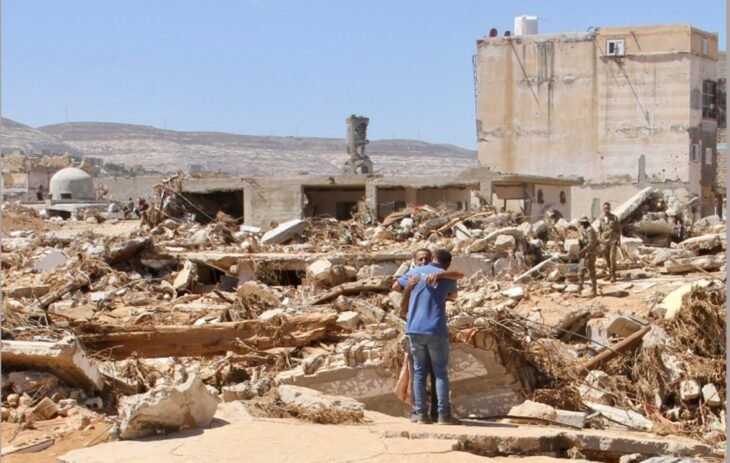
With foreign exchange reserves, vast natural resources, and a population of around seven million, Libya has remarkable per capita wealth. Yet, despite government expenditures continuing to rise, that wealth is not being sufficiently deployed in service to its population. The devastating loss of life and property from the September 2023 floods in Derna and other northeastern Libyan areas only confirms the current Libyan leaders’ neglect of significant portions of their nation’s economy and their indifference to crumbling infrastructure.
In 2022, the United Nations (UN) assessed that 24% of women and 30% of children in Libya required targeted humanitarian assistance, and Libya ranks 171 out of 180 on the Transparency International Global Corruption Perception Index. The frailty, opacity, and excessive personalization of state institutions provide Libya’s political entrepreneurs, armed group leaders, and organized crime bosses with numerous
ways to steal or misuse public resources.
Lately, the growth in Libya’s kleptocratic sector has accelerated. This means that Libya is not heading for any new equilibrium or new order. Instead, there is a substantial risk that its current leaders might end up destroying the country’s most essential institutions, including the National Oil Corporation (NOC), which is responsible for almost all of the nation’s income. Consequently, while policymakers in Washington and other Western capitals see the absence of large-scale exchange of fire since June 2020 as a sign of progress, they are underestimating the costs associated with turning a blind eye to the corruption of Libya’s current leadership—a small yet fractious set of mostly unelected individuals.
Owing to the severity of the Libyan crisis’s most violent phases between 2014 and 2020, Washington and other Western capitals remain wary of a relapse into armed confrontation. Policymakers have therefore tended to focus their engagement on de-escalation and conflict mediation. In doing so, they have been tempted to look favorably at efforts by Libya’s incumbent elite to work out informal arrangements among themselves, the hope being that such tentative deals will result in stability and peace.
Kleptocracy, however, cannot be the basis upon which a functioning state is built: a corrupt bargain among Libya’s incumbent leaders does not constitute sustainable peace-building, especially given that no progress is currently being made in security sector reform or militia disarmament. Although no compelling analogy exists between Libya’s predicament and that of other troubled nations, lessons from Sudan, Iraq, Afghanistan, and Lebanon offer clear warnings of the dangers that Libya faces from its inability to disarm militias, combat kleptocracy, and provide for its citizens.
The ongoing Sudan war, which erupted in April 2023, is partly attributable to the fact that both main warring factions were allowed to expand their kleptocratic empires in recent years. Lebanon’s economy has collapsed, while the leaders and technocrats who bankrupted it seek to evade responsibility. In oil-rich Iraq, the informal deals that buttress the nation’s current rulers fail to produce any positive outcomes: Amid weak governance, durable stability has remained elusive, armed groups’ supremacy has not receded, and the nation’s socioeconomic standards have continued to erode.
In Afghanistan, the collapse of the Western-backed government in 2021 was partly attributable to the prevalence of corruption during the years leading up to Washington’s decision to withdraw and the subsequent takeover by the Taliban. High levels of corruption can significantly increase the likelihood of fresh outbreaks of conflict, casting doubt on the assumption that dividing the spoils can be a sustainable solution.
With regard to Libya, as long as the United States (US), United Kingdom (UK), and like minded governments—as well as international organizations such as the UN and regional bodies such as the European Union (EU)—continue to pursue their current course, the state will remain captured by those who exploit it. Transactional bargains between existing power brokers with no popular mandate are so flimsy, opaque, and devoid of political legitimacy that they can yield neither a genuine reconciliation nor a sufficient improvement in outcomes for the population.
The first reflex of the ruling elite is to maintain their own positions of power and secure their ability to extract wealth from the public domain. And as Libya’s kleptocratic activities swell, institutions grow weaker. New motives for violent clashes—different from those of the 2014-2020 era—develop. While the contention among rival political authorities is well known, assessing Libya’s conflict through the lens of kleptocracy also highlights the need to understand the complexities of Libya’s banking sector and the growth of the black market.
Libyan kleptocrats—who often enjoy the backing of foreign states—utilize Libya’s commercial banks and formal state institutions as conduits for recycling their ill-gotten funds domestically or for sending them abroad without facing meaningful scrutiny. The east-west split that has affected the country’s banking system since 2014 currently facilitates the maintenance of schemes for elite enrichment.
Tackling these schemes in an even-handed fashion is rendered difficult by the lack of publicly available information, a problem often more pronounced in the country’s east than in the west. The institutional asymmetry that prevails between eastern and western Libya thus warps many policymakers’ perceptions of the nation’s illegal activities. Policymakers seeking to avoid the danger of greater instability in Libya or the relapse into armed conflict should urgently address the country’s kleptocratic boom. Kleptocracy in Libya does not merely hurt the population, it also threatens neighboring countries and could impact Europe and the US.
Thus, the priority must be to tackle the entrenched culture of impunity, an endeavor that should be pursued by bolstering checks and balances in Libya’s economic governance system and increasing the cost of profiteering from corruption and crime.
***
The Sentry is an investigative and policy organization that seeks to disable multinational predatory networks that benefit from violent conflict, repression, and kleptocracy.
The Russian Deputy Defense Minister, Yunus-bek Yevkurov, arrived in Benghazi this past week to discuss joint cooperation between Libya and Russia in various fields, including energy, defense, and infrastructure. This cooperation includes discussions on potential arms deals, energy investments, and support for infrastructure projects in Libya.
It has been reported that this is the third visit of Yevkurov this year. The visit aims to discuss prospects for cooperation in combating international terrorism and other issues of joint action.
The Wagner Group is a Russian private military company that provides security services to protect military and oil infrastructure in Libya. The group has been reported to be operating in support of the Libyan National Army (LNA), led by General Khalifa Haftar, who has been backed by Russia in the ongoing conflict in Libya. The Wagner Group has also been reported to have a presence in other conflict zones around the world, including Syria and Ukraine.
Previously, a Russian delegation, led by Deputy Defense Minister Yunus-bek Yevkurov, discussed the future role of the Wagner Group in the country on August 22. After that, Wagner Group leader Yevgeny Prigozhin announced that his company was operating at full capacity with the purpose of “making Africa freer.” On August 23, Prigozhin and some of his loyalists were killed in a plane crash close to Moscow.
Moscow needs the Wagner Group not only for strategic and economic reasons to continue operating in the Central African Republic, but also to maintain its presence in other African countries.
During the Cold War and following decolonization, Africa played a significant role in the Soviet Union, providing ideological and economic opportunities. Moscow sought to spread the Soviet-era communist creed, expand its influence in strategic areas, and capitalize on the African market, particularly in the arms sector. Russia now supplies arms to 21 African nations, with a focus on Algeria, and has maintained a presence in Libya with approximately 11,000 Russian operatives since the 1970s.
The Wagner Group’s presence in Libya became evident during the siege of Tripoli in April 2019, but it had been active there since at least 2018, controlling strategic oil fields and providing support to the LNA. During the third Libyan Civil War, the Group, backed by Russia, fulfilled various roles, including controlling infrastructure, advising local security forces, providing intelligence, and influencing public opinion through social media.
In the 1970s, Russia and Libya signed economic agreements worth billions of dollars, and this economic partnership has continued. The Kremlin aimed to stabilize the country and pursue collaborations, with the Russian government preferring a pragmatic approach through the activities of the Wagner Group, in contrast to the diplomacy favored by many European governments.
In recent months, there have been multiple meetings between Haftar and Russian officials, discussing joint cooperation between Libya and Russia. Reports emerged in November about Russian authorities cooperating with “Libyan authorities” to establish a Russian military corps in Africa, leading to US warnings against reliance on Russian support. The US State Department expressed concerns about the harmful impact of the Russian paramilitary group Wagner in Libya, emphasizing their destabilizing activities in the region.
UN Envoy to Libya, Abdoulaye Bathily, highlighted the lack of a unified army in Libya, with militias exerting control in different regions and mercenaries adding to tensions in the south. Moreover, Bathily stressed the need for elections to establish a unified authority and warned of increased fragmentation without progress. He extended invitations to key parties in Libya for a meeting to address disputed electoral laws and reach a political settlement.
Various Mercenary Groups Operating in Libya
Since the security agreement concluded by the Turkish President with the head of the previous Government of National Accord, the issue of mercenaries has once again become a focal point in Libya. Thousands of mercenaries of different nationalities have been flowing into Libya, specifically to the western regions of the country controlled by the Government of National Accord, which is supported by Turkey.
Turkey has established 10 training camps to rehabilitate fighters and transport them to Libya. These fighters are first transported through two camps on the Syrian-Turkish border via Turkish military aircraft to Istanbul and Ankara, and then they are transported to Libya via Libyan civil aviation. The Turkish company “Sadat” supervises this process. Turkey has transferred over thirteen thousand Syrian mercenaries from Syria to Libya during the ongoing conflict. The United Nations estimates that there are more than 20 thousand foreign mercenaries in Syria, including 13 thousand Syrian fighters.
In early 2017, Wagner Group mercenaries were present in Libya. The leaders of the private military company Wagner stated that they would soon send forces to Libya. Detailed reports emerged showing the presence of 3,000 men, with some estimates reaching 3,500 fighters. These mercenaries from Wagner were stationed at a base in Benghazi and participated in various operations of the Libyan National Army.
There is also a group of Sudanese mercenaries fighting in Libya, represented by elements of the Sudan Liberation Army Movement, the Transitional Council of the Sudan Liberation Movement, and the Sudanese Justice and Equality Movement. It is estimated that 3,000 Sudanese mercenaries are fighting in Libya, stationed in Umm al-Aranib, al-Qatrun, Sebha, and the vicinity of Kufra, reaching the areas south of the Oil Crescent.
Regarding the arming of mercenaries, Libyan military reports indicate that Syrian mercenary groups are using weapons that came as part of a shipment from Algeria. Airports in western Libya are open to transport mercenary terrorists under international supervision, and Turkish weapons are transported through sea ports to arm foreign fighters. The Libyan National Army forces have monitored this and arrested some mercenaries. Some countries exploit their good relationship with Iran to smuggle large quantities of weapons to Libya, coordinating with the Turkish side and leaders of mercenaries inside Libya.
A ceasefire with the departure of all mercenaries and foreign fighters
At the end of October 2020, the United Nations Support Mission in Libya published a copy of the permanent ceasefire agreement, signed by both parties to the Libyan conflict at the meetings of the Joint Military Committee. The agreement includes the evacuation of all military units and armed groups from the lines of contact, returning them to their camps, and the departure of all mercenaries and foreign fighters from Libyan territory within a maximum period of 3 months.
The Berlin International Conference was held on January 19, 2020, through the “Berlin 1” conference. It was attended by the governments of Algeria, China, Egypt, France, Germany, Italy, Russia, Turkey, Congo, the Emirates, Britain, and the United States, along with representatives of the United Nations, the African Union, the European Union, and the Arab countries. The main objectives of the conference were to reach consensus among the participating countries and secure an international umbrella to protect Libyan dialogues about the future of the country. The conference outcomes also supported the arms embargo, a ceasefire, a return to the political process, reform of the security, economic, and political sectors, and respect for human rights and humanitarian law.
The “Berlin II” conference in June 2021 called on the Libyan authorities, including Parliament, the Presidential Council, and the Government of National Unity, to prepare for presidential and parliamentary elections on December 24. It also emphasized the need to clarify the constitutional basis for the elections and enact necessary legislation. The conference stressed the importance of withdrawing all foreign forces and mercenaries, completing the process of unifying military institutions, reforming the security sector, and initiating a comprehensive national reconciliation process based on rights and justice.
In June 2020, Egyptian President Abdel Fattah El-Sisi announced a new initiative called the “Cairo Declaration” to resolve the Libyan crisis. The declaration emphasized the unity of Libyan territories, respect for international efforts and Security Council resolutions, and the commitment to a ceasefire and the completion of the work of the Military Committee (5+5) process in Geneva under the auspices of the United Nations. The declaration also called for the removal of foreign mercenaries from Libyan territory and the dismantling of militias, allowing the armed forces to cooperate with the security services in their military and security missions in the country.
What hinders the removal of mercenaries from Libya?
All parties, whether local or foreign, are not serious about removing the mercenaries. The current situation only leads to a reduction in their numbers. As of the end of February 2021, the United Nations estimated that there were between 17 to 20 thousand Syrians supporting the forces in the west of the country, while Sudanese and Chadians support the national army forces. The General Command of the National Army announced the removal of 300 mercenaries as the first batch in coordination with neighboring countries.
The Special Representative of the United Nations Secretary-General to Libya, Abdullah Batili, called for a renewed commitment to fully support the implementation of the ceasefire agreement in Libya that was signed in 2020. This call was made at the conclusion of the meetings of the Joint Military Committee (5+5) in Sirte in 2023. Batili urged the government to allocate appropriate resources and intensify political efforts to end the political impasse and restore legitimacy to Libyan institutions through elections.
Furthermore, it is crucial to reunite the military and security institutions, as well as remove mercenaries and foreign fighters in accordance with an action plan. This is necessary to preserve the sovereignty and unity of the Libyan state. Neighboring countries should be involved in ending the presence of these mercenaries on Libyan lands. Additionally, meetings with all parties, including actors, youth, women, and civil society, should be intensified to ensure a desire to reach elections and complete the constitution. The constitution represents a cornerstone for Libyan society in building the state and providing space for freedom of opinion and expression to citizens.
***
Prof. Miral Sabry AlAshry is Co-lead for the Middle East and North Africa (MENA) at the Centre for Freedom of the Media, the Department of Journalism Studies at the University of Sheffield.
The life of the crisis does not seem short, and the period of conflict is extended and may take a more severe form. Relying on a popular movement that rejects the extension of the crisis and the survival of the current bodies on the scene will be the way to change the direction of the conflict and push for settlement and stability.
Introduction
The Senegalese, Abdoulaye Batille, was appointed as a special envoy of the United Nations Secretary-General for Libya after a dispute between members of the Security Council, as they are the ones who have the authority to approve special envoys. The dispute continued for nearly a year after there was no agreement on three candidates for the position who were considered affiliated with the members of the Council who were divided over the Libyan crisis.
Russia had reservations about continuing to assign Stephanie Williams to the mission. It also rejected the British candidate, and no agreement was reached on the Portuguese candidate. The dispute between those who have veto power in the Council gave relief to the African movement, as the African Union put forward several proposals to choose an African figure to assume the position. The Union Secretariat nominated an Algerian diplomat and a second diplomat from Ghana, but the nominations were rejected.
The continuation of the conflict within the Council, which was manifested in the rejection of decisions to extend the mission for a long period and the lack of agreement on the candidates of the conflicting parties, strengthened the fortunes of the Africans. Abdullah Batili, from Senegal, was the alternative to end the division within the Security Council after African diplomacy became active and succeeded in filling the vacuum and bridging the gap between the United States. The United Kingdom is on one side, and Russia is on the other.
Batelli’s approach to the Libyan conflict
Abdullah Batili assumed his position with an approach to containing the conflict between the Libyan parties, which was based on giving an opportunity to the House of Representatives and the Supreme Council of State, which are concerned with the political settlement and reaching elections. This was the focus of his first briefing before the Security Council, in October 2022, in which In it, he stressed that he would urge the two councils to continue their dialogue to accomplish what is required to hold the elections.
In the event that the two councils fail in the task entrusted to them, Batelli creates a body to do what is necessary. This body is called the “High-Level Committee,” which consists of representatives of the Libyan political, social, and societal forces, without talking about its composition in terms of numbers or the way to accomplish its mission.
After Batelli’s second briefing before the Security Council, which was in January 2023, in which he presented his plan to move the political wheel and accomplish the electoral requirements, the Libyan political track witnessed a start after a pause and activity after a stagnation. The two chambers were soon reunited, and it was announced that they agreed on the constitutional rule that establishes the elections, which was called the Thirteenth Constitutional Amendment.
This was followed by an agreement to form a committee consisting of 6 members from each of the two chambers, which was entrusted with the task of drafting laws for presidential and parliamentary elections. Which announced the agreement of its members on the laws, and the third constitutional amendment stipulates that the laws agreed upon by the 6+6 committee become final and irrevocable. However, the disagreement over some of the contents of the committee’s outputs disrupted the laws and brought the path to stagnation again.
What influence does Batelli have on the parties to the Libyan crisis?
It seemed to many that Batelli had succeeded in achieving a breakthrough in the Libyan crisis and was able to drag the Libyan parties to consensus after they had been far from it. An agreement was signed on the thirteenth constitutional amendment, and an agreement was reached on the committee to draw up election laws, and that was in a few months after a stumble and disagreement over these files for nearly The two years.
Observers believe that Batelli was the face of a Western movement and American-European pressure that pushed the parties to the conflict, especially the Eastern Front, which is politically led by the House of Representatives, to achieve progress on the path of settlement and agreeing on the requirements for holding elections. Washington lowered its weight slightly with the arrival of the Director of the Intelligence Service, William Burns, to Libya and his meeting with the most important poles of the conflict in the West and the East, then the Deputy Secretary of State for Near Eastern Affairs, Barbara Leaf, came.
Their role was clear and their impact was clear in neutralizing those obstructing the political track temporarily, so it took action. The wheel of consensus and agreement was signed on the most important files.
Reasons for faltering path after consensus
As soon as the 6+6 Committee announced the election laws it had agreed upon, two groups formed within the House of Representatives and the Supreme Council of State to reject those laws. The House of Representatives bloc, which included more than 60 members, however, has a regional position regarding the changes agreed upon by the committee members regarding the number of members of the next House of Representatives and the electoral districts that comprise it.
The committee members had agreed that the new House of Representatives would consist of 297 members, an increase of 97 members from the current House. The bloc of representatives that rejects this change, on the pretext that the committee has deviated from its course and exceeded its powers, fears that there will be a change in the weight and direction of the new council at the expense of the representation of their region in it.
It appears that the members of the eastern Libyan are the ones behind this position, and their counterparts in some regions of the country, especially the south, support them in it. The Supreme Council of State bloc started by rejecting the outcomes of the 6+6 Committee and its hardline position regarding the thirteenth constitutional amendment.
This bloc considered that the agreement that occurred between the presidency of the two chambers and those who supported them had its legitimacy challenged, but was invalid, and was not based on the controls governing and regulating the work of the two chambers, and they accused the presidents of the two chambers of involvement in absurd practices that conflict with the Constitutional Declaration.
The Speaker of the House of Representatives, Aguila Saleh, was reluctant to issue laws. As he is authorized to do so, he stated his reservations on a number of its provisions, especially the points related to the imposition of two rounds in the presidential elections, even if it is confirmed that one of the candidates won with more than 50% of the votes. He also made reservations on the points related to the conditions for candidacy in the presidential elections, which relate to the abandonment of holders of votes. non-Libyan nationalities before submitting their nomination papers.
This point specifically concerns Khalifa Haftar, as he holds American citizenship in addition to Libyan citizenship. Aguila Saleh had suggested, before the 6+6 Committee began its work, that the candidate for the presidential elections renounce foreign citizenship after winning the presidential elections and before… Oath and assumption of office.
Batelli’s position on the consensuses of the two chambers
In the reactions of the UN Special Envoy to Libya, there was no expression of his satisfaction with the agreement of the House of Representatives and the Supreme Council of State on the thirteenth constitutional amendment. He only indicated that the amendment did not address some important issues directly and ignored controversial issues, nor did it support the outcomes of the committee. 6 plus 6.
He did not even attend the ceremony to announce the election laws in the Moroccan city of Bouznika. In his third briefing to the Security Council, Batelli praised the committee’s outputs but considered them “insufficient to resolve the most contentious issues and enable successful elections”. In his aforementioned briefing, Patelli summarized the reasons for the disagreement over election laws in:
Nomination conditions for candidates in the presidential elections.
Provisions that provide for a mandatory second round of presidential elections even if a candidate receives more than 50 percent of the votes in the first round.
Provisions stipulating that parliamentary elections will not be held if the first round of presidential elections fails.
Provisions requiring the formation of a new interim government before holding elections.
In a later statement, the UN Special Envoy stressed the need to take into account the reasons for the dispute over the election laws announced by the committee and urged the two councils to complete the shortcomings and address the shortcomings in the political process.
Patelli’s positions revealed his discomfort with the recent developments, and it seems that he identified with the American/British position, which was reserved on allowing all political parties to run in the elections. Washington and London have reservations about the candidacy of Saif al-Islam Gaddafi, as he is wanted by the International Criminal Court.
On the other hand, Batelli did not object to the two councils continuing to negotiate in order to address the differences between the political parties and to rectify the shortcomings in the electoral laws. Rather, he urged them to do so, as previously mentioned, and he did not refer, from near or far, to the alternative path or the high-level committee that he initiated in his second briefing. Before the Security Council.
It seems that the acceleration of events regarding the political track and the continuation of the negotiations that produced the constitutional rule, electoral laws, and the road map forced the international organization concerned with the Libyan issue to wait and watch for the results of this track, and this is what made Batelli confused in dealing with the consensuses of the two councils, even with their turmoil, the ambiguity surrounding them, and the disagreement that took place around them. .
The UN envoy to Libya, Abdoulaye Bathily, has confirmed that he is engaging in discussions and consultations with various political parties in the country. This is in an effort to save the election project, as disagreements have arisen over the method of access to polling stations.
The aim is to make a breakthrough in the political process, resolve disputes related to election laws, and form a unified government.
The UN envoy has met with the heads of the Government of National Unity, Abdel Hamid al-dabaiba, the Presidential Council, Mohamed Al-Manfi, and the Supreme Council of State, Mohamed Takala. He has also met with the Speaker of Parliament, Aguila Saleh Issa, and the Commander of the Libyan Army, General Khalifa Haftar. Despite these efforts, the leaders have shown no inclination or desire to reach agreements on controversial issues, particularly electoral laws and the formation of a unified government.
The leaders within the authority are resistant to change and refuse to reach agreements, creating disagreements to prevent the elections from taking place. They benefit from the conflict and use it to maintain their positions and prolong the political crisis. Anti-election forces are also exerting control over the situation.
Bathily is now attempting to push the political process towards elections. However, he has lost the confidence of the Libyan parties and faces criticism and accusations of bias. Calls for his departure have been made. If he were to leave, it is unclear who would be able to save Libya and unify the government. Both governments seem to have a desire to prevent a political solution.
The path to a political solution in Libya remains uncertain. The main parties have failed to reach a consensus on organizing elections. Bathily has emphasized the need for an alternative plan if an agreement on holding elections cannot be reached. He has even threatened to bypass the roles of Parliament and the Supreme Council of State in issuing election laws. However, the details of this plan have not been revealed.
Libya is currently experiencing a worsening political crisis due to the existence of two governments in the country. One government, appointed by Parliament, is located in the east, while another government in the west emerged from political agreements sponsored by the United Nations. The government in Tripoli, led by Abdel Hamid al-dabaiba, refuses to relinquish power unless through elections. However, there are concerns about whether these elections will actually take place or if they will be manipulated for financial and political gain.
The first-ever presidential elections in Libya were initially scheduled for December 24, 2021. However, political disagreements among the various parties involved in the Libyan crisis, as well as disputes over the election law, have prevented their occurrence. The elections have been postponed multiple times to make amendments to the laws.
It is evident that the country can no longer tolerate the formation of another interim government.
The Special Representative of the Secretary-General in Libya is committed to working with all Libyans to restore peace and stability to the country. Extensive consultations have been conducted with key Libyan figures from all sectors of society, including visits to different regions in the east, south, and west of Libya.
Over the past ten years, Libya has experienced conflict and division. Despite having abundant resources and the potential for prosperity, the country has suffered greatly due to this conflict since 2011.
Extremist groups, jihadist movements, and criminal gangs have emerged in the Sahel and Sahara region, as well as in neighboring countries in North Africa. The restoration of peace and stability in Libya is not only crucial for the Libyan people but also for the neighboring countries. Elections are seen as the only way to regain institutional legitimacy.
The Libyan people need these institutions, and the establishment of new institutions is eagerly awaited. The existing institutions, whether they are judicial or legislative bodies, need to be renewed. This includes the legislative council, such as the House of Representatives and the Supreme Council of State.
Currently, Libya has two governments, one in the east and one in the west. This situation raises concerns about the future of a country that is already plagued by divided political, security, and military leadership. If this division persists, Libya may face long-term fragmentation, resulting in the loss of sovereignty and territorial integrity. The Libyan people desire a united nation, and it is crucial for the international community to call for unity in order to restore Libya’s sovereignty.
The elections, originally scheduled for December 2022, unfortunately had to be canceled. The House of Representatives and the Supreme Council of State convened and assigned the 6+6 Committee to draft electoral laws. The committee has prepared draft electoral laws, but these laws require amendments, fine-tuning, and careful examination before they can be enforced.
The United Nations Support Mission in Libya, along with the Supreme National Elections Committee, has identified gaps and shortcomings in the draft electoral laws. Once these issues are addressed and the electoral laws are finalized, a roadmap can be established to determine a new date for the elections.
At the same time, the Libyan House of Representatives refuses to participate in the UN envoy’s initiative to bring together the Libyan parties and agree on the disputed issues regarding holding elections.
Bathily observation called on the House of Representatives to appoint a representative to attend the preparatory meetings for the meeting that the United Nations Support Mission in Libya intends to organize for the major leadership in the country.
The House of Representatives confirmed its reservations regarding what was stated in the statement of the UN envoy and the UN mission’s lack of respect for the results of the House of Representatives related to the 13th constitutional amendment and the decision to grant confidence to the Libyan government (the parallel government).
It confirmed that it was not invited to the meeting, even though it is the legitimate government that the House of Representatives granted confidence after the end of the legal period for the national unity government.
The House of Representatives also affirmed its refusal to participate in any dialogue or political agreement that does not respect the Libyan will, the legitimate institutions elected by the Libyan people, and the executive institutions that emerged from them.
It also refuses to repeat previous experiences that proved its failure in resolving the Libyan crisis and calls on the relevant Libyan institutions to reach a settlement on the politically disputed issues related to the implementation of the electoral process.
Member of the Presidential Council, Moussa Faki Mahamat Chairman of the African Union Commission, confirmed a number of issues related to the political situation in Libya, including elections and achieving stability. In addition, he mentioned the reconciliation project and the G-10 summit’s concern with reforming the Security Council in Equatorial Guinea. He supported the Commission for the success of the reconciliation project led by the Presidential Council in order to reach the stage of stability that paves the way for holding elections.
The government of the east of the country expressed its rejection of the move of the UN envoy Abdullah Bathily to exclude it from the new round of talks with the call of the national unity government.
The appointed parallel government renewed its refusal to include the Presidential Council and the Government of National Unity in the United Nations-led meetings with the aim of discussing obstacles to the elections. It noted that the two parties – the Presidential Council and the Government of National Unity – did not emerge from an elected body but came as a result of previous agreements whose term and mandate had expired. It is now accusing the leadership of the UN mission and its head of double standards in dealing with the Libyan file, which has questioned the will of the Special Envoy of the Secretary-General and his ability to make the right decisions.
The Hammad government considered Bathily “unfit” to manage the Libyan crisis and called for the appointment of a new envoy because he sides with one party over the other and entrenches the division among Libyans.
The UN mission in Libya asked the Presidential Council, the House of Representatives, the Supreme Council of State, the Government of National Accord, and the military authority in the east to nominate their representatives who will participate in a preparatory meeting to discuss the agenda of the Transitional Council. This session aims to gather their leaders and identify the outstanding issues facing the High National Elections Commission before implementing the laws and elections issued by the House of Representatives.
Now we find that attempts at manipulation are continuing, and this manipulation results in an extension of the period of new elections that may not occur unless the United Nations intervenes with an unannounced alternative plan.
***
Prof. Miral Sabry AlAshry is Co-lead for the Middle East and North Africa (MENA) at the Centre for Freedom of the Media, the Department of Journalism Studies at the University of Sheffield.
In the age of social media, Israel is no longer able to conceal the truth about its conduct in Palestine.
Published On 30 Nov 2023 In a new media landscape dominated not by Western media giants but by Instagram reels, TikTok videos and YouTube shorts, Israel’s ongoing war on the besieged Gaza Strip is more than televised.
Audiences across the world, and especially young people, have been watching the devastation caused by Israel’s indiscriminate bombardment of the Palestinian enclave on their preferred social media platforms, in real-time, for over a month. Anyone with internet access has seen countless videos of babies torn apart by bombs, women crushed under tonnes of concrete and mothers cradling the dead bodies of their children.
Israel, of course, still continues with its usual efforts – and more – to control the narrative about its bloody wars and decades-old occupation.
It does not hesitate to brand as “terrorists” and assassinate Palestinian journalists who work tirelessly to tell Gaza’s truth to the world. During this latest war alone, Israel killed at least 53 journalists and media workers, mostly in targeted air strikes alongside their family members, according to the Committee to Protect Journalists. Al Jazeera Arabic’s Gaza Correspondent, Wael Dahdouh, lost his wife, son, daughter and grandson in one such attack. He received the news while he was on air.
And Israel does not allow foreign journalists to enter Gaza and report on what they see freely either. CNN’s Fareed Zakaria recently admitted that the Israeli military currently only allows into the war-torn Gaza Strip foreign journalists who agree to “submit all materials and footage to the Israeli military for review prior to publication”. Zakaria said CNN agreed to these terms “in order to provide a limited window into Israel’s ops”.
Yet, despite all these efforts, thanks largely to social media, Israel is no longer able to conceal the truth about its conduct in Palestine. It can no longer control the narratives and the public opinion on Palestine. As mainstream media loses its ability to single-handedly decide what Western and, to a certain extent, global audiences get to witness about the situation in Palestine, the brutality of Israel’s occupation has been laid out in the open for everyone to see.
Now social media users are openly mocking Israel’s desperate attempts to control the narrative of its war on Gaza, and swiftly exposing the Israeli lies parroted by mainstream outlets. On November 29, the #WeWontBeSilenced campaign was launched across social media platforms, encouraging posting this graphic, or a picture with one hand covering one’s mouth, and a relevant message written on the other hand or a poster. Since its launch, it has received hundreds of thousands of impressions across platforms and will continue to gain traction as social media accounts feel the effects of shadow banning, censorship, and intimidation.
It’s not only Israel that knows it’s losing the PR war either – its biggest financier and enabler knows it, too. Last week’s announcement of a temporary ceasefire, which is due to expire soon, has revealed the US is as concerned about changing public opinion on the conflict as Israel.
Politico reported that senior Biden administration officials have been concerned about how the temporary ceasefire “would allow journalists broader access to Gaza and the opportunity to further illuminate the devastation there and turn public opinion on Israel.” In other terms, US officials are cognizant of the direction public opinion has shifted since the beginning of this episode of bombardment and are worried that an influx of journalists into the Gaza Strip could further expose the genocide Israel has been committing there with their permission and support.
Israel and the US, however, did not lose the all-important war on narratives just because of its latest war on Gaza. The current assault on Gaza has only expedited Israel’s weakening grip on the media narrative and public opinion. In March of this year, many months before the beginning of the latest round of violence, Gallup published data that, for the first time ever, revealed that, “Democrats’ sympathies in the Middle East now lie more with the Palestinians than the Israelis, 49 percent versus 38 percent.”
This shift in Democrats’ sympathies is indicative of a weakening of the mainstream media monopoly on the narrative of Israel-Palestine. Meanwhile, many in the GOP have also begun to rethink the US-Israeli relationship vis-a-vis foreign aid. Former US President Donald Trump’s “America First” doctrine has made many Republicans question whether supporting Israel with regular military aid should remain a foreign policy priority for the party.
Since October 7, Meta’s reaction to accounts and posts that raise awareness of the mass murder of Palestinian civilians has largely been one of censorship, with reports of over 90 percent of pro-Palestinian content deleted. Now, there are concerns as to how X will respond to Israeli PR pressure.
This week, X CEO Elon Musk visited Israel and met Prime Minister Benjamin Netanyahu, in a trip widely criticised as a form of “cleanup” after his endorsement of an anti-Semitic post on his platform. As part of the propaganda tour, an agreement was reached that Musk’s Starlink, a satellite internet service, can only be used in Gaza with the approval of the Israeli government. The Israeli occupation wields and controls the flow of water, electricity, food, humanitarian aid – and now Musk’s internet services – into Gaza, yet remains adamant it is not an occupier.
Israel has only itself to blame for its increasingly negative image in the international community.
It cannot expect the world to turn a blind eye to the genocide it is committing in plain sight, with the support of the US. The short ceasefire – which allowed some humanitarian aid to enter the besieged enclave and the Palestinians to bury their dead and wrap their wounds as much as they can – is expected to end soon. Israel will likely continue with its indiscriminate bombardment and suffocating total siege on Gaza in the immediate aftermath of the brief truce. Israel’s war on Palestinians may be far from over, but it has already lost the war of public opinion.
Abdul Hamid Dbeibeh, prime minister of Libya under the interim Government of National Unity, has backed down from attempts to impose forceful control over minority Amazigh areas in the west of the country. Nonetheless, concerns among the Amazigh persist. There are fears that the recent developments could revive the controversy surrounding giving the Amazigh their deprived rights, and escalate at any moment into a civil war.
Exacerbated tensions between Dbeibeh and the Amazigh have highlighted the diminished role of the Amazigh in positions of leadership, especially in contrast to during the royal era, before the military coup in September 1969. Just last week, Dbeibeh included the Amazigh issue in a list of problems issued by his government. Military forces moved into Amazigh regions under the pretext of securing the border crossing and the coastal city of Zuwara near the Tunisian border. In response, Amazighs threatened to declare war on Dbeibeh’s militias.
Is the crisis over?
An anonymous source in Libya’s Presidential Council, chaired by Mohamed al-Menfi in Tripoli, confirmed to Raseef22 that government forces, led by Dbeibeh, have now “retreated from their plans to enter Amazigh areas or control them.” Our source concludes that “there is currently no problem.”
An official at the Joint Chamber Forces, formed by Interior Minister Imad al-Tarabulsi, corroborated these claims, telling Raseef22 that there are no controversial military movements.
Prompted by recent developments, Mohammed al-Menfi, chairman of the Presidential Council of Libya, has intervened in this crisis to prevent potential clashes between the Amazigh and Dbeibeh’s forces. After meeting in Tripoli to discuss the situation with Dbeibeh and the Defense and Security Council, among others, al-Menfi issued a secret and urgent official letter, instructing leaders of all military units in the western region to withhold military action without his permission. He also ordered the immediate return of those units that had already been dispatched.
The situation remains tense
Fathi Ben Khalifa, president of the Libu Party and former President of World Amazigh Congress, told Raseef22 that “the situation remains tense, and we are in a state of alert,” emphasizing that “Dbeibeh and his gang are not safe.”
Ben Khalifa believes the situation will escalate, sharing, “Unfortunately, there will be more rounds of chaos and confusion,” before adding, “We, as Amazigh, are vigilant and wish peace for the country, but we will not allow our dignity, identity, presence, or political rights to be trampled upon.” He pointed out that “what is happening is a historical absurdity, for which we pay the price in lives, blood, and futile effort.”
In a statement from its president, al-Hadi Barqiq, the Libyan Amazigh Supreme Council warned Dbeibeh against reaching “a point of no return”, and condemned the lack of constitutional rights for the Amazighs. After discussing what he described as the intentional marginalization of the Amazighs within the military, security and in politics, Barqiq accused factions of the Dbeibeh government of representing external agendas, and of dragging the country from political discord into social and racial division.
In a recent meeting held in Zuwara between the Libyan Amazigh Supreme Council and a number of dignitaries and military leaders, it was agreed that provocations by the Dbeibeh government were no longer acceptable. Parties at the meeting expressed fears that this could plunge the country into a state of increased tension, and even, a civil war. It was concluded that the battle against the Amazigh, led by certain security apparatuses affiliated with the Dbeibeh government, will undermine civil peace.
Out of control outlets
Rabia Bouras, a member of the House of Representatives, believes that the Dbeibeh government’s escalations against the Amazigh increases conflict and highlights regional injustice, corruption, and favoritism. Meanwhile, Mohammed Bayo, former head of the dissolved Libyan Media Foundation, pointed out that the majority of Libya’s land, air, and sea are not under state control. Rather, they are managed by separate groups, entities, regions, tribes, and organizations of power outside the law. So why are Dbeibeh and his government focused solely on the tiny Ras Ajdir in the west of the country?
Towards a sustainable diversity
Our region is amazing because of the diversity – different people, religions and cultures. There’s nowhere on earth like it. That’s why we love it, in spite of all the problems.
Raseef22 gives a voice to all the different people that make up this diversity. Because the only way to get from where we are now to a more inclusive and compassionate society is to start making it happen – that’s why we reflect all the amazing diversity of our region in our content everyday.
Historical repression and marginalization
There is no Amazigh representation within the dual Libyan government, consisting of the Presidential Council and the Dbeibeh government. Nouri Abusahmain, from the coastal town of Zuwara, previously chaired the General National Congress (the former parliament) in 2013, marking a rare ascent for a member of the Amazigh minority after decades of suppression by Muammar Gaddafi’s regime, which oppressed Amazigh culture and banned its language. Abusahmain was the first Amazigh person to hold a high government position since Libya’s royal era.
In the 12 years since the fall of Gaddafi’s regime, the Amazigh in the city of Zuwara, 120 kilometers west of Tripoli, are able to converse in their language and engage in their culture. However, they demand greater cultural and ethnic rights and recognition in Libya’s upcoming and anticipated constitution. Estimates suggest that the Amazigh account for 10-20% of Libya’s total population. The figure is unknown, as there is currently no official census on their numbers.
They previously rejected electoral laws after their demands for representation in the 6+6 Joint Committee were ignored by both the House of Representatives and the State Council, and called on the High Electoral Commission to increase their regional allocation in the upcoming presidential and parliamentary elections.
The Libyan Amazigh Supreme Council considers that these laws are basic international and national criteria, noting that the division of electoral districts confirms dubious intentions. The Council called for fairness and justice in the division and distribution of these districts.
The Amazigh and the State Option
Ben Khalifa lamented that “all of this chaos has taken place in the absence of competence.” Ben Khalifa explained that those in power have gained control “without any legitimacy, efficiency, or qualification, but merely by chance, luck, deals, bribes, and behind-the-scenes maneuvering. The best example of their failure is their inability even to solve the simplest administrative issues, and the results are always catastrophic.”
But does the Amazigh’s refusal to allow government forces in their region imply that they do not consider themselves part of the Libyan state?
Ben Khalifa responds to this question, saying, “On the contrary, this is evidence that the Amazigh are the most capable people to understand the importance of the Libyan state because the state is not built haphazardly, hastily, or hastily. Instead, it is built with wisdom, a genuine peaceful democratic approach, and the consensus of the population. Any entitlement that is not achieved through agreement, harmony, and integration and is based on exclusion and domination, and will not build the state.”
He questions what the differences are between Libya presently and during the rule of Gaddafi. “Now there are kidnappings and killings without trials, embezzlement of public funds, tribalism, and regionalism. We distance ourselves from this style of governance; the Libyan state will only be democratic in the absence of collusion and external subservience.”
Ben Khalifa raises the post-2011 era, “At a time when all parties were seeking foreign support, we [the Amazigh] were, and still are, in favor of building a modern democratic Libyan state.”
He affirms that “the Amazigh are fine, and its regions across Libya are safe, even in terms of petty crime. We are a harmonious, cohesive, patient, and wise society that has not entered the vortex of power struggles, boycotting parliamentary and constitutional elections. We have deemed this path and its distortion invalid from the beginning.”
For Ben Khalifa, as for other members of the Amazigh minority, it is a point of pride that the community has not engaged in Libya’s political chaos. “We have stayed away from all these delusions, and, as we say in Libya, ‘Whoever ties it with his hands, let him untie it with his teeth.’”
“Of course, we have warned and continue to warn that any force that appears to threaten the unity of the Amazigh and their lands will be met with severe consequences. Ultimately, the forces that sought to control the strategic city of Zuwara were turned away by the unity of the Amazigh,” Ben Khalifa concludes.
Libya and Türkiye have reached a new level of cooperation in economy, energy and communication, according to Walid Ammar al-Lafi, the minister of State for Communication and Political Affairs of Libya.
“The Turkish government and Libya’s Government of National Accord (GNA) have the will to develop and strengthen their long-standing strategic ties, which have witnessed major developments, especially in recent years,” al-Lafi said as he spoke on the sidelines of an event in Istanbul.
The pair are gearing up to organize a key economic summit in Tripoli, al-Lafi said, adding, “We are aware of the interest of the two leaders on this matter, which has granted it more action capacity and priority.”
Türkiye and Libya work together on communication and combating disinformation, which benefits not only the two governments but also their respective people, al-Lafi noted.
“It is natural that there will be systematic campaigns and counterattacks against Türkiye, which is a country with a key role in the region,” al-Lafi pointed out. “However, undoubtedly, we want to learn and benefit from (Türkiye’s) experiences to strengthen our public institutions and train our staff in this field back in Libya.”
He said he and Turkish Presidential Communications Director Fahrettin continue working together on the issue.
Referring to the recent civil war in Libya, which he said has “influenced media negatively about the spread of hate speech and provocation,” al-Lafi argued that the current crisis in Gaza, too, has “exposed the partiality” of communication platforms.
“The fake news serviced about Gaza have an adverse impact,” the Libyan minister stressed, lauding neutral platforms and activists as “the power of the communication age despite these manipulation efforts.”
“They affect the global perspective with broadcasts negated by traditional media and because of this, they have contributed to the humanitarian pause in Gaza,” al-Lafi said.
Türkiye and Libya have seen closer ties in recent years, especially after the signing of security and maritime boundary pacts in November 2019, along with Türkiye’s aid to help the legitimate Libyan government push back putschist Haftar’s forces.
In the Libyan crisis, Türkiye supported the U.N.-recognized legitimate government in Tripoli against the eastern-based illegitimate forces led by Haftar, who was backed by Egypt, France, the United Arab Emirates (UAE) and Russia.
Türkiye’s support for the U.N.-recognized Tripoli government was critical in repelling the Haftar forces’ offensive to capture the capital, Tripoli. It led to a period of stability, resulting in the formation of a united government.
In the current situation, Türkiye suggests that an election reflecting the will of the Libyan people should be held to establish a long-lasting and stable government in the country.
Libya is central to Türkiye’s efforts to revive ties with North Africa.
The Turkish Parliament is currently mulling a motion to extend the mandate of Turkish troops in Libya for two more years, which argued that “the risks and threats arising from Libya persist for Türkiye and the entire region and if attacks resume against the legitimate government, Türkiye’s interests in both the Mediterranean basin and North Africa will be adversely affected.”
The pair also enjoy a landmark maritime boundaries deal, which secured Libya’s rights to the vast expanse of the Mediterranean and clarified western maritime borders for Türkiye.
The deal, approved by the U.N., was a preemptive action against potential deals between Greece, Egypt and the Greek Cypriot administration in the divided island of Cyprus, whose northern part is controlled by the Turkish Republic of Northern Cyprus (TRNC).
Türkiye and Libya also signed a hydrocarbon drilling agreement in October 2022 to explore hydrocarbons in Libya’s exclusive economic zone and the mainland by Türkiye.
Speaking to Libyan media on Sunday, the Chairman of the National Oil Corporation (NOC), Farhat Bengdara said his entity does not have a police or security force to combat fuel smuggling.
He said it is the responsibility of others, such as security forces, to combat fuel smuggling, not the NOC.
He said the NOC is responsible for only for its ports only, and he challenge anyone who says that smuggling occurs from the ports that are under the control of the NOC. The NOC chairman was keen to deflect criticism about Libya’s costly fuel smuggling problem.
Fuel subsidies
Bengdara pointed out that reducing or replacing fuel subsidies is also not within the competencies of the NOC.
He said replacing fuel subsidies can only be done legally to guarantee the citizen’s right to financial compensation or health care.
The huge GECOL fuel bill
Bengdara also pointed out that the General Electricity Company of Libya (GECOL) increased its consumption of subsidised diesel fuel enormously over the last year because GECOL added to the national electrical network 3,000 megawatts.
This has ended power cuts across the country but entailed a huge bill for the NOC and the country, including increased volume of subsidised fuel.
He said diesel fuel prices have increased significantly, and 72 percent of the NOC’s diesel bill goes to GECOL.
National debate on sustainability of huge fuel subsidies
Bengdara was speaking on the back of an increased national debate about the sustainability of fuel subsidies, including those to GECOL.
Fuel subsidies
The debate has also included the barter system where the NOC is not paid in cash for its fuel supplies. This causes an accounting anomaly whereby the real cost of subsidies and the hard currency fuel import bill to the Libyan state and citizen are artificially underreported in the state budget and its deficit.
Fuel is imported using hard currency – then subsidised
Libya does not have sufficient oil processing capacity to process all its consumed fuel locally. It has a huge fuel import bill in hard currency which is then subsidised.
The irrationality of huge subsidies for imported fuel
Increasingly, Libyans are becoming aware that subsidising imported fuel, a huge amount of which is being smuggled to neighbouring states, is irrational. Opportunity costs are being discussed as Libya needs much investment on infrastructure, economic diversification, HR development, health, education etc.
Government fearful of introducing fuel subsidies
The government’s Supreme Council for Energy has been discussing various options to replace fuel subsidies – including through cash payments or set fuel quantities.
A source at the High Energy Committee told Libya Herald that the committee has been unable to agree on which option to implement, and how. He admitted that there is a political reluctance by the Tripoli based interim, unelected, government to impose fuel subsidy reform. This has been the case with all interim governments since the 2011 revolution that ended the 42-year Qaddafi regime.
Indeed, even the Qaddafi regime quickly backtracked on an increase in fuel prices before 2011 after mounting public displeasure on the move.
Libya’s Oil Minister criticises IOCs for not fulfilling development commitments amidst the nation’s ongoing post-2011 political and security challenges.
Libya, home to Africa’s most substantial proven oil reserves, has recently been in the spotlight following pointed criticisms from its Oil and Gas Minister, Mohamed Oun.
In an enlightening interview with S&P Global Commodity Insights on the 21st of November, Oun condemned international oil companies (IOCs) for not meeting their development commitments in the nation’s tumultuous oil territories, which have been engulfed in disarray since the ousting of Muammar Gaddafi in 2011.
The crux of Oun’s grievances lies in the period following the US decision to lift sanctions on Libya in 2004, which culminated in the engagement of predominantly US oil firms during Libya’s licensing round in 2005. These firms pledged to undertake comprehensive development plans and seismic surveys, but the ensuing political turmoil and conflicts have severely curtailed these initiatives.
The minister’s criticisms are rooted in a post-2008 environment where security concerns and political fragmentation have severely hampered operational capabilities. According to Oun, the IOCs have been remarkably lax since then, failing to act on specific project commitments.
The disruptions intensified post-2011, resulting in a notable downturn in oil production. A blockade in the summer of 2022 saw Libya’s output dwindle to 650,000 barrels per day (b/d), although it has partially recovered to around 1.2 million b/d, which is still short of its pre-conflict capacity.
Oun has been forthright in suggesting that IOCs failing to honour their agreements should relinquish their concessions to Libya’s National Oil Corporation (NOC). He accused these entities of leveraging Libya’s dependency on oil revenue and foreign expertise to renegotiate contracts for more favourable terms, which he perceives as unjust.
The interview also shed light on negotiations by TotalEnergies and ConocoPhillips with NOC to increase their paid cost to 13% from 6.5% without the oil ministry’s involvement. This move has been met with astonishment by Oun, who has been part of Libya’s oil sector since 1974. The companies and NOC have not publicly addressed these negotiations.
Oun also noted Eni’s successful renegotiation with NOC, which increased its share in a deal to develop offshore reserves, setting a precedent for other IOCs to follow. Such renegotiations pose a challenge to Libya’s sovereignty over its resources.
Despite the challenges, Libya is aiming to rejuvenate its oil sector with an ambitious target to elevate its production capacity to 2 million b/d within the next five years. This aspiration includes collaborations with existing IOCs and the advancement of extant fields.
Looking to capitalise on its untapped potential, Libya anticipates launching a licencing round in 2024 to invite exploration of several onshore and offshore blocks. This is part of a grander scheme to not just escalate oil production but also to amplify gas output, currently at about 2.6 billion cubic feet per day (bcf/d), with an enormous reserve of 56 trillion cubic feet (TCF).
Despite Libya’s lofty ambitions for its hydrocarbon sectors, the domestic demand for gas, particularly for electricity generation, is absorbing a large portion of its production, thus limiting export capabilities. Although the Mellitah Oil & Gas joint venture between Eni and NOC could technically export between 300-400 million cubic feet per day (MMcf/d) to Italy via the Greenstream pipeline, fulfilling domestic requirements takes precedence.
Oun’s assertive comments and the strategies he has outlined underscore the intricate balance between national goals, the realities of domestic consumption, and the role of international firms in Libya’s oil sector. His vision for a more resilient and self-sufficient Libyan oil industry is evident, but the route to realising such a vision, against a backdrop of instability and external influences, is laden with obstacles. As Libya moves forward, the global community remains watchful, eager to see how the nation will manoeuvre within the ever-evolving global energy market.
Libya’s oil minister has accused international oil companies operating in the country of taking advantage of the political instability in the country to delay their development plans.
“Most of the IOCs have committed to specific projects and up till now they have unfortunately not acted as they should act,” Mohamed Oun told S&P Platts in an interview.
Earlier this year, Libya’s National Oil Corporation issued a statement saying that oil majors including BP and Italy’s Eni had lifted the force majeure declared on their Libyan operations, effectively returning to the country.
The White House Does Not Expect Arab States to Weaponize Oil
At the time, the National Oil Corporation said the international companies had notified it of their intentions to resume their contractual obligations with the Libyan state oil company. Now, however, the oil minister is accusing the same companies of trying to exploit the security problems of Libya to negotiate better contractual terms and are in no hurry to resume oil and gas production.
Late last year Libya called on the super-majors to return to its oil and gas field. Then, earlier this year, Libya prepared to launch its first oil and gas tender in 17 years as the situation improved enough to allow it to boost oil production to some 1.2 million bpd and keep it there for much of the year.
The tender will be held in 2024 and should help Libya move closer to its target of 2 million bpd in daily oil output by 2026. According to the African Energy Chamber, Libya’s maximum production capacity is 1.8 million bpd by 2024 but Tripoli insists it can boost this to 3 million bpd in two to three years.
Libya is currently producing some 1.24 million bpd, according to the National Oil Corporation. So far this year, production has hovered around 1.2 million barrels daily with interruptions due to protests and field blockades rarer than in previous years.
The spate of controversies surrounding Europe’s migration policies toward North African countries — chiefly Tunisia, the principal sea departure point for refugees and migrants seeking to cross the Mediterranean to Europe — raises grave questions about the sustainability and ethics of these existing strategies. Worryingly entangled with a precarious political environment and an escalating human rights crisis, the contours of these policies have proven not only ineffectual in curbing the flow of irregular migration but also have significantly contributed to amplifying existing problems — a classic case of doubling down on failing policy, one might argue.
There is no shortage of alarming narratives on flawed migration management in Tunisia, underscoring tactics that veer significantly from the principles of human rights and international law. The assertions of horrific abuses, from indiscriminate expulsions of asylum-seekers to collusion of security forces with smuggling networks, paint a grim picture of a system that is fundamentally flawed on multiple fronts. Over the summer of 2023 alone, about 86 percent of illegally expelled sub-Saharan Africans reportedly experienced physical violence, with an astonishing 85 percent attributing this violence to the hands of security forces — an alarming series of findings that highlights the severity of the situation.
Yet, as accounts of systematic abuses, corruption, and collusion pour in, they consistently fail to perturb the irregular migratory flow, a glaring testament to the gravity of the failure of the EU’s deterrence and externalization policies. Add to these the EU’s strategic attempts to bottle up displacement along, for instance, the Tunisian coastline have spearheaded a grim spiral of human suffering without signaling any significant dent in the fundamental challenges driving human mobility.
Furthermore, the socioeconomic context of Tunisia, battling underdevelopment, poor governance, and regional insecurity, significantly exacerbates this problem. The government’s response, void of any coherent strategy or policy, oscillates between xenophobic rhetoric, abusive practices, and draconian actions.
Can these strategies, backed by the EU and the US, be validly defended when they appear to be guided by a culture of impunity and an utter disregard for the rule of law?
The humanitarian catastrophe gripping Tunisia is, in large part, a self-inflicted wound born from misguided policies. The situation calls for a radical rethink of the stance on migration cooperation with Tunisia, one that prioritizes safeguarding human security by fostering sustainable solutions over knee-jerk reactions and policies rooted in exclusion and deterrence. Anything short of that would only amount to a doubling down on profound policy failure — an untenable proposition at a time when the stakes could not be higher.
Current approaches are not only ineffectual but also unsustainable and, given the catastrophe they have spawned, highly indefensible. Yet, such assessments appear lost in the fog of Brussels’ dogged pursuit of a problematic agenda, specifically, these border externalization strategies conceived in 2021. Under this axiom, the EU has enthusiastically fostered migration cooperation agreements with at least 14 countries. With a war chest swelling into billions of euros aimed at bolstering border controls, laying siege on people smugglers, and stymieing the flood of asylum-seekers and migrants, the policy has largely been unyielding.
Implementing this strategy was perceived as a preventive measure to thwart the overall movement of migrants — mainly from the Western Balkans, the Middle East, and Africa — before gracing the EU’s external borders. On paper, it seemed a tenable course of action; however, it has not borne the anticipated outcome. Far from slowing migration, the EU’s extravagant spending on border management and fortification has inadvertently expedited the humanitarian crisis.
Even more troubling is the revelations in a letter from European Commission President Ursula von der Leyen that outlines forthcoming plans to institute “new anti-smuggling operational partnerships” with Tunisia and Egypt. The audaciousness of this plan lies in its blatant neglect of well-documented accounts reporting abuses against migrants in both countries. Such malign neglect punctuates a habitual disregard for the proximal determinants of migration, effectively hampering the development of a targeted approach or strategy.
There is simply no appetite, political capital, or even notable civil society advocacy for measures beyond securitization and deterrence by focusing on systemic changes that address the drivers of irregular migration while channeling dramatic increases in emergency support services for displaced people. Instead, what we have is the perpetuation and institutionalization of unfortunate knee-jerk responses from Brussels, borne out of framing migrant surges as a security and political issue rather than admitting it as the humanitarian crisis that it most certainly is. This simplified understanding of a complex phenomenon effectively glorifies a culture of dismissing evident failures as a mere consequence of insufficient funding or security mobilization.
The vicious cycle of misdiagnosis and mistreatment does more harm than good. The conventional wisdom of border controls and migration agreements, while having their place, need to transition toward addressing the root causes that push desperate thousands to risk treacherous journeys, abuse, neglect, and indefinite detention for a chance to make it to Europe. A distinctive tilt toward human-centered policies that underscore key drivers of migration, such as conflict, poverty, and inequality, is not just desirable but an absolute necessity. Until the EU adjusts its stance on this issue, it risks further worsening the humanitarian catastrophe, while simultaneously hemorrhaging resources with trivial, if any, gains to show.
With Europe cannibalizing its budget, diverting development aid and conflict management funding toward building “Fortress Europe,” little is left to fund targeted solutions designed to improve living conditions and stem migratory flows from origin states. It is unlikely the current political environment, which is increasingly skewing to the anti-immigrant right, will ever agree to create legal and safe pathways for asylum-seekers and refugees. Nor will boilerplate messaging about upholding commitments to human rights galvanize sufficient public support for alternative approaches to what is quickly snowballing into Europe’s next biggest crisis — notwithstanding Ukraine.
While some may understand the EU’s bumbling attempts to avert a hybrid crisis, its current approaches are inadequate and, in many ways, counterproductive. What is needed now, more than ever, is a serious course correction in Europe’s migration policies. It can at least begin by ensuring transparency and accountability on migration spending, since the current opacity of funding and lack of precise records make it difficult to assess the cost and efficacy of border externalization.
Beyond that, Europe needs to address a discernible vulnerability in how third countries continue weaponizing desperate migrants, turning them into a tool for leverage and geopolitical gamesmanship. Should that dynamic persist, Europe risks becoming a financier and underwriter for the glaring failures and tragic consequences of its doubling down on failure.
***
Hafed Al-Ghwell is a senior fellow and executive director of the North Africa Initiative at the Foreign Policy Institute of the Johns Hopkins University School of Advanced International Studies in Washington DC.
Storm Daniel meets Libya’s fractured infrastructures and political landscape, revealing a calamity molded by natural and unnatural causes.
Last September, flooding caused by Storm Daniel swept away entire communities and led to over 10,000 people reported dead in Libya. However, is the environment the only factor to blame? Libya’s tumultuous political landscape shows that this catastrophe was only partly due to the environment. The alarming death toll stems from the convergence of politics and climate change.
The heavy rain and flooding in the eastern part of Libya were brought by medicanes, which are a result of low pressure areas in the Mediterranean Sea that convert into tropical cyclones. While Storm Daniel set meteorological records in Africa, the collapse of two major dams only intensified the consequences of this natural disaster. These vital infrastructures had not been maintained since 2002.
Within those dam cracks lies the story of a state marked by a decade of civil war and NATO’s military intervention.
Libya was once the most prosperous country in Africa, with complimentary healthcare and education to all, assured housing for every citizen and subsidized access to electricity, water and gasoline. Notably, the nation recorded the highest life expectancy across the continent.
Dictator Muammar Gaddafi led a socialist regime until 2011 when protests broke out. Armed forces firing into the crowd sparked a national uprising, prompting the United Nations’ approval for “all necessary measures” to protect civilians. This support, including a NATO bombing campaign backing the rebels, led to the overthrow of Gaddafi’s regime. In the wake of power vacuums, internal conflicts gained international support resulting in an influx of foreign weapons and a sequence of proxy wars.
The socio-political history of Libya holds a lot of mixed emotions. During Gaddafi’s era, it began with acknowledgements from the United Nations Human Rights Council recognizing improvements in the country’s human rights practices. This initial optimism was soon overshadowed by citizens looking to emancipate themselves from a regime that had been in place for over 30 years. Backed by NATO’s militia, they traded an unelected and corrupt regime for two rival governments battling for power and control of the country.
The dam collapses are a mere fragment of the chaos resulting from Western-initiated regime change and the broader disorder post-Gaddafi. Public Water Commission experts warned the central infrastructure agency about the aging dams.
Unfortunately, these warnings were overseen by corrupt authorities under Gaddafi-regime at the time. Amid a civil war, the Turkish company hired to repair the dams left the country, pocketing millions of dollars for preliminary work and leaving behind the dangerous dams and Derna’s population.
Libyan citizens caught between regional fissures and international intervention were victims of a political stalemate that only contributed to the latest catastrophe. After Storm Daniel, the residents of Derna mourn thousands of lives and hold onto the hope that their grief can serve as a unifying force for their nation.
Were the floods solely an outcome of the environment? While Mother Nature played a part, Libyan citizens must endure the consequences of this failed state.
The Great Sand Sea Desert stretches over an area of 72,000km² linking Egypt and Libya. If you find yourself in a particular part of the desert in south-east Libya and south-western parts of Egypt, you’ll spot pieces of yellow glass scattered across the sandy landscape.
It was first described in a scientific paper in 1933 and is known as Libyan desert glass. Mineral collectors value it for its beauty, its relative rarity—and its mystery. A pendant found in Egyptian pharaoh Tutankhamun’s tomb contains a piece of the glass. Natural glasses are found elsewhere in the world; examples include moldavites from the Ries crater in Europe and tektites from the Ivory Coast. But none are as rich in silica as Libyan desert glass, nor are they found in such large lumps and quantities.
The origin of the glass has been the subject of debate among scientists for almost a century. Some suggested it might be from volcanoes on the moon. Others propose it’s the product of lightning strikes (“fulgurites”—glass that forms from fusion of sand and soil where they are hit by lightning). Other theories suggest it’s the result of sedimentary or hydrothermal processes; caused by a massive explosion of a meteor in the air; or that it came from a nearby meteorite crater.
Now, thanks to advanced microscopy technology, we believe we have the answer. Along with colleagues from universities and science centers in Germany, Egypt, and Morocco, I have identified Libyan desert glass as originating from the impact of a meteorite on the Earth’s surface.
Space collisions are a primary process in the solar system, as planets and their natural satellites accreted via the asteroids and planet embryos (also called planetesimals) colliding with each other. These impacts helped our planet to assemble, too.
Under the microscope
In 1996 scientists determined that the glass was close to 29 million years old. A later study suggested the source material was composed of quartz grains coated with mixed clay minerals and iron and titanium oxides.
This latter finding raised more questions since the proposed age is older than the matching source material in the relevant area of the Great Sand Sea desert. To put it simply, those source materials didn’t exist in that location 29 million years ago.
For our recent study, a co-author obtained two pieces of glass from a local who had collected them in the Al Jaouf region in south-eastern Libya.
We studied the samples with a state-of-the-art transmission electron microscopy (TEM) technique, which allows us to see tiny particles of material—20,000 times smaller than the thickness of a paper sheet. Using this super-high magnification technique, we found small minerals in this glass: different types of zirconium oxide (ZrO₂).
Minerals are composed of chemical elements, atoms of which form regular three-dimensional packaging. Imagine putting eggs or soda bottles on the shelf of a supermarket: layers on top of layers to ensure the most efficient storage. Similarly, atoms assemble into a crystal lattice that is unique for each mineral. Minerals that have the same chemical composition but different atomic structures (different ways of atom packaging into the crystal lattice) are called polymorphs.
One polymorph of ZrO₂ that we observed in Libyan desert glass is called cubic zirconia—the kind seen in some jewelry as a synthetic replacement for diamonds. This mineral can only form at a high temperature between 2,250°C and 2,700°C.
Another polymorph of ZrO₂ that we observed was a very rare one called ortho-II or OII. It forms at very high pressure—about 130,000 atmospheres, a unit of pressure.
Such pressure and temperature conditions provided us with the proof for the meteorite impact origin of the glass. That’s because such conditions can only be obtained in the Earth’s crust by a meteorite impact or the explosion of an atomic bomb.
More mysteries to solve
If our finding is correct (and we believe it is), the parental crater—where the meteorite hit the Earth’s surface—should be somewhere nearby. The nearest known meteorite craters, named GP and Oasis, are 2km and 18km in diameter respectively, and quite far away from where the glass we tested was found. They are too far and too small to be considered the parental craters for such massive amounts of impact glass, all concentrated in one spot.
So, while we’ve solved part of the mystery, more questions remain. Where is the parental crater? How big is it—and where is it? Could it have been eroded, deformed, or covered by sand? More investigations will be required, likely in the form of remote sensing studies coupled with geophysics.
Abdoulaye Bathily, the Special Representative of the Secretary-General and Head of the United Nations Support Mission in Libya (UNSMIL), met with the Deputy Head of the Presidential Council, Abdallah Al-Lafi, to discuss the progress of the national reconciliation process and exchange views on the political challenges related to enabling electoral laws. Libyans are eager to put an end to successive interim arrangements and establish an elected and legitimate leadership.
Now more than ever, Libya needs to overcome the current institutional fragmentation and work towards an inclusive political agreement that would pave the way for peaceful and transparent elections throughout the country. All Libyan leaders have agreed to amend the draft laws, urging the country’s two chambers to finalize and implement electoral laws within a reasonable timeframe. The citizens long for unified political, military, security, and economic institutions that can safeguard the territorial integrity and national identity of the country.
To achieve these goals, it is crucial to work with the country’s stakeholders and focus on three main objectives. First, it is important to convince Libya’s House of Representatives and the High State Council to consider proposals from the High National Election Commission, addressing any legal loopholes and technical shortcomings in the draft electoral rules.
Additionally, exploring the possibility of convening a meeting of key actors to reach a political agreement on four contested issues outlined in the last briefing is essential. Second, written proposals should be developed to address the technical flaws and contested aspects of the draft electoral laws, aiming for their amendment and urging the two chambers to finalize and implement them within a reasonable electoral timeline.
During this period, Libya showed little interest in developing election laws. However, the Misrata Sea Port Customs Center intercepted a ship that had entered the port because it had passed through the port of Haifa, which is occupied by the Zionist entity in Palestine. The ship had come from Turkey before passing through the port of Haifa.
The Misrata Port Customs Center took all necessary legal measures regarding the ship, in preparation for blacklisting it. This was done for violating the principles of boycotting the Zionist enemy, in accordance with Article 203 of Customs Law No. 10 of 2010 and Law No. 62 of 1967 regarding the boycott of Israel. According to Article 1, the Italian company mentioned below will be removed from the blacklist and its products will be allowed to enter and be imported into Libya, provided that sufficient guarantees are provided. The Italian company is Cotoneficio Busted Milano, located at Via Romagnosail, Italy.
During this period, Libya showed no interest in developing election laws. However, the Misrata Sea Port Customs Center halted a ship that had entered the port because it had passed through the occupied port of Haifa in Palestine, which is controlled by the Zionist entity. The ship had come from Turkey before passing through Haifa. The Misrata Port Customs Center took all necessary measures to address the ship’s legality and prepare for its blacklisting.
This was done in accordance with Article 203 of Customs Law No. 10 of 2010 and Law No. 62 of 1967, which pertain to boycotting Israel. As stated in Article 1, the Italian company mentioned below, Cotoneficio Busted Milano located at Via Romognosail, Italy, will be removed from the blacklist. Consequently, its products will be allowed to enter and be imported into Libya upon providing the necessary guarantees.
It is important to note that the House of Representatives has passed a law that criminalizes any form of dealing with Israel. Additionally, the country had previously requested Western country ambassadors to leave.
Due to their countries’ support for the Israeli occupation government’s aggression against the Gaza Strip, they decided to amend the law that criminalizes normalization with Israel. They aimed to increase the penalties outlined in Law No. 62, which was issued in 1957 and already criminalized normalization with Israel.
On April 1, 2002, Libyan leader Gaddafi delivered a speech calling for a Pan-Arab war against the existence of the state of Israel. He claimed that “thousands of Libyans are ready to defend the Palestinian people.” In this speech, Gaddafi expressed his refusal to recognize Israel as a state. He stated that Libya would only acknowledge a Palestinian state that extended from the Jordan River to the Mediterranean Sea.
In 2007, Israeli President Shimon Peres reportedly showed interest in having Gaddafi mediate peace talks with the Palestinians in Jordan. Then, in 2011, Saif al-Gaddafi conducted talks on behalf of Libya with Israeli minister Ayoob Kara. The discussions involved Libyan recognition of Israel, assistance in securing the release of Gilad Shalit from Hamas custody, and a potential visit by Gaddafi to Israel.
Bathily mentioned that the Derna disaster demonstrated a spontaneous unity between Libyan political and military factions. However, it also highlighted serious governance issues, as there is currently competition to lead Derna’s reconstruction effort. Bathily welcomed the discussion of election laws by Parliament (House of Representatives) on October 5th but noted that amendments are still needed for them to be effectively implemented. Additionally, tensions persist among armed groups based in Tripoli, and attacks on civic space continue.
***
Prof. Miral Sabry AlAshry is Co-lead for the Middle East and North Africa (MENA) at the Centre for Freedom of the Media, the Department of Journalism Studies at the University of Sheffield.
Certainty and inevitability of the victory of the Palestinian resistance over the occupier is not a guesswork, a bet that has a share of chances of victory, or out of desire or wishes. Rather, it is a fact recorded by the experiences of the struggling peoples, who made sacrifices and presented their children on the altar of freedom, and history recorded this in the clearest way, on its pages and its most beautiful lines, its bravery, and heroism until it achieved glory and snatched its freedom and independence from the fangs and claws of the colonialists.
From Latin America in the Far West to Angola, Algeria, Libya, in Africa and Vietnam in the Far East, and other countries, peoples rose up, despite their poverty and weak capabilities, to confront the occupying armies, armed to the brim with soldiers, weapons, and alliances. They fought fierce and unproportional battles, and faced with their primitive weapons armor, tanks, and modern aircraft.
The sophistication of weapons, size of armies, and strength of alliances on the side of the occupier do not guarantee victory. There are other factors that are more effective in resolving the conflict in the interest of the resistance in the end. The occupier cannot bear a large number of victims, because the occupier has profit and loss account for their occupation.
If the cost increases, the occupier packs its bags, gathers its forces, and leaves, as it is not willing to bear the blows of the resistance, which does not evaluate its struggle according to the criteria of profit and loss. Its goal is clear, and the path to it is clearer, realizing that it is a long river of blood, tears, and pain, and on its banks, the entire people stand supportive, and fully prepared to make every effort and sacrifice.
All colonized peoples paid the price scores of times to gain their freedom, with relentless resistance and unrelenting determination, despite all the violations committed by the occupier against them. They compensated for the difference in the balance of power with their enemy by adopting the method of guerrilla warfare, which proved effective in exhausting the enemy’s army, until it falls and announces surrender.
The resistance is usually poorly armed, and its enemy imposes a stifling siege on it, isolating it from its social stronghold, as the Italians did in Cyrenaica, by cramming the people into detention centers, hoping to cut off any supplies to the mujahideen, spreading spies and informants around them, and tightening the noose around them, in order to eliminate the resistance.
But all of its measures are doomed to failure, and the resistance resorts to withdrawal and latency when the enemy begins to escalate by implementing exceptional measures and more violent attacks. Then it returns to taking the initiative to deliver a painful strike to the enemy in an unexpected place, as soon as the wave of escalation subsides.
Theorists describe this type of war as the dog-flea war, as the dog has a large area to defend against a very small, light, and fast enemy, which stings at any site in this large area, and when the dog’s claws reach and scratch the site, the flea will have left and back to base safely.
In this unproportional war on the level of force, the occupier only succeeds in killing huge numbers of the population. Whenever it suffers a painful sting, unleashes the whip of its vengeance on civilians, by arresting and killing them. Therefore, the colonized peoples are subjected to what resembles eradication. Algeria contributed more than a million and a half in the battle for liberation from French colonialism, and Libya lost half of its population to death and displacement in the war with the Italian colonialists. Some estimates suggest that in the battle to liberate Vietnam, approximately two million people were killed, while the Viet Cong resistance front lost about 85 thousand dead.
While nature is generous with mountains and desert with the Algerian resistance, and with dense forests with the Vietnamese resistance, resistance men resort to them after carrying out a commando operation, to prepare for another. However, the resistance in Gaza missed such natural cover, with the loss of extension in the land which is confined between the sea and the enemy, therefore The Palestinian resistance in Gaza resorted to digging tunnels and bunkers to hide its weapons and draw up confrontation plans, from which the resistance fighters would emerge to surprise the enemy and engage with them, or launch surprise attacks.
At the military field level, this round between the Palestinian resistance and the occupation appears different from previous confrontations. The resistance developed its weapons and strategies, and added many tactics to this type of war, to slaughter its enemy, while the occupation forces continued to fight with the same methods as traditional armies, advancing cautiously. On the ground, with air and sea cover, yet wary of mines, ambushes, and surprises at the hands of the resistance.
On the political level, the results were not limited to Palestine or the region but rather caused a major shock globally. There is no country that the fragments of war have not reached, in varying proportions. Rather, it forced the most powerful countries to mobilize their fleets, all their agencies, and the media.
Perhaps what the American writer Robert Taber mentioned in his book (The War of the Oppressed), published in 1981, is something similar to a prophecy or early forecast of the outcomes of the popular liberation wars, this round of conflict in occupied Palestine has achieved, or almost achieved. “It is a confrontation between the haves and the have-nots, between the rich nations and the poor nations. It is reshaping the world we knew, and its outcome may determine the shape and essence of the expected future, not only in the current broad and existing theaters of operations, but everywhere as well.”
Fall of masks of falsification and deception
Major Western newspapers and media channels wrote off all the past decades of conflict, between the Zionist military occupation force and the Palestinian popular resistance seeking to get rid of the occupier and regain their freedom. Indeed, western media is ignoring all the occupier’s violations, crimes, and violations of international law. There is no mention of killing civilians, arresting them, demolishing their homes, destroying their agricultural crops, or confiscating their lands, and the desecration of their mosques.
In the narrative of this media, the history of the conflict began on the day the Palestinian resistance carried out its attack on October 7th and Hamas is the aggressor. With all impudence, the Western media jumped directly to a natural conclusion and a legitimate reaction in all laws, customs, and laws to all the violations committed by the occupation gangs on a daily basis against the Palestinian people, as if the resistance movements were motivated by criminal tendencies, with no goal other than killing and intimidation, and justified the occupation gangs for all their crimes and violations.
This media, despite its different platforms and orientations, all adopted the narratives of the occupation entity, including false and fabricated stories, and its newscasters began interviewing their guests with a specific and repeated question, as if one party had formulated it, and ordered all broadcasters, on all major channels, to launch their interviews with it, especially if it was known that the guest has inclinations and sympathy with the cause of the Palestinian people. Do you condemn the attack carried out by Hamas on the morning of Saturday, October 7? While describing the attack as terroristic, brutal, bloody, etc.
If the guest tries to place the event in question in its historical context, and concludes that it is an inevitable result of the occupation’s practices over 75 years, his/her interlocutor will immediately interrupt him. Leave history now and stay with the brutal attack. Do you condemn it or not?
The strict and biased guidance through all major Western media platforms, and through their most famous symbols and programs, against a people defending themselves, their land, and their sanctities, in favour of the occupying entity, did not succeed in concealing the truth, as it failed to cover up the horrific crimes and massacres carried out by the occupying fighter jet and its missiles in Gaza.
Indeed, such media was forced to return to relative moderation in order to salvage some of its credibility, which is at stake after such bias and falsification of facts were exposed, by promoting the narrative of the occupying entity, without scrutiny and verification from independent sources in adherence to professionalism, and without considering the opposing party’s narrative too, as objectivity requires.
There may be more than one reason for this failure, as opinion polls have shown that young age groups rely on obtaining information from social media, follow activist blogs and channels on various websites, and have little interest in newspapers and satellite channels.
This means that traditional media are no longer monopolizes the media space, which pushed it, against its will, to correct itself and return, even if only slightly, to the professional path, with the increasing power and influence of immigrants and progressive movements in Western societies, which are aware of the reality and nature of this conflict, and it has become certain that the traditional media has lost much of its credibility, and then, from its impact, and from the results of this round of conflict, it will raise controversy in all circles of public opinion, about the nature of the conflict and its consequences, and the just cause of the Palestinian people will win many supporters, and this will force all media outlets to adopt a more just, moderate, and balanced discourse.
The masks of falsity and deception have fallen, and the ugly face of bias has appeared blatantly this time, after it was able in the past decades to direct public opinion towards the narrative presented by the occupying entity and the forces supporting it in all political and media circles.
Despite its tremendous technological progress, and despite its almost absolute dominance over the industry and formulation of media discourse, the Western media lacked the wisdom that would have guided it, during its coverage of the 2022 World Cup, to realize the transformations taking place due to the spread of alternative media through social media.
The narrative that it presented sought to promote that Qatar had no right to host the World Cup, doubting its capabilities, and its expectations of an unsuccessful tournament, which were refuted by activists and fans from different countries, who transmitted in audio and video all the beautiful events, the wonderful festive atmosphere in the stadiums and outside them, and Qatar’s preparations to provide all amenities to the World Cup guests.
Libya’s city of Derna was already host to migrants – its floods have now created a new generation of climate refugees.
Often, in the middle of the night, Khadijah can hear screaming.
It could be the woman in the classroom next door, who has refused to change out of her abaya since Libya was hit with deadly floods on September 10. She fears more floods are on the way and wants to remain hidden from them, in the belief that her flowing robe will protect her, says Khadijah, 60.
end of list Or perhaps it’s any one of many who saw their mother, father, child or grandparent swept into the sea when the dams burst above the eastern city of Derna, submerging it and its sleeping populace.
“The living are the ones who suffer; the dead are relieved,” Khadijah told Al Jazeera.
Khadija is one of thousands of people from the flood-battered city who have taken shelter in government schools after their houses were destroyed. She says she feels humiliated.
“Imagine closing your eyes on your own bed and then suddenly finding yourself lying on the cold floor of a public school,” she said, wiping away tears.
“I experienced most wars and disasters, [Muammar] Gaddafi’s siege of the city in the 1990s, the ISIS [ISIL] war in 2016, and the war of [Khalifa] Haftar’s forces in 2018, but what happened now was different [and] what came after it was more humiliating,” she added solemnly.
Khadija, her relatives, the 20 or so other families at the school they’re sheltering in, and the hundreds sheltering elsewhere are now “climate refugees”, the informal term used for those displaced by environmental disasters.
But Derna was itself a refuge for thousands of migrants from neighbouring nations, alongside Libya’s own internally displaced population who settled in the coastal city from other parts of the country.
While the reasons they fled vary, climate-induced pressures compound with factors such as conflict and poverty, a complex web driving displacement in the region that will only continue in the years to come, experts have said.
Pushed out slowly – or all of a sudden
Khadija and other Libyans from Derna are entangled in this complex web but the stage was already set for the disaster that engulfed their homes and loved ones.
Storm Daniel was up to 50 times more likely to occur and 50 percent more intense because of human-caused climate change, according to the World Weather Attribution group.
The ailing, mismanaged dams were a key factor, as well.
“It can’t really be [overstated] how important the infrastructure issue is, because that’s one of the main catalysts for climate displacement,” Benjamin Freedman, an analyst at the Middle East Institute, told Al Jazeera.
The failing dams, alongside migrants “who weren’t necessarily properly settled”, created the “perfect storm for an outrageous humanitarian disaster”, he added.
While the flash flood created a sudden push for survivors to flee, most people who leave their lands for environmental reasons do so due to “slow-onset conditions” like multi-year droughts, Aimee-Noel Mbiyozo, a senior research consultant at the Institute for Security Studies, told Al Jazeera.
Before the floods, Libya was host to more than 705,000 refugees and migrants from more than 44 nationalities, according to Michela Pugliese, a migration and asylum researcher at Euro-Med Human Rights Monitor.
More than 230,000 of these refugees and migrants were living in eastern Libya, the part of the country devastated by the storm, the majority having arrived from neighbouring countries like Chad, Egypt, Niger, Nigeria and Sudan, she added.
Some 8,000 of them lived in Derna specifically, but it is likely that many others were present and not officially reported, said Pugliese.
While the reasons they ended up in Libya varied – many hoping to ultimately depart to Europe – some left their homes over lost livelihoods because of climate disasters.
“A lot of people coming [to] Libya from Chad, Sudan, and Niger were employed in the agricultural sector at home and came to Libya after having lost crops or livestock assets due to climate events like drought or floods,” Pugliese said.
International law doesn’t recognise climate refugees
Discerning just how many of Derna’s 8,000 refugees were climate refugees, and how many Libyans have now become climate refugees due to the floods, is a challenge – largely because that term doesn’t exist under international law.
“This term has no legal basis under refugee law yet, so neither UNHCR [the UN refugee agency] registering asylum seekers, nor legal desks aiding migrants, would use this as an official category,” said Pugliese.
Mbiyozo added that people who move for climate-linked reasons rarely identify it as such.
“We ask people, why have you moved and they almost never say, ‘climate change’,” she said.
“They’re going to tell you it’s to find a better economic opportunity, so they’re moving for jobs or for livelihood. But then you have to go a level deeper and say, ‘Well, what’s changed?’”
In West Africa, for example, a refugee may be fleeing Boko Haram because the armed group took their cattle due to dwindling resources, she said.
Climate change in the context of migration, therefore, is a “fragility amplifier or a threat amplifier”, said Mbiyozo.
Freedman said that, as climate disasters become more common, there needs to be a system in place to identify people fleeing because of them.
When these groups of people attempt to claim asylum in Western countries specifically, they are denied at a much much higher rate due to the arbitrariness of the category, he said.
But the situation will only continue to worsen, “especially when we’re dealing with potentially 1.2 billion people displaced internally and externally by intensifying climate weather events by 2050,” Freedman added.
Mbiyozo argued, however, that if the laws were rewritten, namely the UN Refugee Convention of 1951, a lot of Western countries “would pull back what they currently offer”.
“Everybody in the refugee space kno intuitively that if you were to redraw these things, you get less protection because that’s the political climate right now,” she said, adding that Italy, for example, is trying to deny as many asylum seekers as it can.
‘Nothing but promises’
Despite an unwillingness from Western countries to take on new categories of refugees, experts say most climate-linked movement stays local, with many pushed from rural areas to urban cities.
Among the 40,000 people displaced in Libya’s floods, many moved to towns and villages further east and several hundred moved west, said Pugliese.
Among them, are the “twice-displaced” too, pushed from their countries to Libya, and then pushed again from Derna to elsewhere.
“It is far too early to tell what will happen to [these displaced peoples], as for now the response is still purely a humanitarian one,” said Pugliese.
***
Urooba Jamal is a journalist at Al Jazeera focusing on the Middle East and North Africa. She has previously reported from Europe, Canada, and Latin America.
As Moscow tightens its grip on the eastern regions of Libya, it has triggered new geopolitical tremors within the wider North Africa region, parts of the Mediterranean and even further west, across the Atlantic. The catastrophic flooding in September, which left up to 20,000 people dead in Derna, has turned into a strategic opportunity for Russia to increase its influence in the region. Notorious putschist Khalifa Haftar, who controls most of eastern Libya, is leveraging this same crisis to strengthen his reign, widening his ties with Moscow and, oddly enough, the US too. That is not all, but why is this alarming?
Of course, Russia’s cozy “partnership” with Haftar is no secret. However, the increasing contacts with Russia, including a late September visit to Moscow and meetings with President Vladimir Putin, raise concerns about a rapid expansion of Russian influence and huge shift from a passive, often covert, role to a more active reengagement in Libya. Having successfully reorganized its primary “agent” in Africa’s hotspots, the Wagner private military company, Russia is transitioning away from maintaining a significant but under-acknowledged presence in Libya’s east and south, where Haftar, the self-proclaimed Libyan National Army’s supreme leader, holds sway.
Particularly concerning are the unconfirmed reports that Moscow is pushing Haftar to sign a deal for the supply of air defense systems and pilot training in exchange for Russia establishing air and naval bases in Libya to sustain its operations there, as well as in the Sahel. The deal signals Moscow’s intent to legitimize the activities that were previously undertaken covertly by Wagner in Libya and across Africa under the auspices of its Ministry of Defense. It is a profound shift in Moscow’s ties to Haftar that date back to 2016, when he sought foreign military expertise from Russia, France and the US to combat extremist strongholds in Benghazi and Derna. Russia seized this opportunity to regain a foothold in Libya through Wagner’s mercenaries, which have since established themselves in Sirte and Jufra, close to lucrative oil sites.
The last time Russia was this actively engaged in Libya, the Haftar-Moscow partnership almost led to the seizure of Tripoli, which ultimately failed thanks to Turkiye’s intervention. Since then, they have resorted to consolidating Haftar’s grip on an expansive region, which he now leverages in ongoing negotiations on an enduring political settlement. Over the past few years, Haftar’s “empire” has afforded Moscow all the cover it needed to continue carving out significant strategic advantages in Libya, turning it into a power projection platform toward the Sahel and potentially the Mediterranean. The Russian mercenaries in Libya now number between 1,000 and 1,500, supported by about 1,000 pro-Damascus Syrian militiamen that rotate between Benghazi and Syria.
By lurching toward a profound shift — setting aside its motives that may or may not involve Russia’s troubles in Ukraine — Moscow is signaling that it is here to stay in Libya. Even more worrying is the swift centralization and accumulation of power within the ranks of Haftar’s immediate family and inner circle. At its core is an intricate process of nepotism masquerading as military restructuring. Command responsibilities previously distributed across various military personnel are now unmistakably converging under a coterie of Haftar loyalists, effectively marginalizing potential adversaries.
However, this introspective campaign for supremacy does not stop at merely subordinating the entire military command to Haftar pseudo-dynasty. It also involves an unchecked incursion into Libya’s economic and political domains by erecting patronage structures and initiating a variety of revenue-generating ventures. By broadening its influence, fostering alliances and dependency, the Haftar parallel regime can leverage these ill-begotten gains politically as the situation unfolds. To Russia, this is particularly encouraging because its long-term agenda for Libya will endure well into the future.
The emergence of Saddam Haftar, Khalifa Haftar’s youngest son, paints a vivid picture of an ambitious figure spearheading the family’s political and economic pursuits. As he continues to make his mark in Libya’s complex landscape, his incremental growth and influence not only provide insights on the Haftar family’s overall roadmap, but they also reflect Russia’s intentions as it seeks to reestablish itself after an unceremonious exit in 2011. However, even with a cunning gambit and its careful execution, the prospect of Moscow securing a legitimate defense agreement — as a first of many coups de grace — with Haftar’s parallel regime is fraught with difficulties, although they are not insurmountable.
The internationally recognized Libyan government led by Abdul Hamid Dbeibeh will still have to approve such an agreement and, given the current climate, that is very unlikely. Besides, even within Haftar’s own fiefdom, there are problems. The eastern-based House of Representatives still retains the legal authority to scuttle such a deal if its ratification diminishes the influence of Aguila Saleh, the head of the parliament, who is keen to carve out his own sphere in post-settlement Libya.
However, the West should not bet on these apparent bottlenecks and lull itself into inaction merely based on “what-ifs” and an endless game of geopolitical probabilities. The developing situation in Libya, while in its infancy, is still an unvarnished reflection of Russia’s broader geopolitical ambitions and Europe seriously needs to pay attention.
Firstly, the fragility of Libya, a nation still grappling with long-standing political divisions and a protracted conflict between the east and the west, provides the perfect storm for Russia’s ambitions. By aligning with Haftar, Russia not only gains a strategic ally but also a platform from which it can influence the region’s dynamics. Besides, cultivating a closer relationship will prop up a post-Haftar dynasty, potentially catalyzing a new conflict hotspot right at what some would call Europe’s doorstep.
The quasi-military Wagner group continues to entrench itself in Libya, despite the recent loss of its leader Yevgeny Prigozhin. Yet, across Western capitals, there is still a palpable dismissive narrative that continues to frame Wagner and Russia’s presence in Libya as mere opportunism. The reality, however, is that the mercenary group is only a small part of a prolonged engagement, just one manifestation of Russia’s geopolitical ambitions that extend far beyond military or naval bases for spying in NATO’s backyard or being a proverbial thorn in the soft underbelly of Euro-Atlantic hegemony.
The effects of this ongoing geopolitical chess are already tangible. With each new Russian move to extend its presence, the balance of power in Libya keeps tilting, mostly in favor of the Haftar-dominated east — affording Tobruk and Sirte unprecedented leverage in securing an enduring, albeit controversial and lopsided, settlement of Libya’s protracted political divisions. Moreover, Russia has also not been shy about making inroads with Haftar’s western rival, the Tripoli-based, Western-backed caretaker government led by Prime Minister Dbeibeh.
By playing both sides, Russia is shifting from a passive role in a UN-managed process to active participation, which is potentially concerning. While Russia will continue publicly endorsing the UN process, it could also use its newly cultivated ties with both sides to covertly push for a settlement that safeguards Moscow’s long-term interests, to the detriment of Libyan aspirations for restoring long-lost sovereignty in a stable, unified state. In other words, if Moscow’s interests are better served by a Libya in perpetual tumult, then the shift toward a more active role will not bode well, both for Libyans and the West’s still-unclear vision for the North African country’s future.
The spillover effects of a Libya in perpetual limbo — drifting from one foreign-backed convulsion to the next — are immense, potentially resulting in increased migration flows toward Europe, the worsening of governance in Libya and the further entrenchment of malign actors. It is not just Libya that should be concerned. The potential spread of instability into the wider North Africa region, extending to the Sahel and the Horn of Africa, could worsen the already volatile security dynamics there, creating new vulnerabilities or introducing new complexities that only serve to extend the power vacuums caused by prolonged conflicts.
In conclusion, Russia’s tactical efforts to fortify its military presence in eastern Libya cannot be viewed in isolation by Europe. Such assertive maneuvers, including the potential realization of a naval base on Europe’s southern flank, could shift the delicate balance of power in the region. This could have ramifications not only for Libya’s internal dynamics but also for the global geopolitical landscape, posing a tangible threat at Europe’s doorstep.
Therefore, it is vital for Europe to confidently navigate this strategic conundrum. To counter the growing impact of Russia’s influence in Libya, Europe needs to display geopolitical sagacity. This could involve taking more decisive action in Libya, revitalizing diplomatic dialogue or strengthening the bloc’s collective defense capacity. As Europe seeks to safeguard its regional interests, it must also advocate for a stable, peaceful Libya — which, in the end, is the true necessity for all parties involved.
***
Hafed Al-Ghwell is a senior fellow and executive director of the North Africa Initiative at the Foreign Policy Institute of the Johns Hopkins University School of Advanced International Studies in Washington DC.
Amid the emergence of the COVID-19 pandemic in March 2020, away from the fanfare of the news media, Libya ended its civil war. The two main sides, the Tobruk-based House of Representatives and the Tripoli-based Government of National Accord, sat down under the supervision of the UN Support Mission in Libya, and agreed to a ceasefire in August 2020. By September they had signed the Montreux Convention, containing a three part proposal for economic, military and political reconciliation. On October 23, the civil war ended. The Secretary General of the UN, Antonio Guterres, called it a “fundamental step towards peace and stability.”
However, the Libyan triumph was not done yet. In January 2021, the peace talks were able to agree on a process for creating a unified government and to hold elections in December. And in February, a construction businessman al-Dbeibeh was appointed Prime Minister, the first Prime Minister of a unified Libya since 2014. The UN hailed “a better, safer, and more peaceful future.” UN press releases from the time drip with the optimism of an aircraft carrier with patriotic music blaring over seas of servicemen while the banners above proclaim: Mission Accomplished!
Unfortunately, the cracks were already there. Al-Dbeibah, the new Prime Minister, is a former Gaddafi oligarch who has been described as having won power (unexpectedly) through a combination of “corruption, money laundering, financing of the Muslim Brotherhood, [and] vote buying.” By 2022, the country had split back into its old factions, there were two prime ministers, two legislatures (incidentally the same two that have run the country since 2014), two armies and the ceasefire had broken down killing dozens. In short, the two sides had used the UN to regroup and rearm, funded by the oil money that was flowing again, only to restart the war.
But never fear, the UN is here. This June, the UN negotiated a new agreement to hold elections and form a new government. It remains to be seen if the new Bouznika deal can prove a lasting peace, or whether it will end up on the scrap heap of history with the Geneva, Skhirat, Tunis, Palermo, Berlin, Montreux, and Cairo deals. The latter seems a safe bet for the time being.
Libya is an invention – as Metternich might say, it is “only a geographical expression.”
The state we now call Libya is composed of a few straight lines in the sand, drawn by the British, French and Italians from the 19th century to 1945. Unlike much of the Arab world, its people are largely descended from the pre-Arab Berbers, which means that the entire country, particularly the southern non-Arab region of Fezzan and the eastern region of Cyrenaica, are tribal (including urban centers like Benghazi and Tobruk). Both Gaddafi and his predecessor, Idris as-Senussi (Libya’s British-installed king), utilized tribes and Islam as a way to maintain support while preventing a national identity capable of opposing them from forming. Idris in particular divided Libya between the Bedouin tribes of his native Cyrenaica and the settled tribes of Tripolitania while embedding his Sufi order, the Senussis, in the former.
So it is unsurprising that as the political situation destabilized in 2014, the country split neatly between four regions. In Cyrenaica, the House of Representatives formed a nationalist government with the backing of the revolution’s US-backed generalissimo Khalifa Haftar. Meanwhile, Tripolitania was split between the Misrata militias of the Government of National Accord (a UN creation in 2015) and the Islamists of the National Salvation Government. The southern region of Fezzan, which is not Arab, was taken over by local tribes.
These divisions match the tribal and historical break up of Libya, and cannot be undone until the power of the tribal militias is broken or the country is dissolved, since both sides are happy to control the territory of their own tribes, all of which conveniently have more than enough oil beneath them to enrich their leaders. This partly explains why it is a civil war with relatively limited campaigns into opposing territory (with the exception of Haftar, who launched sporadic if unsuccessful attempts to capture Tripoli, and Islamic State who spread in 2014 in central Libya amid the chaos).
From the very beginning of the civil war, a fruitless peace has been sought. From as early as 2015, the UN had successfully persuaded both the Tripoli and Tobruk governments to form a unity government, the Government of National Accord (GNA), only for both sides to back out the following year, creating three rival governments. By 2017, the GNA had subsumed the Tripoli government, returning to the 2014 division between east and west after the Misrata militias (who dominated the west) threw their support behind the GNA.
This is almost entirely similar to the aforementioned peace process in 2020 when the two sides came together, only for one to back out the next year returning the nation to violence. Hence it is with some skepticism that one could view the return to the negotiating table this June. With both sides entrenched in their own fiefdoms, there is little to incentivize them to abandon power in a permanent peace. The explanation for the continued violence and inability of peace to succeed is threefold: autocratic egos, tribal militias and self-interested foreigners. All three are too powerful for Libya’s good.
In the process, several figures have gained an undue amount of power. Chief among them is General Khalifa Haftar, once a senior figure in Gaddafi’s army who went into exile in the 1980s for opposing the regime. Since returning he has led a militia in the east that goes by the misnomer of the Libyan National Army (LNA).
Through them, he has used the eastern government (the House of Representatives) as a mouthpiece while de facto running the government. Until the east is able to rid itself of him, it will never be able to permanently enter a national government. At the political level, two figures come to mind. The current Prime Minister, Abdul Hamid al-Dbeibah, has used his position to delay the promised elections to remain in power. Similarly, the recently removed eastern Prime Minister Fathi Bashagha, a long-time political kingmaker in the Misrata militias, has a record (as in 2022) of destabilizing the nation to gain power.
The tribal militias that dominate Libya are themselves a key roadblock to peace. While some have ideological backing (the Shield Force and Libya Dawn on the Islamist side and the LNA on the nationalist side), most (including the above) sit somewhere on the spectrum between being the personal vehicle of thugs and being a tribal mechanism to control national positions of patronage. That both al-Dbeibah and Bashagha, the two competing Prime Ministers, are from Misrata, Libya’s third largest city, is telling. Misrata militias are the most successful example of this process.
They led the removal of Gaddafi with Derna and Zentan militias, then clipped the wings of their rivals so that they have been able to dominate both the eastern and western governments since. Incidentally, the fact that two-thirds of Misrata’s population is Turkish (including Bashagha) helps explain why their politicians have been so willing to cut deals with and reliant on Turkey. And a similar process has been repeated (less successfully than the Misratis) throughout Libya.
Aside from domestic actors, foreign governments have been heavily involved in the conflict and peace process. Turkey is a classic example of the strong influence that foreign nations have had in Libya. Rather than work through the UN, numerous nations have undermined peace and enabled the perpetuation of the conflict.
While the actions of Libya’s neighbors, like Egypt, in propping up regimes on their border to maintain border security, are understandable, others are not. The now infamous Wagner Group cut its teeth fighting for Haftar beginning in 2018. Similarly, Turkey has acted as a gun runner for the Tripoli government. What Turkey, Russia, Egypt and others want is to gain influence over a government with immense oil wealth and curry favor with whichever politician on the ground is willing to play ball.
But perhaps the most surprising involvement is France, which has acted as gun runners for Haftar in contravention of the EU, NATO and UN position of backing the Tripoli government. This is egregious for numerous reasons; not only does France deserve criticism for backing a rebellion against the internationally-recognized government, but as a key force behind the 2011 violence, France is partially responsible for the Tripoli government it is now trying to topple. Macron even called Erdogan a “criminal” for backing the internationally-recognized government even as his own government fuels the war.
The apparent explanation for the bizarre situation between NATO allies France and Turkey is that Libya has ended up as a pawn in a Franco-Turkish proxy war in the Mediterranean driven less by Libyan oil than Cypriot oil. Cyprus (as well as Greece, Israel and Egypt) have extensive oil fields that France is funding the exploration of, but which are disputed by Turkey and North Cyprus. The exact value of the field depends on whether a 2019 deal between Turkey and the Tripoli government unilaterally divvying up the Cypriot sea bed between themselves is upheld, hence the involvement of France in backing the Tobruk government.
What comes next?
So what are the options for Libya going forward? There appear to be four options: Islamism, tribalism, nationalism or intransigence. Noticeably, democracy does not feature here. That is because no one in power wants it. Let us assume that intransigence is not an option since it would mean allowing the war and humanitarian crisis to continue (an unbearable tragedy). Nor is Islamism a likely option. While some Islamists are more moderate, even democratic, in the mold of Tunisia’s Ennadha, their figurehead Mahmoud Jibril has recently died, leaving the movement in the hands of weakened militias who lack the capacity to govern Libya and have close ties to groups like al-Qaeda and Islamic State (meaning even if they could govern, they should not be allowed to).
That leaves effectively three choices: to back either east or west, to continue trying to create a unity government between them, or to dissolve the country. The advantage of backing a side is that either Haftar or al-Dbeibah would utilize their nationalist instinct to bring the nation together. In Haftar’s case he has a strong relationship with the Americans, Egyptians and French, and has secular credentials and military ability.
Meanwhile, Al-Dbeibah runs the internationally-recognized government, and is thus the UN’s choice. The disadvantage of either option is that both are autocrats in the making. Haftar is a classic military strongman, and all pretense of working with a democratic and liberal House of Representatives would likely collapse if he won power. Al-Dbeibah is more reliant on tribal and Islamist forces, meaning that a government he led would be weaker and possibly unable to rule the country–that said, given his delaying tactics on the elections, his dictatorial tendencies are not in doubt.
Furthermore, to engineer the victory of one side over the other seems unlikely. The various international actors have failed. Haftar has made it to Tripoli on numerous occasions but never taken it, while the Tripoli governments have never crossed into Cyrenaica, nor have they demonstrated an interest in doing so. And were a victory to be achieved, it would likely involve such a spilling of blood that it would be undesirable.
The nuclear option would be to dissolve Libya. As previously noted, in many ways it is an artificial and colonial invention between a tribal and Sufist east and an urban and Islamist west. That would avoid either side having to lose, giving both Haftar and al-Dbeibah their own fiefdoms, ending the war. There is plenty of oil for both sides to make use of in order to fund the recovery (estimated to cost half a trillion dollars). While both countries would remain authoritarian, at least the rebuilding (which Libyans want prioritized) could begin and that may be the best the international community can hope for. Of course, it is unclear if either side would accept, but with peace talks to save the Libyan state in a never ending loop of failure, now is the time to consider having a serious discussion about whether the idea of Libya can be saved at all.
The Return of Gaddafi
When elections first started to be discussed for a unity government in 2020, many international observers were taken by surprise when the ugly head of Gaddafi reared itself, more specifically, the head of his son and right hand man Saif. They were even more surprised to discover he is polling in second place behind al-Dbeibah; ahead of both Haftar and Bashagha. Wanted by the ICC for crimes against humanity, he was sentenced to death in absentia by the Tripoli government. However, he was released by Haftar’s allies in 2017, shortly after which, according to an Al-Jazeera investigation, he funneled money into Macron’s election campaign.
The sudden rise of Saif Gaddafi is notable as it suggests the exhaustion of the Libyan people with their predicament, and the collection of mafia thugs and petty warlords who have created it. Though they may not have liked Gaddafi’s regime, his North Korean-style police state or the international isolation after the 1992 Lockerbie bombing, they also remember that Libya was extremely wealthy, with one of the world’s most comprehensive social safety nets, and a higher Human Development Index than Russia and Brazil, as well as all its neighbors. Most Libyans may not remember Gaddafi fondly, but the current situation is so bad that he has begun to be seen as the lesser of two evils.
Libya’s predicament is solvable and that solution does not need to involve Said al-Gaddafi. But it will require creativity, and quite likely UN acceptance of a nationalist dictator or dictators over the current anarchy.
***
Theo J. Harper is Director of Digital Media and a Senior Editor at the HIR. He is from the UK studying History, and is interested in diplomatic theory and history as well as the Middle East and South-East Asia.
In 2022, the Central Office for Combating Trafficking in Cultural Property (OCBC) launched a preliminary investigation into the seizure of a large, draped and fragmentary marble torso in France.
This investigation, conducted under the authority of the Paris public prosecutor’s office (specialized section for combating organized crime), began following a report made by the Louvre Museum after an application for an export certificate.
The museum then alerted the French Museums Department (Ministry of Culture), which in turn alerted the OCBC. The request came from a foreign gallery acting on behalf of a private client living in France.
Following an in-depth study by the French Archaeological Mission in Libya, the bust was authenticated as originating from the necropolis of ancient Cyrene (or its immediate surroundings), a site that has been the target of looting for many years. The bust is therefore one of the categories of artefacts on the ICOM Red List of Libyan Heritage in Danger.
French investigations have brought to light a number of clues pointing to the illicit discovery of the sculpture. Faced with speculation that the sculpture had been looted, the gallery compensated its client and accepted the request for its return to the Libyan state, a decision validated by the magistrate in charge of the investigation.
The bust seized by the OCBC was returned on October 12, 2023, during a ceremony held at the Libyan Embassy, which formalized the return of this cultural asset to its country of origin and highlighted the international cooperation between the two countries.
This case is exemplary in the way professionals from different sectors, including museums, the Ministry of Culture, the justice system, French law enforcement agencies, and the art market, worked together to identify the illegal status of the bust and secure its return.
This case also highlights the importance of the ICOM Red Lists in preventing the purchase of objects illegally placed on the market by raising awareness on the most vulnerable categories of objects in a country or region. It is, therefore, a very useful tool in the exercise of due diligence by art market professionals.
This case also highlights the important role played by actors in the art world, such as galleries, which can play a significant role in restituting an object to its rightful owner once its illicit provenance has been demonstrated.
‘Whoever wants to win should come’ as the oil-rich nation rebuilds and opens up to the world, Mohammed Ali Al-Hawij tells Al Majalla.
Libya is stuck in a political impasse, with the country split between rival power centres claiming legitimacy to control the nation.
Talks over a constitutional framework to help set up elections that could restore a unified government have yet to reach any agreement. This uncertainty persists after the country has been hit by the shockwaves from a range of factors, from the COVID-19 pandemic to Russia’s invasion of Ukraine.
Then came the catastrophic floods in September. They killed at least 5,000 people in the eastern city of Derna and left behind significant challenges related to reconstruction. A quarter of the city’s neighbourhoods were wiped off the map. Thousands of people are still missing.
It adds to a sense of fragility rooted in the political division that followed the 2011 civil war, which has already had far-reaching economic implications. Libya’s gross domestic product per capita fell by 50% between 2011 and 2020, when if it had continued on its pre-conflict trajectory, it would have risen by 68%, according to the findings of a recent report from the World Bank produced after the Derna disaster.
Floods in September in Libya killed at least 5,000 people in the eastern city of Derna and left behind significant challenges related to reconstruction.
Libya has significant potential if it can leverage its considerable financial resources.
***
That message was conveyed in an interview with the minister for economy and trade in the internationally recognised Government of National Unity – Mohammed Ali Al-Hawij – who spoke exclusively to Al Majalla.
Here is the conversation, which was held in Tripoli.
Did the Derna disaster reveal the depth of Libya’s political crisis?
Disasters occur in all countries, especially because of floods. Still, in Libya, we suffer from the negative impact of divisions among state institutions, political instability, the suspension of projects since 2010, the cessation of maintenance programmes for dams and other facilities, and the lack of legislatively approved budgets.
This may have led to the emergence of corruption, which isn’t limited to financial corruption. This is a clear indication of the divisions marring Libyan institutions, and this may lead to some damage, such as the lack of maintenance of dams, for example, and the cessation of development projects.
What do you think of the International Monetary Fund’s warning of Libya against complete dependence on oil despite increased production?
We started with a new vision: to diversify a national economy that isn’t dependent on oil. We try to see more agricultural activities to boost food security – examples include wheat production, olive oil production, and cereal production or industrial activities, relying on national raw materials. We know that Libya’s strategic location helps in this direction, and Libya has many resources. Hopefully, after seven years, the Libyan economy will be one of the best in the new vision.
Are you still facing a challenging investment environment due to the political division, despite the dealings of several large countries with the Government of National Unity?
All fields are open to foreign companies, whether European, American, or Arab.
Now we offer them all facilities, whether 100% foreign or in partnership with Libyans, especially in technology. Libya’s geographical location is rich in transit trade, solar energy, and proximity to Europe and Africa. Libya is a rare investment opportunity in the Mediterranean and even the world.
Now, the opportunity is available to all countries. We have no reservations about any government or any sector, including oil. Oil is also available for foreign companies to invest in exploration and other activities. All sectors are open.
The law is a guarantor, and there are great incentives. Law 109/2010, with its fortified articles, is known among international laws. There’s no priority for one over another, and controls and conditions are set by the National Oil Corporation (NOC).
Libya is trying to raise its oil production rates and reach normal levels during the first quarter of next year.
We now produce 1.2m bpd , and OPEC has set our quota at 1.4m bpd. The NOC has set its goal of 2m bpd in the short term; we must now develop our fields to reach that goal; the main target is 3m bpd, but we’re talking about the target in the short term.
Now, the opportunity is available to all countries. We have no reservations about any government or any sector, including oil. Oil is also available for foreign companies to invest in exploration and other activities. All sectors are open.
This programme has really been influential in development, so any company that enters into exploration or drilling with us from any country is welcome. Higher oil prices have positive effects on any oil-dependent economy; it increases fiscal reserves. It also helps cover expenses.
As I told you, oil and gas finance 98% of the Libyan budget; the higher the oil price, the higher the revenue and the more the financial reserves. Oil is a commodity we sell, and if prices increase, we will not object.
Libya is entering a reconstruction phase in all fields, especially in Derna. Hence, financing is needed. Where would it come from?
Either from domestic oil and gas resources, from the private sector, or foreign investment – there are three primary resources from international banks: the Islamic Development Bank, the African Development Bank, and the European Bank for Reconstruction and Development.
Today, these are some of the sources of funding.
What are your main goals in the next five years?
We have three goals.
First, political stability. This is number one; the countries of the world are helping us in political stability that leads to the unification of institutions.
Second, economic development, which comes by diversifying the economy so that we don’t depend on oil only. Therefore, the outside world gives us stability, so that we can achieve economic development; economic development contributes to foreign investment, which we welcome – from funds, international and Arab banks, such as the Islamic Development Bank, the Kuwait Fund for Arab Economic Development, and others.
Third, the international community is helping us by contributing to management and the provision of a vision. The 10-year vision for Libya depends on diversifying the resources of the economy, as I said, such as agricultural and industrial activities, services, petrochemicals, and so on.
The international community is helping us. The 10-year vision for Libya depends on diversifying the economy’s resources, such as agricultural and industrial activities, services, petrochemicals, and so on.
Because of the period of instability in Libya, international reconstruction funds can engage with us, primarily like those of the Gulf countries, and their contribution to either investments or reconstruction funds to finance major infrastructure projects.
We’re part of this world, so we ask the countries of the Arab League, the European Union, North America and countries like China to engage with us in the reconstruction of Libya in all fields.
Two years ago, Libyan Prime Minister Abdul Hamid Dbeibeh announced the launch of the “Return of Life” scheme for development programmes and projects in Libya. Where does this plan stand now?
There was no stability in the previous phase, but today, we have projects that the Government of National Unity collectively called the “Return of Life.”
There were large contracts in the past that were put on hold in 2010-2011; Turkey, for example, has large contracts that will be relaunched, and the Government of National Unity is now seeking to revive all old projects such as railways, highways, airports, housing, city development, and universities.
These are all aimed at reconstruction, especially in frozen old contracts with Korea, Italy, and Turkey. We’re now, as a government of national unity, reviving these projects and developing new ones. It’s important to engage the private sector and its capital. We’ve now moved from dependence on the State to dependence on the private sector, whether it is a local private sector or a foreign private sector. We’ll rise in a short time because we want to save time.
In the relevant ministries – the Ministry of Economy, the Ministry of Planning, the Ministry of Finance – we’ve started to develop a vision to diversify the economy with the aim of reducing the contribution of oil to GDP.
We want to decrease this contribution from 70% to 40% only, and we want oil, instead of being sold as a raw material, to be converted here into industrial products. As you know, alternative energies, such as green energy and solar energy, have begun to compete with oil. We have focused on solar energy to generate electricity, the construction of half a million housing units, airports, transit trade facilities, and roads.
We’ve started to develop a vision to diversify the economy with the aim of reducing the contribution of oil to GDP. We want to decrease this contribution from 70% to 40%, and we want oil, instead of being sold as a raw material, to be converted here into industrial products.
We are considering a road between Misrata and Niger and a road from Benghazi to Port Sudan. This is in addition to completing universities and sports facilities. This is in terms of infrastructure. As for wheat production in the south, we encourage the private sector in southern Libya to pursue projects in this regard for us to be self-sufficient with wheat.
The oil sector was also dead; now, life is returning to it, and oil services are provided by Libyan labour.
So it seems the investors who come to Libya today will win first?
We’re entering the investment stage, and we welcome everyone. First come, first serve.
We mean the Gulf states. We have ports, for example, and this is an investment that we must welcome. Also, we have some industrial sectors. Libya is a gateway to Africa and a gateway to Europe, and it has many sectors. We’re waiting because investment is still weak. Hence, we encourage it.
In the past, it was all governmental, but now we encourage the private sector and all countries that invest in Libya in all fields – there’s no reservation in any sector.
Libya has a lot of wealth, but what about security while armed groups loyal to two governments deploy in the east and west of the country?
Currently, we’re investing in areas with arrangements, such as free zones in Misrata, Benghazi, and Tobruk – all considered safe.
Even the south is safe. We’re addressing a misconception that has taken root in the minds of many over the past years. On the contrary, these places are all secured by armed forces.
We’re addressing a misconception that has taken root in the minds of many over the past years that Libya is not safe. On the contrary, these places are all secured by armed forces.
Unlike previous years, investors are secure in any place they choose for their project. We also secure investors from a legal point of view.
Ultimately, whoever comes now will win now… Whoever wants to win should come to Libya. As I said in the beginning, the oil sector was also dead; now, life is returning to it, and oil services are being provided by Libyan labour.
As I said, the NOC has established a promising scheme under the prime minister’s guidance. I would also like to emphasise that investment is safe again, and as I mentioned, we invest in some sectors and encourage investment in other sectors, especially agriculture.
Russia is moving to expand its military presence in eastern Libya, a plan that could lead to a naval base, giving it a significant foothold on Europe’s southern doorstep.
A defense accord is being hammered out between Russian President Vladimir Putin and Libya’s eastern military commander Khalifa Haftar following their meeting in Moscow in late September, according to people briefed on the matter, who asked not to be identified discussing sensitive issues.
The escalation of Russian activity in Libya represents a fresh challenge to the U.S. and its European allies, which are already locked in a standoff with the Kremlin over its invasion of Ukraine and the country’s potential role in any wider Middle East conflict stemming from the Israel-Hamas war. Russia has been heavily active in neighboring Syria throughout that country’s decade-long civil war.
The threat is being taken “very seriously” by the U.S. administration, said Jonathan Winer, a former U.S. special envoy to Libya. “Keeping Russia out of the Mediterranean has been a key strategic objective — if Russia gets ports there, that gives it the ability to spy on all of the European Union.”
Covert presence
Russia has had a covert presence in the North African oil exporter for several years via the Wagner mercenary group, which moved in during the power vacuum and civil war that followed the NATO-backed removal of Muammar Qaddafi in 2011. The Russian defense ministry has been systematically taking control of Wagner’s activities since its mutinous leader Yevgeny Prigozhin and his top aides died in a mysterious plane crash in August.
The groundwork done by Wagner to advance the Kremlin’s interests in Africa and the Middle East has allowed Moscow to quickly ramp up its foreign military assets. It’s also seeking a naval base on the Red Sea in Sudan, which would give it permanent access to the Suez Canal, Indian Ocean and Arabian Peninsula, though a civil conflict in that country may put back those plans.
Libya is divided between dueling administrations in the western capital, Tripoli, and the east, where Haftar holds sway. It’s common for each side to oppose foreign policies and other decisions made by its rival.
Haftar, 79, controls many of the major oil facilities in Libya, an OPEC producer that’s home to some 40% of Africa’s reserves. He’s looking for air-defense systems to protect him against rival forces in Tripoli, who have been backed by Turkey’s military, according to people close to his self-styled Libyan National Army.
He also wants training for his air force pilots and special forces, they said. In return, a handful of air bases currently occupied by Wagner paramilitaries will be upgraded to host Russian forces.
Russian warships may also get permanent docking rights at a Libyan port, most likely Tobruk, located just a few hundred kilometers across the Mediterranean from Greece and Italy, according to other people with knowledge of the talks. However, that is a longer-term prospect because it will require substantial upgrading of port facilities, they said. Russia so far has only one naval base in the Mediterranean, at Syria’s Tartus.
Putin’s spokesman, Dmitry Peskov, didn’t reply to questions on the potential military deal. The Defense Ministry in Moscow didn’t respond to requests for comment. A spokesman for the Libyan National Army, Ahmed Al-Mismari, didn’t pick up calls to his phone. The Tripoli-based Libyan government didn’t respond to requests for comment.
Breakthrough meeting
Haftar’s Sept. 28 audience with Putin marked a breakthrough for the Libyan commander in his relations with Russia. During his previous visit to Moscow in 2020, Putin declined to meet him while lower-ranking officials pressed him to sign a ceasefire with Tripoli. He left the country abruptly without accepting a deal.
Haftar’s deepening ties with Moscow have raised concern in Washington and prompted a series of high-level visits to the country this year in a bid to persuade him to change course.
A week before his talks with Putin, the commander of U.S. forces in Africa, General Michael Langley, and the current U.S. special envoy to Libya, Richard Norland, met Haftar in Benghazi. They pressed him to remove foreign forces, according to U.S. Africa Command.
Libya should be in a position to “choose from a range of security cooperation partners,” Norland told reporters in a conference call last month. He denounced the Russian military role in Libya as “destabilizing.”
Biden’s problem
U.S. President Joe Biden’s problem is that Russia is offering military assistance that the U.S. cannot provide because of Haftar’s failed attempt to overthrow the internationally recognized government in Tripoli in 2019-2020, according to Winer, the former U.S. envoy. At the same time, it hasn’t been prepared to discuss sanctions, he said, so there’s little obvious cost for Haftar in turning to Putin.
Nevertheless, a defense deal with Russia will reinforce divisions between the east and west of Libya, currently governed by rival administrations, and make it less likely the country can reunite after more than a decade of strife since the overthrow of Qaddafi, said Claudia Gazzini, senior Libya analyst at the International Crisis Group.
That scenario suits Russia just fine, said Kirill Semenov from the Kremlin-founded Russian International Affairs Center.
“For Haftar, the key is to maintain his armed forces and the U.S. isn’t giving him any other option but to stick with Russia as his main partner.”
A plethora of meetings and statements, but to one outcome! There are no elections on the foreseeable horizon that could open a window of change and bring hope to end the current state of affairs, in which lives, money, time, and sovereignty are wasted. The basic points of disagreement still exist, and they are almost just an excuse to abort the elections, circumvent to form a new government, and extend the transitional phase that the de facto authorities do not want to leave.
Following his meeting with the Chairman of the High National Election Commission (HNEC), the UN envoy Abdoulaye Bathily praised HNEC’s preparations for the electoral process, stressing that the United Nations will provide full support to HNEC to conduct the elections. The meeting discussed election laws, which HNEC had previously announced that it had received from the House of Representatives (HoR).
The discussion focused on the technical aspects of the laws, as HNEC, as well as UNSMIL, presented some technical observations about the laws, and it appears that the 6+6 Committee responded to these observations and made the required amendments. However, The High Council of State’s (HCS) declared adherence to the Bouznika version, confirms that the amendments went beyond technical points to Items of controversial issues, which the six-party committee sought to reach a formula that would be acceptable to both houses.
However, such acceptance did not come from the HoR and its speaker, who violated the Constitutional Amendment, and presented the draft laws for discussion in the HoR sessions, then referred them to HNEC, without informing the HCS and UNSMIL, instead addressing the UN Secretary-General urging him to mobilize international support for the formation of a new government.
Agila Saleh knows that changing the government requires the approval of the HCS, and therefore some concessions must be made in the draft laws, such as acceptance of HCS position in preventing the candidacy of military personnel and candidates with dual nationalities. This concession Agila cannot make, because in doing so he agrees to exclude his key ally Khalifa Haftar. This is a scenario that will hasten his ouster from HoR presidency, and the introduction of a new presidency that will be more intransigent in its positions.
Agila Saleh’s bypassing of the UN envoy, and addressing Guterres directly, was an attempt to marginalize the role of the envoy, who did not announce any clear change in his position, and is still urging everyone to negotiate and agree on the draft election laws. Bathily also does not see that the matter warrants for the formation of a new government, but rather to go on working with the existence of a unified government, inclusive of all parties.
Western countries, and foremost the USA, support Bathily’s vision and position on the elections and government issues, but they do not put enough pressure to push all parties, especially those intransigents in their positions, to respond and engage in Bathily’s project.
The de facto authorities, east and west, realize that expanding participation in any dialogue sponsored by UNSMIL means the entry of political and military parties with different positions and interests, and through the space granted to them in the dialogue, they will have an influence on the outcomes, which will necessarily not be what the HoR and the HCS want.
After all the six-party committee meetings in Morocco, the laws it adopted, and then the additional meetings at home, in response to pressure from some parties to amend some items, and the UN envoy’s continued meetings and consultations, the election file did not advance an inch, and therefore all these meetings and consultations were running in a vicious circle.
The way to overcome the current stalemate is to search for a new approach to conduct parliamentary elections, which supporters expand every day, and bypass the parties to the conflict that will not accept any elections or results that would end their authority. This certainly requires international and regional consensus, the features of which have not yet emerged.
As Israelis and Palestinians mourn the dead and fearfully await news of those now missing, the tendency to look for someone to blame is impossible for many to resist. Israelis and their supporters want to pin all the blame on Hamas, whose direct responsibility for the horrific attack on Israeli civilians is beyond question. Those more sympathetic to the Palestinian cause see the tragedy as the inevitable result of decades of occupation and Israel’s harsh and prolonged treatment of its Palestinian subjects.
Israel-Hamas War
News, analysis, and background on the ongoing conflict.
Others insist there is plenty of blame to go around, and that anyone who sees one side as wholly innocent and the other as solely responsible has lost any capacity for fair-minded judgment.
Inevitably, arguing over which of the immediate protagonists is most at fault obscures other important causes that are only loosely related to the long conflict between Zionist Israelis and Palestinian Arabs. We should not lose sight of these other factors even during the present crisis, however, because their effects may continue to echo long after the current fighting stops.
Where one begins to trace causes is inherently arbitrary (Theodor Herzl’s 1896 book, The Jewish State? the 1917 Balfour Declaration? the Arab revolt of 1936? the 1947 U.N. partition plan? the 1948 Arab-Israeli war, or the 1967 Six-Day War?), but I’ll start in 1991, when the United States emerged as the unchallenged external power in Middle East affairs and began trying to construct a regional order that served its interests.
Within that broader context, there are at least five key episodes or elements that helped bring us to the tragic events of the past two weeks.
The first moment was the 1991 Gulf War and its aftermath: the Madrid peace conference. The Gulf War was a stunning display of U.S. military power and diplomatic artistry that removed the threat that Saddam Hussein had posed to the regional balance of power. With the Soviet Union nearing collapse, the United States was now firmly in the driver’s seat. Then- President George H. W. Bush, Secretary of State James Baker, and an experienced Middle East team seized upon this opportunity to convene a peace conference in October 1991, which included representatives from Israel, Syria, Lebanon, Egypt, the European Economic Community, and a joint Jordanian/Palestinian delegation.
Although the conference did not produce tangible results—let alone a final peace agreement—it laid the groundwork for a serious effort to construct a peaceful regional order. It is tantalizing to contemplate what might have been achieved if Bush had been reelected in 1992 and his team had been given the opportunity to continue their work.
Yet Madrid also contained a fateful flaw, one that sowed the seeds of much future trouble. Iran was not invited to participate in the conference, and it responded to being excluded by organizing a meeting of “rejectionist” forces and reaching out to Palestinian groups—including Hamas and Islamic Jihad—that it had previously ignored.
As Trita Parsi observes in his book Treacherous Alliance, “Iran viewed itself as a major regional power and expected a seat at the table,” because Madrid was “not seen as just a conference on the Israeli-Palestinian conflict, but as the defining moment in forming the new Middle East order.” Tehran’s response to Madrid was primarily strategic rather than ideological: It sought to demonstrate to the United States and others that it could derail their efforts to create a new regional order if its interests were not taken into account.
And that is precisely what happened, as suicide bombings and other acts of extremist violence disrupted the Oslo Accords negotiation process and undermined Israeli support for a negotiated settlement. Over time, as peace remained elusive and relations between Iran and the West deteriorated further, the ties between Hamas and Iran grew stronger.
The second critical event was the fateful combination of the Sept. 11, 2001 terrorist attacks and the subsequent U.S. invasion of Iraq in 2003. The decision to invade Iraq was only tangentially related to the Israeli-Palestinian conflict, even though Ba’athist Iraq had backed the Palestinian cause in several ways. The George W. Bush administration believed that toppling Saddam would eliminate the supposed threat of Iraqi weapons of mass destruction, remind adversaries of U.S. power, strike a blow against terrorism more broadly, and pave the way for a radical transformation of the entire Middle East along democratic lines.
What they got, alas, was a costly quagmire in Iraq and a dramatic improvement in Iran’s strategic position. This shift in the balance of power in the Gulf alarmed Saudi Arabia and other Gulf states, and perceptions of a shared threat from Iran began to reshape regional relationships in important ways, including by altering some Arab states’ relations with Israel.
Fears of U.S.-led “regime change” also encouraged Iran to pursue a latent nuclear weapons capability, leading to a steady increase in its enrichment capacity and ever-tighter U.S. and U.N. sanctions.
With hindsight, a third key event was then-U.S. President Donald Trump’s fateful abandonment of the 2015 Joint Comprehensive Plan of Action (JCPOA) with Iran and his adoption of a policy of “maximum pressure” instead. This foolish decision had several unfortunate effects: Leaving the JCPOA allowed Iran to restart its nuclear program and move much closer to an actual weapons capability, and the maximum pressure campaign led Iran to attack oil shipments and facilities in the Persian Gulf and Saudi Arabia, to show the United States that its attempt to compel or overthrow them was not without costs and risks.
As one would expect, these developments heightened the concerns of the Saudis and increased their interest in acquiring nuclear infrastructure of their own. And as realist theory predicts, perceptions of a growing threat from Iran encouraged quiet but significant forms of security cooperation between Israel and several Gulf states.
The fourth development was the so-called Abraham Accords, in some ways a logical extension of Trump’s decision to leave the JCPOA. The brainchild of amateur strategist (and Trump’s son-in-law) Jared Kushner, the accords were a series of bilateral agreements normalizing relations between Israel and Morocco, Bahrain, the United Arab Emirates, and Sudan.
Critics noted that the accords did relatively little to advance the cause of peace because none of the participating Arab governments were actively hostile to Israel or capable of harming it. Others warned that regional peace would remain elusive as long as the fate of the 7 million Palestinians living under Israeli control was unresolved.
The Biden administration continued along much the same path. It took no meaningful steps to stop Israel’s increasingly far-right government from backing violent actions by extremist settlers, which led to a surge in Palestinian deaths and displacements over the past two years. After failing to fulfill a campaign promise to immediately rejoin the JCPOA, Biden and Co. focused their main efforts on persuading Saudi Arabia to normalize relations with Israel in exchange for some sort of U.S. security guarantee and perhaps access to advanced nuclear technology.
The motivation for this effort had little to do with Israel-Palestine, however, and was mostly intended to keep Saudi Arabia from moving closer to China. Linking a security commitment to Saudi Arabia with normalization was primarily a way to overcome U.S. congressional reluctance to a sweetheart deal with Riyadh. Like Israeli Prime Minister Benjamin Netanyahu and his cabinet, top U.S. officials appear to have assumed that there was nothing that any Palestinian group could do to derail or slow this process or draw attention back to their plight.
Unfortunately, the rumored deal gave Hamas a powerful incentive to show just how wrong this assumption was. Recognizing this fact in no way justifies what Hamas did and especially the intentional brutality of the attacks; it is simply to acknowledge that Hamas’s decision to do something—and especially its timing—was a response to regional developments that were driven to a considerable extent by other concerns.
As I noted in my last column, the fifth factor is not a single event but rather the United States’ enduring failure to bring the so-called peace process to a successful end. Washington had monopolized stewardship of the peace process ever since the Oslo Accords (which, as the name implies, came about due to Norwegian mediation), and its various efforts over the years ultimately led nowhere. Former U.S. Presidents Bill Clinton, George W. Bush, and Barack Obama repeatedly declared that the United States—the world’s most powerful country in the full flush of its so-called unipolar moment—was committed to achieving a two-state solution, but that outcome is now farther away than ever and probably impossible.
These background elements are important because the nature of the future global order is up for grabs, and several influential states are challenging the intermittently liberal and inconsistently followed “rules-based order” that the United States has championed for decades.
China, Russia, India, South Africa, Brazil, Iran, and others openly call for a more multipolar order, where power is more evenly shared. They want to see a world where the United States no longer acts as the so-called indispensable power, as one that expects others to follow its rules while reserving the right to disregard them whenever they prove inconvenient.
Unfortunately for the United States, the five events I just described and their impact on the region provide potent ammunition for the revisionist position (as Russian President Vladimir Putin was quick to point out last week). “Just look at the Middle East,” they might say. “The United States has been managing the region by itself for more than three decades, and what has its ‘leadership’ produced? We see devastating wars in Iraq, Syria, Sudan, and Yemen.
Lebanon is on life support, there is anarchy in Libya, and Egypt is lurching toward collapse. Terrorist groups have morphed and mutated and sown fear on several continents, and Iran keeps edging closer to the bomb. There is no security for Israel and neither security nor justice for the Palestinians. This is what you get when you let Washington run everything, my friends. Whatever their intentions may have been, U.S. leaders have repeatedly shown us that they lack the wisdom and objectivity to deliver positive results, not even for themselves.”
One can easily imagine a Chinese official adding: “May I point out that we have good relations with everyone in the region, and our only vital interest there is reliable access to energy. We are therefore committed to keeping the region quiet and peaceful, which is why we helped Iran and Saudi Arabia reestablish ties last year. Isn’t it obvious that the world would benefit if the U.S. role there declined and ours increased?”
If you don’t think a message like this would resonate outside the comfortable confines of the trans-Atlantic community, then you haven’t been paying attention. And if you are also someone who thinks that addressing the challenge of a rising China is a top priority, you may want to reflect on how the United States’ past actions contributed to the present crisis—and how the shadow of the past will continue to undermine the U.S. standing in the world in the future.
To their credit, over the past week Biden and his foreign-policy team have been doing what they do best, namely, managing a crisis that was at least partly of their own making. They are working overtime to limit the damage, prevent the conflict from spreading, contain the domestic political fallout, and (fingers crossed) bring the violence to an end. We should all hope that their efforts succeed.
But as I noted more than a year ago, the administration’s foreign-policy team are best seen as skilled mechanics but not architects, and in an era where the institutional architecture of world politics is increasingly an issue and new blueprints are needed. They are adept at using the tools of U.S. power and the machinery of government to address short-term problems, but they are stuck in an outdated vision of America’s global role, to include how its handling of its various Middle East clients. It is obvious that they badly misread where the Middle East was headed, and applying Band-Aids today—even if it is being done with energy and skill—will still leave the underlying wounds untreated.
If the end result of Biden and Secretary of State Antony Blinken’s current ministrations is merely a return to the pre-Oct. 7 status quo, I fear that the rest of the world will look on, shake its head in dismay and disapproval, and conclude that it’s time for a different approach.
***
Stephen M. Walt, a columnist at Foreign Policy and the Robert and Renée Belfer professor of international relations at Harvard University.
“I wanted the novel to open with a parting because I think whenever you take somebody that you love to an airport, or train station or wherever, the world seems to completely change the moment they leave”
My Friends, the extraordinary third novel from Hisham Matar, is the story of three Libyan friends in exile.
“I wanted the novel to open with a parting because I think whenever you take somebody that you love to an airport, or train station or wherever, the world seems to completely change the moment they leave. I thought that would be a very good place to start because in a sense a novel is a departure, it is a setting off.”
The story is told across a walk in London, from St Pancras to Shepherd’s Bush, on one day in November 2016, after the narrator, Khaled, says goodbye to his old friend of two decades, Hosam, at the station and walks back home.
It is a walk of a few hours, and yet it spans decades, as Khaled revisits his past. Born and raised in Libya, he leaves in the early 1980s to attend university in Edinburgh as an 18-year-old student on a government scholarship, expecting to return home to his family after graduation. But when news comes of students rounded up and thrown in jail by the authorities back in Libya, Khaled and his friend Mustafa decide to travel to London to join a demonstration in front of the Libyan Embassy.
All along, everything I wrote, I felt I wrote at the expense of this book
This is the precise moment that Khaled’s life is wrenched from its predictable course. When officials inside the embassy open fire on the peaceful crowd outside, Khaled first hears the sound of the bullets as “a series of tears like the wind ripping sails”.
And then: “It literally pressed into me and then ran through me with unremitting force, unquestionable, until it reached the centre of my brain and halted there for a moment before turning back and scorching outwards, pushing with it everything that I was, everything that I did not even know I was, to the outer limits. I was now empty and standing, my life reduced to a single unbroken line of a swirl locked inside a child’s glass marble. And there it rolled out, that marble, rolled out of me, taking everything with it,” Matar writes. The scene, a searing 13 pages that culminates in the reaction of a young hospital doctor when he sees the extent of Khaled’s injuries, is devastatingly powerful.
The embassy moment
The Libyan Embassy shooting, which is the defining event of Khaled’s life, was a real event, of course. On 17th April 1984, 11 demonstrators were wounded and a young policewoman, Yvonne Fletcher, was murdered. When we meet in a pub in west London, I ask Hisham Matar about the challenge of interweaving real events with fictional characters. “I was very ambivalent about it for a while. I thought, maybe this is not the thing to do but it really just imposed itself on the narrative.”
It was another brazen attack by the dictatorship on civilians, but it was also happening in public, the international public, and others were affected by it
He remembers watching it on the news at the time, seeing the demonstrators on the ground, screaming. One was calling out for his mother. Matar was 13 years old and that image “never left me”, he says.
“Years and years” later, he became friends with two people whom he later discovered had been at the demonstration and had been shot. “It was through them, without necessarily wanting to know, I’ve learnt a lot about it, even though I wasn’t there.” When Matar realised he was going to write about it in the novel, one friend was “very generous” in talking about the experience in detail.
After Matar finished the novel, he invited his friend over for dinner and, full of trepidation, read the section aloud. “I was worried he would feel dispossessed of this experience, but I looked up after I read it and found his eyes were all red. He thanked me exactly for the thing I was worried he would be offended by. He said, ‘Thank you for taking something that happened to me and making something else of it, something different of it.’
“I think a lot of people who were there, and I suspect people who were not there—Libyans I mean—felt this strange contradiction. It was another brazen attack by the dictatorship on civilians, but it was also happening in public, the international public, and others were affected by it. I don’t think anybody knows how to talk about it, you know, really. And I think maybe those are the things to write about—when there isn’t a way to talk about it.”
Khaled survives but his life is forever changed. Having fallen foul of Colonel Qaddafi’s government he knows that he cannot return to Libya, it is not even safe to return to his studies in Edinburgh. In the immediate aftermath of the trauma, a Lebanese friend, Rana, saves him by letting him stay in her parents’ empty flat in London: “My ears were underwater and her voice a helicopter above”, Matar writes. Over the years that follow, Khaled, Mustafa and their friend Hosam, a writer, must live in exile, separated from their families but sustained by their—sometimes very complicated—friendship, until politics shift again, with revolution in Libya and the death of Qaddafi.
I think that books themselves have their own time and they oblige you, as a writer, to write them in the time they need to be written
Qaddafi is mentioned by name perhaps a handful of times, but his presence permeates the novel. Matar had been thinking about the novel since the Arab Spring in 2011—although he recently found a note from 2003 with an idea for a book about friends in exile “and the emotional country that certain deep friendships can provide”—and by 2014 he had a sense of how to proceed. He started work on My Friends, only to break off and write The Return, his 2017 Pulitzer Prize and Rathbones Folio Prize-winning memoir which documented his journey to Libya to discover what happened to his activist father, who was kidnapped and imprisoned by the Qaddafi government. Having found no trace of his father, and grieving, he made a trip to Italy to find solace in the paintings of the Sienese school, out of which came another memoir, A Month in Siena. Now, he says, “All along, everything I wrote, I felt I wrote at the expense of this book.
“Books exist in time in the obvious sense, they have their own temporal structure, we read them against the clock— how many pages, how long did it take you to read this—but I think that books themselves have their own time and they oblige you, as a writer, to write them in the time they need to be written. I couldn’t have written this earlier… I wouldn’t have been able to write about Qaddafi back then. It was just too close.”
Matar says of his first three books—the novels In the Country of Men, which was shortlisted for the Booker Prize, Anatomy of a Disappearance, and the memoir The Return—that “each is very different from the other, but they are all dealing with fathers and sons and with the very simple fact that you are born into consequence, and you are an inheritor of the aftermath of things and you have to somehow figure out how to deal with that. But this, I feel, is a book about contemporaries.”
The EU’s military operations in the Mediterranean should focus more heavily on combating human trafficking, European Commission President Ursula von der Leyen wrote in a letter to member states ahead of the EU leaders summit on Thursday and Friday (26-27 October).
***
Since March 2020, the EU’s military mission IRINI has been operating in international waters of the Mediterranean Sea with the chief aim of enforcing the UN arms embargo on Libya – with the halting of illicit exports of Libyan oil, training of the Libyan coastguard and interruption of human trafficking as secondary missions.
Now, however, IRINI’s main aim should be preventing human trafficking and smuggling, von der Leyen argued in her letter.
“To strengthen external border control, Member States, on a proposal of the High Representative [Josep Borrell], could consider enhancing the task of Operation IRINI by giving more priority to combating human smuggling,” the Commission chief wrote.
Operation IRINI is financed by the European Peace Facility (EPF), an EU off-budget instrument controlled by member states that aims to bolster the EU’s ability to “prevent conflicts, build peace, and strengthen international security”.
Patrolling the Mediterranean
The change would make IRINI’s purpose similar to that of the EU naval mission it replaced – Operation Sophia – the main focus of which was to fight migrant smugglers and save lives at sea.
Sophia was wound down in March 2020, however, in part due to the high political pressure that ensued from its role in conducting search and rescue (SAR) operations, which some politicians argued created a ‘pull factor’ for migrants.
It is not an information of public domain whether Irini, which focused on the waters east of Libya, performed SAR operations. Since its creation, member states have repeatedly warned to suspend it, on the grounds that its maritime vessels can be, again, a ‘pull factor’.
However, according to international law, any vessel near to a boat in distress has the duty to perform or assist a rescue.
Sophia’s core scope was “to undertake systematic efforts to identify, capture and dispose of vessels and enabling assets used or suspected of being used by migrant smugglers,” to disrupt the business model of human traffickers networks in the whole Southern central Mediterranean, and to prevent loss of lives at sea.
Irini operation has as main scope to implement the UN arms embargo resolution Libya, to combat weapons being trafficked to Eastern Libya, the territory controlled by the Libya National Army (LNA), led by the Libyan-American warlord Khalifa Haftar.
The mission’s other tasks include combating smuggling, including petroleum and humans. Despite the mission also envisaging training the Libyan coast guard of the Tripoli government, this has not yet started.
Other missions in the Mediterranean include the Italian military operation “Mediterraneo sicuro” (safe Mediterranean) and joint operations between EU border agency Frontex and member states, such as operation Themis with Italy and Poseidon with Greece.
Third-country cooperation under scrutiny
The EU continues to seek closer relations with third countries (both of transit and countries of origins where people depart) to ‘curb’ migration, and the issue is a key priority in von der Leyen’s letter ahead of the summit.
“The external aspects of migration are essential for successful implementation of our policy. These consist of establishing wide’ranging partnerships with key countries, addressing the root causes of migration, preventing irregular departures, fighting the smuggling of migrants and increasing returns, as well as encouraging frameworks for legal migration,” von der Leyen wrote.
Western Libya is already well patrolled by the Libyan coastguard based in Tripoli that the EU financed with equipment, such as vessels, to intercept migrants at sea with several EU projects.
Support for Libya’s border management has been heavily criticised by civil society organisations, the UN, and journalists, who have pointed to evidence of widespread human rights abuses by the Libyan authorities during and after intercepting migrants at sea.
“We are providing support to many key partners with equipment and training to help prevent unauthorised border crossing. All five vessels promised to Libya have been delivered and we see the impact of increased patrols,” von der Leyen said. Euractiv interviewed ten migrants on board of the NGO boat Ocean Viking in July, which departed from Western Libya, who described their experiences of torture and deprivation of water and food in detention centres.
Nine migrants out of ten told Euractiv that they tried to cross the sea more than one time, and in most cases they had to pay ransoms to be freed from prison.
A UN fact finding mission published at the end of March, reported that the Libyan coast guard has been infiltrated by violent militias and that there is collusion between the coast guard and some smugglers and human traffickers.
Euractiv witnessed violent actions by the Libyan coast guard during a rescue on 7 July, when they fired close to speedboats with the migrants and the crew onboard.
The EU wants to adopt a similar arrangement with Tunisia. The so-called EU-Tunisia Memorandum of Understanding signed in July, aims to invest in Tunisia’s border management. Arrivals from Tunisia have surged over the past 12 months.
“Under the Memorandum of Understanding with Tunisia, we have delivered spare parts for Tunisian coast guards that are keeping 6 boats operational, and others will be repaired by the end of the year. More is expected to be delivered to countries in North Africa in the coming months,” the EU Commission president explained.
The ‘Eastern problem’
Departures from Eastern Libya have also increased this year.
According to international law, any vessel close to a boat in distress, has the obligation to perform or assist a rescue, which is considered concluded only when survivors are disembarked in a place of safety – which does not include Libya. Any return in an unsafe place where people can face a different range of abuses, has to be considered an illegal return (the so-called principle of non-refoulement).
In the meantime, militias in Eastern Libya have started to perform interceptions at sea.
The Tariq Ben Zeyad militia, led by Haftar’s son Saddam Haftar, has started to perform migrant interceptions, in waters close to the EU borders.
The hurricane that hit Libya on the night of Sept. 10, 2023, ruptured two dams in the northeast region of Libya, unleashing floods that destroyed Derna, a town of 90,000 residents on the Mediterranean coast.
More than 20,000 people died or went missing in the city, and as many as 40,000 residents fled the city. This is said to be the second most tragic dam disaster in history, after the dam failure in China’s Henan province in 1975.
The construction of the Derna dams began in 1973 by a former Yugoslavian company. The area had been plagued by the flooding of wadis (dry rivers) every time there was heavy rain, and the dams saved the town from trouble. But cracks requiring repair were found on the structures in 1998, and it was only in 2007 that the then Gaddafi regime finally asked a Turkish company to maintain the old dams and build a new one.
The regime collapsed in the “Arab Spring” protest movement of 2011 and the maintenance work was never completed as payments became overdue.
The Libyan government started to build large-scale dams in the 1970s because of the increase in oil revenue that was the main source of income for the country. Since his seizure of power in 1969, Colonel Gaddafi raised oil prices while nationalizing and increasing control over the oil industry. His move resulted in the implementation of the oil strategy by the Organization of the Arab Petroleum Exporting Countries (OAPEC) in 1973, throwing the world into an oil crisis.
Half a century ago, on Oct. 17, Arab oil producing countries announced an oil embargo on Israel’s backers and a 5% reduction in oil output to put pressure on Israel in the Fourth Arab-Israeli War that Arab countries launched two weeks earlier.
This increased oil prices by as much as 67% and caused panic among oil-consuming countries, including Japan. Due to its impact on the world economy, oil-consuming countries drastically changed their policies toward the Middle East, and Japan shifted to a pro-Arab stance out of consideration for the national interest of securing stable oil supplies.
The global impact of the oil crisis was not limited to the oil policies of developed countries. Professor Randall Hansen of the University of Toronto, who recently published a book titled “War, Work, and Want: How the OPEC Oil Crisis Cause Mass Migration and Revolution,” argues that the recent surge in migrants and refugees, the spread of terrorism, political instability in the Middle East, and the Iranian revolution of 1979 all have their origins in the oil crisis.
The oil crisis meant a surge in revenues for oil-producing countries and saved the financial woes of fragile regimes in the Middle East. It provided a stable source of income for nationalist regimes in countries such as Libya and Iraq and allowed them to survive their instabilities in the immediate aftermath of decolonization.
Oil wealth played an important role in providing social infrastructure to their peoples and thus gaining popular support for those revolutionary regimes with no experience in governing.
Supporting authoritarian regimes is not the only negative legacy of oil wealth. It was used as a boon to those fighting proxy wars within the Cold War structure. Pro-American oil producing countries, especially Saudi Arabia, made significant contributions to the U.S. Cold War strategy.
To counter the Soviet invasion of Afghanistan, the United States used Saudi mobilization of Muslims to fight against communism, and its financial power, as well as Pakistan’s military power, to help train Islamic volunteers against the Soviet Union. Professor Hansen estimates that between $350 million and $500 million flowed from Saudi Arabia annually. One result of the money flow was the birth of the international terrorist organization al-Qaida.
In the 1980s, Iraq was able to end the war against Iran undefeated thanks to significant financial support of more than $30 billion from pro-American oil producers such as Saudi Arabia and Kuwait. It also reflected the U.S. intention to contain the anti-American regime of the Islamic republic in Iran.
Al-Qaida and the Saddam Hussein regime in Iraq are the “devils” of oil wealth that troubled the United States most after the Cold War and destabilized the world. The 21st century has so far been a period in which a lot of blood and treasure were spilled to defeat these regimes.
Problems will not be solved once these devils disappear. We must consider the seriousness of the fact that the positive effects of the oil crisis on Middle Eastern society, such as infrastructure development, are ignored and not properly inherited with the eradication of authoritarian regimes in the region.
The authoritarian regime in Iraq was brought down by a war, while those in Libya and Tunisia were removed by the Arab Spring protest movement, and the infrastructure expanded under the socialist policies of those regimes was left to deteriorate over time. Successor governments that advocate “democracy” are surprisingly indifferent to the maintenance and succession of such social infrastructure.
Infrastructure related to human resource development also expanded for a period, benefitting from oil revenues. This is because many nationalist regimes focused on improving educational standards, partly for ideological purposes.
As a result, according to the World Bank, the elementary school enrollment rates in Iraq and Iran, which were less than 60% before the oil crisis, rose to about 80% in the 1980s. In Libya, too, it went from less than 80% in the early 1970s to almost 100% in 10 years.
A quarter of a century ago, Galal Amin, a leftist economist at the American University in Cairo in Egypt, once told me: “The poor in rural Egypt, attracted by the wealth of oil, have worked in the Gulf oil-producing countries, many as migrant laborers, and have improved their living standards. The oil crisis and the resulting market economy contributed to the relief of the poor that could not be realized by Nasser’s socialism.”
The literacy rates in the Arab world stagnated again in the 21st century, hovering around 60 to 70%. This would mean that after losing their resources, the authoritarian nationalist regimes were no longer able to appease their people.
The enormous middle class that was nurtured by the high economic growth of the 1970s and the government-led policies were lost, and society itself became polarized. It can be said that this led to the Arab Spring.
In the 1970s and 1980s, developed countries including Japan supported the social and industrial infrastructure of the Middle East by receiving the return of oil wealth. After the oil crisis, in the late 1970s, nearly half of the construction projects Japan received from abroad came from Middle Eastern countries.
Even in non-oil-producing countries, Japanese technology in the form of yen loans spread into the Middle East. Even half a century later, elder people in the Middle East still retain the memory of Japanese companies that supported their countries’ development and high growth after the oil crisis, while their states were unable to function, and infrastructure collapsed due to conflicts and disasters.
Half a century later, the oil crisis seems to have sown only negative seeds. In this context, one has to wonder how long Japan will remain etched in the positive history of large-scale development and high growth in the Middle East.
Here is a timeline chronicling Libya’s years of chaos and division:
2011 – Revolt and civil war
An uprising against Muammar Gaddafi’s four-decade rule rapidly spreads, becoming an armed revolt aided by NATO air strikes. Gaddafi is ousted in August and killed in October.
2012 – Armed groups take root
A rebel council stages elections for an interim General National Congress which creates a transitional government but true power lies with an array of local armed groups.
Islamist militants gain ground and attack the U.S. consulate in Benghazi, killing the ambassador.
2013 – Growing divisions
Armed groups grow ever stronger, besieging government buildings and forcing the congress to bow to their demands. The body is divided and public trust is ebbing as it seeks to extend its 18-month term and delay elections.
Neighbouring Egypt, where the military has removed a Muslim Brotherhood government, is increasingly worried about militant groups in Libya and mistrustful of the Islamist-dominated congress.
2014 – East-west schism
Former army general Khalifa Haftar sets up a new Libyan National Army group that battles Islamist armed factions.
The congress rejects the results of an election for a new parliament – the House of Representatives (HoR) – and sets up a government that is backed by armed groups in the west.
Backed by Haftar, the newly elected parliament moves from Tripoli to the east in support of the previous caretaker government. Libya is now split between warring administrations in east and west.
2015 – Islamists on the march
Islamist groups take advantage of the chaos and Islamic State seizes the central city of Sirte in February. Militants also hold much of Benghazi and Derna.
In December, the warring parliamentary bodies sign the Libyan Political Agreement to set up a new transition under a Government of National Accord. The agreement confirms the HoR as Libya’s parliament but gives members of the congress a new role as an advisory second chamber – the High State Council.
The agreement forms the basis for diplomacy for years to come, but on the ground the east and west remain divided.
2016 – Islamic State driven back
Despite the political agreement, the HoR rejects the new government as it takes office in Tripoli, entrenching Libya’s east-west divide. Western armed factions eventually take Sirte from Islamic State as Haftar fights militants in Derna and Benghazi and seizes the energy-producing “oil crescent” region of central Libya.
2017-18 – Deepening chaos
Fighting intensifies as armed groups in the west battle for control of Tripoli while the eastern LNA and other major factions fight Islamist militant groups around the country. New peacemaking efforts quickly fall apart.
2019 – Haftar attacks Tripoli
After finally crushing Islamist groups in the east, Haftar drives his LNA through southern Libya, bringing most remaining oil fields under his control. In April, on the day the U.N. secretary general arrives in Tripoli for peace talks, Haftar launches a surprise offensive to capture the capital. His assault is backed by the UAE, Egypt and Russia.
Western Libyan armed groups come together to support the Tripoli government with help from Turkey, their alliance bolstered by a deal on maritime borders that angers Egypt and Greece.
2020 – Ceasefire
Turkey openly sends its troops to support Tripoli and Haftar’s offensive collapses. As his forces pull back, evidence of atrocities is found in the town of Tarhuna. The sides agree a formal ceasefire and the U.N. convenes Libyan politicians and civil society in Tunis for a new peacemaking effort aimed at holding national elections the following year.
2021 – A failed election process
The eastern and western factions all accept a new Government of National Unity (GNU) meant to oversee elections in December. But the HoR in the east and the HSC in the west cannot agree on a new constitution or rules for the vote and the election falls apart at the last minute.
2022 – Standoff
Both parliamentary bodies now say the unity government has lost its legitimacy but the prime minister refuses to quit. The HoR in eastern Libya appoints a rival administration, but it fails to enter Tripoli, leaving the unity government still in control and the political standoff unresolved.
2023 – Paralysis
An uneasy peace prevails, but behind the scenes political factions continue to manoeuvre and the standoff continues. Diplomacy is focused on U.N. efforts to bring forward elections but many Libyans suspect their leaders are happy to avoid a vote that could push them from power.
In August, rival armed factions in Tripoli battle over the seizure of a commander.
Libyan National Oil Corporation reports record-breaking September oil production, while Minister calls for caution amidst sovereign asset resolution concerns.
The National Oil Corporation (NOC) has reported robust oil production numbers for September, with a total output of 35,871,855 barrels. The recent statistics released on the NOC’s official Facebook page also revealed significant quantities of oil products (513,428 tons), petrochemical products (41,151 tons), and condensates (197,730 tons) during the same period. Additionally, natural gas production reached a substantial 1,044,320,321 cubic meters.
In light of these achievements, Minister of Oil and Gas, Mohammed Oun, has issued a stern reminder to adhere to House of Representatives’ Resolution No. 15 of 2023. The resolution calls for an immediate halt to all new procedures, contracts, or amendments related to sovereign assets, including oil, gas, and gold.
Minister Oun, in a formal communication dated October 16, addressed to the Chairman of the National Oil Corporation and the General Company for Gas Transmission and Distribution, emphasized the importance of full compliance with the decision as published in the Official Gazette. The resolution stipulates that any actions or commitments that contravene this directive will be considered null and void.
This call for vigilance follows concerns raised by eight industry experts regarding the National Oil Corporation’s ongoing negotiations. Under the oversight of the High Council of Energy, the NOC is in discussions with the Emirati consortium ADNOC, French oil giant Total, and Italian oil company Eni for the development of the “MN 7” field in Hamada Al Hamra.
The experts argue against removing the field from the purview of the Arabian Gulf Oil Company, citing potential risks associated with engaging companies lacking the requisite experience and capabilities. They also express concerns about transparency in the negotiation process, which could undermine fair competition and hinder the attainment of the most favorable terms and pricing.
Highlighting the long-known and confirmed reserves of the MN 7 field, the experts question its absence from prioritized development plans. They assert that the Arabian Gulf Oil Company is well-equipped to oversee its development, having already devised a comprehensive plan.
Furthermore, the field’s proximity to existing oil sector infrastructure makes it a cost-effective choice for development. The experts contend that the National Oil Corporation possesses the financial capacity to finance this endeavor and recommend engaging in dialogues with the government to secure the requisite funding.