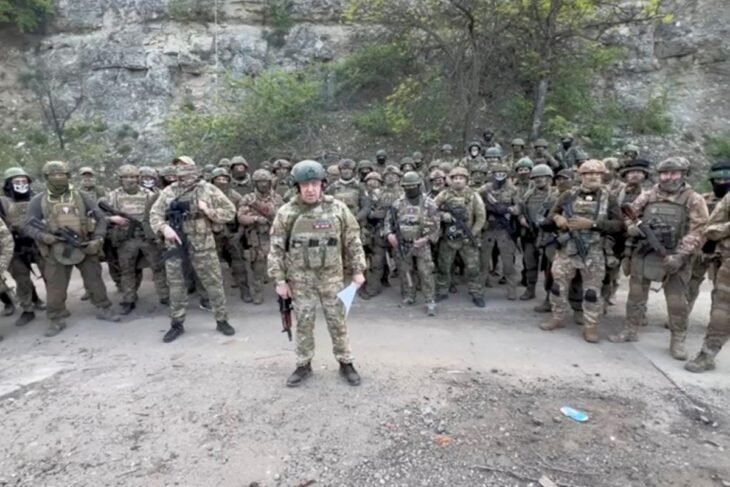

Author - ab_mnbr

To counter Russia in Africa, Biden deploys a favored strategy

Erin Banco & Anastasiia Carrier

As in the weeks before the Ukraine invasion, the U.S. is sharing what it knows about Putin and his paramilitary force.

***

As Russia’s paramilitary organization, the Wagner Group, expands its presence in African countries, the Biden administration is pushing back with one of its prized tactics: sharing sensitive intelligence with allies in Africa in an attempt to dissuade countries from partnering with the group.

The administration has used this tactic with increasing frequency, including in the months leading up to Russia’s invasion of Ukraine in 2022. It serves the dual function of alerting allies to looming threats and placing adversaries on notice that the U.S. knows what they’re doing.

Now, those tactics are being deployed as part of a broader push to prevent Moscow from gaining an economic and military foothold in countries in Africa, including those that have previously worked with Washington, according to interviews with four U.S. officials with knowledge of the effort.

The U.S. has in recent months shared intelligence related to an alleged Wagner plan to assassinate the president of Chad as well as its attempts to access and control key natural resource extraction sites in countries such as Sudan and the Central African Republic, among other initiatives.

The aim is to highlight for African officials how working with Wagner is likely to sow chaos in the long term despite its promises to bring peace and security to countries facing political turmoil and violence, the officials said.

The Office of the Director of National Intelligence and the Central Intelligence Agency declined to comment on the administration’s strategy. The National Security Council also declined to comment.

Russian officials did not respond to POLITICO’s request for comment about Wagner’s connection to the state or its activities in Africa.

The escalation of the administration’s information sharing comes after more than a year of heightened tensions between Washington and Moscow. The war in Ukraine has pitted the two countries against each other, with the U.S. providing billions in weapons to Kyiv and Russia continuing to launch attacks on Ukrainian soldiers and civilians.

recent sharing of intelligence on Wagner highlights how the standoff between the U.S. and Russia extends beyond the battlefield in Ukraine to Africa, where Biden officials say Russia is using Wagner as a proxy to strike deals and help make inroads on behalf of the Kremlin. And it underscores the degree to which the Biden administration believes Wagner — and the Kremlin — pose a long term threat to U.S. interests on the continent.

“The best way to fight Wagner is with the truth,” said one of the U.S. officials. “Where we can find credible information that undermines Wagner’s malign influence, of course, we want more people to know about it, and that includes our partners, and the public.”

Information as a weapon

The Wagner Group is increasingly involved in countries across Central Africa as a security and propaganda force protecting and promoting local political leaders.

The four American officials, all of whom were granted anonymity to speak freely about a sensitive ongoing intelligence and diplomatic effort, described a growing sense of alarm about Wagner’s inroads in those countries.

Wagner’s activities in Africa were further detailed in several documents obtained from inside the business empire of Yevgeny Prigozhin, the leader of Wagner. POLITICO previously reported on some of the details of those documents, including how Prigozhin spread his forces and media network to Africa.

POLITICO accessed the documents via an international journalism collaboration with outlets in the U.S. and Europe. The German news outlet WELT first obtained the documents and shared them with other media organizations overseen by Axel Springer, which also owns POLITICO. The documents span several years — from 2017 to 2021. POLITICO has only included information from the documents in this report that it could verify with other sources, including open-source reporting. Prigozhin did not respond to a detailed list of questions.

The U.S. concerns and assessments about Wagner, including its operations in Africa, were also reflected in the highly classified intelligence allegedly leaked by 21-year-old Massachusetts Air National Guard member Jack Teixiera, according to more than 50 documents reviewed by POLITICO. Teixiera disseminated the materials on Discord, a social media messaging site, in recent months.

Over the past year, the U.S. has shared with allies sensitive intelligence about Wagner’s battlefield movements and operations in Ukraine. National security and State Department officials have also denounced Wagner publicly from the podium. As recently as this spring, officials have spoken about Wagner’s atrocities in Ukraine, including its brutality in the eastern city of Bakhmut, and its purchasing of weapons from North Korea.

But the move to share intelligence about Wagner in Africa — and the diplomatic endeavor to deliver that information — has played out much more quietly.

Although the U.S. often shares intelligence — particularly with long-standing allies in Europe — it has historically fostered a somewhat careful approach to divulging intelligence in an effort to protect sources and methods. The current intelligence-sharing on Wagner is widespread — spanning multiple countries and continents — including with countries the U.S. does not traditionally hold robust relations in the intelligence arena.

U.S. officials have in recent months engaged in talks with officials in Central African Republic, Chad, Rwanda, Burkina Faso and the Democratic Republic of Congo to share U.S. intelligence related to Wagner. Diplomats have pressed officials in some of those countries to avoid working with Wagner or to help persuade other neighboring nations to cease interacting with the group.

Representatives from the countries with which the U.S. has shared the Wagner intelligence did not respond to requests for comment.

The administration is also using the intelligence-sharing strategy as a way of highlighting how Wagner’s presence in some countries — and its inability to restore security there — is bad for business. The idea is that if Wagner is seen as disrupting the flow of trade and investment, it could drive a wedge between Beijing, a long-time investor in Africa, and Moscow — an alliance that has only strengthened in recent months and continues to concern Washington.

Washington has urged officials in countries not to partner with Wagner not only because of the potential long-term security concerns it could present the U.S. but also because of the impact that the paramilitary group’s actions in Africa could have on the battlefield in Ukraine.

U.S. officials fear Wagner could use profits it reaps from mining concessions and other business contracts in Africa to help aid Russia’s war efforts. Some experts have said Wagner’s access to minerals and its ability to export them to market is overblown — and that its profits are marginal and not likely to make an impact on the battlefield in Ukraine. But U.S. officials have in recent weeks gathered specific intelligence related to Wagner’s attempts to use its international connections, including those in Africa, to help support its fight in Ukraine.

In February, Wagner personnel met with Turkish contacts to purchase weapons and equipment from Turkey for Wagner’s efforts in Mali and Ukraine, according to a signals intelligence report included in one of the documents allegedly leaked by Teixeira. Another section of that document says the U.S. has gathered intelligence that shows the transition president in Mali has also considered acquiring weapons from Turkey on Wagner’s behalf. Representatives for Mali and Turkey declined to comment on the documents.

Despite its support from the Kremlin and its ability to secure lucrative contracts in Africa, some experts who study Wagner maintain that the U.S. and its allies have historically held far greater sway among African government officials than Prigozhin and his fighters.

“There’s no question Wagner has a strategy in Africa … to connect neighboring states under Wagner influence. Washington is trying to disrupt that for a host of reasons,” said Cameron Hudson, analyst and consultant at the Center for Strategic and International Studies. “But let’s not put Wagner on par with the United States government. These are not equals — the United States doesn’t see them as equals. What we have seen is Wagner doesn’t have an ability — by itself — to create winners and losers in these countries.”

Making inroads

Wagner is helmed by Prigozhin, a former caterer for Russian President Vladimir Putin. Since 2017, Prigozhin has expanded the group into an international military and influence force with tentacles that span the globe.

The organization, which has strong ties to the Russian state, including its security services, is known for its work helping prop up regimes in the Middle East, in countries such as Syria. And its forces are leading the fight in parts of Ukraine, especially in the eastern city of Bakhmut, where Russians and Ukrainian soldiers are locked in a bloody battle. Wagner is viewed by U.S. officials as having gained newfound prominence in the wake of Moscow’s 2022 invasion of Ukraine.

In recent years, Prigozhin has expanded Wagner’s operations to Africa, helping foster relationships for the Kremlin in countries such as Libya, Sudan, Central African Republic, Chad and Mali. The group’s work includes securing critical mineral and oil sites in Africa as well as protecting government officials.

Its presence in those countries has prompted senior officials in the Biden administration to draft a new road map for routing the group out of the region, the U.S. officials said.

Although Wagner has worked on the continent for years, the Biden administration is newly worried about the extent to which the group’s activities there are not only threatening regional stability but are also being used by the Kremlin as a way to develop long-term influential relationships — relationships that could potentially sideline Washington for years to come.

Washington’s stated strategy for the Sahel region, which Secretary of State Antony Blinken announced from Africa in 2022, lays out U.S. thinking about Russia’s influence on the continent. Without naming Wagner, the document describes how Moscow uses “private military companies” to foment “instability for strategic and financial benefit.”

POLITICO has obtained and reviewed a series of internal documents from Prigozhin’s empire that detail how the leader of Wagner has expanded the paramilitary group and his businesses across the continent, specifically in Sudan and Central African Republic.

They also mention the Democratic Republic of Congo. The documents confirm previous reporting, including by POLITICO, about Wagner’s operations in Africa. But they also provide unusual detail about the close connection between Prigozhin’s businesses, Wagner and the local African governments and militaries.

Prigozhin set up offices in Sudan in 2017 and has in recent years built out a sprawling business network in the country.

Prigozhin established his operations in Sudan by working with government officials — including former President Omar al-Bashir, who was ousted from power by the military in 2019 — and by securing lucrative mining contracts.

A CNN investigation last year revealed the extent to which Russia was smuggling gold out of Sudan and using Wagner to help plunder the country’s natural resources. According to the U.S. officials who spoke with POLITICO, Wagner appears to conduct much of its mining business through Meroe Gold. The U.S. and Europe have both sanctioned the entity. Meroe could not be reached for comment. Wagner also has a history of supporting the country’s security services.

Prigozhin’s operatives in Sudan also work on disinformation and misinformation campaigns in the country to sway political events on the ground, according to documents and experts who study Wagner’s work in the country.

Gen. Mohamed Hamdan Dagalo, the deputy head of Sudan’s military council, waves to a crowd on July 13, 2019. Wagner also has a history of supporting Sudan’s security services. | Mahmoud Hjaj/AP Photo

Several of the documents from inside Prigozhin’s business empire outline detailed media strategies to suppress protests and to pay local Sudan journalists to promote content in support of the ruling party and against the opposition of then-president Bashir. One outlines recommendations on how to manage protests that swept the country in 2018 that threatened to topple the government of Bashir. The New York Times reported on a similar memo in June 2022.

Among the suggestions included in the memo POLITICO reviewed: The creation of a Russian-run internet center that would control the narrative about the government and launch a campaign portraying protesters in a negative light. The plan also laid out plans to control the protests by blocking foreigners’ access to areas with demonstrations and infiltrating the ranks of the protest’s organizers.

Several of the documents obtained by POLITICO show the expansion of Wagner’s military activities in the country, including its connection to the country’s military. The organization has helped train soldiers over the years, the documents show.

One of the documents appears to show a request by a Prigozhin-linked business to pay for the use of the Khartoum military airbase to ensure the arrivals and departures of employees and cargo. Another memo from 2021 outlines Wagner positions in the country, including on several bases. It also lists Prigozhin employees serving in other command centers where they coordinate with the Sudanese military and police, including Aswar, a company controlled by Sudanese military intelligence. Aswar could not be reached for comment.

It is unclear whether, or the extent to which, Russia, Wagner or any of Prigozhin’s affiliate entities are currently involved in the ongoing violence in Sudan. U.S. officials did not answer questions about whether they assessed that the paramilitary group is currently providing aid or helping prop up either side of the conflict.

“The interference of external entities in Sudan’s internal conflict will only lead to more human suffering and delay the country’s transition to democracy,” a State Department official said in a statement.

Putting down roots

Wagner has also set up command centers in the Um Dafuq region of western Sudan, where it has been accused of attacking civilians. It has used the town as a base for supporting its gold-mining activities in Central African Republic.

The paramilitary organization set up shop in CAR in 2017, creating cultural centers and other local initiatives to make inroads with the government. Since then, it has moved in to protect the country’s gold mines and is training government forces, according to documents obtained by POLITICO and one of the U.S. officials.

One 11-page document POLITICO obtained from Prigozhin’s network from 2020 details Wagner’s training of government forces and its protection of CAR President Faustin-Archange Touadéra. Another lists in detail the location of Wagner fighters, including how many soldiers are stationed at each base throughout the country. Other documents in the Prigozhin tranche detail media campaigns carried out by employees of the Wagner leader — many of which were designed to spread Russian propaganda, discredit the French and organize protests against United Nations peacekeepers in the country.

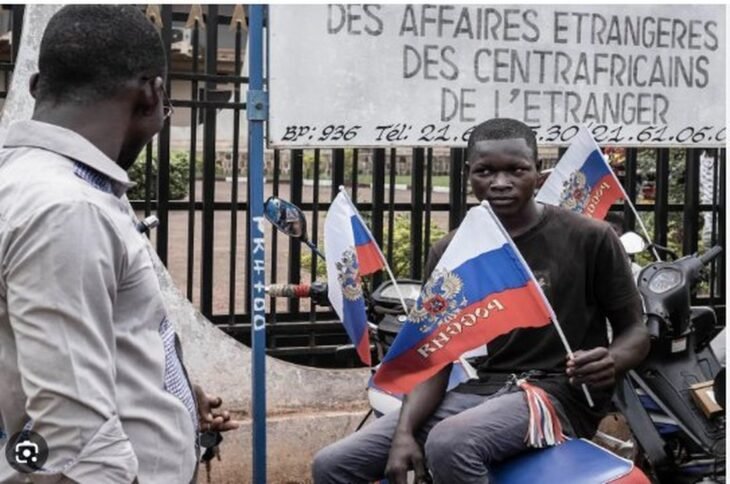
Malians hold a banner that reads in French, “Putin, the road to the future.” Following the departure of French troops from Mali, Wagner gained a greater foothold in the country. | AP Photo

The documents also appear to show Prigozhin and his operatives considering engaging in political influence and research operations in the Democratic Republic of Congo. Military leaders in the country have denied Wagner is present in the country. But the materials show how Prigozhin’s people over the years have gathered information on officials inside the country, including their political backgrounds and popularity among the people.

U.S. concerns increased after the departure of French troops from countries such as Mali and Central African Republic, when Wagner gained a greater foothold, striking deals with local officials. Wagner has seized on the security vacuum left in the wake of France’s departure in those countries, offering local officials protection and training for its armies. Representatives at the French Embassy in Washington did not respond to comment.

U.S. officials have also received readouts and other assessments from officials in Ivory Coast relaying the fear that Wagner’s presence in Burkina Faso — from which France recently withdrew — could potentially destabilize the country, according to one of the leaked classified documents allegedly posted by Teixeira, the Massachusetts Air National Guard member.

Sharing intel to disrupt Wagner

In attempting to blunt the fallout from the vacuum created by France’s departure, U.S. officials have shared intelligence on Wagner’s operations not just with African countries but also with global media.

“We’ve seen it in Syria, we’ve seen it in Ukraine, and now we’re seeing it in Africa — a strategy where we are trying to shine a light on [Wagner and Russian] activities, because they have such a robust propaganda campaign that is going to either obscure what they’re doing or to pump out disinformation about what they’re doing,” Hudson said. “The only antidote to that from a U.S. perspective is to release what we know.”

U.S. officials have stressed with African leaders the need to distance themselves from the paramilitary group. While outreach to each country is different, American officials have underscored with all parties the extent to which Wagner actually creates security problems rather than resolves them.

“Wagner doesn’t improve security. They are perfectly happy to go out and kill people and pretend that [those people are] terrorists,” one of the U.S. officials said. “But if you look at over time, with some minor exceptions where they’re able to displace violent groups from one place temporarily, they create more terrorists than they actually eliminate.”

Chad, a country of about 17 million people located at the northern tip of Central Africa that has historically held close ties to France, has been an increasing source of worry and stepped-up communications among officials.

Despite Mahamat Déby and his government’s crackdown on opposition in Chad, the U.S. has since continued to maintain diplomatic ties with N’Djamena. | Michel Euler/AP Photo

In 2021, former President Idriss Déby died and his son, Gen. Mahamat Déby, took over. In October 2022, his transitional government orchestrated and carried out a bloody crackdown against protesters demanding democratic civilian rule. Dozens of people died in the protests. Human Rights Watch also documented instances of torture and unlawful detentions.

Despite the government’s crackdown, the U.S. has since continued to maintain diplomatic ties with N’Djamena. The U.S. has for months communicated with local officials in Chad about Wagner and the threat the paramilitary poses to the country, according to one of the four U.S. officials, who is familiar with those iplomatic conversations.

In several of those discussions, officials in Chad raised concerns about Wagner’s creeping presence in the region, including its ties to rebel fighters, and requested additional support from Washington.

African officials have in the past cited Wagner to request additional U.S. financial and military aid. But Washington’s engagement is not transactional, one of the U.S. officials said.

Last month, American officials informed government officials in Chad that Wagner was developing an operation to destabilize the transition government in the country by offering rebels material support to execute a plot that would have potentially killed transition President Déby. The administration also disclosed that information to The Wall Street Journal, one of the U.S. officials said.

“We had informed the Chadian government of this specific plot. The Chadian government’s long been aware of the other threats that Wagner has posed to the government. This was a different threat stream and we made them aware of it,” the official said.

Russia has denied the allegations about the plot to kill Déby.

Thwarting Russia’s plans

The administration’s goal was not only to share the intelligence for Chadian officials but also to disclose it publicly through the media as a way of blunting Wagner’s operation. The U.S. officials said they are confident their strategy worked.

“The Chadian government’s awareness of it has reduced the threat level,” the official said.

U.S. officials have also brokered conversations about Wagner operations in CAR, where the government is entrenched in active fighting with rebels despite the declaration of a cease-fire in 2021. That fighting has spilled over borders and drawn military engagement from Rwanda, Cameroon and the U.N. peacekeeping mission in CAR known as MINUSCA.

American officials have shared intelligence specifically related to Wagner’s business operations in the country and shared it not only with local officials but also officials from neighboring countries with an interest in removing Wagner from the region.

One revelation was that Wagner has helped secure a large gold mine in the middle of the country since 2017. It now essentially controls the site and over the past 10 months has significantly expanded its exploration pits, as POLITICO previously reported.

American officials have shared the details of that rapid expansion with local government officials and have estimated that the paramilitary group could one day reap large sums of money if it finds a way to export the gold to market.

Washington has also shared information related to Wagner’s broader military activities in CAR with allies in Europe and Africa, including Portugal and Rwanda.

An uphill battle

It’s unclear whether the broader U.S. strategy of countering Russia in Africa will work.

Putin (left) and Central African Republic President Faustin-Archange Touadéra shake hands at the Russia-Africa summit on Oct. 23, 2019. The CAR government has yet to break off ties with Wagner. | Sergei Fadeyechev, TASS News Agency Pool Photo via AP)

So far, African governments that have engaged in security and business contracts with the Russian paramilitary group, such as CAR, have not broken off ties.

Faustin-Archange Touadéra, the president of CAR, is being protected by Wagner soldiers and his government relies on the organization to help in its fight against the rebels who are attempting to unseat the government in Bangui.

Officials in CAR and its neighboring countries have at times pushed back against U.S. attempts to dissuade them from dealing with Wagner. They’ve said they need greater assistance in dealing with Wagner and that in some instances the group offers legitimate security.

There is also a possibility that the U.S. could choose to restrict some of the intelligence it shares on Wagner following the recent leak of intelligence by Teixeira — a move that could infringe on the administration’s strategy in countering Russia. Biden officials have already begun to discuss whether parts of the federal government need to update their policies not only on who has access to classified information but also how often and how widely it shares that intelligence with allies.

President Joe Biden has also ordered U.S. agencies to temporarily restrict the flow of sensitive information while the Justice Department concludes its investigation into the leak of classified documents.

***

Erin Banco is a national security reporter for POLITICO focusing on the intelligence community.

__________________

Russia’s Wagner group fighting in Sudan and patrolling evacuation port as UK citizens flee

Revealed: the mercenary force is spotted in Port Sudan and battles north of the capital Khartoum

Richard Holmes, Molly Blackall

Russia’s Wagner mercenary group is operating in Sudan and has been actively involved in fighting in the country as UK citizens continue to flee,  can reveal.

Private security consultants and sources on the ground told  that heavily armed Wagner troops have been spotted working in Port Sudan, where civilians are being evacuated from the bloodshed.

They have also been seen engaged in violence 800km away near the capital Khartoum, the centre of fighting between the Sudanese army and the paramilitary Rapid Support Forces (RSF), sources said.

Port Sudan is strategically vital for Wagner to enable vast gold shipments to the Middle East, and the area has seen constant patrolling by its forces.

Security contractors, who are on the ground working to evacuate citizens from the conflict zone, said Wagner troops had been patrolling the port on foot and in small boats, monitoring international efforts to evacuate citizens.

“They’re definitely in Port Sudan, their ships are there, their boats are there,” one of the security sources told i. “They’ve been walking around and that’s been a big concern.”

A second security contractor said: “They’re on the ground in Port Sudan at the moment. The Russians are going to use their patrols there because they want that port to become a military naval base.”

The UK Ministry of Defence is understood to be tracking the activity of the Russian mercenary force in Sudan, and monitoring their activity at the port. The UK plans to send two warships there in an attempt to evacuate British nationals caught in the crossfire of the war.

Port Sudan is a crucial evacuation site for many civilians, enabling escape to Saudi Arabia via boat. The UK Government has confirmed that British military teams are doing reconnaissance in the city as a possible route to safety.

An emergency unit of UK Foreign Office officials is currently operating in Port Sudan and are offering support to British citiens trying to escape by sea. British residents who do not have a UK passport, such as NHS workers who did not qualify for the RAF airlift, are also able to receive support from UK officials there.

A UK intelligence source told  that Port Sudan was a “big hub” for Wagner money and confirmed troops from the private military company (PMC) had been seen there.

Sources working to support civilians in Sudan said Wagner’s interest in the goldmines was thought to be linked to the war in Ukraine, with the mercenaries requiring more resources and wealth to support their efforts against the Ukrainian army.

Wagner’s long history in Sudan

The notorious Russian private military company has made a name for ransacking natural resources from mineral-rich countries in Africa, and has long had an interest in Sudan.

Yevgeny Prigozhin, founder and boss of the group, has claimed that “not a single Wagner PMC fighter has been present in Sudan” for more than two years. However, pictures and messages shared online have cast doubt on this.

July 2022: A video was shared on Telegram purportedly showing Wagner mercenaries carrying out parachute-landing exercises for the Sudanese military, according to the BBC.

Oct 2021: A Russian mercenary, whose identity is not known, shared stories of himself and colleagues carrying out operations in Sudan on Instagram.

July 2020: Then-US Treasury secretary Steven Mnuchin claimed in July 2020 that Prigozhin and his “network” were “exploiting Sudan’s natural resources for personal gain and spreading malign influence around the globe”, and named Wagner as carrying out “activities” in the country which had “generated insecurity and incited violence against innocent civilians”.

At the time, the Treasury sanctioned Prigozhin by targeting three individuals and five entities which it said were “directly involved in furthering Prigozhin’s operations in Sudan” but did not name them.

2019 and earlier: Wagner was reportedly involved in the highest level of Sudanese politics during the leadership of autocrat Omar al-Bashir, which ended in April 2019.

According to the US, Wagner was responsible for helping al-Bashir suppress pro-democracy protests, including through public executions and disinformation campaigns.

Two years earlier, M Invest – a Russian firm controlled by Prigozhin which the US claims is a front for Wagner – was given permission to explore gold-mining sites in Sudan.

In 2021, images shared on Telegram channels linked to Wagner appeared to show Wagner commanders with the Sudanese military during a 2019 ceremony, the BBC reported.

The first sighting, on 19 April, was documented by a security source monitoring Port Sudan. They described seeing a number of small boats containing white Russian troops conducting patrols around a Saudi Arabian warship. The warship was used as one of the first evacuation operations to get civilians away from the conflict.

Their presence was confirmed by two more sources, who saw them at the port as recently as Wednesday.

The second sighting of Wagner troops was on Monday this week in the city of Omdurman, which sits on the opposite bank of the River Nile from the capital, Khartoum, and is a 16-hour drive from Port Sudan.

Two security sources operating in the area described white militia involved in an exchange of gunfire during the night. Both sources suspected Wagner’s involvement as the group has become widely known to operate in the area since the conflict began.

One of the sources told i that “it could only have been [Wagner] as no other whites have automatic weapons in that area.”

The two sightings are the first reported involvement of the private army since fighting broke out there on 15 April, and pose serious questions about the geopolitical ramifications of the battle raging in Sudan.

Sudan gold ‘used to fund Ukraine war’

Wagner has denied being involved in the conflict, although it has been widely reported that it is providing weapons to the RSF. One intelligence source said there was information to suggest they were behind much of the RSF’s actions and that the plan was to “destabilise then take over”.

Sources on the ground confirmed Wagner’s role in Sudan is “famous” to many people in the country and that the group are supporting the RSF to “secure” their investment in Sudan.

“They have investment in gold mining in Sudan and have a good relationship with the RSF leader Hemedti [Mohamed Hamdan Dagalo]. They are very close to the Russian government,” the source said.

“It is also presumed that they had not anticipated that the Ukraine war would last this long so they need full access to the gold mining in Sudan as a source of funding their continuous involvement in the Ukraine war.”

Another source assisting civilians in Sudan said it was “fairly widely known” among those on the ground that Wagner fighters were operating in the country, particularly in the west.

Last week, CNN reported that the group was supplying the RSF with missiles to aid their fight against the Sudanese Armed Forces.

US Secretary of State Antony Blinken expressed his “deep concern” over Wagner’s involvement in the country and warned that the Russian group risked aggravating Sudan’s conflict.

Prigozhin is understood to have been part of Putin’s inner circle, but an ongoing feud between the two men means the Russian leader is not thought to have any control over the group.

Wagner’s growing presence in Africa

Wagner’s presence in Africa is believed to be expanding rapidly, with Western military officials appearing to struggle to respond to them.

The mercenary group is reported to be present in between eight and twelve African countries after bolstering its activity in the last six years.

They appear to operate by throwing their weight behind a political group to gain influence in a country, whether through active battles or disinformation campaigns.

US secret intelligence documents shared in the recent Discord leak revealed that the group is attempting to establish a “confederation” of anti-Western states in Africa, with the surge in Wagner’s presence in the region causing concern among military and intelligence officials.

But the leaked files show that US military and intelligence agencies appear to have done little to prevent their advancement, and there have been few successful attacks against them.

As well as being active in Sudan, Wagner fighters were recorded as sustaining heavy losses while fighting for control of goldmines in the Central African Republic in February this year, and retreated from battles with jihadists in Mozambique in 2019.

Wagner fighters helped to remove French influence in Mali, and attempted to recruit and train Chadian rebels.

Human Rights Watch recorded Wagner using banned landmines and booby traps in Libya between 2019 and 2020, and the leaked military files refer to the destruction of a Wagner logistics aircraft in the country.

In February, Sudan’s ruling military concluded a review of an agreement allowing Russia to set up a naval base with up to 300 Russian troops and up to four navy ships in Port Sudan, after General Dagalo held talks with senior Russian officials in Moscow. The deal, which was opposed by local tribal leaders, is awaiting the formation of a civilian government before it takes effect.

Russia is also accused of colluding with Sudan’s military leadership in enabling billions of dollars in gold to bypass the Sudanese state and deprive the poverty-stricken country of resources. Wagner is accused of plundering natural resources and smuggling it through Port Sudan, providing the PMC with a further strategic advantage.

“It’s all about gold reserves,” a private security contractor working in the country told i. “What Wagner is trying to do is secure themselves a way to be able to transport their gold out of there and to transport grain back.”

Prigozhin has repeatedly denied involvement in the conflict, writing on Telegram: “Due to the large number of inquiries from various foreign media about Sudan, most of which are provocative, we consider it necessary to inform everyone that Wagner staff have not been in Sudan for more than two years.”

Campaign of disinformation to hide Wagner role

 can also reveal that a flurry of social media accounts linked to Wagner have been sharing disinformation in an apparent bid to hide their involvement.

A Telegram account, which is allegedly paid for by Prigozhin, has been repeatedly denying that Wagner is present and alleging that such claims of Wagner activity in Sudan are French propaganda, according to monitoring firm Logically.

The firm’s experts said that a Telegram military chat, Colonel Cassad, was the primary channel making the claims, and that it had been found to be  funded by Prigozhin during an investigation by Ukrainian activists.

Some of the most notable denials of Wagner involvement in Sudan appeared to coincide with the sightings of the mercenaries.

A day after the first sighting on 19 April, a Wagner-sponsored Telegram account posted: “The Commander of the Sudanese Rapid Support Forces denied the participation of PMC Wagner in the fighting in Sudan, as well as any help from PMC Wagner.

“Earlier in French press, there were reports that military assistance had been sent from Libya (via IL-76 aircraft) to Sudan for the RSF. Prigozhin recently stated that PMC Wagner has not worked in Sudan for almost two years and has nothing to do with the ongoing fighting.

“Simultaneously, it is clear that Egypt is participating in the conflict (air force and special forces), and possibly Eritrea and Ethiopia as well.”

Hours later, it repeated a similar message: “Prigozhin, in response to French (bullshit) about PMC Wagner’s participation in the conflict in Sudan (The French are salty about their losses in CAR, Mali, and Burkina Faso), called for peace in Sudan and said he was ready to mediate between the two parties.”

On the day of the second sighting on 24 April, a post on another Russian Telegram channel with 90,000 subscribers read: “I’m reading ‘analysis’ on Sudan. Experts. And I faint with delight. Because there’s not just crumbs, but bricks scattered in this country (Sudan) by Aunt (Victoria) Nuland, everybody is trying to blame PMC Wagner who deserve thunderous applause. In the frenzy of arrogance and mediocrity, they try to pull an owl over the globe (something very difficult to do).”

Claims seeking to blame the US for starting the conflict – over an agreement by the Sudanese Government to house a Russian naval base – are also rife on social media.

One post from a Twitter account with more than 60,000 followers in late April claimed Sudan had become the stage for a proxy war between Russia and the US, gaining 100 retweets and 450 likes.

Another post claiming a coup in Sudan “started when Russia and Sudan agreed to place a navy base in one of Sudan’s ports” received more than 600 retweets and 1,400 likes. 

***

Richard Holmes is a senior reporter focusing on investigations into national security, economic crime, and social injustice. He is a multi-award winning journalist, and two-time Pulitzer Prize finalist who previously worked at BuzzFeed News.

_____________________

Sudan’s Crisis and the Implications for Its Neighbours

Hakeem Alade Najimdeen

The conflict and violence have serious implications not only for Sudan, as they have caused the deaths of 400 people and a humanitarian disaster, but also for its neighbours in the Horn of Africa, including South Sudan, the Central African Republic, Chad and Libya, all of which are already dealing with various internal crises and instabilities.

The conflict in Sudan has prompted both Sudanese and refugees from neighbouring countries to flee the country.

Sudan plunged into violence on 15 April 2023 after an armed conflict erupted all over the country, but mainly in the capital, Khartoum, and the Darfur region. The clashes are the result of a power struggle between the Sudanese army and the paramilitary group known as the Rapid Support Forces (RSF), which was created by former president Omar al-Bashir.

The Sudanese army and RSF formed the military government of Sudan after the 2021 coup that ended the transitional government put in place after the fall of al-Bashir in 2019, thus resulting in Sudan being run by the army, with coup leader General Abdel Fattah Al-Burhan as the de facto ruler.

Since al-Bashir’s departure, the head of RSF, General Mohammed Hamdan Dagalo, popularly known as Hemedti, has worked with Al-Burhan to keep the military in charge despite Al-Burhan’s pledge of a civilian transition. However, it appears that neither Al-Burhan nor Hemedti plan to relinquish control since they disagree on a number of matters, the most current being how RSF paramilitaries should be integrated into the Sudanese army.

The conflict and violence have serious implications not only for Sudan, as they have caused the deaths of 400 people and a humanitarian disaster, but also for its neighbours in the Horn of Africa, including South Sudan, the Central African Republic (CAR), Chad and Libya, all of which are already dealing with various internal crises and instabilities.

The Horn of Africa

The conflict in Sudan poses a dire risk to the Horn of Africa, a large region in East Africa that has been battling different conflicts ranging from insecurity to protracted political strife to severe humanitarian situations worsened by one of the most severe and longest droughts in its recent history.

The countries of the region—Somalia, Ethiopia, Eritrea and Djibouti—have also kept a keen interest in and focus on developments in Sudan, especially as there is increased global competition to dominate the region and control the Red Sea, the Gulf of Aden and the Indian Ocean.

The direct security implications of the crisis cannot be underestimated for Ethiopia, which borders Sudan to the west and South Sudan to the south-west. There are many intertwining files, interdependence issues and political exchanges between Sudan and Ethiopia.

This made Addis Ababa the first suspect for the international media, which accused it of supporting one of the parties in the Sudanese conflict, particularly because Ethiopia has armed movements that move in the disputed border strip in the region of al-Fashaga that have been a cause of concern and escalation from time to time. 

This also explains why a Sudanese media outlet alleged days after fighting broke out in Sudan that Addis Ababa tried to take advantage of the Sudanese conflict by deploying its army in the border region and pursue its objectives in Sudan, an allegation that Ethiopian Prime Minister Abiy Ahmed refuted.

Ethiopia has yet to heal completely from the armed conflict in Tigray that occurred between November 2020 and November 2022. The conflict triggered a refugee and displacement crisis that is still ongoing and exacerbates deep-seated ethnic tensions among Ethiopians themselves and between the federal government and the ethno-linguistically based regional states.

Sudan was a destination and transit country for asylum seekers, refugees and migrants from neighbouring countries. It received more than 50,000 Ethiopian refugees in already impoverished parts of eastern Sudan during the Tigray War. However, the Sudanese conflict has put Ethiopia on the receiving end, as some Sudanese and foreigners in Sudan have fled the violence, while foreign countries are also relying on Addis Ababa to evacuate their citizens. This also means that Eritrean refugees in Sudan will need to seek another host country if the conflict intensifies.

It could be said that the volatile situation in the countries of the Horn of Africa and other countries neighbouring Sudan is a major detriment to these countries’ capacity to help broker peace and avoid conflict. For example, the Tigray War in Ethiopia led to a decline in Addis Ababa’s capacity to help broker Sudan’s fragile transition to democracy, a task Abiy Ahmed’s government gladly took on in 2019.

It also seems like the Ethiopian government understood the repercussions of what’s going on in Sudan when it called for peace between the two warring parties. Prime Minister Ahmed stated that the ongoing clashes “contradict longstanding Sudanese norms and values.”

Although there are concerns that failure to contain the situation as soon as possible may exacerbate the security crisis in the region, this is happening as the new Somali government of President Hassan Sheikh Mohamud prioritises taking on al-Shabab, which still remains entrenched in Somalia and some of its neighbours.

The situation also implies that the arc of insecurity in East Africa extends deep into southern Tanzania and Mozambique, two of Africa’s numerous locations where terrorist insurgencies are still active.

Another point of concern is the Grand Ethiopian Renaissance Dam, which has been dogged by controversy ever since construction started. Egypt and Sudan are of the position that the project could pose a threat to their own Nile dams and their citizens.

All parties are now interested in developments in Sudan, as the directions of any new government in Khartoum will influence the project and tip the balance of the dispute, especially as Sudan is seen by some as lenient towards the project.

South Sudan:

Humanitarian, security and economic implications

For South Sudan, which borders Sudan to the north, the repercussions will not only be security-related but also economic and social. The conflict is also reminiscent of the war and crisis that led to the South Sudanese state coming into existence in 2011 following decades of civil war.

The ongoing crisis, if not contained swiftly, has the capacity to escalate into a full-blown war and may lead to further disintegration in Sudan, especially with regard to the critical situations and the long and renewed conflicts in Darfur.

The loss of oil revenues, which had previously accounted for more than half of Sudan’s revenue and 95% of its exports, was the biggest economic shock brought on by South Sudan’s secession in 2011.

Recent sources indicate that South Sudan delivers 170,000 barrels of oil per day to its northern neighbours through a pipeline, (13) which may be hindered by the current conflict.

Another implication is that of South Sudanese refugees: due to war throughout their country, nearly 2.3 million South Sudanese fled to neighbouring countries. There are 800,000 South Sudanese refugees living in Sudan alone.

This implies that the spread of fighting to numerous Sudanese cities may force these refugees to search for alternative safe havens or make the difficult decision to return to their country, South Sudan, which may complicate efforts to provide assistance to the millions of people who also fled their homes due to internal crisis and civil unrest.

Central African Republic:

Instability and insecurity

Sudan has been accused of being a part of the conflict and instability in the Central African Republic (CAR), which began in 2013, with claims that some Sudanese internal security agents and former military officers were sheltering and arming forces linked to CAR rebel groups hoping to overthrow the regime in Bangui.

This was confirmed in January when Hemedti declared that he had helped prevent a coup against the CAR government from taking place over the border in Sudan.

Reports also link Hemedti’s RSF to the Russian Wagner group, which controls diamond and gold mines on either side of the CAR-Sudan border. CAR opposition forces accuse the RSF of supporting Russian mercenaries within CAR borders; and different reports since the start of the Sudan conflict claim that Wagner might have been arming the RSF to aid its fight against the Sudanese army.

While RSF has refuted these claims, it shows the complicated relationship between the Sudanese crisis and the conflicts in CAR and how the outcomes in Khartoum could affect the government of President Faustin-Archange Touadéra in Bangui.

Chad’s political destabilisation

Chad is considered one of the countries most affected by the ongoing conflict in Sudan due to the historical, social and cultural relationship between the ethnic groups of both countries.

Most Chadian families are not devoid of social and blood ties with Sudan, a destination for thousands of Chadian students. Similarly, Chad hosts about 400,000 Sudanese, and according to Daoud Yaya Brahim, Chad’s defence minister, at least 320 Sudanese soldiers fled to Chad days after the Sudanese violence broke out.

The Sudanese conflict may aggravate the existing suspicion between Khartoum and N’Djamena, as both sides during the regimes of Omar al-Babir and Idriss Deby used rebels and armed opposition in the border region for their personal political agendas. The ongoing conflict in Sudan has raised questions among Sudanese and Chadians about the ethnicity of some of Sudan’s generals, such as Hemedti, and the target of his RSF in relation to the Chadian Arabs.

It is worth mentioning that Chad faces various threats, including rebellions and armed gangs along the northern Libyan and Sudanese borders. N’Djamena has shown concern that instability and insecurity in Sudan might further equip its rebels and armed opposition.

Former president Deby was killed in clashes with rebels in the north of the country. His son, General Mahamat Idriss Déby Itno, who was named interim president after the demise of his father, is unsettled by any unfamiliar movements along his country’s borders. The increased presence of the RSF in the Chad-Sudan border areas, which run from the trijunction with Libya in the north to the trijunction with CAR in the south, was the subject of recent tension between the two countries.

This prompted a discussion between both governments in January during which they agreed to deploy Sudanese and Chadian forces along the joint border in West Darfur State.

Libya:

The exacerbation of the illegal migration crisis

Under the rule of Omar al-Bashir and Muammar Gaddafi, the relationship between Sudan and Libya was tense. The two leaders exchanged allegations of smuggling weaponry across the border in order to gain more influence in each other’s national politics and power struggles.

During the Libyan crisis of 2011, Khartoum provided security and military aid to Libyan rebels fighting the Gaddafi regime, as well as assisted the National Transitional Council in gaining control.

Sudanese President Omar al-Bashir applauded Gaddafi’s fall in 2012, addressing a joint press conference in Khartoum with Libyan Prime Minister Fayez al-Sarraj and stating that his country had no choice but to back the Libyan people.

Many Sudanese militants who fought on opposing sides of the war that divided Libya in 2011 returned to Sudan in subsequent years, escalating tensions in Sudan’s western Darfur region.

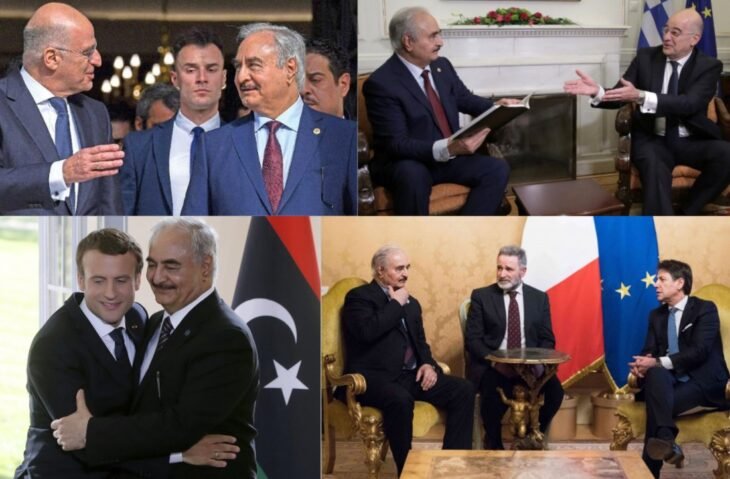
Libya’s involvement in the Sudanese crisis has not been determined, although there is an allegation that Khalifa Haftar, Commander of the Libyan National Army, assisted in preparing Sudan’s RSF for battle in the months preceding the ongoing fighting. 

Another ramification is humanitarian and migratory issues, as human traffickers, like in Libya, may take advantage of the situation in Sudan, which has functioned as a departure and transit point for people attempting to reach Europe through Libya. Both countries are also on major drug and human trafficking routes.

Foreign actors and outside interests

Different reports of foreign interference in Sudan mean that each foreign power is trying to secure its interests in Sudan and that neighbouring countries could be used as a launchpad or to influence the conflict based on the alliance of each country and its support for the warring parties.

The Gulf countries and Turkey are fighting for dominance in the Horn of Africa in order to control the Red Sea, and their impact may be observed via several domestic issues in some countries of the Horn.

Coupled with their economic interests, some Gulf states, particularly the United Arab Emirates (UAE) and Saudi Arabia, have been implicated in the Sudanese situation since 2018 as a result of their support for some Sudanese military generals and efforts to shape the country’s political events, as some of them see the transition from al-Bashir’s rule as a way to roll back what some saw as Islamist influence and stabilise the Middle East and North Africa.

Sudan could also become another battleground for the West, which backed the ouster of al-Bashir but was tardy to rally around an election transition, versus Russia, which worked out a deal with al-Bashir for Sudan to host its naval base. While the Russia-Sudan naval deal is still under review, Moscow is growing in influence in the Sahel and is present in the CAR and Libya.

Going by the recent statements from the Sudanese army, refutations from the RSF of receiving support from Wagner, and the report of the involvement of Haftar, who controls a large portion of Libya’s east, the mistrust between Sudan and its neighbours, particularly Egypt, Libya, Chad, Ethiopia and Eritrea, will raise fears of a long-drawn-out conflict in Sudan fuelled by outside interests.

***

Hakeem Alade Najimdeen is a Nigerian researcher specialising in social foundations, leadership and political developments in Africa.

___________________________

Sudan proves that the only thing worse than Western meddling is Western absence

The problem with contemporary Western foreign policy isn’t that we meddle too much. It’s that we meddle too little.

JASON PACK

The first step to a solution is to identify the true root of the problem. These days the Sudanese, Libyan, Yemeni, and Syrian peoples are united in blaming the West – not for meddling in their affairs, but for abandoning them to their meddlesome neighbours.

The ongoing fighting in Khartoum has its roots in a relatively peaceful 2019 uprising. This saw the ousting of a brutal dictator, and the installation of a transitional council comprised of lawyers, generals, and academics, with the ostensible goal of guiding the country through elections. Within two years, a military coup was launched with the support of paramilitary actors connected to previous genocidal actions in Darfur. These paramilitary forces are now at war with their former allies in the official military. Sudan was allowed to collapse not because Moscow or Beijing supported the aspiring tyrants, but because core Western allies – the UAE, Egypt and Saudi Arabia – appear to have conflicting entanglements that commit them to backing different sides in the conflict.

This story is repeated around the world, in theatre after theatre. For a generation raised in the fallout of the Iraq war, the idea that American reticence might be to blame for regional instability is new and strange. From Libya, to Syria and now Sudan, over the last decade Washington has failed to issue ultimatums to quell disruptive actors, failed to intervene to restore order, and most crucially it hasn’t its pressured allies to get on the same page.

This is a key feature of our era of  Global Enduring Disorder. In this world, post-conflict states tend to remain imploded. When pro-democracy movements manage to oust dictators, they are derailed by coups, civil conflict, and proxy wars, often driven by the poorly disguised meddling of the West’s erstwhile regional allies. Unmask a rogue Sudanese or Libyan warlord, and you may well find the puppet of an Emirati intelligence officer or Egyptian general, rather than a clownish FSB handler. The Russian mercenaries are usually their sidekicks, but they are paid for by others; it is an open secret that the Kremlin can’t afford its own goons.

Disruptive middle powers like Turkey, Russia, Egypt, the UAE and Saudi Arabia seem often to actively seek to disorder their neighbourhoods rather than coherently export their ideologies or increase their trade.

Egypt and the UAE were jointly the main supporters of the rogue Libyan General Khalifa Haftar when he tried to capture Tripoli in 2019, but are now on opposite sides of the fighting in Sudan. Over the last two years, both the Emiratis and the Russians have largely abandoned Haftar. His only reliable supporter is the Egyptian Army, yet for years he has undermined them in Sudan. Last week, the Egyptians caught him red-handed supplying high quality arms to their enemies in Sudan and dispatched the head of their intelligence services to Benghazi to issue an ultimatum. Unsurprisingly, Haftar’s Libyan National Army promised to back down. The Russian Wagner Group is set to pick up the slack out of hopes of prolonging the conflict.

The Enduring Disorder has wholesale replaced the post-Cold War order. During this new era of geopolitics, enemies in one conflict can transactionally support one other in different theatres. Russia and Turkey are on opposite sides in Ukraine, Syria and Libya, but they’re happy to collaborate to derail Western peace initiatives to solve any of these conflicts. Egypt and Turkey have long been the primary backers of opposite sides in Libya, but two weeks ago their foreign ministers met in Ankara to bury the hatchet and propose a destabilising alternative to the UN electoral process.

Our era is defined by unregulated cyberspace, unregulated financial flows, unregulated migration and the inability of major powers to work together. If we examine recent developments in Sudan, Libya, Yemen, South Sudan, and depressingly even Tunisia, we can see that the major factor in these countries’ sorry trajectories is not the absence of courageous civil society actors or a skilled populace, but rather the lack of a unified approach by the West and its regional allies to peace-building and reconstruction. During the Cold War, the West knew how to support its local allies; and our regional partners knew how to step into line.

Those days are long gone.

***

Jason Pack is author of Libya and the Global Enduring Disorder and Senior Analyst at the Nato Defense College Foundation.

_________________

US on potential collision course with UAE and Turkey over sanctions busting

Jonathan M. Winer

  • The U.S. is pushing back on Turkish and Emirati firms, which have provided material support to Russia for its war effort and helped Moscow circumvent Western sanctions.
  • As the Russo-Ukrainian conflict enters a potentially decisive period in the ground war, the Biden administration is almost certain to ratchet up the consequences on Emirati and Turkish sanctions busters, but Washington’s use of other political or diplomatic tools is more difficult to predict.

Since Russia’s 2022 full-scale invasion of Ukraine, it’s become increasingly obvious that both the United Arab Emirates and Turkey have been seeking to profit, politically and economically, off the conflict.

The UAE’s role has been remarkably bold, as shown in the affectionate post-invasion contacts between Emirati leader Mohammed bin Zayed and Russian President Vladimir Putin. It has also been reflected economically, in the highly visible presence of Russians and Russian businesses in Dubai, effectively facilitating Russia’s ability to circumvent Western sanctions.

The significance of this Emirati assistance in sanctions busting has been so large that the United States sent multiple high-level delegations to the Emirates in the first months of this year to issue warnings on the subject to both the Emirati government and major business actors there.

Turkey, too, has been profiting off the war, both politically, as reflected by Turkish President Recep Tayyip Erdoğan’s invitation to Putin to visit Turkey later this month, and economically, with the massive amount of new business for Turkish companies emerging from the conflict.

Now, the U.S. has pushed back, adopting a series of secondary sanctions on Emirati and Turkish companies for their role in helping Russia (and in the case of Dubai, Iran) circumvent the West’s punitive financial and economic measures.

The most recent sanctions package, issued on April 12, targets a slew of Turkish and Emirati firms for providing material support to Russia, including items for its defense sector. The latest round of sanctions on these firms was described as “a warning shot” by an anonymous U.S. official, even as Erdoğan continues to state publicly that it is time for Putin to stop the war.

The frantic sending of signals by the various parties to the conflict reflects a reality that the year-long effort by Turkey and the UAE to straddle the Russian-Ukrainian war has largely benefited Russia. Avoiding strategic consequences from that stance is increasingly problematic for both the UAE, which likes to refer to itself as a “strong ally” of the United States, and for Turkey, a member of the North Atlantic Treaty Organization (NATO) since 1952.

Will anyone blink? If not, will there be a serious collision?

As the Russo-Ukrainian conflict enters a potentially decisive period in the ground war, the Biden administration is almost certain to ratchet up the consequences on Emirati and Turkish sanctions busters. The question of the extent to which the U.S. government will also employ other tools, such as those involving the overall bilateral security relationships, is much harder to answer.

___________________

Sudan Forces’ Rivalry Plunges into Violence: What Now?

The Unit for Political Studies


After months of tension and hostile public statements, on April 15 the rivalry between Sudan’s army and the Rapid Support Forces (RSF) paramilitary group degenerated into armed clashes.

The fighting started in the capital Khartoum and quickly spread to other cities, killing around 300 people and wounding 3,000 in the first five days alone, according to the World Health Organization.

The clashes were the result of a bitter power struggle between the army command, headed by General Abdulfattah Al-Burhan, and the RSF, formed in 2013 and led by Mohammad Hamdan Daglo (Hemedti).

The immediate cause was a dispute over the timeline for integrating the RSF into the armed forces, a key sticking point in negotiations following last December’s Framework Agreement, which set out a roadmap for resolving the political crisis following the October 2021 coup against then-Prime Minister Abdullah Hamdok. But the clashes reflect a deeper struggle for power and resources between the two main military forces in the country, as well as their respective foreign backers.

What Triggered the Fighting?

The long-expected clashes flared after the RSF seized an airbase in Marawi, north of Khartoum. The Sudanese Armed Forces issued a statement, on April 13, saying that the RSF was mobilising across Khartoum without getting permission from, or even coordinating with, the army.

The rivalry between the two forces had been on display since the formation of the Sovereign Council, which took power in the transitional period following the overthrow of longtime president Omar Al-Bashir in April 2019.

Burhan, as head of the army, was appointed president of the council, with Hemedti as his deputy. Their differences started emerging after the army, backed by the RSF, decided to dissolve the joint military-civilian council, sack interim Prime Mister Hamdok and seize direct power in the coup d’etat of 25 October, 2021.

Each then started forming its respective alliances with equally divided civilian political forces. Hemedti sought to distance himself from the October coup, portraying himself as a supporter of a transition to civilian rule and attempting to restore his reputation, damaged by his role in the Darfur conflict and in the massacre of protestors outside army headquarters in Khartoum in June 2019.

In February, Hemedti also publicly accused Burhan of attempting to co-opt forces linked to the old regime. Burhan responded by warning the RSF against acting independently of the army, and ordered it to speed up its integration into the latter.

That moved the integration process to centre stage in their power struggle. On December 5, the army, RSF and civilian forces signed a Framework Agreement laying out a two-year civilian-led transition towards elections and a timetable for further negotiations. Hemedti now moved to support the demands of civilian political forces, in order to win political allies who would also oppose Burhan and the army command.

This included supporting calls for the army to withdraw from the political process and backing the formation of a civilian government, as stipulated in the Framework Agreement. But Burhan conditioned the army’s support for such a deal on the RSF’s integration into the national armed forces, as a matter of urgency.

At the last workshop of Phase Two in the negotiations under the Framework Agreement, set to discuss “Security and Military Reform”, the Sudanese armed forces did not send a representative. This was seen as reflecting the army command’s opposition to the direction the negotiations were taking, especially as regards the timeline for integrating the RSF into the army.

The RSF was proposing a 10-year timeline, while the army was pushing for the process to last a maximum of two years, meaning it would be completed by the end of the latest transitional period.

For his part, Hemedti had demanded prior to the meeting that the issue of security and military reform be removed from the agenda, a move was seen as a rejection of his forces’ integration into the army at all, in order to preserve his independence and keep his economic power out of the army’s reach. This appears to have been the trigger that turned the rivalry into outright violence.

The army appears to have been generally displeased with the Framework Agreement, which limited its involvement in politics and gave civilians much greater powers and ultimate authority over the armed forces.

Paragraph 14 of the agreement’s General Principles holds that “the transitional authority is a fully civilian, democratic authority in which military forces play no part”. In Article 4, which covers state institutions, Paragraph 2 stipulates that “the head of state is the supreme commander of the armed forces”.

Paragraph 5 of the same section bans the armed forces from “all commercial and investment activities, except those related to arms production and military tasks”, as well as subjecting all military-owned firms to oversight by the finance ministry.

This means that the Framework Agreement strips the military of its political power and the economic resources it managed independently of the government, even if the deal does allow for the Council of Ministers to involve the military in non-military matters.

Therefore, despite signing it along with civilian political parties, the army was suspicious of the Framework Agreement; unlike the RSF, which tried to use the deal to gain ground against the army. In essence, this amounted to a power struggle between military forces, each capitalising on divisions among civilians. Nobody appeared to realise that a stable state was dependent on having a single army – a condition for any democratic transition.

The Conflicting Positions of Sudan’s Factions and Political Movements

Sudan’s main political factions have taken divergent positions on the power struggle between the RSF and the army. Most have called for a ceasefire to drag the country back from the brink of a potentially long and devastating civil war, while some have stayed silent.

The Freedom and Change Forces (Central Council) issued a statement on the second day of fighting, calling for an immediate truce and a return to dialogue. The Freedom and Change Forces (Democratic Bloc) said much the same thing.

The Democratic Alliance for Social Justice said in a statement that the Framework Agreement had caused the current crisis, as it failed to take into account the interests of the country’s different political forces.

While the broad Islamist current did not make an official statement as a bloc, its president Mohammad Ali Al-Jazouli said on Facebook that he supported Sudan’s armed forces against what he called “the agents of a foreign project”.

The Future Movement for Reform and Development’s secretary-general Hisham Uthman Al-Shawani issued a statement saying it supported “the people’s armed forces against the rebel enemy” (i.e. the RSF), and said the country was in a “battle against a foreign plan to break up the country and the people’s armed forces”.

On the other hand, the Alliance of Forces for Fundamental Change, which includes the Sudanese Communist Party and the Sudanese Professionals’ Association (Defected Wing), the families of martyrs and the farmers’ union of Jazeera province, said in a statement before the fighting broke out that it opposed military manoeuvring by both sides. It blamed the fighting on regional and international players, and said Sudan was seeing a struggle for resources and influence.

In a further statement on 15 April, it called for a ceasefire and blamed army command and the RSF for any civilian casualties. The Central Committee of the Sudanese Communist Party called for an immediate ceasefire and for the army and RSF to withdraw from Sudanese cities. The Resistance Coordination Committees (Khartoum Province) called both Burhan and Hemedti “enemies of the revolution” and urged them to avoid dragging the country into war.

Thus, in their positions on the conflict, Sudan’s civilian political forces are not divided along the lines of secular vs. religious or left vs. right. Rather, they are divided among those who signed the Framework Agreement and those who did not, whether leftist, Islamist or otherwise.

The Positions of International Actors

At the time of writing, no regional state has publicly taken sides on the conflict in Sudan. Both Egypt and South Sudan rushed to offer to mediate an end to the fighting. Egypt and Saudi Arabia called for an urgent meeting of the Arab League to discuss the crisis.

Both countries have a major interest in Sudan’s stability. Saudi Arabia is the biggest foreign investor in the country, particularly in the agricultural sector. Egypt, which depends heavily on the Nile, sees its upriver neighbour as strategically vital, especially regarding Khartoum’s position in the dispute over Ethiopia’s Great Renaissance Dam. Ethiopian Prime Minister Abiy Ahmed, for his part, also called for a ceasefire and a return to dialogue, as well as offering to mediate.

Further afield, the European Union called for an end to the fighting and for dialogue between the two sides. After its ambassador was attacked in Khartoum, it also called for diplomatic installations to be protected in accordance with international law.

The EU is particularly concerned about the situation in Sudan, fearing the fighting could spark a new wave of desperate migrants to head for its shores. The RSF had played a big role in preventing migrants from crossing the desert between Sudan, Libya and Chad, in exchange for EU financial support.

As for the United States, Secretary of State Antony Blinken called both sides to urge them to stop fighting and to protect diplomatic missions, especially after an American diplomatic convoy came under fire, apparently from the RSF. But it remains unclear whether Washington has picked a side, given Hemedti’s ties with the Kremlin-linked Wagner Group.

China has also called for an end to fighting as soon as possible and has warned against escalation. While the secession of South Sudan meant that Khartoum is no longer a major supplier of oil to China, Beijing remains a major economic partner and is a major investor in many sectors, particularly mining.

Russia too appears not to have picked a side for now, despite the close cooperation between the RSF and Wagner, which has focused on financing the RSF and securing exports of large quantities of gold and uranium from Sudan in support of Russia’s efforts to stockpile precious metals and protect its economy from Western sanctions. Moscow is also attempting to establish a military base on the Red Sea coast, a project strongly opposed by the West.

Israel, which also has strong relations with both sides, has limited its public actions to calling for an end to the fighting. It appears to have calculated that a major military conflict would delay the signing of a naturalisation deal with Sudan, which it hopes to secure before power is handed to a civilian administration. Some Israeli officials however favour Hemedti, as he has strong ties to the Mossad.

Conclusion

Sudan, which has long suffered from political and economic crises along with ethnic and tribal tensions, has now entered a new conflict, this time between the country’s two main military forces.

This is likely to have major implications, especially the fighting drags out and if regional or international powers intervene on one side or the other. This risks splintering the country apart and destroying a central state that is already facing tribal and ethnic conflicts in the east, west and Blue Nile state. It is clear that each of the two sides is attempting to win over international players.

Hemedti is trying to portray himself as fighting on behalf of civilians forces against the army and its apparent allies in the Islamist camp, who used to support the Bashir regime. He has also tried to bring an international dimension to the conflict by claiming, on several occasions, that foreign jets had bombed his forces’ positions.

On the other side, Burhan is portraying his fight as that of a state against a militia that would bring chaos. He is hoping this portrayal will appeal to Egyptian officials, who already seem uncomfortable with Hemedti and his regional network of relationships.

However these dynamics develop, unless one side wins a decisive victory or a truce is reached that can put Sudan’s armed forces on the road to unification, prior to a transfer of power to a civilian administration, this conflict risks bringing further misery to a country that has suffered too much instability and poverty.

***

The Unit for Political Studies is the Center’s department dedicated to the study of the region’s most pressing current affairs. An integral and vital part of the ACRPS’ activities, it offers academically rigorous analysis on issues that are relevant and useful to the public, academics and policy-makers of the Arab region and beyond. The Unit for Policy Studies draws on the collaborative efforts of a number of scholars based within and outside the ACRPS. It produces three of the Center’s publication series: Situation Assessment, Policy Analysis, and Case Analysis reports. 

_______________________
A war for our age: how the battle for Sudan is being fuelled by forces far beyond its borders

A bloody chaos with a cast of warlords, chancers and cynical exploiters, the latest conflict in Africa has parallels with Syria

Jason Burke

Tonight, like every other night for weeks, convoys of trucks will set out across the southern Libyan desert and head towards the border with Sudan, 250 miles away. They will drive from dusk with lights dimmed in a bid to avoid detection. This is a clandestine operation – though hardly secret. Once across the frontier, the convoys will divide, some travelling south, others setting out to the east.

Most reporting from Sudan has so far focused on the street battles in the capital, the 500 or more dead and 4,000 wounded, the impending humanitarian crisis and the evacuation of foreign nationals. But though the supply lines running through the desert are a detail in the grand scheme of things, they may tell us more about the nature of this conflict than breathless reports from Stansted as British evacuees arrive back in the UK or briefings from Washington.

The trucks are carrying fuel from a refinery near the Libyan oasis town of al-Jawf – as well as smaller consignments of ammunition, weapons and medicine – to the paramilitary Rapid Support Forces (RSF) which is currently battling regular army units under the control of Sudan’s de facto military ruler, Abdel Fattah al-Burhan, in the Sudanese capital, Khartoum. They are being sent by Khalifa Haftar, a warlord who runs much of eastern Libya. Other supplies, including potent Kornet anti-tank missiles looted from Libyan government stocks more than a decade ago, have been transported by air, say witnesses at al-Jawf’s airport.

The RSF is loyal to Mohamed Hamdan Dagalo (usually referred to as Hemedti), a former camel trader who started his career in charge of a notoriously brutal militia in Sudan’s south-west before graduating to industrial-scale gold smuggling and massacring pro-democracy protesters. Haftar is sending the supplies because his sponsors among states in the Middle East have asked him to and because it earns him a lot of money. A warlord in one conflict helps out another in a second, at the behest of a distant power.

Such is the way of contemporary war, as exemplified in this new fighting in Sudan. In this conflict frontiers have no significance, control of resources is the primary prize, with forces arising in borderlands seeking their revenge on once contemptuous metropolitan elites. Trafficking networks across swathes of desert are extensions of the “battlespace”, and almost innumerable actors with an axe to grind or an agenda to pursue vastly outnumber those who seek to stop the fighting.

All of this happens in a shadowy penumbra defined by backroom deals, obscure alignments of interests, brutal realpolitik and disinformation. The poor and the weak and the unarmed suffer most, as ever.

Much of this is familiar, of course. Borders in Africa have always been porous, as they were for a long time elsewhere too. Proxy warfare was a hallmark of the cold war everywhere, and in the 1990s many conflicts across the world saw multiple states, great and small, backing local actors to bloody effect. Conflicts often involved insurgents out in the backcountry who were at least in part motivated by a sense that they had been excluded by a corrupt, decadent elite based in a capital or major cities, as in Sudan today. Politics has always mapped on to identity when it comes to who fights who.

The wars that followed al-Qaida’s 9/11 attacks on the US highlighted the role of unconventional combatants that could only be defeated by unconventional means and the ability of new communications technology to empower previously marginal groups in unprecedented ways.

The war in Libya was fought in a total chaos of what or who might be permitted by local, international or simply natural law. The Syrian conflict has ground on for so long, with such appalling consequences, partly because it drew in so many different combatants and sponsors, all with different objectives, of whom a vanishingly small number had any consideration for those caught in their crossfire.

We all remember the war in Syria because at specific moments global attention was intensely focused on a murderous and tragic conflict that lasted almost a decade. This focus was greatest when it appeared the fighting there was a direct threat to us. The same will no doubt be true of any lengthy war in Sudan. Once the foreigners are fully evacuated, our interest in this conflict will wane rapidly, a process accelerated by competition from the war in Ukraine.

Yet in a decade or so, it could well be that the war in Ukraine may end up looking like a historical anomaly, a bizarre and bloody return to a time when trenches, tanks, artillery and the support of great powers determined strategic success, when a clear difference in values and vision distinguished the opposing forces and when concepts such as victory or defeat actually meant something more or less definitive. Sudan may well still be plunged into a welter of violence, with potentially huge consequences.

With the initial shock of the breakdown into open conflict two weeks ago fading, analysts were last week beginning to consider what the future might hold. Most believed the chances of a rapid end to the current fighting were extremely slim. The hope of several was that Hemedti would be somehow killed, leading to the fragmentation of his forces and the imposition of a new authoritarian military regime that might impose a semblance of order.

Almost all feared the currently binary battle might metastasise into an even more intractable conflict as local-level militia based on ethnicity or other identities joined the fight. There is some evidence that this is already happening with fighting flaring between unidentified combatants in Darfur last week.

No one doubts the scale of the potential humanitarian catastrophe. A third of Sudan’s 45 million inhabitants are already dependent on humanitarian aid for food, shelter or healthcare. This is not a resilient population, and it is largely the least in need who have been able to flee Khartoum in buses to the Egyptian border.

The coming flows of refugees will be much, much larger – hundreds of thousands, possibly millions – and much poorer than those queueing at the border last week. A proportion will head for Europe but most will need to be cared for by neighbours that cannot look after their own citizens let alone cope with a vast influx.

The collapse of Africa’s third largest country would shake brittle neighbours as well as a chain of countries stretching west across the deeply troubled Sahel region of north Africa. These, like Sudan, already weakened by climate change and decades of conflict, could shatter. That means western Europe will be close to an immense zone of conflict and chaos. No wonder diplomats privately admit that we are facing a “nightmare scenario” in east and north Africa.

The example of Syria gives us some idea of what else to expect from the conflict in Sudan. In fact, many features are already extant. Splintering into enclaves controlled by squabbling militia? Check. Intense involvement of often malevolent regional or Gulf powers? Obviously.

Great power rivalry? Yes. A weakened US making calls for an end to fighting but without the means or will to impose it? Last week yet more ceasefires were ignored, despite the plaintive complaints of Washington.

A range of nefarious actors such as Haftar or the Russian Wagner group keeping below the radar but making opportunistic and effective interventions? This has been the case for years but has escalated now there is open war. Massive criminality, with well-entrenched networks involved in everything from narcotics trafficking to the theft of valuable antiquities moving to exploit the chaos? There are already reports that networks are mobilising to dig at Meroe, the famous archaeological site 190 miles north of Khartoum and the site of recent heavy fighting.

These parallels exist not because Syria and Sudan can be compared directly, but because this is what wars look like in our time. Different types of conflict coexist of course – and the war in Ukraine can be seen as the culmination of a decade-long unconventional campaign by the Kremlin – but the idea that the war there signalled a more general return to a norm familiar in the last century may well prove to be mistaken.

The trucks across the desert tell us more. Haftar has offered assistance but has carefully balanced his need to please supporters in the United Arab Emirates, who are key partners in the gold business with Hemedti, but without annoying his other sponsors in Egypt, who are backing Burhan.

Thus the need to keep the oil convoys quiet, and the precautions taken to mask the diversion of around 10,000 barrels a day of Libyan oil from a state company which is then turned into high quality fuel at the al-Sarir refinery and trucked to Hemedti’s fuel-thirsty forces, according to former senior Libyan officials with access to intelligence files.

Of course, this assistance is not freely offered and the fuel is sold not given to the RSF, generating vast revenues for Haftar’s extended family and businesses. The gold goes out, the fuel comes in, all paid for in massive transfers of money. This is a wartime expansion of a lucrative existing business partnership running for a decade or more. Are any laws broken? Probably. Can anyone stop the traffic? Almost certainly not. Will it bring victory to Hemedti? Unlikely. Will it prolong the conflict? Definitely.

The trucks do not move through a geopolitical vacuum. The UAE’s support for Hemedti and Haftar is based on rivalry with other Middle Eastern states and financial gain. Moscow, true to its broad strategy of backing the most obvious disruptors in order to profit financially and politically from the resultant chaos, has also been supporting Hemedti and the RSF for years.

Here the Russians are doing what they have done across the Sahel and elsewhere in Africa – adding a hefty dose of disinformation to the Sudanese mix for good measure. They are keen on Indian ocean naval bases – another echo of Syria, where access to the Mediterranean was a key strategic consideration.

Saudi Arabia has an interest in heading off regional rivals, and gaining access to the vast agricultural resources of Sudan. Egypt is unsurprisingly keen on an authoritarian military regime in their southern neighbour so wants Burhan to win. The Chinese seek advantage against the US, votes at the UN and the kudos that comes with successful mediation. And so on, in concentric circles, out to the western Europeans, the UK and the US. All have their interests, if not their chosen favourites.

Nor is this is a very ideological fight. Though there are Islamists in the mix their beliefs are marginal to the current fighting, whatever the claims to the contrary. Neither Hemedti nor Burhan have bothered outlining any real political vision. The Europeans and the US talk much about values but now recognise that, in Sudan at least, the priority is to limit the threat to their own interests that total collapse might pose.

So this is the nature of this particular battle: an extremely violent and chaotic contest for tactical and strategic advantage, as brutal at a geopolitical level as it is on the streets of Khartoum, drawing in a constantly shifting cast of chancers, opportunists and cynical exploiters whose motives do not differ greatly whether dressed in suits, robes or combat fatigues. It is a war of warlords, big and small, and so, tragically, a conflict of our age.

__________________

Gold, arms and mercenaries: On UAE’s shadowy networks in Sudan

Andreas Krieg

The UAE’s network-centric statecraft is part of a broader battle for influence in northern Africa.

The war in Sudan is a multipolar 21st-century conflict in a multipolar world.

The country’s many stakeholders – first and foremost the two warring “generals”, Abdel Fattah al-Burhan, who leads the Sudanese army, and Mohamed Hamdan Dagalo, better known as Hemeti, who heads the paramilitary Rapid Support Forces (RSF) – have become pawns in a wider competition to exercise influence in the strategically important Horn of Africa. 

No country has been playing this game more assertively than the United Arab Emirates, which has curated and orchestrated a diverse grid of networks across the region. 

Although Abu Dhabi does not likely have an interest in the current escalation and destabilisation of Sudan – one western official even suggested the Emirates had “buyer’s remorse” – its network-centric statecraft appears to have created a complex web of interdependencies and competition that it is now unable to control.  

The story of the UAE in Sudan is a story of a relatively small, tribally based monarchy trying to exercise influence far beyond what one would conventionally consider to be its geostrategic weight. Defying traditional limitations of statecraft, the Bani Fatima branch of Abu Dhabi’s royal family has innovatively delegated statecraft to surrogates such as private individuals, corporations, banks, merchants, militias and mercenaries. 

The story of the UAE in Sudan is a story of networks, curated by Abu Dhabi to achieve strategic objectives with plausible deniability and discretion, while supplementing the limited in-house capacity of its overburdened state institutions. 

Although the UAE’s official engagement in Sudan is run via its ministries in charge of foreign and security policy, the shadowy networks that all connect seemingly coincidentally in Abu Dhabi and Dubai provide the Bani Fatima with the real levers of power on the ground. 

These networks allow Abu Dhabi to link partners and competitors, state and non-state actors, and small and great powers to the UAE – elevating the Gulf state to an indispensable hub connecting unlikely regional and global players.

Web of connections

The relationship with Sudan’s warlord Hemeti, in particular, reveals a web of seemingly coincidental connections and activities that all tie back, directly or indirectly, to the Svengali in Abu Dhabi. The network that feeds the man who attempted a coup in Sudan is an intricate carousel of capital, arms, gold and mercenaries established by Abu Dhabi in the aftermath of the Arab Spring. 

Looking at the immediate personal networks that make the warlord who follows the UAE’s counter-revolutionary playbook, UAE-based banks and front companies are front and centre when it comes to underwriting the RSF’s cash flow. 

Ever since Hemeti provided thousands of boots on the ground to the Saudi- and UAE-led war in Yemen, the warlord has become an important node, especially in Emirati networks, across the region. Operating alongside Abu Dhabi’s proxy in Yemen – the militias of the Southern Transitional Council – Hemeti received arms and salaries for his mercenaries.

The discovery of UAE-purchased thermobaric bombs in the hands of the RSF suggests Abu Dhabi has also more directly propped up Hemeti’s fighting power on the ground. What needs to be seen is whether these weapons were delivered to Hemeti directly from the UAE, or more likely through its network of proxies in Libya. 

What has been dubbed the Abu Dhabi express – a network that has fuelled the civil war in Libya since 2019 via UAE-made strongman Khalifa Haftar and Russia’s mercenary outfit, the Wagner Group – appears to be now extending its reach into Sudan. 

The connection between Haftar and Russia’s infamous dogs of war was made in the UAE, Russia’s most important strategic ally in the region. According to US intelligence, UAE financing helped to facilitate the Wagner Group’s creation of a bridgehead in northern Africa. 

Well-oiled carousel

Once Wagner started expanding further south, the mercenary group branched out into extractive industries, enriching itself through lucrative gold concessions in Sudan. Hemeti emerged as a key beneficiary of a shadowy gold trade that required a hub to bring gold to market and to allow the Wagner Group to pay for its operations on the African continent. 

Dubai, as one of the world’s leading gold-trading hubs, provided the necessary avenues to exchange this gold for cash. Again, the UAE has emerged as a key hub connecting local actors with global powers, and ensuring the war in Ukraine receives the necessary cash injections. 

Moreover, companies within the wider Wagner network have been allowed to set up shop in the Emirates. A logistical support company flying personnel, arms and gold across Africa was recently sanctioned by the US Treasury. Abu Dhabi, meanwhile, hides behind a cloak of plausible deniability.

The networks the UAE has curated via the theatres in the region are now operating more or less organically, with Abu Dhabi just having to facilitate flows of capital and infrastructural support. The carousel appears well-oiled, as nodes in the network retain autonomy to reinforce their respective agendas. While Hemeti sent 1,000 RSF fighters into Libya in 2019, Haftar is now sending symbolic aid to his counter-revolutionary comrade in Sudan. 

To the naked eye, the heterarchy that has emerged appears to be fairly chaotic, and it is not controlled by any one player. The UAE is just the hub that opens and closes some of the key valves, making it an indispensable actor that can exercise leverage. 

Western diplomats are now pointing fingers at the UAE for executing its network-centric statecraft to aid warlords, court Russia, and promote mercenarism, after tacitly tolerating it for years. Nonetheless, it is safe to say that anyone – including the US – who wants to bring an end to the fighting in Sudan must dial 971, because any road to Hemeti leads inevitably through the Emirates. 

***

Dr. Andreas Krieg is an associate professor at the Defence Studies Department of King’s College London and a strategic risk consultant working for governmental and commercial clients in the Middle East. He recently published a book called ‘Socio-political order and security in the Arab World’.

_____________________
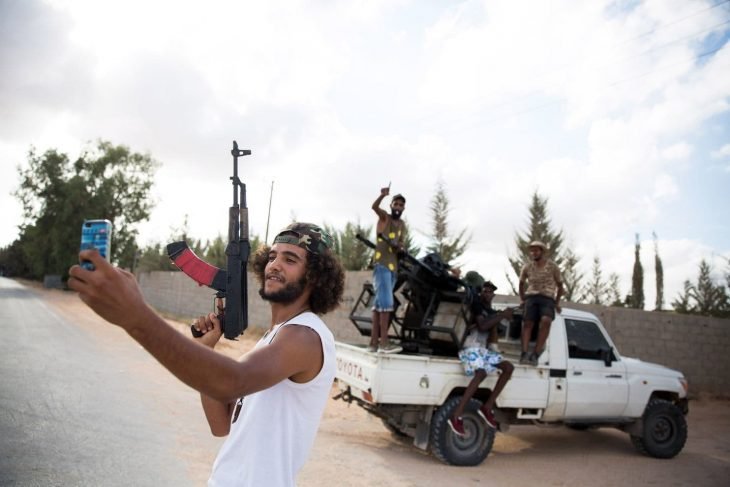
Security Over Democracy: The Compromising of Sudan’s Transition

Hamid Khalafallah

“The events that have taken place in Sudan since 2019 prove that democracy and security cannot be thought of separately: they both must be worked on together as part of one process,”

***

Earlier this month, in April 2023, political parties, armed forces, and civil society in Sudan were preparing to sign a new political agreement and form a new government. Now, General Abdel Fattah al-Burhan’s Sudanese Armed Forces (SAF) and General Mohamed Hamdan Dagalo’s Rapid Support Forces (RSF) are at war. The Tahrir Institute for Middle East Policy (TIMEP) interviewed Khartoum-based nonresident fellow Hamid Khalafallah to examine what factors led to today’s conflict, the current security and humanitarian situation on the ground in Sudan, and the role regional and international powers are playing.

TIMEP: How did the situation in Sudan deteriorate into armed conflict? What led to an open military confrontation between the two generals? 

Hamid Khalafallah: The SAF and the RSF were supposed to be part of an agreement that was set to be reached between military actors and 40 other parties, including civilian groups, political parties, and civil society, that had signed the Political Framework Agreement. They were due to sign the final political agreement in April which would establish, or restore, Sudan’s democratic transition. On April 15, a few days before signing the agreement, Sudan witnessed the war erupting between the SAF and the RSF. So it is obviously very clear that this political agreement that was about to be signed and was being discussed has contributed to accelerating the tension and the falling out between both armed forces. The friction between both armed forces, and more specifically between General Abdel Fattah al-Burhan—the Chief Commander of the SAF—and General Mohamed Hamdan Dagalo, known as “Hemedti”—the Commander of the RSF—predates the political framework agreement, and goes back to 2019, when they started their partnership and began working together after toppling former president Omar al-Bashir. 

The partnership between the SAF and the RSF was just very convenient: it was useful for them to join their interests against the civilians so that they could both gain more ground and protect their economic interests, while also protecting themselves from being prosecuted over the atrocities they committed through the years. It made sense for them to work together, and they continued to do that throughout Sudan’s transition. They orchestrated the coup together, arguably with a larger role for SAF than the RSF, but then ever since the coup, we have started seeing the two leaders’ differences growing. This increased the last few months with tensions between the generals rising, until violence eventually erupted. 

The post-Bashir transition made sense for the two generals to ignore their differences and focus on what united them, or what common interests they had, until their falling out. Obviously this falling out could have been less severe had external actors not interfered and added fuel to the fire. The Islamists, associated with the Bashir regime, did everything they could to capitalize on the friction between the SAF and the RSF. They wanted this to happen because the violence and chaos would give them an opportunity to resurface and come back to power. And we saw statements from Islamist leaders just a few days before the fighting started, claiming that chaos would dominate Khartoum and Sudan and they would come back to be the saviors. They expedited the situation between both generals, in the hopes of it turning into a full blown war.

TIMEP: After 10 days of fighting, what is the situation in Khartoum? Where is the fighting taking place?

HK: The situation in Khartoum at the moment is nothing short of catastrophic. It is a very difficult and tense security situation; fighting is happening everywhere, even in residential areas, so citizens are not safe from stray bullets, shelling, or heavy artillery, even in their own houses. Even if they are not physically harmed, the horrifying noise and sounds of these heavy machinery and gun fights definitely reaches the entire population. Many families have been spending most of their days lying on the floor or beneath their beds to protect themselves from the sounds, but also from bombing and gunfight. 

Fighting started in very centralized areas where crucial and critical government institutions are located, like the Presidential Palace, the military headquarters, and the army command building, but it has spread out to other neighborhoods. These key locations are already situated in the middle of residential neighborhoods so they are putting the population at risk.

THERE IS ALSO A HUMANITARIAN CRISIS UNFOLDING BECAUSE OF THE CONTINUOUS ELECTRICITY AND WATER OUTAGES, INTERNET CUTS, AND FOOD SUPPLIES ARE RUNNING OUT ACROSS THE COUNTRY WITH VERY FEW STORES REMAINED OPEN. 

In addition to that, there is also a humanitarian crisis unfolding because of the continuous electricity and water outages, internet cuts, and food supplies are running out across the country with very few stores remained open. But the biggest crisis in terms of the humanitarian situation is that of medical care and healthcare. It has been reported that over 70 percent of the hospitals in Khartoum and neighboring areas are now out of service, either because they were bombed or attacked by the fighting entities, or because there are no medical staff to operate these facilities. Some doctors, nurses, and other medical personnel are not able to reach hospitals to provide services because of the security situation, and those who are in those facilities are exhausted. They’re also running out of supplies. Even when there are a few hospitals or healthcare centers that remain open, citizens are unable to reach the facilities out of safety. It’s very dangerous to just go on the streets and drive and try to get to a hospital. So the situation is difficult.

TIMEP: What’s happening outside of Khartoum? How are other regions affected by the conflict?

HK: There are fights and violent clashes ongoing outside of Khartoum as well, but unfortunately, most of the media’s attention is on the capital. This conflict between the SAF and RSF has, in so many ways, started outside of Khartoum, specifically in the town of Merowe, in the north, where the RSF initially deployed their troops near the SAF’s military base. The area already had quite some tension brewing in it. The first bullet marking the beginning of the conflict was shot in Khartoum, and then the conflict moved to Merowe. Apart from some minor fighting in a few other cities, there are major violent clashes within the Darfur region, as the RSF originates from that area. They have strong tribal connections there, which made it easy for them to mobilize and recruit people and fighters. So by design, the conflict was bound to reach the area. 

Some other states have witnessed very violent clashes which have greatly affected citizens, but they have not been well covered by the media. I suspect that the fighting will continue in Darfur even if a truce or ceasefire is declared in Khartoum, because Darfur is a much more fragile situation where conflict would be difficult to control. 

TIMEP: Sudan’s neighborhood resistance committees have been regularly protesting and organizing for the past several years, since before the October 2021 military coup. What does resistance by pro-democracy groups like the resistance committees look like right now? What do activists need on the ground at the moment? 

HK: The resistance movement took a strong hit when this war erupted. Their strengths lay in mobilizing communities, bringing people together, and advocating for specific causes, and it was nearly impossible for them to use any of these popular mobilization activities, or do anything that they had been previously doing. They have been trying to think of different ways through which they could advocate for peace and ending the war. It has been difficult for them to re-strategize as the context dramatically shifted overnight and everything they had been advocating for became irrelevant as the priorities had to change.

This situation has in many ways paralyzed the existing movement, but they have started to adapt and modify their messages to the new context, particularly focusing on peace building and anti-war narratives. What they need at the moment is for different platforms, particularly on the international level, to give them the space to speak and clarify what is going on because the RSF and SAF are both claiming that the current situation is not a struggle over power or personal interests, but a fight for the Sudanese people and for the demands of the revolution. So the resistance committees will need space to argue against these claims and raise awareness about peace building and ending the war immediately.

TIMEP: Many people fled Khartoum to seek safety from the violence, becoming internally displaced in other cities and regions within Sudan. Where are people fleeing to? Can you tell us more about what’s happening to them?

THIS SITUATION HAS IN MANY WAYS PARALYZED THE EXISTING MOVEMENT, BUT THEY HAVE STARTED TO ADAPT AND MODIFY THEIR MESSAGES TO THE NEW CONTEXT, PARTICULARLY FOCUSING ON PEACE BUILDING AND ANTI-WAR NARRATIVES.

HK: Many people, particularly from Khartoum, have been fleeing the city to seek refuge. It has been a very difficult process for families to make the decision of leaving their lives and houses behind. They have been relocating to places like Medeni, which is a 2 hour drive south of Khartoum, or going up north to Shendi and Atbarah or to other cities like Gedaref in Eastern Sudan. Many have gone back to their hometowns outside of Khartoum or to cities where they have family, or to places that have relatively good services. People have also been trying to reach bordering countries such as Egypt, Ethiopia, and South Sudan, while waiting for things to calm down. In general, this process has been very difficult for people both emotionally and financially. For example, bus ticket prices are increasing by the hour, as many transportation services are capitalizing on people’s desperation to flee. Just a few days ago, people were enjoying the city and now they can only pack a few items quickly to flee and leave everything behind. 

TIMEP: There has been a lot of talk about foreign interference and influence by regional and international powers in Sudan. From what is known at the moment, what do you believe has been the role of those countries in the crisis and their role in influencing one general over the other?

HK: I find it very difficult to believe that the SAF and the RSF have been fighting this war without any coordination with foreign actors. It is no secret that both actors have regional and transnational allies, who have been strongly supporting both military entities politically, by ensuring they remain in power, and financially, by providing weapons and other monetary assistance. I truly believe they have played a huge role in the ongoing war; if not by pushing for it to happen, then by allowing it to continue. The SAF and RSF remaining in power in Sudan is good for the interests of these foreign countries. 

TIMEP: What role should the international community and international mediation play?

HK: There is a lot for the international community to do going forward, particularly during the mediation process, but also hopefully in Sudan’s democratic transition. In my opinion, the international community needs to start by admitting that the security-over-democracy compromise which they pushed for, through which they ensured that both the military leaders were part of the political equation and part of the government institutions, has contributed to the current situation. The international community pushed for the partnership between civilians and the military and for the power sharing agreement because they believed that it would ensure the country’s security. They pushed very hard for that partnership and we can see today how this did not work out and how it led to a full-on war. Of course, the war is not the international community’s fault entirely, but they did contribute to the situation today. They need to start first by reflecting on that and admitting their mistake. 

As the international community engages in the negotiations, they should prioritize the humanitarian crisis as an urgent need and not only focus on the political situation. They missed an opportunity where they could have used the momentary halting of violence in Khartoum during which diplomats and foreign nationals were evacuated. This lull in the fighting proves that both military factions can commit to a ceasefire if they have the will to do it. The international community could have pushed for more; it could have pushed for the safe passage of humanitarian assistance and for access to hospitals, but they missed this opportunity. 

THE INTERNATIONAL COMMUNITY SHOULD ALSO LEARN FROM THEIR PREVIOUS MISTAKES OF TRUSTING THE GENERALS.

The international community should also learn from their previous mistakes of trusting the generals. Calling on the SAF and the RSF and using only soft language and simple pleas will not work. It is about time for the international community to learn that both military entities openly and shamelessly lie, and have been deceitful since 2019. They should not be trusted during the upcoming political process, if it were to take place, and they must be held accountable for their actions. 

The United States has been vocal about imposing sanctions on the military leaders who orchestrated the coup back in 2021. Two years later, both coup leaders are still in power and sanctions were never applied. The international community needs to be more firm in their reactions. They also must place the democratization process back on track to ensure that security is not prioritized once again at the expense of democracy. The events that have taken place in Sudan since 2019 prove that democracy and security cannot be thought of separately: they both must be worked on together as part of one process.

The international community must also listen to the Sudanese people. The Sudanese people have been vocal and warned about the dangers of what has been going on in the past four years, but no one listened or paid attention to what they had to say. The people have repeatedly said that the military is not to be trusted, and yet here we are today. It is time to listen to the Sudanese people and hear what they have to say about what works, and what could be sustainable arrangements for Sudan moving forward.

***

Hamid Khalafallah is a Nonresident Fellow at TIMEP focusing on inclusive governance and mobilization in Sudan.

__________________

Two Reasons Why Europe Will Never Solve Its Migration Problem

The arc of human misery on its doorsteps is made worse by evil people like Yevgeny Prigozhin and his Wagner Group.

Andreas Kluth

They keep coming — and keep dying. Just this week, another 55 migrants trying to reach Europe drowned off the coast of Libya when their rubber dinghy sank. Two days earlier, 33 people died in four different capsizes near the Italian island of Lampedusa. A few days before that, dozens of bodies washed up on a beach near Tripoli. Each of these men, women or children could have told a tale of unimaginable sorrow.

The running tally of migrant drownings for the year so far is 661, according to the International Organization for Migration. That makes about 20,000 such deaths since 2014. And this number only counts fatalities on the central Mediterranean route from Africa to the European Union, not the refugees who perished on the Aegean or other passages. 

If there’s more dying, it’s because there’s more migrating again. Illegal entries into the EU, by land or sea, were up 64% in 2022 over the previous year, to the highest number since the refugee crisis of 2016. Formal asylum requests grew by 50%, with about one million applications filed. Not counted in those numbers are the millions of Ukrainians who fled the Russian invasion and now live in the EU under so-called temporary protection.

The EU is at a loss. It doesn’t want so many people to come, but also doesn’t know how to stop them or what to do with them once they reach European shores. Italy now has a prime minister, Giorgia Meloni, who ran as a far-right populist on anti-migrant rhetoric. She tries to make it as hard as possible for dinghies — or even rescue ships — to ferry refugees to Italy. But she can’t break the law and wants to avoid even more egregious humanitarian disasters. 

Other European leaders are in a similar bind. Some, like Hungarian Prime Minister Viktor Orban, pretend the problem isn’t theirs and just keep migrants out completely. Formerly liberal Denmark has in effect closed its doors and focuses instead on deporting refugees back home, even to war-traumatized Syria.

But sending migrants back against their will — and without the cooperation of their home countries — is hard. The EU still swears by the rule of law and prefers to see itself as a paragon of decency, especially in contrast to barbarian regimes like that of Russian President Vladimir Putin. That makes it difficult to just shove people on a plane, knowing they may be welcomed on the other side by the Taliban, or Boko Haram, or the troops of either of the two generals now tearing up Sudan, or others of that ilk. Such complications explain why only 21% of the roughly 300,000 migrants told to leave the EU every year actually go.

The reality is that migrants will keep coming to Europe for the foreseeable future — and in growing numbers — just as they’ll also keep trekking from South and Central America to the US. It’s because they come from places that resemble hell on earth and make Europe or America seem like relative heavens. They’re huddled masses fleeing from disorder toward order. They’re trying to outrun despair in search of hope. They’re doing what I would do too. 

To glimpse the potential of the coming migrations, just take a look at the Sahel, the arid belt of Africa just south of the Sahara. The region’s problems start with droughts and famines, which anthropogenic climate change has made 100 times more likely to occur. (That problem of global warming, it should be added, was caused not by Africans, but by rich countries in North America, Europe and elsewhere.)

But droughts are just the start of the Sahel’s problems. The intertwined list goes on to include ethnic strife and other mayhem, from coups in Burkina Faso to civil wars in Sudan or Mali, as well as Islamic terror and random violence in various places. 

Together, these scourges have displaced a record 36 million Africans, three times the number a decade earlier. Three in four of these refugees are internally displaced —  that is, still in Africa. But that could change.

Now comes the most diabolical part. There are actually people in this world who delight in this human suffering — and want to exacerbate it, because they want to cause mass migrations that will make the EU break down, or apart.

Enter Yevgeny Prigozhin, the Putin confidante who runs the Wagner Group, a Russian paramilitary conglomerate which the US considers a transnational criminal organization and Kremlin proxy. Lately, Prigozhin has been in the news for hiring convicts out of Russia’s prisons and sending them as cannon fodder to attack Ukrainian lines in places like Bakhmut. But Wagner operates in many countries, and has taken a particular interest in Africa.

According to US intelligence documents that were recently leaked, Wagner — like the Russian state — is actively pushing into the Sahel to take advantage of ambivalent interest in the region by the former colonial power, France, and superpower, America. Its goal is to cause chaos, by selling martial services to any warlord willing to make a bid. 

One target is Chad. It’s a problematic country — government forces killed scores of peaceful protesters in October — but also a US and Western ally of sorts in the fight against Islamic insurgencies. Wagner is apparently hiring and training fighters from the Central African Republic, Chad and other places to oust the Chadian government, perhaps even plotting to assassinate its leader, Mahamat Idriss Deby Itno.

This coup would be just one part of plans by Prigozhin — and therefore presumably Putin — to foment rebellion and strife across the Sahel, in order to turn the region against the West, and of course to cause a mass migration toward Europe. 

As the EU’s 27 leaders haggle about tweaking their dysfunctional asylum regime this year, let none of them peddle the illusion that the problem of migration can be either solved or ignored. Not on a planet that is heating, not in a universe with so much evil, not in a world that includes the likes of Prigozhin.

Such bleak assessments are hardly de rigueur in Brussels. But anything else is simply dishonest. The price of being European will include pulling bodies out of mare nostrum, “our sea.”

***

Andreas Kluth is a Bloomberg Opinion columnist covering European politics. A former editor in chief of Handelsblatt Global and a writer for the Economist, he is author of “Hannibal and Me.”

________________

Why the fighting in Sudan spells trouble for its neighbors

Miriam Berger

Nearly two weeks of fighting in Sudan has threatened to tear apart the country of 49 million people — and to further inflame conflicts within its neighbors’ borders.

Sudan borders seven nations — Egypt, South Sudan, Chad, Central African Republic, Libya, Ethiopia and Eritrea — each of which have faced war, violent civil unrest or political upheaval in recent years. As hopes for a swift resolution in Sudan dim with each failed cease-fire, a “catastrophic conflagration” of the conflict could consume the region, U.N. Secretary General António Guterres warned this week.

Are you on Telegram? Subscribe to our channel for the latest updates on Russia’s war in Ukraine.

The violence in Sudan broke out April 15, pitting the Sudanese military against the rival paramilitary Rapid Support Forces after weeks of rising tensions over a power-sharing agreement.

The fighting has killed more than 450 people and displaced tens of thousands of civilians. Some have caught coveted seats on emergency airlifts and boats across the Red Sea. But most Sudanese have no option but to try to seek safety on their own.

What’s behind the fighting in Sudan, and what is at stake?

The risk of a regional spillover is high given Sudan’s geostrategic importance at the intersection of the Indian Ocean, Horn of Africa and Arab world. The Nile River and oil pipelines run through the mineral-rich nation, linking its fate with its neighbors.rom seven sides, Sudan’s neighbors are watching with trepidation.

In the north, Egypt relies on Sudan as a bulwark against political upheaval and a partner in regional water disputes. Egypt is close with Gen. Abdel Fattah al-Burhan, the chief of Sudan’s army and de facto head of state, who is battling rival Gen. Mohamed Hamdan Dagalo, better known as Hemedti, of the paramilitary RSF.

The Sudanese army and RSF joined up in 2021 to overthrow Sudan’s civilian-led transitional government. The coup cut off Sudan’s path toward democracy, which began when nationwide protests in 2019 forced out former military leader Omar Hassan al-Bashir after 30 years in power. Egyptians ousted their longtime dictator, former president Hosni Mubarak, in 2011; the military seized power in 2013 in a coup led by now-President Abdel Fatah El-Sisi.

th water-stressed Egypt and Sudan rely on fresh water from the Nile River, which flows down from Ethiopia. The two countries say an upstream dam constructed by Ethiopia threatens their water supply — and any rift between Cairo and Khartoum could jeopardize efforts to reach a water-sharing agreement with Addis Ababa.

On Sudan’s opposite side, in recent days thousands of mainly South Sudanese refugees have been streaming across the 1,200 mile-long border between the two once-warring nations, on a return trip to South Sudan.

War-weary South Sudan — one of the world’s poorest countries — is ill-equipped to absorb Sudanese refugees or returning expatriates. About 12 million people live in South Sudan, roughly 2 million of whom are internally displaced and 75 percent of whom rely on humanitarian aid, according to Marie-Helene Verney, the U.N. refugee agency’s representative for the country. About 2.3 million South Sudanese are refugees in other countries in the region.

e sudden influx of so many Sudanese and returning South Sudanese in recent days risks reigniting conflict and competition over scant resources in the young nation. The mainly African and Christian or animist South Sudan gained independence from Arab and Muslim-majority Sudan in 2011, ending decades of civil war. But in 2013 a civil war began again in South Sudan, fueled by unsettled ethnic divisions and feuding leaders.

The north of South Sudan is economically dependent on Sudan, and the fighting has disrupted supplies of critical food and goods. Aid agencies, at the same time, are stretched thin: The international humanitarian response plan for South Sudan has received less than a quarter of the funding it requires, Verney said.

On Sudan’s western side, the United Nation’s estimates that about 100,000 Sudanese will flee over the border to Chad, a key regional U.S. ally. About 20,000 people crossed into Chad from western Sudan’s violence-plagued Darfur region in the first few days of fighting, according to the United Nations. Chad was already host to about 400,000 Sudanese refugees displaced by previous conflicts and housed in border camps.

The fighting in Sudan, and resulting power vacuums, could fuel political instability in Chad. Chad has a history of clashing with the precursor to the RSF — pro-government Sudanese Arab militias known as the Janjaweed. In the 2000s, the Janjaweed, under al-Bashir’s direction, terrorized Sudan’s Darfur region and conducted cross-border raids on Sudanese refugees in Chad. N’Djamena accused Khartoum of supporting Chadian rebels.

Chad also fears becoming caught in regional and proxy wars. Recently leaked U.S. intelligence documents, reported exclusively by The Washington Post, detail efforts by Russia’s paramilitary Wagner Group to recruit Chadian rebels and train them in the Central African Republic in a plot to topple Chad’s government. Wagner is active in the Central African Republic as part of Russia’s efforts to gain ground in Africa, other leaked U.S. documents said.

As Russians plot against Chad, concerns mount over important U.S. ally

The Central African Republic, a former French colony to Sudan’s southwest, has been battered by years of rebellion, mismanagement and sectarian violence. Armed groups and militias effectively run the country, where half the population lacks enough food and very few have access to clean water, according to the United Nations. Already, the unrest has led to price increases.

Wagner and the RSF have allies in another of Sudan’s neighbors: Several sources told The Post that a Libyan militia with Wagner ties sent supplies to Hemedti — allegations uniformly denied. Khalifa Hifter, a rebel leader who effectively controls eastern Libya, is backed by Wagner and is reportedly close with the RSF. Libya has been embroiled in civil war since the ouster of former dictator Moammar Gaddafi during the Arab Spring.

To Sudan’s southeast, Ethiopia is eyeing how the fighting will affect two of its key concerns: Securing water rights for the Grand Ethiopian Renaissance Dam, and settling Ethiopian claims to a disputed border region where fighting has erupted before. Sudan has also been a refuge for tens of thousands of Ethiopians from the Tigray region, which fought a two-year war with the central government that ended in a shaky peace deal late last year — and threatens to flare up again.

Changes in the region’s balance of power could also upset neighboring Eritrea’s fragile alliances. Sudan has hosted thousands of refugees and asylum seekers from its eastern neighbor, and is the first stop for many Eritrean men fleeing the repressive government’s forced conscription. Eritrea sided with Ethiopia in its recent war with Tigray rebels. Just a few years earlier, the two countries ended a decades-long cold war.

“The power struggle in Sudan,” Guterres told the U.N. Security Council on Tuesday, “is lighting a fuse that could detonate across borders, causing immense suffering for years, and setting development back for decades.”

***

Miriam Berger is a staff writer reporting on foreign news for The Washington Post from Washington, D.C. Before joining The Post in 2019 she was based in Jerusalem and Cairo and freelance reported around the Middle East, as well as parts of Africa and Central Asia. 

_______________

Our experience in Libya hellish – Returnees

Emmanuel Ojo

Some Nigerian returnees from Libya tell about their ordeals in the North African country

What state are you from?

I am from Edo State.

What was your experience like in Libya?

It was tough; the work stress and all that. I was even kidnapped in 2021 and raped.

Can you figure out the motive behind the kidnap?

That’s what they do in Libya; they kidnap someone and collect money from the person. They took my phone; I was raped by two guys. After then, I went to the hospital to take care of myself. In 2022; I started working and saving for myself.

What year did you migrate there?

I went there in December 2020, close to three years now.

What informed your decision to go to Libya?

I actually didn’t want to go to Libya. I thought it was Spain they were taking me to. I was 17 years old then and I wasn’t as wise as I am now. I was told that passport would be done for me. I didn’t know that I was supposed to do my passport myself. So, I believed them. They took us to Libya and I found myself there. For the fact that I wasn’t used for prostitution, I had to stay and work.

So, who took you to Libya?

Mr Godwin. He is an Urhobo man; a very good man. He took care of me and helped me to get a proper job. I was working in a hospital and later I got another job in a house as a cleaner.

Where did you live and how were you able to sort accommodation?

I was living with him and his family. I stayed with the family and I helped them with many things at home, though I wasn’t a house help.

What mode of transport was used? Was it by air or road?

I travelled by road.

How will you describe the experience by road?

It was very stressful. Some people died on the road, others drank their urine because there was no water except well water. Some used kegs to get water and so on. We went through the desert. The sun rays were very hot, temperature was high and it was very sandy, but it was usually very cold at night. We saw dead bodies on the way and one could easily contract infection due to rape and all that.

How will you compare life in Libya to that of Nigeria?

Nigeria is very safe, safer than the experience we had there. Over there, police harass foreigners; armed robbers do same. So, it’s better to be in Nigeria and work here. I will use the little savings I made over there to trade. In Libya, police can even arrest someone and put him or her in custody for two years for no reason. I feel safer in Nigeria.

Despite all that, there are people still going to Libya, insisting that it’s better. What will you say in that light?

Well, some have really not experienced some of these things. For instance, if you don’t have your passport and your qama (residence permit), they can arrest you but will release you later. For some, they may not leave them even if they have those things. So, some who don’t know what the experience is like may want to travel to Libya.

Did you pay any money to Mr Godwin who took you there?

I paid my boss N1m; I paid the money when I got there. They usually say they are taking you there for about N300,000 or N400,000, but they will eventually take twice the amount. So, that’s what they do. Some will even take more or use the girls for prostitution. It’s International Organisation for Migration that usually comes to the rescue of most people in such a situation. They asked us to register and all that.

So, some of those girls are used for prostitution. If they refuse to do it willingly, they are sold to other Nigerians over there. They are sold off to a new boss; usually a Nigerian. That new boss will use them for prostitution forcefully. Some go as far as removing the womb (uterus) of some ladies for the prostitution job.

Sometimes, even if the lady is pregnant, she will still be used for the job, but I thank God for the kind of person that I met. He was good to me and he took care of me. When I was done paying his money, I left the house and he even bought me a phone. My boss is not a bad person; it’s just that Libya is not so safe. A policeman can just burst in and carry someone for no reason.

Recalling the rape experience, what was it like to you?

I can never forget the trauma.

What events led to that?

When I was done paying the money, I stayed home for about two weeks; I was looking for a job to start afresh. I wasn’t feeling fine at some point because I had internal bleeding. I was told that someone had a job for me and it was a man. I didn’t know that it was a setup. I entered the car and the man that spoke English handed me to Arab boys.

They took me away and raped me. They demanded  money and they took my phone. My friend suspected that my boss knew about the whole plan, but I didn’t really agree with that. They took me to a very far place, but I managed to find my way to the roadside. It was a man that was coming from his farm that picked me up and took me to my friend’s house before I went to the hospital.

What message do you have for those still willing to move to Libya?

My message to them is that Libya is not a place to travel to, except for those that are graduates that have their passports and residence permit. If you have it, you can work, but if you migrate illegally, it’s very tough. I won’t even advise my enemy to go there. Sometimes, you may be working for someone and the husband or son can be harassing you and at the end of the day, the wife won’t make a case for you or try to protect you. They will rather kill you or set you up.

I was Cyprus-bound but ended in Libya – Kehinde

Why did you migrate to Libya?

Actually, it wasn’t intentional. Libya was introduced to me by someone and it wasn’t directly; they usually don’t tell us that we are going to Libya. It was at the midway that I discovered that it was a trip to Libya. They actually told us before leaving Nigeria that we were going to Cyprus which is in Europe. When I asked some people that we were on the trip together, they said it was Libya, not Cyprus. I didn’t have any option than to accept that because we were at midway already. We were already in the desert when I knew that the destination wasn’t Cyprus.

I studied Science and Laboratory Technology at the Federal Polytechnic, Ire, and I did my SIWES (Students Industrial Work Experience Scheme) too, where I learnt some practical aspect of the course. So, I wanted to practise that, but when I got there (Libya), some jobs were introduced to me like auto mechanic, auto electrical jobs, bricklaying, and car wash. They suggested that I should do mechanic job and other jobs, but I had no option because I was in Libya already.

The pay I was getting was half of what is expected for me to get. I sorted myself and was also paying them for the trip with that income. Although, I made an initial deposit of N250,000 before I left Nigeria. I used nine months to pay my debt.

Do you think life in Libya is better than what we have in Nigeria?

Libya is better than Nigeria, it is.

Did you have a better life in Libya?

It wasn’t like I had a better life there because we didn’t have the freedom to do whatever we wanted. There is money in Libya but there is frustration and limitation to freedom. A place where you are maltreated, you obviously won’t find happiness in such a place.

What informed your decision to come back?

The reason was that Libya wasn’t even the destination I wanted or I bargained for. Before I left (Nigeria), I was warned by one of my pastors to ask them if the destination we were going wasn’t Libya, but due to the lie I got from them (those that took me to Libya), I decided to travel to Libya.

How was your experience on the journey and how did you survive the hurdles?

It was terrible but I thank God. Though we went with some food, at the end of the day, I lost my bag. I was a Christian before I left Nigeria, so, I was used to fasting; I ate when I saw food and when there was no food too, I fasted. I ate once in a day.

How long did it take you to travel through the desert to Libya?

It took about a month to get to Libya. Though it wasn’t like I stayed for a month in the desert, going through the desert alone took me about four days.

I lost my husband in Libya – Queen Felix

What was your experience in Libya?

It was hell; a bad experience.

Why did you describe it that way?

I lost my husband in Libya

What led to his death?

Nothing; we were about to christen this baby I’m carrying; he slept on a Thursday night and on November 8, last year, he woke up very early between 12am to 3am. As he got up, immediately, he slumped and died.

How long had your husband been in Libya?

Over three years. He went there, then later sent for me. He paid for everything and guided me on how to go.

How old is your son now?

He is 10 months old.

How many children do you have?

I have three children. The first one is eight years, the second is five years. I had the other two in Nigeria before I went there.

Did you travel with the other children?

Yes.

How did you make it through the desert with three children?

Going through the desert is by luck. We spent over a month and I went with food stuffs, though it finished on the way. There was no water, no biscuit, nothing. We thank God.

Some of those borders you went through are ungoverned areas, hence bandits, terrorists take charge of those zones. How did you scale through with three children?

There, some girls were raped on the journey to Libya.

Some Nigerians were kidnapped, raped – Bridget

What part of Nigeria are you from?

I am from Agbor in Delta State.

What was your experience like in Libya?

It was hellish. I don’t know where to start, but ‘hell’ is a good description for it. It was not an easy task. Well, maybe my experience was better than what some of my friends went through. Some of them experienced rape, kidnapping, not being paid their wages after working at the end of the month and so on. After working, their employers will say some things in their Arabic language and eventually say that they stole something and send them away.

How did you find your way around with the Arabic language that was spoken?

There are some that speak English, but not fluently.

What informed your decision to go to Libya?

I went there because of marriage. I went to join my husband who had been in Libya for two years. I stayed there with him for a year and some months before we relocated back to Nigeria. I wasn’t forced to go there; it was my decision.

So, how did you go?

I went by road and there was no problem. I was a hairstylist there; so, there was no problem. I made the hair of Nigerians there. My husband wanted to move to Italy. That was the target for him.

You are pregnant at the moment. How were you able to cope with your pregnancy?

This is my first pregnancy anyway and we stayed back for a year and some months and decided to come back to start something.

Foreigners in Libya don’t enjoy freedom – Ngozi Shedrach

What informed your decision of taking your wife to Libya? Do you feel the situation there is better than life in Nigeria?

No, I was there for a while. When we got married, my brother represented me at the event here. After all had been done, I told my wife to wait till after a year and that I would come back home. She said no, that she wanted to be with me.

At the time I travelled, I went with my sister and two other friends. The man that helped me to get to Libya was my sister’s husband. This same sister is here with me. When he (sister’s husband) died last year, our parents decided that all of us should come back home, and that Libya wasn’t a good place to stay. In Libya, there are many challenges; you find children like four to five years that will abuse you and call you names, but you can’t do anything to them because you don’t have a say. We didn’t have freedom.

Was it because you didn’t have their residence permit or you migrated illegally?

It wasn’t because of that. In Libya, you don’t have freedom and the biggest problem is that sometimes after working for them, they will not pay you. They could go in and get a gun to point at you and you would have to leave the money and run for your life, even the church we went to stopped operation three months after we went there. There is no church in Misurata, the state I was residing before I came back. Up till now, the church has not been operating.

What was your target destination when you embarked on this journey?

My target was to get to Europe but it didn’t work out. The same people that gave the connection are the same people that will set you up with police and ask you to pay money before you are released to start a new life again.

Didn’t you consider it too risky, asking your wife to travel through the desert to meet you in Libya?

I knew it was risky but the person that I paid money to bring her knew the way. He said that there was no problem. She wasn’t the only one that came; he also brought my friend’s wife and other people. I wanted to cross over to Europe with my wife, but it didn’t work out.

What kind of job did you do in Libya?

I was doing a welding job.

Was it a well paid job?

Somehow, but since last year, I did not get jobs like before. Many Nigerians work with companies and the thing about that is that sometimes, at the end of the month, you won’t get your salary and sometimes, it gets even to six or seven months without pay, sometimes up to 10 months.

__________________

Will Libya’s new union fuel a new civil war?

Mahmud al-Batakoshi

Libya has already entered the dark tunnel, with the civil war dragging on in the Arab country.

This war is turning Libya into an arena for internal strife and a playground for various intelligence services that are exacerbating the crisis.

A number of militia leaders in western Libya have announced the formation of the so-called ‘Union of Libyan Revolutionaries’.

The same leaders rejected the Constitutional Amendment No. 13 which was approved by the House of Representatives and the State Council.

They said they would not allow the enforcement of this amendment, even if this would make it necessary for them to use force to prevent Libya from sliding into chaos.

The amendment is made of 34 articles that focus on the system of government, which, according to the first article, consists of a bicameral legislative authority and an executive authority headed by a president elected directly by the people. It also contains articles on women.

According to the amendment, the legislative authority is called the ‘Council of the Nation’. It consists of two chambers: the House of Representatives, based in Benghazi, and the Senate, based in Tripoli.

The amendment also defines the legislative competencies of the two chambers and the method and conditions of candidacy and elections for them.

However, the executive power is headed by a president elected directly by the people. The president also appoints or sacks the prime minister.

The amendment defines the competencies and functions of the executive authority and the method of its accountability.

Faltering security landscape

International affairs specialist, Mahmud al-Effendi, said the announcement by the militias of western Libya about the formation of the Union of Libyan Revolutionaries comes in conjunction with the international community’s intensive attempts to hold the presidential and parliamentary elections in the country this year.

“This reflects the fear of the militias of western Libya to complete the roadmap, which results in the unification of the military institution, which is not acceptable to Sadiq al-Ghariani, the isolated mufti of Libya,” he told The Reference in an interview.

Al-Effendi described al-Ghariani as the ‘godfather’ of a large number of militias in western Libya.

The greatest evidence of this, he said, is rejection by the militia leaders of Constitutional Declaration No. 13 which was approved in February 2023.

“The declaration regulates the presidential and parliamentary elections scheduled for this year,” he said.

New roadmap

Al-Effendi did not rule out the possibility of launching a new roadmap for Libya in the coming period.

The new roadmap, he said, would be based on the initiative led by United Nations Envoy to Libya, Abdoulaye Bathily.

“This is especially true after the latest Egyptian-Turkish rapprochement on the Libyan file,” al-Effendi said.

“This rapprochement was confirmed by Turkish Foreign Minister Mevlüt Çavuşoğlu who hinted at a new roadmap to be agreed with Egypt and the international community to hold the presidential and parliamentary elections in Libya.” He added.

___________________
Social media now trumps traditional family networks in Libya

My Facebook survey reached 446,000 women

Abier Hamidi

dubai photographer

When I told my family and friends I intended to pursue a PhD researching HIV awareness among married women in Libya, my home country, the reaction was not encouraging: “You’d be lucky to even get members of your family to respond,” said one.

They weren’t being unnecessarily pessimistic but rather managing my expectations, considering I was not only researching HIV awareness in a conservative country often perceived oppressive, but I was also looking to recruit women.

Historically, Libyan women have been placed under severe social and cultural constraints that rendered them difficult to reach. Libya is shaped by and works within a patriarchal society where simply approaching women on such a taboo topic as HIV/Aids – which in Libya is often associated with immoral practices such as pre or extra-marital sex, substance abuse and homosexuality – made the research even more complex.

I knew that the lack of confidentiality and the fear of being stigmatised were going to be a problem. So I needed a method that would provide a platform whereby the women can respond to the survey without prying eyes.

This is where the power of online surveys comes in. Using an anonymous, self-completed questionnaire reduces the effect of the topic’s sensitivity and helps reduce people’s fear of the possible social stigma attached to those self-disclosures.

But online surveys have their limitations. In Libya, these include poor telecommunication infrastructure, especially away from the large cities, as well as the high cost of internet access and the relatively poor service there. But the fast-growing smartphone market is encouraging and facilitating internet use in the country. According to the most recent available figures there were 3.14 million internet users in Libya in 2023 – approximately 45.9% of the population.

My questionnaire included five main sections. I asked for some limited demographic information (age, city, educational level, employment status). There were also sections on HIV/Aids related knowledge, responsents’ perceptions of HIV risk, their attitude toward HIV and where they sourced healthcare information. I took particular care to ensure that I was gathering the maximum amount of information while remaining sensitive to Libya’s religious and social contexts.

Armed with approval from the university’s research ethics committee, I sent out a recruitment post with the questionnaire, mainly to family and friends in the Libyan diaspora in the UK and the US. The principle aim of this pilot study was to ensure that the wording, language and questions were understandable and that the mechanics of the survey functioned correctly. Within a month I’d received more than 168 complete questionnaires, which reassured me that sharing the survey with family and friends and asking them to forward the link to their various social and family networks would be the ideal approach for my main research on Libyan women in Libya.

What is ‘wasta’?

Libya has a population of around 7.1 million which is heavily skewed towards large networked tribes and well-established families, meaning the degree of separation across the whole of society is quite small. This has traditionally meant that the best way to get things done is by using these big family or tribal networks. This is known as “wasta”.

Wasta is a common practice of calling on personal connections for assistance. It’s a social norm in most Arab countries, defined by one academic as “a personal exchange system between members of society that is entrenched in the tribal structure of the country”. The concept has been tied to a tribal tradition which obliges those within the group to provide assistance in the same network.

I have a large family in Libya which straddles two different tribes, as well as family friends, so I was confident that wasta was the best approach to take. I sent the link to all the members of my wasta network through WhatsApp and asked them to forward it onto their friends and extended family. I also posted on Twitter and reached out to various Facebook pages. I only needed 323 complete questionnaires and I was confident that method would yield the best response.

Days went by and I only had a handful of responses. Much of the feedback I received from family members was worrying. People said they had exhausted their networks without much success. Clearly, recruitment using wasta wasn’t working. So I decided to fall back on my experiences of working in marketing and created a targeted post, aimed at “women, ages 18-65+ living in Libya, married, divorced, separated and widowed”. In direct contrast to wasta, this didn’t rely on who I know.

Social media has grown massively in popularity as a research tool in recent years. So, bearing in mind that Facebook is the most popular social media platform in Libya, with more than 6 million users, I created a Facebook page with the title, in Arabic: دراسة النساء الليبيات المتزوجات (Research on Libyan married women). I linked in papers I had published in the past (also in Arabic) and the recruitment poster below.

I launched the post and the response was immediate, with replies and completed questionnaires and supportive comments coming in fairly rapidly to start with. But within a few days the response rate slowed down and still I wasn’t anywhere near my response target. Then I realised my mistake. The initial post targeting women who are married, divorced, separated or widowed hadn’t taken into account that the majority of women didn’t tend to include their marital status on Facebook. This meant I was only reaching a small percentage of my target audience.

I removed the status and the reach shot up. In six months, my post reached 446,906 women in Libya. The stats were impressive: 59,422 engagements, 1,549 reactions and 703 comments. I received more than 1,000 completed questionnaires.

In the end, this showed me that while for certain things, wasta can yield results, for an issue such as this, Libyan women wanted to ensure their anonymity and the confidentiality of their responses. Social media, which doesn’t mandate use of real names or photographs, was able to offer this in a way that extended family and friends, naturally, never could.

***

Abier Hamidi – PhD Candidate, Faculty of Health & Social Sciences, Bournemouth University.

_____________________
Beyond Elections: Libya Needs Unified Institutions and Reconciliation

Mehdi Bchir

The country’s conflict is far too complicated to be resolved by elections — a comprehensive strategy is needed to bring peace.

Last week, the U.N. Security Council met to discuss its Libya mission and its new plan to end the country’s political impasse through elections. While credible polls will be a critical step in forging a path to peace, they are not a panacea for addressing this byzantine conflict’s deeply rooted drivers and the intense, bitter rivalries and factionalism that have surfaced since 2011. Indeed, previous efforts to hold elections have buckled under the weight of the intricate dynamics at play. Over a decade after the fall of Muammar Qaddafi, resolving Libya’s complex conflict will require a multifaceted approach that prioritizes building trust among Libyans.

With the U.N.’s special representative of the secretary-general for Libya, Abdoulaye Bathily, recently announcing a new initiative to hold elections, it is critical to consider the undercurrents — beyond electoral processes — that must be navigated, the roles of national Libyan institutions in mitigating the country’s intense polarization, and how the international community can help.

Underlying Drivers of Conflict

The complexity of Libya’s conflict — with rival governments in the east and west, various players jockeying for power and a host of foreign actors interfering — has resulted in everchanging fault lines and flash points for violence. The U.N.-backed Government of National Accord based in Tripoli (the west) and the Tobruk-based House of Representatives (the east) both grapple with the limits of power in a country with divided governance and struggle to execute the basic functions of a state.

These broader national tensions are exacerbated by regional and local conflicts among various tribes and armed groups and narratives of marginalization — especially in the country’s southern Fezzan region — that foster grievances and resentment. This convoluted interplay generates a self-perpetuating cycle of conflict and violence.

What makes this worse is the role of the numerous foreign powers who interfere in Libya to advance their own interests. The relentless involvement of countries like Russia, Turkey, the United Arab Emirates, Egypt and France in supporting various factions has transformed the conflict into a convoluted proxy war. These powers — driven by strategic, economic and geopolitical motivations — exacerbate the situation by supplying weapons, financial aid and even mercenaries to their respective Libyan allies. As a result, the quest for peace and stability has become ever more elusive, eaving the Libyan people to bear the brunt of a conflict that seems to have no end in sight.

These are issues that elections — no matter how credible and transparent — cannot overcome alone. Libya’s rival factions need to come together and agree on a political settlement that addresses the root causes of the conflict. This settlement should provide a framework for the division of power and resources — and a plan for decentralizing power. Promoting reconciliation to redress grievances and injustices is also imperative. These are processes that will take time, concerted effort and political will. To even begin to set Libya on a path to a peaceful and stable future, it is vital to build trust among Libyans and enhance the legitimacy of national institutions. 

Reconciliation and the Role of Libya’s National Institutions

The U.N.-facilitated Libyan Political Dialogue Forum — which was launched in 2020 and brings together key Libyan representatives from across Libyan society — mandated in February 2021 that Libya’s Presidential Council oversee vital national reconciliation efforts. Established under the Libyan Political Agreement in 2015, the Presidential Council serves as Libya’s head of state, led by a chairman and two vice-chairmen representing Libya’s three historical regions.

In February 2023, the Presidential Council convened a national dialogue with over 80 representatives from diverse Libyan factions. They identified five issues that must be addressed to achieve national reconciliation: identity, security, transitional justice, decentralization and local governance. The deputy head of Libya’s Presidential Council, Abdullah Al-Lafi, has said that this effort can complement the U.N.’s latest elections plan and U.N. Special Representative Bathily has expressed his support for the Libyan-led endeavor.

At the request of the Presidential Council, Libya’s National Planning Council (NPC) has played an instrumental role in designing the national dialogue. Beginning in 2018, the NPC spearheaded reunification efforts for state institutions divided since 2014 between the east and west. Its achievements include the reunification of the Audit Bureau and Libyan Airlines, among other national institutions.

These efforts to reunite divided institutions emphasized that reunification hinges on reform and a substantial conversation about decentralization. Decentralization-focused discussions are especially critical to the national reconciliation process, and their importance to the reunification efforts offers a window into how Libya’s governance system can be reformed to align institutions with international norms and adapt their mandates to satisfy Libyan expectations.

Given the technical complexities of decentralizing governance and devolving it to subnational bodies, national institutions that understand the intricacies and necessary mechanisms should be entrusted with this process. These institutions will create and refine a national vision, which will subsequently be presented to the Libyan people for their input and evaluation. In this way, both reconciliation and decentralization work together in a complementary fashion, with the NPC playing a pivotal role in bridging the two tracks.

International Community Support

While the Presidential Council’s and the NPC’s initiatives are promising, they reveal structural weaknesses that require international support. The primary shortcomings stem from inadequacies in the design of the procedures. For instance, it is imperative to devote more attention to establishing a strong participant selection criterion, promoting inclusiveness for local communities and effectively connecting local and national processes. Additionally, there are areas for improvement in strategic communications and related aspects.

To bolster these efforts and the capacities of the Presidential Council and the NPC, the international community must marshal expertise and provide technical assistance, without compromising the Libyan-owned processes. This support should aim to strengthen national institutions, foster dialogue and cooperation among rival factions, and advance initiatives that tackle the conflict’s root causes.

Ending Libya’s political impasse requires a holistic strategy, of which elections are only one component. Tackling underlying conflict drivers and bolstering the Presidential Council’s and the NPC’s efforts to overcome polarization are critical steps toward achieving a durable peace. The international community can play a pivotal role by providing resources and expertise. In the end, though, Libyans themselves will have to forge a path to peace.

***

Mehdi Bchir is the country director for the U.S. Institute of Peace in Libya.

_______________

The sad inevitability of the return to arms in Sudan

Hafed Al-Ghwell

Violent clashes erupted in Sudan last weekend, pitting the Sudanese Armed Forces loyal to Abdel Fattah Al-Burhan, the general who runs the country’s governing council, against the Rapid Support Forces, an estimated 100,000-strong paramilitary group led by Al-Burhan’s deputy, Mohammed Hamdan Dagalo, also known as Hemedti.

Despite international calls for a ceasefire, the violence quickly spread, threatening to plunge the country into an all-out civil war. Absent furious diplomatic interventions or other efforts at mitigation, what began as gun battles in Sudanese cities and towns could potentially engulf a wider region already inundated by troubling developments, including a perennially fragile Sahel and the conflict in Libya.

The verified facts are few and far between for now, making it difficult to parse the exact ramifications of the return to arms in Sudan. What is clear, however, is the reasons why the confrontation happened.
Even after former President Omar Bashir was toppled by a coup d’etat in 2019, Sudan remained in turmoil due to frequent protests, the enduring effects of the COVID-19 pandemic, and fragmentation and infighting within nascent governing institutions mostly ill-equipped to manage a troubled transition.

A nominal power-sharing agreement resulted in some semblance of a loosely held together government, but deep divisions and polarization within the Transitional Sovereign Council have severely undermined its ability to tackle the root causes of civilian angst and growing public frustration, including economic, political and social marginalization.

However, it was still enough to at least corral sufficient support to put together the controversial Juba Peace Agreement with several rebel groups in October 2020, as a first step toward curing Sudan’s many ills in a post-Bashir landscape.

Unfortunately, the implementation of the agreement faced numerous challenges, as the military and civilian factions of the Sovereign Council differed in their approaches to granting legitimacy and agency to bitter rivals-turned-aspiring politicians, which just exacerbated existing tensions.

At the same time, Sudan’s economy was circling the drain as record inflation rates, soaring food prices and fuel shortages gripped a country struggling to shake off the debilitating effects of COVID-19, inciting ever-greater public discontent that the mere appointment of a civilian head of government could not hope to assuage.

Following the October 2021 military coup, massive protests once again erupted across Khartoum and other Sudanese cities. The public, led by civil society organizations, demanded the immediate release of civilian leaders who had been arrested and the end of military rule. The military responded with force, leading to a number deaths and injuries among the protesters. Under immense public pressure, Al-Burhan eventually released Prime Minister Abdalla Hamdok a month later.

Al-Burhan and Hamdok subsequently announced a political agreement designed to restore the power-sharing agreement and pave the way for a peaceful transition to civilian rule. However, the deal was greeted with skepticism and criticism among the public and members of civil society organizations, who argued that it lacked transparency and did not guarantee an end to military rule.

In hindsight, the motivations behind the coup were complex and multifaceted, going beyond mere concerns about the country’s myriad crises, a peace agreement with rebel groups that was worth less than the paper it was written on, and even the role of international actors such as the US, Egypt and Ethiopia, to name but a few.

Nonetheless, that coup revealed the fragility of the power-sharing agreement, the deep divisions between the military and civilian factions, and the ways in which both sides were co-opting public dissatisfaction to justify excluding each other from critical decision-making in a slowly unraveling transitional process.

The tensions began mounting further late last year after the Sudanese elite signed on to an accord that was supposed to usher in a new civilian-led government and sideline the military junta that forcefully seized power in October 2021.

However, the so-called Framework Agreement frequently kicked the can down the road (yet again) on a number of challenging issues, such as security sector reform, in the hope of achieving “a government by the end of Ramadan,” as demanded by foreign diplomats.

It also initiated an extremely vague and unrealistic political process built on delicate compromises and formed within a short time span at the behest of an impatient international audience, which only exacerbated the latent tensions.

After Al-Burhan excluded the Rapid Support Forces from meetings on security sector reforms that required the integration of the militia into the Sudanese Armed Forces within two years, Dagalo set about building up and positioning his forces around the capital, Khartoum, in anticipation of an armed confrontation. They deployed at or near strategic locations around the city, including an airport where Sudanese and Egyptian fighter planes were based.

Al-Burhan’s forces saw this as a preemptive escalation that aimed to subvert the Sudanese Armed Forces’ aerial advantage and possibly commandeer some of its superior weaponry, prompting warnings that the security situation in Sudan would collapse unless the Rapid Support Forces withdrew.

They did not and so now, instead of protracted talks about how to integrate the two groups according to a more appropriate timetable, a powder keg of intense rivalries, divisions and discontent was ignited — seemingly catching Sudan’s neighbors off-guard.

A protracted conflict between the two groups risks dragging Sudan’s regional patrons and neighbors, such as Chad, Egypt, Eritrea and Ethiopia, into the dispute, especially given that the Sudanese rivals seem fairly evenly matched. Bellicose rhetoric makes it clear that their leaders are currently set on annihilating each other. This is perhaps the culmination of their competition for influence and authority, which is rooted in the tenure of former autocratic leader Bashir.

In the early 2000s, Bashir employed and armed Arab tribes to initiate an aggressive counteroffensive against the predominantly non-Arab armed factions that opposed governmental neglect and exploitation. His strategy proved effective, albeit with significant human consequences, most notably the 300,000 fatalities during a six-year conflict in Darfur.

Then, in an effort to “coup-proof” his regime, Bashir integrated the Arab tribal militias from Darfur into the Rapid Support Forces and appointed Dagalo as leader of a force that became a de facto “presidential guard” answerable only to Bashir.

Soon, the power wielded by the Rapid Support Forces expanded as it gained control over lucrative, albeit illegal, gold-mining operations, as well as generous funding from overseas in exchange for deploying its members as mercenaries in other hot spots.

In addition, Dagalo’s proximity to Bashir allowed him to cultivate personal relationships with regional neighbors and even seek collaboration from the notorious Wagner Group, which began to make inroads in Sudan not long after Bashir’s 2017 trip to Moscow to pitch to President Vladmir Putin the idea of Sudan as a “gateway to Africa.”

Thanks to its considerable financial resources and backing from international sponsors, the Rapid Support Forces quickly emerged as a formidable rival to the conventional Sudanese military. Dagalo set about laying the groundwork for an eventual confrontation with the Sudanese state by instrumentalizing the transition process to thwart Al-Burhan’s ambitions, which often involved supporting civilian calls for an end to military rule even though the Rapid Support Forces was part of that military.

Once the Framework Agreement was signed, the already complicated dynamics of Sudanese politics, predominantly characterized by civilian-military antagonism, grew even more complex. Al-Burhan and Dagalo embarked on a quest to garner support from both civilian factions and rebel groups, while simultaneously seeking support from the peripheries, away from their respective urban strongholds.
As a result, attempts to initiate comprehensive security sector reforms that would have effectively neutered Dagalo became increasingly untenable, pitting the nation’s two principal military entities against each other.

The international community, meanwhile, remained strangely insistent that there were little or no substantive differences between Sudan’s forces that might hamper progress toward solving the country’s intractable woes.

For most Sudanese people though, it was already clear late last year that a conflict between Al-Burhan and Dagalo was a matter of “when,” not “if.”

Whatever the outcome of the conflict, and the likely devastating losses arising from it, Sudan will once again face an intractable dilemma, and it will not be the resolute call for democracy that an enraged populace sought after putting an end to Bashir’s reign.

Instead, the corrosive legacy of Bashir’s transactional politics and his exploitation of militias, having found new political life in Dagalo’s ambitions, will continue to wreak havoc which, as always, will be paid for with the blood of the innocent.

***
Hafed Al-Ghwell is a senior fellow and executive director of the Ibn Khaldun Strategic Initiative at the Foreign Policy Institute of the Johns Hopkins University School of Advanced International Studies in Washington, D.C., and the former adviser to the dean of the board of executive directors of the World Bank Group.

____________________

Libyan warlord could plunge Sudan into a drawn-out ‘nightmare’ conflict

Jason Burke and Zeinab Mohammed Salih 

As Khalifa Haftar’s influence emerges, analysts warn the area could be a battleground for multiple players.

The Libyan warlord Khalifa Haftar helped to prepare the Rapid Support Forces (RSF), a militia now fighting for control of Sudan, for battle in the months before the devastating violence that broke out on 15 April, the Observer has been told by former officials, militia commanders and sources in Sudan and the UK.

The involvement of Haftar, who runs much of the eastern part of Libya, will raise fears of a long-drawn-out conflict in Sudan fuelled by outside interests. Analysts have described a “nightmare scenario” of multiple regional actors and powers fighting a proxy war in the country of more than 45 million people.

A new effort to impose a ceasefire on warring factions in Sudan appeared to be failing on Saturday, with continued fighting, airstrikes and bombardment in Khartoum, the capital. There were also renewed clashes in the Darfur region, in the south-west. More than 400 people are known to have died in the conflict so far, though the true toll is believed to be much higher.

The conflict has pitted army units loyal to Sudan’s military ruler, Gen Abdel Fattah al-Burhan, against the RSF, led by Mohamed Hamdan Dagalo, known as Hemedti, who is the deputy head of the ruling council. Both believe they can seize unchallenged control of Sudan’s resources and its crumbling, but still powerful, state. Neither appears inclined to compromise, analysts say.

Local NGOs are warning staff to brace for a rise in violence now that the Muslim holy month of Ramadan is over. The sources told the Observer that Haftar had passed on crucial intelligence to Hemedti, detained his enemies, increased deliveries of fuel and possibly trained a detachment of hundreds of fighters from the RSF in urban warfare between February and mid-April.

Haftar’s connection with Hemedti goes back to well before the fall of Omar al-Bashir, Sudan’s veteran authoritarian ruler, after months of popular protests in 2019. However, the relationship has grown warmer in recent years, with Hemedti sending mercenaries to Libya to fight alongside Haftar’s military force, the self-styled Libyan National Army (LNA), the sources said.

Hemedti and Haftar have also collaborated on a range of highly profitable smuggling operations, with middle-ranking commanders in both their militias forging close links as they manage the transit of valuable illicit cargos between the two countries, experts told the Observer.

Sudan and Libya sit astride major routes for human trafficking, narcotics and much else. In recent weeks, as conflict between the RSF and Burhan’s forces loomed, Haftar made efforts to support Hemedti, the sources said.

These have been carefully calibrated, however, as neither Haftar nor his international sponsors, the United Arab Emirates and Russia, want to commit entirely to one side in a conflict whose likely outcome remains unclear. Haftar must also be careful not to alienate supporters in Egypt who are backing Burhan. One militia commander within the LNA said his force was “ready to support [Hemedti] … but we are still monitoring the unfolding situation in Sudan”.

Only days before the conflict erupted, Haftar ordered the arrest of a deputy of Musa Hilal, a Sudanese militia commander who is a bitter enemy of Hemedti.

Hilal’s forces were responsible for inflicting heavy losses on Russian mercenaries from the Wagner group – another ally of Haftar – in the neighbouring Central African Republic in an ambush near the Sudanese border earlier this year.

In a further display of support, one of Haftar’s sons flew into Khartoum to donate $2m to Al-Merrikh Club, one of two big football teams in Sudan which is struggling financially. The club is associated with Hemedti, who has helped to repair its stadium. After announcing the gift, Sadeeq Haftar was hosted by Hemedti.

During the visit, Hemedti received a warning from Haftar that his rivals in Sudan were preparing to move against him, intelligence sources close to the LNA told the Observer. A day after Haftar’s son had left Sudan, Hemedti moved forces to take control of the international airport at Merowe, a strategically sited town 300km north of Khartoum, and began positioning fighters to seize key locations in the capital, the sources said.

Last week, the Wall Street Journal reported that Haftar had sent at least one shipment of arms to Hemedti, a claim denied by the LNA, while CNN described flights from LNA-run airbases organised by the Wagner group, which has a presence in both Libya and Sudan.

Russia has built close ties with both Haftar and Hemedti, but Yevgeny Prigozhin, the founder of the Wagner group, denied the report.

There are, however, reports from witnesses on the ground of planes landing at Al-Jawf airport in Kufra, in southern Libya, carrying weapons that then were sent on convoys of trucks towards Sudan.

Haftar is a polarising figure, whose enemies accuse him of war crimes during Libya’s 2014-20 civil war. In 2019, a UN report said that a thousand Sudanese troops from the RSF had been deployed to Libya by Hemedti to help the LNA in its battle with the internationally recognised government in Tripoli.

Former and current Libyan officials told the Observer that in recent months Haftar had trained hundreds of RSF fighters, who lack experience of urban warfare, in techniques and tactics they would need in a potential battle for Khartoum and other cities.

Jalel Harchaoui, an expert on Libya and associate fellow at the Royal United Services Institute, said support from Haftar and his sponsors would be carefully judged. “They want [Hemedti] to survive, at least … Fuel makes more sense than weapons or ammunition and is the surest thing [Hemedti] could get from Libyan friends,” Harchaoui said.

The fuel shipments are being delivered by truck from the Mediterranean port of Benghazi, the sources said, although others suggested a likely additional origin might be the more southerly Sarir refinery, which has recently been requisitioned by the LNA. Hemedti’s forces are short of fuel because supplies to their main bases in Darfur have been cut by Burhan’s supporters in Khartoum, who still control much of the oil and petrol infrastructure in Sudan.

Most of the Sudanese mercenaries fighting for the LNA are former rivals of Hemedti and this, too, could impose limits on aid offered by Haftar, experts said.

____________________
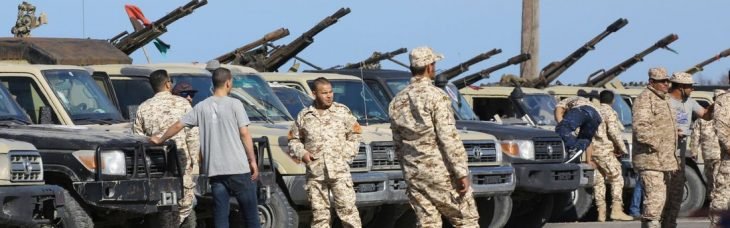
Why Isn’t the U.S. in Libya?

Frederic Wehrey

Outside powers take a growing interest in this oil-rich African state where the U.S. Embassy has been closed since 2014.

Success in diplomacy, like success in life—to borrow from an old cliché—largely depends on showing up. But for over half a decade, the United States hasn’t been showing up in Libya, at least not in a way that is sustained and meaningful. It speaks to a U.S. State Department approach to the country that is often more akin to sloganeering and wishful thinking than implementable policy.

Caught in the crossfire of inter-militia fighting that raged throughout the Libyan capital of Tripoli in summer 2014, U.S. diplomats shuttered their villa-based embassy and evacuated to Tunisia. They have yet to return, even as conditions in Libya have become considerably safer in the past years and other foreign embassies have either reopened or are in the process of doing so.

Their absence is due in part to the politicized legacy of the 2012 terrorist attack on the U.S. diplomatic outpost in Benghazi, Libya, which killed then-Ambassador to Libya J. Christopher Stevens and three other Americans and unleashed a flurry of Republican scapegoating in Congress that has yet to fully abate. That tragic episode has also made Biden administration officials unusually risk averse in signing off on the embassy’s return to Libya.

Earlier this month, though, there were signs for guarded optimism that this may be changing. At a March 22 hearing of a Senate Appropriations subcommittee, Secretary of State Antony Blinken testified that his department was “actively working on” reestablishing a permanent U.S. diplomatic presence in Libya, though he declined to go into specifics about what steps the State Department was taking, or a timetable. The State Department has included funds for the return of the embassy to Tripoli in its budget request to Congress—a good thing—but it’s not clear if this funding will clear the Republican-dominated House of Representatives, or if and when Blinken will move forward with the reopening.

Without a physical presence in the country, the U.S. diplomats working on Libya will continue to be based at the U.S. embassy in neighboring Tunisia. But, as I’ve seen firsthand during extended fieldwork in Libya over the years, many of the Libyans who matter are unable or unwilling to make that trip, often for financial or political reasons. As a result, U.S. diplomats are unable to build trust with, understand, and possibly influence key Libyan players. Half-day in-and-out stops by senior U.S. officials to heavily fortified airports or ministries in Libya are hardly a viable substitute for continuous visibility and interaction.

These deleterious effects have only compounded as Libya’s security and energy importance has grown in recent years and a bevy of outside powers have taken a growing interest in the oil-rich African state.

Russia deployed thousands of Wagner Group mercenaries, regular personnel, and advanced weaponry in 2019-20 to support a military bid by eastern Libya-based warlord Khalifa Haftar. Haftar sought to topple the internationally recognized government in the capital. Though that effort failed because of Turkish military intervention, Russia continues to enjoy a spoiling influence in Libya. 

Most notably, it is propping up Haftar’s armed coalition, the Libyan Armed Forces, giving him the means to maintain his grip over vast swathes of Libyan territory and to block the export of Libyan oil—as he did from April to July 2022, precisely when crude prices were skyrocketing because of the Russia-Ukraine war. That self-serving act harmed ordinary Libyans, European states that receive Libyan energy exports, and the global economy, while conveniently benefiting the Kremlin.

Wagner fighters have also ensconced themselves around oilfields and inside airbases across southern and eastern Libya, from which they’ve ferried personnel and material into African states in the Sahel. Here, they’ve presented themselves as an appealing alternative to what locals perceive as an overbearing French—and American—neocolonial order, offering autocrats a suite of services, ranging from military training and counterinsurgency to propaganda and personal protection, while committing horrific abuses in the process.

It is a measure of just how seriously the Biden administration views Libya as a springboard for Russian power projection, as well as a potential source of illicit financing—Wagner personnel are already said to be tapping into Libyan oil revenues—that it recently dispatched two high-level emissaries to eastern Libya to meet with Haftar. CIA Director William Burns traveled to Benghazi in January, followed by Assistant Secretary of State for Near Eastern Affairs Barbara Leaf in March. The details of their full discussion with the famously obdurate Haftar remain unclear, but it likely centered on his support for planned elections in Libya later this year and a mix of pressure, warnings, and incentives to compel him to cut his ties with Moscow and eject Russia’s mercenaries from Libyan soil.

But herein lies the longtime problem with Washington’s policy toward Tripoli—a problem that a sustained diplomatic presence may diminish but certainly can’t remedy completely.

U.S. officials from successive administrations have historically viewed Libya through the singular lens of some other U.S. policy priority, assigning it the role of a supporting actor a larger strategic drama: the quest for energy security, the fight against terrorism—especially the Islamic State, which set up a powerful affiliate in Libya—and now the United States’ rivalry with so-called great powers that many in Washington see playing out across the African continent and in the Middle East. As a result, the United States and its allies have pursued contradictory policies in Libya that have empowered an array of venal Libyan personalities and let the country more fragmented.

Relatedly, U.S. officials have often sacrificed the North African state on the altar of other, more pressing policy imperatives in the Middle East—namely, Iran and the Arab-Israel conflict—when they believe the United States requires the support of key Arab states such as Egypt and the United Arab Emirates, two habitual interferers in Libyan politics. According to this calculus, transgressions by these Arab partners in Libya, including breaking the arms embargo, enabling Haftar’s illegal bid for power and war crimes, and killing civilians in drone strikes, did not merit the expenditure of U.S. diplomatic capital in the form of a firm rebuke or pushback.

The United States’ distance from and disinterest in Libya has also produced a myopic reading of the country’s complex challenges.

The current fixation on a “Libyan-led” process toward parliamentary and presidential elections is a case in point. Holding those elections by the late fall or winter of this year is the centerpiece of an ambitious roadmap unveiled by the new U.N. envoy to Libya, the veteran Senegalese diplomat Abdoulaye Bathily. The United States and other Western states say they are enthusiastically backing this plan, but it is fraught with pitfalls, lacking in details, and seems destined to repeat the mistakes of the past.

There’s no question that the Libyan people want and deserve a legitimate, elected executive authority after more than a decade of ineffective appointed transitional governments and rump legislative bodies. But as it is currently construed, Bathily’s plan cedes too much control over the convening of elections to a coterie of avaricious Libyan politicos and militia bosses who benefit from the frozen status quo and are exploiting the election’s procedural and legal questions—over candidate eligibility, sequencing, and the powers of the presidency—to stall, obstruct, or otherwise shift balloting in their favor.

With so much subterfuge underway, it is nearly impossible that voting will occur on schedule, and if by some miracle it does it is likely to be marred by insecurity or violence, boycotting, and lack of free campaigning and ballot counting. In one of many worst-case post-election scenarios, Haftar might claim to win the south and east and accuse the other districts of fraud, leading to the further dissolution of the country—something that the elections are intended to avert.

All of this suggests that U.S. policymakers, following the United Nations’ lead, seem to have unrealistic expectations about what voting by itself will accomplish, especially when Libya’s political, financial, and military institutions remain so fragmented and leading figures have escaped accountability for past crimes. As in the past, elections seem to be an end to themselves, with little forethought given to the day after voting.

For many Libyans, then, and for those of us foreigners on the ground in Libya during the previous elections in 2012 and 2014—when nationwide voting didn’t put an end to Libya’s conflicts and divisions but merely reconfigured them—and in 2021, when another United Nations plan didn’t produce elections at all, Bathily’s roadmap elicits a sinking feeling of familiarity.

To be clear, U.S. development assistance policies toward Libya at the local level have been commendable and comprehensive, focused on bolstering civil society; promoting human rights, justice, and peacebuilding; training journalists; running workshops for elected municipal governments; and helping Libyan citizens adapt to the looming challenges of climate change. But none of this important work can be effectively done from outside the country or even from the confines of a fortress-like embassy—a truism that Stevens recognized and put into practice during his time as ambassador. And while he may have pushed the limits of person-to-person diplomacy, much has changed in the past decade in how the State Department deals with risks and protects its diplomats abroad.

Sensibly applying these improved security measures to Libya when reopening the U.S. embassy—while avoiding quick-fix solutions and grounding U.S. policy in local Libyan realities—is the best way to honor Stevens’s legacy and help Libyans achieve the future they deserve.

***

Frederic Wehrey, a senior fellow in the Middle East Program at the Carnegie Endowment for International Peace.

_______________
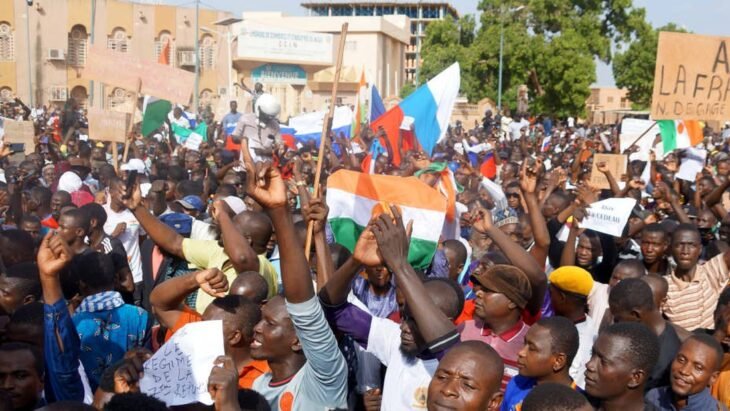
Africa’s Quest for a New International System (2)

Tim Murithi

A PAN-AFRICAN VISION

An African vision for global order would be based on the principle of equality and the need to redress historical wrongs. Africa’s political and intellectual tradition draws on its experience as a freedom-seeking continent, deriving insights from the anticolonial and antiapartheid struggles. This emphasis on self-determination is evident in the work of many African governments to advance economic development, which is the ultimate form of empowerment. Solidarity among African states and societies helped sustain the campaigns against colonialism and apartheid in the twentieth century. Today, that sentiment underpins the AU and its Agenda 2063, a development plan that seeks to transform the continent into an economic powerhouse. And although the pan-African project remains a work in progress—and more must be done to consolidate democratic governance across the continent—it has much to teach the world.

Africa is constantly struggling for a more equitable global order. As targets of historical injustice, Africans are leading voices for justice—defined as fairness, equality, accountability, and redress for past harms. African societies have also shown the world how to promote reconciliation between warring groups and communities, most notably in South Africa. Africans are “reconciliactors,” as they proved at independence. When the former colonial powers withdrew from Africa, Africans did not immediately retaliate against Europeans for the brutal and exploitative system that they imposed on the people of the continent.

This long record of pursuing peace and reconciliation gives Africans the moral authority to demand a reconfiguration of the global order. Indeed, segments of the African foreign-policy-making community are clamoring to reform the multilateral system, replacing an order based on might makes right with one grounded in the pursuit of self-determination, global solidarity, justice, and reconciliation. In particular, they are pushing to transform the UN system into something fairer and more consonant with Africa’s own historical experiences.

THE NEW MULTILATERALISM 

No institution epitomizes the paternalistic exclusion of Africa more than the UN Security Council. According to the nonprofit International Peace Institute, more than half of Security Council meetings and 70 percent of Security Council resolutions with Chapter 7 mandates—those authorizing peacekeepers to use force—concern African security issues. Yet there are no African countries among the Security Council’s five permanent members, who are empowered to veto any resolution. The continent must make do with two or three rotating member seats that lack veto powers. It is a travesty of justice that African countries can only participate in deliberations and negotiations about their own futures on such unequal terms.

Africa has made the case for reform of the UN system before. In March 2005, the AU issued a proposal for reforming the world body that noted that “in 1945, when the UN was being formed, most of Africa was not represented and that in 1963, when the first reform took place, Africa was represented but was not in a particularly strong position.” The AU went on to state that “Africa is now in a position to influence the proposed UN reforms by maintaining her unity of purpose,” adding that “Africa’s goal is to be fully represented in all the decision-making organs of the UN, particularly in the Security Council.” But for almost 20 years, this appeal has been rebuffed by the permanent members of the Security Council, many of which are now scrambling to enlist African countries in their struggle over Ukraine.

Instead of attempting to resuscitate the 2005 AU proposal, which has largely been overtaken by events, African nations should go back to the drawing board and begin a new process for reforming the multilateral system. The founders of the UN recognized that the world body would not be able to survive indefinitely in its original form. As a result, they included a provision to review and amend its charter. Article 109 of the UN Charter enables a special “charter review conference” to be convened by a two-thirds majority of the UN General Assembly and a vote from any nine of the members of the Security Council. Such a vote cannot be vetoed by the permanent members, which in the past have sabotaged attempts to reform the council. Theoretically, therefore, there are no major obstacles to convening a charter review conference, apart from securing a two-thirds majority in the General Assembly. A coalition of African countries and other progressive states could immediately begin drafting a General Assembly resolution to put a charter review conference on the agenda.

Such a review conference would have the power to substantially alter the UN Charter and introduce new provisions that would transform the multilateral system. Unlike the current system, which privileges the interests of a few powerful states, the conference would be relatively democratic, since Article 109 states that “each member of the United Nations shall have one vote” and that provisions shall be approved by a two-thirds majority. Its recommendations would therefore hold a high degree of moral legitimacy, and the conference could further buttress its standing by conducting broad-based consultations with governments, civil society, businesses, trade unions, and academics.

The specifics of a revised multilateral system would be hashed out in the review conference, but the new order should be more democratic and better able to address the needs of the downtrodden—those who are displaced, affected by war, or simply impoverished. In practical terms, a new multilateral system should not be two tiered, as the current one is, since history has repeatedly shown that more powerful countries will abuse their privileged positions. No country should enjoy veto power over collective decision-making, and authority should be split between nation-states and supranational actors, including the AU, the EU, the Association of Southeast Asian Nations, and the Organization of American States. A world parliament akin to the current UN General Assembly, except with expanded democratic powers, might be reinforced by a global court of justice, both of which would have their own sources of funding—for instance, from taxes on international capital flows.

A SYSTEM REBORN

It would be naive to think that the beneficiaries of the current system, notably the five permanent members of the Security Council, would allow a review of the UN Charter simply because African countries have demanded one. Consequently, Africa will have to build a coalition of the willing, rallying the rest of the global South and whatever developed countries can be persuaded behind its bid to remake the multilateral system. But an institutional overhaul on this scale is not without precedent: other international organizations have transformed themselves in the past, notably the European Economic Community, which became the EU, and the Organization of African Unity, which became the AU.

African countries have an important role to play in reforming a multilateral system that is failing a majority of the world’s population. But until their interests and concerns are taken seriously, African governments will continue to pursue a strategy of nonalignment and intentional ambiguity in their dealings with major powers. Attempts to cajole or strong-arm them into picking a side in the latest might-makes-right contest in Ukraine are bound to fail, since no one in Africa believes that the international order is based on rules. It doesn’t have to be that way, however. Africa is showing the world how to build a fairer and more just global order.

__________________

Turkiye, Egypt may cooperate to help Libya

YASAR YAKIS

Turkiye and Egypt have been at loggerheads for a prolonged period. It started with Turkish President Recep Tayyip Erdogan’s harsh rhetoric against the rise to power of Abdel Fattah El-Sisi. Erdogan was opposed to his government, mainly because it had succeeded a regime that relied on the Muslim Brotherhood movement that he had supported and that he still supports.
However, time moves fast in the Middle East. Old coalitions collapsed and new coalitions were formed. Those behind the Abraham Accords wanted them to reshape the Middle East. Now, China is mediating between Saudi Arabia and Iran.

At a time when Turkiye was isolated in the region, El-Sisi extended a warm handshake to Erdogan and a new dynamic was unleashed between Turkiye and Egypt. The recent earthquake diplomacy also helped these two heavyweights of the Middle East thaw their frozen relations.

The foreign ministers of the two countries have paid visits to each other’s capitals and the relations have started to move. Turkish Foreign Minister Mevlut Cavusoglu has an innate capacity to easily establish friendships. It is thanks to this conciliatory skill that he was able to serve as president of the Parliamentary Assembly of the Council of Europe between 2010 and 2012. He is now using this talent to restore Turkish-Egyptian relations. However, there are two major issues between Ankara and Cairo regarding Libya.

One of them is the memorandum of understanding signed between Turkiye and Libya regarding the demarcation of their maritime jurisdiction areas. Ankara signed this memorandum with the then-legitimate government of Libya. However, it was not ratified by the parliament.

This question has become more complicated because of the emergence of two powerhouses in Libya. One is the government led by Abdul Hamid Dbeibeh that is supported by the Government of National Unity based in Tripoli.

The Libyan Political Dialogue Forum appointed him to act as prime minister until the elections that were supposed to have been held on Dec. 24, 2021. However, for several reasons, these elections could not be held on the scheduled date. Dbeibeh claims that he still holds the title of prime minister and will continue to do so until elections are held and a successor is designated.

The other contender is former Interior Minister Fathi Bashagha. He was selected as prime minister-designate and head of government by the Tobruk-based Libyan House of Representatives. Bashagha claims that, as Dbeibeh’s term as PM was limited to Dec. 21, 2021, he cannot occupy this post any longer.

The question of the demarcation of the Turkiye-Libya maritime jurisdiction areas also remains in abeyance. Libya’s Government of National Accord deposited the memorandum with the UN and the UN Secretariat on Oct. 1, 2020, registering it in accordance with Article 102 of the UN Charter. Five countries protested this action and sent a note verbale to the UN Secretariat calling for the memorandum not to be registered, but this protest was not considered by the organization.

The Turkiye-Libya memorandum is important because it cuts off the connection between the Greek and Egyptian maritime jurisdiction zones. If there is a will, this question may be solved with the cooperation of four countries, namely Turkiye, Egypt, Greece and Libya, or it may be referred to the arbitration of the International Court of Justice.

The second major issue between Turkiye and Egypt is the ongoing political and military instability in Libya. However, this question may now become a vehicle for cooperation.

Ankara and Cairo seem to be eager to cooperate in order to stabilize Libya. Turkiye’s deep involvement in Libya had disturbed Cairo in the recent past, because it is Libya’s neighbor. They have a common border of 1,115 km. Several tribes span the border. Libya has been in dire need of political conciliation. Turkiye and Egypt do not have contradictory interests in Libya, which is an oil-rich country that also whets the appetite of several third countries.

Ottoman Turkiye had a long-held presence in Libya. Many politically influential Libyan leaders have Turkish origins and also have relatives in Turkiye. This may facilitate Turkish-Egyptian cooperation if they remain sensitive and protect each other’s priorities.

All sorts of political, religious, tribal and regional rivalries coexist in Libya. The warlord Field Marshal Khalifa Haftar controlled vast swaths of the country, but the military support provided by Turkiye to the Government of National Accord saved Tripoli from a possible collapse. The rivalry is mainly focused on controlling oil revenues.

The Middle East has become tired of conflicts. There are all types of seeds of conflict in the region. While the Yemeni tribes are on their way to reaching a compromise, an internecine war erupts in Sudan.
In Libya, there is enough money to make every single resident happy, including foreigners, but human avarice has no limits.

***

Yasar Yakis is a former foreign minister of Turkiye and founding member of the ruling AK Party.

___________________

Africa’s Quest for a New International System (1)

Tim Murithi

Following Russia’s invasion of Ukraine last year, many African countries declined to take a strong stand against Moscow. Seventeen African states refused to vote for a UN resolution condemning Russia, and most countries on the continent have maintained economic and trade ties with Moscow despite Western sanctions. In response, the United States and other Western countries have berated African leaders for failing to defend the “rules based” international order, framing African neutrality in the Ukrainian conflict as a betrayal of liberal principles. During a trip to Cameroon in July 2022, French President Emmanuel Macron bemoaned the “hypocrisy” of African leaders and criticized them for refusing “to call a war a war and say who started it.”

But the truth is that the rules-based international order has not served Africa’s interests. On the contrary, it has preserved a status quo in which major world powers—be they Western or Eastern—have maintained their positions of dominance over the global South. Through the UN Security Council, in particular, China, France, Russia, the United Kingdom, and the United States have exerted outsize influence over African nations and relegated African governments to little more than bystanders in their own affairs. The British-, French-, and U.S.-led bombardment of Libya in 2011, justified by a contested interpretation of a UN Security Council resolution authorizing a no-fly zone, stands out as a case in point. Before NATO intervened, the African Union was pursuing a diplomatic strategy to de-escalate the crisis in Libya. But once the military operation began, the AU effort was rendered moot, and Libya was plunged into a cycle of violence and instability from which it has yet to escape.

For decades, African countries have called for the UN Security Council to be reformed and the broader international system to be reconfigured on more equitable terms. And for decades, their appeals have been ignored. The current global order, dominated by a few powerful countries that define peace and security as the imposition of their will on others, is now at an inflection point. More and more countries in Africa and elsewhere in the global South are refusing to align with either the West or the East, declining to defend the so-called liberal order but also refusing to seek to upend it as Russia and China have done. If the West wants Africa to stand up for the international order, then it must allow that order to be remade so that it is based on more than the idea that might makes right.

WHOSE ORDER?

For most of the last 500 years, the international order was explicitly designed to exploit Africa. The transatlantic slave trade saw more than ten million Africans kidnapped and shipped to the Americas, where their forced labor made elites in Europe and the United States exceptionally wealthy. European colonialism and apartheid rule were likewise brutal, extractive, and dehumanizing for Africans, and the legacies of these systems are still felt across the continent. The CFA franc, a relic of the colonial past that still gives France tremendous sway over the economies of 14 West African and central African countries, offers a daily reminder of this historical subjugation, as does the persistence of white economic power in South Africa. Both reinforce the perception that today’s international order still treats Africans as global second-class citizens.

Many Western pundits are quick to demand that Africa “get over” these injustices and stop harping on the past. But African societies do not see the past as past. They see it as present, still looming large over the pan-African landscape. Moreover, the tormentors of yesteryear have not changed their mindsets and attitudes—just their rhetoric and methods. Instead of taking what they want with brute force, as they did in the past, major powers now rely on preferential trade deals and skewed financing arrangements to drain the continent of its resources, often with the collusion of corrupt African elites.

And of course, major powers still use force. Despite claiming to uphold an international system based on rules, these powers and their allies have frequently imposed their will on other countries, from the NATO bombardments of Yugoslavia and Libya to the U.S.-led invasions of Afghanistan and Iraq to the Russian invasions of Georgia and Ukraine. In 2014, the United States, the United Kingdom, and France led a military intervention in Syria in support of rebel forces, which was followed, in 2015, by a Russian military intervention in support of the Syrian government. Russia’s 2022 invasion of Ukraine is not a departure from this pattern but a continuation of the reign of the powerful over the less powerful.

Major-power interventions have steadily eroded the pretense of a rules-based order and made the world much less stable. For instance, the illegal invasions of Iraq and Syria stoked violent extremist movements, including al Qaeda and the Islamic State (also known as ISIS), which have since spread like a virus across Africa. Thanks in part to the chaos spawned by NATO’s intervention in Libya, Islamist terrorism has taken root across the Sahel region, affecting Burkina Faso, Chad, Mali, Mauritania, and Niger. Similarly, in East Africa, religious extremism imported from the Middle East is undermining stability in Kenya, Mozambique, Somalia, and Tanzania, all of which are terrorized by an extremist group known as al Shabab. These threats are not acutely felt in Washington, London, Paris, Brussels, Moscow, or Beijing. Rather, they are faced by Africans who had little say in the interventions that ignited them.

The major powers have created a curious juxtaposition: on one hand, illegal interventions that have sowed terror across the global South, and on the other, international failures to intervene in humanitarian crises—in Rwanda in 1994, Srebrenica in 1995, Sri Lanka in 2009, and now in China, where more than a million Uyghurs have been imprisoned in camps. This discrepancy exposes the lie at the heart of today’s international system. Those who continue to call for the protection of an illusionary rules-based order have evidently not been on the receiving end of an unsanctioned military incursion. Many Africans see these voices as part of the problem rather than part of the solution.

The myth of a functioning system of international norms that constrains the whims of nations must now be discarded. World powers must acknowledge what African countries have known for decades: that the dysfunctional international order poses a clear and present danger to many developing countries. The United Nations’ system of collective security is slowly dying, suffocated by the egregious actions of some of its most powerful members. Not only does this system exclude a majority of the world’s population from international decision-making, but it also often leaves them at the mercy of hostile powers and forces. It is past time to rethink and remake the global order. That does not necessarily mean throwing the UN baby out with the bath water, but it does mean reimagining multilateralism and redesigning international institutions to create a more effective global system of collective security.

__________________
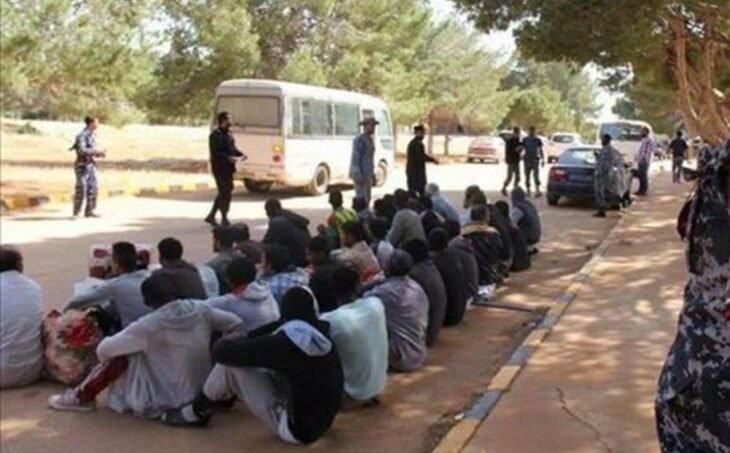
Groundwater sparks disagreements between Libya, Tunisia, Algeria

Tunisia fears Algeria’s ambitions will reinforce the country’s water crisis while Libya urges the establishment of a joint exploitation committee.

Although it is the Arctic that is seeing its polar ice caps melt and the disappearance of permafrost that may have as yet unknown consequences, if there is one region that is most affected by climate change, it is the Sahel and North Africa, not least because of the immense number of people who live there. 

Natural resources, far from being a reason for the countries that share them to unite, are becoming a reason for countries to fight to monopolise them. Proof of this is the abuse being exercised by Algeria; there are disputes over groundwater in the North African region, the location of which is difficult to delineate, although it is known to belong to Libya, Tunisia and Algeria itself.

For the border states in the region, water resources are one of the most important resources due to the consequences of global warming. The continuous droughts that North African nations are suffering is the main motive that is driving the governments of the countries in the area to act. 

The drought crisis is prompting warnings about the threat to the shared groundwater resources of the three countries, in particular to the region’s traditional drinking water supply and irrigation.

The waters of the huge aquifer shared by the three countries, the Ghadames Basin, could be a source of dispute and conflict between the three countries. 

Perhaps the biggest indicator of the dispute over the region’s groundwater resources is Algeria’s tendency to use groundwater to explore and extract shale gas, which threatens the environment and people’s quality of life, and could also be a source of political instability in Algeria.

This is because many Algerians refuse to trust their government, sacrificing the vital resources of future generations for temporary short-term gains. 

A quota-based drinking water distribution scheme was implemented and investments in other activities were avoided. Nevertheless, Algeria built the 75 million cubic metre (m³) Ain El Dalia dam in Wadi Majrada, which was inaugurated in 2017.

In a UN report released on the occasion of the recent climate summit in Egypt, countries in the Middle East and North Africa were ranked as facing drought, water and food crises due to climate change, which is worsening with each passing year. 

According to the Intergovernmental Panel on Climate Change, Africa’s vulnerability to climate change is due to several factors, including low adaptive capacity, high dependence on ecosystems for livelihoods and weak production systems.

In addition to the severe impacts of exponential climate change, as reported in Chapter 13 of the FAO’s Global Forest Resources Assessment 2000, only 10% of the territory receives more than 300mm of rainfall per year, further aggravating the situation. 

Reduced rainfall has significantly reduced the level of water storage in dams, which has affected agricultural production along the banks of many common areas, especially between Algeria and Tunisia, and even in each country separately.

However, information gathered by Al-Arab from Algerian sources points out that ‘the water resources shared between Algeria and Tunisia, especially those of Souk Ahras and Wadi Majrada, are regulated by bilateral agreements’ and that ‘the dams built in eastern Algeria contribute to this risk, stressing that these fears are unjustified, since in addition to not being in service, they do not depend on a single source of water supply’. 

Libya was the first country to recognise the extent of the drought and the country’s need for effective irrigation projects, completing a project called “The Man-Made River” to provide drinking water to the capital and western cities from a common basin (Libya, Tunisia and Algeria).

At the UN Water Summit, the Vice President of the Libyan Presidential Council, Musa al-Koni, called on local governments to “establish a joint commission for the development of water resources in common river basins in the Ghadames Basin”. 

Currently, the rate of exploitation is concentrated in 6,500 groundwater extraction wells, half of which belong to Libya, 1,200 to Tunisia and 1,100 to Algeria. 

These figures do not correspond to the amount of water in the river basin shared by the three countries, which covers more than 1 million square kilometres, most of it (700,000 square kilometres) in Algeria, some 260,000 square kilometres in Libya and some 60,000 square kilometres in Tunisia.

As is the case near dams, dam-dependent crops and irrigation have declined significantly in recent years, as authorities sacrifice agricultural production rather than conserve drinking water in both Souk Ahras and Tebessa in Algeria, and Wadi Majrada in Tunisia. 

According to local reports in Tunisia, droughts in recent years have affected water levels in Wadi Majrada and its dams, while in Algeria a series of dams have been built in the upper Souk Ahras region that is affecting the amount of water that Tunisian watersheds receive.

In Tunisia, there is concern that Algeria will monopolise the common waters by increasing the reservoirs in the Medjerda valley and converting them to Algerian soil, preventing Tunisia from benefiting from the valley’s waters, while its eastern neighbour suffers a crisis.

_____________________

As its Crown Prince, I want to see a new, democratic Libya and a stronger Europe

Mohammed el-Senussi, Crown Prince of Libya

As war rages on in Europe and looms elsewhere, Libya and Libyans are facing yet another choice and another potential cataclysm. 

I know my countrymen can prevent another conflict and create a durable system reflective of Libyan history, culture, and values that is authentically and vibrantly democratic. 

Without engagement, however, at every level of Libyan society and the support of international partners, Libya risks losing again its opportunity to join the family of free nations as its people have always craved.

Unlike nearly every other state in the Middle East and North Africa, Libya emerged organically as a democracy. 

It is not a primordial nation, stemming from some deep-seated concept of Libyan-ness that stretches back 10 thousand years. Indeed, the concept of Libyan identity does not rest upon such an eternal justification. Rather, Libyans chose to exist. 

Unity and democracy are deeply rooted in Libya’s history

They were forged out of North African chaos in the 19th century when Libyans collectively decided to resist the brigandage that defined their territory and reject the slave-trading emirs of the southern Mediterranean coastline.

In turn, Libyans fought for their identity, their right to be defined as a people with an ambition to live peacefully and prosperously, resisting colonial occupation and Nazism in equal measure.

My late father, Hasan el-Senussi, Libya’s Crown Prince, is key to this lineage of nationhood, as is our family. Our family history is one of tenacious defence of the Libyan nation. 

They chose … a democratic constitution, one that protected the rights of minorities and guaranteed freedom of conscience.

Libyan fighter shows a graffiti they wrote on a wall in Al Ajaylat, 120 km west of Tripoli, 7 September 2011Francois Mori/AP

His predecessor, the Libyan King Idris, presented Libyans with a choice after World War II. They chose unity, bringing together the region’s three political subdivisions into one kingdom. 

And they chose — with the full endorsement and utter personal commitment of their new king, his advisors, and his family — a democratic constitution, one that protected the rights of minorities and guaranteed freedom of conscience. 

They created the structure within which parliamentary democracy and representative government could flourish.

As a kingdom, Libya was democratic to the core

This makes Libya unique. Idris did not assent to concessions on his royal prerogative. 

Indeed, Idris never considered himself to be a monarch with any sort of fundamental right to power. 

He was the leader of the Senussi order, the Sufi religious order that came to Libya more than a century before and that had earned the trust of Libyans through their honesty, even-handedness, and tenacious defence of their independence from foreign domination. 

The fact that an independent Libya was a kingdom did not contradict its democratic essence.

Rather, the Libyan monarchy was a fundamental part of Libyan democracy embedded into a constitutional political framework that matched Libyan history, culture, and political will. 

It was the unifying symbol of national identity that made a functioning democracy possible. 

Libya’s troubles since the 1969 coup stem from the elimination of this democracy. 

Yet Libyans still remember their democratic instincts, even though a decade has passed since the 2011 revolution, with the country remaining fractious and unstable, having suffered through two brutal civil wars.

International peace initiatives have failed because they ignored Libya’s history

There is no apparent path forward because external actors have not understood that Libyans are the key to lasting peace in their country. 

Multiple political initiatives have failed to generate a constructive settlement precisely because they have all ignored Libyan history. 

Using an authentically Libyan consultative mechanism, headed by a Libyan, and employing a ready-made template for the country’s stability in the pre-1969 Constitution would be a far more effective approach.

Indeed, all polling and public sentiment indicate the pre-1969 Constitution remains highly popular amongst Libyans, and King Idris continues to be revered as the father of the Libyan nation. 

Libya’s democratic constitutional monarchy need not win back popular support; that support already exists.

The most effective way for the European powers to support the development of a democratic Libya is through the modification of the Libyan Political Dialogue Forum (LPDF). 

The Libyan question is also European

The EU should consider backing a new forum that explicitly includes the pre-1969 Constitution as its objective and has a variety of consultative mechanisms within it for a long-term transition period.

Europe must take the lead internationally, for the Libyan question is indelibly European. Libyan history is bound up with Europe’s. 

Not only did European imperial and fascist powers hope to conquer Libya. The Libyan people also ultimately stood alongside free Europe in its fight against fascism. 

If Libya again suffers under dictatorship, it will inevitably become aligned with the authoritarian revisionist powers that will use the country’s resources as a pawn in their geopolitical games.

Members of a British tank crew dig into their Christmas pudding during a rest in the drive on Bardia, 5 January 1941AP/AP

Hence the establishment of a democratic Libya in 1951 stems, much like the resurrection of the French Republic and the creation of Western Germany, from the victory of democracy over tyranny in Europe.

Libya’s European linkages continued throughout the past century as it became a major energy exporter to the continent.

The current situation demonstrates the dangers of a hostile or divided Libya. If Libya again suffers under dictatorship, it will inevitably become aligned with the authoritarian revisionist powers that will use the country’s resources as a pawn in their geopolitical games. 

Europe can’t keep turning a blind eye until North Africa blows up once more

But more likely, and more dangerous, is another spasm of violence that destroys Libyan hope for the future and provides further space for extremists, sectarians, and private militias alike, sparking yet another refugee crisis as well as a security crisis across the region that sits on the southern shores of Europe.

War has defined the past year. It will again define this one as the world enters another period of military contestation and ideological rivalry. 

A sniper from Misrata fires towards the so-called Islamic State militant positions in Sirte, Libya, September 2016AP Photo/Manu Brabo

Europe must seize the opportunity to ensure North African democratic stability, not ignore the problem until it explodes once again. 

Strategic ignorance will not only condemn the people of Libya to further suffering. It will do the same to Europe.

***

Mohammed el-Senussi is the Crown Prince of Libya and an active commentator on Libyan affairs since the start of the Libyan Civil War.

______________

Haftar’s ‘support’ for Sudan’s RSF shows growing ties with Libyan commander

Oscar Rickett

WSJ reports Libyan commander sent Hemeti’s paramilitary one plane full of military supplies, with sources telling MEE at least one more has departed

Sudan’s paramilitary Rapid Support Forces (RSF) are receiving support from Libyan military leader Khalifa Haftar in its fight against the Sudanese Armed Forces (SAF), according to a report in the Wall Street Journal.

Sources familiar with the matter told the US paper that Haftar, the commander of the Libyan National Army (LNA) that controls eastern Libya, has dispatched at least one plane full of military supplies to the RSF, whose chief Mohamed Hamdan Daglo, better known as Hemeti, is locked in a deadly battle with SAF commander General Abdel Fattah al-Burhan, Sudan’s de facto head of state.

Two sources closely following events in Libya and Sudan have also told Middle East Eye that at least two planes have taken off from Kufra, in southeastern Libya’s Cyrenaica, and landed in Sudanese territory controlled by Hemeti.

Kufra is an important trade hub for both legal and illegal goods crossing Libya’s borders into Chad and Sudan.

A spokesman for the LNA denied the charges and called the Wall Street Journal “cheap and corrupt”.

More than 300 people have now died in Sudan, the World Health Organisation said, as fighting between the two military entities continued into its sixth day.

A series of attempts to broker a ceasefire have failed, with Hemeti now saying he has “no objection” to implementing one over the Eid al-Fitr holiday this weekend.

The conflict between the RSF and the SAF was triggered by a dispute over the paramilitary’s incorporation into the Sudanese military as part of an internationally-mediated deal to kickstart Sudan’s transition back to civilian government.

The deal was meant to be signed at the beginning of April. 

Instead, the two generals, whose rivalry had been growing ever more intense, went to war.

The calculations and preferences of regional and international powers are a crucial part of this rivalry.

Burhan and Hemeti enjoy different sources of power and wealth and have different backers abroad. 

On Thursday morning, the Egyptian army said that three flights carrying Egyptian troops captured by the RSF last week had been returned to Cairo from Sudan. 

The SAF had earlier said that 177 Egyptian air force troops were airlifted back to Egypt after reaching the Egyptian embassy in Khartoum with assistance from the International Committee of the Red Cross (ICRC). 

“The Egyptians are already heavily involved,” Cameron Hudson, a former CIA analyst, told Middle East Eye on Monday.

“They are actively in the fight. There are Egyptian fighter jets that are part of these bombing campaigns. Egyptian special forces units have been deployed and the Egyptians are providing intelligence and tactical support to the SAF.”

Haftar and Hemeti

On Monday 10 April, just days before fighting erupted in Sudan, one of Haftar’s sons, Sadeeq Haftar, was named the honorary president of Al Merreikh Club, one of two big football teams in Sudan. 

Sadeeq had flown to Khartoum on a private jet and donated $2m to the club, which has been struggling financially.

After the press conference announcing him, Haftar’s son went to Hemeti’s Khartoum home, where the two broke their fast together. Hemeti has himself donated seats, electrical equipment and even grass to the football club, while his brother is overseeing repairs to its stadium. 

“Haftar’s son Sadeeq didn’t know where Sudan was, but days before the war he was posing with Hemeti and meeting him,” Jalel Harchaoui, a political analyst and an associate fellow at the Royal United Services Institute, told MEE.

“The Haftar family cares about the survival of illicit trade networks that exist between Sudan and eastern Libya,” Harchaoui said. “The Haftar camp is now sending aid. This sudden benevolence suggests that the Emiratis or the Russians or someone from outside has decided to use their leverage with Haftar for the benefit of Hemeti.”

Fuel, captagon, hashish, gold and stolen cars are among the illegal goods smuggled in and out of Sudan and Libya. Haftar-controlled territory in Libya also lies along the migration route from Sudan, Eritrea and Ethiopia to the Mediterranean. People trafficking has, since 2014, become a lucrative trade in Libya. 

Like Haftar, Hemeti has a close relationship with leading figures in the UAE and Russia.

The RSF, like the LNA, has worked with the Wagner Group, the mercenary outfit that operates in Libya, Central African Republic, Ukraine and elsewhere. 

William Burns, director of the US Central Intelligence Agency (CIA), has been trying to convince Egypt to pressure Haftar to disband and send away not only his Wagner operatives, but Chadian and Sudanese fighters who make up a substantial part of the commander’s LNA. 

Those Chadian and Sudanese militias working for Haftar are usually connected to rivals of Hemeti, including Minni Minawi and former Janjaweed leader Musa Hilal, who was recently released from prison in Sudan.

Harchaoui said that while he could not envisage Haftar flying fuel and arms out of Kufra every day, the Libyan commander would be able to help keep the RSF supplied using land routes.

The analyst also said that while neither the UAE nor the Wagner Group is likely to have calculated that Hemeti can defeat Burhan and control the Sudanese state, both might see advantages in the kind of disorder the RSF leader could create. 

“I am certain that what is happening in Sudan will change things in Libya,” Harchaoui said. For nine years, the Sudanese state accepted Hemeti, a “glorified gangster” whose presence in Khartoum had “enormous repercussions” in terms of criminal networks. 

If Hemeti is defeated or removed from the Sudanese state apparatus, the criminal networks that have enjoyed his support will have to be reconfigured.

“In terms of how some Libyan leaders approach their illicit businesses, this is a game changer,” Harchaoui said.

“For the first time since 2014, Khartoum is a problem for Libya. Everything that is connected to the south might have to be altered and who knows what political change will come out of it.”

***

Oscar Rickett is a journalist who has written and worked for Middle East Eye, VICE, The Guardian, openDemocracy, the BBC, Channel 4, Africa Confidential and various others.

************

Evidence emerges of Russia’s Wagner arming militia leader battling Sudan’s army

By Nima Elbagir, Gianluca Mezzofiore, Tamara Qiblawi and Barbara Arvanitidis,

The Russian mercenary group Wagner has been supplying Sudan’s Rapid Support Forces with missiles to aid their fight against the country’s army, Sudanese and regional diplomatic sources have told CNN.

The sources said the surface-to-air missiles have significantly buttressed RSF paramilitary fighters and their leader Mohamed Hamdan Dagalo as he battles for power with Gen. Abdel Fattah al-Burhan, Sudan’s military ruler and the head of its armed forces.

In bordering Libya, where a Wagner-backed rogue general, Khalifa Haftar, controls swathes of land, satellite imagery supports these claims, showing an unusual uptick in activity on Wagner bases.

EU sanctions Wagner subsidiary in Sudan after CNN investigation into gold exploitation

The powerful Russian mercenary group has played a public and pivotal role in Moscow’s foreign military campaigns, namely in Ukraine, and has repeatedly been accused of committing atrocities. In Africa, it has helped to prop up Moscow’s growing influence and seizing of resources.

Dagalo and Burhan had been jockeying for power in negotiations over restoring civilian leadership in Sudan before talks broke down, erupting into some of the worst violence the country has seen in decades.

The fighting has claimed hundreds of lives and deprived millions of people from electricity, water and food.

Mohamed Hamdan Dagalo, former Deputy Head of the Sudan Transitional Military Council and parmilitary leader, attends the signing ceremony of the agreement on peace and ceasefire in Juba, South Sudan October 21, 2019. REUTERS/Samir Bol

Satellite images show increased activity

Satellite images analyzed by CNN and open-source group “All Eyes on Wagner” show one Russian transport plane shuttling between two key Libyan airbases belonging to Haftar and used by the sanctioned Russian fighting group.

Haftar has backed the RSF, sources say, although he denies taking sides. And increased Wagner activity at Haftar’s bases, combined with claims by Sudanese and regional diplomatic sources, suggests that both Russia and the Libyan general may have been preparing to support the RSF even before the eruption of violence.

The uptick in movement by the Ilyushin-76 transport aircraft started two days before the conflict in Sudan began on Saturday, and continued until at least Wednesday, according to satellite images and Netherlands-based open-source specialist Gerjon.

That plane, one of a class of aircraft known by the NATO designation Candid, flew from Haftar’s Khadim airbase in Libya to the Syrian coastal city of Latakia – where Russia has a major airbase – on Thursday, April 13. The next day, it flew from Latakia back to Khadim. The day after that, it flew again to another Haftar airbase in Libya’s Jufra. It parked in a secluded area, something flight tracker Gerjon considered highly unusual. This was the day the conflict erupted.

The transport plane returned to Latakia on Tuesday before flying back to the Libyan militia airbase of Khadim and then to Jufra, according to Gerjon’s research. That day, Russia airdropped surface-to-air missiles to Dagalo’s militia positions in northwest Sudan, according to regional and Sudanese sources.

For years, Dagalo has been a key beneficiary from Russian involvement in Sudan, as the primary recipient of Moscow’s weapons and training.

A satellite image of the Ilyushin-76 Candid at Libya’s al-Khadim airbase, used by Wagner on April 18, 2023

A July 2022 CNN investigation exposed deepening ties between Moscow and Sudan’s military leadership, who granted Russia access to the east African country’s gold riches in exchange for military and political support. The relationship began in earnest after Moscow’s 2014 invasion of Crimea, when Russia began to eye African gold riches as an avenue to circumvent a slew of Western sanctions.

The 2022 invasion of Ukraine and the wave of sanctions that followed accelerated Russia’s gold plunder in Sudan and further propped up military rule, increasing Wagner activity in the country.

On the day before Russia launched its full-scale invasion of Ukraine in 2022, Dagalo headed a Sudanese delegation in Moscow to “advance relations” between the two countries.

Smoke rises during clashes between the Sudanese Armed Forces and the paramilitary Rapid Support Forces (RSF) in Khartoum, Sudan on April 19, 2023.

Burhan and the Sudanese army also previously received backing from Russia. Burhan and Dagalo were allies before the start of the fighting. Together they led coups in 2019 and 2021. Both leaders were also previously backed by the UAE and Saudi Arabia.

Both Middle Eastern powerhouses have called for calm in Sudan, amid fears of broader regional repercussions.

Yet foreign actors are already beginning to intervene in the conflict. Egypt has a long-standing relationship with Burhan and has privately backed him in the power struggle, according to Sudanese and regional diplomatic sources. A group of Egyptian soldiers were captured by the RSF at a military airport in northern Sudan on the first day of the violence, and released days later.

In a statement to CNN, the RSF denied receiving aid from Russia and Libya. Neither Haftar nor Wagner chief Yevgeny Prigozhin responded to CNN’s requests for comment.

_______________________
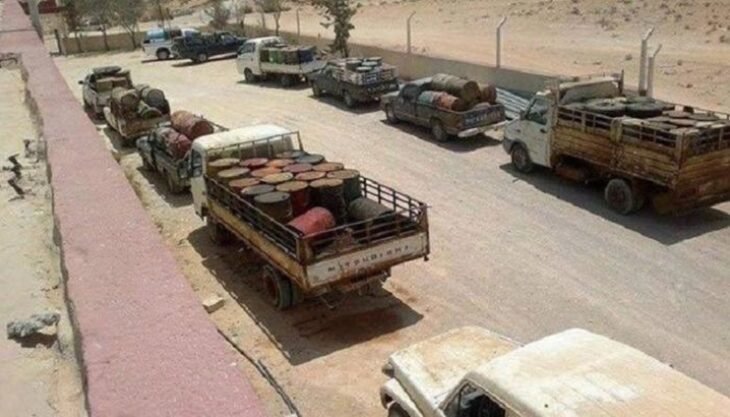
Libya: Historic Opportunity to End the Crisis, according to the UN

The Libyans face “a historic opportunity to overcome” the crisis in which their country has been mired since 2011, the UN envoy to Libya said on Tuesday, still hoping for elections to be held this year.

“A historic opportunity is open to overcome this decade of crisis,” Senegalese Abdoulaye Bathily, head of the United Nations Support Mission in Libya (Manul), told a meeting of the Security Council.

In recent weeks, “there is a new dynamic in Libya. Intense consultations are taking place between security actors. Institutional and political leaders are also taking steps to advance the political process”, he noted.

Abdoulaye Bathily particularly welcomed the holding of several meetings in March and April in Tunis, Tripoli, Benghazi, and Sebha of military representatives from the various regions of the country who “committed themselves to supporting all stages of the elections, rejecting violence throughout Libya and take practical measures for the safe return of displaced persons”.

“Meetings between military units and security formations from the East, West, and South represent a breakthrough. These meetings carry great symbolic value on the path towards reconciliation and the unification of the country,” he said. he added.

But this “new national dynamic” must be “sustainable and amplified”, noted Mr. Bathily, assuring that the UN would continue its mediation work so that all the “political, legal and security” conditions are met “so that the elections can be held this year”.

Presidential and legislative elections, initially scheduled for December 2021, had been postponed indefinitely due to persistent differences, in particular on the legal basis of the polls and the presence of controversial candidates.

Libya has been going through a major political crisis since the 2011 uprising that brought down Muammar Gaddafi after 42 years of dictatorship.

Two governments are vying for power, one based in Tripoli (west) and recognized by the UN, the other supported by the strongman of eastern Libya, Marshal Khalifa Haftar.

Mr. Bathily had announced a new initiative in February to try to break the impasse and recently hoped that an agreement could be reached “by mid-June” to organize the elections before the end of 2023.

_______________

The Libyan Banking Sector: A Microcosm Of Global Enduring Disorder (6)

Jason Pack & Stefano Marcuzzi

Part 4) Heading Forward: Can the Narrative War be Stopped? Can the Libyan Banking Sector be Reformed?

A final assessment of the situation and some policy recommendations. Most Western policymakers we spoke to cited the reunification of the CBL as a paramount concern, yet among the businesspeople interviewed for this report the security situation and the lack of trusted contacts, not the lack of structural reforms or reunification, remains the main impediment to doing business in Libya.

The narrative war and Enduring Disorder has obscured for most that transparency is the fundamental underlying issue for the banking sector, not reunification. Reunification appears to require that a complete political transition to a unified and constitutional governance occur. Reforms, however, can be implemented even as the period of seemingly endless interim governance continues. Therefore, the focus on reunification rather than reforms seems destined to fail just as the focus on elections prior to economic reforms did.

For too long, international policymakers have thought: We can’t incentivize the reform of Libyan banking procedures while the sector is bifurcated, so the international community should focus on unification. But that logic needs to be turned on its head: Reunification cannot proceed while the CBL’s actions remain so opaque, inefficient, and shrouded in a narrative war. Only once transparency is achieved and the narrative war disentangled from policymaking can reunification be achieved.

All groups we spoke to in our research, especially in the private sector, also considered that some improvements are desirable and possible even in the current state of political unrest. Below are some policy recommendations that our interlocutors mentioned that could be implemented in the short, medium, and long term, to promote sector efficiency and improve the prospect of economic and financial development.

These recommendations are calculated to mitigate the ongoing narrative war that makes progress so difficult in Libya, despite its fundamentally enviable underlying financial situation. In fact, progress on reform could be made in certain instances with the stroke of a pen, the convening of a task force, the mustering of political will, or the embedding of empowered experts.

Short-term measures to be taken by the CBL:

  • Increase oversight. Cooperate and share information with regulatory institutions. The CBL must share its internal accounts with the AB and ACA to increase overall oversight of commercial banks, including through more frequent inspections. This will decrease the likelihood of bank failures, reduce the spread of misinformation, and diffuse allegations of corruption.
  • Improve reliability of payments. This is a serious concern for international companies. The CBL could produce streamlined “how to” information about letters of credit and backpayments, and send representatives to major international firms interested in Libya to foster better cooperation and rapid reaction in case of emergencies. Most bureaucratic payment delays over letters of credit have now been resolved, but those rooted in politics tend to become protracted as sitting down and finding compromises is difficult due to the lack of mediation channels.
  • Improve governance, accessibility, and transparency. This is arguably the domain in which the narrative war most obscures the functioning of the banking sector. We propose the following quick wins to disentangle technical matters from media optics while better informing Libyans and Libya-watchers about the actual state of affairs, hence blunting the potential impact of misinformation:

* Create a system to transparently monitor financial transfers into and out of the CBL and ministries. Results should be published online in Arabic and English.

* Update and publish organization charts and contact details of the CBL and related institutions to improve access and specify a clearer demarcation of roles.

* Publish details about CBL, subsidiary, and corresponding banks’ liquidity.

* The CBL should adopt the International Monetary Fund’s (IMF) International Financial Reporting Standards (IFRS) for Central Banks. This would not only facilitate investment and economic activity, but it would also fight the politicization and spread of misinformation and conspiracy theories about the CBL.

* Announce in advance the CBL’s schedule for a stated number of regular board and committee meetings each year, whose decisions would be published.

* Promote Libya’s adherence to the Extractive Industries Transparency Initiative (EITI).

* Make sure that the numbers in the published revenues of the NOC tally exactly with CBL’s incomings and outgoings, and that care is taken to show exactly what foreign currency exchange gains and losses occur at each point.

* Make sure that letter of credit allocations are decided on the basis of published criteria, with the meetings deciding those allocations being recorded and published.

Medium-term measures to be taken by the CBL and the Libyan authorities in coordination with international partners:

• Strengthen technical competence. Improving the efficiency of Libyan commercial banks and the government’s financial bureaucracy will be critical to raising standards in the sector. The CBL needs to strengthen its capacity to absorb, manage, and distribute capital/deposits, as well as its delivery of basic services.

This could be done through training modules established in partnership with international banks and corporations, including the IMF and World Bank, thus expanding the USAID initiative. In parallel, the CBL could improve its capacity to attract skilled personnel from abroad (including foreign professionals, embedded experts, and educated Libyan expats), through incentives and more transparent hiring procedures. This step will also reduce the attractiveness of conspiracy theories.

• Improve legislation. An adequate legal framework is key to promoting non-corrupt business practices. Libyan authorities should consider updating banking regulations, including through joint Libyan-international forums on technical and legal adjustments to the regulatory framework. Libya’s private and online banking sectors lack sufficient modern legal frameworks to govern them.

As a result, most businesses operating in the IT and Fintech space are not only entirely unregulated and untransparent, they cannot achieve global competitiveness, despite strong Libyan human capital in these fields.

• Embed experts. We strongly suggest that Libyan government officials request embedded experts from allied governments — British and American experts tend to be unable to embed in Libya institutions for security and bureaucratic reasons, but experts from Italy and smaller European countries are keen to deploy for the task. They should be given more than just advisory and training functions, and should be harnessed to help create the structures of transparency.

• Delineate and then narrow the CBL’s role. Produce a study explaining the exact legal powers of the CBL relative to other Libyan entities. Once such a study is carried out, a consortium of Libyan and international stakeholders could consider narrowing the CBL’s mandate to one more akin to that of other central banks through a range of modifications to Libyan laws and international agreements. Important questions need to be asked like: Should the CBL monopolize all FX transactions? Is there an economic logic for preserving the CBL as the central node through which all flows of money into and out of Libya must pass?

Long-term measures for international players:

• Continue to pursue the unification of the western and eastern banks, but only as part of a long-term culmination of more immediate reforms. Despite the narrative war over CBL unification, international stakeholders should not give up promoting sector reunification. Rather they should conceptualize it as the culmination of prior reform and transparency processes.

Relaunching that process after transparency reforms are already implemented would be crucial both for political purposes and to encourage greater efficiency. It would also serve to reject further intrusions by Russia and undercut its misinformation narrative. Failing to encourage transparency and subsequent reunification could allow Russia to exploit the eastern CBL’s need for money to gain greater leverage with eastern economic and political authorities.

• The United States undoubtedly has an interest in securing the transparent management of oil revenues and budgets in Libya — both as a way to secure greater stability in North Africa and to ensure Russia is not benefitting from the Libyan oil sector. The Biden administration has recently taken steps indicating that it will redouble its efforts to bring transparency and accountability to Libya’s finances while simultaneously confining itself to the margins of the Libyan elections debate and allowing the U.N. to call the shots and generate political will on that file.

We applaud this approach and advocate for American policymakers to continue to use carrots and serious sticks in their push for transparency and accountability in Libya’s banking sector.

Part 5) Conclusion:

Central Banking and the Global Enduring Disorder We zoom out to show how the situation with the Libya banking sector is a key case study in how contested institutions and controversial financial flows play out in our newly disordered global system and give rise to narrative wars.

This report has showcased that rather than Libya becoming financially more unified in the wake of the defeat of Hifter’s attempt to take Tripoli, parallel and bifurcated institutions have actually taken further hold. In this fraught environment, rather than pursuing unification, reforming itself, and adopting genuine transparency, the CBL has pursued business as usual combined with a dose of window dressing transparency.

This does not imply corruption or malfeasance, but it allows for a growing narrative that the bank has emerged once again as a partisan political actor connected to Turkish and factional Libyan interests. These trends of fragmentation, regional penetration of ungoverned conflict spaces, and conspiracy theories are indicative of the Global Enduring Disorder.

We firmly believe that reforming Libya’s economy to make its financial flows more genuinely transparent is the key to preventing its disordered economic landscape from keeping the country from being permanently dysfunctional and spreading disorder elsewhere. The CBL cannot achieve this alone; it needs buy-in from other stakeholders and pressure from international players to hold everyone accountable.

In fact, Libya’s banking sector could be used as a key case study of how opaque financial flows work in our newly disordered global system and give rise to conspiracy theories and contagion. There are key lessons that can be drawn for understanding issues like corporate financing of political campaigns, financial flows from specific Russian oligarchs, and transnational crime networks.

Transparency is required to disentangle actual from alleged malfeasance. Many status quo actors globally are threatened by transparency and reforms, preferring narrative wars and conspiracy theories that obscure real causation chains. Financial transparency is useful in most contested political spaces, inasmuch as money, power, and control of the narrative are highly linked. That said, transparency initiatives alone have few success stories; they need to be paired with sticks and carrots from international policymakers to incentivize follow-up reforms.

This is something that the Libya context is uniquely well suited for, as the international community acting in concert has much structural leverage. Furthermore, this paper refers to transparency as the first step to gaining structural momentum and social trust for initiatives like bank reunification and then later elections. Unless reforms of the Libyan banking sector are undertaken, the Western policymakers we spoke to are concerned that the political and financial division of the country may become an established fact. This eventuality would further crystallize if eastern institutions were able to smuggle crude oil or implant stooges inside the CBL board who will facilitate illicit expenditures. We counsel a “follow the money” approach:

Western officials should not get lost in the media debates about the constitutional basis for elections or new interim governments, the root causes of all the status quo attempts to block political progress are financial opacity. The high-ranking officials and businesspeople we spoke to claim the current state of affairs cannot be prolonged indefinitely.

According to one of them, “a system in which the printing of illegal banknotes by the eastern CBL continues, while the western CBL has no supervisory role over eastern commercial banks, and the GNU is unable to pursue a national financial and economic policy, will lead to a collapse, sooner or later. Not in a month’s time, probably not in two years’ time, but in four or five years.”

Hence, international policymakers still seem to believe in the importance of U.N.-mediated Libyan national elections, stating that “even though they did not take place in December 2021 and can be postponed and held through other legal frameworks, they cannot indefinitely be postponed or Libya will cease to exist as a functional entity.”

Finally, our research suggested that many embedded financial players in Libya do not wish elections to take place as they risk losing their fiefdoms. They are willing to put forth a media song and dance about new electoral mechanisms or interim governments, but they are not willing to have genuine oversight of Libya’s finances.

They are aware that thorough reform of economic structures requires electoral legitimacy to happen, and thus are impeding such legitimacy through obfuscation, foot dragging, spoiler proposals, and narrative wars. We propose an initial focus on incremental economic reform and transparency that will allow subsequent bank reunification and then finally elections to be undertaken, rather than the approach that most U.N. and Western countries have proposed of elections first and economic reform later. We believe the tried and tested approach of elections first, all other reforms second, has failed. Genuine elections resulting in a transfer of power to constitutional governance appear impossible in Libya so long as the opaque “war economy” and destructive narrative war over Libya’s finances persist.

***

Jason Pack is a former non-resident scholar at MEI, author of Libya and the Global Enduring Disorder, and the president of LibyaAnalysis LLC. He is the Director of the NATO & THE GLOBAL ENDURING DISORDER Project and a Senior Analyst for Emerging Challenges at the NATO Defense College Foundation.

Stefano Marcuzzi is a Research Fellow at the Center for Higher Defense Studies (CASD), Rome, a Senior Analyst at Libya Analysis LLC, an Adjunct Fellow at University College Dublin (UCD) and Boston University (BU), and an Emerging Challenges Analyst at the NATO Defense College Foundation (NDFC), Rome. He is the author of The EU, NATO and the Libya Conflict. Anatomy of a Failure.

________________

In Libya, Washington raises the stakes

Michael Rosito

The main front of the war that began on February 24, 2022 is Ukraine, but geopolitical competition is spreading on a global scenario, touching Libya, easy prey for external actors due to its persistent instability. 

Although not endowed with great performing skills, Wagner’s mercenaries, the main players in the Kremlin’s African policy, are seen as an element to be contained by the US apparatus, also given the dexterity with which they have expanded their presence along the Sahel strip.

The low-intensity involvement of the North African sector is a hypothesis advanced by Moscow and Washington in an attempt to distract the counterpart from the Ukrainian front. The first has private troops in the Libyan hinterland in support of General Haftar and tries to influence the energy market and the flow of migrants from here; Washington is pressing for a quick approval of the Libyan constitution that could lead to “free” elections, in the hope that these will wear down Moscow’s posture now that it is concentrated on its doorstep. 

Bypassing NATO from the south was the Russian tactic aimed at taking a position in a strategic context for the Mediterranean countries of the Atlantic Alliance, by virtue of the gradual deterioration that Russian-US diplomatic relations were going through even before the invasion of Ukraine . While the Americans were careful to corroborate their presence in the Indo-Pacific , the void they left in the Mediterranean was being filled by Moscow, which was taking a parallel position above all in Libya and Syria . 

The current geopolitical contingency makes Americans and Europeans rediscover the centrality of the Mediterranean quadrant, above all as a source of energy resources. However , in recent years it has been the Russians who have taken an interest in this quadrant, showing their attention through the involvement of Wagner mercenaries in the 2019 Libyan civil war alongside General Khalifa Haftar, who was attempting to reunify the country manually, after years division between Tripoli , seat of the Government of National Unity recognized by the United Nations, and Tobruk , seat of the House of Representatives presided over by Aguila Saleh. 

However, the failure of the operation did not diminish the Kremlin ‘s interestfor Libya, enough to keep some Wagner mercenaries there despite the existential conflict in Ukraine. The Russian mercenaries have taken on the role of support force for General Haftar’s troops in the control of Cyrenaica and Fezzan, a condition that gives them political leverage over the General himself and regional political players. 

The Wagner group has also taken possession of some air bases in Libya, where it has positioned some Mig-29 and Su-24 which have been joined by the SA-22 anti-aircraft defense systemsin the bases of Al-Khadim and Al-Jufra. Lastly, the Wagner group has positions near the oil extraction sites, thus setting itself up as protector and controller of the country’s production capacity, almost threatening the western energy system from the south, engaged in the diversification of energy sources. 

The US business is currently engaged in stabilizing the energy market to alleviate the suffering resulting from high inflation. From this point of view, the consolidation of Libya could translate into partial stabilization of the European energy market. So here is the other reason why the United States has decided to raise the stakes in the North African country. 

On March 24, Biden presented to the US Congress the plan called “US Strategy to prevent conflict and promote stability” aimed at restructuring countries seriously affected by internal instability, but at the same time of crucial geopolitical importance due to their geographical position and the extraction of raw materials . 

Tactic that seems to reflect the intention of maintaining and consolidating the international status quo , a substantial change compared to the regime change period. From a geopolitical point of view, a priority is to contain Russian penetration in Africa, which has also strengthened in the face of the partial withdrawal of the French contingent in some quadrants of the continent. 

The main objectives of the Biden administration plan are: Prevention, Stabilization, Partnerships, Management . The document also states that the function would be to prevent the high costs of instability in the region by promoting more resilient states with more solid economies, capable of withstanding the adverse dynamics deriving from the external and internal environment. 

So if before democracy seemed to be the first principle of US diplomacy, the change in external conditions – that is, the rise of revisionist powers– has produced a substantial change in American intentions. Washington needs resilient partners in the Mediterranean , capable of corroborating its regional hold so that it can most efficiently address the main strategic threat: the People’s Republic of China . Currently, the recurring elements in documents of this type are “stabilisation” and “prevention”. 

Important signals also come from the head of American diplomacy Anthony Blinken and from the director of the CIA William Burns . The latter went to Libya on January 13 to meet both Dbeibah and Haftar, especially pressing the Cyrenaican general to distance himself from Wagner. 

The latter has been designated by the Biden administration as a “transnational criminal organization”, a functional legal maneuver to erode its image and prestige, presenting it as an unthinkable actor. However, Washington must also face the multiple external actors who are now crucial in the Libyan question such as Egypt and the United Arab Emirates– supported by the Cyrenaic actors together with Moscow. 

The message is therefore addressed to all subjects with some kind of relationship with the Russians. Dbeibah instead tried to win favor with Burns by collaborating on the Abu Agila Muhammad Ma’sud case , a person involved in the bombing of Pan Am flight 103 in 1988. An affair which has provoked some protests in Tripoli against Dbeibah for fear of an increase in already substantial internal interference.

Anthony Blinken clarified on March 22 that Washington is actively working to re-establish the diplomatic presence in Libya, following the closure of the embassy in 2014 following the escalation between Libyan factions that forced the Americans to move to Tunisia – an event that would confirm the growing interest of American diplomats in Libya. 

Anthony Blinken also stated that he is actively working to bring the African country to elections as soon as possible, however facing some criticism from those who support a gradual path towards the elections, subjecting them to a process of state consolidation to avoid a return to civil war .

Washington therefore notifies its willingness to engage, in a reactive way, in a low-intensity counter-offensive with the ultimate aim of engaging Russia elsewhere as well, underlining the impossibility of managing different crisis scenarios when fighting in one’s own backyard. But forcing Libya too much, as already mentioned, could lead the fragile balance back towards an escalation, in which the Americans themselves would hardly be willing to get bogged down.

___________________

Libya: Crackdown on Nongovernmental Groups

Severe Restrictions on Local, International Civil Society

Libya’s Government of National Unity (GNU) and other authorities are cracking down on nongovernmental domestic and foreign organizations, Human Rights Watch said today. The GNU should withdraw onerous registration and administration requirements and ensure that civic groups are free to operate.

In a March 21, 2023 circular, the Office of the Prime Minister of the Tripoli-based GNU said that domestic and foreign nongovernmental organizations could continue operating only if they “correct their legal status” in line with a draconian 2001 Muammar Gaddafi-era law. This statement came after months of increasing restrictions on civic group activities, including harassment and at times detention and prosecution of local staff members and obstacles for non-Libyans working in humanitarian, human rights, and other nongovernmental organizations to obtain entry visas.

“Libyan authorities are crushing civic space using the tired pretext of enforcing regulations,” said Hanan Salah, associate Middle East and North Africa director at Human Rights Watch. “The authorities should instead be protecting that space by upholding the right to freedom of association.”

On March 8, the Law Department of the Supreme Judicial Council, which oversees judicial affairs and the legal profession, issued an edict in response to a request by the Tripoli Commission of Civil Society declaring, “illegal all civil associations and civil society organizations not established based on the provisions of Law 19/2001 on Nongovernmental Organizations.” The edict also specified that civic groups established under any other regulations were “null and void.”

In response, on March 13, the GNU issued a circular ordering all government institutions to uphold it until further notice. On March 21, the GNU retracted this statement and gave nongovernmental organizations provisional legal standing until they “correct their legal status,” without providing a clear timeline.

The Gaddafi-era Law 19/2001 on the Reorganization of Nongovernmental Organizations greatly restricts civil society work, permitting registration only for groups with a mandate to work on social, cultural, sports-oriented, charitable or humanitarian issues, but not other issues including human rights. The government did not clarify how such organizations can legally operate.

Law 19/2001 also has overly burdensome registration requirements and empowers authorities to intervene in associations’ leadership and dissolve organizations without a court order. The group Frontline Defenders reported in 2015 that only 22 organizations were registered under the law.

Some Libyan legal experts contend that Law 19/2001 was effectively suspended with the adoption of the Libyan Constituent Covenant by the National Transitional Council in 2011, which guarantees freedom of association, speech, and assembly. However, legislators have yet to revoke the Penal Code provisions for severe punishments, including the death penalty, for the establishment of “unlawful” associations, which have been in place since the Gaddafi era.

For years, Libyan authorities and various armed groups around the country have restricted the ability of nongovernmental groups and their staff members to operate, Human Rights Watch said. The United Nations Independent Fact-Finding Mission on Libya in its March report found, “[a]ttacks against … human rights defenders, women’s rights activists, journalists and civil society associations have created an atmosphere of fear that has sent persons into self-censorship, hiding or exile.”

The Fact-Finding Mission also highlighted the three-year prison sentence with hard labor handed down in December 2022 in Tripoli on four members of the Tanweer Movement, a grassroots organization that promoted culture and arts activities, on charges of “atheism, agnosticism, being feminist and infidels.”

The four were among a group of nine men whom the Tripoli Internal Security Agency, an armed group, arrested between November 2021 and March 2022, on a range of accusations including atheism and anti-Islam sentiments. Videotaped “confessions” by some of them, apparently obtained under duress, appeared on social media. At least three of the four men sentenced are in prison, while the other five remain in pre-trial detention.

In March 2022, Tanweer members who had fled abroad dissolved the organization and canceled the group’s social media presence. In a final statement, they decried the crackdown and called for their colleagues’ release.

The imprisonment of Tanweer members, using religion as a pretext, will deter Libyan youth from engaging in civil society activities, Human Rights Watch said.

Since late 2022, the authorities have also greatly limited entry visas for non-Libyan staff of humanitarian agencies and nongovernment organizations, including Human Rights Watch and other rights groups. UN officials have said the measures also affected agencies linked with the UN.

The UN special rapporteur on violence against women and girls, Reem Alsalem, who visited Libya in December, said in a statement that she had encountered many obstacles, including a lack of access to detention centers holding women and girls. The Libyan Arab Armed Forces (LAAF), the armed group under the command of Khalifa Hiftar that effectively controls eastern Libya, barred her from leaving the airport in Benghazi for visits and meetings that she had planned there.

Alsalem is only the second UN expert to visit Libya since 2011, following a visit in 2018 by the UN special rapporteur on the human rights of internally displaced persons. Visit requests from at least nine other experts, including the special rapporteurs on torture, trafficking, migrants, and slavery, are pending.

The Fact-Finding Mission said the GNU authorities did not give them access to detention facilities anywhere in Libya during their two-year mandate. Neither the GNU nor the LAAF allowed them access to Libya’s southern region, which the LAAF largely controls.

Withholding entry visas for aid organization staff could impair delivery of aid to vulnerable populations. Several members of nongovernmental organizations told Human Rights Watch that their foreign employees had been unable to obtain entry visas since the end of 2022. These included international humanitarian and human rights organizations, and implementing partners of the UN in Libya.

Human Rights Watch has received no response from GNU authorities to its applications for entry visas since October 2022.

A slew of vaguely worded laws governing expression, assembly, association, cybercrime, and crimes against the state severely restricts nongovernmental organizations in Libya. The Commission of Civil Society, a Tripoli-based body tasked with registering and approving civic organizations and their activities, has sweeping powers to inspect documents, control funding, and cancel the registration and work permits of domestic and foreign organizations. A second Benghazi-based body with similar functions reports to the Government of National Stability (GNS).

The Tripoli-based GNU, which was nominated by delegates of the Libya Political Dialogue Forum in March 2021 after UN-facilitated political talks, and the rival eastern and Sirte-based GNS, nominated by the House of Representatives in March 2022 and allied with the LAAF, vie for national political legitimacy and control in Libya.

Libyan legislators and authorities should ensure the following as a matter of priority:

  • Adopt a civil society organization law that guarantees the right to freedom of association and expression consistent with international law and best practices;
  • Reform Penal Code articles that undermine freedom of association and assembly, redefining criminal acts to exclude peaceful exercise of the right to express opinions, assemble, and establish associations;
  • Release detained Tanweer members and anyone else held for the peaceful exercise of their basic rights;
  • Repeal the death penalty as a punishment for establishing or participating in unlawful organizations;
  • Allow for the free establishment of associations without restriction on what they advocate or promote, with the exception of acts of violence, incitement to imminent violence, or other serious crimes;

Ensure that any suspension or dissolution of a nongovernmental organization takes place only by judicial order and in response to serious violations of national law that result in a clear and imminent danger, are strictly proportional to the legitimate aim pursued, and used only when other measures would be insufficient.

_____________

Enslavement of African migrants ‘big business’ in Libya thanks to EU funding — UN

Alexander Rubinstein

An investigation by the United Nations has concluded that money provided by the European Union to state entities in Libya has facilitated crimes against humanity ranging from forced labor and sexual slavery to torture.

Through its financial support of the Libyan Coast Guard and the Libyan Directorate for Combating Illegal Migration (DCIM), the European Union has aided and abetted crimes against humanity, according to a recent UN report.

On March 27, 2023, the United Nations released the findings of a three-year investigation, confirming that “arbitrary detention, murder, rape, enslavement, sexual slavery, extrajudicial killing and enforced disappearance” has become a “widespread practice” in the once-prosperous nation of Libya, which was plunged into civil war by NATO’s regime change war over a decade ago.

While crimes against humanity were found to be widespread throughout the country, the report homed in on the plight of migrants and blamed the European Union for enabling the Tripoli-based Government of National Unity to enact abuses against Africans seeking asylum in Europe.

The report stated in its introductory section: “The Mission found that crimes against humanity were committed against migrants in places of detention under the actual or nominal control of Libya’s Directorate for Combating Illegal Migration, the Libyan Coast Guard and the Stability Support Apparatus. These entities received technical, logistical and monetary support from the European Union and its member States for, inter alia, the interception and return of migrants.”

In other words, rather than directly intercepting migrants traveling by boat to Europe, the European Union has outsourced the dirty work to the Libyan Coast Guard. Once the coast guard detains the migrants, they are sent back to Libya and transferred to both official and “secret prisons” where they are often exploited for financial gain through forced labor, ransom, or sexual slavery. 

“There are reasonable grounds to believe that migrants were enslaved in detention centers of the Directorate for Combating Illegal Migration,” the report stated, adding that DCIM and Coast Guard personnel and officials are implicated “at all levels” while high-ranking officials “colluded” with traffickers and smugglers both in the context of detention and interception. 

“The Mission also found reasonable grounds to believe that guards demanded and received payment for the release of migrants. Trafficking, enslavement, forced labor, imprisonment, extortion and smuggling generated significant revenue for individuals, groups and State institutions,” the report claims.

In 2017, international media reported the revival of the slave trade in Africa due to continuing fallout of the NATO-backed regime change operation to depose Libyan leader Moammar Gaddafi. The United Nations has now confirmed that the practice not only persists, but that it has been enabled by the EU.

“The support given by the EU to the Libyan Coast Guard… led to violations of certain human rights,” UN investigator Chaloka Beyani told reporters. “It’s also clear that the DCIM has responsibility for multitudes of crimes against humanity in the detention centers that they run. So the support given to them by the EU has facilitated this. Although we are not saying that the EU and its member states committed these crimes, the point is that the support given has aided and abetted the commission of the crimes.”

According to a 2021 report by the Brookings Institution, the EU has funneled $455 million to the Libyan Coast Guard and other government agencies since 2015.

Meanwhile, an investigation by The Outlaw Ocean Project and The New Yorker found that money from the EU “pays for everything from the buses that transport captured migrants at sea from port to the prisons to the body bags used for the migrants who perish at sea or while detained.

According to their joint investigation, Libya’s Directorate for Combating Illegal Migration “received 30 specially modified Toyota Land Cruisers to intercept migrants in Libya’s southern desert,” while money from the EU also helped DCIM purchase “10 buses to ship captive migrants to prisons after they are caught.”

The violent overthrow of Gaddafi’s government by NATO and the bands of Salafist insurgents it sponsored in 2011 plunged Libya into a state of civil war, with swathes of the country overtaken by Al Qaeda and ISIS-aligned bandits. As NATO and its jihadist proxies bore down on him, Gaddafi warned that his ouster would result in the destabilization of entire regions of the continent and a new migration crisis for Europe, with the Mediterranean transformed into a “sea of chaos.”

Gaddafi’s son, similarly warned at the time, “Libya may become the Somalia of North Africa, of the Mediterranean. You will see the pirates in Sicily, in Crete, in Lampedusa. You will see millions of illegal immigrants. The terror will be next door.”

The UN investigator, Professor Beyani, blamed Libya’s current crisis on a “contestation for power,” alluding to the power vacuum the West created in Libya with its regime change war while avoiding any direct reference to it. Human Rights Watch has also veered away from discussion of NATO’s 2011 intervention in its coverage of the UN report, which it described as “brutal and damning.” Perhaps that was because its director at the time, Ken Roth, was a prolific supporter of the assault.

The transformation of Libya into an anarchic hellscape has dramatically reduced the risk that would-be migrants to Europe would be detected by EU authorities. The UN report estimates that more than 670,000 migrants were present in Libya during parts of its investigation.

The lack of a strong, stable central government in Tripoli has allowed for an entire industry to develop with exploitation of migrants as its business model. “Detention, trafficking migrants, is big business in Libya. It’s an entrepreneurial project,” Beyani told France 24 following the report’s release.

***

Alex Rubinstein is an independent reporter on Substack.

_____________________

The Libyan Banking Sector: A Microcosm Of Global Enduring Disorder (5)

Jason Pack & Stefano Marcuzzi

Part 3) The Cost of Bifurcation and Opacity: Business and Politics in a Divided Libya

This section partially examines the technical consequences of the lasting CBL division, but primarily probes perceptions of major international stakeholders concerning the bifurcation. This analysis confirms that the CBL is at the epicenter of interlocking narrative wars not only inside Libya but also among international actors.

These narrative wars obscure the actual technical issues that impede doing business with Libya and making its economy function more effectively. External observers — including most analysts and policymakers — tend to consider the division between the western and eastern CBL as primarily a political issue. “It’s a political fracture that has de facto become a technical one,” said one Western official.

The lack of transparency in the CBL, and especially in the reunification procedures, is acknowledged by most technical experts we spoke to as having a negative impact on Libya’s economy. Yet others, mostly in the Western business community, see it as having almost no practical implications for doing business as the Tripoli-based CBL functions as the country’s finance ministry and Central Bank rolled into one, while the eastern bank does “very little other than try to obfuscate matters, block progress, and attempt illicit transactions” according to a knowledgeable American banker.

This group of businesspeople consider the bifurcation of the bank as essentially a “reputational problem” and part of the media optics that make doing business in Libya difficult. They see it as “inevitable and unsurprising” that there would be profound misinformation about the banking sector circulating, as a virulent narrative war surrounds each major institution and impedes its proper functioning. This analysis essentially relates the divisions in the bank to the prevailing dynamics of the Global Enduring Disorder, where narrative mirages are cast by spoilers to divide their opponents and rally their supporters.

Most stakeholders outside of Libya are less clear about the practical implications (or lack thereof) in financial, structural, technical, and economic terms of the west-east banking divide. For companies interested in pursuing new business ventures in Libya, security, transparency, and the availability of contacts are the main issues to consider when contemplating investing.

For them, CBL bifurcation is truly a mirage and not one of their leading concerns. Many stakeholders, such as a major French businessperson we spoke to, admit to “not understanding how the CBL functions.” He also noted the lack of a legal framework and of an infrastructure network that could support “bankable” projects on the ground as essential to fostering foreign investment.

International stakeholders operating in Libya are much more aware of the negative practical implications of the stalled unification of the banking system than were the Western government policymakers we surveyed. In the words of a different French banker who had been influenced by what others would see as misinformation, “When you have two monitoring authorities, it is impossible to be credible and to apply a national fiscal policy.

The result is a de facto double economic system, with two exchange rates, and diverging regulatory frameworks.” An American government affairs professional who downplayed the importance of CBL bifurcation noted that, on the other hand, “the failure by the HoR to pass the GNU’s budget has created real problems for U.S. businesses as they are uncertain how much money will be allocated to specific sectors and if their projects will ever get funded.” Consequently, their firms are unable to plan ahead for their activities in Libya.

This uncertainty, which does not actually stem from CBL bifurcation but yet may be confused with it, is causing many businesses to reevaluate their commitment to Libya, as a perception exists that corporate income streams are “too unreliable to merit investing in the future,” especially as elections hang in the air and “no one knows when they might ever occur.”

Furthermore, a European embassy official told us that the fact that years ago “the eastern CBL’s Russian-printed dinars had intoxicated the Libyan economy and inflated the black market” presents the specter that this might happen again. A major European multinational operating in the country warned that a reunification of the banking sector is considered “essential for the delivery of ordinary services,” including internal bank transactions. In its absence, it is “just impossible to defend our business decisions to our superiors.”

In this sense, the eastern CBL and its backers are happy to maintain profound ambiguity around CBL unification as the current situation helps deny investments to western Libya and the official institutions. It also harms their western counterparts by making it look like they are not in control of a national institution.

A European banker with direct experience in the sector pointed out that “the eastern Libyan commercial banks — especially the Libyan Development Bank in Benghazi — are stronger and more active than most people think.” They also stressed that divisions exist between the CBL and some commercial banks, including from Tripolitania.

The impact of this is reported to be huge: Entire banks can be paralyzed by vetoes from individuals on their board of directors who play a political game. “There is no professionalism, it is rather puzzling,” commented one European interviewee. According to several Libyan businessmen, this has led to the spectacular rise of the private banking sector — “a sector that was less than 3% of all transactions five years ago has grown to achieve parity of transactions with the state-owned banking sector.”

These problems of genuine inefficiency are aggravated by the fact that the CBL rarely inspects its subsidiary commercial banks — which leaves the CBL unsure about how the smaller banks (which it owns) operate, and in turn, it leaves Libyan commercial banks largely unchecked. Thus, according to another European businessperson with decades of experience in the Middle East, “In Libya, unlike elsewhere, nobody has even a glimmering of the activities in which a given bank is involved, until a scandal breaks out.”

Major European banks also expressed concern to us over the decline in deposits in Libyan commercial banks, which proved detrimental because the local banks, which should finance or act as counterparties to most foreign medium-to-small-size investments in Libya, were the most affected by the ongoing liquidity crunch. Other banking interlocutors referenced the CBL’s self-disclosures about the sector on its website as “completely useless” and presenting “cooked books.”

A second set of problems for investors in Libya is connected to the CBL’s opacity around its own governance and internal procedures. The bank is widely considered by our interviewees to be the personal fiefdom of Kabir, who has been in charge since 2011. Many stakeholders believe that knowing the “right people” is key to make business, and especially to gaining access to letters of credit.

The CBL’s perceived “partiality” is a significant obstacle to international companies from countries that have weaker ties with the Tripoli-based authorities, such as France. The bank’s unclear internal procedures, and the lack of governance mechanisms generally associated with a central bank, such as audit committees, are also cited as limiting trust. Whether actual partiality exists or not, its perception is a crucial part of the media war waged by Kabir’s detractors.

Libyan businessmen we interviewed spoke of “marked improvements in efficiency and transparency, especially concerning letters of credit and backpayments,” but acknowledged that this information is all in Arabic and does not change international perceptions.

A third set of problems is linked to what an Italian businessman called “daily technical faults” hampering the efficiency of the sector. While acknowledging that the CBL is the most efficient financial institution in Libya, stakeholders with direct experience in the region see it as falling well below average standards in the rest of the Middle East and North Africa. One southern European banking interviewee complained that, “If you go to Morocco, Tunisia, or Algeria, banks are precise like clocks. They have even adopted European methods for accounting financial activities. Libya is the exception.”

This originates in the lack of a regulated bureaucratic banking culture and administrative competence dating back to the Gadhafi period, a problem further aggravated by the fact that certain skilled bureaucrats who had served under the old regime were replaced by inexperienced personnel after the Uprisings.

The reliability of payments and services, including CBL letters of credit, are questioned by many international stakeholders. One of them described the process of selling goods to Libya as follows: “First, we alert our Libyan partner [intermediary]; second, he goes to his commercial bank; third, he asks for a CBL letter of credit; once that is confirmed, fourth, the shipment can happen.

The bottleneck is between points 3 and 4, where there is a need for a service from the CBL.” Although elements of the narrative war link this delay to the aforementioned CBL politicization, the interviewee considered it more likely to be the result of bureaucratic inefficiency.

For companies not yet established in Libya, their search for a banking partner is “a nightmare,” in the words of a separate European interviewee: “Most commercial banks have no balance sheets or they have outdated ones. You don’t know who you can trust.” This was acknowledged by the new chairman of the National Commercial Bank (NCB), Musbah Akkari, who on Sept. 14 publicly promised to improve services.

Among non-Libyan policymakers the apparently limited understanding of these dynamics has favored a personalization of the debate over the stalled process of unification and banking sector reform. This is where the narrative war massively obscures actual technical and political issues. There has been a tendency to center the analysis around Kabir, his personality, his responsibilities, and his future role in the sector. Yet it is unclear even to experts what his exact role in these processes is.

Some foreign policymakers, especially in France, tend to see Kabir as epitomizing a broken status quo, and would like to see new interlocutors emerge from both the Libyan political and economic spheres. Such perceptions are supplemented by French officials’ accusations of technical mismanagement of the CBL — namely that “Kabir keeps the CBL utterly inefficient to make himself indispensable” — and of misuse of oil revenues.

This is quite different than the view we encountered among American policymakers and businesspeople, who see the CBL and the governor “as protecting Libya’s wealth,” or a prevailing pragmatic view we encountered in Italy that Kabir represents “a political status quo which is preferable to other possible alternatives.”

Interestingly, while many international firms and domestic Libyan experts voiced concerns over Kabir’s connection with Tripolitanian armed groups and considered his management of the CBL inefficient, none cited to us proof of wrongdoing, preferring to reference various allegations — another aspect of the narrative war. Other firms we spoke to, particularly in America, saw Kabir as a guarantee of institutional continuity and relative competence.

Both groups, however, disliked the personalization of the debate surrounding the CBL: “In Libya there is too much talking of the person, and not enough discussion about the role and the rules, and about improving the efficiency of the sector itself.” In short, just like the politics surrounding Brexit or the MAGA movement in America, technical policy choices have simply exited the mainstream debate — replaced by personalization, accusation, and narrative wars. This seems to be a defining feature of the Global Enduring Disorder

***

Jason Pack is a former non-resident scholar at MEI, author of Libya and the Global Enduring Disorder, and the president of LibyaAnalysis LLC. He is the Director of the NATO & THE GLOBAL ENDURING DISORDER Project and a Senior Analyst for Emerging Challenges at the NATO Defense College Foundation.

Stefano Marcuzzi is a Research Fellow at the Center for Higher Defense Studies (CASD), Rome, a Senior Analyst at Libya Analysis LLC, an Adjunct Fellow at University College Dublin (UCD) and Boston University (BU), and an Emerging Challenges Analyst at the NATO Defense College Foundation (NDFC), Rome. He is the author of The EU, NATO and the Libya Conflict. Anatomy of a Failure.

________________

Relapsing into deadlock: Libya’s recurring government splits and international recognition dilemmas (2)

Irene Fernández-Molina

In my interviews with Libya-focused diplomats and international practitioners based in Tunis in early 2019, there was a widespread, ex-post acknowledgment that the GNA had been one of those ‘fictions the international community has to get into’.

Secondly, the relationship between the legitimacy and effectiveness of the various aspiring Libyan governments is a complex one, and foreign actors have had to balance between these two types of criteria.

In the case of the GNA, after being originally externally enabled, legitimacy became taken for granted and prioritised by the international community, who expected a virtuous circle whereby effectiveness would progressively come to match it. However, from 2016 onwards, the GNA did not become more effective in its rule over Libyan territory and population.

Quite the opposite: its rival Haftar’s LAAF consolidated and expanded its control in the east and the south of the country. This led international interaction with this anti-GNA rebel to gradually shift from informal engagement to increasingly official diplomatic practices, deflating the exclusiveness of the recognition of the GNA in several respects.

Diplomatic practices towards Haftar grew in significance from bilateral visits from regional allies such as Egypt and the UAE to official invitations from Russia in 2016, and to participation on an equal footing with the GNA’s head Fayez al-Sarraj in the Libya-focused multilateral summits organised by France and Italy in 2017 and 2018. Chief among the justifications for such an evolution provided in my fieldwork was that Haftar could ‘not be ignored’ as an effective ‘party on the ground’ and that it was ‘one of the stakeholders’ with most ‘influence on the peace process’.

The non-governmental nature of this actor was helpful because it allowed to claim that dealings with him were not in breach of the international recognition consensus.

In any case, Haftar’s effectiveness-based international recognition worked as a self-fulfilling prophecy in consolidating a diplomatic fait accompli at least until the 2019-20 civil war.

Thirdly, the de facto veto-player role of Haftar’s LAAF and other Libyan armed non-state actors raised the dilemma between coherence and inclusivity in conflict mediation and peacemaking processes.

This applied most notably to the mediation efforts undertaken by the UN Support Mission in Libya (UNSMIL) after the establishment of the GNA, when the UN had thrown all its weight behind this government and was thus considered one-sided by other Libyan players.

From mid-2017 onward, though, concerns about the counterproductive side-effects of this approach led UNSMIL to reconsider and reframe its mandate putting a greater emphasis on engagement with ‘all Libyan political actors’ and ‘bridging the inter-Libyan divide’.

This change of method was influenced by the Special Representative of the Secretary-General Ghassan Salamé’s preference for bottom-up mediation and grassroots dialogue initiatives involving non-state actors, as part of his roadmap for the Libyan national conference that was supposed to be held in the spring of 2019.

The aim of such a wide-ranging preparatory consultation process was that the national conference endorsed a pre-negotiated transition plan that enjoyed the wide domestic consensus and domestic recognition that the Libyan Political Agreement and the GNA had lacked three years earlier.

A collapsing transition roadmap and yet another authority split (2020-22)

Some lessons from the previous decade’s international government recognition and peacemaking dilemmas seemed to have been learnt at the outset of the new transition stage upon the end of the 2019-20 civil war.

The page was definitely turned regarding coherence on the international recognition of an insufficiently effective GNA. Inclusivity was the name of the game in the LPDF launched by the UN in November 2020, whose 75 participants were supposed to represent ‘the full social and political spectrum of Libyan society’.

The first outcome of this dialogue was what UNSMIL described as a ‘roadmap to credible, inclusive and democratic national elections’.

This comprised both parliamentary and presidential elections, which were supposed to be held jointly on the symbolic date of the 70th anniversary of Libyan independence, 24 December 2021.

In addition, the same LPDF appointed the GNU as a new interim, unified Libyan government for the pre-election period, electing Dabeiba as Prime Minister. Dabeiba’s cabinet stood out as the country’ first single government since 2014. Unlike in the negotiation process leading to the establishment of the GNA in 2015, this time domestic recognition took precedence over international recognition.

Furthermore, the former was fully accomplished in institutional terms, as the GNU won parliamentary confidence from the HoR with a sweeping majority in March 2021 –which also put an end to the existence of the eastern parallel government–.

A different question is whether the LPDF delegates, the HoR members and the Libyan political elite they represented could genuinely embody and provide domestic recognition in the sense of the broader social contract.

UN peacemaking continued to rely on an elite bargain, and internal ‘power dynamics which mirror those that followed the establishment of the GNA in 2016’ could be observed again soon after the inauguration of the GNU.

Also, and putting legitimacy aside, the GNU’s effectiveness in terms of territorial control and monopoly over the use of force remained as partial and patchy as that of the GNA. Areas of limited statehood continued to characterise Libya’s governance.

Indeed, as predicted by several Libya analysts, the LPDF’s roadmap was doomed to crumble in less than a year’s time. Its weaknesses emerged in the first place in relation to the electoral process, for which the LPDF failed to establish a legal framework.

This, compounded with the more fundamental absence of a constitution, made longstanding disagreements resurface over the sequence of elections, ie, the order in which parliamentary and presidential elections should take place, and whether a constitutional referendum should necessarily precede them.

Seizing the opportunity provided by such a legal vacuum, the HoR speaker –and Haftar ally– Aguila Saleh issued a unilateral and skewed ‘presidential electoral law’ in September 2021. Besides not having been approved in a regular parliamentary vote, Saleh’s law was controversial for two main reasons:

(i) first, it reversed the LPDF’s agreement to hold presidential and parliamentary elections jointly by establishing that the former occur ahead of the latter; and

(ii) second, it loosened eligibility criteria in a way that allowed both Haftar and Saleh himself to run for the presidency –while maintaining their existing official positions–.

Two additional problematic developments that concurred with Saleh’s manoeuvring were the announcements of the presidential candidacies of Prime Minister Dabeiba and the son of the former dictator, Saif al-Gaddafi.

The former thereby reneged on an earlier commitment not to do so, while the latter, wanted by the International Criminal Court, provoked an intense backlash in many circles inside and outside Libya. Political tensions were thus running high when, three weeks before the election date of 24 December 2021, the High National Election Commission suspended the whole process.

Just two months later, the GNU also lost its brief status as Libya’s unified government. With the electoral process frozen and the GNU’s interim mandate extended sine die under the leadership of a Dabeiba willing to perpetuate himself in power, in February 2022 the HoR took the initiative to replace this cabinet by a new one headed by Bashagha.

At the end of the 2019-20 war, the GNA’s former Interior Minister had struck a political deal with his hitherto rival Saleh –and thereby with Haftar– which resulted in both Bashagha and Saleh leading what looked like the favourite list for the GNU at the LPDF. The alienation of this duo/trio due to the LPDF’s unexpected election of Dabeiba would culminate with the swearing-in at the HoR of Bashagha’s so-called Government of National Stability (GNS) in March 2022.

Unsurprisingly, Dabeiba’s GNU refused to cede power to this competitor, resisting political pressure and stopping –with some Turkish support– a budding military offensive on Tripoli to dislodge it in the summer.

Clashes in the capital in the summer of 2022 heightened the international community’s fearsthat Libya’s new government split and legitimacy crisis further destabilise the country, provoking a return to civil war.

The international and regional political conjuncture is not pushing in that direction at the moment, though.

The Turkish-Russian entente that greatly contributed to putting an end to the 2019-20 war has been matched by a wave of reconciliations between the regional supporters of Libya’s opposing conflict parties, including the end of the Qatar blockade by Saudi Arabia and the UAE, and the mending of ties between Egypt and Turkey. Yet, the present stability reflects ‘a stalemate rather than a settlement’.

In this fragile context, in September of 2022 the Senegalese Abdoulaye Bathily was appointed the new Special Representative of the Secretary-General and head of UNSMIL.

Bathily called for the organisation of the postponed elections to be sped up so as to avoid putting the country ‘at risk of partition’. Then, following an extensive series of consultations in February 2023, he has proposed to set up a high-level steering panel in charge of agreeing the legal framework as well as a time-bound roadmap for presidential and legislative polls to be held in 2023.

Conclusions

While foreign players have certainly had a crucial role in freezing or unfreezing the Libyan conflict at various points in time, the key to solving it remains first and foremost domestic.

This is no proxy war, and both the Libyan political elite and armed non-state actors seem overall content with the status quo given the currently limited levels of violence and, not least, the rising global prices of energy since the outbreak of Russia’s war on Ukraine. That explains the general lack of a genuine commitment to relaunch the transition and electoral roadmap.

Last summer’s protests by disgruntled Libyan youth in multiple cities from Tobruk to Tripoli were indeed directed against the entire national political elite, revealing more profound domestic recognition and social contract issues that will affect any future conflict settlement and Libyan government.

The international community has learnt only half of the lessons from the past decade of Libyan government splits and international recognition dilemmas (2014-15, 2016-21 and 2022-now).

Upon the end of the 2019-20 civil war, at the time of the establishment of the LPDF, it was already widely assumed that domestic recognition should always take precedence over international recognition, that governance legitimacy cannot thrive by itself without effectiveness, and that coherence around international government recognition positions may stand in the way of the inclusivity –and success– of conflict mediation and peacemaking.

However, the problem of the now-embraced inclusivity –common to both the LPDF and Bathily’s new high-level electoral steering panel– is that it remains partial and vulnerable to hijacking from members of the Libyan political elite who have little interest in a successful transition.

Overcoming this catch-22 situation is certainly not easy, but in any case, the only way ahead hangs on democratic elections. Attempts to form a viable, unified Libyan government by other means have repeatedly failed.

In order to actively support UNSMIL and Bathily’s plan of holding elections by the end of 2023, the EU’s efforts in the coming months should focus on ensuring intra-EU and broader international political unity to deter spoilers.

At the same time, if it materialises, the national reconciliation conference for Libya that the African Union has announced it is preparing to host should also receive strong EU backing.

Finally, complementary dialogue formats should be considered in order to give some international oxygen to an increasingly neglected Libyan youth and civil society.

***

Irene Fernández-Molina is a Senior Lecturer in International Relations, University of Exeter

________________

Elcano Royal Institute

The armed militias bringing terror and turmoil to Libya’s desert south

Samira Elsaidi

Locals in the Fezzan region recount years of kidnap and murder at the hands of armed gangs, as they point the figure at Sudan’s infamous Janjaweed militias.

***

Summer had arrived, and with it the merciless heat of the desert. In Fezzan, the largely desert region of southwestern Libya, it was time for shepherds who had grazed their sheep in the wild through the spring to move their herds on.

It was June 2017 and two of those shepherds, Mohammed al-Zarooq, 64, and his friend Abdullah, 65, decided they would make their journey at night, going north through the Haruj mountains of central Libya.

Zarooq led the way in his vehicle, with Abdullah following. The two men were nearing the village al-Fuqaha, travelling through the stony desert paths of the mountainous, volcanic land. Abdullah was lagging behind, so Zarooq, who is from the village of Az Zighan, near the southwestern Libyan city of Sabha, passed over a stretch of land allocated for grazing animals and stopped to wait for his friend.

“I didn’t realise I had escaped from a terrifying trap,” he told Middle East Eye. “My friend was intercepted by an armed gang. They shot at him. One of them hit him over the head with the butt of his gun. They could only take what he had. Why did they do it? We are defenceless shepherds.”

The next summer, in June 2018, Muftah went through a similar ordeal. A Libyan truck driver, Muftah told MEE about the kidnap and murder of his friends Aseel and Abdel Salam. A gang waiting for passers-by grabbed both men and pushed them into a car, shooting Aseel in the wrist because he was slow in complying with their wishes. 

They were driven south into the depths of the Sahara, across the dirt road that links the towns of Fuqaha and Tamsah.

“At a rocky, hard-to-reach area, close to the palm forest, they took us hostage, and that’s when the real torment began,” Muftah said. “They beat us morning and evening, asking us to contact our families and tell them they needed to pay them 1.3m dinars [around $272,000] in three days. They threatened to kill us if we were late or if we procrastinated.”

The torture sessions were sadistic and punishing, Muftah said. The armed gang members spoke “the language of the people of Chad” and severely beat his other friend, Abdel Salam, who told them: “We are not people of money and wealth. How can we pay you this money when we are unable to make a living for a day?” 

Muftah told MEE that after he and his friends tried to resist the beatings and torture, one of the militia members jumped onto Salam’s handcuffed body and started “gargling dirt in his mouth”. When the militia man got off Salam, the shepherd started coughing violently. “He felt a sharp shiver and his pulse stopped immediately,” Muftah told MEE. 

The armed gang then forced the Libyans to bury their friend and lead the prayers over his body. Two of the kidnappers joined the prayer for the deceased. The group spent 22 days as hostages in the heat of the desert. One of them was a child, the rest were truck drivers. Like Abdel Salam, Aseel did not survive the ordeal. 

The devils on horseback

Local witnesses and survivors of these and many other similar armed attacks and hold-ups have told MEE that the perpetrators are not simply opportunistic criminals. 

They say – and there is evidence to support them – that the armed groups are Janjaweed, the infamous Arab militias whose origins lie in the 1980s in Chad, and who then came to prominence in the first decade of the 21st century in Darfur. 

There, in western Sudan, the Janjaweed were tasked by the Sudanese administration of autocrat Omar Hassan al-Bashir with the violent repression of black African tribes who rose up against the government. The Janjaweed – some translate the name as “devils on horseback” – went on to be accused of widespread atrocities in the region.

Some Janjaweed fighters and leaders came to form the Rapid Support Forces (RSF), now Sudan’s most powerful militia. Its leader, Mohamed Hamdan Dagalo, known as Hemeti, is the country’s de facto deputy leader. RSF fighters can now be found as far west as Mali and as far east as Yemen. 

In Libya, UN experts say Sudanese militias fought on both sides of the 2014-2020 war between the internationally recognised government and the forces of eastern commander Khalifa Haftar. Sudan shares a 330km-long border with southeastern Libya.

Haftar, with the help of Sudanese militias, captured key bases at Tamanhint and Jufra in June 2017, north of the city of Sabha, which lies along one of the main smuggling and transit routes for refugees coming from the African continent to Europe. The area was the scene of fierce fighting between the two sides and government forces, backed by Turkey, withdrew.

Locals and survivors of attacks in southern Libya told MEE that one fallout from this was that Janjaweed militias came to control an estimated 300km stretch of territory from Sabha to Jufra, in central Libya.

“We have monitored many infiltrations and violations committed by the Janjaweed groups stationed in the Sukna area,” an official spokesperson for the regional operations in Sirte and Jufra said. “We have recorded more than one attack on the homes of citizens and their private farms, in addition to armed robbery on the headquarters of public agencies.”

The militias’ grip has weakened recently as fighters have drifted across Libya’s southern borders into Chad, Niger and Sudan, but some remain. Looting, theft, killing, smuggling of refugees and human trafficking are still undertaken by these gangs in the border areas of all three countries and Libya, as confirmed by Human Rights Watch and the International Global Report on Trafficking.

Into the desert 

Ibrahim and his wife had travelled to Misrata, on Libya’s northwest coast, to get lifesaving surgery for their four-month-old son. The surgery went well and the young family rented a taxi to take the long journey south back to Sabha. 

Mindful of the increase in gang-related attacks, Ibrahim suggested that the driver take a longer route home. The driver did not agree, and because Ibrahim had a limited amount of money, he relented, handing the fare to his wife. 

“We crossed the al-Sawda hills, and at the end of the land of al-Qaf we were surprised by a gang blocking the road with stones and asking us to stop,” Ibrahim said. “I told the driver: don’t stop. Indeed, he did not stop, and so they shot at us. The car’s windshield was shattered and my child was hit in the head with some shrapnel. My wife was also hurt.”

Despite the damage to the car’s tyres and engine, the group managed to get away. After 20kms, they left the car and headed into the desert on foot, looking to finally shake off the armed gang. They walked for 40kms, but Ibrahim’s wife was cold, thirsty and worn down by fatigue. Her feet bled. It was winter, and winter in Fezzan can be extreme. 

Ibrahim tried to give his wife hope by saying that they were nearly at their destination, that rest was just around the corner. They reached a main road and began to wait for a friendly passing car. Three passed but the group did not dare stop them, for fear they be armed gangs. 

“After a while, the light of another passing car appeared,” Ibrahim said. “It was a small Hyundai Sonata. When I felt the sound of the wheels I knew it was a small car. I moved closer to the road. My wife could not bear it any more. I approached the car. They were our saviours.” 

Killing a professor, killing a journalist

The gangs have not spared anyone. Middle East Eye has heard about hostages being chained up, about poverty-stricken people having everything taken from them, and all manner of torture.

Hamed Ali Mayouf, a professor of chemistry at Sabha University, was killed in front of his children by rogue gangs that practise kidnapping and robbery on the road.

Musa Abdul Kareem was a journalist who covered the effects of the Libyan conflict on daily life in his city, Sabha. He had been able to communicate with a militia leader as part of an investigation published by Fasanea, the local newspaper where he worked. The article carried a statement by the leader under a pseudonym, through his deputy. 

Abdul Kareem was abducted on the morning of 31 July 2018 by armed, masked men travelling in two civilian vehicles. Hours later, his dead body was discovered, blindfolded and hands bound, near the Sabha Health Institute. It had 13 bullet wounds and bore signs of torture. 

His newspaper’s obituary read: “The forest is open. We have lost our colleague and brother. His life was a price for his courage, professionalism, and honesty. Musa lived longer than those who failed him.” 

Local response

Local resistance to the militias has come against the odds. Hun, an oasis town in the north of Fezzan, witnessed protests following the killing of local citizen Abdullah Abu Qusaisa, whose dead body was thrown onto the road in an industrial neighbourhood.

Residents have been able to chase away some kidnapping and robbery gangs and have been able to liberate family members. 

Leaflets targeting the Janjaweed and Wagner Group mercenaries were distributed in the region. The two groups have fought alongside each other in alliance with Haftar, who is close to Russia. An estimated 1,000 Wagner fighters are still deployed in Libya. 

“Warning and threat directed at mercenaries of Wagner and Janjaweed and those who support them,” the citizen-distributed leaflet read. “All of your locations, movements, positions, and points of presence are being monitored and under surveillance by the people of the city.

“Preparation is underway to target you. Therefore, you are requested to immediately leave the city, as you have no place or shelter due to the killing, destruction, theft, and moral corruption you have committed in a society that rejects you in entirety and detail.”

For Muftah, Ibrahim and the families of those killed by the armed gangs that have thrived in the darkness of Libya’s endless conflict, the impact of the past few years can seem far starker.

A stone-laden road, a barren wasteland with no sign of life. A desert stretching across the horizon. The memory of kidnappings and killings and the fear of more to come. This is the legacy of the militia’s reign of terror in Libya.

***

Samira Elsaidi is a journalist who has worked for Middle East Eye, al-Quds al Arabi, al-Shams (Sun) newspaper, al-Arabi tv and various others.

________________

Relapsing into deadlock: Libya’s recurring government splits and international recognition dilemmas (1)

Irene Fernández-Molina

Theme

In Libya, domestic authority fractures have become a constant in the midst of a fluid conflict. The practices of international recognition of governments pursued since 2011 have faced dilemmas stemming from three dichotomies:

(a) international vs domestic recognition;

(b) legitimacy vs effectiveness; and

(c) coherence vs inclusivity in conflict mediation and peacemaking.

Summary

Twelve years after the spark of the revolution and the international military intervention that overthrew the regime of Muammar Gaddafi in 2011, Libya is yet to see the light at the end of the tunnel of protracted turmoil and intermittent civil war.

Parliamentary and presidential elections were planned to take place on 24 December 2021; however, three days earlier, the High National Election Commission suspended the entire process.

Agreed by the Libyan Political Dialogue Forum (LPDF), this electoral roadmap provided some hope for Libyans to overcome conflict and fragmentation. Since its failure, the country has seen a new government split along the lines of the authority fractures in 2014-15 and 2016-21.

Two parallel cabinets are operating again in Tripolitania (West) and Cyrenaica/Barqa (East) since February-March 2022, with the ensuing increased risk of return to violent conflict.

Analysis

Background and analytical reconsiderations of the Libyan conflict

Over the past 12 years, Libya has gone through the overlapping upheavals of revolution, international military intervention and civil war in three episodes (February-October 2011, May 2014-December 2015 and April 2019-October 2020), as well as relatively quieter interludes devoted to stabilisation, political transition, security sector reform (SSR) and state-building attempts (October 2011-May 2014, December 2015-April 2019 and October 2020-now).

Yet, at no time have the latter efforts resulted in a sustainable conflict settlement. Against a backdrop of deepening political fragmentation and hybridisation of security governance in the country –due to the blurred boundaries between state and non-state actors–, the failure of conflict resolution has been conspicuously associated, at the institutional level, with recurring authority splits and international recognition contests.

The 2014 fracture stemmed from a controversy over the extension of the mandate as a legislature of the 2012-elected General National Congress (GNC), as well as the validity of the results of the elections that were held to replace it by a new House of Representatives (HoR).

The two rival parliaments ended up operating in parallel from Tripoli and Tobruk, respectively, with each of them sustaining its corresponding appointed government. Furthermore, as Libya’s second civil war (May 2014-December 2015) broke out, each of them received armed support from armed non-state actors remobilised around the coalitions Libyan Dawn (pro-GNC) and Operation Dignity (pro-HoR), the latter led by the military strongman Khalifa Haftar and what the HoR would designate as the ‘Libyan National Army’, also known as the Libyan Arab Armed Forces (LAAF).

A second government recognition controversy emerged just as this one drew to a close. In late 2015 a Government of National Accord (GNA) was established in Tripoli under the terms of the UN-led Libyan Political Agreement.

Yet, while backed –and arguably created– by a strong international recognition consensus, the GNA’s domestic recognition was never complete, impaired by the denial of consent from the HoR and its armed allies.

As a result, an eastern parallel government and administration remained in place operating from Bayda, though with a decreasing political salience compared with Haftar, his LAAF and the HoR itself. The third and last government split is the one that has signalled the deadlock of the transition roadmap following the end of the third civil war (April 2019-October 2020).

The unification and exclusivity achieved by the interim Government of National Unity (GNU) designated in March 2021 by the LPDF, under the leadership of Abdelhamid Dabeiba, were short-lived.

A new eastern competitor came up just one year later amid disagreements over the irregular prolongation of the GNU’s mandate in the absence of parliamentary elections, as the HoR appointed former Interior Minister Fathi Bashagha to form yet another government.

This pattern of divisions and polarisation at the executive and legislative levels has become a constant in the midst of a fluid conflict whose core cleavages and framing have significantly changed since 2011.

While the collective identity and purpose of most armed non-state actors  was primarily local in origin and reliant on their ‘social embeddedness’, their larger-scale positioning within the broader game of the conflict owed much to the external recognition and support they received at different points in time.

This applies to the revolution vs the Gaddafi regime framing of the 2011 civil war, which translated into a revolutionaries vs counterrevolutionaries dichotomy in the post-war transitional politics, as well as to the overlapping West vs East and Islamists vs secularists oppositions that have prevailed since the 2014-15 civil war.

The latter discursive framework, in particular, was always in fact less reflective of the actual makeup of the two sides and armed alliances –both of which have comprised an assorted range of non-Islamist and Islamist forces– than the ideological leanings of the regional backers of each side, ie, Turkey and Qatar for the GNC/Libyan Dawn and later the GNA, and Egypt, the United Arab Emirates (UAE) and Saudi Arabia in the case of the HoD/Operation Dignity and Haftar’s LAAF.

In fact, the most fundamental and longstanding political cleavage shaping the post-2011 confrontation in Libya has been one between horizontal and vertical modes of authoritarian governance.

Tripolitania has been dominated by a form of authoritarianism ‘populist in character and often portraying itself as revolutionary’ that ‘allows space for horizontal arrangements between rivals and a small degree of tolerance for political initiative on the part of citizens and local leaders’.

On the other hand, in contrast to this relatively more pluralistic and unpredictable governance, the alternative model consolidated by Haftar and his supporters in Cyrenaica is a ‘more vertical’ one, ‘which tolerates almost no contestation, even moderate’.

When it comes to the violent conflict dynamics, it is similarly useful to reconsider the analytical lenses through which the international community has approached Libya over these years in at least two ways.

First, while this is certainly an internationalised civil war, and one that has become more conspicuously so in its 2019-20 iteration due to the overt foreign (para)military intervention of Russia –through the Wagner Group– and Turkey, describing it as a proxy war is inaccurate and misleading inasmuch as it underrates domestic agency.

In fact, rather than acting at the initiative or on behalf of regional or global powers, Libya’s ‘local actors played a key role in internationalising the conflict by soliciting and manipulating foreign support for their own interests and agendas’.

From a political economy perspective, the autonomy of such local actors, including armed non-state actors, has been preserved and reinforced thanks to the persisting rentier nature of the Libyan state and its institutional bits and pieces.

Oil and oil revenues managed by the Central Bank of Libya have kept flowing even in the shakiest conditions to all sorts of (para)state and double-hatted local actors.

Secondly, rather than pigeonholing the country into the problematic category of failed states, the outcome of Libya’s deepening fragmentation may be better understood as the consolidation of multiple areas of limited statehood.

Defined as ‘parts of the territory or policy areas in which the central government lacks the capacity to implement decisions and/or its monopoly over the means of violence is challenged’, the point about areas of limited statehood is that they are ‘neither ungoverned nor ungovernable’,[4] and not always necessarily associated with violent conflict.

International government recognition dilemmas and pitfalls (2011-19)

One further aspect of the international involvement in post-2011 Libya that deserves closer attention is the broad range of practices of international recognition of governments that have been pursued during the course of this conflict, ranging from the macro to the micro level, and from highly formalised procedures with legal implications to purposefully unofficial modes of interaction.

The repertoire includes declaratory, diplomatic, informal engagement, intergovernmental cooperation and support practices. 

First, the mismatch between international and internal recognition has been prominent in situations where the former has preceded the latter, yet the externally-backed government has proved eventually unable to achieve a viable social contract with all the key societal groups and political stakeholders inside the country.

This domestic recognition deficit has affected, to a greater or lesser extent, all the successive internationally-recognised governments in post-2011 Libya. It was already a concern for the National Transitional Council (NTC) established in Benghazi upon the anti-Gaddafi uprising in February 2011.

Originally conceived as a tool of rebel diplomacy vis-à-vis the international community, the NTC, in parallel, had to provide governance in areas under rebel control during the 2011 civil war, and eventually became the country’s government for nearly 10 months after the civil war came to an end.

Tensions between the two roles were inevitable. Still, the NTC mitigated them thanks to a mix of revolutionary legitimacy and the legal effects of its increasingly formal international recognition, which enabled it to secure access to some of Libya’s frozen assets abroad and thereby continue to pay state salaries at home.

The gap between international and domestic recognition was greater in the case of the GNA established in late 2015.

The reason for this was the rush that pushed a powerful range of international actors –including multilateral organisations such as the UN, the EU, the Arab League and the African Union– to ‘pledge [their] support’ for this would-be unified central government even prior to the actual signature by Libyan actors of the Libyan Political Agreement (Skhirat agreement) that founded it.

The urge mostly came from the Western crisis approach to both the capture of the Sirte region by the Islamic State (IS) group and the increase in migrant sea crossings from the Libyan coast to Italy.

A regular Libyan government was needed as a partner for international anti-terrorism and anti-migration cooperation efforts to be effectively, and legally, boosted. Yet, the initial strong international and EU endorsement of the GNA was not met with a similar level of domestic sanctioning.

The power-sharing elite deal was spoiled as the HoR –the country’s (transitional) legislative authority in accordance with the Libyan Political Agreement– denied consent to the GNA.

Besides a new West-East government split, the GNA’s domestic recognition shortage was reflected in its very struggle to physically set foot in and operate from Tripoli, exerting effective rule over the armed non-state actors that controlled the capital’s security.

***

Irene Fernández-Molina is a Senior Lecturer in International Relations, University of Exeter

________________

Elcano Royal Institute

The Libyan Banking Sector: A Microcosm Of Global Enduring Disorder (4)

Jason Pack & Stefano Marcuzzi

Part 2) … Continues

On Feb. 5, 2023, the regional spokesman for the U.S. Department of State, Samuel Warburg, said that the U.S.’s current priority in Libya is to “achieve Libyan aspirations to have a transparent management of oil revenues.

While the U.S. undoubtedly has an interest in securing the transparent management of oil revenues and budgets in Libya — both as a way to secure greater stability in Libya and to ensure Russia is not benefitting from the sector — there is little to suggest that there has been any major shift in approach or a significant increase in political capital being thrown at it by Washington.

As a result, there is unlikely to be much progress towards establishing such a mechanism, especially while the broader political process remains so opaque, and the U.S. is only minimally involved on the Libya file at present.

As such, Warburg’s statement can be interpreted as showing that the U.S. will be confining itself to the margins of the Libyan elections debate and allowing the U.N. to call the shots and generate political will on that file.

Opponents of the American approach have successfully articulated a narrative that “the exclusion of GNS representatives from the proposed LSCO raised doubts in Cyrenaica that the LSCO could satisfy the grievances of that region.”

The NOC decision to transfer $8 billion of oil revenues from its Libyan Foreign Bank account to the CBL in mid-April, in return for the GNU agreeing to disburse 34 billion LYD in emergency funding for the oil sector, triggered further accusations that the NOC and CBL were politicized in favor of the GNU.

This, however, is itself a biased way of looking at the problem, inasmuch as the CBL and NOC were working with the legitimate government to source funding for the energy sector, albeit through non-transparent means. They have mostly done what they needed to do to keep oil flowing, while other actors have sought to turn the oil off to grab headlines and engage in blackmail.

In early July 2022, HoR Speaker Aguila Saleh unilaterally attempted to appoint Hibri as the “head” of the whole CBL, while conflict also resumed between the bank’s two branches over fund allocations, with the eastern CBL warning that it would be forced to resume printing its own Libyan dinars if Tripoli does not provide it with further liquidity. These events fueled greater mutual mistrust and recriminations.

On July 17, Hibri issued an official communication — co-signed by the chairman of the Administrative Control Authority (ACA) appointed by the HoR, Abdussalam al-Hassi, and the head of the AB in al-Bayda, Omar Abd Rabbu — which rejected the U.S.-proposed financial mechanism, deeming it “disrespectful of Libya’s sovereignty.”

Despite repeated attempts by Norland to revitalize talks throughout August and September, efforts to establish a more neutral oversight of the management of Libyan revenues and reunify the banking system appear to have become irrevocably bogged down, as other internationals have not supported the process, while inside Libya each side has scrambled to blame the other and control the narrative.

This is an exact repeat of what happened over the slated December 2021 elections: No conflict actor wished to be the first to announce publicly that elections would not be happening and each sought to spin the failure as a result of his opponents’ actions. Myriad conspiracy theories abound on Libyan Facebook pages about the role of the CBL and its leadership in prolonging and benefiting from the ongoing political conflict and bifurcation of institutions.

The narrative war of “rival banks” forces internationals to meet with Hibri and to treat him as a major player and almost a co-equal to Kabir when he clearly is not. Similar dynamics played out with Hifter from 2016-19 when he leveraged official meetings with European officials for increased international standing, which he later used to further destabilize Libya.

In late November 2022, the HoR decided to sack Hibri and appoint Marai al-Barassi to replace him, both as the head of the eastern CBL and as deputy governor of the whole Central Bank. Barassi is a banker who has held many senior posts in the past, including chairman of al-Wahda Bank in Derna, and is considered very close to Gen. Hifter’s clan of supporters. He stands accused of funneling funds to Saddam Hifter.

The scandal that is said to have brought Hibri down does not so much relate to his plans to revalue the dinar or the illicit Russian-printed dinars seized in Malta with his signature on them. His opponents say it has to do with embezzling funds from his role in the Derna and Benghazi Reconstruction Committee. Hibri says that it has to do with his failure to transfer to the HoR the 2022 budget that it passed for the rivalBashagha government. This latter version is more credible, especially as no evidence has emerged of embezzlement from Reconstruction Committee funds.

Simultaneously to Hibri’s ousting, rumors surfaced on social media that CBL board members Mohammed al-Mukhtar and Abdul Rahman Habil submitted their resignations to the office of the speaker of the HoR. This step was engineered by opponents of Kabir as it could legally lead to the dissolution of the CBL board, which currently lacks a quorum.

Wishing to take control of the narrative, the CBL has responded by making more financial disclosures and publishing more information about annual expenditures and the letters of credit that it issues. It is also increasingly posting about its activities online and on Facebook and keeping the Libyan public up-to-date about issues like gold reserves and public sector salaries.

There are some genuinely useful nuggets released in this manner; however, much of the more interesting information is published only in Arabic and in formats that are obscure and hard to cross-check or verify. That said, disclosures like the 2022 expenditure report released on Jan. 4, 2023, do appear to spark constructive debate about public sector inefficiency on Libya social media.

They also allow the CBL to frame their new disclosures as an “important transparency initiative,” even though they actually demonstrate how untransparent Libya’s public expenditures really are and that a significant expansion in opaque public spending happened from 2021 to 2022.

This current impasse is the logical conclusion of the Enduring Disorder playing out against the CBL. At present, the governor fears that any of his actions will be criticized as illegal by Libya’s AB or legal supervisory bodies. In the first week of January 2023, the ACA did just that, as it requested a freeze of all banking sector transactions until the HoR approved a budget for the 2023 fiscal year.

As such, there are optics challenges from partisan bodies like the ACA for CBL spending on anything beyond salaries. Despite these challenges, at the time of writing it seems that normal approval procedures for letters of credit are continuing and that expenditures in 2023 are set to increase to new heights.

Towards the end of January, it was revealed that HoR Speaker Aguila Saleh had issued a decision requesting Kabir to authorize the disbursement of a 6 billion LYD loan to the GNS for the LNA General Command. However, it seems highly unlikely that Kabir will agree to disburse such a loan to eastern Libya outside of the CBL reunification process, even as part of a broader economic deal.

The Libyan banking sector is clearly beset by myriad paradoxes. The private banking sector has grown ten-fold in the last five years while the public banking sector appears to be stymied and sclerotic, yet its transparency about spending has an optic of improving, while actual opaque public spending is occurring at unprecedented levels.

The forces of disorder and corruption win so long as there is a brutal narrative war over who gets to control Libya’s economy. At the time of publication, progress on the proposed reunification of the CBL has stalled and there is no movement over appointing new board members.

The emergence of a renewed governance divide and ongoing disputes over the state budget serve as indications that the eastern authorities will seek to generate and spend funds directly. It is evident that both lending and the printing of banknotes have resumed in the east; however, the degree to which they are in circulation remains unknown.

The fact that Hibri was removed and replaced with a bank executive known for his closeness to Saddam Hifter indicates that the funding taps are about to be turned back on and that illicit money is likely to start flowing into eastern coffers.

Rumors and misinformation campaigns alongside genuine personnel reshuffling will only contribute to further division and polarization over the role of the CBL. Kabir has previously headed off more threatening challenges and he is truly indispensable to various international actors, like the United States Treasury Department and the IMF, which seek to prevent the collapse of the entire Libyan financial system and to guarantee that they have legitimate interlocutors with whom to parley.

Hence, the grand sum totality of these moves does not necessarily weaken Kabir’s position, even as they perilously weaken the entire banking sector. At the time of writing, the only man recognized by Kabir as his deputy (Hibri) has now been dismissed and Kabir lacks working relationships with his other board members and deputies.

Even his relationship with his erstwhile protégé, Tarik Youssef, is said to have frayed. Amidst this uncertainty over Hibri’s alleged corruption regarding the reconstruction of Derna and Benghazi, it is possible that his two pledges from 2020 will come undone — namely for the eastern CBL and LNA to stop taking unauthorized loans from commercial banks and stop importing Russian-printed banknotes.

In short, a media war continues over control of Libya’s banking sector that has spilled over into a political battle tangential to the battle over elections and a new interim government. Western Libyan “official” institutions have continued to control Libya’s finances in a non-transparent way, while eastern “parallel” institutions have claimed that they have a right to be included in decision-making processes as if they were representatives of legitimate national institutions, which they are not.

This dynamic has allowed eastern Libyan power players like the Hifter clan and Aguila Saleh to manipulate eastern CBL personnel and procedures to extract funds. Meanwhile, the narrative war over control of the bank extends to how the “reunification process” is being presented to the world. Negotiations take place behind closed doors and then the various sides of the conflict provide “spin” over who is doing what and who is to blame for the lack of progress.

This situation has come therefore to increasingly mirror the dysfunction in Libya’s institutions prior to the Skhirat Agreement establishing the GNA — and in fact, it illustrates the dynamics of the Enduring Disorder writ large.

Although cooperation would be in all sides’ best interests, foreign meddling, a lack of international and domestic consensus, and a desire to score points in the media by blaming one’s opponents for a conspiracy have inhibited all progress on reunification.

***

Jason Pack is a former non-resident scholar at MEI, author of Libya and the Global Enduring Disorder, and the president of LibyaAnalysis LLC. He is the Director of the NATO & THE GLOBAL ENDURING DISORDER Project and a Senior Analyst for Emerging Challenges at the NATO Defense College Foundation.

Stefano Marcuzzi is a Research Fellow at the Center for Higher Defense Studies (CASD), Rome, a Senior Analyst at Libya Analysis LLC, an Adjunct Fellow at University College Dublin (UCD) and Boston University (BU), and an Emerging Challenges Analyst at the NATO Defense College Foundation (NDFC), Rome. He is the author of The EU, NATO and the Libya Conflict. Anatomy of a Failure.

________________

THE PYRAMID TOMBS OF LIBYA

Markus Milligan

Several pyramidal necropolises exist in libya from the reign of the garamantes, a kingdom that emerged as a major regional power in the sahara during the mid-2nd century ad.

Archaeological evidence at Wadi Ajal suggests that the Garamantes first settled in the Fezzan region of southern Libya around 1100 BC. The growth and expansion of the civilisation relied upon a sophisticated and extensive qanat irrigation system known as “foggaras”. This system facilitated a thriving agricultural sector that sustained a sizeable populace in desert regions defunct of large bodies of water.

The first reference to the Garamantes dates from the 5th century BC by the Greek historian and geographer, Herodutus. Herodutus describes the Garamantes as “a very great nation” that was living in an oasis in the middle of the Sahara Desert, thirty days journey south of the Lotophagi. Herodutus also described how the Garamantes hunted “the Troglodyte Ethiopians in four horsed chariots”. These “cave-dwelling Ethiopians” are most likely the Tebu of the Tibesti Mountains.

At its peak, the Garamantes kingdom spanned roughly 180,000 km2, centred on the capital of Garama in the Wadi el Agial region, also called Wadi el Haya. The wadi is a long valley enclosed by the Erg (the Sand Sea) of Ubari, and on the southern side by the Messak Saffatet, an arid plateau.

Wadi el Agial was the nucleus of the kingdom where a majority of Garamantes settlements and monuments are located, including Garama and the former capital of Zinkhecra, the Royal Necropolis, Kharaig, Ubari, Hatiya, Ksa Bint Baya, and Bab el Macnusa.

The Garamantes’ funerary rituals and burial monuments point to a belief in an afterlife that can be compared to that of the Ancient Egyptians. They constructed pyramidal necropolises such as Kharaig on the slopes of the Messak, a burial complex consisting of 80 square and rectangular mud brick pyramids reaching heights of 10 to 15 feet.

A similar necropolis of pyramidal tombs is found at El Hatiya, containing 25 truncated monuments in a pyramidal form. It is theorised that the tombs may have been orientated to star constellations based on an archaeoastronomical study.

At the Royal Necropolis south of Germana are over 100 grouped tombs of mastabas and circular tumuli which have stelae and funerary “offering-tables” for the cult of the dead. The majority of the stelae were decorated with red ochre or pigment, and in some cases also with subsequent and repeated layers of daub or plaster.

During the Roman period, the Garamantes conducted raids across Rome’s African frontier, the Limes Tripolitanus, against Roman coastal settlements and ports. In AD 203, Emperor Septimius Severus, launched a major campaign deep into the Sahara and captured Garama but abandoned the city shortly after.

It is possible that the decline of the Garamantian kingdom resulted from a combination of unfavourable climate conditions and excessive use of limited water resources. With the collapse of Byzantine rule in North Africa, an Arab force raided across the Sahara in AD 666, presumably bringing about the end of the Garamantes kingdom.

***

Markus Milligan is a journalist and the Managing Editor at HeritageDaily. His background is in archaeology and computer science. Markus is a member of the Association of British Science Writers (ABSW).

_____________________

The Libyan Banking Sector: A Microcosm Of Global Enduring Disorder (3)

Jason Pack & Stefano Marcuzzi

Part 2) Enter Hifter, Trump, and Twitter: The Struggle for Reunification and Transparency

Due to its semi-sovereignty, opacity, and critical importance to the post-Gadhafi economy, the CBL has become central to the narrative wars waged by various conflict actors, especially Turkey, France, the Gulf states, and Russia.

In this section, we examine the steps taken toward reunification and greater transparency, the key role and proposals of the U.S. and the broader international community, and how the whole process got bogged down by competing conflict narratives and dynamics emanating from the Enduring Disorder.

The role of the CBL in Libya’s economic and political life was a key — though often overlooked — driver of the April 2019-June 2020 war for Tripoli.

Much of Hifter’s rhetoric involved claims that he would take over the CBL and change how Libya’s wealth was distributed. Even though he lost the war, the post-war settlement, hashed out through the U.N. and various mediated east-west meetings, such as the Ras Lanuf summit, required the CBL to

1) assume the debt of the eastern commercial banks, but also to

2) reunify and reform itself. It is unclear if the first point has happened. Yet even agreeing to it in principle sets quite a precedent — arguably a first in world history, where the winning side of a civil war has agreed to pay off the debts of the losing side, considering the rebels’ military expenses as legitimate government expenditure.

The second point rests in an even more ambiguous state. Rather, 2021 and 2022 have witnessed the veneer of reforms, audits, and reunification with various vague pronouncements.

A range of conflict actors have presented the international community with a fig leaf of banking reforms, just as the 2021 electoral process was a complex act of multifaceted window dressing — designed by multiple conflict actors to mask that the underlying power realities were not in fact changing.

During the Tripoli war, the CBL had paid the salaries of armed groups on both sides — considering them legitimate government expenditures, just as it had during the 2014-15 civil war. But this time — in the absence of an approved national budget — the bank directly funded the GNA above and beyond its prior spending commitments via a vague reference in the Skhirat Agreement about extraordinary “financial arrangements.”

In addition to its close government ties, the CBL was allegedly connected to three other entities:

1) Certain global PR and lobbying firms hired by the GNA but paid for, and utilized, by the CBL (Mercury LLC and others);

2) Tripolitanian armed groups like the Nawasi or Rada that at different times have controlled the territory that the CBL building is located on and intimidated CBL staff, leading to accommodation of their demands;

3) Islamist-aligned political figures in Misrata and Khums, which, according to myriad rumors in the anti-Islamist milieu, were closely tied to the Central Bank governor.

Given the preexistence of these networks connecting CBL staff to compromised actors and the widespread belief that access to country’s wealth was being distributed via preferential access to letters of credit, removing Kabir and taking control of the CBL in Tripoli was a key propaganda driver and possibly even a genuine motivating factor for Hifter’s failed assault on Tripoli in 2019-20.

The underlying causes of the war are rooted in Russian, Emirati, Saudi, and Trumpian desires to see the ascendence of anti-Islamist strongman and the inability of Western democracies to coordinate consensus solutions.

Although CBL reform was merely a faux casus belli for pro-Libyan National Army (LNA) social media, previous oil blockades in 2018 had actually been resolved via U.N. mediation with the promise of a CBL audit.

Therefore, in the wake of the Tripoli war, when a new roadmap to national elections and constitutional transition was discussed in the Libyan Political Dialogue Forum (LPDF) in autumn 2020, the reunification and reform of the western and eastern central banks was presented in the Economic Working Group, which is a follow-up committee from the Berlin process, as a necessary condition for sustained peacemaking. However, progress on this front has been glacial.

Much of the politics of our current era is a battle over narrative. In Libya, the battle over the CBL is no different. In late 2021, as a condition for the ceasefire to hold, Kabir and Ali al-Hibri, then head of the CBL’s eastern branch, agreed on a four-stage plan to move forward with the unification of the two central banks, detailing the plan during a subsequent meeting in Tunis on Jan. 20, 2022.

Western players, particularly the U.S. and the U.K., gave strong support to the initiative, as evidenced by a number of official contacts between the U.S. Ambassador to Libya Richard Norland, the U.S. Deputy Assistant Secretary of the Treasury Eric Meyer, the U.K. Ambassador to Libya Caroline Hurndall, and Kabir and Hibri throughout February.

However, the plan was largely part of an attempt to control the narrative rather than unify the bank. Connected to this process was the Deloitte audit of the CBL and the separately contracted and paid for Deloitte reunification project.

The big four auditing firms had all previously declined the opportunity to audit the bank and according to knowledgeable sources Deloitte’s efforts have been based entirely on figures that the CBL has provided.

In short, the audit has not been forensic but rather about narrative making. An expert we spoke to postulated that “the U.N. calculated that the audit was best utilized as a route to reunification rather than accountability.”

By putting the cart before the horse, it has delivered neither. However, by the end of March, even the narrative making process had slowed down. Kabir came under pressure from actors in Tripolitania who opposed the unification of the banking sector because it would cause the western CBL to shoulder significant debts incurred by the eastern branch during Hifter’s Tripoli campaign.

On Feb. 21, Abd al-Salam al-Safrani, the leader of the Muslim Brotherhood-aligned Justice and Construction Party collective within the HSC, generally considered to be allies of the CBL, even called for Kabir’s removal.

At the same time, Kabir overtly supported the new Government of National Unity (GNU) Prime Minister Abdul Hamid Dbeibah and devised ways around the 1/12th budget agreement to fund numerous of Dbeibah’s populist policies (like marriage grants and the restarting of construction projects) designed to channel financial incentives to his supporters.

Cyrenaican players once again lamented Kabir’s “partisan attitude,” and a desire for a change in the leadership of the CBL was central in the negotiations and agreements between Libyan and foreign actors challenging the legitimacy of Dbeibah’s government after the failed December 2021 elections and supporting the formation of the Government of National Stability (GNS), to be led by former GNA Interior Minister Fathi Bashagha.

Bashagha has been an outspoken critic of Kabir, although, interestingly, he and Kabir had worked together quite seamlessly when Bashagha was interior minister during the GNA.

To prevent the CBL reunification process from entirely losing momentum, Amb. Norland proposed a mechanism to stop Libya’s political crisis from spilling over into economic warfare that would deprive Libyans of salaries, subsidized goods, and state investment — as well as hitting global energy markets.

Norland dubbed it the Mechanism for Short Term Financial, Economic and Energy Dependability, or Mustafeed — which in Arabic means “beneficiary” and “breadwinner.”

On June 6, 2022, the U.S. ambassador detailed his plan at the Economic Working Group on Libya. He envisaged a so-called “Libya Special Committee for Oversight” (LSCO) that would provide oversight of Libyan finances and ensure NOC revenues are distributed transparently and that critical public needs were prioritized (salaries, critical infrastructure maintenance, medical services, etc.).

LSCO would be managed by a private independent audit firm and a selection of representatives of Libyan authorities.2 However, the Mustafeed concept was opposed by U.S. allies, especially Egypt, and the lack of unanimity in the international community allowed Libyan actors to waylay the idea.

Norland acknowledged that it would be up to Libyan stakeholders to decide whether this mechanism should be implemented, but insisted that there were compelling reasons for leaders in Libya to ensure that oil revenues benefit the Libyan people — and do so in a transparent fashion that builds social trust.

This view was indirectly supported by then Special Advisor to the Secretary-General Stephanie Williams. However, just as with previous proposals for an international financial commission, many key Libyan stakeholders — the status quo parties — felt that a lack of transparency and the overall conditions of the Global Enduring Disorder allow them to continue in their roles indefinitely and with their patronage networks intact, while too much transparency would likely damage their sinecures.

Grasping that transparency is the key to solving the intertwined Libyan financial and political conflicts, to complement this proposed financial mechanism the U.S. also pushed to increase transparency within the CBL at a more operational and technical level, and assisted in refining the Annual Monetary Plan for 2022.

Over the course of 2022, more meetings followed between Kabir and Hibri, often under the auspices of the U.S. embassy, which fostered the transferring of cash funds to the eastern CBL to be disbursed to all the commercial banks in Cyrenaica, and the release of the first CBL Extraordinary Annual Report — a document produced jointly by the Tripoliand eastern-based branches of the CBL. This unsurprisingly contained little useful information and is available only in Arabic.

Despite the U.S.’s best intentions to craft an inclusive process, Dbeibah’s opponents flat out refused to work with Mustafeed because the process involved dealing with the GNU. The U.S. remains committed to pushing the Mustafeed mechanism or related economic approaches.

***

Jason Pack is a former non-resident scholar at MEI, author of Libya and the Global Enduring Disorder, and the president of LibyaAnalysis LLC. He is the Director of the NATO & THE GLOBAL ENDURING DISORDER Project and a Senior Analyst for Emerging Challenges at the NATO Defense College Foundation.

Stefano Marcuzzi is a Research Fellow at the Center for Higher Defense Studies (CASD), Rome, a Senior Analyst at Libya Analysis LLC, an Adjunct Fellow at University College Dublin (UCD) and Boston University (BU), and an Emerging Challenges Analyst at the NATO Defense College Foundation (NDFC), Rome. He is the author of The EU, NATO and the Libya Conflict. Anatomy of a Failure.

________________