Moderator: Michael O’hanlon
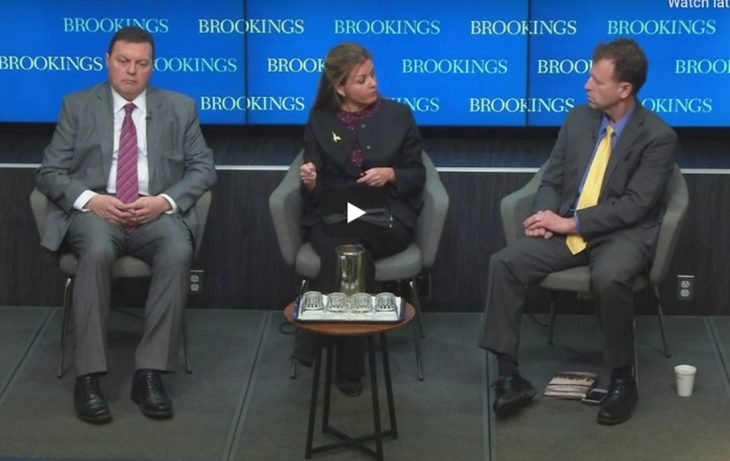
 On February 24, the Brookings Institution hosted an event to discuss the civil war in Libya with Federica Saini Fasanotti and Karim Mezran .
.
***
The following are selected portions of the transcript that are related to the situation in Libya:
MR. O’HANLON: Let’s have a round of discussion now about Libya today. And I want to thank Fred Weary for being here as well, whose book, The Burning Shores, is one of my other great favorites, and explains what’s been going on this decade.
We’re now almost 10 years into the post Gadhafi period. It’ll be nine pretty soon with the Arab Spring and then the subsequent period of conflict and Gadhafi’s overthrow and death in the fall of 2011.
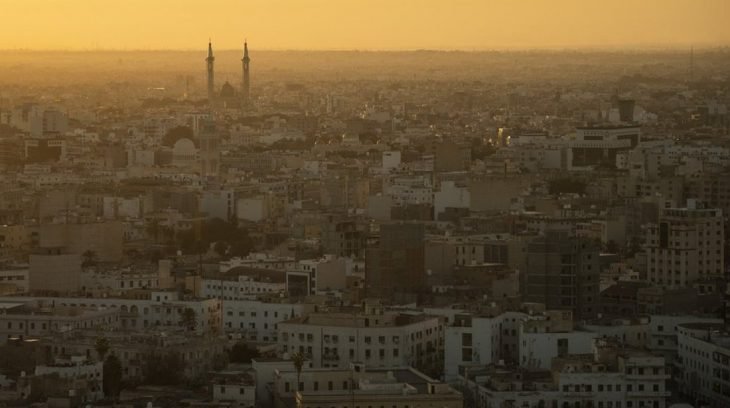
And since that time, we’ve seen essentially in some ways anarchy, but it’s also, been, as Fred and Karim and Fedi have explained to me, it’s a kind of anarchy that still allowed some degree of normal functioning society and infrastructure to continue.
There’s — if you go to Libya today, I’m told, or at least for much of this last 10 years, there is not a sense of complete lawlessness as in, let’s say, Somalia or Afghanistan in the 1990’s or certain periods where we just think of complete mayhem.
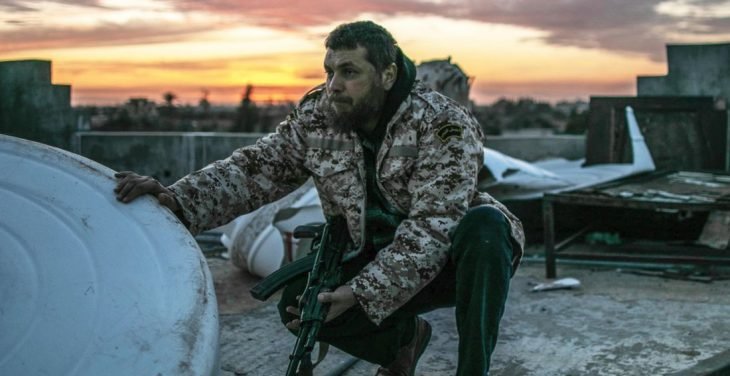
There is a militia-based system of security. That’s sometimes pretty capricious, and arbitrary, and sometimes pretty ruthless. And the country as a whole doesn’t glue together very well.
But there’s still been some degree of preservation of a functioning state for much of that time, partly because Libya has oil, and it’s therefore, had revenue to share.
And there’s never been a system of distribution that’s been widely accepted for long, but there has been at least some revenue to share across different parts of the country.
I’m going to let these two correct me in a second by the way, with describing where I think we stand in Libya today.
But just to set the table, then ask each of them to correct me or add a couple of additional details or factual reference points. And then we’ll discuss where the international community should go from here.
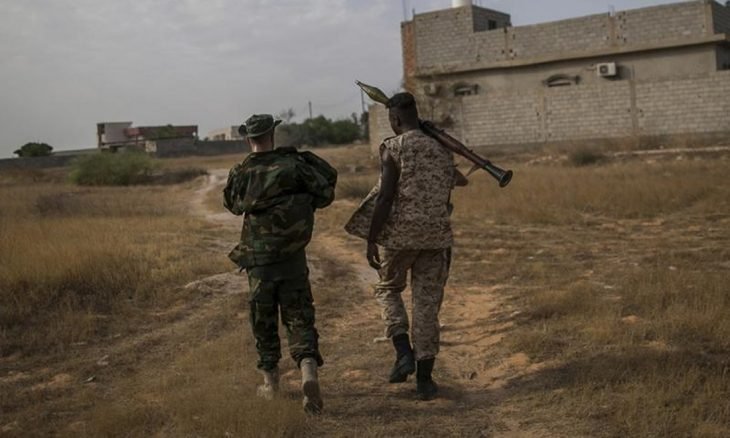
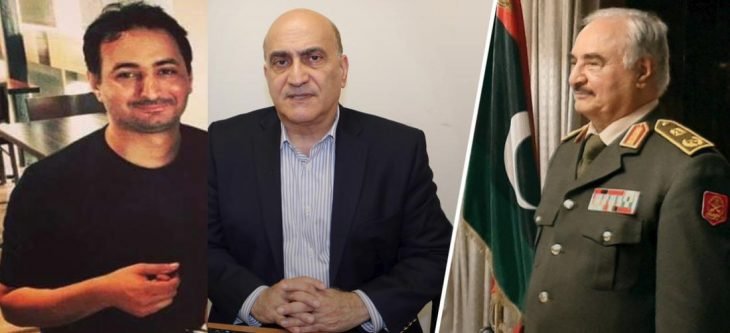
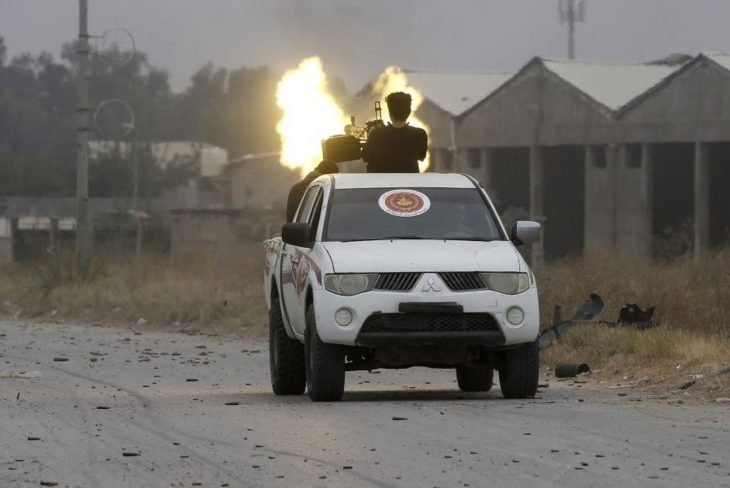
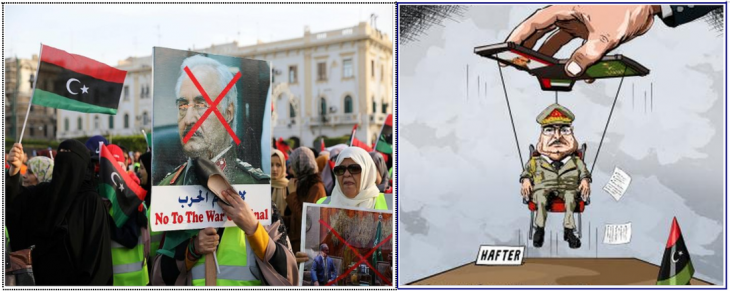
But as I think many of you know, since April of last year, General Haftar from the East, sort of a self-appointed strong man, who stylized himself as a person bringing order to an otherwise lawless country, but also, in many people’s eyes is greedy for power and seeking to control as much of the country as he can himself.
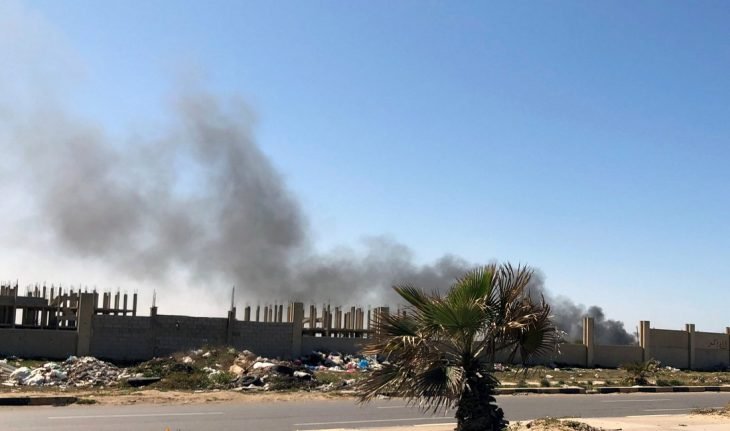
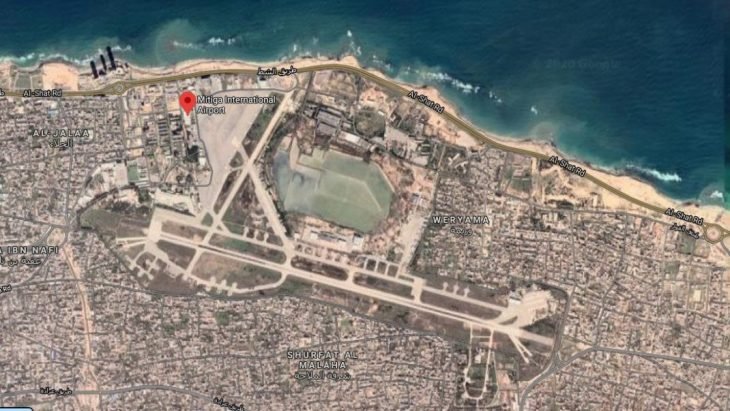
He has swept westward. He’s taken much of the oil producing area in the center of the country. But meanwhile, Libya’s oil production has gone way down as a result. And he’s also, attempted to take Tripoli, but he’s found that he actually can’t do that, at least not yet.
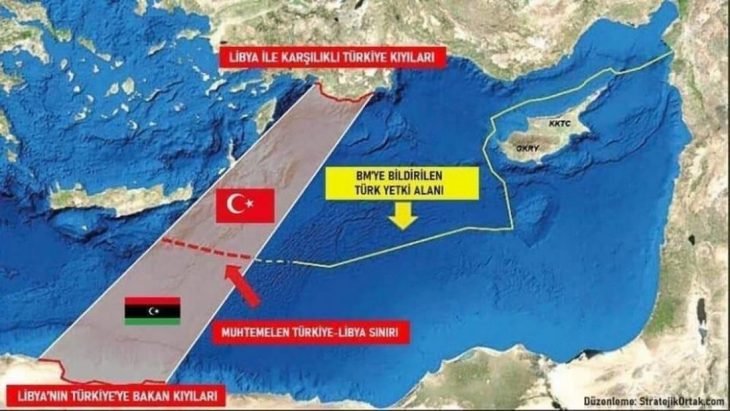
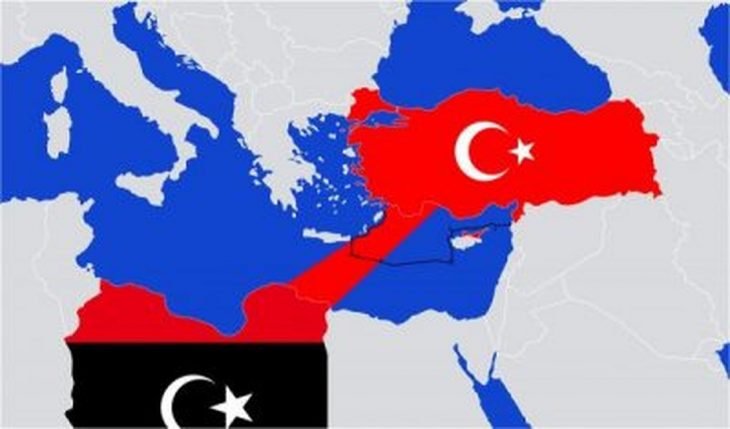
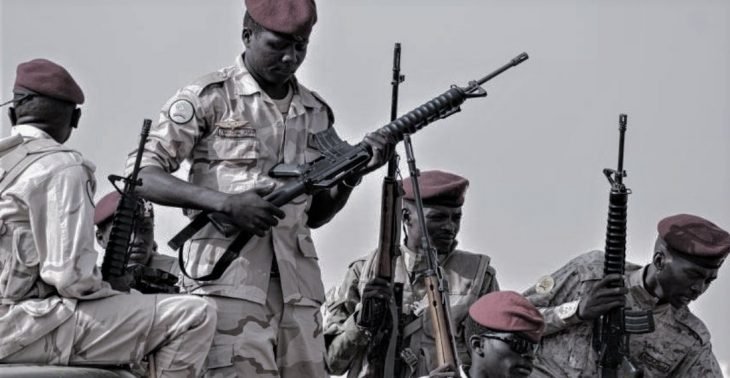
However, he’s invited Russian help. And we now have a complex dynamic with foreign actors, including Turkey and the United Arab Emirates being even more present on the ground in military support for one side or another than before.
All in violation of the UN arms embargo and potentially bringing more chaos to the country, and certainly more risk to Tripoli as a city than had been previously the case.
So, that’s how I see it. But I’d like to ask the real experts to correct me, round out the picture. And then we’re going to talk about policy options before we get to your questions.
So, how would you describe the situation today relative to what I just said?
MS. FASANOTTI: Well, no you were precise, and the situation is very bad. Haftar started the siege against Tripoli the 4th of April last. And of course, it’s still going on in spite of all the help that he can have from Russia, from the Emirates and from Egypt.
Egypt has always been without city, has always been interested in spreading its influence on Libya. And this is very natural, I mean during — just to go back and forth during the Italian colonization age, it was one of the biggest point of problem for the Italians.
Because with the border, so, you know, so, easy to pass through, and the ports, the rebels or the Mujahedeen came back and forth continuously and had all the support they needed from Egypt.
And today it’s pretty similar. Azizi is helping, in spite of all, you know, the way the United Nations resolutions, is helping that part of Libya in order to conquer the other part.
And that’s of course, no deal from Tripolitania, but there are many differences if we analyze the two chessboards, because in these 10 years what we can see something, let’s say its you’re an icon much more regional in many respects, with the figure of Haftar as a military and political leader.
Although they should have in House of Representatives an alternative form of political govern. And on the other side we have a more local way of governing the region in Tripoli Italia.
So, more local let’s say, with many different militias a complete oligarchy, I should call it. That tries to maintain the situation of anarchy in many respects, because it’s very useful for them.
And by my point of view, probably, you know, the militias in Tripoli will never accept the conquest of Haftar. Never. Haftar and Karem can correct me or add something, it has, you know, has been seen as a criminal in many respects and as an invader.
And so, I think that the situation will be like this for the next few months and more.
MR. O’HANLON: Before I ask Karim for his thoughts, I was intrigued. You’ve twice used the term Mujahedeen to talk about the resistance fighters in the colonial period that you focus on in your book.
Were they Islamic in the modern day sense, or were they more anti-colonialist? How would you —
MS. FASANOTTI: Anti-colonialists for sure, but they were fighters. And so, it is my way to give them respect. And I don’t — as I told you, I don’t like to call them rebels at all, because studying every single operation of, you know, in 10 years of history, of Libyan history, every single operation.
I can tell you that they were extremely valuable fighters and they fought for their country, and we didn’t have to forget this. And they were really motivated and very good. And almost every commander, Italian commander, had to write this. We are fighting against real fighters. So, they really had the respect of Italians in many ways.
MR. O’HANLON: Just a quick footnote. I might note that in Mujahedeen terms in Afghanistan of course, this term is also, a very positive one.
At least from my point of view. I think at this time, we have big debates about Afghanistan, and we see a peace process perhaps start up a little bit.
We have to remember that they really helped us win the Cold War. The Mujahedeen really, not only fought for their country, they did enormous benefit for the broader Western cause against the Soviet threat during the Cold War.
And that was really the beginning of the end of the Soviet Empire.
Karim, how do you see things in Libya today?
MR. MEZRAN: The term Mujahedeen, tied to Islamic religion. And fighters in Libya were fighting for independence or taking the foreigners away. But deeply rooted in the Islamic tradition of this Cyrenaica and the Sofitaritta.
That was the common thing, up to the point that somebody says that seeing in the Sanoosee fighters, the fighters for Libya could be a stretch. You know, they were really fighting for keeping the foreigner, the infidels out of the area that they were living in and they were fighting for.
It’s debatable. You can — there’s enough arguments to support theory and one to support the other. What your question?
MR. O’HANLON: Well, how do you — apart from what we’ve already said, what else should we understand about Libya today to create a good factual foundation for the policy conversation?
What’s the most important additional fact that you would either add to the, you know, what we put on the table or that you would challenge me in the way I described things?
MR. MEZRAN: Yeah here is when I begin to make enemies. I really think that the most important thing today to look at is not to believe that the two traditional narratives, or the individual narrative that sees as General Haftar, self-proclaimed general or legitimately done so, all that.
The House of Representatives being the only legitimate one, and all the serving – as being the representative of the grievances and the instances of the people of the East, against the peoples of the West, who are now in this moment prey of Islamic radicalism. But traditionally controlled the resources.
There is also, the word centralized. So, having this vision of the general, a professional military, who is secularist, who fights terrorists, who is prone to democracy, and that it just he wants to impose all that for a few minutes and then he will open up to the counter — and deal the counter in a Western sense. The sense that you should like.
Against those who are in the West who are militias, Islamist, part of the big Islamic conspiracy that some of our writers here like to represent that all they want is isolate the country and plunge it into the Middle Ages.
My colleagues here we’ve talked a lot about this, and we all know the fallacy of this narrative. Haftar is not the representative of the East. Nobody comes from Cyrenaica, but only he is being created by foreign power in particular. Maybe to impose the resources to the large majority of the people in the East where he installed a military regime.
And we have seen that since the beginning when he was substituting every major regularly elected with a military commander — military governor. And by military, we just mean they were wearing a uniform, because there is no Libyan army, professionally trained, independent and the nationalist in itself.
The creation of Haftar, and of this situation in the east is — and the strength of this narrative that has been spread at the international level with incredible success. Because we are – anytime I go to people away from those who know about Libya, and they go to the average citizen to the non-Muslims, that’s the narrative that is there.
And we can fight against it. We can undermine as much as we can, we can right it and we can say we can bring proof. We can demonstrate and it’s there. And then for some reason this is what has penetrated is the good and the bad idea.
And that I think is the most dangerous one. Because it is creating Eastern-Western difference that between the population that is — that I don’t think is there.
There are differences but there are differences in every counter in the world between the regions if you want to dig them — if you want to find them out. And any European country you can say the north from the south, there is no way that the two of them can compare.
It’s the political narrative that is going to create a division. When I’m pessimist, which is most of the times, I really see that it has been created, the division within the Libyans, it will be extremely difficult to recuperate.
It will take ages and a lot of work and a lot of goodwill to create a narrative that keeps the two populations united after all these divisions and the fights and the civil war that has happened.
Fighting this narrative and creating a real one is the struggle that we all have to undertake as much as possible.
MR. O’HANLON: so, thank you. I want to ask you each just the same question about what to do from here, without asking you to solve the whole Libyan Civil War. We’ll expect some help from the audience on that front once we get started up here in the remainder of our time.
But a couple of years ago, with Fred Weary and John Allen and a few others from around town, we wrote a report in which we talked about trying to incentivize some of the local actors and militias and cities to try to improve their game, so, to speak, in terms of governance and security, and try to create a system of distribution of resources, keep the central government relatively weak, but of course try to strengthen it over time. And that was sort of our vision.
That was before the events of the last 12 months or last 10 months. Is there anything left to be said on behalf of that vision?
What should an alternative vision be if that one is now defunct? What’s the path forward in Libya?
And again, I don’t expect a perfect answer, but sort of what’s the most important next thing? Or what’s the most important big idea that we should have in mind in terms of what we’re trying to achieve over time?
MS. FASANOTTI: Well, let’s say that Karim started telling something very true and important. I mean, we have to work on media coverage, in my opinion, and on a different narrative that now is absolutely disruptive.
Because in the end people — even though at the beginning, they don’t think that things are like this, in the end they start to believe that there is effectively this huge difference absolutely not, that you cannot solve. So, this is one point.
Secondly, of course, the situation has really worsened in the last year. When we were writing the paper on Libya and on localism civilizations and so on, many things were different.
I’m pretty sure that many militias in the majority of the people in Tripoli will find very difficult to start a real conversation with Haftar, in this point. On the other side, you have Haftar that bet on many things, starting this kind of military operation towards Tripoli.
And now my belief is that he will — he must win Tripoli. I think that he cannot go back to Benghazi without any result after all these months, after all the dead they had.
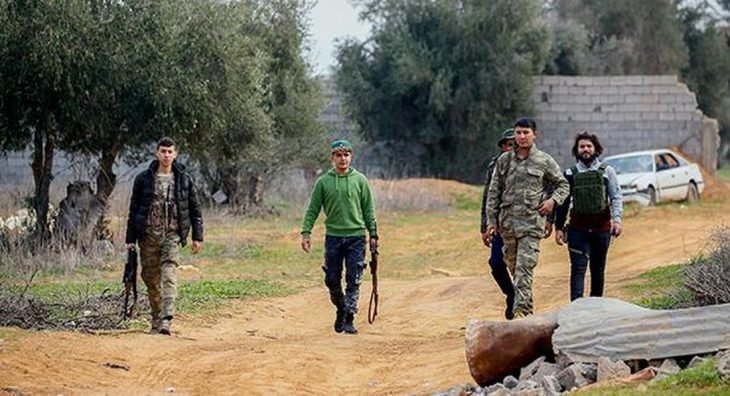
I think, for example, that at the beginning of the operation many, many young boys with no experience, we’ve seen them in videos and so on, were killed during the operation, and they were from Cyrenaica.
And maybe they are now in guardian and parents cannot go and take them, you know, the bodies. And so, after all this, I think that for him will be very difficult to go back without a result.
Plus, the situation in Benghazi is not so, calm as, you know, the narratives say. And plus in Benghazi also, it’s full of extremist groups. So, I think that at the moment the situation will be — will remain like this.
And Berlin, the conference in Berlin, was nothing — was completely useless.
MR. O’HANLON: Over to you Karim. Do you see any next step that we can at least, you know, even if we can’t see the finish line, we can at least see what the next step should be? You sounded pretty pessimistic a minute ago but is there any basis for —
MR. MEZRAN: I’m Scorpion, I’m an Arab, I cannot be anything more than — It’s a culture clash. The problem that I’ve seen doing analysis in following Libya in especially in the last four or five years, is that anytime you study the situation on the ground, you see how it is evolving —
You write down and then do you agree with your colleagues on the possible solution? To propose 15 days later it’s –
Over it’s done. So, what would the function two years ago and could the function had everybody put their heads into doing that?
What we wrote in the Brookings report, it doesn’t mean anything anymore. What I’m really afraid is that this — the longer the civil war is lasting, the more is breaking the good social fabric of the Libyan population.
Until before this invasion, you could be surprised by how much within anarchy, within disorder, the population could lead a legal life. You are a militia man; you walk around with a . I’ve seen them entering a store, buying something, paying and getting out.
Libya has been without a real police force for years now. Now, try to imagine any Western society, any city in the West, where you say, guys there’s no police for 24 hours. You can do whatever you want.
And you will see the reaction. Libyans have been in a similar condition and they’ve kept a social modus vivendi with each other that allowed society almost without a superior structure to leave and gone. And that has been the treasure of the Libyans.
I always thought until that there is hope that a state can be built, that we can build the structure to develop and begin the war to the pluralistic, democratic, whatever that is.
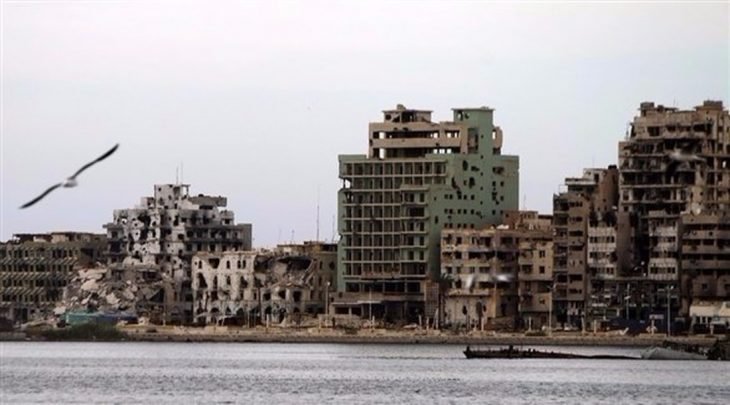
This, I am afraid that is being broken. And it’s been broken by the violent attack against Tripoli, more than by the repression, the destruction of Benghazi. What’s happening there now and all the other stuff?
Because it is a symbol of total disdain by a part supported by a very strong narrative towards another part. When you unleash bombardments against a civil city that is supposed to be the capital of the state that you want to conquer, the state that you want to liberate, that sends a terrible message.
And that message is undermined completely all we have fought to maintain. And that is the root of my pessimism.
That is offset by the optimist — as my grandpa used to say, yes, pessimism of reason of the United States, there’s no way it will be solved. It’s offset by the optimism of the will.
Which is the continued struggle for the mediation, the continued hope that somehow the international community can find the common — a common vision, a common intent to put pressure on the local factions, to stop fighting and to begin to a reconsider or vice versa.
That there is an agreement, it’s tied in is within the population that pushes out before a proxy and find whether through localism, whether through to give any form, found a way to restart the process.
And that is, as it is now, I share Federica’s opinion on the idea that international conferences are users, they don’t mean anything. I have more trust in the bilateral pressure that the States can do. I’m just making a fantasy.
But an Algerian, Egyptian intent on how on solving the problem, can do, in my opinion, much more than Berlin Conference where everybody comes up and says, yes we are in favor. And then a second later continues the arming and the pushing of its own faction and the end destruction and so on.
You can design any possible outcome. At least desired one, it could be a Russian Turkish agreement to a more desirable one that could be one under an international — United Nation’s supervision and every degree in the middle. But that is the only way to work.
***
Michael O’hanlon – Senior Fellow and Director of Research, The Brookings Institution.
Karim Mezran – Resident Senior Fellow, Rafik Hariri Center for the Middle East, Atlantic Council.
Federica Saint Fasanotti – Nonresident Senior Fellow, Foreign Policy, The Brookings Institution.
____________
BROOKINGS