In a proactive step toward diversifying its sources of income and strengthening its economic position, the Libyan Ministry of Economy and Trade has announced the launch of a comprehensive national strategy to develop free zones, in cooperation with Expertise France and with the support of the European Union. This strategy, the result of extensive work and in-depth analysis of the Libyan economy, found in the Fifth International Scientific, Cultural, and Economic Symposium the ideal platform to affirm its main pillars and link them to the dimension of environmental sustainability.
The symposium, held under the theme “Transit Trade and Logistic Transformation… A Lever for Sustainable Development and Strengthening Economic Sovereignty”, served as a vital meeting point for decision-makers, academics, and specialists. It was more than just a scientific event; it was an official declaration of Libya’s new direction, one that places the environment at the core of economic development.
The symposium featured significant contributions that highlighted this connection, including a keynote speech by the Minister of Environment, who emphasized that caring for the environment is no longer a luxury, but rather an opportunity to reinforce the national economy.
Symposium Themes and Strategy
Dimensions
The event included a series of lectures that enriched the discussion, such as Dr. Khalifa Al-Awj’s presentation on “The Environment as a Tool for Strengthening the Economy”, which underscored the importance of applying environmental standards in economic projects. Engineer Abdelbasset Tantoush also addressed the topic of “Environmental Diplomacy in International Relations”, reflecting awareness of the role of environmental considerations in enhancing Libya’s standing on the international stage.
In this context, the national strategy emerges as the practical framework to translate these visions into reality. Deputy Minister of Economy for Free Zones, Mr. Nouri Al-Gattati, explained that this strategy “represents a roadmap for strengthening Libya’s position as a regional trade hub.” The plan is based on solid foundations, including: • Legislative Review: Updating the laws governing free zones and investment to make them more attractive and flexible. • Infrastructure Improvement: Developing logistics facilities in line with the requirements of global trade. • Enhanced Partnerships: Creating a cooperative environment between the public and private sectors to drive development forward.
International Support and Successful
Models
The initiative received international praise, with EU Ambassador Nicola Orlando describing it as an important step toward building a diversified and sustainable Libyan economy. He pointed to the possibility of drawing lessons from successful international experiences, such as the Tangier Free Zone in Morocco, which has become a regional model. This international support affirms that Libya’s strategy is not merely a domestic plan, but part of a broader regional vision for economic cooperation.
Thus, Libya has successfully linked the strategic vision it has set with the clear political will to implement it, through a phased plan extending over 15 years. The strategy combines ambitious economic goals with a firm commitment to environmental preservation, placing the country on the right path toward achieving economic sovereignty and sustainable development.
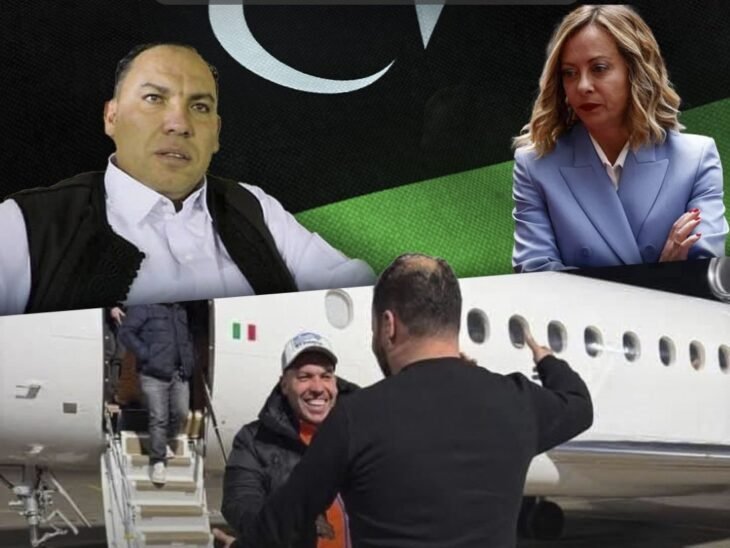
Three top Italian officials in Giorgia Meloni’s government helped a Libyan warlord escape justice earlier this year and concealed secret meetings about his case from parliament, according to a report to the legislature summarizing the prosecution’s case. The events surrounding the arrest and prompt release of Osama Al-Masri Njeem, wanted by the International Criminal Court, have become a national scandal. The government’s critics argue he was repatriated to avoid retaliation from Libya, which could have targeted Italian energy interests or allowed more migrant boats to cross the Mediterranean.
Al-Masri, a long-time enforcer in Tripoli’s notorious Mitiga prison, had been arrested in January in Turin after attending a Juventus football match, but was released after only 48 hours. The ICC accuses him of war crimes and crimes against humanity, including torture, murder and sexual violence. He is accused of 22 rapes and 36 murders. The role of two Italian government ministers and a cabinet secretary in letting him go is now under investigation, and the parliament will take a final vote on Oct. 9 as to whether their parliamentary immunity from prosecution should be lifted.
Ahead of the vote, Federico Gianassi, an MP for the opposition Democratic Party and parliamentary rapporteur to the committee that oversees cases against ministers, summarized the prosecutors’ case in a report. POLITICO saw a copy.
Safe majority
While Meloni has a majority in the parliament that will likely shield her ministers from standing trial, the proceedings still threaten to embarrass her and leave her vulnerable to accusations that her government brushes aside international law under pressure over hot-button issues such as migration. Justice Minister Carlo Nordio, Interior Minister Matteo Piantedosi and Cabinet Secretary Alfredo Mantovano are accused by prosecutors of helping a criminal escape justice from the ICC, and abuse of office after Al-Masri’s arrest on an Interpol warrant on Jan. 19.
A spokesman for Nordio said that as minister of justice he had been “obliged to carry out a preliminary political and legal assessment before forwarding requests,” which took two days, leading to Al-Masri’s release after a procedural error. The documents received from the ICC contained “doubts and inaccuracies” that rendered them void, the spokesman added. Regarding his part in authorizing Al-Masri’s removal on a state flight, Interior Minister Piantedosi said Al-Masri “was released and expatriated for urgent security reasons” and “because of the danger posed by the subject.” Mantovano’s officedid not reply to a request for comment. Fear of retaliation
According to Gianassi’s report, the ministers held online meetings on the days following the arrest in January where they were warned by the intelligence services that holding Al-Masri could lead to “retaliation” against Italy’s “economic interests linked to the [state-owned oil giant] ENI gas plant in Melliah and its immigration interests, given that the RADA militia is the entity that exercises security powers in the relevant areas indicated and that relations with it have strengthened over the last year.”
Al-Masri was a leading figure in RADA, Libya’s “Special Deterrence Force for the Countering of Terrorism and Organized Crime.” The officials were also warned of the danger that Italian citizens could be arrested in a tit-for-tat act of revenge for Al-Masri’s detention. During the meetings, the ministers decided on a “strategy of non-intervention” that led to his release on a procedural error, the report to MPs said. This inertia permitted Al-Masri’s release and the loss of potentially important evidence on phones and in documents. His return to Libya on an Italian state jet to be greeted by cheering crowds “facilitated the continuation of similar conduct,” the report said.
The flight “was not justified by security reasons” and “assured Al-Masri an immediate and protected return, without the possibility of being arrested,” Gianassi said. Accounting to parliament on Feb. 5, the week after Al-Masri’s release, the two ministers failed to disclose the ministerial meetings where the case was discussed and where the strategy of not pushing ahead with the case in Italy was adopted, the report noted.
The ministers and cabinet secretary acted on “mere political opportunism, based on generic fears and not backed up by concrete evidence, which shows the Italian government’s weakness in front of armed gangs that operate abroad and violate human rights,” Gianassi told the committee deciding on ministerial prosecutions on Wednesday. If the ministers are protected from standing trial as expected because of Meloni’s majority, Al-Masri’s alleged victims could then appeal to the European Court of Human Rights.
Prosecutors at the ICC have also called on judges to open infraction proceedings against the Italian government that would refer Italyto the U.N. Security Council for violating its international obligations. A ruling is expected in the next few months.
Abdelkarim Mgeg’s bid for Libyan leadership raises slim hopes for a brighter future in a war-torn country.
Libya has long slipped down Washington’s list of priorities. Since the fall of Muammar Gaddafi in 2011, the country has been trapped in cycles of civil war, foreign interference, and institutional collapse.
To many US policymakers, Libya looks intractable, a problem best left to Europeans. Yet, the candidacy of Abdelkarim Mgeg for prime minister has drawn attention in both Tripoli and Washington.
His rise will not resolve Libya’s many crises overnight, but it reflects an effort to break with the patterns of militia rule and foreign manipulation that have defined the post-2011 era.
Unlike militia leaders and strongmen who dominate Libyan politics, Mgeg is a scientist with international standing. He is best known for his role in dismantling Libya’s nuclear weapons program in the early 2000s, at a time when Gaddafi was seeking rapprochement with the West.
That process yielded Washington a rare nonproliferation success story, and Mgeg played a key role in delivering it through his technical expertise and political negotiation skills. The credibility he earned in that moment, particularly with US officials, remains an unusual and valuable asset.
Today, he is emerging as one of the leading candidates to head a new government and is increasingly seen in Washington as a potential figure capable of reconciling Libya’s fractured politics.
On his visit to the US capital this week, he met senior officials from across the political spectrum. This level of engagement suggests that Washington views him as credible, although not without acknowledging the many uncertainties that remain.
Libya’s challenges are immense.
The country remains divided between General Khalifa Haftar’s Russian-backed forces in the east and the contested civilian authorities in Tripoli, supported by Turkey. Egypt and the UAE also back Haftar, while Europe’s overriding concern is stemming migration across the central Mediterranean.
This externalization of Libya’s crisis has hollowed out sovereignty and left ordinary Libyans caught between rival governments, competing militias, and foreign patrons. Years of conflict have devastated infrastructure, weakened state institutions, and created fertile ground for extremist groups across North Africa and the Sahel. Oil production remains volatile, vulnerable to blockades or sabotage. Migration flows from Libya to Europe fuel political tensions on the continent, threatening transatlantic unity at a time of heightened great-power competition.
The institutional weakness of the Libyan state is perhaps the greatest barrier to lasting stability. Ministries are fragmented, civil servants are poorly paid, and the judicial system lacks the authority to enforce accountability.
Even if Mgeg were able to form a unity government, delivering basic services such as electricity, healthcare, and education would be an uphill struggle. Without visible improvements in daily life, public confidence in any new administration could quickly erode.
Another challenge lies in managing foreign interference. Russia, Turkey, Egypt, and the UAE have entrenched themselves militarily and economically, making Libya less a sovereign state than an arena of proxies.
Dislodging these interests or balancing them in a way that preserves Libyan autonomy will be an enormous task. Mgeg’s international credibility may help him open channels of negotiation. Still, his ability to limit external actors will be constrained unless he can build strong domestic institutions and secure broad-based popular support.
Against this backdrop, Mgeg’s signals that he would seek to bring Haftar and his supporters into a civilian-led framework suggest a recognition that reconciliation, not exclusion, is the only sustainable path forward.
Whether entrenched actors would accept such an arrangement remains uncertain. Haftar retains influence, but his age and health raise questions about his long-term role. Meanwhile, younger militia commanders and regional players may resist compromise if it threatens their power or resources.
Mgeg’s candidacy alone will not transform Libya.
The political order is fragmented, external actors are deeply invested in the potential outcomes, and past attempts at power-sharing have often collapsed under the weight of spoilers.
Mgeg will face immense obstacles in building a governing coalition, asserting civilian authority, and delivering tangible improvements in daily life. Without progress on these fronts, even a figure with international legitimacy risks being undermined by the same instability that consumed previous civilian leaders.
For Washington, the lesson is not to invest too heavily in a single leader but to remain engaged with Libya’s political process in ways that support institution-building and reconciliation.
The United States has strategic interests in preventing extremist sanctuaries, stabilizing energy flows, and reducing migration pressures on Europe. Those interests are best served by promoting credible civilian leadership, free and fair elections, and limiting foreign interference.
Libya will not be rebuilt around one individual, but the emergence of Abdelkarim Mgeg illustrates that credible candidates with international ties still exist. His candidacy should be viewed neither as a panacea nor as irrelevant. Instead, it offers a potential starting point for a broader political settlement that Libya urgently needs to move beyond its ongoing civil war.
***
Dr. Azeem Ibrahim OBE is a Research Professor at the Strategic Studies Institute, US Army War College, Senior Director at the Newlines Institute for Strategy and Policy, and author of Authoritarian Century: Omens of a Post-Liberal Order.
The U.N.’s Strategy in Libya Is Not Just Slow; It Is Dangerously Naive
The UN’s strategy in Libya, centered on a painstaking, 12-18 month “roadmap,” is not just slow; it is dangerously naive. It operates on the delusional assumption that a fragile political process, however well-intentioned, can withstand the relentless, opportunistic force of Russian ambition.
While Western diplomats convene meetings and draft communiqués, Russia is not waiting. It is moving with the cold, hard logic of a great power seeking to exploit a vacuum, and its actions post-Ukraine are a chilling preview of what awaits Libya if we do not act.
The war in Ukraine has not drained Russia of its global ambition; it has, in fact, sharpened it. Vladimir Putin’s regime learned a critical lesson from the West’s reaction to its previous aggressions in Georgia and Crimea: a lack of decisive, unified response emboldens further action.
Now, while the world’s attention is focused on the battlefields of Eastern Europe, Moscow is executing a calculated strategic pivot to North Africa. The goal is not just to maintain influence, but to establish a durable, uncontested military and economic footprint on the Mediterranean’s southern flank.
The recent meeting between Russia’s Defense Minister and Khalid Haftar, an increasingly powerful figure in Libya, is a stark warning. This is not a benign diplomatic overture; it is a clear signal of Russia’s intent to formalize and deepen its military relationship with a key Libyan faction.
Russia is not a partner for stability in Libya; it is a cynical spoiler, seeking to entrench its influence with a powerful strongman and create a new regional foothold. By backing Haftar with military assistance, training, and its new “African Corps” forces, Russia is following its textbook playbook: find the strongest armed group, arm it, and leverage the resulting instability for strategic gain.
This strategy goes beyond mere influence. Russia is actively transforming Libya into a logistics hub for its operations across Africa. Satellite imagery and intelligence reports confirm that Russian forces are actively modernizing and expanding military bases in Libya, such as Maaten Al Sarra.
This is not for a temporary deployment; it is for a long-term presence. This African gateway would allow Moscow to project power deep into the Sahel, propping up military juntas in Mali and Burkina Faso, and giving Russia an economic and military advantage in a region where Western influence is in decline.
If Russia succeeds, the consequences will be catastrophic, rippling far beyond Libya’s borders. Moscow’s control of a Libyan regime would not only threaten European energy security but also give it a new lever to manipulate migration flows, creating political and social strain within the European Union.
A Russian-controlled Libya on NATO’s southern flank would fundamentally alter the geopolitical balance in the Mediterranean. It would become a launchpad for further military adventurism, a sanctuary for Russian mercenaries and proxies, and a direct threat to U.S. and allied interests. The danger is not just that Russia will be a player in Libya, but that it will become the dominant player, turning a fragile state into a launchpad for further destabilization.
The UN’s approach, with its slow-moving bureaucracy and calls for cautious dialogue, is simply not equipped to counter this aggressive strategy. It is time for a new course of action. The United States and its allies must move with the same urgency and strategic clarity that Russia is demonstrating.
This is not about a new military intervention; it is about a decisive, political, and economic engagement that denies Russia its foothold. By directly supporting Libyan institutions committed to a unified and sovereign state, by applying targeted sanctions against those who aid Russia’s forces, and by offering a credible alternative to Moscow’s exploitative partnerships, we can prevent Libya from becoming a casualty of a post-Ukraine world.
Taken together, Ankara’s foray into eastern Libya is not a retreat from Tripoli, but a strategic hedge: a way to embed Turkey’s interests across Libya’s fractured landscape and secure national-level legitimacy for its long-term presence. Political normalization with the east began in earnest after the end of Libya’s civil war in 2021, with high-level visits to Ankara by key figures such as House of Representatives Speaker Aqila Saleh and Eastern Libya’s strongman General Khalifa Haftar’s sons. These engagements normalized contact, reduced diplomatic asymmetries, and established a foundation for parallel cooperation.
In parallel, Turkish investors—particularly from the construction sector—are eyeing a return to eastern Libya, a move that appears to be welcomed by Eastern authorities. Since 2024, Libya’s Reconstruction Fund, under the Chief Belqasem Haftar, signed several agreements with Turkish companies for major infrastructure projects in Benghazi, Al-Bayda, Shahat, and Tobruk and meets Turkish Foreign Minister Hakan Fidan during an official visit to Ankara to explore expanding development partnerships.
The resumption of Turkish Airlines flights to Benghazi in January 2025—after a decade-long hiatus—further signalled Ankara’s intention to re-establish a durable economic presence in the region. For Turkey, economic cooperation offers a means to embed itself within the east’s post-conflict reconstruction and expand its reach to Eastern actors.
Nonetheless, the most consequential developments have taken place in the security arena. Early signs emerged in October 2024, when Saddam Haftar—Khalifa Haftar’s son and Chief of Staff of the Land Forces—attended the SAHA EXPO International Defense, Aviation and Space Industry Fair in Istanbul, where he also held talks with Turkish Defense Minister Yaşar Güler.
In November 2024, Turkey’s Ministry of Defense hosted both eastern and western Libyan military representatives as part of the 5+5 Joint Military Commission meetings, reflecting Ankara’s growing role as a security interlocutor.
A pivotal moment came in April 2025, when Saddam Haftar paid an official visit to Ankara, hosted by Turkish Land Forces Commander General Selçuk Bayraktaroğlu. Subsequent visits by LNA delegations to Turkish defense facilities indicate a potential transition from dialogue to more operational forms of cooperation. Available reporting points to an emerging defense agreement that may include UAV deliveries, the training of up to 1,500 LNA troops, joint naval exercises, and long-term Turkish advisory support for military modernization.
This recalibration reflects a layered strategy that combines short-term risk mitigation with a longer-term ambition to influence Libya’s political reconfiguration. Rather than abandoning its partnership with Tripoli, Ankara is deliberately diversifying—embedding itself across both rival camps to gain leverage over future arrangements in reconstruction, security reform, and power-sharing, branding this shift as efforts for “united and unified Libya”.
This outreach also appears to reflect Ankara’s effort to adapt the Tripoli playbook to the east: combining defense diplomacy with economic integration in exchange of maritime agreement to gain leverage. A key element of this strategy involves Turkey’s pursuit of parliamentary ratification for the 2019 maritime and security agreements—initially signed with the GNU. If endorsed by the Tobruk-based House of Representatives, this step could help address a long-standing legitimacy gap and reposition the contested deals as national rather than factional agreements. Such a development may enhance Turkey’s legal and diplomatic standing in the Eastern Mediterranean and reduce eastern Libyan and regional objections to its presence.
In the long run, Ankara’s deepening engagement across both eastern and western Libya reflects more than short-term risk management, it seeks to position itself as a central mediator and enabler of national unification. The goal is to leverage its dual-track presence to influence key processes, including national reconstruction, security sector reform, and the eventual political settlement.
By engaging Haftar-aligned actors and building formal, strategic relations with eastern institutions, Ankara aims to move beyond the status quo of controlled instability. The underlying objective is to foster a more sustainable power balance between Libya’s rival blocs.
Why Europe should pay attention
European policymakers—particularly in Italy and across the EU—should carefully track how Turkey’s evolving strategy in Libya will unfold. Ankara’s simultaneous engagement with both Tripoli and Benghazi carries potential implications not only for Libya’s fragile internal balance but also for Eastern Mediterranean dynamics and the broader contest over Russian influence in North Africa.
Turkey’s recent overtures to eastern Libya—reportedly involving defense exports and military cooperation in exchange for legal recognition—signal a potential shift in regional competition. Ankara appears to be reframing Eastern Mediterranean dynamics from a zero-sum contest into a multilateral bargaining arena, with Libya, and potentially Syria, emerging as new negotiation fronts. This recalibration may also mark the opening of a second theatre—after Syria—where Ankara quietly seeks to counterbalance Russia through military-industrial diplomacy rather than direct confrontation.
In this context, the EU—and Italy in particular—may soon face a strategic dilemma: how to respond to Ankara’s changing posture in Libya in a way that balances maritime concerns with broader geopolitical realities. While tensions over maritime boundaries persist, Turkey’s role in potentially counterbalancing Russia’s influence in Libya and sub-Saharan Africa introduces an additional layer of complexity that cannot be ignored.
Libya today stands at the centre of a fiscal and security storm with consequences that extend far beyond its borders.
At the heart of this crisis is the eastern parallel government that operates under the de facto control of Field Marshal Khalifa Haftar, which since 2023 has relied on unchecked monetary financing to sustain its operations.
In just two years, this authority has created an extraordinary LYD 129 billion (~ €24 billion) in new debt, pushing Libya’s total domestic debt to LYD 284 billion – the highest in the country’s modern history.
For a nation of fewer than seven million people, this pace and scale of debt accumulation is staggering. It raises an unavoidable question: where has this money gone?
The mechanics of unchecked
money creation
For more than four years, the eastern branch of the Central Bank has sustained itself through a practice of creating money from nothing – borrowing directly from the public treasury and issuing liquidity without a corresponding balance sheet.
This mechanism – often described simply as “printing money” – has allowed the eastern military regime to finance its expenditures in the absence of oil revenue allocations or legitimate borrowing authority.
Independent audits have confirmed the scale of this practice. Deloitte’s forensic audit of the Central Bank of Libya, commissioned to evaluate transactions between the rival branches, revealed that billions of dinars had already been injected into the economy through LYD 46.8 billion in bank deposits and LYD 13.8 billion in currency printing. These findings demonstrated how the money supply had been expanded artificially, outside normal financial controls.
Since 2023, the situation has deteriorated further. With the re-emergence of the eastern parallel government, monetary financing has not only resumed but accelerated at unprecedented levels. In less than three years, an additional LYD 129 billion in new debt has been created – an amount equal to nearly 80% of all the public debt accumulated by rival governments during the entire period 2014-2020.
The result is a dual crisis: on one hand, the erosion of Central Bank’s independence, as the institution’s eastern branch functions as a treasury for political authorities rather than a monetary authority; on the other, the emergence of a parallel financial system that fuels corruption, destabilises the exchange rate, and provides funding streams for non-state actors operating outside Libya’s legal framework.
Financing Chaos: Wagner, Sudan,
and the Regional Web of Conflict
One of the most alarming consequences of unchecked monetary financing in eastern Libya is its role in sustaining the Wagner Group – now rebranded as Africa Corps – and extending support to conflicts beyond Libya’s borders.
With a stronghold in Al-Jufra, Wagner has transformed Libya into a hub for its operations across Africa. The flow of unmonitored Libyan funds, channelled through irregular transactions and the black market, provides an easy and deniable means of financing these deployments, from Libya into the Sahel region.
Yet the threat does not end there. Regional reports indicate that Sudan’s Rapid Support Forces (RSF) may also be receiving indirect financial support through Libya, reinforcing one of Africa’s most devastating wars. At the heart of this dynamic lies the broader network of external patrons – notably Abu Dhabi – which has long used Libya, and Haftar in particular, as a conduit for extending its influence into Sudan. In this sense, the same fiscal mechanism that empowers Wagner in Libya is also being leveraged to entrench violent actors in Sudan and across the Sahel.
The implications are grave: Haftar’s reliance on uncontrolled monetary financing creates a financial ecosystem that sustains mercenary groups and irregular militias simultaneously, embedding them more deeply in regional conflicts. This entrenchment risks prolonging instability, worsening displacement, and intensifying refugee crises and migration flows.
For African and European policymakers, the danger is clear – Libya’s fiscal disorder is not a domestic problem – but a regional crisis multiplier, enabled by external powers who exploit its vulnerabilities.
The Shadow Economy and
International Exposure
By flooding the economy with unmonitored funds, the eastern authorities have indirectly financed a shadow economy that destabilises Libya internally while spilling over into neighbouring states.
Drugs and arms cross porous borders into Chad, Sudan, and Niger, while human smuggling routes strengthen northward, feeding directly into the Mediterranean migration corridors that North Africa and Europe prioritises as a top security concern.
These dynamics carry not only local and regional consequences but also international risks. The billions of dinars circulating outside any transparent framework sustain mercenaries and illicit markets while creating potential liabilities for foreign actors who engage with or legitimise these structures.
The danger is subtle but serious: long-term association with authorities tied to irregular financing risks reputational, legal, and political consequences as evidence of corruption, illicit trade, and mercenary financing continues to mount.
For North Africa and Europe, whose priority is stability along the Mediterranean, the lesson is clear – partnership with Libya must be rooted in transparent, accountable institutions – not parallel authorities that thrive on monetary chaos.
The gravity of Libya’s monetary crisis is not simply a matter of fiscal mismanagement. It is a strategic threat multiplier, linking debt accumulation in Benghazi to mercenary financing, regional conflict, illicit economies, and refugee crises.
If left unchecked, this path could lead to the collapse of Libya’s economy and security within a few years – with devastating consequences for its people and destabilising ripple effects across Africa and into Europe.
The crisis unfolding in eastern Libya demonstrates how monetary policy, when hijacked by parallel authorities, becomes a tool for corruption, conflict, and regional destabilisation.
The eastern parallel government that operates under the de facto control of Field Marshal Khalifa Haftar has already created the largest debt in Libya’s modern history. This unchecked financing sustains Wagner, empowers smugglers, fuels conflicts in Sudan and neighbouring countries, and drives refugee crises across Africa and migration flows toward Europe.
For African and European policymakers, the stakes could not be clearer: confronting Libya’s monetary chaos is not a peripheral issue – it is central to the security of the Mediterranean, the Sahel, and Europe itself. The question is not only how Libya spends its money, but also how unmonitored billions risk financing chaos instead of peace.
***
Yusuf Kablan is Foreign Policy Advisor to the Prime Minister of the UN-backed Libya Government of National Unity.
Ankara hedges its bets in Libya, combining security cooperation, reconstruction projects, and diplomacy to secure a foothold across rival factions.
Few foreign policy pivots are as bold, or as fraught with risk, as betting on both sides of a civil conflict. Yet, that is precisely what Turkey appears to be doing in Libya. Having established military and political influence in western Libya, most notably through its decisive military intervention in support of the UN-backed Government of National Unity (GNU) against Khalifa Haftar’s Libyan National Army (LNA) in 2019–2020, Ankara is now extending olive branches to the east—to the very actors it once sought to marginalise.
The pace of this shift is striking. Turkey is reportedly preparing to expand security cooperation, including providing military training and arms sales, with LNA, commanded by Haftar. The Tobruk-based House of Representatives has formed a commission to review—and potentially ratify—the 2019 maritime and security agreements. In August, a Turkish naval vessel docked in Benghazi, followed by high-level talks between Intelligence Chief İbrahim Kalın and eastern Libya’s military leader Khalifa Haftar in Benghazi. Taken together, these developments signal how rapidly Ankara is repositioning itself on Libya’s eastern front, seeking new security footholds to complement its growing economic presence in the last couple of years.
Why is Turkey recalibrate in Libya
At the core of this pivot lies the recognition that exclusive reliance on Tripoli has its limits. Tripoli’s deteriorating security environment has become particularly problematic. Prime Minister Dbeibah’s power consolidation strategy has deepened intra-militia rivalries and triggered repeated armed clashes. While Turkey maintains its backing of the GNU, its personnel and assets remain vulnerable to the volatility of localized violence. The 2020 ceasefire may have frozen hostilities between east and west, but it remains precarious—offering little assurance against future escalations that could threaten Turkey’s position.
Compounding this is the continued fragmentation of Libya’s institutional architecture, which undermines Ankara’s legal and operational foothold. Key agreements—including the 2019 maritime MoU and a 2022 hydrocarbon exploration deal—face challenges not only from rival factions but from Western Libya’s judiciary as well. The 2019 maritime MoU—signed with the GNU but geographically anchored in Eastern Libya’s coast—has been challenged by eastern courts and remains unrecognized by the Tobruk-based House of Representatives (HoR). Similarly, a 2022 hydrocarbon exploration agreement between TPAO and the NOC was suspended by Tripoli’s own judiciary. These developments highlight the legal and operational fragility of Ankara’s engagements in a divided Libya, where executive authority is both contested and constrained.
Meanwhile, the slow pace of political transition and security sector reform has stalled Ankara’s original objectives. Under the 2019 Military Training and Cooperation Agreement, Turkey aimed to transform western-aligned militias into a unified security force. While notable efforts have been made in command restructuring and training of core units, the lack of political consensus and the continued presence of rival armed formations make this goal increasingly unrealistic. Without a broader reconciliation process, Turkey’s role risks being confined to one side of a permanently fragmented state.
Strategic lessons from the fall of Bashar al-Assad in Syria—though ultimately advantageous for Ankara have also influenced this recalibration. In Syria, Assad’s departure created a vacuum that momentarily sidelined Turkey’s rivals, notably Russia and Iran, giving Ankara significant maneuvering space. However, this experience also exposed the risks of reactive posture and overreliance on geopolitical luck.
In Libya, where the conflict has remained largely frozen and the balance of power is precarious, Ankara appears determined not to leave outcomes to chance. The fragility of the current status quo, coupled with the potential for rapid shifts on the ground, has pushed Turkey to adopt hedging strategies, as well as leveraging military, diplomatic, and economic tools to shift Libya’s deadlocked equilibrium in its favor before rival actors can consolidate an alternative order.
What enables Turkey’s eastern outreach
Ankara’s recalibration in Libya is driven not only by these constraints and mounting strategic risks, but it is also equally enabled by a permissive regional and global environment. Regional de-escalation has played a central role. Since 2021, Turkey’s normalization with key regional powers—Egypt, the UAE, and Saudi Arabia—has removed several of the political barriers that once confined its Libya policy. Egypt’s pragmatic posture toward Turkey and the UAE’s military drawdown have diminished the intensity of proxy competition, transforming Libya from a battleground of ideological rivalries into a theatre of transactional diplomacy.
In this context, Ankara has reframed its engagement with eastern Libyan actors—no longer as adversaries but as potential partners in infrastructure, energy, and security ventures. This approach mirrors Turkey’s broader turn toward elite-level diplomacy and commercial engagement across the region.
At the same time, Russia’s overstretch, exacerbated by its full-scale invasion of Ukraine and Russia’s perceived abandonment of other strategic partners, such as Armenia and Syria, has raised doubts about its long-term reliability, while opening window of opportunity for Turkey. Against this backdrop, Turkey’s perceived consistency and operational agility seems to contribute its image as a viable alternative for eastern elites looking to hedge their bets without alienating Moscow entirely.
Turkey’s growing presence in the Sahel and Horn of Africa has reinforced its image as a regional actor and further enhances its position. As Western influence has receded in the aftermath of military coups in Sahelian countries, and Russia has filled some of that vacuum, Turkey has advanced through security cooperation agreements, arms exports, and targeted investments, particularly in the mining and energy sectors.
In the Horn, Turkey has capitalized on shifting dynamics, aligning with Ethiopia during the Tigray conflict, positioning itself in Sudan’s evolving civil war, and mediating between Ethiopia and Somalia. These engagements reinforce Ankara’s credentials as a pragmatic and adaptable partner, capable of delivering material outcomes. This emerging credibility enhances Turkey’s appeal in Libya, where its model of military-industrial engagement resonates with actors seeking alternatives to both Western restraint and Russian dependency.
Together, these dynamics have created a strategic window of opportunity. Turkey’s objectives in Libya—securing access, protecting investments, and expanding maritime influence—have remained consistent. What has evolved is the environment: regional détente has eased former constraints, Russian overreach as alongside its eroded reliability and Western retreat has enhanced Ankara’s value as a pragmatic and reliable interlocutor.
On 16 August 2025, Libya held municipal elections in twenty-six municipalities, with turnout reaching 71 per cent—the highest rate since 2014. For a population scarred by war and weary of manipulation, this was an unmistakable demand for governance through the ballot box. Yet the same day, the House of Representatives in the East suspended elections in sixteen municipalities, while armed groups in the West torched electoral offices.
These were not random incidents—but deliberate acts of obstruction by actors who know that real democracy threatens their hold on power.
Libya’s stalled transition has not happened by chance; it has been deliberately engineered into paralysis by both domestic spoilers and foreign powers. The Libyan people, who turned out in large numbers despite threats and violence, have already shown their desire for accountable governance. The challenge now is whether the international community can move beyond token gestures and finally address the forces maintaining Libya’s ongoing limbo. Until that occurs, each new roadmap risks becoming yet another step on the path to nowhere.
Libya’s security stalemate
Libya’s conflict has shifted from open warfare to a frozen stalemate where no side can unify the country, but each has enough coercive strength to hinder progress. In Tripoli, the Government of National Unity (GNU) is at odds with the Deterrence Apparatus (RADA), a militia-turned-security force supported by foreign backers. Their clashes in July 2025 highlighted the fragile security situation in the capital.
In the East, the House of Representatives, backed by Khalifa Haftar’s Libyan Arab Armed Forces (LAAF), has strengthened its control but continues to block national elections. The suspension of municipal contests in August revealed its reliance on coercion rather than legitimacy. Meanwhile, the South remains a governance vacuum. In Kufra, Sudanese refugees now outnumber Libyan residents, escalating tensions that armed groups exploit through smuggling and trafficking.
This is not a lack of war but a controlled fragmentation, where division itself has become the most stable outcome.
Domestic spoilers: Entrenched in
the status quo
Eleven years without national elections have led to a ruling class that thrives on paralysis. The House of Representatives in Tobruk and the High State Council in Tripoli exemplify this. Aguila Saleh, as Speaker of the House of Representatives, has repeatedly blocked electoral frameworks that could diminish his influence, while figures in the High State Council have exploited their veto power to delay compromise until their interests are secured. Militias further reinforce this deadlock. In Tripoli, armed factions aligned with the GNU control ports, airports, and ministries, using them for rents and intimidation. In the East,
Haftar’s LAAF dominates militarily but is tied to the war economy—relying on smuggling, taxation, and foreign aid. In the South, tribal militias benefit from human trafficking and illicit fuel trade. The human toll is severe. Between March 2024 and August 2025, twenty detainees died in custody, including activist Abdel Munim Al-Maremi, whose death following a release order symbolized detention as a tool of repression. These outcomes are not bureaucratic failures but deliberate acts of intimidation.
Yet domestic spoilers persist not only on their own but also with the belief that powerful foreign patrons will shield them from consequences. This is the link between Libya’s internal obstruction and its international entanglement.
Foreign Interference: Managed instability
as strategy
Libya today is not abandoned but actively contested. The United Arab Emirates (UAE) and Egypt have long supported Haftar’s LAAF, aiming to block Islamist influence and secure energy access. Turkey has entrenched itself in western Libya with troops, drones, and contractors under a binding security agreement, leveraging its position in Mediterranean maritime disputes. Russia has positioned Wagner fighters in oilfields and bases, using Libya as a logistics hub for African operations and leverage with Europe.
Among allies, competition also persists. Italy prioritizes migration management and ENI—an Italian multinational company—energy concessions, while France often leans toward Haftar for counterterrorism partnerships in the Sahel. The United States officially supports the United Nations’ (UN) track, but has deprioritized Libya, focusing on counterterrorism over political settlement. The European Union (EU) has limited its Libya policy to migration containment, funding detention centers often run by militias—effectively outsourcing abuses in exchange for fewer departures across the Mediterranean.
The outcome is managed instability. Foreign powers ensure that no faction dominates, maintaining Libya as the most convenient equilibrium.
The UN’s roadmap: Process
without consequence
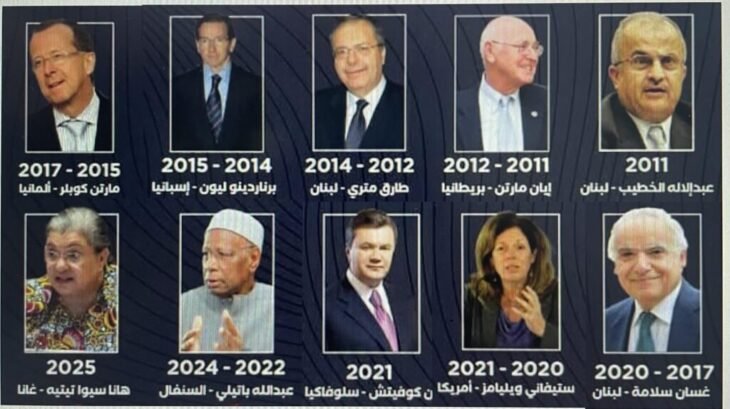
The UN continues to develop roadmaps, most recently outlined by SRSG Hanna Tetteh in her August 2025 Security Council briefing. Her twelve-to eighteen-month electoral plan assumes spoilers will eventually cooperate. Yet those who benefit from chaos have no incentive to embrace unity.
The Berlin Process, launched in 2020, exemplifies this contradiction. Designed to enforce the arms embargo and pave the way for elections, it quickly became a façade. The second Berlin Conference in June 2021 reaffirmed commitments, but states doubled down on their proxies: Turkey expanded its military footprint, the UAE and Egypt reinforced Haftar, and Russia deepened Wagner’s role. UN experts documented repeated arms embargo violations, none of which were punished.
Berlin institutionalized interference rather than restraining it, providing a stage for states to claim support for UN mediation while undermining it in practice. By 2025, references to Berlin persist in UN briefings as aritual rather than areality.
Policy recommendations: Breaking
the cycle of obstruction
Libya’s deadlock needs a shift from symbolic gestures to practical confidence-building. Greater transparency in UN reporting and clearer communication of objectives would reassure Libyans that external actors are dedicated to peace. Financial governance should be improved through joint East–West oversight of oil revenues, with international technical support to ensure fair distribution. On security, the focus should be on capacity-building, not external peacekeeping.
Advisory teams, election protection training, and rapid-response support for Libyan institutions would empower local forces while safeguarding electoral processes. International recognition and aid should be used as incentives linked to measurable progress on elections, unification, and rights protection. Civil society, youth, and women must be recognized as genuine stakeholders through mechanisms that ensure their recommendations influence policy, not just reports.
These measures, taken together, would help shift the focus from obstruction to cooperation, making unity more rewarding than division.
***
Luis Aleman is a global strategist and CEO of LFA Consulting, where he focuses on international economic development, trade policy, and strategic advisory. His work spans Africa, Latin America, the Middle East, South Asia, and Europe, helping governments and institutions navigate complex political and economic landscapes.
Karim Mezran is the director of the North Africa Initiative and aresident senior fellow with the Rafik Hariri Center and Middle East Programs at the Atlantic Council, focusing on the processes of change in North Africa.
Restoring the oil-for-fuel program would avert a near-term crisis and potentially provide a platform for more ambitious reform—though it is unlikely to succeed without greater transparency, international monitoring, and subsidy changes. Libya stands at a crossroads. The country is home to Africa’s largest oil reserves—some of the lightest and sweetest crude in the world—yet paradoxically, its retail gasoline pumps are running dry.
As fuel is rationed for the country’s 7 million people, goodwill is evaporating as quickly as water on sun-scorched soil. This contradiction is not new, but it has become more acute. Political division, blocked finances, and a broken import system have all but strangled the nation’s oil sector. Libya needs to find a way to import refined oil products as a stop-gap measure while promoting investment in its long-term growth and stability.
The country maintains a significant trade surplus due to its vast oil reserves, which it exports as crude and condensate. It lacks, however, the ability to refine its oil, causing it to import almost all fuel needed domestically for transportation, energy production, and basic public services. That dependency is a symptom of Libya’s inability to develop effective state institutions following the outbreak of civil war in 2011.
Since the 2020 truce, the country has effectively functioned with two governments: the Government of National Unity (GNU) in Tripoli and the Government of National Stability (GNS), which controls the Libyan National Army (LNA), in Benghazi. International support is also divided, with the UN, Turkey, and Italy supporting the GNU, and the UAE and Egypt backing the GNS.
The Central Bank is similarly fractured, with a de jure branch in Tripoli and a de facto one in Benghazi. This has enabled militia groups to challenge the GNU and for the GNS to question and undermine the GNU leadership’s decisions. Most recently, the firing of the Central Bank governor led to violent protests, a halting of oil production, and calls for the prime minister to resign. The Central Bank and the National Oil Corporation (NOC) have become paralyzed in the process, further exacerbating Libya’s precarious economic situation. With Libya’s public sector employing 85 percent of the country’s labor force, the effect has been profound.
Starting in 2021, Libya bartered crude oil in exchange for refined imports, but the Audit Bureau ordered an end to the program in 2023, citing several transparency issues. It was officially discontinued in March 2025. The NOC stressed that it used the barter system because without a functioning central bank, it could not access funds to pay for fuel imports, which in 2024 totaled $9 billion according to the Audit Bureau. Since the barter system was halted, the NOC has accrued over $1 billion in unpaid import debts. The ongoing impasse over how to pay for imported fuel now risks stalling vital infrastructure development, generating a credit freeze, paralyzing public services, and ultimately reigniting the threat of renewed conflict.
Libya’s oil industry needs to address several major issues. First are the shortcomings in its incipient domestic refining sector; Libya’s oil minister announced plans in January 2025 to expand its capacity from 300,000 barrels per day to 400,000. However, that upsurge will take several years to develop and a significant amount of foreign investment that is contingent on political and economic stability in Libya.
Another crucial concern is the bounteous subsidies on fuel and electricity produced by oil. Together they amounted to 35 percent of GDP in 2024, according to the IMF. This has significantly lowered prices at the pump to less than five U.S. cents per liter but has also encouraged fuel smuggling from Libya to neighboring countries.
According to a December 2024 UN report, this illicit trade amounts to some $5 billion annually. In short, Libya’s key actors need to agree on a program to pay for imported fuel. If the country could ensure that its domestic energy needs are met, its economic crisis could be curtailed, and it would receive a much-needed respite from the uncertainty that has characterized its politics for so long. In June 2025, senior Libyan officials and the NOC chairman held a meeting to discuss the impact of jettisoning the oil-for-fuel barter system, signaling a domestic interest in reviving it.
To begin with, a reformed oil-for-fuel barter system should be monitored by a third party to ensure transparent procurement. A 2021 report from Global Witness revealed corruption, and a UN investigation cited in that report found multiple examples of unethical practices in the previous system. A new program must also have an independent auditing and reporting mechanism. Combined with international supervision, this would go a long way toward depoliticizing its most contentious aspects. Furthermore, implementation would need to be phased, given Libya’s immediate need for debt relief and fuel imports.
To address profligate subsidies, the IMF has proposed a plan that includes establishing committees to assess real fuel requirements and increasing prices accordingly to deter smuggling. While the barter system is not a panacea, in the short term it could stabilize the supply chain, prevent budget fights, and lay the groundwork for broader reforms—revitalizing an economy desperate to get back on its feet after nearly fifteen years of civil war.
Any such program would, of course, face resistance from entrenched interests who currently profit from unimpeded oil trafficking, opaque procurement contracts, and subsidy manipulation. These bad actors have a strong incentive to preserve the status quo. For reform to succeed, these groups would need to be sidelined through a combination of legal enforcement, international pressure, and economic alternatives that make participation in a legitimate system more attractive.
It would also require financial safeguards and political buy-in from Libya’s disjointed institutions. The lack of transparency around previous such deals remains a legitimate concern, especially in regard to some unscrupulous companies involved. Elsewhere, barter systems have been shown to have limits. Notably, the Iraq-Lebanon arrangement, which developed almost concurrently with Libya’s, has been linked to a number of corruption issues. However, the key difference is that Lebanon is heavily reliant on oil imports.
While Libya is far from a model of good governance, it is an oil exporter, which makes it better suited for a successful barter system. Despite these challenges, a functional oil-for-fuel system would provide a tangible example of financial discipline and transparency in Libya. That could build market confidence and pave the way for liberalization of the oil sector and the Libyan economy more broadly.
European nations, the top importers of Libyan oil, would benefit the most from stable energy flows and reliable transactions. Italy, the largest market for Libyan oil, is a long-time investor in the Libyan upstream sector through ENI. It is well-suited to play an organizing role in driving funding for digital tracking systems—an important step in making the fuel import system more transparent and accountable—and in supporting the modernization of refining.
Nonetheless, the Libyan government’s bifurcation poses a significant challenge to any future development. But a response to the urgent short-term fuel-supply issues could lead to investment in domestic refining and create an opening to end the economically and environmentally costly fuel subsidies. The Middle East and North Africa would benefit from a stabilized Libya. That path begins with restoring programs that can support transparent, rules-based market activity where private enterprise can thrive.
***
Joseph Hammond is a journalist and a former Fulbright Fellow who has reported extensively from the Middle East and Africa.
1. Libyan stakeholders should cease to rely on external actors and external solutions. They should take responsibility and start exploring collective and indigenous solutions to the protracted crisis and ways to diffuse the drivers of the conflict.
Continuing to rely on external parties and external solutions will only deepen the existing divisions and prolong the conflict. External initiatives are often linked to external interests and are not necessarily in line with Libyan interests.
2. Libyans must reach an agreement on convening an inclusive national dialogue that focuses primarily on achieving national reconciliation. This should be a Libyan-led process with a specific timeframe, a clear agenda, and rules and procedures. Libyans should explore and learn from best practices and global and regional experiences to draw lessons, so that their national dialogue effectively contributes to achieving a sustainable solution to the Libyan crisis.
3. The Libyan parties must express determination to put an end to all types of external interference and not limit their concern with such interference to the presence of foreigners and mercenaries, regardless of their origins. Libyans need to agree on cancelling or freezing all security and defense agreements with foreign countries and entities whether signed by the Government of National Accord, the General Command of the Libyan National Army, or the House of the Representatives.
4. The Government of National Unity should make every possible effort to create the necessary conditions for holding free, fair, and transparent elections – including through securing the legal framework and the technical and security arrangements for the voting process to take place in accordance with the roadmap agreed for the “Preparatory Phase for a Comprehensive Solution.” The independence and protection of the High Commission on Elections must also be ensured to safeguard the fairness and credibility of the electoral process.
5. The GNU and the Presidential Council (PC) should take all necessary measures throughout their tenure to promote democratic principles and good governance. They must refrain from practices and announcements that make them appear merely agents of one of the parties to the conflict. Instead, the GNU and the PC should both focus on promoting peace and reconciliation and protecting Libya from further disintegration.
6. All parties must abandon the ‘winner takes all’ approach. They should uphold instead the values of inclusiveness and reconciliation as the only viable solution to the Libyan crisis. The success of any national dialogue depends on the inclusion of a wide and representative array of the Libyan stakeholders. This may only be achieved through effective representation of different political trends, taking into account geographic and cultural diversity.
7. All parties must end hate speech to avoid polarization. Libyans need to transcend the divisive narratives that have prevailed so far. Divisiveness is particularly indicated by the escalation of hate speech, disinformation, and propaganda prevalent in the Libyan media, especially social media.
8. Military commanders, in various parts, of the country should commit to preventing further violence. This will require the expulsion of all foreign fighters, regardless of their nationalities, in preparation for an inclusive national dialogue and reconciliation.
The United Nations
1. The Secretary-General of the United Nations should establish an independent review of the UN led mediation efforts in Libya over the last twelve years to determine whether, for an effective process, they have been conducted in conformity with the UN standards. The review should include an assessment of the consent of the parties concerned; inclusiveness; national ownership, respect for international law; coherence; coordination; and complementarity of the mediation efforts and quality of peace agreements.
2. The UN should support Libyan efforts to organize a national dialogue and provide support for its facilitation. The UN should refrain from directly leading or dictating the terms of the political process. Instead, it should support Libyan initiatives and leave the leadership of the process to the Libyans themselves. It should be noted that many Libyans question the UN selection of the participants in the current political process, as this selection was not based on an inclusive national process that entitles those participants to a legitimate representation.
3. The UN should encourage Libyan political parties to increase the participation by Libyan women. So far, women representation in the political process has been low. Furthermore, women participating in the process on behalf of certain parties or groups have largely aligned themselves with narrow political interests of their groups and have demonstrated less interest in larger national issues. The UN must encourage an approach that ensures larger participation by women, youth, and civil society organizations to achieve inclusivity and broad national ownership of a national dialogue.
4. Based on the Libyan experience, the UN should lead the effort to revisit the dominant normative assumptions which underpin the current practice of international mediation.
The International Community
1. Foreign actors should not exert pressure on Libyans to conduct hasty elections in the absence of the legal and security conditions necessary for their success. The international community has often pushed for holding elections in post-conflict
2. All states must cease interference in Libyan internal affairs. This must include the immediate cessation of violations of the United Nations Security Council andated arms embargo. All states should cease all illegitimate arms provisions to Libyan militias settings despite the risks of failure and without due consideration of lessons learnt from experience in other conflict situations. Quick fixes do not contribute to durable peace. Elections are not an end per se but rather a means to an end.
3. The international community should bring an end to the multiplicity of initiatives and proliferation of uncoordinated international mediation processes. Instead, local efforts to conduct a Libyan-led inclusive political process should be supported through a coordinated plan. and warring factions. International parties must refrain from using the UN as a fig leaf to cover their private interests in Libya.
4. The key members of the UNSC must live up to their commitments and abide by the arms embargo resolution. It is no longer acceptable that UNSC members continue to provide arms to parties to the conflict in Libya. If their destructive support to various Libyan groups and factions is not ended any effort to establish peace will be meaningless.
Neighboring Countries (Algeria, Tunisia, Egypt, Chad, Niger, Sudan, and Morocco)
1. Libya’s neighboring countries must abandon the illusion that they can resolve the Libyan crisis through unilateral action and their competitive and un-coordinated interference in Libya should cease.
2. Alternatively, neighboring countries should develop a mechanism for coordinated regional support to Libya, in concert with the Libyans. Such a mechanism would be designed to help Libyans advance their political process and limit the potential ramifications of the international rivalry over Libya on the region. It is in the interest of neighboring countries that the solution to the crisis is truly Libyan-owned, and free from extra-regional interference.
3. Neighboring countries should not treat Libya as a theatre to settle their decades old scores. Libya and Libyan stakeholders must be shielded from regional rivalries.
***
Youssef M Sawani – Academic with long teaching and research experience. Independent Researcher. , Faculty Member with University Of Tripoli.
Elections are an important tool in establishing a legitimate government in any given state. Yet, in the absence of a state itself, elections can become part of the problem rather than the solution.
The crisis in Libya continues unabated, with successive interim arrangements, transitional governments, and legislative bodies having lost their legitimacy in the eyes of the Libyan constituency.
The protracted nature of this crisis further threatens the future of Libya and its territorial integrity, with the country likely to sink deeper into economic collapse, political and social turmoil, and increased insecurity.
Cognizant of this imminent threat, the new Special Representative of the United Nations’ Secretary General in Libya, Abdoulaye Bathily, has been working to design a roadmap for convening national elections at the earliest, that are seen as a way to resolve the protracted crisis.
In February, the House of Representatives adopted a legislative document entitled “the 13th Amendment,” that paved the way for elections which was endorsed by the High Council of State shortly after.
The two chambers of government tasked a 6+6 joint committee to deliberate on electoral laws. The novelty this time is that a high-level panel will be established as a mechanism to ensure broader national ownership of the electoral process by Libyans from different walks of life beyond the usual small group of influential legislative actors. This is a welcome development that will ensure more inclusiveness and a wider participation.
Two governments without a state
Despite a number of positive developments, including months of relative security stability, the constitutional and political crisis remains unresolved, state institutions are fractured and polarized, particularly the executive and other sovereign institutions. According to a UN study published in 2020, the estimated cost of the Libyan conflict since its inception in 2011 has reached $576 billion.
Despite efforts exerted by the international community to assist Libya in its political transition, unfortunate policy choices were made in the immediate post-conflict phase in 2011, when a hurried electoral process preceded the stabilization of the country.
This process of stabilization required rebuilding key institutions, the most important of which the implementation of an effective security sector reform plan. Instead, a power-sharing process trumped the institutional capacity development and state-building process.
The state should have come before a government. Today, Libya has two governments, fragmented institutions but no state.
The installation of the interim Government of National Unity (GNU) in March 2021, with a mandate to hold presidential and parliamentary elections on 24 December, 2021, while a major positive development, contributed little to an effective reunification of the fiercely contested institutions between the east and the west de facto powers.
The chronic multi-level fragmentation of governance structures since the state collapse in 2011, particularly key institutions including the Central Bank of Libya and the security sector ones, has been severely taxing for stability in Libya.
This institutional fragility stalled the implementation of the Libyan Political Dialogue Forum Roadmap agreed upon in the Berlin Conference in 2021, as the national elections planned for 24 December, 2021 had to be indefinitely postponed due to schisms and disputes among Libyan political actors and institutions on a plethora of issues, not the least of which, the constitutional basis for elections, and eligibility requirements for presidential candidates.
The political crisis deepened polarization and tensions among political and security actors with shifting alliances among armed groups resulting in periodic armed clashes, mainly in the Tripolitania region, resulting in civilian casualties and destruction of civilian infrastructure.
Overcoming perceptions of the state
as the ‘enemy of the people’
It is true that the current Libyan political impasse is overdetermined and multi-faceted. Some of its ramifications have their roots in the legacy of the 1951 state formation, and most of all the four decades of Gaddafi’s regime, under which the state was considered as the enemy of the people.
In other words, this crisis is symptomatic of Libya’s failure to become a modern and effective state. The apparent failure to resolve the conflict since 2011 and bring about a lasting peace, is rooted in the adoption of a series of approaches, time and again, that rest on power sharing ignoring Libya’s state-building needs.
The post-conflict transition plans lacked strategic foresight and suffered from a deficient understanding of Libya’s historical legacy and political economy. This tragic lacuna would come back to haunt both Libyans and international actors, as its components became major drivers of the protracted conflict.
Without engaging in counterfactual history, more than a decade after the events, some critical assessment is nevertheless due.
Once the Constitutional Declaration was adopted in August 2011, it would have been more appropriate for the National Transitional Council (NTC), with the assistance of the international community, to plan for a longer transition period to allow for effective institutional building and address priority issues, particularly in the security sector, and resolve the thorny issue of the armed groups through an effective disarmament, demobilization, and reintegration (DDR) process.
Some would argue that elections were a priority, necessary to establish a legitimate government. After all, the NTC was not an elected government. While this is theoretically true, the fact remains that elections, by nature, tend to divide constituencies along ideological and partisan lines.
In a country like Libya, whose citizens had lived under a quasi-totalitarian rule for decades, political life was non-existent since political parties, unions, and other relevant institutions were banned.
Libyans were to a large extent unified around what they did not want, i.e., Gaddafi, but this popular consensus was still too fluid, too fragile to be put to the electoral test. The reality is that 2011 elections broke the revolutionary sacred union of the Libyans.
An inclusive national dialogue should have taken place in the early phase, to broker a large popular agreement on a truly inclusive transitional authorities, which would then be mandated to prepare carefully for fair and transparent elections, easing thus the potential divisions that would surface in the post-electoral phase.
Inclusive national dialogue and
reconciliation process necessary
As SRSG Bathily rightly pointed out, “elections are not just about the constitutional and legal documents (…)There are other critical issues that need to be addressed.”
While the current context differs from that of 2011, and elections today can play a role in restoring a much-needed legitimacy, lessons learned from relatively similar post-conflict situations around the globe prove that state building has become the central objective in responding to fragility and post-conflict needs through conceptualizing and rebuilding the state and its institutions within the broader context of the relationship between state and society.
Therefore creating an inclusive process that moves states from conflict-driven fragility to resilience and legitimate statehood.
Beyond the electoral process, what is needed now is not only to bring more “excluded elite actors” into the political process through yet another power-sharing agreement, but to ensure that the right kind of participation, buy-in and most of all a genuine reconciliation happens between all national stakeholders.
This can be achieved, at the national level, through a Libyan-led inclusive national dialogue and national reconciliation process. At the international level, this Libyan effort can be supported by an inclusive National Libyan-Libyan Peace Conference modality to ensure the initiation of a broader and more inclusive consensus on a vision for building the state and a governance structure with its corollary institutions.
Short of that, Libya will be condemned to a Sisyphean fate – a never-ending cycle of power-sharing agreements, and repetitive elections, leading to more government formations with no state in sight.
***
Younes Abouyoub has long experience in conflict resolution, peace building and governance. He previously advised the UN Under-Secretary General for Conflict Prevention including Burundi. He also advised the UN Secretary General Special Envoy to Yemen and the UN Special Representative for Libya and was a senior regional expert in the UN Security Council Panel of Experts on Sudan (Darfur)
This report shows that for any dialogue to succeed in realizing a sustainable resolution to the Libyan crisis, it must be transformative and adaptive. This goal may be achieved with clearer and solid commitments to end foreign meddling and by designing a broader inclusive national dialogue that puts reconciliation at the forefront.
The interviewees, despite their different political and social orientations, all agree that the LPA process has actually deepened the crisis without being able to resolve anything and has led to extensive delays in the peace process in Libya, with more fault lines and divides occurring, even within each of the original two sides UNSMIL sought to reconcile.
A truly genuine national dialogue is a constructed political process on its own. This implies that dialogue must achieve the meaningful result of moving the country and the society beyond conflict.
This challenge was more acute as the LPA actually originated from the talks between a group of people UNSMIL had hand-picked, even though most of them had no clear legal status – or rather a legal status was bestowed upon them by the institutions they were supposed to represent giving them legitimacy, that was actually nullified as they acted against their mandate – as interviewees indicated.
This was another testimony that the LPA would not produce any sustainable political settlement and why the resultant institutions of the LPA were unable to gain consensus or legitimacy to serve as constituting bodies.
For any dialogue to succeed in realizing a sustainable resolution to the Libyan crisis, it must be transformative and adaptive. This goal may be achieved with clearer and solid commitments to end foreign meddling and by designing a broader inclusive national dialogue that puts reconciliation at the forefront.
The LPA was not able to generate legitimacy either in the process or its outcomes. Talks were not open to the public and this undermined the LPA’s ability to be a tool for making conflict resolution possible, at the grassroots or societal level, by shifting the existing polarised conflict.
Consequently, the same dividing narratives that dominated the Libyan conflict, such as Islamists vs non-Islamists, revolution vs counter revolution, Azlam vs revolutionaries, and many others, are still prevalent.
The LPA and its results have been exploited in these contending narratives and have been exploited in political propaganda.
As the increase in hate speech and the propaganda war in the Libyan media, especially social media, indicates, the LPA created a context in which Libyans are even more divided than before while new issues of contestation have been added.
The process failed to evolve into a transformative national dialogue that includes a change in public attitudes and the creation of an environment where there is an openness to ideas that make change possible and cause it to be sought after.
The public must be willing to accept these new ideas and play a decisive role in helping them transform into a sustainable reality. This is not the case, however, and the conflict in Libya is becoming more entrenched. The LPA was not able to generate legitimacy either in the process or its outcomes.
Talks were not open to the public and this undermined the LPA’s ability to be a tool for making conflict resolution possible, at the grassroots or societal level, by shifting the existing polarised conflict.
Despite the recent jubilation regarding the formation of a new PC and GNU that resulted in the conclusion of the LPDF talks, disagreements are still standing in the way, and, as interviewees indicate, the UNSMIL process faces serious challenges and consensus is difficult to realise.
The adoption by the LPDF of a majoritarian formula for voting on proposals has also proven problematic. While hopes of achieving tangible success are mounting, many obstacles remain in the way of consensus. Issues like the appointment to senior state roles, e.g. that of the Central Bank of Libya’s (CBL) governor, the constitutional rules, federalism and the rights of regions, and the distribution of resources are the subjects about which agreement is difficult to reach.
Moreover, foreign interventions, reconciliation, and the unification of the military forces remain the toughest obstacles.
On the ground, armed militias continue to dominate and control capabilities and resources, with a major part of them opposing any dialogue and threatening war again.
While the interviews confirm what analysts have been positing – that is that the Libyan powerbrokers have been the main obstructers of the peace process, and the realising of its objectives – they also identify foreign interference to have negatively affected the UN and other mediation activities.
As a matter of fact, some interviewees completely attribute the Libyan crisis to foreign interests and interventions that have, ever since 2011, prevented peace and reconciliation.
***
Youssef M Sawani – Academic with long teaching and research experience. Independent Researcher. , Faculty Member with University Of Tripoli.
“Whatever happened to Libya?” The question, posed on 9 September, reflects a frustration many Libyans feel themselves.
It is easy to paint our country in strokes of despair – militias, divided institutions, criminal networks, corruption. But this narrative of permanent failure tells only half the story. It overlooks the resilience of our people and the real progress being made.
Yes, Libya has endured a decade of fracture. But to suggest that nothing has changed since the 2020 ceasefire, or that our institutions are “mummified in decay,” is deeply misleading.
The Government of National Unity (GNU) is under no illusion about the significant obstacles it faces.
The corrosive influence of armed groups and the malign role of external geopolitical forces remain major challenges – most prominently in the breakaway regions of eastern Libya, led by the Russian-backed renegade Khalifa Haftar.
And for years, militias have exploited the vacuum of authority, infiltrating and eroding vital sectors, from state security to national financial institutions.
These are facts the GNU does not deny; rather, we have chosen to confront them head-on in service of the Libyan people and their right to a free, democratic, and prosperous nation under the rule of law.
Commentators should be clear that a sustained programs is under way to dismantle criminal trafficking networks, subdue militias, and bring security forces under central command.
In a clear demonstration of this serious and renewed commitment, the GNU in July began using drones for the first time to target people-smuggling networks operating along the coast.
This is part of an ongoing, systematic security campaign and a comprehensive strategic plan to degrade and dismantle criminal enterprises and their many offshoots.
It is painstaking work – but as the old adage goes, Rome wasn’t built in a day.
Political progress is also real, if imperfect.
Last month, despite operational challenges, municipal elections were successfully held in 26 municipalities. Not every community was able to participate – particularly those in the east under the brutish control of Haftar and his puppet government – but the process itself marks genuine steps, and a real commitment to representative governance.
We do not minimize the remaining challenges.
Corruption must be tackled root and branch, public services must improve, and citizens must feel fully included in political and civic life. But what Libya needs now is not a chorus of despair that echoes the past; it requires recognition that its people – with international support – are determined to rebuild their country.
The GNU’s objective is clear: dismantle militias, unify the armed forces under civilian control, agree on a national constitution, and deliver free and fair elections – all as part of the UN-sponsored political process.
That is the future we are building.
Libya is not trapped in failure.
What has happened to Libya is not a story of endless decay, but of a people steadily reclaiming their future.
***
Walid Ellafi is Minister for Communications and Political Affairs, Government of National Unity, State of Libya.
The Trump administration’s appointment in April of Massad Boulos as its senior advisor for Africa was initially met with some skepticism in Washington. Boulos had little previous diplomatic experience, his role seemed ill-defined, and a driving factor in his appointment appeared to be that he is Tiffany Trump’s father-in-law.
Since then, however, Boulos has successfully leveraged his family ties to US President Donald Trump and his previous experience navigating African politics to spearhead negotiations for the “Washington Agreement” between Rwanda and the Democratic Republic of the Congo (DRC) on June 27.
Then in July, Boulos concluded a series of meetings in North Africa, which could open the door to another diplomatic breakthrough, this time in Libya, if the administration follows through.
Libya today
Libya has entered a period of fragile calm. The Government of National Unity (GNU), based in Tripoli, and the Libyan National Army (LNA), which controls the east of the country, have stabilized their respective territories, even as the two rival power centers vie for authority.
Deep problems persist. Political fragmentation and weak or absent state structures are creating the conditions for institutional paralysis.
Russia and other countries continue to exercise dangerous influence. Desperation continues to send would-be refugees on the perilous trek north across the Mediterranean. But as the cease-fire brokered in 2020 between the GNU and LNA is continuing to hold, now is the moment for the United States to put diplomacy to work.
Recent US efforts
US policy in Libya has evolved significantly from the shocking death of US Ambassador Chris Stevens in Benghazi in 2012. The Biden administration, for example, made a concerted effort to engage more with Libya. In March 2023, it released a ten-year plan for preventing conflict and promoting stability in Libya under the Global Fragility Act. Then in March 2024, it notified Congress of a plan to reopen the US embassy in Tripoli.
In its first seven months in office, Trump administration has built on this earlier work. In April, it conducted a ship visit to Libya with the USS Mount Whitney, the first by a US Navy vessel in more than fifty years. In July, it dispatched Boulos to both Tripoli and Benghazi, as well as to neighboring countries Tunisia, Algeria, and Egypt—presumably to look for avenues to advance peace and stability, which would pave the way for Libya’s energy resources to reach global markets.
All in the family
While skeptics criticized Boulos’s family connections or business background, he has used both to deliver a decisive advantage in diplomatic negotiations. Counterparts in the region—many of whom are not new to the influence of familial envoys—know that trusted ties mean access, and access means authority. Boulos has the latitude to promise and deliver creative solutions.
More than ever, Libya needs that authority and creativity. Boulos is well positioned to advance regional and global objectives regarding stability for Libya’s oil exports and broader economic development, countering global terrorist networks, and managing strategic competition with Russia.
Boulos has proven through his work with the DRC and Rwanda that he can leverage White House access to bring US national and global attention to complex problems. The sustainment of that effort and future progress for Libya hinges on the work of the career bureaucracy and uniformed military services to engage diplomatically and message consistently and cohesively.
It also depends on their ability to build and maintain reliable security partnerships and deliver on economic promises for US private-sector investments. Such officials maintain long-standing relationships, regional knowledge, and functional expertise that the administration can use to its advantage, and they deserve the administration’s trust to carry forth such an agenda.
Four steps forward
Combining the advantages of Boulos and career US diplomats and military officers, there are four near-term actions the Trump administration can take to bolster its ties to Libya.
First, the administration should nominate an ambassador to Libya, and the Senate should swiftly confirm this selection to replace Richard Norland, who departed the post in 2022.
Chargés d’affaires perform an incredible service and achieve remarkable things for US interests, but they cannot possibly achieve the same results or gain the same access as a Senate-confirmed personal representative of the US president.
Rather than continuing operations from Tunis, the next US ambassador to Libya should reopen the US embassy in Tripoli and maintain full-time operations in-country. The future ambassador’s presence would demonstrate a commitment to maturing the US-Libya bilateral relationship.
Until then, the US government should maintain or accelerate the pace of in-country engagements, extending each of these in duration until the US official diplomatic presence is persistent, if not permanent.
Second, the administration should roll out a concerted public information campaign articulating its policy objectives for Libya. This information campaign should outline marching orders for US departments and agencies working on Libya. It should assure Libyan stakeholders of the US interest in improving US-Libya ties. And it should reinforce to global actors—both friend and foe—that the United States is invested in Libya’s stability and economic markets.
The Trump team has demonstrated finesse in managing information flows to the US and global media. For example, their information campaigns to US and global audiences on migration are nothing if not clear.
A well-choreographed public affairs campaign articulating that the United States supports peace efforts in Libya and that the country is open for business will help reinforce other elements of US power operating in Libya in both the public and private sector. Such messages will also bolster confidence among Libyans that they can take steps toward the United States and policies that advantage the United States, while prompting allies and partners to consider aligning with US positions on Libya.
Third, the Department of Defense and Department of State should continue to incrementally increase US engagement and cooperation with defense forces and law enforcement in both GNU- and LNA-held territories. US forces have much to learn from engagements with their Libyan counterparts. Libyan forces have, for instance, tracked and countered terrorists in austere environments for decades with no reliable resourcing, and they have balanced the interests of strategic competitors waging influence campaigns within their borders.
Several US defense, law enforcement, and intelligence arms have strategic, operational, and tactical interests in collaborating with their Libyan counterparts to disrupt global terrorist operations and impede Russia’s efforts to destabilize the Sahel and Central Africa. The administration should resource such security investments.
This does mean spending US taxpayer dollars overseas. But providing security cooperation and assistance to Libyan forces can pay dividends in countering terrorism, thwarting Russia’s bids for influence on the continent, and advancing regional stability for economic markets.
Fourth, the Trump administration, with Boulos as its point person, should use its connections in the US private sector, particularly in the oil and gas industry, to broker relationships with Libya’s business community. Libya’s oil wealth is unparalleled on the African continent, but the country’s conflicts have shuttered production and export facilities.
Historically, Libya has been a wealthy and influential country, boasting elite security forces and influence throughout Africa and the Mediterranean, and there is extraordinary economic potential in the country that can help return it to that role in the medium and long term.
Moreover, the White House could leverage the Voluntary Principles Initiative to usher in respect for human and labor rights in Libya, thereby mitigating risk, creating value for Libyans, and advantaging the approaches of US companies. The Trump administration speaks the language of the private sector and brings enormous influence in this space that can catalyze deals, creating new economic opportunities.
Trump and his team have admirably dedicated diplomatic weight to political and economic dealmaking in several global arenas. North Africa is hopefully its next target. Boulos’s family connection to Trump provides a tangible platform for brokering talks that can lead to greater stability and open economic pathways in Libya.
The Trump administration should continue to support his personal engagement in Libya in pursuit of key US national interests in bolstering security and increasing economic prosperity.
At the same time, career diplomats and members of the US military, in support of the president’s policies, must be empowered and resourced to follow through with traditional tools of US national power to reinforce and execute prospective agreements.
Absent such efforts to sustain diplomatic progress, the results of the administration’s peacemaking and dealmaking efforts will dissipate by the next news cycle.
***
Maureen Farrell is a nonresident senior fellow in the Atlantic Council’s Scowcroft Center for Strategy and Security and vice president for global partnerships at Valar, a Nairobi-based strategic advisory and risk firm. She previously served as the deputy assistant secretary of defense for African affairs and director for African affairs at the US National Security Council.
It is a long and winding road towards peace and stability in Libya. Despite some relative positive developments following the Libyan Political Dialogue Forum (LPDF), a durable peace still eludes the Libyan people and the international community.
Today, Libya is faced with an uncertain future: a political morass; severe economic hardship; risks of renewed military escalation due to the political deadlock following the expiration of the LPDF roadmap; and a failed electoral process.
Enduring violence in Libya, though at a low intensity, as demonstrated by regular militia skirmishes, coupled with the continued presence of foreign fighters and mercenaries, makes peace fragile and vulnerable to further upheavals.
Substantial work on the political, economic, and military tracks remains pending, including the resolution of complex issues such as the future of militias, security, and the thorny issues of the electoral process and a permanent constitution.
Despite the efforts exerted by the United Nations Support Mission in Libya (UNSMIL) to move the constitutional process forward during the latest high-level meeting on Libya’s constitutional track in Geneva on June 28-29, 2022, major disagreements persist on a number of issues, mainly on the eligibility requirements for the candidates in the first presidential elections post-2011.
While the several rounds of consultations in Cairo and Geneva yielded significant progress, they have fallen short in meeting requirements to hold comprehensive and inclusive national elections in Libya. The fact is that since the fall of the Gaddafi regime,
Libya has failed to transition to stability and democracy, as both the uprising and the ensuing conflict divided Libyans into essential categories of ‘winners’ and ‘losers.’
The UN and a number of international actors have attempted to bring resolution to the crisis through various mediation efforts but the role of foreign powers, including some of the permanent member states of the UN Security Council (UNSC), has not always been constructive.
Disagreement and 4 competing interests between these UNSC member states have negatively impacted the trajectory of the conflict, impeding the efforts of the UN to find a durable settlement to the conflict.
Competing foreign interests have often prevented consensus both at national and international levels. Despite some positive results in the political process, the crisis continues unabated. However, no final, inclusive, and lasting settlement looms on the horizon, in part because little serious attention has been paid to keys issues such as national dialogue, transitional justice, security sector reform, and reconciliation.
The UN has been involved in mediation in the Libyan conflict through its special mission in Libya, UNSMIL. However, each head of the mission – Special Representatives of the Secretary General (SRSGs) – Ian Martin, Tarek Mitri. Bernardino León, Martin Kobler, Ghassan Salamé, Acting SRSG Stephanie Williams, and Ján Kubiš – opted for different approaches.
A comparison of these efforts suggests that there have been inherent flaws in the design of the process and inconsistencies of strategy and approach.
In addition to the lack of a unified strategy in the UN led political process, there have also been concerns within large segments of Libyan society that the impartiality and neutrality of the UN has been compromised at times, and the political process has lacked transparency, according to our interviewees.
Participants were kept in the dark ahead of the political dialogue and had no access to the dialogue agenda, its minutes, or the results. Coupled with the negative influence of contending regional and international actors, the UN process was destined to fail in many respects.
This report demonstrates that in the eyes of the majority of Libyans the work of UNSMIL suffered many weaknesses and scored quite low on most criteria considered necessary for success.
As there was no clear transparent criteria for selecting the participants in the national dialogue processes, the consequent deficiencies of inclusion and ownership 5 reduced accountability and allowed participants to politicize the process.
Moreover, there were few voices representing civil society and their limited participation was seen more as a token attempt at inclusivity. Women’s participation did not constitute any meaningful representation. Thus, the process failed to address the issues related to women and civil society further reduced inclusivity, undermined public ownership, and ignored the conditions that continue to generate conflict and violence.
Lack of inclusivity and ownership also meant that implementation became essentially haphazard and circumstantial. The Libyan Political Agreement (LPA), being the major achievement of UNSMIL and the framework that defines its work and determines current Libyan state institutions, has, despite all the support it had from UNSMIL and the international community, failed to achieve its objectives.
In fact, the LPA created a context in which Libyans became even more divided than before and created new issues of contestation. The process failed to become a transformative national dialogue inducing changes in public attitudes that would pave the way for desired and sustainable change, and thus the conflict has become more entrenched.
This report shows that for any dialogue to achieve a sustainable resolution to the Libyan crisis, it must be transformative and adaptive. This goal may be achieved with clearer and more solid commitments to ending foreign interference, and the designing of a broader, more inclusive national dialogue that puts reconciliation at the very forefront.
Any attempt to resolve the Libyan conflict must be based on an appropriate understanding of the socio-economic, and historical contexts, that will help parties genuinely commit to implementation of agreements.
Any effort that ignores this requirement will result in a superficial agreement that could backfire. There is a need to widen participation, uphold Libyan ownership, and limit foreign interference.
Instead of continuing to rely on foreign actors, peace in Libya will require Libyan stakeholders joining together to develop a peace and reconciliation agreement through a Libyan-led process, in which they themselves frame the contested issues as shared problems.
This would pave the way for the implementation of commitments and guarantees based on mutual, not exclusive, benefits. Such an agreement would then no longer be a mere tool for power-sharing that privileges some factions.
Instead of continuing to rely on foreign actors, peace in Libya will require Libyan stakeholders joining together to develop a peace and reconciliation agreement through a Libyan-led process, in which they themselves frame the contested issues as shared problems.
***
Youssef M Sawani – Academic with long teaching and research experience. Independent Researcher. Faculty Member with University Of Tripoli.
The MED This Week newsletter provides informed insights on the most significant developments in the MENA region, bringing together unique opinions and reliable foresight on future scenarios. Today, we shed light on the Libya’s persistent fragility and the efforts to overcome it.
Stability in Libya still seems far on the horizon. The country remains divided between two centres of power– the West, governed by the Government of National Unity (GNU), and the East, controlled by Haftar’s Libyan National Army (LNA) – with fragile institutions constantly on the brink of violence. Rising tensions in Tripoli are once again fueling fears that renewed military escalation could spread through the city.
Pro-GNU forces are seeking to consolidate control at the expense of rival armed groups, particularly the Special Deterrence Force (Al-Rada), with which there had already been clashes in May 2025.
Against this backdrop, three years after the last meeting between Khalifa Haftar and Abdul Hamid Dbeibah, on 3 September 2025, Saddam Haftar, son of Haftar and recently appointed as Deputy General Commander of the LNA, met in Rome with Ibrahim Dbeibah, nephew of Dbeibah.
Although details of the meeting are still unclear, questions are mounting about its purpose and its implications for Libya’s future. The presence of US Envoy for Africa Massad Boulos also signaled renewed interest by the Trump Administration in the Libyan dossier.
Yet, another player is stepping up: Turkey. Long considered a “historic” ally of Western Libya, Ankara has increasingly reached out to the Eastern camp, raising the prospect of becoming an even more prominent force in shaping the country’s trajectory.
Meanwhile, back in August, UN Special Representative for Libya Hanna Tetteh presented a new roadmap for Libya, built around three central goals: forming a unified national government for both Libyas, establishing a credible electoral system, and launching an inclusive dialogue.
However, critics warn that the roadmap falls short of addressing the systemic flaws at the heart of Libya’s crisis, and risks reproducing the same patterns that derailed previous initiatives.
Experts from the ISPI network discuss Libya’s persistent fragility.
Rome hosted the two Libyas, but remains
on the backdrop
“In a context marked by a looming deterioration of the security situation in Tripoli, discreet talks between Ibrahim Dbeibah and Saddam Haftar, as well as shifting stances of influential foreign actors involved in Libya, Rome hopes that there is still room to avoid another escalation in its southern neighbour.
Italy fears repercussions of instability in terms of a further rise in the number of people crossing the Mediterranean and of new threats to its energy supply – basically the two main drivers of its approach to Libya over the past years. However, as the Dbeibah-Haftar talks demonstrate, of which Rome was only the venue as negotiations were led by the United States, this approach has shown its limits.
Prioritising migration management over consistent efforts to stabilise Libya and playing an ambiguous role by engaging with both western and eastern Libyan authorities, Rome has seen its influence over the crisis progressively declining and has slid to the backdrop of discussion on the future of the country.”
***
Aldo Liga, Research Fellow, ISPI MENA Centre
**************
Dbeibah’s zero-sum security:
consolidation at the cost of stability
“The deterioration of Tripoli’s security establishment reflects both long-term neglect and acute political pressures. Following the UN Special Representative Hanna Tetteh’s political roadmap announcement, the regional procession of diplomats to Haftar reinforced Dbeibah’s sense of existential threat, strengthening his rationale for consolidating control and portraying himself as an inevitable political fixture, much as Haftar did in the East.
Yet the GNU has never prioritised substantive security sector reform. Instead, it has entrenched a system of transactional deals with armed group leaders, privileging short-term loyalty and coercive leverage over institutional reform.
This dynamic is what heightened the risk for confrontation: one of the only remaining anti-GNU Tripoli-based groups – the socially entrenched Special Deterrence Force – has invested in entrenchment and alliance-building designed to raise the costs of Dbeibah’s consolidation, betting that withstanding Dbeibah’s pressures will ultimately yield leadership change.
In this climate, both camps interpret compromise as existentially threatening, turning security arrangements into zero-sum instruments of survival rather than pathways to stabilisation.”
***
Emaddeddin Badi, Expert, Centre on Armed Groups; Senior Fellow, Global Initiative
**************
Against Transnational Organized Crime
The new roadmap for Libya: Tetteh’s bid to break the Libyan deadlock
“The last roadmap is derivative of its predecessors’ efforts, and is similarly influenced by intervening nations in Libya despite their designs running contrary to what is best for Libyans and most stabilising for Libya.
This roadmap is distinguished by the move towards a new unifying government before elections, which could be a dangerous flashpoint. All Libyan institutions and politicians are broadly considered illegitimate.
So, there are valid fears that without changing the system, any new combination of these politicians will act as all their predecessors did in the same environment: derail the transition, entrench, and facilitate private interests in place of public good.
Ultimately, the roadmap’s success is dependent on the good faith engagement of international actors and their willingness to use coercive tools like sanctions on spoilers. Something Tetteh’s predecessors all lacked and suffered for.
A fatal flaw Tetteh is trying to redress, by resurrecting the Berlin process.”
***]
Tarek Megerisi, Senior Policy Fellow, ECFR
**************
Trump’s new approach to Libya:
business first
“The first Trump Administration’s dealings with Libya were simply disastrous. In fact, following more than 2 years of almost complete neglect, there came five minutes of a phone call with General Haftar in which Trump endorsed the general’s brutal military attack against the city of Tripoli ‘as long as he did it quickly’.
No further words of comment are needed.
The second Trump Administration is a bit different only because more people belonging to the President’s entourage have been, one way or the other, interested, albeit only in the economic and business potential of the North African country.
The main word characterising most relationships between the Trump government and the various states has been ‘Transactional’, clearly framing every relationship within an economic and trade framework, not a political or social one.
The appointment of Massad Boulos, the father-in-law of Trump’s daughter Tiffany, as US envoy to Africa tells exactly this story, one of disinterest for every aspect of foreign policy planning and analysis in favour of basic business deals.”
***
Karim Mezran, Director, Resident Senior Fellow, North Africa Initiative, Atlantic Council; Senior Associate Research Fellow, ISPI
**************
Betting on both sides: Ankara’s
repositioning in Eastern Libya
“Few foreign policy pivots are as bold, or as fraught with risk, as betting on both sides of a civil conflict. Yet that is precisely what Turkey appears to be doing in Libya.
Having established military and political influence in western Libya, most notably through its decisive military intervention in support of the UN-backed GNU against Khalifa Haftar’s LNA in 2019-2020, Ankara is now extending olive branches to the East – to the very actors it once sought to marginalise.
The pace of this shift is striking. Turkey is reportedly preparing to expand security cooperation, including providing military training and arms sales, with the LNA, commanded by Haftar.
The Tobruk-based House of Representatives has formed a commission to review – and potentially ratify – the 2019 maritime and security agreements. In August, a Turkish naval vessel docked in Benghazi, followed by high-level talks between Intelligence Chief İbrahim Kalın and eastern Libya’s military leader Khalifa Haftar in Benghazi.
Taken together, these developments signal how rapidly Ankara is repositioning itself on Libya’s eastern front, seeking new security footholds to complement its growing economic presence in the last couple of years.”
The paradox of post-Gadhafi Libya is not that it was captured by one foreign patron, but that it was abandoned too many.
Muammar Gadhafi was toppled in 2011 with Western bombs and Libyan blood. What came after was not liberation, but vacuum. America, having helped oust the dictator, promptly lost interest. Europe fumbled. The United Nations produced roadmaps that nobody obeyed. Into the void poured every power with an agenda, Russia, Turkey, the United Arab Emirates, Egypt, Italy, France and others. Yet more than a decade on, Libya belongs to none of them. It is a country run by nobody, for nobody, except its warlords.
The paradox of post-Gadhafi Libya is not that it was captured by one foreign patron, but that it was abandoned too many. Each has meddled; none has stabilised. Libya has become an orphan of geopolitics, too important for outsiders to ignore yet never important enough for any to take responsibility. Its oil reserves make it a prize, its location on Europe’s doorstep a temptation. But its politics remain a stalemate, sustained by foreign indulgence and domestic greed.
This was not inevitable. When Gadhafi fell, Libya still had the rough outline of a state: ministries, a central bank, an oil company with global partners. What it lacked was the security and diplomatic scaffolding and political culture to make those institutions work together. Only America had the weight to provide that scaffolding. Instead it stepped back, leaving Europeans divided in their pursuit of Libya’s spoils and regional players emboldened. The result was a free-for-all in which militias flourished, revenues were carved up, and the idea of a national project slowly withered.
Today Libya is not a failed state so much as a stalled one: neither collapsing nor recovering, neither captured nor free. It is a monument not to American overreach but to American absence.
The revolution that never was
The uprising of 2011 began with chants in Benghazi and Misrata, inspired by the Arab Spring. It ended with a French-led NATO air power smashing Gadhafi’s convoys, rebels storming Tripoli and the colonel dragged from a culvert and killed. Western leaders congratulated themselves. Libyan insurgents celebrated.
But the “day after” never came. Barack Obama had no appetite for a stabilisation mission. Britain and France, loudest in calling for intervention, offered little beyond rhetoric. Italy, with oil interests at stake, pressed for contracts rather than governance. The UN dutifully drafted blueprints for elections and national councils. None materialised.
The violence soon reached America directly. In September 2012 Ambassador Christopher Stevens was killed in Benghazi, when Islamic militants stormed the US mission. His death was more than a tragedy; it was the predictable outcome of Barack Obama’s weak foreign policy of “leading from behind.”
Washington had intervened to help topple Gadhafi, but shrank from the burdens of stabilisation. A lightly protected diplomatic mission was left exposed in a city overrun by militias. You cannot topple a regime halfway. If America intervenes without stabilising, the vacuum becomes deadlier than the dictatorship. The lesson was stark: either you go all in, or you do not go in at all.
By 2012 militias ruled the streets. The national army was a fiction. Assassinations multiplied. Embassies packed up. In 2014 rival parliaments emerged in Tripoli and Tobruk, each with its own backers, each claiming legitimacy. Libya slid into civil war. America chose the halfway house, and Libya has lived with the consequences ever since. That retreat looks stranger when set against America’s past pragmatism.
Under George W Bush, Washington was prepared to do business even with Gadhafi himself. In 2003 the Libyan long-time ruler renounced weapons of mass destruction. Within a few years Condoleezza Rice was visiting Tripoli and American oil firms were rushing back. If Libya was valuable enough to rehabilitate a tyrant, why was it deemed expendable once that tyrant was gone?
The answer lies less in Libya than in Washington. Iraq had soured Americans on “nation-building.” Barack Obama wanted out of the Middle East. Libya was seen as Europe’s problem, not America’s. Yet leaving such a strategic prize, Africa’s largest oil reserves, a gateway to the Sahel, a launch pad on the Mediterranean, to squabbling warlords and meddling middle powers was a choice. And it is one that haunts Libya still.
The free-for-all
The absence of the United States created a vacuum into which every mid-level power inserted itself. The UAE armed and funded Khalifa Haftar, the strongman of the east, with drones, cash and political support. Turkey backed Tripoli, sending advisers, drones, and later Syrian mercenaries. Russia deployed Wagner fighters, carving out bases in the east and south.
Egypt, sharing a porous border, meddled to contain Islamists and migrants and safeguard its economic interests. Italy fretted about migration and ENI’s energy contracts. France covertly supported Haftar while professing neutrality. Its political class will be haunted for years by Gadhafi’s illegal financing of Nicolas Sarkozy’s presidential campaign.
Each patron acted tactically. None wanted the cost of reconstruction. None had the reach to impose order. They were strong enough to spoil but not to settle. Libya became a chessboard where every piece was pinned, unable to move but impossible to remove.
Oil, which might have united the state, became the prize that kept it divided. Libya holds Africa’s largest proven reserves. Its National Oil Corporation (NOC) still commands respect abroad, selling crude to international buyers. But revenues flow into the Central Bank in Tripoli, where they are diverted into patronage. Haftar periodically blockades fields to extract concessions.
Every foreign sponsor eyes hydrocarbons. Italy leans on ENI to secure gas for Europe. France’s TotalEnergies seeks its slice. Turkey and the UAE insert themselves into contracts. Russia eyes concessions in the south. Instead of building legitimacy, oil entrenches dysfunction. Every new project abroad becomes another rent for warlords at home.
Why America mattered
No other power had the legitimacy or tools to stabilise Libya. America was NATO’s spearhead in 2011; its word carried weight with Libyans and Europeans alike. It alone had the diplomatic clout to corral allies, the financial leverage to police oil revenues and the deterrent power to restrain spoilers.
Its disengagement mattered in three ways. Diplomacy without weight: UN envoys produced roadmaps, but every faction had a foreign patron to veto progress. Without American backing, no plan stuck. Security without umbrella: militias flourished, each tied to an external sponsor. Only the US could have imposed a security framework. Economy without order: oil revenues became spoils. America could have enforced transparency. Its absence left the treasury open to looting.
For Libyans the lesson was clear: outsiders might intervene briefly, but they would not stay. The rational strategy was not compromise but waiting, bargaining and pocketing rents.
A decade on, Libya is frozen. In the west, Abdulhamid Dbeibah’s Government of National Unity presides over ministries and the central bank but relies on militias to control Tripoli’s streets. In the east, Haftar’s Libyan National Army rules by repression and clientism. His son Saddam now plays envoy abroad, groomed as heir. Both sides sometimes fight, more often collude. They divide oil revenues, share contracts and keep their foreign patrons happy.
Ordinary Libyans endure blackouts, fuel shortages, inflation and unemployment. Services barely function. A generation has grown up with no memory of a working state. Municipal councils occasionally deliver modest improvements, but national elites suffocate them, fearing competition for patronage.
Foreign limits
Foreign patrons remain. Turkey anchors Tripoli, the UAE bankrolls Haftar, Russia lurks with Wagner. Egypt interferes. Italy and France compete through energy firms. Yet all face limits. None can impose unity. None wants the bill for reconstruction. They meddle to block rivals, not to build stability.
Europe’s gamble is energy. ENI has poured billions into gas fields and pipelines. Rome hopes Libyan gas will replace Russian supplies. Yet hydrocarbons do not heal; they divide. Each new contract entrenches the carve-up. Europeans may secure molecules, but not governance.
Russia uses Libya as leverage in its wider confrontation with the West. Turkey treats it as a bargaining chip in the eastern Mediterranean. The UAE uses it to project influence. For all of them Libya is not an end but a means. That is why, despite years of meddling, the country belongs to none of them.
Ironically, even after years of disengagement, America retains the most leverage. Both Tripoli and Benghazi court its approval. Dbeibah craves recognition to shore up his legitimacy. Haftar seeks American attention to offset his dependence on Russia and the Gulf. International oil companies look to Washington as guarantor.
No deal is truly bankable without America’s nod. That makes Washington the one power both sides cannot alienate. The tragedy is that it has been unwilling to use this leverage to push for real renewal. Instead, it has confined itself to modest aims: keep oil flowing, prevent partition, discourage Russian expansion.
US re-engagement?
Change may finally be coming. The Libya file is now being handled by Massad Boulos, a senior adviser close to the White House. I know him well and have a great level of respect for him, his son is like a brother to me. My own presence in President Trump‘s world goes back further: before and after Mr Trump’s first victory in 2016. Taken together, it means that if anyone understands how to reach Donald Trump, it is those of us who have been in his orbit from the very start. And I know Massad is capable. Yet confidence alone is not enough.
The only way anything will shift is if Washington puts its leverage into play. America has tools no one else can match: sanctions that bite, financial levers that starve factions of cash, and, if necessary, military pressure. Both camps in Libya understand this, as do the outsiders who have profited from the vacuum. Under Donald Trump, American policy is not likely to be dressed up in lofty ideals. It will be tough, unapologetic and focused on results. If that toughness is brought to bear, Libya may at last move up the ladder of Washington’s priorities after more than a decade in the wilderness.
Libya is often cited as an example of Western overreach. It is better understood as an example of American absence. The US helped topple a dictator but refused to take responsibility for the aftermath. Rivals were not strong enough to replace it. They only exploited the vacuum.
The consequences extend beyond Libya. The lesson to would-be rebels across the Arab world was clear: America might back uprisings tactically, but it would not stick around to build states. To allies in Europe the message was equally stark: without American leadership, even NATO’s victories turn hollow.
Libya could have been different. With its small population, vast resources and proximity to Europe, it might have been a success story of the Arab Spring. Instead it became an orphan of geopolitics, abandoned by the powers that toppled its tyrant and picked over by lesser predators.
Meetings in Rome, Berlin or Tunis are hailed as breakthroughs. They are theatre. Oil contracts signed in Tripoli or Benghazi are touted as progress. They are spoils. For Libyans, the reality is stasis: a country that belongs to nobody because the only power that might have anchored it chose not to.
Libya is a monument not to imperial hubris but to abdication. It is what happens when America withdraws: not a prize for others, but a void for all. A decade on, the country is still waiting to be claimed, above all by its own citizens.
***
Yassin K Fawaz is an American business executive, publisher and security and terrorism expert.
UN officials are trying to prevent tensions between government and militia forces in western Libya from burgeoning into armed clashes that threaten civilians in and around Tripoli.
Prime Minister Abdul Hamid Dbeibeh, head of the UN-backed government in Tripoli, is intent on dismantling the militias in order to consolidate his authority in the west.
Fighting in western Libya will further complicate the already floundering years-long UN effort to unify rival governments in eastern and western Libya and hold national elections.
Through its troop deployments, Türkiye is messaging Dbeibeh not to attack militia-held installations, but Ankara is also working with the rival government in eastern Libya to secure its interests in the eastern Mediterranean.
As September began, Libya’s fractured post-Qadhafi political architecture stood at the precipice of renewed armed conflict as the UN-backed, Tripoli-based administration (Government of National Unity, GNU) of Prime Abdul Hamid Dbeibeh sought to exert a monopoly of armed force in western Libya.
Past post-Qadhafi armed conflicts in the country have pitted the Tripoli administration against a competing power center based in eastern Libya, dominated by strongman General Khalifa Haftar’s Libyan National Army (LNA).
Since Haftar’s failed 2019 offensive to conquer Tripoli and unify the country, a succession of United Nations mediators has sought, without success, to broker an agreement to combine the rival administrations into a central interim government that would hold elections for a national parliament and presidency. However, political leaders in western and eastern Libya have repeatedly thwarted the UN efforts, in large part because a unification of Libya’s governing structure would inevitably require some leaders to relinquish their authority.
The current threats of violence appear confined mainly to western Libya, where a variety of leaders and factions are competing for power in Tripoli. Dbeibeh calculates that marginalizing armed challengers to his administration will garner him additional support from outside powers and potentially position him to emerge as the leader of a united Libya.
Consolidating his control over all armed forces in western Libya might also enhance Tripoli’s ability to ward off another offensive from Haftar’s LNA, which is benefiting from a Russian redeployment of its military assets in Syria — where Russia seems to be no longer welcome. Dbeibeh and his allies suspect that the militias around Tripoli might potentially assist a future attempt by Haftar to oust Dbeibeh and unify the country by force. However, should Dbeibeh prevail over his western Libya rivals, his leverage to resist any UN-led settlement that requires him to yield office will also increase, further complicating UN efforts to unify Libya’s political structure.
The current unrest appears to represent a revival of tensions that led to deadly armed clashes in and around Tripoli in May, in which several civilians were killed in the crossfire. As was the case in May, the tensions centered on Dbeibeh’s intent to disband the militias forcibly. The proximate conflict, which has sparked competing military maneuvers and at least one clash last week, centers on Dbeibeh’s insistence that a key militia, the Special Deterrence Force (synonymous with the “Radaa Group”), yield to state authorities’ control of sensitive facilities in Tripoli, including Mitiga prison and airport.
The prison is said to hold, among other inmates, members of al-Qaeda and ISIS. Tensions have escalated in recent days as Dbeibeh ordered loyalist forces from Misurata, east of the capital, and from Gharyan to the south, to advance on Mitiga. Reflecting a broader power struggle, the Special Deterrence Force/Radaa Group is aligned with another Tripoli leadership body, the Presidential Council, which was established under a 2015 political agreement to serve as Libya’s head of state and command its armed forces.
In practice, the Council has acquired little authority, and it is seeking to elevate its influence relative to Dbeibeh’s administration, whose formal mandate expired in late 2021. Dbeibeh argues his mandate did not expire because UN-backed national elections scheduled for December 2021 — and which would have abolished his separate administration — were cancelled.
UN officials have been nervously watching the escalating tensions and military maneuvers in western Libya. On Saturday, the UN Support Mission in Libya (UNSMIL) warned that the sudden movement of troops and heavy weapons could trigger new violence in Libya’s capital. It stated the situation poses “potential harm” to civilians.
UN officials have urged restraint and a return to dialogue between Dbeibeh’s defense ministry and the militias he is trying to constrain. UNSMIL added that any new conflict risks not only the safety of the capital but also the potential for violence to spread across the country, “leading to a ‘lose-lose’ war that would critically endanger civilians.” The UN’s warnings appeared well-founded when, on Tuesday, a suicide attacker detonated a vehicle full of explosives at the main gate of the defense ministry’s 444th Brigade’s headquarters in Bani Walid.
Experts assess that additional pressure from outside powers, as well as from civilian leaders, might hold off an armed conflict. The Saturday UNSMIL statement noted a political dialogue among the contending factions on new security arrangements had “shown progress since June,” but that the recent military movements risk derailing those efforts. Libyan sources said that mediation was underway to dissuade Dbeibah from steps that could trigger confrontation in Tripoli, with both domestic and international actors pressing him to exercise restraint.
The so-called “5+5 Joint Military Committee” — a body set up to de-escalate military tensions after Haftar’s failed 2019 offensive — urged all armed units to return to their designated bases. The Committee called on all sides to refrain from unilateral actions and uphold ceasefire obligations, describing them as essential to protecting civilians and sustaining the political process.
UN officials are also expecting Türkiye to use its extensive leverage on all factions in western Libya to de-escalate tensions. Ankara is the leading supporter and weapons supplier of the Tripoli government, but it has also armed the militia units Dbeibeh is trying to constrain. The militias were instrumental in turning back Haftar’s 2019 offensive, and Ankara continues to see irregular forces as integral to Tripoli’s ability to deter another push by Haftar on the capital. Some Turkish troops have been based at Mitiga Airport to help secure the base and the prison there.
Ankara has rebuffed Dbeibeh’s insistence that the Turkish forces depart Mitiga, a withdrawal that would render the militias at Mitiga vulnerable. Sources in Tripoli report that Turkish forces continue their routine activity inside the base — a clear message from Ankara to Dbeibah not to storm Mitiga Airport.
But, aside from trying to deter Dbeibeh from using force against militias at Mitiga, Turkish officials do not appear actively engaged in diplomacy with the various factions in western Libya to try to de-escalate tensions there. Turkish officials have been focused on engaging Haftar and his allies in Benghazi in an effort to diversify Ankara’s alliances in Libya and promote Turkish strategic interests in the eastern Mediterranean.
Haftar is reportedly set to visit Türkiye later in September, providing Turkish leaders with an opportunity to lobby him to urge the eastern Libyan House of Representatives (HoR, parliament) to ratify the 2019 maritime agreement between Türkiye and the GNU. A ratification by the HoR would bring the maritime deal into force. Greece and Egypt oppose that agreement as too favorable to Türkiye and an infringement on the separate 2020 maritime deal between Greece and Egypt.
The UN’s warnings, dialogue among Libyan factions, and Ankara’s efforts to deter a military move by Dbeibeh all face significant hurdles in the face of the Tripoli Prime Minister’s determination to consolidate his authority in the west. In an interview with Libya’s al-Ahrar TV channel published Monday, Dbeibeh stressed: “We are continuing our security plan. We will not back down from eliminating militias and armed formations. Whoever does not want war to be declared against them must abide by the state, its institutions and laws.”
He explained the militias had refused offers to join the formal military institutions, and he characterized them as “criminal gangs” whose insistence on remaining autonomous constituted a “coup against the state…” Dbeibeh claimed the militias were better armed than government forces, including operating combat aircraft, and he accused militia leaders of using their armed formations to “blackmail official institutions.”
Dbeibeh stated the government’s policy is clear and that “all ports and airports will be affiliated with the relevant state institutions,” adding: “The time has come to take back the state, and we will not leave any airport, port or prison outside the state’s control.” Dbeibah’s insistence on consolidating control of armed forces in western Libya, including using force if necessary, seems to justify the pessimism expressed by many global diplomats that Libya can be stabilized and unified any time soon.
Somewhere around a quarter of the fees that keep the UN going as a global concern come from the US. This level of support is key across all areas – not just in the humanitarian sphere, which gets a lot of attention, but also in its political and diplomatic activities.
The future of the UN will be much discussed over the coming weeks as the 80th General Assembly opens on Tuesday. Just look at the importance of the UN Support Mission in Libya, charged with forging a new national direction, holding the country together while building functioning political systems.
A roadmap presented by the UN Special Representative for Libya, Hanna Tetteh, received backing from the Security Council last week. Not only has Ms Tetteh met the Tripoli government but she has also since been hosted at meetings in eastern Libya with the general army command leadership under Khalifa Haftar. Talking across the divide is something that has invaluable worth for Libya, which has been in tumult since the eruption of protests against Muammar Qaddafi in 2011.
While the effectiveness of its efforts is often questioned, the UN has now laid out a framework for Libya that can be made to work. The next 12 to 18 months should see step changes in the institutions to oversee elections, so that parliamentary and presidential elections can finally be held.
There is a sense of purpose around Ms Tetteh, as she tries to build confidence for an inclusive process that goes through defined phases. Crucial to this is an overhaul of the High National Election Commission, which would set the ground rules for a nationwide vote.
But getting support from the east will be critical to the success of the envoy’s efforts. This summer, Benghazi fell out with the EU when it refused to meet a delegation in a row over parity of esteem vis-a-vis Tripoli. By all accounts, the east is dealing sincerely with Ms Tetteh in her refreshed initiative.
For Libyan politicians such as Ali bin Younes, the country is at a new juncture.
“What distinguishes this initiative – and underscores the seriousness of the UN Mission – is the clear sequencing of steps and deadlines,” Mr Bin Younes said recently. “The first stage sets a two-month time frame to complete the restructuring of [the High National Elections Commission] by finalising its board of directors, ensuring its financial independence, and strengthening its operational capacity.
“In parallel, the legal framework governing elections is to be amended in line with the recommendations of the Advisory Committee. This step effectively places the existing legislative bodies at a crossroads: either demonstrate their ability to perform their duties impartially and contribute constructively to state-building, or face exclusion from any future political process.”
Therein lies the rub. The parallel systems must be enticed into taking a step that entrenched interests, backed by the power of the gun, have so far been immune to embracing.
The UN, meanwhile, needs to ensure that its various institutions work in concert with one another but also with the administration of US President Donald Trump. The US government has done some groundwork in Libya, not least by sending Mr Trump’s special adviser Massad Boulos to Tripoli and Benghazi. A US Navy vessel also docked in Libya not long after the presidential inauguration. Alongside active American diplomacy with Tunisia, Algeria and Egypt, there is a role for Washington to reinforce Ms Tetteh’s talks with the Libyan politicians.
At the same time, it cannot be denied that Tripoli’s peace is currently fragile and on the brink. Western Libyan factions opposed to Prime Minister Abdul Hamid Dbeibeh are under pressure from his loyalist forces to recognise the monopoly of arms. This could lead to an outbreak of clashes of the type seen intermittently since the fall of Qaddafi.
The UN’s role, in bringing renewed support from across the Libyan spectrum, could not be more important
With sensitive facilities – including military bases and the Mitiga prison and airport – at stake, there is a wider risk to the security of the region from any spiral of violence. Mr Dbeibeh is jockeying not only with the authorities and command based in eastern Libyan, but the Tripoli-based Presidential Council could also derail progress.
In the context of political reconciliation, factional confrontation is not helpful. While the Dbeibeh government has close links to Turkey, Ankara also has ties to other parties. Given that this is a sensitive juncture, outside parties might attempt to assert their interests, too.
All this means the centrality of the UN to what happens next in Libya cannot be overstated. The UN’s role, in bringing renewed support from across the Libyan spectrum, could not be more important.
At stake is not only Libya’s resource potential, which somehow remains largely intact but neglected after a decade and a half of national drift. The migrant crisis is deteriorating, too – something that not only reflects the country’s dysfunction but also the dire state of Sudan and the wider Horn of Africa region.
As Mr Bin Younes is keen to stress, the aspirations of Libyans revolve around a stable, unified and resilient state. Fortunately, getting to that point is something the UN is uniquely placed to achieve.
Despite the pressure on the organisation arising from the new world order, and despite the record of failures in Libya going all the way back to Qaddafi’s rule, there is only one roadmap on the table for all sides to get behind.
More than a decade after the butchery of Muammar Gaddafi, Libya lies marooned between the wreckage of revolution and the mirage of reconstruction. What was once trumpeted as the dawn of liberation has disintegrated into a cruel deadlock: dueling governments, hollow parliaments, and a shredded national soul. Beneath the sand rests Africa’s richest oil bounty, yet its black wealth corrodes rather than binds. The 2020 ceasefire silenced the guns but mummified the decay. Institutions remain broken, power parcelled to warlords. Ordinary Libyans stagger through a wasteland of hunger, corruption, and dread, stalked by the spectre of violence reborn. Can a nation drowning in riches, bleeding from disunity, claw its way back to life?
Two governments, one nation: A country
divided
Libya festers beneath the weight of its fracture. Two thrones, two flags, and two lies of legitimacy. In Tripoli, the UN-blessed Government of National Unity, a hollow façade under Abdul Hamid Dbeibeh, clings to the west. In Benghazi, the rival Government of National Stability, armed by the House of Representatives and Haftar’s brutal machine, clutches the east. Militias and foreign patrons pull the strings, carving the nation like a trophy. This bifurcated power structure strangles governance, smothers elections, and corrodes hope. On paper, Libya is one state. In reality, it is two hostile fiefdoms, trapped in a brittle, festering stalemate.
Oil wealth, political poverty: Libya’s
resource curse
Libya squats atop Africa’s largest oil hoard, forty-eight billion barrels of buried treasure. Yet this wealth, instead of salvation, has become a curse. Warring factions bleed the pipelines to arm militias and feed their thrones. Blockades and sabotage choke production, turning oil into a hostage. The National Oil Corporation, a battered pawn, is dragged between rival capitals while smugglers thrive in the shadows. The black gold that was meant to build is wielded as a weapon of ruin. Foreign firms circle, drilling through chaos, but without a nation, profit becomes plunder. Beneath the desert lies abundance; above it, only paralysis and decay. Libya’s oil enriches everyone but Libyans.
Elections deferred, democracy denied
Libya has not glimpsed a genuine ballot since 2014, despite endless pledges and hollow UN schemes. The vote promised for December 2021 collapsed in rancour, shattered by quarrels over candidates and laws. Rival camps, petrified of each other’s victory, claw at constitutions but never agree. Local elections sputter in villages, but the nation itself remains voiceless. The people, desperate to speak, desperate to choose, are gagged by delay, deception, and dysfunction. Their sovereignty is bartered away by men who fear the judgment of the governed. Without a shared legal spine, democracy in Libya is a mirage: postponed, corrupted, and endlessly deferred.
Foreign hands, local wounds: The role
of international actors in Libya’s conflict
Libya’s war is no longer its own. Regional and international powers arm and influence the two governments. Italy and France, blinded by oil lust, play duplicitous games that poison any path to unity. These patrons deepen the fracture, calcify the stalemate, and drown sovereignty. NATO’s 2011 bombs toppled Gaddafi but opened a void that predators rushed to seize. Now foreign hands script Libya’s fate, their fingerprints visible on every ministry, every militia. Libyan voices are drowned out, silenced beneath imperial ambition. Peace is not delayed. It is stolen.
The ceasefire that froze progress
Libya’s October 2020 ceasefire, brokered by the UN’s 5+5 Joint Military Commission, silenced the guns and reopened the oil fields and airports. It was praised as a turning point. Yet the promise of unity became a paralysis. Foreign mercenaries lingered, thumbing their noses at deadlines, while talks collapsed in endless recriminations. The ceasefire carved out silence but birthed no future. Militias still lord over streets; rival governments dig deeper trenches. What was billed as peace became only a suspension, a pause in slaughter, not a step toward nationhood. Calm lies heavy, but beneath it, ruptures fester, waiting to explode.
Militias and money: Who really controls
Libya?
Libya’s oil empire lies shackled by warlords, not statesmen. Pipelines, refineries, and terminals each bend beneath the shadow of armed gangs masquerading as guardians. In Tripoli, militias like the SSA are folded into government robes, a grotesque theatre of legitimacy. In the east, Haftar’s legions squat on oil fields and choke the ports. At the heart of it all, the Central Bank, swollen with petrodollars, becomes a battlefield of greed, shutdowns, and blockades that bleed production by hundreds of thousands of barrels. Ministers speak, technocrats plan, but power rests in the hands of gunmen. Oil does not serve the nation. It serves the militias.
Can oil unite what politics divided?
Oil is Libya’s bloodstream—over ninety-five percent of state revenue, the lone artery of survival. Wells gush, investors return, production climbs. Yet beneath the numbers lurks a peril. Politics, fractured and venomous, corrodes every promise of stability. In Tripoli, the GNU trumpets expansion; in the east, factions that grip pipelines and ports wield a veto through blockade. Without a covenant to share the wealth, every barrel fuels new resentments, every dinar feeds rival thrones. Oil could rebuild shattered cities, stitch together a torn nation, and seed reconciliation. Instead, it risks becoming the accelerant of another inferno. Libya’s lifeline doubles as its landmine, ticking in the sand.
The road to reunification: Is there a way
forward?
The UN-led schemes, the Libyan Political Dialogue Forum, and Geneva constitutional talks creep forward in inches, yet mistrust runs deep. Committees cobbled from the House of Representatives and the High Council of State draft frameworks for elections, but venomous disputes over candidate eligibility fester. Foreign powers inject confusion, and local factions cling to spoils. The ceasefire, fragile and brittle, holds only as a mockery of progress. Reunification is not impossible, but only if Libyans, at long last, subordinate tribal and factional appetites to the nation. A road exists, yet it winds through ruins, mined by ambition and guarded by entrenched, corrupt authority.
Libya’s lost decade: A nation in limbo
Since Qaddafi’s fall in 2011, Libya has tumbled through a decade of chaos, civil war, shattered institutions, and foreign exploitation. Dreams of democracy decayed into militia fiefdoms, corruption, and lawlessness. The Benghazi attack of 2012, Haftar’s 2019 onslaught, and endless postponed elections are the scars of a nation frozen in crisis. Fleeting moments of hope flicker, only to be smothered by greed and ambition. Without a shared vision or powerful institutions, Libya drifts through its deserts and oil riches, offering promise. At the same time, its people remain trapped in cycles of failure, violence, and fragile, illusory peace.
On August 21, the United Nations Special Representative for Libya, Hanaa Tetteh, presented a new roadmap to the UN Security Council aimed at reviving the country’s stalled political process and offering a renewed prospect for stability after years of deadlock. The proposal comes at a time marked by widespread institutional distrust and growing public frustration, as Libyans grow weary of endless transitional phases that yield no tangible outcomes.
Against this backdrop, a significant political development unfolded in eastern Libya: General Khalifa Haftar recently appointed his son, Saddam Haftar, as Deputy General Commander of the Libyan National Army (LNA). He framed the move as part of the “General Commander’s Vision 2030” to modernize and enhance the military’s overall performance. Haftar also signaled that this was just the beginning of a broader restructuring involving appointments to “key positions.”
Soon after, the Libyan House of Representatives (HoR) unanimously approved Saddam Haftar’s promotion. The HoR also appointed Lieutenant General Abdelrazek Al-Nadouri as National Security Advisor, removing him from his post as Chief of Staff of the eastern forces. His replacement? Khaled Haftar, another of the general’s sons.
The fact that the appointment came just days before the UN announced its new roadmap aimed at guiding Libya toward elections and a unified government is, to say the least, notable. The developments also come amid a growing rapprochement between Haftar and Turkey, despite a history of tensions.
The developments may well set the stage for a potential power shift in Tripoli. Notably, they suggest that Haftar is not only shaping the current political landscape, but is also positioning himself—and his family—for long-term strategic influence.
The UN roadmap
The UN roadmap is structured around three central goals: establishing a credible electoral framework, forming a new unified national government, and launching an inclusive dialogue that engages not only political elites but also youth, women, civil society, and marginalized communities. The core idea is that only a genuinely inclusive process can ensure legitimacy and address the root causes of the conflict.
The proposed timeline spans twelve to eighteen months. It is intended to avoid the same gridlocks that derailed the 2021 elections, which were not held in the end, despite being the most significant task that the interim Government of National Unity (GNU) established as a result of a UN-led process, which was supposed to be carried out.
Under this new plan, initial efforts will focus on strengthening the High National Electoral Commission, addressing leadership gaps, and resolving legal and political disputes that have obstructed voting over the past decade. Once these foundational steps are secured, attention will turn to forming a unified government responsible for guiding the country toward elections.
A significant element of the plan is its grounding in prior consultations conducted by the UN, which included input from over 22,000 Libyan citizens. A clear message emerged from these discussions: the need to restore political legitimacy through elections and move beyond institutions widely seen as ineffective and lacking credibility.
While “free and fair” elections are a cornerstone of any democratic system, in Libya’s current context, national elections—particularly in the short term—could risk exacerbating instability rather than resolving it. Though local elections were recently held, the event passed largely unnoticed. The UN marked it as a positive step, as the recorded turnout was considered significant (71 percent). Yet only twenty-six out of sixty-three municipalities participated, so the turnout concerned only the municipalities that actually voted.
This underscores that popular enthusiasm for elections is far from universal, and that entrenching forces fighting for the maintenance of the status quo are still very powerful and capable of spoiling the electoral process. At the moment, Libya remains divided into two, competing governments: the Government of National Unity (GNU) in the West, which – as mentioned above – was supposed to be an interim executive whose main task was to prepare elections in 2021 but which has remained in office since, and the eastern, non-recognized government backed by the forces of Khalifa Haftar and the HoR, the Parliament elected in 2014 whose speaker is Aguila Saleh.
While acknowledging the need to work with existing power structures until new institutions are in place, Tetteh warned that the path forward will be fraught with resistance and potential attempts at sabotage. In light of these challenges, she urged members of the Security Council to remain united and resolute, emphasizing the importance of holding accountable those who obstruct progress. In her words, the roadmap represents “a real opportunity” to restore legitimacy and stability in Libya—an opportunity to end the cycle of perpetual transitions and lay the groundwork for state reconstruction after more than a decade of fragmentation.
Haftar’s power grab and Turkey’s
emerging influence
All of Haftar’s sons now occupy senior positions in eastern Libya, both in military and economic spheres. Among them, Saddam is widely perceived as the heir apparent. His latest promotion cements his status within the family’s power structure, effectively positioning him as a crown prince and the most likely political and military successor to his father. The significance of this move is amplified by persistent speculation surrounding General Haftar’s advanced age and health.
Saddam’s elevation coincides with his increasingly visible international presence. In recent months, he has undertaken a series of high-level diplomatic visits on behalf of his father. In July, he traveled to Islamabad to meet with Pakistan’s army chief, General Asim Munir, and Prime Minister Shehbaz Sharif to discuss defense cooperation and naval relations. Earlier in the year, he visited Washington for meetings with US State Department officials; Rome, where he met with Italian Defense Minister Guido Crosetto; and Cairo, where he discussed military and security coordination with Egyptian Chief of Staff Ahmed Fathi Khalifa.
Perhaps the most notable visit was to Turkey, marking the first direct military engagement between the Haftar family and Ankara. In Istanbul, Saddam met with Turkish Defense Minister Yaşar Güler and Chief of Staff Selçuk Oğuz.
In a context marked by endemic fragmentation and deep political-institutional polarization, Saddam’s appointment was met with mixed reactions. As expected, the decision was welcomed by leaders in the eastern part of the country, many of whom remain closely—perhaps even literally—tied to General Haftar’s will. Conversely, it sparked concern and criticism among factions aligned with the Tripoli-based Government of National Unity (GNU).
Just days after the UN announcement, on August 25, General Haftar hosted Ibrahim Kalin, head of Turkey’s National Intelligence Organization (MIT), in Benghazi. Alongside Foreign Minister Hakan Fidan, Kalin is widely seen as one of President Erdoğan’s most powerful and trusted figures. His decision to visit Benghazi—without stopping in Tripoli—was highly symbolic. The day before, the Turkish Navy corvette TCG Kınalıada (F-514) docked in Benghazi, where it was received by Saddam Haftar. This marked the first visit by a Turkish warship to eastern Libya, a region firmly under Haftar’s control.
Also on August 25, Khaled Haftar met with US Chargé d’AffairesJeremy Berndt, currently the highest-ranking American official in Libya following the end of Richard Norland’s term as Special Envoy this past May. Their meeting focused on the US–Libya security partnership. Berndt emphasized the importance of “unifying Libya’s military and security institutions and promoting long-term stability for the Libyan people,” adding that the United States “will continue to engage with security leaders across Libya.”
Our Libyan sources on the ground reported that on the same day, General Haftar also held meetings with representatives from Turkey, France, the United States, and Italy. This series of engagements further confirms the diplomatic momentum Haftar has cultivated in recent months, especially with respect to Turkey. The timing of both his “dynastic” appointments and these high-level diplomatic contacts together suggestsHaftar’s aims of establishing a long-term hold on power for himself and his family.
For the current leadership in Tripoli, these developments present serious challenges. Prime Minister Abdelhamid Dbeibah of the Government of National Unity (GNU) has paradoxically seen his political space narrow since the killing of Abdel Ghani al-Kikli (known as “Ghaniwa”) in May. In the weeks following al-Kikli’s death, it became increasingly clear that the militias supposedly underpinning Dbeibah’s control over Tripoli and its surroundings are more autonomous—and less loyal—than previously assumed. In fact, the local militias determined the width of the clashes and their maximum profundity, halting the battle when more convenient for them.
At the same time, Turkey was operating another strategic turn by pursuing more decisively a rapprochement with its eastern Mediterraneanmain rival, Egypt. This brilliant diplomatic action clearly showed Ankara’s pragmatic approach in the Mediterranean towards old foes, although the road to full cooperation with Cairo is still bumpy.
After years of tension, sparked by the ousting of President Mohammed Morsi in 2013 and the rise to power of General Abdel Fattah el-Sisi to power, bilateral political and diplomatic strains had long limited Ankara and Cairo’s collaboration on regional crises across Africa and the Eastern Mediterranean, with Libya being an obvious case in point. However, as a result of the war in Gaza, Turkey and Egypt began working to end a decade of hostility, opening the gates for cooperation on new strategies to tackle enduring crises. Even so, regional rivalries, conflicting loyalties, and the role of other external actors still complicate cooperation.
In Libya, it is becoming evident that, rather than aligning with specific actors, Turkey appears focused on outcomes: securing acceptance of the Memorandum of Understanding (MoU) on the Exclusive Economic Zone, winning contracts for Libya’s reconstruction, and leveraging Libya as a strategic counterweight to Greek-Cypriot-French efforts to isolate Turkey in the Eastern Mediterranean.
The MoU is Turkey’s most significant interest in Libya. If both governments in Libya agree on that, this would be Turkey’s best guarantee against any attempts from regional rivals to isolate it and undermine its interests in energy exploration. Indeed, this MoU was crucial for Ankara’s military intervention in November 2019, as it happened only after the then Government of the National Accord (GNA) signed this MoU in return for Turkey’s military assistance against Haftar’s forces.
In the short term, Turkey will likely encourage both Libya’s western and eastern factions to reach a compromise and form a power-sharing government. However, from a longer-term perspective, the outlook for Dbeibah appears significantly less favorable.
With the decisions made in recent days, Haftar has cemented dynastic control over the eastern forces, making it clear that he and his family dominate the security apparatus in Cyrenaica. Dbeibah, by contrast, cannot claim the same level of control in the west, as he remains dependent on the support of Tripolitania militias—rather than commanding them. Actually, even more correct would be to say that his power position depends in good part on the goodwill of the militias, but mostly thanks to the Turkish army stationed in the western territory. Not really a popular endorsement or a clear-cut legitimacy.
In this context, once the probable power-sharing arrangement brings Haftar and his allies in Tripoli, his firm grip on the eastern forces could be used to assert control over the capital, as well. Whether that control is achieved through negotiation or coercion will depend on the response of militias in Tripoli and Misrata—and on the interests of key external actors, particularly Turkey, in that evolving scenario.
Turkey likely remains the only actor capable of setting real limits on Haftar’s ambitions. Yet, as recent developments demonstrate, Ankara has shown a willingness to engage with eastern factions—particularly after Haftar and his inner circle began aligning more closely with Turkish strategic interests. After his failed blitzkrieg on Tripoli in 2019–2020–repelled only by decisive Turkish military intervention—Haftar may now find himself entering the capital not through force, but through diplomacy. In a striking reversal, he could walk into Tripoli triumphantly—without firing a shot—thanks to this unexpected convergence with Ankara.
***
Karim Mezran is the director of the North Africa Initiative and aresident senior fellow with the Rafik Hariri Center and Middle East Programs at the Atlantic Council, focusing on the processes of change in North Africa.
DarioCristianiis a political risk consultant and an associate fellow at the Istituto Affari Internazionali global actors program in Rome. He is also a senior fellow at the German Marshall Fund, working on Italian foreign policy, the Mediterranean, and global politics.
Libyan activists plan to set sail to join a Gaza-bound flotilla seeking to break an Israeli siege on the Palestinian enclave, an official told Anadolu on Friday. “The Omar al-Mukhtar Martyr Flotilla will depart from Libya with Libyan and foreign activists onboard,” said former Prime Minister Omar al-Hassi.
He called on “all men and women of peaceful orientation to stand with this flotilla.” Al-Hassi explained that the fleet is planning to sail to the Gaza Strip and includes more than 50 vessels of varying sizes. “Our primary goal is to break the blockade, because this siege has caused deadly famine for our people in Gaza,” he said. Al-Hassi said the flotilla is loaded with relief supplies, including food, medicine, water and plenty of winter clothing and blankets.
“Palestine does not need sympathy or speeches. It needs international support and solidarity from global humanitarian and rights figures, particularly those peace-loving people of resistance,” he said. “Our goal is to restore the rights of our people in Palestine and Gaza, and to end starvation, killing, and ethnic cleansing to which they are being subjected.”
On Thursday, the Global Sumud Flotilla said the grandson of late South African leader Nelson Mandela will join the Gaza-bound flotilla to break the Israeli siege, along with 200 activists, politicians and artists from 44 countries. The fleet is set to sail Sunday from Tunisia.
The Israeli army has launched a brutal military offensive on Gaza, killing more than 64,300 Palestinians. The military campaign has devastated the enclave, which is facing famine. Last November, the International Criminal Court issued arrest warrants for Prime Minister Benjamin Netanyahu and his former Defense Minister Yoav Gallant for war crimes and crimes against humanity in Gaza. Israel also faces a genocide case at the International Court of Justice for its war on the enclave.
From Tunisia, Arabs participate in
the Global Sumud Flotilla
The absence of Arab activists from the first phase of the Steadfastness Flotilla, which set sail last week from the Spanish port of Barcelona, created an impression on social media that they were not represented in this movement. However, this impression was inaccurate, as the European nature of the voyage imposed special conditions for participation related to the possession of European passports or visas, which made it difficult for Arab activists to join at that stage.
However, the truth is emerging in Tunisia today, where Habib Bourguiba Avenue in the center of the capital is filled with hundreds of Arab and Muslim solidarity activists preparing to set sail for Gaza. This is a practical message that the Arab peoples are present in the arena of action, and that if given the opportunity, they would sacrifice their lives in defence of Palestine.
A Maghreb initiative expanding globally
Following the Arab Steadfastness Flotilla’s attempt to break the land blockade last June, the Joint Action Coordination for Palestine in Tunisia launched the Maghreb Steadfastness Flotilla initiative in mid-July 2025 under the slogan: “Our sails are towards Gaza, and our goal is to break the blockade.” The initiative brought together activists from the International Committee for Breaking the Siege in Tunisia, Algeria, Libya, Morocco, and Mauritania, with the goal of forming a popular maritime movement carrying humanitarian aid and breaking the blockade imposed on more than two million Palestinians.
The idea quickly evolved into an international coalition that included, in addition to the Maghreb Flotilla, the Global Gaza Movement, the Malaysian Steadfastness Initiative, and members of the Freedom Flotilla, which has been working to break the naval blockade for more than 15 years.
Tunisian preparations and messages
of support
Logistical and technical preparations are underway in Tunisian ports: providing supplies and medical equipment, maintaining ships, and conducting training to deal with potential arrests or attacks by the occupation. These efforts are being led by Tunisian volunteers and civil society organizations, with support from the Tunisian General Labour Union (UGTT) and independent figures, and with the participation of activists from North Africa and Gulf states such as Kuwait, Oman, Qatar, and Bahrain. The Tunisian capital has witnessed widespread demonstrations and solidarity tents in support of this movement, while the UGTT asserted that the initiative represents “the conscience of the nation in the face of injustice.”
Broad Arab and Islamic participation
The Maghreb delegation includes approximately 120 participants from Algeria, Libya, Morocco, and Mauritania. Delegations from Lebanon, Jordan, Egypt, Yemen, Iraq, Sudan, and Qatar are also participating, including doctors, lawyers, parliamentarians, and media professionals.
Turkey is attending with a large delegation, including four opposition members of parliament. A large Malaysian delegation of activists from the Malaysian Coalition in Support of Palestine is also participating, accompanied by doctors and journalists, as well as activists from Indonesia, Pakistan, Senegal, and South Africa. This reflects the growing scope of Islamic and humanitarian solidarity with Gaza.
At the international level, the flotilla includes more than 300 activists from 44 countries, including parliamentarians, trade unionists, and representatives of humanitarian organisations from Europe, the Americas, and Australia. Their ships set sail from Barcelona in late August.
The participation of this large number of people from different countries and communities confirms that the flotilla is not merely an aid convoy, but rather a powerful humanitarian message against the international community’s silence on the crime of the blockade and the war of genocide in Gaza.
A humanitarian message in the face
of silence
Tunisian civil society organizations are playing a pivotal role in providing the logistical and human resources necessary for the success of this movement, reflecting the vitality of the local community and its willingness to embrace solidarity initiatives.
Departure from Tunisia
The first ships of the flotilla which had set sail from Barcelona on 31 August will be joined by Tunisian and Arab ships on 7 September and continue their attempt to open a humanitarian sea corridor to Gaza and break the Israeli naval blockade.
Today, Arab activists stand alongside the free people of the world in the face of the blockade, carrying with them not only humanitarian aid but also messages of hope and steadfastness. The Steadfastness Flotilla from Tunisia to Gaza embodies the unity of free peoples around a just humanitarian cause. Their affirmation is that Gaza is not alone, and that the blockade is not an eternal fate, but a wall that will be torn down in the face of the will of the people.
In a time when cultural division too often sets the tone of public discourse, Murad Belhaj offers something far quieter and far more powerful.
A British-Libyan artist of Amazigh and Arab heritage, Belhaj doesn’t speak in absolutes. He paints instead, letting each canvas carry a subtle argument – that what we share as people runs deeper than what separates us.
“I try to let the brush carry what words sometimes can’t”, he says. “To show that we’re more connected than we think”.
Born in Tripoli, Belhaj’s world was shaped by three landscapes: the narrow alleys of the Old City, the high stone rhythms of the Nafusa mountains, and the muted skies of Britain. Each gave him something – a texture, a silence, a scale. He does not pit them against each other. In his art, they coexist.
A painting of a boy carrying pomegranates might seem straightforward – a daily scene in Tripoli. But its geometry quietly echoes Amazigh architecture, its light carries a northern softness, and its framing suggests the calm restraint of European portraiture. The result is deeply Libyan, yet never parochial.
Belhaj is not interested in declaring identity, but in revealing it. His work does not ask to be noticed – it asks to be looked at slowly.
Rijāl al-Rimāya
“I don’t believe in purity”, he says. “I believe in mixture. That’s how culture breathes. That’s how people grow”.
This isn’t theory. It’s a position shaped by rigorous thought. Belhaj draws heavily from his continuous reading of philosophy, sociology, and art history – disciplines he considers essential to the artist’s role in society. Through them, he explores the idea of a human identity that is broad enough to accept everyone and deep enough to be accepted by all. His aspiration is not simply to paint well, but to think clearly – and to build, through his work, a visual language that transcends borders and binary categories.
His thinking informs his brushwork: patient, reflective, and always resisting the temptation of the obvious. His paintings are not essays. They are meditations – acts of quiet clarity.
Bāb al-Rūmī
Much of this sensibility comes from his Amazigh roots. He often returns in conversation to the architecture of the mountain – homes built from local stone, walls shaped by wind and need, never excess. “We didn’t force the land”, he says. “We worked with it”. This principle, of form following nature, shapes the way he thinks – about buildings, yes, but also about people.
This attentiveness has become his ethic. Belhaj does not argue. He observes. He paints not conclusions, but openings. He avoids grand themes in favour of the small, the human: a woman’s hand drawing water; a horse mid-turn on a village track; light on an olive tree wall. These are not decorative scenes. They are acts of attention.
“A painting doesn’t have to shout to speak”, he says. “Sometimes it just has to be present. Honest. Open”.
Qamar fawqa al-Nakhīl
Belhaj’s approach carries into his conversations with others. He believes in the necessity of diversity in society and works to embed these values into his drawings, his writing, and his dialogue with others. He often speaks with students, thinkers, and fellow artists about the responsibility of participation – showing up, listening, creating beyond inherited lines. For him, the role of the artist is not only to see, but to help others see – and to make visible the common space between different lives.
The Circle of Oil and Stone
He applies this philosophy to Libya with great care. His patriotism is not symbolic. It is rooted – in memory, gesture, and a particular way of seeing. For him, Libya lives in the smell of olive oil heating on a winter stove, in the shape of a doorway in Gharyan, in the sound of a traditional flute at dusk. These are not romantic relics. They are a living archive.
“We are richer than we know”, he says. “But we must look with our own eyes – not with eyes trained to see only conflict”.
In Belhaj’s view, Libya is not a question of either/or. It is a country made of layers – Arab, Amazigh, Mediterranean, Saharan – and strength lies in their blend. His work reflects this: not a fixed image of identity, but a moving one. Not propaganda, but poetry.
Tripoli in Passing
“In the end”, he says, “I’m just trying to paint what I hope Libya can remember about itself”.
There are no slogans here. No claims of truth. Just a man, a brush, and a steady refusal to reduce a country to a single frame.
In the hands of Murad Belhaj, Libya is not explained. It is seen.
A quiet visit to Libya by a senior Trump advisor has raised the specter of Washington taking a renewed interest in the North African country—and the question of whether such engagement could help finally resolve the country’s prolonged political deadlock.
Massad Boulos, who advises U.S. President Donald Trump on Middle Eastern and African affairs, visited Libya in July. He arrived in Tripoli weeks after an episode of deadly unrest in the capital, where clashes between rival militias, fueled by competition over territorial control and communal loyalties, were compounded by public anger over the stalled political process and collapsing services, raising fears of prolonged conflict.
While Libya’s entrenched actors have proven perennially adept at avoiding any meaningful concessions—not least to the Libyan street—the visit followed major changes in the wider region that could herald a shift in Washington’s calculus on Libya.
Shortly after the fall of Syrian president Bashar al-Assad in December, Russia redeployed naval assets from Syria to eastern Libya, rekindling fears of an expanding Russian foothold on the southern Mediterranean. It is notable that Russia continues to cultivate strong ties both with strategic actors in eastern Libya and their rivals in the west, albeit with a clear preference for the former.
Moscow has long supported eastern military chief Khalifa Haftar and his self-styled Libyan National Army (LNA) with military advisors, logistical backing and political coordination. But talking to both Haftar and his adversaries allows Russia to maintain leverage across Libya’s fractured landscape while deepening its foothold on the southern Mediterranean and NATO’s southern flank.
The visit by Boulos, fresh from negotiating a sweeping peace agreement between the Democratic Republic of Congo (DRC) and Rwanda—after the groundwork had been laid by Qatari mediation—suggests that this shift may have convinced the U.S. that the country is worth pay closer attention. Boulos and his delegation met a wide range of Libyan actors from both west and east. In Tripoli, he met Prime Minister Abdulhamid Dbeibah and Presidential Council head Mohamed al-Menfi, while in Benghazi, he held talks with Haftar and with House of Representatives (HoR) Speaker Aguila Saleh.
These nominal authorities in both east and west operate in tandem with armed factions that constitute the true backbone of their respective local power bases. In Tripoli, Dbeibah’s authority is enforced by militias such as the Joint Operations Force (JOF), while in the east, the HoR’s political relevance rests on the military power of the LNA. Each political bloc and its affiliated armed groups operate as a single camp, consolidating both formal authority and coercive power into two unified de facto ruling structures.
Rather than endorsing one camp over the other, Washington appears to be engaging both de facto authorities to assess their willingness to participate in a more balanced, possibly U.S.-led framework aimed at restoring order and limiting external interference—particularly from Russia.
In western Libya, Dbeibah continues to enjoy implicit U.S. recognition as head of the internationally recognized government. However, Washington now appears to favor a pragmatic acknowledgment of the country’s political division, possibly paving the way for new political tracks.
This approach may indicate a shift toward managing division rather than resolving it, given the lack of a clear mechanism for compelling entrenched actors to make meaningful concessions. This approach is likely designed to secure immediate U.S. interests, particularly in energy and security, by maintaining a functional balance between rival authorities. Within this framework, reviving Libya’s constitutional process could offer not a rapid solution, but a tool for delaying political reckoning and buying time for current powers to reposition themselves. Libyan elites, for their part, are left to interpret whether this window presents a chance for realignment—or a warning against miscalculation.
Energy Leverage and the Politics
of Investment
Beyond diplomacy, the visit carried a strong economic component, particularly in the energy sector that accounts for the vast majority of Libya’s GDP and state revenue. Boulos announced a pending memorandum of understanding between Libya’s National Oil Corporation (NOC) and ExxonMobil to begin offshore gas exploration, a step that could elevate Libya’s role in global energy markets. Another deal, nearing completion and involving the Waha Oil Company and U.S. partner ConocoPhillips, aims to expand production from the Waha field. In Tripoli, Boulos witnessed the signing of a $235 million agreement between Mellitah Oil & Gas and American firm Hill International to support major gas infrastructure development.
Yet the implementation of these deals remains far from guaranteed. Their success hinges on Libya’s ability to provide a minimum level of political coherence, security assurances and administrative coordination—tall orders in today’s Libya. Without progress on these fronts, foreign investors may hesitate to follow through on announced commitments.
That said, these moves reflect Washington’s intent to consolidate its economic influence in Libya, leveraging U.S. energy corporations as vehicles of strategic engagement amid growing competition from Russia, Italy and Türkiye. But energy is not just an economic interest; it is a tool of political leverage. Investment is being used as a stabilizing force, implicitly rewarding those capable of offering secure environments for foreign capital.
In this regard, Boulos’s meeting with Haftar’s son . While still operating under the shadow of his father’s authority, Saddam has begun to position himself as a potential interlocutor for foreign partners interested in eastern Libya’s economic future, with visits to various key countries including Türkiye.
Saddam, who has promoted a vision combining “security and investment,” is positioning himself as the economic face of eastern Libya. This narrative may find a receptive audience in Washington, provided it comes with guarantees of a stable and secure environment for American businesses. The U.S. seems to be betting on the idea that large-scale investment projects can serve to moderate the behavior of armed groups—or at least neutralize their capacity for escalation. In this context, American strategy appears grounded in Trump’s trademark transactional pragmatism. By facilitating investment flows to both east and west, the U.S. seems intent on encouraging a fragile balance that serves its short-term interests in terms of stability and access, while leaving long-term political questions unresolved.
Overall, the visit by Boulos—whose son is also Trump’s son-in-law—marked a potential U.S. return to the Libyan arena, driven by a more pragmatic and interest-based approach. Rather than championing democratic transformation as in past decades, the U.S. now appears focused on recalibrating local power balances, securing energy partnerships and containing geopolitical rivals. While some Libyan actors may welcome this engagement as a step toward international recognition, the absence of a clear peace-building framework raises a crucial question: Can this renewed diplomacy lay the foundation for a durable peace in a country fractured by mistrust and overlapping claims to power?
For Libya’s political elites, the visit by Boulos offers a moment of reflection. The renewed American engagement, though framed around stability and security, suggests that international actors are reassessing their roles in Libya’s evolving landscape. How Libyan stakeholders interpret and respond to this development—whether as an opening to explore a more inclusive political process or as a temporary convergence of interests—will help shape the next phase of the country’s trajectory. If space emerges for dialogue around a shared framework, it could offer an opportunity to ease divisions and lay the groundwork for a more durable peace.
Mediation is under way to dissuade Dbeibah from steps that could trigger confrontation in Tripoli, with both domestic and international actors pressing him to exercise restraint.
National and international efforts intensified on Sunday to prevent western Libya, and Tripoli in particular, from sliding back into violence amid mounting militia activity and military build-ups around the capital.
President of the Libyan Presidential Council Mohamed al-Menfi met members of the 5+5 Joint Military Committee representing western Libya to review recent security and military developments. His office said the discussions focused on de-escalation measures aimed at reinforcing stability, extending the nationwide ceasefire and preserving prospects for political dialogue.
Well-informed sources said last-minute mediation was under way to dissuade Prime Minister Abdulhamid Dbeibah from steps that could trigger confrontation in Tripoli, with both domestic and international actors pressing him to exercise restraint.
Menfi also received a delegation of elders and notables from the western coastal region near Tripoli, where talks centred on the fragile security situation and ways to avert a return to armed conflict. The meeting underscored the Presidential Council’s role in coordinating with the UN mission in Libya to defuse tensions and shield the capital from renewed fighting.
The elders said they supported stabilisation measures and reaffirmed their backing for the ceasefire, stressing the need for restraint from all parties. Their message came just days after the UN Security Council reiterated that those responsible for attacks on civilians or attempts to derail peace efforts would be held accountable.
The Presidential Council’s security and military arrangements committee said it was closely monitoring recent deployments in Tripoli and beyond, reaffirming its mandate to consolidate stability under the authority of the supreme commander of the Libyan army (Menfi as president of the Presidential Council). It warned that unauthorised movements outside official frameworks constituted serious violations of existing agreements and laws.
The committee urged all armed units to return to their designated bases, refrain from unilateral actions and uphold ceasefire obligations, describing them as essential to protecting civilians and sustaining the political process. It added that coordination with the general staff and security services was continuing to confront any threats to national unity or civil peace.
Tensions have also been heightened by the stand-off between the Government of National Unity led by Dbeibah and the Special Deterrence Force (SDF), an armed group under the Presidential Council. The SDF is currently allied with the powerful Rada group of Abdulrauf Kara which controls sensitive facilities in Tripoli, including Mitiga prison and airport. The government has demanded these be handed over to state authorities.
Deputy Defence Minister Abdulsalam al-Zoubi said on Sunday the Special Deterrence Force had agreed in principle to government conditions aimed at containing tensions, though he noted that a similar accord last August was never implemented, raising doubts about the group’s commitment. He said the new agreement should be fully implemented within 24 hours of ratification, warning that any obstruction would be met with decisive military action.
On the ground, the 444th Combat Brigade deployed units to al-Shweirf in south-west Libya, supported by helicopters and electronic surveillance, in an operation designed to track suspicious activity near ceasefire lines. The defence ministry has authorised direct strikes against unauthorised movements in the area.
Meanwhile, the 166th Brigade advanced from Misrata towards Tripoli with tanks and armoured vehicles, alarming residents amid the absence of clear explanations from the authorities. At the same time, the 112th Infantry Battalion also began moving towards the capital on orders from the defence ministry.
The escalation prompted the Social Council of western Libya to call on residents and armed groups to prepare to defend the capital, warning that those seeking to ignite conflict would bear full responsibility for any bloodshed.
The rising tensions highlight Libya’s deep institutional divisions, fragile security architecture and the risk that unresolved rivalries between government structures and powerful armed groups could once again plunge Tripoli into open confrontation.
Review: Libyan Filmmaker Jihan K Directs a Riveting Testimony to a Father Who Gave His Life to the Country’s Fight for Peace.
Venice: Jihan’s documentary about her father’s ruthless treatment under the Qadaffi regime is a profound testimony to grief and resistance.
Terrible things happen to people every day: Wars rage, good people are betrayed, nefarious governments conspire, and innocents are left to make sense of it all. When “My Father and Qaddafi” filmmaker Jihan K asks her uncle if they will ever know the true details of what happened to her father, the Libyan politician Mansur Rashid Kikhia, he seems bemused, seeing his beloved cousin’s death as just one droplet in a sea of tragedy. He tells the filmmaker “The country itself is collapsing,” and “young people die like you drink water.”
But for the filmmaker and her family, answers are needed. It’s the not knowing that is so painful. Who kidnapped her father? Under what circumstances? Was he imprisoned, or murdered, or both, and will they ever have a graveside to visit?
Jihan’s astonishing documentary is a testament to an astonishing man; it’s the work of a talented young filmmaker who picked up a camera at an early age in order to speak her missing father back into existence. “My Father and Qaddafi” charts the story of Libya’s past century with a clear-eyed view on one of its most public tragedies: The 1993 abduction of former Libyan ambassador turned opposition leader Mansur Rashid Kikhia from a human rights conference at a Cairo hotel, knowledge of and responsibility for which was denied by both the Egyptian and Libyan authorities.
The ambassador left behind his Syrian-American wife Baha Al Omary, and the four children they were raising together, the youngest of whom has made this extraordinary film to contend with what happened to the father she has no memories of — and to the beloved country they shared.
There can be little to feel optimistic about as the film, in its central acts, kinetically charts the history of Libya and its patterns of resistance: half-remembered genocides, colonization, and a post–Arab Spring civil war that has seen much of the country lie in ruins. The fates of so many were decided on the 1969 day when a dashing and sadly underestimated 25-year-old Colonel Qaddafi seized power from the monarchy in a matter of hours and promised a new golden era, inspired by Egypt’s President Nasser.
The history of Libya doesn’t repeat itself, but it often rhymes, each generation nostalgic for the good old days that preceded them, papering over its brutality. In the present, even the surviving former opposition leaders long for a return to the Qaddafi regime, saying, “Now it’s even worse than with Qaddafi. Then we had one dictator, now we have 1000.” But even with his tyranny in recent memory, it’s still remarkable to see what an undignified end this once pompous and preening man would eventually face: killed by the people he oppressed, dragged through the streets with his bloodied corpse, then stored in a restaurant refrigerator where people would queue and even bring their children to catch a glance and revel in his long-overdue demise.
Jihan’s mother, whose insightfulness and dignity cannot be overstated, offers a measured response: that despite what she and her family have been through, she cannot “celebrate death.” She is the film’s most compelling and enchanting voice, and while it’s hard to comprehend just how her handsome husband — she would appreciate me pointing out, as she frequently does, just how handsome he is — could risk leaving her a single mother, she insists that his kidnapping transformed her from a normal woman and into a mighty “sword.” Though it is deeply tragic that this family lost a parent who rose to prominence in his fight for the common man, the one who remained behind is just as formidable.
More than just a portrait of Kikhia’s fascinating life, his daughter’s film offers an exquisite depiction of both yearning and the complexity of the grieving process. In each frame, Jihan longs to not just know what happened to her father, but also to know her father at all. Her loving older brother can recall the feelings he had when his father was present, but for her, in place of any memories, she has only photographs, newspaper clippings, and the odd bit of footage (in which he’s always impeccably turned out, and often seen reveling in the joys of fatherhood).
Jihan peers closer at these images, now sensing in some of them that her father seems preoccupied, as if already aware of the tragic fate that would befall him. She also contends with the knowledge that he knew and accepted the risks of his trip to Cairo, and how it could potentially leave her to grow up fatherless. But as her mother puts it, “Death is one, but the ways you die are many,” and her father stood up for the lives of Libyans despite the horrors that he was aware could lie ahead.
For all of its formal elegance, “My Father and Qaddafi” is also thrilling. Many answers to questions that at first seem futile to pursue are eventually solved and their answers punctuate the film’s devastating final act, which hits like a punch in the heart, as the solutions are utterly grotesque, begging the question of whether perhaps not knowing would have been a kindness to these already beleaguered people.
But there’s a balance here, and the film’s grief is mercifully punctuated with joy: home video footage of piano practice, of Jihan’s mother radiant as she recalls a courtship with a (handsome) powerful man who believed in her artistic talent, and of a Thanksgiving where Jihan’s older siblings joke about being thankful for America’s colonial spirit.
In total, Jihan’s film is both an act of remembrance and resistance writ large. In a world where decency can feel futile, “My Father and Qaddafi” presents a story that compels you to be decent anyway. We watch a man refusing to accept that his countrymen live their lives in oppression, a woman refusing to let her husband’s sacrifice be brushed aside by nefarious forces, and a young filmmaker refusing to let her father’s narrative be controlled by those who didn’t love him.
It’s a truly inspiring work and a credit to Jihan that even with so personal a subject she is able to convey both the micro and macro stakes. Terrible things happen in this film, just as terrible things continue to happen in the places that Mansur Rashid Kikhia held so dear, but we must, as he did, somehow find the strength to resist.
Ankara’s balanced outreach to rival Tripoli and Benghazi factions seeks unity for Libya while navigating tensions with Greece over maritime rights, expert opines.
Türkiye is stepping up its outreach to Libya’s rival factions, seeking to balance ties with both Tripoli and Benghazi as it pushes for unity in the conflict-torn country while strengthening its influence in the Eastern Mediterranean.
A rare meeting this week between Turkish intelligence chief Ibrahim Kalın and eastern commander Khalifa Haftar marked Ankara’s first high-level contact with Benghazi in years. Libya has been divided since the NATO-backed uprising in 2011, with rival administrations in the east and west vying for power.
While Türkiye remains a key supporter of the U.N.-recognized government in Tripoli, it is now broadening engagement with Haftar’s camp, a move that reflects Ankara’s bid to help stabilize Libya without alienating either side, according to Murat Aslan, a security analyst at the Turkish think-tank Foundation for Political, Economic and Social Research (SETA).
Policy of inclusion
The outreach comes as Libya’s political process remains stalled. Disputes over elections and a constitutional referendum continue between Tripoli-based leaders and the eastern parliament, while armed groups still wield influence across western Libya, often competing with one another.
Here, Türkiye has carved out a stabilizing role. Its military presence in western Libya has helped calm rival militias, while active coordination among Ankara’s Foreign Ministry, intelligence service, and defense officials has, according to Aslan, had “a constructive impact on Libya in such a situation.”
Central to Türkiye’s strategy, Aslan stressed, is engaging with all Libyan factions. “If you only meet with one side in any country, you reduce yourself to a position of supporting that side while alienating the other,” he said. “Türkiye is not making this mistake.”
He emphasized that Ankara’s outreach to Benghazi was done in coordination with Tripoli. “The initiative in Benghazi wasn’t undertaken to offend Tripoli. It’s being carried out in close coordination with Tripoli,” Aslan said.
For Ankara, the payoff lies not in military victories but in creating political space. “Such a political success is being achieved,” Aslan said. “It demonstrates the success of Türkiye’s Libya policy.”
Maritime stakes
That balancing act carries weight far beyond Libya’s borders. A core part of Ankara’s calculations is the 2019 agreement on the delimitation of maritime jurisdictions with Tripoli, a deal that expanded Türkiye’s reach in the Eastern Mediterranean but has yet to be ratified by Libya’s eastern-based parliament.
Aslan said Türkiye’s outreach to Benghazi could pave the way for that approval, a step that would strengthen Ankara’s hand against Greece and the European Union. “The maritime jurisdiction protocol between those two countries must also be ratified by the Assembly,” said Aslan. “If the Assembly in eastern Libya ratifies that agreement, Greece will no longer be able to mount a counterargument.”
Two historic rivals wrangling for influence in their region, Türkiye and Greece are also at odds over energy exploration in the Eastern Mediterranean, including Ankara’s deal with Libya, which allows Turkish ships to probe Libya’s territorial waters for hydrocarbons.
Kalın’s visit coincided with the docking of the Turkish navy corvette TCG Kınalıada in Benghazi and military-to-military talks between Turkish and Libyan delegations. Haftar’s son and deputy, Saddam Haftar, boarded the ship, highlighting the growing thaw between Ankara and the east.
For Türkiye, the outreach is part of what Aslan describes as a steady policy of engaging both sides. “Türkiye’s Libya policy essentially remains unchanged,” he said. “But Libya is currently de facto divided for certain other countries’ politics, which they intend to maintain. Türkiye is opposed to this and has taken steps to help achieve unity.” That effort has included reopening its consulate in Benghazi and welcoming Saddam Haftar at defense industry events in Istanbul. Such gestures, Aslan argued, “naturally led Haftar to align himself more closely with Türkiye.”
Waves in Athens, Cairo
The prospect of ratification, however, has sparked anxiety in Athens. Greek media described Kalın’s meeting with Haftar as a turning point, with Kathimerini declaring, “Ankara and Haftar are now closer together.”
For Greece, approval of the deal would strip away a key argument against the 2019 accord, which it insists is “illegitimate,” although its legal framework is based on international law. A Europost commentary went further, criticizing the Greek government for lacking a coherent strategy, warning that “Türkiye surrounds Greece from all sides.”
Ankara’s Libya moves are also closely tied to its normalization with Egypt. After years of strained ties, Türkiye and Cairo have largely restored relations, and Libya has become central to their dialogue. “When it comes to Khalifa Haftar and Libya, it’s necessary to delve into Turkish-Egyptian relations,” Aslan explained. “Because Egypt sees eastern Libya as crucial to its own security.”
If Ankara, Cairo, and Benghazi were to reach a trilateral understanding, Aslan argued, it could reshape the Eastern Mediterranean. “If Egypt, Libya, and Türkiye reach an agreement to share maritime jurisdictions in the region, this will bring peace to the ongoing Gaza war, the turmoil in Lebanon, Israel, and the Greek Cypriot administration,” he said.