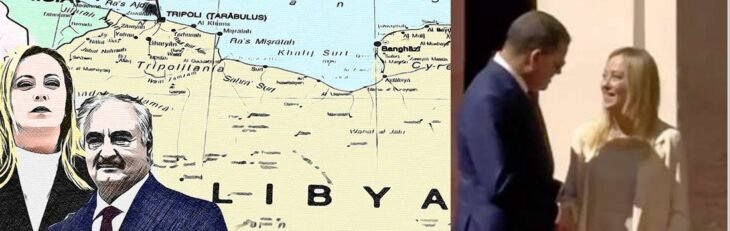
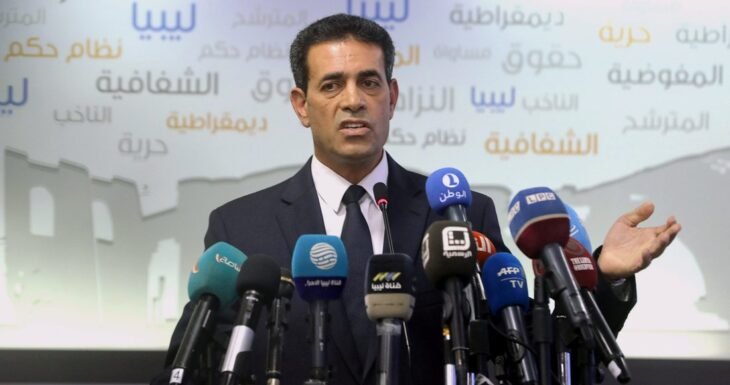
New efforts to hold delayed elections offer a glimmer of hope to end Libya’s deep political crisis. But the Libyan people remain sceptical. Rival Libyan leaders recently announced that they have agreed on the necessity of forming a new unified government to oversee Libya’s long-delayed elections.
The elections in Libya, initially scheduled for December 2021, have been delayed indefinitely, due to disagreements about the electoral law and who should be allowed to stand in the polls.
By delaying the elections, the dispute over the legitimacy of the current Prime Minister, Abdul Hamid Dbeibah, has heightened. The Tobruk-based House of Representatives (HoR) speaker, Aguila Saleh, argued that Dbeibah’s mandate expired when the interim government failed to hold elections.
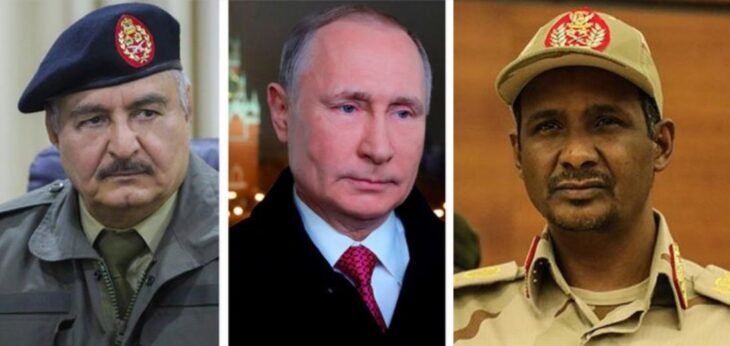
As a result, Libya once again fell into a deep political crisis. The appointment of Fathi Bashagha as prime minister by the HoR, with support from warlord Khalifa Haftar, has led to further turmoil in the country.
“Amidst the turmoil gripping Libya, recent developments offer a glimmer of hope for the nation’s stability and security”
Bashagha installed his government in Sirte, intending to enter and capture Libya’s capital Tripoli. But Bashagha’s attempts to take control of Tripoli have been unsuccessful, resulting in violent clashes with Dbeibah’s Government of National Unity (GNU) forces, killing dozens of people and wounding hundreds.
Following his inability to enter Tripoli, the HoR has decided to suspend Bashagha and assign his finance minister, Osama Hamada, to take over his responsibilities.
Amidst the turmoil gripping Libya, recent developments offer a glimmer of hope for the nation’s stability and security. Recently, the country’s interior minister announced that armed groups in Tripoli have agreed to leave the capital and allow regular forces to take over before the end of Ramadan on 10th April.
After over a decade of conflict, Libya is deeply divided and lacks strong national institutions and democratic experience, leading to a power vacuum that has allowed various armed groups to assert control over different parts of the country.
This has resulted in ongoing violence and instability, making it difficult for the Libyan people to rebuild their country and move towards a more peaceful and prosperous future. Previous plans for swift elections have failed, but recent developments have brought hope for the future.
However, there are still many challenges that lie ahead on the road to stability in Libya. The absence of a constitution remains at the core of Libya’s problems concerning elections. In addition, there is a lack of security and the presence of foreign fighters.
The lack of a clear constitutional framework outlining the government structure and division of powers in Libya has been a hurdle to the electoral process. The Draft Constitution, developed by the Constitutional Drafting Assembly from 2014 to 2017 and finalised in July 2017, has yet to be subjected to a referendum.
In the meantime, the Constitutional Declaration established by the National Transitional Council in August 2011 continues to serve as the temporary constitutional framework for the country.
There are various reasons for the failure, including domestic and external challenges encountered by the constitution-making body and ongoing disagreements among rival sides regarding different aspects of the final draft constitution.
For Libya to conduct successful and legitimate elections, the rival factions must agree on a constitutional framework well in advance. Creating a new constitution should outline the governance structure, define the roles and powers of the central authority, and establish clear rules for presidential, parliamentary, and electoral processes.
Elections are important for two main reasons. Firstly, they allow a country to move past its current political structure. In Libya, with two separate parliaments and governments, the lack of unity hinders state institutions from functioning effectively.
By creating the right conditions, elections could pave the way for a more cohesive and efficient political system. Secondly, polls can provide a roadmap for the nation’s future by giving a mandate to a newly elected government.
The situation in Libya still presents the worst possible preconditions for elections. Security issue is another key obstacle.
Research in post-conflict contexts has consistently found that successful elections are more likely when one side is definitively defeated, security measures are in place to guarantee peaceful voting, and credible electoral and judicial systems exist to prevent disputes over results.
Failing to meet these conditions can actually heighten the risk of a resurgence of violence.
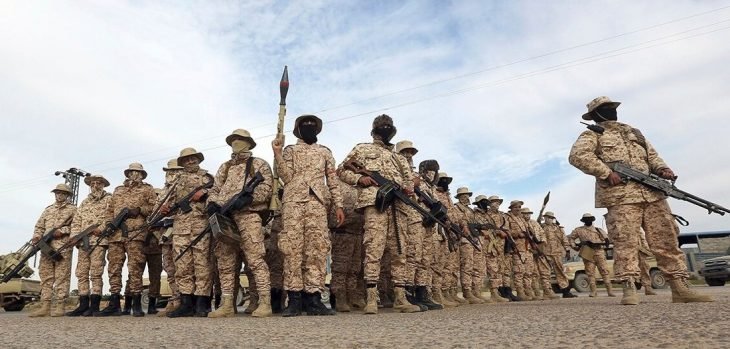
Therefore, it is crucial to implement security sector reform. This involves integrating, unifying, and controlling militia groups to prevent the spread of weapons within the country. Thus, Libya needs military training.
Turkey has been one of the NATO members providing such support since a military cooperation agreement between the UN-backed government and Turkey was signed in 2019. The agreement was intended to provide essential military resources and training to help transition Tripoli-allied militias into a standing army.
Despite the recent positive steps taken towards forming a new unified government and removing militia forces from the capital, many Libyans remain sceptical about the potential success of the political negotiations.
This scepticism is fuelled by the history of previous political talks, which have shown little progress. Mistrust between rival parties, deeply entrenched divisions, and competing interests create significant barriers to achieving a sustainable agreement.
Without security, election laws, a widely accepted constitution, and unifying state institutions, especially military ones, any initiative to hold the elections will likely fail.
Ferhat Polat is a Chevening Scholar from the 2022 cohort and a researcher at the TRT World Research Centre. Holding an MA in Middle East Studies from the Institute of Arab and Islamic Studies at the University of Exeter, he specialises in North African geopolitics and security, with a particular focus on Libya.
Smuggling Libyan fuel has grown into a multi-billion-dollar business.
It was only a few years ago when Malta came to the fore as a seemingly major player in Mediterranean fuel smuggling. For a short while, a Maltese football player, a local fuel trader and a fishmonger from Sicily gained prominence as the alleged conduits of stolen Libyan fuel, handling and trading it in Malta’s ports. They had been arrested in Italy.
Daphne Caruana Galizia had investigated them and we were made to believe that her investigations into their uncouth dealings were behind her murder, deflecting from the real puppeteers in government. Well, we Maltese were small fry. Smuggling Libyan fuel has grown into a multi-billion-dollar business, involving State actors, mercenaries and organised crime on a large scale. What was once a trade facilitated by fishing boats is now conducted on big, ocean-going vessels.
It is estimated that 20 per cent of all transport fuel consumed in Italy comes from the black market. Four large tanker ships per week leave the port of Benghazi, in Libya full to the brim with smuggled fuel. It costs the recipient countries Italy, Malta, Spain or France billions of euros in forgone taxes and excise duties and finances the ongoing civil war in Libya and Russia’s war in Ukraine.
At the core of this lucrative business is Libya’s absurd fuel subsidy regime.Instead of supporting needy households with direct subsidies, the government in Tripoli continues to sell heavily subsidised fuel, which it mostly has to import. Gasoline, for instance, sells at a discount of 99 per cent to market prices; fuel oils – which comprise heating oil, diesel, maritime fuel and heavy fuel – are on average sold 75 per cent cheaper than their real cost to the budget. Smuggling of fuels to Europe is more profitable than smuggling narcotics or people while being more difficult to detect: falsified papers, adorned with seals and affidavits, suffice as proof of origin.
According to 2022 figures, the government in Tripoli has spent $13 billion on fuel subsidies, a doubling from the year before. Most of the diesel and gasoline does not originate in Libya. Its small domestic refineries are not producing quantities sufficient enough to support local needs. Hence the vast imports.
Since Putin’s invasion of Ukraine and the ensuing sanctions imposed by Europe and the US, Russia has evolved as Libya’s main energy trading partner, boosting its share of imports from four per cent before the war in Ukraine (2022) to 28 per cent last year. Russia is now Tripoli’s main supplier of fuels. Volumes have increased tenfold since the invasion of Ukraine, to 2.5 million tons of fuel. Most of it is “redirected” to Europe: illicit export is worth $6 billion, according to estimates of Libya’s central bank.
Misdirected by these perverse, wasteful subsidies, gasoline and diesel bypass domestic demand, which cannot be met anymore. Locals have the choice to either queue for hours to get a jerry can of heating oil at official outlets or pay through the nose on the black market. Meanwhile, the smuggling elites make a killing.
They are the sole reason why fuel is subsidised instead of households. This January, the Sharara oil field had to halt production for a few weeks because of a dearth of fuel. The more fuel Libya imports, the less is left for domestic consumption.
At the core of it is the standoff between a weak Tripoli, with its ever-shifting power structures (from still-clinging-to-power, yet dismissed, Prime Minister Abdul Hamid Dbeibeh to anointed, yet-not, but-already, Prime Minister Osama Hammad) and the strongman of Benghazi, Khalifa Haftar, who is supported by the UAE and Russia. To keep the general at bay, his large-scale smuggling operations are condoned. They not only feed him and his entourage but finances Russia’s military presence – what was once known as the Wagner Group, but is run by the Russian Federation now, since warlord Prigozhin’s elimination by an allegedly FSB-orchestrated plane crash.
Russia is now Tripoli’s main supplier of fuels. Volumes have increased tenfold since the invasion of Ukraine, to 2.5 million tons of fuel. Most of it is “redirected” to Europe- What started as a layman’s operation of a Maltese footballer, or Albanian boatsmen, allegedly became a corporate business. Where once fishermen installed an extra tank to fill up with petrol in Libya in exchange for fish, now megatonnage vessels ply the seas, pumping even their water tanks full with distillates.
A Bloomberg report from February 6 describes in great detail a single, failed smuggling operation, ‘The Odyssey of the Queen Majeda’. My opinion piece is in many details based on facts reported there. It is worth reading for better understanding of the intricacies of the trade. On September 8, 2022, the SS Queen Majeda, notorious for transporting Russian fuel from Turkey and ship-to-ship loading of smuggled Libyan fuel at Malta’s Hurd Bank, east of Valletta, was for once arrested by Albanian authorities in the Porto Romano harbour of Durres. The ship was meant to deliver $2 million worth of fuel oil to Albania’s Kastrati Group, a local distributor that runs a host of fuel stations in the country.
For Kastrati Group, this was not the first delivery of Libyan fuel by Queen Majeda, a vessel registered in the Marshall Islands and sailing under a Cameroon flag. But it was the first shipment to be arrested, probably on insistence of Italian authorities. The Kastrati Group was quick to notify that the shipment in question was without contract, hence not their responsibility.
The export papers were issued by Brega Petroleum Marketing Co., a purely domestic Libyan distributor not instituted to export goods. It is an affiliate of Libya’s National Oil Company. The documents were all issued on NOC papers and in English, which was unusual and suspicious. While the remaining crew is still under house arrest, with the captain having successfully absconded, the tanker and its cargo have been rotting in the port since. The crew, but neither Kastrati nor Brega, nor the vessel’s owner, is under criminal investigation, probably eternally, Maltese-style.
For me, this proves two things: Exorbitant profits render any sanction harmless. Profit is like water, finding its way through all nooks and crannies. Russia’s profits are unhindered by sanctions. And if we do not get our act together providing serious material help to Ukraine, Putin will win. Everywhere. The security order represented by the UN and the US will be obsolete. Xi Jinping will watch and learn. The war in Ukraine decides our future.
***
Andreas Weitzer is an independent journalist based in Malta.
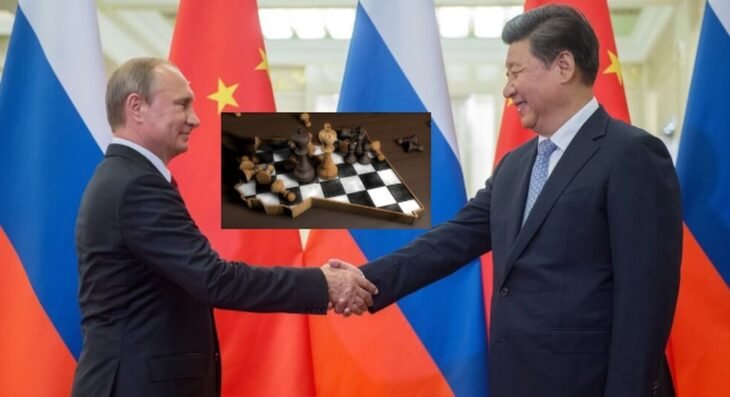
The invasion of Ukraine accelerated strategic cooperation between Russia and Iran, including in the military sphere. This trend is likely to continue. Multiple reports following the invasion hinted at a broader high-tech and defence partnership, and US officials began publically expressing concern. US National Security Council official John Kirby noted in late 2022, “Russia is offering Iran an unprecedented level of military and technical support that is transforming their relationship.”
Iran’s provision of Shaheed attack drones for use in Ukraine has received much attention and, to be sure, is important, as no country other than Iran has willingly helped Russia kill Ukrainians. But what Russia is providing to Iran deserves at least as much attention. At the end of 2023, Iran’s deputy defence minister told the Tasnim news agency that Iran had finalised arrangements to deliver Russian-made Sukhoi Su-35 fighter jets and helicopters.
The Russians have yet to confirm the deal, but what is confirmed is the export to Iran of training aircraft, which would enable Iranian pilots to make the leap to the much more advanced Su-35. If this deal goes through, it would significantly increase Tehran’s ability to conduct offensive air operations by replacing its antiquated 1970s inventory of US aircraft, which the Shah purchased before the Islamic Revolution.
Iran remains a primary threat to the Gulf states, and the provision of Su-35s to Iran would shift the military balance within the region in Iran’s favour, causing the Gulf states to change their security planning. But even if the deal does not go through, a trend of strategic cooperation has already emerged, including through bilateral Russian-Iranian and multilateral Russian, Chinese and Iranian exercises, a pattern that goes back at least five years.
In late 2019, when Russia, China and Iran conducted their first trilateral military drills, Second Rear Admiral Gholamreza Tahani told Iran’s state-run Press TV that the drills were a signal that relations between these three countries had reached a “meaningful level,” and that it was the first time Iran held joint drills with two world naval powers on such a scale.
This trend has continued ever since. At the end of 2023, Russian Foreign Minister Sergey Lavrov announced progress on the Russian-Iranian treaty on a “comprehensive strategic partnership.” At the beginning of the year, Russia’s state-run TASS reported that the document is being finalised and is set to confirm bilateral respect for each state’s sovereignty.
With the increased frequency and intensity of diplomatic and military relations, as well as the associated information narratives, it is no wonder Iran is among the newest members of BRICS. The UAE has joined, while Saudi Arabia remains invited but has not formally accepted accession to the group. With Russia assuming the chairmanship on 1 January this year, it will be important to watch if Russia attempts to court many in the Middle East and Africa by dangling defence contracts.
Expanded Military Presence and Wagner
Achief Western strategic objective is to keep Russia out of the Mediterranean. This position allows Russia to exert diplomatic and economic pressure on the European Union and project military power into the Middle East and Africa while posturing on NATO’s southern flank. Russia’s Black Sea Fleet has suffered debilitating losses. Still, the Russian Navy remains largely intact and can strike NATO targets with Kalibr land attack missiles across the Mediterranean.
If Russia were to enhance its position on the Mediterranean further, it would impact its ability to conduct its war on Ukraine, but as the West waffles in aiding Ukraine, the Russians may see even greater opportunity in North Africa and the Middle East. Thus, Moscow understands the strategic importance of this region and continues to vie for influence there.
Not only does Russia maintain its permanent bases in Syria, chiefly in Tartus and Khmeimim, but it continues to look for access to a naval base in Libya, which has been another focal point of Russia’s Middle East activities for approximately the last five years. Reports in late 2023 suggested that Russia is moving ahead with plans for gaining docking rights in a naval base in Eastern Libya, most likely in Tobruk, after Putin’s meeting on September 28 with eastern military commander Khalifa Haftar.
These plans do not appear to have been finalised, but Moscow is clearly working towards expanding its military influence in Libya. Tobruk is a deep-water port that would add to Russia’s logistical capabilities, especially with the shallow-water port of Tartus. Russia also continues to seek access to a naval base in Sudan on the Red Sea, with an eye towards permanent access to the Suez Canal, the Indian Ocean and the Arabian Peninsula.
Many of Russia’s efforts to expand its military influence have either been spearheaded by or maintained with the help of its so-called private military companies (PMC), such as the Wagner Group. This group has been an instrumental tool for the Kremlin. It has officially been rebranded in the aftermath of Putin ally Yevgeny Prigozhin leading a failed mutiny and subsequently dying in a plane crash in August.
Subsequently, the Russian defence ministry has taken over many of Wagner’s security, oil, and gold mining contracts and the group’s relationships with African leaders. In Africa, Wagner has been most recently rebranded as Afrika Korps; the takeaway is that the Kremlin needs a paramilitary force to continue carrying out foreign policy objectives, whether as Wagner or by any other name.
Taking the Long View of Russia
Some might look at Russia’s declining arms trade and sanctions on the Russian military-industrial complex that, if kept in place, portend the decline of Russia’s military capabilities and losses in Ukraine and conclude there is no need to worry about Russia’s influence in the Middle East. But this view is both myopic and misleading.
Russia continues to vie for influence in the region through cementing access to strategic ports and using paramilitary groups and proxies, all of which Russia can afford absent Western pressure to cease these activities. Its defence contracts are foundational to these efforts. Within Russia itself, the war in Ukraine is not only a chief military and foreign policy priority but also the main driver of economic growth. Russia’s 2024 budget shows that for the first time in decades, military and defence spending is higher than social spending.
Indeed, the war has militarised Russian society. In the aftermath of the Ukraine conflict, if it needs to release pressure incurred by an excess of combat veterans, it may employ them abroad, especially through the use of paramilitary groups such as Wagner. This will be far easier to accomplish now that the Defense Ministry fully controls the group. Thus, when it comes to Russia’s defence relationships in the Middle East, Western policymakers need to take a long view that accounts for both Putin’s strategic objectives and the implications of the Ukraine war, regardless of its outcome.
More to the point, if the US Congress continues to dither and delay aid to Ukraine, Russia may soon tip the scales decisively in its favour. If this happens, America’s standing in the world will be diminished, and its adversaries will grow emboldened.
***
Anna Borshchevskaya is a senior fellow in The Washington Institute’s Diane and Guilford Glazer Foundation Program on Great Power Competition and the Middle East.
Zawiya has a population of around 350,000, making it Libya’s fourth-largest city. Towards the east, its outskirts adjoin the peri-urban sprawl of the Warshafana area, which separates Zawiya from Tripoli; its western districts merge seamlessly with the neighbouring city of Sorman, thereby forming a single metropolitan area with Sorman, Sabratha, and Ajeilat. Zawiya’s southern fringes are bordered by the arid, sparsely populated expanse of the Jafara plain, through which a road from Zawiya leads towards the Nafusa mountains. The most vital artery crossing Zawiya, however, is the coastal road from Tripoli to the Tunisian border. Finally, although its centre faces away from the sea, Zawiya is a coastal city with several small ports, including that of the refinery. As an urban centre, Zawiya is a recent creation.
Until the early 20th century, the area hosted a cluster of villages along with a few Ottoman administrative and military buildings. Its name derives from the zawaya (singular: zawiya) that had been established in the area since the 15th century, and that offered religious instruction to the region’s agropastoral population—the only education available until the Ottoman administration established a rudimentary primary school in 1902.
During the Italian colonial era (1911–43), Zawiya developed into a small town. Urbanization began in earnest following independence and the shift towards an oil economy. Zawiya’s population grew from 19,500 in 1964 to 53,000 in 1980; by 2006, it had reached 290,000.
The establishment of the refinery in 1974 and of the university in 1988 were milestones in Zawiya’s transformation into a major centre of Libya’s oil-based economy. Zawiya’s origination from a cluster of different communities remains recognizable in its urban fabric. Many areas of the city are predominantly inhabited by members of particular tribes or extended families, and therefore seen as these communities’ preserve. This even goes for parts of the city’s centre, where a neighbourhood such as that of Awlad Jarbu’ is associated with the eponymous tribe.
Similarly, Awlad Sagr mostly settled in the city’s southern and western districts; the south-eastern district of Abu Surra is the preserve of the AwladBuhmeira tribe; parts of the Harsha district are considered the territory of the Gammuda; and so on. Other components of local society include the Karaghla (Koloughlis)—families who trace their origins back to Ottoman officers and soldiers stationed in the area. These social categories have undergone politicization since 2011, as local politicians and militia leaders have frequently invoked them in their struggles.
Yet they form only one basis for collective action among several. Close family ties tend to be a far better—though by no means foolproof—predictor of common political and economic interests than tribal identity or even membership of extended families. Most importantly, social relations formed through common membership in the armed groups and criminal networks that formed after 2011 created new loyalties that often supersede community ties.
A. The revolutionary era (2011–14)
Zawiya emerged from the 2011 civil war as a key stronghold of the revolutionary forces. This development would define the city for much of the following decade. Zawiya’s new political and military leadership originated in the revolutionary struggle, and in the early years after 2011 it remained relatively united due to this common revolutionary outlook.
The city found itself in the revolutionary camp largely in reaction to the indiscriminate response of the Qaddafi regime to the protests that spread across Libya from 15 February 2011 on wards. In Zawiya, the first protests erupted on 19 February. Authorities initially refrained from openly using violence, allowing protesters to stage a sit-in at the mosque in Martyrs’ Square, the city’s central square. On 24 February, regime forces attempted to take back control of the square by firing on protesters, killing ten and destroying the mosque’s minaret.
The outrage triggered by the killings caused protests to swell further, and led protesters to seize weapons. Regime forces attempted to violently suppress the demonstrators, but rapidly lost control of the city. On 28 February, government forces began a major offensive to recapture the city using heavy weapons and indiscriminate shelling, killing dozens. By 9 March, they had fought their way into Martyrs’ Square, where rebels were holed up in the mosque and buildings surrounding the square. Having subdued the resistance following heavy fighting, regime forces later razed the mosque to the ground and conducted waves of arrests.
Many rebels from Zawiya fled to the Nafusa mountains; others formed clandestine cells inside the city or smuggled weapons to those cells by boat from Benghazi. In the mountains, Zawiya revolutionaries mostly fought with those from Zintan, alongside fighters from Sabratha and other coastal cities. The strong ties that formed among revolutionaries from Sabratha, Zawiya, Zintan, and elsewhere would provide a basis for trust between them even during and after the 2014–15 civil war, when they fought on opposing sides.
In June 2011, rebels based in the mountains infiltrated the city and, together with cells based in Zawiya, attempted to wrest it from regime control, but failed. They eventually succeeded when rebel forces descended from the mountains in August. Zawiya fell to rebel control on 20 August after a week of heavy fighting. The battle for Tripoli began that day, and ended with the rebel takeover several days later. Fighters from Zawiyan rebel forces then joined the offensive against some of the regime’s last holdovers in Bani Walid, which came to an end in October. With the fall of the regime, Zawiyan field commanders began setting up their own armed groups in the city.
Many young men began joining these groups, attracted by the glamour of the victorious revolutionaries, the power emanating from carrying arms, and the state salaries that soon started to flow to the armed groups. From an estimated 2,000 Zawiyan men who fought during the 2011 revolution, the headcount of the city’s armed groups rose to 14,000 in 2012, when the Warriors Affairs Commission registered self-declared revolutionaries across Libya. Among the most prominent early armed groups were:
– the Zawiya Martyrs Battalion, led by Mohamed al-Kilani;
– the Company for Capture and the Redress of Grievances (Sariyat al-Qabdh w Radd al-Madhalim), led by Mustafa al-Treiki;
– the Faruq Battalion, led first by Mahmoud Ben Rajab and later by Mohamed Hussein al-Khadrawi;
– a group led by Munir Ajina in the city centre;
– a group led by Othman al-Leheb in southern Zawiya;
– a group led by Jamal al-Ghaeb and another called the Kufra Battalion, both based in the western district of Mutrid; the Nasr Battalion that controlled Zawiya’s refinery, led by Mohamed Kashlaf (‘al-Qsab’); and
– a group in the Abu Surra area, led by Khaled Buzriba.
In the immediate post-revolutionary period, however, all Zawiyan groups submitted to a collective leadership: the Zawiya Military Council, headed by Shaaban Hadiya, who together with Kilani had led Zawiyan revolutionary fighters in Zintan. Hadiya and Kilani were widely respected and exerted moral authority over Zawiya’s armed groups. Both were religious figures: Kilani was an imam in Zawiya and a self-described Salafi, while Hadiya had studied under the Salafi scholar Muqbil al-Wadi’i in Yemen. Similarly, Treiki’s and Ben Rajab’s groups were reputed for their religiously devout leadership and resolute crime fighting—even though their members also included many less than pious young men.
Later, adverse media reporting would wrongly portray these figures and their groups as extremists, or even claim that they had ties to jihadists. In reality, their outlook matched the widespread appeal of piety in the post-revolutionary period, and the general conservatism of Libyan society. Zawiyan forces soon became a key component of the revolutionary camp in the emerging political landscape.
As early as November 2011, they clashed with groups from neighbouring Warshafana over control of the military base at Bridge 27, a strategic location on the road to Tripoli. Both sides held dozens of residents of the opposing community hostage. These clashes would be the first of several successive conflicts between groups from Zawiya and Warshafana, with the former stigmatizing the latter as bandits and loyalists of the former regime. Under the leadership of Kilani, armed groups from Zawiya joined with former revolutionary battalions from other western Libyan cities to form the Western Shield—one of several units of the Libya Shield Forces—in early 2012. The unit deployed to interpose itself in local conflicts, including between groups from Zintan and the Mashashiya in Mizdah and al-Shqeiqa, as well as between Zintani and Zuwaran groups at the Mellitah oil and gas complex.
For the former revolutionary battalions, the Shield was a temporary replacement for the defunct Libyan army that allowed them to defend the revolutionary order in the state’s name. It was also a conduit for state salaries and operating budgets, as well as a reflection of the rapidly intensifying competition between the former revolutionary factions over access to state resources. In keeping with the revolutionary spirit of the moment, two prominent field commanders were among the four representatives elected as individual candidates in Zawiya in the July 2012 elections to the General National Congress (GNC): Kilani came first, and Treiki fourth. Both rapidly became leading representatives of the hardline revolutionary camp in the GNC.
In September 2012, they helped push through the GNC’s authorization of a military operation in Bani Walid—a community that was stigmatized as pro-Qaddafi—to capture suspected criminals; Kilani even joined the fighting himself. In early 2013, they were staunch supporters of the Political Isolation Law that would exclude former regime officials from public office. Shortly after the law was passed, Kilani was instrumental in obtaining official status and a budget for the Libya Revolutionaries Operations Room (LROR), a body that brought together a number of hard-line revolutionary commanders. In October 2013, Hadiya was appointed head of the LROR with Kilani’s backing.
Only days afterwards, Prime Minister Ali Zeidan was briefly abducted by armed men. Following his release, he accused Kilani and Treiki of being behind the incident, though both denied the charges. Such developments gradually hardened the divide between the self-declared revolutionary camp and its opponents, which in western Libya were led by armed groups from Zintan. Even within Zawiya, however, the formation of the LROR was controversial. Some of the more powerful Zawiyan forces refused to join the body, including Ben Rajab’s and Leheb’s groups—whether because they opposed the LROR’s tactic of besieging ministries to extract concessions, or because they retained close ties to Zintani revolutionaries.
Following Zeidan’s abduction, the GNC transferred the LROR’s chain of command from the GNC presidency to the chief of staff, thereby much reducing the LROR’s access to funding and initiating the body’s decline. Meanwhile, armed groups from Zawiya participated in the gradual escalation of conflicts that increasingly coalesced into a nationwide power struggle. In August 2013 and again in February 2014, they engaged in fierce fighting with groups from Warshafana, triggered by repeated abductions carried out by Warshafana-based criminal gangs.
That conflict, combined with the LROR’s close ties with Zawiya’s hard-line revolutionary parliamentarians, drove the city’s armed groups to join the escalating civil war. In July 2014, Zawiya’s LROR factions joined groups from Misrata and Tripoli in what soon became known as Operation Libya Dawn: they attacked Zintani-led militias in Tripoli, who were by then allied with Haftar.
The remainder of Zawiya’s forces entered the war in early August, after Zintani-backed groups from Warshafana attacked Zawiyan positions on the coastal road and seized the military base at Bridge 27 long enough to raze its walls. The attackers included a shadowy militia of former regime loyalists, which called itself the Army of Tribes and appeared to vindicate Libya Dawn’s claim that it was fighting against a counter-revolutionary conspiracy. More broadly, given the enduring commitment in Zawiya to the 2011 revolution, Haftar’s obvious ambitions to re-establish dictatorship provoked powerful opposition in the city.
Libya Dawn triggered large-scale mobilization in Zawiya, including that of men in their late teens and early twenties who had been too young to fight in 2011. Young field commanders entering the war established their own armed groups that would persist after the conflict de-escalated. The war thereby fueled a process of generational change, violent socialization, and organizational fragmentation that was exacerbated by the death of established leaders—the first, and most significant, being that of Kilani in September 2014.
Kilani was killed during Libya Dawn’s offensive in the Warshafana area, which eventually displaced much of that region’s civilian population. According to one formerly fervent revolutionary, Zawiya’s armed groups then turned to burning homes in the Warshafana area, ‘which Mohamed al-Kilani would have never allowed, had he been alive’. More generally, many local observers today trace the origins of what they see as Zawiya’s leadership crisis and the increasing ruthlessness of its armed groups to the disappearance of this unifying figure.
***
Wolfram Lacher is a senior associate at the German Institute for International and Security Affairs (SWP) in Berlin. His research focuses on conflict dynamics in Libya and the Sahel, and relies on frequent fieldwork. His work has been published in Survival, Mediterranean Politics, Foreign Affairs, and the Washington Post, among other publications.
Armed groups from Zawiya, a coastal city that lies 47 km west of the capital, Tripoli, have come to play an increasingly important role in Libya’s power struggles. Conflict among these groups has been endemic, but has generally been limited to intermittent clashes, rather than escalating into sustained, all-out confrontation.
While national level politics has exacerbated these rivalries, they are fundamentally driven by competition over access to state funding and the city’s vast illicit economy: fuel, drugs, and migrant smuggling.
This Report offers a political economy analysis of Zawiya’s armed groups. By outlining the developments that shaped the nature of these groups and the city’s current security landscape, it shows how Zawiya’s armed groups gradually came to take on a particularly abusive and predatory character, compared to many other western Libyan militias.
The Report disaggregates these groups’ diverging business models and relationships with their social bases. This analysis also provides answers to the question of why clashes between the city’s rival factions have been frequent but generally short-lived, and have stopped short of all-out war.
This Report is primarily based on interviews conducted by the author during multiple visits to Zawiya in November 2022 as well as in February, June, and December 2023.
Interlocutors included commanders and members of Zawiya’s armed groups, and security officials, as well as academics, politicians, professionals, and other local residents.
Key findings
Zawiya’s armed groups initially benefited from widespread local support for the revolutionary cause. Revolutionary leaders enjoyed a high standing in the years immediately after Muammar Qaddafi’s fall. A crisis in leadership and the city’s temporary political marginalization, however, prompted the rise of militias that were deeply involved in criminal activities, and came to be widely despised by the population.
The 2019–20 Tripoli war allowed Zawiyan armed groups to regain influence in Tripoli and across the western coastal region. Zawiyan militia leaders became major players in regional and national power struggles. They exploited the rivalry between competing governments to their advantage, but in doing so also drew the city into a worsening security crisis.
The four main forces in Zawiya today differ fundamentally from each other in their make-up, economic model, and relations with local society. While three are deeply involved in the illicit economy, the fourth—Brigade 52—relies entirely on state funding, and has gained a reputation for disciplined security provision.
Since 2015, Zawiya has witnessed endemic violence, but never an all-out war between its main forces. Two aspects explain this restraint. First, since each faction fears the dominance of any single actor, alliances among the city’s armed groups constantly shift, maintaining a balance of power. Second, movement along the roads from Tripoli to the Tunisian border is central to Zawiyan groups’ ability to benefit from illicit activities, encouraging them to cooperate.
Like other Libyan armed groups, Zawiya’s factions are seeking to refashion themselves as more legitimate, respectable entities, but their predatory activities remain central to their raison d’être. Their leaders now play a dominant role across Zawiya’s politics, the economy, and the administration; they are also key protagonists in the Libyan state’s capture by those wielding armed force.
Popular mobilization against armed groups’ abusive and predatory behaviour in the first half of 2023 posed a temporary challenge to these groups, but their ability to play competing government officials in Tripoli against each other helped them in warding off such pressure. Zawiya’s militia leaders appear set to dominate the city’s political order in the long term, unless sustained civilian mobilization limits their power.
Introduction
The coastal city of Zawiya has assumed growing importance as a theater for Libya’s power struggles. The city’s strategic location as the gateway to the capital, Tripoli, 47 km to Zawiya’s east, emerged most clearly on 4 April 2019, when Khalifa Haftar’s Libyan Arab Armed Forces (LAAF) launched a large scale offensive to capture Tripoli, and gain overall power.
Haftar had attempted to strike deals with armed group leaders in Zawiya and apparently expected them to allow his forces to enter the capital. But late on 4 April, Zawiyan forces captured more than 100 of Haftar’s soldiers at Bridge 27, between Zawiya and the Tripoli suburb of Janzur, thwarting the LAAF’s attempt to reach Tripoli. In the ensuing civil war, Zawiyan armed groups were a key component of the forces fighting Haftar. After the war ended in mid-2020, giving way to political struggles, they successfully converted their military power into political influence.
During the tug of war between the rival governments of Abdelhamid Dabeiba and Fathi Bashagha, in the first half of 2022, the balance of loyalties among Zawiya’s armed groups was yet again central to the outcome: Dabeiba prevailed. In addition to the political and military weight of its forces, Zawiya is also important economically. It hosts a major oil refinery and export terminal. Through the refinery’s petroleum products and particularly through the fuel imported and distributed from the refinery at heavily subsidized prices, Zawiya has emerged as a fuel smuggling hub.
At the same time, local armed groups have used the city’s shores to make money both from irregular migration towards Europe, and from the interception and incarceration of migrants. Fuel, migrant, and drug smuggling have all combined to raise the stakes involved in the control of roads linking Zawiya to its wider surroundings, including the Tunisian and Algerian borders.
Despite its significance, however, Zawiya has been largely neglected by researchers to date. No in-depth studies exist on its armed groups and their evolution. This lacuna is all the more striking given that the city has been the theater of recurrent clashes between its armed groups that have caused dozens of civilian deaths.
This Report is a primer on Zawiya’s armed groups and the political economy that sustains them. Libyan armed groups have, over the past decade, gradually consolidated into powerful state-sanctioned units that are likely to define the country’s security sector for the foreseeable future. Yet these groups vary widely in their aims and interests, finance models, and relations with local communities. Subsuming them under the blanket category of ‘the militias’, as is commonly done, suggests a uniformity that fails to capture their considerable differences. Understanding armed groups therefore requires analyzing both the national-level dynamics and the local conditions that shaped them.
This Report undertakes such an analysis for Zawiya. It should be read in conjunction with similar studies of armed groups in other local contexts, including a Briefing Paper on the Abu Salim district of Tripoli (Hakan, forthcoming). While there are also significant differences among Zawiya’s armed groups, most are particularly problematic compared with many other western Libyan militias in that they are politically opportunistic, deeply involved in criminal activities, indifferent to the human suffering they cause with those activities and with their recurrent armed clashes, and widely hated by the civilian population. This was not always the case: in the years immediately after 2011, armed groups in the city had revolutionary legitimacy and a relatively unified leadership that enjoyed considerable social standing.
To understand how armed groups in Zawiya took on the character they exhibit today, it is necessary to identify the turning points that defined their evolution. This Report proceeds in three steps. First, it shows how national-level and local developments combined to influence the trajectory of armed groups in Zawiya. Second, it focuses on the evolution of these groups’ financing strategies to demonstrate how criminal activities became central to the political economy of armed groups in the city. Third, it analyses how armed groups’ relations with civilians have evolved. It concludes with an overall assessment that draws out the implications of the analysis for future conflict dynamics.
***
Wolfram Lacher is a senior associate at the German Institute for International and Security Affairs (SWP) in Berlin. His research focuses on conflict dynamics in Libya and the Sahel, and relies on frequent fieldwork. His work has been published in Survival, Mediterranean Politics, Foreign Affairs, and the Washington Post, among other publications.
Last September, just 30 asylum seekers made the 190-nautical-mile journey from Tobruk in Libya to the Greek island of Gavdos and Crete’s southern coast just above it; that number swelled to 397 in December and has passed 1,100 in the first couple of months of 2024.
The spike in migrant arrivals from the war-torn North African country is posing a fresh challenge for the Greek authorities.
One explanation for the phenomenon is that migrant smugglers are trying out new routes after patrols on the Greek-Turkish sea border were strengthened at the start of the year following an agreement between Athens and Ankara. The numbers, however, do not support this argument, as official figures show that the eastern Aegean islands have received some 8,000 asylum seekers since the start of the year, as opposed to some 3,000 in the same period of 2023, representing an increase of 166% and proof that the Eastern Mediterranean route is anything but closed.
Another explanation for the spike in landings on Gavdos and Crete may lie in a series of contacts these past few months between the Italian government and Khalifa Haftar, the commander of the Tobruk-based Libyan National Army (LNA), which controls eastern Libya and the port, the main launch spot of the migrant boats reaching the southern Aegean.
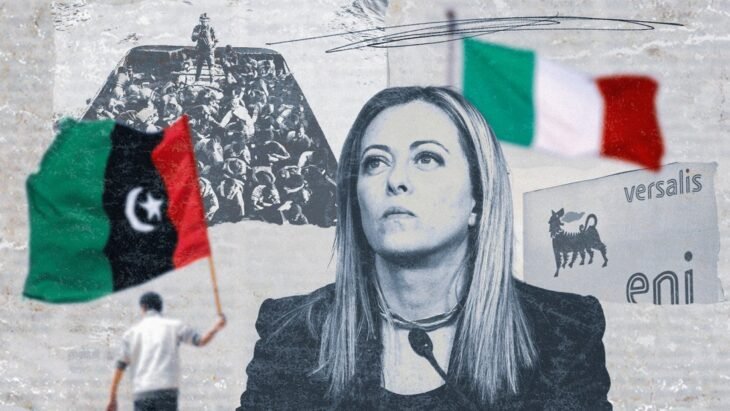
It is common knowledge that Italian Prime Minister Giorgia Meloni and Foreign Minister Antonio Tajani met with Haftar in Rome last year to discuss migrant flows from the north African country to Italy, as the number of arrivals swelled between January and May 2023 to an estimated 16,600.
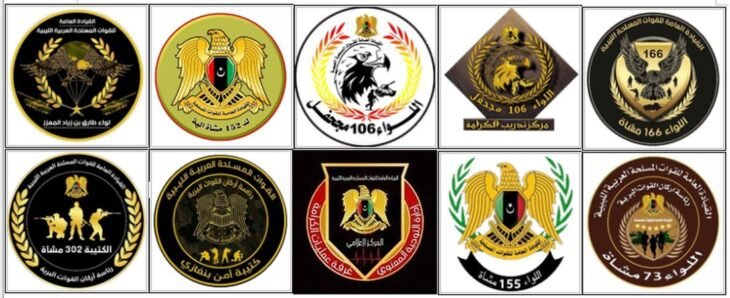
The talks in Rome appear to have yielded results, as, soon after, a force of new speedboats operated by the so-called Tariq Ben Zeyad Brigade, a paramilitary organization led by Haftar’s son, Saddam, started chasing after migrant boats sailing from Libya to Italy. According to reports, the boats were towed back to Libya and their passengers often incarcerated and tortured. One such pursuit has been captured on camera by a nongovernmental organization and by the EU border security force Frontex, while there have been several well-documented cases of pullbacks (the violent return of would-be asylum seekers to their point of departure) within the search and rescue region of Malta, and possibly of Greece too. In an announcement on Wednesday, Frontex reported a 70% reduction in irregular crossings along the Central Mediterranean route (Libya to Italy) and a 117% increase in flows in the Eastern Mediterranean.
What’s more, a number of media investigations (Lighthouse Reports, Der Spiegel, El Pais, Reporters United) have revealed that one of the most powerful migrant smugglers in Tobruk is acting under Haftar’s orders. His gang has actually been named as being behind the shipwreck off the coast of Pylos in the southern Peloponnese last June that sent more than 600 migrants and refugees to their death.
International media organizations spoke to several survivors of the Pylos shipwreck and many named the key smugglers involved in organizing the trip. Some were eastern Libyan nationals with ties to Haftar. Survivors, insiders and analysts explained that the trip was organized with wide-ranging support from powerful people reporting to Haftar.
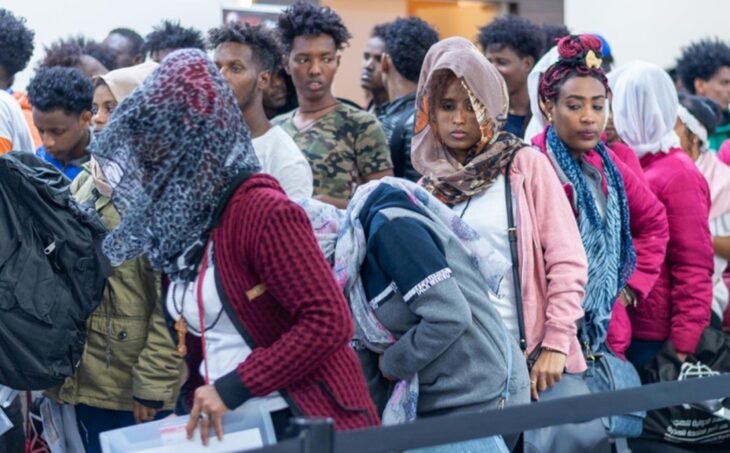
The majority of the migrants rescued off the coasts of Gavdos and Crete are taken to makeshift reception centers before being transported to the camp in Malakassa, north of Athens. According to the coast guard, most of them are Egyptian, Pakistani, Palestinian, Afghan, Iranian and Iraqi.
The invasion of Ukraine accelerated strategic cooperation between Russia and Iran, including in the military sphere. This trend is likely to continue.
Multiple reports following the invasion hinted at a broader high-tech and defence partnership, and US officials began publically expressing concern. US National Security Council official John Kirby noted in late 2022, “Russia is offering Iran an unprecedented level of military and technical support that is transforming their relationship.”
Iran’s provision of Shaheed attack drones for use in Ukraine has received much attention and, to be sure, is important, as no country other than Iran has willingly helped Russia kill Ukrainians. But what Russia is providing to Iran deserves at least as much attention. At the end of 2023, Iran’s deputy defence minister told the Tasnim news agency that Iran had finalised arrangements to deliver Russian-made Sukhoi Su-35 fighter jets and helicopters.
The Russians have yet to confirm the deal, but what is confirmed is the export to Iran of training aircraft, which would enable Iranian pilots to make the leap to the much more advanced Su-35. If this deal goes through, it would significantly increase Tehran’s ability to conduct offensive air operations by replacing its antiquated 1970s inventory of US aircraft, which the Shah purchased before the Islamic Revolution.
Iran remains a primary threat to the Gulf states, and the provision of Su-35s to Iran would shift the military balance within the region in Iran’s favour, causing the Gulf states to change their security planning. But even if the deal does not go through, a trend of strategic cooperation has already emerged, including through bilateral Russian-Iranian and multilateral Russian, Chinese and Iranian exercises, a pattern that goes back at least five years.
In late 2019, when Russia, China and Iran conducted their first trilateral military drills, Second Rear Admiral Gholamreza Tahani told Iran’s state-run Press TV that the drills were a signal that relations between these three countries had reached a “meaningful level,” and that it was the first time Iran held joint drills with two world naval powers on such a scale.
This trend has continued ever since. At the end of 2023, Russian Foreign Minister Sergey Lavrov announced progress on the Russian-Iranian treaty on a “comprehensive strategic partnership.” At the beginning of the year, Russia’s state-run TASS reported that the document is being finalised and is set to confirm bilateral respect for each state’s sovereignty.
With the increased frequency and intensity of diplomatic and military relations, as well as the associated information narratives, it is no wonder Iran is among the newest members of BRICS. The UAE has joined, while Saudi Arabia remains invited but has not formally accepted accession to the group. With Russia assuming the chairmanship on 1 January this year, it will be important to watch if Russia attempts to court many in the Middle East and Africa by dangling defence contracts.
Expanded Military Presence and Wagner
Achief Western strategic objective is to keep Russia out of the Mediterranean. This position allows Russia to exert diplomatic and economic pressure on the European Union and project military power into the Middle East and Africa while posturing on NATO’s southern flank.
Russia’s Black Sea Fleet has suffered debilitating losses. Still, the Russian Navy remains largely intact and can strike NATO targets with Kalibr land attack missiles across the Mediterranean.
If Russia were to enhance its position on the Mediterranean further, it would impact its ability to conduct its war on Ukraine, but as the West waffles in aiding Ukraine, the Russians may see even greater opportunity in North Africa and the Middle East. Thus, Moscow understands the strategic importance of this region and continues to vie for influence there.
Not only does Russia maintain its permanent bases in Syria, chiefly in Tartus and Khmeimim, but it continues to look for access to a naval base in Libya, which has been another focal point of Russia’s Middle East activities for approximately the last five years. Reports in late 2023 suggested that Russia is moving ahead with plans for gaining docking rights in a naval base in Eastern Libya, most likely in Tobruk, after Putin’s meeting on September 28 with eastern military commander Khalifa Haftar.
These plans do not appear to have been finalised, but Moscow is clearly working towards expanding its military influence in Libya. Tobruk is a deep-water port that would add to Russia’s logistical capabilities, especially with the shallow-water port of Tartus. Russia also continues to seek access to a naval base in Sudan on the Red Sea, with an eye towards permanent access to the Suez Canal, the Indian Ocean and the Arabian Peninsula.
Many of Russia’s efforts to expand its military influence have either been spearheaded by or maintained with the help of its so-called private military companies (PMC), such as the Wagner Group. This group has been an instrumental tool for the Kremlin. It has officially been rebranded in the aftermath of Putin ally Yevgeny Prigozhin leading a failed mutiny and subsequently dying in a plane crash in August.
Subsequently, the Russian defence ministry has taken over many of Wagner’s security, oil, and gold mining contracts and the group’s relationships with African leaders. In Africa, Wagner has been most recently rebranded as Afrika Korps; the takeaway is that the Kremlin needs a paramilitary force to continue carrying out foreign policy objectives, whether as Wagner or by any other name.
Taking the Long View of Russia
Some might look at Russia’s declining arms trade and sanctions on the Russian military-industrial complex that, if kept in place, portend the decline of Russia’s military capabilities and losses in Ukraine and conclude there is no need to worry about Russia’s influence in the Middle East. But this view is both myopic and misleading.
Russia continues to vie for influence in the region through cementing access to strategic ports and using paramilitary groups and proxies, all of which Russia can afford absent Western pressure to cease these activities. Its defence contracts are foundational to these efforts.
Within Russia itself, the war in Ukraine is not only a chief military and foreign policy priority but also the main driver of economic growth. Russia’s 2024 budget shows that for the first time in decades, military and defence spending is higher than social spending.
Indeed, the war has militarised Russian society. In the aftermath of the Ukraine conflict, if it needs to release pressure incurred by an excess of combat veterans, it may employ them abroad, especially through the use of paramilitary groups such as Wagner.
This will be far easier to accomplish now that the Defense Ministry fully controls the group. Thus, when it comes to Russia’s defence relationships in the Middle East, Western policymakers need to take a long view that accounts for both Putin’s strategic objectives and the implications of the Ukraine war, regardless of its outcome.
More to the point, if the US Congress continues to dither and delay aid to Ukraine, Russia may soon tip the scales decisively in its favour. If this happens, America’s standing in the world will be diminished, and its adversaries will grow emboldened.
***
Anna Borshchevskaya is a senior fellow in The Washington Institute’s Diane and Guilford Glazer Foundation Program on Great Power Competition and the Middle East.
An NGO performing search and rescue missions in the Mediterranean has accused the Libyan coastguard of hampering an attempt to save more than 170 people making the perilous journey across the sea to Europe.
In a statement, Médecins Sans Frontières (MSF) said its ship had come to the rescue of two boats in international waters on Saturday: a small fibreglass boat carrying 28 people and a double-deck wooden vessel with 143 people onboard, which appeared to be in distress.
The organisation said that as it approached the larger boat, the Libyan coastguard (LCG) also came near and “performed dangerous manoeuvres” that put the people onboard, mostly Syrian refugees, at even greater risk.
In a video taken by crew on a support aircraft operated by the maritime rescue NGOSea-Watch, a patrol vessel moves into position between two rigid dinghies operated by MSF, one of which has already started taking people onboard. The positioning makes it impossible for the second dinghy to move towards the vessel in distress.
Speaking in a video posted on X, an MSF official said the Libyan patrol vessel had “started to perform dangerous manoeuvres, blocking the RIBs [rigid inflatable boats]”.
ew image in fullscreen Still from video footage of the incident captured by a Sea-Watch plane. Photograph: Sea-Watch/Karoline Sobel
A man on the aircraft footage is heard saying: “They are trying to intimidate the second RIB.” A woman’s voice on the plane is heard saying: “What they are doing is, like, really, really, really dangerous.”
Juan Matías Gil, the head of the MSF’s search and rescue mission in Rome, said the Libyan coastguard had attempted to tow away one of the dinghies. “We were never going to allow this. We [the ship Geo Barents] are running under the Norwegian flag so the boat is Norwegian territory in international water. We don’t know where we would have ended up if they had managed to board our boat,” he said.
Gil said the interference with its mission lasted “for around two hours” despite communicating in English and Arabic with the Libyan coastguard, which under international law is obliged to rescue anyone in distress. “It was only after tense negotiations and calls to the Norwegian and the Italian and Libyan authorities did they finally leave but not before making further threats towards us,” MSF said.
The people onboard the ships were “mostly from Syria” and included a number of children under 13 and a number of unaccompanied minors, Gil added.
The incident came after survivors said as many as 60 people had died last week in the Mediterranean after setting out from Zawiya on the Libyan coast. The 25 survivors said their dinghy’s engine had broken down after three days, leaving the group adrift for days before being rescued by another humanitarian group, SOS Méditerranée.
Improved weather has prompted an increase in the number of people being smuggled across the Mediterranean in dangerously ill-suited vessels.
Later on Saturday, with the assistance of the maritime rescue coordination centre in Libya and the Italian authorities, MSF recused 75 people from an overcrowded fibreglass boat that had capsized, 45 of whom had fallen into the water.
According to the latest data from Frontex, the EU border agency, 4,315 people made the crossing from north Africa to the EU across the Mediterranean in January and February, with an increase in numbers expected in the coming weeks.
The International Organization for Migration said last week the Mediterranean continued to be the most dangerous route for migrants and refugees with more than 3,000 deaths and disappearances in 2023 and 300 so far this year.
The EU, which provides financial support to the Libyan coastguard for training and for vessels, said all authorities had acted in compliance with international law.
A spokesperson for the European Commission said: “We are not able to control the actions by individuals. When it comes to search and rescue it is clear that search and rescue is an international obligation for everyone and international maritime law is very clear. All actions that put people’s lives at risk must be avoided at all times.”
Libyan representatives in Brussels have been contacted for comment.
Russia’s arms sales, military relationships, and paramilitary activity across the region remain central to expanding its local influence and boosting its anti-Western strategic interests.
Conflict across the Middle East continues to spiral, and the future US position in the region remains at the forefront of foreign policy discussions. However, this discussion would be incomplete without looking at Russia’s role in the region—specifically, how Moscow uses defence relationships to enable long-term competition with the West in the Middle East.
In the backdrop of the ongoing escalation between Iran and its proxies with the United States and Israel stands the question of long-term competition between great powers in the region. Russian President Vladimir Putin, for his part, believes he is fighting an existential battle with the United States, and the Middle East is an arena where he believes Russia can shape this competition.
Before the full-scale invasion of Ukraine in February 2022, the Middle East and North Africa had emerged as Russia’s second most important arms market. Russia itself had re-emerged as one of the world’s top arms exporters, second only to the United States.
However, with Moscow’s fixation on Ukraine, foreign policymakers must monitor the state of Russia’s arms trade and how its defence relationships in the Middle East are propelling its influence and larger strategic interests. Russian defence presence in the Middle East stands on three pillars: arms sales (along with joint military exercises), access to military bases, and use of paramilitary forces, chiefly the Wagner group, recently renamed the Afrika Korps.
Arms Deals with the Middle East
Available data from the Stockholm International Peace Research Institute (SIPRI) shows that Russia’s share of global arms exports fell before the invasion of Ukraine. However, the primary reason for this trend is that India, the top purchaser of Russian weaponry, significantly reduced its imports of these weapons (though most recently, India significantly increased its imports of Russian oil).
Russia has continued to focus on Middle East arms sales, which compete with traditionally dominant sales from the West. In February 2021, Russia’s Federal Service for Military-Technical Cooperation stated that military exports to the Middle East had hovered around $6bn per year over the previous five years, or between 40-50% of total military exports. Russia also emerged as Algeria’s largest weapons supplier by 2021—in particular, supplying some of its most advanced systems, such as fighter aircraft, including the Sukhoi 57.
Following the invasion of Ukraine, reports citing US government officials stated that Russian supplies of weaponry became constrained by sanctions, export controls, Russia’s prohibition from using the SWIFT payment system, and its own shift in focus towards supporting its forces in Ukraine. Indeed, in private, Middle East officials expressed concern at the start of the invasion of Ukraine that Russia would be unable to deliver on existing contracts. Two years on, these concerns have been validated as the Russian military has received a drubbing at the hands of the Ukrainians, forcing Russia’s armament industry to turn its full attention to maintaining and reconstituting its own forces in Ukraine.
As the invasion progressed, some wondered if Russia’s poor military performance would reduce interest in Russian arms in the region. This poor performance has not gone unnoticed, but there has not been a corresponding drop in interest as experienced after the US-led coalition destruction of the Soviet-trained and equipped Iraqi military in 1991.
One reason for this current reality is likely to be the types of weapons Russia exports, primarily aircraft, aircraft engines, and missiles. The weaponry that has performed poorly in Ukraine, such as tanks and armoured fighting vehicles (AFV), is not a primary export.
Nor have Russian air defence systems shown themselves to be a failure. Thus, interest in Russian aircraft, missiles, and air defence systems is likely to continue. On the contrary, Iran’s use of aerial drones against the Saudi oil terminals at Abqaiq in September 2019 and the Houthi use of these drones and ballistic missiles keep Russian air defence weapons a relevant and desired commodity among countries like Saudi Arabia and the United Arab Emirates.
Indeed, in recent months, some regional officials have privately observed that Western sanctions prevent additional purchases of Russian weapons, implying that their own interest in Russian weaponry has not declined. In May 2023, several sanctioned Russian weapons manufacturing companies with direct ties to the Russian military, including companies that produce helicopters deployed to fight in Ukraine, came to Saudi Arabia to participate in a trade event.
At the end of the year, Putin personally visited both Saudi Arabia and the UAE, where he declared the UAE as Russia’s main trading partner in the Arab world. Reportedly, topics of discussion during these meetings included trade in advanced technology. Algeria, for its part, held a military dialogue with Russia at the end of 2023.
To be sure, there are tell-tale signs that things are not good with Rosoboronexport, Russia’s state armaments manufacturer. Russia sought to retrieve parts of the defence systems it exported to countries to replenish its own weapons stocks being expended in Ukraine.
One of those countries was in the Middle East, specifically Egypt. The Wall Street Journal reported in November 2023 that Egyptian President Abdel Fattah el-Sisi agreed to deliver approximately 150 engines. This report came after reports in April of another Russia-Egypt deal to send Russia 40,000 rockets, a deal that ended following US pressure on Egypt.
This overall picture suggests that while Russia’s ability to export weapons to the Middle East may become limited in the long term, Moscow remains attentive to the region, which sees it as an important player in balancing the great power competition engulfing it. Arms sales are and will likely continue to be at the tip of Moscow’s foreign policy spear in this competition.
***
Anna Borshchevskaya is a senior fellow in The Washington Institute’s Diane and Guilford Glazer Foundation Program on Great Power Competition and the Middle East.
Perhaps now is the time for the United Nations to step back. It is also time too for our leaders, from East and West, to recognize that a joint way forward is possible. The eyes of the world may be fixed on Gaza, with Ukraine and the Houthi threat to Red Sea shipping also jostling for attention. But there is another country which the world should be watching intently.
Libya is of key geostrategic importance. Five times larger than Germany, it occupies almost 2,000 kilometers of strategically sensitive Mediterranean coastline. It is also a conduit route for huge numbers of desperate migrants and refugees heading for Europe, with over 700,000 clustering along its shores. Libya also has the largest proven oil reserves in Africa today–a vital concern as the Ukraine conflict continues to threaten the security of Europe’s energy supplies. But it is also a country divided by guns and politics, with two competing governments dividing East and West, each backed and militarily supported by a range of competing foreign powers.
In early 2021, the Government of National Unity (GNU) based in the West was put in place through a United Nations-backed process as an interim administration which was supposed to deliver democratic national elections in December of that same year, with the intention of establishing a more permanent Libyan government. Yet three years later the GNU remains in place in Tripoli. It justifies this persistence by arguing that the country is not ready for elections, and it still enjoys a grudging degree of international recognition due to its initial remit.
In Eastern Libya, though, the House of Representatives (HoR) have created a rival Government of National Stability, backed by the Libyan National Army, and this administration controls the majority of the country’s land mass along with the bulk of Libya’s oil-producing areas. As with so much of Libya’s recent history, the role and influence of the HoR has shifted and changed. Originally the product of the 2014 parliamentary election, the HoR was driven into exile in the East of the country, where it supported the Tobruk-based government of Abdulah al-Thani.
Later, when the GNU came into being as an interim administration with the promise of early (same year) democratic national elections, the HoR supported that temporary administration, but by September 2021 that support had waned and it passed a no-confidence vote against the GNU, endorsing the rival Government of National Stability, based in the city of Sirte. Unsurprisingly, the divide between the two administrations has led to armed confrontation and at one point an attempt by the HoR to seize control of Tripoli. This failed, and the country lurched back into its state of functional but unhappy division.
Today, Libya has found a precarious balance of sorts, with certain institutions–such as the Central Bank and the National Oil Corporation–operating in cooperation with both administrations. But that can only be a temporary phenomenon.
The current system of divided governance is too riddled with conflict and competing interests to survive for long. The UN sees that, and with strong international support has been pressing for a renewed election process. But despite some diplomatic positioning by both sides, the reality is that the UN initiative appears to have ground to a standstill, its wheels spinning in the desert sands.
Libya is a country on which foreign interests have attempted to impose their will throughout much of our recent history. And in almost every case, the result has been to the detriment of the Libyan people. Perhaps now is a moment in history when that pattern can be broken.
The UN is unarguably well-intentioned, and much of what it seeks to put in place makes some sort of sense for Libya. But it’s not a Libyan solution. Yes, there has been a degree of consultation with Libya’s leaders, and some trimming and adjustment around the edges of the plan, but essentially what the UN hopes to impose on the country is a solution concocted in its own corridors.
Perhaps now is the time for our foreign friends to be a little less prescriptive; to listen, rather than instruct; to support a process rather than attempting to deliver one.
Libyans are not opposed to the concept of a central government addressing the needs of the country as a whole. The leadership of both sides have repeatedly stated their support for this, most recently following talks in Cairo hosted by the Arab League. But these statements have not reflected whole-hearted support for an early UN-imposed solution, though there is certainly a pragmatic recognition that certain functions truly need to be coordinated and directed on a whole-nation basis. That is why the National Oil Corporation and the Central Bank already function across the jurisdictional divide. There are other areas, too, which would almost certainly benefit from central government.
But what the UN has failed to recognize is the strong sense of separate identities that shapes Libya’s different regions. Historically, Tripolitania in the Northwest, Cyrenaica in the East, and Fezzan in the South West have functioned very separately from one another.
The Ottoman government recognized these as entirely separate provinces. With this sense of distinctive regional belonging among a population less than three quarters the size of London, spread in distant clusters across this huge country, as well as the strongly tribal nature of much of Libyan society, you have a land where identity and control has naturally fallen into local and regional patterns. The central control of the Qaddafi years was in many ways an aberration, atypical of Libya’s history and culture.
However, I do not believe that either government is wholly opposed to the concept of a single, national administration controlling important areas of shared national interest. But quite reasonably, neither side wishes to see vital areas of regional autonomy and security surrendered to a distant authority which may not share or understand their particular needs.
So where from here? First, we need the UN to take two steps back; to recognize that their attempts to impose their own construct of an electoral framework on the Libyan nation will never truly succeed. Instead, the UN can play a hugely valuable role as a facilitator, and the appointment of the excellent Stephanie Khoury as the new Deputy to the UN envoy in Libya will certainly enhance that capability.
The next step is that both governments now need to work together to find a way forward. They share the same desire for powerful regional autonomy. They also both recognize the pragmatic value of a national administration across certain necessarily national interests. Working together, they can recognize and accept the balances and separations that must apply. This in turn can define the nature and scope of any proposed national administration, while protecting the vital interests of the different regions. There will certainly need to be a federal structure but not political federalism.
In other words, there will be specific tasks and responsibilities that must be addressed and represented on a national basis: a single Prime Minister, and the Foreign Ministry, Interior Ministry, Central Bank and National Oil Corporation must also all function on a national basis. But the work of the Health Ministry, Education Ministry, Economic Ministry and multiple other areas of government should be the responsibility of municipalities or states.
Security funding has to be a national responsibility, managed through the defense and interior ministries, but the three regions must each have operational control over the armed forces in their territory, with representatives of each region appointed to the office of the Chief of Staff. All this may not match the accepted political formulae of the United States or Europe, but it reflects the realities and needs of our very different country.
Of course, this will not be easy or straightforward. There is distrust to be overcome, and interests to be protected and promoted. Revenue sharing will be an immediate and hugely challenging problem, and must be addressed at the outset of any negotiations. Around 70% of the Libyan population is in Tripolitania, but 90% of the country’s natural resources are in Fezzan and Cyrenaica. Reaching agreement on fair and equitable distribution of revenue will be a difficult task. But both governments have able and pragmatic people within their leadership.
They will know that a structure negotiated and shaped in Libya, reflecting Libya’s unique needs and characteristics and protecting the vital autonomy of its regions, must be the best and most workable way forward. However, when challenges and disagreements do arise, this may be where the UN can play a role, as a facilitator and friend, but never as an external autocrat, imposing its own extrinsic vision.
When that process reaches a fruitful conclusion, the UN will have a vital role to play through the power of endorsement and recognition, and potentially with skilled and experienced operational support in the actual implementation of any agreed democratic process.
So, perhaps now is the time for the UN to step back. It is also time too for our leaders, from East and West, to recognize that a joint way forward is possible, providing a Libyan solution to a Libyan challenge. Essential national interests can be managed on a national basis.
This is already understood. But recognition that a critical degree of local autonomy can exist within this Libyan solution will bring key actors on board, and a Libyan solution will be achievable.
***
Moin Kikhia is the Chairman of the Libyan Democratic Institute.
Libya’s conflicting parties claim to be working on a way out of the country’s crisis, including holding elections. Experts remain skeptical that such declarations of intent could ever be followed by action.
After years of strife and war, Libya once again appears to be seeking a political breakthrough.
According to the local newspaper Libya Observer, several high-ranking Libyan politicians met in Cairo last weekend for talks on a unity government and elections.
The meeting, which was organized by the Arab League, was attended by the president of the Libyan Presidential Council, Mohamed Yunus al-Menfi, who also serves as the country’s president. Other participants were the chairman of the High Council of State, Mohammed Takala, and Aguila Saleh, the influential speaker of the House of Representatives in Benghazi, considered as a counterpart to the internationally recognized government in Tripoli.
On March 10, al-Menfi optimistically spoke of a “very important beginning.”
The group called on the international community and the UN Support Mission in Libya for support. Egypt’s Foreign Ministry praised the shared intention to hold presidential and parliamentary elections.
Elections would jeopardize politicians’ power
Observers, however, have pointed out that so far these steps are only declarations of intent.
“I am skeptical about the chances of real success,” Salam Said, the head of the Libya office of the German Friedrich Ebert Foundation in neighboring Tunisia, told DW.
“Even the unity government formed in 2021 was not strong enough to organize elections that were already scheduled,” she said, adding that she doesn’t see a fundamental difference this time around.
In her view, the representatives of the state and the two parliaments are certainly interested in a unity government — in theory.
“However, in practice they have no serious interest in presidential and parliamentary elections, as these could jeopardize their own positions,” she said.
It is therefore telling that neither Libya’s incumbent Prime Minister Abdul Hamid Dbeibah, nor his opponent, General Khalifa Haftar, the strongman in the east of the country, attended the meeting in Cairo.
“These two politicians in particular have no interest in a new government, as they would lose their offices and positions as a result,” said Said.
She doubts the joint declaration could be accepted by all actors in Libya.
High pressure on Libyan political elite
Nonetheless, there is considerable pressure on those responsible, Said continued.
“The population is deeply disappointed after their hopes for elections were dashed in late 2021,” she said. “The people feel that the political elite are constantly fighting for power while completely disregarding the interests of the citizens.”
Hager Ali, a Libya expert at the think tank German Institute for Global and Area Studies, takes a similar view. In addition to the disillusioned population, she said politicians are also under pressure due to the country’s security situation which was exacerbated by last year’s flood disaster.
“Southern Libya in particular is increasingly involved in the war in neighboring Sudan,” she told DW, adding that Haftar’s militias transport weaponsand equipment into the civil war country.
As an additional consequence of the war, the world’s largest displacement crisis in Sudan has developed with up to 10 million internally displaced persons, Ali added.
The Sudan crisis has been exacerbated further by coups in Niger, Mali and Burkina Faso.
The latest coup in Niger ended the cooperation with the EU, which has made refugee management in the entire region more difficult.
“This creates considerable pressure on the Libyan actors to finally work towards a more politically sustainable situation,” Ali said.
International interests in Libya
While instability may be politically profitable for some Libyan actors, this cannot be a permanent state of affairs, Ali said.
“This is why the UN in particular is pushing for elections as the most important factor in unifying the country,” she said.
However, a peaceful and unified Libya is counter to Russia’s interests.
“For Moscow, Libya plays an important role in circumventing the sanctions imposed by the West due to the Russian attack on Ukraine,” Ali told DW. She expects arms trade from Libya to other hot spots will grow.
Controversy over electoral legislation
Libya’s domestic political factors are even more difficult, complicating the process of setting up elections, according to Ali.
“The process could fail due to very pragmatic issues, such as electoral legislation,” she said.
So far, the political powers have been unable to reach an agreement on electoral law, as all parties involved are primarily focused on the consequences that the respective electoral law and the layout of the constituencies could have for them.
In Ali’s view, this is another reason why it’s unlikely that swift progress will be made in Libya for the time being, despite the joint declaration made in Cairo.
***
Kersten Knipp Political editor with a focus on the Middle East.
Moscow is consolidating the Wagner Group’s operations in Libya under the direct control of the Main Directorate of the General Staff of the Russian Armed Forces (GRU) and relying on the African Corps under the purview of Russia’s deputy defense minister.
Field Marshal Khalifa Haftar of the Libyan National Army is building connections with Russia to gain special forces training in exchange for an increased Russian presence in Libya, despite US warnings.
Russia’s GRU is preparing important strategic plays in Libya through military operations that look to gain influence in the Mediterranean.
Libya’s broken government has offered a pathway for increased Russian influence in the oil-rich country since 2018.
With the demise of Wagner chief Yevgeny Prigozhin in August 2023, Moscow has begun consolidating the Wagner Group’s operations in Libya under the direct control of the Main Directorate of the General Staff of the Russian Armed Forces (GRU).
The Kremlin’s moves come with important political and military implications. At least 800 Russian contractors are currently in Libya, supported when necessary by up to 1,000 Syrian militiamen based in Benghazi.
Eastern Libya (Cyrenaïca) and southwest Libya (Fezzan) are currently under the authority of Libya’s House of Representatives. The Tobruk-based legislative body is dominated by Field Marshal Khalifa Haftar and his Libyan National Army (LNA), which is more a collection of militias and mercenaries than a “national army.”
Haftar, a US citizen and former Central Intelligence Agency (CIA) asset, is supported by Russia, the United Arab Emirates, and Egypt, though Cairo’s support is ebbing due to Haftar’s backing of Sudan’s Rapid Support Forces. Opposed to the Libyan House of Representatives and the LNA is the internationally recognized Government of National Unity (GNU), based in Tripoli with the support of Qatar, Italy, and Türkiye.
Without a national president, the functions of the head of state are carried out by the allied High Council of State.
Wagner backed Haftar’s failed attempt to take Tripoli in 2020. Many of the Wagner fighters were inexperienced and performed poorly on the frontlines, creating tensions with LNA commanders and Haftar, who delayed payment to the group. An October 2020 ceasefire allowed the redeployment of some Wagner personnel, including Syrian mercenaries, to Mali and Ukraine.
Following the collapse of the LNA/Wagner offensive, Moscow informed Tripoli’s GNU that it now supports UN efforts to promote fair elections for a unity government. Russia’s newly reopened embassy in Tripoli is headed by Ambassador Aydar Rashidovich Aganin, a Muslim Tatar. A Russian consulate scheduled to open in Benghazi before the end of the year has been meeting GNU opposition.
Though he was warned off by an American delegation that cited a Russian risk to public security, Haftar held talks in Moscow with Russian President Vladimir Putin and Russian Defense Minister Sergei Shoigu in September 2023.
Unverified reports suggested that Hafter was seeking air-defense systems, pilot training, and special forces training in exchange for upgrades to airbases previously used by Wagner so they would be better suited for use by Russian military personnel.
Docking rights for Russian warships at a Libyan port were also considered, though a source close to Haftar denied these were part of the talks.
The most likely location for a Russian naval base would be the deep-water port of Tobruk, a significant improvement on Russia’s modest Mediterranean naval facilities at Tartus and Latakia in Syria.
Haftar continues to meet with American military and state officials, even though this may only provide him leverage in his dealings with the Russians, who do not appear to oppose his plan to establish his family as a ruling dynasty.
The meetings with American officials, however, may also raise suspicions in the Russian camp, which finds Haftar useful but not irreplaceable.
Russian military operations in Libya are being handed over to its new African Corps under the supervision of Russia’s Deputy Minister of Defense and former head of Ingushetia (2008-2019), Colonel General Yunus-Bek Yevkurov (Vedomosti, December 22, 2023).
Yevkurov is best known for leading the Russian task force that marched 300 miles from Bosnia to seize Kosovo’s Pristina International Airport ahead of NATO forces in 1999, a signal to the West that post-Soviet Russia was still a force in Europe.
Yevkurov and GRU General Andrei Averyanov have been visiting all their new partners in Africa, including Libya, Niger, Burkina Faso, Mali, and the Central African Republic (CAR).
General Averyanov is the former head of the GRU’s Unit 29155, which was responsible for assassinations, sabotage, and destabilization operations. Yevkurov has made four visits to Libya in the last six months, the most recent in late January.
The Russian Ministry of Defense is offering former Wagner fighters new African Corps contracts.
In the pattern of colonial armies, African volunteers may be incorporated into the African Corps to bring it up to a projected 20,000 men under Russian command. Wagner’s security protection work is likely to be farmed out to other Russian private military companies (PMCs), like Redut and Convoy.
Al-Jufra, Sirte, and Brak al-Shati airbases have already been integrated into a Russian air-supply route from Latakia to Bangui and the Sahel. Russian aircraft do not use Libyan bases with impunity.
Two Ilyushin military transport aircraft were destroyed by drones of uncertain origin last year at al-Khadim and al-Jufra airbases. When the deployment of the African Corps is finished this summer, Libya will be an important staging post for Russian operations in Sudan, the CAR, and the new military Alliance of Sahel States, consisting of Niger, Mali, and Burkina Faso.
The GRU takeover of Russian forces in Libya raises several questions:
Wagner forces have been far from invincible on the Libyan and other African battlefields. If units of the African Corps run into trouble, will the GRU’s Spetsnaz (special forces) brigades intervene?
What role will GRU-controlled land forces and ships play in the hybrid-warfare manipulation of migrant flows through Libya to Europe?
The GRU was not intended to manage business operations. Will Wagner’s existing operations (including those of no strategic value, such as breweries) be absorbed to finance the GRU’s African Corps? Or will they be divided into other Russian interests?
Russian nuclear submarines returned to the Mediterranean for the first time in 23 years with the 2022 visit of the K-560 Severodvinsk (Yasen class) and the K-157 Vepr (Akula-II class). Other visits by Kilo-class submarines have happened since, but durations are typically short due to a lack of suitable maintenance facilities. Will a Russian naval base in Libya host a permanent Russian nuclear submarine force with its attendant atomic threat to Europe’s southern flank?
Using the multiple diversions presented by US presidential elections this year and the conflicts in Gaza and Ukraine, Russia’s GRU is busy preparing important strategic plays in Libya that seek to gain influence in the Mediterranean in the Kremlin’s favor.
***
Andrew McGregor is Director of Aberfoyle International Security, a Toronto-based agency specializing in security issues related to the Islamic world. He received a Ph.D. from the University of Toronto’s Dept. of Near and Middle Eastern Civilizations in 2000 and is a former Research Associate of the Canadian Institute of International Affairs.
How unlikely recycling initiatives began supporting those in need.
For Mustafa Balhaj, a 64-year-old retired teacher from Al-Khums, a coastal city in Libya, the plastic waste increasingly burying his hometown’s beaches was distressing.
The city, home to the UNESCO World Heritage Archaeological Site Leptis Magna, had seen the flow of tourists dry up due to years of civil conflict that began in 2011 in the country. The combination of war — which destroyed infrastructure and brought an influx of internally displaced people — and the loss of tourism exacerbated plastic pollution, leaving Balhaj desperate for a solution.
“People dumping their garbage everywhere is what I needed to stop,” he says. “Our beaches were covered in piles of garbage and construction debris.” Across Libya plastic is either buried in landfills, where it can potentially contaminate soil and water; incinerated, releasing toxic pollutants into the atmosphere; or simply piled up.
And the problem is enormous. Libya creates 350,000 metric tons (386,000 tons) of plastic waste each year, according to General Services Company (GSC), a government entity that oversees waste management. Muhammad Masoud, head of human resources at GSC, says most of the plastic doesn’t get sorted from the trash, “partly because Libya doesn’t have regulations governing how to deal with plastic waste.” “I felt it was my calling to clean the beaches and the city. I pursued that.” —Mustafa Balhaj
With the country torn between two feuding governments and experiencing a fragile cease fire, regulating the management of plastic waste is low on most politicians’ and decision-makers’ minds. The nation’s economy has shrunk, with GDP per capita in the country halving between 2010 and 2022 and unemployment rates hovering around 20%. People struggle to get proper health care and education since many schools and hospitals have been destroyed. And the country faces the potential for violence over its oil reserves and is coping with boats full of migrants that capsize off the coasts.
Balhaj had no answers for some of these pressing issues, but he saw in the increasing plastic waste a place where he could make a difference. “I felt it was my calling to clean the beaches and the city,” he says. “I pursued that.” As it turned out, what he and others have been doing to address the plastic waste problem is not only cleaning up the environment, but addressing some of the other challenges Libyans face too.
Making It Happen
Unsure of where to begin, in 2018 Balhaj started holding awareness campaigns about recycling at universities in Al-Khums, in hopes of getting younger Libyans involved. Given the years of war and economic crisis, since political and armed strife took hold of Libya in 2011, he wasn’t sure cleaning up plastic pollution would feel important enough for anyone to get involved.
Yet, dozens of young volunteers joined Balhai’s efforts, looking to contribute something positive. “The initiative initially gave me a purpose,” says Sameer Nouri, who had lost his job as a tour guide. Similarly, Mousa Abdelqader says he “found the idea of making a difference compelling.”
When Abdelqader had the idea to press the plastic and sell it for reuse, the group ran a fundraising drive to purchase the necessary machinery. Within three months, the initiative made US$4,200 by selling the pressed plastic to Europe, which they used to buy even better machinery and to pay some individuals involved. Nouri, for example, is one of eight members who, for a monthly income, empty 22 baskets distributed for collecting plastic and cardboard on streets and in parks, hospitals and sporting clubs.
Fatma Abouzeid, a medical student who volunteers with the group, sees the success as vindication. “It was a recognition of the months of hard work, and proof that we’re capable of anything, if we put our minds to it,” she says.
Saving Lives with Scraps
As the scrappy team of environmentalists launched their full-fledged recycling operation, then called Purity Association, in 2019, conflict broke out yet again around Tripoli, the country’s capital. Scores of Libyans fled the violence to nearby cities like Zliten, Misrata and Al-Khums.
Balhaj began meeting displaced Libyans who couldn’t afford medical care, including treatment for cancer. “The stories were heartbreaking, and their suffering was real. So, we designated the organization’s revenues to support cancer patients,” he says. To reflect the new mission, the organization’s name was changed to Al-Khums Oncology Patients Association (KOPA).
In war-torn Libya, the healthcare sector has been hit hard. Since 2011, armed conflict and short-lived governments have decimated health services. The supply of critical medicines has dwindled, sending prices soaring. And doctors are in short supply. At the National Institute of Oncology in Misrata, limited financial resources mean the wait for an examination or to get a bed can stretch for weeks, reducing the success rate for life-saving treatment.
KOPA is helping to alleviate that with the fruits of its cleanup work. By recycling about 3 metric tons (3.3 tons) of garbage per day, it is bringing in enough money to support about 40 cancer patients each month with chemotherapy treatment and providing money for other facility needs.
Enabling the Vulnerable
Only 37 miles (59 kilometers) southeast of Al-Khums, in Zliten, revenues from recycling plastic are supporting vulnerable people in another way.
Since December 2021, Adel Al-Rutb has been recycling plastic to fund programs that empower women with disabilities, widows and divorced women by teaching them skills that open the door to employment opportunities and help integrate them into a patriarchal society that can be alienating to those who don’t easily fit in because of their circumstances.
“I have always had the environment on my mind but never got around to acting on it, until I saw the possibility of helping out the most vulnerable while protecting the environment,” Al-Rutb explains. He says he was motivated by the decline of Libya’s social protection system in the wake of the war.
His team of 21 members, who go by the name Martyr Organization, recycles up to 3 tons (2.7 metric tons) of plastic per month. The profit is used to help women learn to make woolen textiles and accessories, which enables them to sustain a living for themselves and their families.
Fawzia Manita had been unable to hold a job because of a disability she developed as a child from polio. “My days were void of purpose. I woke up, ate and slept to wake up to another aimless day — until I was introduced to Martyr Organization, and I joined their sewing classes,” she says. “Within months, I was able to start my own business. …I would never have thought that this could all be made possible from pieces of scrap.”
“I’m proud of the work we do and hope it sets an example for Libyan society to improve the circumstances of women with disabilities, or those who are widowed or divorced,” says Al-Rutb.
Balhaj, for his part, says he’d like to do even more in the future. “I don’t want it to stop here,” he says. “We want to be able to help more people and clean more cities.”
***
Radwan Khashim is a Tripoli-based independent journalist who focuses on environmental issues and has bylines in local and international outlets.
In the collective pursuit of stability in Libya, the global community continues to witness the unraveling of well-intentioned summits and initiatives, the latest being next month’s troubled Sirte National Reconciliation Summit.
This ambitious gathering is intended to forge a path toward peace and unity in Libya, a nation torn apart by more than a decade of internecine conflict and worsening fragmentation. Much like its predecessor endeavors over the years, the UN-led and African Union-sponsored Sirte summit seeks to — yet again — bring together diverse Libyan factions to agree on mechanisms for national reconciliation in the hope of ending the cycle of violence and to pave the way for democratic governance and stability.
Despite these noble objectives, however, its success is far from guaranteed; if the summit is even held at all. Deep-rooted divisions within Libya, compounded by the interests of foreign actors, pose significant challenges, hamstringing consensus-building on key issues, such as the distribution of oil revenues, the integration of militias into a unified national army and the establishment of a single, legitimate government.
Moreover, the summit’s outcomes are likely to be marred by not just the persistent mistrust between factions, but also a pervasive fatigue among average Libyans, who have simply checked out, having lost faith in a quarrelsome political elite. There are additional concerns about a potential boycott by key stakeholders that already feel sidelined by and skeptical of the UN-led initiative, which has largely left warring factions to negotiate the mechanisms for unifying Libya’s fractured political system behind closed doors.
Doomed to fail before it even began, we are seeing a recurrent pattern of failure that betrays a stubborn reality: conventional diplomacy is ill-suited for the complexities of Libyan politics. Influential actors still refuse to confront the uncomfortable truth that repeated interventions have yet to materially shift Libya’s political elites and institutional stakeholders toward the reconciliation that the country so desperately needs.
The fact that the Sirte summit is in jeopardy is symptomatic of a broader pathology affecting international efforts in Libya. We keep seeing the same diplomatic mechanisms and backroom dealings being deployed, each promising to be the panacea for Libya’s political ills. Yet, these methods have served only to entrench vested interests and deepen the chasms between local actors, who are diametrically opposed to Libya’s transition to a stable, democratic state. The persistent reliance on these dated tactics is not just ineffective, it is counterproductive. Rather than fostering genuine dialogue and compromise, they provide a facade of progress while allowing the status quo of division and conflict to fester.
Why, then, do international actors continue to insist on these flawed approaches? The answer lies in a misjudgment of Libya’s internal dynamics and an overestimation of external influence.
There is a misplaced belief that external pressure and incentives can reshape entrenched political landscapes. It is a fallacy that has led to the current impasse. The reality is that Libya’s political elites are adept at navigating the choppy waters of international diplomacy, often playing one actor off against another to preserve their power. The intricate web of militias, tribal alliances and economic interests that define the country’s internal politics cannot be untangled by the same hands that have repeatedly failed (and refuse) to grasp the subtleties of its social fabric.
External actors consistently fail Libya in at least four major ways.
First, there has not been any meaningful attempt to resolve Libya’s interminable security dilemma. In the absence of a strong central authority, competing factions fall into a situation in which they obsess over securing themselves, prompting others to do the same, resulting in an arms race and periodic conflict. Over time and unchecked, Libya’s militias have since enmeshed themselves within the state, upgrading a mere arms race into a far-reaching competition to amass political influence to shift priorities away from peacebuilding or reconciliation toward factionalization and the preservation of a debilitating status quo.
Second, insisting on some kind of “consociationalism” to manage post-conflict dynamics in an ethnically or tribally diverse society such as Libya may be theoretically sound. Unfortunately, proposing a power-sharing arrangement among co-equal groups never works when self-interested foreign meddlers back different local actors, upsetting the delicate balance required for consociationalism to work.
As a result, the Libyan scenario consistently exhibits a mix between post-invasion Iraq’s sectarian volatility and the endless warlords’ conflicts that rocked Afghanistan before the ill-advised US withdrawal.
Third, given Libya’s oil wealth, proposing a transition to a market democracy as a path to sustainable peace also sounds good on paper. However, implementing such an approach without stable institutions does little to quell the competition for resources and rent-seeking behavior, exacerbating conflicts, as witnessed in Mali. Surprisingly, the troubling assumption that a Western-style democracy can simply be parachuted into Libya survives to this day, with such thinking often governing how some countries structure their policy and alignments vis-a-vis Libya.
Lastly, a near-decade-long misalignment between foreign and local actors with what most Libyans yearn for still persists. Competing foreign interests often prioritize strategic gains over the long-term welfare and democratic aspirations of the Libyan people. Furthermore, the stubborn zeal for top-down interventions that disregard local governance culture have only resulted in deepening distrust for the state, complicating a future unified government’s efforts to restore legitimacy in state institutions.
We are thus long overdue for a paradigm shift in how we approach Libya. We must move away from a strategy that places disproportionate emphasis on the agency of international actors and overpromises the efficacy of external interventions. Instead, we must empower Libyan civil society, support grassroots movements and strengthen the capacity of local institutions to lead the charge toward reconciliation.
This bottom-up approach is the only viable path to building a sustainable and inclusive political order in Libya. It is a path that respects the agency of the Libyan people and acknowledges their right to self-determination without the misaligned, self-serving and heavy-handed diktats of foreign actors. The Sirte summit’s troubled state is a stark reminder that Libyans must forge Libya’s future themselves. The global community’s role should be one of support, not orchestration.
Until we internalize this lesson and adjust our approach accordingly, we will continue to witness the cycle of failed initiatives that have come to define the search for an acceptable Libyan peace.
Observers say there is no political will for reconciliation among Libya’s political actors, who are benefiting from the turmoil. Uncertainty surrounds a planned peace summit, aimed at helping to bring to an end the civil unrest in Libya.
Scheduled for April, the Sirte National Reconciliation Summit is backed by the UN and the African Union. But experts doubt it will produce any effective outcomes, saying that personal interests are standing in the way of peace in Libya.
Othman Ben Sassi, a political analyst and former member of Libya’s disbanded post-2011 National Transitional Council, said that Libyans had lost faith in the reconciliation process. “Talks have just turned into a mere routine,” he told The National from Tripoli.
The aim of this political elite is not true state building but maximising personal gains. Othman Ben Sassi, member of Libya’s National Transitional Council. “People have lost their trust in the entire political elite.”
Mr Ben Sassi spoke after the abrupt cancellation of another reconciliation meeting, which had been expected on Wednesday and Thursday in the Tunisian capital, Tunis. More than 100 politicians from Libya’s House of Representatives and High Council of State had been expected to take part.
No official explanation has been given for the cancellation, with local reports citing “lack of appropriate permissions” to hold the meeting. Since the overthrow of Libyan dictator Muammar Qaddafi’s regime by rebels – backed by western air strikes – in 2011, Libya has been rocked by unrest.
The country remains divided because of a continuing rivalry between two governments, one based in the west in Tripoli and another in the east in Benghazi, and different armed factions’ attempts to seize control of the oil-rich North African state.
Elections were expected to take place in 2021, before those fell through due to disagreements about the electoral law and who should be allowed to stand in the polls. The UN and other regional powers such as the African Union have since been attempting to find common ground for the political actors, in the hope elections could take place in the near future.
Observers say there is no political will for reconciliation among Libya’s political actors, with some benefiting from the turmoil. “The aim of this [ruling] political elite is not true state-building, but it is rather about maximising personal gains,” Mr Ben Sassi said.
Latest figures from the Finance Ministry of the Tripoli-based National Unity Government show that about $3 million was allocated as salaries for both its legislative and executive bodies, in the first nine months of 2023. While government officials’ salaries continued to rise in recent years, the average public sector salary remains around $240, according to salary tracker Bdex.
North Africa expert and senior fellow at the John Hopkins University Foreign Policy Institute, Hafed Al Ghwell, told The National that a comprehensive national reconciliation in Libya is not possible as long as the country remains reliant on an inherently-flawed leadership structure. “They [politicians] do not have a political agenda and all they are doing is fight over money,” he said.
Long-lasting peace
As the reconciliation process continues to encounter difficulties, Libyans are calling for free and fair elections. For Tripoli resident Sara Elwheshi, 26, a chance to have a say in her country’s political future is all she wants. “Since 2011 we have been suffering from a crisis that has affected, in one way or another, societal conditions and caused a tragic decline in public services such as education and health,” she told The National.
Ms Elwheshi believes that the only resolution to the country’s stalemate is a comprehensive political reconciliation. “Elections are an essential part of the democratic process and the Libyan people have the right to determine its political future,” Ms Elwheshi said.
Libyans say long-delayed parliamentary elections could be the breakthrough their country needs to mitigate its current crisis. The longer it takes, however, the riskier it becomes for Libyans who are already bearing the brunt of the political instability. “People are living in a volcano zone, we might keep going on with our lives for years but that volcano will still be there and could erupt at any given moment,” Mr Ben Sassi said.
In a UN Security Council meeting earlier this month, the UN’s envoy to Libya, Abdoulaye Bathily, emphasised the need for Libyan politicians to put aside personal differences and interests and move towards elections. “Key Libyan institutional stakeholders appear unwilling to resolve the outstanding politically contested issues that would clear the path to the long-awaited elections in Libya,” he told the Security Council.
Despite the stagnation of the current status quo, Libyans continue to believe that a successful peace process will eventually unfold. “There is always hope, even if the steps falter and we face some complications, improving the situation is neither far away nor impossible,” Ms Elwheshi said.
Mohamed Al Menfi, chairman of Libya’s Presidential Council said in January that he was hopeful the Sirte summit would bring about a comprehensive and inclusive reconciliation, as well as determine the most adequate mechanisms for such process. However, both Tripoli and Benghazi have not been transparent about the kind of mechanisms they want to unify the country’s divided political system.
***
Ghaya Ben Mbarek is a Tunisian journalist based in Tunis. Her work often focuses on politics, social justice and environmental issues.
Timid glimmers of hope arrive from Libya, the former Jamahirya of Muammar Gaddafi torn apart by years of civil wars, political divisions and illicit trafficking of fuel, oil and human beings.
An important minister of the Government of National Unity of Tripoli, the administration that controls Tripolitaniaand which is recognized by the United Nations, has extended its hand to the Libyan National Army of Benghazi, the military coalition led by General Khalifa Haftar that controls Cyrenaica and much of Fezzan.
“We are ready to form a joint force with the General Command (of the east) in the southern region,” said Tripoli’s Interior Minister Imad Trabelsi, speaking yesterday at the Rixos hotel in Tripoli at the event entitled “Optimal border management solutions for a better future”.
“Agenzia Nova” talked about it with Arturo Varvelli, director of the Rome office of European Council on Foreign Relations (Ecfr) and expert on Libya.
“It would not be the first time that internal Libyan actors claim in some way that they want to unite and then instead ignore these chances and possibilities,” says Varvelli, expressing skepticism about Trabelsi’s announcement.
“We have seen on many other occasions the signing of pacts, treaties and road maps under international pressure to achieve certain results and work together. Then the Libyan parties always withdrew in some way and the coordination never started, apart from a few cases.
But the police forces, in this case, never integrated,” recalls Varvelli. Nevertheless, according to Minister Trabelsi, originally from Zintan, an important city in western Libya nestled between the Nefusa mountains and considered fundamental for the political-military balance of Tripolitania, the joint force could be ready “within two or three months”, operating with “a thousand vehicles and 5 thousand policemen from the east, south and west.”
A dossier, that of the security of the Libyan borders, which upon closer inspection also concerns Italy.
According to the latest official Italian data seen by “Agenzia Nova”, the total number of migrants landed in Italy from Libya as of 31 December 2023 was approximately 51.700, of which 16.500 (-19,51 percent) coming from the eastern region of Cyrenaica and 35.200 (+8,31 percent) from the western region of Tripolitania.
Not only. The instability that is affecting all the Sahel countries risks increasing pressure on Libya. Suffice it to say that migratory flows in Niger saw a “strong increase” of 45 percent in January 2024 compared to the previous month of December, when an increase had already been observed following the repeal of law 036/2015, which decriminalized human trafficking by the new military junta in power in Niamey.
Also the catastrophic situation in Sudan, where a civil war is underway, has led to an increase in migratory flows in the south-east of Libya and in particular in the oasis city of Kufra. According to Abdullah Suleiman, spokesperson for the Kufra Municipal Council, waves of Sudanese burst into the city in a sudden and disorderly manner, causing a real humanitarian crisis.
The Subul al Salam militia is active in the region, a battalion inspired by the principles of Salafist Islam affiliated with Haftar. It is these militiamen who control the porous Libyan-Sudanese border and it is they who control the trucks that cross the border with goods, smuggled fuel and illegal migrants.
“The situation in Sudan is tragic and very difficult. Significant flows are expected, which will probably happen now and this is certainly a major source of concern for everyone”, comments Varvelli.
The dynamics of migratory flows in Libya is constantly evolving.
According to the latest Report on information policy for the security of the Italian secret services, “the progressive resumption of the migratory direction from Tripolitania, compared to that from Cyrenaica, confirms the extreme ability of structured criminal groups to adapt their modus operandi to the enforcement actions by local authorities”. Moreover, Minister Trabelsi himself had confirmed in the meeting on 14 February with his Italian counterpart, Matteo Piantedosi, that the problem of illegal immigration in Libya “is getting worse” and that Italy should offer its “support in the development of the capacity of the Libyan police, both through training courses and technical support”.
According to Varvelli,
Trabelsi’s outstretched hand to Haftar
It is above all a response to external pressures. “Of course, it remains to be seen whether any concrete action will actually be taken. It is well known that border control is already difficult under normal conditions of state stability. It is important to remember that even Gaddafi himself was not able to control them completely and had delegated some responsibilities to the Tuareg.
The complete control of these desert frontiers, without defined geographical boundaries, has always been extremely complex”, says the director of Ecfr in Rome.
For Minister Trabelsi, “border security is a question of integrated administration, not of politics. If we are in tune, we will be able to protect our country’s borders within 90 days.”
However, according to Varvelli, the possible coordination between East and West for the control of the southern borders would necessarily also require “political coordination” to define who has authority over which territories and which forces must be involved.
“Although these statements seem positive, it is important to examine them with caution,” underlines the expert, expressing concern about the risk that migratory flows could be exploited to obtain financing, security equipment and military support from Europe.
“In this way, there is the risk of strengthening their power against us: by focusing exclusively on the management of migratory crises, we end up granting them a form of power,” concludes Varvelli.
It is pertinent to recognise the strategic importance of Türkiye’s military presence in the region, which is pivotal for ensuring stability and peace and acts as a deterrent against potential spoilers.
From being one of the most fervent external backers of warlord Khalifa Haftar’s failed assault on Tripoli in 2019 to a recalibrated actor in the complex civil conflict, the United Arab Emirates (UAE) has made a 180-degree course correction in Libya.
Since the appointment of the Government of National Unity (GNU) led by Abdulhamid Dbeibeh in March 2021, questions regarding the UAE’s position in Libya have been frequently discussed.
To understand the extent to which the UAE has transformed its ideological, interest-based, and geopolitical ambitions since intensifying its engagements in Libya since 2016, it is necessary to briefly look back at the recent past.
Shortly after assuming office, Prime Minister Dbeibeh visited Abu Dhabi, where he held bilateral talks with Crown Prince Mohammed bin Zayed, focusing on the role the UAE could play in Libya’s reconstruction process.
Additionally, in July 2022, the UAE mediated a power-sharing agreement between Dbeibeh and the eastern warlord Haftar, playing a significant role in appointing Farhat Ben Gadara as the head of the Libyan National Oil Company (NOC).
During this period, the UAE also withdrew funding to African-origin mercenaries in eastern Libya, indicating a breakdown in the Haftar-Wagner Private Military Company (PMC) and UAE consensus.
Moreover, reports published by the state-linked think tank Emirates Policy Center (EPC) throughout 2022 and 2023, advocating for the unification of the central bank, execution of electoral processes, and cessation of political contestation, further elucidate the UAE’s adjusted trajectory in Libya.
Parameters of strategic shift
Firstly, the transition from the Trump era to Joe Biden’s presidency in the United States led to tense relations between the Gulf countries, including the UAE and Saudi Arabia.
The Biden administration’s adoption of a ‘zero-tolerance’ policy towards certain regional behaviours necessitated the UAE to actively pursue new regional alliances and partnerships.
A pivotal moment in this strategic redirection was the signing of the Abraham Accords in November 2020, which facilitated normalisation with Israel and symbolised a broader realignment in regional politics.
This was closely followed by the initiation of a rapprochement process with Türkiye, leading to a discernible moderation of the UAE’s stance regarding the Libyan dossier.
A critical aspect of this recalibration was the termination of financial support to the Wagner PMC and other Sudanese and Chadian mercenaries active in Eastern Libya.
This decision could be interpreted as a manoeuvre to sidestep potential confrontations with Türkiye, a nation possessing substantial political, economic, and societal influence in western Libya.
Furthermore, the establishment of robust ties with the GNU underscored the UAE’s transition from a stance of conflict to one emphasising cooperation within the Libyan context.
Secondly, Libya’s strategic position as a nexus connecting sub-Saharan Africa and the Horn of Africa to the Mediterranean renders it an exceedingly advantageous arena for the UAE, facilitating not only the control over commercial routes but also the augmentation of military influence.
This context positions Libya as an indispensable component of the UAE’s aspiration to act as a commercial conduit between China and Western nations.
Within this geopolitical framework, the eastern part of Libya, predominantly under Haftar’s control, offers the UAE an unparalleled opportunity to assert itself as a regional power.
This is attributed to both its proximity to the Mediterranean, affording valuable port assets, and its strategic significance for interventions in various African crisis zones.
Specifically, the logistical network established therein is of strategic importance for Sudan and Chad, nations where the UAE maintains direct engagements.
The UAE has endeavoured to solidify its regional stature by leveraging the military frameworks of Western countries (the US, France, the UK) and international organisations (the UN, NATO) present in Libya.
This scenario has ostensibly provided the UAE with a platform to showcase its capabilities and resources to Western counterparts. Nonetheless, the escalating backlash against oil blockades in eastern Libya has necessitated a recalibration of the UAE’s engagements in the region.
This shift was significantly influenced by the international community, particularly the US and European nations, driven by the imperative to stabilise the global energy crisis.
Furthermore, robust diplomatic engagements cultivated with the Dbeibeh administration by these nations and the UN, coupled with strategic agreements in the energy and construction sectors with the GNU, have precipitated the UAE’s migration towards a more pragmatic trajectory.
A third aspect to consider is the apparent shift in the UAE’s initial counter-revolutionary stance during the early phases of the Libyan revolution. In the revolution’s nascent stages, some suggested that the UAE identified the Muslim Brotherhood’s activities in Libya as a potential threat to the survival of its rule.
The progression towards democratic processes and the incorporation of a moderated form of Islam were perceived by the UAE as precursors to the activation of different democratic Arab movements.
This perception led to the UAE’s support for Haftar, who launched a campaign against so-called religious factions in the west under a ‘secular’ guise. Nevertheless, evolving regional and international dynamics, coupled with Haftar’s policies that antagonised stability, emerged as sources of anxiety for the Abu Dhabi leadership.
Consequently, Haftar’s progressive estrangement from the control of Egypt and the UAE nudged these nations towards exploring alternative alliances.
Calibrating influence: Strategy in security dynamics
In the dynamics of Libya’s security landscape, the UAE’s approach has been notably articulated by its UN envoy, Mohamed Abushabab, during Security Council sessions in April and December 2023.
Abushabab commended the facilitative efforts led by Senegalese diplomat Abdoulaye Bathily under the UN Support Mission in Libya (UNSMIL) in organising meetings of the 5+5 Joint Military Committee, comprising military officials from Tripoli and Benghazi.
Further, Abushabab emphasised the critical need to initiate disarmament, demobilisation, and reintegration programmes aimed at unifying the military factions in Libya’s eastern and western regions.
This perspective evidences a shift from the UAE’s prior positions, showcasing a contemporary inclination towards fostering a stabilised military context within Libya.
It is, however, plausible to suggest that the UAE might assume a significant role in facilitating disarmament and reintegration, particularly in the east.
Finally, statements in December 2023 proposed the simultaneous and phased withdrawal of all foreign military forces and mercenaries from Libya.
This position suggests that the UAE, at least in the short to medium term, is unlikely to revert to employing a proxy strategy.
It is pertinent to recognise the strategic importance of Türkiye’s military presence in the region, which is pivotal for ensuring stability and peace and acts as a deterrent against potential spoilers.
In the current climate of advancing normalisation between Türkiye and Egypt, there are expectations for the UAE to moderate its narratives and actively pursue avenues for both political and military collaboration with Türkiye, specifically concerning the Libyan context.
***
Fuat Emir Sefkatli is a Researcher on North African Studies at the Center for Middle Eastern Studies (ORSAM) in Ankara.
Libya is currently facing a shortage of money in banks, causing concern among citizens who are experiencing delayed salaries and the increasing price of the dollar compared to the dinar.
The economic crisis was triggered by armed clashes in the city as armed militias fought for control over a strategic port. This resulted in ships loaded with goods being unable to unload near Tripoli’s international port, leading to food market instability and some goods disappearing from shelves. Shipping operations were severely limited, with oil tankers congested near the port due to oil facility closures.
As the month of Ramadan approaches, a time typically marked by increased purchases and market activity, residents of Benghazi are expressing frustration over high food prices and salary delays. The official exchange rate for the dollar has reached 4.80 dinars, while on the parallel market (black market) it stands at 7.39 dinars.
Libya is currently facing various economic challenges that are causing difficulties for its citizens. Financial problems are on the rise, and their impact is clearly visible in people’s daily lives. One of the most significant challenges is the delay in salary payments, which many employees are struggling with. This directly affects their purchasing power, making their financial situation even more challenging. This issue puts citizens in a tough spot as they struggle to meet their basic needs and prepare for the upcoming month of fasting.
Additionally, the local currency exchange rate is rapidly declining, exacerbating the problem of liquidity shortages in the market. This economic downturn is limiting citizens’ access to cash and adding to the financial challenges they are already facing.
The crisis is mainly caused by the current lack of liquidity, resulting from inconsistent and unpredictable decisions made by the Central Bank of Libya. This has eroded trust between the bank, citizens, and merchants, as well as hindered investments and money flow.
Citizens are withdrawing money immediately, and merchants are hesitant to deposit their funds in banks, leading to inflation. The absence of legal regulations to hold Central Bank officials accountable further complicates the situation. The Governor of the Central Bank of Libya is now working on creating a unified national budget amidst the declining value of the Libyan dinar to ensure the state’s financial sustainability.
Despite the World Bank’s initial expectations for the Libyan economy to recover in 2023 after a decade of obstacles, recent events such as floods, the Gaza war, and political instability have worsened the economic situation in the country. This has put greater pressure on the state’s resources.
In Libya, the economic situation is presenting significant challenges for the Libyan people. These challenges include the rising prices of basic commodities such as flour, oil, and sugar, as well as increasing fuel prices that impact mobility and daily life. The increased consumption and inflation are affecting the purchasing power of the Libyan dinar.
The repeated delays in disbursing salaries are adding pressure on families. Additionally, there is a shortage of cash in commercial banks and fuel in most western and southern cities, making it nearly impossible to make purchases.
According to the World Bank, unemployment rates in Libya have reached 19.6 percent, with over 85 percent of the economically active population working in the public sector and informal economy. Libya heavily relies on importing food supplies, and with the rise in the dollar exchange rate, the Libyan dinar is experiencing a significant decline in the parallel currency market, reaching approximately 7.34 against the dollar, while the official rate remains at 4.85.
The increased consumption and high demand are leading to price hikes, which could result in higher inflation rates, highlighting the need for the Libyan national unity government to enforce judicial control over violators before Ramadan.
Given these economic challenges, Libyans are uncertain about their financial future and their ability to afford basic necessities. It is crucial for political and economic leaders to implement effective measures to address these challenges and provide sustainable solutions that promote economic stability and alleviate the burden on citizens.
There are three basic indicators related to the economic situation in the Libyan market:
The first indicator is the economic growth rate, which remains stable due to oil production rates of about 1.2 million barrels per day, assuming there are no new closures for political reasons.
The second indicator is the general rise in prices, which are stable, but there is a decrease in liquidity in the banks due to technical procedures, including clearing operations between the East and the West, as well as technical problems with printed currencies.
The third indicator is the abundance of the basic basket of goods, which was previously affected by documentary credits from banks. The balance of payments still faces challenges due to the fuel subsidy file, and the national unity government is expected to address this issue. The government’s fuel subsidy bill amounts to approximately 74 billion Libyan dinars.
To help the economy recover, Libya can leverage its large financial resources by reaching a sustainable political agreement on the country’s future. This involves preparing a joint vision for economic and social development, translating it into a national financial budget to maintain infrastructure, developing an accountable and transparent public finance management system, ensuring fair distribution of oil wealth and government financial transfers, effective budget planning and implementation, and improving reporting on these efforts. Comprehensive social policy reform is needed to differentiate between social transfers to the needy and public wages.
***
Prof. Miral Sabry AlAshry is Co-lead for the Middle East and North Africa (MENA) at the Centre for Freedom of the Media, the Department of Journalism Studies at the University of Sheffield.
The UN-recognised government led by Abdulhamid Dbeibeh could be best suited to foster reconciliation among different groups and lead the African nation after years of acrimony and turmoil. The cessation of armed hostilities often represents not the harbinger of enduring peace but rather an interlude preceding the potential outbreak of comprehensive warfare.
This assessment is particularly pertinent in the context of Libya, a nation beset by multifaceted crises – political, military, and social – in the aftermath of the 2011 revolution. Since the overthrow of Muammar Gaddafi in 2011, Libya has been the theatre of multiple endeavours to institute democratic governance. Yet, these efforts have not culminated in the establishment of positive peace.
Notably, the annulment of the elections, originally scheduled for December 2021, precipitated extensive conflicts in Tripoli, the capital, in March and December of 2022, underscoring the fragile state of Libya’s political landscape. The ongoing conflict dynamics in Libya can be analytically framed as a power struggle between the entrenched ‘insiders’ and marginalised ‘outsiders’ within the existing political structure.
This paradigm has manifested either through power-sharing mechanisms designed to sustain the pre-existing status quo or via peace accords that have resulted in a fragile peace, which remains unsatisfactory to certain factions. Instances where key actors such as warlord Khalifa Haftar, the divisive figure in the East, or the armed groups operating within the capital, Tripoli, have been sidelined from economic and political conciliations typically coincide with heightened mobilisation and intensified polarising discourse from these entities.
Navigating through persistent hurdles
The political transition in Libya since 2011 has been impeded by a confluence of internal and external impediments. A primary factor is the role of regional and international interventions, which have systematically marginalised local negotiation frameworks.
The complexity of Libya’s political landscape is further compounded by the diverse influences exerted by a myriad of regional and international actors, each shaping the political climate to suit their respective interests. A critical obstacle to national unity lies in the power-sharing disputes among armed groups operating across the eastern and western regions.
This dynamic is underscored by Wolfram Lacher’s observation that in Libya, these groups have effectively transformed into state actors, engaging vigorously in preserving their accrued political and economic interests. Moreover, the legacy of a weakened central governance structure from the Gaddafi era, compounded by the fragmentation among various political factions, has perpetuated legitimacy crises, particularly in the western-central government post-2016.
The civil wars following 2011 have exacerbated regional animosities, which have been strategically leveraged by specific political and military elites. The case of warlord Haftar and Benghazi is illustrative. In 2014, he galvanised eastern tribes and former military personnel in opposition to the then-Tripoli government. This scenario has significantly heightened regionalisation, thereby stymieing the trajectory of the political process.
Economic instability, especially the contentious distribution of oil revenues, presents yet another layer of complexity. The 2022 appointments within the National Oil Corporation (NOC), notably the appointment of Farhat Bengdara, a figure aligned with Haftar as its head, have sparked debates indicative of underlying power-sharing dynamics.
The deferral of the 2021 elections has catapulted constitutional dialogues to the forefront, transforming the prospective presidential candidates’ questions into a focal point of crisis. The controversial candidacy of Haftar, a war criminal and US citizen, in previous elections epitomises the challenges obstructing the electoral process.
Anticipating the next chapter
In light of these developments, several potential scenarios for 2024 in Libya can be contemplated.
The first scenario involves the effective functioning of the Government of National Unity (GNU) led by Abdulhamid Dbeibeh, achieving political reconciliation between the eastern and western regions of the country. This optimistic scenario, arguably the most desirable for Libya’s peace and stability, could be greatly beneficial for the arrangement of postponed national elections and the success of committees and forums established to draft a new constitution.
The second scenario envisages the continuation of the current status quo, with deepening political and social divisions. Efforts to disrupt this status quo, as seen in 2021 and 2022, may culminate in small- to medium-scale conflicts. As observed in December 2022, such conflicts could potentially spill over into urban centres and civilian areas, escalating the risks involved.
In this scenario, where violence against civilians increases, regional or international interventions might also rise proportionally. Akin to the 2011 NATO intervention under the Responsibility to Protect (R2P) doctrine, such interventions could lead to the country’s fragmentation, making this scenario a predominantly pessimistic forecast.
The third and final scenario is a more balanced one, wherein regional and international actors increasingly employ ‘preventive diplomacy’ over military alternatives. The role of Senegalese diplomat Abdoulaye Bathily and the United Nations Support Mission in Libya (UNSMIL) is particularly significant in this context.
Since its establishment in 2011, there has been a noticeable shift from sidelining the principle of local ownership to adopting more inclusive steps. Recently, Bathily met academics and jurists from universities and bar associations in Tripoli, Misrata, and Zawiya. UNSMIL’s media office emphasised the necessity of ongoing dialogues to develop a comprehensive constitutional framework that reflects the will of all Libyans, a critical step towards sustainable political stability in the country. Undoubtedly, such initiatives can contribute to Libya’s long-term path to peace and stability, enhancing the nation’s self-governance capacity.
In summary, the political trajectory in Libya is evolving amidst entrenched historical, societal, and political schisms. A critical inquiry for 2024 will revolve around the future progression of these divides and the feasibility of conducting elections. Nonetheless, transcending the prevailing atmosphere of status quo impinging upon the nation’s political advancements, must be prioritised as the quintessential goal.
Consequently, it is imperative that international stakeholders forge a collaborative effort to avert Libya’s descent into another ‘failed state’ with ungoverned spaces, which can be also regarded as a safe haven for different non-state armed groups (NSAGs) affiliated with terrorist organisations operating in the neighbouring Sahel region.
Political instability sparked by opposing forces vying for a slice of the pie in the North African nation has remained the biggest stumbling block for the country. February 17 marks the 13th anniversary of the uprisings in Libya but Libyans have little reason to celebrate as the country continues to grapple with instability.
Since the removal of Muammar Gaddafi in 2011, Libya has been engulfed in a state of turmoil. The attempt to overthrow Gaddafi’s regime did not succeed in establishing stable political structures. Libya has become embroiled in a complex civil war consisting of multiple phases.
Since 2014, the country has experienced a division between rival administrations, resulting in the emergence of numerous militias and a state of lawlessness. The country gradually descended into conflict due to internal fuelling the rivalry between political-military forces. From 2014 to 2021, Libya was divided between two rival administrations, one in Tripoli and another in Tobruk.
In March 2021, a new interim government called the Government of National Unity (GNU) was established. The GNU was chosen through a process backed by the United Nations and endorsed by Libya’s east-based parliament (HoR). This approval was a significant milestone for Libya, as it marked the establishment of a unified government for the first time since 2014. The establishment of the GNU gave rise to expectations of political stability and the prospect of holding parliamentary and presidential elections in December 2021. However, the plan did not take place as expected, leading to the indefinite postponement of the elections.
Lack of Security
In the past thirteen years, the security situation in Libya has become increasingly unstable due to the ongoing failure of rival political parties to find common ground. The polarisation in Libyan politics and the subsequent inability to unite rival militias into a cohesive, professional national armed force has resulted in a significant security vacuum within the country.
Security threats have emerged from various militia groups in both western and eastern Libya, with a particular concentration in the east of the region. This is primarily due to Khalifa Haftar, who leads the self-styled Libyan National Army (LNA), consisting of militias and mercenary groups.
The power vacuum also allowed foreign mercenaries like Russia’s infamous Wagner paramilitary company to exploit the situation and establish a presence within the country, even controlling Libya’s oil fields. Libya’s division at both the political and security levels has resulted in fierce competition for its oil resources. Consequently, oil ports and fields have been subjected to blockades by foreign forces.
In June 2020, armed fighters associated with Wagner seized control of two of Libya’s largest oil facilities, El Sharara, and its most prominent oil-exporting port. Libya is known for having the second largest oil reserves in Africa and is considered one of the wealthiest economies in terms of its oil reserves per capita.
Unfortunately, due to prolonged conflict and instability, Libya has become a country with limited revenue. This has led to a decline in socio-economic conditions across the nation.
Institutional shortcomings
State building has become the critical solution to fragility and post-conflict demands, and it helps a country’s progress towards economic and political stability and democracy. In this regard, Libya’s main hurdles to the state-building process are the presence of spoilers and groups who view the peace process as a danger to their interests and power and work to undermine any state-building efforts and the peace process.
Thus, thirteen years after the Libyan conflict, the key to restoring the country lies in the unity of governmental institutions, especially security and economic institutions. The effectiveness of emergency response and recovery efforts is hindered by the absence of a centralised authority and the presence of armed groups.
This makes it challenging to coordinate and implement effective measures. Additionally, the ongoing power struggle between different factions impedes resource allocation and slows the process of rebuilding essential infrastructure. For example, the collapse of two dams in the port city of Derna resulted in devastating floods that caused huge civilian casualties, displaced residents, and destroyed entire neighbourhoods.
Long-awaited elections
The much-anticipated presidential and parliamentary elections in Libya, initially planned for December 2021, have been indefinitely postponed due to a lack of preparation and ongoing disagreements among various political forces about the legal framework for the election.
The international community sees holding elections in Libya as crucial for addressing the crisis of legitimacy and rebuilding trust in the political system. Conducting a free and fair electoral process will effectively resolve this issue. However, the upcoming poll at this stage is facing several challenges. One of the main issues is the lack of agreement on the constitution.
Moreover, polarising figures like Haftar and Saif al Islam al Gaddafi are vying for the presidency, further contributing to the confusion and disorder surrounding the election. To establish a more effective political system, it is necessary to go beyond the current infrastructure. One key aim of elections is to provide a roadmap for the nation, outlining policies and plans for the future.
Previous polls have lacked clear manifestos or policy agendas, with the Constitutional Declaration of 2012 being the last indication of a political vision. Therefore, conducting a new election would enable the formation of a mandate for the elected government, shaping the path ahead.
It is imperative to note that Türkiye and Egypt have been making efforts to repair their strained relationship, especially since the start of 2021. Both Ankara and Cairo have the potential to significantly impact promoting stability in Libya, considering their influence over the conflicting factions.
Ankara has supported the UN-recognised Governments in Tripoli, while Cairo has backed Haftar’s LNA. However, despite their differing allegiances, both nations acknowledge the importance of restarting the political process and offering support for democratic elections.
The future of Libya remains uncertain as it undergoes a delicate transition. A clear and pragmatic roadmap for establishing democracy is urgently needed. This road map must include the development of a new constitution, holding elections and unifying the state institutions, which will lead to more long-term objectives of constructing a stable, secure, prosperous, and sustainable democratic society in Libya.
***
Ferhat Polat is a Chevening scholar and researcher at TRT World Research Centre. He specialises in North African geopolitics and security, with a particular focus on Libya.
Green hydrogen seems to tick all the 21st century’s boxes. It may mean that North Africa will continue to power Europe for another century. For a century, Europe has imported its energy from North Africa. Algeria, Libya, Egypt, and Sudan have significant oil and gas reserves and are important fossil fuel exporters. A new form of energy is currently taking off, which seems to tick all the 21st century’s boxes. It may mean North Africa will continue to power Europe for another century or so, with no need to burn carbons.
That ‘new and improved’ energy is green hydrogen, and its potential is as vast as the Sahara, with hundreds of billions of dollars’ worth of annual exports being predicted. Carbon-free green hydrogen is a lightweight, highly reactive fuel that can be extracted through the electrochemical process that separates hydrogen from oxygen using water. Crucially, it is not something for the future. It is here now.
From cars to ships
By the end of this year, for instance, BMW plans to launch its BMW iX 5 H model that will run on green hydrogen, not the hybrid or fully-electric engines used in many of its cars today. Hydrogen has obvious advantages to car makers, not least that it will allow a car to travel double the range without recharging.
Consumers conscious of the environmental impact are driving (pun intended) demand. Companies such as America’s Tesla and China’s BYD are listening and following up. Cars, buses, and trucks could all be part of the energy overhaul.
Yet this goes beyond the tarmac.
Germany recently decided to replace the engines of 1,700 commercial ships and convert them to green hydrogen as part of its plan to combat climate change and transition its energy infrastructure. Green hydrogen increasingly constitutes an economic and technological priority for both countries and companies seeking to enhance their competitiveness. For countries, they can do this by capitalising on their geographical advantages.
What nature endowed
The ‘green’ of ‘green hydrogen’ can be produced by solar power, which North Africa has in abundance, and since North Africa is a mere sea away from European consumers, it is perfectly placed in all senses of the word. According to a report from Deloitte, an international consultancy, the global renewable energy market is currently worth around $1.4tn annually, but this will grow.
Crucially, in its report from July 2023, Deloitte said “between 15% and 30% of future energy needs is likely to be satisfied by hydrogen”. It added that North Africa “has the potential to export $110bn worth of green hydrogen to nearby European Union countries annually”. The key producers could include Morocco, Egypt, and Algeria.
European Union countries have already relied heavily on their peers across the Mediterranean to help fill some of the energy gap created when pipelines shut down following Russia’s invasion of Ukraine. A report on the Hydrogen Insight website points to Morocco being “one of Europe’s potential hydrogen suppliers, benefiting from solar and wind energy as well as geographical proximity”.
Lining up pipelines
The European plan involves pipelines stemming from the coast between Rabat and Cairo to transport hydrogen across the Med, given that this is easier and cheaper than shipping it via tankers. It also proposes extending a hydrogen pipeline (along with the construction of a gas pipeline) between Nigeria and Morocco. This would then stretch the line 5,600km along Africa’s long Atlantic coast.
The demand is certainly there. European markets previously imported 155 million cubic metres of Russian gas before the war. Indeed, European countries are already having conversations, trying to negotiate deals.
Green hydrogen seems to tick all the 21st century’s boxes. It may mean that North Africa will continue to power Europe for another century.
Spanish and Moroccan officials discussed hydrogen projects on 2 February, when Spain’s Prime Minister Pedro Sánchez visited Rabat to meet King Mohammed VI. Madrid aims to serve as a link between the Mediterranean shores in the field of renewable energy transportation and become a supplier of hydrogen from Morocco to Europe via an underwater pipeline.
A costly business
Morocco is expected to export around four terawatts (about 4 million tons) of hydrogen to the European market annually towards the end of this decade. But building the production facilities is not cheap, so companies are stepping in. Emirati company TAQA is investing $10bn in green hydrogen projects in Morocco that will produce 6 gigawatts of thermal electricity.
French company HDF and Moroccan Falcon Capital are developing joint projects to produce 8 gigawatts of hydrogen. Meanwhile, French oil giant Total Energies plans to invest $10bn in a green hydrogen and ammonia production project in Guelmim-Oued Noun, located in southern Morocco. At almost two billion square metres, the site is vast.
Since new technologies are always expensive when they first roll out, luxury car groups are leading the green hydrogen projects, with cars in the $80,000+ price range, including HUVs or urban sports vehicles. These represent a promising market for Morocco. King Mohammed VI has already said he wants green hydrogen to drive economic development and attract foreign investment, with Morocco becoming a leading global producer.
The fuel could eventually play a similar role and have a similar impact to that of gasoline, which powered cars for decades.
The transition begins
Morocco has all the conditions to become a global source of green hydrogen production, says Adel Gaoui of the Hydrogen and Sustainable Development Association. “With experience accumulated since 2009, Morocco can produce 40% of its electricity needs from renewable energy sources, as it has the largest solar power station in Ouarzazate and aspires to produce 52% of its electricity before 2030.”
Plans to transition to green hydrogen in electricity generation will begin in earnest with a trial in the southern city of Laayoune, with green hydrogen being used to operate the existing power plant. This project is being carried out by the National Office of Electricity and Drinking Water and renewable energy companies Nareva and GE Vernova.
The trial will then expand to larger cities, moving from coal-fired power stations to green hydrogen. In the long run, it will save Morocco around $16bn annually for the fossil fuels needed to power its stations. It will also cut emissions and lead to a cleaner environment.
According to the Food and Agriculture Organisation (FAO) in Rome, Morocco is one of the countries most affected by climate change and water scarcity in recent years. Experts hope that improved environmental conditions may lead to the return of the heavy rains, which in turn will help boost the country’s agricultural production.
Green energy will save Morocco around $16bn annually for the fossil fuels needed to power its stations. It will also cut emissions and lead to a cleaner environment.
Eyeing big exports
Morocco aims to export $280bn worth of green hydrogen over the next quarter of a century or by 2050. The European Union would be the main or sole market. Rabat recently announced its ‘Moroccan Offer’ for hydrogen, aimed at attracting international investment intentions, particularly in renewable energy and green hydrogen projects, worth tens of billions of dollars.
It has already established something of a regional lead since Morocco will soon host the first green hydrogen factory of its kind in Africa in partnership with Germany. European and German companies will “work alongside local companies in Morocco,” said German minister Jochen Flasbarth.
“The operation of the first large-scale reference station for green hydrogen in Africa and is scheduled to begin in 2026.”
Catalyst for change
There is a “new Moroccan agenda in the field of renewable energy to market green hydrogen to Europe, which involves tripling investments to achieve energy transition goals by 2030,” said Moroccan energy minister Leila Benali, speaking to DW. Morocco aims to export $280bn worth of green hydrogen by 2050. The EU would be the main or sole market.
The European Union has pledged to finance large-scale clean energy projects in Morocco at a rate of 1bn euros annually, including solar, wind, and green hydrogen. Europeans believe that their energy future was—and will remain—in the southern countries despite all the shifts that have taken place over the past century.
Wars in Ukraine and Gaza have had a negative impact on some government sustainable development programmes, which has led to some delays in investment in several projects by up to two years. Yet war has also underscored the importance of energy sourced from producers with whom Europe is likely to have stable, friendly relations for years to come.
***
Mohamed Sharki – Moroccan writer and journalist specializing in economic affairs and sustainable development in North Africa – Rabat
In the labyrinth of Libya’s ongoing turmoil, the fragility of security and the volatility of political dynamics are starkly revealed. Recent events have cast a shadow over Tripoli, unveiling the depth of the nation’s distress.
This article delves into these critical issues, from the massacre in Abu Salim to the fluctuating regional alliances, the uncertain political horizon, and the crumbling economy, as Libya approaches the crucial juncture of Ramadan.
The Abu Salim Massacre: A Symptom of Deep-Rooted Chaos
The recent massacre in Abu Salim, where ten individuals met a tragic end, stands as a harrowing testament to the unstable security situation in Libya’s capital, Tripoli. This incident not only reflects the rampant lawlessness but also underscores the government’s tenuous grip on order. In response, the Libyan Interior Ministry has promised a reduction in militia checkpoints, aiming to assert its authority more firmly. Yet, skepticism prevails, with many questioning whether these assurances are mere rhetoric or a genuine step towards restoring peace.
The Diplomatic Chessboard: Egypt, Turkey, and Libya’s Fate
On the regional front, the thawing relations between Egypt’s President Sisi and Turkey’s Erdogan could herald a new chapter in Libyan affairs. This diplomatic rapprochement may be the beacon of hope for a strife-torn Libya, potentially paving the way for a long-sought resolution. However, the complexity of Libya’s internal dynamics and the myriad of international interests involved make any prediction tentative at best.
Elections: A Distant Dream?
Politically, Libya remains ensnared in a web of uncertainty. As Prime Minister Dbeibah enters his third year in office, the prospect of elections seems increasingly elusive. The political field, mired in complexities and competing agendas, offers little clarity on the path to a democratic and stable Libya.
Economic Desperation Amidst a Collapsing Currency
Economically, Libya faces a dire situation. The rapid devaluation of the Libyan dinar, now at a staggering 7.30 against the dollar, has significantly weakened the populace’s purchasing power. As the holy month of Ramadan approaches, this economic downturn takes on an even more ominous significance, potentially exacerbating the hardships of an already struggling population.
The Militia Quandary and the Search for Stability
Central to Libya’s turmoil is the pervasive influence of various militias. These armed groups, with their diverse allegiances and interests, pose a formidable challenge to national unity and stability. Integrating or disbanding these militias remains a Herculean task for any government, further complicating the quest for peace.
As Libya trudges into what could be another tumultuous year under Prime Minister Dbeibah, the outlook remains grim. The shadows of economic despair, political uncertainty, and security chaos loom large. Yet, amidst these daunting challenges, the glimmer of hope fostered by regional diplomacy and the resilient spirit of the Libyan people endures. The road ahead is fraught with obstacles, but the quest for a peaceful and prosperous Libya continues.
Moscow is expanding its “security for resources” blueprint in Libya under the lead of the new Wagner Group’s General Andrei Averyanov. What does this mean for the democratic transition?
Years of war and chaos, an ongoing political stalemate, the devastating flood in September 2023, and the absence of a democratic path have made Libya prone to the influence of foreign militias, such as the Russian Wagner Group.
The Wagner Group has had a foothold in Libya since 2018.
However, according to a recent report by the London-based military think tank Royal United Services Institute, or RUSI, Russia is about to step up efforts even further in the form of an “Entente Roscolonial” — a group of states that actively seek to assist Russia — in the Middle East and Africa.
Wagner’s alleged engagement in Africa
The politically fragmented yet oil- and gold-rich Libya on the Mediterranean Sea is a prime candidate for this kind of new “Russian colonialism.”
The country has been split under two rival administrations since 2014. Libya’s west is under the administration of the Government of National Unity, an internationally recognized UN-brokered provisional government based in Tripoli under Prime Minister Abdul Hamid Dbeibah. It is backed by Turkish militias.
The eastern administration is the Tobruk-based Government of National Stability of Prime Minister Ossama Hamad, who is backed by the Libyan National Army under General Khalifa Hiftar.
“The objectives of Wagner in Libya have been mainly to get access to oil revenues more or less indirectly through supporting Hiftar’s armed forces, but also to ensure that it can access the broader African continent,” Tim Eaton, senior research fellow at the London-based think tank Chatham House, told DW.
“In that sense, Libya has been functioning as a bridgehead,” he added.
Resources for security
The Wagner Group was founded in 2014. For years, it was run by the Russian millionaire Yevgeny Prigozhin who used to have close ties to Russian President Vladimir Putin until he staged a rebellion against the Kremlin in June 2023.
Two months later, Prigozhin died in a plane crash. Since then, the Wagner Group has been assigned to Russia’s military intelligence.
The group’s new leader, General Andrei Averyanov, is suspected of overseeing foreign assassinations and playing a role in destabilizing European countries.
The mercenaries now under his command in Libya have been rebranded as the “Expeditionary Corps.”
“By replacing Prigozhin with someone who is closer to the regime and has a background in Russian intelligence, the operations of the Wagner Group have become tied more openly to Moscow,” Hager Ali, a researcher at the German think tank GIGA Institute for Global and Area Studies, told DW.
Whereas previously the Kremlin was able to deny any affiliation with the militia’s activities, Averyanov “chips away at that plausible deniability, because now it really is more of a direct extension of Russia’s interests in Africa and the Middle East,” she said.
However, Ruslan Suleymanov, an independent Russian Middle East expert based in Baku, told DW that not every Wagner fighter is content with the new lead.
“To this day, there are difficult negotiations with former Wagner fighters to sign a contract with the Russian Ministry of Defence,” he told DW.
Still, one of the first people Averyanov met in his new role last September was General Hiftar.
Both sides reaffirmed their commitment to what can be summarized as “security for resources” deal, the RUSI-report stated.
Wagner fighters continue to support Hiftar and are in turn allowed to keep using the strategically located country for the transit of arms, drug smuggling and to run three Libyan air bases.
These bases allow Russia to bring gold that was mined under Wagner’s lead in Libya to Russia which is heavily sanctioned due to its attack on Ukraine.
“Wagner has also been transporting portable surface-to-air missiles, ammunition, fuel and other cargo from Libya to Sudan’s Rapid Support Forces, who are at war with the Sudanese Armed Forces,” also a recent analysis by GIGA’s Hager Ali stated.
For Libyans, however, having Wagner mercenaries in the country, also means “serious human rights abuses including torture, mass rapes, and extrajudicial killings,” the EU already concluded in December 2021.
Wagner likely to derail democratic transition
The last attempt to hold elections in Libya failed in December 2021. Since then, none of the parties have been able or willing to agree to steps that would overcome the political stalemate.
In February, Abdoulaye Bathily, the UN special envoy for Libya, urged Libya’s leaders again “to put their self-interests aside and come to the negotiating table in good faith, ready to discuss all contested issues.”
Otherwise, he warned, “the fragility of its institutions and the deep divisions within the nation represent grave risks to its stability.”
However, Hager Ali has no hope that Libya could return to an electoral or demographic path as long as the Wagner Group is present.
“The Wagner Group runs disinformation campaigns online,” she said, adding that Wagner can interfere in the electoral preparations, intimidate voters through violence, and can even help rig elections.
And for Libya, Ali said, “where you still have political parties that need to establish a voter base and make decisions about the electoral process itself, disinformation is hugely detrimental to the integrity of any electoral process.”
***
Jennifer Holleis Editor and commentator focusing on the Middle East and North Africa.
According to confidential information gathered by Formiche.net , large quantities of Russian heavy military equipment, including tanks and armored personnel carriers, are arriving in Libya on the eastern side of the country. That is, the one more or less militarily controlled by the warlord of Benghazi, Khalifa Haftar .
The field marshal’s connections with Moscow are known, a rank he self-assigned when he tried to overthrow the UN government in Tripoli, in a season of Libyan history (April 2019, October 2020) that appears distant but could easily return as a future scenario — in a moment of institutional stalemate like the current one, which has lasted for at least three years.
According to the information received, those Russian weapons could be destined for Haftar, but some members of the Libyan security forces explain that they are rather sophisticated equipment for the Haftarian militia (which since 2014 has called itself the Libyan National Army with a programmatic ambition already in the name, but which is also made up of militiamen without experience and skills). This element is among the most interesting: could it mean that those weapons will end up directly used by the Russians?
In January 2017, Haftar boarded the aircraft carrier Admiral Kuznetsov which had traveled — not without unexpected events — from Murmask to Syria, and signed a cooperation agreement with Moscow. Already at that time, there was speculation that Russia wanted to move the Syrian model to Libya — and it was probably the Turkish military intervention to protect Tripoli that complicated the plans.
The generalissimo has an operating agreement through Wagner, a private military company that is restarting its activities in a new form, after the leader and founder Yevgeny Prigozhin had dared to rebel against Vladimir Putin (and coincidentally died in a plane crash a few months later ).
At this moment, Wagner is part of a network of private military companies (PMC, Private Military Company) that follow the directives of Andrei Averyanov , general of the GRU, the military intelligence that leads Russian hybrid warfare operations – but according according to a recent report by Rusi, operations are shared by various agencies, regardless of whether they are commercial penetration or security assistance, smuggling to evade international sanctions or migrant trafficking (all activities that Russian PMCs carry out in Africa).
If the presence of these companies in Africa – such as Convoy and Redut, active in Ukraine – is fundamental, their presence in Libya is even more so. The country has a geo-strategic centrality, located in the middle of the Mediterranean and deeply connected to the central-Sahelian area (where the Russians are present with PMC companies in Mali, Burkina Faso, Niger, Chad, Central African Republic, Sudan) .
Since the rebranding after Prigozhin’s death, the PMCs are called “Expeditionary Corps”, which on the continent become “Africa Corps”. In Libya, it is estimated that there are 800 Russian contractors, while around 5 thousand are active in other countries on the continent. They are distributed in three Libyan bases: one in the Sirte oil basin, one in al Jufra and one in Brak al Shati.
These posts are used by both Haftarian and Russian forces and often become logistical hubs for Moscow’s African network. For some time now, the possibility of Russia opening a naval base in Tobruk has also been discussed , which would allow it to have another shore in the center of the Mediterranean, after the base in the Levant, in Tartus, Syria. Haftar reportedly spoke about it during a recent visit to Moscow .
The Libyan military strengthening that the sources speak of must therefore be placed in this context. Russia is now strategically stabilized in eastern Libya, which acts as a ” gateway ” between the Mediterranean shores and central African areas.
This presence can have consequences to the Russian advantage and to the disadvantage of its rivals. If being in Libya (or elsewhere in Africa) allows Moscow to participate in the exploitation of the natural resources in which those countries are rich, it can also cause damage to the European Union (and ultimately to NATO).
According to what was declared in March last year by Defense Minister Guido Crosetto , for example, Russian activities would have favored the increase in migratory flows from eastern Libya – both for business, also linked to Haftar’s children , and to destabilize the countries of Southern Europe such as Italy, which from a political point of view is particularly affected by the immigration issue.
Russian activity in Libya is certainly on the increase: the embassy in Tripoli reopened on Thursday and the consulate in Benghazi could begin operations in the coming months. In general, the risk of strengthening the Russian presence in Libya is therefore the opening of a new front along the southern flank of NATO, also using Haftar’s ambitions as instrumental.
“If certain information turned out to be true, the risk would not only concern the potential opening of a new military season in Libya,” explains Karim Mezran , director of the North Africa Initiative of the Rafik Hariri Center at the Atlantic Council.
“It would potentially be combined with the Ukrainian war, the destabilization of the routes that go up the Red Sea and the chaos of Balkan areas such as Kosovo: that is, a further front, this time Mediterranean, to weaken NATO”.
The prospect of the pipeline closing GreenStream, which transports Libyan gas to Italy, is more worrying for Libyan consumers than for Italian ones. For at least two reasons. The first is of an economic nature.
Approximately 80 percent of the gas extracted by Eni in the North African country is for use and consumption by the Libyan internal market. Only a minority part is exported to Italy via pipelines that cross the seabed of the Mediterranean Sea and land in Gela, Sicily, with a negligible impact on the demand for national gas. In other words: theItaly can also do without Libyan gas, Libya certainly cannot. The second reason is of a political nature. The closures of oil fields and wells in the former Colonel’s Jamahiriya Muammar Gaddafi they are not uncommon. Indeed, they happen often and are the symptom of deep political divisions which in some cases have degenerated into civil war, as happened in 2019-2020. “Agenzia Nova” spoke about it with Leonardo Bellodi, adjunct professor at the Luiss Business School and author of the book “The shadow of Gaddafi. Money, terror, oil”.
“There has been a decrease in flows from Libya for some time and this is due to the fact that the vast majority of Libyan production is aimed at local consumption. This is why these latest events in Libya have not led to catastrophic events regarding gas imports in Italy”, he states Bellodi, in reference to the closure of the gas valves destined for Italy for a few hours which occurred yesterday in Libya by the Guards of the oil facilities. According to tables from the energy department of the Ministry of the Environment and Energy Resources, Italy imported 2,522 billion cubic meters of gas from Libya in 2023, down 3,7 percent compared to the previous year. Libyan gas had an impact of 4,17 percent on Italian gross domestic consumption, equal to 61,520 billion cubic meters. To make a comparison, Algeria accounted for 37,35 percent of the demand for gas in Italy: even today, for every cubic meter imported from Libya, almost ten arrive from Algeria. “Of course, it is clear that we must always keep in mind that the security of supplies depends on turbulent countries such as Libya first and foremost, but also Algeria and Egypt,” he adds Bellodi.
After the outbreak of the war in Ukraine, as is known, Algeria replaced Russia in the role of Italy’s main gas supplier. However, second Bellodi, in the current international context no source of supply is 100 percent secure. “Algeria is a bit of a pressure cooker. It is clearly a stable country, but it has a huge population explosion. Today’s young people consume much more than 20 years ago. This means that there is a very significant internal consumption compared to previous years”, states Bellodi. The same argument can be applied to Egypt, forced to suspend LNG exports due to the internal economic crisis and the outbreak of the conflict between Israel and the Palestinian movement Hamas in the Gaza Strip. “The point is that Italy is not a sovereign country from an energy point of view”, adds the expert, questioned by “Nova” also on the current Red Sea crisis. “It does have an impact, but we don’t have an oil or gas shortage. There is an issue of prices, which is mostly due to the fact that you have to travel 4 kilometers more. Many observers expected shocks, but at the moment there have not been any,” he adds.
Libya, despite being a member of OPEC oil cartel, accounts for 1 percent of the world’s oil. Of course, Libyan crude oil has characteristics (such as the almost total absence of sulfur) that make it very attractive for refining. “But even on gas we are not at all dependent on Libya, on the contrary. I see Libya as a political issue, rather than an economic one,” says Bellodi. In fact, Libyan territory boasts the largest oil reserves of the entire African continent: it is, therefore, a theoretically very rich country. Yet political divisions make the country unstable, at times ungovernable. “Libya is a tribal society, which was held together with carrots and sticks by Gaddafi for 42 years. Once this dictatorial system fell, the confrontation between the different tribes began again. The real issue, in my opinion, is that if a Libyan state exists, I’m not so sure that a Libyan national team also exists”, adds Bellodi.
The problems intrinsic to Libyan tribal society, according to the expert, have been somehow exploited by external actors. “One of them is Turkey, which is gaining more and more weight. Russia has also been present in Libya for a long time and not only from a military point of view alongside the general Khalifa Haftar: it has a more political role and a non-negligible presence not only in Libya, but also in other African countries.” It’s not all.
The possible closure of the pipeline that brings Libyan gas to Italy must be placed in the context of the fierce political battle underway for the huge finances of the North African country. At this moment, in fact, there are numerous open issues at the financial level. The most significant move is the creation by Aguila Saleh, president of the Libyan House of Representatives, the parliament elected in 2014, of the broad-based reconstruction fund established after the disaster in Derna, a city in eastern Libya swept away by the subtropical cyclone Daniel, led by Belkacem Haftar, one of the sons of General Haftar, commander of the Libyan National Army headquartered in Benghazi. A fund that should actually be financed by the governor of the Central Bank of Tripoli, Al Siddiq al Kabir.
On February 20, the President of the House of Representatives of Libya made an official appeal to the Central Bank of Libya, as well as to all public institutions and companies in the country, not to transfer funds to the Prime Minister’s Government of National Unity Abdulhamid Dabaiba, based in Tripoli. “The issue of the relationship between the government and the Central Bank arose immediately after 2011. The Central Bank is the country’s treasury, and it is the government that depends on it, and not vice versa. We have witnessed many closures and openings in Libya. And most of these dynamics are internal in nature. I don’t think the closures have anything to do with pressure on the Italian government”, explains Bellodi, not believing the theory according to which the closure of the Mellitah gas export terminal is an attempt by Dabaiba to push Italy to convince the Bank central to release the funds for the Tripoli government. “It seems like a conspiracy theory to me, perhaps true but not true,” concludes the expert.
*** Leonardo Bellodi, adjunct professor at the Luiss Business School: “About 80 percent of the gas extracted by Eni in the North African country is for use and consumption by the Libyan internal market. Only a minority part is exported to Italy”
Thirteen years have passed since Libya’s pivotal Arab Spring uprising in February 2011, yet the nation still finds itself ensnared in a web of political discord, rampant corruption and ascendant militias that have effectively transformed into quasi-state actors.
Amid this fragmented landscape, European governments are seeking to deepen their oil and gas partnerships with Libya, largely to diversify away from Russian energy supplies. Yet by neglecting these internal factors, they may jeopardize their own objectives as well as Libya’s own path to political stability and economic recovery.
In a stark reminder of its precarious state, the United Nations special envoy to Libya, Abdoulaye Bathily, recently warned the Security Council that the country is teetering on the brink of “disintegration.” He urged rival factions within the country to put aside “their interests” and pursue a collective effort “to restore the dignity of their homeland.”
Libya’s predicament is due to the political deadlock between its rival governments in Tripoli in the west and Sirte in the east. Though violence has been minimal since a U.N.-brokered cease-fire in October 2020, their standoff has delayed elections to unify the government that were originally slated for December 2021. In the meantime, the country’s state of limbo has hamstrung its prospects for progress and growth.
The tragic collapse of the Derna dam in September 2023—described as “Libya’s 9/11,” with casualties estimated at 5,300 to 20,000—raised some slim hopes that the two rival governments might set aside their differences and cooperate for the sake of the country. But those hopes were short-lived. Instead, factions on both sides sought to fashion themselves as Libya’s “saviors” and boost their popularity by exploiting aid and recovery efforts.
Also hostage to the political quagmire is Libya’s oil sector, which is the backbone of its economy, making up 98 percent of government revenues and 60 percent of its GDP. The country holds the second-largest oil reserves in Africa, and its reserves per capita are among the highest globally.
Despite its vast reserves, however, Libya’s oil production has fluctuated over the past decade, largely influenced by the civil war’s trajectory. Still, its exports have steadily grown from just under 300,000 barrels of crude oil per day in 2015 to just over 1 million in 2021, reaching an average of 1.2 million barrels per day in 2023. The Libyan National Oil Company, or NOC, has set an ambitious target of around 2 million bpd by 2027, but reaching it will require stability and increased investment—around $17 billion per NOC estimates.
International investment would certainly help achieve this goal. Yet amid the negotiations between European energy giants and the NOC, Libya’s rival factions have seized on opportunities to extend their influence and gain concessions themselves, creating an even more difficult investment environment. Existing pipelines and facilities have been shut down or threatened with closure, threatening the flow of energy to Europe. Moreover, a landmark $8 billion deal signed in February 2023 between Italy’s Eni and the NOC was characterized as “illegal” by Libya’s Oil Ministry, because it was not signed by the Tripoli-based Government of National Unity, or GNU.
In January, popular protests led to the temporary closure of Libya’s largest oil field, El-Sharara, which has the capacity to produce around 300,000 bpd, as well as the nearby El-Feel field. While protesters voiced demands such as better job opportunities and sufficient oil supplies for domestic use, reports indicate that the sit-ins were in fact ordered by Saddam Haftar, the son of Gen. Khalifa Haftar, who commanded the armed forces fighting on behalf of the Tobruk-based House of Representatives, or HoR, during the civil war. These allegations follow past efforts to extract concessions from the NOC and Tripoli authorities, aiming to increase revenue flows to the Sirte-based Government of National Stability, or GNS, which Haftar and the HoR now support.
Indeed, Haftar’s forces have blockaded oil facilities in the past to protest what he calls the Tripoli government’s disproportionate share of oil revenues, despite most of Libya’s oil reserves being in the east. The blockades also serve as a tool to enhance his standing.
But while Haftar’s stronghold may be in the east, the loose umbrella of militias that make up his forces also exert influence in southern and western Libya. And Haftar loyalists are even present within the NOC, including its current boss Farhat Bengadra, who was appointed in July 2022 after an agreement reached between Haftar and Prime Minister Abdul Hamid Dbeibah of the GNU. That underscores not only the indirect sway that Haftar holds over the GNU, despite not recognizing it as a political entity, but also the blurring line between militias and official or civil bodies.
Beyond Haftar, other groups continue to exploit Libya’s fragmented status quo, including in Tripoli. There, the three major groups that continue to dominate the scene are the Deterrence Apparatus for Combating Organized Crime and Terrorism, or DACOT; the self-styled Stability Support Authority, or SSA; and the 444 Brigade. In addition to engaging in violent clashes among themselves, these groups have committed a host of violations against Libyan civilians and officials, as reported by Amnesty International and other NGOs.
Highlighting additional threats to Libya’s oil sector, the recent abduction of the head of the General National Maritime Transport Company—following similar incidents with previous executives—underscores the vulnerability of this increasingly profitable entity. These incidents jeopardize its operations, such as managing and expanding overseas shipments of oil, which are crucial for bolstering Libya’s export capabilities.
Libya has also been the object of international competition, which has long hindered its post-Arab Spring hopes for stability. Russia has been one of Haftar’s key allies, but the Wagner Group professional military company has also reportedly used the country as a pass-through to smuggle Russian oil into Europe despite European Union sanctions. That black market, however, undermines Libya’s own revenues, hinders investments and distorts the domestic market, with significant repercussions for Libya’s oil industry development.
Now the bilateral approach adopted by EU members states in dealing with Libya risks further undermining efforts toward stability, due to their divergent and often competitive stances. Though France has recently called for stability in Libya following discussions between the U.N. and French special envoys in February, it is simultaneously seeking to deepen cooperation between the French oil and gas giant TotalEnergies and the NOC. But accusations that Paris was actually backing Haftar during the civil war mean that France is not seen as an impartial actor.
Meanwhile, under Prime Minister Giorgia Meloni, Italy has viewed Libya as an important Mediterranean partner for its recently launched Mattei Plan, which includes exploration for new gas and oil contracts in Africa as part of a broader economic development partnership. Yet Meloni, who ran on an anti-migrant platform, has also sought to collaborate with Libyan factions to prevent irregular migration to Italy.
Indeed, the EU’s own migrant policy has also involved partnering with Libyan militias, some of which have been involved in people-smuggling. Numerous reports have indicated that the EU’s border control agency, Frontex, and Maltese authorities shared information with the Tarek bin Zayed faction, run by Saddam Haftar, in order to block migrant vessels leaving Libya and return those that managed to do so. The result is that the EU and its member states all have an interest in reducing the instability caused by Libyan militias, but have tolerated and even cooperated with some factions in order to control the flow of asylum-seekers into Europe.
There have been some signs of a more promising trajectory. Indeed, following an agreement with Spain’s Repsol company, the El-Sharara field was able to resume production of around 260,000 bpd in February. However, such deals are more like putting a band aid on a bullet wound, should wider efforts to address Libya’s political and security deadlock falter.
There are various proposed steps the international community, including the U.S. and EU, could take, such as sanctions on certain factions to deter them from jeopardizing the democratic process. Other measures that have been tabled include a disarmament, demobilization and reintegration, or DDR, program, which the U.N. Support Mission for Libya, or UNSMIL, has advocated for, to give civil society more control over militia factions.
Implementing such measures may help pave the way toward a more optimistic future for the country, while also fostering deeper and more productive ties between Libya and Europe. But absent any progress, Europe’s efforts to forge energy partnerships with Libya could end up undermining the very stability they are ostensibly seeking to support.
***
Jonathan Fenton-Harvey is a British analyst and journalist whose work has focused largely on Gulf Cooperation Council affairs, as well as geopolitical and economic issues pertaining to the wider Middle East and Indo-Pacific. He has worked with or written for a wide range of think tanks and publications based in the U.S., the U.K. and the Middle East.
Human rights violations and abuses by armed groups and militias remain pervasive, as political elites and myriad quasi-authorities compete for legitimacy and control of territory, nearly 12 years into Libya’s political transition away from Muammar Gaddafi’s strong-man rule.
Authorities in both east and west Libya are cracking down on the activities of civic groups, harassing and sometimes detaining and prosecuting local staff members of nongovernmental organizations (NGOs), and imposing obstacles for non-Libyans to obtain entry visas. In March, the Tripoli-based prime minister declared that NGOs that fail to overcome the nearly insurmountable conditions for registration, administration, and operations would be ruled unlawful.
On September 10, a massive storm (Storm Daniel) hit eastern Libya, mostly affecting the city of Derna, and led to the confirmed deaths of 4,352 people as of October 31, with 8,500 reported missing and 43,400 displaced, according to the United Nations. The direct cause of many of the casualties and much of the damage was the torrent of water after two dams collapsed, which washed neighborhoods into the Mediterranean Sea. Libyan groups have called for an independent international investigation into the alleged failure by authorities to conduct preventive maintenance of infrastructure and to evacuate communities at risk.
Political Process and Elections
Two rival administrations continue to compete for control in Libya: the Tripoli-based Government of National Unity (GNU), headed by Abdelhamid Dabeiba, and a parallel body in eastern Libya, the Government of National Stability (GNS), established by the eastern, Tobruk-based parliament, the House of Representatives (HoR).
Elections remain elusive as competing authorities disagree over amendments to the 2011 constitutional declaration regarding elections.
Libyans have not voted in presidential or parliamentary elections since 2014, when a contested vote led to divided rule and conflict. At time of writing, there was no confirmed date to hold elections.
Libya’s 2011 interim constitution remains the only one in place. A draft constitution submitted by the elected Libyan Constitution Drafting Assembly in July 2017 has yet to be put to a national referendum.
Armed Conflict and War Crimes
Fighting in Tripoli on August 14 and 15 between two major armed groups, one linked to the GNU Interior Ministry and the other to the Defense Ministry, resulted in at least 55 people killed and over 100 injured, including an undisclosed number of civilians, according to the UN. Clashes in April between rival armed groups in Zawiya resulted in at least four civilians killed, and in May, renewed clashes there reportedly killed two people.
As of March, the Tarek Ben Ziyad Brigade and Brigade 20/20 of the Libyan Arab Armed Forces (LAAF), the armed group controlling eastern and much of southern Libya, forcibly evicted on short notice more than 20,000 residents of Benghazi and forced them to rescind their property or ownership documents without an appropriate compensation scheme for residents, according to 6 UN experts and the UN Working Group on Arbitrary Detention.
The Brigades’ members demolished scores of residential units, including historic neighborhoods and protected heritage sites in the Benghazi center to make way for new residential and commercial building developments, and briefly arrested several residents and at least two activists protesting the evictions, the experts said.
In Tarhouna, where hundreds went missing between 2014 and 2020 when the al-Kaniyat militia under the leadership of al-Kani family members controlled the town, the General Authority for the Search and Identification of Missing Persons continued to identify the remains of hundreds found in mass graves in the area. As of October 31, no trials of those allegedly involved in the killings and disappearances had commenced.
Antipersonnel landmines and unexploded ordnance (UXO), including cluster munition remnants, continued to pose a risk, especially in Tripoli and its surroundings, where they killed or injured scores of civilians, including deminers, during and after the 2019-2020 Tripoli conflict. There are remnants from previous conflicts in 2011, 2014, and some that date back to World War II.
Libya has not ratified the international Mine Ban Treaty or the Convention on Cluster Munitions, which respectively prohibit antipersonnel mines and cluster munitions. In September, an official from the International Committee of the Red Cross warned that the flooding in Derna “shifted unexploded ordnance into areas previously free of weapon contamination,” increasing the risk for residents and aid workers.
Three years after a ceasefire agreement ended the 2019-2020 Tripoli conflict, Turkish and other military forces; thousands of foreign fighters from Chad, Sudan, and elsewhere; and members of private security companies, including the Wagner Group, remained present in Libya.
Libya has not endorsed the Safe Schools Declaration to protect education during armed conflict.
Judicial System and Detainees
Libya’s criminal justice system remained weak with serious due process concerns. Judges, prosecutors, and lawyers remained at risk of harassment and attack by armed groups. Military courts continued to try civilians.
On December 6, the HoR voted to establish a constitutional court in Benghazi, despite the lack of a permanent constitution and without the buy-in of key stakeholders, including the High State Council (HSC), an advisory body to the GNU. In June, the Supreme Court of Libya ruled it unconstitutional.
Twenty-eight official prisons under the supervision of the justice ministry held 19,103 people, including 216 women, as of May 5, according to the UN Support Mission in Libya (UNSMIL). Many others are held in prolonged detention without trial, in prisons run by militias and only under the nominal control of authorities. Inhumane conditions, including severe overcrowding, torture, and ill-treatment, are prevalent at these facilities.
International Justice
The prosecutor of the International Criminal Court (ICC), Karim Khan, continued the investigation in Libya.
In May, Khan announced to the UN Security Council that ICC judges had issued four new arrest warrants against individuals for serious crimes in Libya that remained sealed and that he had applied for two more.
Saif al-Islam Gaddafi, a son of Muammar Gaddafi, who is wanted by the ICC since 2011 for serious crimes he allegedly committed during the Libyan revolution of that year, remains a fugitive, and Libya is under a legal obligation to surrender him to the Hague.
Ending its mandate in March, the UN Independent Fact-Finding Mission (FFM) on Libya found in its final report “reasonable grounds to believe that crimes against humanity were committed against Libyans and migrants throughout Libya, in the context of deprivation of liberty.” The mission also found that arbitrary detentions, murders, torture, rapes, enslavement, sexual slavery, extrajudicial killings, and enforced disappearances were widespread. Libyan authorities pledged in 2022 at the Human Rights Council to use the FFM’s findings and recommendations as a baseline for future reports to the council and treaty bodies, according to the FFM’s final report.
Death Penalty
The death penalty is stipulated in over 30 articles in Libya’s penal code, including for acts of speech and association. While military and civilian courts continued to impose the death penalty, no executions have been carried out since 2010.
Six Libyan women and men, arrested separately in March, are reportedly facing the death penalty for allegedly converting to Christianity and for proselytizing. They have reportedly been charged under article 207 of the penal code for “promoting theories or principles” that aim to overthrow the political, social, or economic system and for possessing “books, publications, illustrations, slogans, or any other material with the intent to endorse the aforementioned acts or advocate them in any other way.” A lawyer representing one of them said his client was tortured during interrogation.
In a mass trial, a Misrata criminal court in May sentenced 23 defendants to death, 14 to life in prison, and another 14 to varying prison terms for their alleged links to Islamic State (ISIS) in 2015 in Sirte, including the killing of 21 mostly Egyptian Copts. Five were acquitted.
Freedoms of Assembly and Association
Libya’s penal code stipulates severe punishments, including the death penalty, for establishing “unlawful” associations and prohibits Libyans from joining or establishing international organizations without government permission.
After months of increasing restrictions on civic groups and NGOs, including harassment, detention, and prosecution of local staff members, and after a March 8 edict by the Supreme Judicial Council declaring null and void any organizations not established according to a draconian 2001 Gaddafi-era law, the GNU prime minister in a March 21 circular gave NGOs provisional legal standing until they “correct their legal status” in line with the 2001 law.
Freedom of Expression
In the aftermath of the flooding, and after a demonstration on September 18 by Derna residents calling for an international investigation into the causes of the flooding and accountability for negligent officials, armed groups affiliated with the eastern Internal Security Agency seized and detained at least five Derna residents who had demonstrated, according to activists. On September 19, the LAAF ordered most media organizations and journalists to leave Derna, sparking concerns about a media blackout on the relief operation.
On October 2, the Benghazi Internal Security Agency arrested Fathi al-Baaja, a university professor and former member of the 2011 National Transitional Council, together with two political activists, Seraj Doghman and Tarek al-Bishari, after discussions at a symposium on repercussions of the Derna dams collapse. As of November 1, they remained in detention without any formal charges.
Eastern-based authorities on February 16, 2023, announced that they would start enforcing an anti-cybercrime law passed by the HoR in September 2022. Four UN experts criticized the law as infringing on the rights of free expression, privacy, and free association and called for its revocation. On February 17, eastern Libyan authorities arrested two women—a singer and an online content creator— for allegedly violating “honor and public morals.” Both women have been released since.
In December 2022, a Tripoli court sentenced four men to three years in prison with hard labor for their involvement with the Tanweer movement and for being “atheist, areligious, secular and feminist.” The FFM said that evidence “was extracted under coercive circumstances without lawyers present” and was concerned that “the legal provisions relied upon are inconsistent with the principle of legality and international human rights law.”
Women’s Rights, Sexual Orientation, and Gender Identity
In May, the TripoliInternal Security Agency, a body linked to the GNU, began requiring Libyan women traveling without a male escort to complete a detailed form about the reasons for their travel and past travel, which is not a requirement under Libyan law and violates women’s rights to equality and freedom of movement.
Libya lacks a domestic violence law that sets out measures to prevent domestic violence, punish abusers, and protect survivors. The penal code allows for a reduced sentence for a man who kills or injures his wife or another female relative because he suspects her of extramarital sexual relations. It also allows perpetrators of rape to escape prosecution if they marry their victims.
Libya’s Family Code discriminates against women with respect to marriage, divorce, and inheritance. The 2010 nationality law also discriminates by allowing only Libyan men to pass on Libyan nationality to their children and requiring women to get the authorities’ permission before marrying a non-Libyan man.
The penal code prohibits all sexual acts outside marriage, including consensual same-sex relations, and punishes them with flogging and up to five years in prison.
Internally Displaced People
As of August, there were about 125,802 internally displaced people in Libya, according to the UN Refugee Agency (UNHCR). These include thousands of former residents of the town of Tawergha, who were driven out by anti-Gaddafi groups from Misrata in 2011 and have been unable to return due to the deliberate destruction of the town and the scarcity of public services. They also include thousands of families forcibly displaced by the LAAF from Benghazi, Ajdabiya, and Derna since 2014.
As of October 31, an additional 43,421 remain displaced, including 16,000 children, because of Storm Daniel’s impact on northeastern Libya.
Migrants, Refugees, and Asylum Seekers
According to the International Organization for Migration (IOM), 947 people were found dead and 1,256 went missing at sea along the central Mediterranean migration route after departing from Libya between January 1 and November 25.
According to IOM and UNHCR, as of April, there were 705,746 migrants and as of October, there were 50,986 registered asylum seekers and refugees.
As of July, Tunisian security forces collectively expelled over 900 African migrants and asylum seekers to a remote, militarized buffer zone at the Tunisia-Libya border. Over 150 people were transferred to Libya, where they faced arbitrary detention and deportation. In August, Libyan authorities said they had recovered at least 27 bodies in the border area since the start of the expulsions.
Between January and November 25, Libyan forces intercepted or rescued 15,057 migrants and asylum seekers attempting to cross the Mediterranean and returned them to Libya, according to the IOM. In Libya, they faced arbitrary and indefinite detention in inhumane conditions in facilities run by the GNU’s Interior Ministry and were held with smugglers and traffickers, where they were subjected to forced labor, torture, ill-treatment, extortion, and sexual assault, according to the FFM.
Key International Actors
United States authorities announced on December 12, 2022 that they took custody of Abu Agela Masud Kheir Al-Marimi, a former official of Gaddafi’s government, accusing him of complicity in the downing of Pan Am flight 103 in 1988 over the Scottish town of Lockerbie, killing 270 people. On January 25, a US court appointed a Federal Public Defender as al-Marimi’s counsel, and on February 8, he pleaded not guilty to the formal charges of destruction of aircraft resulting in death. As of October 31, the trial had not started.
The Libyan General Prosecutor announced an investigation into the transfer to US custody of al-Marimi, who had no outstanding arrest warrant in Libya.
The European Union continued to cooperate with abusive Libyan Coast Guard forces, providing material and technical support and aerial surveillance to help them intercept Europe-bound migrants at sea and return them to Libya. In February, Italy handed over to the Coast Guard a search-and-rescue vessel paid for by the EU, and promised four more, deepening the EU’s complicity in that agency’s human rights abuses.
An undocumented Bangladeshi migrant worker choosing to enter Europe from Libya, will almost certainly be held captive by armed militias, tortured, and their families extorted for lakhs of taka.
This is likely to happen even before the perilous boat journey across the Mediterranean, where hundreds perish every year.
As much as 63.2 percent of undocumented Bangladeshi migrant workers in Libya were forcibly held captive in torture camps by the traffickers at the North African state.
This was found by BRAC’s Migration Programme, which interviewed 629 survivors who were rescued and repatriated to Bangladesh in 2022. Of them, 557 were rescued from Libya alone. A large section of them intended to illegally migrate to Europe.
Libya is a key entry-point to Europe. Data shows that 93 percent were held captive in Libya by the “middlemen” or human smugglers who the migrants had entrusted their passages with.
About 78 percent of the survivors reported that they were physically tortured while 125 said they were given only one meal a day.
According to sources in the law enforcement agencies, migrant workers spend Tk 5-7 lakh for this passage to Europe. Out of this, Tk 2-3 lakh are taken before the trip and the rest is extorted when the workers are held captive in the detention camps.
The Counter Counter Terrorism and Transnational Crime (CTTC) unit of police previously identified a Libya-based Bangladeshi named Sharif Hossain as one of the traffickers in Libya. He has around 40 agents spread across Bangladesh who allure people with promises of a better life in Europe.
Most of the survivors interviewed by the BRAC researchers are from Faridpur, followed by Cumilla, and Noakhali. This gives an indication of where the trafficking rackets are more active.
“A significant proportion of the survivors said the traffickers had manipulated their parents with false promises of lucrative job opportunities,” reads the study.
Shajahan Hossain, additional SP (human trafficking) of CID, said, “We speak to everyone who comes back and encourage them to file cases and also give them legal assistance if needed. From the last two special flights from Libya carrying returnees, 25 expressed interest in filing cases … We can investigate only if there is a case.”
Tohidul Islam, additional deputy commissioner of police of Uttara Division said, “It is imperative that trafficked migrant workers file cases otherwise we cannot crack down on the rackets, and this cycle will continue.”
Since 2009, at least 26 lakh migrants of different nationalities have migrated to Europe by sea, using the tip of northern Africa as a launching pad, says the BRAC study. An update by UNHCR from December 2023 found that of 5,236 refugees and migrants reached Italy by sea that month, 13 percent of them were Bangladeshis.
The research sheds light on the scale of horrors possibly faced by this large number of migrant workers. However, it is not as if all migrants travel to Libya aiming to reach Europe. They often have no choice.
“Disturbingly, the study also highlighted that the vast majority of respondents (551) did not receive the promised job upon reaching their destinations, leaving them deceived and vulnerable. Only 36 respondents confirmed that they actually obtained the job as initially promised,” the study adds.
Out of the interviewed individuals, 316 paid for the dangerous journey themselves while 142 took money from their families but they all returned home penniless.
From 2016 to 2021, the number of people attempting to leave Libya by boat and being forced to return to the north African country rose from zero to over half of the people who made it across, said a report by Médecins Sans Frontières (MSF) released yesterday, adding, “In the first eight months of 2023, more than 11,000 people were intercepted at sea and returned to Libya.”
The MSF reported that the migrants they rescued all made multiple attempts to flee Libya by sea, some up to seven times.
Just over the past one year, 1,722 people were repatriated from Libya to Bangladesh on 12 special flights, according to airport and immigration data. On February 1, a plane brought in 136 rescued people.
Another special flight carrying 144 rescued Bangladeshis is scheduled to arrive in Dhaka today, announced the Embassy of Bangladesh in Libya.
The BRAC study says that the trafficking rings were abusing the tourist visa for Dubai. No matter which country they intend to traffic people to, Dubai is almost always a port of call.
The BRAC study found that most of the trafficked survivors went to Dubai from Dhaka, then Egypt, before landing in Libya.
Law enforcement sources claimed that a Pakistani smuggling ring operates chartered flights between Dubai and Libya
Other countries used as a transit between Dubai and Libya include Turkey, Sudan, Tunisia, Jordan, Syria and Kuwait, found the study. There are a total of 8 routes.
Dubai stopped issuing work permits for Bangladeshis in 2015.
Shariful Hasan, head of BRAC Migration Programme, said, “But there is a constant demand for Bangladeshi workers from companies in the Gulf state. All of them are given tourist visas. This means that they are not protected as formal migrant workers, and are susceptible to trafficking.”
Similarly, Libya and Bangladesh had no formal agreement about migrant workers until October last year, meaning human trafficking rings were the only means for migrants to reach the European gateway.
On February 15, a boat carrying 52 migrants caught fire and sank in the Mediterranean off Tunisian coast. Eight Bangladeshis perished in the accident, while 26 Bangladeshis were rescued. One Bangladeshi is critically injured and hospitalised.
Russian interests, renewed French activism, immigration and relations with the Sahel: this is enough to make Libya , still today a fractured and fragmented country without a unified government, a powder keg ready to explode. And whose explosion could be well felt especially in Italy, where between energy interests and those linked to the fight against irregular immigration, what is happening is looked at very carefully and with no small concern.
InsideOver spoke about the Libyan dossier with Michela Mercuri , professor and military analyst, and Alessandro Scipione , who with AgenziaNova has been following the situation in Tripoli and Benghazi for some time. What emerges is a picture that once again sees Libya at the center of many international interests , both political and economic. A context in which any hypothesis of reconciliation between the various components within the North African country appears very distant.
Moscow is pushing for a new base in Cyrenaica
From a purely political point of view, Libya is fragmented into several parts . There is an internationally recognized government based in Tripoli, led by Misrata businessman Abdel Hamid Ddeibah . However, its executive is unable to have control of the country, to be honest it is barely able to impose itself in the Libyan capital itself. In fact, the west is controlled by a series of militias that sometimes respond to the prime minister and other times, depending on the interests at stake, act autonomously.
Certainly, Ddeibah’s sphere of influence does not go beyond Sirte: the east of Libya is in fact controlled by forces loyal to General Haftar , a strongman from Cyrenaica who for at least a decade has extended his power to almost the entire eastern part of the country. Further complicating the picture is the presence of two parliamentary chambers included, with the Skhirat agreements of 2015 , among the officially recognized institutions: the Council of State is located in Tripoli , elected in 2012 and today considered a sort of Libyan Senate, Tobruck, on the other hand, is home to the House of Representatives , elected in 2014. Two parliaments often in opposition and with dubious political legitimacy given that the elections took place more than ten years ago.
Michela Mercuri, who has been following the dossier closely for years, has no doubts: “The fragmentation of Libya – she declared on InsideOver – favors the appetites of all those actors, internal and external, who want to get their hands on this strategic territory” . Having a place in the sun in Libya would mean having a prominent place in a country overlooking the Mediterranean and rich in natural resources, oil and gas first and foremost. The impossibility for Italy and France , duelists even before allies in Libya, favored the emergence of other powers. For example , Turkey supports Prime Minister Ddeibah, while Russia has been very close to Haftar since 2015.
“Moscow now wants to take advantage of the distraction dictated by the war in Ukraine – underlined Mercuri – to make further agreements with Haftar”. The Kremlin’s first objective would be to establish a naval base in Cyrenaica : “This would strengthen Russia’s political and military posture in the Mediterranean and the Middle East – declared the teacher – a circumstance capable of altering quite a few balances”. Also because, Michela Mercuri recalled, Moscow is very present on the African continent and would like to further expand its influence: “We must not forget – added Mercuri – that Russia also wants to build a base in the heart of Africa”. An all-round investment, therefore, capable of capturing the fears of Western countries. Italy in the lead.
France’s newfound activism
When asked what Rome can do to reduce the scope of Russian activism, Michela Mercuri has no doubts in her answer: “We must intensify, as far as possible, contacts also with eastern Libya and therefore also with Haftar”, she said. declared. Italy, it is worth remembering, has official relations with the Ddeibah government, the only executive recognized by our country. With Haftar the channels have been in place for some time, but they are unofficial.
According to Michela Mercuri, having closer relations with those who control Cyrenaica would also guarantee Rome the possibility of parrying potential blows inflicted by an “ally”. The reference is to France: “ Paris is becoming active again in Libya – the teacher remarked – In recent days Paul Soler , President Macron’s envoy, met around thirty Libyan political and local leaders. Officially, the French government declares that it wants to stabilize Libya and that it wants to work in that direction, but I believe that instead it is a way to disturb Italy. Perhaps also to remain with contacts in Africa, given the recent difficulties of Paris in French-speaking Africa.”
“In my opinion – added Mercuri – these are questionable attempts , especially at a time when Italy has presented the political project relating to the Mattei plan. Rather than collaborating for a common European vision, Paris continues to put its own national interests first.” However, it is difficult to say whether the round of consultations ordered by the Elysée will have concrete effects or not. After all, a plan to return to being influential in such a delicate dossier cannot be designed in the space of a few days. Nor can a series of bilateral meetings be enough to implement it. The only certain thing to note in this phase is the return of French activism, which has disappeared or in any case been reduced in recent years.
Does the conflict in Libya risk moving to Niger?
There are also concerns related to the consequences that the chaos in Libya could have on neighboring countries and, in particular, on those of the Sahel . For example, the axis that has been created between General Haftar and the military junta in power in Niger is attracting particular attention, in Tripoli and beyond . An axis that has Russia as its pivot: Moscow supports the strong man from Cyrenaica, just as it supports the coup junta established in Niamey.
As explained on AgenziaNova by Alessandro Scipione, important contacts have been underway between Haftar and the Nigerian leaders for weeks. A circumstance that led Libyan Prime Minister Ddeibah to send a delegation to Niamey, with the aim of hindering the pro-Russian axis between Benghazi and Niger.
“Niger and Libya share a 324 kilometer stretch of border in the Sahara desert – is Scipione’s comment on InsideOver – representing a strategic point on the Sahel routes. The tribes and ethnic groups present in both countries, such as the Tebu and the Tuareg, have for years been involved in disputes for the control of smuggling routes and human trafficking”.
The importance assumed by Niger in the eyes of the two main actors involved in the Libyan scene is therefore evident. An importance that could lead Ddeibah and Haftar to compete for Niger. Also because the Russian presence in the country worries the United States and Europe, Italy first and foremost.
“The coup d’état in Niamey last July – concluded the journalist – which brought a military junta supported by Russia to power, has already had significant repercussions on illegal migratory flows in the area. It is significant to note that the government in Niamey has repealed the law that criminalized the smuggling of migrants across the Sahel. It should be underlined that instability is spreading throughout the region.” Another reason to fear a spread of tensions from Libya to sub-Saharan countries.
The smuggled fuel from Libya was stored in tanks it had leased from Enemed between 2014 and 2015. Kolmar has denied knowledge of any illegal activity associated with its procurement of fuel from Libya.
SLAPP action brought by Kolmar AG against journalists who tracked smuggled Libyan oil sales from ships chartered by Darren and Gordon Debono, later stored inside Enemed tanks, ends in acquittal in Swiss court.
A Swiss court has acquitted the authors of a report into the sale of smuggled Libyan oil stored in Malta government fuel tanks, which investigation MaltaToday formed part of.
The District Court of Bern-Mittelland rejected criminal defamation charges and acquitted the three authors of a report which alleged that Kolmar Group AG may have violated international law by buying smuggled Libyan oil.
Swiss company Kolmar a trading and oil refining group domiciled in Switzerland, may have broken international law by purchasing fuel sourced from a network of middlemen who were accused of smuggling gasoil from the Zawiya refinery during the civil war in Libya. The smuggled fuel from Libya was stored in tanks it had leased from Enemed between 2014 and 2015. Kolmar has denied knowledge of any illegal activity associated with its procurement of fuel from Libya.
The Swiss authorities also launched formal investigations into alleged complicity, following a criminal complaint handed in by TRIAL International and Public Eye, who used data from ship movements and information on bank payments, to show that tanks at Ras Ħanżir and Ħas Saptan were used to store oil delivered by the ships chartered by Darren Debono and Gordon Debono. Both men are also facing charges in Malta in connection with the Operation Dirty Oil smuggling investigation.
Although having implications for Malta, namely as to how smuggled fuel oil from Libya was cleared by Customs and found itself stored inside Enemed fuel tanks, no police investigation has ever been launched into the case.
The acquittal of TRIAL and Public Eye journalists was welcomed by Amnesty International. “The court’s decision to acquit the authors of the report, who were exercising their right to scrutinize the activities of a multinational corporation, helps protect the right to freedom of expression and the work of human rights defenders trying to hold companies to account,” said Mark Dummett.
Amnesty is among over 20 NGOs who welcomed the acquittal. A civil defamation suit brought by Kolmar against the publishers and authors, which seeks US$1.8 million in damages, remains active.
“Kolmar’s filing of criminal and civil complaints against the report’s authors and publishers bear the hallmarks of a Strategic Lawsuit against Public Participation (SLAPP) through which corporations seek to exploit their disproportionate power and wealth to intimidate and silence critical voices,” Dummett said.
Background
Kolmar, of Zug, acquired the oil from the smuggling operation ran by Libyan smuggler Fahmi Slim Ben Khalifa, and Maltese nationals Darren and Gordon Debono, well before the Italian police caught up with the smuggling network.
The oil was cleared by the Malta Customs despite fraudulent certification from Fahmi Slim’s Tiuboda company, while the tanks were leased to Kolmar after the Swiss company made a public bid for the storage. Enemed, the government petroleum divison, has said it was unaware of the illegal contents of the storage because the oil had been cleared by Customs.
Using data from ship movements and information on bank payments, the investigation confirms that the tanks at Ras Ħanżir and Ħas Saptan were used to store oil delivered by the ships chartered by Darren and Gordon Debono.
But the fuel was accepted by the Malta Customs despite fraudulent certificates of origin, and the numerous protests of Libyan leaders about fuel being smuggled into Malta.
MaltaToday obtained data through Freedom of Information requests, showing a sustained pattern of deliveries of smuggled Libyan oil, into tanks leased out from Enemed, the government’s petroleum company, by Kolmar.
Specifically, over 20 shipments of marine gasoil from Libya were delivered to Kolmar’s tanks in Malta between the spring of 2014 and the summer of 2015, from ships chartered by Gordon Debono.
These new findings concern activities that predate what was revealed by a United Nations panel of experts in 2015 which led to the arrests of ‘smuggling king’ Fahmi Slim, the Debonos and their Italian associates.
A copy of a Banif Bank statement for Oceano Blu Trading Ltd, a company linked to Darren Debono and based at his San Gwann address, shows that from 18 June to 22 July 2015, Kolmar made 11 transfers totalling over $11 million. Oceano Blu Trading was administered by the Sicilian Nicola Orazio Romeo, who is also indicted over fuel smuggling in Sicily.
The smuggled oil from Libya was being passed off to the Maltese authorities, chiefly the Customs Department, using fraudulent certificates of origin from Fahmi Slim’s company Tiuboda Oil Refining Company: they were accepted from Kolmar by the Maltese authorities without batting an eyelid.
***
Matthew Vella, a freelance journalist at MaltaToday, was formerly executive editor at MaltaToday between 2013 and 2023.
Among the tragedies of the September 2012 attacks against the US special mission in Benghazi (perpetrated by Ansar-sharia, an Islamist militant group at the time) was that Libya was still going through a government formation process after the free elections that June.
Under the rules, the elected General National Congress had to pick a prime minister who would select the executive body to govern the country.
When the attacks transpired, there was no national – or even local – authority for the US to talk to. Regardless, politicians had little reach into Benghazi, where a group of brigades and defected remnants of the Gaddafi army essentially ruled the streets.
Eventually, Ali Zeidan was selected by the GNC as prime minister in late 2012. One of his priorities, encouraged by Western partners, was to begin a DDR process in large part by establishing a state-led force that could protect the government against militias.
After a visit to Washington and European capitals, Zeidan was invited to the G8 summit hosted by UK Prime Minister David Cameron, who announced a commitment by allies to train 7,000 Libya forces, later termed the General Purpose Force.
The project was doomed from the start. Ignoring disastrous ad-hoc experiments in training in Jordan and Turkey where recruits trashed facilities, a first round of unvetted trainees destroyed a military facility in Cambridge, England and assaulted local personnel. The US insisted Libya pay for the training, so the process never began.
Other more limited engagements did not change the fundamental character of the militia landscape. Zeidan approached NATO with an uncoordinated request in 2013 to help with security “defence institution building,” which NATO defence ministers approved.
Nearly a year later, NATO Secretary-General Rasmussen said, “We have had some difficulties engaging with the Libyan authorities.”
While Zeidan attempted to form some kind of government force in the West, Khalifa Haftar was consolidating power in the East in Benghazi and then Derna.
Haftar managed to unite former Gaddafi-era military and tribal-affiliated groups in response to a campaign of assassinations against former regime members.
Once he consolidated control of the East with the support of Egypt and the UAE, he sought to take on the so-called Islamists in the West, leading the 2014-2015 civil war between Haftar’s Dignity Coalition and Tripoli’s Dawn Coalition with support from Misrata.
The war was eventually stopped by international mediation and the agreement in early 2015, known as the Libya Political Agreement.
The agreement was never fully implemented but created the split institutions, the House of Representatives and the High State Council, that still exist and bear significant responsibility for Libya’s stasis since.
The National Transition Council did what Libyans knew best: they put armed groups on the public payroll. This created a terrible precedent from which Libya has not yet recovered.
Uniting against a common threat
One significant factor that led to the coordination and consolidation of armed groups was the presence of a larger threat. Operation Dawn was formed against Haftar in 2014-2015 when Mistrata and Tripoli-based militias united against him.
Misrata’s Military Council and its sub-units carried out the Bunyan al-Marsous operation against the Islamic State (IS), which had formed a base in Sirte. Mistratan and Tripoli forces came together again when Haftar attacked Tripoli again in 2019.
In each case, external actors participated in the fighting. The UAE and Egypt helped Haftar’s Operation Dignity, in one case bombing sites in Tripoli.
On their part, Western forces, including US air strikes and British Special Forces, helped Misratan units overcome IS-Sirte after months of intense fighting.
Tripoli government-aligned forces depended on Turkey’s intervention in early 2020 as Haftar’s forces were fighting in the city’s outskirts. Turkey used superior drones and anti-aircraft systems to defeat the ones Wagner operated on Haftar’s behalf.
Even after the October 2020 ceasefire that stipulated the departure of foreign forces, Turkey remains in Libya, training Tripoli-affiliated soldiers and operating in a relatively low-key manner out of military bases in the West.
Meanwhile, the post-Prigozhin Wagner Group remains in Libya, operating out of the strategic Jufra Airbase, which it uses as a transit hub for its profitable African operations.
The Russians also provide personal protection for Haftar – and are most likely responsible for shooting down a US collection drone last year. Since Prigozhin’s death, Russia’s deputy defence minister has visited Haftar repeatedly to ensure he remains in Russia’s orbit.
The last round of militia consolidation in the capital occurred in August 2022 when former Interior Minister Fathi Beshagha attempted to enter Tripoli and unseat Prime Minister Abdul Hamid Dbeibeh, citing the expiration of his term since elections did not transpire in December 2021.
Beshagha, who had previously worked closely with the Tripoli groups, expected their support, but the Deterrence Apparatus (the Salafi group Radaa) and Stability Support Apparatus, led by Abdelghani al-Kikli or Ghnaiwa, pushed the Nawasi Brigade, Beshagha’s proponents, out of the city, leaving Dbeibeh in power but all the more beholden to Radaa and the SSA.
Radaa controls the Mitiga Airport giving them enormous leverage over the government but also over international actors accessing the city. These two groups clashed in August 2023 but avoided wider escalation.
In the East, Haftar’s Libyan National Army is the most vertically integrated; there are rivalries among his brigades, including those led by his sons.
His son, Saddam, oversees the Tarek bin Ziyad Brigade, which is documented for committing war crimes. Meanwhile, Khalid heads the 106th Battalion.
According to the UN Panel of Experts on Libya’s 2023 report, “The Haftar family took control over most social and economic life in eastern Libya” as they recovered from their military defeat in 2020.
Saddam also seized control of Derna’s rescue and reconstruction apparatus, where the family and its allies stand to gain huge sums. There has been ongoing speculation of what will happen in eastern Libya when Haftar, who is 80, leaves the scene.
The family is attempting to quell any doubts, but the authoritarian manner in which it operates may propel opponents within and beyond the army.
To build on the October 2020 ceasefire agreement, the UN established a Joint Military Commission representing five military officers from East and West whose goal would be to unify the Libya army, known as the 5 + 5.
But while Haftar’s representatives represent their commander, the Western generals are geographically representative of the major cities (Tripoli, Misrata, Zawiya, Zintan, and Gharyan), given the formal military’s dependence on the region’s militias.
Although DDR is not formally on the commission’s mandate, Spain hosted a meeting on militia demobilisation in May 2022.
One significant factor that led to the coordination and consolidation of armed groups was the presence of a larger threat: General Khalifa Haftar
Dim prospects
In 2012, Libya expert and scholar Fred Wehery presciently wrote, The strategy of trying to dismantle the regional militias while simultaneously using them as hired guns might be sowing the seeds for the country’s descent into warlordism.
All of this points to a government that has ceded an unhealthy degree of authority to local militias and tribal intermediaries.” The problem was — then as it is now — that no independent government can take on a real DDR process without risking their own lives.
Ali Zeidan, the prime minister who attempted to create a military loyal to the government, was kidnapped twice. Without some sort of international protection, a newly elected government will be at a similar disadvantage or, worse, spark another civil war.
If any progress on the elections does occur, armed groups must be part of the agreement to hold the voting. This will require significant pressure from outside actors who have influence over the local parties to ensure they do not get involved in pre or post-election violence.
This process will be all the more challenging given the region’s overwhelming focus on Gaza and rising tensions in Lebanon and the Red Sea. Bathily must pay more attention to the militia paradox than prioritising political agreements.
***
Ben Fishman is a Senior Fellow at The Washington Institute and a member of the Linda and Tony Rubin Program on Arab Politics. He served from 2009 to 2013 on the National Security Council, where he held several posts, including director for North Africa and Jordan; director for Libya; and executive assistant to Ambassador Dennis Ross.
Explore the transformative partnership between Türkiye and Libya to enhance vocational and technical education, paving the way for economic revitalization and inclusive workforce development. Imagine a future where the bridges of knowledge span continents, connecting disparate nations through the shared goal of educational empowerment.
This is not a far-fetched dream but a burgeoning reality as Türkiye and Libya embark on a groundbreaking journey to redefine vocational and technical education. In a world often divided, the recent memorandum of understanding signed by the education ministers of both countries in Ankara shines as a beacon of cooperation and mutual development.
A Shared Vision for Empowerment
At the heart of this partnership lies a profoundcommitment to not just enhancing the quality of vocational and technical education but to transforming it into a catalyst for economic growth and sustainable development. Yusuf Tekin of Türkiye and Yahlif Said Al Sifav of Libya, the architects behind this vision, have laid down a blueprint that promises to leverage technology, innovate curricula, and foster an educational environment that is both inclusive and forward-thinking.
The memorandum covers an ambitious range of collaborative efforts, including the overhaul of school management systems, the integration of prior learning recognition, and the establishment of comprehensive certification processes. However, the cornerstone of this agreement is the mutual exchange of knowledge and experiences, particularly in harnessing technology to elevate vocational training. Türkiye’s expertise in curriculum development and educational technology is set to play a pivotal role in crafting courses tailored to Libya’s specific needs, promising a new era of educational excellence.
Challenges and Opportunities
While the path ahead is laden with promise, it is not without its obstacles. Integrating technology in education, especially in a country recovering from conflict like Libya, poses significant challenges. Infrastructure, teacher training, and resource allocation are just the tip of the iceberg. Nonetheless, these challenges present unique opportunities for innovation and growth. The success of this partnership could very well serve as a model for international educational cooperation, demonstrating that when nations come together, the potential for positive change is boundless.
Moreover, this agreement is not just about technological advancement but also about creating a framework that recognizes and values the diversity of learning experiences. By emphasizing the recognition of prior learning and establishing a robust certification process, Türkiye and Libya are making strides towards an educational system that is more inclusive, accessible, and equitable. This focus on creating a diverse and adaptable workforce is essential in today’s rapidly changing global economy.
Looking Ahead
The ripple effects of this partnership are expected to extend far beyond the realm of education. By aligning vocational training with the demands of the modern workforce, Türkiye and Libya are laying the groundwork for economic revitalization and sustainable development. The emphasis on technology and innovation in vocational education not only prepares students for the jobs of today but also equips them with the skills needed for the challenges of tomorrow.
As the world watches, the collaboration between Türkiye and Libya serves as a testament to the power of unity and shared vision. In the face of adversity, this partnership stands as a bold declaration that education is the cornerstone of growth and that by working together, nations can forge a brighter future for all.
Discover the pivotal moment as militias leave Tripoli’s streets, ushering in a new era of stability with regular forces. Explore the challenges and hopes for a peaceful future in Libya. Imagine walking through the streets of Tripoli, the air filled with a cautious optimism, a sense you can almost touch. After years of turmoil, a breakthrough has been achieved that could redefine the future of Libya’s capital.
On February 21, 2024, Interior Minister Imad Trabelsi made a groundbreaking announcement: the armed groups that have long roamed Tripoli’s streets will vacate the city. This isn’t just a policy shift; it’s a beacon of hope for peace and stability in a region scarred by conflict.
The Road to Resolution
The journey to this pivotal moment was neither quick nor simple. Tripoli has been a battleground for control among various militias since the fall of Muammar Gaddafi in 2011, with each group vying for dominance. The fabric of daily life in the city has been marred by violence and insecurity, leaving its residents yearning for peace. The announcement by Trabelsi comes after a grueling month of consultations between the government and the militias, underscored by a series of deadly clashes that reminded everyone of the high stakes involved.
Among the chaos, a glimmer of hope emerged when Mahmoud Hamza, a prominent militia leader whose detention had ignited recent clashes, was released as part of a government-sponsored ceasefire agreement. This pivotal event, which resulted in the unfortunate loss of 55 lives and the closure of Tripoli’s only civilian airport, set the stage for a broader dialogue about disarming the militias and restoring order to the city.
A New Security Framework
The agreement reached promises more than just the withdrawal of militias; it heralds the introduction of regular forces to maintain peace and stability. This represents a significant shift towards reestablishing state authority and governance in Libya’s capital. The presence of militias has long been a double-edged sword; while some view them as protectors of their communities, others see them as a source of perpetual instability. The transition to regular forces is a gamble, one that bets on the possibility of rebuilding trust in state institutions and providing a semblance of normalcy for the city’s weary residents.
Yet, this transition is fraught with challenges. Integrating former militia members into a formal security apparatus, ensuring the loyalty of these forces to a unified national government, and maintaining a delicate balance of power in a city with a history of factional violence are monumental tasks. The success of this endeavor hinges on careful planning, steadfast resolve, and the support of the international community.
Looking Towards a Peaceful Horizon
As Tripoli stands at the crossroads of conflict and peace, the eyes of the world are watching. The withdrawal of militias and the establishment of regular forces in their place is a testament to the resilience of Libya’s people and their yearning for peace. But the path forward remains uncertain. The process of disarming, demobilizing, and reintegration is complex and fraught with potential setbacks. Yet, the alternative—continued violence and instability—is untenable.
The promise of a peaceful Tripoli is not just about the absence of violence; it’s about the return of hope, the rebuilding of communities, and the restoration of faith in a government that can protect and serve its citizens. This moment is a critical juncture for Libya, one that offers a chance to break the cycle of violence that has plagued the country for too long. As regular forces take the place of militias, the dream of a stable and secure Libya inches closer to reality, offering a glimpse of what the future could hold for a city and a nation ready to heal and move forward.
Because the government ceded an unhealthy degree of authority to local militias and tribal intermediaries, no one can dismantle these groups without risking their own lives.
Libya’s endemic stalemate stems from three interrelated factors.
The first is a political leadership that prefers the perks of power to the needs of the population.
The second is a financial system that keeps money flowing through oil revenues, enabling an opaque distribution network benefiting political and armed actors.
And the third is a network of “hybrid” or semi-official, mostly state-funded armed groups that enjoy both state privileges and mafia-like control of territory, resources, and smuggling.
The UN and international actors sought to break this cycle with national elections two years ago. Still, the eventual postponement of the vote demonstrated how deeply engrained this anti-democratic system remains. Unfortunately, Libya did not realise the hopes of the early post-Gaddafi years in 2011 and 2012.
The UN and Western partners are again trying to renew an electoral process. October’s Security Council Resolution 2702 reiterated support for Abdoulaye Bathily, the head of the UN Support Mission in Libya, “to further an inclusive political process in line with relevant Security Council resolutions, building based on (previous agreements) and building on the updated electoral laws.”
However, much of the political focus on holding elections has been on reaching a consensus among political actors who have been “95%” agreed for two years and always managed to disagree on the final 5%.
But even if the legal framework for holding elections does proceed, armed groups will have the ultimate veto if they choose to intervene at any stage of the voting process, from protecting polling locations to safeguarding counting procedures and ensuring winners – and losers – are safe.
A security sector reform (SSR) process cannot proceed without a new government, yet a new government requires security sector reform, at least the beginnings of one.
In the past, Libyan political and security actors have been averse to participating in SSR. Further, two intervening civil wars supported by outside actors have significantly undermined the prospects of unifying security institutions.
Bathily will require support from Western and regional powers to ensure armed actors allow a free election to take place.
Origins
The roots of Libya’s challenge with armed groups stem from the divergent uprisings against Gaddafi that were only loosely coordinated.
As Libya scholar Wolfram Lacher describes, “Armed groups mostly organise around individual cities, neighbourhoods or tribes and often define themselves by their local affiliation.”
Stephanie Williams, a previous UN representative, suggested that “the number of hybrid armed group actors in Western Libya had mushroomed by several orders of magnitude from the approximately 30,000 on the books” since 2011.
In Benghazi, the site of the initial revolution, the defection of key regime units helped propel the uprising in addition to the support of Islamist-leaning militias.
The grouping made for strange bedfellows. Islamists were widely suspected of assassinating the rebel military leader General Abdul Fattah Younis in July 2011.
Fast forward to 2014, and General Khalifa Haftar, who had returned to Libya during the revolution but played no role, emerged in Benghazi as the counterforce to the Islamist-leaning armed groups, eventually defeating them locally in what Haftar termed Operation Dignity.
Misrata, Libya’s third-largest city, suffered some of the most intense fighting of the revolution. Its resistance formed the basis of some of the most powerful groups that can be mobilised today, such as the Halbous Brigade, the Joint Operations Force, and the Nimr Brigade.
The third major front of fighting was in the mountains southwest of Tripoli. As the months drew on and with NATO support, the Zintanis won the initial race to Tripoli.
They remained in the southern part of the capital for the coming years, along with more Islamist-leaning militias that emerged locally and with the frequent deployment of groups from Misrata to assert their influence.
The roots of Libya’s challenge with armed groups stem from the divergent uprisings against Gaddafi that were only loosely coordinated.
When confronted with this array of revolutionary actors, Libya’s nascent political authorities chose to defer the issue of armed groups until elections put a more legitimate government in place.
At the same time, the transitional actors also chose not to engage international supporters of the revolution on the issue.
The UN was not prepared, authorised, or staffed to pursue or implement a disarmament, demobilisation, and reintegration programme (DDR). Nor did NATO or allied forces insist that Libya’s first transitional government prioritise trying to attempt some kind of SSR or DDR process when the groups were less entrenched.
One initial Libyan-led attempt was made during early 2012, termed the Warrior Affairs Commission, which attempted to register any fighter or associate in the revolution and determine whether they were interested in education, work, or formal incorporation into the formal military structure.
While the effort registered over 250,000 (actual participants in the fights were estimated to be far fewer), the programme was discredited and eventually suspended.
Another early effort created broad umbrellas under the Ministry of Defense (Libyan Shield Forces) and the Ministry of Interior (the Supreme Security Forces), each with tens of thousands of personnel nominally affiliated groups but with limited command and control.
Instead, the National Transition Council did what Libyans knew best from the Gaddafi era: they put armed groups on the public payroll. This decision created a terrible precedent from which Libya has not yet recovered.
***
Ben Fishman is a Senior Fellow at The Washington Institute and a member of the Linda and Tony Rubin Program on Arab Politics. He served from 2009 to 2013 on the National Security Council, where he held several posts, including director for North Africa and Jordan; director for Libya; and executive assistant to Ambassador Dennis Ross.
There were reports of arrangements for a meeting in Morocco between Mohamed Takala, Head of the High Council of State, and Agila Saleh, Speaker of the House of Representatives. The purpose of the meeting is to resume consultations on controversial issues in election laws and unify the executive authority.
If the meeting is to take place, it will be an indication of the failure of the UN envoy’s initiative, and a return to a futile path with no expected outcome to address the political impasse, and open a path that leads to peaceful elections. The positions are fixed and no change has occurred. Aqila and his deputies declare on all occasions that the laws are ready and do not tolerate any amendment or change, while Takala and the majority of members of the High Council of State reject such laws and call for a reconsideration of the entire path.
More than one member of the High Council of State confirmed that Agila had not yet agreed to meet with Takala, and then stipulated that Cairo, not Morocco, be the venue for the meeting.
In the previous and only meeting between them, they only agreed to continue consultations on the political crisis to reach a Libyan solution that achieves the aspirations and interests of the Libyan people, which is a diplomatic formulation that hides the difference in the agenda of each party. Agila presented the issue of forming a new government by consensus, while Takala stipulated that the points of disagreement in the electoral laws be addressed first, before any consultations on forming a new government.
The recent meetings of the American envoy, Ambassador Norland, with the five parties invited to the Bathily table, do not appear to have succeeded in pushing Agila Saleh and Khalifa Haftar to abandon their conditions for participating in the negotiations. As the mission has not yet commented on the fate of the initiative following Norland’s round, although it is counting on American support to soften the positions of the stubborn parties, to participate in negotiations without preconditions.
During the past few days, Bathily met with other active parties in the political, security, and military scene, and it is possible that these meetings will be broadened to include other components, to listen to various opinions and points of view, about the easiest and shortest path to the elections, as if there is an alternative plan in place in case the parties to the five-party table continue to procrastinate.
With this political stagnation, Russia continues to implement the African Legion project, through successive visits conducted to the east of Libya by Yunus Bek Yevkirov, the Russian Deputy Minister of Defense, without any political parties attending these meetings.
There is no doubt that the environment of division, political turmoil, and the lack of a legitimate, elected authority is very convenient for Russia to continue its expansion project in Africa by consolidating its presence in Libya, to become a launching pad for the targeted African countries, thus opening another front with the West which can help reduce their pressure on Russia in the Ukraine.
It is unfortunate that the political elites do not feel the danger of playing with the big guys and turning the country into an arena in which they fight and settle their scores.
There does not appear to be any way out of the prevailing stalemate on the horizon, and this conclusion is reinforced by the major powers’ preoccupation with the emerging challenges in the Middle East and Yemen, as well as the conflict in Ukraine. In the face of these inflamed fronts, which establish a new international order whose features have not yet emerged, it appears that the Libyan political stalemate would remain indefinitely.
***
Abdullah Alkabir, political writer and commentator
On the one hand there is the Government of National Unity based in Tripoli and recognized by the international community; on the other, the Government of National Stability, a parallel executive based in Benghazi, managed by General Khalifa Haftar and supported by Russia.
On February 17th thirteen years ago, a huge crowd made up of family members of the prisoners of the prison massacre Abu Salim, which occurred in 1996 following widespread riots in the prison and which ended with the killing of over 1.200 inmates, destroyed the enormous statue of the Green Book in Tripoli, the “manual of the revolution” written by the colonel’s pen Muammar Gaddafi in the seventies.
That 17 February 2011 was a watershed moment in the modern history of Libya: it was the spark that triggered the revolts in many Libyan cities – such as Misrata, Zawiya, Zintan and Benghazi.
The “rat revolution”, as Gaddafi called it in a delirious speech at the end of February, continued for another eight months, supported by NATO bombings. Western intervention, prompted primarily by France, was decisive in overthrowing the colonel’s regime, captured while hiding in a concrete drain under the road of his former stronghold Sirte, just like the “rats” he promised to crush.
The death of the dictator led to the first democratic elections in Libya on 7 July 2012, which were followed by another election for the current House of Representatives way back in 2014. Since then, Libyans have no longer been able to exercise their voting rights and today the country rich in oil but poor in services is effectively divided in two.
On the one hand there is the Prime Minister’s Government of National Unity based in Tripoli Abdulhamid Dabaiba, recognized by the international community and supported above all by Türkiye; on the other, the so-called Government of National Stability led by Osama Hammad, prime minister designated by the House of Representatives, in fact a parallel executive based in Benghazi managed by General Khalifa Haftar, commander in chief of the self-proclaimed Libyan National Army (NLA), supported by Russia.
The fragile balance in force in the North African country is based on an implicit agreement between two powerful families – the Dabaiba and the Haftar – with a growing role of the “greens” (i.e. the former Gaddafi supporters) in the gangles of the deep state.
The Tripoli government has prepared a large demonstration for tomorrow in Martyrs’ Square, the former Green Square of the deceased Gaddafi Jamahiriyya. Other demonstrations are planned in Misurata, Zawiya and Zintan. Outgoing prime minister Dabaiba is expected to speak to the nation, taking advantage of the celebrations to rally the ranks of the militia coalition that supports him.
On the contrary, the so-called Government of National Stability (GSN, the parallel executive of the East not recognized by the international community) has announced that there will be no celebration in Benghazi, the capital of Cyrenaica dominated by the general Khalifa Haftar.
In reality, the eastern authorities have stopped celebrating February 17th for some time. “The question is whether this is an attempt by Haftar to curry favor with the Greens,” a Libyan source tells “Agenzia Nova”.
Not only. In view of the anniversary of February 17, General Haftar’s sons, Saddam and Khaled, sent men and vehicles towards the Sirte desert, in northern Libya, and the area of the city of Jufra, in the center of the country. The move appears as a show of strength by the two officials, with the support of Moscow which aims to strengthen its presence in Libya, on an important date for the country’s most recent history.
A Jufra security source confirmed to “Agenzia Nova” that a series of military vehicles moved over the last day to conduct exercises in Sirte – Gaddafi’s hometown – and Jufra, explaining that the main brigades will take part of the Enl, including the security units led by his son Khaled; the Tariq bin Ziyad Brigade, led by his son Saddam; and the 128th Brigade, led by Hassan al Zadma, a man close to Saddam. Khaled and Saddam Haftar were recently promoted from brigadier general to major general.
Meanwhile, the special representative of the United Nations secretary general and head of the UN Support Mission in Libya (UNSMIL), Abdoulaye Bathily, raised the alarm about the continuing division between Libya’s eastern and western institutions. “This will lead to the failure to adopt a unified budget to direct public spending, which will result in a lack of transparency and increase the fragility of the Libyan economy in the face of internal and external shocks,” Bathily told the UN Security Council. United Nations.
The UN envoy is carrying out an initiative aimed at the five main Libyan institutional subjects – the Presidential Council (tripartite body that carries out the functions of heads of state), the House of Representatives (the lower house elected in 2014 which meets in east), the High Council of State (the Upper House based in Tripoli), the Government of National Unity and the General Command of the Libyan National Army.
These five subjects should nominate three representatives who will have to sit at the same table to find a compromise on the so-called “unresolved issues”: the mandatory second round of the presidential elections; the validation of presidential elections together with parliamentary elections; the formation of a “new government” responsible for bringing the country to the vote.
“The Libyan parties are ready to resolve disputes that prevent the elections from being held, despite the completion of the legal and constitutional framework,” Bathily warned. The Senegalese politician and diplomat declared that the Libyan parties “continue to want to impose their conditions” and that “no one has deviated decisively from the initial position”, preferring to maintain a convenient status quo.
Bathily indicated in particular that the president of the House of Representatives, Aguila Saleh, does not intend to participate in the negotiating table without the inclusion of the Government of National Stability of Benghazi or the exclusion of the Government of National Unity of Tripoli of the outgoing prime minister, Abdulhamid Dabaiba.