Author - ab_mnbr

Ghassan Salamé: “I think Libya is doing better than its neighbors”

Laurent de Saint Perier

In 2017, he was entrusted with what amounted to one of the positions the most complicated in the world: trying to reconcile the different factions that have been fighting over Libya since the fall of Gaddafi, and finally managing to organize elections in the country.

A position he held until his health led him to give up his mission in 2020. In the second part of this interview, he returns to this Libyan experience, the results obtained and the current situation in the country, where he was succeeded by the former Senegalese minister Abdoulaye Bathily .

Jeune Afrique: While the situation is flaring up in the Middle East, the situation is not much more stable in Libya. What do you learn from your experience in this country?

Ghassan Salamé: At the risk of surprising you, I left Libya very happy. It is a country that is doing well, compared to the state in which I found it, much better than people say and certainly better than Tunisia and Egypt, its neighbors, and I hope that will last. We managed to resolve two of the major problems that arose: firstly, ensuring the regular flow of oil production and ensuring that Libya confirmed its position as a major producer of inexpensive, good quality energy. This is essential for the pioneering Universal Basic Income (UBI) regime, established by Gaddafi and which guarantees almost any individual a position as a state civil servant when they turn 18 without compensation. This represents two thirds of the national budget and, for three years since oil has been flowing regularly, this income has been redistributed to everyone; and the oil must continue to flow to ensure Libyans have a decent life.

If the elections cause Libyans to divide again, we don’t need it.

There remains the last third of the budget, for which the different groups – notably those of Mr. Dbeibah in the West and Haftar in the East – get along very well, more than they fight over its share. The second thing the Libyans need is a ceasefire. We achieved this after the Berlin summit [January 19, 2020, Editor’s note] and the establishment of the 5+5 Commission, which brings together five officers from each side and which continues to meet regularly: the ceasefire is maintained, the roads are open between the East and the West. I can therefore say that the conditions for decent civilian life have been restored to a certain extent, and I left Libya happy to have been able to achieve this. There are certainly skirmishes on the right and left, a Lebanese is used to that, but the ceasefire is holding.

There is still this question of elections, the organization of which is constantly postponed…

We do not care ! What does it matter, as long as the country functions?

Would the status quo therefore be desirable?

Why not ? If the elections cause Libyans to divide again , we don’t need it.

Should we then move towards de facto federalism?

Maybe ! You know, political arrangements are not what worries the average Libyan, they worry the political elite and the Western chancelleries, who would like their men to be in business to do theirs. A problem of this country is that the Europeans are interested in Libya but don’t care about the Libyans, and my problem was that I was interested in the Libyans and not in Libya, where I have no interest. But external parties would like there to be a single power, which is favorable to them, but there is a lasting balance of power and no external force can impose its man. Attempts to do so can be costly and I wish they didn’t happen.

With hindsight, what has been the weight of the Libyan factor in the destabilization of the Sahel since 2012-2013?

I always heard from the leaders of the Sahel before the coups –  whether Issoufou, Bazoum, Keïta in Mali and the president of the African Union commission, Moussa Faki  – that Libya had had a deleterious effect on the rest of the Sahel. Yes, in some ways. By the fact that weapons arrived from Libya, where Gaddafi had amassed 20 million weapons which could have been partly sold to groups in the Sahel . Yes, because the crumbs that Gaddafi gave to this and that sub-Saharan head of state have dried up. Yes also because Libya’s borders are no longer guarded, so there are skirmishes between Chadians taking place on Libyan territory. It’s true. No doubt Gaddafi would have helped Bazoum, who was also born in Libya, in Sebha, to stay in power.

But I believe that the Sahel countries exaggerate the effects of Libya on their stability. I believe they had structural problems. What they would have needed was for Gaddafi to be at their side in the fight against the jihadists; and he would have engaged against them, having himself been very harsh with the jihadists in his country. This is what the countries of the Sahel are missing, but they cannot remain stuck in their nostalgia twelve years later and must organize themselves.

Exactly, what is your opinion on the way in which they are organized at the moment?

It is uneven from one country to another. I knew and appreciated Mohamed Bazoum, a wise and reasonable man, and I really regret that he was overthrown . I don’t believe that military regimes were really necessary, and I don’t believe a military man when he assures that he will re-establish civilian power. I have only seen one soldier who behaved like this: the Sudanese general Souar al-Dahab [in 1986, Editor’s note], who gave 18 months to his coup d’état and returned home in the 19th month. ; but I do not know of any other case of this kind.

The presence of the Wagner group will not help…

I think the Wagner group is a useful “aspirin”, in the sense that it is not the cure for jihadists, but it can help in certain cases. A remedy which is, however, very costly for the national sovereignty and the raw material resources of these countries, and this substitute for the establishment of national authority can only be ephemeral. We see that the Russian group was of little use to Haftar in Libya , it helped him conquer Tripoli, but Tripoli was not conquered.

It’s difficult to conclude this international overview without mentioning the great dominant power… Twenty years after publishing When America Remade the World , what is your diagnosis on the state of the American empire?

It remains, by far, the most important military power in the world, with a budget equivalent to the combined budget of the twelve states following it in the ranking. Its GNP constitutes a quarter of the world’s GNP, which it was thirty years ago, so it maintains its position, unlike the States of Europe, which generally fall by one rank per year in the world hit parade. Its GNP per capita is not the highest, but it is easily four or five times that of the Chinese. So, on paper, with current means of power, compared to 2005, I would say that American power remains intact.

But there are dysfunctions: in the end, the Americans lost the war in Iraq, where the Iranians are now masters of the game, they lost the war in Afghanistan against the Taliban and they irritated a good part of the Muslim world with their position on Palestine. 

They repeat that they want to pivot towards Asia, but the worsening crisis in the Middle East keeps them there, that they want to leave Europe but Ukraine entangles them, so they cannot manage to apply their strategy: you can be stronger than Samson himself, but if you can’t apply your own strategy, what’s the point?

So the main American impotence is seen in its inability to direct its force where it believes it is essential. It is not the existence of this force – which no one would be stupid enough to deny – that is at stake, but the fact that it cannot apply it wherever it pleases in Washington, where its rivals are located. designated strategic areas. 

***

Laurent de Saint-Périer is a journalist specializing in the Maghreb/Middle East, covering Syria, Egypt and Iran in particular. He is also a specialist in Gabon.

____________________

Libya: No Country for Young Men

Mustafa Fetouri

Last February marked 13 years since Libya was, literally, handed back to the United Nations by the U.N. itself. Many in Libya, particularly the younger generations, see the U.N.’s role to have evolved to that of a manager who has little to offer in terms of solutions, focusing, instead, on maintaining the status quo.

The U.N.’s relationship to Libya goes back to the establishment of the country as we know it today. The winners of World War II divided the colonies of the defeated countries among themselves, one of which was Libya. To settle their disagreements about the fate of this former Italian colony, the big powers decided to hand it over to the recently established U.N., which in turn led Libya to independence. 

Decades later, the U.N. once again assumed a key role in Libya’s fate. In February 2011 young Libyans took to the streets, demanding reform, better living conditions and jobs. Expectations were sky high that once the Qaddafi regime was overthrown, Libya would become paradise on the southern bank of the Mediterranean or the Dubai of North Africa. Actually, “we want Libya to be like Dubai” was the secret catch phrase spreading like wild fire across social media platforms as a call to join what was called “the 17 February Revolution”—the Libyan version of the Arab Spring. 

The role of the U.N. was intended to be limited in scope. However, it has mushroomed to touch almost every aspect of life.

By October 2011 and with helping “humanitarian” hands from NATO and others, including the United Arab Emirates (which many Libyans simply call Dubai), Col. Muammar Qaddafi was toppled and brutally murdered, and a new Libya, or so it was hoped, slowly emerged. Jubilant Secretary of State Hillary Clinton, one of the top humanitarian “helping” hands, laughingly commented after hearing the news of Qaddafi’s death: “we came, we saw, he died.”

WHERE IS THE LIBYA PARADISE TODAY?

Salem, a recent university graduate who is jobless, told the Washington Report that what Libyans did not realize in 2011 was that “indeed Qaddafi was gone but apparently he took the country with him.”

Today hundreds of thousands of young people, like Salem, are unemployed despite the success of The Revolution, which held promise of a leadership role for young people. 

According to the U.N., Libya has a population of around 7 million people; 1.1 million of them are between the ages of 15 and 24 years, and around 51.4 percent of individuals in that age group are unemployed.The median age in Libya is 26.8 years.

The official overall unemployment rate in the country is 19.6 percent—other sources claim it is higher than 21 percent—and it is expected to increase in the next two years.

Job creation in the country is on the increase but it is misleading because 85 percent of those who work are in the public sector. According to Libya’s finance ministry, some 2.1 million people work for the government, and their annual salaries are estimated to be 53.8 percent of the country’s budget. In neighboring Tunisia, for example, only 347,000 work in the public sector serving over 12 million people. 

Oil provides 97 percent of Libya’s revenue, but it is neither a stable commodity nor secure; it is vulnerable to closures by armed militias and tribesmen with grievances. Earlier this year, angry tribesmen blockaded the Sharara oil field in the south, one of the biggest with production capacity of 300,000 barrels/day. The standoff lasted for weeks. 

RECRUITING POOL FOR MILITIAS

Many young people faced with the prospect of unemployment join the armed militias. Three reasons drove Hussein into one such militia: having a job, top pay and social prestige that come with having a gun and being feared by peers. Hussein (who does not want his family name published for security reasons) said he decided to leave the militia because “I found myself fighting for unworthy causes.” Instead he chose to sell carpets in his uncle’s shop south of Tripoli. He left his militia during a fight between two rival militias which erupted in Tripoli in August 2023. Since 2011 successive governments have also, indirectly, encouraged people like Hussein to join armed groups by designating some groups as legitimate governmental law enforcement bodies.     

POLITICAL BLIND SPOT

Young Libyans have minimal participation in their country’s affairs because youth, in general, are looked upon as lacking leadership qualities and experience. Although civil organizations have mushroomed over the last decade, they are still relatively young, lack coherent strategies and are starved for funding; this forces them to accept foreign donations, risking contravening national laws that prohibit foreign funding. This, and more, make most civil organizations claiming to represent certain youth sections irrelevant, and they generally do not have a say in the country’s major issues like the transition to democracy and gender equality. Apart from the occasional events organized by the U.N. mission, young Libyans hardly appear on the national screen. Huge numbers of them find solace in venting their anger and frustration through social media; young people make up 58 percent of all users and most have more than one Facebook account. 

Most political parties fail to present any new national manifestos beyond the prevailing political polarization that tends to classify people as either “for or against the February 17 revolution,” says a social science researcher who wished to remain anonymous. This kind of “over polarized political atmosphere” denies young people the right to think freely and be creative in expressing their vision for the future. 

BRAIN DRAIN

Libya is experiencing its worst brain drain in the last 30 years. Migration out of the country is rising among highly qualified young people, including entrepreneurs, physicians and engineers. Many had already been living abroad before the revolution because of “the oppressive nature” of the Qaddafi regime. Thirteen years after his death, they still do not want to return simply because “the country now is more oppressive and risky than it used to be,” commented a Dubai-based Libyan surgeon. 

Some studies say that 8.9 percent  of all Libyan physicians are working in the U.S., UK, Canada and the Gulf states. This amounts to a “brain drain at the time when the country needs everyone” said Tripoli-based human resources expert Ali Zeinaddin.

FUTURE OUTLOOK

The country is still politically divided with two competing governments. Hopes are slim for elections this year, the reunification of government institutions and tackling youth issues. The U.N.’s mission in Libya of “stabilizing the country” seems aspirational after 13 years of work. At the same time the country’s younger generation is lost and has little hope for a better future anytime soon.

It appears the world body was more successful in helping Libya gain independence 72 years ago than it has been in trying to help it find stability since 2011.

***

Mustafa Fetouri is a Libyan academic and freelance journalist. He received the EU’s Freedom of the Press prize. He has written extensively for various media outlets on Libyan and MENA issues. He has published three books in Arabic.

_________________

In Life and Death, Libyan Poet Mustafa al-Trabelsi Sang the Song of Derna (1)

Mary Fitzgerald

His poem ‘The Rain’ predicted the devastating floods, and was a damning indictment of the political elite who impoverished his beloved city. In Libya, Mustafa al-Trabelsi is known as the poet who predicted the floods.

Four months later, the dead are still being counted in his hometown of Derna, the worst hit when Storm Daniel raged across the Mediterranean in early September 2023. The flooding that ensued killed at least 4,352 people and displaced more than 43,000. Another 8,000 remain unaccounted for, according to the United Nations. Trabelsi is among those whose bodies are expected never to be found. His wife Nahla Ismail’s corpse was recovered within days. Locals believe most of the missing were likely washed out to sea.

It was close to midday on Sunday, Sept. 10, when Trabelsi, a teacher who wrote poetry in his spare time, opened his Facebook page and began to type. Storm Daniel had slammed into eastern Libya the previous day, bringing torrential rains and prompting residents of coastal areas, including seafront neighborhoods in Derna, to evacuate. By the following morning, Derna’s Security Directorate had ordered a full curfew, a decision that would later appear devastatingly misguided.

When Trabelsi sat at his laptop that Sunday, heavy rain continued to drum on the windows of the modest home he shared with Nahla in downtown Derna. Four days earlier, at a public meeting at Derna’s House of Culture, Trabelsi and other concerned locals had discussed the possibility of floods, particularly given the perilous state of two dams located upstream from the city. Specialists had repeatedly warned that the dams, which had been built decades ago, were poorly maintained and risked collapse. No one within Libya’s two rival governments, nor within Derna’s municipal council, seemed to be listening.

Trabelsi’s Facebook page was popular; more than 10,000 friends and followers read the poetry and pithy commentary he posted there. He decided to post a short poem he had written and previously published. Its title was “The Rain.”

The rain
Exposes the drenched streets,
the cheating contractor,
and the failed state.
It washes everything,
bird wings
and cats’ fur.
Reminds the poor
of their fragile roofs
and ragged clothes.
It awakens the valleys,

shakes off their yawning dust
and dry crusts.
The rain
a sign of goodness,
a promise of help,
an alarm bell.

Trabelsi returned to his laptop that evening after walking around his neighborhood despite the curfew. “One of the last people to see him on the street said he was telling children to go home,” recalls his friend, Salim Habil. Trabelsi’s Facebook post at 7:44 p.m. reflected growing alarm in the city. “The scenes are frightening, and things may escalate to a disaster,” he wrote before lamenting that local authorities were not only ill-prepared but also lacked sufficient rescue personnel and equipment. His parents, whose home was on higher ground, had earlier asked him to come stay with them, as had his close friend Taha Boubida. “Mustafa thought his neighborhood would not be badly affected,” says Boubida. “Everyone in Derna was afraid of flooding from the sea, they didn’t realize the real danger would come from the dams.”

At 9:37 p.m., Trabelsi wrote: “We have only one another in this difficult situation. Let’s stand together until we drown.” Just before midnight, his wife posted several photographs on her Facebook page, apparently taken from the windows of their home. The images show submerged streets and cars upturned as the churning floodwaters rose even higher. “Derna … oh my God,” she wrote. Boubida had one last conversation with Trabelsi before the cell phone networks were cut. The dams had buckled and then broken, releasing a massive torrent that swept entire neighborhoods away as it coursed through the heart of the city. “The water around their house was already too high when we spoke for the last time, they couldn’t leave,” he recalls. “Mustafa told me, ‘Taha, I think this is the end.’”

Derna, a city of some 100,000 inhabitants perched on the Mediterranean, had experienced flooding before. The story of how hundreds of Dernawis drowned in 1959 was passed down the generations, inspiring local writers and poets like Trabelsi. Another deluge in 2011, while less severe, reminded residents of their vulnerability. But the people of Derna, long a bastion of opposition to the regime of Moammar Gadhafi, had other things on their mind that year. The city was one of the first to join the quickening uprising that eventually brought an end to Gadhafi’s 42 years in power. As elsewhere in Libya, the high hopes that accompanied Gadhafi’s overthrow soon evaporated in Derna, but the decade that followed was particularly traumatic for the city. Extremist militias filled the initial post-uprising security vacuum and imposed ultraconservative mores. The Islamic State group’s first Libyan affiliate emerged in the city in late 2014 and subjected its residents to multiple horrors, such as public executions, before it was driven out by local armed groups, including rival extremist militias. Derna was later besieged for more than a year by the forces of the septuagenarian commander Khalifa Haftar, who eventually took control of the city after months of fighting that displaced thousands.

***

Mary Fitzgerald has reported on and researched Libya since February 2011 and lived there in 2014

__________________

The Monarchical Gambit: Mohammed El Senussi and Libya’s Tangled Path to Stability

Mohamed Abaid

Introduction

Libya, a nation still reeling from the aftershocks of the 2011 revolution, stands at a crossroads. The proposed return of Mohammed El Senussi, the heir to Libya’s former monarchy, marks a potential turning point in the nation’s tumultuous journey towards stability.

Libya’s Fragmented Leadership

The Libyan political landscape is a mosaic of divided authority. In the East, Khalifa Haftar, a warlord, and Osama Hammad, the Eastern Government’s Prime Minister, hold sway. The West is governed by Abdul Hamid Dbeibah, with Mohamed Menfi leading the Presidential Council and Aguila Saleh as the House of Representatives’ Speaker. Mohamed Takala’s alignment with Dbeibah adds another layer to this complex political puzzle.

Abdul Hamid Dbeibah’s Strategic Move

As the anniversary of the February 17th revolution approaches, Prime Minister Dbeibah envisages a bold move. His plan to invite Mohammed El Senussi to the celebration is more than a symbolic gesture; it signals a potential shift towards reinstating the monarchy as a “new” solution to Libya’s longstanding woes. This strategy, however, is fraught with uncertainty and the risk of further complicating Libya’s fragile political equilibrium.

The Presence of Mohammed El Senussi

El Senussi’s return to Libya for this significant event is emblematic of a possible reconnection with a past era. While some view it as a path to unity and stability, others question the viability and appropriateness of a monarchical system in the current political context.

The Shadow of Saif al-Gaddafi

Complicating matters is the enigmatic figure of Saif al-Islam Gaddafi, rumored to be in Bani Walid under the protection of the 444 Brigade. His presence and potential political ambitions add a volatile element to an already complex situation.

Monarchy as a Solution?

Dbeibah’s proposal to reintroduce a constitutional monarchy under El Senussi is a gamble. It could offer a sense of historical continuity and a unifying figurehead, or it could exacerbate divisions and resistance, particularly from power players like Khalifa Haftar.

Public and International Reaction

The Libyan public, bearing the scars of a decade of conflict, may view this initiative with a blend of hope and skepticism. Internationally, the prospect of a constitutional monarchy in Libya is likely to attract significant attention, with various global and regional actors recalibrating their strategies in response.

Conclusion

The potential reintroduction of the monarchy, symbolized by Mohammed El Senussi’s return during the February 17th revolution celebrations, represents a critical juncture in Libya’s ongoing struggle for stability and unity. It’s a move that could either pave the way for a new chapter in Libyan history or plunge the nation deeper into the quagmire of political uncertainty.

__________________

Libya slowly settling into a permanent stalemate

Hafed Al-Ghwell

In the ever-shifting sands of Libyan politics, the mirage of stability remains just that: a mirage. The country’s political and security maladies, deeply ingrained and perpetuated by a confluence of internal power struggles and external interventions, have fostered an environment in which a permanent deadlock seems the most likely outcome.

The promise of the Arab Spring has wilted under the scorching sun of reality and Libya, once hopeful for a democratic bloom, now appears resigned to a barren status quo, even as oil continues to flow and open warfare has subsided.

The current political landscape and security dynamics in the country are a far cry from the aspirations that toppled a decades-old regime. Since the fall of Muammar Qaddafi in 2011, Libya has oscillated between periods of tentative peace and outright conflict, with the hoped-for democratic transformation remaining elusive.

It is therefore unsurprising that Libya’s post-2011 legacy is a museum for the ruins of grand ambitions and shattered dreams, as the North African country seems to be slowly settling into a permanent stalemate that will only accelerate its total collapse, with ordinary citizens standing to lose the most.
The response of the international community, characterized by inconsistent policies and competing interests among foreign powers, has done little to help resolve the stalemate.

External actors have consistently resisted the coordination of UN-led stabilization efforts, in favor of prioritizing their own geopolitical and economic interests over Libyan sovereignty and democratic aspirations.

Persisting with such zero-sum games while Libyan factions become further entrenched within their respective domains allows them to continue operating with a level of autonomy that undermines any national authority, thereby cementing a corrosive deadlock.

This interplay of diametrically opposed interests and groups, coupled with the relative inaction of the global community, has led to the rise and proliferation of more-sophisticated “hybrid actors.” These entities, which blend the characteristics of non-state armed groups with those of conventional state institutions, now enjoy a near-permanent entrenchment within the sociopolitical fabric of Libya, often exerting considerable influence over resource-rich territories and key infrastructure.

The nation’s vast oil reserves have become a primary target for these groups as they seek to leverage economic power in pursuit of their self-interested objectives. The battle for control over oil has not only fueled conflict but also allowed armed groups to operate as quasi-state entities, collecting revenues and providing governance in the absence of a unifying national authority.

In the absence of a significant recalibration of national and international priorities toward a process of reconciliation and rebuilding, the rise of local strongmen has accelerated the fragmentation of governance in Libya, establishing the contours of a state frozen in transition.

Worryingly, a new political economy is slowly developing under a new ruling elite and growing political caste that is not motivated in any way whatsoever to relinquish control, given the wealth and prestige that comes with their positions. This dynamic is perpetuated by the lack of a robust international mechanism to incentivize political transition and enforce accountability.

Naturally, this situation places a burden on a traumatized populace that is weary of promises of change and skeptical of the intentions of the ascending political elite. The failure to hold credible elections, and the opaque management of the country’s wealth, have eroded public trust. Repeated delays and the continuing absence of a democratic mandate have left Libyans questioning the legitimacy of their leaders and the likelihood of any meaningful reform.

Beyond this enduring deadlock enforced by a disinterested and distracted global community, ordinary Libyans face daily hardships, including infrastructure decay, service shortages and a lack of economic opportunities, which exacerbate public discontent.

The protracted stalemate has not only stunted the country’s economic growth but turned Libya into a breeding ground for instability that threatens to spill over its borders, potentially destabilizing the entire North African and Mediterranean region.

For instance, Libya’s political woes and security failures have had near-immediate effects on neighboring countries such as Tunisia and Egypt, both of which have experienced fluctuating security concerns directly tied to the deteriorating situation in Libya.

Socially, the sense of fragmentation is palpable as tribal and factional tensions are exacerbated. Such divisions deepen existing cleavages in society, with the result that the task of building a cohesive national identity is ever-more elusive.

The psychological toll is heavy as well, with the specter of violence and instability casting a long shadow over the population. Mental health issues, including trauma and a pervasive sense of despair, are on the rise, with few resources available for support or healing.

The effects of the deadlock are perhaps most tragically felt by Libya’s youth, who face a future in which education and employment opportunities are scarce. This lack of prospects will create successive “lost generations” that are vulnerable to radicalization or the perils of illegal migration, as evidenced by the harrowing tales of young Libyans who embark on treacherous journeys across the Mediterranean in search of a better life.

Furthermore, Libya’s international standing is at risk. The longer the stalemate persists, the more isolated the country becomes diplomatically, which complicates the process of accessing international aid and support. This isolation only serves to compound the country’s troubles.

Amid the political and social turmoil, environmental concerns have fallen by the wayside, with the most immediate casualty of this being the tragedies in Derna last September, where nearly 5,000 people perished in floods and thousands were displaced.

With attention fixated on survival and conflict, pressing issues connected to an intensifying climate crisis, ranging from desertification to water management issues, are neglected, leading to long-term environmental degradation with consequences that might endure far beyond the resolution of any political troubles.

Collectively, these effects paint a grim picture of a nation in which the status quo is one of systemic dysfunction and despair. The consequences of a permanent deadlock in Libya carry the potential to reverberate through generations, necessitating urgent and focused efforts to break the cycle and pave the way to a more hopeful future.

While external influences have intermittently affected the conflict in Libya, the resolution will be fundamentally rooted in domestic action. Protests last year by the youth of the country underscored the kind of deep-seated domestic grievances and erosion of the social contract that will be critical to the rise of any movement to find lasting peace and restore governance.

Although the global community acknowledges that domestic recognition is vital for the legitimacy of governance, and that lack of coherence in international positions can hinder inclusive conflict mediation, inclusivity remains incomplete and susceptible to manipulation by Libyan elites resistant to change.

To escape the entrenchment of stalemate and public disillusionment, a robust international strategy that offers incentives and imposes sanctions is essential, alongside the establishment of legitimate state institutions through a government elected by, and accountable to, the Libyan people.

***

Hafed Al-Ghwell is a senior fellow and executive director of the North Africa Initiative at the Foreign Policy Institute of the Johns Hopkins University School of Advanced International Studies in Washington, DC.

_________________

Déjà vu: The trajectory of Libyan armed groups in 2024

Stephanie T. Williams

There have been few shifts in the landscape of Libya’s numerous hybrid armed groups in the past year. In the aftermath of the devastation wreaked by Storm Daniel, which in September 2023 took the lives of more than 5,000 with over 8,000 still missing, mostly in Derna, there was a glimmer of hope, since extinguished, that Libya’s armed factions would come together for the sake of the country.

Although the October 2020 cease-fire continues to hold broadly, and its authors — the members of the Joint Military Commission — continue to meet, some of the agreement’s demands have yet to be fulfilled, notably the withdrawal of foreign forces and mercenaries. A large-scale return to violence, such as witnessed between 2019-2020, is probably not in the cards, due in part to an assumed tacit arrangement between Russia and Turkey.

The Haftars and Libya’s east

As we survey the Libyan armed group terrain from east to west, there has been increasing focus on eastern Libya and the future of the Libyan Arab Armed Forces (LAAF) — an amalgamation of militias sometimes also referred to as the Libyan National Army — as the group’s founder and current leader, the octogenarian General Khalifa Haftar, moves inexorably toward the exit. Haftar’s sons are jockeying for positions to succeed him, while their father continues to be courted by an astonishing array of senior international civilian, military, and intelligence officials.

In the succession sweepstakes, the consensus view is that Haftar’s military heir apparent, Saddam Haftar, who was recently promoted to the rank of two-star general along with his brother Khaled, will assume control of the LAAF.

According to the United Nations Panel of Experts Report published in September 2023, which covered the period from April 2022 to July 2023: “The effective control exercised by the Haftars, in particular Haftar’s youngest son, brigadier Saddam Haftar, over key LAAF units, financial institutions and political bodies reached unprecedented levels during the reporting period. The Haftar family took control of most social and economic life in eastern Libya.” There are also indications that Saddam is increasingly involved in human smuggling activities.

While Haftar père’s departure may cause some perturbations in eastern Libya, it is equally the case that the passing of the torch to the next generation could be relatively smooth. The Haftars have been efficient in suppressing and even preempting dissent, as witnessed most recently in the apparent violent dispatch of Mahdi Al-Barghathi, a one-time LAAF senior officer who, over Haftar’s objections, served as the defense minister in the U.N.-recognized government in Tripoli from 2016-2018.

After an absence of some years, Barghathi returned to his hometown of Benghazi in October 2023 and, according to the U.N. mission, appears to have perished along with many other partisans after, as reported in the press, being captured by the LAAF’s Tariq Bin Zayid Brigade (controlled by Saddam Haftar). Moreover, Egypt has a vested interest in ensuring LAAF continuity and control in eastern Libya, an area which it views as its strategic depth.

Militias and sporadic violence in Libya’s west

By contrast, the hybrid armed group environment in western Libya remains highly fragmented. In Tripoli, three major groups dominate: the Deterrence Apparatus for Combating Organized Crime and Terrorism (DACOT, also known as the Special Deterrence Force or Rada), the so-called Stability Support Authority (SSA), and the 444 Brigade.

In an all-too-familiar scene in the country’s capital over the last decade, some 55 people were killed and nearly 150 wounded in clashes between DACOT and the 444 Brigade in August of last year, following DACOT’s detention of 444’s powerful commander, Mahmoud Hamza. The conflict was settled relatively quickly, Hamza was released, and the groups went about business as usual. Such turf wars were also unfortunately common during my tenure with the United Nations in Libya between 2018-2022.

Those who have paid the ultimate price in terms of lives and damage to infrastructure are Tripoli’s civilian residents. The Tripoli armed groups continue to distinguish themselves through their predation on what remains of the country’s institutions. Through ill-considered presidential decrees, they have acquired arrest, surveillance, and detention authorities which they routinely employ to coerce and imprison their compatriots and prevent accountability.

Elsewhere in western Libya, the armed group portrait remains highly varied and dependent on local conditions. In many cases, these groups draw salaries from the (non-)state while also extracting rent through any number of illicit activities, including the migrant smuggling business, with all of its attendant horrors.

Civil society and accountability under further threat

Of special concern throughout Libya is the crackdown on freedoms by elements of the LAAF and western hybrid armed groups. The U.N. Fact-Finding Mission on Libya, in its March 2023 report, sounded the tocsin over “[t]he rapid, deep and ongoing absorption of armed groups and their leadership into State-affiliated structures and institutions, including the Libyan Arab Armed Forces, and the spread of Salafist-leaning conservative ideologies … Persons were detained for … criticism of the State and affiliated actors, and expression of divergent political, religious and social views and norms, including their opposition to patriarchy and sexism.

Moreover, in the view of the Mission, the practice of conservative Salafist-leaning ideologies compounded the shrinking of civic space.” This regression harkens back to the days of Muammar Gaddafi when the regime exercised almost complete control over the population to the extent that there was no freedom of association and the practice of informing on others had become deeply entrenched in the society.

In this otherwise bleak outlook, one can take some solace from the fact that Libya, since the signing of the U.N.-brokered ceasefire in October 2020, has not witnessed the resumption of the type of large-scale violence that occurred in the country’s second civil war between April 2019 and June 2020 following Haftar’s attack on the U.N.-recognized government in Tripoli.

Much credit goes to the Libyan parties to the cease-fire and the U.N. mission for tending to the agreement. But the fragile peace has also been preserved through understandings reached between Russia and Turkey, who in mid-2020 achieved a modus vivendi that allowed for LAAF troops to withdraw to the center of the country and Wagner mercenaries to pull out unharmed from areas in western Libya they had occupied in support of Haftar’s offensive.

In exchange for keeping the peace, both countries have been able to use their Libyan proxies to deepen and extend their footprints through privileged access to Libyan bases and the maintenance of official forces and mercenaries.

The Turks have been more transparent about their arrangements with the Libyan authorities; they have returned to a set of military and maritime agreements signed with the previous U.N.-recognized government in the fall of 2019.

The Turkish parliament recently approved a memorandum of cooperation that would extend the Turkish presence in western Libya for another two years. During a mid-December 2023 press conference, Turkish Minister of National Defense Yaşar Güler stated that Ankara had trained 15,000 Libyan military personnel since 2020.

Güler neither revealed the details of the training nor indicated what if any vetting had been conducted. The Turks have been most closely associated with the 444 Brigade, the Tripoli militia involved in last summer’s violence in the capital. Ankara also maintains a permanent presence in western Libya at al-Watiya airbase near Zintan and the naval base in Misrata.

For their part, the Russians have stepped up engagement with the LAAF, having dispatched Deputy Defense Minister Yunus-bek Yevkurov to eastern Libya several times since August 2023. Haftar was accorded head of state treatment during a September 2023 visit to Moscow where he met with Russian President Vladimir Putin. There is much speculation but few details on Russia’s goals.

Following Wagner leader Yevgeny Prigozhin’s sudden demise in August 2023, they could be as limited as rebranding the Libya-based former Wagner mercenaries under more formal Russian Ministry of Defense control to far more expansive ambitions, such as seeking official basing arrangements at the eastern ports of Tobruk or Ras Lanuf. Such deals would allow Moscow to augment its naval presence in the Mediterranean and further threaten Europe’s security.

Thus, amid the tension among the major Libyan parties and despite the country’s occasional violent eruptions, a degree of harmony has ironically been reached between Russia and Turkey, the two major external parties to Libya’s tragedy. Such external concord suggests that in the short term, little will change on the ground, including the disposition of the country’s hybrid armed groups and the continued absence of the state’s monopoly over the use of force.

That the status quo conveniently leaves the predatory ruling class and its associated armed groups in place does not bode well for cultivating a few green shoots of democracy in Libya, especially given the frailty of the public sphere, the absence of accountable institutions, the splintering of personal freedoms, and the suffocation of civil society.

The United States can help address this stasis by pursuing the soft power tools provided in the Global Fragility Act’s Libya program, including its important focus on the marginalized south, and by employing Global Magnitsky Sanctions against those who abuse human rights and are implicated in corruption.

Recognizing that full-scale Disarmament, Demobilization, and Reintegration (DDR) awaits a comprehensive political settlement, the United States should nevertheless continue to support the modest pre-DDR measures outlined by the United Nations and the Joint Military Commission, including protection of the vital principle of civilian control over the military.

***

Stephanie T. Williams – Nonresident Senior Fellow – Foreign Policy, Center for Middle East Policy.

__________________

Saraya Oya Showcases Sustainable Solutions for Libya’s Energy Sector

Mohammed Gabaj

Anne-Laure Klein

Saraya Oya, a prominent player in the energy sector, demonstrated its commitment to technological innovation and sustainable practices as a Gold Sponsor at the Libya Energy and Economic Summit (LEES) 2024 in Tripoli on January 13-14.

The company’s CEO, Mohammed Gabaj, engaged in a discussion with Energy Capital & Power, shedding light on pivotal topics such as technology advancement, decarbonization initiatives, and investment opportunities within the Libyan energy sector.

Considering Libya’s oil and gas sector challenges and market dynamics, how does Saraya Oil drive technological change in the country?

With the National Oil Corporation (NOC) focused on maximizing production, we align our solutions with their goals. Our Electrical Submersible Twin Screw Pump (ESTSP) has received approval from Mellitah Oil & Gas, showcasing its effectiveness in enhancing well production. Saraya aims to solve age-old issues in Libya’s oil and gas sector by introducing modern, globally developed solutions. With Libya’s stabilized economy and a receptive NOC, there is a unique opportunity to implement and benefit from advanced technologies.

Are there any ongoing projects or collaborations between Saraya Oil and the National Oil Corporation?

We are actively working on presenting a comprehensive solution for flaring to the NOC. Our exclusive technology offers cost-effective alternatives, providing NOC with multiple options for addressing flaring challenges. The proposed solution can not only sustain fields but also produce valuable by-products like paraffin.

What significance does LEES 2024 hold for Saraya Oil?

The summit provides an opportunity for Saraya Oil to showcase solutions to challenges in Libya’s oil and gas sector. With a focus on reducing CO2 emissions and improving carbon footprints, our technologies, such as the GTL project and tube block, align with the government’s environmental goals

Do you have a message for potential investors?

Saraya Oil is open to collaboration and dialogue with investors. We have a range of innovative solutions and are actively engaging with entities like AOO and HOO. Our technologies aim to be both profitable and environmentally friendly, offering a unique opportunity for investors to contribute to sustainable development in Libya.

***

Anne-Laure Klein works as a field editor for Energy Capital & Power. Before joining ECP, she worked as a Senior Account manager for International Tech and Energy companies.

__________________

Prince Mohammed El-Senussi’s Entry Into Libyan Elections: New Player In Country’s Political Landscape

Miral Sabry AlAshry

In 2024, Libya will be making new political decisions at various levels – international, African, and unexpectedly, the potential restoration of the monarchy through the grandson of King Senussi.

Abdullah Bathily, the UN envoy to Libya, has been working with various Libyan entities, such as the Presidential Council, the House of Representatives, the Supreme Council of State, the Government National Unity, and the General Command of the Libyan National Army, to find a compromise on unresolved issues. These issues include committing to presidential elections and forming a new government responsible for facilitating the country’s return to the voting process.

At the beginning of 2024, Bathily intensified his meetings in Tripoli with local parties and international representatives from Egypt, Tunisia, the Netherlands, Germany, France, and the European Union. The aim was to strengthen his initiative to resolve the Libyan crisis. The Dutch Ambassador to Libya, Joost Klarenbeek, called on Libyan parties to commit to finding a solution, while the German Ambassador invited them to participate in the dialogue process to end the political crisis, hold elections, and promote peace, stability, and prosperity in Libya.

The French Ambassador, Mustafa Maharaj, urged all Libyan leaders to take responsibility for initiating dialogue. Bathily also emphasized the need for a political solution to overcome the crisis during his meeting with the Tunisian Ambassador, Al-Assad Al-Ajili. In his meeting with the Egyptian Ambassador, Tamer Mostafa, the UN envoy stressed the importance of positive participation from regional and international partners in order to reach a solution.

The parties involved in Libya were surprised by news from the Italian Nova News Agency, reporting an ongoing attempt to bring Prince Mohammed El Hassan El Rida El Senussi to Libya on February 17 of this month. Consultations regarding the return of King Muhammad al-Senussi took place in Istanbul with officials from the eastern and western regions. However, during the 72nd Libyan Independence Day on December 24, the Emir stated that his aim was not to restore the regime or the throne, but rather to achieve progress for Libya under a constitutional base and institutional reference that respects the will of the people.

Following this speech, consultations and talks began with all parties involved. Prince Mohammed El-Senussi’s decision to enter the Libyan elections marks a significant development in the country’s political landscape. As a member of the prominent El-Senussi family, which has a historical connection to the Libyan monarchy, his candidacy brings a fresh perspective to the table.

Mohammed El Senussi, born on October 20, 1962, is the son of Crown Prince Hasan as-Senussi of Libya and Crown Princess Fawzia bint Tahir Bakeer. He is recognized by Libyan royalists as the legitimate heir to the Senussi Crown of Libya. Throughout the Libyan Civil War, Senussi has been actively involved in commenting on Libyan affairs, supporting demonstrations against the Gaddafi regime, and advocating for peace restoration.

Senussi leads the Movement for the Return of Constitutional Legitimacy, which aims to reinstate the 1951 Constitution and restore the Senussi constitutional monarchy. His family was overthrown by Colonel Muammar Gaddafi during the Al Fateh Revolution in 1969, resulting in their detention and subsequent house arrest. After their house was destroyed in 1982, they moved to the UK in 1988. Prior to that, Prince Mohammed worked at the Libyan Ministry of Agriculture in the early 1980s. Having received his education in the United Kingdom, Mohammed El Senussi was appointed as the heir by his father on June 18, 1992, to succeed him as Crown Prince and Head of the Royal House of Libya.

Mohammed El Senussi’s great-great-grandfather, Muhammad ibn Ali as-Senussi, founded the Senussi order in 1837. This order played a significant role in shaping the religious and social fabric of Libya and northern Africa. Under the leadership of Muhammad al-Mahdi and later Ahmad al-Sharif, the order expanded its influence and faced challenges from European colonizers.

Muhammad Idris as-Senussi, known for his diplomatic approach, negotiated with the Italians and led the resistance against Italy’s colonial occupation, ultimately securing Libya’s independence in 1951. The United Nations endorsed a federal system of government and appointed Idris as-Senussi as the king and head of state. However, the monarchy came to an end in 1969 with Muammar Gaddafi’s military coup d’état. The Senussi legacy reflects a history of resilience, diplomacy, and a profound impact on the socio-political landscape of the region.

Will the king’s demise present a significant challenge to the stability of the country, despite international pressure on the involved parties to play a constructive role in resolving the political deadlock in line with the aspirations of the Libyan people? The Batelli plan, aimed at resolving the Libyan crisis, supports the European Union’s efforts in global reconciliation and stability, as well as the achievement of a national consensus in Libya.

Another important factor in the reconciliation process is the upcoming conference, which will be held under the auspices of the African Union on April 28, 2024, either in the city of Sirte or Sabha. This conference aims to garner support for Saif al-Islam Gaddafi and the former regime, possibly with the intention of attaining power. In addition to the existing players in Libya, new actors have entered the scene. Will this lead to a political solution in Libya or further escalate conflicts?

***

Prof. Miral Sabry AlAshry is Co-lead for the Middle East and North Africa (MENA) at the Centre for Freedom of the Media, the Department of Journalism Studies at the University of Sheffield.

________________

Security actors in Misrata, Zawiya and Zintan since 2011 (6)

Tim Eaton

The Abu Hamyra axis

Zawiya’s second axis of power is generally seen as being built on the Abu Hamyra tribe. Key players in the city are drawn from this tribe, notably the Abu Zariba and the Khushlaf families.

In both of these families, three brothers have divided power, influence and positions among themselves. The two sets of brothers are cousins. Yet these groups should not be considered purely tribal because recruitment into them has not been limited to family or tribal connections.

Zawiya’s second axis of power is generally seen as being built on the Abu Hamyra tribe. Key players in the city are drawn from this tribe, notably the Abu Zariba and the Khushlaf families.

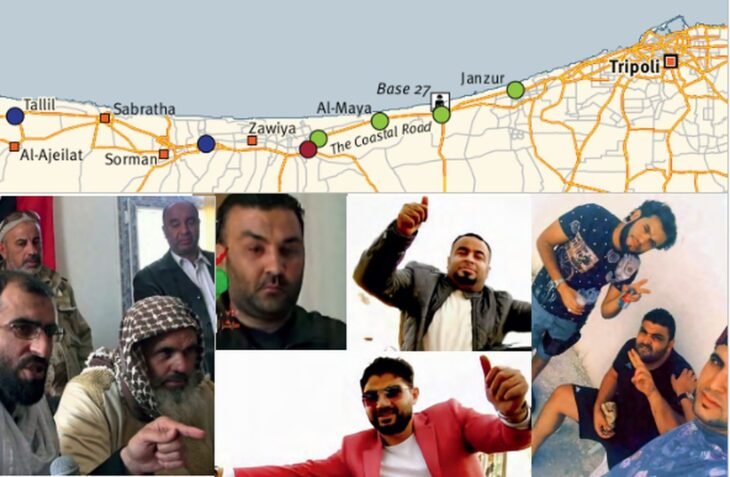
Ali, Essam and Hassan Abu Zariba have steadily accumulated power and influence in Zawiya since the overthrow of the regime. They formed the Abu Surrah Martyrs’ Brigade in 2012, and the group has been seen as controlling southern Zawiya. Its strategic partnership with the Nasr Brigade (which is also from the Abu Hamyra and controls the Zawiya refinery) allowed the Abu Surrah Martyrs’ Brigade to dominate some local trading markets.

The Abu Hamyra’s competition with rival Awlad Saqr armed groups is seen as having become more violent, particularly since the campaign against the LAAF drew to a close and fresh disputes over central government emerged.

The Stability Support Apparatus (SSA) was established by a resolution of the Presidency Council of the GNA in January 2021, at the request of a coalition of the Abu Hamyra and the Tripoli-based Abu Slim Security Unit.

These groups pressured the GNA to form a joint force that would bring together armed groups from Tripoli and Zawiya. The GNA’s resolution included appointing Hassan Abu Zariba, the commander of the Abu Surrah Martyrs’ Brigade, as the deputy head of the SSA.

Hassan Abu Zariba was responsible for establishing and overseeing a branch of the SSA in the cities west of Tripoli, from Zawiya to al-Ajaylat. He also incorporated other armed groups within the SSA, under the Abu Surrah Martyrs’ Brigade: among these were the al-Ajaylat Martyrs’ Brigade and the 55th Infantry Brigade, which controlled the municipalities of al-Zahra, Ma’amoura and al-Mayi in neighbouring Warshefana, southwest of Tripoli.

As a result, the Abu Surrah Martyrs’ Brigade became the main force from which the SSA was established. From the end of 2021, Hassan Abu Zariba expanded his network of alliances in Zawiya and began to build an alliance between the SSA and the Nasr Brigade, with which the Abu Zariba family has been aligned for years.

However, a rift subsequently emerged between the Abu Zaribas and the commander of the SSA’s Tripoli elements, Abdel Ghani Belkacem al-Kikli (known as Gneiwa).

Their conflicting stances became clear in May 2022, when the Abu Zaribas and their coalition split off to support the GNS, which had been appointed by the House of Representatives. Essam Abu Zariba was appointed minister of the interior in the GNS, and Ali Abu Zariba, a member of the House of Representatives, became close to Fathi Bashagha, the GNS prime minister.

Gneiwa sided with the GNU, led by Abdel Hamid al-Dabaiba. The SSA is said to have received more than LYD130 million from the GNU.

Later that month, when Bashagha sought to enter Tripoli, elements of the SSA fought on opposite sides. Gneiwa supported the GNU, and the Abu Zaribas sent armoured vehicles to support the GNS.

The Abu Zaribas’ support for Bashagha has limited their opportunities to gain a different legal standing that would enable them to give up the SSA name.

While the above-mentioned GNU bombing campaign in Zawiya claimed that the strikes targeted criminals in these areas, their initial focus within Libya was seen as political. The targeting was interpreted as messaging to the Abu Hamyra axis on the risks it was running in its continued opposition to the GNU.

Subsequent to the strikes, in addition to the GNU placing the West Coast Military Zone in formal charge, the attorney-general announced that the commander of the Support Unit (the official name for the Nasr Brigade under its formal affiliation with the Petroleum Facilities Guard) had been detained pending investigation for ‘facilitating fuel smuggling’.

At the time of writing, however, there is no evidence to suggest that Mohamed Khushlaf, the Nasr Brigade commander, was detained or remains in detention.41 These developments indicate that Zawiya’s security space will continue to be contested, with no clear resolution in sight.

Zintan’s security apparatus: expansion and protection of local interests, and varying interpretations of the revolutionary cause

From a unified position in favour of the revolution in 2011, Zintan’s security landscape has since fractured, with parallel processes of integration with eastern- and western-based authorities. Such affiliations have been largely determined by the political positioning of key Zintani commanders and their networks as part of a process of deal-making.

This has led to a fragmented and confused security apparatus. Based on their current affiliations, Zintan’s armed groups can be broadly divided into four factions: pro-GNU, pro-LAAF, groups loyal to the former Gaddafi regime, and neutrals. However, there is overlap among them.

Some groups have taken pro-LAAF and pro-Gaddafi positions simultaneously, while others remain technically part of GNU-affiliated forces even though they do not recognize the GNU. The degree to which these affiliations have fluctuated illustrates the weakness of the groups’ ties to governing authorities.

The fragmentation of Zintan’s security sector after 2014 reflects the distinctive political positioning of the city. Zintan was a bulwark of the 2011 revolution, but it has also been willing to engage with former regime elements and take a softer line on the return of state officials, in contrast with the hardline constituencies of Misrata and Zawiya. Consequently, seeking to dissect the Zintani security services along ideological lines is imperfect. Zintani armed groups might be described as pro- or counter-revolution, and Islamist or non-Islamist.

Yet the pro-revolutionary groups have entered a coalition of sorts with the LAAF, which is dominated by counter-revolutionaries. The Madkhali-Salafists,42 meanwhile, have consistently opposed the Muslim Brotherhood’s political project.

***

Tim Eaton – Senior Research Fellow, Middle East and North Africa Programme.

________________

Patriotic elites must act quickly

Abdullah Alkabir

The dominant political and military class does not plan to make the desired change that the people are waiting for, and it is imposed by the necessity to save the country from a frightening reality and a darker future, as if all parties of this class are satisfied with the power and influence, they have achieved through the political equation, and are satisfied with it, and do not aspire for anymore. Certainly, they do not feel the danger threatening the country and its people, or they are aware of it but do not pay it the deserved attention, because what concerns them is their personal salvation by securing wealth outside the country that will enable them to live comfortably anywhere in the world.

This descent into the unknown cannot be halted without renewing legitimacy through elections, and because these elections, if they take place, will overthrow the parties of this class and strip them of the power and influence they have wielded, and may push some of them to face justice, they are doing everything they can to abort it, and extend the transitional period Indefinitely.

Even the UN initiative, and behind it the American pressures, did not succeed in bringing the main parties in power to the negotiating table through their representatives. Although, the UN envoy did not raise the white flag, and is still trying to bring the views of the invitees closer together, hoping for a response at the end and the start of the dialogue. However, the regional and international context is not prepared for reaching a comprehensive political settlement, resulting in a comprehensive path towards a unified executive authority, and a clear path with certain dates towards elections.

The conflict between the major powers is at its most extreme stage, only short of direct, declared confrontations. Initiatives launched by UN missions in countries with internal conflict require a minimum level – at the very least- of regional international consensus.

At the internal level, the High Council of State is discussing opening the path to sovereign positions with the House of Representatives, while blocs within the House of Representatives are moving to overthrow Agila Saleh, Speaker of the HoR, driven by the military party controlling the east of the country. As long as these are the trends of the legislative authority with its both wings, there is no doubt that they are completely reassured to remain in their positions, and that their departure through elections will not be achieved in the foreseeable future.

Therefore, there is no reliance on the political and military parties that benefit from the crisis, and whose interests intersect with external powers, and the mission will remain unable to propose any solution under such turbulent climates. What is the way out of this long tunnel of transition?

The only way, in my opinion, is for the people to rise up and activate all available tools, which are not few, such as the popular movement and through demonstrations of a national nature, but not regional or factional, sit-ins and statements demanding the speedy holding of parliamentary elections, as well as pressing UNSMIL to assume its responsibilities, in the face of the political class’s continued procrastination.

By transcending the obstructionists who have no vested interest in change, by holding a referendum on the draft constitution, or the constitutional rule in question, it is the responsibility of the national elites to adopt these options that can contribute to getting the country out of the crisis, by presenting appropriate plans to mobilize the street, and then heading to address the UN mission, backed by the hoped-for popular movement, which will be the decisive factor in any desired change.

________________________

Libya’s uphill struggle to attract oil investment

Carole Nakhle

Politically divided Libya is trying to ramp up its petroleum output and draw foreign investors back to its vast oil fields. Civil strife and poor governance have degraded Libya’s oil industry. The divided country has massive oil reserves but scant investors. Recent improvements in stability have drawn the attention of oil majors.

In a nutshell

  • Civil strife and poor governance have degraded Libya’s oil industry
  • The divided country has massive oil reserves but scant investors
  • Recent improvements in stability have drawn the attention of oil majors 

Libya was once a very significant player in global oil markets. In 1970, at its zenith, its production reached nearly 3.4 million barrels a day (mb/d), making it the second-largest Arab oil producer after Saudi Arabia, which was then producing 3.8 million barrels per day. However, over half a century later, Libya’s current production stands at only 32 percent of its peak, ranking it 18th in the world. The country now aspires to achieve an output of 2 million barrels per day by 2030. 

In 2017, Libya announced a more ambitious target of 2.2 million barrels per day by 2023, but this goal fell short – not due to a scarcity of oil. On the contrary, Libya’s proven oil reserves have more than doubled in the last 40 years, making it Africa’s largest holder of such reserves, constituting nearly 40 percent of the continent’s total. Above-ground factors, primarily politics and poor governance, have hindered Libya from fully capitalizing on its oil wealth. The country’s economy, in which oil accounts for 98 percent of its government revenues and 60 percent of gross domestic product (GDP), has been struggling as a result.

Following the 1969 coup d’etat led by Libyan army officer Muammar Qaddafi, Libya experienced prolonged international isolation and sanctions. Just as these measures were lifted, a major popular uprising inspired by the Arab Spring revolutions in Tunisia and Egypt began in 2011. It resulted in the death of Qaddafi, the fall of his decades-long regime and a drastic overhaul of the political system. A civil war started in 2014, and although it officially concluded in 2020, the IMF continues to describe Libya as a “fragile and conflict-affected state” suffering from social and institutional frailty.

Libya’s oil reserves can last nearly 340 years – the longest in the world.

This volatile history has had detrimental effects on the sentiment of oil-sector investors. While some hope has arisen recently, oil majors have yet to commit the capital needed to enable a significant increase in output. At current production levels, Libya’s oil reserves can last nearly 340 years – the longest in the world. Unless the investment climate radically improves, Libya is bound to lose the most on the energy transition, with its potential oil riches at a high risk of becoming valueless. 

A volatile history

In 1958, seven years after gaining independence from France and the United Kingdom, Libya made its first oil discovery, with production commencing a year later. By 1961, it inaugurated its oil exports and became a member of OPEC (Organization of the Petroleum Exporting Countries) in 1962. Between 1965 and 1969, Libyan oil production experienced remarkable growth, peaking in 1970.

However, this success sowed trouble in the North African nation and shaped its history for decades to come. After ousting King Idris on September 1, 1969, Qaddafi set up the country’s National Oil Corporation (NOC) in 1970 and three years later he nationalized the industry, which had been run primarily by foreign companies. 

Qaddafi’s hostility toward Western governments and Libya’s association with terrorist groups prompted the United States to impose its initial set of sanctions on the country in 1978. However, it was the December 1988 bombing of a Pan Am airliner over Lockerbie, Scotland, that led to Libya’s most severe isolation. In November 1991, two Libyan intelligence operatives were indicted by Scottish and U.S. courts for their involvement in the attack. Despite the charges, Qaddafi’s government refused to extradite them, resulting in the imposition of United Nations sanctions on Libya. This additional layer of international censure mainly affected investment in its oil sector. 

Until the sanctions were eased in 2004 – following Qaddafi’s offers of counterterrorism cooperation after the 9/11 terror attacks on the U.S., coupled with his decision to dismantle Libya’s weapons of mass destruction and long-range missile development programs – oil production struggled to exceed 1.5 million barrels per day. The relaxation of sanctions supported the return of international oil companies, which, in turn, boosted production. 

Just as things began to look better, Libya entered another period of instability following the spread of the Arab Spring from nearby countries. The overthrow of Qaddafi in 2011 left the country with a political vacuum. Warring factions attacked domestic oil production facilities, and Libya’s production hit a low of 500,000 barrels per day that year. 

The country continues to be politically divided with two rival governments – one in Tripoli and the other in eastern Libya, each backed by different powers influential in the region. 

Divided nation

The Government of National Stability (GNS), established by the Sirte-based House of Representatives (HoR), is predominantly backed by Egypt, Russia and the United Arab Emirates (UAE). It holds sway over the eastern and southwestern regions, encompassing most of Libya’s oil fields, and is aligned with the self-styled Libyan National Army led by Field Marshal Khalifa Haftar. 

Meanwhile, the Government of National Unity (GNU), predominantly supported by Turkey and Western nations, and endorsed by the UN, exercises control over the capital, Tripoli, and its surrounding areas. Despite reconciliation attempts led by France, a political settlement between the two factions proved elusive. As a result, the east-west divide is likely to persist, as neither side can exert full military or political control over the country.

The geographical distribution of oil production and export facilities accentuates this divide, with key terminals like Es Sider and Ras Lanuf comprising 42 percent of Libya’s oil export capacity being located in the eastern part of the country under the GNS control. In the western part, under the influence of the GNU, two export facilities, Zawiya and Mellitah, account for 28 percent of the nation’s oil exports.

Amid this divide, both sides have staged oil blockades or production shutdowns as a tactic to demand a larger share of the oil proceeds or to achieve political gains. One such incident was the 10-month blockade in 2020 led by the eastern government, which severely curtailed the country’s output. While there has been a degree of stability since then, in the absence of a unified government the prospect of such events happening again remains. The most recent occurrence took place in early January 2024, following a brief closure in July 2023; both impacted fields in the southwestern parts of the country.

Libya continues to be an oil exporter that matters, particularly to Europe.

Recognizing the fragility of the situation, OPEC has exempted Libya from abiding by any quotas. The country’s political troubles have exacted a high cost. In addition to the economic and human toll, Libya’s influence on global oil markets has eroded, with the loss of market share from 7 percent in 1970 to a mere 1.2 percent in 2022. Other players have taken its place. Iraq, for instance, an OPEC peer and a country also classified by the IMF as fragile, in 1965 had nearly the same market share within OPEC as Libya (around 10 percent) but had managed to increase its share it to about 13 percent by 2022. Libya’s share within OPEC has plunged to just 3 percent. 

 Export directions 

Despite its diminished role, Libya continues to be an oil exporter that matters, particularly to Europe. The domestic market is small (about 200,000 barrels a day), allowing most Libyan production to be exported. Europe continues to be its largest market, given geographic proximity and historical ties, accounting for 71.5 percent of Libyan oil exports in 2022, while nearly 20 percent headed to Asia-Pacific and most of the remainder to North America. In that year, Libya was the sixth-biggest supplier of crude oil to the European Union after Russia, the U.S., Norway, Kazakhstan and Iraq.

Taking advantage of Brussels’ continuous search for alternative energy sources to Russia, Libya has increased its footprint in the EU, expanding its market share to nearly 8 percent and ranking as the fifth supplier of oil after Norway, the U.S., Kazakhstan and Saudi Arabia in the second quarter of 2023. Further increases, however, are contingent on Libya’s ability to ramp up production. 

vestment badly needed

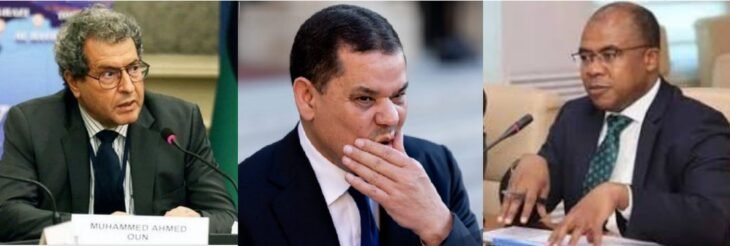
Libya is keen on doing just that. Its national oil company plans to launch an oil and gas licensing round this year, the first such round in the last 17 years. Only the exploration licenses would be aimed at international oil companies. Libya’s Minister of Oil and Gas Mohamed Oun explained: “We are not against international companies coming back, but they should come to conduct exploration activities, not into already discovered fields.”

The risk of doing business in Libya continues to be high. In addition to the notable political and security risks, its oil and gas sector suffers from poor governance.

Before the civil war, Libya attracted a diverse group of investors, including European oil majors (Italy’s Eni, Spanish Repsol, France’s TotalEnergies), U.S. majors (such as ConocoPhillips and ExxonMobil), and other players (Algeria’s Sonatrach, the Russian Gazprom and Tatneft) – with Eni being the most prominent player. 

While companies like Shell and ExxonMobil withdrew from the country after the start of the civil war (in 2012 and 2013 respectively), others have continued to play important roles. For instance, Eni has been operating in Libya since 1959 and relies on the country for approximately 10 percent of its production portfolio. Most of its stakes are in the fields in the western part of the country. 

Scenarios

In 2023, the Libyan NOC reported that Eni, along with British BP and Algerian Sonatrach, were planning to resume exploration and contractual activities in the country, now that the security situation has improved. Austria’s OMV also announced its intention to resume its operations by February 2024. That is undoubtedly good news.

Above-ground risks

However, the risk of doing business in Libya continues to be high. In addition to the notable political and security risks, Libya suffers from poor governance, especially in its oil and gas sector. According to the Natural Resource Governance Institute index, Libya is the worst-governed among the 13 OPEC countries and other global oil producers assessed. Also, Libya’s performance on the World Bank’s governance indicators has worsened in the last decade.

As a result, Libya will have to offer attractive terms to investors to compensate them for the significant risks they would be taking. The return of international oil companies will support production growth from Libya but hitting 2 million barrels per day of output looks rather ambitious. The International Energy Agency (IEA) expects a modest growth in Libya’s oil production capacity, reaching only 1.2 million barrels per day by 2028, while under the more optimistic IMF scenario, Libya’s daily production gradually raises to some 1.5 million barrels per day by 2026. However, even then, the country is unlikely to be seen as a reliable supplier as long as its political divisions persist, reducing its ability to capitalize on its oil reserves – especially as the energy transition accelerates. 

_______________________

Can the world help war-torn Libya find peace in 2024?

Fuat Sefkatli

The UN-recognised government led by Abdulhamid Dbeibeh could be best suited to foster reconciliation among different groups and lead the African nation after years of acrimony and turmoil.

The cessation of armed hostilities often represents not the harbinger of enduring peace but rather an interlude preceding the potential outbreak of comprehensive warfare.

This assessment is particularly pertinent in the context of Libya, a nation beset by multifaceted crises – political, military, and social – in the aftermath of the 2011 revolution.

Since the overthrow of Muammar Gaddafi in 2011, Libya has been the theatre of multiple endeavours to institute democratic governance. Yet, these efforts have not culminated in the establishment of positive peace.

Notably, the annulment of the elections, originally scheduled for December 2021, precipitated extensive conflicts in Tripoli, the capital, in March and December of 2022, underscoring the fragile state of Libya’s political landscape.

The ongoing conflict dynamics in Libya can be analytically framed as a power struggle between the entrenched ‘insiders’ and marginalised ‘outsiders’ within the existing political structure.

This paradigm has manifested either through power-sharing mechanisms designed to sustain the pre-existing status quo or via peace accords that have resulted in a fragile peace, which remains unsatisfactory to certain factions.

Instances where key actors such as warlord Khalifa Haftar, the divisive figure in the East, or the armed groups operating within the capital, Tripoli, have been sidelined from economic and political conciliations typically coincide with heightened mobilisation and intensified polarising discourse from these entities.

Navigating through persistent hurdles

The political transition in Libya since 2011 has been impeded by a confluence of internal and external impediments.

A primary factor is the role of regional and international interventions, which have systematically marginalised local negotiation frameworks.

The complexity of Libya’s political landscape is further compounded by the diverse influences exerted by a myriad of regional and international actors, each shaping the political climate to suit their respective interests.

A critical obstacle to national unity lies in the power-sharing disputes among armed groups operating across the eastern and western regions.

This dynamic is underscored by Wolfram Lacher’s observation that in Libya, these groups have effectively transformed into state actors, engaging vigorously in preserving their accrued political and economic interests.

Moreover, the legacy of a weakened central governance structure from the Gaddafi era, compounded by the fragmentation among various political factions, has perpetuated legitimacy crises, particularly in the western-central government post-2016.

The civil wars following 2011 have exacerbated regional animosities, which have been strategically leveraged by specific political and military elites.

The case of warlord Haftar and Benghazi is illustrative. In 2014, he galvanised eastern tribes and former military personnel in opposition to the then-Tripoli government. This scenario has significantly heightened regionalisation, thereby stymieing the trajectory of the political process.

Economic instability, especially the contentious distribution of oil revenues, presents yet another layer of complexity.

The 2022 appointments within the National Oil Corporation (NOC), notably the appointment of Farhat Bengdara, a figure aligned with Haftar as its head, have sparked debates indicative of underlying power-sharing dynamics.

The deferral of the 2021 elections has catapulted constitutional dialogues to the forefront, transforming the prospective presidential candidates’ questions into a focal point of crisis.

The controversial candidacy of Haftar, a war criminal and US citizen, in previous elections epitomises the challenges obstructing the electoral process.

Anticipating the next chapter

In light of these developments, several potential scenarios for 2024 in Libya can be contemplated.

The first scenario involves the effective functioning of the Government of National Unity (GNU) led by Abdulhamid Dbeibeh, achieving political reconciliation between the eastern and western regions of the country.

This optimistic scenario, arguably the most desirable for Libya’s peace and stability, could be greatly beneficial for the arrangement of postponed national elections and the success of committees and forums established to draft a new constitution.

The second scenario envisages the continuation of the current status quo, with deepening political and social divisions.

Efforts to disrupt this status quo, as seen in 2021 and 2022, may culminate in small- to medium-scale conflicts. As observed in December 2022, such conflicts could potentially spill over into urban centres and civilian areas, escalating the risks involved.

In this scenario, where violence against civilians increases, regional or international interventions might also rise proportionally. Akin to the 2011 NATO intervention under the Responsibility to Protect (R2P) doctrine, such interventions could lead to the country’s fragmentation, making this scenario a predominantly pessimistic forecast.

The third and final scenario is a more balanced one, wherein regional and international actors increasingly employ ‘preventive diplomacy’ over military alternatives.

The role of Senegalese diplomat Abdoulaye Bathily and the United Nations Support Mission in Libya (UNSMIL) is particularly significant in this context.

Since its establishment in 2011, there has been a noticeable shift from sidelining the principle of local ownership to adopting more inclusive steps. Recently, Bathily met academics and jurists from universities and bar associations in Tripoli, Misrata, and Zawiya.

UNSMIL’s media office emphasised the necessity of ongoing dialogues to develop a comprehensive constitutional framework that reflects the will of all Libyans, a critical step towards sustainable political stability in the country.

Undoubtedly, such initiatives can contribute to Libya’s long-term path to peace and stability, enhancing the nation’s self-governance capacity.

In summary, the political trajectory in Libya is evolving amidst entrenched historical, societal, and political schisms. A critical inquiry for 2024 will revolve around the future progression of these divides and the feasibility of conducting elections.

Nonetheless, transcending the prevailing atmosphere of status quo impinging upon the nation’s political advancements, must be prioritised as the quintessential goal.

Consequently, it is imperative that international stakeholders forge a collaborative effort to avert Libya’s descent into another ‘failed state’ with ungoverned spaces, which can be also regarded as a safe haven for different non-state armed groups (NSAGs) affiliated with terrorist organisations operating in the neighbouring Sahel region.

***

Fuat Emir Sefkatli is a Researcher on North African Studies at the Center for Middle Eastern Studies (ORSAM) in Ankara.

______________________

Oilinvest launches one million tree forestation initiative in Libya for Greenhouse Gas Removal

Sami Zaptia

Libya’s Oilinvest Group announced yesterday the launch of a tree forestation project in Libya of one million trees. The project will be implemented in collaboration with the Libyan Public Services Company (LPSC) to plant a variety of trees, including eucalyptus and pines, in the capital Tripoli.

The project will be implemented on 1,450 hectares of land owned by LPSC in the capital, home of 3 million people.

Carbon credits

This collaboration, Oilinvest explained, aims to generate carbon credits to contribute to Oilinvest’s commitment to climate change mitigation and at the same time combat the adverse effects of deforestation and desertification.

Net-zero emissions

Oilinvest said it aims to become a net-zero emissions energy company to limit temperature increases to below 1.5°C by 2050 as outlined in the Paris Accord.

Headquartered in The Hague, the Libyan state-owned Group owns and operates its own refinery and various large storage, blending and loading facilities. It operates more than 2,400 service stations and annually markets in excess of 10 million tons of fuel products. Through its portfolio, the Oilinvest Group supplies, trades, refines, and markets petroleum products in 5 European territories: Germany, Italy, The Netherlands, Spain, and Switzerland.

David Pezzulli, Director of Strategy for the Oilinvest Group, expressed enthusiasm about this collaboration, stating: “Our collaboration with the LPSC underscores our unwavering commitment to sustainable practices and environmental responsibility. We invest in modern technologies and implement innovative solutions to minimize our carbon footprint. Investing in nature-based projects, such as this, capture remaining emissions and provide Carbon Credits in the process.”

Mohamed Ismael, Head of LPSC, welcomed Oilinvest’s initiative stating: “we are pleased to have Oilinvest support our National Reforestation Campaign under the auspices of Prime Minister Abd Alhamid Aldabaiba.  Isamael added, “tree cutting, neglecting their cultivation, and urban development are considered among one of the most significant reasons for the scarcity of rainfall and desertification, which are urgent environmental issues. This project will play a decisive role in confronting these challenges and restoring a vibrant, life-sustaining ecosystem.”

Absorb 10 million plus kgs of CO2 per year

The project will commence in Q1, 2024 on an initial area of 450 Hectares which is being fitted with an irrigation system and will continue in stages to cover the remaining 1,000 hectares. Once completed and fully grown, it is estimated that 1 million trees can absorb more than 10 million kilograms of CO2 per year, Oilinvest added.

____________________

Türkiye touts ever-growing Libya co-op at major energy meetup

Türkiye on Saturday reiterated its determination to expand cooperation with Libya as it highlighted the North African country’s potential in oil and gas, affirming its readiness to collaborate with countries and firms to help it unleash its potential.

In Tripoli, Energy and Natural Resources Minister Alparslan Bayraktar emphasized Türkiye’s intention to elevate the collaboration and noted plans to enhance partnership with Libya on multiple frontiers in energy.

Bayraktar’s remarks came during the Libyan Energy and Economy Summit, which brought together leaders of the main multinational oil companies, including the Italian Eni, the Spanish Repsol, the American ConocoPhillips, the French TotalEnergies and the Algerian Sonatrach.

Libya sits on Africa’s largest oil reserves, but production has been frequently disrupted by over a decade of chaos since a NATO-backed uprising led to the ouster and killing of former dictator Moammar Gadhafi in 2011.

Türkiye has been a significant supporter of the country and its Tripoli-based Government of National Accord (GNA).

Türkiye and Libya have seen closer ties in recent years, especially after the signing of security and maritime boundary pacts in November 2019, along with Ankara’s aid to help the legitimate U.N.-backed Libyan government push back putschist Gen. Khalifa Haftar’s forces.

The deal over the Eastern Mediterranean demarcated the countries’ shared maritime borders to prevent any fait accompli by regional states.

The two countries also signed a hydrocarbon drilling agreement in October 2022 to explore hydrocarbons in Libya’s exclusive economic zone and the mainland by Türkiye.

Greater engagement

On Saturday, Bayraktar underscored the significance of the maritime jurisdiction agreement, expressing Türkiye’s desire for active engagement in Libya’s maritime territories.

“We are advancing our cooperation with Libya, a country with which Türkiye shares a deep-rooted relationship spanning 500 years. Our energy initiatives gained substantial importance, particularly with the maritime jurisdiction agreement in 2019,” said Bayraktar.

Under the accord, “we want to be active in Libya’s maritime areas,” said the minister. “We conveyed that we can achieve much more cost-effective and faster results using our own ships.”

“In the upcoming period, we will dispatch a team here shortly and intensify technical efforts to take significant steps in this regard,” Bayraktar said.

The second deal “further solidified our collaboration in the hydrocarbons sector,” Bayraktar noted. “Today, we are here to build on these foundations.”

The minister stressed that the visit aimed to enhance collaboration in various sectors involving private and state-owned enterprises, including energy, oil, natural gas, minerals and electricity.

Bayraktar expressed optimism reflecting on discussions with the prime minister and his counterpart.

“We have demonstrated a serious commitment for the upcoming period, and I hope to see the fruitful outcomes of our efforts. Türkiye and Libya will extend their collaboration not only in the short term but also in a more prolonged and sustainable manner in the energy sector, just as they have done in many other areas,” he noted.

Renewable potential

The minister highlighted Libya’s significant potential in fields beyond oil and gas, emphasizing the nation’s capacity for renewable energy development and the potential for cooperation.

“The country is rich in petroleum and natural gas resources, as well as mineral resources. However, stability is undoubtedly needed. For the investments coming here to have a more long-lasting impact, there need to be accompanying efforts and initiatives,” he added.

Bayraktar emphasized that Türkiye can contribute to Libya’s energy infrastructure, electricity transmission and distribution infrastructure, and energy production.

“We have conducted studies in this direction. Our relevant institutions have collaborated with companies here. There is a significant solar energy potential in this region, and they can benefit from Türkiye’s experience in harnessing it for the economy,” he said.

“We encourage our companies to come here. We are channeling efforts into this area because the resources here will not only contribute significantly to the development of the Libyan people and the country but also enable our companies to achieve significant progress here,” he added.

“We are not only talking about hydrocarbons, oil and natural gas; we also express our openness to collaboration in other areas.”

Among others, Bayraktar pointed out that the energy world has faced a slew of multifaceted crises in recent years, including climate change, the COVID-19 pandemic, supply chain disruptions, surging commodity prices and geopolitical tensions, underscored by the conflict in Ukraine and recent events in Gaza.

“To address all these challenges and to secure energy supply, reliable and affordable energy supply is becoming increasingly difficult every day,” he stated, stressing the urgency for international cooperation to tackle these issues head-on.

Smart energy transition

Bayraktar’s speech also focused on the nature of energy transition, advocating for a “smart energy transition” characterized by responsiveness, rational decision-making, flexibility, justice and digitization. He called for developing policies and regulations to foster a sustainable energy production and consumption shift.

With the world’s energy demands still heavily reliant on oil, he emphasized the need for substantial investments in the region of $400 billion to $600 billion annually to maintain oil supply levels.

He also touched upon the shift in transportation, with the advent of electric vehicles and the subsequent rising demand for critical minerals, presenting new challenges for the global economy.

Bayraktar addressed policymakers directly, emphasizing the need for consistent and stable policy to avoid market volatility.

Libya sets sight on new oil and gas discoveries

Also addressing the conference, Libya’s Oil and Gas Minister Mohamed Oun stressed Libya’s untapped wealth of opportunities and vowed to discover “new oil and gas fields.”

Oun said the summit reveals the country’s determination to stabilize, signaling a turning point for a country facing years of political and economic upheaval.

He underscored the enduring importance of fossil fuels and pointed to the untapped wealth of opportunities within the borders.

“We still have fields yet to be explored, including those in the Mediterranean and central regions, where new oil and gas fields will be discovered,” he said, highlighting Libya’s potential for growth in the energy sector.

Farhat Omar Bengdara, chairperson of the National Oil Corporation (NOC), emphasized the organization’s pivotal role since its establishment in 1970 in bolstering the national economy by developing oil reserves.

He noted that NOC’s efforts have increased revenues and fostered strategic relationships with international partners, contributing to the energy supply to European countries and reinforcing global energy security.

Bengdara acknowledged the substantial challenges facing the oil and gas industry and the necessity for collaborative partnerships.

He outlined an ambitious strategy to reposition Libya as a leading energy producer.

“Governments, the private sector, and international bodies, including the Board of Directors of the National Oil Corporation, with the help of global think tanks, have developed an ambitious strategy built on relevant global trends in the energy field,” said Bengdara.

The strategy, he said, is designed to return Libya to its former status as a prominent energy-producing country, supporting sustainable economic development and aiming to achieve a production capacity of 2 million barrels per day.

It also focuses on developing the basis for discovering and producing gas and oil and reviving neglected oil industries.

_____________________

Libya Supports South Africa In Case Against Israel At International Court Of Justice

Miral Sabry AlAshry

Libya will submit an invitation to the International Court of Justice. This invitation is in relation to the case filed against the Israeli occupation authorities for their crimes in the Gaza Strip, as an act of solidarity with South Africa.

This case, brought forth by Palestine and Libya, is the second of its kind, following a case filed by South Africa accusing Israel of committing genocide in the Gaza war.

South Africa has accused Israel, before the International Court of Justice, of violating the Convention on the Prevention and Punishment of the Crime of Genocide in international law. They argue that the attack launched by Hamas on October 7, 2023 does not justify the actions Israel is currently taking in the Gaza Strip. South Africa has submitted an 84-page complaint to the International Court of Justice, urging the judges to order Israel to immediately suspend its military operations in Gaza and cease fire. However, Israel has rejected these accusations.

In addition, Libya is joining Palestine in this case, and their ambassador to the Netherlands will be in attendance. The ambassador has expressed support for South Africa’s historic humanitarian position on coexistence, peace, and rejection of racism. Libya will attend the session scheduled for tomorrow, Thursday, in The Hague, alongside Palestine, to support South Africa’s legal team.

The focus of this case is on the acts of genocide committed by Israel, particularly the killing of Palestinian civilians, inflicting serious bodily harm on them, and the imposition of conditions that are unsustainable for life and the healthcare system in Gaza. Palestinians in Gaza are not only being killed by Israeli weapons and bombs from air, land, and sea, but they are also at immediate risk of death from starvation and disease due to the lack of food supplies and the inability to distribute aid amidst the ongoing bombings. The judiciary team will present their case.

Video footage of the difficult conditions on the ground in Gaza, including an aid truck, was presented. She stated, “Nothing will stop the suffering except by order of this court.” We are requesting a ceasefire for civilians in Gaza from the court. It is not necessary for the court to make a final determination on whether Israel’s behavior constitutes genocide, but it is important to examine the commission of these crimes and the increasing numbers of women and children being killed, comparing these actions with international law.

“The violence and destruction in Palestine and Israel did not start on October 7, 2023.” Palestinians have endured systematic oppression and violence for the past 76 years. However, on that day, Hamas militants attacked Israel, resulting in the deaths of at least 1,200 people.

South Africa utilized the Special Treaty on the Prevention of Genocide, which was signed by both South Africa and Israel. This treaty, known as the “Convention on the Prevention and Punishment of the Crime of Genocide” from 1948, requires signatory states to punish those involved in the commission of genocide. The treaty defines genocide as “certain acts intended to destroy, in whole or in part, a national, ethnic, racial, or religious group.” South Africa submitted evidence showing that Israel had killed approximately 1,200 people and held over 200 hostage. According to the Hamas Ministry of Health in the Strip, the war resulted in the deaths of over 23,000 people in Gaza.

Israel responded by stating that its military operations in Gaza were in response to Hamas’ destruction and their efforts to eliminate terrorism. Germany, the European Union, the United States, and other countries classify Hamas as a terrorist organization.

The International Court of Justice, the highest legal body associated with the United Nations, differs from the International Criminal Court, which has jurisdiction over treaty-based war crimes charges against individuals. Both courts are based in The Hague.

According to a Reuters report, South Africa’s request to the court for temporary measures to protect Palestinians in Gaza is the first step in a case that will take several years to conclude.

ICJ judges often announce such measures, typically requiring a state to refrain from actions that could worsen the legal dispute.

Before deciding on the two cases, the crucial point is whether the court has jurisdiction and if the acts complained of could fall under the Genocide Convention.

Why did South Africa bring this case, and why does Libya want to join?

South Africa is known as one of Israel’s most vocal critics, and the ruling African National Congress party has long refused to equate Israel’s policies in Gaza and the West Bank with the former apartheid regime in South Africa. Additionally, South Africa is a signatory to the Genocide Convention, which aims to prevent genocide.

Since its inception in 1948, the Israeli state has aimed to combine its military and technological superiority with its political and diplomatic capabilities, as well as its reliance on American pressure, to achieve its goal of strategic normalization. Despite the decline of Libya’s influence in the region, particularly after the war and internal conflicts following Muammar Gaddafi’s reign, the Israeli state is still attempting to establish normalization with Libya.

However, all attempts made by Al-Dabaiba and Haftar to achieve this goal have been rejected by Libya. The Libyan people are firmly against normalization and instead stand in solidarity with Al-Aqsa Mosque, Jerusalem, and Palestine. This rejection of normalization with the Zionist state is a strong sentiment among the Libyan population.

The Israeli state’s persistent efforts to normalize relations with Libya, which have been ongoing for almost twenty years, indicate the seriousness with which they view any potential relationship between themselves and the internationally recognized regime in Tripoli, or even between themselves and General Khalifa Haftar and his supporting forces.

Israel aims to form a government that would cancel the water border demarcation agreement with Turkey, as it would grant Turkey control over the area through which the planned pipeline carrying Israeli gas to Europe would pass. This would potentially place Israel’s gas exports at the mercy of Turkish decisions.

Israel’s support for Haftar is viewed as a strategic political and economic investment. Normalization of diplomatic relations with Libya would be a significant victory for Israel, bringing it closer to the sensitive region, notably Algeria, aligning with Israel’s broader policy goals in the Arab region.

Israel’s strategic plan includes the construction of undersea gas pipelines as part of the EastMed project to transport Israeli gas to Europe. However, the planned route intersects with the maritime area between Turkey and Libya, as defined by a 2019 agreement between Ankara and the Libyan government. Obtaining approval from Turkey is challenging due to the ongoing political dispute and competition with Turkey’s “Southern Gas Corridor” project.

Israel’s interests in normalizing relations with Libya are clearly stated and encompass political, diplomatic, economic, and security aspects. This includes the exportation of gas and the prevention of arms smuggling.

A significant question arises regarding the interests of political forces within the Arab region. Will Arab countries show solidarity with Libya in the International Court, or will the normalization agreements hinder their support? Additionally, what role will Europe play, and will political interests prevent the involvement of America?

Regardless of their orientations, political forces in the Arab region must consider the consequences of aligning themselves with Israel. It is important to note that Israel does not offer anything for free and prioritizes its own interests above all else.

***

Miral Sabry AlAshry is Co-lead for the Middle East and North Africa (MENA) at the Centre for Freedom of the Media, the Department of Journalism Studies at the University of Sheffield.

___________________________

Who is supplying fake and cloned armoured vehicles to Libyan forces?

It is unclear who is supplying these fake and cloned armoured vehicles to Libyan forces. The issue of fake and cloned armoured vehicles being supplied to Libyan forces is a serious one.

We have tracked at least two different armoured vehicles supplied to Libyan forces which have been confirmed to be fake or cloned versions of the real vehicles.

In the first instance, in November 2020, forces allied with the Libyan National Army (LNA), the Tariq Bin Ziyad Combat Group, a tactical unit of the LNA was discovered to be operating the UAE-made Inkas Titan-DS armoured vehicle. According to photographs which appeared on social media on 4 February 2020, at least three Titan-DS vehicles, with the unit’s insignia on them, were seen. The Titan 4×4 vehicles are designed and manufactured by the company Inkas Vehicles LLC. The Titan-DS was confirmed by the manufacturer Inkas to be a fake or cloned version and they did not sell any vehicles to Libya which was under a UN arms embargo at the time.

Both armoured vehicles may look exactly like the original except for the lack of any discernable logo or branding signage to indicate the manufacturer of the vehicles.

Secondly, in December 2023, another vehicle which initially appeared to look like the UK-made Jankel Fox long-range patrol vehicle was seen with the forces of the Government of National Unity (GNU), 166 Battalion. Similarly, Jankel denied supplying this vehicle to Libyan forces, and that it had not done business with Libya. On subsequent examination, the vehicles appeared to be Jordanian-made Al Thalab long-range patrol vehicles (LRPV). The Al-Thalab is a 4×4, high-mobility long-range patrol vehicle (LRPV) developed based on the rugged chassis of a Toyota.

A representative of both UK-based Jankel and also Jordan Light Vehicle Manufacturing told Military Africa that they did not sell armoured vehicles to Libya and that the vehicles were likely cloned copies.

The Al Thalab is a long-range patrol vehicle (LRPV) developed based on the rugged chassis of a Toyota. It was made by Jordan Light Vehicle Manufacturing (JLVM), a joint venture between King Abdullah II Design & Development Bureau (KADDB) and British Jankel Armouring, which was formed in 2003., and ended in 2015. JLVM operates as an independent commercial company and offers volume production of soft-skinned, protected and UK-engineered vehicles. The Al-Thalab LRPV was first produced in June 2005.

Although Jordan is known to support Libya financially and militarily, a representative of Jordan Light Vehicle Manufacturing told Military Africa that they did not sell the type to Libya and that the vehicles were likely cloned copies.

Recently, in October 2022, the European Union Naval Force’s Operation Irini intercepted a cargo ship ferrying dozens of BATT UMG armoured vehicles to Libya in violation of United Nations sanctions. At least 28 BATT UMGs armoured vehicles which look exactly like the original except they did not spot any discernable logo or branding signage to indicate the manufacturer of the vehicles were being transported by the MV Meerdijk to Libya in violation of the UN Security Council Resolution (UNSCR) 2292 (2016).

The original BATT UMG armoured tactical vehicles are manufactured by UAE-based The Armoured Group.

These armoured vehicles may look exactly like the original except for the lack of any discernable logo or branding signage to indicate the manufacturer of the vehicles. It is unclear who is supplying these fake and cloned armoured vehicles to Libyan forces. The production and distribution of fake and cloned armoured vehicles pose a serious threat to legitimate vehicle manufacturers. Not only does it result in financial losses by depriving them of the revenue they rightfully deserve, but it also tarnishes their reputation. Furthermore, in the context of Libya being under a United Nations arms embargo, the presence of these illegitimate vehicles exposes the real manufacturers to unwarranted scrutiny and suspicion. Stakeholders and regulatory bodies need to take decisive action to prevent the proliferation of counterfeit armoured vehicles, safeguarding the integrity of the industry and ensuring compliance with international regulations.

During the last conflict, Libya continuously received various arms and ammunition from the United Arab Emirates, Turkey, Jordan, Egypt, Iran, and Qatar. The Libyan National Army (LNA), in particular, received different types of armoured vehicles, especially from the UAE and Egypt, while the Government of National Accord, the UN-recognized administration in Tripoli received arms and training from Turkey and Qatar. At the time, The Armored Group (TAG) and its Libyan partner Ismail Al-Shtewi supplied several Terrier LT-79 armoured vehicles to the Libyan National Army (LNA). At least eight Terrier LT-79 armoured vehicles were seen in a video the group released on 9 December during a parade by the 106th Brigade Special Operations unit. 

The issue of fake and cloned armoured vehicles being supplied to Libyan forces is a serious one. It is important that the international community takes steps to prevent the supply of such vehicles to Libya, and that those responsible for supplying them are held accountable for their actions. These incidents highlight the need for enhanced scrutiny and oversight of arms transfers to conflict-affected regions. International organizations and governments must work together to prevent the proliferation of counterfeit military equipment and ensure that legitimate forces receive the support they need to effectively carry out their duties. The consequences of fake or cloned armoured vehicles finding their way into military operations can be far-reaching and demand a coordinated response to mitigate the risks they pose.

The presence of such counterfeit vehicles not only undermines the effectiveness of the Libyan forces but also raises concerns about the intentions of those involved in the supply chain. The use of fake or cloned armoured vehicles not only jeopardizes the safety of the personnel operating them but also undermines the efforts to achieve peace and security in Libya. The discovery of at least two different armoured vehicles supplied to Libyan forces, which have been confirmed to be fake or cloned versions of the real vehicles, underscores the urgency of addressing this issue. Efforts to tackle this challenge should encompass not only the identification and interception of counterfeit equipment but also the investigation of the networks involved in their production and distribution. Only through a comprehensive and collaborative approach can the threats posed by fake armoured vehicles be effectively addressed, contributing to the broader goal of promoting stability and security in Libya.

According to a CBC News report, a Canadian-owned company continued to ship dozens of armoured personnel carriers into the chaos of Libya, despite being confronted in 2014 by United Nations investigators who said the sales violated the arms embargo against the war-torn country. The company met with international investigators during the writing of the UN evaluation in 2014 and insisted it had done nothing wrong. In the course of their interviews, the UN investigators privately raised concerns Streit’s activities in Libya constituted a violation of sanctions. But leaked shipping records and sales delivery schedules obtained by CBC News show the company didn’t heed the advice to stop its armoured car shipments to the troubled North African nation. At least 79 Typhoon and Spartan patrol vehicles were delivered to the effectively lawless nation in 2014, according to records obtained from highly placed sources.

____________________

Libya’s economy sustained by oil but political impasse threatens stability

Kate Dourian

Bottom Line:

Libya does not have a permanent, unified government. Nor does it have a date set for overdue national elections. Yet this has not prompted a flight of foreign energy companies or deterred investment in Libya’s oil and gas sectors. 

More than a decade after Muammar Gadhafi’s ouster, the country remains fragmented and energy infrastructure has often been caught in the middle of the power struggle between east and west. 

The international energy majors, mostly European companies like Eni and TotalEnergies, have held on to their assets in Libya and plan further investments. 

Russia’s invasion of Ukraine was one of the drivers for the push by Eni as Europe sought alternatives to Russian oil and gas supplies. As a South Mediterranean country, Libya is connected to the European gas network through Italy, hence its appeal as a supplier of natural gas to Europe as the EU prepares to wean itself off Russian gas by 2030. Libya is a patchwork of political and tribal factions — some of them heavily armed and supported by external powers — that have failed to find common ground despite international mediation efforts.

The political fragmentation is also reflected in the energy sector, where the National Oil Company and the Oil Ministry are at odds over management and policy issues. 

The shutdown of the 300,000 b/d Sharara oil field by protestors on January 3 was one of the symptoms of the country’s malaise and political dysfunction. The country is home to roughly 40% of Africa’s proven oil reserves, and its low cost, high-quality crude oil remains an attractive prospect for the energy majors — even as Libya’s political future remains in limbo.

Background Facts:

  • In October 2023, the House of Representatives (HOR) in the east of the country voted on a law to govern presidential and parliamentary elections. It is not clear if this requires the endorsement of the High State Council (HSC) in Tripoli, where the internationally recognized Government of National Unity (GNU) is also based. Libya’s east is represented by the Government of National Salvation (GNS).
  • The fractious nature of government in Libya is at best ambiguous, and none of the main players in the east or west seem prepared to upset the status quo and give up their power bases. The HOR wants to replace the GNU with another interim government before elections are held, a move that is likely to face resistance from the Tripoli government. 
  • The devastating floods that struck eastern Libya in September killing more than 3,300 people and the poor response by the authorities sparked public anger against Khalifa Hifter, the militia leader who wields power in the east, and against the HOR and its speaker, Aguila Saleh, author of the latest version of the amended election law. However, the protests did not pose a serious political challenge. 
  • Hifter’s forces have in the past blockaded oil export terminals as part of a pressure campaign against Tripoli. This forced the National Oil Company (NOC) to declare force majeure on oil exports and shut down all but a fraction of oil production. 
  • The announced reunification of the two branches of the central bank into one entity in August was welcomed by the International Monetary Fund (IMF), which said after a staff visit in November that it would help to move the reform agenda forward. It assessed Libya’s medium-term economic outlook as positive due to projected high oil prices, which are the single largest source of revenues for the state. While advising diversification away from hydrocarbons, the IMF also urged the authorities to implement structural reform and address corruption and governance concerns. 
  • Although oil and gas are the mainstays of the Libyan economy, decades of international sanctions have taken their toll on energy infrastructure, much of it requiring upgrades without which Tripoli cannot hope to boost its oil production capacity. NOC Chairman Ahmed Bengdara said in an interview with Reuters on Nov. 27, 2023, that the state-owned company needs $17 billion to increase production to 2 million barrels per day (bpd), which would be some 300,000 bpd higher than pre-conflict capacity. Bengdara put current production at 1.3 million bpd but said the higher target would require upgrades to pipelines that were built in the 1960s but not maintained. This effort would require some stability and a more adequate response to popular disaffection as manifested by the shutdown of the Sharara field, the country’s largest, by local communities demanding more social justice and economic opportunities, according to Reuters. S&P Global Platts reported that the smaller El Feel (Elephant) field was also shut down by the protests, as was the main export pipeline to the Zawiya oil terminal. 
  • Oil prices, which have posted gains since the end of December 2023 due to concerns over the security of Middle Eastern oil supplies as tensions rose in the Red Sea, moved higher on the reported shutdowns. But the increase was somewhat muted in a well-supplied market and traditionally weak demand in the first quarter of the year. 
  • Securing the necessary investment from the central bank is key. This would require more coordination between the NOC and the Ministry of Oil. Bengdara, former governor of the central bank under Gadhafi, and Minister of Oil and Gas Mohamed Aoun are at odds over contract awards and a draft law presented to parliament by Bengdara that would grant the NOC more powers and financial autonomy. 
  • Among the points of contention between NOC and the ministry are recent contract awards that would bring in billions of dollars in investments.
  • In January 2023, Eni signed an $8 billion contract to develop two offshore gas fields that would produce natural gas for domestic consumption and eventually for export, a project backed strongly by Italian Prime Minister Giorgia Meloni. 
  • Another potentially large investment, estimated at $4-$5 billion, could come from a consortium of EniTotalEnergies and the UAE’s state-run Abu Dhabi National Oil Company (ADNOC), also for offshore gas development. 
  • TotalEnergiesand the United States’ ConocoPhillipsacquired the 8.16% interest held by Hess in the Waha concession, raising their stakes to 20.41% each with the NOC holding the remaining 59.18%.

Alternative Scenarios:

Scenario 1: Failure to hold elections and consolidate central power within one entity in Tripoli and provide a stable investment environment.

Such a scenario would jeopardize energy investment flows and leave the oil sector at the mercy of political rivalries. 

Aoun has rejected the contracts awarded by the NOC, alleging that GNU Prime Minister Abdel Hamid Dbeibeh and Bengdara had offered Eni concessionary terms without approval. Bengdara is seen as a compromise candidate chosen to head up the NOC under a deal struck between Dbeibeh and Hifter, so his position is precarious.

Should he be ousted as NOC chairman, there is a risk the contracts would be scrapped and handed to a Libyan operator. Excluding the foreign energy majors with their technical expertise and deep pockets would lead to stagnation of oil production and a shortage of gas that has already led to blackouts in the country, which would provoke public anger. It would also require the central bank to make the necessary funds available to the NOC, which it has been reluctant to do in the past without proper accounting protocols. 

Scenario 2: Elections are held in 2024 but results are disputed, leading to another bout of violence and civil strife. 

The oil and gas sector would once again fall prey to the chaos and the economy would take a big hit since revenues from hydrocarbon exports account for nearly all foreign income. The absence of a stable government and fiscal transparency would deter future investments in the country while exacerbating political divisions.

Tribal leaders who have established fiefdoms would consolidate their presence and pose a threat to oil and gas installations that have suffered from previous acts of sabotage since 2011. ConocoPhillips said in May that it remained committed to Libya and its low-cost oil, but any further investment would be contingent on a change to improved fiscal terms. This would imply a kind of stable government and the clearer division of roles between the NOC and the Ministry of Oil. 

Conclusion – Most Likely Scenario:

The most likely scenario is another year of delay in holding elections given the preoccupation of Washington, the UN and the European power brokers with the war in Gaza. The status quo would remain in place with relative calm prevailing as each side considers its next move.

The political stalemate would not be sustainable in the longer term, as the tussle over control of the energy sector and oil revenues would remain unresolved and lead to further friction between east and west Libya. As the foreign investors have proceeded with their investments despite the absence of a stable government, the contracts with the foreign operators will likely be implemented though there is a risk that target completion dates might not be met on schedule.

***

Kate DourianNon-resident fellow at the Arab Gulf States Institute

___________________

Libya: Strategic Roadmap For Oil And Gas Exploration In 2024

Prof. Miral Sabry AlAshry

The Libyan National Oil Corporation aims to increase production capacity to two million barrels per day within three to five years, and it is preparing to issue bids for exploration areas by the end of 2024. This statement was made during the United Nations Climate Conference (COP28) and emphasized the company’s goal of increasing oil production by 100,000 barrels per day by the end of 2024, in addition to the current 1.3 million barrels per day. The company also aims to reduce the burning of associated gas by 83% by 2030.

Libya is also getting ready to hold an oil and gas licensing round next year, which will be the first event of its kind in nearly two decades. This move is intended to support the country’s production target of 2 million barrels per day over the next three years.

Despite facing political instability, unscheduled elections, and clashes between dual governments, Libya’s crude oil production capacity is expected to reach 1.8 million barrels per day by 2024, according to a report by the African Energy Chamber.

However, in comparison to the year 2022, when global oil prices reached their highest level in 15 years, Libya was unable to tap into 3% of the world’s oil and gas reserves and 39% of Africa’s reserves. The reasons for this were political, specifically the suspension of production for several months as oil came under the control of two governments: internationally recognized Prime Minister Abdelhamid Dabaiba, head of the National Unity Government, and Fathi Bashagha, the parliament-appointed Prime Minister of the Government of National Stability.

The plan was to remove Dabaiba from office by blockading oil fields and ports and deploying armed militias loyal to Khalifa Haftar. Within days, they were able to shut down several key operations and facilities, including the giant El Feel and El Sharara oil fields, as well as the ports of Brega and Zueitina. As a result, the Libyan National Oil Corporation had to declare its inability to fulfill its contractual obligations.

The impact on the National Oil Corporation was devastating, with a loss in production of 333,000 barrels per day, costing approximately $34.69 million per day. In recent years, oil and gas revenues have accounted for between 96% and 98% of Tripoli’s income, making Libya one of the countries with the highest GDP in Africa. The blockade imposed on export terminals and pipelines in 2020 led to a 31% decrease in GDP after crude oil and condensate exports dropped from 1.1 million barrels in 2019 to 350,000 barrels. However, things are improving in the Libyan energy sector in 2023, according to the “State of African Energy Q1” report by the African Energy Chamber (AEC).

Compared to 2022, production reached less than 600,000 barrels per day during the first half of the year, a 50% decrease. However, with the replacement of the head of the National Oil Corporation, the country is expected to gain more control over oil revenues, leading to an increase in production. In response, the National Oil Corporation raised crude oil production closer to pre-blockade levels of 1.164 million barrels per day and stated that production in 2023 should average 1.2 million barrels per day. The National Oil Corporation is on track to achieve the average target of two million barrels per day if this number can be reached using the country’s current infrastructure, which is one of the reasons why the National Unity Government is working to attract additional foreign investment.

Political instability in Libya has persisted for over two decades, making it challenging to attract international oil companies to invest in the country. Despite the presence of multinational companies such as France’s Total Energy, Italy’s Eni, Britain’s Shell, and America’s ConocoPhillips, which have been operating in Libya for nearly 70 years, the launch of new projects has been limited. The announcement of Eni’s partnership with the National Oil Corporation on an $8 billion offshore gas development project in January marked the first new project in Libya in over 20 years. This highlights the difficulty of convincing foreign entities that Libya is a secure and stable environment for conducting business.

The National Oil Corporation in Libya has unveiled a strategic plan aimed at increasing transparency in its financial statements, signaling the initial phase of a grand vision to position Libya as a leading global energy producer once again. This ambitious vision, articulated by Ben Qaddara, aims to restore Libya’s former status as a major player in the global energy arena. Recent developments, such as Eni’s new project and Total Energy’s expansion of interests in various fields, demonstrate a growing commitment to supporting Libya’s National Oil Corporation in boosting oil production and reducing gas flaring. TotalEnergies has also shown interest in potential solar energy projects to supply electricity to production sites, highlighting a multifaceted approach to energy development.

Furthermore, Libya’s National Oil Corporation has reported significant progress, with the Erawan oil field achieving a production rate of 92,000 barrels per day within just five weeks, comfortably aligning with its annual target of 100,000 barrels per day. As Europe searches for alternative energy sources and reduces reliance on Russian energy, Libya is well-positioned to become a pivotal export hub for oil and gas. Despite past political volatility, the current outlook suggests a more stable and promising future for Libya’s energy sector. Additionally, Libya has taken proactive steps to bolster its gas production, including securing a substantial offshore gas deal with Eni and planning exploratory drilling in key basins. The potential development of an LNG liquefaction plant and a gas pipeline further underscores the country’s commitment to expanding its energy infrastructure, paving the way for future growth and investment in the sector.

In conclusion, the National Oil Corporation of Libya has presented an ambitious plan to enhance the production of oil and gas, minimize gas flaring, and improve transparency in financial reports. Despite previous difficulties and political instability, recent advancements indicate a more secure and promising future for Libya’s energy sector.

The forthcoming oil and gas licensing round in 2024, coupled with the dedication of multinational corporations to invest in Libya, indicate positive prospects for the country’s energy industry. As Libya strives to regain its position as a prominent global energy producer, the potential for substantial growth and investment in the sector is substantial.

***

Prof. Miral Sabry AlAshry is Co-lead for the Middle East and North Africa (MENA) at the Centre for Freedom of the Media, the Department of Journalism Studies at the University of Sheffield.

___________________

Security actors in Misrata, Zawiya and Zintan since 2011 (5)

Tim Eaton

Zawiya’s security apparatus: family ties, local competition and profit

The forces active in Zawiya consist of two main – and rivalrous – axes of power, based principally on familial ties and neighbourhoods, which have also effectively controlled the means through which the Zawiyan security sector has obtained affiliation with the Libyan state.

The first is the central Zawiya axis of Mahmoud Bin Rajab and Mohamed Bahrun, which brings together factions from the Awlad Saqr tribe and family-based groupings located in the centre of the city.

The second axis is built on the Abu Hamyra tribe, under the leadership of armed groups headed by the Abu Zariba and Khushlaf families, that control southern Zawiya and the city’s crucial oil refinery. These axes continue to vie with one another for dominance in the city. Their disputes have at times spilled over into violence, yet they have sought to avoid large-scale confrontation in order to preserve a degree of social stability. In December 2023, at the time of writing, these conflicts remain ongoing following a GNU-led bombing campaign in May–June 2023, and are continuing to reshape Zawiya’s security apparatus.

The situation is set to remain volatile, and further reconfigurations should be expected. However, it should be noted that any ‘victory’ for one axis over the other is not likely to be absolute, as the rival groups’ social constituencies remain resident in their respective areas of the city.

The forces active in Zawiya consist of two main – and rivalrous – axes of power, based principally on familial ties and neighbourhoods, which have also effectively controlled the means through which the Zawiyan security sector has obtained affiliation with the Libyan state.

Unlike in Misrata, the development of armed groups in Zawiya has been forged in competition over economic interests. It is the actors themselves who have dictated the terms on which they have become affiliated with the state, as politicians have sought to reward Zawiya’s armed groups for their loyalty with resources and legitimacy by integrating them into the state structure. However, efforts to professionalize local forces or to break their existing chains of command as part of this integration have foundered.

The Zawiyan security forces are dominated by key figures who command the major forces in the city, which remain permanently mobilized. Compared with the situation in Misrata and Zintan, local community members and leaders in Zawiya are less able to check the behaviour of the city’s armed groups.

The central Zawiya axis

The central Zawiya axis includes several figures who are viewed as having close connections to Islamist-leaning factions associated with the former Libyan Islamic Fighting Group (LIFG) commander Shaaban Hadiya.

Hadiya led the LROR, formed in 2013 from Islamist armed groups from across the country. All major Zawiyan revolutionary brigades joined the LROR, with their commanders having close relationships with Hadiya. Among these were Mahmoud Bin Rajab’s Faruq Brigade, which also had Mohamed Bahrun as one of its members, and Othman al-Lahab’s Silaa Brigade. The Nasr Brigade, which would later form a key part of the rival Abu Hamyra network, also joined with the LROR.

Changes emerged in the balance of power between the armed groups in Zawiya as a result of political changes at the national level and of power struggles at the local level. A key part of the Libya Dawn coalition, the LROR enjoyed significant influence while the Government of National Salvation operated in Tripoli. The formation of the GNA at Skheirat in December 2015 led to a decline in the influence of the Zawiyan armed groups.

Three developments in 2017 significantly changed the Zawiyan security sector.

The first was the ouster of the LIFG’s leadership from Tripoli, which illustrated its reduced influence. Hadiya subsequently relocated to Istanbul.

The Second, fighting among rival armed groups in the centre of Zawiya escalated. In June 2017, Ibrahim Hneesh, the 20-year-old leader of a group of local militants, was killed during a gunfight with the militia of the Khadrawi family. His death triggered further fighting among competing armed groups.

The third development, also in June of that year, was the arrest in Saudi Arabia of Mahmoud Bin Rajab, who was later transferred back to Libya and placed under LAAF detention.

The violence in the city, along with Bin Rajab’s absence, created the space for Mohamed Bahrun (also known as ‘Al-Far’, or ‘the Mouse’) to emerge as a new leader. As a result, Bahrun’s First Security Division attracted members of rival factions and expanded significantly. Bahrun and the Awlad Saqr armed groups, such as the Silaa Brigade, continued to compete with the armed groups of the Abu Hamyra tribe for primacy in the city, and for a leading role in lucrative markets for goods.

In 2019, the return of Bin Rajab and the events surrounding the LAAF’s offensive on Tripoli transformed the situation once again. Following his release by the LAAF, Bin Rajab returned to Zawiya after reportedly indicating to Khalifa Haftar’s forces that he would likely support the LAAF in its attempts to capture Tripoli. However, Bin Rajab instead remobilized Zawiyan armed groups that had been active in the 2014 conflict from the Awlad Saqr, along with factions in the central Zawiya area that had been competing against the Abu Hamyra armed groups.

The Zawiya Security Directorate-affiliated First Security Division, led by Bahrun, and Force III Support Force, led by Mohamed Ali Khalifa Sulaiman, joined Bin Rajab’s forces.

The forces aligned with Bin Rajab were formalized within the Ministry of Defence as a result of their support for the GNA against the LAAF’s offensive. The GNA’s then defence minister, Salah al-Din Namroush, a high-ranking Zawiyan military officer, emerged as a key figure in this period. Namroush is the formal ‘face’ of Bin Rajab’s faction, and is widely known to have aligned himself with Bin Rajab’s directives.

While Namroush fronted engagement with Turkey, whose forces’ entry into Libya had swung the tide of the war, Bin Rajab is reported by some with a close knowledge of the security sector to have been an important interlocutor with Turkish forces. Namroush left office with the GNA in March 2021. 

Bin Rajab’s forces were formalized as the 52nd Infantry Brigade in July 2020 via a resolution issued by Namroush in his capacity as defence minister. The al-Naqliya Martyrs’ Brigade, formed of elements from central and northern Zawiya that fought in the campaign against the LAAF, was also formalized under the Western Military Zone.

Following its involvement in the campaign against Khalifa Haftar’s forces in Tripoli, the forces under the control of Mohamed Bahrun were formalized as a Criminal Investigations Unit (CIU) under the aegis of the Zawiya Security Directorate, as part of the Ministry of Interior.

In 2020, the head of the Zawiya Security Directorate, Ali al-Lafi, recognized the status of the Bahrun’s forces, which had beeFollowing its involvement in the campaign against Khalifa Haftar’s forces in Tripoli, the forces under the control of Mohamed Bahrun were formalized as a Criminal Investigations Unit (CIU) under the aegis of the Zawiya Security Directorate, as part of the Ministry of Interior.

In 2020, the head of the Zawiya Security Directorate, Ali al-Lafi, recognized the status of the Bahrun’s forces, which had been operating as an informal ‘support’ force for some time.

However, these institutional relationships did not define the scope and nature of Bahrun’s actions. Bahrun would subsequently use his forces to support the head of the Libyan Intelligence Service (LIS), Hussein Ayeb, in the latter’s struggle for control of the LIS amid challenges from Tripoli-based armed groups. This support for Ayeb led to Bahrun’s appointment to the new position of head of the Office for Counterterrorism and Combating Destructive Acts.

Since the period of data collection for this paper, the already tense situation in Zawiya has escalated significantly. In April 2023, clashes broke out between the forces of Bahrun and Hassan Abu Zariba after the reported killing of a member of each force. Subsequently, in May and June, a series of GNU drone strikes targeted facilities in Zawiya (as well as Zuwara and Warshefana) that included buildings linked to the Abu Hamyra axis.

In the aftermath of this campaign, the GNU has sought to place the West Coast Military Zone – dominated by the central Zawiya axis commanders – in charge of previously Abu Hamyra-controlled areas, such as the critical Zawiya refinery. Illustrating the importance of the central Zawiya axis to the GNU, Namroush was appointed Deputy Chief of Staff of the Libyan armed forces in November 2023.

***

Tim Eaton – Senior Research Fellow, Middle East and North Africa Programme.

________________

Unrest In Libya Remains Major Obstacle To Higher Oil Production

Simon Watkins

After Gaddafi’s removal, the security and financial risks for IOCs working in Libya skyrocketed. Libya’s crude production has fallen by some 300,000 bpd last week as its National Oil Company has shut in the country’s largest producing field. Libya aims to boost production to 2 million bpd through 2027.

Given that Libya still has 48 billion barrels of proved crude oil reserves – the largest in Africa – recent comments from National Oil Corporation (NOC) chairman Farhat Bengdara that it is on track to rise oil production from the circa-1.2 million bpd seen in recent months to 2 million bpd within the next three years at the earliest might appear well-founded. So too might his comment that the NOC is also planning major bidding rounds for oil exploration blocks this year. However, politically-driven problems emerging last week at the Libya’s largest oil field – Shahara – and the nearby El-Feel field highlight the obstacles that these plans may well run into.

Until the removal of long-time leader Muammar Gaddafi in 2011, Libya had easily been able to produce around 1.65 million barrels per day (bpd) of mostly high-quality light, sweet crude oil. Production had also been on a rising production trend at that point, up from about 1.4 million bpd in 2000. Although this output level was well below the peak levels of more than 3 million bpd achieved in the late 1960s, the NOC had plans in place before 2011 to roll out enhanced oil recovery (EOR) techniques to increase crude oil production at maturing oil fields. There had also been plenty of interest from a slew of international oil companies (IOCs) to be involved in expanding production on existing fields and exploring new opportunities in oil and gas.

However, after Gaddafi’s removal, the security and financial risks for IOCs working in Libya skyrocketed. Quite aside from the disjointed government apparatus and the ongoing civil war, the threat of force majeures being implemented in key oil and gas hubs in the country remains ever present, as highlighted by recent events. Indeed, 7 January saw the NOC declare force majeure at the Sharara oil field, after it and the nearby El-Feel oil field were closed after major protests flared over high domestic fuel prices and the parlous state of the country’s economy.

These closures removed a combined 370,000 bpd of oil out of Libya’s production. At the core of the protests, and all the others that preceded it, are economic problems that arose from a political impasse dating back to an agreement made on 18 September 2020. The deal was signed by General Khalifa Haftar, the commander of the rebel Libyan National Army (LNA), and elements of the United Nations-recognised Government of National Accord (GNA) and was aimed at ending the long-running blockade of key Libyan oil assets at the time.

Haftar made it clear that the resultant lifting of the blockade would not last unless a precise framework was agreed on how precisely oil revenues would be divided up between various warring factions from then on. As the blockade that had run from 18 January to 18 September had already cost Libya at least US$9.8 billion in lost oil revenues, assurances were made by senior GNA officials that a detailed action plan to resolve the problem would be put into place.

Following this, a joint technical committee to deal with the oil money disbursements was formed towards the end of 2020, comprising representatives from the two key opposing sides. According to the official statement at the time on the role of the proposed technical committee: “It will oversee oil revenues and ensure the fair distribution of resources… and control the implementation of the terms of the agreement.”

In order to address the fact that the GNA effectively held sway over the NOC and, by extension, the Central Bank of Libya (in which the revenues are physically held), the committee would also “prepare a unified budget that meets the needs of each party… and the reconciliation of any dispute over budget allocations… and will require the Central Bank [in Tripoli] to cover the monthly or quarterly payments approved in the budget without any delay, and as soon as the joint technical committee requests the transfer.”

Given the high economic and political stakes involved in gaining as great a share of Libya’s oil money as possible, no agreement that satisfied the opposing sides was made then or since. Instead, several attempts have been made to effectively railroad the oil money towards one side or another through a series of political manoeuvres, which has also involved the stewardship of the NOC.

July 2022 saw the then-Government of National Unity (GNU) Prime Minister, Abdul Hamid Dbeibah, replace the widely-respected Mustafa Sanalla as chairman of the NOC with Bengdara, who is a long-time associate and friend of Dbeibah’s. Sanalla – who had received backing from both of Libya’s opposing legislative bodies – rejected Dbeibah’s authority to sack him, and warned Dbeibah not to touch the NOC or the oil revenues and contracts that it manages. Bengdara then held his own news conference at the NOC headquarters building and received the backing of two major NOC affiliate companies – Al Waha Oil, and Arabian Gulf Oil – before Al Waha then deleted its message of support. 

All of this followed the failed attempt by Fathi Bashagha – appointed prime minister of the ‘alternative government’ in the east of the country three months before – to seize power in Tripoli. This occurred amid the ongoing refusal of the Dbeibah – who was himself appointed through a United Nations-led process in 2021 – to hand over power until such a time as a properly elected government was voted into office by the people of Libya. As it stands now, the situation has become even more fragmented.

Dbeibah remains Prime Minister and leader of the now UN-recognised GNU, which is based in Tripoli. On the other side, based in the east of the country, is the Government of National Stability (GNS), led by Prime Minister Osama Hammad (which is aligned to the Libyan House of Representatives) and the LNA (still under the command of General Haftar). Elections scheduled for December 2021 remain indefinitely postponed. 

This said, even a modicum of normality in the oil sector could allow Libya to reach its new oil targets, as there has been progress in the country’s gas sector that could be replicated. Last year, Italian oil and gas giant Eni signed an agreement with the NOC that would see it invest around US$8 billion to produce about 850 million cubic feet per day (mmcf/d) from two offshore gas fields in the Mediterranean Sea.

The deal – as stated by the NOC’s Bengdara – would involve the renewal of an existing agreement originally struck in 2008. Eni currently produces gas in Libya from its Wafa and Bahr Essalam fields operated by Mellitah Oil & Gas, a joint venture between the Italian company and the NOC. Around the same time, Bengdara said a programme of offshore and onshore drilling was planned, under the leadership of Eni and BP. “We are [also] in talks with TotalEnergies to invest more in Libya and increase production, and other companies of course,” he highlighted. 

___________________

Libya’s Kleptocratic Boom (7)

The Sentry

Turning the Tables on the Kleptocrats

While international players have been vocal in their public criticism of the corruption and criminality of Libya’s ruling elite, their actions have done little to ameliorate the growing trends of kleptocratic accumulation.

The incumbent leaders’ stranglehold on the state provides clear evidence that Libya is deteriorating rapidly and heightens the likelihood that the troubled nation will remain a volatile security environment and potential source of broader instability.

A more effective international policy should result in greater resistance to kleptocrats and should not assume that political deals based on guarantees provided to Libya’s self-serving elites will bring stability, credible elections, or the prospect of accountable governance.

In short, foreign states committed to promoting a more stable Libya should use their policy levers to support inclusive Libyan state building rather than continuing with attempts at elite-level peacebuilding.

Any international challenge to the main kleptocrats comes with some risks of renewed armed conflict, as those leaders are committed to protecting their existing interests and privileges. But given the current acceleration of theft and institutional damage, the alternative is still more dangerous to Libya’s prospects. It is also more difficult to reverse.

There are opportunities within existing policy frameworks to make such shifts, such as the US’s 2022 commitment to prioritizing Libya as a key country within the scope of the Global Fragility Act, which provides a means of developing interagency alignment over how peace and stability may be sought.

This can only be achieved if the US tangibly demonstrates that its traditional focus on counterterrorism no longer overrides all other criteria, such as the fight against corruption.

Opportunities such as this will also require the broader engagement of Western state agencies tasked with overseeing illicit finance policy, such as the US Department of the Treasury’s Office of Foreign Assets Control (OFAC) and the Financial Crimes Enforcement Network (FinCEN), as well as the UK Foreign, Commonwealth and Development Office, the UK Treasury’s Office of Financial Sanctions Implementation, and the European Commission’s Directorate-General for Financial Stability, Financial Services and Capital Markets Union.

The private sector, all too often neglected in discussions of corruption and criminality in Libya, also has a role to play in increasing the costs for kleptocrats, as their proceeds and enablers in many cases reside on foreign shores. Greater focus on the banking sector, in particular, is required.

International engagement should focus on increasing the deteriorating checks and balances in the Libyan state system, thereby increasing the cost of profiteering from corruption and crime. Systemic change is required in Libya, and four key policy objectives should be at the heart of such change.

1. Lift the veil of complicity, both domestic and international.

Political leaders and state officials engage in horse-trading with their rivals, dividing public offices and access to budgets in return for claimed commitments to upholding “stability.”

Many armed groups do provide the day-to-day security that the Libyan public needs, yet they simultaneously engage in corrupt and criminal activities, as well as human rights abuses against any Libyans who oppose those activities.

Together, these kleptocrats have consolidated their control over the state’s resources and risen to dominate Libya’s thriving illicit markets. Increasingly, the distinction between armed groups and political leaders is harder to draw.

This is illustrated by the fact that both ministers of interior of the competing governments have obtained their positions on the basis of the strength of their connections to armed formations, who are reported to have engaged in the illicit sector.

The truth is that such actors have become the Libyan state, making it extremely difficult for the Libyan public to express its concerns or effectively protest against its kleptocratic rulers.

The Libya policy of Western nations currently involves no meaningful pressure on the kleptocrats most responsible for the expansion of corruption and organized crime. When it comes to security and order, the prioritization of migration management and counterterrorism has led major Western nations to tolerate some of the kleptocrats’ worst abuses.

Libya’s main illicit activities are disregarded in exchange for cooperation on these priorities. On a political level, the opacity of regional powers’ engagement has reinforced kleptocratic accumulation by legitimizing deals among the very elite poised to benefit from potentially corrupt or illicit practices.

More broadly, it is necessary to lift the veil of complicity by exposing the kleptocrats’ practices and applying pressure to change their calculus. The US, UK, EU, and other like-minded governments should be creative and proactive in considering all available tools of pressure.

The issuance of advisories by the US, UK, and European governments to highlight the risk of exposure to fraudulent practices—particularly when it comes to correspondent banking—should be considered for the sectors of the Libyan economy identified in this report. Financial regulators in these jurisdictions should also ensure that the relationships of Libyan state institutions and the banking entities they own are at arm’s length.

Magnitsky-style sanctions regimes,378 as well as visa bans passed through separate legislation, should also be developed and targeted at the leaders involved in corrupt activity.

To date, the international community has used sanctions against individuals and assets connected to Qadhafi, as well as against alleged human rights abusers. These sanctions have been applied via the UN and replicated at the country level in US, UK, and EU sanctions, displaying coherence within the international response. However, they have proven ineffective, in no small part due to a lack of strategic application and the unwillingness to target prominent actors.

The effort to gain consensus over targets has played a role here: it is easier to reach agreements over the targeting of lower-level actors.

There is, however, an opportunity to build on the September 2018 UN designation of a Libyan national for “engaging in any action that may lead to or result in the misappropriation of Libyan state funds.” Such a designation is tailor-made for the Libyan context and should be used to pursue network sanctions against prominent Libyan kleptocrats.

This would send kleptocrats a message that their foreign assets will be subject to freezing, complicating their efforts to travel and spend their illicit gains on foreign shores. Importantly, it would also likely lead to enhanced due diligence by financial institutions.

The optimal route to pursue such sanctions would be through the UN Security Council. However, should this not prove possible, the US, UK, and EU, along with other like-minded governments, should strongly consider developing their own sanctions.

Here, the August 2023 listing of the former Lebanese Central Bank Governor for diversion of the bank’s funds for personal gain by the US, UK, and Canada provides a positive precedent that state officials are not beyond the reach of punitive measures and that such sanctions can be developed at the country level.

2. Shift away from the current extractive governance system.

Libya’s growing kleptocracy engages—sometimes violently—in disputes over state resources via control of state institutions and competition for control of licit and illicit markets.

The current structure of the state encourages and incentivizes such rent-seeking and the entrenchment of patronage-based politics. Libya must therefore reform the state’s institutions to escape the cycle. However, 12 years after the overthrow of Qadhafi, there is still no sociopolitical consensus as to how the country should be governed. International mediation has continued to pursue a bargain among the political elite presently in power rather than develop a more inclusive process that lets a larger portion of the population influence the manner in which the nation should be governed.

This would involve removing the monopoly over decision-making that Libya’s kleptocrats currently enjoy. This could be done by hosting town hall meetings across the country to engage and solicit support for a political process or by making a fresh attempt to hold a so-called “national conference” bringing together different societal groups to make decisions on the country’s political roadmap.

Support for the development of governance reform is a necessary building block in peacemaking efforts. The ongoing governance dispute cannot be seen as a justification for inaction. International efforts to reunify institutions must continue to be supported.

Direct assistance to state institutions, facilitated through multi-donor vehicles like the cross-ministry Recovery and Peace Building Assessment, should be predicated on clear benchmarks for institutional reform that outline progress during specified periods.

One critical benchmark of future support to the CBL could be the closure of all off-budget accounts held by state-owned entities, bringing them under a national treasury single account.

This would make it harder for Libya’s kleptocrats to mask their accumulation. The international community—both bilateral donor governments like the US and UK, as well as multilateral institutions such as the World Bank and the International Monetary Fund (IMF)—should work with Libyan authorities on these benchmarks and help to ensure compliance.

***

The Sentry is an investigative and policy organization that seeks to disable multinational predatory networks that benefit from violent conflict, repression, and kleptocracy.

____________________

What is the alternative if Bathily’s initiative fails?

Abdullah Alkabir

The UN Special Envoy to Libya, Abdoulaye Bathily’s initiative clashes with the conditions set by Agila Saleh, Speaker of the House of Representatives; Abdul Hamid Dbeibah, Head of the Government of National Unity; and Khalifa Haftar, Commander of the Operation Dignity militia.

(a) The first does not want to negotiate election laws, and only wants to discuss the issue of forming a new government.

(b) The second refuses to discuss the formation of a new government. He believes that the dialogue should not go beyond reaching a consensus formula on electoral laws, so that they become implementable.

(c) The third stipulates the inclusion of the parallel government or the exclusion of the two governments.

Movements of the US Special Envoy to Libya, Ambassador Richard Norland, and his meeting with the parties invited to the dialogue aim to pressure the removal of these conditions and bring everyone to the Bathily’s table.

The US influence to ensure the success of the initiative, cannot be overlooked. The Success here is not intended to remove all obstacles in the way of the elections, but rather to break the political stalemate by launching dialogue at the level of representatives of the five invited parties, and then the subsequent steps will come at the appropriate time.

The positions of the three figures are understandable;

Aqila seeks to extend the transitional period and take away more power, by dominating the executive authority.

Dbeibah seeks to continue as head of government, and he has a strong argument supported by broad popular sectors, which is not to allow the transitional period to be extended and the change be achieved through elections, so, that all entities that have been in power for years will disappear.

As for Haftar, he wants to engage in negotiations with his parallel government or exclude the two governments, to weaken Dbeibah’s position, as there is no one verses Haftar at Bathily’s table except Dbeibah, for the House of Representatives is the counterpart of the High Council of State, and the head of the Presidential Council will identify with the positions of Aqila and Haftar, after joining the Cairo meeting with Haftar and Aqila, and signing a statement welcoming the initiative, and calling for responding to Aqila and Haftar’s reservations.

Menfi’s participation in the Cairo meeting divided the Presidential Council and ended the fragile state of consensus among its members, with representatives Abdullah Al-Lafi and Musa Al-Koni taking a position in opposition to Menfi’s biased tendencies by participating in the Cairo dialogue.

Bathily presents his initiative after a protracted political stalemate, accompanied by military tensions of armed groups with different whims and interests, and at a time of severe international turmoil between the major powers, with the continuing war in Ukraine and the barbaric aggression carried out by the occupation entity in Palestine against the people in the Gaza Strip, which doubles the possibility of failure of the initiative, or at the very least falter, due to the failure of the parties called upon to exchange concessions that would drive the political process forward.

Here, the prominent question may be posed. What is the alternative?

The country’s fate cannot remain in the hands of entities and personalities who want to remain in power, without realizing the country’s need to unify its institutions without delay, and pull it out of the state of collapse that is being perpetuated by the increasing external interference and indeed intervention.

___________________
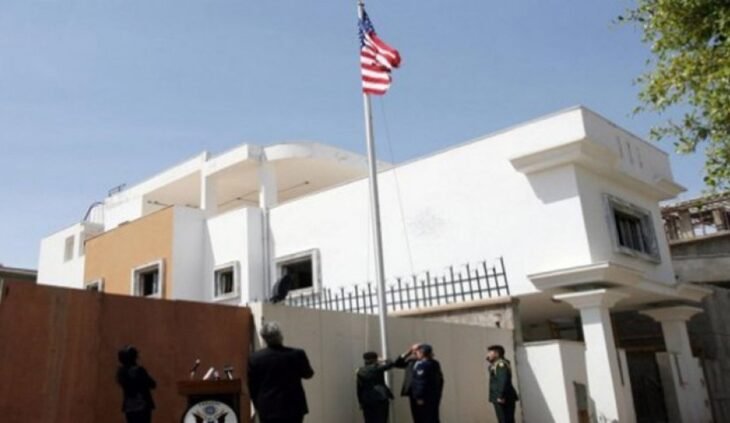
In Aftermath Of Derna Flood: Officials Under Arrest, Questions Arise Over Their Whereabouts

Miral Sabry AlAshry

The coastal city of Derna, located in the northeastern region of Libya, was struck by catastrophic floods last year, leaving the local community devastated and mourning their losses. The floods resulted in over 11,300 deaths, with many more still missing.

The flood caused widespread destruction, severely impacting homes and infrastructure. This natural disaster has presented significant challenges for the residents of Derna as they attempt to rebuild their lives amidst an ongoing civil war.

The Libyan authorities conducted investigations into the disaster, which confirmed negligence in the maintenance of the city’s dams. This negligence was evident in the absence of a warning system in the dams, neglect in cleaning the upper openings, and a lack of periodic maintenance. The investigations also revealed that the drainage system in the valley was not functioning properly due to years of accumulated silt without any maintenance. Additionally, cracks were discovered in the two dams.

Fourteen individuals, including the mayor of Derna municipality and several officials from the city’s water resources and dams authority, have been arrested pending investigations. The Public Prosecution has also issued a red notice for defendants who have fled outside the country.

The investigations also highlighted the severe damage caused by the flood, which was triggered by heavy rains and overflowing rivers. Residential areas, public buildings, and vital infrastructure suffered extensive destruction. Homes were flooded, roads were washed away, and basic services like water and electricity supplies were disrupted. In the immediate aftermath of the flood, many residents were displaced and in urgent need of assistance.

Local authorities and emergency response teams are still working diligently to provide aid and support to those affected by the flood. Rescue operations, temporary shelters, and distribution of essential supplies have commenced to address the immediate needs of the community. However, the magnitude of the disaster poses a tremendous challenge that requires a coordinated and sustained effort to facilitate recovery and rehabilitation.

This is not the first incident in Derna, as the city has faced numerous difficulties. It was hijacked by political Islam militias, who covered up the tragic situation of its residents. Some of them were slaughtered, dragged, and crucified in the streets. Since February 2011, Derna has been outside the authority of the state, with political Islam militias rejecting the 2012 National Congress elections, the 2014 parliamentary elections, and even the parliamentary councils.

In 2018, the Libyan army liberated the city of Derna from the grip of Al-Qaeda. The scene quickly changed as the people returned to practicing normal life, rejoicing in their freedom from terrorism. Street movement returned to normal, without restrictions, and markets and shops witnessed rapid commercial activity after weeks of war and fear.

The residents of Derna had hoped that it would become a center for literature, culture, arts, and life, and that it would surpass the lean years of darkness. The Libyan National Army continued to secure the return of residents to the neighborhoods of the liberated city, with security units affiliated with the Ministry of Interior of the Interim Government.

Haftar indicated the “safe return of Derna to the embrace of the homeland,” declaring the beginning of “a new era of freedom, security, and peace.” The army also announced the killing of Al-Qaeda leader, Attiya Al-Shaeri, during clashes with extremists, which dealt a fatal blow to the organization.

Returning to the flood that devastated the city, it not only caused physical damage but also had a profound impact on the emotional and psychological well-being of the residents. This is not the first time they have faced such hardships, as they have also endured the loss from terrorism prior to the flood. Many individuals and families are currently grappling with the shock of losing their homes and belongings, as well as the uncertainty surrounding their future. Undoubtedly, the path to recovery will be long and challenging as society strives to rebuild and regain a sense of normalcy.

Given the crisis that Derna is facing, there is an urgent need for humanitarian assistance and support from the international community at large. Collaborative efforts to provide emergency aid, including shelter, food, and medical care, are crucial in meeting the immediate humanitarian needs. Additionally, long-term initiatives focusing on restoring infrastructure, supporting livelihoods, and providing psychosocial services will play a vital role in aiding the community’s recovery and fostering resilience.

Amidst this disaster, we must raise important questions: Was Derna a suitable city to bring residents back to after the civil war? Can those responsible be held accountable? They were brought back in 2018, amidst a civil war and a country lacking electricity and facilities.

After these disasters, Libya’s leaders were unable to achieve the most important aspirations of the people: ending the division, holding general elections, and eliminating corruption.

It was stated that the Derna Court decided to postpone the Derna floods case and judge it on January 11, after the Public Prosecution filed a criminal case against 16 people responsible for the floods in the city. This includes the head of the Derna City Reconstruction Fund and a member of the financial committee in charge of implementing the reconstruction plan.

The report focused on the collapse of the Derna dams as a matter of public concern, stating that it could have been avoided. It explained that a Swiss consulting office had recommended modifications and maintenance to the two dams since 2003, but this was not done during Gaddafi’s government. The former head of the Water Resources Authority, the director of the Dams Administration, their predecessors, and the head of the Dams Maintenance Department in the Eastern Region failed to provide any defense for their administrative and financial mismanagement. Surprisingly, some of those accused in the Derna disaster are currently abroad.

The most important question now arises: Will they be tried, and if so, how can they be brought to justice in the absence of a government or judiciary? The report clarified that the ruling was made against them in absentia, arrest warrants were issued, and the prosecution has started requesting a red notice from Interpol.

The events in Derna serve as a poignant reminder of the vulnerability of communities to natural disasters and the importance of preparedness and response. As the city grapples with the aftermath of the flood, it is crucial that we continue to provide attention and support to aid in the recovery and reconstruction efforts. The road ahead will undoubtedly be filled with challenges, but with concerted effort and solidarity, the Derna community can begin to recover and rebuild in the wake of this devastating flood.

***

Prof. Miral Sabry AlAshry is Co-lead for the Middle East and North Africa (MENA) at the Centre for Freedom of the Media, the Department of Journalism Studies at the University of Sheffield.

_______________

Rebuilding Libya: Crown Prince Mohammed El-Senoussi’s Vision for Democratic Governance

Sara Zouiten

Acknowledging the challenges ahead, Mohammed El Senussi remains optimistic, drawing parallels with Libya’s post-World War II recovery.

A country with a rich history that stretches back centuries, Libya has faced numerous challenges on its journey toward stability and democratic governance in past decades. 

In a recent interview with Morocco World News, the Crown Prince of Libya’s former kingdom, Mohammed El-Senoussi, articulated a vision for the country’s future, drawing on its historical roots and emphasizing the importance of a Libyan-led solution to the lingering Libyan crisis.

El-Senoussi highlighted key elements, including the historical foundation of Libya’s pre-1969 parliamentary democracy, the potential reinstatement of the 1951 Independence Constitution, the significance of the ongoing Libyan National Dialogue, and the role of the international community in supporting Libya’s path to self-determination.

Rediscovering Libya’s Democratic Heritage

Before the 1969 coup that ousted King Idris, Mohammed El-Senoussi’s grand-uncle, Libya experienced a period of parliamentary democracy under the 1951 Independence Constitution. 

El Senussi highlighted the importance of this historical foundation, emphasizing the democratic credentials established through a national dialogue process that fostered “unity and consensus across the country.”

The 1951 Constitution established a constitutional monarchy, featuring an elected parliament and a bicameral legislature, reflecting a commitment to representation, checks and balances, and citizen participation. 

The constitution also granted women the right to vote for the first time in Libya. “In fact, women had the right to vote in Libya before they did in Switzerland and Portugal,” the Crown Prince said.

“There are many models of democratic constitutional monarchy in the world today including in Sweden, the United Kingdom, Spain, Netherlands, Denmark, Norway, and Japan. Each evolved from, and is consistent with, the country’s own history, culture, and national identity. It was the same in Libya,” he explained.

King Idris, who had ruled Libya since its independence in 1951, was overthrown in 1969 in a military coup led by Muammar Gaddafi. This was followed by the proclamation of the Libyan Arab Republic, with Gaddafi emerging as the de facto leader of the country. 

Gaddafi ruled for more than four decades until the Arab Spring uprisings in 2011, which eventually led to his ousting and the subsequent power vacuum and conflicts that have plagued Libya in the post-Gaddafi era.

Since the fall of Gaddafi, Libya has struggled with political instability, armed conflicts, and fragmentation. The country has experienced a lack of a centralized government, with competing factions and militias vying for power and control.

Libya has been divided between two main political entities; the UN-recognized Government of National Accord (GNA) in Tripoli and the eastern-based Libyan National Army (LNA) led by General Khalifa Haftar.

To solve Libya’s ongoing challenges of fragmentation and political instability, the Crown Prince proposes reinstating the 1951 constitution as a “logical starting point” for re-establishing democracy, citing its success in fostering stability during what he described as Libya’s “Golden Era.” 

Benefits of Reinstating the 1951 Constitution

El-Senoussi sees reinstating the 1951 Independence Constitution as a transformative step toward addressing contemporary challenges, saying that “restoring this constitution could concretely help in several ways.”

He outlined several benefits, including “legitimacy and consensus,” saying that the constitution could serve as a “unifying factor,” providing a shared historical and legal framework to garner support from diverse factions and address political fragmentation.

The Crown Prince added that the constitution outlines democratic processes, including elections, parliamentary roles, and the separation of powers, facilitating a return to democratic norms and practices.

By reinstating the constitution, El-Senoussi added, the country can reintroduce checks and balances, preventing the concentration of power and authoritarian tendencies.

Above all, he argued that returning to a known and established constitutional framework would “mitigate uncertainty,” providing a stable foundation for governance and reducing potential power struggles.

In addition, he said that returning to the 1951 Constitution would signal a commitment to democratic principles, potentially gaining international recognition and support.

The Constitution provides a mechanism for parliamentary-led amendments, ensuring its adaptability to address modern challenges while maintaining its core principles, the Crown Prince explained.

When asked about his vision for a transition process toward a constitutional monarchy, he drew parallels with the challenges Libya faced immediately after World War II, envisioning it as a complex but achievable journey.

The Crown Prince highlighted the historical context of Italian colonization, the impact of the war, and the enduring tribal, regional, and ethnic affiliations. He emphasized that the country successfully navigated these difficulties which are similar to what it is currently facing, saying that “Libya found a way out to herald in its Golden Era immediately after.”

The key to overcoming these challenges, El-Senoussi argued, lies in Libya “relying on its own cultural and historic norms, falling back on its own national identity, to implement political processes and constructs that had intrinsic legitimacy.” 

National Dialogue and Achieving Libyan Unity

Recognizing the complexity of Libya’s current political landscape, El Senussi emphasized the importance of the Libyan National Dialogue as a mechanism for national reconciliation and unity. 

The dialogue, which El-Senoussi initiated, aims to bring together diverse stakeholders, including tribal, political, and cultural leaders, fostering consensus on the constitutional framework for the way forward. 

The crown prince noted that the National Dialogue is already showing promise in addressing fragmentation, mitigating external interference, and promoting security and stability throughout the transition process. 

Referring to the restoration of the constitution, El-Senoussi said: “The success of such an endeavor relies heavily on the willingness of various factions to engage in dialogue, compromise, and abide by the democratic processes outlined in the constitution, something which is being addressed by the new Libyan National Dialogue which I am in the midst of convening, and which is showing great promise.”

He argued that national dialogue, organized in phases, prioritizes “inclusivity, reconciliation, legitimacy and national unity built on a celebration of Libya’s diversity and national identity.”

Although some may believe that the approach is insufficient, the crown prince acknowledged, it is essential to stress that “through a ‘Libyan lens,’ it has a tremendous track record of success and is already showing great promise.”

“After years of failed political experimentation this is perhaps now the only approach that can succeed,” he emphasized, noting that the dialogue has received widespread endorsement from many Libyans.

The ultimate goal of this dialogue, El-Senoussi argued, is “bringing unity and stability to Libya.”

Tailoring Democracy to Libya

Reflecting on the UN’s role in Libya between 1949 and 1951, the crown prince acknowledged that recent international interventions have faced challenges due to a lack of alignment with Libya’s historical and cultural context. 

“It took 2 years (1949 – 1951) to set Libya on a constructive and democratic path when Libya faced similar challenges to today. This time, after 12 years, the international community has arguably made things worse,” El-Senoussi stressed.

He called for a shift in approach, urging the international community to support authentically Libyan-led initiatives, giving the example of the National Dialogue. He emphasized the need for initiatives consistent with Libyan history, culture, and national identity, which can foster intra-Libyan reconciliation and sustainable solutions.

“A completely Western-style liberal democracy was not designed for and is not suitable for tribal or factional societies like Libya. We need a democracy that works because it fits our make-up. It is no different elsewhere,” El-Senoussi explained.

For him, the decades-long Libyan crisis cannot be truly or sustainably resolved without an “authentically Libyan-led solution that is inclusive and not designed around narrow internal and external interests should by now be self-evident to the international community.”

Balancing International Support and National Autonomy

As Maintaining a delicate balance between international support and national autonomy is crucial for Libya, El Senussi proposed an approach based on inclusive diplomacy, where diverse Libyan voices actively contribute to decision-making processes.

By defining clear national priorities, setting boundaries, and ensuring mutual respect in partnerships, Libya can “retain control over its destiny while benefiting from collaborative efforts,” he said. 

But this can only happen if and when ordinary citizens are empowered to actively participate in shaping Libya’s future, the crown prince stressed. As such, he added, there is a crucial need for fostering civil society organizations, integrating inclusive decision-making processes within the government, ensuring access to information, utilizing technology for broader participation, enacting legal frameworks for citizen input, and maintaining transparent governance.

“Inclusivity was at the heart of the Independence Constitution and the governance structure it established and will need to be at the heart of any governance structure going forward to ensure success,” the crown prince argued.

In considering Libya’s role in the broader North African and Middle Eastern context, Crown Prince Mohammed El Senussi envisions a stable Libya that positively impacts regional dynamics. 

“The country holds the potential to contribute significantly to regional cooperation and stability, including fostering stronger ties with neighboring nations,” he said, citing economic integration and security cooperation as key elements of this vision of regional solidarity and shared prosperity.

The crown prince emphasized the importance of diplomatic engagement, based on mutual respect, to shape regional dynamics and contribute to shared solutions for challenges such as migration, regional conflicts, and economic cooperation.

Morocco, Key Player in Libya’s Pursuit of Stability

In this respect, El Senussi expressed deep appreciation for Morocco’s significant contributions to the ongoing quest for a mutual solution in Libya, particularly through its mediating efforts in recent years. 

He highlighted Morocco’s noteworthy initiatives, emphasizing the country’s “important role as a mediator by facilitating multiple pathways for peacekeeping.”

Moroccan officials have been among the foreign representatives participating in UN-led Informal Consultations on Libya. As a primary supporter of the UN-led political process, the country has hosted a series of meetings to facilitate dialogue between rival Libyan factions.

The Libyan crown prince attributed Morocco’s effectiveness in this role to the shared “history” and “destiny” that binds the two countries as part of the Maghreb region, alongside Tunisia, Algeria, and Mauritania. 

Underscoring the unity that has characterized these countries’ past, he expressed confidence in the continued collaboration between Libya and Morocco and hoped for a positive impact of Rabat’s involvement in the ongoing Libyan National Dialogue.

“We hope that we can continue to count on fellow Moroccans for their support, including in the new Libyan National Dialogue that we are now pursuing,” he said, underlining his vision for a future marked by “excellent and suitable” conditions for relations between Morocco and Libya to flourish.

__________________

Climate change: time for the Middle East to act

Hafed  Al-Gwell

The Arab world is at a crossroads as climate change approaches a tipping point. Once a distant and vague threat, climate change has now risen to the top of the region’s concerns, casting a long shadow over the future of economic, social and geopolitical stability. Already plagued by political instability, economic change and conflict, the region now faces an escalating climate crisis that exacerbates existing challenges and presents new ones.

The statistics paint a grim picture. The United Nations has warned that if countries continue on their current trajectory, the world could warm by about 2.5 degrees Celsius by the end of this century, far exceeding the 1.5 degrees Celsius set by the Paris Agreement. Although such temperature changes may seem small, they would have devastating consequences. The Arab region is already at the forefront of the escalating effects. Several countries have already been hit hard by severe heatwaves, drought, saltwater intrusion, desertification and a surge in sandstorms that ravage the once fertile cradle of civilization.

From a financial perspective alone, the costs are enormous and are only increasing. Climate change is a global threat, but the Middle East and its neighboring regions are particularly facing harsh realities. Temperatures are rising twice as fast as the global average, and rainfall is erratic and difficult to predict. Over the past three decades alone, dramatic changes in temperature and rainfall patterns have had a major impact on per capita incomes across the Arab region, as well as on countries’ industrial mix and employment.

Meanwhile, climate-induced disasters are causing a permanent loss of 1.1% in gross domestic product (GDP) in the Middle East and North Africa region. This number is likely to rise in the future as the economic burden of these adversities is amplified by existing social problems such as inflation and unemployment.

Moreover, recent research suggests that climate change could further undermine public health, which is still recovering from the devastating COVID-19 pandemic, worsen poverty and widen inequality. is getting stronger. This can result in tensions in the socio-political landscape, perpetuating instability and, in some cases, conflict. This could lead to countries that are currently weak becoming failed states in the future.

The September disaster in Derna, Libya, is the latest example of how the economic impacts of climate change will be especially acute in countries battered by conflict and misgovernance. As a result, these countries are four times more likely to experience production losses following climate-related weather shocks, and their frequency and intensity are likely to worsen. Apart from natural disasters, there is growing warning and evidence that climate change could worsen regional water security and food production, creating state failures and breeding grounds for terrorism and violent extremism.

Climate change-related water scarcity is particularly acute in the world’s driest regions. It is estimated that Arab countries could lose 6-14% of their GDP by 2050 due to reduced freshwater supplies. In one year, the Arab region suffered a GDP loss of $12 billion due to water scarcity alone, a result of a delayed response that, if left unchecked, would put as many as 100 million people in North Africa at risk. there is a possibility.

However, despite these challenges, the Arab region is also emerging as a global leader in climate change diplomacy. A number of climate change summits have been held in the region, including the important COP28 in Dubai. Despite criticism of these summits, they are important for the region (and the world) to promote cross-border cooperation, demonstrate unyielding commitment to tackling climate change, and highlight the scale and urgency of the challenge. There is no doubt that it is a great platform.

Currently, mitigation and adaptation efforts are severely lacking. Action and support are fragmented, sequential, concentrated in certain areas, and neglected in some areas. As the clock ticks down, Earth’s current orbit continues to significantly increase global temperatures. Meeting existing commitments would still lead to a rise in temperatures of around 2.5°C by the end of the century, compared to 3°C unless current policies are changed.

As evidence, in March and June 2023, global average temperatures briefly exceeded the critical 1.5°C threshold.

The main cause of temperature rise is an increase in greenhouse gas emissions, with fossil fuel emissions accounting for over 75% of the total. In 2022, emissions exceeded pre-pandemic levels, but governments around the world plan to double fossil fuel production by 2030, in order to limit global warming to 1.5°C. far exceeds sustainable amounts. To avoid exceeding this warming threshold set in Paris, global emissions must be nearly halved over the next seven years compared to 2010 levels, reaching net zero by 2050. There is a need.

To achieve this goal and reduce the growing costs of climate change, the world needs to take comprehensive, collaborative and urgent action. Not only are the potential benefits enormous, but the future of the Middle East and the resilience of its economies depend on it. At the global level, the cumulative benefits of limiting global warming to 1.5°C instead of 2°C are thought to exceed $20 trillion. But for this to happen, governments in the Middle East, for example, may need to invest up to 4% of GDP each year to build enough climate resilience and meet their 2030 emissions reduction targets. do not have.

This seems difficult given the region’s tense geopolitical dynamics, economic headwinds, and untested ability to foster cooperation between conflicting stakeholders. Behind this is the increasing fragmentation caused by the rise of self-centered and self-centered states. Whatever path Arab countries take towards achieving their plan goals, attracting more private finance will be key to closing funding gaps and reducing regional economic disparities. Governments can also ease funding burdens by implementing measures such as accelerating fuel subsidy reform and introducing carbon taxes, alongside other interventions.

For example, the UAE and Qatar are significantly increasing investment in renewable energy projects, and countries such as Morocco, Jordan and Tunisia are working to improve the way they manage water. Measures that take these initiatives will not only mitigate the harmful effects of climate change, but will also bring significant economic benefits. But these efforts must be further scaled up. Current regional mitigation and adaptation policies need to be expanded and strengthened. This will require comprehensive strategies that address both the immediate crisis and the long-term impacts of climate change.

Future climate policy in the Middle East will need to be between managing economic trade-offs and taking decisive action to reduce the devastating effects of climate change on the region’s economies, socio-political structures and development. And there needs to be a balance. Although concrete progress is now being made, climate intervention in the Middle East requires more pragmatism than a focus on grand plans. Pragmatism and right-sizing are essential. Regions need to effectively prioritize climate interventions or risk putting the cart before the horse.

Disasters caused by climate change can compound threats that initially seemed unrelated, creating a complex web of challenges. This will not be resolved without risking the collapse of the entire economy. Moreover, even if abundant climate finance were available to poorer countries in the region, the focus would not be on mitigation or adaptation. Instead, there is an urgent need to reduce volatility by easing pressure on exhausted safety nets, closing inequalities, investing in infrastructure, and tackling unemployment, especially among young people and women. It will be. Failure to align climate change intervention priorities with these urgent socio-economic needs could lead to misaligned priorities that could lead to civil resentment, unrest and ultimately conflict.

To significantly reduce emissions and contribute to global climate action, Arab countries need to consider more ambitious mitigation strategies. Focusing on eco-friendly industry initiatives offers bright prospects, not only by reducing emissions but also by addressing other goals such as eradicating poverty and reducing inequality. Furthermore, just and equitable transitions produced through collective and participatory decision-making processes are critical to mitigating the devastating impacts on jobs and communities as countries transition away from fossil fuels. . This will require greater transparency in reporting on climate change adaptation actions, especially those that are tailored to the needs and context of local communities.

Of course, such actions need to be accompanied by a rapid scale-up of climate adaptation financing for developing countries. While the establishment of a fund for climate change-related “loss and damage” is a promising development, the funds pledged so far represent only a fraction of the estimated $400 billion in annual losses suffered by developing countries.

In the immediate future, the Middle East needs to adopt a holistic, pragmatic and inclusive approach to climate change mitigation and adaptation. With the right strategies and implementation, the Arab region can close the current gaps and take decisive steps towards climate action. By aligning these actions with global efforts, the Middle East can pave the way to a more sustainable and resilient future.

Hafed Al -Gwell is a Senior Fellow and Executive Director of the North Africa Initiative at the Foreign Policy Institute at the Johns Hopkins School of Advanced International Studies in Washington, DC.

_______________

Key Libya players oppose Eni-led project

Aydin Calik

Powerful Libyan state institutions have called on the country’s Tripoli-based government and NOC to halt contract negotiations on a key oil and gas project proposed by an Eni-led consortium.

The deal, estimated to cost $4bn-5bn, would see Italy’s Eni, France’s TotalEnergies, Abu Dhabi’s Adnoc and Turkey’s state-owned Turkish Energy develop block NC-07 in the Ghadames Basin, which is currently operated by state-owned Agoco. Current plans envisage at least 200mn ft³/d of gas and an unspecified amount of oil.

Many powerful figures have opposed the project on political, procedural and financial grounds for months, but opposition has grown louder in recent days as the Tripoli-based government and NOC appeared close to signing the deal.

Audit Bureau head Khaled Shakshak sent a letter dated 27 December to the head of the Tripoli-based government, Abdelhamid Dbeibeh, asking him to stop negotiations between NOC and the Eni-led consortium. This followed a similar letter by the Attorney General’s office on the same day asking NOC head Farhat ben Gudara to stop negotiations. The country’s eastern-based parliament also opposes the deal, as does oil and gas minister Mohamed Oun.

Among their concerns is the foreign consortium’s share of production, which they say has been set too high at 40pc. They also say that the gas reserves figure used as the basis for negotiations on NC-07 is too low, which means the consortium would be gaining a far greater amount of oil and gas than implied in the contract. While NOC’s Ben Gudara has said Eni estimates recoverable reserves of 2.7 trillion ft³, the oil and gas ministry has said the block could contain as much as 13 trillion ft³.

Another concern relates to the awarding process. The oil and gas ministry contends that the block should be offered in a public tender rather than be the subject of direct negotiations. Key figures, including oil minister Oun, have also argued that Agoco could develop the project alone for a fraction of the cost.

“The question of how the four companies were picked is particularly sensitive, because it indirectly raises suspicions of undue influence,” Jalel Harchaoui, a Libya specialist at the UK’s Royal United Services Institute, told Argus.

Libya remains politically fragmented, with rival governments in the country’s east and west competing for power. “The main motivation of those opposed to the deal is likely more political than technical,” Harchaoui said.

Analysts said Dbeibeh is championing the deal to bolster his position as the country’s internationally recognised prime minister. All four of the companies involved in the deal are from powerful countries that have played a key role in Libya since 2011.

Eni declined to comment. NOC could not be reached.

____________________

Libya’s Kleptocratic Boom (6)

The Sentry

Human smuggling and trafficking

As a key embarkation point for migrants and refugees attempting to reach Italy, Malta, and Europe at large, Libya sees thousands of people transiting through monthly. To derive various benefits from these human flows, armed groups have developed an array of operations, including detention centers, anti-migrant patrols, and ransoming rackets, often using their nominal affiliation with government bodies and with the tacit support of senior state officials.

As a result, almost all of Libya’s politically relevant factions participate in human smuggling and trafficking, at least indirectly. The main motivations driving actors in the “migrant-flow management” sector are not always strictly pecuniary in nature; incentives include the opportunity to act on behalf of the state, given that Libya’s formal ministries and agencies almost always outsource the running of detention centers and anti-migrant patrols to armed groups.

Armed group leaders are also aware that any role in the “migrant-flow management” sector leads to greater acquiescence, solicitude, and recognition from European capitals. Because Italy has often been the top EU destination for irregular arrivals,298 Rome has been the most proactive, supporting many informal arrangements meant to reduce the outflow of irregular migrants from Libya.299 As Italy pursues such anti-migration policies, other European states and the EU itself are generally supportive while rhetorically deploring the abuses that said policies cause on Libyan soil, including in official detention centers.

In crucial geographical locations, armed groups connected to formal state agencies and ministries oversee processes that cause irregular migrants, refugees, and asylum-seekers to be mistreated, tortured for ransom, or exploited as part of sex and labor trafficking practices.

The detention center in Kufrah, run by the Haftar-aligned armed group Subul al-Salam, is infamous for human rights abuses.304 Similarly, in Tripoli, the armed group led by Abdelghani al-Kikli, aligned with Dabaiba, has under its purview the Abu Slim Detention Center, where abuses are committed against migrants.

Furthermore, beyond the greater Tripoli area, the Zawiya-based component of the Stabilization Support Apparatus, an armed group coalition dominating parts of northwestern Libya, reportedly “intercepts refugees and migrants at sea and takes them to detention centres” where they are regularly beaten and subjected to forced labor and sexual violence.

Neither Dabaiba nor Haftar can easily distance themselves from these armed groups, as doing so would deprive them of strategic support in crucial territories, and so both the GNU and the LAAF refrain from carrying out genuine attempts at dismantling human smuggling networks in their respective backyards.

There are also actors aligned with neither major power center—in places like the central city of Bani Walid—who specialize in extracting cash from migrants via systematic torture. Aside from a few transitory disruptions, the number of irregular migrants reaching EU nations from Libyan shores by boat remained within a relatively low range from the summer of 2017 until an increase was observed in 2021.

Since 2021, irregular arrival volumes recorded in southern Italy have been in an upward trend. During the first 11 months of 2022, about 48,400 irregular migrants arrived in Italy from Libya, most of them departing from western Libya. Yet, the 64% increase from a nationwide total of 29,500 for the same period in 2021 stemmed almost entirely from eastern Libya, according to the Italian Ministry of the Interior.

The explosion in arrivals from eastern Libya’s shores helps explain the fact that in 2022, more than 20,000 mainly Egyptian nationals made it by sea to Italy, up from 1,264 in 2020. Other nationalities of migrants arriving in Italy from eastern cities such as Benghazi and Tobruk include Syrians, Bangladeshis, and Pakistanis who fly to Benghazi from Damascus via Cham Wings.

Against this backdrop, the first months of 2023 showed a marked acceleration in migration via Libya. January through May of 2023 saw 22,662 irregular arrivals into Italy, up from 8,923 during the same period in 2022. More than half of these arrivals from Libya emanated from the country’s eastern region. Several analysts have noted that such a surge in departures from eastern Libya would not be possible without the deliberate knowledge and complicity of the Haftar family.

For instance, the Libyan actors behind the June 14, 2023, tragedy, which saw hundreds of migrants die off Pylos, Greece, seem directly linked to Saddam Haftar. Meanwhile, the migrant departures out of western Libya have continued,323 despite a brief drone strike campaign ordered by Dabaiba against suspected human smuggling assets to the west of Tripoli in late May and early June 2023.

Fearing that migration levels might surge toward the heights reached from 2013 to 2017, European authorities and member states—spearheaded by Italy—are seeking new arrangements with Libya’s leaders that can help limit the numbers of irregular arrivals. In its 2017 efforts to reduce the human outflow from Libya, largely ignoring the human suffering that such measures would cause on Libyan soil, Italy brought about arrangements in northwestern Libya that saw armed groups receive vessels from the EU, as well as public servant salaries and formal recognition from the Tripoli government.

Recently, Rome has been pursuing a similar policy with regard to armed groups in northeastern Libya. In June 2023, Italian Minister of the Interior Matteo Piantedosi declared his country’s readiness to support economic development projects in northeastern Libya at Khalifa Haftar’s request in exchange for a reduction in departures. Cognizant of such opportunities for financial rewards, armed leaders in Libya are incentivized to allow an increase in irregular arrivals in order to bolster their political leverage and, later, extract greater concessions from Europe. These dynamics result in greater indulgence toward kleptocracy in Libya on the part of the EU amid its effort to keep irregular migration down.

Narcotics

The narcotics business in Libya is dominated by the fast-growing trade in three products: cannabis, a synthetic amphetamine called captagon, and cocaine.331 While the cocaine usually originates from Latin America, most of the cannabis comes from Morocco and most of the captagon from regime-held Syria. Some Libyan state officials abuse public mandates and public resources to participate in or assist the illicit drug trade.

In 2020, partly because the UAE encouraged such proximity, the Haftar family and the Assad regime forged a political, military, logistical, and economic rapport. That partnership has facilitated the flow of captagon from Syria into eastern Libya, among other illicit schemes.339, 340 The overall size of Syria’s regime-spon-sored captagon industry—overseen by President Bashar al-Assad’s brother Maher—is currently estimated to be about $10 billion per year.

A percentage of that output is moved into eastern Libya, often before traveling on to the rest of Libya and neighboring countries such as Algeria, Sudan, and Niger. Some of the captagon shipped from Syria to eastern Libya ends up in Europe.347 Another portion is absorbed by Libyan society, as consumption by locals has been growing. Captagon trafficking in Libya will likely continue to expand, given the growing acceptance of the Assad regime within the Arab world, a trend that benefits from active international lobbying by the UAE and Egypt.

In contrast, the US has made some legislative efforts to combat the Assad regime’s captagon trade, but those efforts have yet to result in measures capable of affecting the Libyan actors benefiting from the trade. Not all the synthetic drugs circulating in Libya stem from Assad-held Syria, however. India is another point of origin, and anecdotal evidence suggests that manufacturing devices might already be in use on Libyan soil.

Another growing trade in Libya is that of cannabis, as exemplified by recent instances of intercepted cannabis shipments. Control over cannabis routes has been a recurring source of tension across Libya, including in municipalities near the western coast, such as al-Ajeelat, a town that already served as a cannabis hub during the Qadhafi years. Some of the cannabis originating from Morocco enters Libya through Algeria and the Ghat area, near the border. Other flows of cannabis stemming from Morocco travel through Mauritania, Mali, and Niger, making it to Libya via areas such as the Salvador Pass on Libya’s southwestern borders.

Beyond cannabis, captagon, and cocaine, other types of drugs circulating in Libya include tramadol, pregabalin, and clonazepam. Some recent incidents reveal a flow of narcotics from EU nations into both western and eastern Libya. This suggests that the North African country has become a full-blown hub for transcontinental drug traffickers.

***

The Sentry is an investigative and policy organization that seeks to disable multinational predatory networks that benefit from violent conflict, repression, and kleptocracy.

_________________________

Destroying the strategy of domination

Abdullah Alkabir

Normalizing relations with Arab countries is a strategic goal for all successive occupation governments, since the establishment of the Zionist entity in occupied Palestine. One of their most important political victories was the conclusion of the peace agreement with Egypt, following the Camp David negotiations, to begin a new chapter in the Arab-Zionist conflict, by neutralizing the major state in the Arab region, the spearhead of all Arab wars with the occupying entity. Successive agreements were subsequently made with the PLO and Jordan, while all Western mediations failed to drag Syria and Lebanon into the track of normalization to end the state of conflict, and therefore state of war remained in place.

During the past years, the occupying entity succeeded in normalizing relations with the Emirates, Bahrain, and Morocco, and took advanced steps on the path to normalization with Saudi Arabia, as only some minor details remained, for the path to be finalized with an exchange of ambassadors.

The current Zionist government, described as the most extremist in the history of the entity, has placed at the top of its list of goals for full normalization with more Arab countries.

Despite this breakthrough by the occupier through full normalization with some Arab countries, and continuing this approach to bring more Arab countries, to the point that the Netanyahu government is marketing it to the settlers as an achievement that cost nothing, after dropping the principle that some Arab governments had previously touted, land for peace, that is, concluding peace agreements with the occupier, in exchange for complete restoration of territories occupied in June 1967, and the establishment of a Palestinian state on such territories.

The current occupation government offered an alternative, which is peace in exchange for peace, so the occupier gets what it wants without giving up anything.

The efforts of the occupation government in the course of normalization, despite the growing popular rejection in all past years and decades, prompted me to wonder. What is the point of normalization with the ruling authorities, regardless of their name and type of regime, if the position of the people is mostly consistent, the state of rejection of the occupation remains and has not changed, and the belief that Palestine from the river to the sea is Arab and not Zionist has not budged, so is it really useful to establish relations with governments despite such rejection? Won’t these agreements fall in the future, with this firm popular position?

I did not find any convincing answer other than the bet of the occupation government, and behind it Western powers, on tightening control over the people through these governments, and preventing them from controlling their national decisions through democratically elected governments that reflect and embody in word and deed the national will and popular positions on all local, regional and international issues, foremost is the Palestinian cause.

The unelected authorities in most Arab countries will receive American support, and Western support in general, by normalizing relations with the occupying entity, thus gaining the satisfaction of Western countries, which will turn a blind eye to the corruption of these governments and their violations of human rights.

In light of the American withdrawal from the Middle East, to devote itself to and mobilization for an inevitable coming confrontation with China, the US strategy for the region becomes clear, to fill any vacuum left by its withdrawal, so that China expands into it, as a rising power qualified to play the role of the superpower, by strengthening the alliances between the occupying entity and the normalizing countries, to assume leadership of the region, keeping it an American zone of influence, and given the entity’s military and technological superiority, as well as its democratic system of government, the actual leadership will be purely its own, and the rest of the Arab countries will be proxies.

However, the October 7th attack destroyed this strategy, stopped the train of normalization, and brought the Palestinian cause back to the forefront globally. For the path of liberation to be completed, not only for Palestine, but for all the peoples of the region, and to end Western hegemony, the cause of Gaza must be championed, and Gaza must emerge victorious.

______________________

Deadlock and Obstruction: Bathily’s Initiative and the Predicament of a Political Settlement in Libya (3)

Bilal Abdullah

Dilemmas of Intervention and Accumulation

Two dilemmas hinder the political settlement in Libya, making it harder for the UN envoy’s efforts to succeed. The first pertains to foreign pressure on local Libyan actors, while the second concerns the combined effort of successive UN envoys to Libya. When examining Bathily’s initiative, the extent of each dilemma becomes evident, potentially limiting the potential for the success of the current initiative.

The Dilemma of Intervention

The dilemma of intervention revolves around the tension between acknowledging Libyan sensitivity to international interventions and ensuring the settlement process’s effectiveness. To ensure such a settlement’s success, forcing local actors to prioritize the common national interest over their narrow concerns is imperative. Past experiences suggest that the limited milestones achieved in the settlement process were often linked to the UN mediator’s possession of relatively extensive powers.

For instance, the tenure of Stephanie Williams, the acting UN envoy after Ghassan Salamé, witnessed significant progress in the settlement process. A ceasefire agreement was signed, and a new PC of a unified government (at that time) was formed, marking the first such development since 2014. Conversely, the current envoy’s mandate is undermined by continuous Libyan accusations against Bathily of attempting to impose external will on Libyans. This has resulted in sharp-worded criticisms that did not happen with previous envoys.

Following the launch of the current initiative, as per its published text, Bathily was keen to avoid the anticipated accusations of imposing externally dictated solutions while continuing to rely much on international support for his position in the face of traditional accusations by some local players to justify their hardline positions. Initial responses to his initiative indicate that this dilemma may shadow the settlement process in the upcoming period, potentially limiting the initiative’s chances of breaking the current stalemate.

In his interview with Jeune Afrique, Bathily noted that the argument of foreign intervention is a convenient way for Libyan officials to hide their failures. Discussing this dilemma does not detract from the primacy of international influence, and developing an international consensus about Libya will be most critical in forcing the local players to reach some settlement. However, the effects of this dilemma appear in the maneuvering margin that Libyan players seek to expand as much as possible.

These tactics may undo the few gains achieved so far, be it the ceasefire agreement, which may collapse, or the insistence of some players on rejecting the two electoral laws despite being endorsed by a Security Council resolution, to demanding that a new UN envoy be appointed. This demand will mean wasting time building regional and international consensus to choose the new envoy. Furthermore, the new envoy will need time to develop a fresh vision to build upon the gains while addressing the deficiencies of previously employed approaches.

Therefore, acknowledging that international conditions are not ripe for a conclusive settlement, international tolerance for the manipulation by local players of the principle of “rejection of external intervention” may not only result in freezing the conflict or buying time but could also lead to regression and risking the loss of some achieved gains. This, in turn, would complicate matters significantly and increase technical challenges when international conditions for conflict resolution mature. Such a situation might amount to the resurgence of large-scale armed confrontations.

The Accumulation/Interruption Dilemma

This dilemma refers to disruptions in the work of UN envoys, even when common ground exists on which to build toward some achievement. In the context of Bathily’s initiative, particularly the consultative process with non-institutional players, it is relevant to recall the efforts by former envoy Ghassan Salamé within the inclusive national forum process. Over four months in 2018, 77 consultative sessions were conducted in 43 municipalities and the diaspora. These sessions helped bring consensus on ideas covering various aspects of the settlement process, resulting in a comprehensive report still accessible on the mission’s website.

Given its thoroughness and the wide range of Libyan parties involved, the consensus on ideas represents a crucial methodological framework. It can be considered representative of societal components, offering a foundation to limit the ability of the parties to the conflict to engage in more maneuvering and obstruction. Moreover, this can streamline the process, saving time and effort.

Considering the early signs of potential challenges to the success of Bathily’s initiative, whether in convening the five-party meeting or reaching a consensus to resolve outstanding issues, press leaks indicate Bathily’s inclination to propose a form of “General National Congress.” This means activating the consultative process, even if the five-party meeting faces difficulties. Ghassan Salamé’s experience with the inclusive national forum could be repeated.

Once the outcomes of the consultative meetings were solidified into a final report, efforts were made to organize an inclusive national forum in Ghadames around mid-April 2019. This forum would have involved various national-level actors to help resolve the political crisis. However, these preparations did not evolve into something larger and positive because of the rising military tension that led to the Tripoli War.

Presently, the Libyan conflict follows a similar path, with most political dialogue avenues blocked and signs pointing to the potential collapse of the ceasefire agreement. The planned consultative process may prove insufficient to stop the current deterioration, avoid dangerous scenarios, and find a way out of the current political impasse. There is also a need to protect the outcomes of this process through a Security Council resolution, forcing institutional players to act upon these outcomes.

Conclusions

With the growing signs that different players in the Libyan conflict aim to undermine UN envoy Abdoulaye Bathily’s initiative, the most optimistic scenario may be Bathily’s success in bringing together the five leaders around the same table, but with no real possibility that the Libyan crisis can be solved in this single meeting. The more realistic scenario is that the likelihood of convening such a meeting remains slim.

Despite the limited possibility of breaking the current impasse, the ongoing political process, keeping the already achieved gains, and restricting the local players’ ability to manipulate the situation remain worthy priorities. This holds even though current conditions are not ripe for the final settlement of the Libyan crisis.

_______________________
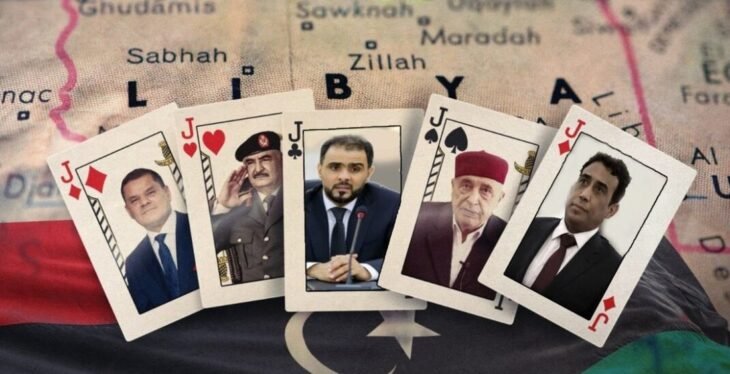
Security actors in Misrata, Zawiya and Zintan since 2011 (4)

Tim Eaton

The development of the post-2011 security apparatuses in the three cities

Armed factions in Misrata, Zawiya and Zintan are formed from social networks drawn from the local context. It is these features, rather than policy from the central state, that has shaped them.

The evolving relationship of Libya’s armed groups to state authority must be studied in the context of the developing political, economic and security landscape in the country.

Misratan, Zawiyan and Zintani armed groups have obtained state affiliation through the defence and interior ministries, as well as via direct relationships with the Presidency Council and the Libyan Intelligence Service. Elements of Zintan’s security sector have also aligned themselves with Haftar’s LAAF. Such institutional affiliations have in most cases proved weak and subject to change.

Armed groups from each of the three cities remain based on social networks. Seen through this lens, the changes in names of the groups, their shifting affiliations and reorganizations, and their influxes of funding shed light on the prevailing distribution of power in the country.

Tracking these developments has become increasingly complex. However, focusing on the positioning of key social constituencies and commanders reveals a clearer narrative, with the formal structures of the security sector reflecting local conditions. These dynamics show that durable institution-building in the security sector at national level remains elusive.

The Misratan security apparatus: social mobilization, restructuring and expansion

In Misrata, support for the goals of the revolution rather than formal state authority remains at the centre of the social contract between the community and its armed groups.

Over the past decade, Misratan armed groups have led and engaged in conflicts across Libya, with hundreds of individuals fighting on various front lines for what they believed to be national causes. The majority of these Misratan fighters do not belong to the military, and do not necessarily have a sense of military hierarchy and command. Consequently, to mobilize their units effectively and maintain control military operations, Misratan commanders need societal support for their cause. For day-to-day operations in times of relative peace, the core state-affiliated elements of the Misratan security apparatuses respond to orders coming down the Tripoli-based official chain of command.

A number of initiatives have sought to formalize Misratan armed groups under the aegis of the Libyan state, albeit in a period where Misrata exerted significant influence over the state itself. This has led the security apparatus in Misrata to become more coherent since 2015, as the prevalence and the impact of activities by members of non-state-affiliated armed groups – including illegal arrests, checkpoints and the exercise of authority over citizens and government institutions – have diminished considerably.

This transformation has been associated with attempts to professionalize armed individuals under military forces and Ministry of Interior agencies. Early efforts, via the establishment of the Libya Shield apparatus and the Third Force, ended in failure. Misrata’s security apparatus has been subject to efforts at restructuring whereby commanders from the city have sought to install a military hierarchy and train personnel, although connections to the revolutionary groups remain firmly in place . The clearest examples of these attempts are the creation of Brigades 166 and 301, the Joint Operations Force (JOF) and the Counter Terrorism Force (CTF).

Brigade 301 was formed from fighters affiliated with the Halbous Brigade in Tripoli in 2015. The Halbous Brigade is a revolutionary armed group that defended the eastern areas of Misrata in 2011 and subsequently became one of the largest, best equipped and most organized brigades in the city. It played a significant role in the Libya Dawn operation in 2014, deploying to Tripoli to oust Zintani forces.

Halbous was led by a cadre of five leading officers. One of them, Mohamed al-Haddad, was appointed to the command of the Central Military Zone in 2017, and a number of leading Misratan armed groups were brought under his command. Haddad was appointed chief of the general staff of the GNA in 2020. His influence stems not only from his official position but also from his connections to Halbous. It is said in the city that Misrata cannot go to war without Halbous.

Brigade 166 was formed in 2015 to protect state institutions. At that time, most of its recruits were fighters from the Nimr Brigade, which had been a prominent revolutionary faction fighting on Misrata’s eastern front lines in 2011. Like Brigade 301, the group has partly relied on its connections to revolutionary factions to maintain its influence.

The JOF, which is responsible for counterterrorism operations, was founded in 2013 under the Ministry of Defence, before coming under the direct purview of the Presidency Council in 2016. Members first joined the group after an announcement was broadcast on Misrata FM radio about accepting new members to a state group. Headquartered in central Misrata, the JOF also contains members from other cities such as Khums and Zliten.

The group is formed of fighters with a reputation for being ‘well behaved’, and who can be trusted to be part of a force intended to support and secure state institutions. When the GNA Presidency Council was formed, it placed the JOF under the direct command of then prime minister Fayez al-Sarraj. The JOF has since come to be regarded as one of the most effective and respected forces in Misrata.

Founded in 2017, the CTF emulated the JOF approach. It recruited fighters who had participated in the al-Bunyan al-Marsous operation against ISIS in Sirte in 2016. under the command of Mohamed al-Zain (who previously commanded an artillery battalion affiliated with the Central Military Zone). The CTF has since collaborated with international partners on counterterrorism operations, and is directly affiliated to the Presidency Council. A concerted effort has also been made to develop regular armed forces with Misratan recruits under the formal aegis of the Central Military Zone of the Ministry of Defence.

All four of these forces continue to draw, to differing degrees, on Misratan revolutionary armed formations. Crucially, they each maintain a military hierarchy within their units, and each force is being expanded via formal training programmes that are separate from the revolutionary factions. Members have received military training, and through their state affiliations Brigade 301, Brigade 166 and the CTF are entitled to receive military serial numbers.

A concerted effort has also been made to develop regular armed forces with Misratan recruits under the formal aegis of the Central Military Zone of the Ministry of Defence. These formal elements containing Misratans recruited since 2011 are not, however, believed to be influential outside the administrative circles of the Central Military Zone, which is responsible for Libya’s central region (including Misrata). In 2019, in response to Haftar’s Tripoli offensive, armed forces that would previously have been expected to be integrated under the Central Military Zone were instead affiliated to the Presidency Council, seen as facilitating more direct funding relationships.

The Central Military Zone has been unable to obtain significant funding from the state. It has played no significant role in security developments over recent years. Key informant interviews indicated that these formal groups would continue to be overshadowed by hybrid forces such as the JOF and others that have formal elements but retain connections to the revolutionary groups, as well as by the revolutionary groups, as there is a continuing perceived need to remain on a state of alert to counter threats by LAAF-affiliated armed groups.

Ministry of Interior-affiliated forces have been able to consolidate their authority within Misrata since 2015. They are now confident enough to provide law and order on the streets and to enforce judicial orders without the need to be supported by armed groups, as was the case previously. Defence groups are not present on the streets of the city, and neither military institutions nor non-state-affiliated armed groups interfere in regular civil affairs.

Consequently, unlike in many other cities including Tripoli, revolutionary armed groups play no role in the day-to-day provision of policing in Misrata, nor are there checkpoints controlled by armed factions. The Misrata Security Directorate, affiliated with the Ministry of Interior, provides policing within the city, running police stations from al-Dafnia gate in the west of the city to Abugrein in the east.

The Security Directorate does, however, seek support from both the JOF, which continues to provide a counterterrorism function, and the Special Support Force (SSF). This form of interagency cooperation is encouraging. The SSF is considered to be one of the most effective Ministry of Interior state forces in Misrata and central Libya. It was founded in 2015 by the city’s municipal council, and was then known as the First Security Division. The group’s main duty initially was to secure the Misrata Medical Centre and to stop armed individuals from entering it and abusing medical staff. Its perceived legitimacy enabled it to address and reduce such violations.

The SSF was commanded by a prominent young Salafi figure, Anwar Swaisi. During Haftar’s military assault on Tripoli in 2019–20, the force was reconstituted by the Ministry of Interior, and it became the SSF under the Ministry of Interior’s General Directorate of Central Support. The SSF is now completely commanded by the Ministry of Interior. With strong social connections to the local community, the JOF and the SSF are considered to be among the most powerful and reliable state security agencies in Misrata.

The Ministry of Interior, as well as judicial authorities, have been cooperating with both in critical missions related to counterterrorism, countering drug-trafficking and restoring public property. However, there have been reports of some members of the JOF having allegedly committed human rights violations on occasion against journalists and activists.

The enduring importance of revolutionary factions

Prominent revolutionary factions within Misrata have continued to eschew a formal affiliation to the state. These include the al-Mahjoub Brigade and the al-Marsa Brigade, among others. The al-Mahjoub Brigade was established in 2011 by rebels from one of Misrata’s largest neighbourhoods, Zawiat al-Mahjoub, in the west of the city, after they gained control of the neighbourhood from Gaddafi-supporting troops. The group then focused on the front lines west of Misrata, starting from the area of Addafnia, moving to Zliten and then on to Tripoli and Sirte.

Al-Mahjoub subsequently took part in all major armed conflicts in the central area of Libya and in Tripoli, including Libya Dawn (2014), al-Bunyan al-Marsous (2016–17) and al-Burkhan al-Ghadab (2019–21). Compared with Halbous, the al-Mahjoub Brigade is less organized and more impulsive about joining armed conflicts that do not directly affect the local security of Misrata.

Like Halbous, al-Mahjoub is more influential in times of war: it does not play an official role in the city. But unlike Halbous, it does not have a state-affiliated sister force. It is, however, capable of significant deployments, and its influence should not be disregarded. For example, the Sirte Security and Protection Force, established following the al-Bunyan al-Marsous operation, was mainly formed by groups belonging to al-Mahjoub (most prominently the Shnina Brigade).

The al-Marsa Brigade is effectively split into three main factions: al-Marsa al-Kubra, commanded by Salim al-Zoufri; al-Marsa 06, under the leadership of Salah Badi; and Death Company, commanded by Khaled Abu Aoud. Al-Marsa was formed in 2011 by rebels mainly from the al-Ramla and Garara neighbourhoods of Misrata. While Gaddafi’s troops did not manage to reach areas close to the central coast, such as al-Ramla and Garara, rebels from those areas also participated in the battles on Misrata’s eastern front lines.

Elements of al-Marsa received a state affiliation under the NSG in 2014–15, but they seem to have lost this following the appointment of the GNA. In May 2015, the al-Marsa 03 was positioned in Sirte power plant and was the last group to withdraw from the city after members of the NSG and the GNC refused to support Misrata armed groups in their conflict with ISIS.

***

Tim Eaton – Senior Research Fellow, Middle East and North Africa Programme.

________________

Deadlock and Obstruction: Bathily’s Initiative and the Predicament of a Political Settlement in Libya (2)

Bilal Abdullah

Reactions to the Initiative

Reactions to the initiative by parties to the Libyan conflict have varied. Positions rejecting it were based on various reasons and motives. The following are key positions on this initiative:

The Dbeibeh Government:

ThePrimeMinister of the Government of National Unity, Abdul Hamid al-Dbeibeh, agreed on November 28, 2023, to participate in the scheduled meeting. However, details of his position and reservations reflect a reserved and cautious attitude toward the initiative. Dbeibeh stressed that the meeting should focus on “reaching a legal and constitutional foundation for the launch and success of the electoral process.” He assumes that a Security Council resolution supports no legal and constitutional foundation.

This position contradicts the emphasis in Bathily’s initiative that the negotiations will be conducted based on recognizing the two laws passed by the HoR without allowing the negotiating parties the right to establish any other basis of legitimacy or the ability to circumvent these laws. The initiative only requires “good intent” from the negotiators to solve outstanding issues. Dbeibeh also reiterated his rejection of discussing forming a new government before the elections. Instead, he proposed establishing a higher commission to oversee elections in which security and military agencies from all over Libya take part, something that keeps his government intact while allowing other powers to shoulder some of its tasks.

The House of Representatives (HoR):

During his inauguration of the HoR’s session on November 28, 2023, Speaker Aguila Saleh opposed the Dbeibeh government’s participation based on the initiative. Saleh said the term of this government has ended, calling for Osama Hammad’s government, whose formation was authorized by the HoR, to take part in the meeting instead. He stressed that the election laws passed by the HoR should not be subject to debate and that the only article on the meeting’s agenda should be forming a new mini-cabinet with a task to oversee elections. He added that the new government should be recommended by the two houses (the HoR and High Council of State), with the former House of Representatives granting it a vote of confidence.

Two points can be made about Saleh’s stand on the initiative. First is the assertion that electoral laws are final and applicable. This means that the HoR has reservations about the main item, which is the objective behind presenting this initiative. Second, Saleh pointed out that he agreed with the head of the High Council of State to meet soon to discuss forming a government, which he considers the main item the meeting should address. This means that he is committed to the bilateral track of negotiations to settle the government formation issue before dealing with the meeting as a second-order event following the bilateral track.

Hammad’s Government: It can be said that the Stability Government’s position, appointed by the HoR and led by Osama Hammad, is the initiative’s most decisive rejection.  This government dismisses the initiative because it offers no representation in the meeting and raises two other issues worth noting.

Firstly, it objected to the Dbeibeh government and the PC’s participation in the meeting. Secondly, its criticism extended to “the UN envoy’s credibility, questioning his impartiality,” calling on the UN Secretary-General, António Guterres, to appoint a new UN envoy based on “the criteria of impartiality, competence, and integrity.”

The High State Council:

It has not explicitly opposed the initiative. However, statements released by its president, Mohamed Tekala, during his visit to Moscow tended to agree with the Dbeibeh government’s position on the legislative framework for elections. He emphasized the need to agree on electoral laws before moving forward. Although Tekala’s position synced with the initiative, his previous statements clarified that he refused to acknowledge the constitutionality of HoR enacted laws, citing what he considered a violation of the 13th constitutional amendment.

The State Council and the HoR have a shared interest in returning to bilateral talks while sidelining other tracks, including what the initiative proposes. Despite the State Council’s alignment with the Dbeibeh government on electoral laws, Tekala will likely respond to Aguila Saleh’s efforts to organize bilateral meetings. These discussions may address additional issues such as government formation or raising the sovereign posts issue, particularly considering the recent signs of a strained relationship between Sadiq al-Kabir, the Central Bank governor, and Dbeibeh.

The Presidential Council

During a meeting with Bathily on December 4, the Presidential Council (PC) President, Mohamed Menfi, emphasized the Council’s commitment to a strategy of positive neutrality to ensure the success of the political dialogue. Menfi’s recent meetings with international officials show a serious focus on advancing the initiative and garnering enough support for its success.

The Libyan National Army’s General Command

While the army command in Benghazi has not issued official statements about the initiative, reports from Masar TV, close to the eastern Libyan camp and citing unidentified sources within the General Command, indicate that Haftar’s forces oppose the initiative, mainly due to the exclusion of the Hammad government from participation.

Mayors of Municipalities

Mayors of 56 Libyan municipalities, primarily in the east and south, released a statement rejecting Bathily’s initiative. Signatories accused the UN envoy of “siding with a particular party to assist it in seizing power.” Later, mayors from 20 municipalities in the west followed suit and rejected the initiative.

While these mayors do not formally represent a party in the five-party meeting, their positions will likely influence the consultative process, which Bathily plans to utilize to engage various segments of society, including notables, political parties, and civil society.

Western Ambassadors

On November 23, ambassadors from five Western countries – the United States, the United Kingdom, France, Italy, and Germany – issued a joint statement supporting Bathily’s call for institutional players to convene in a joint meeting. They declared their commitment to providing the necessary support for its success. While the statement emphasized support for bringing institutional players together, it did not refer to the consultative process involving social components and other political stakeholders.

Bathily does not seem optimistic about the initiative’s success. The French-language magazine Jeune Afrique published an interview with the UN envoy just days after its introduction. In the interview, he expressed his frustration with the political class in Libya, accusing its leaders of “not wanting a solution to their country’s crisis and being unwilling to proceed with postponed presidential and parliamentary elections.”

______________
LIBYA: THE CANARY OF MENA’S NORMALIZATION

Tarek Megerisi

INTRODUCTION

Libya served as the central battleground for the intra-regional rivalries that defined the Middle East and North Africa (MENA) region in the 2010s. Despite the problems it posed to all the interfering parties, Libya’s strategic assets have an enduring appeal, ensuring that all those who intervened never truly left, but rather just continuously reshaped their interventions.

Today, Libya remains the battleground of a cold conflict between competing powers who claim to be normalizing their relations. As such, Libya’s contested transition symbolizes the flaws of the current normalization process and highlights the fault lines where it might eventually fracture. Russia’s invasion of Ukraine in 2022 and its geopolitical and economic ramifications also exacerbated key variables of the Libyan conflict, such as energy demand, Western diplomatic bandwidth, hostility to Russia, and price spikes of essential goods. These changing variables in turn increased the battle for Libya, risking a return to a state of chaotic disorder and potentially, dragging the rest of the region with it.

A SPOIL OF GEOPOLITICAL WAR

Libya emerged as a prized target in the regional battle that was catalyzed by the 2011 uprisings. At the heart of North Africa, with almost 2,000 kilometers of coastline on the central Mediterranean and representing a gateway to the rest of the continent, Libya’s geography is highly strategic for powers looking to increase their influence in the Mediterranean or Africa. Moreover, with the largest proven oil reserves in Africa, and a treasure in foreign exchange reserves (in 2011), there was a strong economic attraction.

Libya was fragile after a complex civil war to remove long-term dictator Muammar Gadhafi, and its weak political class led an ill-defined transition following the war, making it vulnerable to intervention. Interventions in Libya—attempts to co-opt Libya’s transition and ruling class to serve the interests of the intervening nation—were often a precursor to conflicts that would erupt regionally or dynamics that would continue to evolve across the broader region.

For example, the early years of Libya’s transition was defined by an intra-Gulf competition between the United Arab Emirates (UAE) and Qatar, years before the rivalry devolved into the infamous Qatar blockade of 2017. The two small yet ambitious and resource-rich states competed antagonistically to increase their influence across the MENA region following the 2011 uprisings. While Doha hosted former political oppositions, Abu Dhabi instead attempted to empower institutional remnants of former regimes. In Libya, as elsewhere, neither really succeeded, and combined, they aggravated existing drivers of instability.

The rise of Libya’s renegade general Khalifa Haftar in 2014 showcased an Emirati-led alliance with Egypt, and then France, to project power and increase their influence across the region, an evolution of their earlier rivalry with Qatar. Egypt’s newly empowered military found an ideological ally in the UAE as it sought to cultivate a new military institution in Libya, which could replicate their putsch.

Meanwhile, Paris was seduced by the anti-Islamist rhetoric of Abu Dhabi, Cairo, and Haftar himself, and backed the would-be strongman to expand their own influence in Libya whilst strengthening what they considered to be strategic and potentially lucrative regional alliances with the UAE and Egypt. Russia’s role in printing banknotes for Haftar’s enterprise, and the deployment of the Wagner Group signified a more interventionist foreign policy that leaned heavily on private military contractors.

Finally, the antagonisms between Türkiye, Egypt, and the UAE, felt in Syria, northern Iraq, and the eastern Mediterranean was inflamed by the Turkish military intervention to defend Libya’s capital Tripoli from Haftar’s 2019 assault. The decisive role of Turkish drones in their intervention in Libya was a seminal moment and the tactics trialed around Tripoli would evolve through conflicts in, for example, Syria. Even in the Nagorno-Karabakh and Ukraine conflicts Turkish drones played a decisive role.

Accordingly, every iteration of the ratcheting regional battle is etched into the history of Libya’s transition. Similarly, the stalemate following Haftar’s defeat in 2020 can be considered the start of the regional normalization process. Despite the collapse of Haftar’s forces, Russia kept Libya divided down the middle at the city of Sirte, while Egyptian President Abdel Fattah el-Sissi declared it a red line, threatening to send troops should the Turkish-backed Libyan government forces try to reclaim it.

This regional power balance between Russia and Türkiye, the potential escalation by Egypt, and Haftar’s glaring failure, all contributed to a collective rethink. The election of Joe Biden as president of the United States (U.S.) suggested a changing geopolitical environment that would be less tolerant of destructive adventurism.

NORMALIZATION, OR WAR BY OTHER MEANS

Since then, the once-competing regional powers have begun to “normalize” their relations by repairing them, reducing violent competition, and looking for shared opportunities. Different aspects of this normalization are again reflected in Libya’s attempts to transition through elections following Haftar’s war on Tripoli.

The UAE and Türkiye continue to use Libya as a platform, consolidating their holdings, looking to the other’s sphere, and exploring projects of mutual benefit. Egypt and Türkiye remain in a cold war, however, where Libyan issues—primarily Cairo’s desire to control Tripoli and the perceived threat from Turkish consolidation— are partially obstructing their normalization. Since the end of the war, Türkiye has capitalized on its victory by establishing deep economic and security ties with Libya’s new government led by Abdul Hamid Dbeibah, which was formed in February 2021 to lead the country to elections but has instead been diverted to more profitable pursuits.

Controversially, in October 2022, Türkiye entered into broad memorandums of understanding with Dbeibah’s government9 designed to facilitate Turkish exploration for offshore gas in waters disputed between Greece and Libya as part of its eastern Mediterranean gambit. The UAE helped consolidate Haftar’s position after the war, allegedly bankrolling the Wagner Group’s continued presence.

Emirati companies have also engaged in reconstruction and other activities in Haftar-controlled eastern Libya. Ankara and Abu Dhabi have made economic encroachments into each other’s spheres while attempting to extend their influence over key personalities therein. In addition, Turkish energy companies are exploring investments in eastern oilfields through Haftar’s son Saddam, while the UAE is scoping out roles in the new free trade zones that are being developed under Dbeibah.

The paradigm of the post-normalization intrigue where all benefit, but some more than others, was illustrated by Abu Dhabi brokering a deal between Dbeibah and Haftar, ending the latter’s long-term oil blockade. Crucially, the deal involved appointing the former central bank governor Farhat Bengdara as the new chairman of Libya’s National Oil Company (NOC)16 who is closely connected to Abu Dhabi, allegedly even holding Emirati citizenship.

Whilst all but the Libyans themselves benefited from the increased capital flows following the resumption of oil sales, the UAE now dominates Libya’s key asset. Unlike the UAE, Egypt has pursued a more confrontational policy with Türkiye, despite the ongoing détente between Ankara and Cairo. Initially, Egypt also exploited Dbeibah’s business-diplomacy to great profit. However, Cairo quickly turned on Dbeibah, and in 2022 spent considerable time trying to replace him with a new prime minister, Fathi Bashagha, who was appointed through Egypt’s main proxy, Libya’s parliamentary speaker.

Ankara was wary of Egypt’s strategy, which they considered overly entitled given Cairo lost the war for Tripoli, yet it retained control of Libya’s legislature and was now actively trying to capture its judiciary and executive. So, when Bashagha attacked Tripoli after failing to politically seize power, Türkiye decisively intervened to end the fighting and tried to stabilize the situation.

This friction between Egypt and Türkiye over Libya hampered their reconciliation process. Despite continuous failure, Cairo doubled down on their Libya position, publicly refusing to recognize Tripoli’s government at the Arab League22 and trying to diplomatically isolate them. One of Cairo’s alleged three conditions for full normalization with Ankara was to end Türkiye’s military presence in Libya.

THE RUSSIA-UKRAINE SHOCKWAVE

Russia’s invasion of Ukraine in February 2022 triggered geopolitical shockwaves that arguably heightened the precariousness of the normalization and Libyan stability. First, the West’s absorption in the conflict and its support for Ukraine left other foreign policy issues unattended, allowing Libya’s transition to drift and be delegated to regional actors.

Consequently, Libya’s hopes of resurrecting the failed elections of 2021 received a major blow the year after as Egypt took control of the process, refocusing the transition from elections to Egypt’s bid to reshuffle Libya’s government. Today, the shifting focus to combatting Russian operations globally has led to senior U.S. officials reaching out to Haftar and a Libya policy that centers on constructing a new joint military body to expel the Wagner Group from Libya, rather than focusing on Libyan elections. The economic shockwaves of the invasion of Ukraine that impacted already fragile economies like Egypt and Türkiye, likely catalyzed more direct maneuvers for Libyan assets.

This aligns with Egypt’s shift from working with Dbeibah to trying to replace him. Although Libya accounts for roughly just 1% of the global oil market as of 2022, the oil price spike and urgency to compensate for Russian sanctions elevated Libya’s value and led the UAE to seize the NOC by lifting the oil blockade.

The Abu Dhabi deal, which added roughly 850,000 barrels per day to the global markets,28 was likely facilitated by Biden’s failed attempt to persuade Saudi Arabia to increase production by 600,000 barrels per day. Without the desperate need for additional oil in the market, the initial move to replace the NOC chair would have faced stiffer resistance, and the division of Libya’s oil revenues among its conquerors would have received greater scrutiny. Ultimately, the inflated oil revenues that do not benefit ordinary Libyans, together with price inflation and ongoing liquidity problems have caused the quality of life in Libya to drop rapidly.

CONCLUSION

If, as the cliché goes, war is simply politics by other means, then Libya’s case study demonstrates that the ongoing normalization in the MENA region is simply war by other means. Whether the more sophisticated Türkiye-UAE dynamic, involving consolidation alongside political moves for key assets or influence in rival territories, or the cruder Egyptian challenge to Turkish positions, the underlying antagonistic and competitive dynamic persists, leaving numerous possibilities for it to reignite into a hot proxy conflict.

Moreover, the entire competition is built upon the exploitation of Libya’s weakness. Following over a decade of state failure, dilapidation, and numerous failed international attempts to drive political progress, Libyan patience is wearing thin. The longer this venal abusive mode of politics persists, the more likely that a mass disruptive event will occur (such as in 2011), undermining the entire basis of normalization in Libya and other states where regional powers compete.

***

Tarek Megerisi is a senior policy fellow with the Middle East and North Africa program at the European Council on Foreign Relations. His work mainly addresses how European policymaking toward the Maghreb and Mediterranean regions can become more strategic, harmonious, and effective— with a long-term focus on Libya. He has worked on a range of issues, including post-conflict stabilization, development and democratization, Libya’s domestic and international political processes, economic reform in Tunisia, and the eastern Mediterranean disputes.

______________________

SOURCE: The Middle East’s Fragile Reset: Actors, Battlegrounds, And (Dis)Order, Dossier, November 2023

Deadlock and Obstruction: Bathily’s Initiative and the Predicament of a Political Settlement in Libya (1)

Bilal Abdullah

  • The outline of the initiative by the UN Secretary-General’s envoy to Libya, Abdoulaye Bathily, suggests that it aims to broaden political participation to resolve the Libyan crisis. Bathily wants to include other stakeholders, end the monopoly of current players over the conflict’s potential outcome, and control the path toward a final settlement.
  • Bathily was keen to avoid possible accusations by some Libyan political actors that he sought to impose external solutions. He also stuck to the international support for his initiative to face down the usual skepticism of these Libyan actors.
  • There are early signs about the likely failure of Bathily’s initiative, whether because of the difficulty of holding the five-party meeting or the other difficulty of reaching compromises to resolve outstanding issues if the meeting is held.
  • The chances of ending Libya’s political stalemate are modest. However, continuing the political process, preserving achieved gains, and limiting the local players’ ability to do more harm are important priorities.

***

On November 23, 2023, the United Nations Secretary-General’s envoy to Libya, Abdoulaye Bathily, introduced an initiative to end the political deadlock in the country and achieve some settlement. The initiative quickly faced objections, suggesting its chances of reviving a political solution are modest.

The Initiative’s Content

According to the text published on the United Nations Support Mission in Libya (UNSMIL) website, the main points of the proposed initiative include the following:

  • It starts with working to ensure that the political process remains inclusive. It said Bathily would conduct focused consultations with a broader spectrum of Libyan stakeholders, such as the Presidential Council (PC), the House of Representatives (HoR), the High Council of State, and the Government of National Unity (the Tripoli government). The stakeholders include political parties, military and security actors, elders and notables, cultural and linguistic components, academics and youth representatives, women, and civil society.
  • Official actors are the “initiative’s core” who would negotiate the final compromises on resolving outstanding issues and pave the way for elections. Bathily will consult with unofficial actors – not specifically named – to present their views to institutional actors authorized to reach final agreements with binding results.
  • Bathily has requested the five foremost leaders to designate representatives to participate in a preparatory meeting (to be determined) to discuss the date, venue, and agenda. They will also identify the outstanding issues that need to be resolved to make it possible for the High National Elections Commission to begin election preparations based on the laws passed by the HoR.
  • Another point stressed the national character of the Libyan-led, state-owned political process. The UN envoy only plays a facilitating role based on the UNMIL mandate while calling upon the international community to fully support the envoy in implementing this mandate.
  • Several remarks can be raised regarding the content of this initiative:
  • Its outlines were revealed nine months after its initial announcement during Bathily’s brief at the Security Council in February. During this period, the initiative changed. This is why the “unveiling” showed new things not in the initial announcement and the subsequent media statements. Initially, the initiative was called a “higher steering committee” in which all concerned actors participate. However, in the final version, it turned into almost one central meeting for official actors, besides other meetings on the sidelines of the main one. This means the true power in negotiating outcomes will lie in the hands of the prominent leaders who do not want to leave the political scene and benefit from prolonging the transitional period.
  • The initial version of the initiative suggested that it aimed to broaden participation to include other stakeholders, end the monopoly of current actors over the political playing field, and control the path leading to the settlement. Giving up in favor of a summit-like meeting, instead of the time-consuming committee that may go nowhere, can be interpreted as the initiative not offering something new through a final settlement. Instead, it looked like an attempt to balance the two camps while preventing overlapping tracks.
  • In terms of balance, the five institutions invited to the meeting can be viewed through the 2+2+1 formula.  The HoR and General Command represent eastern Libya, the Tripoli government represents western Libya, and the High Council of State and the Presidential Council are considered neutral institutions open to all parties. Choosing these institutions mainly reflects the desire to have the most influential players on board. For instance, the government of Osama Hammad in eastern Libya cannot be viewed as a political actor of its own will, independent of the HoR or the General Command, because it has no international recognition. Moreover, the General Command is not matched with a military representation from western Libya to avoid overlapping this track and the 5+5 Joint Military Committee (JMC).
  • Bathily was keen to emphasize that the electoral laws legislated by the HoR and officially received by the High National Elections Commission form the basis of negotiation without going back to questioning the legitimacy of the laws in line with the Security Council resolution number 2702 in 2023. Since the failure to hold the December 2021 election, Libya – for the first time – has a legal and constitutional framework for elections. The meeting of the five leaders aims to discuss outstanding issues to enable elections based on existing laws.

There is ambiguity about a possible conflict between recognizing the laws and how binding the agreed-upon outcomes. As has become repeatedly clear, any agreed-upon outcomes in the past have been reneged on later by one party or another with no shortage of pretexts to invoke. This is because the HoR tends to introduce amendments to the negotiated deals without checking with the parties.

What adds to this ambiguity is Bathily’s reliance on the good intentions of negotiating parties to solve the outstanding issues. This means that the consensus required to amend some articles in the two laws will remain less binding, thus opening the way for the HoR to renege on any agreement or repeat previous practices regarding unilateral amendments. The only advantage of this situation is guaranteeing the minimum achieved gains from existing laws supported by the Security Council resolution.

_______________________

Security actors in Misrata, Zawiya and Zintan since 2011 (3)

Tim Eaton

Misrata, Zawiya and Zintan after 2011

Each city has developed its own narrative and conception of its role in the post-2011 period.

The security apparatuses of Misrata, Zawiya and Zintan have had a major influence on post-2011 governance in Libya. Although the city of Zintan has around 60,000 residents, its forces occupied the capital, Tripoli, following the ouster of the Gaddafi regime, and they played a key role in the political battles that subsequently engulfed the Libyan transitional authorities.

Misratan-led forces drove Zintani armed groups from the capital in 2014, leading to the administrative division of the country and sparking a chain of conflicts along the northwestern coast that Zintani forces viewed as an existential threat.

Since 2019, Zawiyan forces have been at the heart of a tug of war between Libya’s contending authorities, and have leveraged their position in return for material support to achieve supremacy over their local rivals.

To understand the structure of the security apparatuses in Misrata, Zawiya and Zintan, it is necessary to chart the political positioning of the cities’ elites and the shifting allegiances of their armed groups, their commanders and their social networks.

Armed groups from all three cities all fought on the side of the revolutionaries against the Gaddafi regime in 2011, but went on to fight on different sides in further conflicts in 2014 and in 2019–20. Misrata, Zawiya and Zintan have become important political power centres and military powers, making them influential players in the post-2011 political and security landscape.

There are distinct similarities in the experiences of the three cities in the 2011 war. Misrata built up significant military power in order to defend itself from a regime onslaught amid sustained street fighting. Residents of Zawiya ousted regime forces from the city in February 2011, only for the regime to recapture the city.

The rebels’ military commander was killed, and Zawiya then remained under regime control until August 2011, when rebel forces retook the city after intense fighting. In Zintan, military defectors and civilians came together to oust regime forces from the city in February 2011, subsequently, despite heavy bombardment, resisting an attempt by the regime to retake control there.

Zintan became a strategic location and a key transit point for weapons and supplies for rebel forces, and its forces subsequently spearheaded the capture of Tripoli from the Gaddafi regime in August of that year.

Since this time, relations between Misrata, Zawiya and Zintan have waxed and waned, with each maintaining its own narrative of events. Zintani forces remained in Tripoli after Gaddafi was ousted, providing a springboard for Zintan’s unprecedented influence on the national system of government. Forces from Zintan provided security for the General National Congress (GNC), and they enjoyed close relations with the National Forces Alliance and patronage from the United Arab Emirates (UAE).

The willingness of Zintani forces to reach an accommodation with elements of the former regime – for example by integrating armed personnel their forces and helping former regime figures escape Tripoli – brought them into dispute with other parts of the rebel movement. The bitter battle over who should be allowed to participate in post-revolutionary governance structures led to a schism, as the GNC pushed through a Political Isolation Law.

The Zintani narrative of the war of 2014 is one of betrayal, which has continuing resonance today. In 2014, Misratan politicians and armed groups were at the forefront of the development of the Libya Dawn alliance that ousted Zintani groups from Tripoli following disputed elections, sparking a renewed civil war. While analysis of the 2014 conflict tends to focus on Tripoli, fighting also took place in the northwestern region, with Zintan’s factions engaging from the neighbouring town of al-Rujban to R’as al-Jdir on the Tunisian border.

A significant number of armed fighters and civilians displaced by the conflict relocated to Zintan. Zintani armed groups subsequently affiliated themselves predominantly with the Interim Government that was established in eastern Libya following the relocation of the House of Representatives.

Misrata’s narrative of the 2014 war is that the city acted as the guardian of the revolution. Following the conflict, Misratan armed groups, and the city more broadly, aligned with the National Salvation Government (NSG) that established itself in Tripoli in the ensuing governance split.

From its detractors’ perspective, Misrata had sided with the Islamists in the GNC to support a coup against the winners of the recent elections. Yet, for its supporters and many in Misrata itself, the intervention aimed to prevent the return of authoritarianism under Haftar.

Elements from Misrata also supported groups fighting Haftar’s ‘Dignity’ operation in eastern Libya, albeit largely with materiel rather than fighters. Haftar has remained the city’s antagonist ever since.

Zawiya’s own narrative aligns with that of Misrata. While less influential in the revolutionary camp than Misrata, Zawiya had played an important role in the development of the Libya Revolutionaries Operations Room (LROR). Under the leadership of Shaaban Hadiya (also known as Abu Obeida al-Zawi), the LROR was formed in 2013 from Islamist armed groups from across the country. It had the clear objectives of ousting officials who had worked with the Gaddafi regime, and of forcing Zintani armed groups from the capital.

In the 2019–20 war for Tripoli, Misratan and Zawiyan forces united behind the Government of National Accord (GNA), which had been formed in December 2015 following the UN-mediated Libyan Political Agreement, while Zintani forces were split between backing Haftar’s LAAF and support for the GNA. Zawiya’s forces in particular were the target of significant outreach by Haftar’s forces, but the city’s actors ultimately coalesced against the LAAF. This schism within the revolutionary bloc has never fully healed.

A further split emerged following the dispute over the legitimacy of the GNU, which was formed through UN mediation and ratified in March 2021 to reunify Libya’s divided authorities and to prepare the country for elections. The collapse of the election process and the subsequent recriminations led to the formation of the GNS, which was appointed by the House of Representatives in February 2022. As at late 2023, the allegiances of the main Zawiyan armed groups were split between the GNU and the GNS; the majority of Zintani armed groups appeared to be aligned with the GNS; and the majority of Misratan groups with the GNU.

***

Tim Eaton – Senior Research Fellow, Middle East and North Africa Programme.

________________
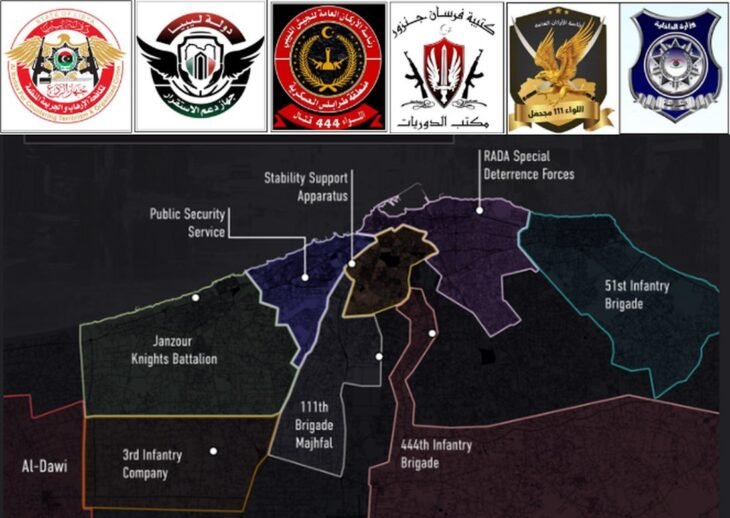
Libya’s Kleptocratic Boom (5)

The Sentry

Institution creation and the diversion of funds

One of the most effective approaches adopted by Libya’s kleptocrats has been to create new entities that are administratively independent from state institutions. Once established, these entities obtain their own trade financing and issue their own contracts, offering further means of capturing funds in exchange for subpar performance.

Armed group leaders have been particularly active in this field in recent years. A former government official noted that the Ministry of Interior has struggled to curtail the activities of armed groups operating under its aegis as a result of those groups’ establishment of independent—and largely autonomous—state entities.

Libyan state assets abroad have proven most vulnerable to plundering. The competition among networks of kleptocrats for control of the estimated $68.4 billion in assets of the Libyan Investment Authority (LIA) offers a perfect example of these trends in action. To this day, the LIA is unable to publicly produce consolidated accounts for the subsidiaries and holding companies that it owns and, at least theoretically, controls.

This means that the LIA’s overall portfolio and its true value remain unknown. Libyan officials possessing a high level of expertise on the LIA’s portfolios have quietly endeavored to take over chunks of the sovereign wealth fund’s assets, despite the continuing existence of a UN asset freeze instituted in 2011. The asset freeze could have been an effective means of protecting Libyan state assets, but it has been inconsistently enforced and even ignored in some jurisdictions.

Beyond this, a wide array of state-owned enterprises known for being cash-rich have come under significant pressure. In both the country’s west and east, the Libyan Post Telecommunications and Information Technology Company (LPTIC) has been a target for the diversion of funds by armed actors.

Blue-collar schemes

The informal component of Libya’s economy has expanded markedly since 2011.211 A subset of that growth has unfolded in the criminal realm as actors on the ground who previously held limited social and economic standing have translated their territorial control into wealth and power. The rise of these blue-collar actors has been a salient feature of the last decade and is still transforming Libya’s politics. Compared to the white-collar schemes, the blue-collar schemes of these new entrants are less reliant upon the financial resources of the state. For instance, arms trafficking continues to be a thriving activity in present-day Libya.

Diesel and gasoline

With the official domestic price of gasoline maintained at the equivalent of $.03 per liter—one of the cheapest prices in the world—Libya’s fuel subsidy program is subject to widespread abuse. It causes Libya’s National Oil Corporation (NOC) to import immense quantities of refined products from abroad, in addition to the fuel it refines domestically. Libya’s subsidy costs for gasoline, diesel, and other refined petroleum products amounted to about $7 billion. In 2022, those fuel subsidy costs exceeded $12 billion.

The volumes of fuel procured and distributed by the NOC far exceed the legitimate consumption within Libya. The gap is attributable to fuel smuggling, which sees a large proportion of both the imported fuel and the domestically produced fuel transferred illegally to neighboring countries. Several informal networks illegally divert billions of dollars’ worth of the fuel imports using a variety of techniques. Fuel flows in from Italy, as well as other countries such as Greece, Turkey, and Azerbaijan,228 through five principal points of entry: Zawiyah, Tripoli, Misrata, Benghazi, and Marsa al-Hariqa, near Egypt.

From there, a substantial chunk of the imported fuel is illegally rerouted into the parallel market to be sold at a much higher price than the official subsidized price of .15 LYD ($.03) per liter. While some of the diverted fuel is sold for profit inside Libya, the rest is re-exported illegally.233 Destination countries include Sudan, Chad, Niger, Tunisia, Albania, and Turkey. Depending on the geography and the circumstances, refined petroleum diverted from Libya’s fuel subsidy program is taken to these foreign markets using vessels, tanker trucks, or smaller vehicles.

The overall financial cost of Libya’s fuel trafficking industry allegedly hovered around $750 million per year for several years. But a key change occurred in autumn 2021: the NOC began using fuel-for-crude swap—or barter—transactions, which have enabled it to import fuel without requiring any dollar funding from the CBL. Thus, in 2022, the quantity of imported refined products increased by about 19% as compared to 2021.

The overwhelming majority of this spike was likely attributable to illicit trade, meaning that the fuel trafficking industry’s dollar size has surged.248 It is also a significant source of concern that, since the No-vember 2021 change, the fuel subsidy has been removed from the budget in CBL disclosures. Placing the entirety of the abnormally large subsidy program outside of the budget conceals a significant amount of state spending.

Although western Libya has retained its prominent role in the country’s fuel-smuggling sector, indications are that the bulk of the ongoing boom is concentrated in the eastern province. In September 2022, a revealing incident saw Albanian authorities stop a vessel sailing from Benghazi carrying approximately $2.2 million in marine gasoil. The name of the ship in question had been featured in a letter warning of increased fuel-smuggling activity in the port of Benghazi that had been leaked by an anonymous NOC official four months before the Albania seizure.

Another document, as well as indications from a senior Libyan official, suggest that Benghazi has indeed become the locus of more abnormal fuel movement compared to prior years. Amid this worrisome trend, the US government has expressed concern that the Wagner Group could tap into Libya’s hydrocarbon sector, given the group’s links to the Haftar family, which controls eastern Libya, including the ports of Benghazi and Marsa al-Hariqa.

A senior NOC official told The Sentry that he harbored similar concerns about Russian and other non-Libyan units potentially benefiting materially by capturing and diverting Libyan-funded fuel. The diversion of subsidized fuel should not deflect attention from several other forms of abuse likely plaguing the NOC, including rogue crude oil exports. It is likely that several billion dollars are stolen from the Libyan public every year via unreported exports of crude oil, as indicated by a knowledgeable source and a non-public watchdog report.

Several Libyans with expertise in the matter suspect that the phenomenon of missing oil export income might be growing in east and west Libyan oil terminals alike. These shifts in the oil sector may result from the prevalence of opaque bargains between Libyan factions in conjunction with the interference of some foreign states. In 2022, the UAE brokered a deal between the Haftar and Dabaiba families to agree to a leadership change at the NOC. However, since the new chairman took the helm, some Libyan outlets have alleged that Saddam Haftar siphoned large sums from the treasuries of NOC subsidiaries.

There are also lingering questions as to the precise allocation of 34.3 billion LYD (about $6.8 billion) in extraordinary funding received by the NOC from the CBL in 2022. If these concerns were to be corroborated, they would highlight how intra-elite arrangements pose an existential threat to Libya’s most vital economic institution.

Scrap metal

Illicit scrap metal exports have burgeoned into a major concern for Libya, as various armed groups exploit their power, security provider status, and ostensible affiliation with the state to profit from the ransacking of public infrastructure.

These activities result in significant damage to still-functioning installations such as the Great Man-Made River,273 telecom cables, and several agricultural projects. Once collected, the raw materials are shipped abroad. An eyewitness from Kufrah told The Sentry about the theft of metal components from public infrastructure in southeastern Libya. He indicated that the Military Investment Authority had declared the equipment old and broken down before Brigade 106, a large armed unit linked to Haftar, transported the metal to Benghazi Port for export.

The same practice has been ongoing in western Libya, as well. Scrap metal stolen from public infrastructure is shipped to buyers—often based in Turkey—mainly via the ports of Misrata and Khums.

Gold

Although Libya has historically produced virtually no gold, its black market has long acted as an informal gold-trading platform, while local artisanal gold mines have slowly begun to emerge in the south of the country. Particularly since 2014, Libya has been used as a transit area toward places such as the UAE and, to a lesser extent, Turkey. Entities active in sub-Saharan Africa, including the Sahel, sometimes use Libya’s transport infrastructure—including its international airports—as they export gold to destinations outside the continent.

The utility of using Libya’s black market as an intermediary stop resides in the country’s state weakness, which makes it possible to maintain opacity, evade the payment of formal taxes, and elude any level of accountability. Two crucial points of transit are used to export gold on an illicit basis: the port and airports of the Misrata-Zliten-Khums area and those of Benghazi. The gold originates mainly from Chad, Niger, Burkina Faso, and Mali. In addition, gold mining has been slowly developing in

Libya itself, both in the southwest and the southeast. In ongoing efforts to kick-start the clandestine extraction of gold on Libyan soil, the involvement of non-Libyan actors is suspected.

***

The Sentry is an investigative and policy organization that seeks to disable multinational predatory networks that benefit from violent conflict, repression, and kleptocracy.

______________________

World’s most dangerous countries to visit in 2024 – including South Sudan, Libya and Afghanistan

Rachael Bunyan

The International SOS’s annual interactive map shows where travellers are most likely to face security threats. South Sudan, Libya and Afghanistan are among the most dangerous countries on earth to visit in 2024, it has been revealed. That’s according to an annual interactive map that shows where travellers are most likely to face security threats based on the risk of political violence, social unrest, violent and petty crimes and, this year, the impact of climate change. 

Among the safest places to visit are Greenland, Finland, Norway, Iceland and Luxembourg, with consultancy firm International SOS saying the security threats there are ‘insignificant’. In contrast, countries including Libya, South Sudan, Syria, Ukraine and Iraq are among the most dangerous to visit with these nations ranked as having an ‘extreme’ security risk. 

International SOS pointed to how ‘new and evolving conflicts’ in Gaza, Lebanon, Russia and across the Sahel region of Africa have seen the risk rating increase for these nations. In the Central and South American nations of Venezuela, Honduras and Haiti, the security risk to travellers is deemed as ‘high’ following a consistent rise in criminality and unrest. 

In contrast, Norway, Finland and Iceland are all labelled as having a low risk of medical problems and security issues, meaning they are the safest – along with the likes of Switzerland and Greenland. When it comes to health, countries with the highest risk of contracting medical issues or disease include African nations Niger, Sudan, Libya, Central African Republic, Somalia and Sierra Leone. 

Yemen was also labelled a high risk country when it came to health along with Iraq, Syria and North Korea. At the opposite end of the ranking, places with a low risk of disease are most of those in Europe, Canada, the US, New Zealand, Australia, South Africa and Chile. With the 2024 risk map, International SOS says it aims to provide a ‘better understanding of the wider security situation in countries which employees may be travelling through or working in’. 

The map ‘helps to better inform organisations so they are able to create tailored solutions to mitigate the specific risks that their workforces may encounter,’ the consultancy firm said. Sally Llewellyn, global security director at International SOS, said: ‘For the coming year, geopolitical tensions, unrest and political instability are expected to impact business operations. 

‘This is reflected in the map with the Sahel, parts of the Middle East and Ukraine in the “high” or “extreme” security risk category. ‘International SOS continues to support organisations operating in these locations, including through providing verified information and advice on how such risks will affect their workforce or by supporting evacuations where needed.’

This year, for the first time, International SOS included a category focusing on the impact of climate change on nations across the world. International SOS said it was ‘seeing a rising trend in the number of climate-related alerts being issued to clients as rising global temperatures are increasing health risks around the world’. 

In the UK, France, Germany, Spain and Italy, the risk posed by climate change is deemed ‘low’ but in countries such as Nigeria, Democratic Republic of Congo and Syria, the risk is ‘very high’. Whilst the risk posed by climate change is ‘low’ for most European countries, International SOS pointed to how this summer’s ‘Cerberus’ heatwave wreaked havoc on the continent. Temperatures reached above 40C consistently for days, with tourists seen passing out in Rome due to the heat.

International SOS said they issued 80 per cent more medical alerts relating to climate change factors in 2023 compared to 2022. ‘This statistic highlights just how significant the issue is to businesses and their leaders,’ the firm said. Dr Irene Lai, global medical director at International SOS, said: ‘Just one example, the extreme heat events this year, with the first ever named heatwave “Cerberus” hitting Europe, may become commonplace. 

‘In addition to the physical impacts of extreme heat, there can be significant negative effects on mental health. ‘It is essential businesses plan for this, adapting our way of living and working to protect health, while also taking steps to slow and eventually reverse the trend in rising temperatures.’

The 2024 risk map also focuses on the ‘medical risk’ of travelling to countries across the world. The countries labelled as having a ‘very high’ risk’ are Syria, Iraq, Afghanistan, North Korea, Yemen and Gaza to name a few. International SOS pointed to how there were notable improvements in medical risk this year in Bolivia and Côte d’Ivoire. This was largely based on the gradual improvement in access to quality medical care, particularly in the major cities of the two nations. 

____________________