The U_N_ special envoy for Libya has sent a warning to the country’s feuding political actors: If they don’t urgently form a unified government and move toward elections the oil-rich North African nation will slide into “disintegration.”
UN Envoy Says Libya Will Slide Into `Disintegration’ if Politicians Don’t Move Toward Elections
The U.N. special envoy for Libya warned the country’s feuding political actors Thursday that if they don’t urgently form a unified government and move toward elections the oil-rich North African nation will slide into “disintegration.”
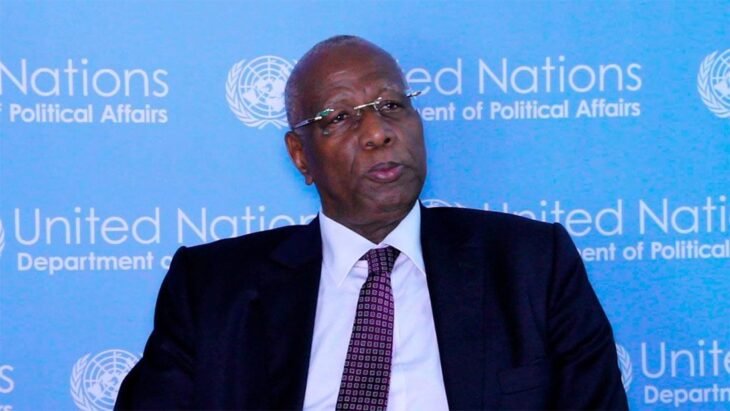
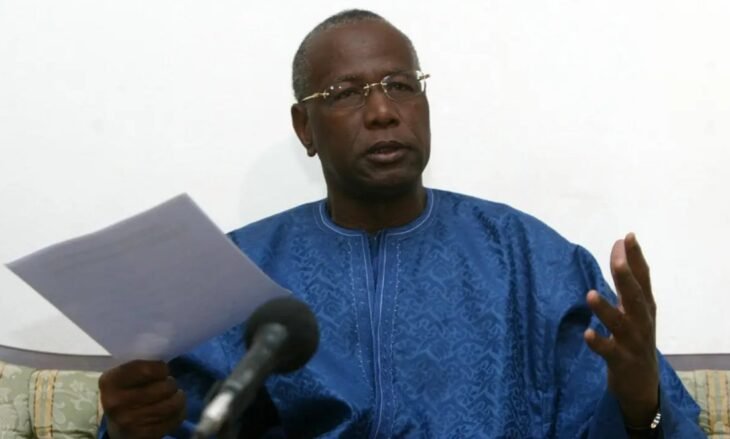
Abdoulaye Bathily told the U.N. Security Council there are numerous alarming signs of such a slide and urged all political leaders to put aside “their self-interests” and come together to negotiate and reach a compromise “to restore the dignity of their motherland.”
“Reluctance to do so calls into question not only their commitment to the elections, but to the unity and future of their country for which they should be held accountable,” he said.
ibya plunged into chaos after a NATO-backed uprising toppled and killed longtime dictator Moammar Gadhafi in 2011. In the chaos that followed, the country split, with rival administrations in the east and west backed by rogue militias and foreign governments.
The country’s current political crisis stems from the failure to hold elections on Dec. 24, 2021, and the refusal of Prime Minister Abdul Hamid Dbeibah — who led a transitional government in the capital of Tripoli — to step down.
In response, Libya’s east-based parliament appointed a rival prime minister, Fathy Bashagha, but suspended him last May. The powerful military commander Khalifa Hifter continues to hold sway in the east.
Bathily told the council that in his latest engagements with the major players, none have moved from their initial positions and each has set preconditions for participating in negotiations to resolve outstanding contested issues that would clear a path to the long-awaited elections.
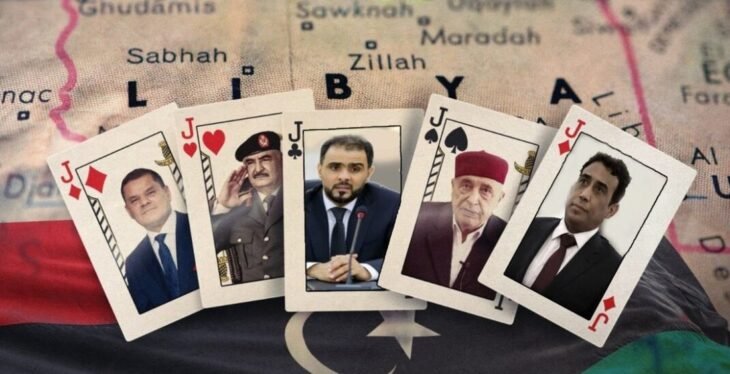
He pointed to intransigence by Dbeibah, Hifter, speaker of the eastern-based House of Representatives Agila Saleh and by Mohamed Takala, president of the High Council of State which has played a key role over the country’s election laws.
The U.N. envoy urged the rival players to lift bans on activities of the High National Elections Commission so local elections in 97 municipalities across the country can take place this year.
Bathily also said the Security Council and the broader international community have “a critical role to play to press the Libyan parties to engage constructively” and urged them to come up with a coordinated and unified approach to press for presidential and legislative elections.
Throughout Libya, he said, people are frustrated at the status quo and failure of the key political players to “do what is needed to set the country on the path to sustainable peace and progress.”
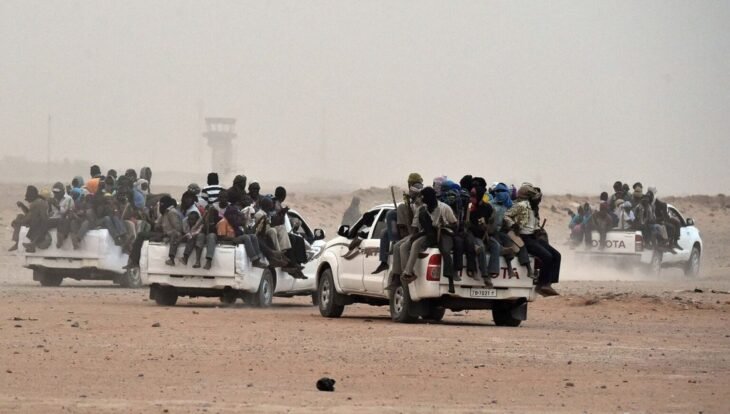
He also expressed increasing concern about rivalries between “security actors” seeking control of more territory in the capital, Tripoli, and about the human rights and humanitarian situation of migrants, refugees and asylum seekers. And he said: “I remain alarmed at continued collective expulsions of migrants and refugees across the borders between Libya and neighboring countries.”
Robert Wood, U.S. deputy ambassador, said the United States is “alarmed by the activities of armed groups in Libya, which operate with impunity and have persistent influence over Libyan security and politics.”
These groups are violating human rights and international humanitarian law, which include causing deaths, injuries, and displacement of hundreds of civilians, he said. He added there are also “allegations of unlawful detentions to suppress perceived civil dissent and attacks against civil society.”
Wood said the United States urges steps to reunify the country’s divided military which could help “reduce criminality in the south, secure the country’s borders, and prevent spillover of regional turmoil.”
The U.S. also calls on Libyan political leaders to name representatives to U.N.-facilitated preparatory talks “aimed at addressing the core issues still standing in the way of elections,” he said.
Regionally, Wood said, the United States is monitoring the destabilizing implications for Libya of the situations in Niger, Chad, Sudan and Mali – “including the movement of foreign fighters and rampant arms trafficking.”
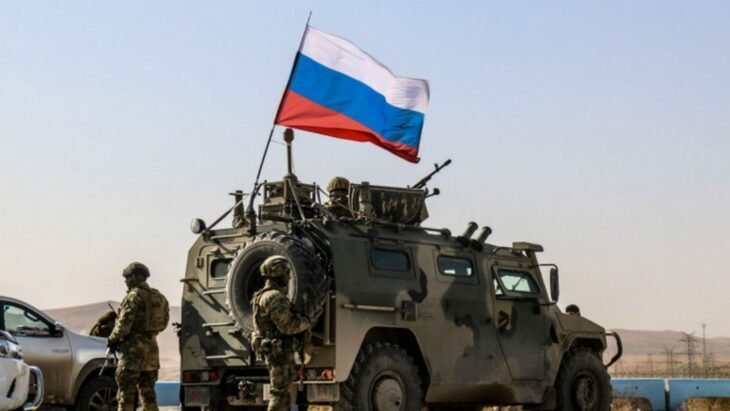
He singled out “the destabilizing activities” of Russia’s Wagner Group which he called “a transnational criminal organization.” It is reportedly operating in all those countries as well as the Central African Republic.
Russia’s deputy ambassador Dmitry Polyansky expressed hope that the rival political parties will soon reach agreements on organizing elections, telling the council “the status quo has gone on for far too long” and it’s time the country had a genuinely inclusive government.
Libya, which has been seeking stability and reconciliation since 2011, when the 42-year-old Muammar Gaddafi regime was overthrown by a popular uprising and NATO operations, has been at the center of different power, interest and ideological struggles for approximately 13 years.
In particular, the civil war that broke out in 2019 dragged the east and west of the country into political and military polarization, turning the political structures established during the period into structures based on power sharing between rival cliques, far from social consensus. This situation not only paved the way for armed militia groups that gained certain privileges by taking advantage of the chaos environment to turn into political actors, but also disrupted the attempts at people-based democracy.
Finally, the cancellation of the presidential elections planned to be held in December 2021 triggered an environment of political and military competition again after a relatively stable year and a half, and with the initiatives of the parliament operating in the east of the country and the leader of the militia forces in the east, Khalifa Haftar, a government led by former Minister of Internal Affairs Fethi Başağa. A parallel government was established. It can be said that this development is the driving force of the conflicts that occur periodically in the capital Tripoli and its surroundings, and that the resulting situation disrupts the attempts to reschedule the postponed December 2021 elections.
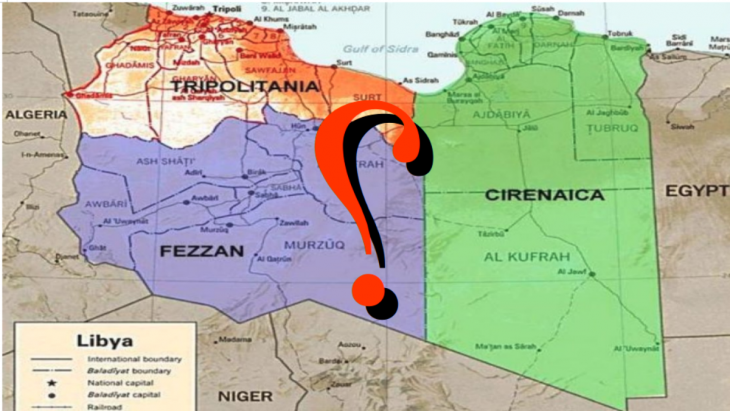
In addition to these developments, the military coups that took place in the Sahel region adjacent to Libya, the ongoing civil war in Sudan and the increasing terrorist activity in Sub-Saharan Africa, expose Libya, which connects the African continent to the Mediterranean in terms of migration routes, to a serious flow of immigrants. . In addition, weak border controls and lack of supervision caused by ongoing political uncertainty, along with demographic pressure caused by illegal migration, can be cited as among the factors that may lead to the revival and gain of space of the ISIS terrorist organization in the Fezzan region in the south of Libya. Considering these sensitive and fragile local dynamics, it is possible to evaluate Turkey-Libya relations and Minister Fidan’s visit to Tripoli under two main headings.
Active Diplomacy and Balanced Policy for a United Libya
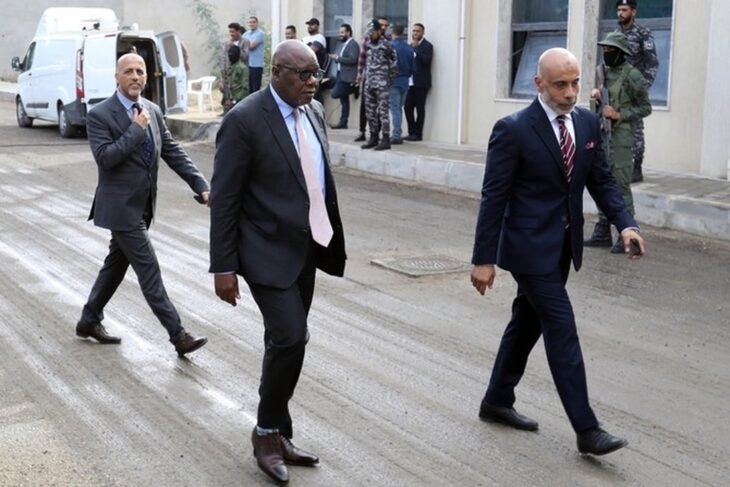
The visit of Foreign Minister Hakan Fidan and his accompanying delegation to Libya for official contacts on February 7 is very important in understanding the recent Turkey-Libya relations. Within the scope of the visit, Minister Fidan visited the Prime Minister of the National Unity Government (UBH) Abdulhamid Dibeybe, the President of the Supreme State Council of Libya (DYK) Muhammed Miftah Takala, the President of the Libyan Presidential Council Muhammed Menfi, the Vice President Abdullah El-Lafi and the President of the Central Bank of Libya Siddik El-Lafi. He met with Kebir.
The prominent topics of Minister Fidan’s visit to Dibeybe were the political and economic relations between the two countries, as well as the Gaza issue and the ongoing national reconciliation process in Libya. So much so that Minister Fidan’s visit took place 1 month after the Tripoli Court of Appeal announced the suspension of the hydrocarbon agreement dated October 2022. Undoubtedly, this decision means that the agreement and natural rights will be under threat if groups that are distant from Turkey take control in the future.
However, Minister Fidan stated in the joint press statement he made with his counterpart Ian Borg in Malta, the stop before his visit to Libya, that they decided to reopen Ankara’s consulate in Benghazi city in the east of Libya. This issue, which has been on the agenda for a while, came at a time when election uncertainty was experienced and the east-west rivalry was re-triggered.
In other words, this step may mean that Turkey will increase negotiations with official actors in the east, as in the west, in the new period. In particular, President Recep Tayyip Erdoğan’s planned visit to Egypt on February 14 and his meetings with his Egyptian counterpart Abdulfettah Sisi are a development that should not be evaluated independently of Libya. Egypt and Turkey, which developed strong relations with the eastern parliament after 2014, finding common ground in Libya may have a positive impact on the political crisis.
In addition, the reopening of the Benghazi Consulate shows that the normalization process that started with the east has been put on the agenda again, and this approach shows Turkey’s discomfort with the ongoing covert rivalry between the east and west of Libya, conflicts between rival groups and the failure of the reconciliation process. So much so that Turkey’s military presence in the west of the country is one of the main deterrents that prevent small-scale conflicts from turning into a larger-scale all-out war.
On the other hand, the consulate planned to be opened in Benghazi, together with the diplomatic initiative initiated with the parliament in the east of the country in 2021, may help prevent the negative narrative that is being created against Turkey in the east. It can be said that this attitude will position Turkey as a critical actor in the reconstruction of Libya and the unification of institutions, especially the security sector reform (SSR).
For example, Turkey can be expected to play key roles in the future in the transition to a unified army and in the disarmament, demobilization and reintegration (STyE) programs of militia groups. Although the USA, Germany and Egypt have recently taken initiatives in this field, Libya’s national goals and priorities must be taken into account in order for these efforts to be effective. It can be said that Turkey stands out as the most sincere actor in terms of its presence in the region, its military capacity and past experiences.
Libya File in Terms of Eastern Mediterranean and National Interests
Another dimension of Turkey’s search for stability in Libya can be associated with the protection of national interests and balances in the Eastern Mediterranean. In this context, the policies implemented within the scope of the ‘Blue Homeland’ Doctrine have recently become a necessity for Turkey to be involved in the political process in Libya. In particular, the Maritime Authorization and Defense Cooperation Agreements signed with the GNA in 2019, on the one hand, shelved the possibility of a possible coup in Libya, and on the other hand, they became important tools in achieving the natural rights granted to Turkey by international law.
The approval of the maritime borders drawn between the two countries in the Eastern Mediterranean by the UN gave Turkey a say in Mediterranean geopolitics, thus negating the energy equations that tried to exclude Turkey. Subsequently, the Turkey-Libya Hydrocarbon Agreement, signed in October 2022, was a core part of the agreement signed in 2019, deepening the energy cooperation between the two Mediterranean countries and paving the way for its development.
Turkey’s active diplomacy traffic and the dialogue mechanisms it has established with different local actors against the dissenting voices rising from inside and outside Libya against this agreement prevent political tendencies from getting in the way of potential partnerships.
On the other hand, it is observed that EU countries and the USA are looking for alternatives at a time when the energy crisis caused by the Russia-Ukraine War and the energy routes in the Red Sea are disrupted due to Houthi attacks.
Based on this, Libya is one of the candidate countries to fill this gap with its strategic location and energy reserves. In this respect, increasing Turkey’s interactions and cooperation in the Libyan energy sector may provide Turkey with flexibility in regional policies and has the potential to provide certain advantages in the global energy supply-demand balance.
As a result, Minister of Foreign Affairs Hakan Fidan’s Libya tour corresponds to a very critical period in terms of timing and content. The elections that remain uncertain, the fragile structures within the security bureaucracy established in the east and west, and Libya’s strategic position in the global energy equation can be listed among the subheadings that push Turkey to more proactive policies.
In addition, the consulate planned to be reopened in Benghazi can provide Turkey with the sphere of influence it seeks and support the transmission of accurate narratives by reaching the social base in the east.
Against the backdrop of competition among the three tracks above to resolve the Libyan crisis, three possible scenarios can be envisioned for the future of these tracks.
Scenario 1: Continuing the Bataille Initiative:
In this scenario, the UN envoy’s initiative remains the primary framework for a solution, with a slowdown in efforts related to the reconciliation process and marginalization of initiatives concerning the restoration of the monarchy.
This scenario gains strength because the Bataille Initiative is more deeply engaged with the real issues underlying Libya’s division than the reconciliation track, which primarily focuses on integrating Gaddafi supporters into the political process without addressing the institutional division between the east and west. While the Crown Prince’s actions do not offer a clear path to resolving the division, they provide a legitimate framework for ending the power struggle without fundamentally altering the existing power dynamics.
The likelihood of this scenario is bolstered by the US’s insistence on advancing the UN envoy’s initiative and the active diplomatic efforts supporting it. Despite its modest chances of delivering effective solutions to the settlement process’s dilemmas, the Bataille initiative is positioned to continue its activities.
A crucial factor influencing the initiative’s fate could be behind-the-scenes negotiations between the United States and Russia regarding their interests in Libya as part of broader diplomatic exchanges between the two powers on the global stage.
The apparent misalignment of interests between the US and Russia, coupled with Moscow’s aspirations to expand its formal military footprint in Libya, including the potential establishment of a military base, contrasts with the relatively restrained and conventional diplomatic maneuvers undertaken by the United States thus far. However, this disparity in approach may suggest a tacit understanding between the two powers. If such understandings indeed exist, they could create a conducive political environment for advancing the UN-led settlement process.
Scenario 2: Focus on Reconciliation Track:
This scenario posits that the failure of the Bataille Initiative to convince the main parties to the conflict to agree is compensated for by focusing on achieving progress on the level of national reconciliation, according to the logic of the need to repair social divisions and include parties excluded from the political process, as a gateway to achieving a natural and sustainable settlement.
This scenario aligns with the UN and Western approach, which recognizes the significance of engaging social forces to exert pressure on the main Libyan actors. Including representatives of various societal components in consultative processes, such as the Bataille’s Initiative, aims to provide a parallel path to dialogue between political leaders.
The reconciliation track becomes particularly relevant when these leaders resist international efforts for settlement like the Bataille Initiative.
Scenario 3: Deepening the Crown Prince’s initiative:
In this scenario, the Crown Prince’s initiative to restore the monarchy in Libya gains significant traction, evolving into a fully-fledged proposal supported by external actors and accepted by one or more critical parties in both the eastern and western regions of the country.
The failure of the main settlement track, such as the Bataille Initiative, catalyzes the increased momentum behind the monarchy project. Key stakeholders may view the monarchy as a unifying force that can achieve minimal stability while keeping current power dynamics and balances.
The consultative track of the Bataille Initiative is poised to serve as a crucial test for the viability of the Crown Prince’s monarchy project. During these consultations, participants will reveal their attitudes toward the monarchy project and other political initiatives on the table and their views on proposed solutions. ***
[1] While Senussi did not disclose the specific locations of the interviews, Libyan sources disclosed that most of these meetings took place in al-Bayda and Tobruk.
[2] The allusion here is to the concept of the constitutional monarchy in a general sense, without specific reference to the amended version of the 1963 constitution, which Senussi previously emphasized in his vision outlined on his website. The 1963 constitution marked the end of the federal system in Libya, and its emphasis in the past reflected a vision of a settlement that involved restoring the king’s extensive powers over all regions. However, the absence of mention during Senussi’s recent moves may suggest a different approach, aiming to accommodate existing regional balances and the interests of the main parties and their international and regional backers without assuming a central role in the governance process.
[3] Historical and personal factors bolster the hypothesis of British support for Senussi. Historically, Britain has supported the Libyan monarchy, and the royal family members, including the Crown Prince, have resided in Britain since departing Libya in the late 1980s.
[4] US diplomat Stephanie Williams, former Acting UN envoy to Libya, addressed this issue in an article by Brookings in January 2024.
[5] This condition mirrors the demands of eastern Libyan authorities, who insist on representation for Osama Hammad’s government at the meeting or the exclusion of the Dbeiba government.
***
Bilal Abdullah is a Researcher focusing on Libyan affairs. He has published and cooperated with several think tanks in and outside the Arab region. Abdullah is preparing for a Master’s degree from the College of African Postgraduate Studies at Cairo University, specializing in Tribalism and the Future of the State in Libya after 2011. Some of Abdullah’s published studies include “The Amazigh Movement and Dynamics of Libyan Political Life”, “The Amazigh Spring in Libya: Between Revolution Gains and Challenge of Division”, “The Democratic Transition of Power in Tunisia after the Revolution: A Study about the Role of the Tunisian General Labor Union”, and “The Political Role of A-Azhar after the Revolution: Constants and Variables”. He has a BA in Political Science from the College of Commerce at Helwan University and a Diploma in African Studies from Cairo University.
Progress towards credible elections in Libya is impossible without an agreement between the key political players, the UN’s top envoy to the north African country said on Thursday.
They must put aside self-interest, negotiate in good faith and reach an agreement on a unified government, while also ensuring national polls go ahead to avoid it from “sliding into disintegration”, Abdoulaye Bathily told ambassadors in the Security Council.
“I call on their sense of moral duty to negotiate and reach a compromise to restore the dignity of their motherland,” he said.
“Reluctance to do so calls into question not only their commitment to the elections, but to the unity and future of their country for which they should be held accountable.”
Prolonged impasse
Libya has remained mired in deep crisis since the postponement of national elections, originally planned for December 2021.
Adding to the complexities is the reality of two rival administrations, with the internationally recognized Government of National Unity (GNU) based in Tripoli and the Government of National Stability (GNS) in the east.
In November 2023, in an attempt to break the stalemate, Special Representative Bathily invited the leaders of the five key existing institutions to talks – the Government of National Unity, the House of Representatives (HoR), the High Council of State (HSC), the Libyan National Army (LNA) and the Presidency Council.
“I continued my engagement with those major players, appealing to their wisdom,” he said, adding however, that none have budged from their initial positions.
“Each continuing to articulate pre-conditions for their participation in the dialogue as a way to maintain the status quo, which – I must say – seems to suit them,” Mr. Bathily said.
Pre-conditions for talks
The HoR Speaker, Agila Saleh, maintains that the main issue remains the formation of a unified government and that his participation would be contingent on either both governments being involved or excluded entirely, Mr. Bathily said.
The HSC President, Mohamed Takala, stands by his rejection of the electoral laws as published by the HoR and is calling for the discussion to focus on reviving the “initial” version of the text.
The GNU Prime Minister, Abdul Hamid Dbeibeh, insists that he will only step down after the holding of elections, meaning that the GNU will supervise the coming electoral process.
Khalifa Haftar, the Commander of the LNA, insists that both GNU and the GNS be part of the talks or both be excluded.
The President of the Presidential Council (PC), Mohamed al-Menfi, “does not want to be seen as a party, but is prepared to act as facilitator to support my initiative”, Special Representative Bathily told ambassadors.
Abdoulaye Bathily (on screen), Special Representative and Head of the UN Support Mission in Libya (UNSMIL), briefs the Security Council meeting on the situation in the country.
Security Council’s ‘critical role’
Mr. Bathily reiterated the UN’s readiness to consider proposals that could lead to a solution based on a peaceful and inclusive settlement.
He highlighted that the Security Council and the international community have a “critical role” to play in pressuring Libyan leaders to engage constructively.
“Alignment and support from regional partners are particularly important,” he said.
“Parallel initiatives can only be useful if they support the UN efforts lest they be used by Libyan actors as a means to perpetuate the status quo.”
Security, humanitarian situation
The Special Representative and head of UNSMIL also briefed ambassadors on the humanitarian and human rights situation in Libya, noting the continuing plight of migrants and asylum seekers and an increase in refugees from Sudan.
On the security front, hundreds of Chadian mercenaries and foreign fighters reportedly returned from Libya to Chad, however, security in southern Libya remains alarming due to the crises in Sudan and the vast Sahel region.
The “fragile security” in the capital, Tripoli, also remains under threat with security actors trying to achieve “territorial control” over strategic areas, where military bases and State institutions are located, Mr. Bathily said.
Libya’s interim prime minister on Wednesday said he expected to be the last head of a transitional government in the country and that political and economic reforms were beginning to take hold.
Speaking at the World Governments Summit in Dubai, Abdul Hamid Dbeibah told delegates that he “wanted oxygen to return to the body of Libya,” and that the rebuild of the country was moving forward at pace.
“We have worked to restructure education, infrastructure, energy, and health. For nearly 10 years, the electricity in Libya was constantly cut off, but we made great efforts to solve this problem and now, it has not been cut off for a single minute for a year-and-a-half,” the PM added.
The North African nation has remained unstable since the eruption of violence in 2011, the overthrow and death of long-time dictator Muammar Qaddafi, and a subsequent civil war.
Dbeibah has headed the UN-backed, internationally recognized Government of National Unity since 2021 from Tripoli, but faces opposition from the rival, eastern-based Government of National Stability.
He told Kuwaiti presenter Ammar Taqi that the political and economic rebuild of the country was ongoing despite the division and unrest, and he rejected some outside accusations that Libya had become a land of terrorists.
The premier thanked “friendly countries,” including Saudi Arabia, the UAE, and Turkiye, for reopening their embassies and consulates in Tripoli, and urged others to follow suit to assist the rebuilding process, citing the “excellent security conditions” in the capital.
Dbeibah also highlighted the organization of national elections, which Libya’s Speaker of the House of Representatives Aguila Saleh recently said would be “crucial” to resolving the current challenges facing Libya.
Addressing the summit, Dbeibah said: “We announce that we will be the last transitional government, God willing. We want fair laws that are not tailored for any group, and we will be the first government to hand over to whomever the new parliament chooses and whoever it chooses as president of the country.”
He also reaffirmed on Wednesday a decision he made last year to end fuel subsidies in Libya by the middle or end of this year and to offer direct cash support to citizens instead. He recently described the subsidies as “a drain on the state budget,” and pointed out at the WGS that as much as 40 percent of the national budget was being spent on them.
He noted that, since the discovery of oil in Libya, fuel support to citizens had been provided with a liter of gasoline in Libya currently costing three cents. However, he added that as much as 60 percent of the fuel produced in Libya was being smuggled out of the country, costing its economy billions of dollars in losses.
Dbeibah said the success of the policy depended on convincing Libyans they would be better off without subsidies and ensuring their salaries were improved.
“We decided, in fact, to replace fuel subsidies by paying this support directly into the pockets of Libyans,” he added.
Over the past year, the Tripoli-based Internal Security Agency (ISA) has subjected dozens of men, women and children to a range of abuses, including enforced disappearance, arbitrary detention and torture, with some facing the death penalty, under the guise of “guarding virtue,” said Amnesty International today.
Amnesty International has gathered evidence of an intensified crackdown on freedom of thought, expression and belief by ISA against the backdrop of a May 2023 decree issued by an official religious body, the General Authority for Endowments and Islamic Affairs (known as Awqaf), to combat what it called “religious, intellectual and moral deviations.” ISA’s vicious campaign, praised publicly by senior Awqaf officials, has targeted mainly Libyan youths, especially from the Amazigh community, as well as foreign nationals under the pretext of “safeguarding virtue and purifying society,” leading in some cases to investigations on charges punishable by death.
“The Libyan government’s inaction towards ISA’s well-documented crimes under international law, including torture and enforced disappearance, has emboldened them to commit further abuses and has perpetuated a vicious campaign stifling freedom of thought, expression and belief cloaked under ‘guarding virtue,’” said Bassam Al Kantar, Amnesty International’s Libya Researcher.
“The Libyan authorities must ensure the immediate release of all those detained solely for exercising their human rights and cease the persecution of individuals for expressing their beliefs. The Government of National Unity must also remove from positions of power ISA commanders and members reasonably suspected of serious human rights violations, pending independent and impartial criminal investigations and, if sufficient evidence exists, prosecutions.”
Amnesty International interviewed two former detainees, families and lawyers following up on cases of four individuals currently detained and appealing pretrial detention orders by prosecutors, as well as nine Libyan activists based in Libya or in exile; and reviewed 15 “confession” videos published by ISA since March 2023.
ISA’s intensified crackdown has targeted individuals perceived as rejecting the dominant Madkhali-Salafist ideology in Awqaf, which significantly restricts the rights of women and girls, religious minorities and LGBTI people.
Disturbing videos showing forced confessions
Videos published online by the ISA show at least 24 individuals under apparent duress giving “confessions”. At least 19 remain in pretrial detention following orders by the Public Prosecutor’s office in al-Ruwaimi and al-Jdeida prisons in Tripoli. They face charges of “illicit sexual intercourse”, “promoting views or principles that aim to overthrow the political, social, or economic order of the state”, “blasphemy” and “apostasy”. Some of these charges carry life imprisonment and death sentences.
On 28 December 2023, ISA published two videos on its social media channels showing 14 people, including four women and a 17-year-old girl, under apparent duress “confessing” to offences such as “spreading atheism,” “apostasy,” “embracing non-religion,” “adopting liberal ideas,” “wife swapping,” and “homosexuality”. In earlier videos ISA published in April and May 2023, 10 other people are seen “confessing” to “embracing Christianity” and “insulting Islam”.
Amnesty International’s documentation has confirmed that ISA had arrested those who appeared in the videos between March and October 2023.
“Heard screams of other detainees”
ISA agents arrested the targeted individuals from their homes or the streets without presenting a warrant. In some cases, ISA arrested their relatives to compel the “wanted” individuals to hand themselves in. Since September 2023, ISA also used the phones and chat histories of two other detained activists to arbitrarily arrest at least nine more individuals.
ISA interrogators have routinely subjected detainees to torture and other ill-treatment, including sexual violence, beatings, electric shocks and suspension in stress positions. Those held were interrogated without a lawyer present.
A foreign national, who asked to remain anonymous, told Amnesty International that he was arrested in Tripoli by armed men in plain clothes, who took him to ISA’s headquarters without disclosing their affiliation or the reason for his arrest. He was kept incommunicado for a week and subjected to numerous interrogations, including by ISA’s head of the Central Security Committee.
He said that ISA investigators forced him to disclose the passwords to his phone and laptop, questioned him for hours and scrutinized his WhatsApp conversations and work-related calls before accusing him of “conspiracy” and “espionage”.
He told Amnesty International that he heard screams of other detainees and saw bloodstains on the floor as he walked from his cell to the bathroom. He was eventually deported.
Another human rights activist, detained for 10 months on charges of “communicating with atheists and feminists and insulting the state religion,” said that ISA’s commander Lotfi al-Harari interrogated him and was present while at least two ISA agents beat him with batons, stripped him naked and touched his genitals.
On 17 September 2023, the ISA arbitrarily arrested two Amazigh women activists and sisters, aged 22 and 27. In the video published by ISA on 28 December, the two women are heard “confessing” to “atheism” and “apostasy”. On 22 January, the Public Prosecution extended their pre-trial detention for 30 days.
Among those still arbitrarily detained is Sifaw Madi, who was arrested on 26 March 2023 and who appeared in a video ISA published on 6 April 2023, “confessing” to converting to Christianity in 2017 and proselytizing. He is facing accusations of “apostasy”, which carry the death penalty.
A direct attack on the Amazigh community
ISA’s crackdown has disproportionately affected the Amazigh community, which includes adherents of the Ibadi faith and Maliki school.
An activist, who asked to remain anonymous, said that ISA has intensified its campaign against the Amazigh community, citing leaked lists containing names of Amazigh and Ibadi activists, which suggests they might be subjected to monitoring and arrest.
Additionally, Nizar (a pseudonym) reported instances of attacks on cultural and religious sites, including the demolition of a Sufi corner in November 2023 and vandalism of archaeological sites, by the al-Hasyn Committee, which was tasked by Awqaf to combat “witchcraft and sorcery”, in October 2023. These actions targeted imams and preachers of Maliki and Ibadi followers in the northwestern city of Yefran.
“The Libyan authorities must immediately end their campaign against Amazigh and Ibadi activists, put an end to the destruction and demolition of Sufi shrines and uphold freedom of religion,” said Bassam Al Kantar.
Background
ISA in Tripoli is nominally under the Presidential Council of the Government of National Unity and receives state funding. Amnesty International has previously documented violations committed by ISA in western Libya.
On 9 January 2024, Libya’s parliament approved a new law criminalizing “witchcraft and sorcery”, with penalties ranging from imprisonment for up to fourteen years to the death penalty.
Awqaf’s Decree No. 436/2023 established a central committee consisting of 17 officials, including a representative from security agencies, to enforce the “Guardians of Virtue” programme. Yehya Ben Halim, a prominent member of the committee, publicly praised ISA’s role in fighting “apostasy” and “liberal ideas”.
Over the past few months, as documented on Crown Prince al-Senussi’s official account on the X platform, he has undertaken a comprehensive campaign advocating for the reinstatement of the monarchy as a resolution to Libya’s political crisis. Al-Senussi has interviewed notable figures, intellectuals, and community leaders from various Libyan regions, including Benghazi, al-Bayda, Derna, Misrata, and Tripoli. These engagements also included meetings with the High State Council members and trade union leaders.
Notably, al-Senussi launched the fourth round of community consultations on January 26, focusing on discussions with social and academic figures from the western region, followed by a meeting with a delegation representing the Amazigh community. The extensive geographical coverage and diverse participants in al-Senussi’s meetings [1] from October 2023 to January 2024 suggest a concerted effort toward a significant political initiative. Al-Senussi’s media discourse underscores his commitment to restoring the constitutional monarchy,[2] positioning himself as a symbolic leader capable of transcending the power struggle in the country. Such a strategy aims to legitimize internal power dynamics between the eastern and western regions, leveraging the king’s limited authority, which may closely resemble the current Presidential Council.
The significance of this path lies more in the political vision it represents rather than in the actual political or organizational influence of the royal family, which has been primarily dissolved since the onset of Qaddafi’s regime. However, from a theoretical perspective, the political project associated with the monarchy carries symbolic and historical weight, particularly about establishing Libya’s independent state, echoing the challenges the country faces in its state-building process.
The 1951 Independence Constitution is a potential solution to Libya’s state-building dilemma, given its alignment with the geopolitical nature of federalism. Sociologically, the tribes of Cyrenaica historically formed the monarchy’s support base, with the royal family’s ties to the Senussi movement adding a religious dimension to their influence within Libyan society.
This historical association can be leveraged for propaganda purposes in advancing the monarchy restoration project, especially considering the emergence of various movements advocating for this cause in recent years.
These movements reflect a tangible social and material foundation that could be further developed. The success of this project hinges on several factors, including the alignment of societal and political support, the symbolic leadership embodied by the crown prince – whose actions appear to lack coordination with past movements in Libya – and the backing of an external actor willing to invest in its realization.
Regarding the supporters of Senussi’s initiatives, there are no official stances. However, the online newspaper Libya Press is propagating the notion that the monarchy restoration proposal is a Jordanian initiative backed by Qatar and Britain,[3] with Debiba purportedly being among the leading advocates internally in exchange for maintaining his leadership of the government. It is noteworthy how Senussi conducted these meetings with relative ease, predominantly in cities in eastern Libya, without encountering significant hindrances from pro-Haftar authorities. This is unusual given their tendency to control activities related to competing political projects within their jurisdiction.
If Senussi conducted these meetings in eastern Libya, there are several potential explanations for Haftar’s tacit approval.
Firstly, external protection may shield Senussi’s movements, making it challenging for Haftar to impede him;
Secondly, Haftar could be involved in a broader agreement tied to Senussi’s activities, securing his authority over eastern Libya in the event of a monarchy restoration.
Thirdly, as Marshal Haftar ages, there is a shift in his priorities, particularly regarding succession planning in the event of his death or serious illness.[4]
This situation would prompt him to seek assurances to safeguard his sons’ influence in the eastern and southern regions amid dwindling prospects of consolidating political or military control over the entire country, given prevailing international dynamics and balances.
Regarding the alignment or divergence of the Crown Prince’s movement with the primary UN-facilitated settlement process, it is noteworthy that Senussi characterizes his initiative as a “national dialogue“ operating “under the auspices of monarchy legitimacy.“
Interestingly, Senussi makes no explicit reference, either positively or negatively, to the UN mission’s efforts in facilitating the settlement process. Furthermore, Senussi’s movement appears to be non-electoral, proposing a holistic solution to the settlement dilemma without prioritizing elections, thus diverging from the fundamental approach of the UN proposal, whether represented by Bataille’s current vision or the various visions of previous envoys, all of which emphasized elections as a primary component.
This initiative is likely to intersect, to some extent, with the interests of certain factions controlling power in the country’s eastern and western regions. For these parties, restoring monarchy presents an opportunity to maintain the existing power dynamics, effectively perpetuating the status quo. Despite its apparent radicalism, this path may, in reality, reproduce existing power structures while temporarily halting the chronic conflict over leadership, offering instead a symbolic leadership capable of transcending the divisions that have plagued the nation since 2011.
The Bataille Initiative Update
After a period of waning momentum, efforts have been resurgent to revive the Bataille Initiative. In the third week of January, US envoy Richard Norland, Acting US Ambassador to Libya Jeremy Brent, and Deputy Assistant Secretary of State Joshua Harris held meetings with Libyan key figures including Field Marshal Khalifa Haftar, House of Representatives Speaker Aguila Saleh, Tripoli Government President Abdelhamid al-Debiba, President of the Presidential Council Mohammed al-Manfi, President of the State Council Mohammed Tekala, UN envoy Abdullah Bataille, and Egyptian ambassador in Tripoli Tamer Mustafa.
These meetings, as reported by the US Embassy on the X platform, aimed to reignite momentum for the Bataille Initiative. Concurrently, Bataille resumed meetings with Libyan stakeholders during the same period to regain momentum and garner support for his initiative, following a period of relative quiet and dwindling engagement.
Notably, Bataille held a surprise meeting on January 28 with over 20 Tripoli militia leaders, who, as reported by the online newspaper Al-Marsad, demanded representation in the planned five-party institutional leaders‘ meeting or the exclusion of representation from the General Command in said meeting. [5]
On the contrary, the House of Representatives and the State Council continued their maneuvers, seeking to steer the settlement agenda toward traditional issues that reinforced the roles of the two chambers and impeded the progress of the Bataille Initiative.
On December 27, the State Council reignited discussions on sovereign positions through Takala’s meeting with the committee responsible for the file within the council and his submission of a list of the State Council’s candidates for these positions to the House of Representatives.
Then, on January 8, Takala formally addressed Saleh, informing him of the State Council’s rejection of all legislation issued by the parliament due to individual actions to perpetuate the parliament’s control over public affairs. Saleh reiterated this stance after his January 23 meeting with a US delegation led by Norland, stressing that “any attempts to open new dialogues or agreements will take us back to square one,“ implicitly rejecting Bataille’s initiative.
Simultaneously, during the US delegation’s visit, Dbeiba reiterated his opposition to the UN mission’s decision to conduct the five-year dialogue based on recognizing the electoral laws issued by the House of Representatives, insisting on creating fair electoral laws that do not exclude anyone.
Finally, the General Command’s statement following the same delegation’s meeting emphasized the need for the UN mission to make more balanced and practical efforts to realize the Libyan people’s aspirations.
All these positions and developments indicate a continued stalemate in the stances of the various parties regarding the Bataille Initiative.
While the United States insists on adhering to this agenda, the official parties to the Libyan conflict maintain their firm positions toward the initiative.
Remarkably, there are no publicly declared stances from external parties involved in the conflict, suggesting their reluctance to directly confront Washington and their preference to encourage their Libyan allies to thwart the initiative.
However, persistent American insistence and the corresponding hardening of Libyan positions will likely delay the initiative’s initiation. This delay may involve convening a preparatory meeting of representatives from the five institutional parties and subsequently organizing the five-party meeting, each of which could extend for several rounds.
Such delays may provide competing tracks, especially those associated with the Crown Prince, with more opportunities to assess the potential success of their projects or, at the very least, gauge the extent of the response from Libyan societal forces, given the current impasse in the process.
***
[1] While Senussi did not disclose the specific locations of the interviews, Libyan sources disclosed that most of these meetings took place in al-Bayda and Tobruk.
[2] The allusion here is to the concept of the constitutional monarchy in a general sense, without specific reference to the amended version of the 1963 constitution, which Senussi previously emphasized in his vision outlined on his website. The 1963 constitution marked the end of the federal system in Libya, and its emphasis in the past reflected a vision of a settlement that involved restoring the king’s extensive powers over all regions. However, the absence of mention during Senussi’s recent moves may suggest a different approach, aiming to accommodate existing regional balances and the interests of the main parties and their international and regional backers without assuming a central role in the governance process.
[3] Historical and personal factors bolster the hypothesis of British support for Senussi. Historically, Britain has supported the Libyan monarchy, and the royal family members, including the Crown Prince, have resided in Britain since departing Libya in the late 1980s.
[4] US diplomat Stephanie Williams, former Acting UN envoy to Libya, addressed this issue in an article by Brookings in January 2024.
[5] This condition mirrors the demands of eastern Libyan authorities, who insist on representation for Osama Hammad’s government at the meeting or the exclusion of the Dbeiba government.
***
Bilal Abdullah is a Researcher focusing on Libyan affairs. He has published and cooperated with several think tanks in and outside the Arab region. Abdullah is preparing for a Master’s degree from the College of African Postgraduate Studies at Cairo University, specializing in Tribalism and the Future of the State in Libya after 2011. Some of Abdullah’s published studies include “The Amazigh Movement and Dynamics of Libyan Political Life”, “The Amazigh Spring in Libya: Between Revolution Gains and Challenge of Division”, “The Democratic Transition of Power in Tunisia after the Revolution: A Study about the Role of the Tunisian General Labor Union”, and “The Political Role of A-Azhar after the Revolution: Constants and Variables”. He has a BA in Political Science from the College of Commerce at Helwan University and a Diploma in African Studies from Cairo University.
Special envoy Abdoulaye Bathily says the population is frustrated with the failure of their leaders to steer the country toward peace
Divisions remain between factions over draft legislation for elections, more than two years after voting was indefinitely postponed.
Thirteen years after the revolution that toppled Muammar Qaddafi’s regime, Libya continues to grapple with political turmoil and the elusive quest for sustainable peace and democracy, the UN’s special envoy to the country said on Thursday.
Abdoulaye Bathily lamented the entrenched nature of the status quo in Libya, and the continuing deadlock among key institutional leaders that has hindered progress towards long-awaited national elections.
Speaking during a Security Council meeting ahead of the anniversary of the 2011 Libyan revolution on Feb. 17, Bathily described widespread frustration among the Libyan people about the failure of their leaders to steer the country toward peace and progress.
He said that despite the completion in 2023 of work by the 6+6 Joint Committee of the House of Representatives and High State Council to develop a constitutional and legal framework for elections, none of the major factions in the country “have made a decisive move from their initial position, with each continuing to articulate preconditions for their participation in the dialogue as a way to maintain the status quo, which seems to suit them.”
The political impasse continues between the UN-recognized Government of National Unity in Tripoli, led by Prime Minister Hamid Mohammed Dbeibah, and the Government of National Stability in the east of the country, which is led by Prime Minister Osama Hamad and aligned with the House of Representatives and the Libyan National Army under the command of Gen. Khalifa Haftar.
The deadlock between these rival governments has persisted since the indefinite postponement of elections initially scheduled for December 2021. Mediation efforts since then have focused on facilitating an agreement on a new road map for national elections to unify the government.
In March 2023, the HoR and the GNU-aligned High State Council established the 6+6 Joint Committee, comprising six representatives from each body, and tasked it with drafting the electoral laws required to enable elections. However, leaders of the two groups failed to reach agreement on various aspects of the draft legislation.
Outlining the diverging views, Bathily said that while the HoR’s speaker Aguila Saleh prioritizes the formation of a unified government, emphasizes the need for the HoR to be established as the sole legitimate political body, and says he will only participate if the two rival governments are either included or excluded altogether, Mohammed Takala, the president of the High State Council, has rejected electoral laws published by the HoR and advocates reverting to an earlier version of the legislation.
Dbeiba, for his part, insists on remaining in office until elections are held under the supervision of the GNU. Meanwhile Haftar and Mohammed Al-Menfi, the head of Libya’s Presidential Council, have differing views on the inclusion of both governments in talks.
“The way forward requires that all issues that prevented elections from taking place in 2021 be resolved through negotiations and a political settlement between the key institutional stakeholders,” said Bathily, as he urged all factions to engage in talks without preconditions.
He also highlighted the need to address the fears and concerns of stakeholders, including the need for a temporary mechanism to ensure the “transparent management and equitable distribution of resources, safeguards to provide a level playing field for all candidates, and guarantees that elections do not result in a winner-takes-all scenario to the detriment of the others.”
Bathily underscored the importance of regional support for Libya and reiterated his call for a “unified and coordinated approach” by the international community.
The human rights, humanitarian needs and protection of migrants, refugees and asylum seekers are also of growing concern, he added, citing reports of a significant increase in the numbers of Sudanese refugees entering Libya in recent weeks.
UN agencies continue to have only limited access to refugees at Libya’s border with Sudan and in official detention centers, Bathily said, and he called on Libyan authorities to “ensure full, unhindered access to all persons in need of protection.”
He expressed alarm at the continuing “collective expulsions of migrants and refugees across the borders between Libya and neighboring countries,” and reiterated his call for authorities in all of the countries involved “to end forced expulsions, which are violations of international law.”
He also repeated his calls for “full access and independent investigations into all alleged violations and abuses in Libyan detention facilities, including in Bir Al-Ghanam and Al-Assa detention facilities, where the situation is particularly dire.”
Tens of thousands of migrants set off annually from the Libyan coasts on boats unsuitable for sailing and crowded with a large number of young people dreaming of reaching Europe.
Amidst a country divided into more than one government and de facto authority, thousands of migrants have been lost at the hands of human traffickers in illegal migration journeys across the Mediterranean, leaving behind grieving families searching for the fate of their children.
Through “missing persons” pages on the platform “Facebook,” and chat groups on “WhatsApp,” Syrian families post pictures of their sons with their personal information and details of their journey, and the last port where they were lost, to find out their fate.
A long search journey
Mohammed, a 20-year-old man from the city of Daraa in southern Syria, went to Libya hoping to reach Europe, to live a dignified life in a country free of wars and economically recovered.
On the migration route across the Mediterranean, classified as the most dangerous migration route in the world, Mohammed’s boat, carrying 33 migrants from the city of Daraa, set off on October 31, 2023, from the port of al-Khums east of the Libyan city of Tripoli. This information was the last thing Mohammed’s family received about him.
Ahmed, Mohammed’s father, told Enab Baladi that his son has been missing for nearly three months and that he has left no stone unturned to search for him along with other missing persons’ families, from confronting the parties accused of smuggling to publishing photos of the missing and information about them on social media and chat groups on WhatsApp, without obtaining any noteworthy information about his son’s fate.
“I did not know which government in Libya I should turn to inquire about the whereabouts of my son Mohammed, as there is no clear authority that can be relied upon in the search for the missing.”
Ahmed – father of one of the Syrian young men missing on the Mediterranean migration route.
Ahmed has made requests to human rights organizations in Libya and to the Red Crescent in Morocco, Lebanon, Jordan, and Austria, to help find his son, and so far, he waits hopefully to receive news that reassures his heart.
Human traffickers in Libya are active on Facebook pages and within group chats on WhatsApp, promoting their activities from human smuggling, releasing detainees, and finding the missing in exchange for large sums of foreign currency.
The spread of information on social media about the missing facilitates the work of the brokers to use it as bait to take money from their families.
After sharing information about his missing son Mohammed in hopes of finding him, Ahmed received dozens of messages from Syrian, Libyan, Egyptian, and Sudanese brokers, claiming that his son is in one of the Libyan detention centers, and others claimed that he is in a prison belonging to Libyan militias in Tripoli, asking him for thousands of dollars in exchange for his release.
Amidst the myriad of narratives, Ahmed asked several brokers and smugglers who contacted him for a 30-second audio or video clip to give them the demanded sum, but once he requested proof, the brokers began evading and avoiding him.
Increase in migration cases
In December 2023, the European Border and Coast Guard Agency (Frontex) announced a 17% increase in the number of illegal border crossings in the first 11 months of the same year, with the number reaching more than 355,300 people.
The number surpassed the total for 2022 and was the highest recorded since 2016, according to Frontex.
The central Mediterranean route was the most frequented in 2023, with Syrians forming the largest group of asylum seekers throughout the year, according to the European Union’s statistical office (Eurostat).
The number of dead and missing in the Mediterranean during the past year was 3,760, according to data from the Operational Data Portal of the United Nations High Commissioner for Refugees.
In its latest statistics, on January 29, the International Organization for Migration (IOM) said that nearly 100 migrants had died or gone missing in the central and eastern Mediterranean in January of 2024.
The organization added on its official website that the number was more than doubled in the same time frame last year.
“His loss broke my back”
Mohammed’s family inside Syria suffered severe psychological and physical effects, and his father said that his wife (Mohammed’s mother) suffered a cerebral stroke that caused complete paralysis and is now considered among the dead, after receiving news of their son’s boat disappearance.
He continued that he was hospitalized three times due to heart attacks, saying, “I raised my son in the best way possible, and he grew up in my hands. If I had known that Mohammed would go through this, I would never have allowed him to migrate.”
The family of Mrs. Abrar from the city of Daraa lived a similar story. Her eldest son Ahmed (19 years old) decided to migrate to ensure a good future for him and his family; the family’s financial situation was difficult, and his father suffered a disability in his hand, making him unable to use it.
Ahmed went to Libya via Cham Wings airlines from Damascus, after agreeing with Syrian and Libyan brokers who guaranteed him a safe trip to Italy.
On November 29, 2023, Ahmed informed his family that his boat would depart that evening, and most of those accompanying him on the trip were Syrians from the city of Daraa, numbering 42, including women, children, and a pregnant woman.
Abrar, Ahmed’s mother, told Enab Baladi that Ahmed wanted to build a future for himself and marry the girl he loves, so he borrowed the full amount and traveled to Libya. Since the boat set sail and until the publication of this report, Ahmed’s family has been unable to obtain any information that indicates the fate of their son.
The mother said, “I asked many Syrians who traveled to Libya for the purpose of migration about my son Ahmed, hoping they would carry comforting news, I just want to hear his voice. Since we lost him, the state of the family is indescribable; we all cry for him daily. His father tells me that losing Ahmed has broken his back.”
Abrar shared Ahmed’s photos and information on various social media platforms hoping to reach news that reassures her heart and applied to the Syrian Red Crescent to find her son, which in turn gave her a follow-up date a full month later, according to her.
Both young men, Mohammed and Ahmed, remain missing until the date of this report’s publication.
The Libyan news agencies and newspapers share news about retrieving unidentified bodies belonging to migrants from the coasts of eastern and western Libya.
In the monthly report of the Libya Crimes Watch (LCW) organization, issued on February 1, it stated that in the first month of the current year, two decomposed bodies of illegal migrants were found, one of them near the city of al-Khums, and the other was a body of a woman in her thirties with identity papers indicating that she was Syrian found near the city of Brega south of the Mediterranean Sea.
“Ambiguous loss”
Nour Muhammad, a psychological specialist at the UOSSM center, told Enab Baladi that the situation experienced by the families of the missing is called “ambiguous loss.”
This term refers to the absence of specific or confirmed information regarding the fate of the missing person and this type of disappearance is painful and difficult for families and loved ones, who feel that the missing person is physically absent but present in mind and memory.
She added that they cannot accept the loss to let grief and pain follow their natural course, nor can they deny it.
Individuals suffering from “ambiguous loss” experience a suspended agony, ongoing complex grief, and a perpetual struggle between hope and pain.
Continuation of this type of disappearance for long periods without any clear indicators of the fate of the missing increases the difficulty of coping with the situation.
“Ambiguous loss” leaves strong psychological and emotional impacts on the affected families and communities and may require specialized psychological support and social support to face the challenges arising from this difficult situation, according to the specialist.
“Ambiguous loss” causes several psychological disorders in those affected, such as depression, anxiety, sleep problems resulting from continuous psychological pressure and anxiety, in addition to digestive and nutritional disorders.
These disorders may appear differently from one person to another and can evolve over time if the situation is not effectively dealt with and appropriate psychological and social support is provided.
The importance of psychological support
Nour Muhammad, psychological specialist, said that to help alleviate the psychological crisis for the relatives of the missing, the surrounding community should follow some supportive procedures, such as providing emotional support from the individuals around the families of the missing and sympathizing with them, as well as listening to their feelings without judgment or criticism.
In addition to providing information and legal support by assisting in the search for information about the fate of the missing, as well as guiding them to legal support sources if needed, and directing the families of the missing to available psychological support services, such as mental health centers.
If the family is facing financial difficulties, material and moral support can be provided to reduce the psychological pressure on the parents or assistance in dealing with daily matters.
Adding to that, Muhammad mentioned that providing this support and assistance could positively impact easing the severe psychological crisis experienced by the families of the missing and help them cope with this difficult situation.
While UN envoy Abdullah Bataille’s initiative has not yet come to fruition, alternative paths to a settlement in Libya are emerging, including national reconciliation and dialogue under the umbrella of monarchical legitimacy.
The existence of multiple avenues to address the Libyan crisis raises questions about their alignment or divergence with the primary approach led by the UN mission, particularly given indications of setbacks in this primary approach.
The UN is anticipated to retain dominance in the settlement process, potentially diminishing gains from the national reconciliation approach, although it may not be entirely incompatible with its efforts.
The monarchical legitimacy track remains a likely option, as it could favor the preservation of existing power dynamics.
The dawn of the year 2024 has marked the rise of various initiatives in Libya, some hinting at departures from conventional approaches to resolving the nearly decade-long conflict. Alongside maintaining the initiative of the UN Secretary-General’s envoy to Libya, Abdullah Bataille, albeit with waning momentum, two other courses of action have emerged.
Firstly, there is a focus on expediting steps related to the national reconciliation process, seen as the overarching framework for reintegrating supporters of the former Gaddafi regime into the political process. Secondly, there has been a notable surge in the activities and political engagement of Crown Prince Mohammed al-Hassan al-Rida al-Senussi within Libya during the closing months of the previous year and the initial weeks of the new one, with reports suggesting the preparation of an initiative.
Besides these two avenues, traditional attempts to rival the UN initiative persist, notably through the House of Representatives and State Council maneuvers to influence the settlement agenda. These efforts address long-standing contentious issues, such as a consensus on the occupants of sovereign positions and forming a new government through an agreement between the House of Representatives and the State Council.
As a general principle, it is often believed that the multitude of approaches to conflict resolution can hinder peace efforts, reshuffle the cards, and reflect divergent views among external actors involved in the conflict. Conversely, setting aside all other peace initiatives and prioritizing only the UN’s role in the reconciliation process can signal international consensus on settlement or a desire for calm and conflict de-escalation.
This paper monitors and analyses these trajectories, evaluating the degree of coherence or contradiction among current initiatives and their intended outcomes. It also assesses the prospects of maintaining these parallel approaches to conflict resolution.
The National Reconciliation Process
Despite the intricate nature of the National Reconciliation Process in Libya, the focal point of discussions revolves around integrating supporters of the former regime, mainly led by Saif al-Islam Gaddafi, into the political process. This movement holds significant sway, given its widespread presence across various regions of Libya, particularly in critical strongholds such as Bani Walid, Warshefana, Tarhuna, Sirte, Mazda, Ragdalin, Jamil, and Asaba.
Even though this political current has suffered from marginalization and organizational fragmentation since Gaddafi’s ouster, Saif al-Gaddafi’s frequent public appearances in recent years and his candidacy for the presidential elections (which did not materialize) toward the end of 2021 marked a pivotal development. This presented a symbolic leadership capable of mobilizing and guiding this movement, particularly during critical electoral junctures. Consequently, consolidating the fluid nature of this movement into a semi-cohesive voting bloc could significantly impact the legitimacy or trajectory of any forthcoming elections organized as part of the settlement process.
In terms of political alliances, the most significant weakness for Gaddafi’s supporters lies in the scarcity of these alliances, with the movement primarily focusing on ties with Russia. Another Moscow ally, Field Marshal Khalifa Haftar, wields considerable power in the eastern and, to a lesser extent, southern regions, diminishing Moscow’s inclination to prioritize Gaddafi’s supporters over Haftar during the current phase. Regarding the national reconciliation track, several developments have recently unfolded notably:
The primary activity in this track revolves around preparatory conferences conducted over six months in anticipation of an all-inclusive conference scheduled for April 2024 in Sirte. The inaugural preparatory conference took place in July 2023 in Brazzaville, Congo, followed by the fourth conference in mid-January 2024 in Zuwara, located in the country’s far northeast. Another round of preparatory conferences is slated to be held in Congo this February.
Although Gaddafi’s supporters were the primary focus of this process, Saif al-Islam’s team at the Sebha conference in mid-December announced its withdrawal from participating in the preparatory committee for the all-inclusive conference. This decision was prompted by their perception of the Presidential Council’s lack of seriousness in achieving national reconciliation, particularly concerning the absence of progress in addressing the issue of detainees from the pro-Gaddafi regime.
Amid the ongoing momentum for reconciliation, marked by monthly preparatory conferences, the House of Representatives (HoR) discussed the National Reconciliation Law on January 8, referring it to the House Committee on Justice and National Reconciliation for review. This move reflects the parliament’s effort to exert legal control over the reconciliation process. Conversely, Tripoli Government President Abdelhamid Dbeiba’s stance is notable, as he has a vested interest in thwarting any process that could jeopardize his grip on power.
During a meeting with local mukhtars (village chiefs) in mid-January, Dbeiba declared his opposition to the African Union’s involvement in facilitating reconciliation, insisting that it should be managed solely by local mukhtars without external intervention. Notably, apart from the African Union, led by Congolese President Denis Sassou Nguesso, no other international entities openly intervened in the reconciliation process. The African Union’s involvement in reconciliation efforts, in collaboration with the Presidential Council, is endorsed by the UN Security Council.
Hence, in theory, the national reconciliation process in Libya is not entirely separate from the UN-led process. Instead, it can be viewed as a complementary path to settlement. The outcomes of the reconciliation process are expected to align closely with the final arrangements of the settlement, particularly concerning the electoral process, which is a crucial focus of the UN’s efforts. This alignment is underscored by Saif al-Islam’s previous intention to participate in the presidential elections slated for late 2021.
In practice, the dynamics of national reconciliation diverge from those of the primary settlement track, which is currently concentrated on establishing the necessary legislative and political conditions for elections. The two main factions controlling power in the east and west of the country are pivotal players in this track. Thus, while the national reconciliation track operates independently in terms of dynamics, its outcomes are intertwined with the main settlement track led by UN envoy Abdallah Bataille. Some parties, seeking to disrupt or derail the settlement process, are creating parallel tracks to the reconciliation process.
Dbeiba’s proposal, articulated during his meeting with Libyan mukhtars, does not present a viable alternative but instead serves as an attempt to obstruct the ongoing reconciliation efforts and evade potential commitments. On the contrary, Saif al-Islam’s position should not be interpreted as rejecting the reconciliation process, as it remains the sole avenue where supporters of this movement officially engage in various UN-backed sub-tracks. This confrontational stance likely pressures the entities responsible for facilitating the reconciliation process, such as the UN mission, the Presidential Council, and the African Union. Continued boycott by Gaddafi supporters would undermine the credibility and effectiveness of the entire process.
***
Bilal Abdullah is a Researcher focusing on Libyan affairs. He has published and cooperated with several think tanks in and outside the Arab region. Abdullah is preparing for a Master’s degree from the College of African Postgraduate Studies at Cairo University, specializing in Tribalism and the Future of the State in Libya after 2011. Some of Abdullah’s published studies include “The Amazigh Movement and Dynamics of Libyan Political Life”, “The Amazigh Spring in Libya: Between Revolution Gains and Challenge of Division”, “The Democratic Transition of Power in Tunisia after the Revolution: A Study about the Role of the Tunisian General Labor Union”, and “The Political Role of A-Azhar after the Revolution: Constants and Variables”. He has a BA in Political Science from the College of Commerce at Helwan University and a Diploma in African Studies from Cairo University.
A decade of political turmoil in Libya has had a catastrophic impact on the environment. The heavily polluted coastline is affecting biodiversity. In the 13 years since the downfall of Muammar Gaddafi, Libya has become a byword for the perils of Western military intervention.
The country’s political dysfunction and on-and-off civil war have consumed most of the attention that the international community dedicates to Libya, even as the environmental issues that stem from these problems grow worse and go all but unaddressed.
Libya’s hundreds of kilometres of coastline — the launchpad for boats carrying African migrants to Europe and Libyan oil to the rest of the world —offers a prime example.
“Amid the countless immediate political challenges confronting Libya’s fractious leaders, longer-term objectives like environmental protection and ocean conservation rarely receive priority. Yet the consequences of inaction have already begun to manifest”
As Libya’s duelling governments and allied militias compete for control of the country, pollution has flooded the coast. In 2021, authorities in the Libyan capital of Tripoli had to close a range of nearby beaches because of pollution that included cans, plastic bags, plastic bottles, and raw sewage.
Libya’s environmental catastrophe
Abdelbasset al-Miri, a local official, described the episode as “catastrophic” at the time even as it represented just one instance of the environmental issues that have battered the Libyan coast in recent years.
A 2021 investigation by the Conflict and Environment Observatory suggested that Libya’s national oil company tried to downplay the extent of an offshore oil spill near the Libyan-Tunisian border that spread for dozens of kilometres.
That same year, the Conflict and Environment Observatory reported that a desalination plant in the coastal Libyan city of Derna was leaking oil into the sea, noting the potential impact on “an important feeding and nesting area for turtles, seabirds and fish” and “regionally important seagrass beds.”
The pollution presents an imminent threat to the wildlife of the Libyan coast, which the International Union for Conservation of Nature, better known as “the IUCN,” last year called “one of several hotspots of marine and coastal biodiversity in the Mediterranean.”
That January, the IUCN convened a workshop on ocean conservation at which Libya’s Tripoli-based environmental ministry pledged to establish and reinforce a number of protected areas along the coast.
However the workshop failed to address some of the more obvious challenges with enforcement. One of the proposed conservation areas, for example, sits in the east of Libya, where the Libyan National Army — a rival of the regime in Tripoli — holds sway.
The European border agency, Frontex, gave away the location of migrant boats to the Libyan coast guard hundreds of times, leaked documents have revealed. Despite having witnessed them shooting at boats and beating migrants who had fled Libya, found journalists.
The German magazine Spiegel and Lighthouse Reports, a public interest journalism project based in the Netherlands, have published damning allegations against the EU border and coast guard agency, Frontex.
The media organizations say they have evidence that between 2021 and 2023, Frontex shared the coordinates of migrant boats in the Mediterranean with Libyan officials more than 2,000 times, while it knew the Libyans were physically assaulting the migrants.
One incident detailed in internal documents seen by Spiegel and Lighthouse Reports happened on May 28, 2023, when a Frontex surveillance aircraft witnessed a Libyan coast guard vessel intercepting a boat carrying about 100 migrants. Frontex observed how the Libyans pursued the migrant boat and then hit some of those on board with batons and ropes. Finally, the migrants were rounded up and taken back to shore.
Reports reveal that the attack was no exception. The Libyan coast guard was observed by Frontex on many other occasions hitting, kicking and shooting at migrants intercepted in the Mediterranean, before returning them to Libya.
It is also not the first time that Frontex has come under attack over its cooperation with the Libyan coast guard. “The agency is part of a system created by the EU in order to keep as many migrants out as possible,” write Bashar Deeb and Steffen Lüdke, authors of the Spiegel report.
As they also note, Libya is not a safe country for migrants to be returned to, a fact confirmed in a landmark case more than a decade ago in the European Court of Human Rights. Migrants who are sent back there are held in detention centers, where they report rape and torture. Most are released only after their families have paid thousands of dollars in ransom.
The EU discontinued its own coordinated rescue efforts in the Mediterranean years ago, instead providing training and sending boats and equipment to the Libyan coast guard. Even with extensive support from the EU, however, the Libyan authorities on their own would have been unable to locate migrant boats, according to Spiegel. They relied on Frontex to send the coordinates of boats to the sea rescue contol centers in the region, which in turn notified the coast guard.
Frontex told Spiegel that it shared the information “with a heavy heart”. The agency said it was aware of the conditions the migrants had to endure in Libya, but it was obliged under international law to notify all responsible rescue command centers when there was an emergency at sea. Its first priority was to save lives, Frontex told the journalists.
Reports by Frontex’ human rights officer, Jonas Grimheden, reflect a dilemma confronting the agency, Spiegel reports. If the position of migrants boats had not been supplied to all responsible Libyan authorities, it is possible that the coast guard would have carried out very few rescues, it notes. Other countries’ coast guard authorities – notably those in Malta – have increasingly tended to ignore distress calls, and the Libyans have since become responsible for emergencies in the Maltese search and rescue zone, it adds.
However, Grimheden himself points out that the EU agency is obliged under its own rules to ensure that no asylum seeker is returned to an unsafe country. That puts Frontex at risk of “indirect participation in pushback practices,” Spiegel quotes him as saying.
Grimheden says Frontex should only send coordinates to Tripoli in future if at the same time the UN agencies UNHCR and IOM are asked to make sure that the migrants are not placed in detention camps. He also wants Frontex to push EU member states to step up rescue activities close to the Libyan search and rescue zone, and to caution the Libyans if they use violence.
In what Spiegel calls his “most explosive” idea, Grimheden urges the EU border agency to share the coordinates of migrant boats in the Libyan rescue zone with private sea rescue organizations. Frontex, which is under the mandate of the European Commission and the EU member states, is unlikely to support NGOs whose boats are regularly impounded under Italian law, the magazine says.
When questioned by Spiegel, Frontex said all ships in the vicinity of a boat in distress received a Mayday alert in life-threatening situations. It did not comment further on which of Grimheden’s recommendations had been implemented.
The Head of Government of National Unity has retracted the decision to lift fuel subsidies, even though the video circulating of the government meeting showed him saying that the decision was irreversible.
The main reason for this retraction is the popular rejection of the step, which would have reversed the economic situation and raised prices to frightening levels, because prices of the service sector are linked to low fuel prices.
The argument that the government is relying on to lift fuel subsidies, and to standardize fuel prices with that of the neighbouring countries, is to cut off the smuggling trail, as about 30% of gasoline and diesel are smuggled east, west and south across the sea and desert, and because of the large difference in prices, smuggling gangs reap huge sums of money. This is so, despite the large allocations to security agencies from the public budget, according to Central Bank data, as smuggling operations continue at approximately the same pace.
There is no doubt that the best way to eliminate smuggling and the parallel market, whether for fuel or any other commodity, is to eliminate the double price of the same commodity. By removing the subsidy, the price will be determined according to the market formula, so there will no longer be a difference that tempts risk and smuggling.
Undoubtedly, the smuggling mafias, and after having established an integrated base for smuggling, and having accumulated huge wealth by practicing this activity for nearly a decade, it will thwart any step that would rob it of this easy and guaranteed source, to continue seizing and smuggling cheap fuel.
However, confronting it will not pose a dilemma for this government or others, if the decision to end the subsidy is implemented and the risk of smuggling becomes futile, but the repercussions of this step on the people and on the market in the current situation are very serious, as Libyans depend on their transportation on private cars, for Public transportation is not available in most Libyan cities, with the exception of limited buses in some cities, that operate without organization or a stable network with clear lines and schedule, in addition to the fact that the Libyan citizen is not accustomed to it, because it is not part of the public system of movement. As for the market, the result will be a huge jump in prices, which will not be matched by the citizen’s ability to confront and adapt to it.
The controversy over this issue ended quickly after the government retreated, but some facts have emerged that require careful consideration.
First, there is a real need to lift fuel subsidies, but this step can only be implemented within an integrated package of economic reforms, so that lifting subsidies does not have any consequences detrimental to the people and therefore increase their burden.
Secondly, economic reforms cannot be random or makeshift ones. Economists must be consulted so that reforms are scientific and take into account all relevant aspects.
Thirdly, it is impossible to achieve any reforms in any field without ending the political crisis. The political and institutional division, imposed by some political and regional parties, is the main disaster that was like a locomotive that pulled all sectors behind it. The education, health, or services sectors were not spared, in addition to the economic ills, as political stability is the basis for organizing society and addressing any imbalance or failures in the remaining branches, such as the main tributary of the river that feeds the other branches and streams.
Political stability cannot be achieved by the current political class, and change requires conducting elections that are disrupted by this very class to preserve its influence and privileges, and the appropriate moment has not yet come to impose elections under international or local pressure.
***
Abdullah Alkabir, political writer and commentator
While Rome is attempting to position itself to serve as a gateway into European markets for natural gas from Africa, the “Mattei Plan” is opaque about what Africa would gain from this plan.
The optimism on display at the Italy-Africa Summit hosted in Rome on January 28-29 by the Italian government, gathering representatives from over 25 countries along with EU leadership, struggled to mask underlying contradictions of the event. Italy, under the leadership of Prime Minister Giorgia Meloni, proclaimed its ambition to “work for the development of Africa in a new partnership of equals.” However, this statement appears to oscillate between naive hopes and political cunning, suggesting to some observers that this promise of a “partnership of equals” is deception rather than sincere.
While Rome has ambitions to serve as a gateway into European markets for natural gas from Africa, the “Mattei Plan” is opaque about what Africa’s gains would be in this in terms of development. In such an atmosphere of high-flying promises and the reality of short-term European political and electoral interests, the Italy-Africa Summit could well turn out to be a new chapter in the long story a Europe-Africa relationship where speeches promising equality and partnership often mask imbalanced power dynamics and divergent interests.
On the one side, Italy as led by Meloni and her populist far-right coalition is asserting its desire to contribute to Africa’s progress under the guise of renewed and balanced cooperation. The Italian government’s flagship initiative aims to mobilize 5.5 billion euros for their proposed plan for African development over the next five to seven years by combining Italian cooperation envelopes and the country’s climate change fund—something vehemently contested by Italy’s opposition parties.
Yet these promises are met with skepticism, and a number of African countries are voicing their discontent with what they perceive as European interference or imposition, even as they seek essential financial and economic support. In the eyes of many African leaders, Meloni’s promises ring hollow. For one, Italy developed its plan for Africa without input from African leadership. Furthermore, the funds pledged are not sufficient for providing sustainable, long-term solutions for the many issues facing the continent. Although the United Arab Emirates and Saudi Arabia have shown their support through significant financial commitments, the added value of this summit and the fulfillment of its promises remain uncertain.
The expressed intention to find synergies (and additional funding) with other programs, such as the EU’s Global Gateway, raises questions about the viability and sincerity of the commitments made in a context where intentions and tangible results appear more than uncertain. Also, energy needs are ostentatiously at the center of the initiative as the prominent role of Italy’s energy giant ENI in the plan clearly demonstrates.
Combating the root causes of migration remains central
Another European actor—Germany—had previously explored a similar approach and ultimately rejected it due to its failure to achieve the expected results. Berlin sought to develop a new policy towards Africa independent of the EU or France–given France’s poor reputation as a former colonial power. In this bid to renew ties with Africa, Germany assured African partners that it had observed the mistakes made by the French, and that Berlin would apply a rational, methodological approach to its policy while avoiding paternalistic interference.
Germany’s ambition at the time was just as “commendable” in form as that carried by Meloni today in that it advocated the end of the era of conventional development aid and favored the orientation of private investments towards the support of renewable energies and environmental preservation. Nevertheless, the migration crisis constitutes the persistent backdrop of these approaches, and Germany aspired to establish a new type of cooperation capable of retaining young potential emigrants in their home countries. Thus, to a large extent, to stem the migration flow, the German government articulated its new African strategy, primarily encouraging German companies to invest in Africa. But as is the case with Italy, stemming the flow of migrants to Europe was the ultimate driver behind Germany’s cooperation with Africa. And like the proposed Mattei Plan, this single-minded focus of the migration crisis prevented a comprehensive, multi-dimensional approach that could address the underlying issues driving emigration from Africa.
It appears that Meloni’s government has failed to understand this lesson, continuing to prioritize migration over other issues. A controversial migration agreement between Italy and Libya has been automatically renewed for three years amid warnings by humanitarian organizations that this might make Rome and the European Union complicit in crimes against humanity.
The Memorandum of Understanding on Migration – signed on February 2, 2017, to provide Libyan authorities with financial and technical support to “combat illegal immigration” – was automatically renewed for a second time in 2022.
Geopolitical context conducive to renewal
Times are changing, and the international context is no longer conducive to unproductive quarrels and symbolic gestures. The current German government seems to have now understood that a paradigm shift is needed in Europe-African relations. In a recent statement, German Minister for Economic Cooperation and Development, Svenja Schulze (SPD), presented a revised German strategy for the African continent, saying that “Africa is growing and changing enormously. Its evolution will shape the 21st century – and thus also the future of Germany and Europe.” This new strategic direction signals Germany’s intent to ingratiate itself into broader EU initiatives vis-à-vis Africa rather than pursue an independent path. This shift also marks a willingness to radically transform the relations between Europe and Africa by transcending the colonial legacy and addressing the historical imbalance of power between the continents.
In fact, if EU leaders who attended Meloni’s summit in Rome are sincere in their interest in Africa—and not just seeking visibility and publicity ahead of the European election—they should emulate Germany’s strategic readjustment and focus on adjusting power imbalances between the two continents.
Europeans must recognize that over-reliance on historical and geographical ties, supposed to confer an advantage against competitors such as China, India, or Turkey, represents a strategic misinterpretation of the current state of Europe-Africa relations. Indeed, several African countries have established significant ties not only with China and Turkey but also, surprisingly after the war in Ukraine, in the field of military cooperation with Russia. The hesitation of many African countries to clearly position themselves in a conflict with such evident moral stakes has shocked the common sense of many in the West, but it should be a wakeup call that African countries do not feel like they must automatically support Europe.
And if Europe’s objective is to really favor Africa’s sustainable and long-term development, it needs to move beyond the rhetoric of hydrocarbons, which even the “Mattei Plan” name—in honor of the founder of Italy’s major oil company Eni—embodies. To become a real strategic partner to the African continent, as expert Lorella Stella Martini of Ecco think tank indicated, Europe needs to focus on the opportunities presented by the green development and the energy transition, which in addition would be more in line with its own European Green Deal.
Africa needs to find its own alliances
Today, many African countries seek to break free from their traditional role in the global politics and adopt a proactive stance. States now wish to choose their partners autonomously without being drawn into alliances dictated by others. The criticisms from the Tunisian Foreign Ministry, which accuses the European Community of suffering “from a feeling of superiority and thinks that it is a model to follow while in reality, it is a minority” should be understood in this context. Although this sentiment might be shared by many in the region, it is time to move beyond such unproductive statements and see Europe for what it is, a chance and an opportunity for the development of the continent and to face global challenges together. As the Malian writer Amadou Hampâté Bâ so aptly said, “Partnerships between nations should not be mirrors reflecting the asymmetries of the past but windows open to the possibilities of a shared future.”
And there is much room for envisioning this shared future—the destinies of Europe and Africa are inextricably intertwined. Currently, the European Union positions itself as Africa’s main commercial partner, concentrating more than 30 percent of the continent’s external trade exchanges. Meanwhile Europe, in its quest for energy diversification, needs Africa for its natural gas supply. With the announcement of the imminent exploitation of vast gas fields off the west coast of Africa, including reserves estimated at 2.83 trillion cubic meters between Senegal and Mauritania, Africa is emerging as a key player in this sector. Algeria, ranked the tenth largest gas producer in the world, along with Nigeria, Angola, Egypt, and Libya, could become essential pivots to reduce European dependence on Russian gas.
However, the success of this strategy requires reciprocal collaboration. Africa must tackle corruption and poor governance that persist on the continent—scourges long neglected, and in some cases even exploited, by Western countries. For its part, Europe must recognize and support Africa’s rising influence on the world stage by aligning its actions with African priorities without compromising on the values that underpin it: respect for human dignity, freedom, democracy, equality, the rule of law, and respect for human rights, including those of minorities.
This dynamic can only flourish through the harmonious commitment of EU member states, a sine qua non condition for synergy with the overall visions of the European Commission. Any unilateral strategy of a member state, primarily focused on managing immigration in its African policy, is inherently doomed to failure. This was notably manifested with the Memorandum of Understanding on Migration, spearheaded by the Italian Prime Minister. When they started negotiating the details for the implementation of an anti-migration policy, Tunisia backtracked, saying that it cannot serve as the EU’s coastguard.
There is reason to fear that the Mattei Plan is merely an extension of this memorandum, turning African leaders gathered in Rome into mere coast guards for the EU in exchange for a few micro-projects in renewable energies, or even gas. Such an orientation not only risks undermining the depth and richness of Euro-African relations but also reduces African heads of state to peripheral roles, far from the balanced and mutually beneficial cooperation that should characterize the ties between the two continents. Moreover, such a deal raises grave concerns for human rights violations, as Italian authorities are fully aware that the tools they are potentially providing will be instrumental to more human rights violations in Libya and in Tunisia. The Memorandum of Understanding on Migration – signed on February 2, 2017, to provide Libyan authorities with financial and technical support to “combat illegal immigration” – was automatically renewed for a second time in 2022. This renewal occurred amid warnings by humanitarian organizations that this might make Rome and the European Union complicit in crimes against humanity.
Implementation of the Mattei Plan legitimizes Meloni’s racist anti-immigration policy and whitewashes the thousands of migrants deported to the Libyan desert, where they are vulnerable to extortion, abuse, and murder.
Africa must not be reduced to a role of detention zone for Italy. For many African observers, right now the Mattei plan looks increasingly like a proposal with fascist undertones where Giorgia Meloni would recklessly pump African gas and carelessly deport migrants.
***
Ghazi Ben Ahmed is the President of the Mediterranean Development Initiative.
Andrea Cellino is a Senior Fellow and head of North Africa at Middle East Institute Switzerland.
A crucial visit by Foreign Minister Hakan Fidan to Libya highlights the continuing importance Türkiye attaches to the North African country and that it aims to reinvigorate efforts for unification.
Türkiye’s Libya policy entered a new phase after normalization processes with several countries that had been involved in the oil-rich country. Especially the resuming of ties with Egypt, which shares a 1,115-kilometer (693-mile) border with Libya, and the United Arab Emirates (UAE), which sponsored Gen. Khalifa Haftar, in recent years, have significant implications for future policies.
Noteworthy is also that following Fidan’s visit, President Recep Tayyip Erdoğan will visit these two countries next week, during which Libya will constitute one of the main items of discussion.
Although dating further back, the UAE’s involvement in Libya peaked when the country started to support eastern-based Haftar against the U.N.-backed Libyan government, which was also supported by Türkiye in 2019.
To curb the influence of circles in power throughout the Middle East as in Libya, the UAE provided financial and weapons support to Haftar while also using France, Russia and Egypt’s influence in the country and thereby indirectly supporting the warlord. However, following the successive defeats of Haftar despite the extent of support and rapprochement with Türkiye, Abu Dhabi scaled down its support for Haftar and started to back the peace process.
Backing Haftar for similar reasons as the UAE, as well as due to national security and stability concerns, Egypt has also been recalibrating its policy in Libya, having started to engage in dialogue with the Tripoli government led by Prime Minister Abdul Hamid Mohammed Dbeibah. Yet it would be still early to expect Türkiye and Egypt’s policies on the country to align and future dialogue between Ankara and Cairo has to be watched closely in this area.
Türkiye reemphasized its focus on Libya by putting the issue on the agenda of last month’s meeting of the National Security Council (MGK), a critical agency that determines the national security, military and foreign policy matters vital for the country. Furthermore, at the end of November, a Turkish presidential motion to extend the authorization for the deployment of Turkish troops to Libya for another 24 months was approved by Parliament since “in case of the resumption of attacks against the legitimate government, Türkiye’s interests in both the Mediterranean basin and North Africa will be adversely affected.”
Turkish institutions have also continued to foster ties on a multifaceted basis, ranging from trade to reconstruction efforts to migration. The Family and Social Services Ministry last month signed a memorandum of understanding with the Libyan government to take cooperation further on social policies while again last month, Energy Minister Alparslan Bayraktar attended an energy summit in Tripoli where he underlined Libya’s potential in oil and gas, reaffirming Ankara’s readiness to collaborate with countries and firms to help Libya use this potential.
As Libya remains split between a U.N.-recognized government in the west and an eastern-based administration backed by Haftar, the country continues to be of importance for Türkiye for regional stability, its interests in the Eastern Mediterranean as well as wider North Africa.
A maritime deal with Libya in 2019 had been strategic in thwarting the efforts of Greece and the Greek Cypriot administration to exclude Türkiye from the Eastern Mediterranean. Greece responded by signing a similar deal with Egypt in a tit-for-tat move.
Although Ankara and Athens have positive momentum in ties right now, underlying differences in terms of maritime and aerial rights may cause problems to resurface any minute. Therefore, Ankara will continue to maintain its close ties with the Tripoli government and its presence in the country to hold the upper hand in Libya.
On the other side, Türkiye is also set to establish ties with the eastern Benghazi-based authorities and balance its policy in the country – a development that bears the potential of changing the country’s political trajectory.
The first sign of potential engagement with the rival government came in 2022 when Erdoğan received Aguila Saleh, head of the House of Representatives in Benghazi, and again in December recently.
Turkish diplomatic sources had told Daily Sabah previously that Haftar also sought to meet with Erdoğan but was rejected due to reasons that he insisted on meeting with the Turkish president himself and no other level of authority below.
On top of that, Fidan announced that the Turkish Consulate General in Benghazi, which had been closed since 2014 due to instabilities, will be reopened soon, paving the way for increased cooperation with actors in Libya’s east in the future.
This week, Fidan underlined that Türkiye does not want “the current existing division between the east and west to become permanent” and that “Türkiye’s relations with the eastern side are improving.” In the upcoming period, Ankara will use the potential reconciliation with Benghazi to bridge ties with western Tripoli and break the political impasse in the country, hold legitimate elections and achieve unification.
Cooperation and dialogue with former adversaries-turned-partners such as the UAE and Egypt will also constitute an essential leg in forming future policies.
Benghazi, the eastern Libyan city where the Queen Majeda took on its cargo, is controlled by Khalifa Haftar, an 80-year-old warlord who helped Qaddafi come to power in 1969 and later allegedly attempted to overthrow him with the blessing of the CIA while in exile in Virginia.
Libyan maritime and security officials, along with Western diplomats, said not much happens in the eastern part of the country without the approval and knowledge of Haftar, who returned to Libya in 2011, and his sons. His military group, known as the Libyan National Army, attempted to topple the transitional government in Tripoli and seize the city in 2019 with the help of Russian mercenaries working for the Wagner Group. That resulted in a ceasefire the following year, leaving Haftar in control of eastern Libya.
Western diplomats and Libyan officials told Bloomberg it’s commonly believed that, in exchange for peace and the resumption of crude production, Dbeibah’s government and the national oil company agreed to look the other way on fuel smuggling. The officials said the Haftars are benefiting from the illicit traffic at the Benghazi port and they suspect the proceeds have been used in part to fund the Wagner Group, the Russian mercenary army that continues to operate after the death last year of its founder, Yevgeny Prigozhin.
Bengdara, the national oil company chairman, said in this statement to Bloomberg that the allegations are “definitely not true.” Neither Haftar nor his son Saddam responded to requests for comment sent through a spokesman.
Fuel smuggling from Benghazi has risen significantly since the Russian invasion of Ukraine in February 2022, according to Shekshek’s audit bureau and a report published in September by the UN’s Panel of Experts on Libya. The report called the illegal traffic “rampant” and said it contributes to destabilizing the country.
The invasion led to a cataclysmic shift in the world’s oil and refined fuel markets. Oil prices soared to a 14-year high of $140 a barrel in March 2022. Western countries responded by imposing sanctions on Russian oil and fuel products to curb Moscow’s ability to raise funds for the conflict. The European Union also blocked the purchase and import of seaborne Russian crude as of December 2022. Albania, which isn’t in the EU, has said it supports the sanctions.
As Europe, which was the main market for Russian hydrocarbons, began closing its doors, it turned to Asia and the Middle East for supply. Russia looked for new buyers. It found one some 6,000 miles away — in Libya.
Russian fuel exports to Libya have surged more than tenfold since the invasion, to 2.5 million tons in 2023 from 260,000 thousand tons the previous year, according to an analysis of AXSMarine shipping data done for Bloomberg by the Energy Security and Transition (EST) Lab @energycenter at Italy’s Politecnico di Torino. Russia is now the top exporter of all refined petroleum products to Libya, edging out Greece and accounting for 28% of Libya’s total supply, the analysis showed. That’s up from 4% in 2021. “Russia suddenly became the main Libyan supplier in 2023,” says Ettore Bompard, the center’s scientific director.
Russia has exported 2.4 billion euros ($2.6 billion) worth of fuel to Libya since January 2023, according to the Center for Research on Energy and Clean Air, which has been tracking energy flows from Russia since the beginning of the Ukraine war. About half of that is diesel, gas oil and gasoline — products that are typically smuggled. Using the Libyan audit bureau estimate that 40% is being diverted, that means about half a billion dollars of Russian fuel products that came into the country over the past year were spirited out to Europe and elsewhere.
Since 2022, Libya has exported diesel, gasoline and gas oil to European countries including Italy, Spain, Malta and France, according to shipping data. “Exports of diesel and gasoline from Libya make no legitimate economic sense, given the country’s enormous imports and insufficient domestic refineries,“ said the Sentry’s Cater.
As many as four ships a week were leaving Benghazi last year loaded with smuggled fuel, according to an official familiar with the port’s operations who asked not to be identified because of the sensitivity of the matter. In September and October, at least six vessels made stops in Russia before discharging at Benghazi and other Libyan ports, according to Brega and ship-tracking data.
“It’s suspicious and sketchy,” said Alan Gelder, head of oil research at Wood Mackenzie. “There’s no structural reason why we would see this huge increase of imports from Russia to Libya.”
The Queen Majeda had engaged in two illegal shipments, loading up in Benghazi and unloading in Turkey, according to the memo. “The NOC has been unable to prevent such illegitimate practices that are taking place openly at Benghazi Sea Port from occurring while these practices go totally unnoticed despite being committed openly and for all to see in daylight outside the control and authority of the NOC and Brega Oil Marketing Company,” the memo said.
Shipping location data show that the Queen Majeda stopped mostly in Greek ports prior to 2022. It was in Greece in March 2022 before proceeding to Benghazi, arriving there on April 11.
Twelve days later, still in the Libyan port, the tanker turned off its automatic identification system, or AIS, and went dark, according to data from MarineTraffic, a company that tracks ship movements. International maritime law requires ships to have their AIS turned on, except for certain safety purposes. Going dark is a telltale sign a vessel is likely engaging in illicit activity, according to the US sanctions office.
On April 25, the Queen Majeda began broadcasting its location again and headed northwest to Malta. Then it went dark again for three more days, giving it ample time to travel the roughly 100 nautical miles to Hurd Bank, part of Malta’s territory and a well-known spot for vessels to conduct ship-to-ship transfers at sea without official scrutiny. By April 29, the tanker returned to Benghazi and, within a couple of days, turned off its AIS again.
A month later, on May 24, the Queen Majeda asked for permission to enter Italian waters. The request was denied. When it entered anyway, coast guard officials inspected the ship and discovered 3 million liters of marine gas oil for which there was no documentation. They detained the vessel at the port of Taranto in southern Italy, according to court documents. After the ship’s owner provided paperwork saying the Queen Majeda would be unloading in Albania, it was allowed to leave on July 8.
Two days later the vessel again went dark as it neared Sicily. The UN panel, which also examined the Queen Majeda’s movements, reported it received documentation showing the ship supplied two other vessels via ship-to-ship transfers on July 11 and July 13. Shipping data also show that the Queen Majeda stopped at Albania’s Porto Romano on July 26 and discharged.
Cargo documents obtained by the panel showed the fuel was loaded in Benghazi on May 8, with a certificate of origin from the Ras El Mungar Terminal, which was set up only to receive fuel, not supply it to ships. The panel didn’t say where the fuel had come from.
Bilrahim, Brega’s chairman, said the cargo documents the Queen Majeda presented to Albanian authorities two months later were fake. Brega wouldn’t use the National Oil Corp. logo and seals on any of its documents, he said, and most of them are in Arabic. The ones the captain had were in English.
It wasn’t until November that a crucial piece of the puzzle emerged. That’s when two people helped answer the question of where some of the money was going. The two, who asked not to be identified to protect their safety, said that in recent months they had been in the vicinity of the Al Jufra Airbase about 300 miles southwest of Benghazi. Haftar’s militia captured the base in 2017, and since then Russian aircraft and several hundred Russian mercenaries have been operating there.
Russia has been expanding its military presence in Libya, as well as in other African countries such as Mali, Sudan and the Central African Republic. Wagner, a private military company controlled by longtime Vladimir Putin ally Prigozhin before his death in August in a plane crash in Russia, had been spearheading the effort. Since then, the Russian defense ministry has moved to take over Wagner’s lucrative security, gold mining and oil services contracts, as well as its relationships with African leaders such as Haftar.
Haftar met with Putin in Moscow in September, underscoring Russia’s influence. The US special envoy to Libya, Richard Norland, has called the Russian military’s role in Libya “destabilizing,” and US officials have pressed Haftar to remove foreign forces.
The threat is being taken “very seriously” by the US administration, Jonathan Winer, a former US special envoy to Libya, told Bloomberg in November. He was especially concerned about reports that Putin and Haftar were hammering out a defense accord that could lead to a Russian naval base in eastern Libya. “Keeping Russia out of the Mediterranean has been a key strategic objective,” Winer said. “If Russia gets ports there, that gives it the ability to spy on all of the European Union.”
The two people familiar with activities at Al Jufra said they wanted to speak out against fuel smuggling and Wagner’s presence in Libya. They described an airbase still so tightly controlled by Russian militia that Libyan National Army troops cannot enter on their own. They said they overheard conversations in Russian, saw deliveries of Russian alcohol and observed Russian soldiers barbecuing meat in a desert city where few locals can afford it. They also said they spotted Haftar’s son Saddam, who commands a brigade, entering the base, sometimes several times a month.
Since mid-2022, trucks full of fuel that was supposed to go to nearby gas stations for use by Libyans were sent instead to Al Jufra, according to one of the people.
The deliveries, each comprising dozens of trucks, brought in far more fuel than the base needed for its operations. Some of it was put on planes and sent to Russian-controlled air bases in Mali, the person said military leaders at the base told him. He said he also saw fuel trucks headed for Sudan.
“All of this smuggling activity, including the Russian activities, is made possible by the absence of rule of law and accountability in Libya,” said Stephanie Williams, who served as head of the UN Support Mission in Libya until 2021. “Smuggling is an endemic problem that’s corrosive to society. It’s part of the underground network that feeds into the kleptocratic network that keeps the ruling class afloat. The lion’s share of the blame is on the Libyan ruling elite who allow this to happen and line their own pockets.”
In January, Dbeibah said his government would work to revise the fuel-subsidy program and would poll Libyans on a proposal similar to Shekshek’s that would give citizens a lump-sum payment or a coupon.
Meanwhile, in Durres, the Queen Majeda remains tied to Quay 2, loaded with fuel, 17 months after it was brought into port. Another crew member left the ship in November, according to prosecutors. On Monday, prosecutors charged Shaalah with trading and transporting smuggled goods and asked for a five-year prison sentence. Shaalah is scheduled to appear again in court later this month.
***
— With Henry Meyer, Vernon Silver, Leonidha Musaj and Gjergji Thanasi
Turkey has renewed its relations with the Middle East, with a focus on achieving political stability in Libya and resolving issues through dialogue among all parties. This commitment was demonstrated through discussions held between Turkish Foreign Minister Hakan Fidan and Libyan Prime Minister Abdul Hamid Dabaiba in Tripoli.
The talks covered various important topics related to bilateral relations and cooperation on regional issues. The discussions also addressed current areas of cooperation and potential collaboration on regional conflicts, security issues, and instability in certain parts of Africa. Turkey and Libya emphasized their joint efforts in combating terrorism, human smuggling, and illegal immigration. They also discussed the resumption of Turkish Airlines flights to Libya, highlighting the need to restore these flights as soon as possible.
Fidan emphasized Turkey’s support for Libya and its commitment to preventing further conflict in the country. Turkey rejects the division between East and West and believes that dialogue is essential for resolving issues with the approval of all parties. As a result of the improving relations with eastern Libya, Turkey has decided to reopen its consulate in Benghazi.
Since the beginning of 2022, Turkey has been gradually moving towards reconciliation with eastern Libya. This has included the announcement of plans to reopen the Turkish consulate in Benghazi. Turkey is also actively engaging with Egypt and the United Arab Emirates to play a constructive role in resolving the Libyan crisis.
In 2023, the Turkish ambassador visited Benghazi and the Speaker of the Libyan House of Representatives, Aguila Saleh, visited Turkey twice. During the meetings, President Erdogan expressed Turkey’s support for expediting a consensual solution to the Libyan crisis and holding presidential and parliamentary elections as soon as possible.
The decision by the Turkish Parliament to extend the army’s mission in Libya reflects Turkey’s significant involvement in supporting the Government of National Accord (GNA) led by Fayez al-Sarraj. Turkey has sent thousands of forces and mercenaries from armed factions in Syria to western Libya, demonstrating its commitment to strengthening the GNA’s position in the ongoing conflict.
The memorandum of understanding for military and security cooperation, signed by President Recep Tayyip Erdogan and Fayez al-Sarraj in Istanbul on November 27, 2019, marked a significant milestone in Turkey’s engagement in Libya. This agreement paved the way for increased Turkish military support, including the deployment of troops and provision of military equipment to the GNA.
The extension of the army’s mission in Libya for two years, starting on January 2 of last year, demonstrates Turkey’s long-term commitment to its military intervention in the country. This decision has implications for the conflict dynamics and the broader geopolitical landscape in the region, solidifying Turkey’s role as a key player in the Libyan crisis.
According to a memorandum between Al-Sarraj and Erdogan, Turkey has taken control of the Al-Watiya air base and the Misrata naval base, and has established a center for the Turkish-Libyan joint command in Tripoli. Despite the ceasefire agreement implemented on October 24, 2020, and conferences held in Berlin, France, and Moscow, which called for the withdrawal of all foreign forces and mercenaries from Libya within 90 days, Turkey has continued to train Libyan forces inside the country and build camps in Turkey. This goes against the agreement and conferences, and it appears that Turkey is using this as a way to boost its economy. They have been providing military training, aid, cooperation, and advisory activities to the Libyans, with over 15,000 Libyan personnel trained and health support given to about 37,000 people.
Turkish President Recep Tayyip Erdogan is set to visit Egypt next week, marking his first visit in 10 years. Relations between Cairo and Ankara have been tense since the overthrow of former President Mohamed Morsi in 2013. Erdogan had previously supported The Brotherhood in the Middle East region but has since changed his stance. The interests of Turkey and Egypt require good relations between the two countries, and Erdogan is seeking reconciliation with the administration of Field Marshal Haftar in Benghazi, Libya. The Libyan file will be discussed during his upcoming visit.
On August 3, 2023, Egypt’s Minister of Trade and Industry, Ahmed Samir, and Turkish Minister of Industry and Technology, Mehmet Fatih Kacır, discussed opportunities for strengthening bilateral industrial cooperation during Samir’s visit to Ankara. They explored potential joint ventures, technical cooperation, and investment opportunities in industries such as automotive, furniture, and renewable energy. Both ministers emphasized the importance of developing a joint industrial cooperation plan and agreed to establish a working group to enhance coordination. They also discussed the possibility of reopening the Ro-Ro line between Egypt and Turkey to facilitate trade. Kacır expressed Turkey’s keen interest in enhancing cooperation with Egypt and welcomed the proposal for collaboration.
In conclusion, Egypt and Libya are expected to experience developments shortly with Turkey, including the reopening of files and cooperation that did not exist before.
***
Prof. Miral Sabry AlAshry is Co-lead for the Middle East and North Africa (MENA) at the Centre for Freedom of the Media, the Department of Journalism Studies at the University of Sheffield.
ONGC Videsh and Oil India answer call from Tripoli that seeks to rebuild the nation’s oil and gas industry and tap into new acreage. India’s Oil & Natural Gas Corporation (ONGC) has confirmed an ongoing effort with compatriot Oil India to reinstate their presence in Libya’s oil and gas sector.
Both companies exited Libya in 2011 due to the country’s political instability, and authorities in Tripoli are striving to rebuild the country’s oil and gas sector. “Once it gets started for Oil India, [the] same applies to us. We are also in the same pact with National Oil Corporation (NOC) of Libya”, ONGC exploration director Sushma Rawat was quoted as saying by Reuters.
Earlier this week, Oil India chairman Ranjit Rath, speaking on the sidelines of the India Energy Week conference in Goa, said the company is seeking approval from stakeholders to restart exploration drilling in Libya. Before exiting 11 years ago, ONGC’s international subsidiary ONGC Videsh and Oil India, in partnership with Indian Oil Corporation, were involved in exploring and developing Libya’s Block 81/1 in the Ghadames basin and Block 102/4 in the Sirte basin.
Earlier this year, Libya’s NOC was reportedly planning to launch an oil and gas licensing round later this year, its first such acreage release in 17 years, with acreage to be offered to international oil companies. Speaking in Tripoli in January, Libya’s Minister of Oil & Gas Mohamed Oun said: “We are not against international companies coming back, but they should come to conduct exploration activities, not into already discovered fields.”
About 30% of area under the state control of Libya remains unexplored, according to the minister. “We still have fields yet to be explored, including those in the Mediterranean and central regions, where new oil and gas fields will be discovered,” Oun said, according to news outlet TRT Afrika. Meanwhile, NOC chairman Farhat Omar Bengdara revealed governmental ambitions to rejuvenate Libya’s energy sector.
“Governments, the private sector and international bodies, including the board of directors of the National Oil Corporation, with the help of global think tanks, have developed an ambitious strategy built on relevant global trends in the energy field,” Bengdara said. This strategy is designed to return Libya to its former status as a prominent energy-producing country, supporting sustainable economic development and aiming to achieve a production capacity of 2 million barrels per day, he said.
ONGC Videsh is also in talks to increase production in Venezuela, Rawat told reporters on the sidelines of the India Energy Week conference in Goa this week. Oil India, meanwhile, is in talks with operators to ramp up oil production in the South American nation, according to Reuters. The US last October granted sanctions relief for Venezuela in recognition of a deal for elections this year. However, at the end of January, Washington started reinstating sanctions on Venezuela.
In Libya today, according to the United Nations, there are around 1.1 million people between the ages of 15 and 24 years old. That is some 51.4 per cent of the entire population of the North African country, estimated to be between 6.3 million and seven million people, depending on which numbers one uses.
Such figures make Libya a very young country compared even to its immediate neighbours, like Tunisia to the west, where the average age of the population is 32.3 years, while in Libya it is just 26.8 years.
The UN estimates that at least 51.4 per cent of the country’s youth are unemployed—one of the highest rates in the world in this population segment. A frightening figure when it comes to the country’s social stability, economic growth and its entire future.
These sombre numbers come just a few days before the 13 anniversary of what became known as the 17 February Revolution, or the series of events that engulfed the country, starting on 17 February, 2011, as part of what became known as the “Arab Spring”. The so called “revolution” left the country in ruins, while achieving very little in terms of creating a prosperous, free Libya—said to be the main drivers of that revolt.
I can also allege that very few people, particularly the young, will celebrate next week’s Libyan Revolution anniversary. What happened in Libya, starting on 17 February, 2011, was portrayed as a historical turn that would lead to a Singapore-like Libya or Dubai, on the southern bank of the Mediterranean Sea. In fact the chant, “we want Libya like Dubai”, constituted a secret and emotional call to join and support the “revolution”, which ultimately led to the end of Colonel Muammar Gaddafi’s rule and the murder of the man himself in one of the ugliest scenes in the country’s modern history.
By 20 October, 2011, Gaddafi was, indeed, gone but few realised the ugly underlying fact the he took the country with him, as the entire nation went up in flames and his death seems to have ushered in endless internal wars, supported and fuelled by outside powers seeking to have a share in Libya’s future. After all, Libya is a rich country with great potential and could, indeed, surpass Dubai in terms of tourism, modernity and economic development.
The country produces around 1.1 million barrels of oil everyday; it is the ninth in the world in terms of oil reserves, while it is number one in Africa. Libya’s per capita income used to be one of the highest in Africa. However, the country has been steadily sliding into poverty after a decade-long conflict that abates a little, only to erupt again.
According to Libya’s own Human Rights Institution, the poverty rate is around 40 per cent. The UN’s 2023 figures say about 2 per cent of Libyan households (some 135,000 families) are “multi-dimensionally” poor, while another 11.4 per cent are classified as “vulnerable to multidimensional” poverty – that is, 765,000 people – which means over one in ten Libyans are poorer today than they were a decade earlier. The hardest hit population category is the youth, who are supposed to be the country’s future.
These gruesome numbers should be a nightmare for any serious politician, lawmaker and bureaucrat, prompting them to come together and find solutions to their country’s problems “before it is too late” commented Abdelsalam, a 26 year old Tripoli-based economist, who did not want his family name published. Instead, he says “they are fighting over the country’s dead corpse”.
Based on the fact that nearly three quarters of the population is under 60 years old, such numbers largely affect the youth in the country, as they are the ones who lack jobs and are forced to leave school in order to live or help their families earn enough to make ends meet.
While Libyans were promised paradise once Gaddafi was gone, they have discovered they are living rather precariously, while their country is divided and on the brink of disintegration. Between 2011 and today, Libya has had some nine governments, and counting, but none of them have managed to centrally govern over the entire vast country.
Today, there are two competing governments. The UN recognised, Tripoli based Government of National Unity. It is militia dominated and hardly able to protect itself, let alone provide the basic public services people expect. In the eastern and parts of the southern regions, there is another government, supposedly, elected by the eastern-based parliament, but dominated by the family of strongman, Khalifa Haftar.
The most common denominator between the two authorities is corruption and wasteful spending. The UN’s mediation efforts have, so far, failed to unify the country, let alone set up a nationwide government able to control the entire vast territory and organise elections since the previous attempt failed, back in December 2021.
For young Libyans, the outlook is grim and gets even grimmer in the long term. While fewer militias are around today, they have consolidated their hold on the population, leaving very little room for any of the “noble” causes of freedom, liberty and economic prosperity, all of which are seen as the causes that made young Libyans “revolt” over a decade ago. Militias are armed and well paid, therefore, joining them is financially rewarding. Faced with unemployment and poverty, many young people join different armed groups.
The current and previous Tripoli based governments have been encouraging the youth to join the militia, not only by funding them to the tune of millions every year, but also by legitimising them as legal government apparatuses, operating under either the Ministry of Interior or that of Defence. Comparatively, eastern Libya is doing a little better since the only “officially” armed group is the Libyan National Army led by Mr. Haftar. But, again, this “army” is not accountable to the eastern based government, while being “dubiously” funded and family controlled.
This inadvertently has empowered a small but noisy minority, openly calling for secession of the eastern region, historically known as Barga or Cyrenaica, into an independent country seventy two years after Libya gained independence as a united country in 1951.
In the middle of all this, young Libyans have little hope for the future and many would prefer to leave the country to seek a better life elsewhere. “We really have no place here” Salem Al-Hussein, an unemployed recent graduate who ended up working as a “taxi driver”, said.
How long this could go on is difficult to say, but indications say it could last for many more years. No elections are planned this year and, if it happens, most optimistic observers think it might come in 2025 and unlikely to lead to settling Libya, once and for all.
***
Mustafa Fetouri is a Libyan academic and freelance journalist. He is a recipient of the EU’s Freedom of the Press prize.
Over the years, the office has investigated drug and human trafficking. In 2022, officers began seeing another trend: Albanian fishing vessels engaged in ship-to-ship transfers at sea with boats getting deliveries of fuel smuggled out of Libya.
Libya, which has the largest oil reserves in Africa, has little refining capacity. So the national oil company imports fuel at market prices and sells it to citizens at a steep discount, practically giving it away as a social benefit, creating opportunities for smugglers to sell it at higher prices.
In January 2023, the Guardia di Finanza helped catch two fishing vessels, the Albanian-flagged Geni and a Libyan-flagged boat, transferring fuel using rubber tubes. All told, they have busted five fuel-smuggling operations since Russia invaded Ukraine, according to Lt. Col. Davide D’Aponte, who was in charge of the outpost in Durres until last month.
“The problem has become a very pronounced one since the Russian war,” D’Aponte said in an interview at his office overlooking the port. “In the past, it was a small-time crime, fishing boats, fishermen who profited directly. Now we are seeing an increase and internationalization of this phenomenon, with organized crime involved too.”
Ilir Malindi, a lawyer representing the owner of the Geni, said it’s a common practice for Albanian fishing vessels to go to Libya to buy subsidized fuel for about 25 cents a liter. He said almost every Albanian fishing vessel is retrofitted with extra storage capacity to bring aboard fuel. The owner of the Geni, who is Malindi’s son, has made several trips to Tripoli to sell fish and buy fuel to operate his boat, he said. He has pleaded not guilty to smuggling excise-paying goods. A trial date hasn’t been set.
The case of the Queen Majeda suggested something bigger. Albanian prosecutors didn’t say where the fuel had come from, but they allege it was illegally traded. The captain and three crew members face prison sentences of as much as 10 years. Six others were allowed to go home.
Shaalah and the crew members still on the ship were free to come and go as they pleased — an unusual arrangement given the severity of the charges. They used a bicycle to shop for groceries. But mostly they tended to the ship’s generators and other equipment. The Queen Majeda was still loaded with the fuel it never delivered, and they needed to make sure there were no leaks or fire hazards, as they were living with a potentially explosive cargo.
Alkuafi, the captain, had complained via WhatsApp that he and the crew were pawns caught in the middle of a power struggle between competing arms of Libya’s National Oil Corp. “They made me out like I am a mafia guy,” he said. “I could have heaved up anchor and run. If I had something to hide, I would have tried to escape.”
But Alkuafi did heave up anchor, according to prosecutors. He had left the ship one morning in late June and never came back. He hasn’t returned messages since then. “The fuel-subsidy policy as it’s currently applied is a waste of public money and depletion of state resources.”
Khaled Shekshek, head of Libya’s audit bureau, the government’s financial watchdog, was one of the few officials willing to talk about fuel smuggling. He agreed to meet in September at a hotel in Tunis, the seaside capital of neighboring Tunisia, about an hour by air from Tripoli. Clean-shaven and wearing a gray suit, he arrived like a man on a mission, with three aides and a binder of documents he referenced during the interview.
Shekshek, who has headed the audit bureau for the past decade, has been on a campaign to stem the scourge of fuel smuggling. It has been an entrenched problem that has gotten worse since the collapse of Moammar Al Qaddafi’s regime in 2011, which led to an ongoing struggle among rival military factions, warlords and criminal networks.
In 2017, prosecutors in Italy and Malta uncovered an international crime network that smuggled diesel fuel to ships in Malta and eventually on to the European market. The case involved a former Maltese soccer star, an armed Libyan militia, an Italian shipping firm and the mafia, according to Italian prosecutors.
By May 2022, national oil company officials were noticing a pattern of contraband fuel trading from Libya to Turkey but were unable to stop it, according to documents seen by Bloomberg. In a May 10 memo to Libya’s attorney general, then-Chairman Sanalla singled out three vessels, including the Queen Majeda, for illegal fuel shipments and urged the prosecutor to take action.
Libya’s subsidized fuel program, which began under Qaddafi in the late 1970s, has metastasized in the past few years, according to Shekshek’s accounting. It jumped by more than 70% to 62 billion dinars ($12.8 billion) in fiscal 2022 from 36 billion dinars in 2021, he said. That was almost half the national budget, and was on track to be larger in 2023. As much as 40% of that — about $5 billion in 2022 — is being smuggled, according to audit bureau estimates Shekshek shared with Bloomberg. A Libyan central bank estimate was even higher: It said that the leakage cost the country 30 billion dinars in 2022, or more than $6 billion.
Farhat Bengdara, chairman of the national oil company since July 2022, said in an emailed statement that fuel smuggling is a “huge problem” but that he couldn’t provide an estimate for the scale or value of the theft. He said the company has instructed Brega to install GPS tracking systems to help authorities investigate and has recommended the government reconsider its subsidy program.
Shekshek has called for replacing the subsidies with a lump-sum payment of $1,000 for families to meet their energy needs. “The fuel-subsidy policy as it’s currently applied is a waste of public money and depletion of state resources,” he said. “It spreads crime, inequity in the distribution of resources and undermines democracy.”
In a country with few strong institutions and dominated by militia and tribal allegiances, Shekshek has sought to hold those in power accountable. His audits have led to the suspension or ouster of dozens of officials for corruption, misuse of public funds and governance issues. And he has repeatedly criticized the central bank and the state oil company for their lack of transparency — allegations the bank and the oil company have publicly refuted.
He survived an effort to dismiss him in 2014. In 2017, he called for digitizing the subsidy program as a way of capping expenses. Libyan families would be given a preloaded charge card they could use to purchase fuel at subsidized prices at points of sale throughout the country. Once families used up their monthly allocations, they would be required to buy fuel at market rates. The proposal didn’t go anywhere.
Shekshek said the national oil company has a weak accounting system that’s not in accordance with international standards and doesn’t have a full view of what its subsidiaries are doing. He said Libya continues to import more refined fuel that never reaches the citizens the program was intended to help. And the country has done so even though the economy contracted by 1.2% in 2022, according to the World Bank.
So much fuel is being smuggled, he said, that in some southern and border areas, Libyans stand for hours in long lines to gas up their cars or buy fuel on the black market — at inflated prices. “A large number of citizens and families do not benefit, especially low-income people, which leads to the subsidy program losing its purpose,” Shekshek said. “The real beneficiaries of this subsidy are the owners of companies, factories and luxury cars, which results in an injustice in the distribution of state resources.”
The only activity that accounts for the rise in imports, he said, is the rise in smuggling.
The smuggling can jolt global markets. In January, protests at the Sharara oil field sparked in part by fuel shortages forced the national oil company to shut the facility for three weeks. The closure of the country’s largest oil field, which can produce about 300,000 barrels a day, helped push up crude prices more than 3% that week.
The siphoning of Libyan fuel cost the country about $750 million in 2018, according to then-chairman of the national oil company, Mustafa Sanalla, who didn’t respond to requests for comment. In 2021, when the government refused to allocate more money for subsidized fuel, he implemented a program in which unprocessed Libyan crude could be exchanged for fuel from foreign energy companies. The buyer of the crude would cover any price difference.
The crude-for-fuel swap, which has been used by other countries, made it simpler to procure products without the use of hard currency and the scrutiny of the central bank or other government institutions. It also made it easier for money to go missing. Shekshek found a $9 billion discrepancy between what the government said it spent on the import of hydrocarbons, including fuel for the subsidy program, and the actual expenditure.
“This crucial change in how Libya procures its fuel has facilitated the vast increase in imports,” said the Sentry’s Cater. “This surplus is diverted by illicit Libyan actors who sell the fuel in the black economy inside and outside of Libya.”
Suspicions of Fuel Smuggling
Shipping location data shows that the Queen Majeda stopped mostly in Greek ports prior to 2022. It was in Greece in March and April 2022 before proceeding to Benghazi, arriving there on April 11
The ship broadcast briefly on April 25 and headed to Malta, when it went dark for another three days. That’s enough time to travel to Hurd Bank, a well-known spot for ship-to-ship transfers, according to a UN probe. It returned to Benghazi on April 29 On May 24, the Queen Majeda was detained in Taranto, Italy, where officials discovered 3 million liters of fuel for which there was no documentation. It was allowed to leave on July 8 and went dark again two days later near Sicily
Smugglers capitalize on the price difference between the subsidized fuel and what it fetches on the black market. Though Libya isn’t the only country in the region that offers subsidies, its fuel is so discounted that it makes it a ripe target. Russia’s war with Ukraine has led to an even greater price differential. While Libyans pay just pennies for a liter of gasoline — about 1% of market price — consumers in Europe pay about $2.
The smuggling is costing European countries billions of euros in lost tax revenue, according to Sicpa, a Swiss company that runs a fuel-marking program to identify illicit trading. Italian officials estimate that as much as 20% of fuel used for transport in 2021 came from the black market, mainly through illegal imports that evade about $3 billion a year in taxes.
“This has now become a major corruption issue,” Shekshek said. “It has turned from small-scale smuggling by individuals to organized crime carried out by groups with power and influence using large tankers and trucks.”
In August, an officer at the Zawiya refinery, about 35 miles west of Tripoli, was detained for alleged fuel smuggling. Other administrative and security officials at the plant, which refines oil for domestic consumption, were also being prosecuted at the time, according to Libya’s attorney general. The national oil company didn’t respond to requests for comment about the case.
“It’s clear that the beneficiaries of fuel smuggling have been moving higher and higher up the food chain,” said Tim Eaton, an analyst at Chatham House, a London-based nonprofit that published a 2019 report on fuel diversions at refineries. “Now you have armed groups selling it, and it’s become more and more a transnational crime involving authorities in Libya.”
At a televised meeting in November, Libyan Prime Minister Abdul Hamid Dbeibah accused Brega, which receives imported fuel and delivers it to transport companies for distribution, of contributing to the rise in fuel smuggling by placing big orders for petroleum products. That’s the same company whose name was on the Queen Majeda’s shipping documents. “Brega is to blame,” he said.
Brega Chairman Fouad Ali Bilrahim called the allegation “unfounded.” In an interview with Bloomberg in January, he said Brega gathers, but doesn’t scrutinize, the fuel demands of key government agencies and passes that on for budget approval. Brega also isn’t responsible for transporting fuel once it hands it off to distribution companies. He said there isn’t enough oversight. “There is no follow-up from any party,“ Bilrahim said. “We are very concerned about fuel smuggling. The situation will get worse in the future unless something is done, but Brega lacks jurisdiction and authority.”
Dbeibah’s office didn’t respond to questions about Brega or the alleged $9 billion accounting discrepancy. Nor did the finance ministry. “It’s clear that the beneficiaries of fuel smuggling have been moving higher and higher up the food chain.”
The Queen Majeda, a tanker seized by Albanian authorities in September 2022, in the port of Durres, Albania, on July 14, 2023. The capture of a Libyan tanker in Albanian waters opened a window on a $5 billion trade in smuggled fuel — much of it coming from Russia.
On a clear morning in September 2022, the Queen Majeda, a faded blue and white tanker loaded with marine gas oil worth more than $2 million, left the Libyan port of Benghazi and set off for Porto Romano in Albania, 600 nautical miles to the north.
Zuhair Alkuafi, the 55-year-old Libyan captain, treated the trip like previous ones he had made: He had a signed certificate showing that the fuel originated in Libya from Brega Petroleum Marketing Co., an arm of the country’s state-owned National Oil Corp.
Four days later, as the Queen Majeda entered Albanian waters, Alkuafi saw a small boat come into view, he later recounted. It was a coast guard vessel, and when an officer came aboard, Alkuafi offered him tea while he looked at the cargo documents. “He said there was no problem,” Alkuafi said. Then, a larger coast guard vessel came alongside. “That’s when I knew something was wrong.”
Getting Busted
The Queen Majeda, carrying $2 million of marine diesel oil, set sail from Benghazi, Libya, on Sept. 8, 2022. Four days later, it was intercepted when it entered Albanian waters
Albanian inspectors found that even the water tanks had been pumped full with thousands of gallons of gas oil. They also suspected that the documents showing the fuel originated in Libya were forged. One red flag: Brega handles fuel inside Libya, while the national oil company is the only entity authorized to import and export petroleum products in the conflict-ridden African nation.
Alkuafi was instructed to take the Queen Majeda to the port in Durres, where a line of police vehicles awaited. He and some of his 10 crew members were driven to a police station and charged with smuggling.
The intended recipient, Albanian prosecutors and crew members said, was Kastrati Group SH.A., an energy company that operates a network of gas stations across the country. It wasn’t charged. Nor was the ship’s owner, Nuri Eldawadi, a Libyan businessman whose Facebook profile shows him posing with foreign cars and yachts. His company, Eldawadi Shipping Ltd., operated the Queen Majeda out of Turkey until early 2022. It is now registered in the Marshall Islands, according to the International Maritime Organization database. In June 2022, he changed the ship’s flag from Libya to Cameroon, deemed a blacklisted registry by the maritime industry for its lack of oversight.
Kastrati confirmed in an email that it had received deliveries of marine gas oil from the Queen Majeda in July and August, contracted through a company in Dubai. But Kastrati said it didn’t have a purchase contract for the cargo the Queen Majeda was carrying at the time of its detainment. “Kastrati Group has conducted every business transaction with the utmost integrity and transparency,” a spokeswoman for the company said. Eldawadi didn’t respond to requests for comment.
The ship’s detention raised more questions about the alleged fuel smuggling than it answered: Who was behind it? How widespread was the theft? Why was it able to happen? Where did the fuel come from? And where was the money going?
It would take almost a year to answer those questions. But a Bloomberg News investigation based on shipping records and interviews with Libyan officials, people familiar with Libya’s oil business and members of the crew found that as much as 40% of the fuel being imported into the country under a government subsidy program — or about $5 billion a year — is leaking out through illicit trade. Much of that imported fuel is coming from Russia. And it’s being diverted to countries in Europe that have banned imports of those same products.
“The closure of European markets following Russia’s invasion of Ukraine and the ensuing Western sanctions drove a sharp uptick in exports for Russian refined petroleum to North Africa, a region with a scarcity of refineries,” said Charles Cater, director of investigations at the Sentry, a Washington-based nonprofit that recently reported on a surge in corruption and illicit activities in Libya and provided research assistance for this story. “This flood of petroleum imports is directly linked to Libya’s thriving fuel-smuggling operations.”
The port in Durres, Albania’s largest, was eerily quiet on a scorching hot Tuesday afternoon in July. The yellow and blue cranes that move containers were idle, and few workers could be seen in the heat radiating from the docks. At the eastern end of the port, the Queen Majeda was tied to Quay 2.
Ten months had passed since the ship was forced into port, and telltale streaks of rust marred its hull. A lone metal chair with a frayed nylon back sat on the foredeck. Closer to the bridge, where the ship’s officers would normally be found, a few t-shirts and towels hung from a jerry-rigged clothesline.
Alkuafi, the captain, had responded to questions over WhatsApp. He denied wrongdoing, saying it wasn’t his job to verify the paperwork. He said he had been hired in April 2022 on a five-month contract for $3,500 a month. “We are workers under a contract between us and the company,” Alkuafi said. “We are not the owners of the ship or the shipment. I don’t know why they are holding us.”
The captain had indicated he would be willing to talk more in person, but he had stopped returning messages in June and was nowhere to be found that afternoon in Durres. Instead, the ship’s chief officer, Emad Shaalah, emerged from a doorway at the top of a rusty gangway. He was reluctant to speak at first, saying he didn’t want to upset the ship’s owner, who he said was paying for a lawyer representing the crew.
But over the next few days he shared his despair. After six months in prison, he said, he and other crew members were allowed to return to the ship under house arrest. He missed his daughter, who was born just before he set sail from Benghazi and was approaching her first birthday.
An experienced seaman from Tripoli, Shaalah started working on the Queen Majeda in July 2022. He said the ship had made deliveries to Albania that July and August without incident and that he was surprised when it was detained in September. “It was all the same, same paperwork, same buyer,” he said. “We didn’t do anything wrong.”
Albanian investigators tell a different story. By the time of the Queen Majeda’s last voyage, they had intelligence suggesting that it was sailing with forged documents. They suspected that the fuel, had it entered Albania, would have been sold locally at gas stations and possibly re-exported to other countries, according to a law enforcement official who asked not to be identified because the case is ongoing.
Not far from where the Queen Majeda was docked is a two-story building with an Italian flag at the entrance. It’s an outpost of the Guardia di Finanza, a police force that investigates economic and financial crimes. Italian military personnel there work closely with Albania’s coast guard to monitor suspicious activity on the Adriatic Sea, which separates the two countries.
A former Libyan ambassador to Canada who remains imprisoned in his home country pleaded with Ottawa to reunite him with his Ontario-based wife and children in the months leading up to his arrest last year.
Fathi Baja – Libya’s top envoy in Ottawa from 2013 to 2017 – was trying to immigrate to Canada when he was detained by the Internal Security Agency in Benghazi on Oct. 1.
More than four months later, Mr. Baja is still not charged with any crime and is in failing health, according to his relatives in Canada. They say he remains incarcerated for political reasons because he criticized the ruling regime.
“The situation is not good at all,” said his second-born son, Yousif Baja. “They are trying to kill him. They are trying to keep him in there until he dies.”
Months before his arrest, the elder Mr. Baja divulged to The Globe and Mail that he was safeguarding documents pertaining to the billions of dollars the late dictator Moammar Gadhafi stashed in Canadian bank accounts and to a Toronto penthouse owned by his son, Saadi Gadhafi.
A critic of the former Gadhafi regime, Mr. Baja said he kept the cache of documents after leaving Ottawa because he was worried the money and luxury property could fall into the hands of corrupt officials.
He was imprisoned on the orders of Field Marshall Khalifa Haftar, head of Libya’s eastern forces, and those of his son Saddam Haftar, according to a person familiar with the matter.
The Globe is not identifying the source, who was not authorized to speak to the media about Mr. Baja’s detention, because the individual’s safety is at risk.
Mr. Haftar is backed by the Wagner Group, a Russian mercenary organization with business interests across Africa, according to the source and a 2023 report by The Sentry, a U.S.-based investigative and policy organization.
The Wagner Group, which has also played a significant role in Russia’s invasion of Ukraine, is supporting Mr. Haftar because of its interest in Libyan oil and gas – an alliance that is of increasing concern to the U.S. government, The Sentry report added.
Mr. Baja’s imprisonment, which is being monitored by the United Nations and Global Affairs Canada, is a high-profile example of rampant civil- and human-rights abuses that threaten plans to hold long-delayed elections in Libya.
After he was fired from his Ottawa diplomatic posting in 2017, Mr. Baja returned to Libya and applied for immigration to Canada.
His wife, Rabea Deheideh, and their three children were granted refugee status here because they were previously targeted by fundamentalists in Libya, according to a 2020 decision by the Immigration and Refugee Board of Canada. The document also lists Mr. Baja’s political adversaries, including Mr. Haftar.
Ms. Deheideh is now a permanent resident (PR), and her two sons, Mohammad Baja and Yousif Baja, are Canadian citizens. Daughter Hamida Baja has a postgraduate work permit and is the mother of a Canadian-born child.
Mr. Baja’s immigration application, however, was stalled last year over a bureaucratic tangle involving his medical disclosures, police certificates and biometric data, according to his family members and correspondence reviewed by The Globe.
“Please help me,” Mr. Baja wrote in an e-mail to Canadian immigration officials on March 2, 2023. “I have been approved for a PR. Why am I still being asked to provide the same things over and over when it costs me thousands of dollars as well as international travel?”
In that same e-mail, Mr. Baja indicates that he has completed requests for his biometric and medical data more than four different times in various countries.
“I provided fingerprints to the FBI twice, the first attempt was rejected due to the quality of fingerprint services in Libya,” Mr. Baja wrote. “The second attempt was fingerprinted in Egypt but was also deemed not good enough. I have nowhere else to go to complete this fingerprint request.”
Canadian immigration officials responded on March 7, confirming receipt of his medical paperwork. But they noted that his biometrics and police certificates from Libya, Egypt and the United States remained outstanding.
“Please be advised that if items are not provided, a decision will be taken regarding your application based on those information available on file. This might mean a refusal.”
In a subsequent correspondence dated March 21, Mr. Baja asked whether it would be possible for him to obtain the remaining items in Canada.
Immigration, Refugees and Citizenship Canada declined to comment on the status of Mr. Baja’s immigration application, citing privacy legislation.
“It’s quite demoralizing and disheartening,” said Hamida Baja. “We don’t understand why they refuse to allow him to come here.”
Mr. Baja’s family has also requested assistance from Global Affairs Canada, which advised them last month their correspondence was forwarded to the office of Foreign Affairs Minister Mélanie Joly.
Global Affairs did not provide further details when pressed by The Globe. Last year, the department acknowledged it was aware of Mr. Baja’s arrest, but said it was not in a position to comment.
The Libyan embassy in Ottawa, meanwhile, did not respond to requests for comment about Mr. Baja’s detention.
“Health-wise, he is so bad,” Ms. Deheideh said, adding her husband is suffering from diabetes and cardiac issues. “Mentally, he is not that good.”
Mr. Baja’s imprisonment is being monitored by the UN panel of experts on Libya, according to the confidential source. Panel members are particularly concerned about his declining health, that person added.
The UN did not respond to a request for comment.
Political activists Siraj Daghman and Tariq Al-Bashari were also arrested with Mr. Baja after a meeting at a think tank in Benghazi, according to Libyan media reports.
Mr. Baja, an academic with a PhD in comparative politics and political theory, helped establish a local political party that was preparing a campaign for the forthcoming elections, said his son, Yousif Baja.
“This was just a tactic of Khalifa Haftar,” Mr. Baja said of his father’s detention. “He didn’t want his political party to win.”
At least three political parties in Libya have called for the release of Mr. Baja and his colleagues, according to the Al-Wasat online newspaper. Their joint statement characterized the arrests as blatant violations of civil rights.
In December, Abdoulaye Bathily, special representative of the secretary-general for Libya and head of the UN support mission in Libya, voiced concerns about a rash of arbitrary detentions in the North African country.
At least 60 people, including children, were arbitrarily detained by militias and other security actors for their actual or perceived political affiliation in the last nine months of 2023 alone, Mr. Bathily told the UN Security Council.
During his interview with The Globe last year, Mr. Baja expressed his desire for Libya to finally have a democratically elected government.
“A lot of members [of Libya’s parliament], including their leaders, are – sorry for my language – but they are thieves,” Mr. Baja said.
The capture of the Libyan tanker Queen Majeda in Albanian waters has exposed a fuel smuggling operation worth $5 billion annually. A significant portion of the smuggled fuel, mainly sourced from Russia, is being diverted to European countries that have banned Russian imports. This incident has raised numerous questions regarding the scale of fuel smuggling, the parties involved, and the flow of funds.
Under the cover of darkness, the Queen Majeda, a Libyan tanker, silently slipped from the port of Benghazi, Libya, in September 2022. Its hull carried a valuable cargo of marine gas oil worth over $2 million. The destination: Porto Romano, Albania. The journey, however, was abruptly cut short when the Albanian coast guard, suspecting foul play, intercepted the vessel.
The Unraveling of a Smuggling Saga
The Queen Majeda’s journey has laid bare an extensive smuggling operation, a shadowy network that funnels an estimated $5 billion worth of fuel annually. The incident opened a Pandora’s box, revealing forged documents, a Libyan captain in handcuffs, and a suspicious Albanian energy company with a history of dealings with the tanker.
Captain Zuhair Alkuafi, along with a few crew members, was arrested on smuggling charges. The documents certifying the Libyan origin of the fuel were suspected to be forged. While the intended recipient of the cargo, Kastrati Group SH.A., an Albanian energy company, denied having a purchase contract for the detained shipment, it couldn’t refute previous associations with the Queen Majeda. Nuri Eldawadi, the ship’s owner, remained conspicuously silent, failing to respond to inquiries.
Russian Fuel’s Illicit Journey
A subsequent investigation by Bloomberg News revealed a staggering fact: up to 40% of fuel imported into Libya under a government subsidy program is being illicitly traded. The source of this diverted fuel? Russia. A significant portion of it was destined for European countries that have banned Russian imports.
The capture of the Queen Majeda in Albanian waters has shone a spotlight on the substantial trade in smuggled fuel, raising critical questions about the extent of this clandestine operation, the key players involved, and the intricate web of financial transactions that sustain it.
The Unanswered Questions
While the capture of the Queen Majeda is a significant breakthrough, it is merely the tip of the iceberg in an operation that spans continents and involves billions of dollars. The case has raised more questions than it has answered: How widespread is this illicit fuel trade? Who are the major players? And, perhaps most importantly, where are the proceeds going?
As the international community grapples with the implications of this incident, it is clear that the stakes are high. The Queen Majeda’s tale is a stark reminder of the broader geopolitical implications of fuel smuggling, and the urgent need for greater transparency and stricter regulations in the global energy market.
London-based writer Hisham Matar grew up in Cairo, where his family had gone to live once his father’s opposition to the Gaddafi regime had made him unwelcome in Libya. In 1990 Matar’s father was kidnapped by Gaddafi’s thugs and imprisoned in Tripoli; for a while his family had letters from him, then the letters stopped.
As told in The Return, an account of Matar’s attempts to find out what became of him, Jaballa Matar was one of the 1200 or more men massacred – the true figure is unclear – at Abu Salim prison in 1996.
Hisham Matar’s characters find themselves at the centre of historic, headline-making events.
Matar’s previous novels In the Country of Men and Anatomy of a Disappearance fictionalise this subject of the imprisoned or vanished father. His third novel is a work of fluent, vivid story-telling and great perceptiveness about some of the central contemporary themes: displacement and resistance, the word and the deed.
In London, on April 17, 1984, two Libyan students, Khaled and Mustafa, attend a demonstration against Gaddafi’s regime outside the Libyan Embassy, which ends with gunmen in an upper window opening fire onto the crowd. A policewoman is killed; Khaled and Mustafa are among those wounded.
This bloody real-life incident is the motivating scene of My Friends: neither of the young men can go back home again; within a few minutes study abroad turns to exile.
Khaled and Mustafa are granted asylum and set about making lives for themselves, Khaled as a schoolteacher, Mustafa as a real estate agent. Khaled’s relationship with his family back in Libya becomes snarled up with lies and evasions: he doesn’t tell them he was shot, and finds one excuse after another not to return home in the holidays. And in London he must be wary at all times.
Even before the shootings in St James’s Square, at university, Khaled has learned to distinguish between the Libyans who are there to study, “the readers”, and those, “the writers”, who are there to report back to the Libyan authorities on their fellow students.
Now his wariness extends to discussing what happened to him even with non-Libyan friends; in a neat metaphor for all the concealment and dissembling, a trip to the beach requires excuses for not taking off his t-shirt. The scars must remain hidden.
“Friends are the new family,” is a throwaway 21st-century line; Matar recasts the idea as less a matter of preference than hard necessity, and the necessity can bring constriction, another form of exile: “If friendship is, as it often seems, a place to inhabit,” Khaled says of his relationship with Mustafa, “ours became small and not terribly hospitable.” (With its rudeness and dinginess, the actual place they inhabit, London, can often seem inhospitable as well. Matar’s descriptions come in a long line of outsider’s views, from Rimbaud to Coetzee.)
But besides Mustafa there is Rana, a Lebanese architecture student whose family’s flat in London is Khaled’s first place of refuge. Her membership of the Arab diaspora gives her commonality with Khaled, yet her situation is utterly different from his.
Later, when she summons Khaled to Paris, where she is being treated for brain cancer, he has a chance encounter with Hosam, a writer whose work has been talismanic for Khaled and Mustafa since their youth: another foundational early scene in the book is Khaled and his family listening to one of Hosam’s stories, an allegory of oppression and resistance, read aloud on the BBC Arabic World Service.
My Friends is studded with unforced references to the classics, English and Arab; literature is Khaled’s way of making sense of the world, a crystallisation of it, as in Hosam’s story, but also a refuge, even an escape. It can also be a wielder of disappointments: there is a mordant scene in which Khaled and Mustafa go to see V.S. Naipaul read, “the great man … wearing a hat that did not fit him” and going on about the evils of Islam.
For Hosam, the now blocked, silenced writer, London stops being a place for literary pilgrimage, for trips to Virginia Woolf’s house, becoming instead a site of assassinations and bombings that he obsessively chronicles in his notebooks, from the Indian nationalist Madan Lal Dhingra, who killed Sir Curzon Wyllie in 1909, to the 1980 murder, at Gaddafi’s command, of Mohammed Mustafa Ramadan, the (also real life) journalist whose voice Khaled hears reading Hosam’s story.
Hosam is moving from contemplation to action, and as the novel progresses it becomes a story of those who act, and those who stand by; those for whom the new life in exile has become solid enough that the return no longer seems so pressing, and those who are still haunted by the prospect of remaking the homeland.
When the Arab Spring arrives, the choice is unignorable, and hesitancy doesn’t dilute but reinforces a sense of the inexorability of decision; once more Matar’s characters find themselves at the centre of historic, headline-making events.
The United Nations Mission in Libya (UNSMIL) was established in 2011 as Libya descended into chaos and lawlessness, starting in February 2011 when hundreds of young Libyans took to the streets demanding reform, jobs, housing and better living conditions.
Before the end of the first week of protests, what could have been ordinary small legitimate demonstrations were, deliberately, turned into an armed rebellion. By 20 February, 2011, the entire country went up in flames and, eight months later, Muammer Gaddafi was murdered, ushering in more chaos and lawlessness.
Throughout the past 13 years, Libya’s reconciliation maze – the top UN goal in the country – has eluded nine envoys, and counting. The list of envoys include some of the wisest and most experienced diplomats, like Ghassan Salame, who resigned from the job due to bad health to the current mediator, Abdoulaye Bathily, who lacks thorough understanding of the country compared to his predecessor. Mr. Bathily is a former Senegalese minister with a significant Francophone background and an aristocratic streak. He has, however, beaten Salame in one measure: to manage and prolong the crisis, instead of solving it—something the UN is very good at.
Last 18 December, just days before Libya’s 72 Independence anniversary, Mr. Bathily told the UNSC that he had been working day and night since taking over – in September 2022 – to get Libyan protagonists to come together and “be nice to each other”, as he once remarked when he first arrived in Tripoli in March 2022, supposedly to save Libya.
However, since he took over the UN mission, the gap between the disagreeable Libyan parties has widened, while they have grown less nice to each other. Mr. Bathily found consolation in telling his audience, the UNSC, that there is a little dim light at the end of the tunnel. He said that Libya, for the first time, “has” the necessary laws for “elections” – a highly contentious issue among different parties vying for power.
He told the Gaza-preoccupied Council that the country’s election commission finds the newly passed election laws “technically implementable” and technically, also, the commission is ready to organise both presidential and legislative ballots. However, the UN envoy did not say when the elusive elections could take place because, deep down, he knows it is unlikely to happen in 2024.
A few sentences down his sombre speech, Mr. Bathily appeared unsure if the dim flicker of light he saw earlier was still blinking at the end of tunnel or had completely gone out. He reiterated that his new idea, which he proposed last November as a plan to fix Libya, is the way to go.
This idea calls for the meeting of the five “institutional stake holders”, as he called them, to agree on the way forward. The five “institutions” which the UN envoy believes are capable of sorting out the mess are: the Parliament and the Libyan National Army, led by Khalifa Haftar from Eastern Libya and, sitting opposite them, from Western region are: the overly corrupt, yet UN recognised Government of National Unity, the Higher Council of State and the paralysed Presidential Council.
While Mr. Bathily refrained from admitting that his idea is unlikely to see the light of day, he seemed to be telling the UNSC that the plan could work, where everything else has failed to deliver elections in a country where everyone wants voting, except his “five institutional stakeholders”. He said that he has already invited the “key” stakeholders and that none of them have rejected the proposed meeting, but all of them made their participation conditional on issues that make the entire initiative dead, even if he did not yet pronounce it.
The man appears to be confused, to say the least. In early March, when he first arrived at UNSMIL headquarter in Palm City west of Tripoli, he was clearer and appeared a little more decisive. He told all Libyan power-hungry and corrupt “key institutions” – the Parliament and its rival Higher Council of State, in this particular instance, that if they did not agree on elections laws by June 2023, he would convene a parallel dialogue group that includes all Libyan players to draft and enact elections laws.
He called the proposed group as the High Level Steering Committee. Come October, both houses failed to produce the required documents. The final documents of the two elections laws – for presidential and another for legislative elections, respectively – were full of shortcomings, according to Mr. Bathily himself. In November, he commented that both laws, drafted jointly by both houses, were “[un]implementable” at which moment, his High Level Steering Committee should have taken over the process of law drafting, but that never happened.
By late summer of 2023, the entire idea of the Committee lost momentum and Mr. Bathily himself allowed it, discreetly, to join other shelved UN envoys’ initiatives. A while later, he came back with another more disagreeable idea – the initiative of the “key institutional” stakeholders – to quote his own description.
By the time he briefed the UNSC last December, many were already convinced that he had moved to the stage of “managing” the Libyan mess, instead of ending it.Mr. Bathily has already been at the helm of UNSMIL for more than 13 months; the average time each former envoy has spent on the job. Many Libya observers believe that, at this stage, Mr. Bathily is dabbling with the extra time, during which no new initiatives will get drafted, let alone debated. And the outcome? Nothing of substance is likely to happen about important issues like elections, unification of state institutions and reconciliation.
The experience of the UN in Libya confirms one thing: the world body’s old reputation of being a clumsy manager of crises but definitely not a problem solver in any way – examples of the UN’s historical deficiencies are littering the world political stage, from Somali to Bosnia-Herzegovina all the way to North Korea and Ukraine, in between.
However the UN’s return to Libya, this time to pull it out of the UN-helped mess, is no surprise to many, including some Libyan politicians who usually agree with what the organisation proposes, only to reject it, once they get into the details. The repeated failures of the UN offer politicians enough ammunition to shoot at the UN, blaming it for almost everything, after they finish blaming each other. But, overall, this kind of status quo serves them better and they love to see it prolonged for ever, since it preserves their privileges, including high pay and a comfortable life compared to the average Libyan.
For the UN to be back trying to fix Libya, 72 years later, might be a good thing, if only the organisation is prepared to effectively lead – which is not the case, unfortunately.
In the heart of Libya, a story of resilience and hope unfolds as the nation embarks on a monumental reforestation project to heal the wounds of its past. The Zaouia El Baqoul forest, once a victim of the destruction that followed NATO’s intervention in 2011, is now a beacon of green revival and community spirit.
A decade ago, the forest was left scorched and barren, a visual reminder of the turmoil and conflict that gripped Libya. But today, it stands as a testament to the country’s perseverance and the unwavering spirit of its youth. Over 10,000 trees are being planted, transforming the desolate brown into a verdant oasis, one sapling at a time.
This reforestation project is not merely about planting trees; it’s a symbol of Libya’s journey towards peace and stability. The youth of Zaouia El Baqoul, with hands in the soil and hope in their hearts, are not only restoring their land but also sowing the seeds for a sustainable future. They are combatting the ravages of war with the tools of life, nurturing each tree as a living monument to their resilience.
The transformation is remarkable. Images from 2010 show a landscape deprived of its green glory, replaced with the starkness of exposed earth. Fast forward to 2024, and the change is palpable. Where there was once desolation, there is now growth. Where silence reigned, now there is the rustling of leaves and the promise of wildlife returning to a restored habitat.
The project involves the community at every level, inviting participation and ownership of the reforestation efforts. It’s a collective endeavor that empowers the younger generation, instilling in them a sense of responsibility towards their environment and their country’s legacy.
Libya’s journey has been fraught with challenges, but the determination to rise from the ashes is clear. The reforestation of Zaouia El Baqoul forest is not just about environmental restoration; it’s a powerful symbol of a nation’s capability to heal and the unyielding hope for a brighter future. As the trees grow and the forest canopy thickens, so too does the belief that even the deepest wounds can heal through perseverance, unity, and the nurturing hands of its people.
Big budgets and major projects in Morocco and Algeria aim to help the region return to rates of expansion seen before inflation and global geopolitical turbulence hit
Hopes are brighter for North Africa’s economies as the calendar flips into 2024, with the region seeking to put a bleak year behind it.
Geopolitical turbulence increased levels of uncertainty in 2023 when ripples from the pandemic were still being felt, and the impact of climate change worsened.
The worst drought the area has ever seen hit agricultural production. A devastating earthquake shook the Atlas Mountains in Morocco, catastrophic floods inundated Derna, Libya, recurring forest fires broke out in Algeria, and a food shortage sparked a wave of hunger in Tunisia.
And so, the bar for improvement is set low for the year ahead, but there is a sense of determination that progress will be made.
Members of the Arab Maghreb Union have allocated substantial financial budgets and investment projects for 2024. These allocations are considered the largest in their history as part of an effort to regain economic momentum.
Not long ago, the region – situated between the Middle East and the European Union, historically known as the intersection of the Arab-Islamic East and the Christian West – had precisely that.
In 2021, there were economic growth rates of up to 8% in Morocco, 4.3% in Tunisia, and 31.4% in Libya in 2021. But in 2022 and 2023, inflation stoked record-high prices and brought growth crashing down. Youth unemployment rates in North Africa exceeded 13%, exacerbating poverty and vulnerability.
The region spans over 6 million square kilometres within a triangle defined by the Mediterranean to the north, the Atlantic to the west, and the Sahara Desert to the south.
The faster the economy grows, and the higher per-capita income is achieved, the more jobs are created, offering a path out of poverty and higher living standards.
That is the aim. But it will not be easy.
According to a report from the International Labour Organisation in Geneva: “Middle-income countries in the Middle East and North Africa are unlikely to recover to pre-pandemic unemployment rates before 2019. The average unemployment rate is projected to remain 11.2%.”
Going for growth
Nonetheless, North Africa’s countries aim for growth, at 3.7% in Morocco, around 4% in Algeria, and 3% in Tunisia.
The International Monetary Fund (IMF) expects Libya to achieve the highest growth rate in the region and the wider Middle East, of 7.5%, fuelled by global oil prices, even after the impact of the devastating floods in the country’s northeast last autumn.
***
Mohamed Sharki – Moroccan writer and journalist specializing in economic affairs and sustainable development in North Africa – Rabat
The next section of this paper will discuss the role of financial planning in managing these challenges and fostering sustainable economic development in rentier state economies.
Financial planning as a tool for managing rentier state economies:
A. Importance of financial planning in rentier state economies:
Rentier state economies face unique challenges, such as revenue volatility, limited economic diversification, and macroeconomic discrepancies. Effective financial planning can help to mitigate these challenges and attain sustainability.
Financial planning involves setting objectives, developing strategies, and implementing policies to allocate resources efficiently and effectively.
In rentier state economies, financial planning has the possibility to play an integral role in qualifying economic risks, fostering diversification, and ensuring economic stability based on strategic views.
B. Financial planning tools and techniques:
Several financial planning tools and techniques can be used to manage rentier state economies effectively. These include:
a. Budgeting and forecasting: Rentier state governments should develop realistic and comprehensive budgets that account for the volatility of commodity prices and the potential for unexpected shocks. Regular forecasting can help to anticipate future revenue streams and expenditure needs and ensure that resources are allocated efficiently.
b. Revenue and expenditure management: Effective management of government revenues and expenditures is critical to ensuring fiscal sustainability. Rentier state governments should develop policies and procedures for managing revenues and expenditures, including strict controls on public spending, transparent procurement processes, and effective tax collection.
c. Debt management: Given the volatility of commodity prices, rentier state governments should develop prudent debt management strategies to avoid excessive borrowing and ensure long-term fiscal sustainability.
This includes developing policies for managing external and domestic debt, monitoring debt levels, and establishing debt sustainability frameworks.
A. Application of financial planning in Libya:
Despite the significant economic challenges facing Libya, financial planning can play a critical role in managing these challenges and furthering sustainable economic development.
The Libyan government has taken some steps to improve financial planning, including the establishment of a Ministry of Finance and the adoption of a Medium-Term Expenditure Framework (MTEF) . However, these efforts have been hampered by political turmoil and security vulnerabilities, which in turn have created sizable obstacles to effective planning.
Stated that, the application of financial planning tools and techniques should assist in addressing some of the key challenges facing the Libyan economy. For example, developing realistic budgets and forecasting revenue streams can help to mitigate the impact of oil price volatility, while effective revenue and expenditure management can ensure that resources are allocated efficiently.
Additionally, prudent debt management strategies can ensure long-term fiscal sustainability and elude excessive borrowing, which would most likely restrain economic prosperity and social programs.
Case study: Using financial planning to manage the Libyan rentier state economy:Overview of the Libyan economy:
Libya is a rentier state that relies heavily on oil and gas exports for its revenue. The country has the largest oil reserves in Africa and is a member of the Organization of the Petroleum Exporting Countries (OPEC). Oil and gas exports account for over 90% of Libya’s export earnings and around 75% of government revenue.
Despite its significant oil wealth, Libya faces numerous economic challenges, including high real unemployment, a lack of economic diversification, and a weak, lazy and deformed private sector that needs much business and logistical maturity.
The so-called private sector in Libya has developed to become an additional burden. Additionally, the country has been plagued by political instability and insecurity since the overthrow of former president Muammar Gaddafi in 201114 .
Financial planning challenges in Libya:
The Libyan government faces several challenges in implementing effective financial planning strategies, including:
1. Revenue volatility: Libya’s economy is worryingly reliant on oil and gas exports, which are subject to significant global pricing and volatility in international markets and consumption. This makes it hard to accurately forecast government revenue and plan expenditures, hence the need for cohesive planning.
2. Lack of economic diversification: The aforementioned reliance on the oil and gas sectors causes limited potential for long-term growth and job creation. Again, this makes it challenging to develop sustainable economic development strategies.
3. Weak public financial management: The Libyan government has a weak public financial management system that has, for a. long time now, hampered its ability to effectively allocate resources and manage expenditures.
Financial planning initiatives in Libya: Despite these challenges and obstacles, the Libyan government, in the past 20 years, has implemented several financial planning initiatives to manage the country’s economy, such as:
1. Medium-Term Expenditure Framework (MTEF): The Libyan government has adopted an MTEF, which is a planning and budgeting tool that helps to align government resources with strategic priorities. The MTEF covers a three-year period and provides a framework for developing realistic budgets and allocating resources efficiently.
2. Public financial management reforms: The Libyan government has implemented a number of public financial reforms, including the establishment of a Ministry of Finance, a Ministry of Administrative Supervision, Entities of fiscal financial policies, and, on top of all that, the adoption of international accounting standards helped by known financial institutions.These reforms are intended to improve financial management, enhance transparency, and promote accountability.
3. Economic diversification: The Libyan government has initiated several measures to promote economic diversification, including the development of non-oil sectors such as tourism, agriculture, and manufacturing.
Additionally, the government has encouraged foreign investment and privatization of state-owned enterprises. However, most of these reforms were met with resistance either by the political elite or by the political struggles over power and overseas legitimacy.
Impact of financial planning initiatives in Libya:
While the impact of financial planning initiatives in Libya is difficult to assess given the ongoing political instability, these initiatives have the potential to stimulate sustainable economic development and alleviate the challenges faced by the Libyan economy. The MTEF, for example, can help to ensure that government resources are allocated efficiently and effectively, while public financial management reforms can improve transparency and accountability.
Furthermore, economic diversification can help to reduce the reliance on oil and gas and promote further job creation in non-oil sectors. Eventually, these initiatives are essential for creating a more stable and sustainable economic environment in Libya .
This paper argues that financial planning is a critical tool for managing rentier state economies, particularly in the context of significant economic challenges such as those faced by Libya.
Effective financial planning should, with everything else being equal, diminish risks, adopt economic diversification, and ensure macroeconomic permanence or steadiness. Financial planning tools and techniques, such as budgeting and forecasting, revenue and expenditure management, and debt management, can be applied to manage the challenges faced by rentier state economies.
While the Libyan government has taken some steps to improve financial planning, political instability and security concerns have created significant obstacles to effective implementation. Nevertheless, the application of financial planning tools and techniques can help to address some of the key challenges facing the Libyan state.
Recommendations:
Based on the analysis of financial planning in rentier states, including the case study of Libya, the following recommendations are made for improving financial planning in rentier state economies:
1. Develop a long-term economic diversification strategy: Rentier state economies are heavily reliant on a single commodity or sector, which makes them vulnerable to economic shocks. Therefore, it is fundamental, at this stage, to develop a long-term
economic diversification strategy to reduce reliance on oil and gas exports and promote growth in non-oil sectors.
2. Establish a stable and predictable fiscal framework: Rentier states face significant revenue volatility, which makes it challenging to plan and manage government expenditures. A stable and predictable fiscal framework, such as a medium-term expenditure framework, can help to align government resources with strategic priorities and promote fiscal discipline.
3. Strengthen public financial management: Weak public financial management systems can hamper effective financial planning and budgeting. It is essential to strengthen public financial management systems, including budget preparation, execution, and monitoring, to ensure efficient and effective allocation of resources.
4. Enhance transparency and accountability: Transparency and accountability are critical for effective financial planning and management. Rentier states should adopt international accounting standards and develop mechanisms for ensuring transparency and accountability in government operations.
5. Promote private sector development: Rentier states often have weak private sectors, which limits economic growth and diversification. It is important, again, to promote private sector development through measures such as careful privatization, local investment, and the creation of a conducive and relaxed business environment.
6. Develop a modern tax system that is elastic and far reaching to ensure another layer of governmental supervision over public wealth to try to eliminate corruption and promote accountability.
7. Cut the overly populated public institutions with useless functions and inefficient methods of handling funds from and to the producer, which is the Oil Company, NOC and the Central Bank of Libya, CBL. For instance, the NOC transfers its revenue to the CBL through an added channel called the Foreign Bank of Libya.
This procedure seems redundant and creates further red tape and unnecessary costs for no apparent reason or added value.
8. Secure better property rights with extraction companies. This may turn out to be difficult during the current political state of Libya as the bargaining chips are mostly in the hands of those foreign companies with their over-valuation of risk. This, however, is not impossible.
9. The Libyan state can enhance its revenue by using model contracts and transparent exemplary bidding practices such as what the Asian state of Timor-Leste did, with success, in recent years. To improve financial planning in rentier state economies, developing a long-term economic diversification strategy, establishing a stable and predictable fiscal framework, strengthening public financial management, enhancing transparency and accountability, and promoting private sector development are recommended.
Implementing these recommendations will require political will and commitment, as well as technical expertise and capacity-building efforts to evade what we learned from the rentier experience in Latin America, for instance. Nonetheless, effective financial planning can contribute to sustainable economic development and help to address the challenges faced by rentier state economies.
Conclusion:
In conclusion, this thesis has examined the use of financial planning to strategically manage rentier state economies, using Libya as a case study. The research found that financial planning is a critical tool for managing the economic challenges facing rentier state economies, such as revenue volatility, overreliance on a single commodity or sector, and macroeconomic instability.
Through effective financial planning, rentier states can moderate these challenges to a degree and build a sustainable economy for their citizens. These efforts have been somewhat fruitful in some Gulf states, although the verdict is still out in the case of Iran.
The case study of Libya highlighted the unique challenges faced by a rentier state, including a history of political instability, civil conflict, and economic sanctions.
Despite these impediments, Libya has taken steps to improve its financial planning, including the implementation of a medium-term budget framework and efforts to diversify the economy.
Those efforts are still in the early stages to fully credit them. Based on the analysis of financial planning in rentier states, including the case study of Libya and some of the Gulf states, several recommendations have been made for improving financial planning in rentier state economies.
These include developing a long-term economic diversification strategy, establishing a stable and predictable fiscal framework, strengthening public financial management, enhancing transparency and accountability, and promoting private sector development.
Implementing these recommendations will require political will and commitment, as well as technical expertise and capacity-building efforts. Nonetheless, effective financial planning can contribute to sustainable economic development and help to address the challenges faced by rentier state economies.
This thesis has demonstrated the importance of financial planning in managing rentier state economies, and the potential benefits of adopting a strategic approach to financial planning.
By addressing the unique challenges faced by rentier states and implementing effective financial planning measures, these economies can move towards sustainable economic development and reduce their vulnerability to economic shocks. However, its important to note here that Libya’s initial problems are based on its political and governance widespread and unashamed corruption.
***
L’université Paris Panthéon-Sorbonne, Sorbonne University, Paris, France. Tripoli University, Faculty of Economics and Political Science.
A visit by Russia’s deputy defense minister to Libya on Sunday — his fourth in six months — represents how keen Moscow is on making the African nation another stepping stone to influence the region, according to an analysts.
Russia wants gold, diamonds and to be a guide for the global south,” said Chiara Lovotti, a Middle East and North Africa expert with the Italian think tank ISPI, using a term for developing countries and their Eastern allies.
The Russian official, Yunus-Bek Yevkurov, was in Benghazi to meet the warlord of eastern Libya Gen. Khalifa Hifter and improve ties forged in 2020 when Russian mercenary organization Wagner Group helped Hifter in his unsuccessful bid to oust the U.N.-backed government running western Libya.
Four years on, and following the death of Wagner boss Yevgeny Prigozhin last year, Yevkurov is now bringing Wagner mercenaries under Moscow’s control and rebranding them as Russia’s Africa Corps.
“The Africa Corps will not consist solely of Russian regulars; a mercenary logic will persist, meaning some services will be provided for a fee and some of the operations will remain covert,” said Jalel Harchaoui, a North Africa analyst at the London-based Royal United Services Institute think tank.
In eastern Libya, where analysts put the Russian head count at between 800 and 1,000, there are air bases like al-Jufra that provide Russian military flights with a stopover before heading south to other countries, including the Central African Republic, where Moscow has helped the government fight rebels.
As French influence fades on the continent, Russia has courted recent military coup leaders in Niger and Mali, both of which Yevkurov visited last month, and Burkina Faso, which recently said it received 25,000 tons of free wheat from Russia.
As well as eyeing eastern Libya as a stepping stone into Africa, Russia is also reportedly discussing the use of its coastal city Tobruk as a base for naval vessels. That access would give Russia another Mediterranean naval base to add to its two berths in Syria — Tartus and Latakia.
“A potential naval base facility in Libya could help Russia increase its foothold and influence in North Africa,” said Nick Childs, a naval analyst at the International Institute for Strategic Studies think tank in London. “In naval terms in the Mediterranean, much will depend on what facilities are actually available and whether Russia will have the option to develop them to support a wider range of assets, including submarines.”
“If so, that could significantly enhance its ability to sustain a credible naval capability in the region,” he added.
But if facilities in Libya proved limited, this would mirror Russia’s predicament in Syria, where its Navy cannot carry out “deep repair and maintenance,” he noted.
Umberto Profazio, a North Africa specialist at IISS, explained that “Tobruk is a deep-water port, and it would offer Russia a triangulation between it, its Syrian ports and Port Sudan.”
Russia has been negotiating a Red Sea naval base in Sudan.
In exchange for allowing Moscow to use air bases and ports, Hifter will expect Russian personnel to continue operating air defense systems in the country as protection against Turkey’s military presence in western Libya.
“In 2022 Hifter blocked oil production in eastern Libya, and he does not want to be worried about Turkish drones if he tries that again,” Harchaoui said. “The Russians also shot down a U.S. Reaper [drone] over Benghazi in 2022.”
The U.S. has recently tried to woo Hifter away from Russia’s influence, but that has not gone smoothly. Gen. Michael Langley, the head of U.S. Africa Command, visited Libya in September, only for Hifter to pay a visit to Moscow the same month.
Four days after Yuvkerev’s trip to Libya in December, a Russian Ilyushin Il-76 cargo plane was destroyed at the al-Jufra air base — the second such incident in a year.
“If the U.S. is doing this, it may be a way to hurt Russia without harming Hifter,” Harchaoui said. “The problem is the Russians may have decided that losing two cargo planes in a year is a price worth paying for being in Libya.”
***
Tom Kington is the Italy correspondent for Defense News.
Rentier state economies present unique challenges to managers, particularly in terms of market volatility and reliance on a single revenue source. This thesis argues that effective financial planning is critical to managing these challenges and achieving sustainable economic development.
Using Libya as a case study, this thesis will examine the role of financial planning in managing rentier state economies and assess its effectiveness in achieving macroeconomic stability, diversification, and sustainable growth.
The research will analyze financial planning tools and techniques through discussing the term “Rent economy” within the Libyan context, effective financial planning tools and their potential impact and present practical and suitable recommendations.
The findings of this research will provide policymakers with actionable insights into how financial planning can be used to strategically manage rentier state economies, mitigate economic risks, and foster sustainable development.
Introduction:
The infamous economies of rentier1 states are characterized by the reliance on the exports of natural resources, such as oil, gas, or minerals, which ultimately provide most of the states’ revenues. Although rentier economies extend in definition beyond those commodities, the term has become associated with them.
While this economic model has been successful in generating significant income for some countries, it has also been linked to monetary volatility and state structural fragilities that can hinder sustainable policy or the thought of it. Therefore, effective financial planning is important to dealing with such challenges and achieving sustainable economic development.
Financial planning involves setting various things, including objectives, developing strategies, and implementing policies to allocate resources efficiently and effectively. In the context of rentier economies, financial planning can play a critical role in managing and mitigating economic risks, fostering diversification, and ensuring macroeconomic reliability.
For the sake of this paper, Libya, an Arab state, is an optimal example of a rentier state that has been exponentially reliant on oil exports for state revenue.
The country has experienced significant economic challenges in recent years, which were the result of political instability, security concerns, and a decline in a lone source of revenue which is ever volatile and elastic oil prices.
Consequently, the Libyan economy, in recent decades, has gone through severe macroeconomic imbalances, including a widening budget deficit, increasing debt, and an alarming declining GDP, which may cause further economic challenges in the short and long run alike .
Methodology:
This paper, using the methodology of an expository format, argues that financial planning is a critical tool for managing the challenges faced by rentier state economies and that effective financial planning can help to achieve sustainable economic development.
Using Libya as a case study, within the format of expository tools, this paper examines the role of financial planning in managing rentier state economies. It assesses its effectiveness in achieving economic stability, diversification, and sustainable growth. The research will analyze financial planning tools and techniques, such as budgeting and forecasting, revenue and expenditure management, and debt management, and evaluate their application in the Libyan context.
The findings of this research, in the form of recommendations, will provide policymakers with actionable insights into how financial planning can be used to strategically manage rentier state economies, mitigate economic risks, and nurture sustainable development.
Ultimately, this paper aims to contribute to the growing literature on financial planning within the context of rentier economies or states and provide those with interest the practical guidance on how to effectively manage these unique economies. This paper aims at practicality as a key element of the research sequence.
Overview of Libyan economy as a rentier state:
The Libyan economy can be defined by looking into a few parameters starting with whether Libya resembles the characteristics of the rentier states and the challenges that face any economy.
A. Definition and characteristics of rentier states:
A rentier state is a country that derives a significant portion of its revenue from the export of natural resources, particularly, but not restricted to, oil, gas, and minerals. Such countries are usually referred to as those with a lack of economic diversification and heavy reliance on one or two commodities.
Rentier states typically have high levels of government spending and limited private sector activity, which can create economic imbalances and fiscal vulnerabilities. Moreover, the volatility of commodity prices can lead to unpredictable revenue streams and economic instability.
B. Overview of the Libyan economy as a rentier state:
Libya is a classic example of a rentier state, as it relies heavily on oil exports for government revenue. The country is estimated to have the largest oil reserves in Africa, and the oil sector accounts for over 90% of government revenue6 . This counts for more than half of its GDP.
The Libyan economy has been heavily dependent on oil exports since the discovery of oil in the 1960s, and efforts to diversify the economy have been talked about but continued to lack the political will to accomplish and are therefore limited. After its independence from the British occupation and the soldiers’ revolution in 1969, the government has played a governing function in the overall economy, with state-owned enterprises and entities controlling key sectors such as energy, telecommunications, healthcare, and transportation.
C. Key challenges and constraints:
Despite its abundant natural resources, the Libyan economy has faced significant challenges in recent years, especially since the many civil wars that erupted since the debacle of the Gaddafi government, which many saw as a stable eastern government9 . Since then, political instability and security concerns have created a challenging business environment, which has deterred investment, local and foreign, and hampered potential growth.
Moreover, the decline in oil prices since 2014 has also led to a sharp reduction in government revenue, which has put pressure on public finances and led to a significant increase in public debt. The continuing closure of many of the oil fields due to political conflicts also reduced oil output.
Also, the cultural reliance on the state as a source of income is one of the challenges10 . Overall, the lack of economic diversification and heavy reliance on the oil sector has continued to make the Libyan economy vulnerable to external shocks and economic volatility.
The Libyan economy is a classic example of a poorly run rentier state, nevertheless a typical one. It is heavily reliant on oil exports and faces significant challenges related to political instability, security concerns, management of wealth, nepotism, and socially tolerated corruption.
***
Dr Mabruk Derbesh – L’université Paris Panthéon-Sorbonne, Sorbonne University, Paris, France. Tripoli University, Faculty of Economics and Political Science.
In the seemingly endless political turbulence and unrest of post-Gadhafi Libya, elections are both a beacon of hope and a quagmire.
After plans to hold presidential and parliamentary elections in 2021 collapsed at the last minute, 2023 looked like it might be the year when voting would finally take place, as prioritized by the United Nations Support Mission in Libya and the U.N.’s special envoy, Abdoulaye Bathily. Once again, those plans fell short.
But the U.N. mission is still leading the charge for long-hoped-for elections, pushing first for an accord on electoral laws. In November, Bathily asked Libya’s rival factions, split between the capital Tripoli in the west and Benghazi in the east, to designate representatives for talks aimed at reaching an agreement on a national vote. Since a cease-fire in 2020 brought most fighting in Libya to a halt, international diplomacy has focused primarily on arranging elections, but it has little to show for it.
And now, entering 2024, the prospects still look bleak for any agreement on electoral laws and holding elections this year. In the seemingly endless political turbulence and unrest of post-Gadhafi Libya, elections are both a beacon of hope and a quagmire.
The much-hailed elections of 2012 for Libya’s new General National Congress, the first elections in Libya in more than 40 years, were touted as a historic stride toward democratic rebirth after Moammar Gadhafi’s dictatorship, bringing to Libya the promise of free and fair electoral politics. But they were flawed from the start.
The elections occurred amid escalating tensions right after the Gadhafi regime’s fall but before the war to oust Gadhafi had fully ended. Large segments of the populace were excluded from voting, which only deepened the country’s divisions. The transitional authorities’ inability to facilitate a comprehensive national dialogue and establish a solid framework for reconciliation only worsened the situation.
Moreover, the adoption of a mixed electoral system—with some seats designated for individuals and elected by simple plurality in winner-take-all votes, and others set aside for political parties and elected through proportional representation by party list—confused many voters. The outcome birthed the GNC, a body wielding both legislative and executive powers, yet sowing the seeds of division and discord.
Despite the National Forces Alliance, led by the late Mahmoud Jibril, winning the majority of votes, the implementation of a sweeping “Political Isolation Law” that barred Gadhafi-era officials from holding public office prevented many winners from actually taking their seats in the GNC. That fueled more political discord that eventually erupted in civil war. Instead of being a cornerstone for political continuity and legitimacy, the 2012 elections were a setback for Libya’s democratic transition.
The GNC lost its legitimacy as a neutral mediator and came to represent, for many Libyans, the interests of a select few political parties. Calls for new elections rose, leading to a protest movement against extending the GNC’s mandate, which Khalifa Haftar capitalized on. The growing popular discontent eventually compelled the GNC to agree to parliamentary elections in 2014 for a new House of Representatives to replace it.
The House of Representatives elections saw only 18 percent voter turnout, against a backdrop of fear and civil strife. The power structure that had previously prevailed in the GNC changed as Islamist forces and their allies lost control in the new House of Representatives. However, this change did not find a response on the ground, as the forces controlling Tripoli and the other armed militias of western Libya rejected the results of the elections. This macabre performance forced the House of Representatives to relocate eastward to Tobruk, while the GNC clung to power and resurrected itself as the High Council of State in 2015.
Earlier in 2014, the GNC had organized a separate election for a constituent assembly to draft a permanent constitution, but controversy and disagreement surrounded both the assembly and its draft constitution. The crescendo of conflict precipitating civil war reached its zenith when Libya’s Supreme Court, based in Tripoli, ruled that the parliamentary elections themselves were unconstitutional and that the House of Representatives should be dissolved.
Since 2014, rival military forces in Libya’s east and west, with their own competing claims of legitimacy, have resisted any reforms and refused any political compromise. Their ongoing clashes are rooted in disputes and grievances formed during this crucial period between the 2012 and 2014 elections. The failure to prioritize dialogue over competition in Libya’s initial political transition, culminating in those two ill-fated elections, not only laid the ground for civil war, but led to the current crisis and deadlock over holding another vote.
Elections, despite their democratic allure, have over the past 12 years in Libya unwittingly fueled violence, division and further conflict because of their flaws.
After the fall of the Gadhafi regime, Libyan politics have been a tableau of conflict, violence and corruption. Electoral laws drafted late last year by a committee of the House of Representatives and the advisory High Council of State are part of a turbulent dance of politicians agreeing to terms for a vote and then reneging on them—a vivid testament to the potential perils elections might unleash.
Elections, despite their democratic allure, have over the past 12 years in Libya unwittingly fueled violence, division and further conflict because of their flaws. Yet they are still viewed by the U.N. and Western powers as the solution to Libya’s interminable political crisis. Uncertainties loom over the feasibility of genuinely free and fair elections in the country, given doubts about the political and democratic commitments of key figures—on one side, Abdul Hamid Dbeibeh, the prime minister under the U.N.-backed Government of National Unity (GNU) in Tripoli, and his allies in the High Council of State, and on the other, the military forces led by Khalifa Haftar and his allies in the House of Representatives in the east. The specter of Seif al-Islam Gadhafi, who sees himself as a symbol able to reunite Libya, also hangs over any election; he had registered to run for president before the 2021 vote was canceled.
Rather than a panacea, elections may stoke further instability, deepen existing schisms and fall prey to spoilers, hindering the elusive path to national reconciliation. Conducting elections with competing (and armed) forces vying for any advantages before the polls will intensify factional divisions and only add to Libya’s turmoil.
Obstructionist parties stand ready to hinder and undermine any electoral process, while facing limited international pressure. The ongoing divisions internationally over Libya, among global and regional powers, further reduce the likelihood of the international community imposing an agreement for a unified and accepted executive authority in the country to oversee any elections.
But there is an alternative, a better path still rooted in democracy. Expanding local elections and nurturing grassroots governance would dilute the hegemony of central authorities, in both the GNU and around Haftar.
Empowering local communities could minimize conflicts over centrally managed resources, reduce the negative effects of Libya’s rentier economy, chip away at ever-expanding corruption, and lay the foundation for peace and reconciliation. There are still many in Libya yearning to build an inclusive, modern and democratic state, and this would resonate with the aspirations they have held onto through civil war and conflict.
Only then could a vision take shape for a comprehensive settlement, born of consensus and reconciliation—a national dialogue led by Libyans with the support of the international community but devoid of direct external interference. Libya’s political landscape could finally reflect the hopes of a people yearning for a country in tune with the true spirit of democracy.
***
Youssef Mohammad Sawani is Professor of Politics and International Relations at the University of Tripoli in Libya.
Political instability has hindered Libya’s oil production, but the country is eager to regain its energy prominence with a goal of reaching 2 million barrels per day.
Substantial foreign investment is required to modernize Libya’s aging oil infrastructure, including pipelines and storage facilities.
Despite challenges, Libya’s significant untapped oil reserves present a substantial opportunity for economic growth and energy sector revival.
Over the last decade, Libya has struggled to get its oil industry back on track due to political disruptions and a lack of foreign investment in the sector. Years of political unrest drove foreign investors out of the market, leaving many oil operations to sit untouched for years and driving oil output down. Achieving high levels of oil output once again will require significant investment in exploration activities, drilling and infrastructure renovation and development, but there is significant potential for the country with Africa’s largest oil reserves.
Oil was first discovered in Libya in 1959, after which many foreign players entered the market to develop the country’s assets for export. Under the dictatorship of Colonel Ghaddafi, Libya’s oil industry experienced highs and lows as relations between Libya and the West regularly shifted. In the early 2000s, when the UN and U.S. lifted sanctions that they had imposed on Libya, several major Western oil companies resumed operations in Libya, attracting more players to the region. Libya’s oil output rose from 1.47 million bpd in 2000 to nearly 1.8 million bpd in 2010, a trend that was expected to continue.
Hopes of a stable, growing oil market were dashed when the Arab Spring took place in 2011, followed by years of political instability. And no government since has been able to return the industry to its former glory. Libya’s political system is currently divided between the eastern-based Government of National Stability, led by Osama Hamada, and the UN-backed Government of National Unity, led by Abdul Hamid Dbeibeh, based in Tripoli in the west. Despite ongoing political tension, the country is eager to get its energy industry back on track to respond to its energy and economic needs.
This month, Libya’s Oil and Gas Minister Mohamed Oun, pledged to discover “new oil and gas fields.” He stated, “We still have fields yet to be explored, including those in the Mediterranean and central regions, where new oil and gas fields will be discovered.” Farhat Omar Bengdara, the chairman of the National Oil Corporation (NOC), emphasised the important role the state-owned oil company has played in boosting production and fostering partnerships with international partners in recent years.
While Oun acknowledged the significant challenges facing the country’s oil industry, he is optimistic about its potential. He explained, “Governments, the private sector, and international bodies, including the Board of Directors of the National Oil Corporation, with the help of global think tanks, have developed an ambitious strategy built on relevant global trends in the energy field.” He said that the strategy is aimed at helping Libya recover its former energy status, with the target of raising production to 2 million bpd. Libya currently produces more than 1.2 million bpd. With around 90 percent of Libya’s revenues coming from oil, it is essential that Libya achieve this goal.
Despite the optimism, several challenges remain, with recent protests leading to a shutdown in production. Earlier this month, the NOC was forced to shut down operations at Libya’s largest oil field after protestors demonstrated over fuel shortages. Around a week later, another set of protestors threatened to shut down two oil and gas facilities close to the capital of Tripoli to campaign against corruption. Protestors were requesting that the NOC chairman Farhat Bengdara be dismissed.
Libya has previously fallen short of its oil goals due to political disruption and the inability to attract the desired levels of foreign investment. In 2017, the North African country announced a 2.2 million bpd target for 2023 due to political issues and poor sectoral governance. However, Libya has significant potential as it holds the largest oil reserves in Africa, with around 48.36 billion barrels, much of which remains untapped. OPEC is supporting Libya’s aim to develop its oil industry by excluding it from any quotas. But Libya will need substantially higher levels of foreign investment to get its oil industry back on track.
According to Oun, the NOC requires a budget of $17 billion to raise the country’s oil output to 2 million bpd within the next three to five years. This funding will go towards increasing production in NOC’s oil fields, as well as maintaining key infrastructure, such as pipelines. Some of the country’s pipelines were installed in the 1960s and require significant work or replacement to ensure their longevity. The conflict seen in Libya in recent years also resulted in the destruction of around 70 percent of the country’s oil storage capacity, which will need rebuilding.
Libya is highly optimistic about the future of its oil industry, with huge potential to explore untapped reserves and increase output. However, several challenges are standing in its way. The country remains politically divided, which continues to deter foreign investors from committing to new projects. Further, its ageing infrastructure requires vast amounts of funding to bring it up to scratch. Nevertheless, Libya will likely continue to depend heavily on oil for its revenues meaning that it must seek greater stability in its oil sector to attract higher levels of investment to support the country’s economic security.
***
Felicity Bradstock is a freelance writer specialising in Energy and Finance. She has a Master’s in International Development from the University of Birmingham, UK.
The United Nations Mission in Libya (UNSMIL) was established in 2011 as Libya descended into chaos and lawlessness, starting in February 2011 when hundreds of young Libyans took to the streets demanding reform, jobs, housing and better living conditions.
Before the end of the first week of protests, what could have been ordinary small legitimate demonstrations were, deliberately, turned into an armed rebellion. By 20 February, 2011, the entire country went up in flames and, eight months later, Muammer Gaddafi was murdered, ushering in more chaos and lawlessness.
Throughout the past 13 years, Libya’s reconciliation maze – the top UN goal in the country – has eluded nine envoys, and counting. The list of envoys include some of the wisest and most experienced diplomats, like Ghassan Salame, who resigned from the job due to bad health to the current mediator, Abdoulaye Bathily, who lacks thorough understanding of the country compared to his predecessor. Mr. Bathily is a former Senegalese minister with a significant Francophone background and an aristocratic streak. He has, however, beaten Salame in one measure: to manage and prolong the crisis, instead of solving it—something the UN is very good at.
Last 18 December, just days before Libya’s 72 Independence anniversary, Mr. Bathily told the UNSC that he had been working day and night since taking over – in September 2022 – to get Libyan protagonists to come together and “be nice to each other”, as he once remarked when he first arrived in Tripoli in March 2022, supposedly to save Libya.
However, since he took over the UN mission, the gap between the disagreeable Libyan parties has widened, while they have grown less nice to each other. Mr. Bathily found consolation in telling his audience, the UNSC, that there is a little dim light at the end of the tunnel. He said that Libya, for the first time, “has” the necessary laws for “elections” – a highly contentious issue among different parties vying for power. He told the Gaza-preoccupied Council that the country’s election commission finds the newly passed election laws “technically implementable” and technically, also, the commission is ready to organise both presidential and legislative ballots. However, the UN envoy did not say when the elusive elections could take place because, deep down, he knows it is unlikely to happen in 2024.
A few sentences down his sombre speech, Mr. Bathily appeared unsure if the dim flicker of light he saw earlier was still blinking at the end of tunnel or had completely gone out. He reiterated that his new idea, which he proposed last November as a plan to fix Libya, is the way to go. This idea calls for the meeting of the five “institutional stake holders”, as he called them, to agree on the way forward. The five “institutions” which the UN envoy believes are capable of sorting out the mess are: the Parliament and the Libyan National Army, led by Khalifa Haftar from Eastern Libya and, sitting opposite them, from Western region are: the overly corrupt, yet UN recognised Government of National Unity, the Higher Council of State and the paralysed Presidential Council.
While Mr. Bathily refrained from admitting that his idea is unlikely to see the light of day, he seemed to be telling the UNSC that the plan could work, where everything else has failed to deliver elections in a country where everyone wants voting, except his “five institutional stakeholders”. He said that he has already invited the “key” stakeholders and that none of them have rejected the proposed meeting, but all of them made their participation conditional on issues that make the entire initiative dead, even if he did not yet pronounce it.
The man appears to be confused, to say the least. In early March, when he first arrived at UNSMIL headquarter in Palm City west of Tripoli, he was clearer and appeared a little more decisive. He told all Libyan power-hungry and corrupt “key institutions” – the Parliament and its rival Higher Council of State, in this particular instance, that if they did not agree on elections laws by June 2023, he would convene a parallel dialogue group that includes all Libyan players to draft and enact elections laws. He called the proposed group as the High Level Steering Committee.
Come October, both houses failed to produce the required documents. The final documents of the two elections laws – for presidential and another for legislative elections, respectively – were full of shortcomings, according to Mr. Bathily himself. In November, he commented that both laws, drafted jointly by both houses, were “[un]implementable” at which moment, his High Level Steering Committee should have taken over the process of law drafting, but that never happened.
By late summer of 2023, the entire idea of the Committee lost momentum and Mr. Bathily himself allowed it, discreetly, to join other shelved UN envoys’ initiatives. A while later, he came back with another more disagreeable idea – the initiative of the “key institutional” stakeholders – to quote his own description.
By the time he briefed the UNSC last December, many were already convinced that he had moved to the stage of “managing” the Libyan mess, instead of ending it.Mr. Bathily has already been at the helm of UNSMIL for more than 13 months; the average time each former envoy has spent on the job. Many Libya observers believe that, at this stage, Mr. Bathily is dabbling with the extra time, during which no new initiatives will get drafted, let alone debated. And the outcome? Nothing of substance is likely to happen about important issues like elections, unification of state institutions and reconciliation.
The experience of the UN in Libya confirms one thing: the world body’s old reputation of being a clumsy manager of crises but definitely not a problem solver in any way – examples of the UN’s historical deficiencies are littering the world political stage, from Somali to Bosnia-Herzegovina all the way to North Korea and Ukraine, in between.
However the UN’s return to Libya, this time to pull it out of the UN-helped mess, is no surprise to many, including some Libyan politicians who usually agree with what the organisation proposes, only to reject it, once they get into the details.
The repeated failures of the UN offer politicians enough ammunition to shoot at the UN, blaming it for almost everything, after they finish blaming each other. But, overall, this kind of status quo serves them better and they love to see it prolonged for ever, since it preserves their privileges, including high pay and a comfortable life compared to the average Libyan.
For the UN to be back trying to fix Libya, 72 years later, might be a good thing, if only the organisation is prepared to effectively lead – which is not the case, unfortunately.
The context of the major transformations taking place in the country include preparations to announce a comprehensive national agreement and calls by influential political parties to adopt the 1951 Constitution, which established the United Kingdom of Libya along with the establishment of the Libyan state.
Since 2017, the president’s headquarters has become the home of the Presidential Office, which became the headquarters of the presidential function, including official activities led by Fayez Al-Sarraj and the President and Foreigners meeting.
Italian media reported that Prince Senussi may visit the capital, Tripoli, to mark the 13th anniversary of the 17 February uprising. Agence Nova reported from Libyan sources that efforts are underway to facilitate the emir’s return to the North African country to commemorate the anniversary of the 2011 Libyan revolution.
Regional authorities in the east seem to be interested in this issue and do not appear to be opposed to the return of a constitutional monarchy and the 1951 constitutional guarantees that grant broad powers to regional autonomous bodies.
On Libya’s Independence Day, Al-Senussi stressed the need to find unity in the country after years of tension and conflict. To this end, he proposed a return to the independent 1951 constitution, which expresses the national identity and, he said, would “realise the collective desire for a democratic constitutional monarchy”.
In May last year, the crown prince said that when the situation in Libya stabilises, the rule of law and a return to a constitutional monarchy are normalised, Libya will continue to play a positive role in accordance with its interests, capabilities and circumstances.
Observers believe that the return of the crown prince to Tripoli will be the starting point of an internal movement that will expose itself to political, social and cultural developments in various parts of the country and present a project based on the principle of a return to the historical division of the country into three regions, guarantees of public and private freedoms, the separation of powers and the use of the ballot box, and the creation of regional and national governments.
A meeting was held yesterday, in the office of the Governor of the Central Bank of Libya (CBL), to follow up on government spending for the year 2024.
In the absence of Libyan political unity and with the continued split between the Tripoli based Libyan government and the Benghazi based Libyan parliament (the House of Representatives – HoR), this is as close as western Libya gets to an annual state budget for 2024.
The meeting included Tripoli based Libyan Prime Minister, Abd Alhamid Aldabaiba, Chairman of the Presidential Council, Mohamed Al-Menfi, Governor of the Central Bank, Al-Siddiq Al-Kabir, Minister of Transport, Mohamed Al-Shahubi, Minister of State for Cabinet Affairs, Adel Jumaa, and the Director of the Central Bank of Libya Supervision of Cash Department, Naji Issa.
LD 40 billion in fuel subsidies to GECOL
The meeting, the CBL reported, was devoted to discussing government spending controls for the year 2024, and special controls for the amounts allocated for fuel subsidies with all its derivatives for the benefit of the General Electricity Company of Libya (GECOL) or distribution companies. The CBL reported that this subsidy reached more than 40 billion dinars in 2023, which, it said ‘‘exhausted the general budget’’.
Spending controls necessary
The CBL reported that the attendees stressed the necessity of establishing the necessary controls that contribute to controlling public spending, working to improve citizens’ conditions in all aspects of living, providing appropriate conditions for them, and focusing on the development programme throughout Libya in all its aspects.
Need for fuel subsidies reform
The attendees, the CBL added, stressed the need to disclose all government expenditures in the budget sections, and to follow up on the work of the committee formed to provide alternatives to fuel subsidies and determine the actual needs for it, as it is the most important file.
Adequate LCs opened for Ramadan food supplies
The CBL reported that Governor El-Kaber explained that the balance of documentary credits through commercial banks open to supply food supplies amounts to 4 billion dinars, which in turn will contribute to the provision of basic goods during the holy month of Ramadan. He stressed the need for the Ministry of Economy and Trade and the Municipal Guard to carry out the tasks assigned to them (preventing merchants from hoarding scarce goods and overpricing during Ramadan), and to continue coordination with the Ministry of Economy in providing the necessary needs of citizens in accordance with the necessary controls.
Analysis and comment
In reality, this ‘‘spending high summit’’ is about who decides how much the Tripoli government spends. It is an ongoing tug-of-war between the Aldabaiba government and the CBL Governor. Tensions between Aldabaiba and El-Kaber have been high. El-Kaber is putting the brakes on Aldabaiba’s spending.
Menfi acting as peacemaker
Hence the presence in the meeting of Presidential Council head, Mohamed Al-Menfi. He is the peacemaker. He is attempting to find a compromise so that the vulnerable Tripoli political house of cards does not come crashing down.
CBL custodian of Libya’s money
Without a functioning Libyan parliament, El-Kaber sees himself as the custodian of the Libyan people’s money. He sees interim governments since 2011 as weak, inexperienced, and profligate – tending to populist spending to stay in power.
Aldabaiba likes spending
Aldabaiba likes to spend but has not come up with revenue generating projects. He likes construction projects and likes to give out handouts such as the youth and women and child allowances. He had intended to run in the last cancelled elections and his critics see his spending as part of an early election campaign.
Runaway subsidies
El-Kaber is particularly irked by the runaway subsidies and specifically the subsidies for electricity, which with constant electricity generation, have rocketed. The CBL Governor wants Aldabaiba to enforce subsidy reforms, increase oil production, increase other tax revenues, and rationalise spending.
Aldabaiba reluctant to implement unpopular policies
Aldabaiba is reluctant to take tough action. He is scared to rock the political boat. He fears popular demonstrations or any civil unrest which he feels would be exploited by his enemies to topple him.
NOC unable to increase oil production
It will be recalled that the National Oil Corporation had been given an extra special budget to increase oil production. It has failed to increase production beyond c. 1.2 million barrels per day.
Current spending unsustainable
The current spending on state-sector salaries and subsidies are unsustainable. This is especially the case if Aldabaiba wishes to continue spending on reforming other sectors such as roads, schools, the health sector, airports etc etc. Libya’s revenues are finite and El-Kaber does not want to increase the state deficit nor does want to dip into reserves. He wants to government to earn what it wants to spend.
Brinkmanship
It is a fine balancing act. El-Kaber, Aldabaiba and Menfi have it all to lose. They are part of the western Libya militia regime that props them up. They can play brinkmanship with one another only so far. If the western Libyan political system collapses, they would all lose and be out of power – and most probably out of Libya all together.
Trabelsi, the son of a prominent Derna family, loved his hometown so much he told friends he could never leave it. Derna occupies a singular place in the Libyan imagination. Several families there trace their lineage to Muslims who fled Spain during the Inquisition. Locals often cite this Andalusian heritage to explain the city’s historical reputation as a hub of cultural diversity. Several Libyan writers, poets and artists have Dernawi roots.
Some refer to it as “the city of poets.” During the Italian colonial period, Derna and the nearby Green Mountains proved a key locus of resistance. Derna was long renowned for its lush gardens and waterfalls, and for producing the best fruits in Libya. Trabelsi grew up steeped in this history because his own family, which included religious scholars, theater pioneers, intellectuals and writers, was entwined in it. He was named after his grandfather, known in Derna as Sheikh Mustafa al-Trabelsi, who wrote a seminal book about the founding of the city.
Born in the late 1970s, Trabelsi’s life was to coincide with some of the most turbulent chapters in Derna’s modern history. From the early years of his rule, Gadhafi made clear his dislike of the eastern city. The more he neglected Derna, the more dissent grew in its narrow streets. As the years went by, opposition to the regime became religiously tinged. Islamist groups gained a firm foothold. By the time Trabelsi was in his teens, everyone in Derna knew that scores of locals had gone to fight the Soviets in Afghanistan. Many returned to challenge the Gadhafi regime, joining jihadist outfits formed by other Afghanistan veterans, including the Libyan Islamic Fighting Group (LIFG).
One prominent member of the now-defunct LIFG from Derna, who is four years older than Trabelsi, recalls joining the group at the age of 18. “I dreamt of getting rid of the regime. At the beginning of the 1990s some of the mujahideen started coming back from Afghanistan and spreading jihadi ideology in Derna. I believed that Gadhafi could not be toppled unless by force. This ideology made sense to young men like me.”
When Gadhafi brutally quashed an LIFG insurgency in eastern Libya in the mid-to-late 1990s, Derna and its hinterland bore the brunt of his retaliation. The city became even more run-down and forlorn. Unemployment soared. Life there grew more difficult. Its vibrant cultural past was now little more than a memory invoked by its poets, including, later on, Trabelsi. In one of his best-known poems, written in 2006, Derna is portrayed as a beautiful child fated to suffer great injustices and misfortunes. “You could understand Derna through Mustafa and his writing,” recalls Boubida.
As the young Trabelsi sought solace in poetry, many of his peers sought escape and meaning by joining the insurgency in post-invasion Iraq. The scale of this became apparent in 2007, when U.S. forces seized a stash of recruitment files from an al Qaeda safe house in the Iraqi city of Sinjar.
The documents indicated that a proportionally higher percentage of Libyans fought in Iraq than nationals from other countries in the region. They also showed that more than 60% of the Libyan recruits had listed their home city as Derna. One was a distant relative of Trabelsi. “He was in his 20s, just like us,” recalls a friend of Trabelsi. “We tried to persuade him against it. We told him that Iraq was a serious war involving major powers and that he would not be able to change anything there.”
In 2008, Chris Stevens, an American diplomat posted in Tripoli, wrote a memo analyzing Derna’s jihadist subculture following a rare visit to the city. “Frustration at the inability of eastern Libyans to effectively challenge [Gadhafi’s] regime, together with a concerted ideological campaign by returned Libyan fighters from earlier conflicts, have played important roles in Derna’s development as a wellspring of Libyan foreign fighters in Iraq,” he wrote. “Other factors include a dearth of social outlets for young people, local pride in Derna’s history as a locus of fierce opposition to occupation, economic disenfranchisement among the town’s young men.”
Four years later, Stevens, then U.S. ambassador to Libya, was killed when the U.S. diplomatic compound in which he was staying in Benghazi was attacked by militants, among them jihadists from Derna.
Like many Libyans, Trabelsi was deeply religious but had no truck with Islamists. “He was skeptical of anyone who raised Islam as a political slogan,” explains one friend, adding that his faith was informed by the traditional variants of Sufism long popular in eastern Libya. Trabelsi not only abhorred the extremist militias that grew powerful in Derna after 2011, but he also despised the Muslim Brotherhood and frequently posted criticisms of the group on Facebook, blaming it for many of Libya’s post-Gadhafi travails.
In 2013, Trabelsi and Boubida worked together at a radio station in Derna. They loved introducing listeners to new music and often wrote songs together for local performers. One day, Sufian bin Qumu, a former Guantanamo Bay detainee who founded the Derna chapter of Ansar al-Sharia, designated a terrorist organization by the U.S. in 2014, visited the station. “He came with several men who were all heavily armed,” recalls Boubida. “He told us we could not play music on the radio or discuss anything that was against Islam.” Days later, an explosion at the station caused significant damage.
That was not Trabelsi’s only brush with the militants who then dominated his hometown. In May 2014, his father Abdulaziz al-Trabelsi, well known as the head of Derna’s court of appeal, was wounded when gunmen attempted to assassinate him as he walked to the mosque for evening prayer. Two years earlier, he had announced local courts were suspending their work due to poor security. Many judges, lawyers and other legal personnel in eastern Libya were targeted in what many believed was a deliberate campaign to bring the judicial system to its knees.
The intimacy of Derna meant that Trabelsi knew several men who fell into extremism, aside from his relative who fought in Iraq. Several of his neighbors had spent time in Afghanistan. Friends recall that he openly challenged younger neighbors who joined the Islamic State and other extremist militias. “‘This is not Islam,’ he would tell them,” one says. “They threatened him in response.”
In August 2016, after the Islamic State had been driven from Derna, Trabelsi was abducted by masked gunmen. They tortured him (“They beat him so hard with plastic pipes that his back was striped when we saw him later,” recalls a friend) and subjected him to mock executions. They ordered him to stop posting on Facebook. “Kidnapped and tortured for speaking the truth,” wrote Salem Owkaly, another prominent writer from Derna, on Facebook. “This is the first time that a writer, artist or poet has been kidnapped from the city of Derna despite four decades of tyrannical dictatorial rule, despite the hatred of this city by the previous regime.”
In a Facebook post in October 2018, Trabelsi recounted that a friend’s child had asked him if there was a public library in Derna (he said he was embarrassed to tell the youngster there was not), and they followed up with another question asking why the city was associated with terrorism. Trabelsi went on to bemoan the loss of what he calls Derna’s “tolerant past” when its places of worship included a church and synagogue as well as mosques, and there were libraries and theaters. He called for the provision of job opportunities, leisure and cultural facilities, and “moderate” religious discourse to immunize the younger generation against militancy.
Four months earlier, Haftar had declared victory in his battle to take Derna, even though fighting would continue in pockets of the old medina until early 2019.
Trabelsi’s animus toward Islamists of all hues meant that, unlike others in Derna, he was not staunchly opposed to Haftar’s operations. But, like many in eastern Libya, he became dismayed with the version of military rule Haftar and his sons sought to impose, even if the routing of extremists from Derna allowed artists and writers like Trabelsi to reclaim their place in the city.
He became deputy manager at the reopened House of Culture, housed in an Italian-built former church, and was happy when it drew crowds for summer readings in the handsomely restored courtyard. He spent hours holding court with friends at Najma, a humble cafe where local intellectuals sipped Turkish coffee alongside Egyptian laborers. Next to it was Derna’s landmark Sahaba mosque, where Trabelsi liked to pray. He became involved in local sporting clubs and began writing a postgraduate thesis on a famous Dernawi poet.
Life was easier compared to the years when extremists held sway in Derna, but Trabelsi had fresh worries. Wishing to see reconciliation after years of civil conflict, he signed open letters encouraging dialogue. “The price was very high — the loss of lives and buildings, and thousands of families displaced,” he observed in one Facebook post. “There is no hope in revenge, no benefit in displacement or throwing accusations.” He wrote about his concerns regarding the Madkhalis, ultraconservative Salafists who form a key component of Haftar’s forces and now control most mosques in eastern Libya.
He also fretted over another byproduct of the new dispensation in Derna: the emergence of a tribalist mindset that rekindled old animosities between city residents of diverse origins and tribes that consider themselves Indigenous to the city’s hinterland. He grumbled on Facebook about being told “to go back to where you come from” — a reference to his surname, which relates to the Libyan capital, Tripoli — and retorted that his family had lived in Derna for centuries.
Trabelsi’s biggest frustration, however, was one he shared with millions of other Libyans: corruption. “He had two enemies, extremism and corruption,” recalls a friend. Whether at the local level — before the floods, Derna’s municipal council was accused of embezzling millions of dinars allocated for postwar reconstruction — or nationally, he saw endemic graft as the main obstacle holding Libya back. He frequently voiced his exasperation on Facebook. “Who will save the Libyan people from themselves?!” he wondered in late 2020.
In February 2023, on the anniversary of the 2011 uprising, he struck a bitter note: “No one thanks the revolution except those who won from it.” In early September, little over a week before Storm Daniel, he wrote: “Come and walk in the streets of [Derna] to see corruption walking cheerfully, with all pride and arrogance, striking … in the eyes of those who open their lips with a word.” Days later, he posted a photograph of a collapsed mountain road outside Derna and a report on the emergency meeting at the House of Culture.
“To whom do we cry out about the catastrophe that engineers and specialists are sure will happen? The disaster that will befall the valley and end everything … after which our cries will be of no use.”
Today the Derna Trabelsi knew and loved is no more. Floodwaters leveled the House of Culture and destroyed the Najma cafe. The Sahaba mosque still stands, however, and no one was surprised that it was there that hundreds of furious Dernawis gathered within days of Storm Daniel demanding answers and accountability. Several protesters were detained — a clear message that no further demonstrations would be tolerated.
Trabelsi’s poem about the rain, as translated by the Libyan poet Khaled Mattawa, traveled across the world after it was picked up by international media. Outside Libya, many saw in his lines a climate emergency parable. For Libyans, the poem — and the story of Trabelsi’s life and death — was a damning indictment of their political elite. Several Libyan organizations have called for an independent, international investigation into the floods, questioning the failure of authorities to maintain aging infrastructure, including the two dams that burst.
In December, Human Rights Watch urged the U.N. High Commissioner for Human Rights to initiate an inquiry. Libyans continue to share Trabelsi’s writing, marveling at how he appeared to foretell the tragedy that would befall his hometown. “We have lost Mustafa,” says his friend Habil, once one of the regulars at the Najma cafe. “But he lives on in his poetry.”
***
Mary Fitzgerald has reported on and researched Libya since February 2011 and lived there in 2014