By Lansana Gberie
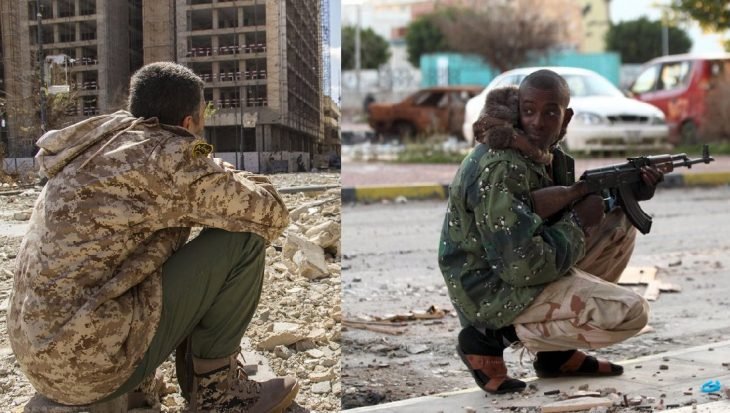
Perhaps no major political or humanitarian disaster is as overlooked as the ongoing crisis in Libya. Read More
By Lansana Gberie
Perhaps no major political or humanitarian disaster is as overlooked as the ongoing crisis in Libya. Read More
By Norman T. Roule
February 15, 2018, will mark the seventh anniversary of the Benghazi rallies, in which Libyans took to the streets to protest the arrest of a human rights lawyer. Read More
By Erin Neale
On February 17th, Libyans will celebrate the anniversary of a revolt that ultimately toppled and killed Qaddafi, ending his forty-two-year oppressive rule. Read More
The 2018 Annual Forecast asserted that Libya would make incremental progress toward holding elections but would be unable to resolve internal differences to meet the U.N. goal of voting by September 2018. Read More
By Edith M. Lederer
The panel of experts said in the summary of a report to the Security Council obtained Tuesday by The Associated Press that despite U.N. efforts to overcome the current stalemate “military dynamics in Libya and conflicting regional agendas show a lack of commitment to a peaceful solution.” Read More
Seven years since a revolution that ended four decades of dictatorship under Gadhafi, Libyans see no end in sight to the North African nation’s chaotic transition to democracy. Read More
By Karim Mezran and Elissa Miller
For years, many actors have tried to mediate peace efforts for the Libyan crisis, but instead of an end to hostilities, conflicts remain. Read More
By Karim Mezran and Elissa Miller
For years, man
y actors have tried to mediate peace efforts for the Libyan crisis, but instead of an end to hostilities, conflicts remain. Read More
A Public Policy Initiative
By Emadeddin Zahri Muntasser
Ensuring Fair & Free Elections And Overcoming Obstacles In Selecting A Parliament, Forming A Government, And Ratifying A Constitution For Libya Read More
By Jalel Harchaoui
As it marks the seventh anniversary of the anti-Gadhafi uprisings, Libya has no shortage of areas prone to a spike in violence. Read More
By Sami Zaptia
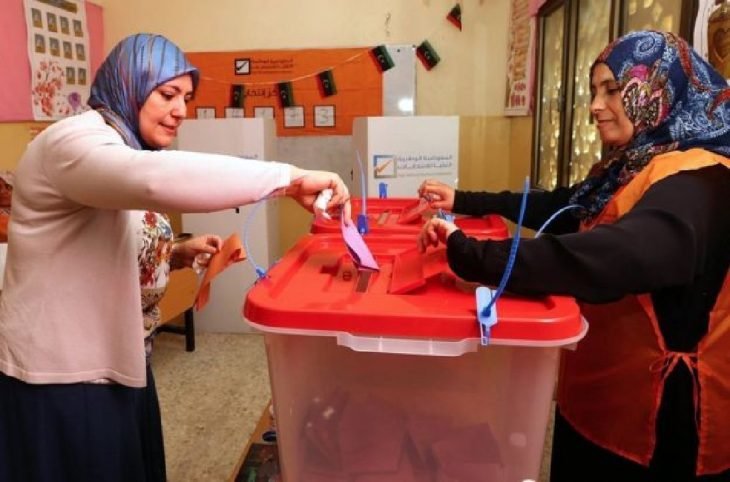
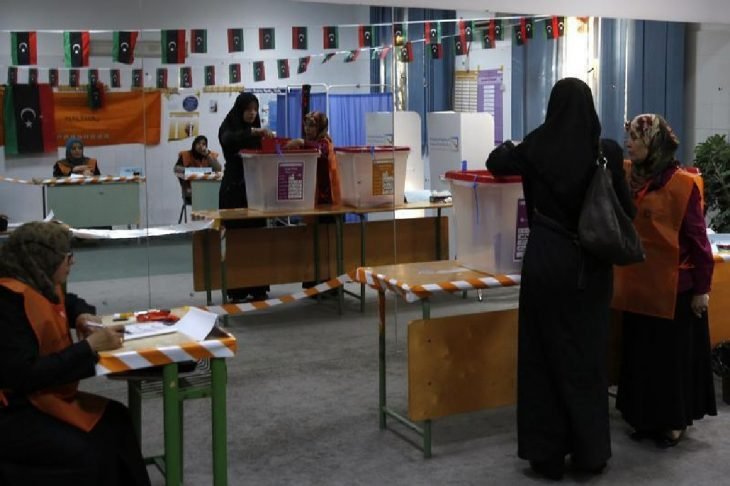
Libya’s High National Elections Commission (HNEC) announced yesterday that one million women have now registered on the election register. Read More
Since the fall of Qaddafi, the war-torn country’s militias have sought to contain extremism. But at what cost?
By Frederic Wehrey
This is not the attitude back in Tripoli, however. Here, a militia that passes for a counter-terrorism force is running an extensive re-indoctrination effort, rooted in Islamic scripture and jobs training. Read More
By Emadeddin Muntasser
Since 2011, Libya’s path to democracy has been unclear. The United Nations’ (UN) inability to bring warring factions to the negotiating table has left the country in chaos. Read More
By Erin Neale and Yousuf Eltagouri
The situation on the ground in Libya is fluid and complex. Militias in the West and South police their own local communities but few have regional control. Read More
By Hafed Al-Ghwell
The seventh anniversary of the Libyan uprising is approaching, and so it is worth taking a look at what happened then, what is happening now and what might happen next in a country that was shaken to its core and has since suffered years of upheaval despite its apparent advantages of relative wealth, a small population and a strategic location. Read More
Since the fall of Qaddafi, the war-torn country’s militias have sought to contain extremism. But at what cost?
By Frederic Wehrey
As U.S. military forces hunt down the remnants of the Islamic State in Syria and Iraq, they are also waging a quieter campaign in the fractured country of Libya. Read More
As factions face off in war-torn Libya, money slips through sanctions.
By Giulia Paravicini
Six years after Gaddafi’s death, his regime’s frozen funds in Brussels are generating tens of millions of euros in interest for mystery beneficiaries, despite international sanctions. Read More
By Jo Becker and Eric Schmitt
Last March, the Pentagon’s top general for Africa made a rare trip to Capitol Hill, bearing a sobering double-barreled warning. Read More
As factions face off in war-torn Libya, money slips through sanctions.
By Giulia Paravicini
Six years after Gaddafi’s death, his regime’s frozen funds in Brussels are generating tens of millions of euros in interest for mystery beneficiaries, despite international sanctions. Read More
By Jo Becker and Eric Schmitt
Last March, the Pentagon’s top general for Africa made a rare trip to Capitol Hill, bearing a sobering double-barreled warning. Read More
By Hana Salama
Although Libya’s estimated rate of violent deaths is still far below those of Syria and several Central American nations, it remains significant, ranking eighth globally for 2016. Read More
The Libyan navy yesterday accused the U.N. migration agency of bias against the country, denying its report of migrant drownings off the Libyan coast two days earlier. Read More
Frederic Wehrey discusses his forthcoming book on Libya.
By Ghida El-Tayara
Frederic Wehrey is a senior fellow in the Carnegie Middle East program who specializes in post-conflict transitions, armed groups, and identity politics, with a focus on Libya, North Africa, and the Gulf.
He is the author of the upcoming The Burning Shores: Inside the Battle for the New Libya (Farrar, Straus and Giroux), which will be published in April.
Wehrey also recently published an edited book, titled Beyond Sunni and Shia: The Roots of Sectarianism in a Changing Middle East (Oxford University Press).
He was in Beirut in early February to participate in a Carnegie roundtable at which he talked about Libya’s policing sector, a topic he partly covered in his most recent article for Diwan, “The Sufi-Salafi Rift,” co-authored with Katherine Pollock.
Diwan met with him then to discuss his forthcoming book.
The Burning Shores: Inside the Battle for the New Libya
A riveting, beautifully crafted account of Libya after Qadhafi.
The death of Qadhafi freed Libya from forty-two years of despotic rule, raising hopes for a new era. But in the aftermath, the country descended into bitter rivalries and civil war, paving the way for the Islamic State and a catastrophic migrant crisis.
In a fast-paced narrative that blends frontline reporting, analysis, and history, Frederic Wehrey tells the story of what went wrong.
An Arabic-speaking Middle East scholar, Wehrey interviewed the key actors in Libya and paints vivid portraits of lives upended by a country in turmoil:
(a) the once-hopeful activists murdered or exiled,
(b) revolutionaries transformed into militia bosses or jihadist recruits, and
(c) an aging general who promises salvation from the chaos in exchange for a return to the old authoritarianism.
He traveled where few Westerners have gone, from the shattered city of Benghazi, birthplace of the revolution, to the lawless Sahara, to the coastal stronghold of the Islamic State in Qadhafi’s hometown of Sirte.
He chronicles the American and international missteps after the dictator’s death that hastened the country’s unraveling.
Written with bravura, based on daring reportage, and informed by deep knowledge, TheBurning Shores is the definitive account of Libya’s fall.
_____________
Persistent fragile security environment may undermine election process.
By Omar Shariff
If proof were needed of the precarious political and security situation Libya finds itself in, it came in the form of the deadly twin blasts on January 23 outside a Salafist mosque in Benghazi, which left more than 30 people dead. Read More
The July 2017 peace plan the UN sponsored and still supports is still serving as an outline for national unification. Read More
By Julian Lee
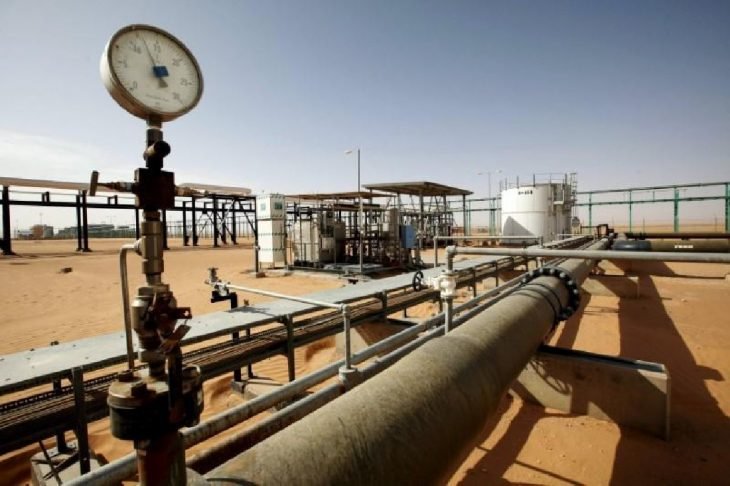
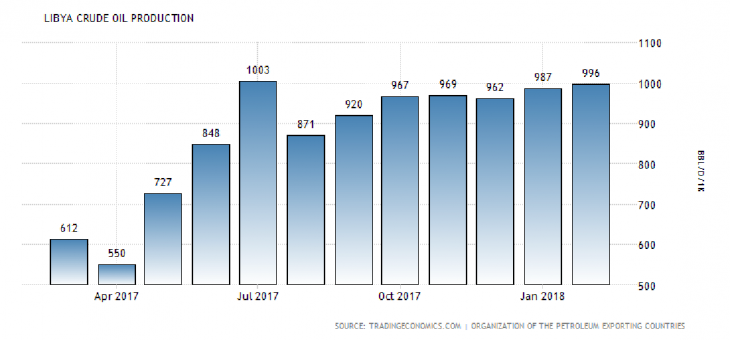
Theft, corruption and injustice are getting dangerously close to strangling the newly reborn Libyan oil industry in its cradle. Should anyone outside Libya care? Yes — OPEC, Europe and the U.S., to name a few. Read More
By Ahmed Elumami
More than six years after they were forced to leave their homes in the civil war that toppled Gaddafi, tens of thousands of residents of the Libyan ghost city of Tawergha were finally meant to start going home last week. It never happened. Read More
A UN panel of experts has said that Libyan forces as well as IS maybe facilitating human trafficking in Libya. Read More
The July 2017 peace plan the UN sponsored and still supports is still serving as an outline for national unification. Read More
Many people are still trapped in captivity and suffering abuses in Libya a year after Italy struck an EU-backed deal with the government to stop irregular migrants. Read More
By Stephen Quillen
French President Emmanuel Macron capped off a state visit to Tunis on Feb. 1 with promises of increased economic support and bilateral cooperation, welcome news in a country reeling from high inflation, unemployment and sluggish growth. Read More
By Aaron Y. Zelin
This new study offers a deeper understanding of the foreign-fighter phenomenon, its evolution, and its potential trajectories. Read More
On January 10, 2018 the United Nations endorsed the UN Support Mission in Libya’s (UNSMIL) intention to hold national elections by the end of 2018, led by the new UN Special Envoy to Libya, Ghassan Salame. Read More
For the first time in Libya, an assessment of mental health and psychosocial support has been conducted to map the services available for the Libyan people in this field. Read More
By Aaron Y. Zelin
This new study offers a deeper understanding of the foreign-fighter phenomenon, its evolution, and its potential trajectories. Read More
Simultaneous protests in London, Paris and Washington DC last weekend aimed to raise awareness of modern day slavery taking place in Libya. Read More