Jason Pack & Stefano Marcuzzi


Summary:
We no longer inhabit the post-Cold War era. There is no global hegemon unifying its allies to adopt consensus positions on issues of shared interest like climate change, tax havens, or the reconstruction of post-conflict states.
This era of Global Enduring Disorder makes it particularly difficult for wealthy, geostrategically important post-conflict states to transition to stable governance as myriad external and internal conflict actors pull them in a range of directions, making real reform or peacebuilding nearly impossible.
This leads to a situation where post-conflict states (such as the post-Arab Spring states) have inherited their dysfunctional economic institutions from the prior regimes without meaningful hegemonic supervision.
Furthermore, a core feature of this new era is the rapid spread of media narratives stigmatizing various institutions or elites for participation in “conspiratorial” activities. Conspiracy theories and wars to control the narrative are not new. However, the ability of non-experts to spread their opinions and the sheer amounts of misinformation constitute a quantitively and qualitatively new phenomenon.
All of these core dynamics are at play in Libya’s post-Gadhafi transition. In fact, it may be the first theater in which all of the relevant dynamics of the Enduring Disorder initially came together.
In this paper, we investigate the ongoing Libya conflict through the Enduring Disorder paradigm focusing on the financial and banking sectors, honing in on stakeholder perceptions of the Central Bank of Libya (CBL), its transparency/opacity, and the “narrative wars” over who is to blame for, and who benefits from, Libya’s economic dysfunction, the lack of an annual budget, and the current lack of a quorum on the CBL board.
This paper concludes with policy recommendations. The international community shouldn’t get lost in debates around elections and new interim governments.
Fixing the CBL’s irregular board structure and bifurcation is crucial to solving the narrative war around Libya’s finances, yet it is not possible without intermediate steps towards reform.
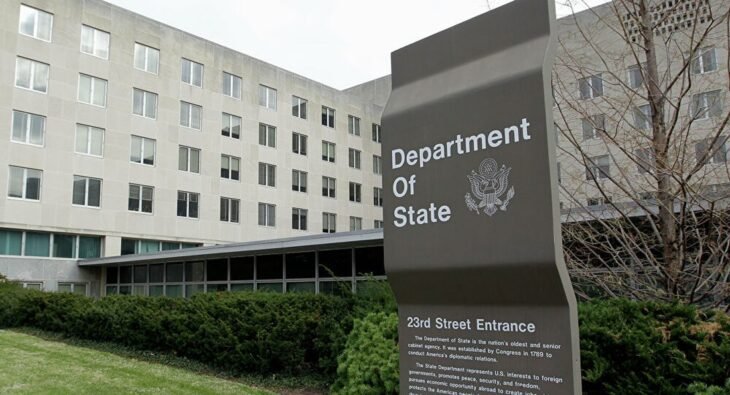
On Feb. 5, 2023, the regional spokesman for the U.S. Department of State, Samuel Warburg, said that the U.S.’s current priority in Libya is to “achieve Libyan aspirations to have a transparent management of oil revenues.”
As such, we advocate for the U.S. to lead international efforts pushing for transparency and international best practices to be brought to Libya’s finances.
The Enduring Disorder is here to stay. Misinformation, disinformation, and narrative wars prevail on most complex and divisive issues of our day. Policymakers need to take this into account as they devise new interventions to mitigate the disorder and isolate sensitive and essential institutions, like the CBL, from larger conflict dynamics, by promoting transparency and best practices.
Key Points:
- The CBL is at the center of a range of outlandish conspiracy theories about the underlying causes of Libya’s ongoing conflict. We found that the bank has used the misinformation against it as an excuse to not initiate genuine reforms, but rather to undertake “window dressing” measures to allay critics.
- Most Western policymakers we spoke to cited the reunification of the CBL as a paramount concern, yet among businesspeople the security situation and the lack of trusted contacts, not the lack of structural reforms or reunification, remains the main impediment to doing business in Libya.
- We propose quick wins to disentangle technical matters from media optics, while better informing Libyans and Libyawatchers about the actual state of Libya’s finances, hence blunting the potential impact of misinformation. We counsel a “follow the money” approach: Western officials should not get lost in the media debates concerning the constitutional basis for elections. In reality, the root causes of most status quo attempts to block political progress are financial opacity and corruption.
- The Biden administration has recently taken steps indicating that it will continue its efforts to bring transparency and accountability to Libya’s finances, while simultaneously confining itself to the margins of the Libyan elections debate — allowing the U.N. to call the shots on that file. We applaud this approach and advocate for American policymakers to use carrots and serious sticks in their push for transparency and accountability in Libya’s banking sector.
Introduction:
Narrative Wars, Misinformation, and the Battle over the Libyan Banking Sector
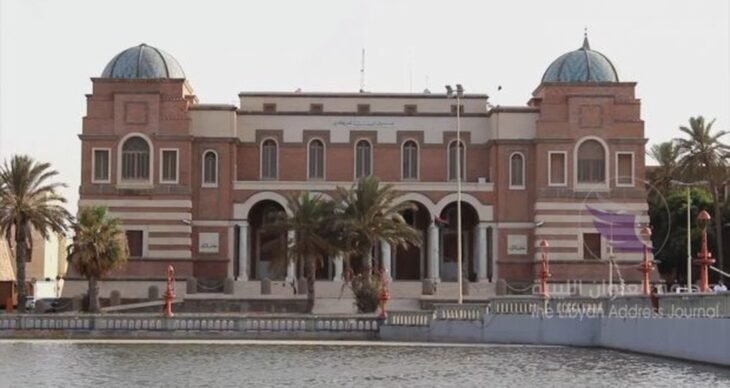
The banking sector is crucial to Libya’s conflict economy and how the CBL’s core operational procedures facilitate the continuation of the ongoing low-grade civil war and incentivize many parties to maintain the status quo.
The CBL is also essential to doing business in Libya and making sure Libyans have basic services from electricity to infrastructure to food imports to drinking water. Simply put, the Central Bank conducts its legally mandated functions in the economy. It may also do a lot more than that.
The CBL implicitly continues the Gadhafian indirect rentier tradition of funding all sides of Libya’s conflict economy and underwriting the subsidy system on which it is based.
It is also the key portal through which most foreign businesses interact with Libya, even if they are not in banking. Foreign actors like Turkey, Russia, the Gulf states, the U.S., and the European Union (EU) have core equities in how the Libyan banking sector operates.
Companies within those countries are also all owed money by various Libyan entities and their hopes of recovering those debts or backpayments depend on CBL actions.
At the same time, the CBL is also at the center of a range of outlandish conspiracy theories about the underlying causes of Libya’s conflicts.
Various conflict actors wish to blame most injustices on CBL policy and Governor Kabir, in a similar way that QAnon supporters wish to blame a cosmopolitan elite and Hillary Clinton for all that is wrong in America and the world.
These are both disinformation campaigns built upon deliberate misinformation and conspiratorial thinking. This is not to say that a cosmopolitan elite in America is not indirectly benefiting from certain advantages of neoliberal economic policies or that CBL policy does not implicitly favor certain Libyan social segments over others.
All successful conspiracies are built around a tiny grain of truth. But on the whole, conspiracy theories painting the CBL as the puppet masters and ultimate beneficiaries of Libya’s conflict economy are an exaggeration and vast oversimplification.
The CBL largely carries out its legal mandate and functions with the woefully poor transparency standards common among Libyan institutions.
It may also go beyond its legal remit, but it is impossible for even the most knowledgeable outsiders to determine this. At present, the CBL board lacks a legal quorum due to resignations and backroom deals.
This unsustainable situation is likely to persist for some time as new board members can only be appointed as part of a broad consensus between the House of Representatives (HoR) and the High State Council (HSC).
Achieving such a consensus would be as easy, or as difficult, as agreeing upon electoral procedures or a constitution for Libya.
As a result, the disorder is likely to endure and deepen. None of the Libyan and Western stakeholders we talked to could point to any conclusive evidence that the CBL is directly involved in corruption.
Many pointed to incidents when CBL statements and actions indicated an overstepping of its mandate or the expressing of political partisanship. Yet for the businesspeople and policymakers we spoke to, that remains a far cry from financial malfeasance of the sort that “is frequently alleged and rarely if ever demonstrated.”
The academic, journalistic, and think tank community we spoke to demonstrated an interest in the particularly damning AB report of 2016 and the 2021 Global Witness report “Discredited,” which allege corruption in letters of credit allocations, but we found these reports had very limited cut through with businesspeople and policymakers as their “allegations” were simply understood as being part of a larger narrative war and not viewed as conclusive in any way.
These differences in perception are a critical part of the ongoing narrative war and they allow for a false equivalency that enables eastern Libyan attempts to “penetrate” the banking sector via coerced personnel resignations and backroom deals.
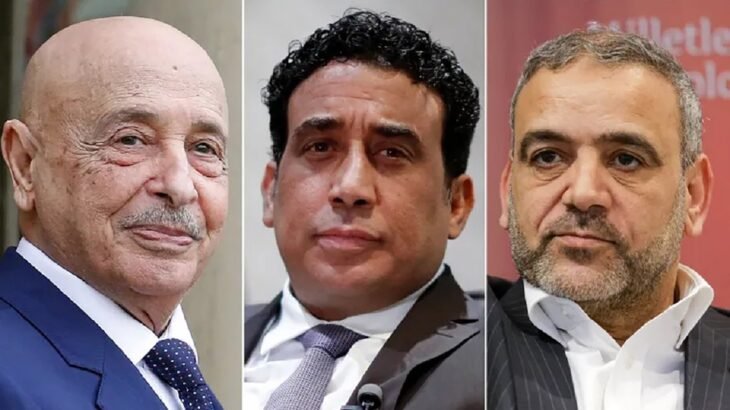
In November 2022, HoR Chairman Aguila Saleh and Khalifa Hifter’s inner circle sacked Ali al-Hibri, the deputy CBL governor and parallel eastern CBL head, for not releasing a budget to the HoR, coerced resignations from eastern CBL board members, and sought to siphon funds from eastern commercial banks.
These are real-world outcomes of the narrative war.
At present, without a functioning board the CBL cannot legally undertake its core function of providing liquidity to the economy, yet it is continuing to do just that. Therefore, its governor finds himself hamstrung by a conspiracy hatched against him. Just as happened on Jan. 6, 2021 in the U.S., when Congress and the Electoral College were lampooned in social media and misinformation reigns supreme, it becomes far easier for opponents to ignore laws and manipulate norms to attack it.
Despite the CBL largely being on the defensive in the narrative war, we have found that the bank has used the misinformation against it as an excuse to not initiate genuine reforms or major transparency initiatives, but rather to undertake “window dressing” measures to allay critics.
These “media reforms” help the CBL and its allies counter the narrative war against it, while not fundamentally changing matters. Had the CBL established more regular board meetings and governance practices it might not now find itself in the current situation.
In this, the CBL is no different from other Libyan actors and institutions that, when attacked for corruption or blocking elections, simply try to “play ball” with reforms or elections while fundamentally doing very little to change actual dynamics.
As a result many Libyan institutions and key decision makers find themselves hamstrung by spoilers.
The dynamics of the Enduring Disorder make genuine reforms nearly impossible until the narrative war is disentangled from the actual technical, legal, and political challenges.
Given how narratives of reforms have frequently obscured the lack of implementation of actual solutions, we conclude the paper by proposing a series of genuine reforms that are calculated with the complexities of our era in mind.
They serve to fight misinformation, promote transparency, and defend technocracy, so as to remove Libya’s financial and banking sector from the maelstrom of conflict that has engulfed the country and the international system.
***
Jason Pack is a former non-resident scholar at MEI, author of Libya and the Global Enduring Disorder, and the president of LibyaAnalysis LLC. He is the Director of the NATO & THE GLOBAL ENDURING DISORDER Project and a Senior Analyst for Emerging Challenges at the NATO Defense College Foundation.
Stefano Marcuzzi is a Research Fellow at the Center for Higher Defense Studies (CASD), Rome, a Senior Analyst at Libya Analysis LLC, an Adjunct Fellow at University College Dublin (UCD) and Boston University (BU), and an Emerging Challenges Analyst at the NATO Defense College Foundation (NDFC), Rome. He is the author of The EU, NATO and the Libya Conflict. Anatomy of a Failure.
________________