Author - ab_mnbr

President of Benghazi University Leads a Struggle to Rise in Rankings

Ibtisam Ighfir

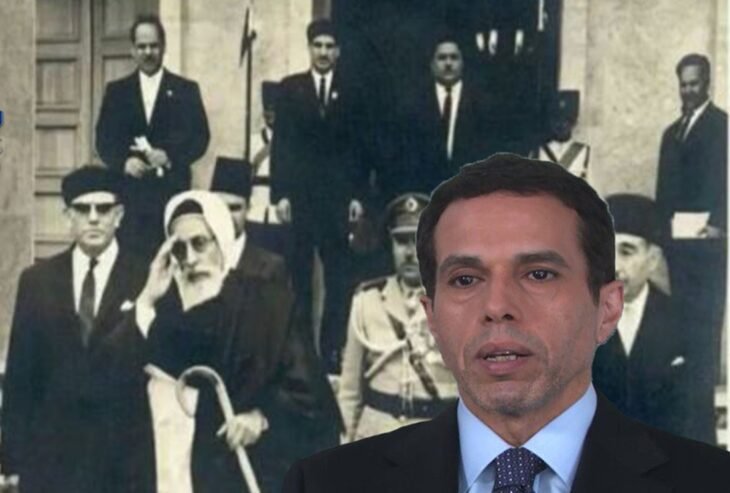
Libya’s University of Benghazi was the highest-placed of only three Libyan universities included in the QS Arab Region University Rankings 2023. Its president, Ezzedine Younis Al-Darssi, regards that as a triumph attesting to the university’s efforts to maintain quality despite the challenges it faces in an unstable country. Read More

Libya’s festering crisis risks slide back to war

Angus Mcdowall

As its political stalemate festers, Libya risks sliding back towards civil war with diplomacy at a standstill, politicians thwarting progress towards elections and military leaders including eastern commander Khalifa Haftar threatening violence. Read More

Hifter deposed in US civil lawsuit

Matthew Barakat 

A Libyan military commander who once lived in Virginia sat for a deposition Sunday in a U.S. lawsuit in which he is accused of orchestrating indiscriminate attacks on civilians and torturing and killing political opponents, according to an advocacy group that supports the lawsuit. Read More

THE RISE AND FALL OF HAFTAR (10)

The Field Marshal: Dreams of dictatorship

Haftar was someone Americans could believe in. After all, he was an American fighting terrorism in a place that echoed what was quickly becoming a one-word political insult aimed at Secretary of State Hillary Clinton — Benghazi. Read More

THE RISE AND FALL OF HAFTAR (9)

The Kingmaker: A series of secret flights

After the 2011 revolution, Haftar was viewed by some of his fellow Libyans as an unwanted interloper; to others, he was a savior. Read More

Libya’s Complicated Search for a Leader (2)

Mohammed Cherkaoui

Libya’s Nightmarish Outlook

The crossfire lines between the various factions for control of land and oil have undermined the prospects of any political settlement for six years now. In fact, oil revenues have shrunk significantly this year. Read More

THE RISE AND FALL OF HAFTAR (8)

Benghazi Burns: The strongman returns

By early 2012 former rebel groups were clashing in Benghazi, and the NTC based there sought more autonomy for the eastern part of the country. Read More

THE RISE AND FALL OF HAFTAR (7)

Haftar Returns to Libya: The revolution starts without Haftar

The Arab Spring movement had created popular uprisings in neighboring Tunisia and Egypt. Now the unrest spread to Benghazi. Read More

Libya’s Complicated Search for a Leader (1)

Mohammed Cherkaoui

The United Nations-brokered political transition plan for Libya, known as the Libyan Political Agreement (LPA) or the Skhirat Agreement, signed December 17, 2015 in Skhirat, Morocco, remains enmeshed in several political, security, and economic dilemmas. Read More

How digital authoritarianism has permeated the Middle East (4)

Marc Owen Jones

The Gulf’s post-truth ‘moment’ 

With the above in mind, this book makes the case for a Gulf post-truth “moment”, a period of time characterised by the strengthening of digital authoritarianism and led primarily by the Gulf Cooperation Council (GCC) states of Saudi Arabia and the United Arab Emirates. Read More
THE RISE AND FALL OF HAFTAR (6)

The Double Agent: Haftar reconciles with Qaddafi

A year after Haftar settled in northern Virginia (he used Hiftar as his official name in the U.S.), he was sending out feelers to Qaddafi. Read More

Ask the Experts: What Drives Libya’s Fragility?

Andrew Cheatham

Libya has been trapped in cycles of violence and political instability since the 2011 revolution. Competing factions within Libya’s political, business and military elite have spent the last decade alternating between violent conflict and ineffective power-sharing agreements. Read More
How digital authoritarianism has permeated the Middle East (3)

Marc Owen Jones

Situating the Middle East 

Despite this urgency, up until now the study of disinformation has tended to privilege a Cold War paradigm, which frames Russia and China as forces undermining US and European security. The focus is rarely on the Middle East and Western-allied Gulf states. In a similar vein, there has been a tendency to focus on actors who produce their own capabilities, such as China and Russia.  Read More

THE RISE AND FALL OF HAFTAR (5)

Quiet Times in Virgina: Two decades in exile

From his home in northern Virginia, Haftar continued to bluster, presenting himself in Arab publications as a dissident commander training Libyan rebels, although he served in no army and held no rank. Read More

The UAE is making a precarious shift in its Libya policy. Here’s why

Emadeddin Badi

Libya’s internationalized civil war of 2019 paved the way for the rise in prominence of Turkey and Russia in Libya. After initially intervening to back the country’s warring factions, Moscow and Ankara de-escalated and have since focused on entrenchment, attempting to carve up Libya into separate spheres of influence. Read More
How digital authoritarianism has permeated the Middle East (2)

Marc Owen Jones

The growing dangers of deception

These dangers of the information disorder are becoming increasingly apparent. From the rise of those who reject vaccinations to those who believe the world is flat, fringe conspiracies are arguably becoming more mainstream thanks to a proliferation of alternative information sources abetted by an apparent rise in distrust in traditional authority, whether that be government communications offices or the mainstream media. Read More
THE RISE AND FALL OF HAFTAR (4)

From Rebel to Refugee: Haftar becomes an American

Abandoned and insulted by Qaddafi, Haftar and his fellow prisoners of war languished for three years in a Chadian prison until sprung by the CIA and flown to America. Read More