
Libyans welcome UN-backed agreement but express scepticism about the implementation of it. Read More
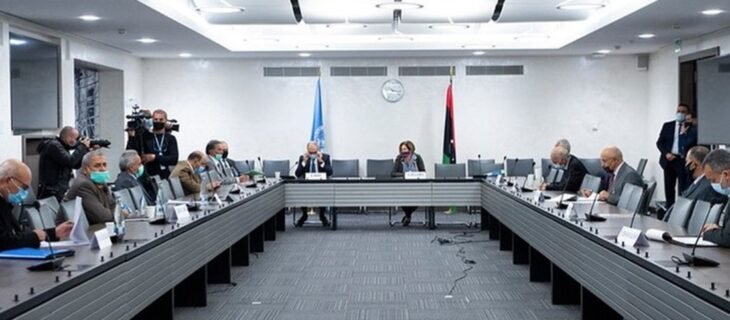
Libyans welcome UN-backed agreement but express scepticism about the implementation of it. Read More
By Muhittin Ataman
 Turkey and the Government of National Accord (GNA), the only legitimate administration and the main representative of the Libyan people, signed two memoranda of understanding on the delimitation of maritime jurisdictions and security and defense cooperation on Nov. 27, 2019. Read More

By Michael O’Hanlon & Federica Saint Fasanotti
 While world leaders remain confused and divided and, most of all, usually indifferent over the future of Libya, its municipal leaders point the way forward. Read More
By William Ford
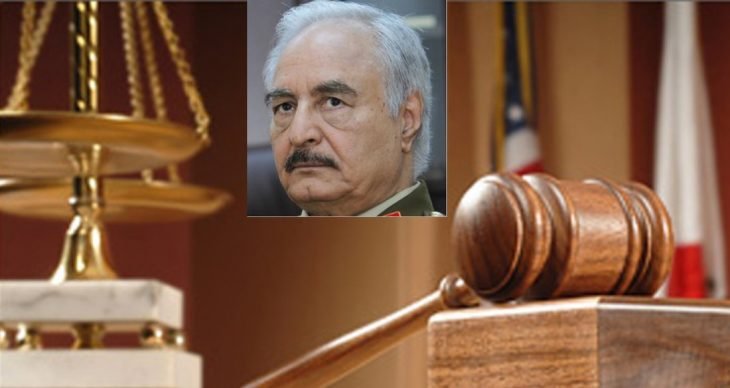
 Three lawsuits in U.S. federal court represent an inflection point in the global effort to hold Libyan war criminals legally accountable for torture and extrajudicial killings.
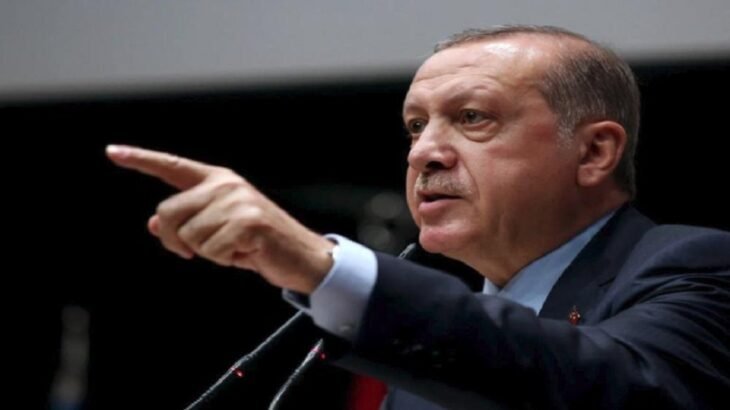
 Turkey’s involvement in various conflicts is a reflection of the Erdogan Doctrine that was formed by internal transformations that have led to the creation of a sophisticated military industry and a prosperous economy and shifted its view of its external role as an independent regional power. Read More

By Jason Pack
 For the last five years, the international community has tried a range of different approaches to mediating the Libyan civil war. All have failed.
By Alexander A. Decina, Darine El Hage and Nathaniel L. Wilson
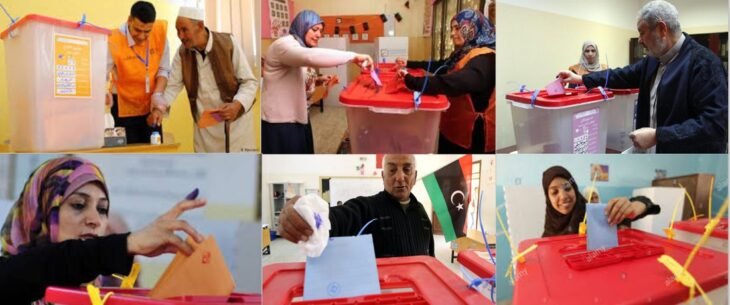
 Libyans need new elections to produce a competent and electorally legitimate government that the international community can support in navigating the myriad challenges the country faces….That said, elections themselves present a major risk.
By Alexander A. Decina, Darine El Hage and Nathaniel L. Wilson
Libyans need new elections to produce a competent and electorally legitimate government that the international community can support in navigating the myriad challenges the country faces….That said, elections themselves present a major risk.
By Daniel Hilton
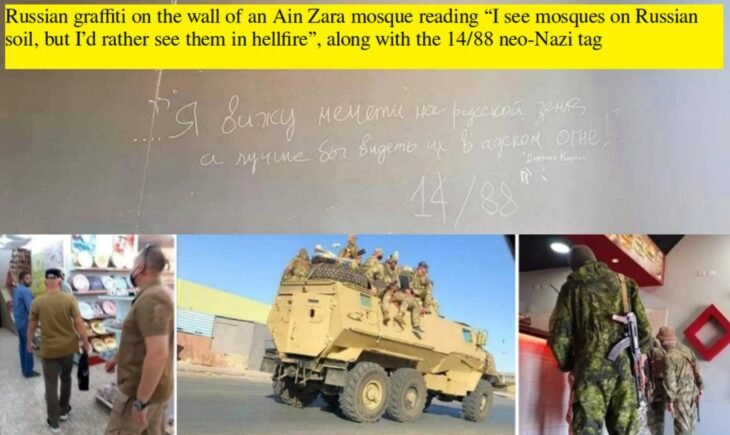
 Wagner Group’s fighters have seized a key role in Libya’s conflict. Middle East Eye meets the Libyans who suffered at their hands. Read More
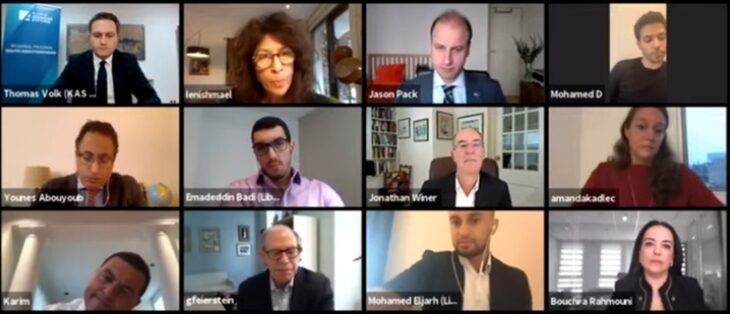
 While most discussions about the Libyan crisis revolve around geopolitics and international interference, internal divisions within Libya’s civil society and political institutions have also played a fundamental role in destabilizing the country since the fall of Gaddafi in 2011. Read More
By Gönül Tol
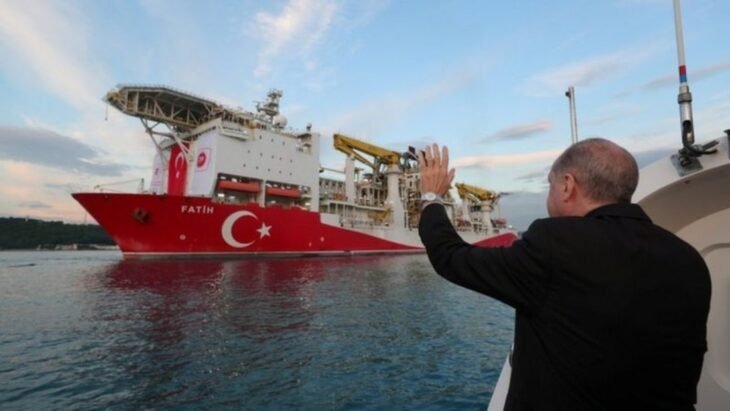
 Immediately after a long-simmering conflict in the South Caucasus burst into open warfare late last month, Turkey came to the aid of its Turkic allies in Azerbaijan. Read More
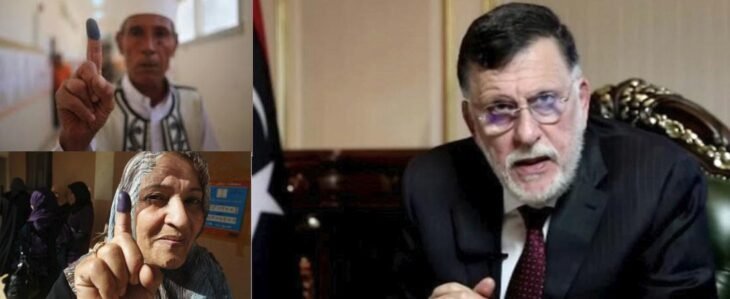
 Since Gaddafi’s fall, Libya has entered several transitional stages. Calls have been growing inside Libya and abroad for holding legislative and presidential elections in the conflict-ridden country, instead of staging a new 18-month transitional period. Read More
By Alexander A. Decina, Darine El Hage and Nathaniel L. Wilson
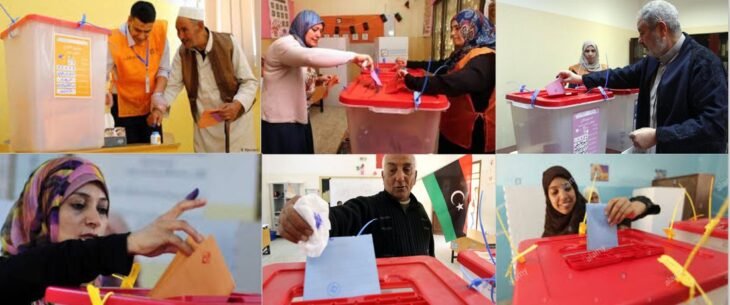
Libyans need new elections to produce a competent and electorally legitimate government that the international community can support in navigating the myriad challenges the country faces….That said, elections themselves present a major risk.
By Jason Pack
For the last five years, the international community has tried a range of different approaches to mediating the Libyan civil war. All have failed.
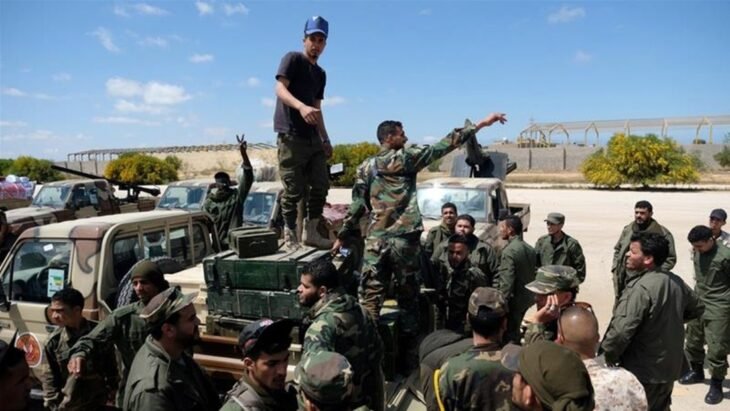
 Nearly a decade into Libya’s grinding civil war, it seems next to impossible to imagine stability, let alone a political settlement. Read More
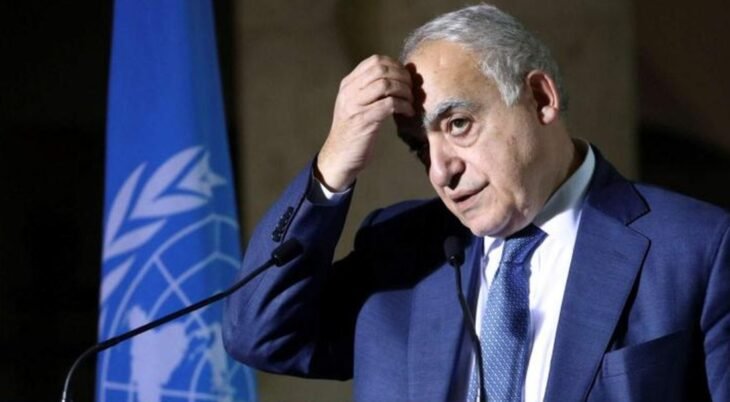

Foreign states have long meddled in Libya’s post-2011 conflicts, but this latest phase of the civil war has seen intensified military interventions by Russia, Turkey, and the United Arab Emirates, all in violation of a UN arms embargo. Read More
By Amb Anil Trigunayat
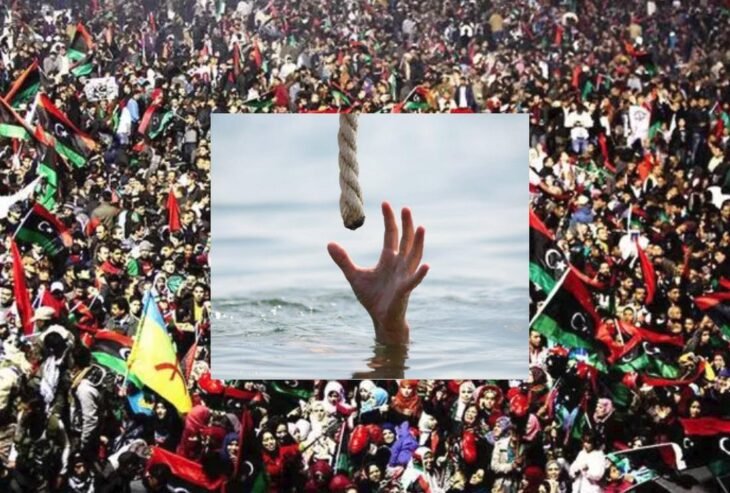
 The fact that the talks are going on and the two sides are hoping to arrive at an acceptable format with the support of all major stakeholders, this time around the scenario presents a more optimistic picture. Read More
By Omar Auf
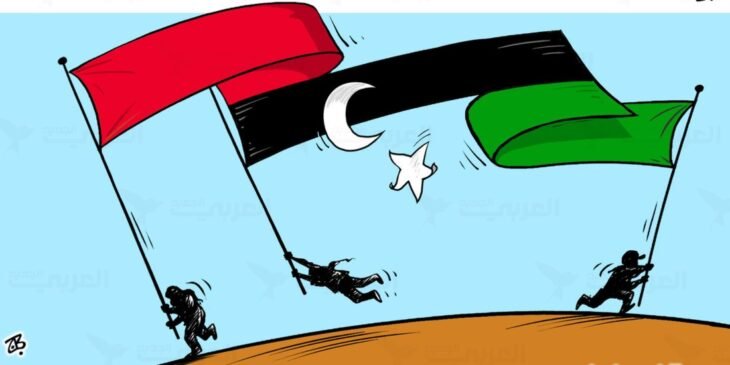
 After years of turmoil, Libyans thirst for unity and an end to the nine-year conflict. What should the making of a settlement in a divided Libya look like? Read More
By Tim Eaton
 Novel ways to understand why the Libyan revolution occurred and moves toward its resolution. Read More
By Martin Jay
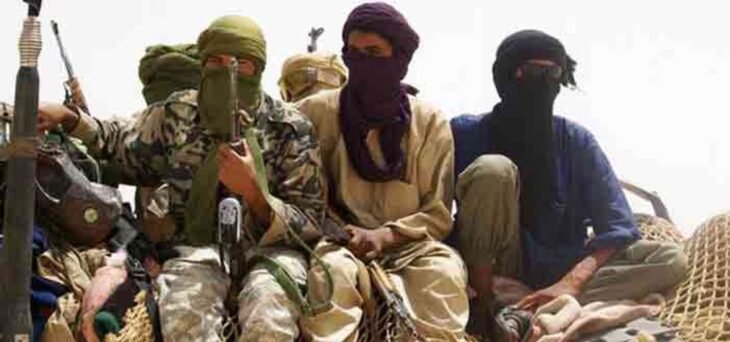
 The experts are lining up to point to the Sahel as a growth zone of terrorist activity, during the Covid period. Read More
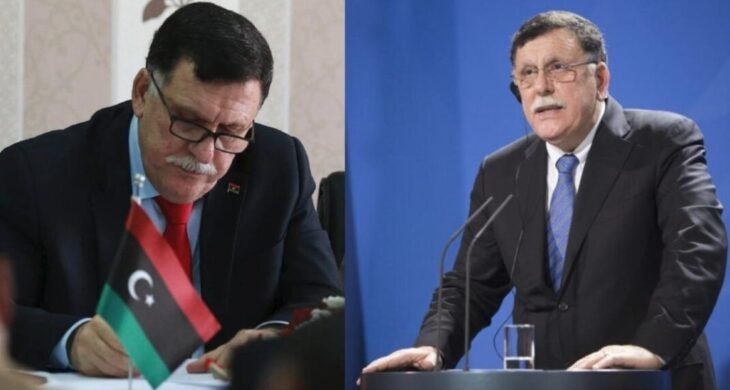
 The announcement of the head of the government of national unity relaunches the discussion around the future of the country, including a possible national reconciliation desired by the UN. Read More
By Khadeja Ramali (Interviewed by The Africa Center)
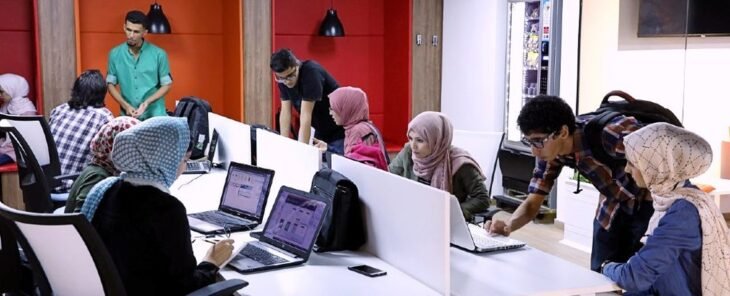
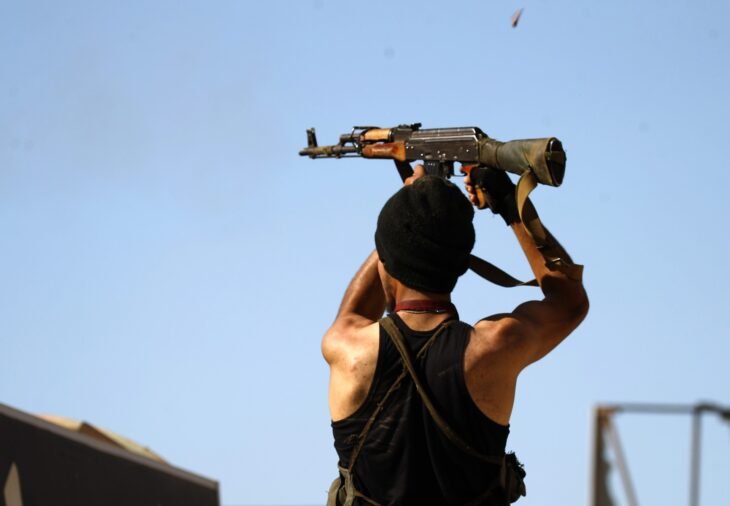
 Divisions within Libya’s civil war have been amplified by foreign-sponsored disinformation campaigns. Reconciliation and peacebuilding will require local actors to reclaim Libya’s digital spaces.
By Tarek Megerisi
 The first armed conflict of the Arab Spring is now a playground of intervening foreign powers out for themselves. It won’t be the last. Read More
By Jason Pack
For the last five years, the international community has tried a range of different approaches to mediating the Libyan civil war. All have failed.
By Alexander A. Decina, Darine El Hage and Nathaniel L. Wilson
Libyans need new elections to produce a competent and electorally legitimate government that the international community can support in navigating the myriad challenges the country faces….That said, elections themselves present a major risk.
One thousand and one failings
By Hamzeh al-Shadeedi, Erwin van Veen & Jalel Harchaoui


 This paper looks at security initiatives in Libya between 2011and 2018 in the context of its civil war to identify security sector stabilisation and development lessons for future SSD efforts and programmes. Read More

 Khalifa Haftar’s private plane landed in Istanbul twice last July. The Falcon 900 also landed during the same period in Abu Dhabi and then at the private Emirati airport of Al Batine, reserved for businessmen. Read More
By Khadeja Ramali (Interviewed by The Africa Center)
Divisions within Libya’s civil war have been amplified by foreign-sponsored disinformation campaigns. Reconciliation and peacebuilding will require local actors to reclaim Libya’s digital spaces.
.
PART (I)
Nested within Libya’s ongoing civil war are a fog of falsehoods, distortions, and polarizing narratives that have engulfed Libyan social media networks and online news outlets.
Content created and fueled by foreign actors adds to the confusion. Difficulty in identifying the truth has fueled demoralization and distrust among many Libyans.
Libya’s conflict pits the United Nations-recognized Government of National Accord (GNA), based out of Tripoli in the west, against an assortment of militias aligned with warlord Khalifa Haftar’s Libyan National Army (LNA), controlling territory in the east.
For destabilizing actors like Haftar (supported by Egypt, Russia, Saudi Arabia, and the United Arab Emirates), overrunning digital spaces with disinformation has been seen as a means to achieve conquests on the ground.
Haftar’s forces have sought to gain advantage in their struggle by sowing confusion about the motives and tactics of rival groups while making it more difficult to obtain information that may cost the LNA popular support among ordinary Libyans.
He has been aided by online firms tied to Russian oligarch Yevgeny Prigozhin and his Wagner Group of Russian mercenaries who have pushed divisive narratives into Libya’s social media networks.
The foreign-backed efforts to undermine the formation of an informed and democratically-engaged public in Libya’s digital spaces are likely to persist beyond any ceasefires negotiated on the battlefield.
The Africa Center spoke with Khadeja Ramali, a leading expert on Libyan social media and the founder of a digital community for Libyan women, about this challenging environment and the strategies that Libyans are developing to counter disinformation online.
* * *
Who is creating and spreading disinformation in Libya and what forms of disinformation are most prevalent within the country’s digital spaces?
Currently, digital spaces in Libya are highly fragmented and influenced by varying degrees of disinformation from an array of local, state, and international actors. The most sophisticated and coordinated disinformation campaigns have come from foreign states, particularly the UAE, Saudi Arabia, and Egypt in direct support of the LNA and Russia’s multifaceted interference in the local media environments in ways that often benefit the LNA.
These foreign actors have been able to use Libya’s digital space as a means of advancing their interests without bearing the destabilizing consequences of their actions.
Going back to 2014, large networks of UAE and Saudi fake Twitter accounts have been actively crowding out actual local voices by posting, creating hashtag traffic for, and amplifying nationalistic sentiments in Libya.
Beginning in 2019, thousands of these accounts were mobilized to glorify Haftar and his military campaign. This includes invoking imagery of Omar Mukhtar’s (early twentieth century) struggles against Italian colonialism to link the LNA with the fight against foreign invaders and terrorists.
Another tactic of these fake accounts is to Arabize the conflict and to cast Turkey, which backs the GNA, as the Ottoman Empire, evoking Libya as “the graveyard of the Turks.”
For each social media campaign, these accounts would localize their message depending on their targets and aims. Many of these campaigns were outsourced through Egyptian firms that were familiar with Libyan dialects and local issues.
Russian-backed actors connected to the Wagner Group, meanwhile, have been more active on Facebook and have developed subtler forms of disinformation by hiring Libyan consultants to create locally “franchised” groups, which can more nimbly sow disinformation that resonates with Libyans.
These groups pick up on local grievances and inflame them by bringing polarizing subjects back into the public eye in order to attract passionate online followers who are then primed to be more receptive to Russia’s narratives of the conflict.
Many of these narratives appear to have been pilots – testing out different and even conflicting messages – to see what might generate the most sensational effect. The UAE and Saudi accounts, in contrast, were highly coordinated in their attempts to amplify specific goals.
On the GNA side, the data we have so far shows that Turkey and Qatar have been much less active in producing digital disinformation and have placed more resources and emphasis on messaging through their traditional state-backed television and media channels rather than through fake or franchised social media accounts.
They don’t do the same scale of coordinated online disinformation or manipulation, in part because, unlike the LNA and Haftar’s forces which are regularly linked to human rights abuses, the GNA feels less need to vilify the other side in order to excuse their actions to citizens.
Finally, at the local level, we have non-state armed actors shaping the information environment. The largest of these is the GNA-aligned Misrata cluster.
They have a very active Facebook presence. They run a pretty smooth operation with what I call “war influencers,” who are so-called citizen journalists, or the militias themselves streaming content directly from the frontlines. They do a lot of videography, and it’s mostly done in-house.
The content of these posts is aimed toward keeping up morale, gaining public support, and vilifying the enemy through their platforms. Other smaller militias do this as well, though they are not as digitally savvy. All of the disinformation produced by these groups is basically the same kind of narrow, low-level claims that they’ve captured prisoners or enemy equipment, which may or may not be true.
These claims don’t appear to be coordinated and are nothing on the scale of what we’ve seen in terms of larger narratives produced by the UAE and Saudi networks.
How have digital landscapes in Libya changed over the past decade?
In 2011, only a tiny fraction of Libya’s 6.5 million citizens were active online or had smartphones. The digital space was heavily monitored by the Qaddafi regime and an internet connection was expensive. That started to change significantly after the revolution.
By 2013, there was a lot of activity as Libyans began joining online spaces and as digital media spaces were energized—though often still run by members of the Libyan diaspora.
There was a lot of capacity training by international organizations. As the conflict and civil war began to break out, there were numerous murders and kidnappings targeting well-known media figures in Libya.
Benghazi at one point had so many assassinations that monitors started to lose count. People became scared of being outspoken online.
Out of fear, most Libyans disengaged with online discussions of politics or current affairs and stayed away from public online spaces and preferred to engage in small closed online groups.
Even these conversations were often guarded, however, since they could be infiltrated by outsiders with malicious aims. So, online spaces became fragmented and there became an information vacuum.
International media coverage died down, and people weren’t talking about what was happening. As a result, only those affiliated and protected by armed groups, political parties like the Muslim Brotherhood, or other powerful groups were left to fill the void.
Things really went downhill after 2014 with the Qatari-backed “Libyan Dawn” militias’ seizure of Tripoli and the evacuation of the international community from Libya.
There wasn’t any in-country independent media or any reliable information that wasn’t filtered through specific foreign-funded channels. It was and still remains a confusing space.
One person’s terrorist is another person’s freedom fighter. More recently, we have seen fake journalistic personas created to publish propaganda in various media outlets, including policy recommendations regarding the Libyan conflict.
Furthermore, social media personalities and war influencers lead the efforts to push hate-filled narratives and political campaigns to Libyan audiences.
***
Khadeja Ramali is an independent consultant who has worked on issues involving community and digital spaces in Libya since 2014. She is a geophysicist and co-founder of Project Silphium. She has been collaborating with Libyan women’s Radio Network Project, which aims to expand the capacity of women media professionals in Libya.
__________
By Alexander A. Decina, Darine El Hage and Nathaniel L. Wilson
Libyans need new elections to produce a competent and electorally legitimate government that the international community can support in navigating the myriad challenges the country faces….That said, elections themselves present a major risk.
.
PART (III)
The Muslim Brotherhood and Islamist Factions
If they fear losing standing in the elections, the Muslim Brotherhood may well attempt to instigate protests and violent reactions among more extreme followers.
Although the Islamist-dominated GNC is no longer a meaningful entity, the Muslim Brotherhood remains a player in Libya. Today it likely has a substantial, if not dominant, faction within the High Council of State.
Indeed, the HCS voted for the Muslim Brotherhood’s Khaled al-Mishri to be its president in April 2018. Given this position, the Muslim Brotherhood may have influence—if not veto power—on the election laws that an HCS and HoR joint committee is tasked with drafting.
The Muslim Brotherhood may also have some influence through its informal relationships with Salafi jihadist and Islamist militias, in the past funneling logistical support to these fighters in Benghazi and elsewhere.
In addition, pro-GNC, pro–Muslim Brotherhood militias still exist—mainly in the west—and continue to oppose the GNA, but the Muslim Brotherhood has not demonstrated ability to control them.
Because the Muslim Brotherhood and Islamist political figures have no control over any militias, they cannot directly conduct violence to inhibit elections. However, if they fear losing standing in the elections, they may well attempt to instigate protests and violent reactions among more extreme followers.
Given that the Muslim Brotherhood has reportedly received support from Qatar and Turkey, these powers may have some influence and ability to pressure it to support rather than disrupt the electoral process and other state-building efforts.
– Salafi Jihadist Groups, the Islamic State, and al-Qaeda
Various Salafi jihadist groups are likely to remain outside of, and may attempt to disrupt, the political process. Although some of these groups have received indirect support from the Islamist-dominated GNC, they have consistently rejected any central government—regardless of whether it is controlled by secularists, the Muslim Brotherhood, or any other faction.
The most prominent include, but are not limited to, the following:
The Islamic State has taken and subsequently lost multiple swaths of territory since it emerged in Libya in 2014. That September, the group took control of much of the eastern city of Derna, holding it until April 2016, when it was driven out by a combination of Haftar’s offensives and attacks by competing jihadist groups.
In the spring of 2015, the Islamic State took control of the central city of Sirte from Libya Dawn, holding it until December 2016, when Misratan militias and the GNA-affiliated Petroleum Facilities Guard retook the city.
In early 2016, the Islamic State took control of parts of Sabratha in western Libya, but competing militias recaptured the city in October 2017. Although the Islamic State has lost most of its territorial control, it continues to operate clandestinely in areas across Libya, conducting attacks against multiple factions.
One such attack, when two suicide bombers targeted the High National Election Commission’s headquarters in Tripoli and killed at least fourteen people on May 2, 2018, underscores how serious a threat the Islamic State and other jihadist factions pose to elections and to Libyans working toward peace writ large.
Al-Qaeda exists in two main capacities in Libya—al-Qaeda in the Islamic Maghreb (AQIM) and loosely linked groups that emerged out of the now-defunct Libyan Islamic Fighting Group (LIFG).
AQIM, along with a handful of groups that have splintered away from it, operate in southwestern Libya in cooperation with Tuareg tribes and other interstate factions, taking advantage of the porous borders and operating lucrative smuggling networks in the Sahel region.
Because of its distance from Libya’s main cities and vital infrastructure, AQIM has been relatively removed from the current conflict. Al-Qaeda’s loosely affiliated groups in the northeast that broke away from the LIFG, however, have been far more involved.
The most prominent of these, Ansar al-Sharia Libya, operated in Benghazi and led the Benghazi Revolutionary Shura Council to fight Haftar from the summer of 2014 to the spring of 2017.
These groups in the northeast largely collapsed after Haftar’s operations in Benghazi and either joined the Islamic State or formed the Benghazi Defense Brigades.
The Benghazi Defense Brigades are an assortment of Islamist fighters—many of whom are connected to the now-defunct Ansar al-Sharia Libya—who fled Benghazi after Haftar’s military operations there.
The brigades mainly operate in parts of central Libya and briefly took control of key infrastructure in the oil crescent and Jufra farther south before Haftar’s forces drove them out.
The Benghazi Defense Brigades are at odds with the GNA but have had a cooperative relationship with some Misratan militias.
The stated objectives of most of these and other jihadist groups include the establishment of an Islamic caliphate and the implementation of sharia (and indeed many of these groups do implement some version of sharia).
Their more immediate objectives, however, have been to dominate patronage networks outside those that would fall under a state apparatus and to accrue power and money.
Successful central governance is a profound threat to the success of these groups, and to prevent such an outcome they are very likely to disrupt HNEC activities in the lead-up to and during elections.
Interests and Grievances
An understanding of competing interests and grievances at play in Libya offers insight into the nature and intensity of violence expected before, during, and after elections.
Interests at stake center around the state institutions needed to capitalize on Libya’s oil resources and sovereign wealth.
Grievances include polarization over the role of former and current Gadhafists, perceived Gadhafists, and Haftar; the secular-Islamist divide; and localized divisions, sometimes within camps and tribes, across the country.
Control over Resources and State Institutions
That the winner of the next elections may gain control of the Investment Authority and access to Libya’s frozen assets makes the elections all the more contentious.
Since Gadhafi’s fall, Libya’s militias and political factions have fought over Libya’s lucrative oil fields, production facilities, terminals, and the institutions needed to monetize these resources—the National Oil Corporation, the Central Bank of Libya, and the Libyan Investment Authority (Libya’s sovereign wealth fund).
Although these three institutions are all under control of the GNA, Libya’s most lucrative oil fields and terminals, which span from Es Sidre to Zuetina, are under LNA control, complicating Tripoli’s efforts to export.
Following the political division that resulted from the 2014 parliamentary elections, the HoR established and attempted to operate its own rival National Oil Company, Central Bank, and parallel sovereign wealth fund, but throughout 2014 and 2015, oil sales were significantly reduced and inconsistent.
Although the parallel institutions have not formally disbanded, the HoR and the LNA have come to deals with the GNA’s National Oil Corporation to sell oil via Tripoli, and, since the GNA was established, Libya has been able to increase its outputs, reaching 1.05 million barrels per day in April 2018.
Despite these improvements, the situation is highly precarious—most recently demonstrated in a succession of contestations over eastern oil terminals in June and July 2018 by Haftar, elements of the Petroleum Facilities Guard and the Benghazi Defense Brigades, and the competing oil companies.
The summer 2018 issues have since been resolved, but the situation remains fragile. Control over Libya’s oil resources and related institutions will be hotly contested in the next elections.
Beyond capitalizing on Libya’s current and future oil sales, Libya’s $67 billion sovereign wealth fund is also at stake. The Libyan Investment Authority is intended to control this fund, but most of it was frozen by the United States and European countries in 2011 to prevent theft and abuse by competing Libyan factions.
The Investment Authority has been a source of consternation and is a focal point for potentially violent competition. In August 2018, the body accused the nominally pro-GNA militia that was tasked with guarding it of extorting and coercing its employees. As a result, it was forced to relocate to an undisclosed location.
That the winner of the next elections may gain control of the Investment Authority and access to Libya’s frozen assets makes the elections all the more contentious.
Anti-Gadhafi Sentiments and Policies, and Divisions over Haftar Another source of tension lingering in the post-Gadhafi era is that of Gadhafi himself and former regime figures.
Since the uprisings, Misratan and Islamist factions have seen the NFA and eastern factions (which now dominate the HoR) as being littered with former Gadhafi officials.
In May 2013, the Islamist-dominated GNC pushed through the Political Isolation Law to prevent any members of the former Gadhafi regime from holding office.
In February 2015, however, the HoR revoked the law. Any attempt to reconstitute another version of this policy will likely be a trigger for violence. Concurrently, attempts by Gadhafists to run for the presidency and parliament will also be a trigger for violence.
In addition to anti-Gadhafi sentiments, strong anti-Haftar sentiments also exist among Libyans—especially those in the west who fear Haftar will attempt to retake all of Libya by force, as he has vowed to do. 49 Should Haftar run for or win the presidency, he indeed could provoke a violent reaction from his opponents.
Secular-Islamist Divide and Libya’s Proxy War
Most Libyans are fairly conservative Muslims, but many are divided into ostensibly secular and Islamist factions. Those in the secular camp are for the most part aligned with the NFA and LNA and, having performed well in the 2014 elections, dominate the HoR.
Those in the Islamist camp formed the Muslim Brotherhood and, having come to dominate the GNC, remained with it and Libya Dawn militias during the HoR-GNC standoff.
Libya’s Islamists have also had connections with harder-line Salafist militias, many of which operated outside the GNC’s security apparatus.
These Islamists have promoted a range of governance models for Libya, from a constitution based on Islamic law to harsher variations of Islamic governance. Tensions between secular and Islamist factions are expected to manifest in the next elections and may well result in violence.
A secular-Islamist divide, however, is not the best framing for Libya outside discussion of the foreign involvement that these inclinations attract.
Although these labels can be used to identify two broad domestic camps in the conflict, major disputes have largely centered on control of state institutions and patronage networks rather than religious or irreligious policies, and neither Islamist nor secular ideology has been an overriding factor in determining alliances.
Nonetheless, these camps have attracted foreign support on the basis of their purported ideologies. The secular camp has reportedly attracted support from the UAE and Egypt, and the Islamist from Qatar, Turkey, and Sudan. That these external actors’ competitions have manifested in proxy conflict has complicated and intensified Libya’s conflict.
This competition is likely to continue into elections, because external parties will want to ensure that their Libyan proxies take control of state institutions and resources and diminish the influence of their competitors.
Divisions Within the East, West, and South
Although Haftar’s LNA dominates the east, and Misratan and other Tripolitanian militias largely dominate the west, divisions exist within these areas.
Violence in each of these areas presents major obstacles to the High National Election Commission’s elections and current and future governance efforts.
In eastern Libya, tensions within the LNA and Operation Dignity have grown far more acute since the defeat of Ansar al-Sharia.
In late March 2016, elements of the Petroleum Facilities Guard defected from the LNA, opting to support the GNA, and even began cooperating with former opponents in Misrata to fight the Islamic State in Sirte.
Since then, the Petroleum Facilities Guard and the LNA have clashed over oil infrastructure and territory in the oil crescent. Other militias and key figures who were once supporters of Haftar have also reportedly defected since the GNA took its seat in Tripoli.
Within the rest of the LNA are rifts between the regular LNA units and the Special Forces, tensions among tribes, and tensions between native eastern tribes and Haftar.
In the west, divisions exist in and around Tripoli among pro-GNA militias, militias supporting the remnants of the GNC, and tribal factions, and these sides have clashed periodically.
In October 2016, this fighting came to a head as pro-GNC militias attempted a coup against the GNA. In Misrata, tensions simmer between hard-line and more pragmatic militias.
Misratan divisions have not often lead to open fighting—especially during the height of the current conflict when Misratan militias stayed consolidated to face Haftar—but the city’s militias are by no means in lockstep.
As they do in the east, geographic, tribal, and ethnic rivalries pervade in the west. The Misrata-Zintan rivalry saw fierce clashes over Tripoli in 2014, and though factions reached a reconciliation agreement in March 2018, friction between them likely persists.
Clashes in Tripoli between Misratan and Tripoli militias supporting the GNA have mainly been over the presence of Misratan forces in the capital.
This fighting was most prominent in March 2017 and resulted in a tenuous ceasefire that month. In addition, Sabratha has seen fighting between local clans and GNA forces, discord between Arabs and Berbers continues, and tensions are high between Misratan militias and localities seen as pro-Gadhafi—most notably Sirte and Tawergha.
Although eastern and western cities and towns along Libya’s coast have commanded most observers’ attention, significant divisions are also present in the south.
These include tensions among Arab, Tebu, and Tuareg tribes over oil resources and smuggling networks, as well as tensions among factions in the south that have aligned with the LNA, the GNA, or the GNC.
***
Alexander A. Decina is an Amman-based analyst and Boren Fellow focused on conflicts throughout the Middle East and North Africa with particular attention to factional dynamics, security and political developments, and diplomatic efforts in Libya and Syria. A Middle East and North Africa consultant, he conducts predictive and diagnostic analysis on conflicts across the region for private-sector clientele.
Darine El Hage is a regional program manager for North Africa at USIP’s Center for Middle East and Africa based in Tunis, Tunisia.
Nathaniel L. Wilson is a program officer covering Libya for USIP, leading its programming in rule of law and local reconciliation peacebuilding initiatives.
______________

The Internationalization of Libya’s Post-2011 Conflicts From Proxies to Boots on the Ground
By Frederic Wehrey
 For almost a decade, Libya has been riven by increasingly internationalized conflicts, stemming from local and regional fissures during the 2011 anti-Qadhafi revolution and the NATO-led intervention. Read More
By Mokhtar Ghomidh
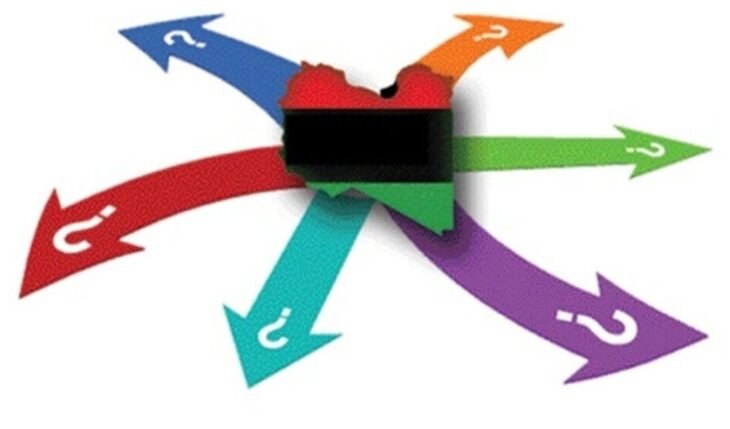
 Summary: The outcome of the Libyan conflict hinges on two options: (a) an endless and disastrous war or (b) a peaceful resolution that suits both warring sides as proposed by the Americans. Read More
By Jonathan Fenton-Harvey
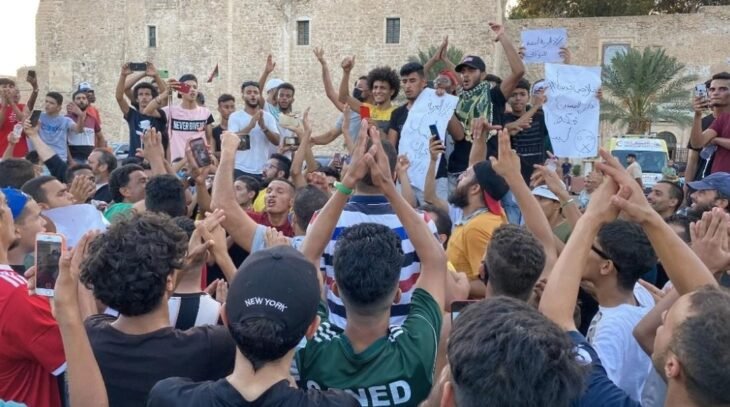
 With an eruption of protests and spate of political resignations, following a promising ceasefire, international actors are now more hopeful over Libya’s conflict. Read More
The Internationalization of Libya’s Post-2011 Conflicts From Proxies to Boots on the Ground
By Frederic Wehrey
For almost a decade, Libya has been riven by increasingly internationalized conflicts, stemming from local and regional fissures during the 2011 anti-Qadhafi revolution and the NATO-led intervention. Read More
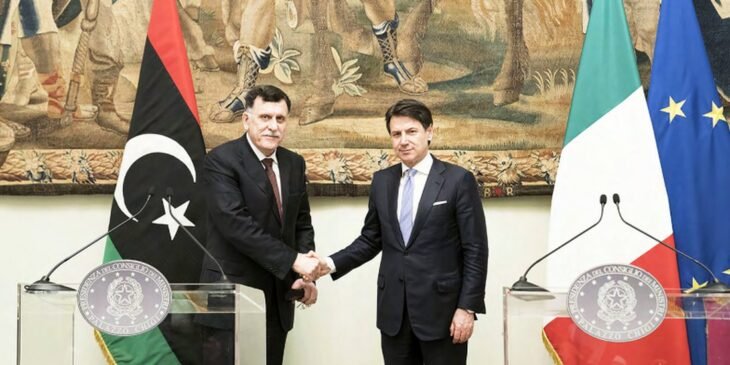
Surveying Italy’s Position in Libya post-2011
By Ferhat Polat
 This policy outlook aims to analyse Italy’s approach towards Libya post- 2011. Rome ’s various interests in Libya are assessed and used to explain Italy’s policy in the country and its effect on the Libyan conflict. Read More
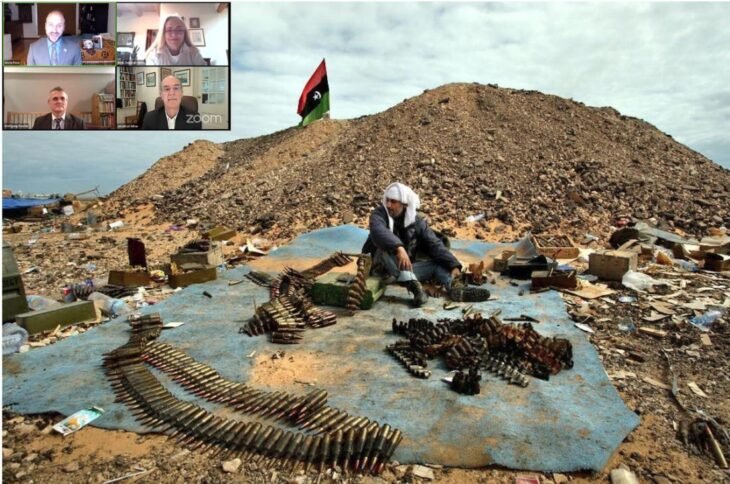
 With the War for Tripoli won in the late Spring by the defenders and a new mutually hurting stalemate taking hold around Jufra and Sirte over the course of the summer, the arena of Libya’s Wars of Post-Gaddafi Succession have shifted to cyberspace and the negotiating table. Read More
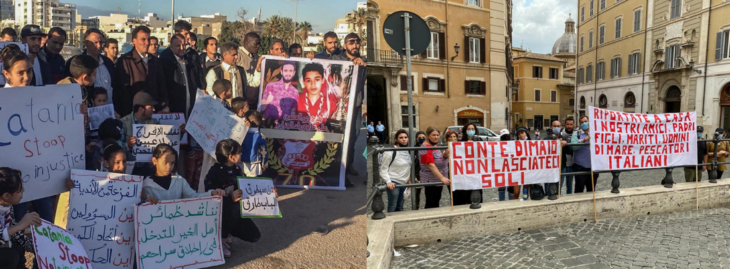
By Marta Bellingreri
 Families of detained Sicilian fishermen call for their release from Libya, while in Benghazi, families urge Italy to review the case of their sons held in its prisons. Read More