 This report presents a city-based model of politics, economics, and for security. It describes a strategy for disarmament, demobilization, and reintegration. Read More
This report presents a city-based model of politics, economics, and for security. It describes a strategy for disarmament, demobilization, and reintegration. Read More
By Group of scholar (*)
This report presents a city-based model of politics, economics, and for security. It describes a strategy for disarmament, demobilization, and reintegration. The report concludes with quotes from a recent report by the Libyan National Conference Process. Read More
By Inga Kristina Trauthig
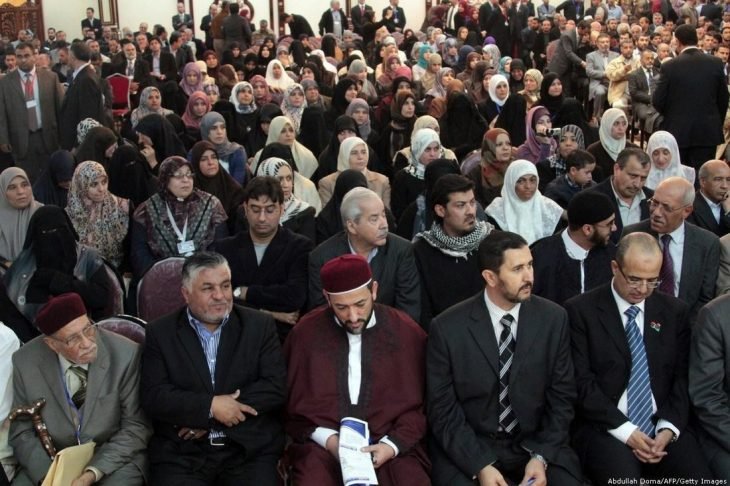
 By tracing and explaining the history of the LMB ’s organisational developments, this report examined one way in which the LMB tried to establish itself as a legitimate political actor with regard to Islam in the Libyan political sphere after 2011.
(The full report can be accessed here).
PART SIX
Lack of an Ideologically Opposed Political Party Impedes the LMB’s Political Advances
To make things worse for the LMB, the NFA was not what in the West would be considered a secular party, but rather a conglomerate of individuals located across the political spectrum, from liberal to Islamist.
This made it even trickier for the LMB to differentiate itself and build authentic Islamic credentials by contrasting itself with a secular opponent.
In other words, there was no “other” the LMB could have defined itself against; this problem significantly hindered the formation of its religious identity, a juxtaposition of “us” (the Muslim identity) versus “them” (the secularists).
Instead, the NFA was a newly founded party, led by former interim prime minister Mahmoud Jibril, that included a wide array of civil society organisations, smaller parties and individuals who identified as non-Islamist but also some who identified as Islamists.
In addition, it advocated for Sharia to be considered a “main source of legislation”, acknowledging the uncontentious necessity to appeal to the conservative Libyan people. Hence, while the NFA portrayed itself to the international audience as the secular alternative to the LMB and other Islamist parties, it never did so domestically.
Since secularism enjoys little support outside an elite group of former exiles. As a final point, the LMB not only found itself attacked on its Islamist agenda by the NFA but outflanked by other Islamist parties such as the Watan Party and non-party opposition groups as well.
This meant that the LMB did not really offer anything concrete or practical regarding its political vision apart from establishing Sharia as the main source of legislation; this, however, did not distinguish it from other political parties and they were never seen as particularly trustworthy on the issue. Thus, in Libya they could not capitalise on their core claim of being a true bearer of Islam.
Negligible Presence in Mosques – no Islamic Credentials Originating from this Institution
One factor that could have changed the game for the LMB was if they had been able to establish a social network and presence in the mosques before competing in elections. Since the LMB had been heavily oppressed by Qaddafi and, after the deal brokered with Saif Al-Qaddafi, failed to roll out its organisation in the country, even after the revolution it did not have a network either of charities or in mosques that it could build on.
Instead, it was the Salafis who gained the most from mosques. It is clear that the “most effective platform in Libya” – the mosques – were not sufficiently accessed by the LMB.
One can speculate that if they had “gotten the mosques, the speech of the Friday prayers, they would not have needed Al-Jazeera, not Al-Arabiya or Sky News”, but instead would have had the most credible and natural access to the Libyan people and could have changed their perception in the country significantly.
However, this paper will not try to prove something that never happened. To sum up, the LMB’s central attempt to represent itself as the true bearer of Islam (Islam’s vanguard) mattered little in a country where basically all political organisations paid lip service to Islam and thus there was no political force the LMB could effectively position itself against.
While in neighbouring countries the MB could style itself as the vanguard of Islam, the LMB had no comparable role to play. In short, the LMB was not able to claim a monopoly over Islam in the political sphere and present itself as a party with legitimate claim to act as the true bearer of Islam in Libyan politics.
Conclusion
By tracing and explaining the history of the LMB’s organisational developments, this paper examined one way in which the LMB tried to establish itself as a legitimate political actor with regard to Islam in the Libyan political sphere after 2011.
Almost paradoxically, even though Libya is a majority Sunni country with a conservative society, that did not translate into a conservative Sunni movement like the MB proving as popular as many had anticipated, derailing the impression that the whole region was “going Islamist” after 2011.
To this end, the paper has outlined relevant aspects that thwarted the LMB’s potential success story in the country: its inability to leave behind the demons of the past and establish credibility in its key source for legitimacy in contemporary Libya, Islam (alongside outlining a distinctly Libyan contribution to the debate on how political actors might derive legitimacy).
The LMB today is still haunted by ghosts of the past, such as the decades-long demonisation by the Qaddafi regime, its exiled organisational structure and related impotence in developing a strong social base.
The LMB was quick to blame these factors – exacerbated by their opponents’ fearmongering of a purported Islamist takeover – as responsible for the JCP’s poor showing in the 2012 election, neglecting self-inflicted wounds such as the Islamists’ inability to unite or to win over major parts of the population with their political programme.
Following the 2012 election, however, the LMB successfully crept into the centre of political decision-making and proved the most muscular force in pushing for the draconian political isolation law, which targeted the exclusion of some of its most potent rivals (particularly in the NFA).
Overall, the LMB exhibits a zero-sum approach to politics rather than bridging divides and pursuing compromises. Of course, the LMB, like other political forces in Libya, is hostage to military developments in the country, having to operate in a colossally demanding environment with the country sorely fragmented and political forces incapable of controlling the battleground.
Despite its logistical support and affiliation with some militias, as well as its members joining various armed groups in individual capacities, the MB never established its own military wing with overtly branded MB militias.
Thus, after installing itself in the political power apparatus, the LMB had no military forces under its leadership that it could indiscriminately rely upon when trying to enforce security. In hindsight it can be said that the perceived unwillingness to protect the Libyan population (it was seen as ruling after 2012) negatively influenced the perception of the LMB as a ruling entity in the country.
Generally speaking, the militarisation of the revolution meant that from the early days onwards, armed groups influenced political decisions. Again, LMB members were leading actors in this development, such as, for example, the deputy of the Misratan interior Omar al‑Khadrawi, who is a Brother from Zawiya.
To sum up, it was obvious that the LMB was interlinked with militias in the country, but simultaneously this involvement was messy and opaque, which led to criticism and speculation among Libyans that ultimately hurt the LMB instead of credibly promoting its commitment to the revolution and its ideals in military terms.
As a result, the LMB is one of many political forces that was reduced to negligible importance and simply struggling against other political forces for relevance and recognition.
On top of that, in this struggle, the LMB underperformed in the key aspect that would have helped it to earn legitimacy and establish it as a credible political actor in post‑Qaddafi Libya.
Despite it being part of an established transnational Islamist movement, the LMB failed to persuade Libyans that it is a “true bearer of Islam”, whereas the MB had success with its unique selling point in neighbouring countries where it could juxtapose itself with liberal forces and advocate most authentically for a Sharia-based political system.
This paper does not predict the future for the LMB or the JCP, but it can draw conclusions based on existing opinions of the LMB in the country, burdens from the past still influencing perceptions of the LMB and recent political schemes that have shaped its image.
Overall, the LMB exhibited a more hawkish and less compromise-oriented policy approach than its Tunisian counterpart and, while aiming to grow in importance in the Libyan political sphere, cooperated with some of the more radical Islamist groups.
However, recently it moderated some of its stances by verbally backing the LPA and simultaneously seemingly trying to appeal to its fiercest opponents like Haftar – for example by referring to the LNA fighters that died in recent battles as “martyrs”.
From a social perspective, it remains to be seen if the LMB will continue and succeed in building up a social network resembling what it achieved in Egypt over the last decades; this could in the long-term strengthen its presence in the country and help it to mobilise and profit politically.
However, as outlined above, a plethora of other Islamist groups developed a presence in Libya outflanking the LMB, for example with regard to holding the prestigious Friday sermons in mosques.
As a consequence of its limited social reach, holding on to power positions in Libya, as well as Libya’s vast oil resources to bankroll activities in the region, is crucial for the LMB’s survival.
Yet the power structure of Libya is currently divided and its future configuration uncertain because of its dependence on military developments nationally and diplomatic developments internationally.
Finally, the LMB’s unpopularity (already in evidence in 2012, but aggravated over the course of 2013 and 2014) led some Libyans to the conclusion that they cannot have a bright future: the people don’t like them and at some point, will revolt against them.
The Muslim Brotherhood has done a lot in the last years and the people remember that. They are corrupted. They took advantage of power.
Even if the Libyan people do not revolt against the LMB, this sentiment does not bode well for a movement that currently operates in a semi-democratic system where elections might be the next challenge for it to ensure its survival in the political landscape.
Still, the LMB is definitely a power to reckon with in the future as it has established itself in local councils, is affiliated with some armed forces and is currently securely entrenched in the power structures in the west of the country. But it will always be restricted by other forces, such as tribalism and the newly emergent local power centres, which will work as constraining influences.
Libya is no exception in a region of authoritarian systems that killed off political culture and nurtured an approach of zero-sum politics.
Therefore, the LMB must also be seen as an outgrowth of Libya’s preconditions before 2011, and the political forces to its left and right would probably be judged similarly harshly in a comparison along the same lines, signalling not necessarily the failings of political Islam but also “the tragedy of a region unable to translate its own revolutions into a better, more confident future”.
The outcome is a growing public conviction that Libya might be better off without political parties.
Final Remarks
The complexity of the Libyan situation means that many aspects could not be discussed in detail here. Excellent analyses on the most salient ones can be found in the following bibliography, including on the tribal and geographical implications behind local identities and regional dynamics in Libya’s political sphere, in the writings of Haley Cook and Jason Pack as well as Wolfram Lacher; on voting diversion according to local differences, for example in Omar Ashour, Project Syndicate; on the “rejectionist” sentiment in Libya regarding politics in general, in Amir Kamel’s chapter
***
Inga Kristina Trauthig is a Research Fellow at ICSR and a PhD candidate at the War Studies Department at King’s College London. Her research focusses on the changing Islamist landscape in post-Qaddafi Libya and aims to explore the political influence of dominant Islamist and Salafi groups in the country.Inga is an Associate Fellow at the Institute for Strategic Dialogue, Member of the Standing Expert Committee Terrorism and Interior Security of the Konrad-Adenauer- Foundation, part of the extended board of Women and International Security in Germany and Fellow of the Atlantic Initiative.
___________

By Tom Westcott

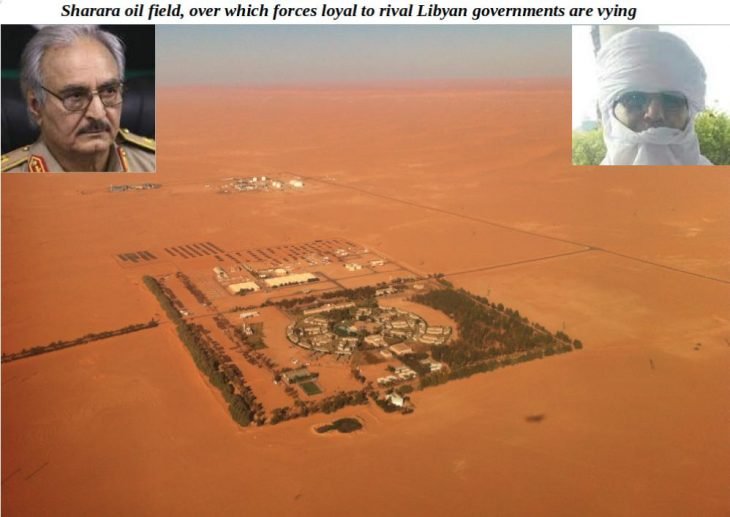
Two rivals in a neglected desert are putting aside a four-year feud to beat back Haftar’s militarya dvances.
By Patrick Wintour
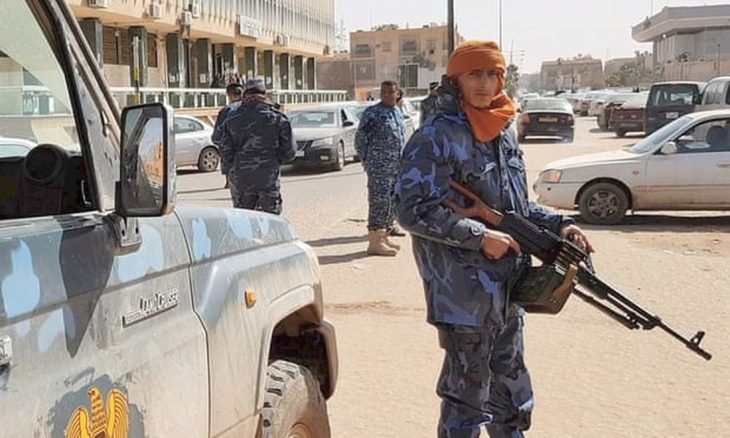
 Fighting between UN-backed GNA and Libyan National Army over field closed since December. Read More
 The Tripoli Protection Force (TPF) announced yesterday on its official Facebook page that it will be integrating itself into a new larger coalition to be named the Western Region Protection Force (WRPF). Read More
By Inga Kristina Trauthig
By tracing and explaining the history of the LMB ’s organisational developments, this report examined one way in which the LMB tried to establish itself as a legitimate political actor with regard to Islam in the Libyan political sphere after 2011. Read More
By Ross Harrison
 Power dynamics between the major global and regional powers have indirectly influenced the civil wars currently plaguing the Middle East. Read More
By Myra Saefong & Rachel Beaks


Oil futures declined sharply on Thursday, pressured by worries about energy demand, a stronger dollar and reports that Libya could soon increase production. Read More
By Mustafa Fetouri
 For the last eight years, my home town of Bani Walid, 180 kilometres southwest of Tripoli, has become one of the favourite route for people traffickers and illegal migrants heading north towards the Mediterranean coast on their dangerous trip to Europe by sea. Read More
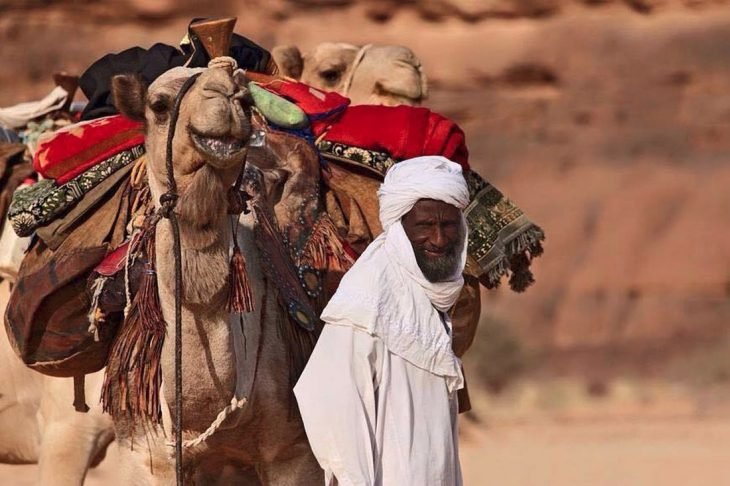
 Libya’s Tubu ethnic minority is under threat as rogue general Khalifa Haftar sweeps into southern Libya. Read More
By Inga Kristina Trauthig
By tracing and explaining the history of the LMB ’s organisational developments, this report examined one way in which the LMB tried to establish itself as a legitimate political actor with regard to Islam in the Libyan political sphere after 2011. (The full report can be accessed here). Read More
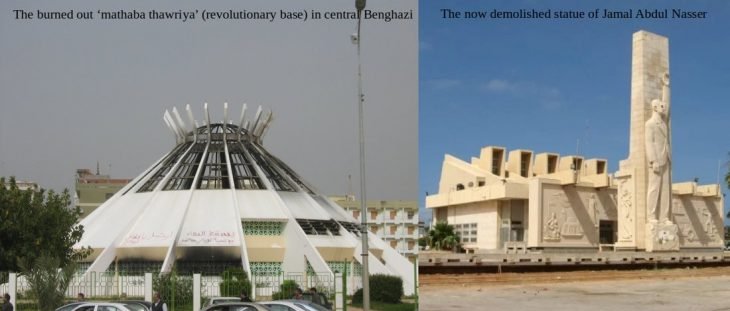
 The downtown center of Benghazi and the city’s nearby historic Birka district is connected by a 3.3 km arterial road. Read More
By Inga Kristina Trauthig
By tracing and explaining the history of the LMB ’s organisational developments, this report examined one way in which the LMB tried to establish itself as a legitimate political actor with regard to Islam in the Libyan political sphere after 2011. Read More
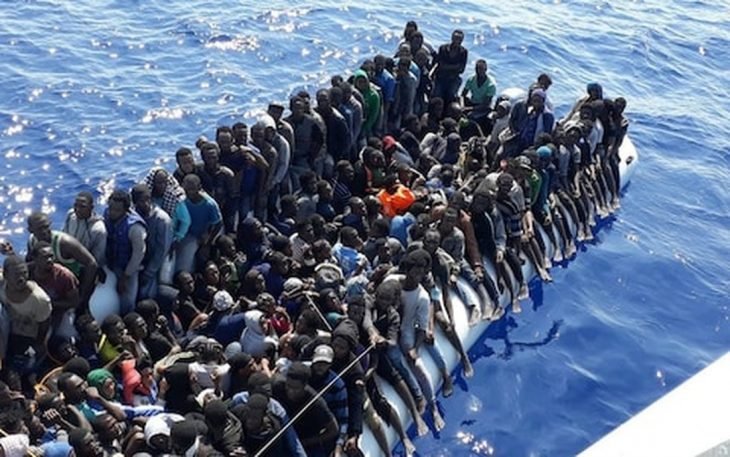
By Sally Hayden
 I am in daily contact with people in Libyan detention centres. Any hope that the country might be a safe haven has gone, leaving only death and despair. Read More
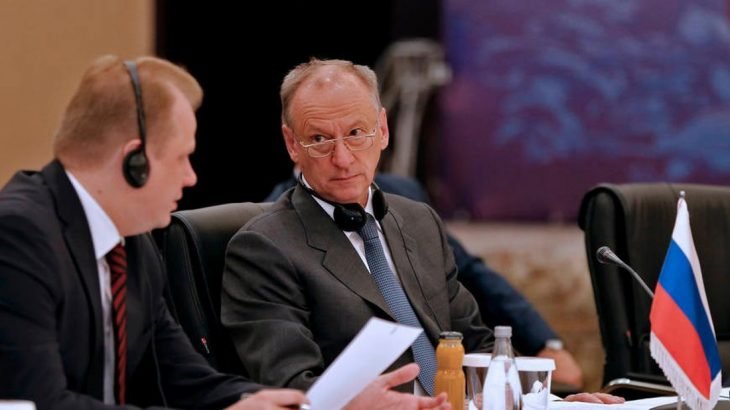
By Kirill Semenov
 On Jan. 31, Russian Security Council Secretary Nikolai Patrushev paid a visit to Abu Dhabi to meet with the United Arab Emirates’ national security adviser, Sheikh Tahnoon bin Zayed Al Nahyan. Read More
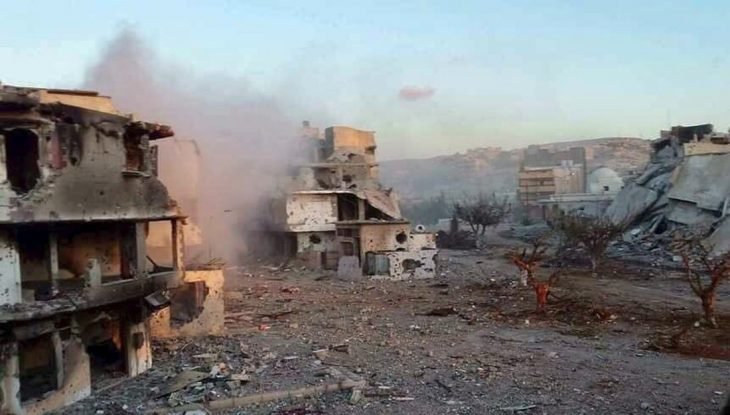
By CJ Werleman

The city of Derna in Libya is under siege as civilians suffer a humanitarian crisis and the international community is either a party to the violence or ignoring it. Read More
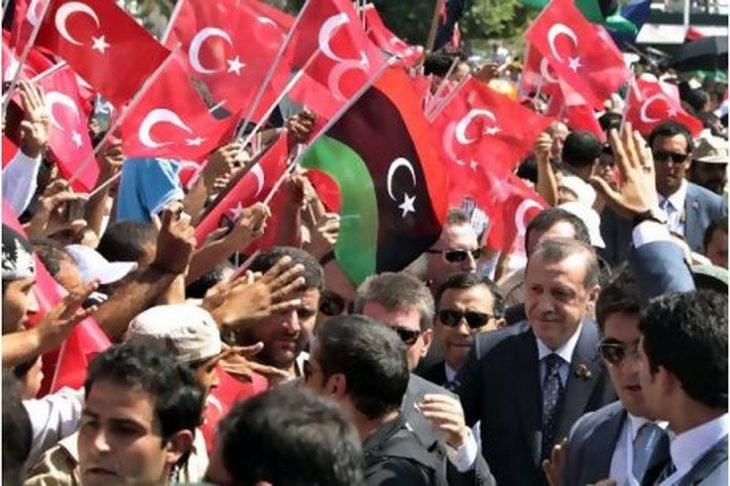
By Ferhat Polat

Turkey’s involvement in Libya is based on humanitarian grounds, which allows it to play a positive role in finding a resolution to the conflict in the country. Read More
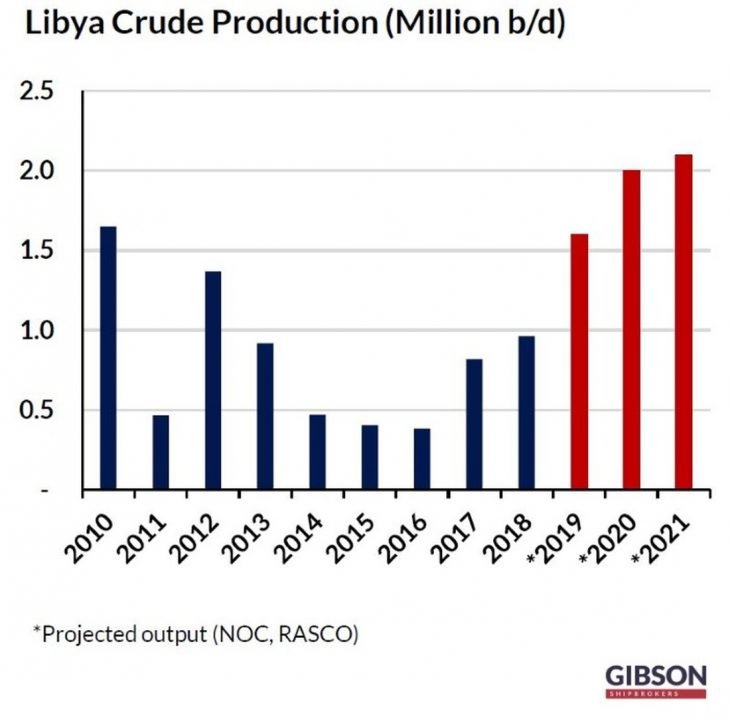
By Nikos Roussanoglou
 VLCCs could start their trips back into Libya, should current plans set in motion be actually implemented. Read More
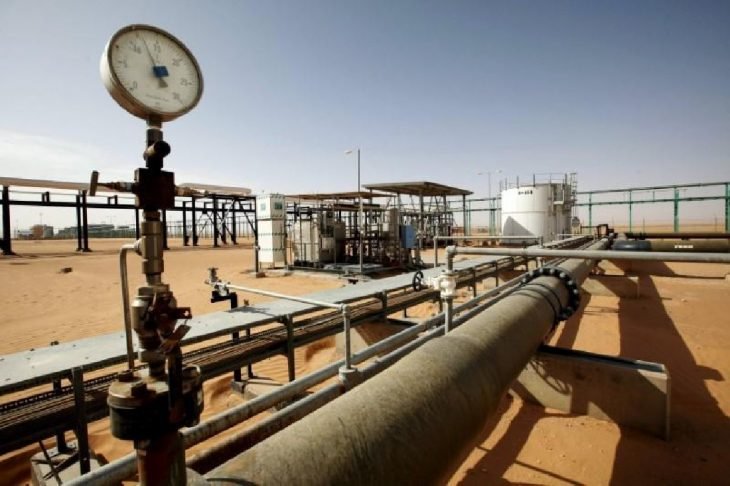
By Patrick Wintour
Mustafa Sanalla says specialist unit needed to end repeated seizures of oil assets by militias. Read More
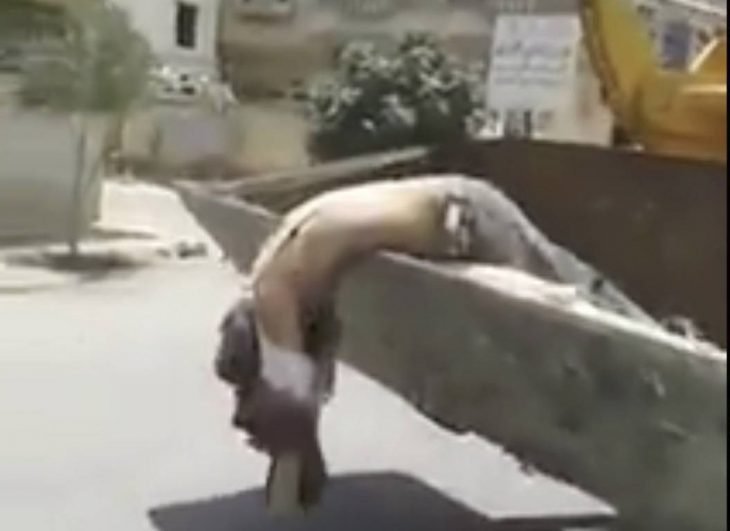
By Bel Trew
 Forces loyal to a powerful Libyan military commander once courted by the west are likely to have committed war crimes in the eastern city of Derna, London rights lawyers have revealed, urging the International Criminal Court to investigate instances of torture, murder and mutilation of corpses. Read More
By Inga Kristina Trauthig
By tracing and explaining the history of the LMB ’s organisational developments, this report examined one way in which the LMB tried to establish itself as a legitimate political actor with regard to Islam in the Libyan political sphere after 2011. Read More

 Russian policy in the Middle East and North Africa has changed gear over the last 12 months. Moscow has begun to look for alternatives to military means when it comes to marking its presence in the region. Efforts are underway to reevaluate Russia’s capabilities and draw up a fresh list of priorities. Read More

By Mustafa Fetouri
 I recently made the five-hour drive from Tripoli to the little town of Harawah, home to the Awlad Suleiman tribe, about 80 kilometers (50 miles) east of Sirte in eastern Libya. Read More
By Inga Kristina Trauthig
By tracing and explaining the history of the LMB ’s organisational developments, this report examined one way in which the LMB tried to establish itself as a legitimate political actor with regard to Islam in the Libyan political sphere after 2011. Read More
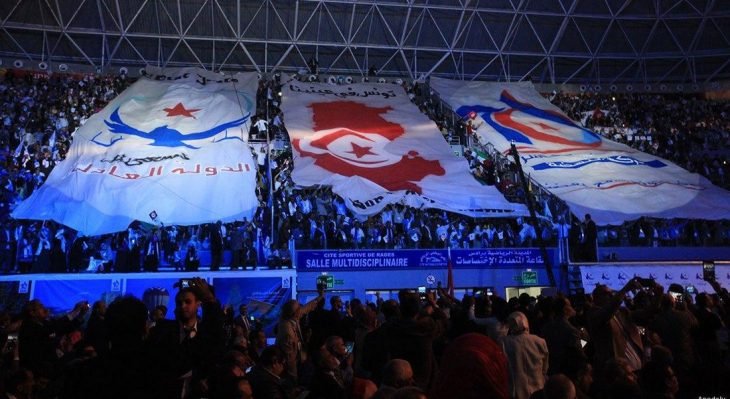
By Fabio Merone
 The next year offers Ennahda a choice. Will it consolidate its position as a major political player in Tunisia, or will its internal divisions deepen? Read More
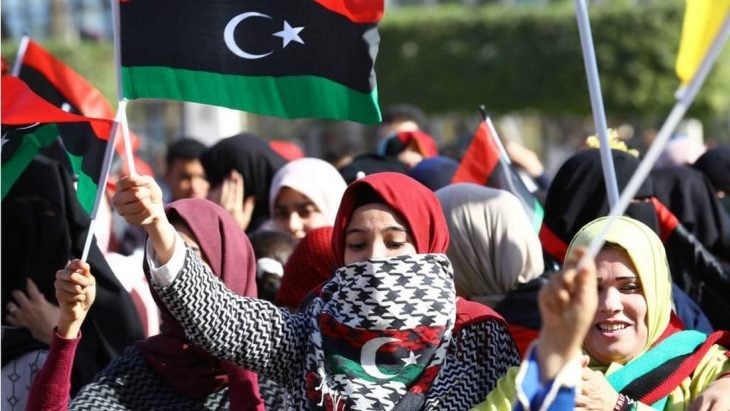
 A detailed report on the risks facing Libyan women married to foreign nationals was issued by the Euro-Mediterranean Human Rights Monitor. Read More
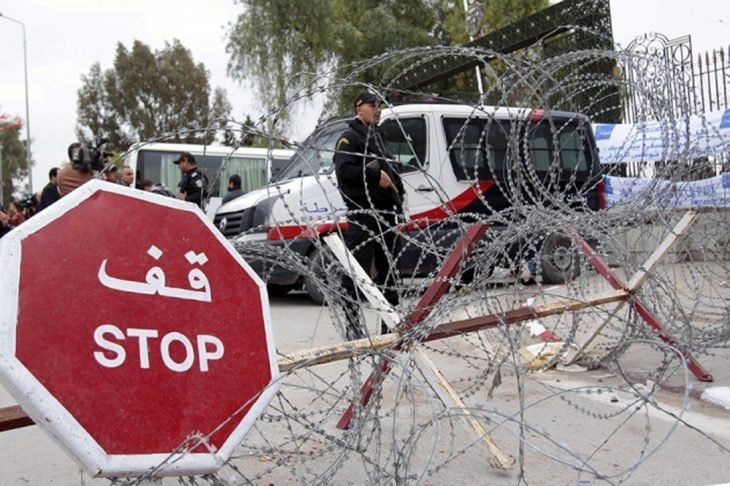
By Dhia Otay
 The French military’s Maginot line—built during the 1930s in order to prevent the inevitable German invasion—is a classic example of how a false sense of security led to failed strategic planning. Read More
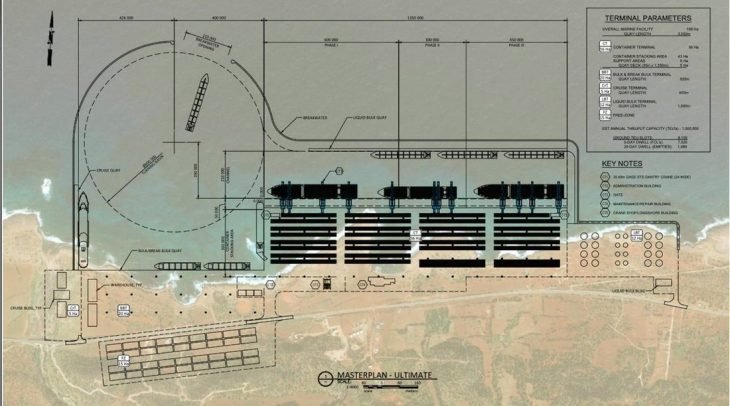
By Borzou Daragahi
 Both sides of country are ‘working closely together on everything related to the ports and maritime capabilities’. Read More
By Karim Mezran & Wolfgang Pusztai

 No country should have elections without a constitutional framework and in Libya a robust constitution is even more important. Read More
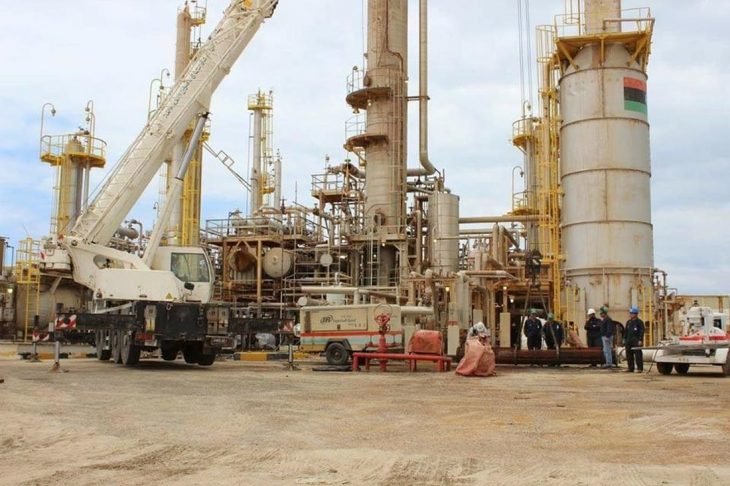
By Takeo Kumagai & Eklavya Gupte

 Libya’s state-owned National Oil Corporation has set aside a budget of around $50 billion for 2019 to develop its oil and gas sector. Read More
A detailed report on the risks facing Libyan women married to foreign nationals was issued by the Euro-Mediterranean Human Rights Monitor. Read More
By Francesca Mannocchi
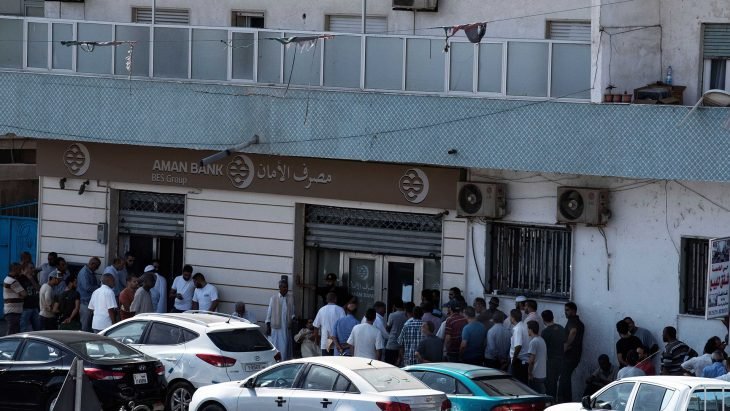
 Libya’s militias solidify their grip on power–at the expense of the public. Can a new set of reforms change the equation as Libyans all over the country struggle to make ends meet? Read More

By Hafed Al-Ghwell
 A little more than a week ago, Ghassan Salame, the UN envoy to Libya, delivered his latest update to the UN Security Council about the situation in the war-torn country. Read More
By Mat Nashed
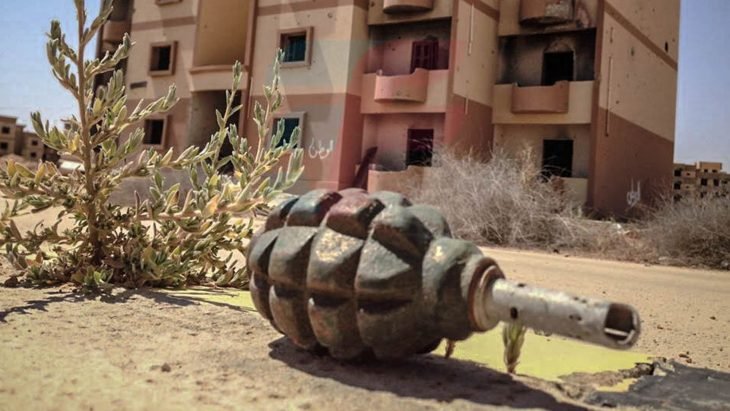
 Mines and unexploded ordnances pose a threat at every step of the way. Efforts to dispose of the remnants of war aim to reclaim safe spaces–and a common ground for shared experiences for Libyans from all parts of the country. Read More
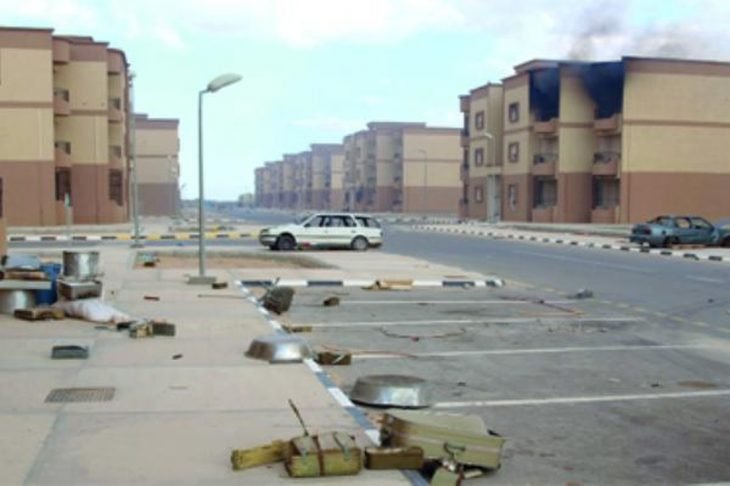
Despite Pact, Deliberate Damage, Security Concerns Prevent Return to Tawergha.
 Most of the 48,000 former residents of the Libyan town of Tawergha, forcibly displaced for seven years, have not been able to return home, Human Rights Watch said today after visiting the town. Read More