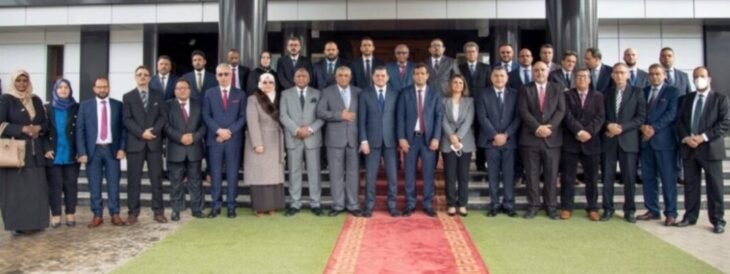
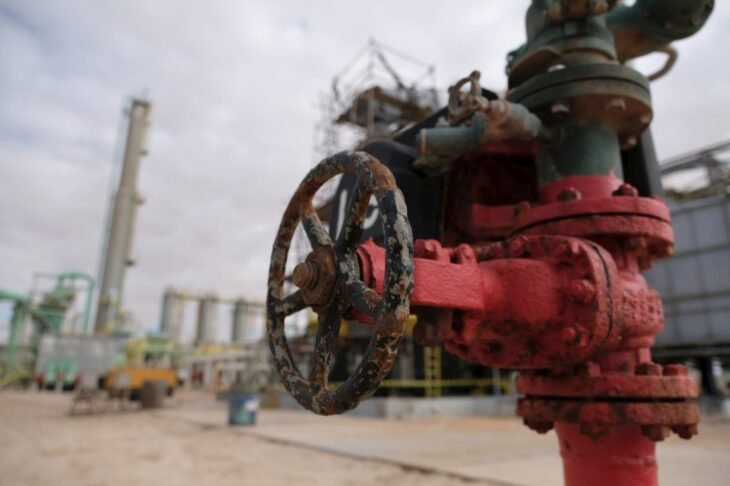
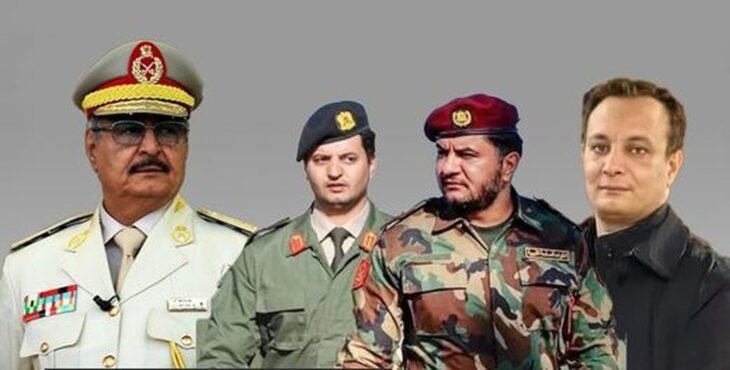
The ongoing division in Libya is prolonged by this dynamic: while the Government of National Unity (GNU) leverages its international legitimacy to control oil sales, the valves are in the hands of eastern forces.
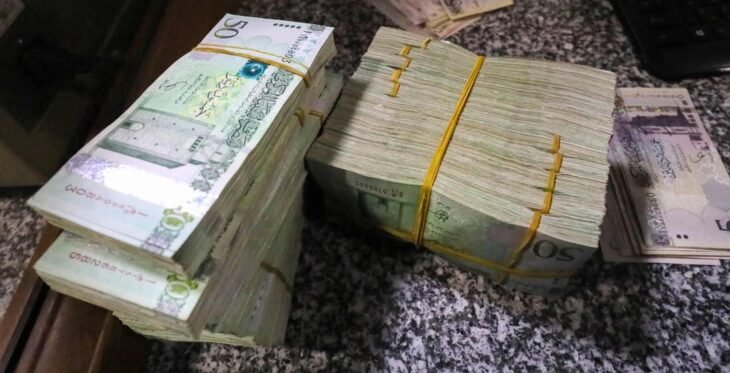
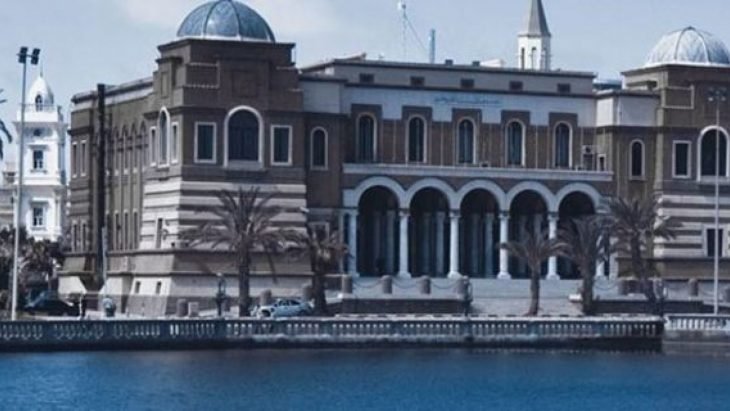
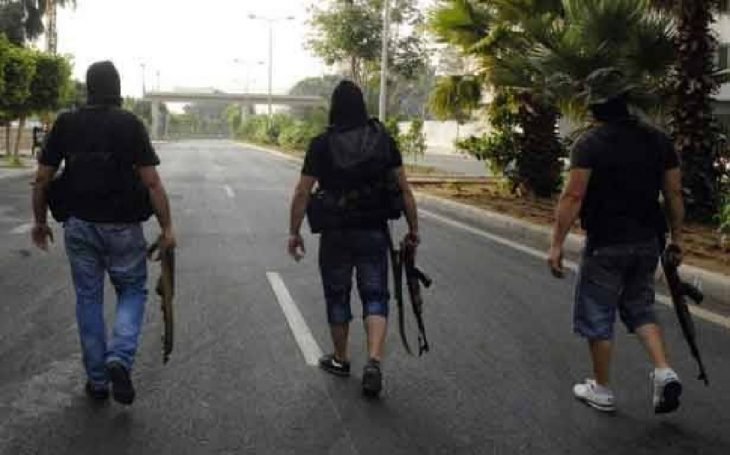
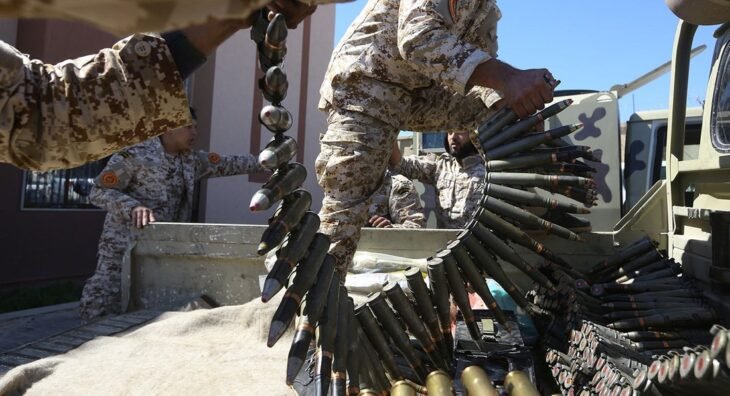
Militias controlling regions, cities, neighborhoods, and even government institutions siphon off the Central Bank’s resources as much as their weapons allow. Salaries account for 78.4% of the Central Bank’s expenditures. Of the 26 billion dinars spent by the bank, 20.4 billion dinars go to salaries, 3.6 billion to subsidies, and 1.1 billion dinars to operational expenses.
In Libya, a country of 7 million people where hardly any proper services are provided, 2 million people receive salaries. Besides salaries, there are other revenue streams for militias.
The Libyan National Oil Corporation sells oil it cannot export or store on the domestic market at prices far below market value. Militias, leftovers from the 2011 uprising, buy this cheap oil and smuggle it to neighboring countries, filling their coffers.
Chaos benefits those with guns.
Who cares about elections, the will of the people, transparency, or a shared national future?
The standoffs weren’t limited to the Central Bank and oil maneuvers. On August 18, in retaliation for the House of Representatives’ memorandum, Presidential Council Chairman Mohammed al-Menfi held a meeting with commanders and intelligence chiefs in his capacity as Supreme Commander of the Armed Forces—a first of its kind.
On August 23, Dbeibeh made a move he could not follow through on, attempting to bring militias in the capital under control. He established a “high security committee” headed by Interior Minister Imad al-Traboulsi, ordering all militias to vacate government buildings within 24 hours. Did anyone comply? No.
Dbeibeh likely experienced a surge of confidence, thinking that after gaining control of the Central Bank, he was the one writing the militias’ paycheck. He even made enemies within his own hometown. The forces in Misrata, which led the 2011 overthrow of Gaddafi, raised their heads once more and backed Kabir against Dbeibeh. In the meantime, he also clashed with Egypt.
The reason?
Egyptian Intelligence Chief Abbas Kamel, who somehow found time amidst his Gaza mediation efforts, visited Benghazi in the second week of August for meetings. According to reports, Kamel tried to convince Haftar, Saleh, and Hammad to establish a transitional government without the involvement of current political actors. Arab sources suggest the goal was to lead Libya, bogged down by familial, clique, and militia interests, to elections and restore stability with a national government.
From Cairo’s perspective, it would be easier to secure Egypt’s interests if a national parliament and government were formed through elections. Egypt has been troubled by Turkey maximizing its interests through confrontational means under abnormal circumstances. Ignoring objections, the Egyptian administration even invited Hammad to Cairo.
Interpreting Kamel’s initiative as a move to oust the Dbeibeh government, the Tripoli side declared two Egyptian diplomats persona non grata on August 12. Amid all this, the AKP, which often reacts to everything, remained unusually quiet and passive. Clearly, the importance of the “new chapter” with Egypt was significant. Finally, on September 5, National Intelligence Organization (MİT) Chief İbrahim Kalın flew to Tripoli. He held important meetings—what came out of them is anyone’s guess!
It’s likely that while Dbeibeh was trying to gain control of the Central Bank to boost public support through populist spending and buy the loyalty of militia forces, he did not take Ankara’s preferences into account. He not only disregarded Ankara but also fell out with Cairo. Had the rival parties remained in the previous alignment, the opposite would have happened.
Forty-eight hours before Kalın’s visit, the House of Representatives and the Tripoli-based High State Council agreed to appoint the Central Bank’s governor and board members within 30 days. It’s hard to predict the outcome, but this decision sends a message to the Menfi-Dbeibeh duo: “The game is over.”
The uncertainty at the Central Bank is throwing Libya’s “pirate” economy into a deeper crisis. Although the government managed to pay last month’s salaries with existing reserves, this is little more than a one-time fix. In summary, the future of divided Libya remains bleak. The roadmap set by the 2015 Skhirat Agreement was squandered for personal interests. The same goes for 2021. Throughout these processes, Turkey tried to play a leading role. It made deals with one side of Libya, whose legitimacy was disputed, to shape the political process and gain military bases and ports. Despite its assertive stance, Turkey’s capacity to influence developments appears to be severely limited.
While Turkey is normalizing relations with Egypt and the UAE, actors with whom it clashed over Libya, it is experiencing fluctuations with Russia. Egypt, Russia, and the UAE are in a position to say “yes” or “no” to Turkey’s membership in BRICS. And everyone expects Turkey to adopt more cooperative policies. Here comes another test run. In foreign policy, the saying “We’ve boarded a vehicle bound for disaster” continues to resonate.
***
Fehim Taştekin is a graduate of Istanbul University, Political Sciences Faculty. He started journalism in 1994 as a reporter.
The fund created to rebuild Derna, devastated by Storm Daniel a year ago, also serves as a political launching pad for its director Belkacem Haftar, son of the east’s leader.
Cranes scattered throughout the city, construction trucks on the move, and the deafening noise of countless machines: one year after the devastating passage of Storm Daniel through the Mediterranean basin, hitting Libya the hardest, the eastern city of Derna has changed a lot. In recent months, no fewer than 155 building projects have been launched, ranging from the renovation of the university to the construction of new dams, not to mention parks and leisure facilities.
Last February, the government of eastern Libya – a rival authority to the internationally recognised administration based in the western city of Tripoli – created the Libya Development and Reconstruction Fund for this purpose. The fund is led by 43-year-old engineer Belkacem Haftar, one of the six sons of Khalifa Haftar, the commander who controls the east of Libya. Though it has schemes across Haftar-held territory, Derna appears a priority.
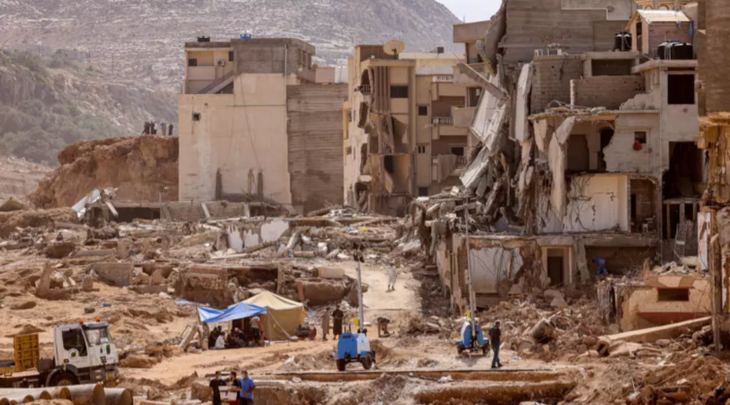
On the night of 10 September 2023, torrential rains from Storm Daniel destroyed the two dams located upstream of the city of 100,000 inhabitants, wedged between Djebel Akhdar (the “green mountain”) and the Mediterranean. The unleashed water swept away entire blocks along the Derna River, which cuts the eponymous city in two. According to the official toll, 4,557 people died, 4,227 disappeared and 7,000 families lost their homes. The tragedy was ascribed to years of neglect, as the dams had not been properly maintained.
At the end of July, 12 officials responsible for managing water resources and maintaining the dams were sentenced to prison terms ranging from nine to 27 years, charged with crimes including negligence, premeditated murder and wasting public money. The sentenced officials did not include senior commanders and members of the armed forces, which managed the crisis response.
‘People want to enjoy life’
Derna has long been marginalised by the Libyan authorities. A hotbed of protest against the rule of long-time autocrat Muammar Gaddafi, the conservative city became in 2014 the first stronghold of the Islamic State group (IS) in North Africa. A year later, IS was driven out by a rival group, the Derna Mujahideen Shura Council (DMSC). From 2018 to 2019, Derna was the scene of a war between this coalition of militias and the forces of Haftar, who conquered the city during a military campaign that saw the commander seize control of all of eastern Libya.
But Derna, with a reputation for hard-line Islamic militancy, was sidelined by the authorities. Its residents, many historically from western Libya, did not benefit from the support of the local tribes that is so important in the east. In the aftermath of Storm Daniel, the survivors of Derna expressed their anger at what they saw as the authorities’ failure to protect them from the floods. According to the UN, most of the deaths could have been prevented if early warning and emergency management systems had been in working order. Nearly a year later, when Middle East Eye visited the city in the summer, the mood had radically changed. “The city is modernising,” Islam al-Mountasser, a 40-year-old shopkeeper, told MEE with a broad smile.
Mountasser now runs a brand-new perfume shop in front of the park on Garden Street, some 600 metres from the Derna River and the buildings that still lie in ruins. “After the storm, Derna was a black hole. We spent 100 days without electricity,”’ he recalled. “I left the city, but the community asked the shopkeepers to come back. When I returned two months later, I was surprised.” The building where his shop was located was reconstructed by Haftar’s fund, while Mountasser redid the interior space himself. He should soon receive 100,000 dinars (around $21,200) in compensation.
“The reconstruction’s impact on trade has become apparent. Business is better than before,” said Mountasser, whose first child was born on the day of the storm. In the city, where posters glorifying Haftar appear on every street corner, as in all the territories of eastern Libya, criticism is rare and discreet. Reached by telephone, a resident told MEE on condition of anonymity that there was less renovation work in the historic centre of Derna, where there are families considered sympathetic to the militias that held power previously, and therefore opposed to Haftar.
“We can see that there are favoured neighbourhoods. Those, like me and my family, who did not welcome the arrival of Haftar’s army in Derna, are now being punished,” the resident said. In a report published on Tuesday, Human Rights Watch said the “slow recovery and lack of a national response plan was having a severe effect on the economic rights of survivors”. “In Derna, the hardest hit city, devastation and damage to infrastructure remains widespread, including to homes, water and sanitation networks, electricity grids, hospitals, and schools. Access to financial and government services is limited and thousands of victims remain unidentified or missing,” the New York-based organisation said. Another Derna resident told MEE they were worried about the speed of the work. “Everything is being built so quickly that I doubt it will be done properly. Today’s brand-new infrastructure may not last,” the person said anonymously.
But outwardly, there is enthusiasm.
In the newly built park opposite Mountasser’s shop, children could be heard playing loudly, running from a slide to a swing. Further away, the rebuilt city stadium attracts older youths. Rajab, a 15-year-old boy wearing a FC Barcelona jersey, stopped his football game to speak with MEE. “We lost our house, we used to live in the city centre,” he said. “We now live with my uncle. But thank God, Derna is fine now. We didn’t have a pitch like this one to play before.” A few metres down the street, the Renaissance Cafe, built by Haftar’s fund, is at full capacity. Mohamed Nasser, its manager, obtained the job in compensation for the destruction of his refreshment bar by the storm. The 25-year-old n reckons his income has increased by 60 percent since then. “People want to enjoy life. They go out more,” he told MEE.
On the walls of his cafe are displayed photos of Haftar visiting Derna, the eastern Prime Minister Osama Hammad and, most prominently, Belkacem Haftar. The latter seems hyperactive, like the fund he runs, which reportedly operates in about 20 Libyan cities and closely oversees Derna’s reconstruction. “We have clear objectives: companies are working day and night, because Derna must be rebuilt – better than before the storm – by the end of 2025,” Belkacem Haftar told MEE. Several companies have reportedly already been dismissed for being late, a fund employee told Middle East Eye. As for the dams, the priority will be to ensure more serious maintenance in the future, a local official told MEE. The fund is currently studying four different proposals. One suggests not rebuilding the dams at all, arguing that the river has been so widened by the storm that there is no longer much risk of flooding.
Politicised reconstruction work
The fund’s operating mode and largesse appear to have earned Haftar some degree of popular support from local Libyans, accustomed to the authorities’ inertia. Or at least, this seems one of the goals. According to Jalel Harchaoui, an associate researcher at the British Royal United Services Institute (RUSI), “there is a real desire on the part of the reconstruction fund to stand out. “They want to get the message across: we make promises and we keep them,” the Libya specialist told MEE.
The fund is also relaunching projects that have been at a standstill for years. In 2005-2008, after the removal of international sanctions imposed on Gaddafi’s Libya in the 90s, coinciding with a global rise in oil prices, Libya experienced an exceptionally prosperous period. The Gaddafi government then launched projects worth tens of billions of dollars, under the supervision of the Organisation for the Development of Administrative Centres (ODAC), then headed by Ali Dbeibeh, cousin and brother-in-law of the current prime minister of Libya’s western government, Abdul Hamid Dbeibeh. But the work was often stalled.
“Everything was so abnormally slow that many projects were bogged down or at a standstill before the revolution of February 2011 [that overthrew Gaddafi],” Harchaoui explained. In January of that year, sit-ins took place on construction sites that were no longer making any progress, he added. “The prices of these projects, at the time, were rather realistic, but they were rarely finished because 30 percent, sometimes more, of the budget often disappeared in bribes,” he added. This is the case of an entire neighbourhood at the western entrance to Derna. The project to build 2,000 apartments by Chinese and Korean companies took the form of concrete skeletons abandoned since 2009.
The construction site restarted a few months ago, with mainly Egyptian and Libyan companies involved. The fully furnished and equipped 200-square-metre apartments are set to be offered for free in December to some of the 7,000 Dernawi families who lost their homes during the storm. So far, none has been rehoused. According to observers, the political dimension of these construction efforts is evident, and it is a policy that was successfully implemented in the past. “This is the strategy of King Idris,” a local journalist who wished to remain anonymous told MEE, in reference to the emir who reigned over Libya from 1951 until the coup led by Gaddafi in 1969.
“Idris ruled over [the eastern region of] Cyrenaica and, thanks to the discovery of oil in the territory in 1959, he developed the region and thus drew [the north-western region of] Tripolitania under his influence to unify the country and abolish federalism in 1963,” he explained. Similarly, Khalifa Haftar is believed to nourish the ambition of controlling the whole country and could use reconstruction as a means to extend his influence to the west. Libya broke down into warring factions after the overthrow and death of Gaddafi in 2011. Fighting in the strategic, energy-rich country rapidly degenerated into a proxy war with foreign powers backing opposing sides. In 2019, Haftar tried to conquer the capital Tripoli but was defeated by the forces of the UN-recognised government with the help of Turkey. A ceasefire was concluded in 2020 and a period of relative calm followed, despite unsuccessful attempts to reunify the country.
The sinews of war
Last month, Haftar deployed his troops in the southern and western regions of the country, close to the Tunisia-Algeria border, sparking alarm in the international community about the possibility of a resumption of fighting in the country and beyond. Now, if the eastern leader decides to heed the calls for “wisdom and restraint” and opt instead for a continuation of his “diplomacy of concrete”, money will be needed. While money is not lacking in Libya, the financing of the reconstruction fund remains opaque, as does the cost of the work. Belkasem Haftar claims to benefit from the part of the national budget dedicated to development. But the long-time governor of the central bank, Sadik al-Kabir, has officially denied any payment.
However, the tensions that arose nearly a year ago between Dbeibeh, the western prime minister, and Kabir following disagreements over economic policy are said to have pushed the latter closer to the eastern camp. According to analysts, arrangements were found between the central bank and the eastern administration so that the east’s banks, to which Haftar’s government was indebted, would receive assets allowing them to extend credit to the authorities. However, since August, the central bank has been shaken by a deep crisis after it was besieged by fighters who reportedly tried to force Kabir to resign.
On 18 August, Libya’s presidential council, which is aligned with Dbeibeh, unilaterally announced the dismissal of Kabir, who fled the country. In response, Libya’s eastern government suspended all oil production and exports. The crisis of the central bank, the sole legal repository for Libyan oil revenue, which pays state salaries across the country and supports projects nationwide, could jeopardise the funding of Haftar’s financial arm and his goals of cementing power.
As Turkey normalizes its relations with Egypt and the UAE—with whom it has clashed over Libya—it experiences fluctuations in its ties with Russia. All these actors are in a position to approve or reject Turkey’s membership in BRICS. And everyone expects Turkey to adopt more cooperative policies.
As the ruling Justice and Development Party (AKP) government pursued its goal of joining BRICS by employing a strategy of leveraging tensions between global South and North blocs, Turkey faced escalating challenges in the regions where it had embarked on new ventures. In Syria, Turkey’s allies began to turn on each other, and in Libya, the situation grew increasingly out of control.
Last week, the country focused on the newly opened chapter marked by Egyptian President Abdel Fattah el-Sisi’s visit to Ankara. However, during this time, the main topic on the agenda with Egypt—Libya—was witnessing conflicts that exceeded Ankara’s capacity to resolve. Despite their rivalry in Libya, Turkey and Egypt found themselves in a stalemate, forcing them to keep an eye on each other.
The actors in Libya did not maintain consistent relationships with the foreign powers involved in the country, leading to a complex and unpredictable web of alliances. As alliances continuously shifted, the chaos escalated to a point where no external power could control the situation alone.
To understand the current dynamics, it’s important to look back.
In 2019-2020, the Egyptian, UAE, and Russian-backed Libyan National Army, led by Khalifa Haftar, attempted to capture Tripoli. Turkey’s intervention thwarted this effort. However, when the Tripoli forces attempted to advance eastward, they were stopped at the Sirte-Jufra line. Turkey’s support was insufficient to push further.
In February 2021, under the auspices of the UN, a roadmap was adopted to establish the Presidential Council and the Government of National Unity (GNU), with the aim of leading the country to elections and unifying institutions. This roadmap, coupled with the ongoing deadlock, prompted the rival parties to reposition themselves. Egypt established bridges with Tripoli, while Turkey did so with Benghazi.
Abdul Hamid Dbeibeh, who was elected to lead the GNU, was supposed to guide the country to elections by December 24, 2021. However, not only did he fail to fulfill this obligation, but he also clung to power beyond his term, using Turkey’s support to consolidate his position. He struck new deals with Ankara and disregarded domestic objections and criticisms.
As the situation in Libya continued to evolve rapidly, former Interior Minister Fathi Bashagha, who had been a close ally of Ankara during Turkey’s intervention, was appointed head of an alternative government by the Tobruk-based House of Representatives in 2022, which did not recognize Dbeibeh’s legitimacy.
Bashagha’s attempt to march on Tripoli was unsuccessful, and he stepped down in 2023. Meanwhile, Ankara took steps to de-escalate tensions with House of Representatives Speaker Aguila Saleh and Haftar.
Cairo also began working with the Dbeibeh government. While the UAE maintained its support for Haftar, it also assisted Dbeibeh’s oil and gas projects in Ghadames as a country that had normalized relations with Turkey.
After the death of Wagner Group leader Yevgeny Prigozhin, Russia restructured its militia presence in the region under the name “African Legion” and adjusted its relationship with Haftar. The visit of Russia’s Deputy Defense Minister, Yunus-Bek Yevkurov, of Ingush origin, to Benghazi confirmed that Russia would not withdraw from the Libyan game.
In response, the United States, which had entrusted Libya to its “project partner” Turkey after the assassination of Ambassador Chris Stevens by jihadist allies in Tripoli in 2012, re-entered the scene to balance Russia. A private military company, Amentum, working with the Pentagon and the State Department, was deployed to unify the militia forces in and around Tripoli.
In recent weeks, U.S. Special Envoy for Libya Richard Norland and Chargé d’Affaires Jeremy Berndt increased their engagements with local actors, while AFRICOM Commander General Michael Langley visited both Tripoli and Benghazi.
While a scenario of unresolved but relative stability continued, the situation suddenly escalated in August. Haftar’s forces began advancing southward, targeting Ghadames and aiming to expand control toward the Algeria-Tunisia border, while Turkey—typically the “protector” of Tripoli—remained notably silent.
Meanwhile, Dbeibeh had been sharpening his stance against Central Bank Governor Sadiq al-Kabir since October 2023, as Kabir had been curbing the government’s uncontrolled expenditures. Dbeibeh sought ways to sideline Kabir, who had been working closely with the U.S., the UK, and Turkey.
Kabir had also angered Haftar’s camp by blocking Bashagha’s access to the Central Bank’s resources when he was head of the House of Representatives-affiliated government. However, Kabir occupied a unique position as the man overseeing the distribution of funds to rival factions in Libya. He had the backing of Western powers involved in Libya, which granted him a degree of immunity.
For the U.S., which masterminded the intervention that destabilized Libya, the most direct way to control the country was through the Central Bank.
Internationally, the sale of oil is monopolized by the Libyan National Oil Corporation, with the revenue deposited into an account at the Libyan Foreign Bank in New York. The authority to disburse these funds rests with the Central Bank of Libya, making Kabir the financial patron of both the Tripoli/Misrata and Benghazi/Tobruk-based political and military powers.
Dbeibeh increased pressure on Kabir by surrounding the Central Bank with militias. On August 12, Norland visited Kabir, showing American support against attempts to besiege the bank, forcibly remove him from office, and abduct its employees.
As pressure on the Central Bank intensified, the House of Representatives issued a memorandum on August 13, declaring that Dbeibeh’s government had ended and that the cabinet led by Usama Hammad was the sole legitimate government.
Additionally, Aguila Saleh was declared the Commander-in-Chief of the Libyan Armed Forces, a decision supported by Haftar. In response, on August 18, Dbeibeh issued a decree from the Presidential Council calling for Kabir’s dismissal.
Resisting the decision, Kabir sought refuge in Istanbul, while militias kidnapped the bank’s IT director in an attempt to seize the Central Bank’s codes.
According to Kabir, the militias were threatening and intimidating bank employees, occasionally kidnapping their children and relatives to force compliance.
Although Abdulfattah Abdulgaffar, who was appointed acting governor of the Central Bank, gained access to dinar accounts, it was reported that he could not access the dollar reserves. Even though the new administration had access to SWIFT codes, it was predicted that the bank’s international relations would not normalize without the U.S.’s green light.
Following a warning from the U.S. Treasury, foreign banks refused to conduct business with the Central Bank of Libya until a clear leadership was established. Essentially, the U.S. was saying, “You cannot make changes at the Central Bank without my approval.”
Kabir also maintained a good relationship with Erdoğan, and it was reported that Turkey supported Kabir’s return to his position until a joint solution could be found.
In such crises, the opposing side is always prepared to make a move. Haftar immediately shut off the oil valves, signaling that “if Dbeibeh seizes control of the Central Bank, he will lose access to oil revenues.”
***
Fehim Taştekin is a graduate of Istanbul University, Political Sciences Faculty. He started journalism in 1994 as a reporter.
There is no doubt that elections need to be held in Libya. However, the way to hold fair and equitable elections is possible with a constitution drawn up by mutual consent.
There are many hot topics occupying the global agenda. While there is the genocide in Gaza on one side, the Russia-Ukraine war and the tension between Israel and Iran on the other, the process in Libya has remained in the background like many other issues. However, the ongoing activity in Libya for a few weeks has reached a level that should not be ignored due to its possible consequences.
On August 13, the House of Representatives in Eastern Tobruk, backed by Khalifa Haftar, held a vote to end the term of the government of Abdulhamid Dibeiba. The House declared the government of Osama Hammad, based in the east, as the sole “legitimate” government until a new and holistic government is elected. The House of Representatives also declared pro-Haftar Speaker of the House Aqila Saleh as the commander of the “Libyan Armed Forces.” However, according to the Libyan Political Agreement of 2021, this title was to belong to the head of the Presidential Council and two of his deputies until democratic elections were held in the country. A few days after this move, the situation in the country became even more tense when Prime Minister of the Libyan National Unity Government (NUG) Abdulhamid Dibeiba dismissed Siddiq al-Kabir, the Governor of the Central Bank since 2011.
Mutual decisions cause tension
Another known fact is Siddiq al-Kabir’s very close relations with the United States (US) and his anti-Dibeybe stance. These developments were followed by the mobilization of Haftar’s armed militias around Tripoli. In the face of this chain of events, the United Nations Security Council (UNSC) made a statement demanding that military conflict be avoided, that the UNSC resolutions in 2023 be adhered to by referring to the 2020 ceasefire agreement, and that the roadmap in the Libyan Political Dialogue Forum be adhered to. While Haftar declared that he did not accept the removal of Kahbir, the eastern-based Hammad Government and Parliament Speaker Saleh decided to halt oil production in the country.
The problems in Libya can be solved by an organization consisting of several actors, including Turkey, first providing the basis for a final agreement on the constitution and then establishing a security mechanism to ensure ballot box security throughout the country during the election process.
Currently, Abdel Fattah Abdel Ghaffar, who was appointed as acting Central Bank Governor by the Presidential Council, is making efforts to prevent a financial crisis in the country and to prevent salary delays. The Libyan High Council of State referred to the Libyan Political Agreement for a permanent solution to this problem and invited all parties to dialogue. The President of the Libyan High Council of State, Mohammed Miftah Takala, warned to hold elections on the basis of the agreements made on March 10 between the Tobruk House of Representatives, the Presidential Council and the High Council of State under the auspices of the Arab League.
Past problems in Libya
These current events, which are clearly difficult to explain in just a few paragraphs, are actually a residue of past promises that were not kept and agreements that were not kept. We can see this contradiction on many occasions, especially on the Eastern (Haftar) side. Despite the ceasefire signed in 2020 and the agreements that followed, Haftar and Haftar supporter Salih, who unilaterally established parallel governments, have long been trying to move the country’s capital from Tripoli to Sirte. Similarly, although the eastern-based parliament and Haftar are trying to create the image that they are not breaking the agreements made to date, it is another known fact that Haftar unilaterally declared the Suheyrat Agreement and the presidential council “illegal” in 2017.
While Kebir’s agreement with the US and his “untouchability” since 2011 are another mystery, the billions of dollars of support Haftar, who reacted to his removal from office, received from Russia as early as 2024 is another issue. Although the Libyan dinars previously printed by Russia were declared “invalid” by the Central Bank of Libya, it is known that these currencies are being used in the market.
In short, the situation in Libya is much more complicated than it seems and is an equation with many unknowns. In a sociology where a population of around 7 million consists of over a hundred tribes and hundreds of armed individual groups, resolving such crises is of course not easy. However, the mistakes that the United Nations (UN) Libya representatives have repeatedly admitted after leaving office, their adherence to bilateral motives with unknown details instead of legitimate authority and agreements signed at the UN, and the network of relations of the US, France and Russia that are contrary to UNSC decisions have brought the process to this point in Libya.
Turkey’s position as one of the decisive forces in the country in this picture may be preventing a war that could have broken out much earlier. However, there are also international actors who are trying to interpret the support that Ankara gave to the UN-backed government at the request of this government, for the benefit of some, through other actors who have established illegitimate relations in the background.
Elections are a must in Libya
There is no doubt that elections need to be organized in Libya. However, holding fair and just elections is possible with a constitution that is prepared by mutual consent. Everyone knows that healthy results cannot be obtained from an election that will take place on the eastern side under the shadow of the weapons of the Haftar militia. In addition, there is the fact that Imad El Sayeh, who has been in office for years despite all the chaos, just like Kebir. Sayeh, the head of the Libyan High Election Commission, has relations with France, another obstacle to a possible “objective” election process. We can say that the fact that France and Egypt called for immediate elections shortly before the current events is closely related to this and is not well-intentioned.
Turkey’s transition to a normalization climate in its new foreign policy dynamics over the last few years has helped it gain more influence in regional events and thus prevent crises. However, other actors need to approach the Libya case with the same sincerity.
Although Haftar and the groups supporting him initially recognized the political authority created by the Libya Political Agreement signed at the UN in 2015, they later opposed the agreement in order not to lose their own questionable legitimacy and moved the House of Representatives from Tripoli to Tobruk. In other words, the legitimacy of the side that currently declares the Dibeybe government illegitimate in Libya should have been put into question long ago. Despite the hypocritical policies that ignore this fact and attribute disproportionate legitimacy to the Eastern side, Turkey is currently seeking to establish a basis for dialogue with both sides. Therefore, the problems in Libya can be solved by an organization consisting of several actors, including Turkey, first providing the ground for a final agreement on the constitution and establishing a security mechanism that will ensure ballot box security throughout the country during the election process. However, the real problem in Libya stems from the fact that other actors, primarily UN officials, the US and Russia, do not really want a solution and are taking advantage of the conflict environment.
***
[Dr. Ufuk Necat Taşçı is a faculty member at Çanakkale Onsekiz Mart University.]
A year after devastating floods in eastern Libya killed nearly 4,000 people, reconstruction efforts have bolstered the influence of military strongman Khalifa Haftar, experts say. The 2023 disaster, triggered by extreme rainfall from the hurricane-strength Storm Daniel, saw two dams bursts in Derna, displacing over 40,000. The tragedy highlighted Libya’s fractured governance and sparked widespread calls for accountability amid crumbling infrastructure.
A year after flooding in eastern Libya killed thousands and razed entire neighbourhoods, reconstruction is allowing military strongman Khalifa Haftar to wield further power in the divided country, experts say.
On September 10, 2023, extreme rainfall from the hurricane-strength Storm Daniel caused two dams to burst in the coastal city of Derna, some 1,300 kilometres (800 miles) east of the capital Tripoli.
This led to flooding that killed nearly 4,000 people, left thousands missing and displaced more than 40,000 others, according to the United Nations.
The tragedy sent shockwaves across the oil-rich North African country, casting a harsh light on Libya’s crumbling infrastructure and the dysfunction among its divided rulers, and sparking angry demands for accountability.
Libya is still grappling with the aftermath of the armed conflict and political chaos that followed the 2011 NATO-backed uprising that toppled long-time dictator Moamer Kadhafi.
The country is now divided between an internationally recognised Tripoli-based government in the west, led by interim Prime Minister Abdulhamid Dbeibah, and a rival administration in the east backed by Haftar.
Derna, once home to around 120,000 inhabitants, has become a vast construction site, where homes, schools, roads and bridges are being rebuilt.
But the massive reconstruction effort is underway without any oversight from the authorities in Tripoli.
‘Blank cheque’
In February, the speaker of the eastern administration’s parliament, Aguila Saleh, announced the creation of a reconstruction fund headed by Belgacem Haftar, one of the strongman’s six sons.
By doing that, parliament gave Haftar a “financial carte blanche” worth 10 billion dinars ($2.1 billion), said Libya analyst Anas El Gomati.
“It’s a blank cheque with zero oversight,” added Gomati who heads the Sadeq Institute think-tank.
Reconstruction should be supervised by UN agencies and local elected officials who “would prioritise needs, merit and anti-corruption measures”, he said.
Instead, it is being carried out by “an impenetrable institution where billions vanish”, said Gomati.
The Haftars are “not rebuilding Derna, they are building their political launch pads”, said the analyst.
“Every brick laid in Derna is a stepping stone in their succession plan,” he added, referring to Haftar’s children.
Belgacem Haftar is the figurehead of Derna’s reconstruction, and unlike his brothers Saddam and Khaled, he holds no military role.
He could use his position to “establish political standing at the national and international level”, said Jalel Harchaoui, a Libya expert at the Britain-based Royal United Services Institute.
And as a whole, the Haftars could use their political clout to show that the UN-recognised government in Tripoli is “ineffective and superfluous”, he added.
‘Minimise culpability’
On Thursday, during a visit to the south, Belgacem Haftar claimed that 70 percent of reconstruction projects in Derna had been completed.
He said 3,500 homes have been rebuilt, while maintenance work had been done on the city’s power grid and in schools.
Authorities say they have also made some progress in judicial cases against those responsible for the disaster.
In late July, 12 unnamed civil servants were given prison sentences of between nine and 27 years for their roles in managing the collapsed dams.
The two dams were built in the 1970s by a Yugoslav company, but received very little maintenance work despite a budget being allocated.
High-ranking officials, such as the mayor of Derna who happens to be a nephew of Saleh, were not investigated.
The mayor’s house had been set on fire after the flooding during angry protests by demonstrators demanding accountability from the eastern-based authorities.
Families of the victims have also contested the death toll announced by officials in the east.
Officials have said around 3,800 people were killed in the floods — based on the number of bodies buried — but the families believe many more died.
According to Gomati, a death toll of “14,000 to 24,000” is more plausible.
So far, “10,000 DNA samples from people still searching for their loved ones” had been collected, he said.
The authorities in the east have been “minimising the death toll (in order to) minimise their culpability”, said Gomati.
Overnight, half of Libya shot a bullet into the Mediterranean economy. Squabbling between Libya’s two main factions means 60 to 70 percent of Libya’s 1 million-plus barrels of oil produced daily will at least momentarily stay underground. This threatens to create an economic war not just in North Africa, but the wider region.
Since 2020, Libya has been split between two governments. The western government has stronger international recognition and rules over most of Libya’s population. The eastern government controls most of Libya’s oil fields. Both governments have worked with the central bank, one of the few institutions with access to foreign currency. Because of this, the central bank is a necessary middleman to send oil from Libya to the rest of the world. It is the spore from which the current crisis is mushrooming.
Central Bank Governor Sadiq al-Kabir, who is close to the eastern government, has been in office since 2011. The western government, led by Prime Minister Abdul Hamid Dbeibah, claims Kabir has been misusing funds and trying to remove him. Kabir claims Dbeibah, who has overstayed his mandate without new elections, has no authority to depose him. Dbeibah sent a delegation to take over central bank offices on August 26. Kabir and other senior staff fled Libya in response. “Militias are threatening and terrifying bank staff and are sometimes abducting their children and relatives to force them to go to work,” Kabir told the Financial Times on August 30.
The eastern government, led by warlord Khalifa Haftar, sees this as a financial power grab on Dbeibah’s part. In response, it cut off the central bank from its cash cow and halted oil production. On August 29, oil production worth about 700,000 barrels per day went offline. (Some oil fields have since received instructions to resume production.)
How Did We Get Here?
Since the 2011 Arab Spring, which overthrew Muammar Qadhafi, Libya has been in a near-constant civil war. A 2020 ceasefire ended hostilities, but the country has still been in a state of paralysis. Neither the western nor eastern government can stay afloat without strong foreign backing. Even Tripoli itself, where the western government is based, was carved up by competing militias until recently.
It wouldn’t take much to throw Libya back into civil war. Shutting down the impoverished country’s main export trade overnight is a pretty good excuse.
Many global powers have interests in Libya. Russia has been propping up the eastern government in exchange for cuts in oil revenue. Turkey is propping up the western government and saved it from being conquered by Haftar in the civil war. But the main power to watch in this crisis is Europe.
Since Russia invaded Ukraine in 2022, Europe has been trying to wean itself off Russian fossil fuels and look for alternative sellers. Libya’s proximity to Italy made it an obvious candidate. Eighty-five percent of Libyan oil this year made its way to Europe. The European Union is Libya’s largest export market by far. And Libya is the second-largest crude oil supplier to Italy itself.
The EU has larger oil suppliers than Libya. In 2019, Libya accounted for just over 6 percent of the EU’s crude oil and liquid natural gas imports. But it’s still one of Europe’s closer sources of fuel. It’s also a perennial trouble spot: Libya is a common stop for migrants meeting people smugglers to sail them to Europe.
Where Are We Going?
The more Libya causes problems for Europe, the more Europe is going to notice. And the more impetus Europe will have to do something.
“There might be someone in Europe, France or Italy most notably, who decides to go in, knock heads together and basically just take over the fields and run the country themselves as a colony,” geopolitical analyst Peter Zeihan stated on August 29. “Libya, million barrels a day—it’s not that that’s insignificant, but it’s not enough of a shock to cause a political or a military action out of the European countries. But it is a little bit more pressure. So if something were to happen to, say, the Persian Gulf … then we’re in a different world. So it’s something to keep an eye on.”
This is exactly the scenario the Trumpet is expecting to happen. A prophecy in the book of Daniel reads: “And at the time of the end shall the king of the south push at him: and the king of the north shall come against him like a whirlwind, with chariots, and with horsemen, and with many ships; and he shall enter into the countries, and shall overflow and pass over. … He shall stretch forth his hand also upon the countries: and the land of Egypt shall not escape. But he shall have power over the treasures of gold and of silver, and over all the precious things of Egypt: and the Libyans and the Ethiopians shall be at his steps”.
This end-time prophecy relates to two power blocs that will soon clash. The “king of the north” is a uniting European bloc. The “king of the south” is a radical Islamist bloc led by Iran. (See our relevant Trends article for more information.) Crucially, verse 43 shows Libya will ally with Iran.
“Why would Iran be so interested in gaining control over Libya and Ethiopia?” Trumpet editor in chief Gerald Flurry asks in The King of the South. “Get a good map of the Middle East, particularly of the Mediterranean Sea and the Red Sea. You can quickly see why the king of the south, or radical Islam, is so interested in an alliance with or control over these two countries (as well as Egypt and Tunisia). They are on the two seas that comprise the most important trade route in the world!”
Taking over Libya and the Horn of Africa, Mr. Flurry writes, “could give Iran virtual control of the trade through those seas. Radical Islam could stop the flow of essential oil to the [United States] and Europe!”
Libya’s current crisis probably won’t mushroom into the Daniel 11 “push.” But it’s a reminder of how volatile Libya’s situation is—especially for Europe. But Europe won’t be the only region to face impact from what’s happening in Libya. Bible prophecy shows events in Libya will impact the whole world.
Instead of civil war between armed groups, a new kind of war is being fought over Libya’s vast wealth—especially control of the central bank and oil production.
Libya continues to descend into chaos as the conflict over the future of the Central Bank (CBL) continues. Sadiq al-Kabir, the long-serving governor of the bank, fled the county due to threats against him and his staff. The bank’s operations ground to a halt, threatening the financial system within the country and international confidence in the bank itself.
Instead of another civil war with armed groups, this war is being fought over Libya’s significant wealth—especially control of the central bank and oil production. More broadly, the country’s illegitimate leadership class has driven Libya further into chaos for their own gain. Without a strong international intervention, which could take advantage of the current financial disaster, Libya’s political environment will further deteriorate, even if the immediate banking crisis is temporally resolved.
Dysfunctional politics
The latest UN-sponsored initiative announced on 2 September requires some background on the evolution of Libya’s political institutions. The purported agreement on the future of the Central Bank is between the House of Representatives (HoR) elected in 2014 and the High Council of State) (HCS) formed as part of the Libya Political in 2015 on one side and the Presidential Council on the other. This is an unusual formulation because the HoR and HCS never agree. They have purportedly now agreed on an alternative transitional arrangement following al-Kabir’s departure.
The Presidential Council grew out of the 2021 Libya Political Dialogue Forum after the 2019-2020 civil war. The three-member Presidential Council was essentially a non-factor, ceding most of its nominal authority to the Government of National Unity and its prime minister, Abdul Hamid Dbeibeh, who was in office more than two years after his term was set to expire. Dbeibeh’s rift with al-Kabir was over spending, which sparked the latest crisis. The Presidential Council ousted al-Kabir, citing its constitutional right—a dubious legal claim that was immediately challenged.
The council then appointed a new governor, Abdel Fattah Abdel Ghaffar. This version of the CBL tweeted on 2 September that its functions are “back to business as usual.” In a press conference two days earlier, Abdel Ghaffar pledged “transparency and disclosure to the supervisory authorities related to the bank and will not hide…data.”
Although the new CBL now controls the physical building—and, according to one report, the SWIFT codes—it seems unlikely that the bank’s international relationships will return to normal absent an internationally agreed resolution to the banking crisis. It may be able to pay the majority of Libyans on public sector payroll in dinars, but the dinar will continue to slide as the banking system hangs in the balance.
Over the years, any potential Libyan agreement has either been stymied by the commander of the eastern-based Libyan National Army (LNA) Field Marshal Khalifa Haftar or international spoilers – or both. During the several rounds of negotiating the LPA, Haftar always found a way to say no. His counterparts in the West were certainly not innocent, but chasing Haftar proved futile, as demonstrated most egregiously when he attacked Tripoli in 2019. And when elections were planned for December 2021, Haftar’s candidacy was one of the main stumbling blocks to postponing them indefinitely.
Oil used as leverage
Egypt has supported Haftar throughout, while Turkey saved Tripoli in 2020. But today, Haftar’s most threatening alliance is with Russia, who will certainly not let the battle for Libya’s wealth go to waste. That certainly will include playing with Libya’s oil production.
In early August, Saddam Haftar, the unforgiving son of Khalifa Haftar, shut down the Sharara field in southwest Libya production by 300,000 barrels per day out of almost 1.3 million bpd reported in late July, according to Libya’s National Oil Corporation (LNOC). By 24 August, production had decreased again to less than 600,000 bpd, and the NOC declared force majeure on several of the fields, most of them shut down by Haftar to establish leverage over the contest for the CBL.
Production decreased as low as 300,000 bpd, with only the westernmost Waha field running consistently. AGOCO has resumed production by 140,000 bpd, but mostly for domestic refineries to feed the local power grid, not exports.
Once the NOC declared force majeure, international oil prices spiked 2-3%. Prices have since settled back down due to other factors, such as a planned increase in production by OPEC+ and lower Chinese demand, but Libya’s fluctuations indicate how variations in its production will continue to have a significant impact on the price of oil. One energy analysis firm estimates Libyan production could stabilise between 300,000 – 400,000 bpd if Waha remains open—even if output is reduced and AGOCO-run fields continue to operate.
Other experts are more bullish and believe the crisis will quickly resolve itself. Current oil terminals are offloading spare capacity from excess storage, but that will soon cease, so the actual impact of the stoppages will appear soon. Either way, the process of resuming oil fields will not be instantaneous.
International leverage
Unlike previous political negotiations in Libya, where the US and its European partners failed to lean sufficiently on Libyan and international parties who prevented stabilising Libya, Washington now has significant leverage to address the crisis over the central bank.
UNSMIL—the UN Special Mission in Libya—has convened a negotiation forum to resolve the crisis over the CBL. To support these negotiations, the US can threaten banks not to trade with the CBL until an acceptable, transparent resolution is resolved. Because major banks have reportedly stopped dollar transactions with the CBL, US support for the UNSMIL-led process should have great weight—significantly more than the traditional spoilers can bring to bear.
In an even more extreme proposal, the US and its European partners can employ the same tactic to resolve the longstanding dispute about forming a new technocratic government to help stabilise the country. Such a government would face threats from armed groups, but if these groups are starved of funds, they may concede. It may also create time and space for alternative Libyan coalitions to form from the population and replace the political elite who have long treated Libya as their personal bank accounts.
Elections have never been in the interests of any of Libya’s power brokers and will likely remain postponed indefinitely.
Abdulhamid al-Dbeibah is the Prime Minister of the Government of National Unity (GNU) based in Tripoli and the political face of one of the wealthiest business families to have survived Libya’s transition from authoritarian rule under Muammar Gaddafi to the patchwork landscape of militias and councils today. In the last three weeks, he has succeeded in alienating both the militias that form his most vital constituency and the international community that he so desperately relies upon for his legitimacy.
Perhaps he genuinely believes that he can somehow unite the rival factions and increase his government’s share of national resources, thereby centralizing power and signaling that he is truly irreplaceable. However, his recent moves are more likely a cynical effort to forestall his inevitable ouster, buying him a little more time in which he can create the appearance of a man in control of his destiny as he hopes that circumstances change and his fortune improves.
Elites and Elections
The GNU was launched in February 2021 in an effort to reform and revitalize the government in Tripoli, following two attempts by Khalifa Haftar’s National Army to seize the capital. It was in line with the spirit of the Political Agreement of 2015, which produced the Presidency Council as a centralized executive branch in Tripoli and the Higher Council of State as an advisory body coordinating decisions between the two governments in eastern and western Libya. These were always interim arrangements in the minds of the UN Security Council member states, who envisioned moving quickly toward elections in which the Libyan people could express their will about the future of the state.
Morocco hosted talks of a “6+6 Committee” that failed to deliver a roadmap for elections in June 2023 but was able to issue recommendations for a set of procedures and regulations that should appeal to both sides. The government in the West has made vague promises to hold elections before Revolution Day on February 17, and the government in the East has repeatedly asserted that it will support elections after a broader unity government is formed.
However, elections have never been in the interests of any of these power brokers and, therefore, will likely remain postponed indefinitely. Elite families on both sides now hold their respective institutions captive, using them as a platform for extending lines of patronage while holding the UN and international oil consumers hostage to their local agendas. In that sense, the relative calm of the period since 2021 has provided breathing room for key political and military actors to entrench themselves and explore common interests.
The United Arab Emirates has helped broker an understanding between Haftar and Dbeibah on sharing oil revenues. At the same time, Turkey and Russia have reached a détente that allows them to expand their own military basing arrangements in the western and eastern regions, respectively.
Leap of Faith
Over the last month, Dbeibah has upset the balance and provoked such a strong reaction that the equilibrium probably cannot be restored. He has effectively seized the Central Bank, probably in an effort to gain a greater share of the budget and secure access to the foreign reserves. He has also attempted to unify the command structure and exert authority over the militias in Tripoli, probably in an effort to reassure his political allies and the public that he is still in control.
Military Restructuring
Dbeibah’s close ally at the head of the Presidential Council, Mohammed al-Menfi, gave a speech on August 18 (Armed Forces Day) calling for unifying the militias and, in his capacity as Supreme Commander of the Armed Forces, convened the first-ever meeting of commanders and intelligence chiefs.
On August 23, Dbeibah launched a Supreme Committee for Security Arrangements, headed by Minister of Interior Emad al-Trabelsi, who immediately issued an order for all militias to evacuate government buildings within twenty-four hours.
The new Supreme Committee is nominally tasked with supervising the withdrawal of all units to their headquarters, relinquishing control of all public buildings to the control of the Ministry of Interior, turning over all private properties to their proper owners, removing their checkpoints and leaving them in the control of the MOI, subjecting their prisons to government inspection, and submitting control of all ports of entry to government authorities.
Central Bank Closure
On August 16, the Presidential Council voted unanimously to remove Central Bank Governor Sadiq al-Kabir on the grounds that his term had long since ended and appoint a new Board of Directors. They also announced a committee to investigate mismanagement by the Central Bank and the need for a “fair distribution of state revenues.”
Armed men arrived to seize the Central Bank headquarters in Tripoli only to find the premises locked and the staff dismissed on an extended “bank holiday,” according to a video posted on social media.
Mohammed al-Shukri, who had been nominated for the post in 2018 but never assumed the duties, declined the offer this time around. Deputy Governor Abdul Fattah Ghaffar is now in charge, though only in an acting capacity, while various representatives from the two governments are exploring the idea of reaching a compromise that will reassure international markets.
Dbeibah and his allies have forced through these measures in the hopes that they will convey strength and purpose, signaling that they are indispensable for stability in the West and irreplaceable in office. Neither is true. The loyalty of the militias in Tripoli only extends as far as they receive their paychecks. If Dbeibah is gambling that the militias hate each other more than they hate him, and his promise of a greater share of the national budget will rally their confidence in him, then he is likely to be disappointed.
Dbeibah is a serious politician, however, and his latest moves were probably motivated less by an overestimated sense of his own self-worth and more by a fear that his removal from power was imminent. He cannot compete with eastern Libya in terms of natural resources or Foreign Direct Investment, and it shows when the newspapers and social media proliferate with images of long lines at fuel stations in the West and Emirati property developers signing deals for major projects in Benghazi. An MOU that he signed in March granting Turkey wide latitude for basing troops in Libya came under sharp criticism as a form of neo-colonialism when the details became public on August 12.
Most importantly, Dbeibah’s ally as head of the Higher Council of State, Mohammed al-Takala, lost to his rival Khaled al-Mishri in second-round voting on August 6 and has overstayed his tenure in office. Takala has appealed to the courts, and now he and Mishri are each trying to convene the body as competing presidents. If fully empowered, Mishri could strike a deal with Aquila Saleh, Speaker of the House of Representatives (HoR) in eastern Libya, and work to convince the UN of the need for a new unity government in advance of elections.
Watching and Waiting
Khalifa Haftar, Aquila Saleh, Osama Hammad, and others in the East are biding their time with the expectation that Dbeibah will falter. The HoR has issued endless proclamations—declaring the removal of al-Kabir illegal, the Presidential Council illegitimate, the oil fields under force majeur, the transfer of the title “Supreme Commander of the Armed Forces,” etc.
Throughout all of this drama, Haftar’s son Saddam has been leading his land forces on desert patrols on raids of drug dealers and human traffickers in the South in order to show the public that while politicians bicker, his family is achieving tangible gains in promoting border security and public safety. As long as the HoR remains united, Osama Hammad presents himself as a credible alternative, and Khalifa Haftar remains in good health and ready to mediate among the factions, the government in the East can watch and wait.
They would be right to keep their distance. Dbeibah can create new security structures, lock down the Central Bank’s headquarters, and jettison the principles of broad consensus that underpinned the Political Agreement of 2015 and every attempt at national dialogue ever since. He may even try to hold a referendum on a constitution accompanied by-elections sometime this winter, though they would probably only be held in the West, and their legitimacy would come under attack.
With all of these moves, Dbeibah is probably only buying six months more time in office. If anything, the last three weeks have shown that the situation is fluid and unstable. Dbeibah and his allies have overextended their authority, and the international community does not want to write him a blank check.
***
Joshua Yaphe, Ph.D., is a Visiting Fellow at the Center for the National Interest. For fifteen years, he was the lead analyst for the Arabian Peninsula at the State Department’s Bureau of Intelligence and Research.
An attempt to replace the central bank governor led to a shutdown of eastern Libyan oil fields.
Libyan Central Bank Dispute Shuts Down Oil Production
Global oil prices jumped more than 7 percent Monday amid increased rivalry between competing governments in Libya—which has Africa’s biggest crude oil reserves.
The country is split between a Turkey-backed and U.N.-recognized government based in the capital, Tripoli, and a rival eastern administration led by warlord Khalifa Haftar, who heads the self-proclaimed Libyan National Army supported by Russia, Egypt, Saudi Arabia, and the United Arab Emirates.
Libya’s eastern government stopped all oil production and exports on Monday as it vied against its Tripoli-based rival for control of the central bank and crude oil revenues. Nearly all of the country’s oil fields are in eastern Libya.
The Tripoli-based government wants to replace Haftar ally and central bank governor Sadiq al-Kabir due to accusations that Kabir mishandled oil revenues. Last week, it appointed Mohamed al-Shukri as governor of the bank. Kabir—the governor since late 2011—refused to step down. Meanwhile, Shukri turned down the job offer, rejecting “any bloodshed between Libyans on his behalf.”
On Monday, a Tripoli government delegation attempted to take over the bank’s office. Osama Hammad, the prime minister of the rival eastern-based government, declared a “force majeure” on all oil fields, citing the “forceful” takeover of the central bank.
Under a U.N. Security Council resolution, the central bank is the only depository for Libyan state oil revenues. About 95 percent of Libya’s state budget is dependent on those revenues and whoever controls the institutions that oversee them controls the economy, according to security analysts.
The row has mobilized militias loyal to each side, which have feuded since the 2011 NATO-backed uprising that overthrew longtime dictator Muammar al-Qaddafi.
Behind the scenes, the bank is part of a bigger Russian geopolitical chess game, explains Jason Pack, founder of Libya-Analysis. Maintaining an oil blockade would not change the outcome of how the central bank functions but allows Russia to pursue its national interests in Libya. “This oil blockade has nothing to do with the underlying CBL issues,” Pack told Foreign Policy. It is “an entirely manufactured crisis to achieve larger Russian structural aims … It’s very beneficial for the Russians to do anything to keep the oil off and to harm the Biden administration in the lead up to the elections.”
In June 2020, Haftar’s troops—supplied with Russian weapons and mercenaries—came close to taking Tripoli, but Turkish drones and troops were able to repel them. Turkey sees Libya as a strategic gateway into Africa, where it is vying for lucrative trade control. At the same time, Russia’s support for the eastern government ensures it a shadow control of Libyan oil.
Two months into the Russia-Ukraine war—as the world struggled to replace Russian oil and gas—a Libyan oil blockade was announced over demands that Tripoli-based Dbeibah quit in favor of Fathi Bashagha, the rival prime minister appointed by the eastern government. Dbeibah was accused of misusing state funds with help from the central bank. That blockade ended in July 2022 without either side achieving its goal.
“They were happy to have the oil not on global markets because it would make Russian crude more expensive and it would harm Western European consumers,” said Pack.
U.N. attempts to get the nation to hold elections—originally planned for December 2021—have failed. In April, the U.N. special envoy for Libya, Senegalese diplomat Abdoulaye Bathily, quit the job after 18 months and said his attempts toward forming a unified government “were met with stubborn resistance, unreasonable expectations and indifference to the interests of the Libyan people.”
“In the absence of renewed political talks leading to a unified government and elections, you see where this is heading—greater financial and security instability, entrenched political and territorial divisions, and greater domestic and regional instability,” Stephanie Khoury, the head of the U.N. mission in Libya, told the U.N. Security Council earlier this month. “Unilateral attempts to unseat the Central Bank Governor are met with countervailing attempts to maintain him. Attempts to unseat the Prime Minister and his Government are met with attempts to maintain him.”
Libya’s share of OPEC production was about 4 percent in 2023; the majority of its production goes to Europe. While this is a relatively small amount, that oil cannot be easily replaced, economists warned, and therefore has a profound impact on global oil prices.
***
Nosmot Gbadamosi is a multimedia journalist and the writer of Foreign Policy’s weekly Africa Brief. She has reported on human rights, the environment, and sustainable development from across the African continent.
The ongoing rift between political leaders in eastern and western Libya briefly roiled the oil market last week, as both sides seek to control the state’s assets to further their objectives.
As has been the case in several regional countries, United Nations, U.S., European, and other mediators have failed to persuade rival factions to implement a roadmap to forge a unified political and security structure.
Libya’s political crisis has provided opportunity for regional and global actors to empower Libyan factions to advance their agendas.
The infusion of outside weapons technology to Libya’s warring groups sets the stage for the rise of potentially destabilizing non-state actors.
More than five years of international and regional diplomacy has failed to unify the country still divided between rival factions and governmental administrations based in eastern and western Libya – each of which has solidified its grip on power in their respective regions since the overthrow of dictator Muammar Qadhafi in 2011.
The failure to forge a unified political and security structure has, in turn, enticed regional and global powers to forge ties to the various factions in an effort to advance their own agendas – and not those of the Libyan people. In addition, the provision of increasingly sophisticated weapons to the warring Libyan factions, particularly armed drones, is not only fueling increasingly lethal warfare between Libya’s groups but also increasing the potential for Libya’s militias to intervene outside Libya or threaten regional commerce.
U.N. mediators appear increasingly pessimistic about the prospects for a resolution in Libya. For several years, U.N. mediators have sought to broker eastern and western Libyan concurrence on a roadmap consisting of uniting their separate administrations into one governing body, and holding nationwide elections for a president and a unified parliament.
However, reflecting the stalemated diplomatic process, Stephanie Khoury, the head of the U.N. mission in Libya, told the U.N. Security Council on August 20: “In the absence of renewed political talks leading to a unified government and elections, you see where this is heading—greater financial and security instability, entrenched political and territorial divisions, and greater domestic and regional instability.”
The difficulty mediators have faced in brokering a resolution between Libya’s rival governments resembles the challenges diplomats have faced in resolving conflict and curbing the rise of non-state actors in several of Libya’s neighbors. In neighboring Sudan, Saudi Arabia, the United States, European, African, and other Arab state mediators have failed to broker more than brief ceasefires in the war between the Sudan Armed Forces and the paramilitary Rapid Support Forces (RSF) that broke out in the spring of 2023.
In Yemen, U.S., U.N., and regional mediators, particularly the Sultanate of Oman, have repeatedly failed to forge a settlement between the Houthi movement (Ansarallah) and the U.N.-recognized but politically marginalized Republic of Yemen Government. The lack of a resolution between the Houthis and the Government has provided Iranian leaders with what they perceive as justification to provide the Houthis with increasingly sophisticated weapons technology such as ballistic and cruise missiles and armed drones.
The Houthis have used this weaponry to emerge as a significant non-state actor that is challenging the U.S and other world powers by attacking commercial shipping transiting the Red Sea as long as Israel’s offensive against Hamas in the Gaza Strip continues.
In Libya, no militia has, to date, emerged as a threat to global commerce or regional stability to the extent the Houthis have in Yemen. However, one group in particular, the Libyan National Army (LNA) of eastern Libya-based strongman General Khalifah Haftar, has been reportedly receiving progressively sophisticated arms provided by an array of regional and global powers, including Russia, the United Arab Emirates (UAE), and neighboring Egypt.
He has also placed some of the military bases he controls at the disposal of both Russia and the UAE to facilitate arms shipments to the RSF in Sudan. At the same time, Haftar’s rival, the U.N.-backed government in Tripoli and allied militias were able to thwart Haftar’s attempts to capture Tripoli and consolidate his control over the country in 2019-2020 with the help of armed drones and armor supplied by Türkiye.
The political divisions in Libya have served as an arena for the regional actors to advance divergent agendas and try to undermine each other by proxy. Egypt and the UAE have backed Haftar in part because of his staunch anti-Islamist ideology that opposes the reliance of the Tripoli government on militias linked to the Muslim Brotherhood movement.
Türkiye, by contrast, has engaged regional Muslim Brotherhood-inspired movements and views Haftar as a right-wing figure dedicated to reducing Ankara’s regional influence. Russia, for its part, sees Haftar’s control of most of Libya’s oil fields as a tool in Moscow’s global competition with the United States and its European partners, all of which are backing Ukraine.
Domestically, Haftar and his Tripoli rivals have sought to control state resources as a means of outflanking each other strategically. The battle erupted again on Monday, August 26, when a Tripoli government delegation attempted to take over the offices of Libya’s Central Bank.
Under applicable U.N. Security Council resolutions, the Bank is the only legally-recognized depository for Libyan state oil revenues. About 95 percent of Libya’s state budget is dependent on those revenues, meaning that whoever controls the Bank and other institutions that oversee it can exert essential control over the economy.
The attempted takeover of the Bank represented an effort by Tripoli to implement its declared replacement of Central Bank Governor Sadiq al-Kabir, a Haftar ally, arguing he mishandled the country’s oil revenues. A week earlier, Tripoli announced it had appointed Mohamed al-Shukri as Bank governor. However, Kabir, governor of the institution since late 2011, and with Haftar’s backing, refused to step down and Tripoli’s nominee, Shukri, turned down the job offer, rejecting “any bloodshed between Libyans on his behalf.”
Failing to succeed to gain control of the Bank peacefully, the Tripoli government raid of the Bank offices reflected its attempts to use a modest amount of force to gain control of the institution and its financial resources. The rival attempts to control the Central Bank triggered militias to mobilize on both sides, although it did not appear that any actual armed clashes have taken place.
Yet, even though no Libyan faction claimed they sought to deliberately harm global commerce or the world economy, as the Houthis in Yemen have done through their attacks in the Red Sea, the escalation of Libya’s political crisis nonetheless introduced new world economic risks. On August 28, Haftar’s allies in eastern Libya sought to shut down the country’s oil production entirely until Tripoli relented on its attempt to replace the Central Bank governor.
Libya produces about 1.2 million barrels of crude oil per day, and Haftar’s demands reduced production by about 500,000 barrels per day – adding to 300,000 barrels per day in production shut down earlier by the dispute. Oil engineers said Libya’s Sarir field had almost completely halted its 209,000 barrel per day output as a result of the threats. However, some accounts suggested the production disruption was either less extensive than feared, or temporary, and world oil prices largely shook off the Libya crisis. Helping keep prices from a sustained spike were market forces predicting a global economic slowdown.
Experts assessed that, if the world oil market were in a period of greater supply constraints, the Libya unrest might have had a more significant effect on prices. Some speculated that Moscow has purposely urged its ally, Haftar, to undertake actions to spike global energy prices, in an effort to harm the West economically as retaliation for supporting Ukraine.
Whether or not Russia is instigating unrest in Libya, the escalation of tensions in Libya demonstrated the ability of non-state actors in the region’s intractable political disputes to take actions that potentially produce an outsized effect well beyond their countries’ borders. These ongoing crises also illustrate the limitations that existing diplomatic processes and forums face in regional conflict resolution.
Haftar’s troops’ maneuvers on the border with Algeria and the power struggle for control of the Central Bank are worrying, while the political-military impasse risks moving on to new instability.
An endless stalemate, which however could lead to an escalation at any moment . 13 years after the fall of Colonel Muammar Gaddafi, who governed with a mix of iron fist and co-management of power, Libya does not seem to find peace and today finds itself divided and, in essence, increasingly neglected by the major agendas of international politics. In recent weeks, the Libyan National Army (LNA), led by General Khalifa Haftar, has launched a series of maneuvers and patrols in western Libya , generating tensions in the West and concerns in neighboring Algeria, in violation of the 2020 ceasefire agreement.
Haftar’s forces, who dominate Cyrenaica, assure that these are not destabilizing actions , but the initiative comes at a time already marked by tensions between factions, after the House of Representatives in Tobruk – the political body of the East – appointed an interim prime minister in May , in open competition with the UN-recognized executive (GNU) led by Abdulhamid Dbeibah . The authorities in Tripoli have instead torpedoed the governor of the Libyan Central Bank , one of the few actors together with the National Oil Company (NOC) that in recent years have openly dialogued with both factions fighting for power.
New escalation?
The first to denounce the tense situation was the acting UN envoy for Libya, Stephanie Khoury, in office since the UN Special Representative for Libya, Abdoulaye Bathily, resigned last April. In a briefing to the UN Security Council on Tuesday, in fact, she highlighted that in the last two months the situation in Libya has deteriorated rather rapidly in terms of political, economic and security stability .
“Unilateral actions by Libyan political, military and security actors have increased tension , further entrenched institutional and political divisions and complicated efforts for a negotiated solution,” Khoury explained.
On August 9, the diplomat pointed out, Haftar’s forces moved unilaterally towards the southwestern areas of Libya , pushing the Western military – linked to the Tripoli government – to “affirm their readiness to respond to any attack”, in a strategic area for both migratory flows and hydrocarbons . Saddam Haftar, who together with his brother Belqasem plays an increasingly active role in place of his elderly father Khalifa (80 years old), has declared that the military movements of the LNA in the West are aimed solely at “protecting the borders and strengthening national security”.
In fact, the forces of the East these days are also engaged in operations on the border with Chad and Niger , a gold mining and smuggling area.
Who’s in charge in Libya?
The map of power in Libya today is extremely complex , with increasingly intertwined political and military actors and interests. To put it very simply, the country is now in the hands of two rival coalitions: on one side there is the internationally recognized GNU of Tripoli, supported above all by Turkey and Qatar and supported by the High Council of State and the Presidential Council (in the absence of a real president); on the other there is the Tobruk House of Representatives and the so-called Government of National Stability (GSN), which since May has even had a prime minister – Osama Hammad – installed in Benghazi in open competition with Dbeibah .
International analysts and observers, however, agree that the institutions of the east are nothing more than the political umbrella behind which hides the true dominus of the area: General Haftar and his LNA, considered very close to Russia.
To break the political deadlock, former UN envoy Bathily had proposed, in early 2023, a plan to hold legislative and presidential elections within the year . However, the plan foundered and the diplomat resigned this year , leaving the interim leadership of the UN mission in Libya to the American Khoury.
The bank of discord?
Libya’s political fragmentation became evident earlier this week when authorities in Tripoli unilaterally fired the powerful governor of the Central Bank of Libya (CBL) , an abrupt move that is likely to further inflame tensions in the North African country. Governor Sadiq al-Kabir, who had headed the institution since the fall of Gaddafi, was removed by decree of the Presidential Council in Tripoli and replaced by Mohamed Abdul Salam al-Shukri, an economist and former deputy governor.
The CBL is one of the few institutions that have so far acted as a bridge between east and west , making Al-Kabir a key figure. Although the bank is based in Tripoli, as is Dbeibah’s government, both Libyan outfits worked with the former governor to keep oil funds in circulation and government salaries paid. It is not possible to say for sure, but the move is thought to be driven by deteriorating relations between Al-Kabir and Dbeibah .
According to some theories , Kabir feared being replaced, and for this reason he had “drawn closer” to the Cyrenaica faction. The fact is, however, that the political struggle did not spare an institution that, by managing the hydrocarbon revenues, had managed to get along more or less with everyone.
***
The comment by Caterina Roggero , ISPI MENA Centre
“The situation of relative calm in Libya over the last four years should not lead one to think that a definitive peace has been gradually achieved for the country. Despite the absence of major clashes between the West and the East of the country since the ceasefire in 2020, neither on one side nor the other can the situation be defined as resolved, nor is the long-awaited reunification of the country close.
The main problems that grip the populations of the two regions and that have worsened in this four-year period are two: the high rate of corruption and the militarization of the territory.
Two factors that have made Libya a “mafia state” dominated by political and military elites who only follow their own interests, without having the slightest interest in reaching an agreement, as the UN Special Envoy Bathily disconsolately declared in his farewell speech.
Not to be underestimated, in this context, is the increased presence of the now approximately 1800 Russian mercenaries present in Cyrenaica in support of Haftar. These two major critical issues are connected to the latest events and may be the basis of an escalation towards a civil war that in fact has never ended”.
***
FrancisPetronella, Digital Journalist and Content Creator. A professional journalist since 2021, he works as a digital journalist for the Institute for International Political Studies (ISPI).
The crisis of the governor of the Central Bank of Libya is still escalating between the parties to the conflict, and there are no signs of an imminent breakthrough on the horizon. Rather, what seems imminent is the exact opposite, i.e. more clashes through the decisions likely to be issued by the Presidential Council and the House of Representatives (HoR), as they are the most prominent in the picture. At the same time, the other parties are not visible because they are moving in the shadows.
All declared international positions call for calm and avoiding escalation, and the UN mission (UNSMIL) is proposing an initiative for an urgent dialogue between the parties to the conflict, in an effort to reach a consensus based on political agreements.
No party has announced a clear position either to accept or reject the initiative, with the exception of a statement by the head of the Presidential Council in which he confirmed the implementation of the decision to appoint a new governor and board of directors for the Central Bank, as an explicit response to the UNSMIL’s call to suspend all decisions, which it described as unilateral related to the Central Bank.
UNSMIL’s statement also referred to these developments as an opportunity to conduct a comprehensive political process, sponsored by the United Nations, to return to the path of elections, and agree on a unified government. It is indeed an opportunity to launch a new political dialogue, aiming not only to address the Central Bank crisis, but also to find a way to address the roots of the crisis.
The current interactions do not tend towards searching for radical solutions to the urgent crisis surrounding the Central Bank, or other crises, foremost among which is the legitimacy crisis claimed by all parties, that reject all attempts to renew legitimacy through the electoral process. What is happening is working to perpetuate the reality of division and fragmentation, and each party attempts to maximize its influence, gains, and authority.
In parallel with the Central Bank crisis, the dispute continues at the High Council of State (HCS) over the results of the elections for its presidency office. After all efforts and mediations between the bloc of the HCS President, Mohamed Takala, and the bloc of his rival, Khaled Al-Mishri, failed. Al-Mishri’s bloc held a session in which he took over the presidency of the HCS and completed the election of his two deputies, while Takala called for a new session of the HCS within the next few days.
Thus, HCS divisions are entrenched, without any hope of the HCS’s convergence and cohesion again, if the members do not reach solutions acceptable to all. Based on the possibility of the division continuing, the HCS will lose its effectiveness in shaping the upcoming political scene, and this will increase the weakness of the House of Representatives, whose dominant current is aligned with Al-Mishri’s bloc, to avoid the inevitable state of weakness if his partner in the political agreement collapses, and at the same time provides support to Al-Mishri, as he is more inclined to accept the decisions of the Speaker of the House of Representatives, Agila Saleh, regarding the elections, sovereign positions, and the new executive authority.
In the short term, it may appear to some that the disruption of the HCS will enable Aqila and his HoR to lead the political and legislative scene without hindrance, which means that the balance of the conflict will tip in favor of the party in power in the East. However, this vision falls short of realizing the imbalance that will affect the entire system of power, East and West.
What all parties in power have worked for with different tactics, and achieved unparalleled success in, is to abort any change in order to continue enjoying all the advantages of power and influence. The weakness or disruption of an essential part of this system will lead to accelerating the collapse of the system.
While international eyes flit between Russia-Ukraine and Israel-Palestine, Libya faces a potential revolution after the Central Bank collapse, with tensions between rival governments and armed militias rising.
Libya straddles the verge of a revolution, with the Central Bank having just collapsed and the growing tensions between the Government of National Accord (GNA) headed by Abdul Hamid Dbeibah in Tripoli, a government in Benghazi supported by the warlord Khalifa Haftar, and the rising power of armed militias in the capital.
Mohamed Khaled Elghuel, Chairman of the Peace and Prosperity Party in Libya, explained to The Media Line that the country currently faces two main scenarios: either a revolution that may be worse than the one of 2011 if no actions are taken to end this endless circle of dysfunction or a total reset towards a federal system.
Libya went through the collapse of the Central Bank in the past few days, and this poses a serious threat to the country’s stability since armed militias could easily take over. The bank dominates the Libyan economy, owning the two main commercial banks and holding $27bn in reserves, most of it from oil revenues.
Sadiq al-Kabir, the sacked governor, has recently started attacking Dbeibah’s overspending and is now seen to favor the forces in the country’s east. Abdel Fattah Ghaffar, the new interim deputy governor appointed by the Tripoli-based government, held a press conference in the capital and insisted he could ease the current liquidity crisis, pay unpaid salaries within two days, and be accountable to a board of governors.
Kabir has run the bank since 2011, the year that Col Muammar Gaddafi was toppled with Western backing, leading to the paralyzing split between the west and east of the country. The rival eastern administration has opposed Kabir’s sacking and said on Tuesday it would continue “suspending all oil production and exports until Kabir is reappointed,” citing “force majeure.” The affected oilfields constitute about 90% of the country’s oilfields and terminals.
Kabir said on Tuesday, for a second day running, the bank had been unable to operate due to threats from militia and the kidnapping of four staff, leading him to warn that August salaries may not be payable.
“The current events are caused by different historical reasons. Libya’s independence was historically a foreign decision more than a national process. In fact, Libyans do not have a national charter that sets peace within the country as its principle. This is why we are still facing inner disputes,” Elghuel stated.
“On top of that, since the 1960s, there was not a clear plan adopted by the country to invest the money coming from oil revenues, which turned Libya into a rentier state with an endless circle of corruption that led to social uprisings like the one in 2011. The current situation may lead to a far worse scenario”, he added.
According to a recent report by the Central Bank of Libya, the country’s oil revenue totaled 51 billion dinars from the first of January until July 31, 2024. Last year, oil income reached 99.1 billion dinars, a decrease from 105.4 billion dinars in 2022. This fluctuation highlights the volatile nature of Libya’s oil-based economy, which is influenced by global oil prices and domestic production challenges. Moreover, according to a report from the National Institution for Human Rights in Libya, from the end of December 2023, the poverty rate in the country has risen to 40%.
“Our economy is shrinking; our expenditure is increasing, but the corrupted parties are only benefitting from this. This system created the dichotomy of a lot of billionaires with 40% of the people under the poverty level,” Elghuel stated.
Aside from economic issues, Libya also faces a lack of security since no Western nation has shown interest in stabilizing Tripoli’s political system and has reduced everything to its personal goals. The Europeans are primarily concerned with irregular migration and thus find it convenient to deal with a semi-anarchic situation. The United States is concerned with terrorism and the spread of Islamist organizations such as ISIS throughout the region. It pays no concern over who governs Libya as long as extremist groups are contained.
This vacuum allowed external entities, mostly Russia and Turkey, to take over militarily.
“Currently, there are foreign powers competing with one another. Russia recently deployed 1800 fighters to eastern Libya to have a strategic asset close to the Sahel region, where Wagner is also present,” Omar Misbah, Local Coordinator at the Institute for Integrated Transitions (IFIT), said to The Media Line.
“The US and European countries, like France and Italy, maintain their small military influence in the country to monitor terrorism and irregular migration. While Turkey aims to expand its influence by gaining the trust of both the Eastern and the Western governments, trying not to be an obstacle to Egypt’s plans, too. Libyans need these foreign powers out to gain back control of the country,” he added.
“The possibility of Libya becoming a field for proxy wars is plausible in the future since we see conflicting actors being present in the country and destabilizing it as well. You have the US vs Russia, and Italy, France, Turkey, Qatar, the Emirates, and Egypt competing over influence”, stated Ibrahim M.S. Grada, Former Libyan Ambassador to Sweden and Former UN Senior Advisor.
This overall chaos may increase the threat of ISIS and even Iran’s influence in the country.
“With a chaotic scenario like the one we are seeing, ISIS may be able to recruit more people who are struggling to survive economically and are poorly educated. At the same time, Iran could use Libya as a tool to compete against Saudi Arabia, The Emirates, and Qatar while harming Europe by creating a new axis of terrorism connected to the Mediterranean’s migration flow,” commented Misbah.
Both Elghuel and Misbah stressed that a federal system might be the solution to stabilize the country again and reset everything. This would avoid the current centralized power and create the basis of a new modern state.
For Grada, the international actors’ influence may be decisive in understanding whether a solution to the current situation is reachable or whether a war will break out instead.
“International powers are currently busy with the situation going on in Gaza, in Ukraine, in Sudan, so the Libya issue is currently not on the table. So far, both armed militias and local politicians seemed not to want a war, but if the current situation will go further and no international actor will intervene, a war may occur,” Grada concluded.
***
Giorgia Valente is a recent graduate of Ca’ Foscari University of Venice and an intern in The Media Line’s Press and Policy Student Program.
Libya’s oil production has been repeatedly disrupted due to ongoing conflicts between various factions since the removal of Muammar Gaddafi in 2011.
The latest shutdown has reduced Libya’s oil output by over 60%, echoing a similar blockade in 2020, which lasted for eight months and resulted in massive revenue losses.
The current shutdown stems from efforts to remove the present Governor of the Central Bank of Libya, Sadiq al-Kabir.
Every episode of the late-1970s/early-1980s cult spoof TV soap-opera series, ‘Soap’, began with the recounting of a bizarre series of events followed by the phrase, ‘Confused? You won’t be after this week’s episode’. The events behind every single oil shutdown in Libya that has occurred since the removal of long-time leader Muammar Gaddafi in 2011 make the introductions to ‘Soap’ seem as clear as crystal. The reasons that prompted the latest closures of the country’s oil fields are no different and, given their eye-watering complexity, it may be a long time since the current standoff between the main actors involved is resolved.
It is apposite to note at this point that before Gaddafi was removed as leader, Libya had easily been able to produce around 1.65 million barrels per day (bpd) of mostly high-quality light, sweet crude oil. Production had also been on a rising production trend at that point, up from about 1.4 million bpd in 2000.
Although this output level was well below the peak levels of more than 3 million bpd achieved in the late 1960s, its National Oil Corporation (NOC) had plans in place before 2011 to roll out enhanced oil recovery (EOR) techniques to increase crude oil production at maturing oil fields. There had also been plenty of interest from a slew of international oil companies (IOCs) to be involved in expanding production on existing fields and exploring new opportunities in oil and gas. After all, Libya still has 48 billion barrels of proved crude oil reserves – the largest in Africa.
Following Gaddafi’s forced exit from the top job, the power vacuum created sucked in multiple factions warring for the largest share of this huge oil wealth. By 2020, two broad power blocs had emerged – one being the rebel Libyan National Army (LNA) commanded by General Khalifa Haftar, and the other being elements of the then-United Nations (U.N.)-recognised Government of National Accord (GNA).
A near-total blockade of Libya’s oil producing fields had run from 18 January to 18 September of that year (conservatively estimated to have cost the country US$9.8 billion in lost oil revenues) before an agreement was reached between the two sides to end the dispute. Crucially, though, Haftar made it very clear that this agreement would be contingent on certain measures being undertaken that would more fairly distribute the revenues from oil sales between the principal warring factions.
Very shortly after this demand by Haftar, then-GNA Deputy Prime Minister Ahmed Maiteeq said that an in-principle agreement had been made to establish a commission to determine by the end of 2020 how those oil revenues would be dispersed.
To address the fact that the GNA effectively held sway over the NOC and, by extension, the Central Bank of Libya (in which the revenues are physically held), the commission was also tasked to “prepare a unified budget that meets the needs of each party… and the reconciliation of any dispute over budget allocations… and will require the Central Bank [in Tripoli] to cover the monthly or quarterly payments approved in the budget without any delay, and as soon as the joint technical committee requests the transfer.”
According to a Washington-based legal source who works closely with the Presidential Administration on energy matters spoken to by OilPrice.com at the time, the NOC had been working on “alternative banking arrangements for the oil revenues that may or may not involve the input on final dispersal of more players [than Haftar and his LNA, and the U.N.-recognised elements of the GNA].”
However, the details of this were never worked through and no replacement ideas have been forthcoming since then. Consequently, Libya has been subject to repeated shutdowns of some or all of its oil fields, for various spurious reasons that simply disguise attempted asset-grabs by various of the warring factions involved. In the run-up to the current big shutdown, for example, a smaller one began in the first half of August seemingly caused by the arrest of Saddam Haftar, the son of General Haftar.
The younger Haftar had been briefly detained at Naples airport after his name appeared on a European Union database over an arrest warrant issued in Spain for alleged weapons smuggling. This followed comments from former U.N. special envoy to Libya, Abdoulaye Bathily, that the country was becoming a mafia state dominated by gangs involved in smuggling operations, especially for arms. Indeed, last September, General Haftar travelled to Moscow for talks with Russian President Vladimir Putin, whose Wagner mercenary soldiers provide support for LNA forces in Libya. Early July also saw Italian authorities seize two Chinese-made military drones that were destined for Libya and disguised as wind turbine equipment.
One month on, the current shutdown stems from efforts to remove the present Governor of the Central Bank of Libya, Sadiq al-Kabir. General Haftar and his LNA forces in the east of the country (where most of Libya’s big oil fields are located) oppose al-Kabir’s removal. Prime Minister Abdul Hamid Dbeibah and his internationally-recognised Government of National Unity (GNU), based in the capital Tripoli in western Libya, want al-Kabir gone.
As of a televised broadcast on 26 August, the separate Government of National Stability (GNS) – based in Benghazi in the east, and dominated by General Haftar’s followers – said that a ‘force majeure’ would apply on all oil fields, terminals and facilities in the oil crescent, south and southeast, effectively halting the country’s oil production.
The following day, several key Libyan oil fields were offline, including the 70,000 bpd El-Feel field. Meanwhile, the Sirte and Waha oil companies both said in statements that they were gradually reducing their joint output of around 200,000 bpd of oil. As of the end of last week, Libya’s crude oil production was down over 60 percent from the 1.15 million bpd average it had pumped in July. The last time such a shutdown was as rigorously applied by the same forces as are applying it now was the 2020 closure, and that lasted for eight months.
***
Simon Watkins is a financial journalist, and best-selling author. He was Head of Forex Institutional Sales and Trading for Credit Lyonnais, and later Director of Forex at Bank of Montreal. He was then Head of Weekly Publications and Chief Writer for Business Monitor International, Head of Fuel Oil Products for Platts, and Global Managing Editor of Research for Renaissance Capital in Moscow.
The North African country appears trapped in an endless cycle of dysfunction and malfeasance with no way out but a total reset.
Libya’s latest political standoff, this time over who should head the country’s central bank, has once again highlighted the chronic dysfunction that has plagued the country since the 2011 overthrow of Moammar Gaddafi. Libya’s political economy, militarized and bedeviled by foreign interference, is broken: unsuitable even for Libya’s rival leaders, incapable of constraining them, and perennially unable—by design—to meet the needs of ordinary Libyans.
The failure of the system becomes evident through its repeated breakdowns: closures of oil fields, military flare-ups, announcements that politicians no longer recognize one another. Often read as standalone events, these are in fact natural features of a system made up of a series of overlapping political agreements and quasi-constitutional documents built to manage Libya and divide control over its wealth.
Yet the international community stubbornly attempts to restart the same system every time it fails, desperate to avoid the cost of building something new like an impatient technician stabbing at a computer’s restart button, trying to squeeze a bit more use out of an obviously broken machine. This is why Libya’s failure is periodic, and its breaking points, each of which reveals a deeper problem, now familiar.
The latest stand-off began on August 5, when Saddam Haftar, the notoriously hot-headed son of eastern Libya’s dictator Khalifa Haftar, shut down Libya’s largest operational oil field. That move was intended to punish Europe, after Saddam, who is a senior commander in his father’s self-styled Libyan Arab Armed Forces (LAAF), was detained in Napoli as part of a Spanish investigation into weapons smuggling. The field he shut down is co-operated by an all-European line-up: France’s TotalEnergies, Austria’s OMV, Norway’s Equinor, and Spain’s Repsol.
This move demonstrated the younger Haftar’s determination to guard his longstanding impunity, especially given his reported ambitions to succeed his father. It also showcased a deepening trend among the Haftar family to use Libya’s resources and infrastructure as their personal property. This wasn’t the first time they had shut down Libyan oil exports for political goals, but they had never done so for something so petty. It was telling that Saddam tried to blame the closure on local protestors, showing he is mindful of optics, given the blockade would cause local power shortages and worsen pre-existing fuel shortages.
Shortly afterwards, Saddam — who, like his father, desires to take control of the capital Tripoli—sent a large force westwards in a likely bid to seize the last oil-producing territory in Libya still beyond his control, the Ghadames basin. He also hoped to take over key border crossings with Algeria and Tunisia, and ideally a chunk of territory west of the capital. The plan was to create an overnight fait accompli, utilizing a local ally who would secretly convince the region’s constellation of armed groups to join Haftar’s forces, allowing Saddam to simply move in a manner that would dissuade his rivals from attacking his new positions. It is a strategy used regularly by his father.
However, his proxy failed to flip enough local forces, and the grand march west, widely broadcast on social media, put forces aligned to the Tripoli government on high alert. Saddam then shifted his narrative, claiming the operation had always been a mission, coordinated with Algeria, to secure Libya’s borders following recent violence in Mali—notwithstanding the fact that Mali’s closest border lies around 1,000 kilometers (600 miles) from Libya, and that Algeria publicly denounced the LAAF’s movements.
Force as Legitimacy
As all this was playing out, the Haftar clan’s rivals, led by Tripoli-based interim Prime Minister Abdul Hamid Dbeibah, were also plotting. Over the course of the year, Dbeibah had been forced to cut his spending drastically following a feud with the governor of the Central Bank of Libya (CBL), Sadiq El-Kabir. This had played in favor of the Haftars, as El-Kabir sent funds their way instead. They were also earning oil revenues by cannibalizing Libya’s National Oil Company through a fuel-for-crude scheme. In response, Dbeibah started looking for ways to oust the CBL governor, leveraging his own control over Libya’s political institutions.
In a pre-emptive attempt to defang the Dbeibah plan, on August 13 Libya’s parliament—which is controlled by the Haftars and their loyalists—issued a legal ruling aimed at delegitimizing Dbeibah’s government and the accompanying three-seated Presidency Council, which is technically Libya’s head of state. The parliament argued that the mandates of both bodies had expired—with no hint of irony, from a legislature itself elected in 2014 which hasn’t made quorum in years.
Nevertheless, on August 19, the Presidency Council issued a decree sacking El-Kabir. Again, this was legally incoherent, given that the Presidency Council doesn’t really have that right, and that its decree was based on a 2018 law that has since been rescinded. However, when all state bodies’ mandates have expired and loopholes are all that remain of political agreements, force becomes the only source of legitimacy.
El-Kabir hunkered down in the bank, knowing that if he left, militias wouldn’t let him return. Dbeibah, meanwhile, twisted the screws and replaced the head of the national body purchasing the fuel that Haftar so lucratively smuggles.
But Dbeibah’s ill-executed gambit failed. While El-Kabir will probably still be replaced, this will now be an agonizing negotiation rather than a fait accompli. The political heads and military muscles of Libya’s broken system are setting up a new board for the CBL, echoing Libya’s last negotiated settlement from two years ago to replace the head of Libya’s National Oil Company.
The divvying-up of the CBL, which was only reunified last year after a decade of division, is likely to be no less damaging for Libya given the vying for credit and funding allocations that will accompany the bartering for board positions. It also risks the long-term effects of Libya being quarantined from international financial systems.
Cycles of Collapse
Throughout the latest crisis, the architects of the system made do with offering appeals for calm and pleas to return to the status quo, rather than the hard-nosed mediation that might move Libya towards a real solution. Ultimately, like everyone else, they will gather wherever new facts on the ground are created to smooth the edges into something more amenable and less threatening.
Whether negotiations over a new CBL board can stop a violent breakdown and be enough for a soft reboot of Libya’s system has yet to be seen. What is certain is that either outcome will be destructive. Unless Libya’s system is replaced, it will eventually end in yet another civil war. Meanwhile, given enough time, it will hollow out and bankrupt the once wealthy state of Libya.
Clearly the system is broken. When it runs smoothly, greedy politicians and gangsters prey on the state and its treasury, foregoing any actual governance. When it breaks down, wars and the divisions they cause preclude any potential reconciliation or rebuilding. As the same system is simply restarted, there is no mechanism for accountability, and no opportunity to turn structures that incentivize competition and corruption into ones that engender cooperation, compromise and good governance.
The deleterious effects of this continuously cycling system is evident in last year’s catastrophe in Derna, where years of neglect caused a dam to cataclysmically burst, killing thousands and displacing many more. It is also on show in the way the shadow economy has overcome the regular economy, turning what was once a quiet economy of oil, civil servants and educated professionals into a smugglers’ paradise.
So, as Libya swings once again into the news and up the list of diplomatic priorities, two questions remain. Is the system about to collapse once more? And how many more cycles can Libya survive?
This self-isolation from Libyan society is not – or at least no longer – about deniability. Turkey has never made a secret about its troop deployment. Russia did (implausibly) deny that it had forces in Libya for a long time. But since the rebellion and death of the founder of Wagner, Yevgeny Prigozhin, Russia has slowly moved towards acknowledging its presence as the Russian defence ministry takes over Wagner’s previous role.
The Russian ambassador in Tripoli has publicly stated in several interviews in 2024 that Russian “elements”, rather than forces, are cooperating with Haftar’s forces in eastern Libya. The much noted delivery of weapons by Russian vessels via the port of Tobruk in April 2024, and the visit to Tobruk by several Russian warships in June, both reinforced the message that the Russian presence was becoming more overt and official.
Instead, the modus operandi of Turkey and Russia in Libya offers clues to the purpose of their presence. In Mali and the Central African Republic, Wagner pursued objectives that required far greater interaction with the population: It conducted brutal counterinsurgency campaigns that resulted in many civilian victims, but also business ventures and public relations campaigns that heroized Russians as champions of national sovereignty against French neocolonialism.
In Libya, by contrast, the Turkish and Russian presence has involved very few armed interventions against local actors since the end of the Tripoli war. Nor have they used their deployments to take control of resource extraction – although the presence itself offers opportunities for profit, such as through the exploitation of Syrian fighters.
Rather, the point of having a presence in Libya seems to be to keep it. For Turkey, a Libyan commander with close ties to Turkish officers argued that the purpose of the Syrians’ presence is to secure Turkey’s foothold. One day, it may be possible to convert that military muscle into political influence and economic profit in ways that have broadly been elusive for both states thus far.
For Russia, the presence also serves as a hub for deployments in sub-Saharan Africa, and potentially for maritime power projection in the Mediterranean. To serve those goals, keeping a low profile appears to be the right approach.
… And It’s Working
In cases where interactions between foreign troops and local populations are expected to provoke conflicts, they are often curtailed to the extent possible. This logic also appears to inform the Russian and Turkish postures in Libya, where two factors make deployments particularly prone to controversies: First, Libyan public opinion is particularly averse to foreign troops; second, the legitimacy of Libyan government institutions is at best dubious, meaning Russia and Turkey both lack solid relationships on which to found their presence.
By and large, it appears this posture is working as intended. The foreign military presence is now rarely the subject of controversy, and the public appears to have gotten used to it. There have been two major exceptions to that rule: drone strikes that thwarted an attempt by a political-military alliance in August 2022 to install a new government in Tripoli, and another campaign of drone strikes in May 2023 that targeted opponents of the incumbent Prime Minister in Tripoli, under the guise of fighting smugglers.
In both cases, those at the receiving end of the strikes publicly accused Turkey of involvement. Public and private denials by Turkish diplomats and military officers did little to convince Libyans. A senior politician who had welcomed the Turkish intervention against Haftar told me after the August 2022 strikes that he could not accept a foreign state deciding who ruled in Tripoli.
But such controversies have rapidly blown over, while the general absence of incidents has kept the issue of this foreign presence out of everyday political debates. One resident of the Jufra region even went as far as to claim that people were “happy about the Russians, because they keep to themselves, they mind their own business” and did not do anything that would destabilize the local situation. Of course, that view may not be representative, and it brushes over the fact that the fear of repression by Haftar’s forces effectively rules out any expressions of opposition to the Russian presence.
Adopting a low profile doubtlessly also helps Russia and Turkey, as they are reaching out to their former Libyan opponents. Turkish companies now operate in Haftar-controlled eastern Libya, having scooped up contracts in the reconstruction bonanza controlled by Haftar’s sons.
The Russian embassy returned to Tripoli in mid-2023, led by a new ambassador who is fluent in Arabic and has gone on a charm offensive. More broadly, the polarization among the foreign backers of Libya’s rival forces has long given way to ambiguity:
The Tripoli-based government has relentlessly courted two other key foreign powers in Libya – Egypt and the United Arab Emirates – that have traditionally supported Haftar. For Libyan actors, multipolarity implies juggling competing foreign interests rather than choosing between them.
In other contexts, the secrecy surrounding the foreign bases and the self-isolation of troops from their social environs have at times backfired by encouraging the spread of rumours about allegedly hidden motives and malign activities by foreign forces. This, for example, applied to the French and US presence in the Sahel states, before the leaders of military coups forced them to leave.
Interestingly, the Russian and Turkish presence in Libya tends to be much less of an object of speculation than the activities of Western states – in particular those of the US, the United Kingdom (UK), and France, despite the fact that all three have a far more limited military presence in Libya than Russia and Turkey.
Over the past two years, the US, the UK, and Italy have each made separate efforts to build relationships with selected western Libyan commanders by training small numbers of their troops. These modest undertakings have fuelled recurrent – but, to the best of my knowledge, wholly unfounded – rumours that Western states are training and equipping a Libyan force with the objective of attacking the Russians. Ironically, then, even Libya’s rumour mill sees aloof Western powers as a more likely source of instability than the Turkish and Russian military presence.
***
Dr Wolfram Lacher is a Project Director of Megatrends Afrika and a Senior Associate in the Africa and Middle East Division at SWP.
Libya remains embroiled in a state of political fragility, which is being exacerbated by a new “war” among its litany of belligerents that now seek to undermine key institutions, particularly the central bank and the National Oil Corporation. This new warfare, characterized by insidious maneuvering as an alternative to disastrous kinetic warfare, has emerged as rival factions struggle over control of the nation’s vital oil resources and revenues, as well as influence over the institutions that control them.
This struggle signifies more than just a bureaucratic tug of war; it marks the latest phase in a decade-long endeavor by Libya’s nonstate armed factions to solidify state capture by drawing the essential pillars of the country’s economy into their competing spheres of influence. Thus, control over the central bank and oil company — the equally troubled state-owned enterprise that dominates Libya’s oil and gas sector — is now a battlefield where political elites vie for dominance, threatening an already fragile relative peace.
The central bank has long been one of the few institutions to unite Libya’s east and west. However, recent moves to oust the bank’s governor, Sadiq Al-Kabir, reflect deeper political machinations. The UN-recognized government in western Libya, led by Prime Minister Abdul Hamid Dbeibeh, and the eastern parliament under Khalifa Haftar both see the bank’s leadership as crucial to their power.
Analysts predict that ousting Al-Kabir could sever Libya’s access to international markets, further crippling its economy. Such a scenario would have dire ripple effects, paralyzing government salaries and essential services that millions of Libyans depend on. Additionally, manipulating the bank’s resources would also allow either faction to keep funneling public funds into sprawling kleptocratic networks, unchecked by a war-weary public and an exasperated international community not keen on a return to open conflict.
Rather, the preferred status quo is the current political climate — an unsteady peace between two equally matched foes that recognize the futility of leveraging violence to achieve their objectives. However, Libya’s quarrelsome ruling elites have yet to forgo their ambitions to usurp their rivals by any means possible.
Recently, this has manifested itself in covert strategies aimed at delegitimizing and destabilizing the institutions that manage the country’s primary export — oil. Last week’s blockade of Libya’s largest oil field by Haftar and subsequent militia deployments around the central bank’s Tripoli headquarters are eerie reminders of familiar strategies prior to the October 2020 UN-brokered ceasefire, with disruptions at key locations and threats of violence leveraged to drive bargains where discourse fails.
Although self-defeating, such escalations remain relatively effective, illustrating how crucially intertwined oil revenues and financial control are when it comes to Libya’s power dynamics. As the mudslinging escalates in Libya’s east-west divide, the country’s ruling elites double down on sidelining legal norms for political expediency, ultimately diminishing the linchpin role of key institutions in fostering unity between east and west.
While Libya has avoided large-scale conflict since the October 2020 ceasefire, reduced prospects for national elections have, on the other hand, left power in the hands of the inherently corrupt and deeply compromised. Foreign fighters and entrenched militias continue to erode Libya’s infrastructure and economic prospects, while the struggle for control over key institutions foreshadows an intensifying structural destabilization. The ensuing power vacuum is already responsible for the current environment of relentless greed as elites prioritize self-preservation over restoration and national stability.
The result is an increased intensity of episodic troubles of the constant power struggles, militia deployments outside key institutions and, more recently, the kidnapping of the central bank’s IT director, which has even prompted dire warnings from abroad. For instance, the US special envoy to Libya has called threats to the central bank’s staff and operations unacceptable in a rare show of international concern over events in Libya beyond impromptu reactions to the UN envoy’s periodic updates to the Security Council.
Of particular concern is the escalating power of nonstate actors over the national treasury and the oil sector, which threatens the nation’s fragile economic structure. This shift toward decentralized control worsens existing divisions and fuels rampant corruption, which has become endemic. Despite numerous interventions and diplomatic efforts, international actors have consistently failed to bridge Libya’s internal rifts or deter its entrenched factions from pursuing state capture.
Libya’s oil sector, already hobbled by corruption, also finds itself enmeshed in a web of regional exploitation, complicating efforts to establish transparency and accountability in this vital sector, which is responsible for more than 90 percent of Libya’s gross domestic product.
This convergence of domestic and international interests, manifesting through illicit activities and economic plundering, are glaring examples of Libya’s debilitating kleptocracy, as domestic grievances and global complicity deepen the country’s crises. It is very unlikely the global community will be as engaged, adequately equipped and highly motivated to address the current standoff beyond finger-wagging and penned rebukes.
However, as the quiet war on Libya’s institutions enters a new phase, self-interested middle powers are as emboldened as ever to preserve the quagmire as a means of asserting their own extraterritorial designs. This meddling is further exacerbated by the stunning ineptitude of more influential actors like the US and the EU, which consistently fail to find and speak with one voice concerning Libya’s milieu.
Meanwhile, there is growing momentum at the UN Security Council to unfreeze Libya’s assets, which could potentially flood the country with billions of dollars, empowering its sprawling kleptocracy and further entrenching the ruling elite. The ramifications of this influx of cash for Libya’s immediate neighborhood would be significant. Unchecked financial resources would likely sponsor spoilers, prompting renewed conflict, humanitarian catastrophes and mass migration.
Unfortunately, credible political and economic reforms will always remain elusive when power rests in the hands of individuals with little incentive to change. The failure to hold national elections has crippled Libyan governance almost permanently.
The UN-brokered deal that installed Dbeibeh and created the Presidential Council was meant to unify the country, but political authority remains fragmented, combative and ineffective. The anticipated elections that never took place have since left Libya’s institutions, particularly the central bank, caught in the crossfire.
As political elites and militia factions conspire to undermine each other, Libya’s ability to effectively manage oil and its ensuing revenues will remain compromised. The failure to foster a robust environment to establish a stable and unified government is now not only jeopardizing Libya’s future, it is threatening to destabilize the region, which could spark difficult conversations on mounting a daunting, yet essential, forceful intervention to restore Libya.
***
Hafed Al-Ghwelli is a senior fellow and executive director of the North Africa Initiative at the Foreign Policy Institute of the Johns Hopkins University School of Advanced International Studies in Washington.
The ongoing effort by various factions in Libya to gain control of the Central Bank of Libya (CBL) poses a clear and present danger for the entire country, threatening its safety and security as well as its economy.
Already, the crisis over the control of the CBL has resulted in the closure of 60% of Libya’s oil production, whose revenues are supposed to flow through the bank, with some 700,000 barrels a day of production halted and further shutdowns imminent, leading to an immediate spike of 7% in global oil prices.
If the conflict is not resolved, millions of Libyans who rely on the CBL to ensure the payment of their salaries and the letters of credit essential to providing them billions of dollars a year in imported fuel, cooking oil, and food will face immediate shortages, as already reflected in reports of seven-mile-long lines at some Libyan gas stations. Indeed, the United Nations Support Mission in Libya (UNSMIL) is warning that the situation “risks precipitating the country’s financial and economic collapse.”
The CBL’s central role in Libyan life
Throughout the chaotic period and dysfunctional politics that have characterized Libya since the 2011 uprising against Moammar Gadhafi, the CBL has been one of two institutions central to maintaining the country’s economy, the other being Libya’s National Oil Corporation (NOC). The NOC provides some 97% of Libya’s export earnings, through pumping roughly 1.2 million barrels a day of oil to generate $20 billion-25 billion in recent years, despite recurrent politically driven production shutdowns.
Under Libyan law, these revenues are supposed to be deposited into the CBL for distribution under government-approved budgets in four major categories: salaries, grants, operating expenses, and development projects. Salaries for government employees, including members of Libya’s array of military forces, have been the biggest item in the budget for years, constituting about two-thirds of the CBL’s total transfers.
Thus, for Libya, oil revenues remain the lifeblood of the economy, with the CBL acting as the heart that keeps this lifeblood flowing. To follow the metaphor, attacks on the CBL, and its ability to keep the money flowing, are for Libya’s economy the equivalent of heart attacks — dangerous and potentially crippling or worse.
The CBL and its governor, Sadiq al-Kabir, have faced their share of troubles over the 12 years he has remained in place. During that time, he has survived divided governments, the breaking away of the bank’s Benghazi offices to create a parallel institution for funding eastern political and military groups, and recurrent efforts by various Libyan factions to replace him with people who could be more easily controlled.
But throughout these stresses, Kabir managed to preserve the CBL’s quasi-independence from Libyan politics, and he kept Libya’s sovereign wealth safe from some of the efforts to raid its budget, even as critics spoke darkly of corruption — especially alleged abuses of letters of credit by favored importers and government contractors.
Dueling charges of corruption and abuse
Kabir’s independence has played a primary role in the current effort to remove him. In February, the CBL governor made public his differences with Libyan Prime Minister Abdul Hamid Dbeibeh over spending. In a letter, he criticized Dbeibeh for promising salary increases and other public spending that would exceed the country’s income; moreover, he pointed to the continued loss of value of the Libyan dinar against other currencies. In response, Dbeibeh accused Kabir of dishonesty and corruption, opening the door for the further politicization of the CBL and leading to the current fight for control.
The smell of blood in the water attracted additional Libyan sharks. These included Libya’s Presidential Council (PC), operating in concert with the Dbeibeh government; the Tobruk-based House of Representatives; the Tripoli-based High State Council; the Benghazi-based Libyan warlord Khalifa Hifter and his sons; as well as Tripoli militias and ministries with the power to determine which would be in physical possession of the CBL’s offices. At various times, each of these groups have played politics over the CBL, either to grab more of its resources or to prevent them from going to anyone else.
Warring governmental bodies and
increasing violence
Efforts to take over the bank from Kabir came to a boil this month. In mid-August, armed men tried to take over the CBL’s Tripoli offices. On Aug. 16, an unidentified group entered the home of a key CBL official who possessed the passwords needed to access its payment systems and kidnapped him.
In response, Kabir shut down the CBL on Aug. 17, which secured the official’s release the following day. In response, the head of Libya’s PC, Mohammed Menfi, appointed a new board to the CBL and announced that Kabir had been fired and replaced. This decision was swiftly followed by physical raids on the CBL offices by unidentified armed men and then placed under the control of the Ministry of Interior, whose head was appointed by Dbeibeh.
The effort to grab control of the central bank by Menfi and the PC and their unilateral effort to appoint an entirely new CBL board of directors was promptly rejected by the two parts of Libya’s legislative branch, the House of Representatives and its High State Council. Their leaders stated that they alone had the right to appoint a new head of the CBL.
As the fight over the CBL intensified, forces in Libya’s oil crescent, supported by the president of Libya’s internationally unrecognized eastern government, closed oilfields, essentially shutting down Libyan petroleum production. Simultaneously, the CBL itself reportedly curtailed its operations, preventing some Libyan banks from conducting routine banking activities. According to one report, Western Union consequently suspended its international payment operations in Libya.
Amid additional kidnappings of CBL staff, Kabir reportedly left Libya for Turkey, taking with him critical personnel who hold the keys to the central bank’s operations, thereby getting them out of harm’s way. Meanwhile, a new acting governor, Abdul Fattah Ghafaar, who had just been appointed to be a deputy governor, announced that he was now in charge of the bank.
In response, Kabir referred to his successor as an illegitimate “usurper,” declared his decisions to be “void,” and ordered CBL personnel to leave their offices and not come back until the “criminal” takeover was rectified. Notably, the person who was appointed to be the governor by Menfi and the PC to replace Kabir, Muhammed al-Shukri, announced that he would not accept the position so long as there were disputes about who had the right to appoint him to the job, saying that preventing bloodshed was worth more to him than any government position.
The current impasse
As of late August, Kabir continues to control access to the CBL’s information and payment systems, but he can no longer enter the CBL without the risk of being immediately arrested. The new acting Central Bank head and the new CBL board have no control over the bank’s systems — only its physical offices — nor, it appears, even much of its staff.
The situation threatens domestic as well as international payments. Given Libya’s dependence on imports for basic daily needs such as food, as well as the payment of people’s salaries, this risks a rapid descent of an entire country into a maelstrom of instability and potential collapse.
With rumors swirling that various militia groups are preparing to engage to retake the Central Bank offices by force, the UNSMIL called for an emergency meeting of all involved parties to reach a consensus on a solution. Moreover, it demanded the suspension of all “unilateral actions” relating to the CBL, the reopening of oilfields, a halt to military escalation and the use of force regarding the CBL, and guarantees of the safety of CBL employees to protect them from arbitrary arrest. The statement was immediately backed by the United States Embassy in Libya.
Finding a path forward
All of Libya’s political institutions are at this point jerry-rigged. Neither of the two internationally recognized interim governments based in Tripoli that came into existence, since 2015, through flawed UN-brokered processes have ever had unitary control of Libya’s territory. Control in the eastern coastal region, and much of the south, has been exerted instead by Hifter and his sons, with military and political backing from Russia, Egypt, the United Arab Emirates, Jordan, and, from time to time, France.
The various eastern governments, not recognized internationally, have also had the economic backing of Russia in the form of billions of counterfeit dinars. While Kabir is being blamed for higher prices and a decreased value of the dinar, an obvious factor in helping to devalue the dinar and reduce its purchasing power for ordinary Libyans has been the introduction and use of these currency notes over an eight-year period by the Hifter-controlled parallel Central Bank in Benghazi, without disclosure or controls. In recent months, domestic counterfeiting — allegedly undertaken by members of the Hifter family — has further undermined Libya’s currency.
Kabir still has a few cards to play. In addition to physically holding the keys to the kingdom and the recognition of his role by other governments (including the United States) and other central banks, he retains apparent protection by the Turkish government generally and by Turkish President Recep Tayyip Erdoğan in particular.
Keeping Kabir in place has been in Turkey’s economic as well as political interests, as reflected in unconfirmed allegations that the CBL has been holding billions in gold in Turkey’s Central Bank and has placed substantial deposits there. It is difficult to imagine Turkey readily giving up that kind of relationship.
The situation is fluid, and there is a real threat that the economic crisis will evolve into a worsening political and security crisis. But one can imagine solutions that take the country beyond the use of local military forces to grab valuable governmental institutions as the spoils of war.
Some might involve Kabir making power-sharing concessions to his political enemies, dividing the authority of the Central Bank governor in some way that brings aboard currently competing factions and assuring each side that the other does not get more than its “fair share.”
For instance, Kabir and Shukri might share authority on a transitional basis, pending national elections, under a new temporary CBL board of directors whose members represent a wide range of Libyan political constituencies, with the total governance structure designed to checkmate anyone undertaking a power grab.
Resolving the crisis is clearly in the interest of most international actors active in Libya. On Aug. 29, the UN Security Council issued a statement reiterating UNSMIL’s call to Libyans to reach “a consensus-based solution to the current crisis regarding the Central Bank.”
Notably, about 85% of Libyan oil exports go to Europe, including Italy, Germany, France, and Spain, making resolution of the crisis strongly in their immediate economic interests as well. Russia, which has from time-to-time secured its own separate off-the-books deals for Libyan oil, also has strong interests in maintaining relations with the Hifter family, which for now is on Kabir’s side and opposed to what is seen as a grab by Dbeibeh and his allies.
Eventual compromise is familiar in post-Gadhafi Libya, as reflected in the CBL’s reunification with its Benghazi branch in August of last year, after a decade of division. Behind that agreement was a reported arrangement according to which Kabir agreed to bail out banks in Libya’s east that had previously been pillaged by Hifter and his associates, essentially recapitalizing the eastern part of the country and enabling its banks to lend once again for commercial development — including to businesses controlled by Hifter’s family members.
In Libya, sharing the wealth can patch over even the most serious differences among well-positioned and properly motivated stakeholders, especially to stave off even more difficult things, like elections.
***
Jonathan M. Winer, a Non-Resident Scholar at the Middle East Institute, was the US Special Envoy and Special Coordinator for Libya from 2014 to 2016 as well as the Deputy Assistant Secretary of State for International Law Enforcement.
Foreign powers backing Libya’s rival governments don’t want a return to war, but situation could spiral out of control, experts say.
Libya’s oil production and exports plunged Thursday as warring political factions appear to be digging in for a feud over control of the war-ravaged country’s central bank and the petrodollars it holds.
The closure of oil fields and terminals across eastern Libya slashed the Opec member’s production by roughly 700,000 barrels per day, analysts told Middle East Eye.
Libya, home to Africa’s largest proven oil reserves, was producing about 1.2 million bpd this year. Brent crude was trading up 1.3 percent on Thursday.
Analysts at energy firm Kpler said the shutdowns are rippling across markets. “Key Mediterranean players are watching the Libyan escalation with great concern,” according to a market report shared with Middle East Eye.
“Libya is poised to become the most significant wild card in the oil markets of 2025,” the report added.
The closures are a result of a dispute between Libya’s rival governments for the reins of the central bank in Tripoli, which controls the cash generated by the country’s oil sales.
On one side is Abdul Hamid Dbeibeh, the prime minister of Libya’s UN-recognised government based in Tripoli, who wields an alliance of powerful militias. On the other side, is Field Marshal Khalifa Haftar, who controls a rival government based in the country’s east.
While Libya’s central bank is located in Tripoli, the bulk of its oil reserves and infrastructure are located in the east.
The two governments fought a bloody civil war after Haftar’s army tried to take Tripoli, but over the last two years, they reached an uneasy stalemate, based on their mutual interest in dividing up Libya’s energy resources among themselves.
“The central bank was the key cornerstone of this relative stability, which is based on an informal revenue sharing deal between Dbeibeh and Haftar,” Riccardo Fabiani, director of the North Africa Project at the International Crisis Group, told Middle East Eye.
Fight over Libya’s central bank
The crisis started in August when the central bank was besieged by armed militants who reportedly tried to force the bank’s long-time governor, Sadiq al-Kabir, to resign. Then, the bank’s head of information technology was kidnapped. He was released, but the move prompted the bank to suspend operations, jolting the local economy.
On 18 August, Libya’s presidential council, which is aligned with Dbeibeh, unilaterally announced it was firing Kabir. In response, Libya’s eastern government said it was suspending all oil production and exports, declaring that “outlaw groups” had tried to seize “Libya’s most important financial institution”.
The rift started because Dbeibeh appeared frustrated with Kabir who has run the bank since 2011 and was previously viewed as a Dbeibeh ally, analysts say. But Dbeibeh resented the level of cash that has been flowing to Haftar. He believed he was getting the short end of the informal revenue-sharing deal.
“The system was working more in a way that seemed to favour Haftar. A lot of money has been flowing into construction projects in the east. There is money left and right from smuggling there, but less in Tripoli,” Fabiani said.
‘Hell-bent on power’
Dbeibeh came to office in a 2021 power-sharing deal brokered by the UN. His government was supposed to be temporary, with the job of steering Libya to elections, and an eventual deal to unify the country’s east and west, but those elections have yet to materialise.
Analysts say the central bank dispute reveals that Tripoli’s government has no intention of stepping down. With no deadline for elections or term limits, they say leaders in Tripoli have been cementing control of other institutions like the National Oil Company (NOC).
“The Dbeibeh family is hell-bent on staying in power. As a family, they want to be on the same level as the Haftars,” Jalal Harchaoui, a Libya expert at the Royal Service Institute, told Middle East Eye.
Libya splintered into warring factions after the overthrow and death of Muammar Gaddafi in 2011. Fighting in the strategic, energy-rich country soon descended into a proxy war with foreign powers backing opposing sides. Haftar, a former Qaddafi general and CIA asset, made a failed bid to capture Tripoli.
Libya’s conflict sucked in external powers, with Turkey backing the government in Tripoli and Egypt, and the UAE and Russia supporting Haftar.
Today, Turkey- and Russia-linked mercenaries are deployed in Libya, but foreign powers have diversified their relationships across the east and west since 2021, experts say.
US shuttle diplomacy
Libya’s instability has been overshadowed by Israel’s war in Gaza and tensions with Iran, but the latest showdown has unnerved foreign powers, who experts say don’t want to see a return to war.
On Tuesday, the US top commander in Africa, General Michael Langley, met with Haftar and visited Dbeibeh in Tripoli on Thursday. Analysts say the shuttle diplomacy is a bid to decrease tensions.
“Very influential states, like the US, are very afraid of a physical war in Tripoli,” Harchaoui said. But he added that the local actors may see that fear as an opportunity to stake out even harder-line positions, Harchaoui said.
“If you look unreasonable, you can scare this lame-duck (Biden) administration,” Harchaoui added.
Fabiani said Haftar and Dbeibah would need financial and military support from regional states that have no interest in another war erupting.
“There is no sufficient external backing for a wider war. Turkey, Egypt and the UAE don’t think they can win one. The serious risk is that one erupts by accident,” Fabiani said.
However, Russia’s top Middle East official held a phone call on Wednesday with Haftar’s top diplomat and vowed to strengthen security ties. Russian mercenaries support Haftar.
Another risk, Fabiani said, could be if the tensions prevent government salaries from being paid or spark a battle between militias that spiral out of control. Libya’s oil revenues recently accounted for half of the country’s GDP.
“Things aren’t escalating so much as they are crumbling.”
***
Sean Mathews is a journalist for Middle East Eye writing about business, security and politics. His coverage spans from across the Middle East, North Africa and the Balkans.
Western governments have castigated Russia and Turkey for destabilizing Libya with their military deployments. But in daily life, their military presence is hardly noticeable – even in the immediate vicinity of their bases.
Both states have adopted a low profile in order to stay in Libya for the long term – and so far, their approach appears to be working.
On successive visits to Tripoli over the past two years, I repeatedly drove to a military base on the capital’s western outskirts for meetings. The base is located in a dead end that is set back a few hundred metres from the coastal road. To reach it, I would first pass by another compound just next to it, called Sidi Bilal – one of several bases hosting Syrian fighters whom Turkey has been deploying to western Libya since 2020.
On my first visits, the Turkish flag fluttering at the top of a mast inside the base was clearly visible from outside the base’s walls. Syrian fighters would keep a wary eye on me as I drove past. But on my last two visits, in late 2023 and mid-2024, the flag had been lowered so that it was no longer visible from beyond the walls. I could only catch a glimpse of a Syrian guard’s face peering out from a narrow gap in the gate. It was obvious that measures had been taken to make the Syrians’ presence as discreet as possible.
These changes reflect a broader pattern of how both Turkey and Russia have adapted their military deployments in Libya to the local political context while settling in for the long term. After initial episodes illustrated the explosive potential of troops having contact with local society, both states and their proxies have made their presence increasingly invisible and progressively reduced their interactions in the environments surrounding their bases. For now, this strategy appears to have been by and large successful in gaining a modicum of acceptance for the foreign military presence and thwarting attempts to politicize it.
Settling In
Led by the United States (US), Western states frequently point to the Russians’ presence as destabilizing Libya. Except for France, they rarely portray the Turkish deployment in similarly negative terms. Calls for all foreign forces to withdraw have become a routine talking point of Western states concerning Libya.
In fact, the balance of power created by Russia’s and Turkey’s military presence has been instrumental in freezing the Libyan conflict since the defeat of Khalifa Haftar’s offensive on Tripoli in June 2020. Both states gained their military foothold during that conflict after Western governments adopted a hands-off approach to Haftar’s offensive, with the US and France deciding to give war a chance.
Since the end of that conflict, Haftar has relied on Russia – initially under the guise of the Wagner Group – to deter social unrest and protect him from potential attacks by his opponents based in western Libya. The latter, in turn, have relied on Turkey to prevent another offensive by Haftar.
Both sides have paid their foreign backers for their assistance, allowing them to build a permanent presence in Libya at little cost. Western states, having already proven to Libya’s rival factions that they could not be relied upon, have been short of practical ideas for how to make their recurrent calls for foreign forces to leave a reality.
When both states first began intervening in 2019, their irruption into Libya was a striking illustration of how rapidly the international order was changing – and it heralded new patterns of foreign intervention in African conflicts.
It also startled Libyans and observers of the Libyan conflict. Both Russia and Haftar’s forces denied that they had deployed the Wagner Group – which, at the time, did not officially exist. Visual evidence of Wagner’s presence first came in the form of documents and photos captured by Haftar’s enemies on the battlefield.
Turkey, by contrast, officially announced its intervention, but its deployment of Syrian fighters in December 2019 embarrassed the anti-Haftar forces. Whereas the latter kept quiet about the mercenaries and restricted journalists’ access to them, the Syrians shared videos of their first battles.
When the Turkish intervention finally forced Wagner into a hurried retreat, the Russian’s stealth intervention was briefly caught in the spotlight. Images of Russian fighters being evacuated through the streets of a western Libyan town on uncovered trucks in broad daylight stunned Libyan social media.
Becoming Invisible
When the war ended but the foreign forces remained, early events appeared to underline the explosive potential of the foreign military presence. In Sirte, near the new frontline, Wagner terrorized the population by shelling a residential area to forcibly displace its inhabitants before occupying their houses and mining the surroundings, thereby potentially killing anyone who might approach the area.
In Misrata, Syrian fighters occupied the houses of displaced residents in a southern suburb, fuelling latent tensions with neighbours. When protests erupted in Tripoli in August 2020 amid an economic crisis and defunct public services, those protesting expressed anger that Syrian fighters were being paid in precious US dollars, whereas Libyans barely received their public-sector dinar salaries.
As rivalries among Haftar’s western Libyan adversaries resurfaced, some sought to damage their opponents by falsely accusing them of using Syrian fighters in local conflicts. Pro-Haftar propagandists, meanwhile, tried to stoke fear and anger by spreading fabricated stories of Syrian fighters abducting Libyan women.
The foreign presence seemed all the more likely to provoke a backlash, as contact between foreign forces and the local population was not uncommon, and largely unregulated. In Sirte and Jufra, Russians frequently turned up in shops and restaurants, at times openly carrying weapons.
Sudanese fighters, whom Haftar was no longer able to pay, became an even more vexing presence, as they began demanding tolls at checkpoints along overland roads, and as their ventures into fuel smuggling caused shortages for Libyan consumers. In Tripoli, Syrians also regularly ventured out of their bases on foot to shop for groceries, and in August 2021 they openly protested in front of a base about delayed salaries.
Since then, however, the Turkish, Syrian, and Russian presence has gradually become largely invisible. In Sirte, Wagner fighters withdrew from the areas they had occupied to a dedicated area in the Qardhabiya airbase in 2021.
Their visits to local shops in Sirte and Jufra, often together with their Syrian translators, have become much less frequent. On the rare occasions that they do appear in public, they now invariably wear civilian clothing, signalling that they are on their day off.
In the southern bases of Brak and Tamanhant, where the Russians also have a presence, it is even less common to encounter them outside the bases, local residents say. Interlocutors from the far south occasionally report hearing about Russian visits to remote sites such as gold mining areas or military bases, but they rarely describe seeing them with their own eyes.
Much of the same goes for the Syrian fighters deployed by Turkey. In Suq al-Khamis, south of Tripoli, residents had complained that Syrian fighters would often come out of a local base on foot. But for the past year at least, their sorties were restricted to a single weekly trip by car to local shops, suggesting that a regime regulating interactions with locals had been introduced – thus turning boredom into a major challenge for the Syrians.
The formal Turkish military presence itself has been even less visible, confined to a few military bases between Misrata and the Tunisian border. It is extremely rare to encounter Turkish military personnel outside of these bases.
***
Dr Wolfram Lacheris a Project Director of Megatrends Afrika and a Senior Associate in the Africa and Middle East Division at SWP.
Illicit trade at a key border crossing has become the focus of competition and a source of instability in Western Libya.
Nearly four months after it closed due to armed clashes between rival Libyan groups, the Ras Ajdir crossing with Tunisia finally reopened on July 1. Located 170 kilometers (105 miles) west of war-torn Libya’s capital, Tripoli, the main land crossing into its western neighbor is a vital lifeline for trade—both official and illicit.
But it is precisely the crossing’s economic value that has made it the focus of repeated clashes among the armed groups struggling for power since the 2011 uprising that toppled Libya’s long-time ruler Muammar Gaddafi.
The latest fighting reveals the fragility of the power alliances in western Libya, as political and militia figures driven by a desire to control lucrative resources maneuver between political, military, and religious forces to strengthen their own influence. The struggle for Ras Ajdir also underscores Tripoli’s ongoing struggle to control militia factions that continue to co-opt strategic state assets, including border crossings, for their own gain.
Military and political factions in western Libya covet the Ras Ajdir crossing due to the major profits to be made from trade with Tunisia. In 2023, official trade between Libya and Tunisia totaled about $850 million, while some 3.4 million Libyans and Tunisians crossed for tourism, medical treatment in Tunisia, and trade.
Yet official commerce across the border runs in parallel with a thriving illicit trade in goods and fuel, as well as human smuggling. These serve as a vital economic lifeline for traffickers and small merchants in southeastern Tunisia and several cities on the Libyan side of the border.
Authorities in both countries have historically turned a blind eye to this trade as it provides an alternative to much-needed regional development, while a clamp-down on the smuggling of goods would risk sparking social unrest. Indeed, repeated closures of the crossing in the past of severely affected the economically challenged areas around it.
Informal trade between Libya and Tunisia has existed for many decades due to their geographic and historical connections. But the border economy is sensitive to changing political, economic, and security conditions.
The 2011 uprisings in both Tunisia and Libya disrupted trade, especially due to the deteriorating security on the Libyan side following Gaddafi’s ouster. One notable repercussion was a jihadist attack on the Tunisian border city of Ben Guerdane in March 2016, reportedly launched from Libya. Increased security measures to address the instability on the Libyan side have led to repeated bouts of unrest, protests, and violence in the border areas.
The overthrow of Gaddafi’s regime and the fragmentation of Libya’s central authority prompted many local factions to compete for control of strategic sites and installations in order to secure larger shares of Libya’s economic resources.
The frontier city of Zuwara, inhabited by an Amazigh majority and excluded from the border economy during Gaddafi’s era, emerged as a key player. Its militias seized the Ras Ajdir crossing and annexed it to the Zuwara municipality, transforming the city into a significant power center. Although nominally under the control of Tripoli’s successive governments, Zuwara has since enjoyed considerable autonomy.
Politics, Religion and Ethnicity
More than a decade on, the latest clashes in Ras Ajdir have largely been fueled by the personal ambitions of Libyan Interior Minister Imad Trabelsi, who’s efforts to expand his influence have upset the balance of power in western Libya.
Originally from the city of Zintan and former commander of the Al-Sawaiq militia, Trabelsi sided with eastern Libyan military chief Khalifa Haftar during the 2014-2015 Libyan civil war, but later switched allegiances. In 2018, Prime Minister Fayez al-Sarraj of the Government of National Accord (GNA) appointed him Director of the General Security Service, and in 2022 he assumed the role of Minister of Interior in Abdul Hamid Dbeibah’s Government of National Unity (GNU), which controls Tripoli today.
Trabelsi was accused in a 2018 U.S. State Department report of accepting illegal payments on trucks smuggling petroleum products to Tunisia in areas under his control, and was reportedly briefly detained at a Paris airport in 2023 for “carrying a large sum of cash” of unknown origin, before being released.
Trabelsi, backed by Dbeibah, pledged in March to return Ras Ajdir to state control, “even by force,” ostensibly to halt smuggling and restore security. His repeated statements about controlling the crossing have sparked opposition from political forces allied with the Zuwara militias, especially the Supreme Council of the Amazigh of Libya.
Its leader, Abdel Hadi Barqiq, has accused Trabelsi of undermining social cohesion and eroding the government’s credibility, saying this could potentially lead to its downfall. Barqiq also said that any military attempt to control Ras Ajdir would mean declaring war on the Amazigh of Libya. This prompted a state of emergency and sparked a mobilization of militias in other Amazigh-majority cities along smuggling routes linked with Zuwara.
To legitimize their military operations to control the crossing, both parties exploited political discourse inciting ethnic and religious division. The GNU’s authority for Islamic endowments (awqaf), dominated by Madkhali Salafists, issued a fatwa calling for the excommunication of the Ibadi sect of Islam, to which most Libyan Amazigh belong.
This prompted the Supreme Ibadi Council to condemn the fatwa as a criminal act, threaten a boycott, and propose creating an independent Ibadi endowments body. Recognizing the seriousness of the situation, Dbeibah condemned the authority for “provoking strife” and urged it not to exceed its jurisdiction.
Meanwhile, Libya’s Dar Al-Iftaa, another religious institution affiliated with the GNU and led by Sheikh Al-Sadiq Al-Gharyani—a political rival of the Madkhali Salafist movement—accused the authority of following orders from international intelligence agencies aimed at disrupting Libyan religious and societal harmony.
For its part, the Supreme Council of the Amazigh in Libya, which is allied with the Zuwara militias, is using ethnic minority discourse, portraying efforts by Trabelsi’s forces and allies to take control of the crossing as an attack on the Amazigh as an ethnic group. This is despite the fact that the two sides previously fought together in a large military coalition against Khalifa Haftar during his attempt to seize Tripoli by force, from April 2019 to June 2020.
The situation at Ras Ajdir therefore exemplifies the complex and delicate nature of the balance of power in Libya, pitting among forces with multiple affiliations and goals against each other. Such dynamics have prolonged Libya’s political, economic, and security crisis since 2011.
Moreover, they consistently provide opportunities for ambitious actors to exploit sectarian and ethnic divisions, further deepening societal rifts—all to serve the political ambitions and pocketbooks of competing leaders.
***
Ali Bin Musa is a junior visiting fellow at the Middle East Council on Global Affairs. He has recently graduated from the Doha Institute for Graduate Studies in Qatar, with a master’s degree in political science and international relations.
Libya has undergone significant changes since the fall of Col. Muammar Gaddafi in 2011. The Libyans have struggled to establish a stable government, leading to the country being split into two main factions: One in the west backed by Türkiye and another in the east supported by Russia. However, the reality is more complex than just two competing governments.
This report highlights the main players in the power struggle in Libya today, focusing on the Government of National Unity led by Abdul Hamid Dbeibeh in Tripoli and the eastern government backed by parliament and Marshal Khalifa Haftar’s forces.
The report also explains why the UN-led political process has stalled and explores the influence of five key figures in Libya’s political landscape, the armed groups in Tripoli, and the rise of powerful families in both the east and west.
In 2011, Libyan rebels closed in on Tripoli, Gaddafi’s stronghold, and stormed his heavily fortified complex at Bab al-Aziziya. Armed groups, including some with ties to extremist movements, took over the complex, signaling the collapse of Gaddafi’s rule, though he continued to resist until he was killed near Sirte in October of that year. Thirteen years after Gaddafi’s fall, Libya remains divided between two rival governments.
The Libyan army, which fell with Gaddafi’s regime, has largely been rebuilt in the east under Haftar’s command. In the west, the situation is more chaotic, with various armed groups operating under Dbeibeh’s government, each controlling different areas.
The conflict is further complicated by foreign involvement: Türkiye supports the western forces with troops and allied Syrian mercenaries, while Russia backs Haftar in the east and south, first through the Wagner Group and now with a direct military presence, raising concerns about a new Russian foothold on the Mediterranean.
The political process to reach a settlement in Libya has been stalled for years. International envoys come and go, but none have succeeded, and there is no solution in sight. Since Gaddafi’s fall, Libya has changed a lot, but the new system remains unclear. To help explain the current situation, we spoke with Tim Eaton, a top Libya analyst at Chatham House in London.
Political Process… Dead in the Water
When asked about the status of the UN-led political process in Libya, Eaton started by clarifying that it is currently in the hands of Stephanie Khouri, the acting head of the UN mission in Libya (UNSMIL).
She was initially appointed as the deputy to UN envoy Abdoulaye Bathily, but after his resignation, she ended up leading the mission. However, since Khouri wasn’t appointed by the UN Security Council, she’s not an official special envoy, and her role is less defined, coming directly from the UN Secretary-General.
There’s ongoing discussion about who will be the next special envoy to Libya, but given the challenges within the Security Council, appointing someone has been difficult and remains a tough task. In short, it’s increasingly hard to get a new envoy through a Security Council vote.
As for the political stalemate that Libya is suffering from nowadays, Eaton stressed that the reason behind this is that the political process is dead and hasn’t moved at all.
In 2021, under the then deputy head of the United Nations Support Mission in Libya (UNSMIL) for political affairs Stephanie Williams, the Government of National Unity (GNU) was formed.
It was the first government since 2014 to be recognized by both eastern and western Libya, and it was supposed to hold elections by the end of that year. But that didn’t happen.
Critics accused the GNU of blocking the elections, and there were disputes over who could run, with Saif al-Islam Gaddafi’s return causing particular controversy.
After the elections failed to happen in 2022, the eastern House of Representatives formed a new government, but it wasn’t accepted by the broader political scene. So, Libyans were back to having two rival governments.
Jan Kubis, who succeeded Williams, couldn’t move the election process forward. When he left, it was clear elections wouldn’t happen. Williams briefly returned, but was then replaced by Abdoulaye Bathily, the UN special envoy.
Instead of pushing the process forward, Bathily decided to take time to assess the situation and engage in shuttle diplomacy. He focused on trying to get agreement among the five key players but hasn’t made much progress.
The Big Five
According to Eaton, Libya’s “Big Five” are Abdul Hamid Dbeibeh, Prime Minister of the Government of National Unity; Mohamed Takala, President of the High Council of State (recently replaced by Khaled al-Mishri); Aguila Saleh, Speaker of the House of Representatives; Mohamed al-Menfi, Head of the Presidential Council; and military leader Khalifa Haftar.
Bathily’s plan focused on getting these five leaders to sit down and agree on the future, but he couldn’t make it happen. Each of them set conditions that blocked progress.
For example, Dbeibeh refused to participate if the talks were about forming a new government, as it would mean replacing him. Haftar demanded that if the western government was involved, the eastern one must be too. These obstacles led Bathily to resign, as there was nothing solid to build on.
This is where things stand now.
Despite seeming like rivals, the Big Five do cooperate in certain areas. For example, Haftar and Dbeibeh have an understanding on dividing oil revenues.
Family Rule
Eaton doesn’t think that the ongoing division between eastern and western Libya could lead to a real split of the country. The connection between east and west Libya is stronger than many realize, the analyst affirmed.
What’s happening now is more about powerful families and their networks competing for control, rather than just an east-versus-west divide. In the east, those in power are closely linked to Haftar, while in the west, Dbeibeh’s family has strengthened its control and appointed people with ties to them.
Foreign Fighters
Foreign fighters and mercenaries have been involved in Libya since 2011. Initially, they came from places like Darfur and Chad. Recently, the situation has changed significantly.
During Haftar’s attempts to take Tripoli, he relied on Wagner Group mercenaries, which led Tripoli authorities to seek Turkish support. Türkiye established a permanent presence in the west and brought in Syrian mercenaries. Meanwhile, Wagner expanded its presence in Haftar’s areas.
Wagner’s involvement now seems more like a state relationship with Russia rather than just a mercenary group. Russian Deputy Defense Minister Yunus-Bek Yevkurov has visited eastern Libya frequently, and there is significant Russian military equipment flowing into the region. This growing Russian presence is a major concern for the US.
In the west, the situation is more chaotic. No single family controls all security forces, and Türkiye supports specific groups, such as the 444 Brigade in Tripoli. Türkiye also took control of the Al-Watiya airbase.
Both Türkiye and Russia are firmly established in Libya now. Their presence makes a large-scale war less likely, as the costs would be high. Haftar cannot advance on Tripoli due to Turkish opposition, and when Misrata forces considered moving east, they were deterred by Russian aircraft and Egypt’s declared “red line.”
Foreign fighters have become a permanent part of the Libyan landscape and are likely to stay.
With two rival governments at either end of the country, ongoing political ruptures and, now, fresh military mobilization, there are fears Libya could be heading toward more violence and fighting.
Over the past week, various international bodies have sent out the alarm.
In a statement, the United Nations Support Mission in Libya said it was monitoring “with concern the recent mobilization of forces in various parts of Libya.”
The organization, known as UNSMIL, urged “all parties to exercise maximum restraint and avoid any provocative military actions that could be perceived as offensive.”
On Thursday, the Delegation of the European Union to Libya expressed similar concerns. “The use of force would harm stability in Libya and lead to human suffering. It should be avoided at all cost,” it said in a statement.
Longtime Libya watchers were more direct, suggesting that, after around four years of relative calm in the country, civil war might be about to break out once again.
The warnings came in response to last week’s large mobilization of militias affiliated with one of Libya’s two rival administrations.
Since 2014, Libya has been split in two, with opposing governments located in the east and west of the country. A UN-backed administration known as the Government of National Unity, or GNU, is based in Tripoli in the west, and its rival, known as the House of Representatives, is based in the east, in Tobruk.
At various times over the last decade, each government has tried — and failed — to wrest control from the other.
The government in eastern Libya is supported by former warlord-turned-politician Khalifa Haftar, who controls various armed groups in his area. It was Haftar’s forces that appeared to be moving toward Tripoli late last week. In 2019, Haftar attacked the city but was eventually forced to sign a cease-fire in 2020.
Haftar said troops under the command of his son, Saddam, were marching in order to secure Libyan borders, to fight drug and human trafficking and to combat terrorism. However, military analysts suspected other plans.
Haftar’s forces have wanted control of Ghadames airport and its surroundings for some time, Jalel Harchaoui, a North Africa expert with UK-based think tank the Royal United Services Institute, told French newspaper Le Monde. Controlling Ghadames “would significantly enhance his territorial stature in relation to Algeria, Tunisia and Niger,” said Harchaoui, and would also block access for the rival GNU.
If Haftar’s troops seize Ghadames, it “would officially mark the collapse of the 2020 cease-fire,” Tarek Megerisi, a Libya expert at the European Council on Foreign Relations, wrote in a post on social media platform X (formerly Twitter).
In response to the troop movements, a range of other militias that support the Tripoli government in the west were told to increase their combat readiness.
Will there be another Libyan civil war?
The day after Haftar’s mobilization was sighted, a clash between two militias in Tajoura, on the coastal outskirts of Tripoli, left at least nine dead. However, local media later reported this had been motivated by an assassination attempt on one of the militia leaders. And this week, the situation in Libya seems to have calmed again. But the danger remains, experts told DW.
Emadeddin Badi, a nonresident senior fellow at the Atlantic Council who focuses on Libya, sees Haftar’s latest moves as a kind of ongoing “brinkmanship.”
“Many of the actors [in Libya] are engaging in this, to see how far they could go in kind of taunting, or sidelining, or undermining their opponents,” he said. “A zero-sum mentality still prevails,” he added, referring to the fact that opposing factions in Libya believe that one of them must eventually run the country, as opposed to working together for unity.
“Libya continues to unravel quietly, with indications mounting that rival governments are regrouping for something big,” Hafed al-Ghwell, executive director of the North Africa Initiative at Johns Hopkins University’s Foreign Policy Institute in Washington, wrote in an op-ed for the website Euronews last week. With all of the different militias, Libya is in danger of becoming a “mafia state,” he said.
Foreign interference keeping Libya
from the brink?
Both Libyan governments are also supported by an array of foreign powers. The government in the west is backed by Turkey; the administration to the east by Egypt, the United Arab Emirates and Russia. Previously, the UN and others have pushed for various international backers of the two sides in Libya and their soldiers to leave the country.
However, as Badi explained, their presence is probably preventing further violence in Libya right now. “Ironically, the only thing that has really prevented a relapse into all-out war is foreign influence in the country,” Badi told DW. “A balance of forces exists between the Turks and the Russians and others, and there’s a loose geopolitical understanding about not engaging in full-scale conflict again.”
Attempts to unite the two halves of the country by, for example, holding a national election, unifying security forces, administrative functions or a national budget, or setting up an interim unity government, have come to nothing. In fact, the international community has become accustomed to dealing with two administrations when working with Libya on oil supply or migration issues.
But analysts like Badi, al-Ghwell and Megerisi have all argued that simply accepting the status quo in Libya — where there are two separate governments supported by increasingly mafia-like militias — no longer works.
“Actors [in Libya] have been emboldened through the impunity that they have been afforded by the international community,” said Badi.
“Libya has largely been neglected by the international community since 2021 and many have deluded themselves into thinking that Libya could remain stable in the long run, either with this status quo or through facilitating deals between the factions that have carved the country up for themselves. But this policy of pretending that conflict can be contained, is not working,” he said.
“And that mirage — that Libya is fine, it’s stable — is slowly collapsing right now.”
***
Cathrin Schaer – A freelance journalist based in Berlin, Cathrin Schaer’s work has been published in a variety of media, including the New York Times, The Atlantic, Al Jazeera and The Guardian, among others. She has previously worked at Spiegel Online and Handelsblatt. At DW, she works as an editor and also as an author for the Middle East desk.
Ongoing political divisions and new military mobilisations have raised fears that Libya is heading towards another civil war. Libya’s shaky status quo is beginning to show cracks, with the looming threat of violence beginning to rupture its fragile cold peace.
Earlier this year, the United Nations special envoy to Libya at the time, Abdoulaye Bathily, sounded the alarm to the Security Council, warning that the country is teetering on the brink of “disintegration”.
Those gloomy predictions now appear to be drawing closer. On 9 August, at least nine people were killed and 17 injured in clashes in Tajoura, an eastern suburb of Tripoli, Libya’s capital city. Local media suggested that these clashes may have been sparked by an assassination attempt on a militia leader.
The next day, militia clashes briefly occurred in the Qali Bulla area, east of Tajoura. It comes after clashes also occurred in Tajoura in July, reportedly resulting in three deaths.
These incidents mark an alarming escalation in a country that has experienced relative calm since a UN-brokered ceasefire in October 2020, following a war the previous year for control of Tripoli.
Following those clashes, the United Nations Support Mission in Libya (UNSMIL) expressed its concern over the unfolding events, stating that it is closely monitoring the “recent mobilisation of forces in various parts of Libya”.
UNSMIL also urged “all parties to exercise maximum restraint and avoid any provocative military actions that could be perceived as offensive”. Analysts are increasingly wary that the risk of further violence is growing.
Libya’s worsening tensions
Tensions have continued around the south of Libya. In the past week, forces loyal to eastern warlord Khalifa Haftar, who leads the self-styled Libyan National Army (LNA), deployed to the Ghadames region near the Algerian border, reportedly aiming to seize control of the region’s strategic airport.
Given these areas are under the control of the Government of National Unity (GNU), Haftar’s attempts to expand his influence in western Libya have effectively violated the UN-brokered ceasefire.
Although that excursion didn’t lead to major gains for Haftar, and further violence has thus far been avoided, analysts have warned that the risk of conflict still lingers.
“This recent outbreak of violence and divisions shows that the instability in Libya is reaching a dangerous phase. And this is a similar scenario to what we faced in 2019 before the war in Tripoli began,” Tarek Megerisi, Senior Policy Fellow at the European Council on Foreign Relations, told The New Arab.
He further noted that “different factions believe they have an opportunity to gain more power. We are witnessing a breakdown at every level now, especially politically and militarily”.
Amid the risk of escalation, there have been repeated quarrels and disputes between the governments in the west and east, further highlighting that the prospect of unifying Libya is more distant than it has been in years.
Corruption within the system
Following the 2011 ousting of Muammar Gaddafi after the Arab Spring uprising and the NATO intervention, Libya has been in turmoil. Efforts by the UN and NATO countries to unify Libya, promote elections, and bridge internal divides that emerged after 2011 have failed.
Since 2014, the country has been divided between rival governments in the west and east. Tripoli, in the west, is home to the UN-recognised Government of National Unity (GNU), while the eastern region is largely controlled by the House of Representatives (HoR), based in Tobruk, which supports the Government of National Stability (GNS) under Khalifa Haftar’s influence and formed in March 2022.
Steps to implement a political solution since the 2020 ceasefire have achieved limited success. Elections that were originally due in December 2021 were delayed over various factors, such as logistics, disputes over election laws, and security concerns.
Due to weak domestic institutions and a fragile security system, entrenched corruption and infighting among the country’s political and military factions have also silenced the voices of ordinary Libyans.
“The post-Gaddafi ruling class – military, political and economic actors – continue to prioritise their monopoly on power over the demands of the Libyan people to end the long transitional period,” Stephanie Williams, former special adviser on Libya to the United Nations secretary-general, told The New Arab.
“There is not a single institution that enjoys a shred of popular legitimacy; all have long exceeded their shelf life.”
Even amid the relative calm, infighting has impacted mainstream institutions. For instance, the CEO of Libya’s National Oil Corporation (NOC), Farhat Bengdara, is a Haftar ally who was appointed controversially in 2022 after his forces blockaded or threatened to blockade oil fields.
Haftar’s forces, particularly led by his son Saddam, have pressured oil fields such as Al-Sharara on multiple occasions, aiming to ensure more oil revenues are diverted from Tripoli to the Sirte-based government.
However, that also risks the recovery of Libya’s oil sector, which constitutes around 98 percent of government revenues and 60 percent of its GDP. Further violence will therefore have profound risks for Libya’s post-war economic recovery, too.
Militias, whether aligned with Haftar or independent, have often targeted key institutions. On 18 August, the Central Bank of Libya said it was “suspending all operations” after a bank official was abducted in the capital Tripoli, showing the implications for other vital sectors.
“This fragile peace that everyone was content with, based on both sides sharing oil revenues and making deals around the oil sector, is showing signs of cracking,” Claudia Gazzini, a Libya analyst at the International Crisis Group, told TNA.
The role of foreign powers
Ultimately, the role of foreign powers will be key in determining the country’s direction, even if external intervention played a notable part in exacerbating the country’s divisions during the last civil conflict.
While the UAE, Russia, France, and Egypt initially aligned with Haftar’s forces in 2019, to varying degrees, Turkey’s intervention in support of the Tripoli-based government in 2020 helped crush Haftar’s ambitions and paved the way to brokering a ceasefire.
Paradoxically, while foreign powers fuelled Libya’s violence following Gaddafi’s demise, they are arguably now keeping the country from descending into chaos.
“As long as foreign powers do not support war, which is unlikely due to the volatility of the region, then things could just continue as they are,” Claudia Gazzini noted. Even if a war doesn’t break out, “we might be entering a new phase of political chaos in Libya,” she added. The prospect of renewed violence has certainly alarmed some neighbours.
Algeria has expressed concern over the potential outbreak of violence on its own border. Per its traditional approach of not picking sides in Libya, Algeria has aligned itself with the UN’s position and called for “the opposing brothers” to stop any further clashes.
In trying to spearhead the European Union’s engagement with Libya, Italy has pursued its Mattei Plan to gain more influence and oil and gas deals in Africa. The architect of this, Prime Minister Giorgia Meloni, has tried to court both major camps in Libya.
Yet, despite Italy’s consistent diplomatic engagements and gas deals within Libya, including an $8bn deal in January 2023 and subsequent cooperation agreements, Rome has had limited success in bridging Libya’s divide.
While Egypt could have leveraged its influence in the east to help broker a political solution, this possibility may have been undermined when Egypt extended an invitation to Usama Hammad on 11 August, the Benghazi-based prime minister of the GNS, who accepted the invitation and visited Cairo.
That caused a rift with the GNU’s Presidential Council, which subsequently expelled Egypt’s diplomatic mission. It has hindered what analysts previously considered as an opportunity for Egypt and Turkey to broker a lasting agreement, given Ankara’s own influence in the West and ties with the Tripoli government.
In the absence of a political deal between western and eastern Libya, Moscow’s mercenaries have been able to retain a presence in the east, aligning with Sirte’s GNS.
While further violence may occur, it may not necessarily lead to a full-scale war of the same magnitude as previous conflicts. Indeed, the international powers that once backed Haftar are now more hesitant given his failures and their own lack of appetite for renewed conflict.
However, the situation remains fluid, and the risk of increased clashes is growing. Even if a hot war is averted, the latest violence and tensions show that the current state of affairs is untenable, with a need for more direct diplomacy to avoid escalating instability.
***
Jonathan Fenton-Harvey is a journalist and researcher who focuses on conflict, geopolitics, and humanitarian issues in the Middle East and North Africa.
Trust in political institutions—measured by views on governments or parliaments—also positively impacts trust in the military. Overall, those who trust political institutions are more likely to trust the armed forces. However, when we take regime type into account, we see a change. Specifically, individuals in civilian-led regimes who trust political institutions less are more likely to trust the military.
This could be because, in settings where citizens perceive political institutions in a negative light, they view the military as a symbol of effective performance by comparison. This explains the strikingly high levels of trust in the military in countries like Jordan, Tunisia, and Lebanon and the significant difference in levels of trust in the military and in the various political institutions in these countries. On the other hand, in countries with a history of military intervention or rule, trust in political institutions goes hand-in-hand with trust in the military. This could be because the military interferes in the political sphere and is perceived as close to or in control of political institutions.
Interestingly, individuals in higher income brackets are less likely to trust the military. The well-to-do may fear the encroachment of the military on the economy, as in countries like Algeria and Egypt, where military elites dominate certain sectors or take advantage of ties to the ruling party to receive preferential treatment at the expense of the private sector.
Contrastingly, trust among the lower economic classes may stem from the role of the armed forces as large employers, especially in military-led countries, and the high representation of these classes in their ranks.
Finally, an Islamist orientation—measured by people’s views on the role of clerics in politics or the role of Sharia in legal systems—predicts less trust in the military. This finding aligns with the expectation that Islamist supporters would harbor mistrust toward the military due to its role in repressing Islamists in many MENA countries, for example, from Egypt in 2013 to Algeria in 1992 and Syria in 1982.
Overall, our findings paint a general picture of the drivers of heightened trust in MENA’s armed forces. The military draws support from conservative, non-Islamist, and lower economic segments of the public, who have lost confidence in parliaments and governments and believe the institution is a bulwark against insecurity and instability. Combined with declining confidence in democracy as the best system of rule and readiness to empower a strong executive, the high trust in the military highlights broader governance fatigue and disillusionment with the political system.
The Future of Military-Society Relations
Decades of political interference, economic mismanagement, blocked transitions, and coups by the military have profoundly affected MENA countries. Yet, even in the throes of political turmoil and social discord, the military retains its favorable standing among the public in most countries, especially with citizens who care about safety, are politically conservative, and, interestingly, support democracy. What does this tell us about the region’s broader social and political landscapes?
High trust in the military has palpable societal implications and serves as a litmus test for public sentiment. It reflects public disillusionment with political actors and institutions, signaling a form of governance fatigue. Simultaneously, the military is envisioned sentiment that seeks an anchor in times of socio-economic and political upheaval. Therefore, high trust in the military is both an indicator of institutional failure and a testament to the enduring need for stability.
This phenomenon is thus symptomatic of broader trends—disenchantment with political processes, the fraying of social contracts, and a yearning for stability. These trends shape policy directions, influence political outcomes, and contribute to defining national identities. In essence, the question of military trust is intertwined with the future trajectory of democratic norms and institutions, both within the MENA region and beyond.
Crucially, high trust in the military is not unique to the MENA region but reflects a global trend. Across democracies and dictatorships, in both affluent and struggling economies, armed forces outrank other national institutions. This trend holds even in nations with historically violent armies.
In Africa, home to the highest number of coup d’états in modern history, six successful coups have taken place since 2020, and fighting is ongoing between armed factions in Sudan and Mali. Approximately 62% of Africans, on average, expressed significant trust in their armed forces in 2022. Latin American and Caribbean militaries historically led repressive regimes and interfered in political processes. Now, the military is wading back into politics, often at the behest of civilian leaders. There, the armed forces inspired trust in 54% of surveyed citizens in 2023, more trust than any other national institution.
How can we leverage insights from the Middle East and North Africa to inform strategies for strengthening democratic norms and improving military-society relations in other regions? The trust that many place in the military raises questions about what citizens seek from state institutions.
Unlike political institutions, the military is a resilient entity in the public’s perception, seemingly entrusted with the formidable task of delivering security and defending stability. What does this mean for the future of military-society relations in these regions? Persistently high trust may signal a shift in political culture, where the military’s role in society goes beyond security provision.
While armies in these regions have been active agents in upending or sustaining political orders, the trust they enjoy from citizens points to broader social dynamics. Despite the military’s complex and often troubling role in governance, it commands a level of public trust that challenges conventional wisdom and compels us to reassess our understanding of contemporary military-society relations.
This could be a bellwether for future governance models and societal expectations and may point to a need for political actors to consider the military’s place in democratic governance more seriously, perhaps increasing civilian oversight mechanisms.
For now, as the crisis in Sudan unfolds, and the juntas that recently seized power in Sahel countries continue to rule, all eyes are on the military—a vivid reminder of its enduring influence and its role as both a stabilizing force and a potential catalyst for change.
***
Yasmina Abouzzohour is a nonresident fellow at the Middle East Council on Global Affairs (ME Council) and a fellow and lecturer at Princeton University. Abouzzohour’s research focuses on public trust in the military, public opinion, and regime behavior in the Middle East and North Africa.
Tarik M. Yousef is a senior fellow and director of the ME Council. His career has spanned the academic and think tank world, including at Georgetown University’s School of Foreign Service and the Belfer Center for Science and International Affairs. His involvement with public policy includes working in the Middle East Department at the International Monetary Fund, the Middle East and North Africa region at the World Bank, and the UN Millennium Project.
By describing debt-fueled eastern spending as “parallel expenditure of unknown origin,” Kabir ostensibly denied any connection to it. In fact, central bank officials were well aware of how the funds granted to east-based banks were being used, but publicly they maintained silence. “Marei Barassi is operating with a gun to his head. We have to be easy on him,” an adviser to Kabir told me this June, referring to Kabir’s Benghazi-based deputy.
Kabir also adopted a permissive attitude to counterfeit currency, apparently printed under the Haftars’ aegis in eastern Libya. The Benghazi central bank had previously printed its own dinar notes in Russia from 2016 to 2021, and the central bank in Tripoli had grudgingly allowed them to circulate. But in early 2024, large amounts of 50 dinar notes began circulating that the central bank identified as fake, and of a quality inferior to the Russian notes.
Central bank and other financial officials said they believed the Haftar family had brought in a printing machine and was producing the notes in eastern Libya. Their estimates of the face value of the counterfeit notes varied widely, from $400 million to $1.4 billion. The central bank notified the attorney general about the notes in February but waited until April to go public. Even after announcing that it would withdraw all 50-dinar notes (worth about $10) from circulation, it gave banks until the end of August to use them. In the meantime, the counterfeit notes have continued to circulate in eastern Libya.
The Haftars now receive hundreds of millions of dinars from the Tripoli government each month even as they maintain their own rival government. Their sway extends to the highest levels of the NOC while they smuggle imported fuel on a large scale.
Their control over both commercial banks and the Benghazi central bank has enabled them to wipe out old debts and start spending on credit all over again. Dinars created out of thin air turn into hard currency. The center of gravity in Libya’s state of plunder has moved decisively to the east. And following years of wreaking destruction, Khalifa Haftar and his sons are now cultivating an image as builders.
To the Haftars’ credit, their reconstruction efforts are progressing swiftly and are already yielding visible results. But they also make clear that the Haftar family views those parts of Libya it controls as its private domain.
In addition to Belgasem’s fund, another body has recently started major construction work in Sirte and other cities: the National Agency for Development. This is a new name for an entity set up by Saddam Haftar, the Tareq ben Ziyad Agency for Services and Production. The head of both agencies, Jibril al-Badri, reportedly oversees fuel smuggling from Benghazi, according to an associate of his.
The Tareq ben Ziyad Agency served to channel profits from embezzlement and predation to Saddam’s military units. It also forced residents of Benghazi’s destroyed city center to sign over their properties with little or no compensation and subsequently cleared the area. Now, the National Agency is developing the prime real estate Saddam Haftar appropriated in Benghazi.
“Jibril al-Badri has closed off the seafront. People can’t access it, and they don’t even know what is being done there,” a Benghazi resident told me in June.
In Sirte, the National Agency’s projects are managed by Mahmoud al-Firjani, who has also run two TV channels supporting Haftar with propaganda. Municipal officials say they haven’t even been told — let alone consulted — about the agency’s plans.
“Egyptian companies have shown up and started working without anyone knowing what they are building,” one said.
“Some projects are Saddam’s, some are Belgasem’s, others are Khaled’s [another son] — all projects are divided between them,” a Benghazi contact with close ties to Haftar’s inner circle told me. An entrepreneur from western Libya who does business in the east confirmed this: “Turkish and Egyptian companies have to subcontract to either of two companies — one belonging to Saddam, the other to Belgasem. All Libyan companies working in construction have to contract with these two companies.”
Businesspeople and militia leaders from western Libya have flocked to the east and courted Haftar’s sons. So have Western diplomats. Before the reconstruction bonanza, there had been no public meetings between Western representatives and Haftar’s sons. Diplomats had met with Haftar himself for years but steered clear of the parallel eastern government, and were reluctant to be associated with the Haftar family’s blatant nepotism.
From April onward, however, meetings with Belgasem, Saddam and Khaled Haftar became part of the routine schedule of Western diplomats visiting the east. The French ambassador also led a delegation of businesspeople to meet with Belgasem, and others are likely to follow suit. “Internationals are now completely resigned to normalizing relations with a mafia state,” one frustrated diplomat in Tripoli said.
In their public communication on Libya, Western governments had long emphasized the need for a transparent management of public funds. But they have yet to raise the questions of where the reconstruction funds are coming from and how they are being used. When I suggested to a European ambassador that meetings bestowed legitimacy on the Haftar sons’ apparent ambitions to consolidate their family’s rule, he defensively argued that he had merely met Belgasem in his official capacity, not as Haftar’s son.
There are significant differences between Libya’s competing power structures — between Haftar’s brutal despotism and Dabeiba’s shrewd juggling of competing factions. When it comes to the pillage of state resources, the Haftars’ operations stand out for their far greater scale and brazenness. But there are also striking parallels.
One is nepotism. It is no coincidence that the eminence grise in Tripoli is Ibrahim Dabeiba. The Dabeiba family owes its influence to the rise of Ibrahim’s father, Ali, under Gadhafi. Ali Dabeiba — the prime minister’s cousin and brother-in-law — became spectacularly rich as a civil servant, at the head of a state agency in charge of infrastructure projects. He, his sons and relatives came to own an empire of offshore accounts, companies and real estate abroad.
Today, Ibrahim is the family’s key political player, and he has spoken derisively to foreign diplomats about Abdelhamid Dabeiba’s political acumen. But other relatives and in-laws also hold official positions and wield influence. Entrepreneurs in Tripoli complain that doing business with state institutions requires backing from Ibrahim Dabeiba, other members of the prime minister’s inner circle, or one of the handful of militia leaders that prop up the Dabeiba power structure.
The brazen looting of state wealth by a select few requires repression, though this takes very different forms in east and west. In Tripoli, security services controlled by militia leaders harass and arrest journalists, civil society activists, and even ordinary people who vent their anger on social media. In areas controlled by Haftar, speaking out can get you not only arrested but also tortured and killed. Society has been cowed into silence. “It feels like Libya in the darkest days of the 80s and 90s,” a western Libyan entrepreneur who does business in the east told me.
Can the two systems coexist indefinitely? The rift between Siddiq Kabir and the Dabeibas has fuelled tensions among rival coalitions of militias in western Libya — including competing groups deployed at the Tripoli central bank. In mid-August, Kabir and the U.S. embassy denounced an attempt to take over the central bank by force, pointing to threats made by militias aligned with Dabeiba that had prompted a countermobilization by opposing forces.
More importantly, the arrangements bridging east and west appear to be nearing a breaking point. The voracity of the leading protagonists shows no signs of abating. The NOC recently accorded a share of production in several oil fields to a newly formed Libyan company of unknown ownership but rumored to function as a front for Saddam, which has already begun selling its own oil.
Moreover, senior financial officials allege that a multibillion-dollar gap has accumulated over the past two years between the value of the crude oil lifted from Libyan ports and the transfers of revenue into the NOC’s account at Libyan Foreign Bank, a central bank subsidiary. Ever bolder schemes may come light — but every new scheme could be a step too far and unravel the tenuous relations among the Dabeibas, the Haftars and Kabir.
In the meantime, the Haftars’ greatly improved access to funds threatens to destabilize the balance of power. Saddam has told close associates that he is seeking to turn western Libyan factions against each other and buy the support of selected militia leaders — a task made easier by the money he now has at his disposal. His father has informed Western diplomats that he intends to make another attempt to seize Tripoli. The Haftars’ continuous acquisitions of military hardware leave little doubt that he means it. Recently, the Italian authorities intercepted a shipment of Chinese combat drones on their way to Benghazi — part of a transaction that allegedly involved crude oil sales.
For the time being, Turkey’s military presence in western Libya poses a formidable obstacle to such ambitions. So does the self-interest of militia leaders, regardless of whether they thrive or languish under the Dabeibas — all know that a Haftar takeover would immediately make them dispensable. But with the sudden accession to wealth and power, as well as the courtship by foreign emissaries, may come illusions of omnipotence that carry the risk of disastrous miscalculation.
***
Wolfram Lacher is a senior associate at the German Institute for International and Security Affairs and the author of “Libya’s Fragmentation”
High trust in the military is especially surprising, considering that armies in the MENA region have a history of turning on governments, blocking transitions, repressing citizens, and encroaching on the economy. Dark, repressive episodes have marred the military’s reputation in the region, with soldiers frequently deployed to quell protests. For instance, during the 2011 uprisings and subsequent civil war in Syria, military forces committed human rights abuses, including extrajudicial killings and torture. In Sudan, following President Omar al-Bashir’s removal in 2019, soldiers were deployed to disperse pro-democracy demonstrators, resulting in violence, injuries, and fatalities. In Iraq, soldiers brutally suppressed protesters during the Shia and Kurdish uprisings in 1991, which led to widespread casualties and displacement.
It is not just citizens who are at risk but governments as well. Military factions in nearly every MENA country have staged at least one coup since 1945.
These events destabilized governments and undermined efforts to establish democratic governance in the region. Some coups occurred shortly after countries gained independence, leading to the establishment of military regimes that ruled for decades. Notable examples include the 1952 overthrow of the Egyptian monarchy by the Free Officers Movement, the 1963 coup by the Ba’ath party in Syria, and the 1969 al-Fateh Revolution led by Muammar Gadhafi in Libya.
Other coups reversed democratic rule, as seen in Sudan in 1969 and 1989. These events halted democratic progress and perpetuated a cycle of authoritarianism and instability in the country, which persists to this day. Even failed coups in the MENA region have had significant repercussions. For instance, two failed coups in Morocco in the early 1970s precipitated the most repressive decades of King Hassan II’s rule, while several attempted coups against Gadhafi in 1975 led to a decades-long strategy to marginalize the army.leaders have also frequently intervened in politics by obstructing political processes and supporting contested regimes. In Sudan, military leaders blocked a political transition in 2021, which led to civil war and continual armed conflict.
Similarly, the Algerian army leadership stopped a years-long revolution in its tracks in 2019 and backed Abdelmadjid Tebboune’s presidency. Decades earlier, the military annulled free elections that were poised to bring an Islamist party to power, sparking a decade-long civil war. In Egypt, army leaders took over in 2013 after ousting the country’s first democratically-elected president and remain in power today.
Outside the realm of politics, military elites have reportedly enabled and benefited from corruption and cronyism in various countries. In Egypt, for example, the military has established a significant economic empire spanning sectors such as construction, manufacturing, agriculture, and consumer goods. This economic influence is facilitated through an extensive network of companies and enterprises that enjoy preferential treatment and government contracts, granting them a competitive advantage over private businesses. Algerian military elites benefit from the country’s rentier economy by negotiating with political and administrative figures. As a result, they receive preferential treatment in real estate ventures, tax liability, and bureaucratic procedures. Additionally, military actors are reported to profit from smuggling operations in border areas, particularly where law enforcement agencies lack access.
Economic interference by military actors can have catastrophic repercussions. In post-2014 Libya, powerful militias, armed groups, and military factions have competed over control of state resources, including oil infrastructure, border crossings, and smuggling routes. This militarization of the economy has resulted in intensified resource competition, rent-seeking behavior, and the exploitation of Libya’s natural resources for financial gain. Consequently, economic instability has been exacerbated, efforts to revive the economy have been hindered, and the country has been plunged into political turmoil.
How High is Trust in the Military in
the Middle East and North Africa?
Despite the tumultuous history of military involvement in the MENA region, recent survey data conducted by the Arab Barometer in 2021–2022 reveal that the military commands significant trust among citizens. Indeed, more than 70% of surveyed citizens express significant trust in the armed forces. This has remained consistent over the years. Between 2011 and 2022, levels of moderate and high public trust in the military in MENA varied on average between 71% and 81%.
Levels of trust in the armed forces do vary across countries. On average, between 2011 and 2022, they ranged from 92% in Tunisia to 47% in Libya (see Figure 3). Yet, even in Libya, a significant portion of the population expressed high trust in the armed forces. For example, in the eastern part of the country, 87% of surveyed citizens indicated the army could be trusted a great deal or quite a lot in 2019 (versus 60% in the south and close to 57% in the west). Furthermore, in all surveyed MENA countries, including Libya, the armed forces are accorded significantly more trust than most national institutions like government, parliament, and civil society (see Figure 4). In fact, when comparing trust in the armed forces to trust in the next most trusted institution—in this case, it is civil society in most countries, except for Egypt—the difference in favor of the armed forces ranges from 61 percentage points in Lebanon to 19 percentage points in Sudan.
The Public Equation:
Who Trusts the Military and Why?
What explains the high levels of trust that MENA citizens place in the armed forces? Our research has identified several factors that should influence MENA citizens likelihood of trusting their armed forces based on studies of civil-military relations and institutional trust and the growing political economy literature on the role of militaries in the MENA region. These include personal safety, economic class, political conservatism, Islamist orientation, trust in institutions, and attitudes toward democracy.
We empirically examined these factors using data from the Arab Barometer Wave V survey, collected between 2018 and 2019, at a time when protests took place across the region, and consequently, armies were deployed to varying degrees across countries. The data comprises some 10,000 responses from nationally representative samples across nine countries. Four of these countries have civilian-led governments (Jordan, Lebanon, Morocco, and Tunisia), and five have an extended history of military intervention or rule (Egypt, Iraq, Libya, Sudan, and Yemen). This allows us to examine whether the drivers of trust in the armed forces vary under military versus civilian rule.
What makes people more likely to trust the military? Personal safety emerges as a key driver. Individuals who feel their personal and family’s safety is ensured are much more likely to trust the military. This suggests that the public may perceive the military as a bastion of stability and order that can be called upon in times of upheaval. In countries like Jordan or Morocco, where robust safety measures are in place, people may attribute this success to the military’s role in maintaining security. In less stable countries like Libya or Sudan, where military actions have contributed to chaos, the institution is viewed nonetheless as a safeguard against insecurity and a defender of a fragile state.
Ideology also plays a role. Conservatives—those who defer to the state regardless of their own political views—tend to trust the military more than others, perhaps because they view the military as a symbol of traditionalism. Similarly, despite its controversial history, the military garners trust among proponents of democracy, challenging conventional assumptions about its compatibility with democratic governance.
Dividing the data by regime type introduces an interesting caveat: data from countries with civilian-led regimes is driving the positive relationship between support for democracy and trust in the military. In countries with a history of military intervention or rule, we find some evidence of the opposite result: proponents of democracy tend to trust the military less, reflecting perhaps the erosion of democratic practices under extended military rule.
***
Yasmina Abouzzohour is a nonresident fellow at the Middle East Council on Global Affairs (ME Council) and a fellow and lecturer at Princeton University. Abouzzohour’s research focuses on public trust in the military, public opinion, and regime behavior in the Middle East and North Africa.
Tarik M. Yousef is a senior fellow and director of the ME Council. His career has spanned the academic and think tank world, including at Georgetown University’s School of Foreign Service and the Belfer Center for Science and International Affairs. His involvement with public policy includes working in the Middle East Department at the International Monetary Fund, the Middle East and North Africa region at the World Bank, and the UN Millennium Project.
A political and literal fight over Libya’s top financial institution could enable Russia to enjoy the spoils of war without having to fight one.
Since Libya’s longtime dictator Col. Muammar Gaddafi was killed by rebel forces in 2011, the country he departed so brutally at the hands of his enemies has endured a cyclical civil war punctured by periods of fragile stability. Warlord Khalifa Haftar, whose power base is in the country’s east, launched a war in 2014-15 against the capital Tripoli in the country’s west, which ended with the Libya Political Agreement.
When that broke down in 2019-20, Haftar—armed with weapons and money from Russia, Egypt, and some Gulf states—attacked Libya’s west again, this time halted by a Turkish military intervention on the side of Tripoli. The Libya Political Dialogue Forum (LDPF) sought a general election in December 2021. This is approaching three years’ delay. In the meantime, the country has been ‘managed’ by a conglomerate of elites with no incentive to yield power.
Central Bank Siege
The struggle over the fate of Libya is currently being played out in Tripoli, with the country’s central bank at the centre. On Sunday, the bank suspended operations after its head of information technology (IT) was kidnapped from his house, while other senior executives were threatened. This followed a week in which armed men laid siege to the central bank’s headquarters.
The kidnappers, backed by Government of National Unity (GNU) Prime Minister Abdel-Hamid Debeiba, want the resignation of the bank’s powerful governor, Sadiq al-Kabir, who has been in the role since 2012. Since then, he has used Libya’s oil receipts to build up a sizeable surplus that plenty would like to get their hands on.
Obtaining his coveted position has long been the goal of Libya’s illegitimate institutions. Libya’s House of Representatives still consists of members last elected in 2014. It is now fighting for control with the Western-based GNU, created in 2021 for a one-year term.
Aguilla Saleh, the powerful House speaker, was elected with fewer than 1,000 votes, while GNU prime minister Abdel-Hamid Debeiba, elected by 39 members in questionable circumstances, should have stood down two years ago. Even more institutions claim degrees of authority, including the Presidential Council (created as part of the LPDF) and the High State Council.
The Threat of Haftar
In the plethora of fora and initiatives—some of which are sponsored by the UN—nothing gives credence to the idea that Libya is being governed. Underpinning this political stasis is the perennial threat of war from the Russian-backed Haftar
His 2019-20 assault was conducted with Russian mercenaries and weaponry, including snipers, drones, and anti-aircraft systems. Since then, Russia has only deepened its relationship with Haftar, who has hosted Russia’s deputy defense minister Yunus-bek Yevkurov and even been granted an audience with President Vladimir Putin in Moscow.
For Putin, this is a chance for Russia to build up yet more infrastructure in a Mediterranean country (beyond its current Syrian naval base in Latakia), advance its ambitions in the Sahel, and threaten NATO. Haftar and his powerful son Saddam now have the confidence to challenge the October 2020 ceasefire line, which has mostly held for four years.
Oil, Dollars, and Militias
Libya’s oil production exceeds one million barrels per day (bpd), which has given it a solid foundation in dollar reserves, with no appreciable debt. Billions more are still frozen in the Gaddafi-era Libya Investment Authority.
Given that, Libya should be more than able to provide for its citizens, but endemic corruption, a complete lack of accountability, and a woeful record of mismanaging the economy mean that Libyans have not benefited. There has been virtually no development of public infrastructure, and ministry budgets are almost entirely spent on salaries for the vast number of people on the public sector payroll, or else on government fuel and energy which incentivises cross-border gas smuggling.
While Tripoli has controlled the money, Haftar controls most of the oil fields. Periodically, when Haftar needs more money, he closes oil fields until Tripoli recapitalises the banks and releases money for him to pay his troops’ salaries. Such is the uneasy peace.
Most recently, Saddam Haftar shut in the Sharara field, depriving Libya of the sale receipts from 300,000 bpd since early August. The Haftar clan seem unmoved that this tactic deprives all of Libya of income, not just the west. Throughout, militias have grown rich through extortion, smuggling, trafficking, and schemes in which they use letters of credit from the central bank allowing them access to foreign currency, then add a significant surcharge to imports.
Taking Care of Kabir
Kabir has enormous leeway to fund political programmes or withhold funds from them. When Debaiba first became prime minister, the two men were on the same page, but as Debaiba began to take advantage and spend profligately, Kabir turned off the taps. There is now an unsightly fight involving Aguila, Debaiba, the Presidential Council, and others over Kabir’s fate, with questionably legal reasoning held aloft by both sides.
Haftar would like to see Kabir gone. The warlord successfully ousted the long-time chairman of Libya’s National Oil Corporation in 2022 and attacked Tripoli in 2019 principally to get his hands on the central bank.
Troops loyal to Saddam Haftar have now been deployed to south-west Libya, nominally to enforce border security. In reality, it is to pressure Debaiba. Turkey’s security offer to protect the GNU will prove key.
Turkey is an ally of Kabir’s, with Kabir having deposited funds in Turkey’s own struggling central bank. Turkey’s President Erdogan is therefore Kabir’s most powerful backer, and the reason he remains in-post.
International Responsibility
The US and UK have officially supported Kabir in recent days. They see him as a reliable steward of Libya’s complicated economic portfolio.
But nominal Western support may not be enough, especially since the UN Support Mission, led by Acting Envoy Stephanie Koury, has not articulated a new effort to help stabilise Libya, and its mandate expires later this year. Russia could veto any renewal.
If Kabir is forced out under pressure from Haftar, that could turn some of Libya’s considerable reserves over to Moscow. That can be avoided if Libya’s state political and economic institutions come together to participate and make the process equitable.
The Berlin Process, chaired by Germany’s former Chancellor Angela Merkel in 2020, established political, economic, and security tracks. The economic track got less attention.
A genuine audit of the central bank and state budget is needed, while the IMF’s 2023 Article IV should follow up with a more detailed report for 2024 to help make Libyan data more transparent. An oversight body comprised of representatives of states with experience in successfully fighting corruption (such as Georgia or Moldova) would increase confidence, as would a World Bank mission issuing quarterly progress reports. If key international actors ignore this crisis, they leave Libya at the mercy of Russia, who could soon enjoy the spoils of war without having had to fight one.
***
Ben Fishman is the Levy Senior Fellow at The Washington Institute and former director for North Africa on the National Security Council.
“Ibrahim’s commitments to Haftar, Saddam, Ghnewa [a powerful Tripoli militia leader] go far beyond what Siddiq [Kabir] agreed on,” a senior financial official close to Kabir told me last December.
But there is another narrative of how Kabir and the Dabeibas fell out, one of political intrigue between power brokers who install and eject senior officeholders to pursue their private ends through Libya’s state institutions. Ibrahim Dabeiba’s power politics, this narrative goes, had begun to directly threaten Kabir months before he rang the alarm bells on expansionary spending. In July 2023, two militia leaders closely allied with Ibrahim had enabled a new appointee to take over at the Administrative Control Authority — a position that offered its holder veto power over public sector appointments and contracts.
“When that happened, Siddiq [Kabir] started worrying about his own post,” a senior financial official said. The previous incumbent, Tripoli militia leaders and senior officials agree, had been beholden to Mohamed Taher Issa, a prominent businessperson with close ties to Kabir. Previously, Issa had staunchly backed Prime Minister Dabeiba in his bid to retain the loyalties of armed groups in Tripoli. But following the change, Issa assembled a coalition aimed at ousting Dabeiba.
In the same month, a former finance minister was arrested on arrival in Tripoli, where he sought to rally the support of parliamentarians for his bid to replace Kabir at the central bank — apparently backed by both Ibrahim Dabeiba and Saddam Haftar. To protect himself against Ibrahim’s scheming, Kabir built his own alliances with eastern factions. He solicited the support of Agila Saleh, the head of Libya’s east-based Parliament, which had previously considered Kabir an impostor whose term as governor had expired long ago. Only weeks after the incident involving the former finance minister, Kabir obtained a decree from the Parliament’s presidency confirming his position as well as that of his east-based deputy Marei Barassi — another key official who owed his appointment to Haftar’s sons. The decree handed Kabir and Barassi the competencies nominally held by the central bank’s board of governors, requiring them to work closely together.
In the autumn, Kabir began blocking first the transactions of Ibrahim’s political clients and then capital and operating expenditure more broadly, saying that the money for 2023 had run out. Eventually, two militia leaders close to Ibrahim threatened Kabir directly, according to two senior officials close to him. “This crossed the line for him,” one of them said. Shortly afterward, in early November, Kabir left for Turkey, where he was involved in a car accident. Rumors quickly swirled that it had been an attempt on his life. Whatever the truth, Kabir stayed in Turkey for over a month, ostensibly for medical treatment.
All the while, he blocked payment authorizations for Dabeiba’s administration. Politicians and militia leaders in Tripoli believed that Kabir was trying to bring Dabeiba down. Tensions were building up between two emerging militia alliances in Tripoli, one of them backing Dabeiba, the other now looking to Kabir as Dabeiba’s leading opponent. Kabir’s ally Mohamed Taher Issa was holding meetings to rally support for a change in government. The dinar’s rate against foreign currencies was sliding on the black market.
In the early months of 2024, Dabeiba’s financial travails kept worsening, while the Haftar family and its east-based government suddenly became awash with money. “The Haftars used to negotiate with us over a billion here, a few hundred million there. Now they no longer ask for anything, they have more than they need,” a senior financial official told me this June.
The most important reason for the dinar’s slide was that the Haftar clan was printing money both figuratively and literally, as well as converting that money into hard currency on the black market, boosting the demand for dollars. In public, both Kabir and Dabeiba referred to this as “the parallel expenditure of unknown origin.” Kabir argued that the threat to Libya’s economy from parallel spending made it necessary to negotiate a unified budget between both administrations. In fact, Kabir himself was facilitating the eastern authorities’ financing mechanisms.
In the final months of 2023, rivalry between the two governments obstructed the response to the catastrophic flooding in the city of Darna. In September, the collapse of two dams after torrential rains devastated large parts of the city’s center. More than 4,000 people died; another 8,000 are still considered missing.
Libya’s factions characteristically seized on the disaster as an opportunity to get ahead of their competitors. On paper, Dabeiba decreed 2 billion dinars (then around $400m at the official exchange rate) for the emergency response and reconstruction; the east-based Parliament allocated five times that sum to the parallel government.
But Dabeiba’s government had no presence in Darna, while the parallel administration had no regular access to funding from the central bank. Meanwhile, Kabir insisted that reconstruction had to be overseen jointly and with the involvement of the World Bank to ensure transparency. For months, the impasse kept reconstruction on hold, even as more than 40,000 people remained displaced from their homes.
Saddam Haftar had overseen the initial response to the crisis, while his brother Belgasem became head of the eastern government’s Darna reconstruction committee in December 2023. Initially, Belgasem had little to show for it. Two months later, however, the east-based Parliament transformed the committee into a reconstruction and development fund for the whole of Libya, and exempted it from all administrative and financial oversight.
Shortly afterward, the sluggish work of clearing damaged or illegally built structures in Darna gave way to frantic construction activity. And it was no longer just Darna. Egyptian and Turkish companies began building roads, bridges and buildings in Benghazi and other cities.
It is unclear where the money for this sudden boom came from. Belgasem Haftar has told journalists that the funding for the projects he oversees comes from the central bank. Western diplomats also believe the central bank in Tripoli has financed the eastern government, though they lack specifics. Several senior financial officials in Tripoli equally claimed that the central bank had made direct transfers, including to Belgasem’s fund. But the central bank itself, which publishes detailed data on the disbursements it authorizes, did not declare any such payments.
In August, the Tripoli central bank for the first time acknowledged that the Benghazi central bank had used $950m for construction projects in the east, but it did not say where the dinar equivalent of that amount had come from. A close adviser to Kabir repeatedly denied to me that the central bank had made transfers to Belgasem’s fund or other arms of the eastern government. This could change after the east-based Parliament in July 2024 adopted a unified budget shared between the two parallel governments, as Kabir had proposed. But at the time of writing, Kabir and the Parliament are still at odds over the budget, which apparently does not correspond to Kabir’s expectations.
Three senior financial officials offered an alternative explanation for the bonanza — one that suggested a less direct flow of funds from the central bank, but nevertheless one ultimately overseen by Kabir. In the decree Kabir obtained from the Parliament’s presidency to protect his position, he committed to transferring assets held by commercial banks in the parallel central bank’s accounts in Benghazi to those of the central bank in Tripoli, and allowing the banks to use them. These assets, worth a total of around 51 billion dinars (or around $10bn at the official exchange rate), represented the bulk of the debt previously accumulated by the eastern authorities.
Since 2015, banks headquartered in the east, under pressure from Haftar’s forces, had disbursed money at the behest of the eastern authorities, in exchange for treasury bonds. The eastern central bank then nominally purchased these bonds, and in return credited banks with assets in its accounts. These assets were purely hypothetical, because the eastern central bank had no access to revenue. By the time Haftar launched his offensive on Tripoli, in 2019, this financial wizardry had brought the east-based banks to the brink of bankruptcy, and the eastern central bank ended it. The assets, which banks were unable to draw on, remained an unresolved problem.
Kabir had already begun crediting east-based banks for part of these assets in early 2023, while he was still on good terms with Dabeiba. In June of that year, central bank officials told me that around $3.7 billion had been “transferred.” But after Kabir fell out with Dabeiba and reached out to the east, that operation accelerated, and by the end of the year, it was complete. In addition, the central bank extended billions in long-term, interest-free loans to banks. Board reshuffles brought east-based banks under the Haftars’ de facto control — banks that now had dozens of billions of dinars in assets in the account of the central bank in Tripoli.
This meant that the eastern government — and Belgasem Haftar’s fund — could once more take out debt from solvent commercial banks, with the help of the Benghazi central bank. Indeed, the law creating Belgasem’s fund explicitly authorized it to do so. Control over banks also allowed associates of the Haftar sons to officially buy hard currency on credit, then pay back the dinar equivalent after converting the hard currency on the black market, pocketing the differential.
***
Wolfram Lacher is a senior associate at the German Institute for International and Security Affairs and the author of “Libya’s Fragmentation”
The country has settled into a tense east-west divide, but turmoil around the central bank, which handles Libya’s oil riches, has worsened a fraying, fragile political setup.
Libya has scarcely known peace or stability since rebels overthrew its longtime dictator during the 2011 Arab Spring uprisings. After a civil war that ended in 2020, Libya remains split between rival, mutually hostile governments, one in the west and one in the east.
That uneasy stalemate appears headed for a destabilizing shake-up after a series of moves by political players, including a fight for control of the central bank, the conduit for Libya’s vast oil wealth and therefore a key prize in political factions’ infighting.
On Monday, the country’s presidential council tried to fire the bank head, Sadik al-Kabir, by decree. He refused to go, and analysts said the decree was legally toothless, but the leader of Libya’s western government endorsed the move and the presidential council announced that it would install a new central bank board of directors, beginning Wednesday.
Here’s what to know about how the country’s shaky peace and power-sharing might be unraveling.
What is the state of affairs in Libya?
The U.N.-recognized government headed by Prime Minister Abdul Hamid Dbeiba controls only western Libya. The eastern part of the country houses the country’s Parliament and has its own prime minister, but it is ruled by Gen. Khalifa Hifter, a warlord.
Since Mr. Hifter’s attempt to seize the capital, Tripoli, ended in a cease-fire in 2020, conflict has not erupted again because powerful players on both sides have struck deals to benefit themselves, analysts say, splitting up Libya’s oil revenues. Though the arrangement tamped down outbreaks of violence between rival militias, it did little to help regular Libyans.
The United Nations brokered a deal that put Mr. Dbeiba in office and created the three-member presidential council, which ensured Libya’s various regions were represented in leadership. They were supposed to step down after nationwide elections and unification of the country, but the elections never took place.
Political authority is now scattered among a jumble of political institutions, including the presidential council, led by officials who were either never elected or whose terms expired years ago.
The central bank is one of the few institutions that has bridged east and west, making its chief, Mr. al-Kabir, a key player. Though the bank is based in Tripoli, along with Mr. Dbeiba’s government, both administrations have worked with Mr. al-Kabir to keep oil funds flowing and government salaries paid.
What happened at the central bank?
Mr. Dbeiba and Mr. al-Kabir, once allies, had a falling out last year, as the central bank governor began accusing the prime minister of corruption and overspending.
Analysts say Mr. al-Kabir may have also worried for his own political survival as it became clearer that Mr. Dbeiba wished to replace him. The banker, needing new allies, now appears to be aligned with factions in eastern Libya.
In recent weeks, armed groups associated with rival political factions deployed around the central bank’s headquarters, generating suspicions that Mr. Dbeiba and his allies would attempt to seize it by force.
On Sunday, the central bank announced it was shutting down its operations, paralyzing the country’s banking system, to protest the kidnapping of its information technology director, Musab Muslam. It was unclear who had taken him.
On Monday, the presidential council, which usually wields little power, issued its decree dismissing Mr. al-Kabir, apparently exceeding its authority.
Hours later, the bank announced that Mr. Muslam had been freed and the bank had resumed operations. Its statement ignored the presidential council’s decree.
On Tuesday, the presidential council sent a delegation of officials, including a militia member, to the bank to tell Mr. al-Kabir to step aside. He replied in a statement that he was answerable not to his old allies in western Libya, but to the Parliament in eastern Libya.
Mr. Deiba, endorsing the firing, instructed Libyan embassies worldwide to inform foreign officials that Mr. al-Kabir’s term had expired.
What does it mean for instability in Libya?
The central bank is not the only arena where tensions between east and west have spiked again. Last week, Mr. Hifter, the eastern ruler, blockaded Libya’s largest oil field and moved some of his forces westward. The eastern Parliament declared Mr. Dbeiba’s government illegitimate.
Libya could be headed for more violence, analysts say, as political factions and militias compete for power and oil riches. They say it is unlikely that eastern and western Libyan forces will soon return to all-out war, but the fragile political setup that has prevented conflict is eroding.
Jeopardizing that system could send Libya careening toward more upheaval and conflict, putting political and economic progress even further out of reach.
Driving the central bank governor from his post, would put Libya in uncharted territory. International financial institutions would not be likely to recognize a new governor installed by force. All Libyan oil revenue goes through the central bank, which also pays the government employee salaries that many Libyans, under both rival governments, depend on.
The militia deployments outside the central bank prompted the United States special envoy to Libya, Richard Norland, to issue a statement calling threats to the bank’s staff and operations “unacceptable.” He warned that trying to topple the bank’s leadership could cut off Libya’s access to international financial markets.
Mr. al-Kabir, the central banker, has blocked spending by Mr. Dbeiba’s western government, plunging it into financial trouble.
Will it change the status quo?
The lack of large-scale fighting over the last few years did not mean Libya was doing well. The failure to hold elections left power in the hands of people who are widely viewed as corrupt and have little incentive to change things. Armed groups and foreign fighters, including from Russia, are deeply entrenched. Libya’s infrastructure and economy have rotted or stagnated.
There is little consensus among the international players involved in Libya — including Turkey, Russia, the United Arab Emirates and Egypt — about how to extract Libya from its quagmire.
“The arrangements have been fraying, they’re increasingly dysfunctional,” said Wolfram Lacher, a Libya expert at the German Institute for International and Security Affairs in Berlin. “Because some are getting too greedy, the arrangements are breaking down. But I think this is more like a process of renegotiating arrangements in a very tense manner, and not a prelude to renewed war.”
***
Vivian Yee is a Times reporter covering North Africa and the broader Middle East. She is based in Cairo.
Trust in the military is surprisingly high in the Middle East and North Africa: Despite military involvement in coups, conflicts, political interference, and economic encroachment in the Middle East and North Africa (MENA) region, the majority of surveyed citizens express high trust in the armed forces, significantly more than other national institutions.
Trust in the military reflects disillusionment with politics and the need for stability: Combined with people’s lack of confidence in parliaments and governments, the military’s high ratings signal a form of governance fatigue. At the same time, significant trust in the armed forces amongst those who feel safe indicates that the institution is envisioned as a stabilizing force.
Safety, ideological, and economic factors explain public trust in the military: In addition to personal safety, ideology plays an important role, with conservatives displaying high levels of trust and Islamists showing lower levels. Additionally, trusting political institutions and being part of lower economic classes positively impact trust in the military, though this varies depending on the regime type.
The military engenders trust among proponents of democracy: This surprising finding in civilian-led countries suggests that many do not see a contradiction between trusting the military and supporting democracy. This is consistent with growing support for a strong executive amongst citizens in the region in the face of deteriorating government effectiveness and socio-economic outcomes.
Introduction
The institution of the military is experiencing a resurgence around the globe. Citizens are placing higher levels of trust in the armed forces—even in regions with a history of military interference or domination.
In the Middle East and North Africa (MENA) region, where military elites hold a great deal of political and economic power, around 70% of surveyed citizens in 2021-2022 expressed significant trust in the armed forces. This surpasses the levels of trust accorded to elected officials, civil society, and the news media.
The military’s centrality to the politics and stability of this region was reaffirmed in the aftermath of the Arab uprisings and subsequent developments. Indeed, the military’s support for transition or the status quo dictated the trajectory of events in many countries.
In Tunisia, the army leadership’s decision not to support President Zine El Abidine Ben Ali led to his ousting.
At the same time, its adherence to civilian authority after 2011 facilitated a relatively smooth transition. In contrast, the Syrian army’s loyalty to President Bashar Assad’s regime fueled a brutal civil war that has lasted for over a decade, resulting in widespread devastation and humanitarian crises.
As a result, MENA armies have been at the heart of policy debates and media scrutiny. This discourse has predominantly centered around the role of military elites in politics, and little attention has been paid to the public and the paradoxical high trust it places in this opaque institution.
This issue brief analyzes public opinion data to explore military-society relations in the MENA region. It begins by examining the military’s role during modern times, focusing on patterns of political and economic interference.
It then explores data on trust in the armed forces in nine countries across the MENA region and identifies the characteristics that make citizens more or less likely to trust them. Building on these findings, it provides insights into the broader dynamics of governance, stability, and public sentiment in the region.
***
Yasmina Abouzzohour is a nonresident fellow at the Middle East Council on Global Affairs (ME Council) and a fellow and lecturer at Princeton University. Abouzzohour’s research focuses on public trust in the military, public opinion, and regime behavior in the Middle East and North Africa.
Tarik M. Yousef is a senior fellow and director of the ME Council. His career has spanned the academic and think tank world, including at Georgetown University’s School of Foreign Service and the Belfer Center for Science and International Affairs. His involvement with public policy includes working in the Middle East Department at the International Monetary Fund, the Middle East and North Africa region at the World Bank, and the UN Millennium Project.
The bank’s head of information technology was abducted on Sunday morning but returned hours later.
Libyan authorities unsuccessfully tried to dismiss the central bank governor on Sunday, and the lender had to pause operations that day after its head of information technology was abducted in Tripoli amid a power struggle at the financial institution.
The Central Bank of Libya announced the pause on social media Sunday, saying Musab Msallem, the bank’s head of IT, “was kidnapped by an unidentified group from his house this morning.”
The central bank, which operates independently of the Tripoli-based government, said it would not resume operations until Msallem was released and added that other senior officials had been “threatened with abduction.”
“The bank rejects the mob-like methods that are practiced by some parties outside of the law,” it said in a statement.
The bank provided no further information about the kidnapping, but in a brief statement Monday afternoon, it said Msallem had been returned and was “safe.” Msallem has been at the central bank for nearly five years and has held different positions in the lender’s IT department, including in fintech and innovation.
What happened
Sunday’s kidnapping came a week after an armed group laid siege to the central bank’s headquarters in Tripoli, which US Special Envoy to Libya Richard Norland later described as an attempt to oust Sadiq al-Kabir, the bank’s governor.
The Central Bank of Libya has an account that holds the revenue collected from the oil produced in Libya — one of the most energy-rich countries in the Mediterranean. The bank is the only internationally recognized depositary for the country’s oil revenues. Libya, which is part of the OPEC group, holds the highest crude oil reserves on the African continent at an estimated 50 billion barrels.
Kabir has been criticized over the last decade for his management of these revenues and the state budget. He was embroiled in a public dispute with former Libyan Prime Minister Abd Alhamid Aldabaiba, an ally of the state-owned National Oil Corporation, over how to spend crude-rich Libya’s petrodollars.
Karim Mezran, a resident senior fellow and director of the North Africa Initiative of the Rafik Hariri Center & Middle East programs at the Atlantic Council, said that, according to Libyan officials he spoke to, Msallem was taken by members of the Libyan Secret Service.
“They wanted to get information and other things from him,” Mezran told Al-Monitor.
The Presidential Council, an internationally recognized governing body based in Tripoli, said Sunday in a statement that did not mention the suspension of operations that it was replacing Kabir and the board in a bid to guarantee “financial and economic stability.” But the council has no jurisdiction to dismiss Kabir, and he remains in his role.
Hafed al-Ghwell, senior fellow and executive director of the North Africa Initiative at the SAIS Foreign Policy Institute at Johns Hopkins University, noted that the central bank has control of much of Libya’s revenues. “It’s the oil money through the central bank that pays for 90% of all expenses, salaries and imports for Libya,” he told Al-Monitor.
Kabir spoke with British Ambassador to Libya Martin Longden on Monday, and the envoy “expressed the full support of the United Kingdom to the Central Bank of Libya in its prominent role over the past years in maintaining financial and economic stability and preserving the country’s values,” according to a statement on the bank’s Facebook page.
After Msallem’s release, Kabir convened a meeting in his office Monday with several other bank directors about resuming operations. The central bank is now fully functional.
Why it matters
Libya is split between the internationally recognized Government of the National Accord headed by Abdul Hamid Dbeibah in the west, and a rival in the east, the Libyan National Army, led by strongman Khalifa Hifter. Most of the oil fields are found in the eastern part of the country, though the rival governments mostly share oil revenues.
If the central bank suspended its activities for several days, it would have a disastrous impact on Libya’s economy. At least 80% of Libya’s population relies on a monthly check and subsidies from the central bank. If the bank stops operating, many Libyans wouldn’t be able to buy food or other staples.
Outside reactions
Ghwell said that Kabir was shrewd to suspend the bank’s operations after the kidnapping because it meant that no one got paid, including private banks, forcing the kidnappers to release Msallem within hours.
“The bank governor has to be more than a banker in Libya, as the political situation is so fragile. The current governor has managed to keep things going moderately well, given the difficult political situation of the country,” Ghwell said.
The United States and other international institutions are supportive of Kabir, Mezran said.
“He is supported by the international community, including the Europeans and the International Monetary Fund — everybody relies on him. Therefore, attempts to undermine his authority, done in an illegal way like this, will always backfire,” he added.
Washington has stressed that it would defend the unity and independence of the Central Bank of Libya. “Disputes over distribution of Libya’s wealth must be settled through transparent, inclusive negotiations toward a unified, consensus-based budget,” said Norland last week. However, Libya is not high on the US government’s agenda right now, with wars in Gaza and Ukraine as well as the upcoming presidential election taking precedence.
***
Jack Dutton is Al-Monitor’s Chief Business Correspondent, based in the UK. He has written for Newsweek, AFP, African Business, Al Jazeera, Devex, The Economist, The Guardian and other publications.
The front lines of the conflict have temporarily calmed down, except for the Central Bank front, as the struggle intensifies over control of the country’s resources, through control of the bank, which has recently lost its balance between the two conflicting blocs, the Agila/Haftar camp and the Tripoli authorities
The Agila’ House of Representatives revoked its past decision to dismiss the current governor, Al-Siddiq Al-Kabir, and appoint Mohamed Al-Shukri instead. This revocation came immediately after the Presidential Council moved towards implementing the very decision, and HoR decided through its last statement to keep Al-Kabir in his position, then it retracted and declared that the statement was forged.
This situation reflects the state of conflict within the Agila HoR, and its division into multiple blocs, due to the decisive influence of the ruling armed authority in the East on the decisions of Agila’s HoR. The Central Bank front could reignite all political, military, security and media conflict fronts.
The Presidential Council (PC), which had long distanced itself from the circles of conflict, contenting itself with the role of a rational spectator seeking calm and extinguishing fires, no longer had the luxury of playing this comfortable role. Criticism, pressure, and flames of conflict prompted the Presidential Council to take action, so it issued the decision to establish the National Referendums and Polls Commission, which according to the decision, it will be mandated to holding national referendums and public opinion polls on various issues that concern the people.
The speed of the response by Agila and his HoR to the presidential decision reflects the state of existential threat that Agila and his HoR sensed. The PC decision implies withdrawing HNEC powers, and implementing it means returning to the people on important files such as the draft constitution. Therefore, Agila’s HoR announced the repeal of the Geneva Agreement, and restoring the powers of the Supreme Commander from the Presidential Council, and considered the term of the Government of National Unity has ended.
The rapid developments did not end there, as the Presidential Council hit back at the Eastern Front, dismissing the Governor of the Central Bank, and decided to reconstitute the bank’s Board of Directors. These are the developments of a tumultuous week of actions and their repercussions, and statements and counter-statements from all parties to the conflict. In parallel, and in a less intense battle, the debate continued between the Head of the High Council of State (HCS) and his competitor, Khaled Al-Mishri, over the presidency of the HCS after the disagreement and controversy over the voting paper of one of the HCS members in the recent elections for HCS presidency.
All political disputes during the past months and years had only a minimal direct impact on the people’s livelihood, so people were not overwhelmed by all the political tensions and conflicts, but they were angry at the tax imposed on foreign exchange sales, because its impact was direct on livelihood affairs, so If the dispute over the leadership of the Central Bank is not resolved with the acceptance of all parties, and is kept away from these tensions, the conflict will slide sharply to dangerous levels.
The Agila and Haftar camp were betting on the current governor, Al-Siddiq Al-Kabir, to get at least half of the budget. If Al-Kabir is excluded and they have no role in choosing his successor, Haftar will take the initiative to shut oil production again, and if he obtains international support or even from his allies in the Arab region, he may initiate a new attack on the capital.
There are local and international calls for constraint and refraining from the language of escalation, but it is not clear whether or not these calls will be heeded. However, what is certain is that the country is ruled by gangs which do not possess even the minimum level of logic for managing the affairs of the state.
The top U.N. official in Libya warned Tuesday that the political, military and security situation in the oil-rich north African country has deteriorated “quite rapidly” over the past two months – and without renewed political talks leading to a unified government and elections there will be greater instability.
Stephanie Khoury painted a grim picture to the U.N. Security Council of rival government forces unilaterally making military moves toward each other in July and August, sparking mobilizations and threats to respond, and unilateral attempts to unseat the Central Bank governor and the prime minister in the country’s west.
Libya plunged into chaos after a NATO-backed uprising toppled and killed longtime dictator Moammar Gadhafi in 2011. In the chaos that followed, the country split, with rival administrations in the east and west backed by rogue militias and foreign governments.
The country’s current political crisis stems from the failure to hold elections on Dec. 24, 2021, and the refusal of Prime Minister Abdul Hamid Dbeibah — who led a transitional government in the capital of Tripoli in the west — to step down. In response, Libya’s east-based parliament appointed a rival prime minister who was replaced, while the powerful military commander Khalifa Hifter continues to hold sway in the east.
Khoury warned the council that “unilateral acts by Libyan political, military and security actors have increased tension, further entrenched institutional and political divisions, and complicated efforts for a negotiated political solution.”
On the economic front, she said, attempts to change the Central Bank governor are fueled by the perception of political and security leaders, and ordinary Libyans, that the bank “is facilitating spending in the east but not in the west,”
Khoury also pointed to the unilateral decision by the Libyan National Army, which is under Hifter’s control, to close the Sharara oil field, the country’s biggest, “causing the Libya National Oil Corp. to declare force majeure on Aug. 7.” Force majeure frees companies from contractual obligations because of extraordinary circumstances.
The National Oil Corp. accused the Fezzan Movement, a local protest group, of responsibility for the shutdown. But several Libyan papers reported that it was a result of Hifter’s retaliation against a Spanish company that is part of the joint venture operating Sharara for an arrest warrant issued by Spanish authorities accusing him of arms smuggling.
In one of the latest political acts, some members of the east-based House of Representatives met in Benghazi on Aug. 13 and voted to end the mandate of the Government of National Unity and Presidency Council in the west. The House members also voted to transfer the role of Supreme Commander of the Armed Forces to the speaker of the House of Representatives, and endorsed its designated government in the east “as the only legitimate executive” – moves immediately rejected by leaders in the west.
Khoury told council members “the status quo is not sustainable.”
“In the absence of renewed political talks leading to a unified government and elections you see where this is heading — greater financial and security instability, entrenched political and territorial divisions, and greater domestic and regional instability,” she warned.
Khoury said the U.N. political mission in Libya is focusing on de-escalating tensions and is proposing talks as a first step “to develop a set of confidence-building measures between all parties to bring an end to unilateral actions and create a more conducive environment for resuming the political process.”
After weeks of rising tensions between Libya’s political elites, the country is nearing collapse. Europeans must act fast to avoid another conflict on their doorstep.
@Tmegrisi on X In recent weeks, Libya has been collapsing at every level. Increasing tensions between the ruling families, the Dabaibas and the Haftars, led Saddam Haftar to blockade Libya’s largest oilfield last week and later march his forces west, violating the 2020 ceasefire agreement. A few days later, the parliament, under the Haftars’ influence, officially unrecognised prime minister Abdul Hamid Dabaiba’s government and Libya’s Presidency Council. Then, on 18 August, the Presidency Council dismissed the long-standing central bank governor turned Haftar-ally Sadiq al-Kabir. This could be the final shock that sends Libya’s post-2020 status quo tumbling down into a civil war.
Towards stabilisation
Focusing on any of Libya’s mini crises would be like trying to stop a collapsing cliff face by pinning individual rocks. Rather, the stabilising intervention that Libya needs is a holistic one: the policy equivalent of a net across the entire cliff face. This means jump-starting Libya’s political process with enough political capital to redirect the interests of Libya’s myopic ruling class from their petty feuding. To achieve this, the most active European states in Libya, France, Germany, Italy, and the United Kingdom should come together to:
Build a geopolitical alliance to support a new political process. Most importantly, with the United States, which often works with Europeans on such processes and remains anxious over Russia’s deepening entrenchment in Libya. Then, influential regional powers like Algeria, Egypt, and Turkey, alongside other Europeans like Austria, Spain, the Netherlands and Switzerland who have their own stakes in Libya.
Empower the interim head of the UN mission to Libya, Stephanie Khoury, to present an emergency plan for a new political process – including an election and negotiations with Libyan political heavyweights to frame their involvement in it. While Russia will undoubtedly seek to undermine Khoury, the weight of three permanent members (especially as the UK is a pen holder), and support from others in this broader group like Algeria and Switzerland (who are currently on the council) would provide enough weight. After the plan is officially announced, Europeans could then second staff to bolster the mission’s capacity.
The alliance should then collectively pressure Libya’s political elite, namely, the leadership of its political institutions and powerful military figures, like Haftar, to de-escalate and join the stabilisation process. This involves keeping military forces within the boundaries of the 2020 ceasefire agreement and re-opening oil fields, while restricting central bank spending and halting new energy projects until after elections. This pressure should be delivered privately through bilateral meetings which blend potential punishments like sanctions with incentives like involvement in the process. A joint statement should also be issued, stating that the past week demonstrates that all Libyan political institutions have outlived their mandates, and must move towards a new, legitimate, political system. This would limit any Libyan actor’s room for manoeuvre and generate expectation from the Libyan street.
Alarm bells ringing
Haftar’s spectre of a machination to replace Dabaiba has put Algeria on high alert, all while Turkey and Russia have been increasing weapon deliveries and deepening their control over Dabaiba’s western and Haftar’s eastern armed forces respectively. If this meltdown isn’t averted, it will not only hit European migration and energy interests, but help the entrenchment of rivals near European shores, exacerbate regional crises, and create a fleet of unforeseen consequences ready to traverse the mediterranean just like Libya’s previous civil wars did in 2019 and 2014.
***
Tarek Megerisi is a senior policy fellow with the Middle East and North Africa programme at the European Council on Foreign Relations. His work mainly addresses how European policymaking towards the Maghreb and Mediterranean regions can become more strategic, harmonious, and incisive – with a long-term focus on Libya.
The armed groups were involved in smuggling and gold mining in the Kalanga area.
The 128th Reinforced Brigade of the Libyan National Army (LNA) has launched an attack on armed groups involved in smuggling and gold mining in the Kalanga area on the border with Chad, reports the Italian news agency Nova based on LNA sources.
This operation aims to reinforce control over the borders with Chad and Niger shortly after the trade agreement recently signed in Benghazi between Tripoli and Niamey.
The agreement, signed by General Mohammed Tomba, Niger’s Minister of Interior, together with the General Command of the Libyan National Army, aims to push forward a long-standing treaty related to the protection of the common border and another agreement on cooperation in the field of intelligence. In addition, a memorandum of understanding related to free trade and economic zones was also signed during the meeting.
The meeting was part of an official working visit by a Nigerian delegation to Benghazi that began on 15 August, with Tomba leading a team with members of the intelligence and counter-terrorism agencies.
Libya has been in chaos since a NATO-backed uprising toppled dictator Muammar Gaddafi in 2011. Since then, the Arab nation has been divided for years between rival administrations.
Libya’s economy, which relies heavily on oil, has been affected by countless conflicts in recent decades. Instability has severely affected oil production and prices, impacting the global oil market and Libya’s economy.
The fighting and power struggles have also led to a major humanitarian crisis in Libya, with thousands killed and many more displaced. In this regard, migrants and refugees using Libya as a transit point to Europe have also faced numerous challenges.
Elections scheduled for December 2021 were delayed due to disagreements over electoral laws and the eligibility of certain candidates. This delay has raised fears about the viability of a peaceful political transition, something that countries in the region, such as Morocco, and international organisations such as the United Nations are also trying to push for.
Despite the ceasefire, security remains a major challenge for the Libyan authorities, as fighting between rival groups is common. Also noteworthy is the presence of mercenaries and foreign fighters, many of them sent by Russia and Turkey. It is for these reasons that the unification of the armed forces and the withdrawal of foreign forces are crucial challenges necessary to achieve some stability in the country.