Author - ab_mnbr

Libya’s Deep Divisions Show No Sign of Abating (2)

Gregory Aftandilian

Foreign Interference

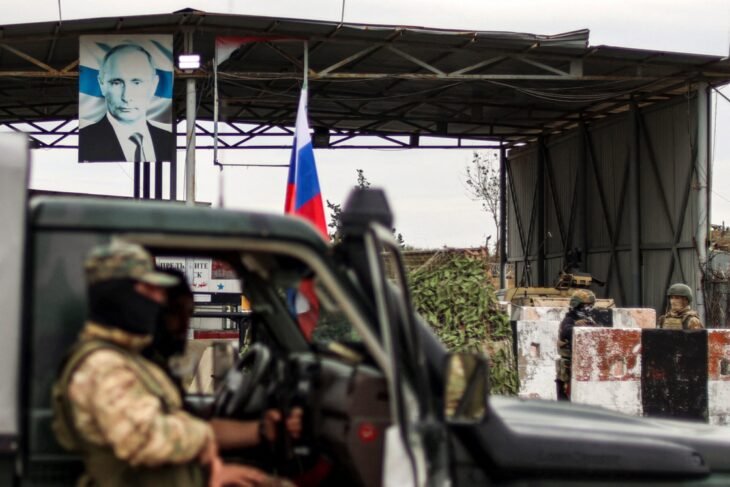
On top of this, Libya continues to be subjected to foreign intrigue that is aided and abetted by the interests of its rival governments. There are an estimated 800 to 1,000 Russian mercenaries in Libya supporting Haftar’s forces.

Once part of the now defunct Wagner group, they are now believed to be under Russian government authority, rebranded as part of Russia’s Africa Corps.

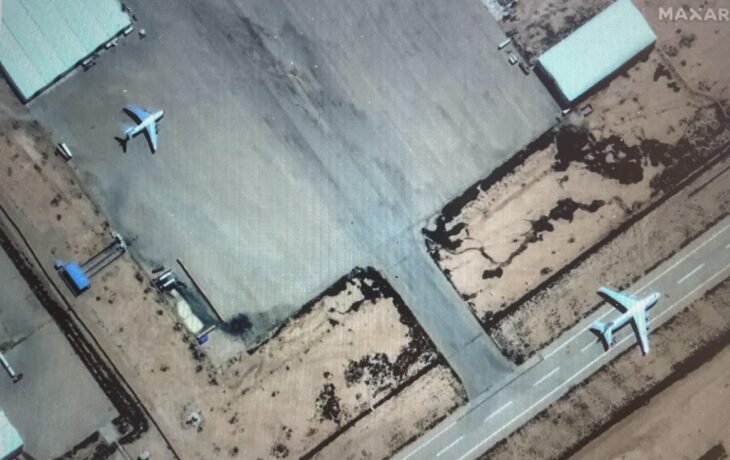
Russia sees Libya as an important transit route to Central Africa and views Haftar as an ally. Reports have surfaced that Russia may seek to develop a naval base in Tobruk In the meantime, Haftar has allowed Russian airplanes to land and refuel in al-Jufra, an area under his control.

Haftar also has been supported by the United Arab Emirates, because he claims to be fighting Islamists in Libya, and France. Haftar in late February flew to Paris where he was received by French President Emanuel Macron, who referred to Haftar’s “central role” in Libya’s “political process and stability.”

Egypt used to favor Haftar because he keeps Libyan Islamists at bay and helps to protect its shared border from infiltration by extremists such as from the so-called Islamic State. Since 2024, Cairo has sought to reach a diplomatic solution to Libya’s divisions and to be neutral among its fractious politicians.

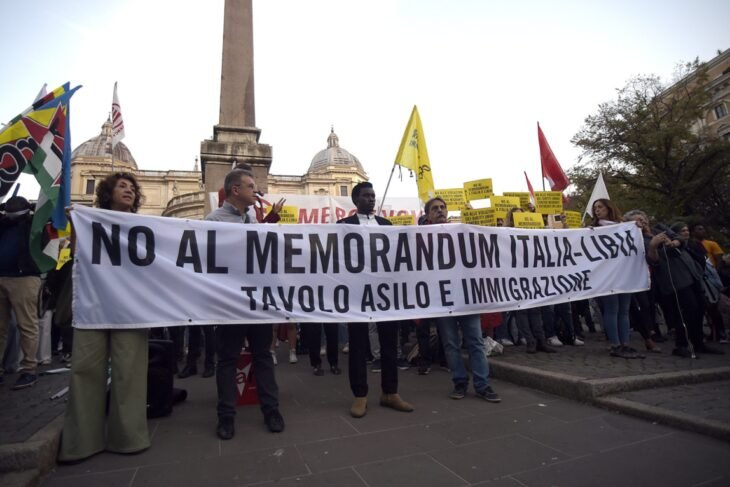
Meanwhile, Italy—the closest European Union country—continues to support the GNU. In January Italy went out of its way to shield an official from the GNU from the International Criminal Court (ICC).

This individual, Osama Anjiem, also known as Osama al-Masri, had an ICC warrant against him for war crimes and crimes against humanity. After he was briefly detained in a jail in Turin, Italy, the government of Prime Minister Georgia Meloni decided to release him over a “legal technicality.”

Italian opposition parties and human rights organizations charge that the Meloni government essentially caved and put al-Masri on a plane back to Libya because it relies on the GNU to patrol the Libyan coast to prevent migrants from trying to reach Italy, and because it feared that Libyan militias would unleash boatloads of migrants if al-Masri was not released.

Many believe that without the Turkish military intervention, Tripoli would have fallen.

Turkey also backs the GNU.

In 2019-2020, Turkey played a crucial role in helping the government of western Libya beat back Haftar’s attempt to take Tripoli. Many analysts believed that without this Turkish military intervention—that included drones, officers, and Turkish-directed Syrian mercenaries—Tripoli would have fallen.

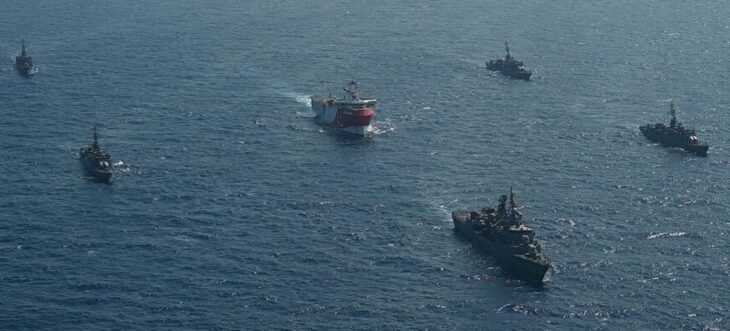
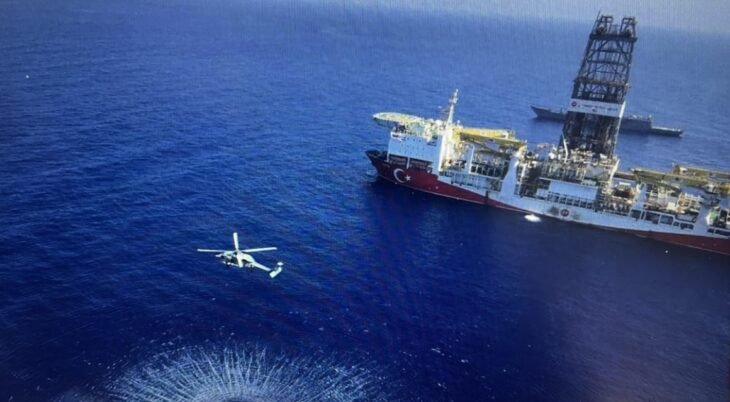
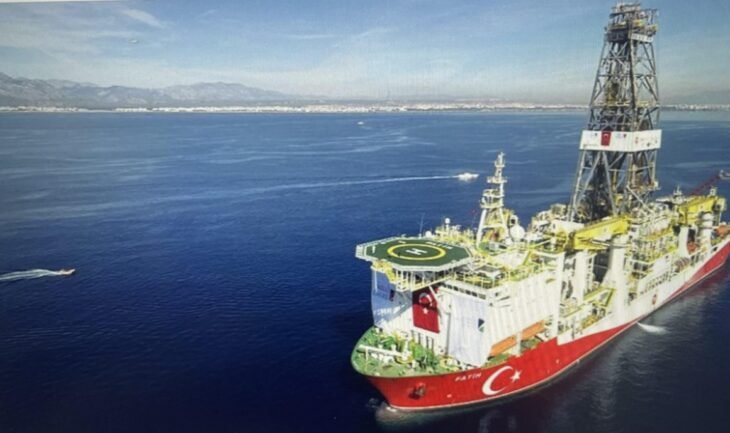
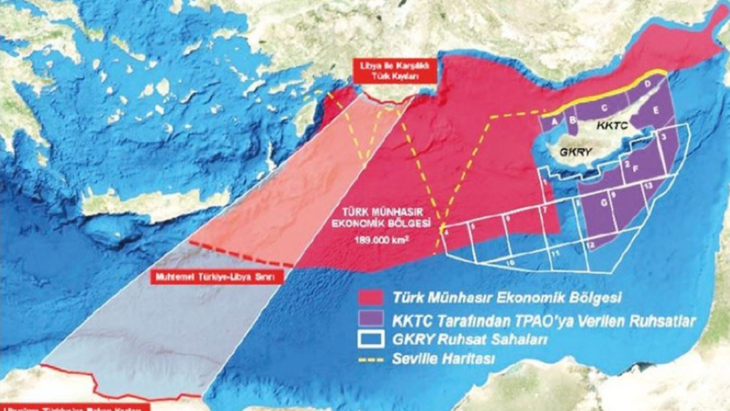
But Ankara has exacted a high price for this support. It got the GNU government to endorse Turkey’s expanded claims of territorial waters in the Eastern Mediterranean, and on August 12, 2024, Turkey disclosed a Memorandum of Understanding (MoU) it signed with the GNU Prime Minister Abdul Hamid Dbeibah.

In this MoU, Dbeibah agreed to allow Turkey to restructure Libya’s security sector in return for granting legal immunity and full autonomy to Turkish forces in the country and for financing from the Libyan treasury.

The MoU also gave Turkish forces unrestricted access to Libya’s territory, airspace, and territorial waters. One Libyan analyst described the deal as turning “Libya into a military base for Turkey.”

The UN Security Council has imposed an arms embargo on Libya in 2011, but Turkey obviously has flouted it, as have others.

Sadly, More of the Same

On February 15, 2024, the then-chief of the UN Support Mission for Libya (UMSMIL), Abdoulaye Bathily, addressed the UN Security Council in what can only be described as a pessimistic message.

He stated that despite various meetings and tentative agreements, “Key Libyan institutional stakeholders appear unwilling to resolve the outstanding politically contested issues that would clear the path to the long-awaited elections in Libya.” He underscored that the status quo “seems to suit” these stakeholders.

As mentioned, he resigned a few months later, citing the “selfish resolve of current leaders to maintain the status quo through delaying tactics…at the expense of the Libyan people.” Bathily was especially frustrated that he could not get the long-delayed national elections back on the agenda.

The new UNSMIL team, headed by Hanna Tetteh, a former foreign minister of Ghana with extensive experience in African diplomacy, seems competent and dedicated. But the team is likely experiencing the same level of frustration as Bathily and his predecessors did.

On March 11, 2025, UNSMIL hosted an online platform for 29 Libyan young people that was revealing in what they expressed. According to the UN readout, the 10 female and 19 male participants overwhelmingly emphasized political stability as a fundamental requirement for economic recovery.

Many also highlighted the urgent need for improved governance, stronger accountability, and decisive measures to curb widespread corruption.” As one young Libyan said, “I am a graduate with no job, no car, and don’t benefit from fuel subsidies.” Undoubtedly aware of how these subsidies are part of an elaborate corruption scheme, he added, “We need clear guidance from the government on how to address [their] removal.”

Instead of heeding the advice of these young people—Libya’s future—the rival factions continue to enrich themselves and to maintain their fiefdoms. Unless they change course, they will have alienated a whole generation of young people whom they need to rebuild and unify the country.

As for the international community, it needs to keep a spotlight on Libya and impose penalties on governments that, instead of pressing the two factions to unify, want one side to prevail or simply maintain the status quo with arms and economic support.

***

Gregory Aftandilian is a Nonresident Fellow at Arab Center Washington DC. He is a Senior Professorial Lecturer at American University where he teaches courses on US foreign policy. He is also an adjunct faculty member at Boston University and George Mason University, teaching courses on Middle East politics.

_____________

Can Türkiye ensure east-west integration in Libya?

Fuat Emir Şefkatli

Türkiye, which has been approaching the two separate power centers and social bases of the country at an equal distance since the beginning of the Libya crisis, has recently attached great importance to diplomatic opening with the east of the country, with which it has strong relations.

Fuat Emir Şefkatli from the National Defense University wrote for AA Analysis about the benefits that Türkiye’s steps towards normalization with eastern Libya will bring to both sides.

***

Libya entered a new era in political, social and military terms when the uprising against then-President Muammar Gaddafi in 2011 turned into the February Revolution. The country is still referred to as a frozen conflict zone today. The power struggle in Libya, which largely began as rival political factions attempting to claim ownership of the revolution after the revolution, eventually gave way to military polarization as armed groups became active actors.

The unilateral policies of international powers and the inadequacy of supra-state mechanisms such as the United Nations (UN), the European Union (EU) and NATO, which sought to resolve the crisis in Libya, were also influential in the emergence of this picture.

Turkey, on the other hand, is looking for solutions to restore peace and stability to the country within the framework of international law and foreign policy principles within this complex equation that has emerged over time. In fact, Turkish Foreign Minister Hakan Fidan noted in an interview with an international media organization on July 24 that relations with eastern Libya are progressing quite well. Minister Fidan, who announced that the Turkish Consulate General in Benghazi has reopened, added that they are in contact with Tobruk-based Parliament Speaker Akile Salih, as well as Khalifa Haftar and his sons.

Normalization with the East is gaining

momentum

As is known, Türkiye’s steps towards normalization with eastern Libya were taken in the last quarter of 2021. In this sense, the period when Türkiye put the opening towards Cyrenaica, the eastern region of Libya, on the agenda corresponded to a period of political deadlock following the cancellation of the presidential elections planned to be held in December 2021.

During these dates, official visits by a delegation from the Libyan Parliament to the Grand National Assembly of Turkey (TBMM) were followed by the visit of the then Libyan Ambassador to Turkey, Kenan Yılmaz, to Akile Salih. However, the turning point in relations in a positive direction was the reception of Akile Salih by President Recep Tayyip Erdoğan in July 2022.

Turkey, which has approached the two separate power centers and social bases of the country at an equal distance since the beginning of the Libyan crisis, has recently attached great importance to diplomatic openings with the east of the country, with which it has strong historical and cultural relations. However, in addition to its increasing contacts with the east of Libya, Turkey also aims to maintain its relations with the National Unity Government (NMU) led by Prime Minister Abdulhamid Dibeybe and institutions in the west.

Unifying and solution-oriented rhetoric

Türkiye’s recent integrative rhetoric and policy preferences developed through statements and visits can be interpreted as a serious effort to shift the tense atmosphere in Libya to the diplomatic ground. Because the legitimacy crisis between the East and the West, the fragmented security bureaucracy and governance crises constitute a strong obstacle to putting comprehensive solutions on the agenda.

On the other hand, the negotiation channels that Turkey is trying to establish contain certain gains in the medium and long term for both Libya and Turkey under three subheadings. The first of these, as emphasized by Minister Fidan in his interview, is Türkiye’s motivation and intention to use the relations it has developed with the East for East-West integration.

Türkiye, which is holding talks not only with local elements but also with Egypt, the United Arab Emirates (UAE) and Qatar in order to organize elections and ensure democratic transition in Libya, will increase its diplomatic efforts to establish stability and peace, which will prevent a new conflict environment in Libya and may strengthen the unity of the country in the long term. It should be said that this situation is an effective policy choice for Türkiye in terms of both preserving current gains and reaching potential future benefits.

Based on this, the second issue is that Türkiye, which has deep historical, cultural and economic relations with both parts of Libya, will secure its interests and commercial gains in the Eastern Mediterranean, namely the Blue Homeland, by transferring its influence from the West to the East. In such a scenario, the political climate in the East, which was relatively against Türkiye’s Maritime Delegation Agreement in 2020 and Hydrocarbon Agreement in 2022, may be completely changed.

Although the relevant agreements are based on solid ground in terms of international law and legitimacy, obtaining the indirect consent of the Parliament and the Haftar wing for these agreements may strengthen the Turkey-Libya alliance relationship in the Eastern Mediterranean geopolitics.

On the other hand, when Türkiye’s normalization with eastern Libya is more broad-based and institutional, it is quite possible that the agreements made with Turkish companies through the Libya Development and Reconstruction Fund affiliated with the Parliament will increase significantly. The commercial benefits that this possible picture will provide to Türkiye are of critical importance.

Finally, Türkiye’s military presence in the west of the country has served as a deterrent in preventing small-scale conflicts from turning into large-scale civil wars after 2020. Türkiye’s military mission, based on training and consultancy, has not only balanced the military polarization between the east and the west, but also the fragmented security bureaucracy in the west.

At this point, high-level diplomatic contacts with eastern Libya may also pave the way for breaking the negative narrative developed by the eastern-centered public and media organizations regarding Türkiye’s military presence in the past. At the same time, the ongoing process may provide Türkiye with significant time in planning military structuring and engagements until a democratic structure is established.

***

Fuat Emir Şefkatli is a PhD candidate at the National Defense University.

_____________

The bear who came to tea [5]

Russia, Libya and the Kremlin’s playbook

for fragile states

Tarek Megerisi 

Wagnerfication: How Russia harnesses

struggling strongmen

The Devil’s bargain

The story of how Wagner entrenched around Haftar suggests a transition to a more direct route for the Kremlin to secure its in-country interests. The forcefulness of this route was probably tempered by Russia’s enthusiasm for its relations with its new friends: Egypt and the UAE. Underneath it all, however, the lifeline of Russia’s involvement in Libya was still the same cargo planes. And they were still traversing the same routes, in violation of the same arms embargo, as they had from the start.

Planting the idea

It did not take long for Wagner to begin a disinformation campaign in Libya to dominate the country’s already poorly regulated and managed information space. Unsurprisingly, Wagner’s Libya operations mimicked the tactical modus operandi of Prigozhin’s infamous Internet Research Agency.

Facebook was the primary communication platform for over two-thirds of Libyans. From December 2018 onwards Wagner created a network of interlinked news sites and “social-first” Facebook pages that focused on memes and live videos. The pages were run by administrators in Egypt and managed by Russian-trained reporters alongside Libyan subcontractors.

This complicated the task for Libyan authorities and even international investigators to track which pages featured Russian involvement. Wagner’s use of Libyan consultants also allowed it to pick up and sensationalise local grievances to polarise audiences, creating impassioned followers who could then be conditioned into adopting Russian-devised narratives.

The Facebook-trialled content then branched out to other social media platforms, along with private WhatsApp and Telegram groups. These activities clustered to create the impression the Wagner-promoted views were widely supported, manufacturing highly impactful echo chambers. The pages also adopted savvy social media engagement tactics, using features like competitions, feedback forms, and Facebook Live videos to develop close relationships with their audience.

The network of different organisations that hosted these pages illustrates how useful the decentralised system of ad-hoc companies was for masking Wagner activities. When leaked documents exposed the Libya operation, Facebook uncovered similar networks in the Central Africa Republic, the Democratic Republic of the Congo, Madagascar, Mozambique and Sudan.

Haftar himself proved more problematic. In early 2019, Wagner assessed Libya’s socio-political scene through one of Prigozhin’s agencies and found the field marshal wanting. The report derided Haftar’s expansion in Libya as simply “bribing local tribes for the right to plant the [LAAF] flag”, likely using the billions Goznac, the Russian mint, continued to print.

Wagner’s report also found that Haftar was pushing powerful western Libyan groups (such as the Misratans) to unite against him, as well as isolating former allies like the Tebu tribes of southern Libya. Most concerningly of all for Moscow, the report concluded that Haftar was simply using Russian assistance to boost his profile and strengthen his ties with the likes of France and the US.

A crucial UN conference to organise elections was set to take place in April. Wagner opted to boost the political profile of Saif al-Qaddafi, the old dictator’s son, as a counterbalance to Haftar (who by the end of March was advancing in western Libya towards Tripoli). Then they could use the disaffected Tebu along with mercenaries from a new alliance Wagner was developing with the RSF in Sudan to build Saif an army that could displace Haftar.

But Wagner’s first meeting with Saif revealed him to be delusional, narcissistic and irrational. Saif thought Haftar was his biggest threat. But he also believed that, as soon as he went public, Haftar’s officers would simply abandon the LAAF for him. Clearly, this candidate would also need some work.

By March 2019, Wagner’s disinformation operation had grown to 12 Facebook groups. These included pro-Haftar, pro-Saif and highly localised news sites that boasted audiences of over 250,000 and had a weekly penetration of up to two million users. This meant that Russian narratives were hitting just under one-third of Libya’s population of 6.5 million.

That same month, a Prigozhin-linked firm bought a 50% stake in the former state-run, pro-Qaddafi al-Jamahiriya TV station. It also created a pro-LAAF newspaper and officially consulted with the pro-Haftar al-Hadath news organisation. One key line was that “the UN is failing in its goals for Libya”.

In May 2019 three operatives linked to a Wagner-linked troll factory were arrested in Tripoli, accused of electioneering on behalf of Saif. But by then Haftar had begun a full assault on Tripoli, loosely Libya’s second post-uprising civil war. This would disrupt the very UN process supposed to lead to the elections Russia aimed to engineer in Saif’s favour.

Summoning a demon

Only Russia publicly protected Haftar following his attack on Tripoli, vetoing an April 7th Security Council resolution that would have condemned the field marshal’s offensive—though France and the US implied they would if Russia did not.

The Russian cargo planes used by the UAE during Operation Dignity to deliver Russian ammunition to Haftar’s forces were now chartered by the UAE and Egypt. They sent three planeloads a day carrying up to 500 tonnes each of Russian ammunition to Haftar’s profligate forces. 

Tripoli’s defenders noted the use of advanced Russian weaponry such as anti-tank Kornet missiles being used to devastating effect, likely again delivered through other partners such as the UAE.[4] Separately, Russia sent journalists to Benghazi to help the propaganda effort.

Back in April, Wagner had assessed Haftar’s chances of taking Tripoli as “nil”, noting that the field marshal’s diplomatic support from France, Russia and the US had made him delusional. Despite the extensive support, Haftar had overcommitted on the battlefield and was already being pushed back.

The LAAF’s command and control was comically unprofessional, to the extent it shot down its own aircraft. According to Wagner’s assessment, “The plan to ‘wear down’ Sarraj’s army […] has actually been turned into the attrition of the [LAAF] itself”. Only massive investment from the UAE, including the deployment of Chinese Wing Loong drones allowed Haftar to maintain a stalemate, while Moscow bided its time.

As autumn approached, Haftar’s alliance was crumbling. High casualties had provoked dissent among the eastern tribes that once made up the bulk of his rank and file. Tribal fighters from the south were gradually abandoning the front having been mis-sold a quick war and easy riches. There was dissent in the ranks, and despite billions of dollars in armaments from Haftar’s backers, along with months of air superiority thanks to the drones, the field marshal had not made any meaningful progress into Tripoli—in fact he had even lost his forward operating base to the GNA two months into the assault.

But from September 2019 Russia dramatically increased its military assistance. (US intelligence sources would later claim that the UAE had financed Wagner’s deployment.)

At least 122 operatives were dispatched to the Tripoli front, including 39 specialist sniper teams.[6] Russian air force planes flew them and their equipment directly from the UAE to Emirati controlled airbases in Libya.[7] The operatives quickly claimed the al-Watiya air base in Libya’s western Nafusa mountains, where they deployed an SU-22 fighter-bomber.

This sowed fear in the ranks of Tripoli’s defenders. The combination of airstrikes and attack helicopters launched from al-Watiya (along with more competent soldiering) allowed Haftar to finally progress into Tripoli’s suburbs. By the end of November at least 24 Wagner operatives (including a senior commander) had been killed.[8] But hundreds more were arriving.

Russia’s sudden intervention also made the LAAF more strategic. On September 16th airstrikes hit key GNA defences in Sirte: the western gate to the oil crescent; a central node of Libya’s east-west coastal road; and a main route south, through the major LAAF-controlled airbase at Jufra. This was the beginning of an operation to soften up the city that marked the east-west divide between Haftar and the GNA.

Following the airstrikes, Misratan forces guarding Sirte were gradually dragged to buttress Tripoli’s defences against the Wagner offensive. Then on January 7th 2020, the LAAF seized Sirte in a lightening raid involving feints, misinformation and a level of tactical sophistication previously alien to Haftar’s force. Taking Sirte granted Wagner access to another airbase, Ghardabiya.

It also provided Haftar with the security to shut off Libya’s oil exports (the financial lifeline of Tripoli’s defence). Around the same time as the LAAF took Sirte, Russia imported a unit of Syrian mercenaries—flown from Damascus to Benghazi on Syria’s Cham Wings airline.[9]

In western Libya meanwhile, Turkey had signed a memorandum of understanding with a desperate GNA. The Turkish army accordingly took defensive positions in western Libya. The memorandum provided the GNA with Turkish security guarantees, in exchange for a deal to delineate maritime boundaries between the two countries—likely a diplomatic gambit by Ankara to boost its position in the eastern Mediterranean. This was the gamechanger that defined the battle for Tripoli (and what came after it). It also created a new foil in Libya for a rising Russia.

***

Tarek Megerisi is a senior policy fellow with the Middle East and North Africa programme at the European Council on Foreign Relations. His work mainly addresses how European policy making towards the Maghreb and Mediterranean regions can become more strategic, harmonious, and incisive—with a long-term focus on Libya.

_______________________

Libya’s Deep Divisions Show No Sign of Abating (1)

Gregory Aftandilian

Libya has fallen off the international radar screen as other crises in the region—the Israel-Hamas and Israel-Hezbollah wars, the Sudanese civil war, and the change of regime in Syria—have dominated the news. But Libya’s internal problems have not abated. The country remains deeply polarized.

The political leadership in each region is backed by militia groups that have benefited from oil, extortion, and human trafficking schemes that prey on the large number of migrants in the country. Although a new United Nations (UN) team is in place, it is not likely to be any more successful than the previous ones.

Last April Abdoulaye Bathily, threw up his hands and resigned after failing to get the two sides to agree on a political process, centered upon national elections for a national unity government, to end the divide. As long as each side is comfortable profiting from the status quo, there is little incentive for them to hold the vote; the proposed elections have been stalled since December 2021.

In the meantime, foreign governments, with their own agendas in Libya, contribute to the division by backing their favorite domestic actors in this internal struggle.

No Change in Government Structures

and Power Dynamics

Libya has been divided politically since 2014, three years following the 2011 overthrow of dictator Muammar Qaddafi.

Today’s Government of National Unity (GNU) is based in Tripoli, controls about a third of the northern part of the country, and is supported by various militias in the west. A rival government in the east, finding its legitimacy from the House of Representatives (HoR) in Tobruk, controls the remaining two-thirds of Libya’s north (the rest of the country is mostly sparsely populated desert).

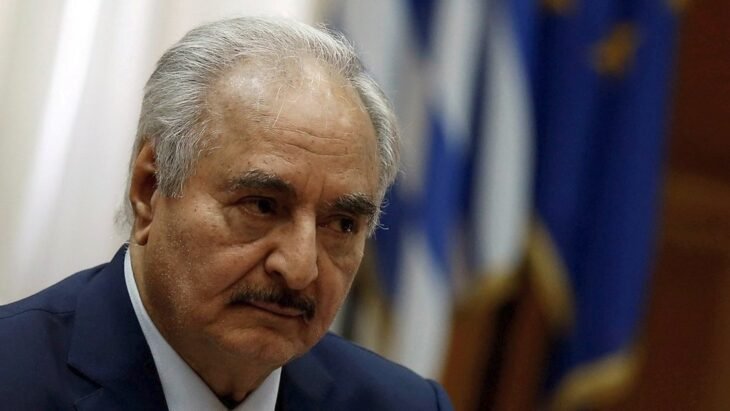
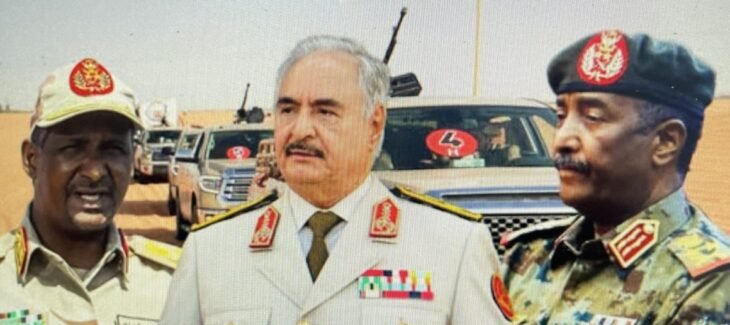
The Tobruk government depends on the support of the self-anointed Field Marshal Khalifa Haftar and his large militia, the Libyan National Army (LNA).

Since Haftar’s failed attempt to take over Tripoli in 2019-2020, the country has been wracked by occasional outbursts of militia violence. The only good news in recent months is that such fighting has decreased.

This is not because the militias have suddenly embraced the idea of peaceful co-existence. Rather, they probably have been too busy making money, perhaps motivated by the belief that violence is bad for business.

Oil Divisions and Schemes

Libya has long been Africa’s second-largest oil producer after Nigeria. In the 1970s, under Qaddafi, oil production reached 3 million barrels per day (b/d). But in the post-Qadhafi period, output has been much lower and has fluctuated based on political and security conditions.

In a September 2020 agreement between the eastern- and western-based governments, revenues from the oil and gas sectors were to be equally divided. But the two sides disagreed over who should head the National Oil Corporation (NOC) and the Central Bank (oil revenues are first to go into accounts managed by the Central Bank).

The dispute came to a head in August 2024 when forces loyal to Haftar blockaded major oil fields and ports, causing oil production to fall from 1.2 million b/d to 600,000 b/d. After several weeks of negotiations and the appointment of a new Central Bank Governor acceptable to Haftar and his political allies, production shot back up to 1.2 million b/d in October 2024, and by December had inched up to 1.4 million b/d.

Libyan authorities hope that production can be expanded to 2 million b/d by the end of 2025, although that may be too ambitious a goal. Oil revenues, which account for 95 percent of Libya’s exports and two-thirds of its GDP, are obviously vital to the country’s economy, including by financing food imports for its population, almost a third of which remains in poverty.

At the same time, the country’s dueling governments use oil revenues to sustain themselves, and this income serves as a deterrent to forming a unified government. In other words, oil revenues keep both sides comfortable in sustaining the status quo.

The country’s dueling governments

use oil revenues to sustain themselves.

Perhaps to become less beholden to the NOC and the Central Bank for oil revenues, Khalifa Haftar in 2023 allowed his son, Saddam, heir apparent and now chief of staff of the LNA, to set up a private Libyan oil company outside of the NOC.

This new company, called Arkenu, is headquartered in Benghazi in the east. According to media reports, between May and December 2024, Arkenu exported 7.6 million barrels of oil worth some $600 million.

But instead of being deposited in Libya’s Central Bank account in New York, the money from Arkenu was reportedly put into bank accounts in Dubai and Geneva.

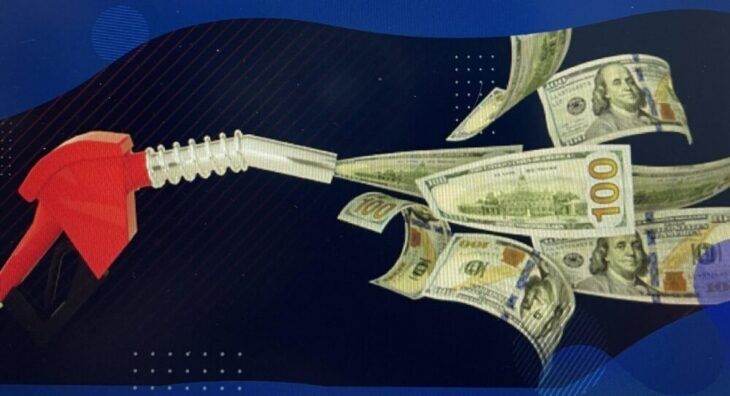
Oil revenues also fund barter schemes that sustain the rival governments. Both west and east governments have been engaged in illicit barter arrangements that work as follows. Oil authorities swap crude oil for refined fuels (the country lacks adequate refinery capabilities) instead of purchasing them. The refined fuels are sold domestically at subsidized prices and then resold on the black market.

Libya’s subsidized fuel system costs $12.5 billion annually. Because gasoline and diesel are sold at a fraction of their production costs, black market operators tied to the political factions and the armed militias reap large profits in subsequent sales. Import volumes of refined fuel totaled 5.5 million tons in 2020 and reached 10.35 million tons by 2024.

Exploitation of Migrants

Another obstacle to unification and peace is a huge influx, and Libyan exploitation of, irregular migrants and refugees, who are mostly people from sub-Saharan Africa seeking to reach Europe from Libya’s Mediterranean coast.

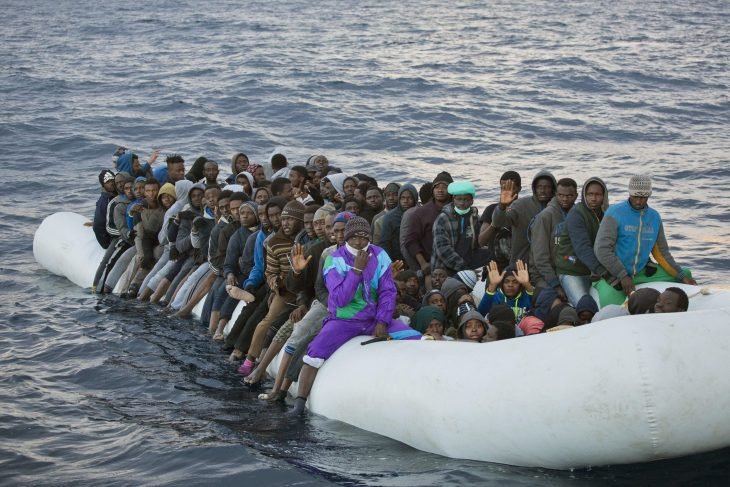
According to one report, as of May 2024 there were 725,304 migrants and refugees in the country. More than 4,000 of them were arbitrarily detained in official detention centers, while another 3,000 were detained in unofficial detention centers operated by Libyan armed groups.

On March 18, 2025, the GNU Minister of Interior Emad al-Trabelsi claimed in front of ambassadors and representatives of the International Organization of Migration (IOM) and the UN High Commissioner for Refugees that 4 million migrants are currently in the country.

He emphasized that Libya will not bear the burden of caring for them alone and will not become a resettlement zone for them, either. In this he was supported by the prime minister of the eastern HoR government, Osama Hammad, who essentially said the same thing.

Trabelsi underscored that the root of the problem is Libya’s porous southern border, and called on the European Union to provide modern equipment and technology to improve monitoring.

But the southern border is a vast desert area that is a huge challenge to control. Moreover, many traffickers of these desperate migrants belong to militias tied to the east and west governments. So, on the one hand, Libyan officials complain about an inundation of migrants; on the other hand, there are profits to be made from this sordid business.

Information continues to surface about this human tragedy.

On March 22, 2024, IOM reported that at least 65 bodies were found in a mass grave in the southwest desert. The victims likely died while being smuggled to the Mediterranean.

This disturbing story came on the heels of another report that at least 60 migrants died after leaving the Libyan coast to cross the Mediterranean in a dingy.

Although the UN has provided some humanitarian assistance to migrants in Libya, it is nowhere near enough, and these people are being subjected to abuse, rape, and sexual violence allegedly perpetrated by Libyan officials and affiliated militias. The UN recently called on Libyan authorities to desist from misinformation and hate speech campaigns about migrants.

To be sure, Libya faces genuine challenges in dealing with a migrant crisis of this scale. But the fact that the government turns a blind eye to or is implicated in human trafficking schemes and reaps profits from it, is central to the problem.

***

Gregory Aftandilian is a Nonresident Fellow at Arab Center Washington DC. He is a Senior Professorial Lecturer at American University where he teaches courses on US foreign policy. He is also an adjunct faculty member at Boston University and George Mason University, teaching courses on Middle East politics.

________________________

The U.S. supports a unified army under civilian control in Libya

General Michael Langley, commander of Africom, backs the Libyan National Army and says that national reunification will have to come from the Libyans themselves

General Michael Langley, commander of Africom, affirms that the United States will continue to support efforts to help Libya build a unified, professional and civilian-controlled army capable of guaranteeing the country’s sovereignty, border security and the fight against illegal migration and cross-border terrorism. 

In a hearing before the US Senate Armed Services Committee, Langley emphasized that “fragmentation between security actors in eastern and western Libya continues to hinder national development and stability.” A situation, he added, that “sometimes also shakes global energy markets.”

According to the general, “national reunification will have to come from the Libyans themselves,” but AFRICOM intends to contribute “with limited and specific steps” to creating favorable conditions to support US strategic interests, including through forms of multilateral integration in the security sector. 

Langley emphasized that Africom’s mission in Africa remains focused on protecting the United States from emerging threats, as well as safeguarding its supply lines and alliances in the region. 

In this perspective, Libya, due to its geographical position and resources, represents a central point of attention.

AFRICOM is concerned about the presence of external actors in the country – including Russia and, increasingly, China and Turkey – and believes that Libyan instability provides fertile ground for the strengthening of terrorist networks and illicit trafficking, from human trafficking to arms and drug smuggling. 

In his speech, Langley also highlighted the strategic importance of North Africa in the context of US interests. In particular, he praised the cooperation with two “key non-NATO allies”: Morocco and Tunisia.

Libya, at the forefront of university medical technology training​

Morocco, he explained, plays a crucial role in the stability of the African continent, offering military training to more than 1,200 African partners each year, at no cost to the participants. 

Tunisia, for its part, is emerging as “a growing regional center for military training,” actively supporting peacekeeping operations on the continent, thanks also to its fleet of C-130 strategic transport aircraft. 

Langley also highlighted the role of the Tunisian Demining School, whose experience in the fight against terrorism is now in high demand by United Nations peacekeeping missions in West Africa and the Sahel. 

On the Algerian front, Langley acknowledged the progress of the defense sector, highlighting in particular the growth in direct sales of military systems, including transport aircraft such as the C-130. In January 2025, the United States and Algeria signed a Memorandum of Understanding on Military Cooperation, aimed at strengthening bilateral strategic dialogue and regional stability.

In the case of Libya, Africom continues to support a process aimed at unifying the armed forces under the authority of a civilian government. Langley recalled that the persistence of armed militias outside of a centralized command is a fundamental obstacle to the return of constitutional order and the achievement of lasting peace. 

The general also referred to the need to integrate the various existing armed groups, including those active in Cyrenaica under the control of General Khalifa Haftar’s Libyan National Army (LNA) – into a national force that respects the chain of command and international standards. 

Langley reiterated that “a unified, professionalized and disciplined army represents the fundamental pillar for a sovereign, secure and stable Libya.”

_____________________

The bear who came to tea [4]

Russia, Libya and the Kremlin’s playbook

for fragile states

Tarek Megeris

Sparkling conversation

The GNA’s mandate was set to expire in December 2017. Russia’s response seems to have been to attempt to mediate a political deal to form a new government and formalise the LAAF as Libya’s army. This would have given Haftar and his Soviet-trained officers a powerful role in the country’s institutions.

In January 2017 Russia granted the field marshal the military honour of being received on its aircraft carrier, the Admiral Kuznetsov, where he spoke again with Shoigu and received assurances of more military support. Alongside this, Moscow increased its contact with the GNA and political and military forces from Misrata on Libya’s north-western coast. But the Kremlin never got the chance to turn these flirtations into a summit.

In July 2017 the French president Emmanuel Macron pipped Putin as a mediator, convening Haftar and Sarraj at La Celle St Cloud in France where they agreed a roadmap towards elections. Haftar, for his part, roundly ignored the roadmap to continue with his conquering. He also wooed the Kremlin back towards him with promises of oil from the crescent Russia had helped him seize. Still constrained by the same limits on arms transfers, however, Russia’s ministry of defence would have to give way to the less conspicuous GRU.

In May 2018 Wagner appeared in Libya for the first time, helping Haftar storm Derna—the last city in eastern Libya outside his control. Haftar was apparently so pleased with this support that he returned to Moscow on November 10th to catch up with Shoigu and, more notably, Prigozhin.

The meetings in Moscow came during the build-up to Italy’s November 12th “Palermo Conference”, through which Rome aimed to jumpstart the stalled Haftar-Sarraj agreement from La Celle St Cloud. But Moscow’s mercurial friend made life difficult. Indeed, he prevaricated over whether he would attend at all, confirming only at the last minute, and then arriving more than an hour late.

Haftar also refused to attend plenary sessions, instead insisting on a “mini summit” with Sarraj, Sisi and Russia’s then prime minister Dimitry Medvedev. The Russia-Egypt-Libya breakout room pointedly excluded Turkey (which at that point was at odds with Russia in Syria and a key regional rival of Egypt and the UAE). This exclusion promptly turned the mini summit into a mini diplomatic scandal, as Ankara’s delegation stormed out of the conference altogether. Later Sarraj would pull Medvedev aside and complain about Russia’s destabilising support for Haftar.

Russian military flights to Libya had peaked alongside Wagner’s deployment as Haftar consolidated in the east and moved south. The field marshal had been struggling to operate around or gain control of the National Oil Corporation (NOC), Libya’s sole legal seller of crude. But Wagner already had expertise in helping Assad in Syria illicitly sell oil, generally offering military assistance in return for shares in local assets. This suggests Haftar was attempting to keep his promises to transform control of the oil crescent into sales.

This indicates another shift in Moscow’s tactics: unable to claim an exclusive proxy or distinguish itself as a mediator, the Kremlin would use Wagner to entrench around Libya’s assets and use them to serve Russian interests.

Cultivation in the roscolonial

Europeans can learn a lot from how Russia re-established itself in Libya: from better understanding how the Kremlin opens up unfamiliar states to its influence, to the need to create robust diplomatic processes and the importance of protecting international norms and alliances. Indeed, the early stages of the second Trump presidency suggest that Europeans should view these less as lessons to take in gradually and more as a long-overdue cramming session.

Russia’s re-entry into Libya was a masterclass in how to fill a vacuum—even if it was in pursuit of an inherently destabilising goal. The network of elites Russia deployed demonstrates the breadth of tools Russia can apply to grasp such opportunities. Kadyrov was a cultural envoy of sorts; the oligarchs offered an avenue with corrupt autocrats and influential business figures; the ministry of defence provided an attractive vehicle for relationship building with local military actors, given Russia’s powerful military reputation.

The series of coups in the Sahel over the past few years have provided ample opportunity for Russia to deploy its military leverage. Russia has most successfully built relationships with African partners who have performed such coups, like Burkina Faso’s Captain Ibrahim Traore; or helped others towards coups of their own, such as the junta in Niger and Sudan’s RSF. Of course, this relationship-building depends upon bypassing any sort of rules-based order, which Europeans could not police in Libya because key states like France were also supporting Haftar.

But looking back, Russia’s re-entry into Libya also provides insight into the processes by which Russia’s relationship-building continues towards client relationships and entrenchment. If the US and European governments had better policed the arms embargo, then Russia would not have been able to develop a foothold in Libya. Nor could it have benefited from its Libyan scoping exercise to build relationships with vital partners of the West such as the UAE.

It was in this context of impunity that Russia introduced Wagner. The result was Haftar being empowered to counter Macron’s electoral process and undermine the Palermo conference. Europeans’ own involvement with Haftar and their struggles to build a meaningful Libyan or international constituency around their conferences gave Russia and Haftar the space to do this.

***

Tarek Megerisi is a senior policy fellow with the Middle East and North Africa programme at the European Council on Foreign Relations. His work mainly addresses how European policy making towards the Maghreb and Mediterranean regions can become more strategic, harmonious, and incisive—with a long-term focus on Libya.

______________________

Libya’s Future At Risk A midst Global Oil Economic Collapse

Prof. Miral Sabry AlAshry

In press statements, former Deputy Governor of the Central Bank of Libya, Ali al-Hibri, issued a warning about dangerous economic indicators threatening Libya. He warned of the repercussions of a lack of transparency and increasing uncontrolled government spending, given Libya’s near-total reliance on the oil sector as the primary source of national income.

The collapse in oil prices to their lowest levels in four years has sparked speculation that markets could see prices drop to $40 per barrel. Goldman Sachs expects oil prices to decline significantly by the end of 2025 and 2026, based on several scenarios linked to developments in global markets. First, Goldman Sachs lowered its forecasts for average Brent and WTI crude prices for 2026, citing increased recession risks and the potential for increased OPEC+ supply. Second, in the worst-case scenario, Goldman Sachs estimated that Brent crude prices would fall below $40 per barrel by late 2026.

In its oil price forecast, Goldman Sachs estimated that Brent and WTI crude prices would reach $62 and $58 per barrel by December 2025, and around $55 and $51 by December 2026, based on two assumptions. First, the US economy will avoid a recession due to the significant reduction in tariffs scheduled to be implemented on April 9, 2025. Second, supply from eight OPEC+ member countries will increase moderately, with two final increases of between 130,000 and 140,000 barrels each. Under a US recession and OPEC’s baseline scenario, Brent crude oil prices are projected to fall to $58 by December 2025 and $50 by December 2026.

Under a slowing global GDP scenario, with OPEC’s baseline unchanged, Brent crude oil prices are projected to fall to $54 by December 2025 and $45 by December 2026. This slowdown in global GDP and the complete elimination of OPEC cuts could lead to a supply adjustment from non-OPEC countries. Oil prices are likely to exceed expectations given a sharp decline in tariff policy. This is why US President Donald Trump escalated his threats to impose tariffs on China on Monday, April 7, 2025. The European Union has drawn up plans to impose retaliatory tariffs in response to the US decisions, increasing fears of a protracted trade war that could push the global economy into recession.

The collapse in crude oil prices has caused a decline in Venezuelan oil exports due to taxes imposed by President Donald Trump on countries that buy from Venezuela. Kazakhstan’s oil exports have fallen due to the recent agreement with the G8 OPEC+ alliance.

Libya is on the brink of collapse in the near future as the state’s budget break-even point relies heavily on oil prices stabilizing at no less than $72 per barrel. Any drop below this threshold could lead to severe financial imbalances, directly affecting the state’s ability to fulfill its operational and developmental commitments.

It was noted that the National Oil Corporation (NOC) had been allocated around 34 billion Libyan dinars to increase production to two million barrels per day. However, the fate of this expenditure remains uncertain, with concerns raised about its lack of transparency. Libyan citizens are unaware of whether concrete steps have been taken to reach this production goal, which is crucial for achieving a temporary economic equilibrium.

In order to address the structural challenges facing the national economy, particularly its heavy reliance on the oil market and lack of diversified income sources, the Libyan government must disclose its economic policies and develop a clear strategic plan that is transparent, monitored, and accountable. Economic sustainability hinges on effective fiscal policy implementation, promoting foreign direct investment, and enhancing the productivity and efficiency of the private sector to reduce dependence on government spending.

Recent data shows that Libya is facing a severe fiscal deficit of $1.5 billion, as total oil revenues amounted to $778 million while foreign exchange disbursements reached approximately $2.3 billion. This financial crisis is attributed to various structural economic issues, including low oil revenues relative to production and global prices, as well as a significant increase in fuel import costs, which consume about 45% of oil revenues.

Excessive government spending by the two rival governments has led to a significant increase in demand for foreign currency. This is due to the absence of effective policies to control imports or support local production. As a result, 60% of oil revenues are now being used to cover imports. Non-oil revenues have almost completely collapsed, no longer covering even 1% of public spending. This is exacerbated by the malfunctioning of monetary policy tools and the increasing money supply both inside and outside the banking system.

The escalation of smuggling of fuel and goods to neighboring countries is contributing to the worsening foreign exchange crisis. This is putting increasing pressure on the national economy. Without radical solutions or effective regulatory measures, the situation is likely to continue deteriorating.

Libya is indicating a major fundamental flaw in the management of its economy. This issue seems to be out of everyone’s control as long as they continue to operate independently without comprehensive coordination. The absence of a framework regulating public spending and the lack of a clear fiscal and monetary policy from the Central Bank are leading to the continued collapse of the economy. The economic situation in Libya is suffering from a severe crisis that requires swift action and a comprehensive policy. The economic deterioration will continue, and the consequences will be disastrous at all levels. Libya needs comprehensive coordination among all stakeholders to manage the economy and a clear fiscal and monetary policy to restore stability to the country.

The narrowing of the Brent market’s downward trend, a market structure in which spot futures prices are higher than supply at a later date, indicates growing investor concern about declining demand for crude oil and the possibility of a supply glut. Trump’s tariffs on China began at 104%, adding a 50% increase after Beijing failed to raise its retaliatory tariffs on US goods. Beijing also vowed not to succumb to what it called US blackmail after Trump threatened to impose an additional 50% tariff on Chinese goods if the country did not lift the 34% retaliatory tariffs.

China’s aggressive response weakens the chances of a quick agreement between the world’s two largest economies, raising growing fears of a global economic recession. Growth in Chinese oil demand, which currently stands at between 50,000 and 100,000 barrels per day, is at risk if the trade war continues. However, a stronger stimulus to boost domestic consumption could mitigate the losses.

The decline in oil prices was worsened by the decision of OPEC+, which includes the Organization of the Petroleum Exporting Countries (OPEC) and allies like Russia, to increase production in May by 411,000 barrels per day. Analysts believe this move will push the market into a surplus.

Goldman Sachs expects Brent and WTI crude prices to drop. West Texas Intermediate (WTI) crude oil prices are projected to fall to $62 and $58 per barrel by December 2025, and to $55 and $51 per barrel by December 2026. With the decline in oil prices, the price of Russian ESPO crude oil fell below the $60 per barrel price ceiling for the first time ever. Data from the American Petroleum Institute showed that US crude oil inventories fell by 1.1 million barrels in the week ending April 4, compared to expectations in a poll for an increase of about 1.4 million barrels.

In Libya, oil production declined by 8.5% in 2024 due to the crisis in the Central Bank of Libya, dropping from 1.17 million barrels per day to 0.54 million barrels per day in September. Production increased to 1.3 million barrels per day by the end of October. Oil prices remained at around $80 per barrel, as they were in 2023, amid declining global demand, particularly from China, and rising regional geopolitical risks.

Libya’s economic trends over the past decade have been severely impacted by ongoing instability, with losses estimated at approximately $600 billion over ten years in constant 2015 dollars. Libya’s GDP increased by 74% in 2023. Key challenges also include heavy reliance on oil, lack of diversification, low productivity, and deteriorating healthcare and education quality. In the medium term, Libya faces the challenge of diversifying its economy and reducing its dependence on hydrocarbons. Stability and improved governance will be key components of Libya’s economic recovery, as evidenced by the severe economic losses incurred due to instability in recent years.

Oil production is expected to recover to 1.2 million barrels per day in 2025 and 1.3 million barrels per day in 2026, boosting GDP growth to 9.6% in 2025 and 8.4% in 2026. Non-oil GDP growth is projected to reach 1.8% in 2024, driven by consumption, and will average around 9% over the period 2025-2026.

Despite lower oil revenues in 2024, fiscal and external surpluses are projected to reach 1.7% and 4.1% of GDP, respectively, due to lower spending and imports. Now, after Trump’s escalation with China and the world, and the collapse in the price of a barrel of oil, Libya cannot continue. Its economy is based on oil, and with a per capita gross national income of $7,570 in 2023, Libya falls into the upper-middle-income bracket. This, too, will decline due to fluctuating oil prices.

By prioritizing non-oil sectors and encouraging private-sector-led growth, Libya can implement projects to boost its development indicators, thereby improving citizens’ lives, aligning with global action, and finding rapid solutions that could reverse Libya’s economic decline.

***

Prof. Miral Sabry AlAshry is Co-lead for the Middle East and North Africa (MENA) at the Centre for Freedom of the Media, the Department of Journalism Studies at the University of Sheffield.

_______________________

Libya is caught in an ever-deepening vicious circle

Federica Saini Fasanotti

Since 2011, Libya has been in turmoil, facing a divided state, stalled elections, militia control and unsuccessful UN stabilization efforts.

Libya remains fragmented between

rival factions

  • Armed groups consolidate power, fueling oil smuggling
  • Local elections show potential, but national governance remains flawed
  • For comprehensive insights, tune into our AI-powered podcast here

ince Muammar Qaddafi’s ousting and death in 2011, oil-rich Libya has been plunged into more than a decade of turmoil, marked by political instability and rival factions. This chaos has divided Libya between the east and west, creating a “de facto” partition.

On one side is the Government of National Unity, led by Abdul Hamid Mohammed Dbeibeh and based in Tripoli, with the advisory support of the High Council of State. On the other side is the Government of National Stability, based in Tobruk, led by Osama Hamad and supported by the House of Representatives and the self-proclaimed Libyan National Army (LNA) under the command of Field Marshal Khalifa Haftar.

This division dates back to the country’s last election of 2014, which sparked the start of the second Libyan civil war. Although national elections were scheduled for December 2021, they were indefinitely suspended due to instability.

Since 2011, the United Nations has monitored Libya’s challenging political stabilization process through its Support Mission in Libya (UNSMIL). The mission has appointed 10 representatives and envoys to date, with the latest being Hanna Serwaa Tetteh of Ghana, previously the Special Envoy of the Secretary-General for the Horn of Africa. Over the years, UNSMIL has attempted to unite the warring parties through various approaches, but these efforts have not succeeded.

The final proposal from Stephanie Koury, former UN special representative in Libya, was to initiate a new political process by convening a committee of experts to address all unresolved issues, such as the electoral law, to pave the way for the long-awaited elections. A national reconciliation dialogue would allow the country to find a broader consensus. Instead, Libyan politics have been captured by a few actors backed by foreign states, spoiling the natural process of political selection.

Despite the political quagmire at the national level, locally, Libyan citizens have many ways to make their voices heard. Various rounds of municipal elections have been successfully held over the years. For instance, on November 16, 2024, the first phase of the municipal council elections took place in 58 municipalities, with a significant turnout of 74 percent of eligible voters. However, the second round, originally scheduled for February 8, has been delayed to an unspecified date. Some Libyans suggest it could be May 2025, but this remains unofficial.

Despite these local bright spots, the national crisis persists, exacerbated by issues that have drawn international attention and action.

Sanctions and Libya’s ongoing political crisis

On January 16, 2025, the UN Security Council passed Resolution 2769 to extend the mandate of the Panel of Experts on Libya until May 15, 2026, and to authorize actions against the illegal export of Libyan petroleum until May 1, 2026. The package also includes updates to the arms embargo and asset freeze measures already in place from Resolution 1970, adopted on February 26, 2011. The latest report from the UN’s Panel of Experts, released in December 2024, highlighted the alarming situation in Libya more than a decade after the revolution against Qaddafi.

The report describes how armed groups in Libya have further solidified their hold on politics, consistently weakening already fragile public institutions. One key factor is the systematic smuggling of oil, facilitated by the General Electric Company of Libya’s unethical use of the facilities in the old harbor in Benghazi to divert a considerable amount of diesel.

In fact, since March 2022, experts have estimated – and these are conservative figures – that the volume of smuggled diesel was 1.13 million tons. According to the Panel of Experts’ report, the president of GECOL, Mohamed Omar Hassan al-Mashay, “was instrumental in preventing governmental entities from exercising any form of oversight, including by intimidating responsible national authorities and consistently refusing to cooperate with them.”

The real decision-makers were likely the leaders of western Libya’s most powerful and influential militias. This included figures like Abdel Ghani al-Kikli, who heads the Stability Support Apparatus, and Colonel Abdulsalam al-Zobi, the commander of the 111th Brigade.

The situation in the east is equally concerning. The LNA, commanded directly by one of Mr. Haftar’s sons, Saddam Haftar, has complete control over all activities in the territorial waters of Cyrenaica. This includes both legal and illegal operations ranging from security to trade. In the south, the LNA exercises unrestricted authority over the borders with Niger and Chad, overseeing all illicit cross-border activities involving arms, drugs, precious minerals and human trafficking.

Furthermore, according to the UN, the Haftars have permitted two Sudanese armies (the Rapid Support Forces and Sudanese Armed Forces), which have been at war with each other for nearly two years, to use southern Libya as a safe haven. In addition to the Sudanese groups, the region also hosts al-Qaeda and Islamic State cells, as well as foreign armed groups and private military companies, particularly from Russia and Turkey.

International response to Libya’s militia-controlled instability

Libyan institutions are held hostage by militias that use them as their fiefdoms. These include not only GECOL but also the National Oil Corporation, the Libyan Central Bank and the Libyan Investment Authority, which is Libya’s sovereign wealth fund established in 2006 to manage the country’s financial reserves from oil revenues. However, 10 member states and 16 financial institutions have consistently failed to adhere to the asset freeze intended to safeguard the Libyan people’s resources, resulting in the erosion or weakening of these assets in certain instances.

Facts & figures

Libya’s tumultuous journey since 2011

2011: Protests erupted in Benghazi in February, spreading nationwide. Muammar Qaddafi was captured and killed in October; the National Transitional Council declared Libya liberated and planned for elections.

2012: The U.S. Ambassador was killed in an extremist attack in September 2012.

2013: The Petroleum Facilities Guard militia started oil export blockades.

2014-2015: Khalifa Haftar launched anti-extremist operations in Benghazi. Tripoli airport was destroyed, and embassies were closed. In January 2015, warring factions declared a partial ceasefire after UN-sponsored talks. Mr. Haftar’s Libyan National Army (LNA) failed to retake Derna as the Islamic State gained ground.

2016-2017: The UN-backed Government of National Accord (GNA) was formed in March. Mr. Haftar’s troops seized oil terminals in September. Fighting by the Islamic State persisted in Sirte. In 2017, tensions increased regarding the control of oil fields as both the GNA and LNA attempted to assert dominance over lucrative oil resources.

2018-2020: In September 2018, the GNA declared an emergency in Tripoli. Mr. Haftar’s troops attacked the capital city in April 2019; the GNA sought global support.

2021-2023: Abdul Hamid Mohammed Dbeibeh became prime minister in March 2021. A year later, the eastern-based House of Representatives appointed Fathi Bashagha as interim prime minister. In May 2023, the parliament suspended Mr. Bashagha and assigned Finance Minister Osama Hamada to the role.

2024: Oil production was halted due to Central Bank disputes. Local elections took place in 58 municipalities, the first simultaneous voting in the east and west since 2014.

***

According to the UN Security Council Report, negative interest rates and unreasonable management fees have been charged. Essentially, the report denounced “non-compliance with international standards, discrepancies in agreed-upon procedures, conflict of interest, depletion of frozen assets, limited visibility of the Libyan Investment Authority and limited control over its frozen assets.”

Moreover, the militiamen operating the notorious prisons in the Tripoli area pose a significant concern. This is illustrated in the case of Osama Najim Almasri, the head of the Mitiga Detention Center in Libya, who has been accused of torturing refugees held in the prisons. Italy’s decision to deport rather than hold him, despite an arrest warrant issued by the International Criminal Court in The Hague, has created real challenges for the Italian government. The situation underscores a significant and systemic issue: In detention camps for migrants and others, militias often enforce summary justice, leading to reports of torture, sexual violence and various human rights violations.

Scenarios

….

Highly unlikely in the short to

medium term: Elections are held

For this scenario to become a reality, an international security force would be essential, with a mandate to keep the militias at bay and enable those who need to work on the electoral process to do so without fearing for their own safety or their loved ones. Considering the evident deterioration of the situation from multiple perspectives, it seems unlikely that Libya can manage this alone. The Libyans and their closest partners, including Italy and France, would undoubtedly be the main beneficiaries if this scenario were to occur. Many large companies have refrained from investing in Libya in previous years precisely because of this endemic instability. Additionally, migrant flows departing from the Libyan shores would be controlled and managed, benefiting both Africa and Europe.

Very likely: Libya slides further

into social disorder

Over the past 14 years, UNSMIL has failed to implement solutions genuinely accepted by the Libyan people. The intention was to “empower” citizens; however, this approach overlooked that UN personnel often had to engage with inadequate leadership.

It would have been unfeasible for national elections to take place in 2021, without any established electoral law or political parties. Stability will remain out of reach as long as these issues are not addressed. Change appears possible, up to a certain point – when those in power realize they could lose their position to a genuine democratic process, prompting them to go to great lengths not to be ousted.

The consequences of this instability are evident and are further intensified by the ongoing discontent among the Libyan population and rising concerns about migration within European public opinion.

Moreover, the presence of foreign powers hostile to European policies, particularly Russia, will also hinder stabilization. The new American administration is unlikely to seek more engagement with Libya. Vice President J.D. Vance clearly stated the administration’s position at the Munich Security Conference in February 2025, leaving European leaders stunned by stating that it is no longer in the United States’ interest to protect Europe.

***

Federica Saini Fasanotti is a military historian and specialist in counterinsurgency. Her fieldwork and research have covered, among others, Afghanistan, Libya, Ethiopia and Somalia, and her latest book is “La Forma della Guerra” (“The Shape of the War”) (Historical Office of the General Staff, Italian Ministry of Defense, 2022).

______________________

Everyone sings their own tune

Abdullah Alkabir

Following the initiative of Musa Al-Koni, a member of the Presidential Council (PC) representing the south, to go back to the three-region system politically and the previous governorate system administratively, Abdullah Al-Lafi, a member of the PC representing the west, is proposing another initiative.

He proposes the election of a three-headed Presidential Council, the same composition as the current Presidential Council, but elected directly by the people, and dividing the country administratively according to the thirteen electoral districts. Mohamed Menfi, Head of the Council, did not miss the presidential initiative season, proposing a popular referendum on the contentious points of the electoral laws.

In fact, all initiatives or proposals contain ideas worthy of discussion and can be built upon and developed to produce a solid formulation that could be key to resolving the crisis. However, a question has been raised by almost all commentators on the initiatives:

Why do the initiatives come from individual Council members? or in other words?

Why doesn’t the Presidential Council propose a single, comprehensive initiative that represents the PC’s collective vision for a political solution?

All answers pointed to the existence of deep disagreements among the PC members, and they did not reach an understanding that would allow them to come up with a unified initiative.

Each PC member then presented his own vision in the manner he chose, without any comment or response from the other houses or councils or ruling political forces. This is perhaps because political activity declines during the month of Ramadan, as people in general, and elites in particular, are distracted and preoccupied with other matters during this month.

However, positions will not change even if initiatives are proposed outside of the holy month, for several reasons.

The first is awaiting the proposals of the advisory committee affiliated with the United Nations mission, as these provide some hope for producing acceptable and applicable outcomes.

The second is despair regarding the possibility of the parties in power agreeing on a way out of the crisis, as this would mean their exit from the scene and consequently the loss of their power and influence.

The third is a firm conviction that any initiative not adopted by the United Nations is useless, even if supported by influential international or regional parties in the Libyan crisis.

Presidential proposals and initiatives are not devoid of ideas that could actually put the country on the path to ending the crisis, if the intentions were purely for the nation. Returning to a popular referendum, as Menfi suggests, means deferring to the legitimate authority, and whatever it decides is what should be implemented.

Breaking up centralization through a system of regions and governorates, as Al-Koni believes, will ease the burden on the capital by distributing powers and wealth among the regions and governorates.

This would eliminate the possibility of coups and the seizure of power by controlling the capital. Adopting a tripartite presidential council, as Al-Lafi believes, would prevent the concentration of power in a single president, who might deviate from the path of authoritarian decision-making and end any participation in it.

To be fair, what is noticeable about all presidential initiatives, and other initiatives, including those of the United Nations, is that there is no initiative that approaches a referendum on the draft constitution, which, in my opinion, is the most likely path to writing the final chapter of the transitional phase.

Even if it does not secure a two-thirds majority in the first round, the way forward is clear in the Constitutional Declaration. It will be returned to the Committee of Sixty to make the required amendments to the rejected or reserved articles, and then it will be put to a referendum again in a second round.

There are various reasons for objecting to the draft constitution, some of which are external, because the constitution being voted on constitutes the solid foundation for independence. Some regional and international powers do not want this independence and believe that the state of chaos and division serves their interests better. It is unfortunate that some local political parties, for other reasons, are aligning themselves with obstructing the constitutional process.

Ignoring the constitutional process and pursuing other initiatives is not in the interest of the nation and its future, but rather serves political parties that insist on remaining in power to serve their own personal agendas, indifferent to the fact that such insistence further compromises the nation’s remaining unity and sovereignty.

_______________________

The bear who came to tea [3]

Russia, Libya and the Kremlin’s playbook

for fragile states

Tarek Megerisi 

Cultivation: How Russia enters

geopolitical vacuums

A bear knocks at the door

In 2014 Russia had to regrow its influence, almost from scratch, in a new Libya that was fracturing politically, economically and militarily. The Kremlin encouraged groups of Russia’s elites to approach Libyans from their respective angles: politicos doing diplomacy, oligarchs conducting economic outreach, and the ministry of defence overseeing military partnership building. Russian foreign policy experts have since described this process as a competition to see who could bring the best prize back to Putin.[2] Intentionally or not, the result of this scoping exercise was a platform on which Russia could build more complex foreign policy.

Setting the table

The diplomatic track was heavily influenced by Ramzan Kadyrov. The Chechen leader had worked closely with Putin on Middle East policy since the early 2010s, acting as something of a cultural envoy for Russia thanks to longstanding connections between the region and Chechnya.

In 2015 Kadyrov picked a close associate, Lev Dengov (a career diplomat with previous experience in Libya) to lead the new “Russian contact group for intra-Libyan settlement”. This would become the Russian foreign ministry’s official vehicle to engage with Libya. The contact group was a mission focused on Libya’s Tripoli-based and internationally recognised government of national accord (GNA).

To supplement this, Russia used Kadyrov’s links with Islamist and old revolutionary armed groups to expand its network across western Libya. This allowed Russia to set itself up as a mediator between Libya’s warring parties and helped ensure it a place in the UN-led political process to reunify the country. In March 2017, then GNA president Fayez Sarraj visited Moscow, the Kremlin used the visit to push its narrative on how the West broke Libya and pose as the one who would fix it. It was also an opportunity to get Sarraj to promise to review the Russian contracts that were lost in 2011 with the fall of Qaddafi.

Also competing for Putin’s approval were an assortment of oligarchs and business figures with commercial ties to Libya. They helped economically re-establish Russia across Libya and leverage the value of the former contracts to develop political allies who could restart frozen projects. But the most successful of Putin’s men were those from the ministry of defence.

In 2014 Russia had reached out to militia leader Ibrahim Jathran, who then controlled Libya’s lucrative oil crescent, an eastern coastal area rich in hydrocarbons. Jathran had blocked Libyan oil exports, holding the country to ransom in a power move he justified as a demand for more equitable division of oil revenues.

In a deal that would have turned this opportunistic yet small-time militia leader into a serious national force, Russian agents offered Jathran weapons and help to illicitly sell oil and get into government. According to Russian foreign policy experts, the Kremlin places great value on monogamy in its proxies. Moscow accordingly demanded to be the militia leader’s sole foreign backer. This was also an apparent attempt to develop an exclusive partnership on valuable Libyan real estate. Ultimately, Jathran backed out following pressure from other intervening states.

Since Haftar—then a disgraced Qaddafi-era “general”—returned from exile in the US in 2011, he has attempted several coups in Libya. So far, after years of gruelling military campaigns and thanks to considerable foreign support, he can claim control of Libya’s eastern province of Cyrenaica and its southern province of Fezzan.

In May 2014 Haftar launched “Operation Dignity”, a key formal trigger for Libya’s first post-uprising civil war. The general advertised this as a push to purge extremists from the eastern city of Benghazi, following assassination campaigns that had plunged the city into fear, and which he entirely blamed on his enemies. Haftar managed to rally former regime officers and eastern tribes to create a new military force, the “Libyan Arab Armed Forces” (LAAF).

The LAAF was an expression of its external backing. Egypt helped Haftar design his army and the UAE provided the funding, technology and know-how. Both regional powers had also cultivated his failed coup against Tripoli in February 2014 and then drove his subsequent military operation on from behind. Haftar’s operation thus opened a Libyan front in a Gulf-driven counter-revolution to revert the Arab world’s nascent democracies to authoritarian rule, one that Sisi had begun in Egypt the previous year.

Haftar and his band of former officers were familiar with Russia, having trained at the Soviet Frunze Military Academy. But the general, with his strong ties to the West, was far from the unclaimed prize Jathran would have been. Russia would also have likely hesitated to take a side in what the Kremlin perceived to be a regional spat: with Egypt, the UAE and Saudi Arabia supporting Haftar; and with Turkey and Qatar considered to be behind a rival, Islamist movement called “Libya Dawn”.

Accordingly, Russia’s initial support for Haftar was low-key. In the first two years of Operation Dignity, Russian arms were quietly air freighted in cargo planes to Tobruk on Libya’s eastern Mediterranean coast. Russian Sukhoi, Mi-8, and MiG-21 military aircraft appeared in the country to join Haftar’s ageing Soviet fleet, as did military trainers, technicians and advisers. Russia provided all this in cooperation with the UAE and Egypt.

Indeed, that the support happened at all was likely down to Moscow’s willingness to trade exclusivity for an opportunity to strengthen Russian relations with those regional powers which were considered more important than Libya, like the UAE. This became the foundation of a military alliance between Moscow and Abu Dhabi that would later flourish, helping to ignite more civil wars in Libya, then in Sudan, and later fuelling Russia’s push through the Sahel. Simultaneously, Moscow used its official contact group in western Libya, via Dengov, to maintain plausible deniability and claim that Russia’s position was support for the UN-led peace process (and the ongoing 2011 Security Council arms embargo).

Boiling the kettle

From 2016 Russia’s quiet support for Haftar began to get much louder. In May the Russian mint Goznac printed 4bn dinars ($2.9bn) of a counterfeit Libyan currency to provide liquidity to Haftar’s cash-strapped operation. It did this through a parallel central bank inaugurated by Libya’s parliament, the House of Representatives, which sat in Haftar-controlled Tobruk.

Despite protestations from the GNA and Western governments, given that these notes differed from Libya’s official currency printed by Britain’s De La Rue, the GNA eventually accepted the Russian bills as Libyan tender. This was likely because not doing so could have led to completely divided economic systems that would be near impossible to reunify.

In June Haftar visited Moscow, where he met defence minister Sergei Shoigu and security council secretary Nikolai Patrushev. The general used this first Russia visit to formally request more advanced weapons systems and replacements for the LAAF’s ageing aircraft. Haftar’s spokesman hailed the trip as a successful formalisation of the relationship. The agreements reportedly included weapons maintenance and air defences, and enabled the LAAF to claim frozen Qaddafi-era arms contracts.

For its part, the Kremlin publicly maintained that Russia could not re-activate weapons contracts until the arms embargo was lifted. But the claims of Jathran’s lieutenants when Haftar swept the oil crescent in September 2016 suggests advanced weaponry was being transferred regardless. These claims were corroborated by new munitions such as Russian-made guided artillery shells suddenly appearing in Haftar’s battles.

Having gained control over Libya’s reactivated oil terminals, Haftar was emboldened to push for more. In September, he anointed himself with the rank of field marshal. Shortly after, he dispatched an ambassador to Moscow  to request a Syria-style intervention. Haftar then returned himself in November, allegedly offering Russia an airbase near Benghazi if it could get rid of the arms embargoKhalifa Haftar in Moscow after his meeting with Russian foreign minister Sergei Lavrov, November 29th, 2016.

A few things were likely behind the romance of 2016. Firstly, Moscow had failed to secure exclusivity over any military proxy. Jathran was a busted flush. The western Libyan armed groups Kadyrov had engaged were working closely with the US, Britain and Italy in a military operation to free the central city of Sirte from the Islamic State group.

Secondly, the Haftar project helped Moscow show it could be a practical friend to the America’s most active regional partner, the UAE. Moscow had also managed to deepen relations with Cairo in its bid to to secure rights over Sidi Barrani, a Soviet-era airbase on Egypt’s far western coastline. Conveniently enough, the Sidi Barrani airbase was also a significant platform for Russia’s stepped up assistance to Haftar, just as Russia deployed special forces to the Egyptian base.

Perhaps most importantly, though, Russia was far from the only intervening power claiming to support the UN while developing its own proxies and securing its interests. International norms around Libya were being chipped away by a multitude of states pursuing their own gains. France, for instance, was actively supporting Haftar and flouting the arms embargo alongside Egypt, Russia and the UAE, believing only a strongman could bring stability to Libya’s multitude of militias.

It found itself against Italy, which was cooperating with western Libyan authorities and militias in the hope that this would stop hundreds of thousands of migrants from crossing the Mediterranean and ending up on its shores. The UK and Turkey also sided with the western, internationally recognised authorities.

This rejection of the rules-based order for unilateral interventions around individual actors and forces diminished Libya’s potential for political progress. Europeans had also validated a game they could only lose against states willing to use force and violate norms more flagrantly. Russia favoured this game. In the words of Gerald Feierstein, a senior US diplomat for the Middle East, Putin was “pushing the envelope” and would keep doing so “until he was stopped”.

Putin was not stopped. But Russia would have to shift its focus to deepen its engagement in Libya. Haftar’s “love-bombing” of Moscow over 2016 could not alter the fact that lifting the arms embargo was practically impossible. Libya was still divided, Haftar was still warring in Benghazi, and he was still detested by western Libyan groups. The returns for the Kremlin had seemingly plateaued. Compared with the UAE and France, Russia remained a junior partner in Haftar’s military coalition. And there would be no Russian base in Egypt, as the newly inaugurated US president—one Donald Trump—worked to improve relations with his “favourite dictator”, President Sisi. So, it seems that Russia pivoted from proxy building to pursuing formal political engagement. This is a pivot that would reappear multiple times over the coming years.

***

Tarek Megerisi is a senior policy fellow with the Middle East and North Africa programme at the European Council on Foreign Relations. His work mainly addresses how European policy making towards the Maghreb and Mediterranean regions can become more strategic, harmonious, and incisive—with a long-term focus on Libya.

______________________

Lockerbie bombing whistle blower arrested in Libya

David Cowan

Samir Shegwara said the files came from the former regime’s intelligence force

A Libyan writer and politician who published documents linking his country’s intelligence service to the Lockerbie bombing has been arrested on national security charges.

Samir Shegwara was taken into custody two days after the BBC reported that the files could form evidence against a Libyan who has been accused of making the bomb that brought down Pan Am Flight 103.

The suspect, Abu Agila Masud Kheir Al-Marimi, is facing trial in Washington and has denied being involved in the attack that killed 270 people in December 1988.

The documents also implicate Libyan agents in the destruction of a French airliner that crashed in the Sahara desert in 1989, killing another 170 people.

Mr Shegwara said that they were retrieved from the archives of Libya’s former intelligence chief Abdullah Senussi after the collapse of Colonel Gaddafi’s regime in 2011.

Their contents were published in France in January this year, in the book The Murderer Who Must Be Saved, co-authored by Mr Shegwara and French investigative journalists Karl Laske and Vincent Nouzille.

The book’s publishers said Mr Shegwara is facing legal proceedings over the “alleged possession of classified security documents, without legal justification.”

The BBC reported on 18 March that Scottish detectives were examining copies of the files, which could represent the first proof from inside Libya’s intelligence agency that it was responsible for the Lockerbie bombing.

Mr Shegwara, who is also mayor of Hay al Andalous, a municipality in Tripoli, was arrested at his office by police on 20 March.

He has been writing publicly about the documents since 2018 and has made no secret of the fact that they were in his possession.

His arrest would appear to support his belief, shared by the French journalists, that the documents are genuine.

Robert Laffont Publishing says the authenticity of the documents cannot be questioned and they contain information of “major public and historical interest” to Libya, France, Scotland and the United States.

In a statement, the company said it “deplores the prosecution of Samir Shegware as well as the pressure that seems to be exerted on him to retract his denunciation of the crimes committed by the former regime of Muammar Gaddafi.

“As such, Robert Laffont Publishing joins with Karl Laske and Vincent Nouzille in calling on the Libyan authorities to drop the charges against him.”

The firm said Mr Shegwara was provisionally released on 1 April but remains under threat of reincarceration and a trial in the coming days.

Evidence of explosives testing

A retired FBI special agent who led the agency’s original investigation into the Lockerbie disaster has described the dossier as potential “dynamite.”

One of the most significant documents appears to give an account of tests carried out on bombs hidden in suitcases, just weeks before the attack on Pan Am Flight 103.

The bomb which destroyed the plane was concealed inside a radio cassette player in a suitcase in the forward hold.

A copy of one of the Libyan files seen by the BBC records its subject matter as: “Experiments on the use of the suitcase and testing its effectiveness.”

The handwritten report is labelled “top secret” and dated 4 October 1988, with the sender given as the Information and Strategic Studies Centre in Tripoli, headed at the time by Abdelbasset Al-Megrahi, who was convicted over the Lockerbie bombing by a Scottish court in 2001.

The document says the tests were successful, with a “powerful and effective” explosion from a device which could not be detected by an X-ray scanner.

The Lockerbie bombing on 21 December 1988 remains the deadliest terrorist attack on British soil

The report says an agent called Aboujila Kheir – assumed to be Abu Agila Masud Kheir Al-Marimi – was involved in the tests.

Another appears to detail the transfer of 10kg of explosives to an office in Malta, staffed by Al Amin Khalifah Fhimah, the Libyan who was cleared at the first Lockerbie trial.

Other documents are alleged to involve the “expenses” of agents who travelled to Malta shortly days before the attack on Pan Am 103.

The verdict from the Scottish court was that the bomb was smuggled onto a plane at Malta and then routed through the baggage system to Frankfurt and Heathrow, where it was loaded onto the American airliner.

The documents are also said to implicate Abdullah Senussi in the planning of the attacks on Pan Am 103 and the French plane, UTA Flight 772.

Colonel Gaddafi’s brother-in-law, Senussi was convicted of bombing UTA 772 after a trial held in his absence in 1999, although he was never served any of the life sentence imposed by the Paris court.

He was named as a suspect over Lockerbie by Scottish and American prosecutors in 2015.

Senussi is facing trial in Libya over his actions during the uprising against Gaddafi 14 years ago.

Police Scotland and Scotland’s prosecution service, the Crown Office, have declined to comment on Mr Shegwara’s arrest.

Former Scottish justice secretary Kenny MacAskill, who freed Megrahi on compassionate grounds in 2009, believes Mr Shegwara’s arrest suggests the documents are authentic.

“I find it hard to imagine that they would have pressurised him otherwise,” he said.

“Hopefully that will change because I believe the man has done the world a service and done the pursuit of justice a service.”

Dr Jim Swire, whose daughter Flora died on the plane, said: “Anything that contributes to the knowledge of the truth about how this atrocity was carried out would be more than welcome.

“That would include these documents, if they can be proved to be genuine.”

***

David Cowan – Home affairs correspondent, BBC Scotland News

______________

The bear who came to tea [2]

Russia, Libya and the Kremlin’s playbook

for fragile states

Tarek Megerisi

A fragile “entente roscolonial”

The story of Russia’s return to Libya begins with its post-2007 moves to reemerge as a great power after the blows of the 1990s—and more specifically its moves to dominate the south-eastern Mediterranean basin as part of that comeback.

For example, Russia tried to fill the void the US left when it froze military aid to Egypt after President Abdel-Fattah al-Sisi’s bloody coup in 2013. Then in 2015 Russia went all-in to defend its last warm-water naval base at Tartus in Syria, invoking its “regime change” narrative about Libya to shield Assad and other Russian interests in the country from UN-led humanitarian interventions in the war there. By entrenching its power in Libya, Moscow would benefit further. It could tap the country’s vast energy potential. One UK intelligence source also claimed that Moscow explicitly wanted to trigger further waves of migration towards Europe.

In February 2022 Russia’s attempted full-scale invasion of Ukraine galvanised the Kremlin’s antagonism towards the West. Unlike in Crimea in 2014 or for its crimes in Libya, this time the West held Russia accountable for its violation of international norms.

Russia’s violation was also condemned by multiple resolutions at the UN General Assembly, underlining the weakness of Moscow’s multilateral politicking compared with its Western rivals. Putin’s diplomats subsequently moved more aggressively to case Russia as the geopolitical antithesis to the West; a role in which it aims to build mutually beneficial partnerships with the “world majority” and “democratise” the world order.

According to Russian foreign policy experts, in a practical sense, this means leaders in the Kremlin currently see the world as a collection of pro-West, pro-Russia or agnostic states, seemingly based on a country’s position in the Ukraine war.[1] More generally, it gives Russia a geopolitical stature far beyond what its economic, military or cultural power might ordinarily allow. It also creates, ironically, colonialist opportunities for Russia to increase that power.

Accordingly, the Kremlin seems to have divided the world into clusters, developing bespoke tools to maximise the benefits of different groupings and countries. Although it is unspoken, Russia’s “new world” appears to be stratified into those with which it can partner to build alternative global systems (like the UAE); and those it can exploit enhance its own status (like Libya). The latter countries are usually marked by the presence of the network of shell companies formerly known as the “Wagner Group” (alongside other PMCs).

Wagner politics was a vehicle for Russian entrenchment that usually involved propping up weak strongmen in exchange for asset control. Despite its presentation as a PMC, mercenaries were always technically illegal in Russia; and there was never a single entity named “Wagner”. The label “Wagner Group” was itself an abstraction that referred to a network of companies that sprung up, often ad hoc, to provide political engineering, military assistance and resource extraction services where Russia was building its influence.

Despite their protestations, the Russian presidency and senior GRU officers always had close control over Wagner activities. Soldiers joining Wagner and related PMCs (which this paper will group under “Wagner”) sign contracts with GRU “Unit 35555”, a laboratory for socio-psychological research. Besides the GRU, the network was cohered and unified by the late Yevgeny Prigozhin as a financier and central administrative node; and characters such as the (also late) neo-Nazi Dimitry Utkin were the military link. Utkin’s nom de guerre “Wagner” gave the group its name.

Prigozhin’s mutiny in mid-2023 was a show of discontent towards Russia’s ministry of defence that span out of control. Following Prigozhin’s and Utkin’s deaths in a plane crash shortly after, the Kremlin dropped the pretence entirely and removed the layers of abstraction. It named the new body it formed to oversee this process “Africa Corps” (seemingly after the Nazi field marshal Erwin Rommel’s “Afrika Korps”).

Russia benefits economically from the assets of Wagner-linked states, and from the group’s military gains by using its men as mercenaries. These fragile states are becoming increasingly interconnected, in what some analysts have dubbed the “entente roscolonial”. All the while, Moscow broadcasts a revolutionary propaganda of helping to “fix what the West broke”.

Whether by happenstance or design, in 2025 Libya is the operational hub of Russia’s Africa cluster. The military bases Wagner commandeered —at Tobruk, al-Khadim (Benghazi), Ghardabiya (Sirte), Jufra, Brak-al Shati (in Libya’s south-west) and the newly developed Maaten al-Sarra (near the border with Chad)—are the logistical hubs Russia uses to support its other African deployments.

These bases form part of an airbridge that helped arm the attempted putsch by Sudan’s Rapid Support Forces (RSF) in April 2023 and sustain the country’s devastating civil war ever since. Troop movements and flights over 2024 indicate that Russia’s bases in Libya have become indispensable in maintaining its nascent deployments in Niger, Mali and Burkina Faso as well as its prolonged presence in the Central African Republic.

Alongside this, Haftar has become a diplomatic asset, used to provide Libyan support to Russia’s African acolytes. Moscow’s proxy sent one son, Sadeeq Haftar, to Khartoum with $2m for the RSF leader on the eve of Sudan’s civil war in 2023.

Another son, Saddam Haftar, was dispatched to tour the Sahelian outposts of the entente over 2024 with a view to formalising a diplomatic alliance. These military partnerships helped the Nigerien junta under Abdourahamane Tchiani and Chad’s leader secure lucrative cross-border smuggling routes.

In early 2025 Khalifa Haftar even visited Belarus. It seems Russia is using Belarus as cover to help upgrade Tobruk’s Gamal Abdul Nasser military base—which Moscow likely aims to make its new Mediterranean naval headquarters after Assad’s fall put its Syrian base at risk. The wide range of cooperation discussed in Minsk is seemingly a channel to inject Libyan money into Belarus in exchange. This underlines how Russia can use Libyan finances and the fig leaf of Haftar’s military to strengthen its non-African Russian allies.

Underpinning Russia’s new Africa infrastructure is a smuggling network that Wagner presumably guided Saddam Haftar to build. Through this the Kremlin exploits (and exacerbates) Libya’s lawlessness to circumvent European sanctions on fuel exports. It also destabilises Europe and the US through the weaponisation of migration; smuggles fuel and arms to other African proxies; and, of course, makes plenty of money.

The rebrand from Wagner to Africa Corps does not change the fundamentals. Even the Nazi connotations of the name have remained, along with the group’s longstanding disinformation function. The biggest change is in the governing structure. The Kremlin has effectively shortened the leash between Putin and the operatives on the ground—formalising the Russian presence in Libya.

The price of this is a loss of plausible deniability. But in a post-Ukraine world where the UN Security Council is effectively frozen, and Putin has an ICC arrest warrant against him, that is no longer so important. In a post-Gaza world, in which the US president has imposed sanctions on the very same court, it matters even less; especially not to Putin’s strategic narrative that he is battling to democratise the world-order against US imperialism.

But, as the story of Russia’s re-entrenchment in Libya will show, Moscow is not in as comfortable position as it seems. The shift to Africa Corps was a consolidation. Putin will inevitably miss the initiative Prigozhin brought to enable such a rapid and creative rise in security partnerships and business relationships.

Russia is already struggling in Burkina Faso and Mali; it seems to have few ideas to stabilise Libya beyond attempting to nudge its proxies into formal positions of power (essentially, to recreate the Assad scenario). Given the predatory, extractive and fractious nature of all these proxies, that is more likely to worsen than end the chaos.

Now is the time for Europeans to extract Russia’s Libyan linchpin. The three phases through which Russia achieved its status in Libya show how the Kremlin feels out opportunities to develop proxies. They reveal how it can then entrench itself and ultimately hijack a nation to pursue its geopolitical goals. But they also show how Russia’s vacuum-filling is unsustainable and destructive. Europeans will have to learn from this to compete with Russia in the confrontation Putin has forced on them.

***

Tarek Megerisi is a senior policy fellow with the Middle East and North Africa programme at the European Council on Foreign Relations. His work mainly addresses how European policy making towards the Maghreb and Mediterranean regions can become more strategic, harmonious, and incisive—with a long-term focus on Libya.

_________________________

Today is the 49th anniversary of the April 7 gallows.

The first gallows erected by the Gaddafi regime in Benghazi were for the execution of Omar Daboub and Mohammed al-Tayeb bin Saud on April 7, 1976.

Today, Monday (April 7, 2025), marks the 49th anniversary of the mass hanging incident, in which the former regime executed Libyan citizens on the pretext of engaging in anti-regime activities. This incident was accompanied by raids on Libyan universities by security forces and members of the Revolutionary Committees, and a campaign of arrests targeting numerous students, before they were hanged on specially erected platforms for execution on university campuses.

Gaddafi threatened the students in a speech he delivered that day, saying: “Those who were defaming the university and writing insulting phrases on its interior are enemies of the revolution and must be eliminated. I have begun the battle, and by God Almighty, I will not retreat until blood flows in the streets alongside the enemies of the revolution.”

Eyewitnesses Describe Brutal Hanging Method

Former political prisoner and Libyan writer Jumaa Bouklib wrote in an article in Al-Wasat newspaper: “On that day, the Libyan National Student Movement, both young men and women, stood steadfastly and honorably, defending the independence of the university campus, its right to establish a student union to represent it and defend its rights, and its right to a homeland that had been hijacked and violated by the military.”

Eyewitnesses describe the hanging method as brutal and unprecedented, citing the experiences of two of its victims, Omar Ali Daboub and Muhammad al-Tayeb bin Saud, on April 7, 1976. While their hands were tied, their legs were free. Those forced to attend witnessed one of the executioners pick up an electric cable and tie the legs of those dangling to it. Thousands watched after the executions were broadcast on Libyan television.

The other victims were Omar Al-Sadiq Al-Warfalli (known as Omar Al-Makhzoumi) and the martyr Ahmed Fouad Fathallah (an Egyptian national), who were strangled in the Benghazi seaport.

The scene was repeated in 1983 and 1984

On April 7, 1983, the hanging scene was repeated. This time, the victims were Mohammed Muhadhdab Ahfaf, a student at the Faculty of Engineering in Tripoli, Omar Khaled, Nasser Mohammed Siris, Ali Ahmed Awadallah, Badie’ Badr, Abdullah Abu Al-Qasim Al-Maslati, Saleh Al-Zarouk Al-Nawwal, and Hassan Ahmed Al-Kurdi. They were all hanged inside Tripoli Prison.

The following year, 1984, Rashid Mansour Kabar and Hafez al-Madani al-Warfalli were executed by hanging on the University of Tripoli campus. Mustafa Arhuma al-Nuwairi was also hanged on the same day at the University of Benghazi, pursuant to rulings by a special military court.

Other executions began on Saturday, April 2, 1977, in several camps in Benghazi and Tobruk, targeting a group of officers accused of participating in a coup led by Major Omar al-Muhaishi in 1975.

Throughout the period from April 1977 until the fall of the regime in 2011, the Revolutionary Committees celebrated April 7 under the name “The Student Revolution.” On February 3, 1980, they announced the commencement of the physical liquidation of political opponents at home and abroad, declaring: “Physical liquidation is the final stage in the dialectic of the revolutionary struggle to resolve it once and for all.”

On April 11, 1980, the Revolutionary Committees assassinated Muhammad Mustafa Ramadan as he was leaving Friday prayers in London. Physical liquidation operations continued throughout April, with the Revolutionary Committees assassinating Abdul Latif al-Muntasir in Beirut on April 21, 1980, Mahmoud Abdul Salam Nafi’ in London on April 25, 1980, and Jibril Abdul Raziq al-Dinali in Germany on April 6, 1985.

_________________________

Libya Emerges as an Arena for U.S.-Russia Competition

Trump’s national security team is seeking to blunt Russian influence in the Mediterranean and in Africa by engaging eastern Libya warlord Khalifa Haftar, despite his well-documented human rights abuses.

Russia’s steady expansion of forces in Haftar-controlled territory positions Moscow to help anti-Western military governments in Africa. Trump officials conducted a show of force in Libya in February to try to weaken Haftar’s ties to the Kremlin. Haftar’s opponents fear he will use aid from both Washington and Moscow to try to consolidate control over the whole country.

The fall of Libyan leader Muammar al-Qadhafi in 2011 left Libya divided between two rival administrations, opening the country to interference by major powers seeking geopolitical advantage. Fourteen years after Qadhafi’s collapse, big power rivalry in Libya is only escalating, not diminishing, and in the process, feeding the ambitions of Libya’s divided leaders. A U.N.-backed government in Tripoli, reliant on Islamist and other militias, is supported primarily by Türkiye, which looks to Tripoli to help it prevent rival powers from encroaching on its influence in the eastern Mediterranean.

Contending for control over Libya is a Benghazi-based parliament, controlled by allies of strongman Khalifa Haftar, commander of the Libyan National Army (LNA) militia. For many years, shunned by the U.S. and European powers because of his brutal repression of Islamists and other dissidents, Haftar built ties with Russian President Vladimir Putin and several regional authoritarians, including Egypt’s President Abdel Fattah El Sisi.

Haftar’s partners look to Libya as a springboard to advance their interests in Africa and the Mediterranean. The U.S. and its European partners backed U.N. efforts to unify the Libyan political structure, but Libya was not a priority for the first Trump administration or for the early years of the Biden administration. There was little incentive for U.S. officials to advocate engagement with Haftar, whose human rights record and failed military aggression against Tripoli in 2019 made him anathema in Washington.

Libya assumed a more prominent place on the U.S. and European policy agenda following Russia’s invasion of Ukraine in February 2022, which heightened pre-existing concerns about Russian gains not only in Libya but elsewhere in the region. Western leaders feared that Russia intended to use its expanding military presence on the African continent as leverage against Europe and to advance Putin’s broader effort to undermine the West globally. 

Military coups in Mali in 2020 and 2021, one in Burkina Faso in 2022, and in Niger in 2023 resulted in the expulsion of U.S., French, and other Western forces, and an influx of Russian forces. The Russian buildup was spearheaded by the Wagner Private Military Corporation, which evolved, following the death of its rebellious founder Yevgeny Prigozhin, into what is now the “Africa Corps.” U.S. and French counterterrorism officials viewed the net effect of Russia’s growing influence as a major threat to their efforts to combat the African affiliates of the Islamic State (ISIS) and Al Qaeda and to supplies of critical minerals from several countries in Africa.

In Libya, U.S. and European strategists watched with some alarm as Russia steadily expanded its military presence in Haftar-controlled territory. During 2023-2024, Russian Deputy Defense Minister Yunus-Bek Yevkurov visited Haftar in Benghazi five times, and, in June 2024, two Russian destroyers visited the Haftar-controlled Tobruk Naval Base. The warships’ visit was billed as a training mission but was likely a continuation of the delivery of artillery to the LNA for potential use against its rivals in Tripoli or for export to anti-Western military forces in neighboring countries.

By August 2024, there were a reported 2,000 – 2,500 Africa Corps personnel deployed at various military sites in Libya. Russia’s buildup in Libya accelerated after the collapse of the Assad regime in Syria in early December, which brought to power an Islamist government hostile to Assad’s partners and forced Russia to evacuate most of its forces based there. Russia has redeployed a large proportion of those military assets to LNA-controlled locations in Libya. One expert assesses that the number of Russians stationed at Libya’s Brak al-Shati airbase has increased from 300 to approximately 450 since the Assad regime collapsed.

The U.S. calculation it needed to counter these Russian geopolitical gains caused Washington to rethink its isolation of Haftar. A May 2024 NATO experts report outlining NATO’s first official “Southern Strategy” set the stage for working with figures such as Haftar by suggesting cooperation with “non-accountable southern partners” without requiring them to adopt European values.

U.S. officials began to downplay Haftar’s drawbacks and view him as a like-minded potential partner against violent Islamist organizations. Some officials argued that engagement with Haftar might move him out of Moscow’s orbit and blunt the Kremlin’s regional ambitions. In August 2024, the commander of U.S. Africa Command (AFRICOM), General Michael Langley, met with Haftar in Benghazi, as publicly announced by the U.S. Embassy in Libya.

In September, high-ranking Pentagon official Celeste Wallander and the deputy AFRICOM commander held a follow-up meeting with Haftar in Libya and praised the LNA for “significant contributions to maintaining stability and promoting unity in Libya.” According to readouts of the meeting, she also highlighted “the importance of Libya’s security forces in ensuring the country’s protection against terrorism and external threats.”

The Trump administration, which took office as Russia was redeploying forces from Syria to Libya, articulated no specific policy toward Libya. But, the Trump team continued the efforts of its predecessors to try to reorient Haftar’s allegiances away from the Kremlin, even as Trump sought to reengage with Putin in an effort to settle the Ukraine war.

In early February, Lt. Gen. John W. Brennan, Deputy AFRICOM commander, met with leaders of major Libyan military institutions, including Haftar as well as military leaders under Tripoli’s authority, “to promote increased security cooperation between the United States and Libya.” Some of the meetings took place in Sirte, a city where U.S. support helped local forces defeat a challenge from ISIS in 2016. The U.S. military visit was also intended to foster greater military unification and cooperation efforts between pro-Haftar and pro-Tripoli elements “through face-to-face engagements and training that benefits both sides, contributing to Libyan efforts to overcome divisions and foster unity.”

Included in the meetings was LNA Ground Forces Chief of Staff, Lt. Gen. Saddam Haftar, the most prominent Haftar son, who is believed to advocate closer ties to the U.S. and distance from the Kremlin. He reportedly visited the United States in 2024. Yet, Trump critics immediately noted that a December 2022 Amnesty International report excoriated Saddam Haftar for war crimes, human rights abuses, and corruption committed by the Tariq Ben Zeyad (TBZ) Brigade unit of the LNA under his command.

In late February, the Trump Pentagon further elevated its engagement with the LNA by sending two B-52 Stratofortress bombers from their U.S. bases to conduct a joint training exercise with Libyan military air controllers near Sirte on February 26. Defense News, a U.S. outlet associated with the Defense Department, characterized the U.S. show of force as a deliberate attempt to tempt Haftar and his sons and other associates to eject the Russian troops stationed in LNA bases in the country.

The B-52 mission came after Haftar, Saddam Haftar, and another son, Khaled, returned from a visit to Russia’s close ally Belarus, and meetings with its authoritarian pro-Putin leader, Aleksander Lukashenko. The visit – publicly described as “establishing strategic partnerships, particularly in Belarus’s industrial and agricultural sectors” – was taken in Washington as a sign that Haftar remained closely aligned with Moscow.

U.S. officials judged that peeling Haftar out of the Kremlin’s orbit would require additional U.S. steps, including demonstrating the unique role U.S. forces can play in securing the region. The B-52 exercise was conducted in line with a January 2025 decision by the U.N. Security Council to provide an exemption to the U.N. arms embargo on Libya for “technical assistance or training provided by Member States to Libyan security forces intended solely to promote the process of Libyan military and security institutions’ reunification.”

Critics of the Trump approach toward Libya argue the outreach to Haftar might have unintended consequences. Jalel Harchaoui, an analyst at the RUSI think tank in London, expressed to Defense News skepticism Haftar will ever break with Moscow, telling the outlet “Haftar tells the U.S. he would work with them but says Russia gives him air defenses and military training. The U.S. tells him it would give him more if only he would distance himself from Russia.”  

Others note that Haftar, emboldened by engagement with both Washington and Moscow, might abandon the U.N.-led unification process and initiate another push to capture western Libya. In August 2024, Major General Ahmed Al-Mismari, Haftar’s lead spokesman, denied that an LNA deployment toward Libya’s border with Algeria represented a prelude to armed action against Tripoli. He explained that the developments in neighboring countries, particularly in Mali and Niger, necessitated the dispatch of reinforcements to military zones where the LNA is stationed, with the objective of securing Libya’s borders.

_______________________

The bear who came to tea [1]

Tarek Megerisi

Russia, Libya and the Kremlin’s playbook

for fragile states

***

Summary

Over the past decade, Russia has re-entrenched itself in Libya, making the country the main hub of its African operations.

It has used three opportunistic processes: “cultivation” (seeding proxies), “Wagnerfication” (propping up strongmen) and “domestication” (harnessing local assets).

To understand these is to understand Russia’s playbook for embedding itself in fragile states.

It is also to identify weaknesses European states can exploit to curb Russia’s influence in Libya, a major vulnerability on the continent’s southern flank.

How Russia returned to Libya

In 2011, as the late Libyan dictator Muammar Qaddafi rained shells upon his citizens, Russia chose not to veto the crucial UN Security Council resolution to impose a “no fly zone” over Libya. The abstention may have been part of a genuine policy to reset Russian relations with the West. Or it may have been a ploy to rebuild Russia’s multilateralist credentials, divert Western powers into more Middle Eastern misadventures, and make space for Russian interventions elsewhere.

Either way, since Vladimir Putin reclaimed the Russian presidency in 2012, his misrepresentation of this episode as a betrayal by NATO—which he says abused Russia’s abstention to conduct unilateral regime change in Libya—has become part of the origin story for his crusade against the West.

Whether or not Putin was genuinely sore about Qaddafi, Russia’s position in Libya deteriorated in the revolution’s aftermath. Libya’s new authorities cast Russia as an enemy of the Arab uprisings, depriving it of roughly $14bn in weapons, oil and construction deals. But in 2014 Libya descended once more into civil war—and it was in that unfolding chaos that the dormant Russia-Libya relationship began to stir from its slumber.

One goal of Putin’s foreign policy has always been to reaffirm Russia’s status as a great power. His attempts to do this over the past decade, antagonistically to Europe and the West, have perhaps been most visible in their flashpoints: the war in Syria, for example, and the all-out invasion of Ukraine. These are also the fronts where the United States and European countries have pushed back.

But Russia has more quietly re-entrenched in Libya over the past decade, and in so doing has met far less resistance from the West. Now, Moscow once again enjoys powerful influence in this troubled but strategically pivotal Mediterranean state. Russia’s presence extends from Libya’s north-eastern coastline to its south-western Sahelian borders.

Russian forces maintain this presence via proxies, notably the eastern Libyan dictator Khalifa Haftar, from five military bases dotted through the country. These forces are also present, and wield influence over, Libya’s southern oil fields and eastern oil terminals. Russia has used all this to help Haftar’s putative heir, Saddam Haftar, expand Libya’s role as a hotspot for smuggling: of weapons, drugs, fuel—and people.

Libya’s lawlessness has thus proven valuable for the Kremlin. So much so that the country has become a forward operating base to help Russia deploy fighters and equipment to other theatres (and extract assets from them).

It was telling that after the fall of Moscow’s Middle Eastern proxy, Syria’s Bashar al-Assad, in December 2024, Russia simply relocated many Syrian assets to Libya. Syria remains vital to Russia; hence Moscow’s swift pivot to working with the new authorities in Damascus. But by the end of 2024, Libya was Moscow’s main hub to feed its African operations. 

This paper examines the gambits, tactics and strategies the Kremlin deployed to re-embed itself in Libya under Europe’s nose. The patterns it uncovers in the past ten years of Russian engagement in the country make clear that this was far from a “masterplan”. But they also provide a window onto the evolution of Russia’s foreign policy since 2014. Indeed, this paper shows that Russia’s re-engagement in Libya took place over three phases that add up to a playbook for Russia embedding itself in and exploiting fragile states. These are:

Cultivation: Seeding potential proxies through a range of influence groups, sowing fertile ground for deeper interactions in states where Russia lacks pre-existing relations;

Wagnerfication: Deploying Russia’s foreign intelligence agency the GRU (previously under the banner of the “Wagner Group” and other such fronts) to entrench in a country by helping a proxy, usually a struggling strongman;

Domestication: Using increasingly open control over that proxy and a country’s assets to advance Russian interests, often to the severe detriment of the country (and European security).

Over the course of these different approaches in Libya, one constant in Russia’s tactics has been patient opportunism to continuously deepen its entrenchment. Another has been its quest for openings to develop its relations with powers such as Egypt and the United Arab Emirates (UAE), all the while undermining Europe and the West.

It has done this by militarily, diplomatically and politically assisting Haftar and other proxies such as Saif al-Islam Qaddafi (Muammar Qaddafi’s son, now wanted by the International Criminal Court for crimes against humanity) to increase their influence in Libya, but also their dependence on Moscow. Russia then moved through these proxies to effectively claim and exploit military bases, oil infrastructure and smuggling routes.

But Russia’s hold in Libya remains moored to the fate of its proxies. Unlike other intervening states—notably Turkey, which is a key backer of Libya’s internationally-recognised government in Tripoli—Russia has no legal military presence in Libya.

This means that Russian power there still depends on Libya remaining in its state of transition. Leaders in the Kremlin are reportedly working to correct this by seeking to lease a naval base in Libya’s far eastern port city of Tobruk. It is also developing relations around the government in western Libya and trying to shoehorn its proxies into positions of legal authority.

The ins and outs of the past decade of Russian influence in Libya thus also reveal the frailties of the Kremlin’s approaches, and how the very European countries it works to undermine could displace its chaos-exploitation activities.

European policymakers are juggling many competing and urgent priorities. But whether they like it or not, Europe’s strategic competition with Russia extends to the southern neighbourhood. Displacing Russia from Libya would have knock-on effects throughout this competition.

It would close off vital funds for its aggression in Ukraine. It would also obstruct Russia’s efforts to fuel Sudan’s civil war. And it would hamper Russia’s attempts to flip African states against Europe, helping to redefine the global competition for critical raw materials and undermine Russia’s entire Africa strategy.   

European countries need to start by making Russia’s deployment more costly for Moscow. They should do this by combatting the smuggling activities it is linked to, as well as developing new legal tools to fight Russia’s network of private military companies (PMCs). In Libya, Europeans will have to degrade Russia’s proxies and press key regional actors to stop facilitating destabilising Russian activity.

But they will also need to offer a vision of their own. They should aim to build coalitions with Russia’s current partners and work with them to secure a safer space for all to pursue their interests. This feeds into the longer-term goal of shepherding Libya towards a unified, legitimate government that would ideally call for Russia to leave. And at the very least it would dilute Moscow’s influence and strengthen both Libyan independence and Libya’s capacity to resist Russian-inspired criminal activity.

***

Tarek Megerisi is a senior policy fellow with the Middle East and North Africa programme at the European Council on Foreign Relations. His work mainly addresses how European policy making towards the Maghreb and Mediterranean regions can become more strategic, harmonious, and incisive—with a long-term focus on Libya.

_______________________

Libya’s political deadlock endures [2]

Yaseen Rashed

There is a case for Trump and Meloni

to challenge the status quo.

Renewing US-Italian engagement in Libya  

Any international reengagement on Libya short of a clear US role in facilitating an agreement risks plunging the country into a deeper web of maligned foreign intervention and spoiling development potential. 

US President Donald Trump, along with his transatlantic ally and personal friend Italian Prime Minister Georgia Meloni, are key international players in Libya. Only their absence and lack of diplomatic engagement allowed Russia and China to expand their operations there. By leading the facilitation of a renewed political process, the US and Italy could benefit from securing exploration contracts for the country’s energy resources, assist Europe in meeting its energy needs, while ensuring that Libyans get the democracy they have wanted since 2011. 

Italy is already developing a framework that Trump could assist in—positioning itself to become Europe’s energy hub, helping to facilitate the sale and transport of oil and gas from Africa to the rest of the continent as it pivots from Russian natural resources. Meloni’s “Mattei Plan”, named after Italian oil giant Ente Nazionale Idrocarburi’s (ENI) founder Enrico Mattei, could help Italy achieve its ambitions in becoming Europe’s main energy broker, and Libya could prove to be a helpful provider of the key to that opportunity. 

Tripoli’s energy potential remains untapped. It could offer Italy and wider Europe cheaper production rates and a higher quality of “sweet crude” oil compared to its neighbors.  

Italy’s investments in Libya have been relatively limited amid concerns about government instability. Rome has pursued energy contracts with other North African energy partners like Tunisia’s ELMED interconnector and Algeria’s Sonatrach. However, ENI has already resumed drilling in areas of the Ghadames basin late last year after a nearly ten-year hiatus, signaling its willingness to invest in  Libya’s energy potential. Furthermore, its proximity to Italy could also provide cheaper transport rates, making Libya a highly attractive energy investment partner for Italy. 

Meloni knows that without a clear political solution in sight for Libya, there is a significant risk in any investments in the country’s energy sector. Both the HoR and the GNU have failed to achieve their mandate of getting the country to elections, and have lost legitimacy for many Libyans after years of disengagement in determining their country’s future.  

The US and Italy could help a new political process by sanctioning Libya’s kleptocrats, who have stalled a solution at the cost of Libyan lives. Their participation and inclusion in any political process should be limited as they risk spoiling the process in exchange for a future role in the country. The US and Italy may instead focus on engaging the country’s civil society and array of economic and political experts in Libya and abroad, to head a transitional process with clearly defined mandates, deadlines, and limitations on power to help get the country towards elections. 

This renewed process would have to include negotiations over Haftar’s future role in the country, a subject for which no one has more leverage to bring the military leader to the table than the United States, considering his citizenship there and continued assets in the greater Washington area. Haftar also established a friendly working relationship with President Trump from his first term in office, which could allow the Trump administration an unprecedented opportunity to negotiate on Libya with Haftar’s camp.  

There is additional appeal in Libya for Trump, as the country is an important member of the Organization of the Petroleum Exporting Countries (OPEC). Earlier this year, the US president said he would demand that OPEC bring down the cost of oil, blaming high prices on the Russia-Ukraine war.  

Tripoli could assist in cutting oil costs by increasing and stabilizing production output. Libya’s acting oil and gas minister, Khalifa Abdulsadek, has already signaled his goal of increasing production from 1.5 million to 2 million BPD by December 2025. Oil production has already recovered and increased in recent months, and by attracting investments, the country’s energy sector could rebound to its pre-2011 output. By diversifying foreign investment in the country away from maligned foreign actors like China and Russiawho have spoiled the peace process in pursuit of their own interests, Libya could ensure investors greater transparency and compliance with international regulationsincluding the existing arms embargo. However, this cannot be achieved through the current status quo. It’s time for a renewed US-Italian engagement on Libya in search of innovative solutions to its prolonged stalemate. 

Trump has already proven he is not afraid to think “out of the box” on foreign affairs during his second term, a posture that could help clinch a deal to end the stalemate. From his attempts in facilitating a ceasefire in Ukraine, to imposing strict tariffs on Canada and Mexico, the US president is interjecting a new strong-armed approach to global issues that could reignite a post-Benghazi attack dormancy on US engagement. Nine years after he used the 2012 terrorist attack as a campaign issue against Hillary Clinton, Trump now has an opportunity to rewrite the fate of Washington’s mission in Libya and bring about a much-needed “win” in the region.  

***

Yaseen Rashed is the assistant director of media and communications at the Atlantic Council’s Rafik Hariri Center & Middle East Programs and a Libya researcher.  

_________________________

Anatomy of a flood: The Derna tragedy’s lessons for Libyan governance (3)

Stephanie T. Williams

The lesson that should be taken from the LPDF experiment is to continue with an inclusive approach. Under no circumstances should the international community return to the days of gathering two or five guys or their representatives in a smoke-filled room. It is the triumph of hope over experience to believe that these cynical status quo actors—who spar during the day and collude at night—are interested in the kind of meaningful change that Libya so desperately needs.

In fact, conflict settlement in a rentier economy comes with its own set of challenges. This is particularly true in the case of Libya, where one man had served for 42 years as the allocator-in-chief, using his vast intelligence and security apparatus as enforcers in apportioning the country’s wealth among its different constituencies. For some years after 2011, the international community prized maintaining the autonomy and integrity of the country’s sovereign financial and economic institutions.

Therefore, the politicization of the National Oil Corporation since 2022 is an alarming development that has accelerated fuel smuggling and further deprived the average Libyan of the benefits that should accrue from being a citizen of one of Africa’s largest oil producers. Until last year’s leadership crisis, the central bank had fared better, but it has yet to fully enact the recommendations of the U.N.-facilitated financial review to regularly hold meetings of the board of governors, display the utmost transparency, and further unify the institution.

Enjoying equal levels of impunity are those who have committed atrocious human rights abuses, including the wholesale slaughter and burying of innocents in the mass graves of Tarhouna, as well as enforced disappearances, suspicious deaths (such as falling out of windows), arbitrary detention, and the trafficking of migrants—helpless souls, like the people of Derna, who have met their watery death when trying to cross the Mediterranean Sea.

Far too often, the victims of this avalanche of abuse have been women, whether public figures such as human rights activists and advocates like Salwa Bugaighis and Hanan al-Barassi, both brutally murdered in Benghazi, or former General National Congress member Fariha Barkawi, who was assassinated in Derna. To this day, no one has been held accountable for these crimes as well as for the enforced disappearance of parliamentary member Siham Sergiwa, who was violently abducted from her home in Benghazi in July 2019 by armed actors believed to have been loyal to Haftar’s forces. I hope that the International Criminal Court’s (ICC) chief prosecutor continues to move with alacrity on the Libya file. Justice delayed is justice denied.

An indifferent “international community”

The fifth and an equally important factor causing the Derna tragedy was, as the U.N. secretary-general so eloquently noted, the appalling indifference of the so-called international community. These actors have consistently failed to hold accountable those responsible for the many abuses and excesses, instead prioritizing the pursuit of their own bilateral agendas over the need to help the Libyan people build a functional and accountable state. In the case of Derna, I recall the stony silence we heard when we would report to the U.N. Security Council on the terrible human rights abuses committed during the siege of that city by Haftar’s forces.

Even worse, those responsible for spoiling U.N. political processes, in 2019 and in 2021, have been rehabilitated and rewarded for their destructive behavior rather than marginalized. In this project, some countries have elevated the counterterrorism agenda above all other bilateral priorities. While no one can really dispute the need to pursue U.N.-designated terrorist groups, too often the counterterrorism agenda requires the alignment of international actors with domestic Libyan hybrid armed groups who have no interest in the state-building project, not to mention the concept of good governance.

The same is true of those countries that have prioritized the counter-migration file above nation-building. Today we witness the cynical wielding of the migration file by actors across the southern Mediterranean, threatening to turn the migrant pipeline on or off depending on the level of material or political support received from European leaders. A recent example of this hypocrisy was the Italian government’s decision to return a known human rights abuser to Libya instead of complying with an arrest warrant from the ICC.

And then there are those countries that have carelessly used Libya as a battlefield for their ideological disputes, raising the bogeyman of political Islam or trying to impose an authoritarian model in order to suppress any move toward democracy in the Middle East and North Africa. In these proxy wars, it is unfortunately the case that Libyan actors have been full participants, inviting in tens of thousands of foreign mercenaries and allowing foreign forces, the majority of whom today are supplied by Russia and Turkey, to occupy bases throughout the country.

These and other countries have poured weapons and lethal systems into Libya, a country that was already awash in weapons from the 2011 and 2014 wars, in full violation of the U.N. arms embargo. At one point in the 2019 to 2020 war, Libya became the largest arena of drone warfare in modern history. (That record has now been shattered since Russia’s full-scale invasion of Ukraine in 2022.)

The alarming facts on the ground, which are represented by the many foreign-occupied bases, will be very difficult to unwind, particularly in the absence of a fully sovereign, representative, and united Libyan government. The stark reality is that Russia and Turkey have effectively divided Libya into zones of influence, each using the country to pursue wider geostrategic objectives, whether in the Sahel and Central Africa or to extract resources and pursue commercial deals.

Since the ouster of Syrian dictator Bashar al-Assad in December 2024 and with Haftar’s acquiescence, Russia has increased its footprint in North Africa, shifting assets from its naval and air bases in Syria to eastern and southern Libya. In addition to maintaining its toehold in Libya and projecting power in Africa, Russia’s ancillary goal is to put pressure on and destabilize southern Europe by leveraging the migrant pipeline. Needless to say, all of this negative foreign interference further renders the state-building and good governance project exceptionally difficult.

Decentralization as a path forward

Having outlined five governance-related factors (and no doubt there are more) that I believe contributed to the Derna tragedy, I believe we can best honor the memories of Storm Daniel’s victims by pressing forward. We must start somewhere, and I would modestly propose that more focus should be put on local, grassroots, and community-led efforts.

Already, good work has been done in this regard by local Libyan groups like the Peacemakers and ad-hoc coalitions of political parties and other gatherings. In fact, there is widespread consensus among Libyans about the need to devolve power from the center in pursuit of an enhanced decentralized model that would put more power and resources in the hands of local constituencies.

During the planning process for the aborted 2019 National Conference, during which the Centre for Humanitarian Dialogue conducted 77 meetings with over 7,000 Libyans inside and outside Libya, participants agreed that “an overly centralized government is widely seen as having caused many of the problems Libya is experiencing today.”

Therefore, they recommended that “there should be a gradual transfer of a significant portion of ministerial responsibilities to municipalities and, eventually governorates.” As an interim measure, and pending a more durable solution, the current decentralization law, Law 59, which was passed in 2012, should be fully implemented.

In 2022, the constitutional negotiations I facilitated between the two legislative chambers resulted in an agreement on the establishment of 13 governorates—using the existing 13 electoral districts—along with the precise division of resources at the central, provincial, and local levels. Some have argued for the establishment of elected chambers at the three levels: a national parliament and higher chamber, elected provincial legislative bodies, and elected municipalities.

In fact, since 2011, the majority of Libya’s municipal councils have been elected, with the exception of some councils in eastern and southern Libya whose elected members Haftar replaced with loyal appointees. The election of municipal councils represents important green shoots of democracy in an otherwise arid environment. The U.N. helped the elections commission to organize council elections throughout the 2019-2020 conflict and even during COVID-19. It is heartening to see that municipal elections took place in 2024, accompanied by a surge in voter registration.

Decentralization in Libya will give greater autonomy and authority to local officials and, with it, greater accountability.

For all of these reasons, the move to a more devolved model must be pushed. It will lessen the pressure on Tripoli, reducing its vulnerability to constant attack. Decentralization will give greater autonomy and authority to local officials and, with it, greater accountability.

The knock-on effects of devolution could be realized in the pursuit of local disarmament, demobilization, and reintegration efforts. A variety of studies point to the fact that Libya’s armed groups are by no means monolithic and that many are well integrated into their local communities. These communities will know best how to reintegrate and rehabilitate those who have resorted to arms, helping them to turn swords into plowshares.

At this moment, when we are seemingly at a hinge in history, faced with the threatened redrawing of the global order and when international institutions are under threat—even from the very architects of that order—we must continue to work on solving conflicts like the one in Libya

Libya is a country that has enormous talent and capable citizens—women and men alike—who have their hands extended and their hearts open to each other, and who want to build themselves a viable state. The best way to honor those whose lives were tragically cut short in Derna is to neither give up nor give in.

__________________________

Libyan warlord at heart of migrant scandal has links to Britain

Sophia Yan

A Libyan warlord who allegedly controlled migrant smuggling routes into Europe and a network of torture prisons had direct links to Britain.

Osama Almasri Najim, who is wanted by the International Criminal Court (ICC), was detained in Italy this year but controversially freed as part of a suspected deal with Libya.

The Telegraph can now reveal that documents found in his possession included valid Barclays and HSBC bank cards in his name, as well as business cards for a pharmacy and an immigration lawyer at a Chinese-British law firm in London.

Italian police briefly detained Najim over crimes against humanity and war crimes on Jan 19, but he was released two days later. His release triggered a legal investigation into Giorgia Meloni, Italy’s prime minister.

Documents obtained by The Telegraph show that he was also found with key cards for hotels in Italy and Germany, suggesting he had travelled around the UK and other parts of Europe unheeded.

Critics have accused Ms Meloni of releasing the 45-year-old as part of a quid-pro-quo deal struck between Italy and Libya to stop migrants from leaving North Africa in boats and crossing the Mediterranean towards the EU nation.

The ICC issued the warrant for Najim on Jan 18 for suspected crimes against humanity and war crimes, including “murder, torture, rape and sexual violence, allegedly committed in Libya from February 2015 onwards”.

Migrants told The Telegraph that they suffered gross abuses at the hands of Najim, Libya’s judicial police chief, after travelling to Libya in the hope of reaching Europe.

They said they were taken to his prison, where they were tortured and forced into slavery. They said they were forced to assist in Libya’s long civil war, carrying ammunition for troops.

Other witness accounts have accused him of personally killing migrants with his bare hands as a means to intimidate others who had also been unlawfully detained. These crimes allegedly occurred in prisons in Tripoli that Najim oversaw.

Najim was arrested in the northern Italian city of Turin. It was at this point that his links to Europe were discovered. It is unclear what Najim was doing in Turin when he was arrested.

Lam Magok, 32, a refugee from war-ravaged South Sudan, said: “[Osama] Almasri is a very dangerous guy.” Mr Magok claims he was tortured several times in Libyan prisons by Najim, often suffering from severe beatings.

“He is one of the most notorious criminals in Tripoli. Even the Libyans fear him, detaining people accused of crimes, even those who were never accused of any crimes,” Mr Magok said. “If someone was freed by the courts, he could still haul them into prison.”

David Yambio, 27, said he was forced into slavery by Najim – working without pay at construction sites, and made to assist the latter’s militia in a years-long civil war that embroiled Libya at the time.

It was back-breaking work and there was no room for error. Mr Yambio remembers shaking in fear every time he was made to carry and load shells to be fired at war.

When Najim, or men under his command, allegedly shot and killed migrants who had been rounded up into Libyan prisons, nobody dared to react in any way, said Mr Yambio. Otherwise, he warned: “You would be next.”

Mr Yambio said: “He plays a huge role in the human trafficking network… Everything is under his control.

“No one – no one – in Libya can operate in this context in the coastal region without the involvement of him and the people connected to him.”

Former prison detainees, including Mr Magok and Mr Yambio, recounted being marched straight from boats – on which they had hoped to escape to Italy in order to claim asylum – and into prisons. There, they say they suffered brutal torture and were held arbitrarily, in some cases for many years.

Reports published by an expert panel appointed by the UN Security Council have repeatedly identified Najim as “among the most responsible” for arbitrary and unlawful detentions and other violations of international humanitarian and human rights law that occurred under his orders, particularly at Mitiga prison in Tripoli, the biggest such facility in Libya.

The Telegraph contacted the British law firm and pharmacy referenced in the documents.

Three people at the law firm, located in London’s Chinatown neighbourhood, refused to say anything after a Telegraph reporter showed them a picture of Najim.

All those working at the British pharmacy – also in London – said they did not recall seeing Najim. The owner said he was astonished to find out that Najim had his store’s card.

Najim’s assets stretch as far afield as Turkey, where he has at least one company registered in his name.

At the time of his arrest, Najim also had in his possession six Turkish debit and credit cards, including with the state-owned Ziraat Bank, the country’s largest bank; as well as a Turkish citizen identity card, indicating a second citizenship in addition to his Libyan status.

Corporate records list Najim and Abdulkerim Mektebi, a Turkish citizen, as co-directors of a company called al-Asale al-Dahabiye 2, based in Istanbul and founded in August last year.

The firm purports to specialise in the import and export of various iron and steel products, according to company registry documents. Mr Mektebi could not be reached for comment.

Najim’s business cards, copies of which were obtained by The Telegraph, list him as the general manager of the company, as well as another firm called al-Asale al-Dahabiye 1.

The latter firm, however, did not turn up any results in a search of a Turkish government company registry.

Turkish and Libyan numbers

Najim’s name cards for both firms list a British number, serviced by Vodafone, though calls are immediately directed to voicemail. The cards also have Turkish and Libyan numbers listed; calls to those numbers did not connect.

The address listed for Najim’s company is a flat located in a residential complex in a district of Istanbul that has become popular with foreigners in recent years.

Two employees at a grocery store near the compound recognised a picture of Najim, who had come in before to shop.

“He was tall, well-dressed… whenever he came to the market,” said a grocery worker.

Najim’s release has created an uproar, with Ms Meloni criticised by opposition politicians, victims of Najim and other advocacy groups for deliberately freeing him to shore up Libya’s continuing support in stopping migrant boats from crossing to Italy.

Italy has provided financing and training to the coastguards of Libya and neighbouring Tunisia. Last year, the number of boats sailing from the North African coast bound for Italy was reduced by 59 per cent.

Italian authorities are “the ones betraying us [migrants]; they fund Libya to keep the migrants there”, said Mr Magok, who claims he survived only because he managed to escape the prison.

He and Mr Yambio now are vocal advocates on migrant rights as part of Refugees in Libya, an advocacy organisation.

“European countries have to change the system of pushing back migrants in the sea,” he said. “I don’t see the reason why they have to build walls and close borders; we are just people who want to leave [due to suffering]; we are not criminals, and we are not mafia.”

“Migrants are human beings, and their rights should be respected.”

On Feb 3, Mr Magok filed a criminal complaint with prosecutors in Rome against Ms Meloni, as well as Carlo Nordio, the justice minister, and Matteo Piantedosi, the interior minister, for allegedly aiding and abetting Najim by sending him back to Libya.

They “helped the Libyan torturer evade justice,” said Mr Magok. “He is a guy who is wanted by the ICC. For the Italian government to release such a criminal; it should not be possible.”

Mr Nordio, who is also under investigation, told parliament that the warrant for Najim had been “marked by inaccuracies, omissions, discrepancies and contradictory conclusions”. He said he had no choice but to release Mr Najim back to Libya.

HSBC said it could not comment, and Barclays and Ziraat Bank did not reply to requests for comment.

______________________

Libya’s political deadlock endures [1]

Yaseen Rashed

There is a case for Trump and Meloni

to challenge the status quo

Libya’s National Oil Corporation (NOC) announced in January that the country will “soon” hold a public tender for exploring key gas and oil plots, the first such bid since 2007. The upcoming bidding round could allow Libya to stabilize and grow its oil output while attracting foreign direct investments into the country’s energy sector, a vital arm representing about 60 percent of the Libyan GDP, 94 percent of its exports, and 97 percent of the government revenues. Even still, there is room for growtha majority of Libya’s territorial waters and 70 percent of its land area remain unexplored and are projected to hold vast basins of petroleum and gas reserves.  

But the round is set to occur against the backdrop of a decade-old stalemate between the Tripoli-based Government of National Unity (GNU) and Tobruk-based House of Representatives (HoR). Since 2014, the warring factions have failed to agree on a pathway for national elections and a political reconciliation process. 

The crisis is one that the US and Italy may be uniquely postured, and incentivized, to quell. 

Absent a thawing of that frozen stalemate, Tripoli is unlikely to attract an influx of energy investment. Even more, the stalemate risks plunging Libya into a deeper web of maligned foreign intervention. Both Washington and Rome could leverage their global positions to combat the country’s rabid kleptocracy and facilitate a Libyan-led technocratic political process. The carrot, of course, for this US-Italian stewardship is the opportunity for greater cooperation in countering Russia and China’s growing ambitions in Libya.  

Libya’s volatile energy output 

Libyan National Army (LNA) Commander Khalifa Haftar—who is also a US citizen—has held a monopoly over national energy resources for nearly a decade, bringing increased volatility to the country’s oil production. He has demonstrably leveraged his monopoly to negotiate arms deals and grow his access to a foreign support network. A recent Telegraph report uncovered a deal between Haftar and China where the latter reportedly shipped one billion dollars in Wing Loong military drones in exchange for crude oil. Haftar used the arms shipment to further project his power, by using United Nations-affiliated officials to facilitate it, in direct violation of the 2011 UN arms embargo. The move further signaled his rejection of any UN-facilitated process that could threaten his access to power.

As the stalemate stands, there is no guarantee for potential investors that Haftar or his affiliated militias will not force a shutdown of exploration or production. The bidding on the country’s largest petroleum reserves, the Sirte Basin, is largely under the control of Haftar’s LNA. It’s hard to imagine any company winning the exploration rights without buy-in from Haftar’s camp in exchange for security guarantees. Haftar could then leverage the exploration findings—if proven to be promising—to negotiate more favorable drilling approval and production plan contracts, growing his consolidation of the country’s shared institutions as defined by the 2020 ceasefire agreement. This could further open the door for increased foreign intervention in the country as both the GNU and Haftar have continued to leverage existing international partnerships to bolster their grip on the country’s wealthy energy resources.  

That includes an increasing closeness with Russia as Moscow pivots from Syria in the aftermath of the ousting of Bashar al-Assad. Such coziness portends that Haftar is likely to seek Russian and Chinese investment in the Libyan energy sector over Europe or the US. Already, in July 2024, Haftar signed a deal with Russian Railways Company to develop a railway connecting Sirte to Benghazi, a route critical to resupplying LNA weapons as well as shipping oil for export. Coupled with his smuggling of Russian oil into Europe, Haftar and Russian President Vladimir Putin demonstrate a keenness to collaborate and circumnavigate existing sanctions on Russian energy resources.  

Russia could ensure that its oil continues to be sold while Haftar would bank on Russia’s security backing to negotiate a more favorable role in the country’s future. By working with Russia and China, Haftar is more poised to use the contracts to retain his access to illegal arms shipments in exchange for oil. With little international oversight, he may seek to use the upcoming public tender as an opportunity to gain influence with maligned foreign actors and solidify his grip on power. 

Investment opportunities amid growing

foreign ambitions 

At the end of 2024, the NOC defied global expectations and increased its production to an eleven-year high of 1.422 million barrels per day (BPD). By attracting investment, Libya hopes to repair existing refineries and work with international companies to re-establish its pre-war production output. Libya’s oil minister, Khalifa Abdulsadek, told Reuters in January that the country needs three to four billion dollars in foreign investment to reach a 1.6 million BPD output.

This has already raised some eyebrows among energy investors, and Libya is increasingly considered a hub of investment opportunity with promises of reforms and greater transparency. As Haftar continues to cozy up to China and Russia in search of weapon sales, the GNU has grown closer to Turkey. In 2019, they established an exclusive economic zone between the two countries. The GNU also signed a deal in January with Turkey to grow its cooperation in the renewable energy sector, and has attracted investment interest from Ankara’s state-owned Turkish Petroleum Corporation (TPAO). 

At the 2025 Libya Energy & Economic Summit held in Tripoli, General Manager of TPAO Ahmet Turkoglu indicated Turkey’s readiness to invest in the country’s energy sector, telling reporters “We are here because we see great potential. I am sure Libya will achieve much more,” specifically referring to offshore fields as part of a 2019 Memorandum of Understanding. 

Turkey’s ambitions in the eastern Mediterranean are neither secret nor uncontroversial. Similar to signing its fate with Syria’s Hayat Tahrir al-Sham, Turkey placed its bets on Tripoli’s GNU in hopes of solidifying its ambitions to become a regional hegemon. Paired with Ankara’s growing involvement in facilitating Israel-Hamas negotiations, Turkey’s President Recep Tayyip Erdogan is playing a regional chess game, one that has already proved successful in Syria and in its initial 2020 intervention in Libya. By growing investments in energy projects in Libya, Turkey seeks to gain influence in the country’s economic and political recovery. 

***

Yaseen Rashed is the assistant director of media and communications at the Atlantic Council’s Rafik Hariri Center & Middle East Programs and a Libya researcher.  

________________________
Anatomy of a flood: The Derna tragedy’s lessons for Libyan governance (2)

Stephanie T. Williams

Geography as destiny

The second factor that contributed to the Derna tragedy was the city’s geographic location, on Libya’s periphery, at a considerable distance from the capital and even far removed from the eastern region’s largest and most important city, Benghazi. So, it is the case that state-building, and the promotion of good governance, must also take into account Libya’s geography.

Many of Libya’s cities and municipalities are located far away from Tripoli, the country’s capital, which is located some 1,000 kilometers (621 miles) to the west of Benghazi. In addition, a good number of Libya’s far-flung municipalities are inaccessible due to inadequate road maintenance and persistent insecurity. Given the limited writ of the successive U.N.-recognized governments, even towns closer to Tripoli complained about not receiving adequate resources.

The resentment of the Tripoli armed groups’ monopoly over vital institutions stoked the mini-war on Tripoli that took place in August 2018 when forces from Misrata and Tarhouna attacked. The consistent marginalization of these non-Tripoli communities is a conflict driver and has produced calls for secession or a return to the federalist model that characterized the state in its first 12 years before the 1951 constitution was amended toward a centralized model in 1963.

Gadhafi’s frequent bureaucratic eruptions and his internal security forces’ brutality further frayed ties within and among communities near and far, sowing a great deal of mistrust, the resonances of which are still felt today. Marginalization, corruption, misgovernance, and repression have fed extremism in Libya. When a faraway city like Derna was identified as an extremist hotbed, it became the target of further repression, its citizens punished and neglected during the Gadhafi era and in recent years following the outbreak of violence in eastern Libya in 2012.

When I visited the city in the summer of 2019, after Haftar’s forces had “cleansed” it of extremists, its downtown area was totally demolished, reminding me of what was left of Mosul, Iraq, in the summer of 2017 after the Islamic State group was defeated. Due to conflict, distance, and neglect, the Derna dams and other critical infrastructure had not been tended to in decades, rendering the citizens of the coastal town entirely vulnerable in the event of serious flooding. Indeed, other communities are equally vulnerable to catastrophic weather events; last year’s heavy rains produced historically devastating floods in the southern Libyan towns of Ghat and Al-Kufra.

A quarrelsome ruling class that sometimes takes its quarrels to the streets

The third factor that contributed to the Derna catastrophe was the incessant quarreling among members of Libya’s ruling class, which has produced nothing beyond 10 years of divided government, persistent dysfunction, and occasional bouts of violence.

This broken political model has hampered the executive’s ability to respond to fast-breaking events and has stifled the fostering and development of experts and technocrats whose skills are desperately needed to address the country’s many challenges, including the effects of climate change and Libya’s overreliance on fossil fuels. Instead, the ruling class has prioritized patronage politics, battles over the shallow legitimacy of the remaining institutions, and the nepotistic appointing of relatives to important positions.

For instance, Derna’s mayor at the time of the epic 2023 storm just happened to be the nephew of parliamentary head Aguila Saleh, which seems to have been his only qualification for the job. It, therefore, comes as little surprise that responsibility for Derna’s reconstruction was handed to one of Haftar’s sons.

Meanwhile, across the country in Tripoli, the head of the U.N.-recognized government, Abdul Hamid Dbeibah, has granted extraordinary access and power to his cousin Ibrahim. While they disagree on almost everything and went to war in 2014 over the results of parliamentary elections, Libya’s political class is in absolute alignment on one matter: to maintain the status quo which enables it to continue to access the state coffers.

A recent manifestation of ruling class quarreling was last year’s food fight over the management of Libya’s most prized sovereign institution, the Central Bank of Libya, which fully erupted in August 2024. The internationally-recognized governor, Sadiq al-Kabir, had held the position for 13 years, during which time the board of governors rarely met, if at all, with the governor monopolizing all fiscal and monetary decisionmaking.

When his relations with the Tripoli authorities soured, Kabir turned his sights east, funding the rival government operating under Haftar’s thumb. This spurred the Tripoli-based presidential council (PC) to summarily dismiss the governor, plunging Libya into a full-fledged and dire economic and financial crisis.

The PC pushed the country ever closer to the abyss by not adhering to the 2015 Libyan Political Agreement’s strictures on the selection of sovereign positions (a decision that is monopolized by the country’s two dysfunctional and usually dueling legislative bodies), and by not respecting the narrow authorities granted to them by the 2021 Libyan Political Dialogue Forum. Thanks to adept U.N. mediation, the central bank crisis was resolved, but the underlying causes of the rivalry over control of vital institutions remain untreated.

The post-Gadhafi ruling class has consistently preferred to continue cutting the cake, playing musical chairs, and engaging in endless “muhassasa,” or power-sharing arrangements.

Effective state-building and good governance require a degree of national consensus on what kind of state citizens desire and their relationship to those who govern them. This is not helped by the fact that almost 14 years after Gadhafi’s demise, Libya still lacks a constitution that determines the nature of the state—whether it is a centralized or decentralized model, whether it is a presidential system or a mixed presidential-parliamentary one—the relationship between the citizen and the state, and importantly, how the country’s resources are apportioned and managed. Rather, the post-Gadhafi ruling class has consistently preferred to continue cutting the cake, playing musical chairs, and engaging in endless “muhassasa,” or power-sharing arrangements.

A gaping lack of accountability

A related fourth factor that caused that huge loss in Derna is Libya’s gaping absence of accountability. Good governance requires accountability. Accountability is also needed to check the endemic corruption, abuses of power, and flagrant violations of basic human rights that have plagued Libya for the last 50-plus years. The rule of law rather than the rule of the gun must prevail.

Too often, it is the small fry, the minor officials, who are arrested and held for abuses of power or stealing from the public treasury. Meanwhile, the real predators, those who engage in patronage politics, wholesale plundering, organized crime, and crony capitalism, remain at large, free to continue forging their dirty deals. In the case of Derna, in a decision shrouded in mystery, 12 unnamed civil servants were reportedly given prison sentences for their role in the dams’ collapse.

One form of accountability should normally come through the ballot box. However, as I can attest, it is much easier to talk about elections in Libya than it is to produce them. The members of the ruling class, desperate to hold on to power, have buried the elections project by refusing to allow advancement on the constitutional process and the required (and consensually agreed to) electoral laws, and they and their institutions are now entirely bereft of popular legitimacy.

Elections are surely not a panacea, and if the conditions are not ripe, they can lead to further conflict, as was the case 10 years ago. However, it is also clear that the pursuit of an electoral process in Libya is absolutely key in order to remind the current legislators, who have been in power for more than 12 and 10 years respectively, that over 3 million of their compatriots have consistently demanded the right to democratically and regularly elect their representatives.

An inclusive political process that goes beyond the same old faces and that incorporates the full panoply, richness, and diversity of the Libyan body politic is being relaunched by the United Nations and deserves the full support of Libyans and international actors. We came rather close to such a formula first in 2018 and 2019 with the building of the National Conference, the holding of which was aborted by Haftar’s attack on Tripoli.

Then, in 2020, after the guns were silenced and we in the U.N. facilitated the signing of the nationwide ceasefire agreement, we convened the Libyan Political Dialogue Forum (LPDF), an inclusive gathering, to produce a detailed and time-bound roadmap that resulted in the formation of an interim government and a call for elections.

The nationwide ceasefire continues to hold but the LPDF’s lofty goals have yet to be achieved. Unfortunately, many in the international community mistook the congeniality that accompanied that political agreement in early 2021 for a true desire to push forward the electoral project. Using the pretext of “respecting” Libyan sovereignty, the international community allowed the LPDF roadmap to be cynically abandoned, and decision-making was returned to the hands of the very architects of the political stalemate.

__________________________
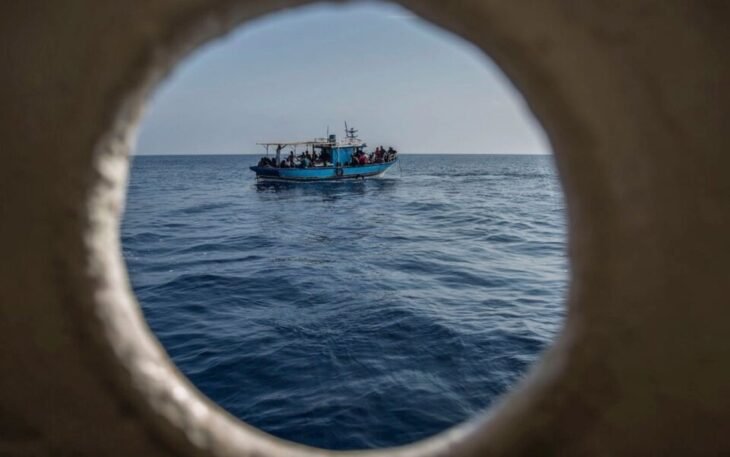
Lockerbie bombing whistle blower arrested in Libya

David Cowan

Samir Shegwara said the files came from the former regime’s intelligence force.

A Libyan writer and politician who published documents linking his country’s intelligence service to the Lockerbie bombing has been arrested on national security charges.

Samir Shegwara was taken into custody two days after the BBC reported that the files could form evidence against a Libyan who has been accused of making the bomb that brought down Pan Am Flight 103.

The suspect, Abu Agila Masud Kheir Al-Marimi, is facing trial in Washington and has denied being involved in the attack that killed 270 people in December 1988. The documents also implicate Libyan agents in the destruction of a French airliner that crashed in the Sahara desert in 1989, killing another 170 people.

Mr Shegwara said that they were retrieved from the archives of Libya’s former intelligence chief Abdullah Senussi after the collapse of Colonel Gaddafi’s regime in 2011. Their contents were published in France in January this year, in the book The Murderer Who Must Be Saved, co-authored by Mr Shegwara and French investigative journalists Karl Laske and Vincent Nouzille.

The book’s publishers said Mr Shegwara is facing legal proceedings over the “alleged possession of classified security documents, without legal justification.” The BBC reported on 18 March that Scottish detectives were examining copies of the files, which could represent the first proof from inside Libya’s intelligence agency that it was responsible for the Lockerbie bombing.

Mr Shegwara, who is also mayor of Hay al Andalous, a municipality in Tripoli, was arrested at his office by police on 20 March. He has been writing publicly about the documents since 2018 and has made no secret of the fact that they were in his possession. His arrest would appear to support his belief, shared by the French journalists, that the documents are genuine.

Robert Laffont Publishing says the authenticity of the documents cannot be questioned and they contain information of “major public and historical interest” to Libya, France, Scotland and the United States. In a statement, the company said it “deplores the prosecution of Samir Shegware as well as the pressure that seems to be exerted on him to retract his denunciation of the crimes committed by the former regime of Muammar Gaddafi.

“As such, Robert Laffont Publishing joins with Karl Laske and Vincent Nouzille in calling on the Libyan authorities to drop the charges against him.” The firm said Mr Shegwara was provisionally released on 1 April but remains under threat of reincarceration and a trial in the coming days.

Evidence of explosives testing

A retired FBI special agent who led the agency’s original investigation into the Lockerbie disaster has described the dossier as potential “dynamite.” One of the most significant documents appears to give an account of tests carried out on bombs hidden in suitcases, just weeks before the attack on Pan Am Flight 103.

The bomb which destroyed the plane was concealed inside a radio cassette player in a suitcase in the forward hold. A copy of one of the Libyan files seen by the BBC records its subject matter as: “Experiments on the use of the suitcase and testing its effectiveness.”

The handwritten report is labelled “top secret” and dated 4 October 1988, with the sender given as the Information and Strategic Studies Centre in Tripoli, headed at the time by Abdelbasset Al-Megrahi, who was convicted over the Lockerbie bombing by a Scottish court in 2001.

The document says the tests were successful, with a “powerful and effective” explosion from a device which could not be detected by an X-ray scanner. The Lockerbie bombing on 21 December 1988 remains the deadliest terrorist attack on British soil. The report says an agent called Aboujila Kheir – assumed to be Abu Agila Masud Kheir Al-Marimi – was involved in the tests.

Another appears to detail the transfer of 10kg of explosives to an office in Malta, staffed by Al Amin Khalifah Fhimah, the Libyan who was cleared at the first Lockerbie trial. Other documents are alleged to involve the “expenses” of agents who travelled to Malta shortly days before the attack on Pan Am 103.

The verdict from the Scottish court was that the bomb was smuggled onto a plane at Malta and then routed through the baggage system to Frankfurt and Heathrow, where it was loaded onto the American airliner. The documents are also said to implicate Abdullah Senussi in the planning of the attacks on Pan Am 103 and the French plane, UTA Flight 772.

Colonel Gaddafi’s brother-in-law, Senussi was convicted of bombing UTA 772 after a trial held in his absence in 1999, although he was never served any of the life sentence imposed by the Paris court. He was named as a suspect over Lockerbie by Scottish and American prosecutors in 2015. Senussi is facing trial in Libya over his actions during the uprising against Gaddafi 14 years ago.

Police Scotland and Scotland’s prosecution service, the Crown Office, have declined to comment on Mr Shegwara’s arrest. Former Scottish justice secretary Kenny MacAskill, who freed Megrahi on compassionate grounds in 2009, believes Mr Shegwara’s arrest suggests the documents are authentic. “I find it hard to imagine that they would have pressurised him otherwise,” he said.

“Hopefully that will change because I believe the man has done the world a service and done the pursuit of justice a service.” Dr Jim Swire, whose daughter Flora died on the plane, said: “Anything that contributes to the knowledge of the truth about how this atrocity was carried out would be more than welcome. “That would include these documents, if they can be proved to be genuine.”

***

David Cowan – Home affairs correspondent, BBC Scotland News

_____________________

Illegal arrest and detention of Libyan Asset Recovery head reflects worsening Libyan corruption

Jonathan M. Winer

Endemic corruption in Libya continues to deter foreign investment, cripple public services, and erode trust in government. In the past year, Libya fell to its lowest-ever ranking in Transparency International’s 2024 Corruption Perceptions Index, tying for 173rd place with Yemen, Equatorial Guinea, and Eritrea — just four spots from the bottom. Similarly, the US Department of State’s 2024 foreign investment evaluation found that business licenses in Libya are typically granted through corruption and exploitation rather than objective criteria. The World Bank’s Global Indicators of Regulatory Governance has consistently given Libya a score of zero out of five, reflecting a system entirely bereft of transparency or accountability.

These dismal rankings mirror the ongoing power struggles among Libya’s political and military elite, who have not permitted parliamentary elections since June 2014. The country’s internationally recognized governing bodies still derive their authority from the 2015 Libyan Political Accord, and to maintain power, they rely on extensive patronage networks. These networks, in turn, depend on corruption to siphon off Libya’s oil revenues, distribute lucrative government contracts to loyalists, facilitate oil smuggling, abuse letters of credit, and traffic Syrian-produced Captagon. Corruption also extends to the judicial system, where courts are manipulated to conduct sham trials for political and financial gain — an issue comprehensively documented in The Sentry’s November 2023 report, Libya’s Kleptocratic Boom.

Over the past decade, local kleptocratic militias have provided muscle to both the Tripoli-based (and internationally recognized) “Government of National Unity,” headed by Prime Minister Abdul Hamid Dbeibeh, and its rival, the provisional “Government of National Stability” in Benghazi, backed by warlord Khalifa Hifter, his sons, and House of Representatives Speaker Aguila Saleh Issa.

The military stalemate that has remained since Hifter’s failed 2019-20 effort to seize Tripoli by force has been maintained in part through an array of illicit revenue-sharing arrangements involving Libyan oil exports. But as the rivals do business, they are intensifying efforts to weaken other potential threats. Instead of attacking one another, bad actors in both Libya’s east and west have undertaken a spree of arbitrary arrests and detentions that the United Nations Support Mission in Libya (UNSMIL) has now warned are not only illegal, but creating “a climate of fear.”

Politically motivated arrests

In its March 22 public statement, UNSMIL found that hundreds of Libyans had been illegally arrested and detained by a range of Libyan security forces, including prosecutors, lawyers, and even officials appointed by the government whose bodies arrested them. Significantly, this last category includes Mohammed Mensli, head of the Libyan Asset Recovery and Management Office (LARMO), just as he was on the verge of making potentially significant recoveries of stolen Libyan assets.

In late December, officials at the Tripoli-based Administrative Control Authority (ACA), a post-Gadhafi anti-corruption investigative body, accused Mensli of unauthorized asset recovery efforts and holding dual nationality — charges he has denied. Notably, the decision was made immediately after a Libyan Supreme Court ruling had affirmed LARMO’s exclusive authority over such recoveries.

Mensli voluntarily returned to Tripoli to confront these allegations, only to be arrested on Jan. 7 and placed in pre-trial detention. Since then, his captors have continued to hold him without trial, in direct violation of Libyan law, which mandates that detentions cannot exceed 30 days without referral to public prosecution. More than 75 days have passed, yet no such referral has been made, leaving Mensli in legal limbo without any hearing or presentation of evidence against him. As UNSMIL found, those holding Mensli have largely denied him access to legal representation and medical care amid concerning reports of his deteriorating health.

On March 3, the Social Council of the Warfalla Tribes, Mensli’s tribal group, demanded his immediate and unconditional release, condemning his detention as “a blatant violation of all local laws and international conventions.” The council also warned that his imprisonment was part of an orchestrated effort by “corruption networks … to loot the Libyan state.”

LARMO’s mission and the threat to

Libya’s stolen wealth

Since his appointment as director-general of LARMO in 2021 by Prime Minister Dbeibeh, Mensli has led efforts to trace, recover, and manage stolen Libyan assets worldwide. Under his leadership, LARMO has reportedly identified tens — possibly hundreds — of billions of dollars in stolen assets, including stocks, bonds, real estate, jewelry, gold, aircraft, and yachts, held across Africa, Europe, and North America. Over a four-year period, Mensli had been consulting international bodies such as the United Nations and European Union, and national law enforcement agencies like the US Department of Justice and the UK National Crime Agency, with a program to ensure both that stolen Libyan assets would be recovered safely and then protected from raids by corrupt Libyan actors.

In pursuit of these twin objectives, LARMO has insisted on establishing internationally supervised financial controls to prevent recovered Libyan stolen assets from being looted again. Mensli has maintained that, with such safeguards in place, recovered funds should ultimately be used for Libyan hospitals, schools, infrastructure, sustainable energy, and food security — but only after national elections restore legitimacy to Libya’s government.

A power grab disguised as a

criminal investigation

Patience and safeguards are both critical to properly recovering and protecting stolen assets, as reflected in Mensli’s methodical effort to design a mechanism to ensure funds turned over to LARMO have sufficient controls to prevent them from being stolen again. Mensli’s continuing imprisonment suggests that those associated with his captivity are attempting to force him to disclose sensitive financial intelligence with the goal of enabling them to seize control of recovered assets for their own gain in the absence of any controls at all.

In the past weeks, Mensli’s unlawful detention has been escalated to senior officials in multiple countries, as UNSMIL worked behind the scenes to secure his release. Unable to make progress, UNSMIL then issued last weekend’s scathing statement, which warned that the wave of illegal arrests and detentions simultaneously threatened political dissent, judicial independence, and rule of law.

UNSMIL’s call for Mensli’s release and that of other Libyans unlawfully languishing in prison has yet to be echoed publicly by other major international actors with interests in Libya. Senior US and British officials responsible for Libyan policy were told about Mensli’s arrest within a few days of his arbitrary detention, and they have continued to meet with Dbeibeh and a wide range of other relevant Libyan actors, while Mensli has languished in prison. Now that UNSMIL has weighed in loudly to call for his release, it will be important for them to express their views publicly, too.

It is clear why corrupt Libyan officials might see an opportunity to profit from Mensli’s removal, but it is far less clear why the Dbeibeh government, which appointed him, has remained silent. By failing to intervene, Dbeibeh’s administration is not only jeopardizing Libya’s recovery of stolen wealth but also reinforcing the very corruption that has crippled the country for years. In the meantime, Mensli’s indefinite detention serves as yet another dark proof-point in Libya’s ever-deepening history of state-sanctioned corruption. Should he be released, Libya still has the opportunity to build out mechanisms for recovering its lost wealth to enable such funds to be used at some future point as a foundation to help the country rebuild.

 ***

Jonathan M. Winer is a Distinguished Diplomatic Fellow at the Middle East Institute. He previously served as the United States special envoy for Libya and the deputy assistant secretary of state for international law enforcement. 

_______________________

Escalation of kidnappings, intimidation, enforced disappearances in Tripoli condemned

Sami Zaptia

‎The escalation of kidnappings, intimidation, enforced disappearances and security chaos in the capital, Tripoli, was condemned in the strongest terms yesterday by the National Consensus Bloc of the High State Council and the National Institution for Human Rights in Libya. They called for the unconditional release of the kidnapped and called for measures to be taken to bring the perpetrators to justice.‎

Two successive arbitrary detentions

The condemnation comes after the kidnapping of Mohamed El Gamati, brother of a vocal social media opposition critic of the status quo regimes of western and eastern Libya and Mohamed Toumi, the well-known and respected lawyer and a member of the Constitutional Drafting Authority.

The National Consensus Bloc called for the unconditional release of the kidnapped and called on the Tripoli judicial authorities to intervene immediately to take measures to bring the perpetrators to justice.‎

Mohamed El Gamati, an oil engineer who reportedly does not get involved in politics, was reported to have been kidnapped two days ago (26 March) and is still to be released. It is believed he was arrested purely to put pressure on his vocal critic brother, Husam. Toumi was detained yesterday and was released several hours later.

Al-Gamati


The National Institution for Human Rights in Libya expressed its strong condemnation and denunciation regarding the arbitrary arrest.

It said the kidnapping and arbitrary detention of Al-Gamati took place from his home in Tajoura, east of Tripoli, on Monday morning, March 24, by gunmen affiliated with the Tajoura Lions Brigade, which is affiliated with the General Intelligence Service. It said his detention was arbitrary without any basis and justification, and his fate is still unknown until now, and absent from the Libyan intelligence service.

It said the official perpetrators were acting contrary to the law and adopting the approach of criminal gangs, where this incident constitutes a crime punishable by law, which is the crime of deprivation of liberty in accordance with the provisions of Article No. (428) penalties, and Law No. (10) of 2013 criminalizes the crimes of kidnapping, torture and enforced disappearance.

It said this crime represents a flagrant and flagrant violation of human rights and citizenship and undermines the rule of law and justice, is subject to legal responsibility, and this incident carried out by members of the General Intelligence Service contradicts the provisions of Law No. 8 of 2023 on the reorganization of the Libyan intelligence service, specifically what is stipulated in Chapter Five: specifically Article 89:‎

‎”The Intelligence Service conducts its activities on the basis of human rights and fundamental freedoms guaranteed and protected by law, and its actions against these rights and freedoms shall not enjoy any immunity.” ‎

‎The National Institution for Human Rights in Libya called for the immediate and unconditional release of Al-Gamati as he suffers from serious chronic diseases and his health condition is very critical due to the lack of the necessary medicines for him.

Al-Toumi

With regard to Mr Al-Toumi, the National Institution for Human Rights in Libya said his arrest was arbitrary and that he was taken to an unknown destination after storming his office in central Tripoli, amid conflicting news and information regarding his release hours after his arbitrary arrest.

‎In this context, the National Institution for Human Rights in Libya expressed its deep concern about this dangerous development and the escalation of the frequency and rates of gross violations of human rights, repression of freedoms and violations of rights, and the undermining of the rule of law and justice, due to the escalation of incidents of abduction, arbitrary detention and enforced disappearance of citizens in general, lawyers, judicial agents, jurists, human rights defenders, media professionals and journalists by the law enforcement authorities of the Libyan Presidential Council, the Tripoli government and the Ministry of Interior. All without any basis, justification and legal process. ‎

‎The National Institution for Human Rights in Libya expressed its strong condemnation and denunciation of the incidents of abduction and arbitrary detention of lawyers, members of judicial bodies and human rights defenders throughout the country, and stresses that the attack on magistrates, lawyers and judicial agents is a flagrant violation of the immunity enjoyed by lawyers, as they may only be arrested on the basis of an order from the Public Prosecution and after lifting the immunity and by special procedures as stipulated in Libyan law. Specifically, what is stipulated in the provisions of Article (No. 27 of Law No. 3 of 2014) ‎

‎In this context, the National Institution for Human Rights in Libya called on the Tripoli based Libyan government to act quickly and intervene to release Al-Toumi, without any restriction or condition, and to ensure that these gross violations of human rights are not repeated, and that those responsible are held accountable and brought to justice, and end impunity for these crimes and violations.

_______________________
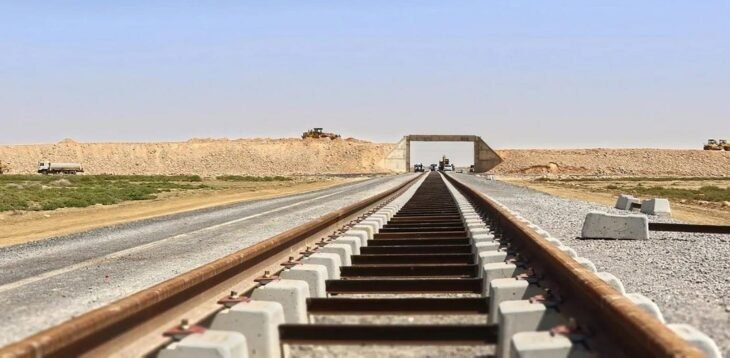
Anatomy of a flood: The Derna tragedy’s lessons for Libyan governance (1)

Stephanie T. Williams

Some 17 months ago, in the early hours of September 11, 2023, thousands of residents of the quaint port city of Derna, nestled at the foot of the Jabal al-Akhdar (the Green Mountains) on Libya’s eastern coast, were washed out to sea by catastrophic flooding caused by Storm Daniel and the collapse of two dams that had been built in the 1970s during Moammar Gadhafi’s regime.

So great was the devastation and the loss of life that to date, thousands of bodies remain unrecovered and the death toll could well be close to 20,000; another 40,000 people were displaced (out of an overall city population of 90,000).

I can find no better words to describe the tragedy than those spoken by my former boss, United Nations Secretary-General António Guterres, when he mourned the loss of so many innocents: “They were victims many times over. Victims of years of conflict. Victims of climate chaos. Victims of leaders – near and far – who failed to find a way to peace. The people of Derna lived and died in the epicenter of that indifference – as the skies unleashed 100 times the monthly rainfall in 24 hours – as dams broke after years of war and neglect … as everything they knew was wiped off the map.”

This essay intends to use the Derna tragedy and its lessons to cast light on Libya’s long-running governance crisis and to propose a way forward. It is reasonable to ask whether Storm Daniel’s unusual magnitude would have caused death and destruction regardless of the state of Derna’s dams—that this was an act of nature, a freak storm of the kind we have increasingly witnessed as global warming wreaks havoc on the planet. Yet, this is at best a partial explanation, and it therefore cannot obscure the fact that there were other factors at play, explanations that are rooted in Libya’s history and its present.

I have identified five factors that led to the dreadful outcome in Derna: the legacy of statelessness left by Gadhafi; the historic marginalization of populations on Libya’s periphery; post-2011 conflicts and the irresponsibility of the current ruling class; the overall lack of political accountability; and the international community’s indifference.

From the onset, I wish to note that in my capacity as a U.N. mediator, I endeavored to avoid the inevitable reductionist narratives surrounding the Libyan conflict, such as the facile proposition that the 2011 revolution led to the division of the country into two parts. Rather than a split, what occurred in 2011 was a full-scale and deep societal implosion, resulting in the atomization in which Libya has languished.

Therefore, as a mediator, I believed that my primary task was to try to somehow reassemble all those fragments into a coherent whole. Indeed, some kind of societal cohesion is a vital ingredient for state-building. No less important is a common national identity. Both are absent in today’s Libya. Following Gadhafi’s demise, the grinding conflict in Libya has produced a bitter and unresolved contest over which Libyan figure has the capacity to assume the dictator’s two most salient qualities: his monopoly over the use of violence and his role as the (capricious) allocator-in-chief of the country’s vast riches.

Gadhafi’s legacy: An enduring

statelessness

In assessing the Libyan governance conundrum through the lens of the devastating Derna flood, the first factor to consider is the glaring absence of a strong, representative, and capable state, the achievement of which has eluded Libyans for many years. Indeed, a state (re)building project presumes the existence of a strong state prior to the upheaval in 2011.

In fact, as scholars such as Dirk Vandewalle in his book “A History of Modern Libya” have noted, what characterized both the Sanussi monarchy (1951-1969) and the Gadhafi (1969-2011) eras was something much closer to statelessness than a state in the modern sense of the word.

Following the nascent and unfinished institution-building efforts of the short-lived monarchy, Gadhafi—who disingenuously labeled himself as the “Brotherly Leader” or “Guide of the Revolution”—engaged in a 42-year experiment dedicated to the centralization of power and state deconstruction, epitomized by his frequent upendings of the status quo and declarations of one “revolution” after another, not to mention his swings from pan-Arabism to pan-Islamism and finally, pan-Africanism.

The net effect of these eccentric and theatrical perturbations was to keep Libyans off-balance, distrustful of each other, and perpetually in a state of flux and insecurity. To the extent that there were institutions during the tumultuous Gadhafi period, they were penetrated by a coterie of regime loyalists, fellow tribesmen, and their allies. Gadhafi also built a powerful internal security and intelligence system, ruthlessly punishing those who questioned his rule.

All of this turmoil had a direct impact on the building and maintenance of critical infrastructure, such as the dams in Derna, which were originally built in the 1970s but whose structural weaknesses were identified in the early 2000s. The regime waited for five years to address the maintenance issues and then got caught up in the maelstrom of the 2011 revolution.

In the euphoria that accompanied Gadhafi’s ouster in 2011, his Libyan successors and their foreign backers failed to adequately tackle the ‘day after’ challenge.

In the euphoria that accompanied the dictator’s ouster in 2011, his Libyan successors and their foreign backers failed to adequately tackle the “day after” challenge, which is not an easy task given authoritarian regimes’ tendency to capture institutions. The regime’s collapse rendered what was left of those institutions entirely brittle and vulnerable to predation by armed actors. This lack of institutional “puissance” (or power) continues to plague Libya today.

At the same time, the vengeful 2013 Political Isolation Law did not help in ensuring some continuity as it cast even minor “regime” officials (including those who had publicly and bravely joined the opposition) into purgatory and alienated many others who could have helped with the state-building task.

The absence of meaningful disarmament, demobilization, and reintegration and security sector reform efforts further contributed to the chaos that ensued, causing the ranks of the “revolutionaries” to swell from 30,000 to 300,000 personnel by the time I arrived in Libya in 2018.

In the years following Gadhafi’s downfall, the logic of perpetual conflict and the resort to arms soon overtook the pursuit of state and institution building. The state-building task, such as it existed, was assigned internationally to a United Nations political mission that often lacked the resources and personnel to tackle Libya’s unique set of issues.

Furthermore, for four and a half years, between mid-2014 and early 2019, due to ongoing conflict and instability in Libya, the U.N.’s international personnel were based in Tunisia. Places like Derna were entirely beyond our reach in this period, not to mention Libya’s south, which had fallen into the hands of extremist groups and thugs engaged in every type of illicit trade imaginable.

During my nearly four years working on Libya, from early 2018 through mid-2022, I would struggle to identify Libyan officials who were interested in any state-building exercise that would impede their ability to plunder and engage in patronage politics. The prime minister’s office was staffed by 900 people but only a few of these officials made any decisions.

On the other side of the country, former CIA asset Khalifa Haftar had launched his own project, building a military machine to seize control of the capital and render the “state” a mere appendage to his decidedly authoritarian project.

As for the rest of the international community, it did not appear to be prepared to invest much in what would be a painstaking, tedious, and long-term institution-building process. Instead, it seemed to have been converted to the paradigm of “stabilization” and the containment of issues such as terrorism and migration rather than the harder task of state-building.

______________________

Libya, where US and Russia joust, could test Trump-Putin vibes

Tom Kington

Donald Trump turned geopolitics on its head this month with his determination to do business with Vladimir Putin while pouring scorn on America’s allies.

But there is one country in the world where tense competition between the United States and Russia continues apace, keeping the Cold War vibe alive with no nod to rapprochement.

Libya has just had a training visit from a USAF B-52 bomber as U.S. generals try to tempt local leaders to eject the ever increasing number of Russian troops stationed in desert bases in the country.

The U.S. visit last month was aimed at winning over Gen. Khalifa Haftar, the military commander who runs the eastern half of the North African country and is allowing Russia to use it as a bridgehead to back regimes further south which are hostile to Washington.

The February visit came after Haftar and his sons, Saddam and Khaled, paid a call to Russia’s close ally Belarus, a sign of ever closer ties with Moscow.

Jalel Harchaoui, an analyst at the RUSI think tank in London, said U.S. attempts to win over Haftar were being led by the Pentagon.

“The Biden administration had no real policy to peel him away from the Russians, and the Trump administration has had no time for Libya, so the Pentagon is conducting its own diplomacy here,” he said.

Visitors from U.S. Africa Command who held ground targeting exercises as two B-52H Stratofortress bombers flew overhead invited military personnel from Haftar’s forces as well as from Eastern Libya, which is run by a separate government in Tripoli.

The two sides of the country split in 2014, three years after the ousting of Ghadaffi.

“Haftar tells the U.S. he would work with them but says Russia gives him air defenses and military training. The U.S. tells him it would give him more if only he would distance himself from Russia,” said Harchaoui.

After the U.S. visit, Russia’s deputy defense minister, Yunus-Bek Yevkurov, was back in eastern Libya for another of his frequent visits.

“Meanwhile at Libya’s Brak al-Shati airbase, the number of Russians stationed there has risen from 300 to approximately 450 since November,” said Harchaoui.

Ben Fishman, a senior fellow at the Washington Institute for Near East Policy, said he was “very skeptical” about Haftar turning away from Russia.

“Those B-52s won’t change his mind, nor will attempts by the U.S. to unite the two militaries, since Haftar’s forces are a real mechanism while in the west local militias are more influential than the army,” he said.

Mohamed Eljarh at consultancy firm Libya Outlook was more optimistic, claiming Haftar’s son Saddam – who commands eastern Libya’s land forces – is seeking ties with the United States.

“There is a belief the Russians were playing a double game in Libya with both Haftar and Ghadaffi’s son, Saif Al-Islam. Saddam is leading efforts to be closer to the U.S. and visited the U.S. last year,” he said, adding, “The Russians are understandably concerned and want him to visit Moscow but that seems off the table for now.”

If Saddam engages with the U.S., it remains to be seen whether the Trump administration will reciprocate, said Umberto Profazio, an analyst at the IISS think tank.

“There is no sign of the Trump administration yet, and given its unorthodox view of Russia and wish to disengage with overseas theaters, we may see the U.S. providing leeway for the Russian presence in Libya,” he said.

***

Tom Kington is the Italy correspondent for Defense News.

____________________
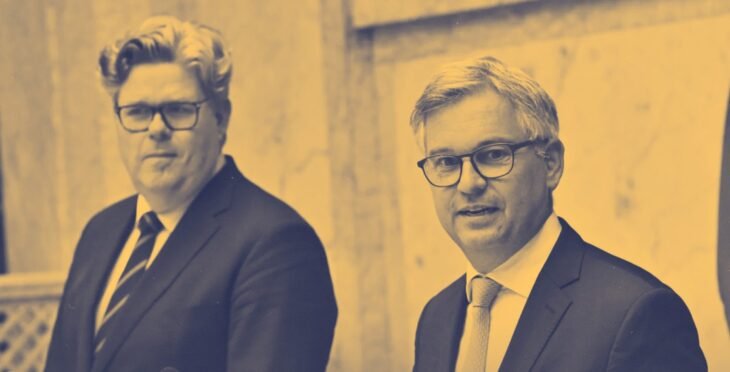
US Africa Command and efforts to unify the ‘Libyan Army’

Senussi Bsaikri

US Africa Command (USAFRICOM) has deepened its interest in Libya following the developments in the country after the military attack launched by the House of Representatives-affiliated leadership on the capital, Tripoli, in 2019. One of the most dangerous consequences of this attack was the direct military presence of foreign forces, particularly the Russians and Turks.

Turkish forces are not a concern for the US, but Russian presence on Libyan soil has deepened the concerns of the Americans and their European allies, as evidenced by the statements issued by their officials and their movements on the ground. The repeated visits by senior USAFRICOM officers to Libya have been linked to these concerns.

US Africa Command (USAFRICOM) has deepened its interest in Libya following the developments in the country after the military attack launched by the House of Representatives-affiliated leadership on the capital, Tripoli, in 2019. One of the most dangerous consequences of this attack was the direct military presence of foreign forces, particularly the Russians and Turks.

Turkish forces are not a concern for the US, but Russian presence on Libyan soil has deepened the concerns of the Americans and their European allies, as evidenced by the statements issued by their officials and their movements on the ground. The repeated visits by senior USAFRICOM officers to Libya have been linked to these concerns.

USAFRICOM has played a prominent role in containing military and security tensions between the parties to the Libyan conflict.

The calm on the front lines and in the areas of contact cannot be separated or disconnected from US interventions, the ceasefire agreement and negotiations through the 5+5 Joint Military Committee (JMC), as well as another official but unannounced path.

Germany-based USAFRICOM supported the main points of agreement reached by the 5+5 JMC: a ceasefire and stabilisation, the withdrawal of mercenaries and foreign forces, and the unification of the army. These points were supposed to be implemented sequentially, meaning that the withdrawal of mercenaries would follow the ceasefire, followed by the unification of the army. However, matters did not progress well regarding the withdrawal of mercenaries and foreign forces. While a number of foreign fighters from Chad and Sudan were withdrawn, this did not apply to the Russian and Turkish forces, for well-known reasons related to geopolitical developments across a larger area of North, Central and Southern Africa, and the subsequent military and security repercussions.

It appears that the Americans resorted to the plan of unifying the “army” as a key factor contributing to the withdrawal of foreign forces, especially since the reliance on political consensus and the settlement of disputes between Libyan factions regarding the constitution and elections is facing major challenges.

This is perhaps confirmed or hinted at by a report issued by African Defence Forum magazine, affiliated with USAFRICOM, which indicated the interest of American officials and their emphasis on the need to unify the divided military institutions in order to impose security stability and confront the risks posed by the presence of foreign mercenaries and illegal trafficking networks. The report did not reveal any progress on this path, other than praising the cooperation of the parties to the Libyan conflict and their agreement on mechanisms for US cooperation with the Libyan parties to overcome the obstacles preventing the unification of forces in the west and east.

What has hindered the rapid implementation of the military and security points agreed upon by the 5+5 JMC is the link between the interests and influence of the Libyan conflicting parties and the external support (Russia and Turkiye), and the insistence on all forces being subordinate to the General Command headed by Khalifa Haftar, whose position and powers are beyond dispute with regard to the eastern front.

It appears to be counting on making progress in unifying the General Staff Command. It may achieve positive results on this front, but efforts to meet the requirements for army unification require political stability and the resolution of outstanding issues causing the current state of institutional division.

America’s ongoing efforts to restructure the military institution to address security challenges within Libya and the region, and to protect Libyan sovereignty from any external interference, as stated in the report, require a restructuring of the military and security structure. This will clash with the interests and impact of influential forces in the west and east. The influential forces in the west, especially the capital, Tripoli, whose powers and authority are greater than that of the armed forces, will not accept a unified army that follows the model implemented in the east, where the army controls military, security and even political affairs.

The hammer of expelling the Russians and the anvil of the complex military, security and political situation could prompt USAFRICOM’s plan to produce a deformed embryo and an entity lacking in effectiveness and influence. This is in addition to the ambiguity surrounding the White House’s approaches and options under President Donald Trump, and its handling of Russian ambitions, which may go in a direction different to that planned by US Africa Command.

________________

Russia’s Shift from Syria to Libya: Geopolitical Implications and a New Phase of Regional Competition (2)

Kaan Devecioglu

Concerns of Italy and Europe

Over Russia’s Presence in Libya

Russia’s withdrawal from Syria and focus on Libya stands out as a development that threatens Italy’s geopolitical interests in particular. Libya is a priority country for Italy in terms of energy security, migration management and regional stability.

Russia’s increasing influence in Libya by settling in strategic bases such as Tobruk and Maaten al-Sarra could weaken Italy’s control over energy infrastructures and deepen instability in Libya, while also increasing migration flows to Europe. Indeed, Italian Prime Minister Giorgia Meloni has evaluated these moves by Russia as a threat and called on the European Union and NATO to be more active in this regard.

Russia’s activities in Libya directly affect not only Italy but also the energy security and migration policies of the European Union. While European countries are trying to turn to alternative energy suppliers to reduce their energy dependence on Russia after the Ukraine War, Russia’s access to energy infrastructure in Libya jeopardizes these efforts.

Although the European Union has made diplomatic and economic efforts to ensure stability in Libya, full coordination has not been achieved among member states on this issue. While France is focusing more on Libya with its decreasing influence in the Sahel region, Germany is adopting a more cautious policy and prioritizing economic aid. However, Russia’s increasing influence requires Europe to develop a more comprehensive strategy.

Italy is one of the European countries that has been following the developments in Libya most closely, and its geographical proximity to the country increases Italy’s sensitivity over Libya. The presence of major Italian energy companies such as ENI in Libya is an important factor shaping the efforts of the Roman government to maintain stability in the region. However, Russia’s increasing influence in Libya through its military and paramilitary forces threatens Italy’s interests in the region.

Italy is making great efforts to establish a more effective Libya policy within the European Union and to strengthen security on NATO’s southern flank. However, the success of these efforts depends on Europe’s capacity to develop a common strategy. If an effective response is not given to Russia’s presence in Libya, not only Italy but all of Europe will feel the negative consequences of this geopolitical competition.

As a result, Russia’s withdrawal from Syria and its focus on Libya is creating a new balance of power in both the Mediterranean and Sahel regions. Moscow’s focus on strategic bases such as Tobruk and Maaten al-Sarra are remarkable steps taken to consolidate its military presence in the Mediterranean and to create new spheres of influence deep in Africa.

This situation poses serious risks, especially for Italy and other European countries, in terms of energy security, migration management and regional stability. The European Union and NATO’s failure to develop a common strategy against these developments in Libya could pave the way for Russia to further increase its influence.

In this context, it is critical for Italy to take on a leadership role and strengthen Europe’s efforts to protect its interests in Libya. However, the success of these efforts depends on the capacity of European countries to act together and to develop a comprehensive political vision that supports peace and stability in Libya. Otherwise, the current power struggle in Libya could create greater problems for Europe’s security and economic interests.

__________________

Libya Is the Forgotten Wasteland of the International Order

Tarek Megerisi

In January, the Italian government helped a notorious Libyan torturer escape an arrest warrant from the International Criminal Court. Osama Njeem, a senior militia leader who commands Libya’s judicial police, was detained in Turin, in northern Italy, under an ICC warrant for suspected crimes against humanity and war crimes committed against detainees at Mitiga prison, which he oversaw in Libya’s capitol, Tripoli. But soon after his arrest, Njeem was unexpectedly freed by Italian authorities on what they claimed was “a legal technicality” and flown on an official Italian state aircraft back to Libya, where he received a hero’s welcome from his fellow militiamen.

The ICC made clear that Italian Prime Minister Giorgia Meloni’s far-right government had not consulted the court before defying the warrant for Njeem’s arrest. Helping Njeem escape the docket in The Hague was an act of sabotage against the international order, universal justice and multilateralism itself—from a founding member of the ICC, no less. Under the Rome Statute that established the ICC, Italy is required to hand over wanted individuals to the court for trial in The Hague.

In the chaotic aftermath of outraged recriminations, Italian ministers claimed their hands were tied by improperly filed paperwork, before being trumped by their own prime minister in a fiery sermon on social media. Facing investigation from Italian prosecutors for her actions, Meloni claimed she had no regrets about doing what was necessary to protect her country from this supposed lone threat (in fact, an unarmed, overweight, already detained individual). “I can’t be blackmailed, I can’t be intimidated,” she declared, casting the investigation against her as desperation by political rivals who don’t want to see “Italy change, to become better.”

Meloni then doubled down on the subterfuge, dispatching Italy’s spy chief, Giovanni Caravelli, to Tripoli to brief Libya’s deeply unpopular, increasingly repressive government on who else was under sealed indictment from the ICC. According to Italian media, Caravelli assured Libyan leaders that none of the motley crew of 86 accused war criminals in Libya reportedly on the ICC’s list would be arrested on Italian soil, in order to avoid any embarrassing replays of the Njeem affair.

Meloni’s calculation is as simple as it is cynical. Since she came to power on an anti-immigrant platform, promising to close Italy’s borders to migrants and asylum-seekers, she depends on these torturers, criminals and militias in Libya to “manage” migration flows to Italy, which have already gone up 33 percent from this time last year. Meloni’s commitment is not to international law and the ICC, but instead to a shadowy agreement with Libya to prevent migrants from crossing the Mediterranean. Had she allowed international justice to take its course, with Njeem and other torturers under arrest in The Hague, Meloni probably feared that the migrant agreement with Libya would collapse. In a callous act of revenge, Libyan officials may even have emptied their infamous migrant dungeons, sponsored by the European Union, in Italy’s direction.

This entire episode exposes who European countries are partnering with to “curb” or “manage” migration from North Africa, undermining any stated commitment to human rights. But it is also perhaps the most glaring example yet of how international actors are sabotaging the prospects for change in Libya and the chance that Libyans might finally realize the hopes of their revolution in 2011. It is a tale of the myopia and short-term imperatives of outside powers that don’t have any strategic plan or policy in Libya, instead only what now amounts to extortion rackets. They are consumed by trying to contain what once may have been considered the revolution’s fallout, but is increasingly the fallout of their own failed policies since the end of Moammar Gadhafi’s regime. The result is that each year, the state that Libyans dreamed of gets farther away, and the Pandora’s box that Libya has become gets harder to keep shut. 

This time it was Italy, but they’re far from the only ones trading their values and their interests for ever-smaller and ever-shorter gains. Libya is where international law has risen and fallen, like a phoenix in reverse. In 2011, Libya’s revolution—and Gadhafi’s violent response, calling on his soldiers to “cleanse” Libya “house by house”—sparked fears of impending massacres that led to the one-and-only armed intervention on the grounds of the international humanitarian principle of “responsibility-to-protect,” or R2P. When the United Nations Security Council authorized NATO to impose a no-fly zone over Libya to protect civilians from Gadhafi’s forces, it was seen by advocates of R2P as the crowning achievement of international law.

But Libya today is a wasteland of international law, the state effectively split into two rival territories. Whether in western Libya under its internationally recognized but failed and kleptocratic government, or in eastern Libya under the breakaway authoritarian regime of Gadhafi-era general Khalifa Haftar, there is no international law in action, only misguided games of realpolitik.

Just a week after the Njeem debacle, a U.S. diplomatic and military delegation posed smiling with Saddam Haftar, the filial heir apparent of eastern Libya’s dictator. It was a curiously timed display of legitimizing support, given that it coincided with the publication of a report by a U.N. panel of experts highlighting Saddam Haftar’s role as cocaine baron, smuggler-in-chief and prolific violator of the U.N. arms embargo on Libya. The U.S. goal in its dealings with Haftar is even more ethereal and quixotic than Meloni’s. Washington’s vain hope is drawing the Haftar family away from its ever-deepening relationship with Russia, their key financial and military patron, through shallow meet-and-greets and other empty gestures like participation in training exercises.

A few months earlier, Saddam Haftar had also been briefly detained in Italy, as part of a Spanish investigation into his attempts to illegally import military drones to Libya. The younger Haftar was predictably outraged. He is used to sharing in his father’s absolute impunity, which even involves visiting British and European ambassadors watching his forces parade their collection of weaponry obtained in violation of the U.N. arms embargo. Saddam Haftar’s response was to shut down Libya’s largest oil field, co-operated by a conglomerate of European oil companies, of which Spain’s Repsol is the most prominent.

Libya’s recent history has been an utterly predictable demonstration of cause and effect. Europe and the U.S. have not been the drivers of Libya’s decline, but they have been its sentinels, watching over, protecting and easing every deleterious step, believing it was in their interests to do so. But whether that interest lays in migration, geopolitics, energy or even some general but nebulous “stability,” those pillars have all degraded along with the position, power and influence of these Western sentinels.

Nothing symbolizes this decline better than Italy’s Meloni breaking the law to protect Libyan warlords and their people-smuggling gangs. This, almost ten years on from Italy’s first foray to co-opt Libya’s human-trafficking militias into becoming Europe’s counter-smuggling “partners.”

The same pattern applies to all these other Western interests in Libya. Desperation to stop Libya’s civil war spinning completely out of control in 2020 pushed Western states to collectively bless a deeply flawed cease-fire plan originating from Moscow. The same desperation led to hushing Libyan demands for accountability for Haftar’s numerous war crimes and for assurances that Libya’s key military bases and oil installations would be demilitarized under government control. Today, Libya is the linchpin of Russia’s Africa operations and, according to the U.N., “armed groups in Libya have achieved an unprecedented level of influence over state institutions,” including vital oil infrastructure.

Libyan oil, as Libyans had warned, was shut off in 2022 in another collaboration between Haftar and Vladimir Putin that had two aims: to politically strengthen Haftar and help Moscow torch international energy markets after invading Ukraine. President Joe Biden’s desperation to lower global oil prices enabled a shady deal brokered by the United Arab Emirates—Haftar’s other key patron—to restart Libyan oil production in exchange for effectively handing Libya’s oil governance over to armed groups. As a result, Libya’s vast oil wealth has been diverted to Haftar’s so-called Libyan National Army and mercenaries from Russia’s Wagner Group, helping Russia escape Western sanctions over Ukraine and fueling other African conflicts like the civil war in Sudan. Meanwhile, the Libyan state tumbles into ever deeper financial crisis.

As egregious as Meloni’s recent depredations are, they are merely symptomatic of a long trend of Western policymakers letting desperation lead when strategy should, trading their policy pillars for the equivalent of magic beans. The continuous result is watching the Western world, supposedly committed to the international rules-based order, dismantle the international laws, frameworks and mechanisms that not only uphold that order around the world, but protect their interests in Libya and represent their vehicle to finally stabilizing the country post-2011. With every piece of leverage the U.S. or Europe give up, with every tool of influence they destroy, they become more dependent on the arsonists who promised they would stop lighting fires once they were sure they wouldn’t be threatened with water.

Libyans, Libya’s neighbors and Europe have always been in this together, as they all suffer at the same hands. The only way out of this inferno is to shepherd Libya toward elections that replace the current crew of arsonists in power. That requires using what outside leverage remains to strengthen accountability that can restrain these arsonists and establish transparency over Libya’s oil industry and revenue, to help cut off their fuel. The fate of Libya, and of the international order itself, depends on it.

***

Tarek Megerisi – Tarek Megerisi is a senior policy fellow with the North Africa and Middle East program at the European Council on Foreign Relations.

_______________

Russian spymaster’s plot to use private army to control migration into Europe

Hayley Dixon

Jan Marsalek planned to create 15,000-strong band of mercenaries to control border in key migration route through Libya. A Russian spymaster plotted to use private armies to control migration into Europe, The Telegraph can reveal.

Jan Marsalek, the fugitive boss of the disgraced tech company Wirecard, planned to create a 15,000-strong band of mercenaries to control the border in the key migration route through Libya. Weaponising the flow of migrants is said to be a key aim of Vladimir Putin, with the issue being a major factor in elections across Europe.

Marsalek, who is on the run, even bought a private military company and succeeded in getting the first Russian boots on the ground in Libya. The revelations come at a key time in the war in Ukraine, with Donald Trump putting pressure on Volodymyr Zelensky, the Ukrainian president to get round the table with Putin for peace talks. European leaders have previously warned that the West could see a tidal wave of migrants if Ukraine falls to Russia.

The details of Marsalek’s plans can be revealed for the first time after a ring of UK-based spies he was running were found guilty at the Old Bailey on Friday. Leader Orlin Roussev, 47, and his team of Bulgarian operatives face jail after being caught plotting kidnapping and surveillance campaigns in one of the Metropolitan Police’s biggest-ever spying operations.

Marsalek has been on the run since 2020, when German payments firm Wirecard collapsed with a €1.9 billion hole in its books. He was able to flee from Austria on a private jet and has been on Interpol’s most wanted list for his alleged part in the fraud ever since. It is understood he is currently being investigated for espionage by several European countries, and the Metropolitan Police has not ruled out future charges against the spymaster.

It can now be reported that Marsalek was working for the Kremlin whilst running Wirecard, Germany’s answer to PayPal, and planning to control flows of migration from Africa with the help of one of Britain’s allies. The Telegraph has seen evidence that, in 2017, Austrian government officials had promised investment of more than €120,000 to help with the plan, which Marsalek told the EU would help “solve the migration crisis”. Yet the security for the plan was being overseen by a suspected colonel in Russia’s military intelligence service, known as the GRU.

Warnings to officials in Germany and Austria about his involvement and his links to Russia were ignored, sources have told The Telegraph. At the same time as he was trying to set up militia to influence migration, Marsalek also bought a Russian private army, the RSB Group, which has supported Gen Khalifa Haftar, the Libyan warlord.

Since he fled in 2020 the RSB Group, which has been widely sanctioned, is also understood to have been involved in security agreements in Sudan alongside the Wagner Group. Sudan is described by the EU as “at the heart of migratory routes connecting East and West Africa to the Mediterranean Sea and Europe”. Mercenaries including Wagner have been fuelling migration by increasing instability and violence in parts of Africa under their control and by physically moving migrants to the borders and supporting smugglers, experts have said.

According to security sources, Marsalek has been involved in the reorganisation of Wagner’s interest in the region following the death of Yevgeny Prigozhin, the notorious mercenary leader, after his failed attempt at an insurrection in Russia. Marsalek’s interests in private armies go back to his time at Wirecard. In 2017 and early 2018, he held meetings with Killian Kleinschmidt, a humanitarian and former UN worker, to discuss plans for a project in Libya. The meetings were also attended by Gustav Gustenau, then a senior brigadier in Austria’s ministry of defence.

The Telegraph has seen a declaration of intent signed by the brigadier promising €20,000 towards the plan for “stabilisation and migration management in Libya”. Mr Kleinschmidt was also promised a further €100,000 for the private-public partnership project through the Federal Ministry of Transport, Innovation and Technology. It is understood that payments were not made.

Mr Gustenau has denied any wrongdoing or a close relationship with Marsalek, saying he was authorised by his bosses to explore the project and was unaware at the time of Marsalek’s connection to Russia. The ministry has said no money changed hands. The payments for the project were due to be made by Marsalek via the “the Russian-Libyan cultural institute, which had an address in Moscow”. No record of such a company exists.

___________________

Russia’s Shift from Syria to Libya: Geopolitical Implications and a New Phase of Regional Competition (1)

Kaan Devecioglu

Russia’s reduction of its military presence in Syria and its focus on Libya points to a new power struggle in both the Middle East and North Africa. Tahrir al-Sham’s (HTS) advance in Syria and the fall of the Assad regime have caused Moscow to reassess its positions in Syria. Russia’s termination of its military presence in Tartus and its transfer of its naval elements to Libya can be interpreted as part of Moscow’s efforts to protect and expand its strategic interests in the Mediterranean and Sahel regions.

Russia’s Decision to Withdraw

from Syria and Its Geopolitical Agenda

The changes in the course of the civil war in Syria have been influential in Russia’s decision to reduce its military presence in the country. HTS’s successful operations have become a threat to Russia’s naval assets at its Tartus base. In addition, the Bashar Assad regime’s failure to re-establish control after the civil war has increased concerns that Russia will not be able to recoup its investments there. In this context, it is understood that Moscow has decided to move its military and logistical assets to a more secure and strategic location, considering the increasing costs of maintaining its presence in Syria.

Another important motivation for Russia in this process is to maintain its influence in the Mediterranean, which is critical for international maritime transportation and energy security. While the Tartus Base is an important center supporting Moscow’s logistics and military operations in the region, the fact that this base is at risk has led Russia to seek alternatives.

However, the recent statement by the Ahmed Sharaa administration stating that they do not want Russia to withdraw from Syria in a way that would negatively affect bilateral relations, and the Russian delegation’s visit to Damascus, as well as the Port Sudan administration’s visit to Moscow within the scope of the planned Russian naval base on the Red Sea coast of Sudan, reveal the Putin administration’s security-centered geopolitical agenda, which extends from the Eastern Mediterranean to the Red Sea and from there to the Indo-Pacific region.

Another important motivation for Russia in this process is to maintain its influence in the Mediterranean, which is critical for international maritime transportation and energy security. While the Tartus Base is an important center supporting Moscow’s logistics and military operations in the region, the fact that this base is at risk has led Russia to seek alternatives.

However, the recent statement by the Ahmed Sharaa administration stating that they do not want Russia to withdraw from Syria in a way that would negatively affect bilateral relations, and the Russian delegation’s visit to Damascus, as well as the Port Sudan administration’s visit to Moscow within the scope of the planned Russian naval base on the Red Sea coast of Sudan, reveal the Putin administration’s security-centered geopolitical agenda, which extends from the Eastern Mediterranean to the Red Sea and from there to the Indo-Pacific region.

Libya: The New Geopolitical Center

Russia’s move to Libya is an extension of Moscow’s strategic interests in the Mediterranean. Tobruk in eastern Libya (al-Qadim and al-Jufra – both former outposts of the Wagner Group) and Maaten al-Sarra Base in the south offer Russia an opportunity to make up for the strategic advantages it has lost in Syria. As a coastal region on the Mediterranean, Tobruk could allow Russia to control energy and shipping routes. Maaten al-Sarra, on the other hand, is strategically located on the border of Libya, Sudan and Chad and could serve as a logistics center for operations in the Sahel region. In fact, satellite images reflected in open sources also prove this development.

Russia’s deployment of paramilitary elements such as the Wagner Group (now known as the African Corps ) to Libya and the Sahel highlights Moscow’s efforts to consolidate its military presence there. The Wagner Group, in cooperation with Khalifa Haftar’s Libyan National Army (LNA), undertakes the task of protecting and expanding Russia’s interests, particularly in the Cyrenaica region. These steps reveal that Russia sees Libya as a base not only for military purposes but also for energy and geopolitical competition.

Russia’s efforts to reduce its presence in the Tartus Naval Base in Syria and establish a naval base in Tobruk, eastern Libya, are aimed at protecting and strengthening Moscow’s long-term strategic interests in the Mediterranean. Tartus was an important logistics and operational hub for Russia. However, the fall of the Bashar Assad regime in Syria, which Moscow supports, has jeopardized the security of Tartus.

Therefore, establishing a base in a more secure location such as Tobruk would strengthen the door for Russia to establish a stronger presence in a region close to NATO’s southern flank. The geopolitical importance of the Mediterranean is evident as it is the intersection of energy corridors and international trade routes. The planned naval base to be built in Tobruk would provide the Russian navy with operational flexibility in the Mediterranean while also allowing Moscow to increase its strategic pressure on NATO and Europe. This move could also be considered a step towards increasing Russia’s visibility as a global naval power.

Libya is also in a strategic position in the energy competition, as it has one of the largest oil reserves in Africa and plays a critical role in European energy security. By controlling energy resources in Libya, Russia aims to both expand its economic interests and create strategic pressure on European countries. While the European Union obtains a significant portion of its energy needs from Russia, it has developed policies aimed at reducing its dependence on Russia following the Ukraine War.

In this context, efforts to turn to alternative energy suppliers such as Libya have come to the fore. However, by controlling the energy infrastructure in Libya, Russia may have the opportunity to undermine Europe’s strategic diversification goals. Russia’s increasing interest in energy fields in the Cyrenaica region, which is controlled by Khalifa Haftar, is part of this strategy. Moscow’s use of paramilitary forces such as the Wagner Group to ensure the security of energy infrastructures supports Europe’s aim of taking control of the energy supply chain while strengthening its presence in Libya.

On the other hand, Russia’s goal of expanding its military presence in Libya to the Sahel region is part of a long-term strategy aimed at increasing Moscow’s influence on the African continent. The Maaten al-Sarra Air Base in southern Libya plays a key role in this context.

The base is strategically located on the border of Libya, Chad and Sudan and is considered an ideal center for providing logistical support to the Sahel region. Considering the Wagner Group’s activities in countries such as Mali, Burkina Faso and Sudan, it is clear that this base could make significant contributions to Russia’s military operations in the region.

Indeed, the power vacuum created by France’s reduction of its military presence in the Sahel creates new opportunities for Russia. The relations developed with the junta regimes in the region and the security support provided are important indicators of Moscow’s increasing influence in the Sahel.

In addition to supporting Russia’s operations in the Sahel, the Maaten al-Sarra base could provide direct military and logistical supplies to regional countries such as Mali, Burkina Faso and Sudan. The deployment of Syrian soldiers and Russian technicians to rebuild the base shows how much importance Moscow attaches to the project. The base is becoming a critical hub for expanding Russia’s presence in Africa and filling the gap left by France’s decline.

______________________
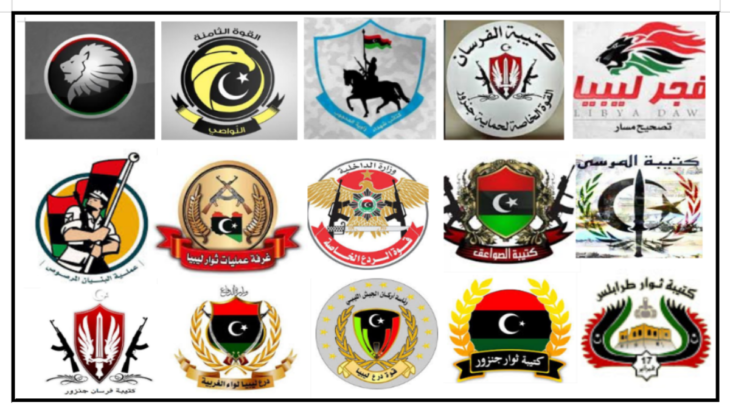
Equal participation in decision making in times of transition – a matter of good sense.

Sophie Kemkhadze

Over a decade after Libyan women led protests that set Libya on a path to peace in 2011, they were told their role was over—’We appreciate your contribution thus far, but perhaps it is time to step aside and go back to the safety of your homes.’ Today, newly elected women in municipal councils still face pressure to step aside, as if leadership is not theirs to hold.

Persistent imbalances

On 20 February 2025, Libya’s High National Election Commission concluded candidate nomination, with women accounting for 27 per cent of the candidates nominated to run for seats in 62 municipal councils across the country, later this year. With the adoption of Regulation 43/2023, there are now as many as three seats reserved for women in every council. Despite progress, women remain outnumbered and lack the support structures of their male counterparts.

A Global phenomenon

Exclusion of women from politics is not unique to Libya. In 2024, more than 3 billion people were poised to cast ballots in countries across the globe, marking “the biggest election year in human history.” Installing leaders in 72 countries, voters had an unprecedented opportunity to affect global change – to challenge imbalances, disparities, inequalities, and exclusions. Yet, turnout declined, protests grew, and there was no significant progress in ensuring equal participation for women in decision-making.

Uncertainty and resistance to change

Academics have observed that in “precarious transitions from war to peace,” women are prone to falling down on the list of priorities.

More generally, there is substantive evidence that people are both politically and psychologically resistant to change during times of uncertainty.

International commitment

In times of uncertainty, it is crucial to reaffirm a simple truth—equal participation in decision-making is not an act of charity; it is a necessity. 

International conventions from the Universal Declaration of Human Rights to the International Covenant on Civil and Political Rights and the Convention on the Elimination of All Forms of Discrimination against Women recognize human equality and acknowledging the rights of women to participate in elections and political life. Meanwhile, UN Security Council Resolution 1325 (2000) emphasizes the critical role of women in post-conflict decision making – specifically calling for their presence in establishing national Constitutions, electoral systems and institutions.

UNDP, together with international partners, has worked alongside local authorities and civil society to advance women’s representation in decision-making spaces—ensuring that their voices shape Libya’s future, rather than being sidelined.

And for those who remain unconvinced, I would further argue that Involving women in governance is just smart policy – and will accelerate the achievement of the most pressing issues we face today. Let’s consider some of the supporting evidence.

Peaceful transitions and long-term stability: 

Movements that include women are less prone to violence, they also gain greater legitimacy. Working across political divisions and with their male peers, women work in a less hierarchical way and are effective negotiators. In fact, peace agreements and post-conflict reconstruction are more likely to endure over the long-term when women have been involved.

Reduced corruption: 

Decades of research reveal a strong correlation between higher levels of women’s political participation and lower levels of corruption – from petty corruption during implementation to grand corruption, occurring at the highest level of political decision-making.

Economic growth: 

Studies have shown that diversity improves cooperation, innovation and performance. It also enhances creativity, expands access to information networks and strengthens collective resilience. Countries with more women in governance reduce legal discrimination and inequalities more effectively. Because this results in higher workforce participation and access to professional opportunities, the impact can be seen in national gross domestic product (GDP). According to the World Economic Forum, enabling women to participate fully in the labour force could increase global GDP by roughly 20 per cent.

Delivering on human rights: 

When women participate in politics, governments are more responsive to citizen needs. Women in political leadership prioritize issues that improve quality of life, such as health and education. And women lawmakers are not only more attentive to issues relating to women’s biological and societal needs; they are also more likely to serve the interests of under-represented and minority groups, respond to community level concerns and address the needs expressed by their own constituents.

Not going home

In December 2024, Zayra Al Maqtouf made history as the first woman Mayor in Libya — currently the only woman among 58 Mayors. Her presence may be considered an anomaly by some, but a significant one all would agree as she was elected by her fellow council members. For Mayor Maqtouf, there is no “going back to the comfort of home” – she is committed to serve to the fullest of her abilities.

Libya’s progress depends not on sidelining voices but on embracing them. The future will not be built by half of society alone—it requires the leadership, dedication, and vision of all those who are ready to serve.

________________

EU urged to stop funding to Libya after ‘horrific’ mass graves found

Amy Dunne

Two mass graves containing dozens of bodies of people trying to migrate to Europe were discovered in southeastern Libya

Members of the European Parliament (MEPs) and civil society groups expressed alarm in a joint statement over the “shocking and horrific” uncovering of mass graves in southeastern Libya last week. 

The two mass graves contained the remains of Sub-Saharan people who had likely been trafficked while migrating through Libya.

Libyan authorities found 19 bodies in Jakharrah, while 59 bodies were uncovered in a mass grave in the district of Kufra, near a site where they were allegedly detained and tortured.

The United Nations’ International Organisation for Migration (IOM) said the police discovered the graves during a raid that saw hundreds of mistreated people removed from the custody of human traffickers.

It added that some of the bodies bore gunshot wounds and that “as many as 70” others may have been buried in Kufra.

Libyan authorities said three people were arrested, “one Libyan and two foreigners”.

The discovery comes as notorious Libyan warlord Osama Najim Almasri was released by Italy shortly after he was detained under an arrest warrant by the International Criminal Court (ICC).

Almasri is facing charges of crimes against humanity and war crimes, including murder, torture, rape and sexual violence against detainees, particularly migrants and asylum seekers, while overseeing the running of various prisons as director of the Reform and Rehabilitation Institution of the Libyan Judicial Police. 

The arrest warrant is connected with the court’s investigation into alleged crimes committed in Libya since February 2015.

‘Wake up call’

MEP Tineke Strik said the discovery of the mass graves ought to be a “wake up call” for the European Commission to cease funding and cooperation programmes with Libya. 

“The discovery of these mass graves is yet another horrible confirmation of the crimes against humanity that migrants face in Libya, perpetrated by state security forces and armed militia groups,” Strik said.

The signatories of the joint statement included Human Rights Watch, various search and rescue missions, rights groups in Egypt, Greece, Tunisia, and Libya.

“In Libya the torture and killing of migrants in detention, their abandonment at sea or in the desert; being held in conditions akin to slavery; being subject to starvation and other serious human rights violations have been documented extensively by the UN’s Independent Fact Finding Mission on Libya and other bodies,” the statement said.

“It is clear that European Union (EU) migration funding to Libya, as well as migration funding to Libya from EU member states including Italy and France, has not delivered on its promise to improve conditions for people seeking safety.”

Last March, the bodies of 65 people believed to be migrating through Libya were found in a mass grave in the southwest of the country.

In 2022, a United Nations fact-finding mission into Libya produced a damning report detailing a plethora of human rights abuses exacted against refugees and migrants.

The EU donated $487m between 2015-21 to Libya through the Emergency Trust Fund for Africa, with operations expected to continue until the end of 2025. 

In 2023, the EU handed over five boats to the Libyan Coastguard. 

“The grim discovery of new mass graves in Libya is yet more evidence that after over a decade of EU support for Libyan security forces, lethal and inhuman conditions for people seeking safety still prevail,” said David Yambio from Refugees in Libya.

***

Amy Dunne is a graphic journalist. She has written for the Mirror, New Arab, Al Jazeera, LBC, the MailOnline and Middle East Monitor.

________________

Middle East Eye

Libyan Military Leaders Pledge Greater Security Cooperation

Africa Defense Forum

There are signs of hope that Libya can be stitched back together after years of war. Military leaders from the Tripoli-based Government of National Unity (GNU) and the Benghazi-based House of Representatives have agreed to meet and do more to create a unified military structure.

AFRICOM Deputy Commander Lt. Gen. John Brennan and U.S. Chargé d’Affaires to Libya Jeremy Berndt, were part of the delegation that traveled to Tripoli, Sirte and Benghazi to meet with civilian and military leaders.

“A stronger and more unified Libya is better for the people of Libya and for regional security,” Brennan said in a statement. “We look forward to building on existing defense activities and investments that move toward our shared goals of a safe, secure, and prosperous Libya.”

GNU authorities issued a statement in early February pledging to focus on “regional challenges related to combating terrorism and organized crime, and mechanisms for coordinating joint efforts to confront security threats facing the region.”

Nearly 14 years after the fall of Libyan dictator Moammar Gadhafi, Libya remains divided politically and geographically. The country experienced two civil wars and multiple broken ceasefires before reaching the current period of relative peace. The opposing sides have yet to agree on details such as holding national elections.

“Libyans are still waiting to realize their aspirations for sustainable peace and democracy,” Abdoulaye Bathily, special representative for Libya and head of the United Nations Support Mission in Libya (UNSMIL), told the U.N. Security Council recently.

The current ceasefire agreement calls for mercenaries and foreign fighters to leave Libya. In January 2024, Chadian mercenaries and foreign fighters returned to Chad. However, some state-sponsored mercenaries and private military companies (PMC) continue to operate from bases throughout the country.

In Tripoli, rivalries between security actors to achieve territorial control over strategic areas of the capital continue to threaten its fragile security.

Prime Minister Abdul Hamid Dbeibeh of the internationally recognized GNU supported continuing military cooperation with the United States and calling on international expertise to develop Libya’s military in a way that strengthens its ability to maintain security and stability.

U.S. officials emphasized that unifying Libya’s divided military institutions is crucial to restoring stability in the country, which has become a conduit for foreign mercenaries and illicit trafficking networks.

As part of their mission to promote peace and stability in Libya, the delegation also met with members of Libya’s 5+5 Joint Military Commission (JMC) and with Lt. Gen. Saddam Haftar, son of Field Marshal Khalifa Haftar, leader of the LNA.

The discussions with the JMC and Haftar explored training and technical assistance options to enhance cooperation among Libyan security forces throughout the country.

U.S. authorities said in a statement that the meetings helped define the ways the U.S. can work with Libyan authorities to reunite the country’s fractured military and become a bulwark against regional violence and instability.

“We thank our partners in the east and west for receiving us and continuing to engage with us on their important efforts to reunify the Libyan military,” Berndt said. “A strong and unified Libyan military will help Libya safeguard its sovereignty in the face of malign actors and regional instability.”

***

The Africa Defense Forum (ADF) magazine is a security affairs journal that focuses on all issues affecting peace, stability, and good governance in Africa. ADF is published by the U.S. Africa Command.

____________________

The Tip of Russia’s Spear: When Wagner came to Libya (3)

John Lechner

Turkey’s Syrian mercenaries found themselves under-equipped for the fight ahead. “We were given old machine guns from home,” one fighter recalled, “not due to lack of higher quality weapons, but because those weapons had been sold off on the black market.” On the enemy’s side, Haftar’s LNA employed sophisticated surveillance drones—likely provided by the UAE, but also Wagner—to map targets. Back in Syria, “neither the regime nor rebels had the ability to target precisely.”

Turkish officers told the Syrian recruits they were fighting not just Haftar, but Assad’s regime—there were Syrians on the other side loyal to the regime. They weren’t wrong.

In proxy warfare, outside powers are typically willing to invest enough resources to ensure their preferred proxies won’t lose, but not enough for them to win.

In September 2019, “Basil,” a twentysomething Syrian from Syria’s Latakia region, was in Deir ez-Zor with Wagner’s ISIS Hunters unit when an order came to head to their base in Homs. “The Russians told us about [another] mission, but no one knew where exactly. We thought we were maybe going to Raqqa.” The ISIS Hunters took a bus to Hmeimim Airport, then boarded a military plane packed with men and coffins. Three hours later, they landed. The Syrians were loaded in pickups and brought to Al-Karama base where they were finally told where they were: Libya. The starting salary was $500 per month. Twenty of the ISIS Hunters immediately refused to fight. “They said it was because of the low salary, but really they were afraid of the whole situation.” More ISIS Hunters joined them in a strike, forcing a Russian commander to raise salaries to $1,000 a month: low by international standards but good money in the overwhelming poverty of Assad’s Syria.

The same twenty fighters still refused to participate. They eventually flew back to Syria. The commander of the brigade collected the mobile phones of the others. Basil’s family had no idea where he was, but that was pretty normal given “all the secret work” he did. Still, he was terrified. The men were given weapons and piled into another plane, this one heading for al-Jufra. Everyone was given a fake name. From there, they hopped onto small buses and drove twelve hours to the front line in Tripoli. The trip shouldn’t have been that long, but various “clans” put up roadblocks on the way.

Like their fellow Syrians across the front line, Basil and the ISIS Hunters were put up in civilians’ houses. The next day, they visited one of the field hospitals that had an operations center. The first floor was for injured Russians and Syrians and food supplies, provided by the UAE. The floors above were for communications. There were Sudanese mercenaries, who, annoyingly for Basil, were earning $1,500 dollars, as well as Chadians. After a few days, it was time to fight. “The Russians were advancing during the day and withdrawing at night. I don’t know why,” Basil remembered. “The real war was in the air, and the Turks controlled it.”

In May 2020, the Turkish intervention had made a serious difference. Pro-Tripoli forces pushed Haftar’s LNA out of Tripoli’s southern suburbs. Milita commander Heithem thanked the Turkish drones more than the mercenaries. “They cut off the logistical supplies for the Russians and the LNA. They ran out of ammunition, even food.” At the end of the month, Wagner’s 1,500 mercenaries, a number that did not include Syrians under their employment, made a sudden and hasty retreat from Tripoli. From what Basil had heard, there had been a truce. “The Russians learned the GNA and Turks wanted to attack Sirte. Both had oil and were more important to Wagner than Tripoli, so they made a truce, and we were given seventy-two hours to withdraw.” For now, it seems unlikely that Wagner had a direct stake in those oil fields. The bulk of Wagner’s funding in Libya likely came from the Russian military, not Haftar. It is still unclear, too, whether Wagner brokered a deal with the Turks or simply made a hasty retreat. Soon, though, fires were lit at Russian headquarters. Smoke from laptops and documents filled the air. Haftar’s campaign against the capital collapsed a few days later.

Ahmed—who had fought for the Turks and the GNA—went back to Syria with a shattered pelvis. He was paid $2,500, a quarter of the $10,000 he was owed. “When I complained, they said this is what we have for you. If you don’t like it, file a complaint.” When the fighting in Libya was at its peak, a recruiter for one of the Turkish-backed militias reported he was told to “send as many fighters as we could recruit . . . so, we started sending kids with zero military experience.” But once the battle was won, “commanders confiscated salaries,” he confirmed.

After visiting the white house where Wagner forces had allegedly stayed, Heithem and I drove a few minutes to meet Abdul Rahman. Abdul lost two brothers to the mines Wagner left behind. He showed us the car, speckled with small holes where shrapnel sliced through. He pointed to the trip wires in his garden and the booby traps behind his doors.

“Was it possible this was the LNA?” I asked.

“We don’t know for sure,” he responded. But the sophistication hinted at the Russians. “Libyans themselves wouldn’t leave these mines behind; society is not structured that way.”

In the backyard we saw an unexploded shell. Abdul covered it with a rusty bucket and put a rock on top to keep it in place. His neighbor lost two children the year before when they picked up a mine. Frequent petitions to demine Ein Zara had gone unanswered by the government in Tripoli.

We then drove past several buildings destroyed by Emirati drones and fighter jets. On the street, groups of African migrants congregated, some on break from rebuilding Ein Zara, earning money to pay for boats to Europe. They bore the brunt of injuries from unexploded ordinances.

In October 2020, representatives from Libya’s two rival camps signed a United Nations-sponsored action plan committing to the withdrawal of foreign mercenaries. A Wagner force stuck around, however, keeping some of its Syrian fighters. Basil’s unit was transferred to Sirte, to wait for an attack from the Turks and GNA that never came. They were bored almost immediately, even more so after commanders cut everyone off from hashish. Most Syrians opted to go back, but a few signed new contracts to fight in Africa. They went south to the Central African Republic.

The offensive on Tripoli was a failure for Haftar, but not for Wagner. Prigozhin’s men were paid for their services—likely through the UAE and the Russian state. While the Kremlin and Prigozhin would be happy for Haftar to take Tripoli, there was no interest in throwing all the necessary resources behind him. Russian military planners knew Haftar’s chances of taking the city were limited. In the spring of 2019, Prigozhin received a report stating the LNA lacked the capacity and motivation to seize the capital. It was more important to maintain Haftar’s dependence on the Kremlin and, therefore, Russian influence in an important country on NATO’s southern flank. In proxy warfare, outside powers are typically willing to invest enough resources to ensure their preferred proxies won’t lose, but not enough for them to win. In this sense, Russia and Turkey have made the conflict in Libya more intractable. Ironically, it is also Russia and Turkey’s intervention that produced a military stalemate and prevented the eruption of another war after 2020.

Neither at war nor at peace, the real winners in Libya are those comfortably straddling the two, feeding belligerents’ demand for men and material.

___________________
My Grandpa, the Fascist? (2)

An old family album sent me on a journey through Italy’s dark past in Libya

Stefania D’Ignoti

Giovanna Giunta, 59, my mother’s colleague at the elementary school in Catania where they both teach, told me she still remembers the patio and arabesque elements of her sun-kissed house in Tripoli. 

Her grandparents were from Catania and Syracuse in Sicily, and their families left Italy to settle Libya in 1912, with the promise of a more prosperous life. All of her family, including her parents, uncles and cousins were born and raised in Libya.

“It was just like growing up in any other region of Italy,” Giunta told me when I asked about her memories of Libya. “We would only socialize among us Italians. We would not play with Arab kids, our parents wouldn’t allow that. We would not learn their language, unless it was strictly for work reasons.”

She said her father, who worked at the American military base, was the only member of the family to have learned Arabic fluently, as he needed it to work with “unskilled Libyan laborers.” 

Libya gained its independence in 1951, a few years after Great Britain and France briefly took control of it at the end of World War II. Through a 1956 agreement, Italy granted Libya a sum of money as compensation for war damages and relinquished all Italian state properties to the new state of Libya. That economic settlement allowed, for a brief time, the recognition of Italian descendants of settlers and gave them the right to stay in the country. This status remained in effect until, in 1970, Moammar Gadhafi announced the confiscation of all of their assets and their expulsion, without paying them any compensation. In fewer than three months, more than 14,000 Italians were forcibly repatriated. 

After a lifetime in Libya, on Oct. 7, 1970, Giunta and her family were among them. She was only 5 years old, but she still remembers everything about this traumatic moment of her life. “We were only allowed one suitcase each,” she recalled. “Then we were taken by a boat that brought us to Naples, where we lived in a refugee camp for almost two months. We were like refugees, like the ones we now see on TV. We didn’t deserve such harsh treatment.” 

It’s a hardly tackled topic, almost whispered when mentioned, but among older generations, Libya is remembered with a mix of pride and hatred. According to several “Italians of Libya” — as those who were expelled have been labeled — their treatment was unfair. But to Libyans, it was a natural response to their colonization. 

Francesca Ricotti, president of the Rome-based Association of Italians Repatriated From Libya, which today has some 400 members, told me that the way Italians were evicted was uncivilized, unjustified and brutal. The Italians had to leave all their possessions and take only limited sums of money with them. “The Italian government did very little to protect our interests and dignity, demonstrating excessive initial compliance, which Gadhafi took for weakness,” she said.

In Italy, they were despised, seen as immigrants bearing a shameful history the country rigorously tried to cover up. And, she said, their former “neighbors” were no better. The Libyans “unjustly considered us colonizers, but we weren’t. We were encouraged by our government at the time to take on an opportunity to live a better life. We were a peaceful community living in harmony with locals. We stayed there not because fascism motivated us to do so, but because we lived well there,” she added.

When I confronted her with the question of whether their group feels any guilt, since their presence was part of a genocidal project and an unwanted presence that locals fought against, she answered: “In the 1920s, Libya was a poor country, there was no water and agriculture was still primordial. By the time the Italians repatriated, it had become one of the most advanced countries in the Mediterranean: It had cities that had nothing to envy the Italian ones. We may have done some bad things, but we also contributed positively to the country’s development.”

In Italy, as in many former colonizing nations, including France and Great Britain, this argument remains the mainstream narrative. The colonial period is viewed with nostalgia, tinged with undertones of victimhood and not examined for its brutality. 

With the fragmentation of Libya post-2011, Italy has attempted to recover its influence in the Mediterranean through its former colony, initially as part of a larger European Union plan to exploit the country for migration control purposes. More recently, under Meloni, a pact of understanding and mutual friendship has de facto restored ties between the two countries. Libya receives millions of dollars to keep migrants away from Italian shores while allowing Italian companies, including those in the oil and gas sector, to profit from Libya’s resources. 

And in a post-Ghadafi Libya, even the Italian settlers who were expelled in the 1970s have recently gained the right to return to the country as they please — though only as visitors. Many have done so, without a whiff of self-consciousness as they rearrange their own memories. Both the Ricotti and Giunta families have visited or are planning to do so, their elder members having longed to return even while on their deathbeds.

In 1951, Libya’s population was about 1.5 million. Ahmida’s research and the data he presents in his book document what amounts to an Italian ethnic cleansing campaign, which may have decreased the local population by up to 10%. Compared with the troubled colonial legacies of other European powers, Italian colonialism in Libya and the violence that made it possible have received very little scrutiny. 

The Libyan case is possibly the most powerful example of what historians like Ahmida have called colonial genocide in North Africa. Despite this, it has been ignored for close to a century. Research at a state level has been made nearly impossible: Ahmida details his attempts to access the colonial archives in Libya only to be rebuffed, and even the records of the Association of Italians Repatriated From Libya have fallen victim to Italy’s propensity to manipulate historical documents after the fact. Italian society, with few exceptions, still refuses to confront the horrors of its colonial period, especially in Libya. 

I will never know if my grandfather and his father realized the magnitude of their complicity in Italy’s colonial dreams. Throughout the month of January, leading up to Holocaust Memorial day, the Italian commercial broadcaster Mediaset — founded by the late media tycoon and center-right Prime Minister Silvio Berlusconi — aired short segments of its “Viva la Memoria” documentary project during commercial breaks. The project, in which descendants of Nazi concentration camp survivors recount the stories of their parents and grandparents, is a noble one. But the collective amnesia about other concentration camps — particularly those made by Italians — worries me in this political atmosphere. 

And I can’t help but wonder if my grandfather ever felt guilty about his presence as a settler in Libya. After all, he was just a kid when he landed in Tripoli, and never made the mistake of returning after 1945. 

But thinking back to his dinner-table tales when I was a child, I don’t remember him ever showing signs of regretting his Tripoli days. In his stories, he was the liberator of the “benighted” Libyans, and his enthusiastic tone made it seem like he even had lots of fun by the beach, eating couscous and riding camels. 

My mom assured me that he was a good man who would have never killed anyone in Libya, but I’m aware that just being physically there meant complicity in an attempted genocide. For later generations to refuse to acknowledge such complicity is part of the problem.

I find great irony in the fact that, after the war, he chose to marry my grandma, Josefina Almerares, the daughter of Spanish refugees who fled Andalusia to escape Francisco Franco’s 1936 coup and the fascism that ensued, before finding themselves under a different type of right-wing dictatorship in Sicily.

Perhaps it was an unconscious decision taken out of love, or maybe embracing a refugee of a fascist dictatorship was a way to atone for his past. I will never get to settle all these questions in my head; that is why it is important to have these conversations within the walls of our own homes, before the last living witnesses of that time disappear. The historical revisionism that persists today is a challenge for the future. 

During my last checkup, my dentist asked me, as someone who’s traveled extensively throughout the Arab world, if he should accept the position he was offered in Libya. “I’m guessing it’s a wild place to be living in,” he told me with a paternalistic, condescending tone. “But I also don’t want to deprive those less fortunate of receiving a good education. It’s our duty to educate them.” And I realized there’s still a long path ahead in decolonizing the Italian, and overall Western, mindset. 

As I put my family photo album back where I found it, I started weighing the idea that maybe one day I might also travel to Tripoli on one of ITA Airways’ newly established daily flights. I’d like to track down the places where I saw my grandfather and his companions posing in those photos, walk what I imagine could have been his daily route along the corniche — but do so, I hope, aware of what my presence as an Italian means on that same pavement. Even if it’s a short trip, I’ve got some heavy baggage. But I’d like to lighten the load for my grandpa, and myself.

***

Stefania D’Ignoti is an award-winning independent journalist covering conflict, migration and the rise of the far right.

___________________

Russia’s Libya Push Should Alarm The U.S. And Europe

Amine Ghoulidi

If Russia entrenches itself in Libya unopposed, it will create problems for Europe in the Mediterranean and Africa. 

The collapse of Bashar al-Assad’s Syrian regime and the increase in Russian Libya involvement may seem like unrelated phenomena. However, Russia’s shift towards Libya is a direct reaction to Bashar al-Assad’s downfall. 

While this shift reflects constraints on Russian power, it may also increase risks to European and regional security by concentrating Russian power closer to NATO’s southern flank, potentially allowing Russia to exploit regional fractures in Libya and elsewhere.  

Currently, Libya remains divided between the internationally recognized Government of National Accord (GNA) in Tripoli and Khalifa Haftar’s Libyan National Army (LNA), which controls the east. This division has allowed external powers to take advantage of Libya’s instability to advance their own regional agendas. 

Recent reports indicate a Russian cargo plane departing Khmeimim, Syria for Libya. This could have reinforced Moscow’s established Libyan presence via private military contractors tied to the LNA.  

Satellite imagery of dismantled Ka-52 helicopters and S-400 systems points to Russia’s planned redeployment of key military hardware. Italian defense minister Guido Crosetto warns that repositioning from Syria to Libya puts hostile naval capabilities “two steps away” from Italian maritime space. 

Whether a reflection of opportunism or a coherent plan, Moscow’s moves—driven by setbacks and resource constraints—could reshape regional security well beyond Libya’s fractured landscape. 

This realignment unfolds against a backdrop of unprecedented Western retrenchment across Africa. France’s forced withdrawals from Mali, Burkina Faso, Niger, Chad, and Senegal mark not merely the collapse of decades-old security arrangements. Still, the unraveling of an entire post-colonial order that had (however imperfectly) stabilized the region. The American departure from Niger has contributed to the strategic vacuum—and Moscow appears eager to exploit that. 

For Moscow, Libya provides an ideal platform to reassert the influence that had been contested in Syria. LikAmine Ghoulidie in Syria, where Moscow and Tehran used a conflict to entrench themselves, Libya’s fractious landscape now provides a playground for outside powers.  

Yet, while Syria granted access to the Levantine corridor and Israel’s doorstep, Libya offers strategic depth in Africa, allowing Russia to project power into the Sahel. In Syria, Russia’s aims centered on shoring up a beleaguered ally. Still, its objectives in Libya reflect broader ambitions—ambitions for which anti-Western sentiment and fragile states offer fertile ground.  

Moscow seeks a durable maritime presence in the Mediterranean, a longstanding aspiration that demands year-round port access and the ability to deploy naval assets. It also seeks control or influence over transit routes from Libya, which would position Russia to pressure Europe on energy routes and critical infrastructure.  

Russia views Libya as an anchor for further entrenchment in the Sahel, where Western disengagement and weakened governments create openings. From oil in Libya to gold in Sudan to uranium in Niger, control of North Africa’s resources would feed Russia’s broader power projection goals. 

Libya’s geographic centrality amplifies its strategic value. Libya offers multi-directional influence: north toward Europe, south into the Sahel, and west across the Maghreb. This geographic centrality presents operational complexities that temper Russia’s reach. The vast Saharan expanses pose logistical challenges. Still, even a limited Russian presence in the country’s east provides significant leverage over critical Mediterranean and trans-Saharan routes. These strategic considerations illustrate why Libya isn’t a mere substitute for fading influence in Syria—instead, it may be Moscow’s new proving ground.  

Russia’s constraints (including recruiting challenges and Ukraine force commitments) may make Libya’s fractured landscape appealing. Further, the loss of the Syrian air bridge makes securing and expanding Russia’s Libyan foothold even more crucial for maintaining Moscow’s broader African operations.  

Unlike Syria, where Russia maintained expensive military deployments, Libya allows Moscow to project influence through a combination of private military contractors, targeted arms supplies, and political leverage—a model better suited to Russia’s current constraints. 

Currently, Moscow and Ankara maintain a careful balance of rivalry and tactical cooperation in Libya. In contrast to the stark antagonism of the Syrian war, competition in Libya is more restrained and pragmatic, relying largely on proxies and military assets to sustain influence without risking open confrontation.  

Russia’s Wagner Group supports Khalifa Haftar’s LNA, while Turkey backs Tripoli’s GNA with drones and advisors. This dynamic fosters “managed instability”—a scenario where both sides prevent decisive victories, ensuring that neither can unilaterally dominate Libya’s strategic corridors.  

For Russia, however, this contest might serve more than mere strategic purposes—it could be an opportunity to settle scores with Turkey after being outmaneuvered in Syria. 

The Russian pivot to Libya also affects Libya’s North African neighbors like Algeria and Tunisia, which share borders with Libya and thus have an immediate stake in the outcome.  

Tunisia’s and Algeria’s positions on key regional issues seem almost completely aligned—largely because of Algeria’s strong backing of the Kais Saied administration. Algeria typifies the intricacy of the regional situation. While it has deep military ties and a vital alliance with Moscow, it’s also voiced concerns about the growing Russian military buildup in Libya.  

Yet, these tactical disagreements don’t undermine the broader Russian-Algerian strategic partnership, which remains anchored in extensive military-technical cooperation and Algeria’s position as one of Moscow’s largest arms customers. 

However, the implications of Russia’s Libyan presence aren’t limited to the region—implications for Europe are also severe. Russian forces operating from Libya could position advanced weaponry and sabotage capabilities within close range of critical European infrastructure. This would leave naval routes, undersea cables, and energy corridors vulnerable to disruption.  

These risks are amplified by Western military withdrawals from the Sahel, where Wagner-linked entities have already established footholds. There, these entities profit from Sudan’s gold reserves while embedding themselves in local power structures.  

As a result of deteriorating security, regional extremist operations have expanded, creating overlapping crises that Moscow can exploit for economic and diplomatic leverage. 

Yet flashpoints remain. If Russia were to deploy advanced air defense systems, or if Turkey were to deepen its military footprint substantially, the resulting shift in Libya’s power balance could provoke a more intense proxy conflict with broader regional implications.  

The ultimate impact of Russia’s realignment toward Libya hinges on its capacity to juggle competing interests. Libya’s environment is more fragmented than Syria’s, creating a precarious setting where subtle actions can have outsized repercussions. The region already bristles with external players, and a single misstep could pull it into an even deeper cycle of interventions. 

Russia’s pivot from Syria to Libya demonstrates how even a constrained power can pose significant regional challenges. Moscow’s more flexible engagement in Libya enhances its ability to exploit vulnerabilities amid a historic Western retreat from Africa. Libya has become Moscow’s launching pad to extend influence in the Sahel, hold Europe’s strategic infrastructure at risk, and elevate its global posture.  

The challenge for the United States and its allies is to contain Russian ambitions while averting further fragmentation in North Africa. If Russia entrenches itself in Libya unopposed, it will create problems for Europe in the Mediterranean and Africa.  

The stakes are high: missteps in managing Russia’s Libyan gambit may usher in a new era of rivalry in the Mediterranean—this time within striking distance of Europe’s vitals.

***

Amine Ghoulidi was a Visiting Fellow at Heritage’s Shelby Cullom Davis Institute for National Security and Foreign Policy and is currently pursuing a PhD in Geopolitics and Security at King’s College London’s School of Security Studies.

___________________