In a Libyan city living under the weight of war, a young man named Ahmed Al-Majbari was trying to find meaning in the events unfolding around him.
The sounds of explosions were loud, and hospitals were crowded with the injured, yet his passion for engineering did not fade. While his peers fled a harsh reality, he chose to confront it in his own way: through science.
Al-Majbari decided to harness his engineering knowledge to help those who had lost limbs in the conflict. He began with a simple experiment in a modest university laboratory, searching for a way to convert brain signals into commands to control a prosthetic hand.
He didn’t realize then that this experiment would be the first spark on his journey toward a bigger dream: building an artificial brain—a technological model that mimics the human brain’s ability to think, learn, and adapt to information.
From that moment, the idea of combining engineering and neuroscience was born, an idea that seemed more like fiction than application at the time. But Ahmed Al-Majbari saw no boundaries between dreams and science.
After graduating, he took his small project and left Libya for Germany, where he enrolled at the Technical University of Munich to study for a Master’s degree in Neuroengineering, a specialization that merged his passion for technology with his curiosity about the secrets of the human brain.
In the university’s halls, in front of a whiteboard filled with complex equations and neural diagrams, Al-Majbari began to step confidently toward his new goal: designing an artificial system capable of thought, not in the traditional sense, but in a way that emulates the human brain’s mechanism for processing information and making decisions.
“I am focusing on reverse-engineering the biological brain,” he says with a smile, “so that in the future we can replace damaged neurological functions in people with disabilities.”
Reverse engineering—a term referring to the analysis of biological systems to understand their internal structure in order to redesign them—is the core of his current project.
What Al-Majbari and his team are striving for is not just to develop a new artificial intelligence, but to redefine the very concept of intelligence. They want to build a robotic brain that can modify its internal connections according to the goal it seeks to achieve, just as a real brain does.
But the road is long, as the young researcher acknowledges. “What we are doing today is just the first step. We need a deeper understanding of how neural networks constantly change to achieve specific tasks, and how to translate these processes into a mathematical model that can be applied in a machine.”
These equations drawn on the board behind him are not just symbols, but initial attempts to translate what cannot be seen—thought—into a language that computers can understand.
Talk of a “robotic brain” today might seem like science fiction, but for Ahmed Al-Majbari, it is a promise of a future where science and technology converge to serve humanity, and perhaps, one day, to heal an impairment long considered impossible to overcome.
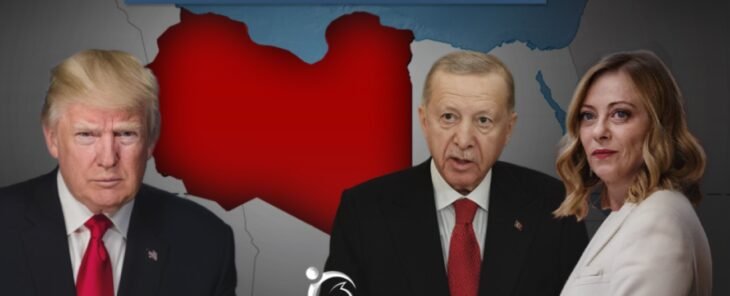
Libya has become a central focus of US strategy in the Eastern Mediterranean, as Washington seeks to organize a four-nation conference involving Greece, Turkey, Egypt and Libya to resolve disputes over overlapping exclusive economic zones (EEZs). A unified Libyan representation remains the key condition for the US initiative to move forward.
The effort gained momentum after a meeting in Paris between Mohamed al-Menfi, head of Libya’s Presidential Council, and US Senior Adviser for Africa Massad Boulos. The discussion focused on Libya’s political normalization between Tripoli and Benghazi and the country’s energy wealth.
Boulos is considered the main US architect behind the planned quadrilateral talks. Al-Menfi holds one of Libya’s two top institutional roles, while the other belongs to Aguila Saleh, speaker of the Tobruk-based House of Representatives
Meanwhile, Chevron executives visited Tripoli to explore energy cooperation, meeting Prime Minister Abdul Hamid Dbeibeh and the leadership of the National Oil Corporation. The delegation discussed oil exploration, renewables, and technology transfer.
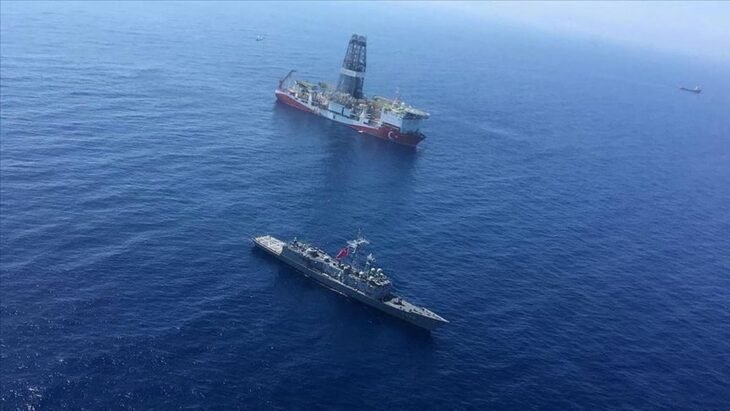
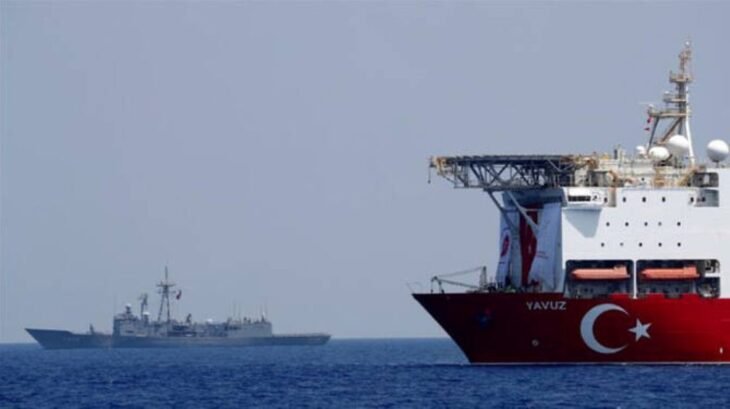
Turkey is closely monitoring these developments. Turkish Ambassador Guven Begec met Libya’s Oil Minister Khalifa Abdul Sadiq on October 27 to discuss energy collaboration. Last summer, Tripoli granted the Turkish Petroleum Corporation (TPAO) two offshore blocks south of the midline claimed by Greece between Libya and Crete.
Regional diplomacy has also intensified elsewhere. Lebanon’s cabinet, led by President Joseph Aoun, ratified its 2007 maritime border agreement with Cyprus, finalizing the tripoint with Israel. Cyprus was represented by Tasos Tzionis, head of the Cypriot Intelligence Service. A follow-up meeting between Aoun and Cypriot President Nikos Christodoulides will finalize the decrees for UN submission.
Lebanon also approved exploration in offshore Block 8 by TotalEnergies, Qatar Energy, and ENI, reinforcing the energy dimension shaping the region’s shifting alliances.
The Libyan landscape is complex, but at the core, it is a battle for sovereignty.
Since the fall of the Muammar Gadhafi regime in 2011, Libya has never achieved true stability. A vast country, rich in oil, and sparsely populated, Libya is politically and militarily divided, torn between two rival governments, two competing parliaments and militias with overlapping loyalties. With each round of negotiations, hopes arise only to quickly evaporate, prompting Libyans themselves to wonder: can the country ever return to normalcy?
Today, with another election approaching, the question resurfaces with added urgency. These long-awaited elections are not merely a procedural step, but a pivotal moment. Either Libya transforms into a state with institutions and full sovereignty, or it remains an arena for regional and international power struggles. In this context, seizing this last chance to save the Libyan state and prevent it from being eternally quagmired in crisis is more than necessary.
The Libyan landscape is complex, but at the core, it is a battle for sovereignty. Since 2011, Libyan decision-making has not been solely in the hands of Libyans. Foreign interventions have been numerous: Turkey has sent troops and advisors, Russia has established a presence through the Wagner Group, the United States and Europe have intervened through diplomatic pressure, while Libya’s neighbours, Egypt, Tunisia and Algeria, have been watching with concern what is happening on their borders. Each protagonist seeks to protect its interests, but the result is that Libya has become an arena for proxy wars, with ordinary Libyans paying the price.
Libyan citizens are the primary victims of all this jockeying for power and influence. While successive governments vie for legitimacy, Libyans are smothered by economic crises with power outages, collapse of healthcare services, the devaluation of the dinar and the lack of security. Oil, which was supposed to be a blessing, has become a curse, a bargaining chip between the warring factions. Ports are opened and closed according to the shifting balance of power, and revenues are distributed according to loyalties, not the needs of the people.
In light of this reality, the upcoming elections look like the last chance. But the elections are not only about ballot boxes; they are a test of the Libyans’ ability to overcome divisiveness. Elections alone are insufficient if they are not based on a political consensus that guarantees the acceptance of the results. The experience of December 2021 remains fresh in everybody’s mind. Elections were cancelled days before they were scheduled to take place due to disagreements over legal provisions and candidates. A repeat of this scenario this time around would be disastrous, as it would destroy what little remains of public trust in the political process.
The perspective from which we must view the elections is not merely procedural, but rather one of sovereignty. The real battle is about reclaiming national decision-making from the grip of foreign powers. Libya cannot build a stable state if its decisions remain hostage to other capitals. Elections, if conducted transparently and with everybody’s acceptance of the outcome, can be the beginning of restored sovereignty. However, they require both domestic and external guarantees. At home, there is need for national consensus among political and tribal forces, and externally, there is need for an international commitment to respecting the results and not using them as a bargaining chip.
The Arab region follows the Libyan situation with concern, because Libya’s stability is not just an internal matter. The collapse of the Libyan state opens the door to substantial threats stretching from Africa’s Sahel to the Mediterranean, including terrorism, irregular migration and arms and drug trafficking. Saving Libya is not only in Libya’s interest, but also in the interest of the Arab world and the region.
However, the question remains: do Libyans possess the political will to overcome their differences? Experience tells us that divisions are deep, but history teaches us also that nations are capable of rising up to the challenge when they realise that the alternative is perpetual chaos. Libya today stands at a crossroads: either it chooses the path of a state, or it remains hostage to militias and foreign interference.
This is not a call for naive optimism, but rather one for realism. No one expects the elections to solve all of Libya’s problems overnight. But they can be the beginning of a new path, if there is political will, and if the warring factions realise that continued divisions mean the irreversible demise of the state.
Libya has paid a heavy price over the past few years with thousands of deaths, hundreds of thousands of displaced persons, a collapsed economy and a fractured society.
This haemorrhaging cannot go on indefinitely. The upcoming elections may be the last chance to save the state. Missing this opportunity will mean be enduring chaos. Ultimately, the question is: do Libyans have the courage to put their country’s interests above their narrow interests? And does the international community have the wisdom to back the sovereignty option instead of fuelling division?
The answer will determine not only Libya’s future, but that of the entire region.
For more than a decade after the overthrow of Muammar Gaddafi’s regime, Libya remains an unstable region where the interests of internal actors and external forces intersect. Although media attention is focused on the protracted conflict between the UN-recognized Government of National Unity (GNA) in Tripoli and the Libyan National Army (LNA) led by Khalifa Haftar, the fundamental causes of the crisis are largely related to the struggle for control of energy resources.
With reserves of 48 billion barrels, Libya has the largest oil reserves not only in North Africa, but also on the entire continent. Until 2011, production was centrally regulated through the National Oil Company (NOC), founded in 1970, but after NATO intervention, state control over the fields was lost, which led to the fragmentation of the sector, a sharp drop in production and an increase in the black market.
Formally, the civil war ended with the signing of a ceasefire agreement between the GNA and the LNA on October 23, 2020, but in fact, destabilization remains, as does the rivalry for control over strategic resources. The term “corporate oil wars” describes an informal conflict in which state-backed multinational oil companies (TNCs) fight for access to oil assets. In Libya, this conflict manifests itself in the form of covert financing of armed groups, the involvement of private military companies (PMCs) and the sabotage of oil infrastructure.
Eni (Italy), TotalEnergies (France), BP (UK), ExxonMobil and ConocoPhillips (USA) have maintained interest in Libya’s oil sector since 2011. Despite having formal agreements with the government in Tripoli, these companies also interact with Haftar’s eastern government and southern groups that control key fields.
Particularly revealing is the conflict of interest between Eni and TotalEnergies, reflecting the long-standing geopolitical rivalry between Italy and France, which have historically competed for influence and before that for colonies in North Africa. Eni maintains close ties with the PNU, while TotalEnergies actively cooperates with the Haftar administration. In this case, we can see how corporate and economic interests reflect broader geopolitical divisions within the European Union and the struggle for their vision of energy security.
U.S. companies have taken a more restrained approach but still retain a stake in oil fields. A significant element was, according to some sources, the involvement of PMCs, in particular Blackwater (now Constellis), allegedly involved in the protection of US oil facilities, which indicates the presence of hidden coordination between TNCs, PMCs and local groups. Despite attempts by the Libyan government to tighten control, the oil industry remains an arena for informal deals, where security is often traded for access to resources.
Against the backdrop of continuing political divisions, Libya is once again becoming an important player in the global energy market. After years of civil war, fragmentation in governance and infrastructure problems, Libya’s oil sector is seeing a new surge in activity. But the corporate oil wars continue: the big international oil companies are returning, but with them are the risks of political division, illicit trade, and the involvement of foreign private military companies.
In 2025, NOC recorded an increase in production to 1.3-1.4 million barrels per day, with a target of 1.6 million, subject to political stability. A landmark event was the announcement of the first tender for the development of fields in 17 years, which aroused the interest of 37 international companies, including TotalEnergies, Eni, Chevron, ExxonMobil, OMV, Repsol, etc.
Recent initiatives include:
Signing of a 10-year memorandum of understanding by ExxonMobil to conduct exploration in four offshore areas; Expansion of TotalEnergies‘ production at the Vakha and Sharara fields, as well as exploration in the Sirte and Murzuq basins; and Eni’s implementation of a large-scale gas project in Zone D offshore Libya, where it plans to produce up to 750 million standard cubic feet of gas per day from 2026.
These steps reflect not only the growing interest in the Libyan market, but also Europe’s strategic desire to diversify its energy supply sources against the backdrop of restrictions on imports from the Russian Federation.
Management and security issues
Despite partial stabilization, Libya remains a country with two competing governments, which hinders the effective management of oil assets and the equal distribution of income. Disputes continue over control over the Central Bank, the NOC, and payments to civil servants.
An example of decentralization was the emergence of a private company Arkenu Oil, associated with Haftar’s son, which exports oil bypassing NOC.
Along with this, the following are preserved:
oil smuggling and barter transactions; unauthorized exports; control of infrastructure by armed groups, especially in the Fezzan regions and on the border of the zones of influence of the GNA and LNA; the presence of PMCs that protect facilities and influence the distribution of resources.
This situation with the most important resource does not contribute to the protection of the country’s sovereignty. While the Libyan administration, through the national oil company, is trying to establish centralized control over oil resources, most of them are actually controlled by private companies and sometimes local groups. Legal, financial and infrastructure risks remain high.
Contract negotiations are taking place in an environment where political agreements can be terminated, production can be stopped due to local unrest or power struggles, and it is difficult to ensure the safety of personnel and infrastructure. These factors continue to discourage some risk-averse investors and lead to the creation of a shadow oil market and increased PMC activity in the region.
***
The signing of new contracts and the involvement of foreign oil companies indicates a restoration of confidence in the market, but also leads to increased competition for resources and influence in Libya. The potential recovery of production makes it a strategically important player against the backdrop of the global energy crisis and sanctions against other suppliers, and the publication of the first tender in many years indicates the stabilization of the political process and fuels interest in the Libyan market from Europe and North America.
However, in the context of political fragmentation and weak state institutions, the struggle for control of resources, infrastructure and export routes is also intensifying. Libya remains a field of intense confrontation between the largest energy corporations, states and informal structures.
The country’s corporate oil wars are not a theory, but a reality, manifested through contracts, infrastructure protection, middlemen, and informal deals. For Libya’s sustainable recovery, it is not enough to increase production volumes, institutional consolidation, transparency of governance and reduced dependence on external forces are needed.
The scenario unfolding in Libya could become a model for future conflicts in other energy-rich but politically vulnerable regions of the world.
The United Nations Support Mission in Libya (UNSMIL) is entering its most fragile chapter yet. It has no allies, little leverage, and a reputation weighed down by a decade of political misfires. Yet the opportunity to reset remains if the new Special Representative, Hanna Tetteh, acts decisively.
The UNSMIL’s problem is not just political fatigue.
Libyans remember the Skhirat Libyan Political Agreement (2015) not as a peace deal that ended a war, but as the starting point of a legitimacy crisis that never ended. Each process since has layered new institutions on old fractures, chasing an impossible consensus that diluted accountability.
Every major political actor in Libya now fears a new process, not because of what it might achieve, but because of what it might expose. The fragile “unity” within each camp is an illusion. Once the UN opens a serious political track, rivalries within factions will surface and alliances will collapse. Ironically, Libya’s elites are most “free” during UN processes; each sees a chance to climb higher, but collectively they resist the ladder being rebuilt.
Internationally, the mission inspires little confidence. Major capitals support the UNSMIL only when the outcome aligns with their own interests. Add to that the mission’s chronic blind spots, shallow understanding of Libya’s social power networks, internal bias, and poor coordination, and the result is a mission stranded between Tripoli’s cynicism and foreign hesitation.
What Tetteh Must Do Differently
The UNSMIL does not need another roadmap. It needs credibility. That starts with three strategic shifts.
Rebuild Communication and Allies:
– The SRSG has struck the right tone but not the right chord. The UNSMIL must break through the social-media vacuum and talk to Libyans, not at them. A broad media offensive, appearing on local TV, answering questions publicly, and engaging influencers and journalists, would do what Libya’s politicians fear most: face the people.
– More importantly, Tetteh needs a coalition of trusted intermediaries, Libyan figures with institutional memory, local reach, and credibility across divides. Without them, she will keep walking into the same traps.
Design the “120” and Mean It:
– The proposed 120-member dialogue forum could be the UNSMIL’s strongest instrument if it is not a repeat of the 2021 Libyan Political Dialogue Forum’s tokenism. Selection must be surgical, diverse, and rooted in Libya’s real social and political hierarchies. Done right, it could create a political and social mass powerful enough to counter entrenched elites and reset the national conversation. Done poorly, it will become another diplomatic exercise lost to cynicism.
– True representation means choosing not just who embassies approve of, but who Libyans actually respect: the tribal elders, technocrats, reformist politicians, community leaders, and young voices who can move opinion and navigate Libya’s informal networks.
Set the Standard:
– The UN cannot demand integrity from Libyan leaders if its own process lacks transparency. Invite the media into the halls. Announce vetting criteria. Punish corruption or manipulation publicly, not quietly. – The best way to shape the government that emerges is to model the governance you want it to embody.
A Rebirth for Civil Society
If executed well, this process could give oxygen back to Libya’s suffocated civil sphere. Many of the country’s most capable figures, from journalists to local mediators, have been sidelined, co-opted, or silenced. A credible UN track can offer protection and legitimacy for them to re-engage.
Libya’s camps—east, west, and south—are more alike than they admit. Each has its philosophers, its fixers, its soldiers, its technocrats, and its opportunists. The challenge is not to erase these divides but to extract the best from each. A carefully chosen 120 can do that if guided by competence, not comfort.
The bottom line: the UNSMIL’s problem is not capacity. It is courage. If Tetteh can face Libya’s public, rebuild trust through action, and design a process that is seen as fair, she may achieve what none of her predecessors could: make Libyans believe the UN is finally on their side.
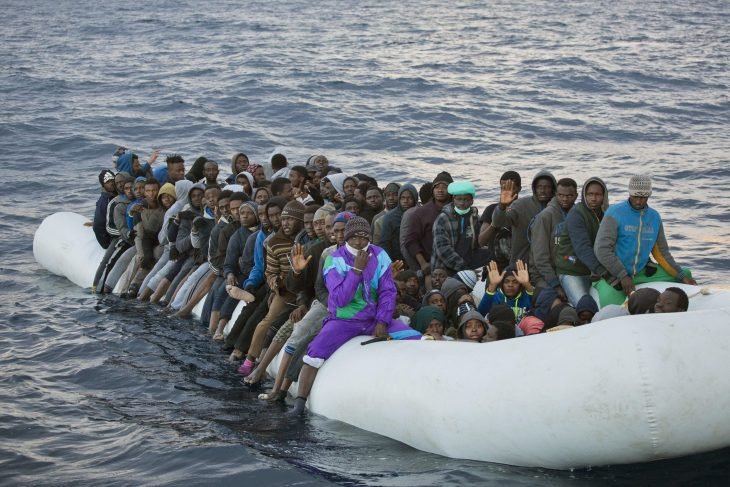
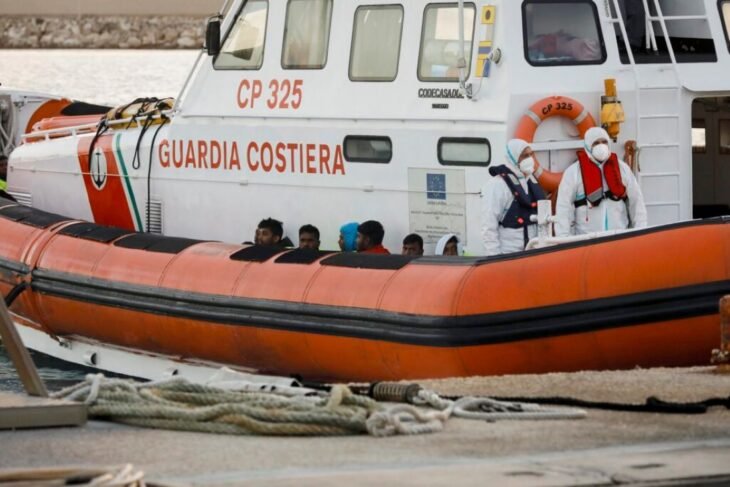
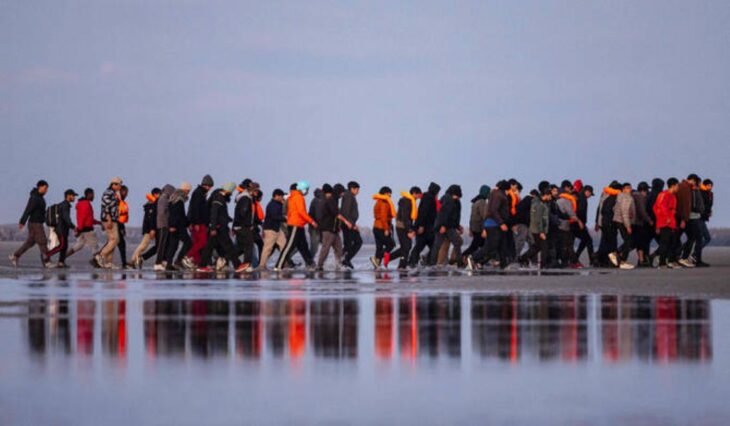
Search-and-rescue organizations are sounding the alarm, warning that many children and youths are venturing across the Mediterranean, along one of the world’s most dangerous refugee routes, on their own.
“No one would risk their life at sea if there were a better way. But there’s no alternative. That’s why we risk our lives.” These are the words of a 15-year-old boy from Guinea rescued as an unaccompanied minor at sea by the Berlin-based NGO, SOS Humanity.
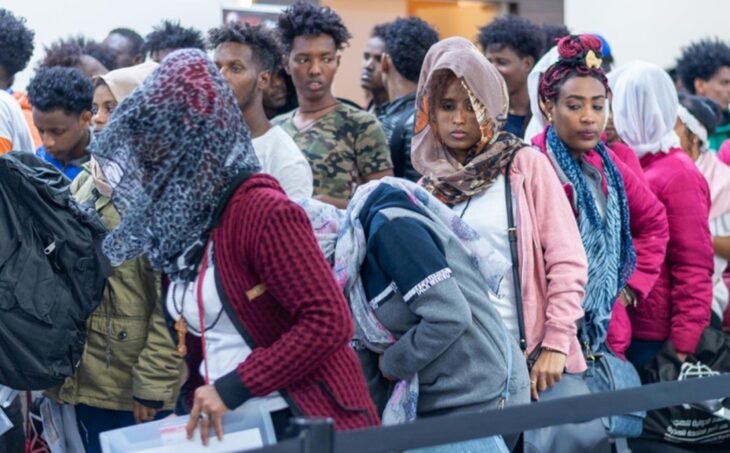
The organization, which has been saving refugees and migrants at sea for the last decade, warns that more and more children and minors are setting out alone from Libya or Tunisia to Europe in overcrowded boats that are often not seaworthy. Around a fifth of those rescued have been minors.
Esther, a German clinical psychologist, volunteered as a mental health officer on Mediterranean rescue missions in November and December 2024. During a press conference in Berlin on Tuesday, where Esther did not give her surname, she said that during her time at sea six boats carrying 347 people were rescued. Among them were 43 young people, mostly unaccompanied minors, in poor physical and mental health.
“They’d often been at sea without food or drink for several days and nights, were dehydrated, seasick and often had burns from fuel and salt water. Many also had scabies or other infections and wounds, because they had been held in camps in Libya for long periods. All of them were emotionally exhausted,” she said.
Children at grave risk in Libya’s camps
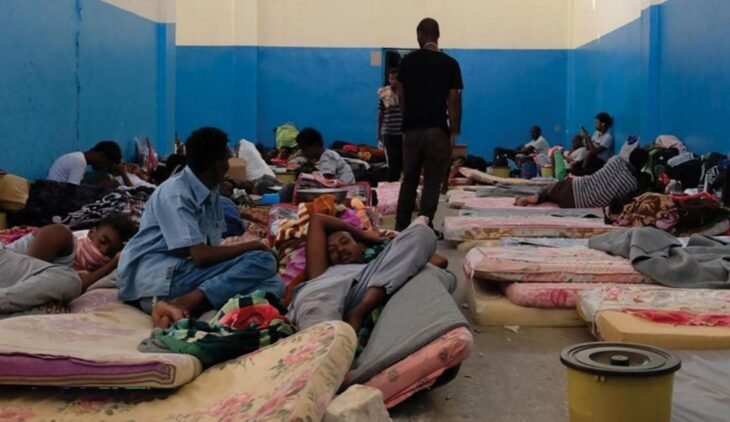
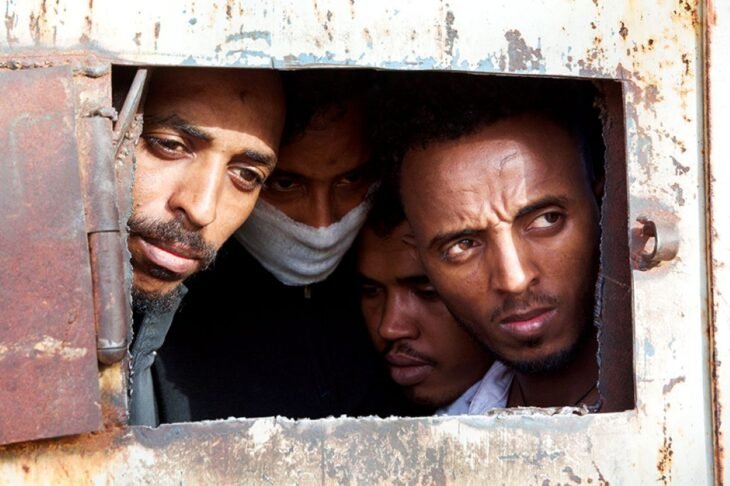
Conditions in Libyan detention camps — where those intercepted by the the country’s coast guard are returned after failed attempts to cross the Mediterranean — are catastrophic, especially for young people. For years, Libya — which, under a multimillion-euro agreement with the European Union, is meant to take over border control and drastically reduce migrant numbers — has faced intense criticism for serious human rights violations.
“Young people told me about extreme sexual violence, torture, child labor, losing relatives and cases of human trafficking involving women,” Esther recounted. “Some of these young people showed me physical evidence of what they’ve been through. Some had scars from torture, as well as photos and videos taken at the Libyan camps showing them tied up and beaten.”
Over 3,500 minors reported dead
or missing
Minors who manage to escape from the camps face even greater danger during the crossing. According to UNICEF estimates from April, around 3,500 children have died or disappeared in the last 10 years while attempting to reach Italy via the central Mediterranean route. That means nearly one dead or missing child per day for an entire decade. This statistic has SOS Humanity calling for an immediate end to the EU’s cooperation with Libya and Tunisia.
“The proportion of minors among those fleeing has actually been rising steadily over the last 10 years. Around one-fifth of all arrivals in Italy are minors. In our rescues, the average is even more than one-third,” said Till Rummenhohl, managing director of SOS Humanity. “We recently had a whole boat of just minors, 120, on board. They were completely panicked young people who were traveling alone and jumped into the water out of fear of the Libyan coast guard,” he added.
Trump’s USAID cuts have dramatic
consequences
The growing number of children and adolescents embarking on the dangerous journey to Europe may worsen in the future, warned Lanna Idriss, the head of SOS Children’s Villages Worldwide. The reason: the US government under President Donald Trump has dissolved the development aid agency USAID, with dramatic consequences.
In a study published this summer, the medical journal The Lancet calculated that USAID cuts could result in more than 14 million deaths globally over the next five years, including up to 5 million children under the age of 5. Germany has also cut its development aid by almost €1 billion ($1.2 billion).
“We are entering a vicious cycle that will lead to more children taking this route,” said Idriss, citing Somalia as an example. “The country was 80% dependent on USAID. Last year, we reached 4.5 million children and adolescents in Somalia; this year, only 1.3 million. Why? Because the camps intended to support these children have been empty since the summer.”
Vera Magali Keller heads a law firm in Berlin that specializes in supporting humanitarian organizations, including those that carry out sea rescues. Children and young people must be given priority protection and evacuation during sea rescues, the lawyer told DW, referring to the United Nations Convention on the Rights of the Child, to which all UN member states have committed themselves.
“In several European countries, there are special prospects for obtaining residence, protection entitlements and rights to family reunification. In Italy, for example, these often apply until the age of legal adulthood. As a general rule, children and adolescents must be accommodated separately from adults and given special protection. Detention should be avoided wherever possible,” said Keller.
German government cuts funding
for sea rescue
SOS Humanity has announced plans to deploy another rescue vessel in the Mediterranean in 2026. The ship will primarily operate off the coast of Tunisia, searching for migrant boats and monitoring human rights violations. To do this, the sea rescue organization will rely on donations, as the German government has discontinued its annual €2 million funding for civilian sea rescue. This is one reason why Keller is pessimistic about the future.
“Given the current political and legal developments, I don’t see any positive prospects,” she said. “I fear that the criminalization and repression of civilian sea rescue will intensify under the current coalition. The already disastrous protection and reception standards for refugees in Europe will likely continue to deteriorate.”
***
Oliver Pieper – Reporter on German politics and society, as well as South American affairs.
Long-delayed report recommends directing funds to bereaved relatives affected by Qaddafi-sponsored terrorism.
Victims of attacks by the Irish Republican Army using explosives and weapons supplied by Libya should be compensated using tax raised from income generated by the country’s frozen assets, a report in the UK has concluded.
The suggestion was made in an internal report carried out by Sir William Shawcross which was handed to British government ministers five years ago. Campaigners lobbied for the report, commissioned by the previous Conservative government, to be made public. Its executive summary has now been released.
From the 1970s to the 1990s, Libyan leader Muammar Qaddafi’s regime supported the IRA, including providing arms and ammunition, millions of dollars in finance, military training and explosives.
It included several shipments of Semtex, a highly powerful, malleable and almost undetectable plastic explosive. The use of Semtex supplied by Libya has been directly linked to the deaths of at least 18 people and the injury of at least 190 more in IRA terrorist attacks.
Among the atrocities, two children were killed and 54 injured in bomb blasts in Warrington, north-west England, in 1993, for which the Provisional IRA claimed responsibility, having loaded litter bins with Semtex provided by Libya.
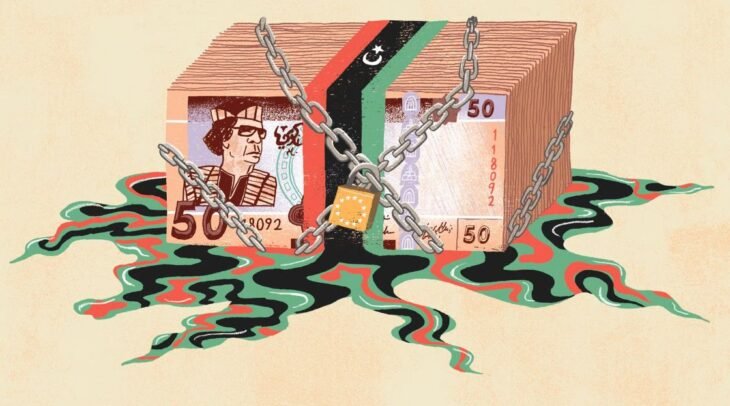
Libyan assets estimated at between $40 billion and $200 billion were frozen by the UN in 2011 after Qaddafi was toppled and have been subject to sanctions ever since.
Victims have for several years been calling for tax generated by the assets to be used for compensation and lobbying for Mr Shawcross’s report to be made public.
In the executive summary, the former chairman of the Charity Commission said it “is time to draw a line” on Libya’s backing for the IRA as “the pain and suffering of the victims is real and harrowing”.
“It has been compounded by the length of time this matter has been under discussion and that victims have waited for the redress they believe is due to them, partly because they have been encouraged in that belief,” he wrote.
Under the terms of the UN sanctions, the frozen assets and interest accrued cannot be used for compensation, Mr Shawcross said. He concluded the most straightforward way of getting funds to victims is to divert the tax collected on income and gains instead.
But he added this “will probably be insufficient” and “other sources of government funding will probably be required”.
The UK’s Northern Ireland Affairs Committee found in 2017 that victims of IRA attacks using Libyan weapons had received limited support and may not have been aware compensation was available.
The MPs recommended the government release clear information on any tax collected from the £9.5 billion ($12.7 billion) of frozen Libyan assets in Britain.
Successive Conservative governments said it was the responsibility of Libya’s government to compensate victims of Libyan-sponsored IRA terrorism supported by Qaddafi and it would not fund a scheme using public finances for that reason.
Mr Shawcross was appointed special representative on UK victims of Qaddafi-sponsored terrorism with a remit to assess how Libya could provide recompense.
Conservative MP Andrew Rosindell, chairman of the Libyan-IRA Terrorism Victims’ Parliamentary Support Group, said the report is “a landmark in the long and painful journey for justice by the victims”, albeit one that will “undoubtedly reopen old wounds”.
“The absolute need to utilise taxation on frozen assets to issue overdue compensation has been the long-standing position of our group,” he said. “The campaign was consistently told by consecutive governments that such a solution would be unworkable, illegitimate and even unlawful.
“Today, we discover that this was in fact one of the potential options highlighted by Sir William in the internal report commissioned by and for the government,” Mr Rosindell added.
“The sense of duplicity will undoubtedly be a challenge for victims and their families, as they recognise that their suffering could have been partly ameliorated many years ago if successive governments had only listened to their own advice.”
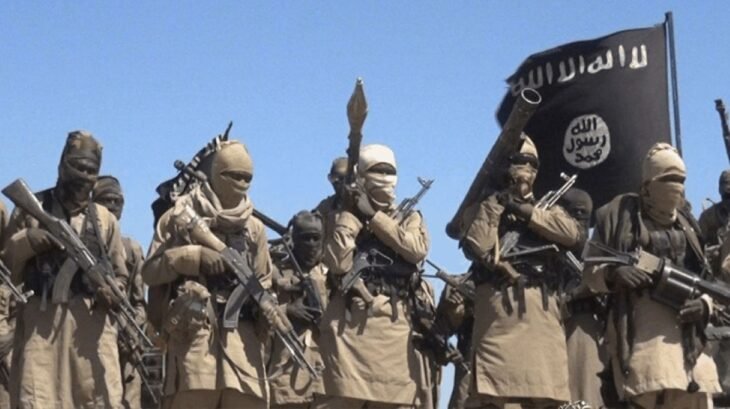
Islamic State’s Libyan network remains degraded but resilient, sustained by integration with transnational smuggling and financial networks in the country’s south and links to instability in Sudan and the Sahel.
Political and militia fragmentation in Tripoli and Haftar’s dynastic consolidation in the east are deepening Libya’s governance vacuum—conditions that could enable jihadist regrouping.
Recent IS arrests and renewed propaganda underscore Libya’s enduring role as a logistical and ideological hub, making coordinated border control and intelligence sharing with Sahelian and Mediterranean partners an urgent counterterrorism priority.
Militia infighting has plagued Libya’s sense of security.
Since early 2025, the nominally temporary Prime Minister of the Government of National Unity (GNU), Abdel Hamid Dbeibah, has been attempting to consolidate his power.
After the killing of Abdel Ghani al-Kikli, who led the Security Stabilization Apparatus, security units and militias loyal to Dbeibah have tried to eliminate Tripoli’s other major militia, the Special Deterrence Force. The RADA (also sometimes called the SDF) is a Madkhali militia controlling Mitiga airport and led by Abdel Raouf Kara.
Against this backdrop, diplomacy is attempting to regain momentum, with several actors involved.
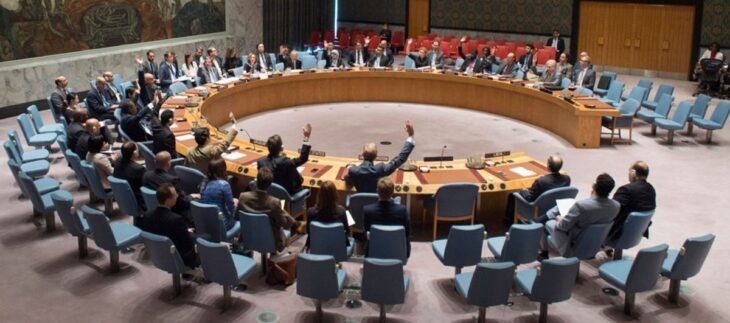
On August 21, UN Special Representative Hanna Tetteh presented a roadmap to the UN Security Council aimed at breaking Libya’s political deadlock. Spanning 12–18 months, it seeks to establish an electoral framework, form a unified government, and launch an inclusive dialogue with political elites, youth, women, and civil society.
In parallel, General Khalifa Haftar has consolidated his family’s power in eastern Libya. His son, Saddam, was promoted to Deputy General Commander of the Libyan National Army (LNA), while his brothers, Khaled and Belgacem, assumed senior roles. Observers view Saddam as the likely heir to his father.
Days after these announcements, Haftar hosted Turkish intelligence chief İbrahim Kalın in Benghazi. The visit highlighted Ankara’s pragmatic engagement with Haftar despite past enmity, signaling Turkey’s intent to maintain influence across Libya’s fractured landscape. Allegedly, Haftar is also planning to visit Turkey.
Meanwhile, in Rome, Saddam met with Ibrahim Dbeibah, nephew of the GNU Prime Minister, in talks that sought to mediate between rivals, facilitated by the United States and Italy. The internal infighting in Tripoli to consolidate power, along with Haftar’s concerted attempt to create conditions that would allow his family and inner circle to dominate Libya’s political and security environment, represent the most significant security concerns at present in the country.
Signs of IS Reawakening?
Over the past few years, the immediate terrorist threat in Libya has declined. A decade ago, the Islamic State (IS) was gaining ground across the country, having established itself in Sirte by the end of 2014 and launched attacks in the following months. These attacks targeted critical locations within Libya—such as energy installations—as well as cross-border sites, with IS using Libya as a logistical platform for the attacks carried out in Tunisia.
These days, IS in Libya is degraded, but still maintains a presence. In early August, the Libyan Intelligence Service announced the dismantling of three IS-linked cells operating in the country’s south. According to the Service, these IS networks had international connections in Africa and Europe and were involved in recruitment, financing, and logistics.
Three significant cells have been active in Libyan territory. Local media reported that the first cell recruited fighters and transferred them from North Africa to Somalia and the Sahel using forged passports and safehouses.
The second cell managed money laundering operations through front companies presented as humanitarian organizations, which were used to support IS members fleeing Syria’s al-Hool camp and to provide accommodation in Libya.
The third cell was described as the most dangerous, handling cross-border financial transfers through cryptocurrency and investments.
The announcement of these arrests followed the discovery of a weapons cache in Sabha, where authorities found mortars, anti-aircraft guns, explosives, and large quantities of ammunition.
On top of these developments, IS also returned to target Libya rhetorically. In a September 11 editorial in its publication al-Naba, IS described Libya as a “launching platform” for its comeback, issuing its first explicit call in three years for a renewed jihad there.
The group cited Libya’s porous borders and strategic position as gateways to other jihadists across the region, while stressing its international relevance: proximity to southern Europe could threaten “crusader plans,” or at least force Europe to deplete its resources by playing on migration fears.
The recent arrests reveal the presence of individuals tied to IS’s logistics and financial networks who are linked to the Sahel region, while the al-Naba editorial is a sign of IS’s renewed ambition to strengthen its operational profile in Libya.
Libya’s South: A Strategic Crossroads
Developments in Libya point to the continued risks in the country’s south, where a weak state presence and porous borders have allowed armed groups and illicit networks to continue to operate. IS thus maintains a foothold in the south, primarily through the organization’s integration within transnational organized crime networks involved in arms and goods smuggling, as well as the movement of fighters from North Africa to the Sahel.
IS is present throughout Libya, although more of a danger in the south, with links to the Sahel, than in the north. According to the UN, while IS remains active in northeastern Libya, reportedly conducting kidnappings for ransom (including the abduction of traffickers), it is in the southern Fezzan region, which includes Sabha, where its presence is more consistent.
An estimated 200 to 400 fighters are also reportedly active along the Chad–Niger axis. Meanwhile, IS logistical networks in Fezzan are being used to transport individuals, vehicles, and weapons from Sudan, through Chad, to the tri-border area of Burkina Faso, Mali, and Niger.
IS in Libya maintains around 400 fighters in Sudan, where the ongoing war and its consequences are creating opportunities for the organization. In January, IS returned to the topic of Sudan with a message in a publication titled “The Forgotten Sudan!”.
In the message, IS called on its members in neighboring countries to re-establish themselves, rebuild their presence, and revitalize the group’s activities within Sudan.
Conclusion
Despite the obvious degradation of its operational capabilities, IS continues to pose a threat in Libya, particularly through its integration with transnational criminal networks to its south. The group’s logistical and financial ties to the Sahel and the exploitation of regional instability—especially in Sudan—have allowed it to sustain a presence and facilitate the movement of fighters, weapons, and money across borders.
Recent arrests and intelligence reports confirm the existence of active cells engaged in recruitment, financing, and arms trafficking. Moreover, the al-Naba editorial points at a renewed ambition to strengthen IS’s operational profile in Libya again. As such, Libya remains a critical node in IS’s broader regional strategy, underscoring the need for sustained counterterrorism and border control efforts.
The Libyan political landscape remains static due to entrenched power struggles, the accumulated failures of the U.N.-backed roadmap and its rejection by key actors. The crisis is fundamentally rooted in a struggle for control, worsened by divergent roadmap interpretations and a lack of genuine national will or meaningful international support for reconciliation. A shift is needed that prioritizes an inclusive, Libyan-led solution over externally defined terms. Specifically, the United States must reassess its strategy, as prolonged engagement based on short-term security interests or economic opportunism risks perpetuating the conflict.
The U.N. Special Envoy to Libya, Hanna Tetteh, presented a roadmap to the U.N. Security Council on Aug. 21, aiming to resolve the crisis and hold presidential and parliamentary elections within 12 to 18 months. The plan, requiring approval from influential Libyan political forces, has three pillars: preparing a technically sound electoral framework; unifying institutions under a new government; and conducting a structured, broad Libyan dialogue on important issues to foster a conducive environment for elections.
Despite its sequential structure and overarching timeline, Tetteh’s plan mirrors previous U.N. roadmaps, featuring recycled jargon and lacking concrete technical details on implementation. These issues raise questions about its viability, especially given past failures. For example, the absence of specific dates indicates a tactic to prevent spoilers from exploiting missed deadlines but risks the impression that the plan lacks a clear strategy.
Though the major Libyan players formally welcomed the roadmap, their actual stances may be rejection. The Benghazi-based House of Representatives is divided while its counterpart, the Tripoli-Based High Council of State, wants to re-write the roadmap to safeguard its interests—preserving the status quo to prevent action. Ultimately, elections threaten their objective of keeping their ally, the Government of National Unity (GNU), in office.
Tetteh, addressing the UNSC on Oct. 14, warned that the country’s political transition is paralyzed, blaming rival institutions for failing to resolve differences over election laws and key appointments. She told the Security Council that while there was progress on the U.N.-backed roadmap, divisions between the House of Representatives and the High Council of State continue to block national elections. “The two institutions have yet to achieve this objective,” Tetteh stated, stressing that consensus on the constitutional and legal framework for elections is urgently needed, adding, “Libya cannot afford continued delays or disruptions.”
However, the most influential actors still block meaningful change. They include Khalifa Haftar, commander of the eastern-based Libyan Arab Armed Forces (LAAF)—controlling over 70% of Libyan territory and natural resources—and Prime Minister Abdelhamid Dbeibah of the internationally-recognized GNU, with tenuous control of the west.
Dbeibah held recent meetings with figures like Mohamed Takala, head of the High Council of State, and Mohamed Al-Menfi, head of the Presidential Council, demonstrating a shift toward institutional entrenchment through integration and a unified front. This strategy deflects pressure for elections, depicting the GNU’s authority as a functioning, stability-maintaining government. It also helps stymie calls for a new, unified national executive. Concurrently, Dbeibah has resisted elections, calling them a “major gamble” while proposing comprehensive constitutional and institutional reforms to prolong his mandate and avoid removal.
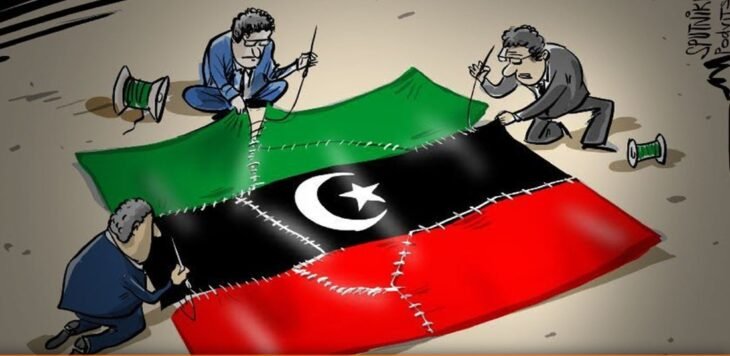
Meanwhile, Haftar’s new “National Initiative” urges Libyans to define their future without external dictates, asserting that “a map whose threads have been woven behind borders cannot build a free, fully sovereign state.” His rhetoric, like Dbeibah, confirms that Libya’s crisis is not a constitutional dispute but a conflict over power. Both Haftar’s LAAF and Dbeibah’s GNU seek to maintain influence, utilizing delay tactics and skilfully leveraging mistrust. As such, their rejection of the U.N. roadmap’s core tenets is a calculated move to obstruct stability, reconciliation and democratic transition.
Lasting peace and national unification remain distant goals despite the 2020 ceasefire, which is regularly challenged by the existence of parallel governing bodies, a surge in armed groups and deeply entrenched criminal networks. Therefore, the objection to the roadmap and reluctance to hold elections are not solely political tactics. They are inextricably linked to security and economic concerns, with critical challenges impeding progress. While many observers believe that the GNU’s ongoing presence is the primary obstacle to stability, the security environment remains volatile, with any attempt to force elections under today’s circumstances risking renewed conflict.
In this context, Tripoli and the western region already face a severe security breakdown marked by armed clashes, robberies and thefts, signalling the state’s loss of control. This chaos, exacerbated by ongoing military mobilization and a lack of legal deterrence, has transformed some of the capital’s neighborhoods and the city of Zawiya into flashpoints, with western Libya’s rising crime rate largely attributed to the GNU and its security agencies’ failure to perform basic duties.
Although the UNSC and major international powers welcomed Tetteh’s roadmap, interest-driven contestation and a limited understanding of Libya’s complex dynamics have fostered resistance. Regional and global interference is a symptom and a driver of Libya’s domestic rifts, with external states fuelling the conflict by supporting competing groups to advance their respective agendas.
Disputes over maritime exploration rights in international waters involving Turkey, Egypt and Greece, alongside Libya’s huge oil and gas potential, continue to define this context. Critically, the U.S. approach—demonstrated by Massad Boulos’s efforts—prioritizes economic stability over pressuring the de facto actors blocking meaningful change. This effort sidelines any prospect for inclusive national reconciliation. Securing control over the Libyan economy through stabilization measures and the role and independence of the National Oil Corporation and Central Bank of Libya reveal a willingness to focus on short-term security and economic stabilization over a genuine political transition.
This approach, under the “U.S. Strategy to Prevent Conflict and Promote Stability: 10-Year Plan for Libya,” is fundamentally flawed. While economic stability and security coordination are undoubtedly important, they cannot be achieved without addressing the underlying political divisions fueling the conflict. Washington’s apparent disinterest in the electoral file—evidenced by the State Department’s dismissal of the issue—impedes progress.
These diverging international priorities hinder any comprehensive resolution to Libya’s crisis. As such, all parties must work towards fostering a genuine political consensus capable of legitimizing democratic processes, producing lasting peace and stability.
The international approach to Libya must shift from externally-defined, prescriptive solutions toward facilitating dialogue and confidence-building through Libyan-led initiatives. The United Nations should prioritize empowering Libyan actors, bolstering institutions and engaging all key groups via a multi-track diplomatic approach that respects Libyan diversity. Concrete steps, including security sector reform, are required to build trust.
Washington and the international community must acknowledge Libya’s agency and embrace national reconciliation as the primary path for democratic transition. Many share a responsibility for Libya’s crisis since the North Atlantic Treaty Organization’s 2011 intervention. Thus, they must foster cooperation among Libyan factions, promoting an environment conducive to dialogue and compromise while refraining from using Libyan actors as proxies.
U.S. officials should also re-evaluate their 10-Year Plan for Libya, recognizing that short-term security gains will fail without addressing underlying political challenges. Washington must pressure key stakeholders—including Turkey, the UAE, Qatar, Egypt, Italy and France—to foster cooperation and mutual trust-building initiatives between Libyan factions. Similarly, diplomatic engagement with Russia must ensure that any political solution prioritizes Libyan interests over external considerations.
One of the recommendations of the UNSMIL Advisory Committee is Option 4, which calls for adopting a temporary constitution, initiating a comprehensive political reset demanding the dissolution of all existing institutions. It recommends replacing them with a temporary, impartial Constituent Assembly—established via Libyan Political Agreement (LPA) dialogue—to draft a provisional constitution, set electoral laws and unify state institutions.
Option 4 constitutes necessary political shock therapy, offering the most decisive path to break institutional deadlock and achieve a credible democratic transition. As adherence to outside agendas will perpetuate conflict, only a genuinely inclusive, Libyan-led approach can secure a stable future for Libyans.
***
Youssef Mohammad Sawani is Professor of Politics and International Relations at the University of Tripoli in Libya.
To date, the Sahel has transcended its status as a mere theater of insurgency and humanitarian crisis, evolving into a full-fledged center of sophisticated transnational organized crime. The region now accounts for more than half the deaths related to violent extremism around the globe, a statistic that speaks less to ideological fervor and more to the fertile ground provided by its sprawling criminal economies. These enterprises are now operating in the gaps left by weakened states, actively dismantling state authority and co-opting the functions of government.
With youth unemployment reaching 75.6 percent in Burkina Faso, for instance, while illicit mining alone robs governments of billions in much-needed revenues, the economic desperation is systemic. However, it would be rash to conclude that the Sahel’s trajectory is merely about poverty fueling crime. Instead, it is a deliberate restructuring of power, by armed groups like Jama’at Nusrat ul-Islam wa Al-Muslimin, an extremist organization operating in the Maghreb and parts of West Africa, as well as Islamic State Sahel Province, a remnant of Daesh that operates in Mali, Burkina Faso, and Niger.
These groups, along with a range of local armed actors too many to list, impose taxes on mining sites and smuggling routes, generating immense revenues that fund their activities and expansion. Moreover, the Sahel’s deteriorating security situation is only accelerating, given the political quagmire in Libya serving as a source of weaponry from its vast post-conflict stockpiles, and a decisive corridor. This “northbound highway,” protected by factions within the Libyan Arab Armed Forces, ensures that criminality flows unimpeded to the Mediterranean, permanently wiring the Sahel’s instability into illicit global networks. We are witnessing the consolidation of a criminal ecosystem that is becoming the region’s de facto governing structure.
Given the Libya dimension, the unique business model of Sahelian transnational criminality becomes even more sophisticated and brutally efficient. Consider the hybrid human smuggling system now dominant in Libya. In 2024, over 76 percent of migrant arrivals in Italy from Libya came from just four nationalities. These individuals do not typically arrive by foot or perched on ramshackle vehicles from the start. They fly legally or semi-legally into Benina airport in eastern Libya, paying upward of $500 for a security clearance often facilitated by elements within the Libyan Arab Armed Forces.
The system — a robust network of travel agents, officials, and smugglers — then moves people west by bus or car to coastal hubs such as Zawiya and Sabratha before the final maritime leg. With full package costs reaching $13,000, this is not a movement of the destitute and desperate, but a high-value, illicit logistics enterprise, so normalized it includes bus services and pre-paid accommodation, all operating under the watch of armed factions that are also part of the official security apparatus funded by the EU to keep migration in check.
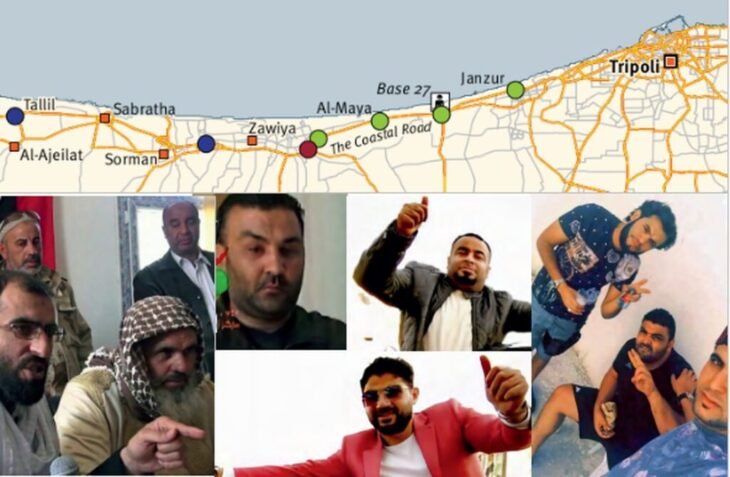
This criminal fluidity is a direct byproduct of a collapsed state. Libya’s western coast, a chronic hotspot, demonstrates how political fragmentation is the smugglers’ best asset. When one hub faces a crackdown, such as the 2023 operations to tamp down on large-scale departures from Tobruk, traffic simply reroutes to another. Moreover, the assassination of a figure such as Abd Al-Rahman Milad, a commander in the Zawiya refinery coast guard, did not cripple the trade. Instead, it created a power vacuum that was immediately filled by competing networks, with men loyal to a rival, Mohammed Bahroun, directly engaging in smuggling along the coastline.
Criminal fluidity is a byproduct of a
collapsed state.
Unfortunately, the security apparatus is often complicit in these complex smuggling networks, making enforcement actions next to impossible. For instance, the counter-terrorism force deployed in Zawiya is largely composed of local fishermen from the Gmanda tribe, who often accept bribes to allow migrant boats safe passage. In such a climate, any “official” law enforcement actions are frequently theatrical, such as the early 2025 “anti-crime” campaign in Zawiya that was widely derided as staged and involved forces that were themselves part of the problem. Despite these performances, estimated departures from Libya’s west coast remain consistently high, effortlessly absorbing the inevitable displacements from crackdowns on other regions, thereby demonstrating the ecosystem’s immunity to superficial interventions.
The consequences of Libya’s criminal ecosystem and kleptocratic networks for the Sahel are both immediate and systemic. The Sahel is already defined by poly-criminal hubs, where trafficking in cocaine, gold, and firearms converges, fueling the violence that has made the region the source of over half of the world’s terrorism-related deaths. These are no mere isolated markets, but an integrated economy of illegality spanning across the Sahara and likely reaching the Red Sea should Sudan descend into permanent dysfunction given its civil war.
The same smuggling corridors that move migrants north are used to transport other commodities, with cocaine seizures in the region exploding from an annual average of 13 kg to over a ton in recent years. Libya’s enduring political disintegration provides the final, critical link, connecting this vast interior network of instability directly to the Mediterranean. The logistical pipelines are already in place; the business model is proven. And, as a result, a containable regional security crisis quickly transforms into a complex hybrid threat with unimpeded access to European borders that will demand extremely costly intervention. Brussels’ policy focus on intercepting migrant boats is only a superficial response, targeting a single symptom, while ignoring the underlying condition, a fully operational criminal network with territorial control, which continues to mature and expand.
So far, the global response has been outmaneuvered. Attempting to fight 21st-century criminal enterprises with disjointed aid and fragmented diplomacy only creates gaps ripe for exploitation as the newly empowered seek to profit while covered by veils of legitimacy. If Libya remains a patchwork of fiefdoms and the Sahel suffers from persistent socioeconomic woes, criminal networks will continue to offer a twisted form of livelihood and governance that will likely become a chief export via Libya’s Mediterranean shores.
After all, Sahelian hybrid actors provide jobs where states cannot, and enforce order where the rule of law has collapsed. In a nutshell, the $500 security clearances at Benina airport are much more than a bribe. They are a symbol, among many, of a parallel system that “works.” Until such a system is dismantled, the winds blowing from the Sahel only tell of escalating threats that Europe and the world are woefully ill-prepared to confront.
***
Hafed Al-Ghwell is senior fellow and program director at the Stimson Center in Washington and senior fellow at the Center for Conflict and Humanitarian Studies.
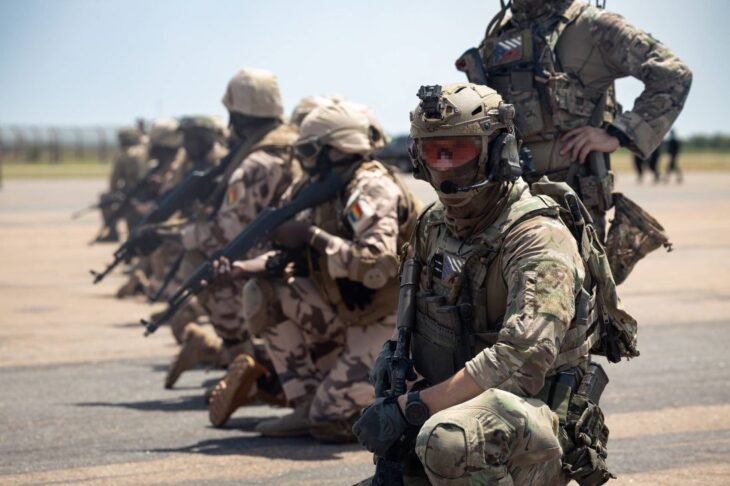
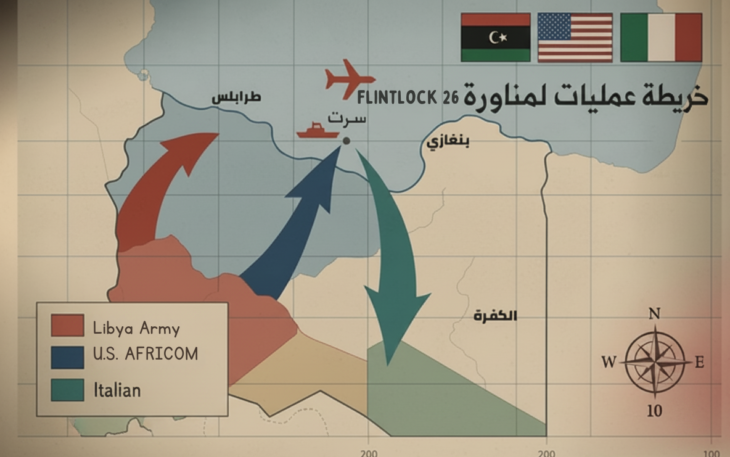
U.S. Africa Command (AFRICOM) has announced that Libya, long divided between rival political and military factions, will host a key segment of next year’s Flintlock 2026 military exercise, its premier annual special operations training event. The 2026 iteration, known as Flintlock 26, will take place near the central city of Sirte, symbolically located along the 2020 ceasefire line that ended Libya’s second civil war.
This surprise move marks the first time since the fall of Muammar Gaddafi in 2011 that military representatives from both eastern and western Libya will train together under U.S. supervision, a move Washington hopes can foster cooperation and strengthen efforts to unify the country’s fragmented armed forces.
AFRICOM’s deputy commander, Lt. Gen. John Brennan, framed the decision as a milestone in bilateral security cooperation. “Flintlock isn’t just about joint drills—it’s about overcoming divisions, building capacity, and supporting Libya’s sovereign right to determine its future,” Brennan said during a recent visit to Tripoli and Sirte.
The joint participation of Libya’s rival forces, he added, “marks a major step forward” toward integration and national reconciliation. Italy’s Special Operations Command is expected to support the Libya-based component, coordinating alongside partner operations in Mauritania and Côte d’Ivoire.
Balancing Rivalries
The American initiative reflects a broader recalibration in U.S. and allied policy toward Libya. For years, Washington largely backed the Tripoli-based Government of National Unity. Now, the Pentagon is engaging both sides—including the Libyan National Army (LNA) under Gen. Khalifa Haftar, who controls most of the country’s east and maintains ties to Russia.
This dual-track outreach aims to blunt Moscow’s influence within Haftar’s ranks while empowering Libyan forces to confront violent extremist groups in remote southern zones still vulnerable to jihadist movements.
Context and Diplomacy
The exercise announcement follows modifications to the United Nations arms embargo in early 2025, allowing technical assistance and military training to all recognized Libyan security entities as part of reunification efforts.
U.S. officials say the growing collaboration also dovetails with broader economic goals. Envoy Jeremy Berndt, chargé d’affaires at the U.S. Embassy in Libya, emphasized that stability and military unification are prerequisites for reopening investment channels in the energy and infrastructure sectors.
Strategic Stakes
Placing Flintlock exercises in Libya underscores Washington’s intent to reassert its presence in North Africa amid intensifying competition with Russia and China across the Mediterranean. U.S. naval visits, including the USS Mount Whitney’s stop earlier this year in Tripoli and Benghazi, support that strategic messaging.
While the move carries risks—especially given ongoing political deadlock and fragile ceasefire conditions—the US hopes that Flintlock 2026 may be one of the few tools left for it to counter the influence of China and Russia.
***************
Flintlock 26: Libya’s Inclusion
Opens a Window for Reform
Frank Talbot
On October 14, AFRICOM Deputy Commander Lt. Gen. John Brennan announced Libya’s participation in Exercise Flintlock next spring. Brennan commented that “this exercise isn’t just about military training; it’s about overcoming divisions, building capacity, and supporting Libya’s sovereign right to determine its own future.”
Libya’s participation in Flintlock 26 can promote unification within its fragmented security sector, but it also creates an opening to press for reforms before the training begins. The question is whether the United States and its partners will use this leverage to promote a more accountable Libyan security sector.
Flintlock’s Significance
Flintlock is AFRICOM’s premier annual special operations exercise. Since 2005, it has brought together forces from more than 30 African and Western nations for counter-terrorism and crisis-response training, ranging from tactical drills to command-post operations.
Past iterations have included between 500 and 1,300 participants. What makes 2026 different is Libya. Units from both east and west will train together near Sirte, marking the first time Libyan forces have joined Flintlock and the first time a spoke will take place on Libyan soil.
That change became possible after the UN Security Council’s January 2025 adoption of Resolution 2769, which exempted technical assistance and training for Libyan security forces from the arms embargo.
The exemption applied specifically to efforts that promote military reunification. In practice, it opened the way for cooperation that had been blocked for more than a decade and created space for Libya’s fragmented forces to re-engage with international partners on more professional terms.
A Problematic Partner
Armed groups aligned with both the Government of National Unity and the Libyan National Army have been implicated in unlawful killings, torture, arbitrary detention, and enforced disappearances.
The State Department’s 2024 Human Rights Report on Libya documents systematic abuses across the country. The UN Panel of Experts reported in December 2024 that at least five armed groups committed serious violations of international humanitarian and human rights law, targeting civilians, journalists, and activists. UN investigations describe impunity as the norm rather than the exception.
Condition the Invitation
Libya’s participation in Flintlock should be treated as a moment to set expectations, not as a symbolic gesture. Training access, exposure to partners, and renewed legitimacy can be powerful incentives, but they should come with a clear understanding that participants are expected to meet basic professional and ethical standards.
This means ensuring that units understand the laws of armed conflict, adhere to civilian-protection norms, and maintain internal mechanisms for oversight and reporting. Even modest steps toward transparency would signal that reform is more than rhetoric.
These expectations only matter if they are reinforced.
Units that join international exercises should demonstrate a willingness to investigate credible allegations of abuse and to cooperate with monitors who track progress over time.
Participation should reflect not only military readiness but also an institutional commitment to lawful conduct and accountability. Approached this way, Flintlock can serve as a testing ground for a more disciplined and unified security culture, one that aligns Libya’s forces with the standards its partners already practice.
At the same time, Flintlock can help advance the broader goal of military unification. Mixed planning cells, shared operational standards, and joint drills near Sirte can help align procedures and command structures across Libya’s divided forces.
Transparency and external accountability make this process stronger, not weaker, by grounding cooperation in shared principles rather than convenience.
Conclusion
Flintlock 26 is more than a military exercise; it is a test of U.S. strategic intent in Libya. By conditioning participation on accountability, Washington and its partners can help shape a more professional, rights-respecting security culture while advancing the long-delayed goal of institutional reunification.
The credibility of this approach will rest not on the scale of training but on whether it produces measurable behavioral change among Libyan forces. Flintlock offers a platform to translate engagement into leverage.
The Trump administration has been multiplying outreach to both Tripoli and Benghazi. The US military is gambling that it can get Libya’s duelling factions to stop aiming at each other and focus instead on common threats.
Lt. Gen. John Brennan, the deputy commander of US Africa Command (AFRICOM), announced on 14 October that next spring’s Flintlock training exercise will be held near Sirte in central Libya for the first time.
The coastal city is located on the ceasefire line established in 2020 after the Second Libyan Civil War between the government in Tripoli and eastern warlord Khalifa Haftar’s self-proclaimed Libyan National Army (LNA).
Unifying rivals
“The participation of western and eastern Libyan forces together marks a significant step forward in Libyan efforts towards unification of military institutions and enabling strong US-Libya security cooperation,” AFRICOM said in a statement.
Other training locations – or “spokes” – will be located in Mauritania and Côte d’Ivoire. Italy’s Special Forces Command is expected to enable the planning and execution of the Libya spoke. “Flintlock 26 will be a tangible demonstration of our growing partnership with Libyan military officers in both the west and east,” added Brennan.
“This exercise isn’t just about military training; it’s about overcoming divisions, building capacity, and supporting Libya’s sovereign right to determine its own future,” said Brennan, adding that these exercises will directly contribute to Libyan efforts to unify their military institutions.
Initially supportive of Tripoli, the US is now keen to accommodate both sides in the divided country, following the lead of regional actors including France, Italy, Egypt and Turkiye. The Pentagon hopes to empower the rival governments to fight jihadist groups and attenuate Russian influence in Haftar’s army, says Jonathan Winer, a former special envoy for Libya under president Barack Obama who is now a fellow with the Middle East Institute in Washington.
“It’s in the interest of Libya to be governed by one government, to have a civilian government that does civilian things, and a military that provides for security,” Winer tells The Africa Report. “When you have competing forces that attack one another, that creates conflict and stability.”
Signs of progress
AFRICOM’s largest annual special operations exercise, Flintlock aims to strengthen partner nations throughout Africa, in partnership with other international special operations forces. This year’s exercise in Côte d’Ivoire brought together some 500 personnel from more than 30 countries. Brennan’s announcement comes at the tail end of a weeklong visit to Libya during which he met with both members of Prime Minister Abdulhamid Dbeibeh’s Government of National Unity and Haftar’s forces. Unity and lasting stability will enable increased prosperity for the Libyan people and their international partners.
In Tripoli, the US general met with Deputy Defence Minister Abdulsalam Zubi, Chief of Staff Mohamed Haddad, and director of Military Intelligence Mahmoud Hamza in Tripoli; in Sirte, he was greeted by Lt. Gen. Saddam Haftar, Khalifa Haftar’s youngest son who was recently named deputy commander of the LNA. The Sirte training location was made possible by the recent relaxing of the international arms embargo on Libya, AFRICOM pointed out.
Business interests
In January, the UN Security Council updated restrictions imposed against Muammar Gaddafi’s regime in 2011, deciding that the arms embargo would no longer apply to technical assistance or training provided to Libyan security forces intended to promote the reunification of Libyan military and security institutions.
President Donald Trump has also been keen to develop US business interests in the oil-rich country, dispatching his senior adviser for Arab and African Affairs Massad Boulos to Tripoli and Benghazi in July to meet with Dbeibeh and Haftar. During his visit, Boulos joined the National Oil Corporation and New Jersey-based Hill International for the signing of a $235m infrastructure agreement supporting Libya’s modernisation efforts to boost gas production and exports.
“Libya’s national oil wealth has been divided between East and West for a while. They’ve been more or less accommodating one another, and to a considerable extent, providing an unstable equilibrium,” Winer says. “It’s an unstable equilibrium, but it does exist.” In its statement, AFRICOM pointed out that strengthening the US-Libya partnership and adding to Libya’s counter-terrorism capabilities would help to increase stability and opportunities for US investment.
“The US will continue to engage defence leaders in western and eastern Libya,” the US Embassy in Tripoli wrote on X. “Unity and lasting stability will enable increased prosperity for the Libyan people and their international partners.”
Gambling game
Winer says the US rapprochement with Benghazi can be explained by Trump’s disinterest in Haftar’s human rights violations. Nevertheless, Congress continues to impose restrictions on security assistance for military regimes. “The Trump administration may not care about that, but that’s still law,” he says. Libya’s threat is exacerbated by the country’s political rivalry and the rampant corruption in both the East and West, Winer points out. By working with Haftar especially, the US is legitimising his regime.
“This military exercise isn’t going to change any of the fundamentals on the ground, but it is signalling [that] we’re prepared to work with everybody,” Winer says. “Overall, is that the right policy for the US? It probably is.” “But that’s with some caveats,” he adds. “The caveats go to human rights in particular, the failure to have elections move forward, the limited legitimacy of essentially all the actors in Libya, and the massive corruption.”
MEE has been given rare access to Radaa, the last armed group standing in the way of GNU leader Dbeibah’s bid to seize control of western Libya and offset legitimacy loss. Like every evening in Libya’s capital Tripoli, the main roads are clogged with traffic.
At the entrance to the densely populated district of Souq al-Juma, four fighters try to keep the flow moving. With brand new uniforms and last-generation Kalashnikovs, they look far better equipped than the lone police officer helping nearby. These young men are part of the Deterrence Apparatus, one of Tripoli’s most powerful armed factions, known in Arabic as Radaa.
“We are here to prevent accidents or fights, and to protect citizens,” one tells Middle East Eye. Asked whether he fears an attack by forces loyal to the Government of National Unity (GNU), he answers soberly. “The situation is calm now; we are under the protection of Allah.” Since the October 2020 ceasefire ending the civil war that followed the Nato-backed uprising overthrowing longtime ruler Muammar Gaddafi in 2011, Libya has remained split between two rival authorities in the west and east.
Prime Minister Abdul Hamid Dbeibah, based in Tripoli, leads the internationally recognised GNU, while a rival administration under Prime Minister Osama Hammad operates from the eastern city of Benghazi with backing from powerful General Khalifa Haftar’s Libyan Arab Armed Forces (LAAF). Meanwhile, western Libya has been the scene of power struggles between militias, who vie for influence and control of lucrative oil and gas resources, as well as extortion and ransom schemes targeting migrant people. The capital in particular has seen renewed tensions in recent months as Dbeibah has increased pressure on rival militias, sparking fears of a large-scale conflict.
A fragile security agreement
At the gates of the Mitiga military camp, Radaa’s headquarters, the mood is far more tense than in the streets of Tripoli. The entrance has been barricaded, heavy machine guns posted, and dozens of soldiers guard the checkpoint. That caution is not without reason: the GNU’s last offensive on its most powerful rivals in the capital also came at dawn. In May, Dbeibah ordered his affiliated militias to conduct an offensive on Radaa and an armed group known as the Security Support Apparatus (SSA), killing its leader Abdelghani al-Kikli, aka “Gheniwa”.
In the weeks prior, Dbeibah had engaged in a power struggle with Gheniwa over control of revenues from the state-owned Libyan Post, Telecommunications and Information Technology Company (LPTIC), a typical contest for the capture and diversion of public funds in Tripoli. At least eight people were killed in the clashes, the deadliest toll since August 2023, when infighting between rival factions left 55 people dead.
Radaa subsequently retreated from its downtown positions, regrouping around Souq al-Juma and the Mitiga airport in the east of the city. It now stands as the only faction openly resisting Dbeibah’s forces in Tripoli, as the SSA has been forced out of the city and left significantly weakened. The ground once held by the SSA and Radaa is now “secured” by GNU-allied groups, including the 444 Brigade, the 111 Brigade and the General Security Apparatus.
While Dbeibah’s objective has been to bring rival armed factions under his control and centralise power in the capital, replicating what Haftar has done in eastern Libya, the security situation is as tense and volatile as ever. “Clearly, the security situation hasn’t improved with these changes. In particular, the General Security Apparatus has gained a very bad reputation,” Wolfram Lacher, a researcher at the German Institute for International and Security Affairs, tells MEE.
Online, numerous videos show abuses committed by the new “protectors”. “They basically behave like criminals,” says Said*, a senior Radaa officer who wants to remain anonymous, tells MEE. Asked whether his group plans to retake its former positions, he is unequivocal: “We don’t want war and we won’t start it, but we are ready to defend ourselves.” Another round of fighting could erupt at any moment.
In fact, the war nearly resumed at the end of August, when Dbeibah issued several ultimatums for Radaa to surrender and leave Mitiga airport. Situated next to Radaa’s headquarters, the airport is the capital’s only functioning international hub and one of its most strategic assets. In early September, heavy artillery and tanks were spotted moving into GNU-aligned camps in Tripoli, especially from Dbeibah’s allied city of Misrata, 160km east of the capital.
An agreement to avoid a fully fledged war was finally reached on 13 September under Turkish mediation: Radaa gave up its formal office inside the civilian airport, but was not forced out of its headquarters. New recruits still perform daily drills on training grounds just 200 meters from the runway. According to a spokesperson from the group’s media office, “more than 15,000 people currently serve in Radaa”.
On the other hand, Said insists that GNU forces “didn’t remove the cannons and tanks they brought from Misrata”. Contacted by MEE, the GNU made no comment on the deal. “There has been no disarmament, no withdrawal from the base – it’s a cosmetic deal,” Jalel Harchaoui, an associate fellow at the Royal United Services Institute, tells MEE. At the Mitiga base, a few Turkish officers can be seen moving around, living in dedicated barracks. At night, Ankara’s drones are heard circling over Tripoli, monitoring movements.
According to Harchaoui, “Turkey has no confidence in Dbeibah” and thus continues to keep the city under close watch. Since the start of the war in Libya, Ankara has closely monitored its interests in Tripoli, where it helped repel a major offensive by Haftar’s forces in 2020. Since then, Turkey established ties with both Radaa and Dbeibah, while also opening channels in the east in recent months. “There is an Ottoman doctrine of not allowing war in Tripoli under their supervision,” says Harchaoui.
Fight for legitimacy over Tripoli
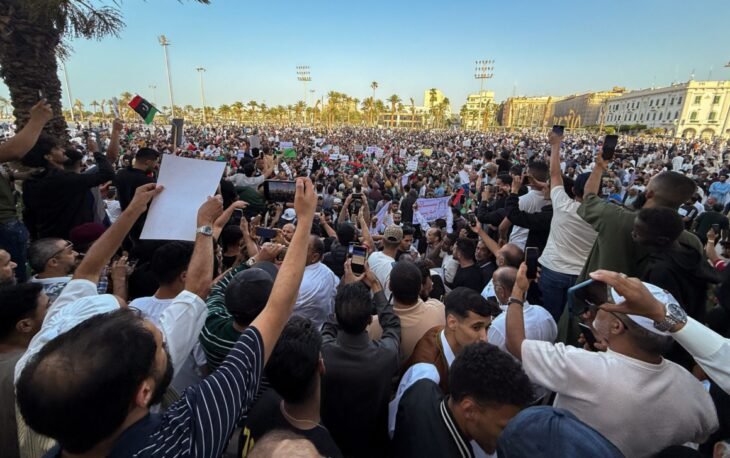
While the armed clashes have subsided for now, the battle currently plays out in the political narrative and alliances. Dbeibah, who was appointed prime minister in 2021 as a consensus candidate with a mandate to usher Libya into elections which never took place, seems to have lost public trust. Following the clashes in May, protesters from Tripoli neighbourhoods, as well as western Libyan towns, gathered for peaceful demonstrations whose scale had not been seen since the 2011 revolution.
Frustrated by Dbeibah’s political manoeuvres and rampant corruption, demonstrators demanded his resignation, with Radaa covertly backing them. In armoured pickups equipped with Starlink terminals, militiamen encourage people to take to the streets and demand the end of his rule. Seven GNU ministers resigned as a consequence, and none of them have yet been replaced.
On 21 August, the UN Security Council also adopted a roadmap calling for elections and the creation of a “new, unified government” within 18 months, strongly undermining the GNU’s international legitimacy, once Dbeibah’s greatest asset. The announcement of the UN roadmap was welcomed with fireworks in front of Souq al-Juma’s social council, a local structure that networks with neighbourhood and tribal leaders across eastern Tripoli. Radaa enjoys wide popular support in the area.
The faction, which was formed during the civil war, is led by Abdul Rauf Kara, whose wartime influence and Salafist background earned him respect among Souq al-Juma’s tribal and conservative leaders. “Everybody in Souq al-Juma wants them to stay, because they know Radaa works well and protects us from insecurity more than anyone could,” one of the council’s communications officers tells MEE.
Radaa is the only armed faction to invite foreign journalists to enter Tripoli, portraying itself as the sole legitimate force in the capital and unfolding a narrative that emphasises discipline within its ranks. “I joined the force because they are the only ones who operate within the law,” a colonel and former army officer tells MEE. “If one of my officers abuses his power, we impose disciplinary sanctions.” “Radaa has been trying for years to build a reputation as a professional unit with real capabilities. They were the first in Tripoli to adopt this model,” says Lacher. This narrative is attacked by Dbeibah: when he launched his offensive in May, he vowed to destroy “the militias that survive by extorting the state”.
In fact, Radaa has long held a reputation for unlawful conduct. As early as 2021, Amnesty International highlighted abuses such as involvement in kidnappings, enforced disappearances, torture, unlawful killings and forced labour. Yet, the same report made similar allegations against Emad Trabelsi, Dbeibah’s interior minister, as well as the SSA and Misrata armed groups loyal to the prime minister. “In the land of the blind, the one-eyed man is king,” comments Harchaoui when asked about the allegations directed at Radaa. For the analyst, if there is a “hierarchy” of armed groups involved in financial crimes, Radaa ranks somewhere in the middle, not at the top.
Like most armed groups in the country since the end of the war, the faction receives funding from the national budget, as it officially operates under the Presidential Council, Libya’s top executive body, which represents both eastern and western Libya even if with limited powers. Radaa also collects money from Mitiga through informal channels, such as extortion and local taxes. But this remains less significant than the activities of the SSA or Ministry of Interior forces like the General Security Apparatus, according to Libyan experts.
Considering the recent abuses committed by GNU forces in the capital, such as thefts and violent behaviour towards civilians, Dbeibah’s rhetoric has failed to sway public opinion. “Dbeibah still needs to eliminate his opponents in Tripoli in order to secure his grip on power,” says Lacher. Meanwhile, Radaa is becoming less isolated, gaining support from armed factions in other western cities. Once highly fragmented, the militias now split into two camps: those backing the GNU and those rallying behind Radaa, “brought together by their hostility toward Dbeibah,” says Lacher.
The group views the head of the Presidential Council, Mohamed Menfi, as the only legitimate actor to oversee elections, as he de facto holds a neutral stance, not endorsing the GNU’s actions in Tripoli. “Now, Dbeibah has to leave power and bring us democracy,” argues Said. Reports suggest Radaa also reinforced contacts with Haftar in Benghazi. Said insists that, for now, this is just “normal cooperation and exchange of information, as has long existed”.
By late September, new troop movements by Haftar’s LAAF and the GNU-allied 444 Brigade near the frontline in Sirte fueled fears that another war between the east and the west could erupt, with Haftar’s camp determined to prevent Dbeibah from fully taking over the capital.
***
Driss Rejichi is a freelance journalist based in Tunisia, covering North Africa and the Sahel. His work focuses on security, migration and geopolitical dynamics in the region, with a particular interest in Russia’s growing presence in Africa.
In Main Square, in the center of Tripoli, crowds of Libyans are venting their anger. This time, though, the object of their ire is not the 14-year civil war that has divided their country, or the warlords that have torn it apart.
Instead they are protesting alleged European schemes to turn the country into a buffer for migrants from sub-Saharan Africa. Banners proclaim: “No to resettlement, Libya is not Rwanda.” That’s a reference to a 2022 plan by the British government to unload unwanted asylum-seekers on the Central African country in return for development aid. Legal and political obstacles ultimately torpedoed the project.
But the plan is still very much alive in the minds of Libyans – fueled by anxiety that the divided and war-weary nation could become a new destination for resettling migrants from sub-Saharan Africa.
This public outrage coincides with international warnings. In a new report, Human Rights Watch urged Italy to cancel its migration cooperation agreement with Libya, describing it as a “framework for violence and suffering” that has allowed Libya’s coast guard to send tens of thousands of people to inhumane detention centers.
While rights groups call for an end to what they term “European complicity,” fears are growing inside Libya that the country, deliberately or otherwise, could become the new candidate for a Rwanda-style plan on the Mediterranean.
In the coastal city of Misrata, some protesters went beyond demonstrations, attacking makeshift markets run by migrants, smashing stalls, and chasing workers away.
This wave of public anger follows reports of deals and proposals between authorities in eastern and western Libya and Western governments – among them an offer to the United Kingdom from the Libyan National Army, led by General Khalifa Haftar.
Security Cooperation or Political Bargain?
“We want to cooperate with the UK. Libya is the place where your crisis starts – we are the first point of contact.,” Maj. Gen. Khaled al-Sreir, deputy head of the Department for Combating Illegal Migration in eastern Libya (under Haftar’s control), told British media earlier this month.
“We are also the ones who are trying to stop the problem, with almost no international help. We don’t need money – what we need is an exchange of experiences and scenarios.,” he added.
Al-Sreie told The Telegraph that Libyan officials had informed their British counterparts that controlling migration flows depends on technical support from international partners. UN sanctions imposed on Libya since 2011 limit its ability to obtain surveillance and rescue equipment, making it nearly impossible to control the influx of migrants.
Political analyst Kamel al-Marash told Alhurra that the Libyan proposal “wasn’t a surprise,” but rather the outcome of a series of meetings arranged recently by British Ambassador Martin Longden with Haftar. “The Libyan demands were clear each time: provide the army with modern equipment to monitor borders and curb migration from deep inside Africa,” he said.
Al-Marash noted that the U.K. tends to back Prime Minister Abdulhamid Dbeibah’s internationally recognized government in Tripoli. The ambassador’s visits to Haftar were “largely diplomatic courtesies,” but “he finds himself embarrassed when the migration issue arises, the U.K. expects Libyans to contain it while denying them the tools to do so.”
According to the International Organization for Migration’s Displacement Tracking Matrix (DTM), there were 894,890 migrants in Libya as of October 2025, from 44 nationalities. But the Interior Ministry of the Government of National Accord estimates the real number at about 2.5 million, most of whom entered illegally.
Roughly 90 percent of them are believed to be in Libya without legal status, while only 10 percent hold valid residence or work permits. Most are concentrated in Tripoli and Misrata. The vast majority work in agriculture, construction, domestic service, and the informal sector.
Political analyst Salah al-Bakoush told Alhurra that “Haftar claims control over Cyrenaica in the east and Fezzan in the south, but in reality, illegal migration flows into Libya from Egypt’s eastern border and from sub-Saharan countries.”
“That assessment is supported by IOM data showing that migrants from Niger, Sudan, Chad, Egypt, Nigeria, and Bangladesh make up the majority in Libya, evidence that the phenomenon extends beyond local security control into a broader regional problem.”
“Haftar makes promises to stop irregular migration to have the arms embargo lifted and to gain political recognition, even though this crisis doesn’t need weapons, just technology. The EU had a full migration management program since 2006, but it halted in 2011. Gadhafi used this bargaining chip before him, and now Haftar is repeating the same tactic,” al-Bakoush added.
From Rwanda to Libya
The U.K.–Rwanda deal was one of Europe’s most controversial migration plans. It stipulated deporting asylum-seekers from British soil to Rwanda, where their claims would be processed – until the British Supreme Court struck it down in 2023, declaring Rwanda “unsafe.”
From a British perspective, Libya may seem like a logical alternative: geographically close to Europe, with local authorities willing to cooperate and large areas that could be turned into detention or processing centers.
But Libya remains politically divided, with two rival governments claiming legitimacy, weak institutions, and no real capacity to protect migrants. UN reports have documented thousands held in harsh conditions, sometimes in secret prisons run by militias.
Al-Marash doubts that the Libyan National Army’s talks with the British side will reach the level of a Rwanda-style deal.
“Britain is uncomfortable dealing with Haftar, who acts independently, something London doesn’t like. The British don’t seem in a hurry to solve this crisis,” he said.
Asked whether Libya could become a “new Rwanda” for migrant resettlement, Ahmad Hamza, head of the National Human Rights Commission, told Alhurra: “[Libya] is no longer livable even for its own people,” citing insecurity and lack of stability. He stressed that current conditions “make it impossible to receive or host migrants at all.”
“No political or military actor has a mandate from Libyans to accept such deals,” he added, calling any attempt to use the migrant issue for political or military gain “unacceptable and an affront to the will of the Libyan people.”
Different European Deals, Same Goal
In 2024, the United Kingdom announced a $1.3 million aid package to Libya’s internationally recognized Government of National Unity to support reintegration programs and curb irregular migration. British Immigration Minister Michael Tomlinson said the deal aimed to support voluntary returns and discourage dangerous journeys to Europe.
But Libyan Interior Minister Imad al-Trabelsi criticized the weak European response, saying the European Union “only helps prevent migrants from reaching Europe, without contributing to their repatriation.” He added that “what’s happening on the ground amounts to de facto resettlement, albeit unofficially.”
Tariq Lamloum, head of the Benghazi Center for Migration and Asylum Studies, said EU policy “focuses on prevention, monitoring, and support for border guards,” while voluntary return programs remain limited. “Europeans do little more than repair rubber boats while ignoring serious solutions,” he said.
Al-Bakoush emphasized that “the crisis won’t be resolved without ending political division,” adding that some European states, chiefly Italy, are “buying cooperation from Libyan actors with undeclared financial support to stem migrant flows.”
UN reports confirm that Libya has effectively become Europe’s external buffer zone, where migrants are intercepted and detained in harsh conditions with direct European support.
Lamloum said there is “a coordinated process of gathering migrants and moving them to centers near airports and coasts,” noting that cities such as Sirte, Brega, and Tobruk have become major hubs for their concentration.
“All those intercepted at sea are used as leverage against Europe,” he said. “In one night, hundreds could be released, detention centers are that close to the coast.”
In the end, Europe’s deals may differ in form, through funding, aid, or promises of cooperation, but the goal remains the same: keeping migrants as far as possible from European shores, at any cost.
***
Hassuna Baishu is a Washington-based Libyan journalist who worked across the Middle East and North Africa.
Zawiya, located 48 km west of Tripoli, on the Mediterranean coast, controls the capital’s western gateway and hosts the second-largest oil refinery.
A fragile calm has settled over the strategic Libyan coastal city of Zawiya after days of armed clashes between rival militias near the country’s second-largest oil refinery. Life is gradually returning to streets that echoed with gunfire just days ago, schools are cautiously reopening, and workers are returning to damaged infrastructure.
But experts warn the peace may be temporary. The possibility of renewed clashes remains, raising anxiety among residents already dealing with damaged schools, shuttered shops, and an unreliable power supply.
The electricity disruptions add another layer of hardship to a population caught between competing militias in a city that has become emblematic of Libya’s broader struggle to establish stable governance over its vital energy infrastructure.
Political analyst and journalist Ayoub al-Awjali says the cycle of clashes has become predictable.
“The city of Zawiya always witnesses recurring clashes, and this is due to the city’s specificity and the influential tribal character, in addition to the control of more than one armed group over the city, which tries from time to time to expand the scope of its influence,” al-Awjali told The New Arab.
Zawiya, located 48 km west of the capital, Tripoli, on the Mediterranean coast, controls the western gateway to the capital and hosts Libya’s second-largest oil refinery, which produces over 120,000 barrels per day. The facility is vital to Libya’s domestic fuel supply, providing petroleum products to local markets and power stations across the western region.
Clashes in Zawiya have recurred since the February 2011 revolution against Muammar Gaddafi’s regime for several interconnected reasons.
“Militias seeking to expand territorial control, competition over illegal immigration networks that charge migrants up to $3,500 per person to reach Europe by sea, battles to dominate detention centres, and most critically, attempts to control fuel smuggling operations linked to the refinery,” al-Awjali remarked.
The International Organisation for Migration (IOM) reported rescuing more than 855 migrants from the sea and returning them to Libya in a single week this year, out of a total of 18,260 migrants in 2025. Zawiya and Tobruk, located on Libya’s eastern Mediterranean coast, topped the list with four smuggling operations in under seven days.
The latest round of violence, which erupted on 24 September, follows a familiar pattern in Zawiya.
Armed clashes broke out in the al-Harsha area between the “Security Threats Apparatus”, a militia loyal to the Government of National Unity, and armed groups known as “Al-Kabouat” one of the most dangerous militias controlling routes to the Zawiya oil refinery, alongside the “Al Far” militia led by Mohamed Bahron, who is wanted by the Attorney General on terrorism charges and who was involved in several deadly armed clashes with other militias in the west of the country.
A source from the Zawiya Municipal Council, who requested anonymity, confirmed the latest clashes erupted after the Security Threats Apparatus arrested members of the al-Kabouat militia.
“The area witnessed an exchange of fire with light and medium weapons randomly, which caused panic and fear among citizens in the area, leading to several wounds and two killed,” he said.
Libya has been divided between rival administrations since 2014, with the UN-recognised Government of National Unity based in Tripoli controlling the west, while a parliament-backed government operates in the east. The country’s oil wealth, which accounts for virtually all state revenue, has become a contested territory for numerous militias that emerged from the 2011 uprising.
Strategic infrastructure
What transforms these recurring clashes from local power struggles into matters of national economic consequence is Zawiya’s geographic position and its refinery.
“Any military movements by armed groups in the western region that may target Tripoli or its armed formations must pass through Zawiya. It is the western key to the capital Tripoli,” said political analyst Ahmed Al-Tithami.
He describes the armed groups controlling the city as “popularly balanced forces in terms of numbers, tribal support, and influence”, a balance that prevents any single faction from establishing dominance but ensures periodic violence as groups test each other’s strength.
The Zawiya refinery itself has become both a strategic asset and a vulnerability, al-Tithamy explained. The facility warned in an official statement during the recent clashes about “the danger of dragging armed conflict toward vital sites that represent a pillar of the national economy”, demanding an immediate ceasefire and urging security agencies to intervene urgently to keep conflicts away from oil facilities.
Ali Al-Farsi, an economic and energy market analyst and academic researcher, emphasises the stakes.
“Zawiya refinery is one of the largest refineries on which the Libyan economy depends. It provides car oil products and some fuels to the local market and power stations. The lack of responsibility by armed formations controlling the refinery’s surroundings has caused serious damage to the refinery for years, hindering development and growth plans. Storage warehouses are damaged in every clash in the city, which hinders the refinery’s ability to work,” al-Farsi added.
The Zawiya refinery is essential to Libya’s domestic fuel supply. It represents a crucial component of the country’s oil infrastructure, which has been repeatedly shut down or damaged during periods of power struggle. Libya currently produces approximately 1.3 million barrels per day, well below the National Oil Corporation’s goal of reaching 2 million barrels per day.
Al-Farsi warns that achieving production targets remains “difficult” given the security instability in the country’s western cities. While the corporation attempts technical measures to prevent escalating damage, it lacks the authority to provide security for oil facilities. This responsibility falls to Libyan authorities in the west, which remain contested and fragmented.
Collateral damage
The recent clashes left visible scars across Zawiya. The General Electricity Company announced that its rapid maintenance teams, working alongside installation units from the General Administration of Lighting, continue intensive efforts to repair electrical networks that sustained significant damage during the fighting.
The violence caused direct damage to the national electricity grid infrastructure, forcing six production units at the South Tripoli Power Plant offline and disconnecting numerous power transmission circuits. A week after the guns fell silent, teams are still working to restore power to the centre of the al-Harsha area, while several lines remain out of service due to severed cables on major transmission towers.
The company confirmed it continues efforts “under difficult circumstances” and remains “committed to restoring service to all affected areas as soon as possible,” urging citizens to “cooperate and be patient until maintenance operations are fully completed.”
For residents like Abdulsalam al-Warfali, a 45-year-old employee at a private money transfer office, the disruption was immediate and frightening. On the morning the clashes began, he attempted to take his three children to their elementary school near the western neighbourhoods where fighting erupted.
“We left Wednesday morning as on any ordinary day to drop off my children and then go to work, but I was surprised by the closure of the main road and other side roads with dirt barriers, and a large armed presence of vehicles and armoured cars along the road with armed elements carrying Kalashnikov rifles almost everywhere,” he recalled.
“They asked me to return home and not to go out. I returned to my home, which is about 25 km from the clash area, quickly and fearfully. I closed all the windows and doors and sat with my family in an interior room to avoid any injuries from random weapons or shells,” al-Warfali added.
His children’s school, Sheikh al-Tahir al-Zawi School in West Zawiya, sustained shattered windows and damage from ammunition in its courtyards. The Zawiya Centre Education Monitoring Office suspended classes at two schools and granted the principals full discretionary authority to keep the schools closed if the danger persists.
The current calm offers little reassurance to residents who have witnessed this cycle repeat itself since 2011. For now, schools cautiously reopen, shops raise their shutters, and electricians splice together severed power lines. But in Zawiya, as residents have learned, peace is always provisional, and the next round of clashes may be just one arrest, one territorial dispute, or one smuggling operation away.
Ankara’s recent outreach to Libya’s Field Marshal Khalifa Haftar and the Tobruk-based administration controlled by him has overturned several existing regional alignments, while aggravating maritime tensions between Greece and Turkiye. It has thus ignited the revival of long-standing rivalries, which are being demonstrated through fresh strategic competition in the waters of the Mediterranean.
Soon after the fall of Muammar Qaddafi in 2011, Libya plunged into civil conflict, leading to the formation of two rival administrations — one at Tripoli, now called the Government of National Unity, and the other at Tobruk in the east, administered by the House of Representatives but buoyed by the Libyan National Army headed by Haftar. The latter was supported by Egypt and the UAE, while the Tripoli administration received the backing of Turkiye.
In 2019, Turkiye was rewarded by Tripoli for its military support with a maritime agreement that linked Libyan and Turkish exclusive economic zones, while significantly expanding their maritime claims in the gas-rich Eastern Mediterranean. These claims encroached on the traditional claims of Greece and Cyprus, which responded by setting up the East Mediterranean Gas Forum in partnership with Egypt, which later included Israel, the Palestine Authority, Jordan, Lebanon, Syria, Italy and France. Turkiye followed up its claims by deploying survey and drilling ships, supported by naval vessels, in some disputed areas.
These disputes over gas resources flow from a longer history of discord between Turkiye and Greece dating to the First World War, including unresolved issues relating to maritime boundaries and sovereignty. Thus, the Turkiye-Libya agreement reflected Ankara’s “Blue Homeland” doctrine, shaped by influential naval strategists, which requires it to robustly assert and defend its claims to maritime boundaries and resources to safeguard its security and economic interests.
However, the rivalries in the Eastern Mediterranean have been impacted by recent changes in regional relationships. From 2021, Turkish President Recep Tayyip Erdogan began a process of engagement with Saudi Arabia, the UAE and Egypt. He visited Cairo for the first time since 2012. Egyptian President Abdel Fattah El-Sisi paid a return visit seven months later, initiating a major boost to political, military and economic ties.
This bonhomie cleared the ground for Turkiye to reach out to Haftar and other members of the Tobruk administration. Haftar’s son, Saddam Haftar, the commander of the army’s ground forces, visited Ankara in April, followed by a second visit in June.
Turkiye’s principal interest is to get the Tobruk-based House of Representatives to ratify the maritime agreement concluded with Tripoli in 2019. This will give the agreement greater legitimacy, strengthen Turkish claims in the Eastern Mediterranean and dilute Greece’s claims, which have so far enjoyed backing from Tobruk.
This has set the stage for hectic regional diplomatic activity, as the rivals seek to outmaneuver each other in the high-stakes power play in the Mediterranean.
Both the Greek foreign minister and the Turkish intelligence chief have visited Haftar, who has himself sought the enhancement of his military capacities by the EU. In return, he has pledged efforts to curtail illegal migration to Europe. In July, Turkiye signed a new military agreement with the Tripoli administration, signaling that Ankara’s eastward interactions have not diluted its traditional links with Tripoli.
There have been diplomatic interactions outside Libya as well. After the 2024 exchange of visits, Turkish-Egyptian ties have flourished. Bilateral trade has reached $15 billion, a high-level strategic cooperation council has been set up and Turkiye is supplying drones for the Egyptian armed forces. About 200 Turkish companies are working in Egypt, with investments of $3 billion. Last month, the two countries conducted their first joint sea and air exercises in 13 years. They will also work together on the development of the KAAN stealth fighter jet to replace America’s F-35, from which Turkiye has been excluded.
Turkiye has also been keen to deepen ties with Italy to counterbalance Greece, while Rome has sought Turkish support to prevent illegal migration from Libya. Prime Minister Giorgia Meloni visited Turkiye in August, meeting with Erdogan and Libya’s Tripoli-based Prime Minister Abdul Hamid Dbeibeh. Turkiye and Italy are also cooperating in drone manufacture and aviation.
But Turkish diplomacy continues to face serious challenges. European affairs scholar Dimitar Bechev has said that its ambitions are not just confined to the Middle East and North Africa, as it also wishes to reset ties with Europe. This is confirmed by its active role in European conclaves, particularly those dealing with Ukraine, even as it maintains close ties with Russia. However, the Turkiye-Greece rivalry in the Eastern Mediterranean has made the EU a divided house at a time when it should be capable of decisive action amid the uncertainties plaguing the global diplomatic scene.
Again, Libya itself remains mired in confrontations. While Turkiye is following a dual-track approach of engaging with both Tripoli and Tobruk, there are no signs that the divide between the two administrations is narrowing. However, through pragmatic working arrangements, oil exports are taking place and the central bank continues to manage the country’s resources.
Turkiye pays lip service to the idea of “one Libya” but has exerted little effort to promote national unity. Unless the country is brought together under a single credible authority, Ankara may find that its impressive diplomatic achievements are illusory.
Libya closes 2025 still caught in a web of armed rivalries, political fragmentation, and recurring violence that continually unsettle both governance and everyday life. Power remains divided between the UN-recognized Government of National Unity (GNU) in Tripoli and the Government of National Stability (GNS) in the east. Despite years of negotiations, neither side has managed to resolve the deadlock over national elections or merge the country’s core institutions.
On August 27, the coastal city of Al-Zawiya once again became a flashpoint. Rival armed groups clashed with heavy weapons in residential areas, leaving casualties and visible damage in their wake. These flare-ups confirm that militias continue to operate with significant autonomy, controlling local territories and responding to disputes through force rather than dialogue. Central authority remains weak, and ceasefires are fragile, often collapsing into new cycles of confrontation.
In Tripoli, periods of calm are regularly interrupted by sudden escalations. Political leaders, including Presidential Council Head Mohamed Menfi, have called repeatedly for renewed ceasefire commitments, most recently on August 31. Yet, behind these appeals, daily life in the capital is shaped by turf wars and power struggles. Frequent shootings, kidnappings, and road closures have forced residents to alter routines, with some families displaced and schools shuttered in high-risk districts.
By September, international concern deepened. Analysts and conflict specialists in Berlin urged urgent reforms and political compromise after warning of worsening instability. Their assessment was echoed later in the month during the UN Security Council’s 60-day briefing, which underscored persistent vulnerabilities: fragmented command structures, unchecked militia violence, and continued uncertainty surrounding election preparations.
Despite these headwinds, municipal elections went ahead in 34 cities during August, with voters turning out even in areas where armed groups attempted to obstruct the process. While this showed local resilience and civic engagement, the partial cancellations in western districts and the absence of elections across much of the east and south highlighted how far Libya remains from unified governance.
Reports from rights organizations paint a grim picture. Arbitrary arrests, extrajudicial killings, and forced disappearances remain widespread. Between March 2024 and September 2025, at least 20 detainees are believed to have died in custody for political reasons. Accountability remains elusive as judicial institutions struggle with interference and fear of reprisal.
Migrants and refugees are among the most vulnerable. Many fall victim to trafficking networks or abuse by security actors, facing extortion, detention, or violence. These conditions have turned parts of Libya into high-risk transit zones, perpetuating both humanitarian crises and broader insecurity.
As October progresses, the overall risk of renewed large-scale conflict remains elevated, even if no immediate escalation is visible. International mediators continue pressing all sides to honor the 2020 ceasefire, halt unilateral military operations, and focus on rebuilding unified national security institutions. Financial governance and security sector reform are widely seen as essential first steps toward credible national elections.
It is clear that Libya’s security environment remains fragile and volatile—marked by sudden violence and chronic mistrust. The country’s trajectory will depend on sustained diplomatic pressure, incremental institutional rebuilding, and credible accountability measures. Without these, localized clashes risk evolving into broader confrontations, keeping Libya locked in a cycle of instability and eroding public confidence in any path toward national reconciliation.
Rebuilding Libya is not solely a domestic undertaking. Libya does not yet have all the tools nor expertise required to meet these difficult and ambitious goals.
Libya today stands at decisive turning point. After years of political paralysis, the new roadmap advanced by the United Nations Mission in Libya offers a pathway to restore political institutions, unify governance and lay the foundations for peace, stability and security.
This opportunity, however, cannot succeed in isolation. Libya’s recovery will require not only domestic reform and cooperation that transcends political factions, but also robust external support to help us rebuild and modernise our nation state.
Only with this support can Libyans achieve the needed economic stability for economic growth, to the benefit of the people, first and foremost, the Libyan people, whilst strengthening shared interests of our international partners in the region.
We considered essential that stability is anchored in two fundamental pillars: the national reconciliation and rebuilding of state institutions thereby unlocking Libya’s vast economic potential. But reconciliation alone will not guarantee prosperity. It must be matched with large investments in infrastructure, education, health, security and the diversification of the Libyan economy. Without these, Libya is in great danger of staying trapped in a cycle of fragility and underdevelopment, with major negative impact on regional and international stability.
The Libyan people are our most valuable resource. For too long, our population has been deprived of the opportunities that come with a functioning economy and modern public services. This trend must be reversed, in the first instance by making significant investments in education and health. This means rebuilding our schools and universities, strengthening vocational training and creating pathways for Libya’s youth to acquire the skills needed in a modern, diversified economy.
Equally, Libya requires investment in healthcare to improve public health outcomes and provide the security of a functioning system for all citizens. In both education and health, international partnerships will be critical.
The first building block of our economic revival ought to be telecommunications. In the 21st century, no economy can thrive without connectivity. Telecommunications infrastructure will serve as the backbone for modernising our state institutions, expanding private enterprise and integrating Libya into global markets. Telecommunications can create the platform and impetus for growth across all sectors of the Libyan economy.
Libya is blessed with vast natural wealth. Beyond our well-known (and as yet unknown) oil and gas reserves, the Libya state also has a significant deposit of phosphates, iron, and rare earth minerals that remain underdeveloped. Together with international partners, we deem it essential to transform these resources into drivers of long-term prosperity, always of course employ best practices and modern technologies to maximise value while protecting the environment.
Libya’s agriculture and energy sectors hold untapped potential that can strengthen food security, create jobs and diversify our economic base. With international expertise and capital, these resources can be harnessed not only for the benefit of Libya’s own population but also to position the country as a reliable supplier and partner for regional and global markets. Our ambition is to make Libya a gateway to Africa, a hub where international partners can connect with African markets through reciprocal trade agreements, respect for international conventions, national sovereignty and enduring partnerships.
None of this can be achieved without security. Stability will always remain the indispensable foundation for all progress. Libya’s borders stretch across vast desert terrain and the Mediterranean coastline, presenting complex challenges. We seek cooperation with countries that can provide advanced border-control technologies and training, helping us to stem illegal migration, disrupt smuggling networks and protect Libya’s sovereignty and wealth. This is not only in Libya’s interest but also in Europe’s interest, and the interest of that wider international community, since it directly reduces illegal migration and transnational criminal activities.
The new Libya must be committed to rebuilding its national defence and security institutions. With the help of trusted international partners, Libya has now to establish professional, unified armed forces and modern security services that operate transparently, respect human rights and can ensure the security of both the Libyan population and the region. This will also further help Libya to contribute positively to be a positive actor in international efforts to fight terrorism, organised crime and other cross-border threats.
Rebuilding Libya is not solely a domestic undertaking. Libya does not yet have all the tools or expertise required to meet these difficult and ambitious goals. That is why we need governments, international institutions and private investors to join us in turning the page on conflict and rebuilding a new Libya.
With the right partnerships and policies, which must be shaped jointly by all current parties and factions within Libya, the country can absolutely transform from a theatre of division into a reliable partner for security cooperation, energy supply, sustainable development and regional integration. All Libyan stakeholders acting together responsibly, can build a Libya that delivers for its people while strengthening the bonds of cooperation that tie nations and peoples together.
***
Ali Milad Bin Younes is the minister of marine wealth in the Government of National Stability in eastern Libya.
EU countries should coordinate competent search and rescue operations, open routes for those fleeing to safety, and ensure the bloc stops financing out-of-control militias. It is now over a month since the EU-backed Libyan Coast Guard (LCG) opened fire without warning on the rescue ship Ocean Viking in international waters, risking the lives of 34 humanitarian workers and 87 shipwreck survivors.
This attack was conducted from a boat transferred to the LCG from Italy under an EU-funded program. But the bloc’s regulations are clear: The European Commission cannot fund parties involved in human rights abuses. And the European Ombudsman has already accused the Commission of maladministration over its refusal to release the impact assessments of its Libya program. Yet, despite all this — and an attempted homicide complaint lodged in the Italian courts — EU cooperation with and funding for the LCG continues unabated.
The level of malpractice is going unnoticed because these events are solely being viewed through the lens of Europe’s ongoing migration crisis. Indeed, it is a moral stain on Europe that its border control strategy involves funding militias that kidnap people on the high seas and return them to places where, according to bodies like the U.N., they are tortured, raped, enslaved and sometimes killed.
But it would be a mistake to view this solely as a migration issue. The central Mediterranean is among the busiest shipping lanes and is crucial to the world’s economies. And Europe cannot be taken seriously as a legitimate security actor while it funds anarchic militias operating in destructive ways close to its shores.
It’s not just refugees and NGOs, Italian fishing boats have been attacked by LCG crews too. The contagion of impunity in the Mediterranean was also visible in the repeated drone attacks on flotilla vessels in international waters that were bound for Gaza. Mercifully, Spanish and Italian naval intervention provided some disincentive for such attacks. But it should never have been allowed to reach that point.
Of course, Italy’s shift in posture was too late for the Ocean Viking crew, who requested NATO assistance after the shooting but received no support. But in the future, could European countries find themselves in the absurd position of providing military escorts or medical evacuations for their citizens under attack from forces that were funded by their own taxes?
Faced with a civil society backlash from 42 humanitarian and legal organizations after the Ocean Viking attack, the Commission defended its continued funding of the LCG, saying it needed to “remain engaged to improve things” — an argument that would have held more water were it not for 10 years of unchanged behavior by the LCG and extensively documented violence. In a grim irony, another Italy-provided LCG boat shot at another rescue ship just two days after the Commission’s statement.
The way to constrain an out-of-control actor isn’t to reward and enable their behavior. And from a policy standpoint, Europe’s approach is incoherent on several levels: It’s been widely documented (including as recently as last month) that Libyan government-associated militias play a double-game to profit off the crisis in the Mediterranean, and are involved in both border enforcement as well as smuggling and trafficking.
In the context of states cutting development aid, what remains must be spent wisely, helping deliver stability — not the opposite. And yet, Europe-backed militias have used their maritime assets in internal Libyan conflicts, and experts now fear that EU support has enabled conflicting parties to disregard the peace process and strengthen militia control over Libyan public institutions.
Such cynical foreign policy sparks backlash. The region is watching the EU’s transactional approach in Libya and beyond, with the head of Libya’s Presidential Council implicitly criticizing the bloc’s approach at the U.N. this month. Plus, after two years of inaction and incoherence on what a U.N. commission has now termed a genocide in Gaza, European diplomacy can ill-afford further accusations of hypocrisy and neocolonialism from the global south.
Policy shaped by short-term migration headlines ultimately risks handing influence and power to Europe’s geopolitical rivals. Moreover, the Commission’s attempt to appease Europe’s right over migration hasn’t worked — instead, it has sacrificed rules, transparency, morality and security. And perforated by bullet holes, the floating crime scene of the Ocean Viking now sits in an Italian harbor, signaling the further breakdown of rule of law in the Mediterranean. However, this could also be the cold water shock the Commission needs to abandon a decade of failed strategy.
As it draws up a new Pact for the Mediterranean, the Commission could make sure to include a commitment to stop financing Libyan security forces, and urge Italy and others to do the same. It could also include commitments to humanitarian action, to help EU member countries coordinate competent search and rescue operations, to open routes for people fleeing Libya to seek safety and justice, and to ensure European financing supports rather than endangers — whether at home, in Libya or at sea.
***
Mounir Satouri is a Member of the European Parliament and the Green chair of the Subcommittee on Human Rights.
Years of criticism of an EU-backed migration pact between Italy and Libya are coming to a head as migrant rescuers say the Libyan coastguard has begun firing directly at them.
“Hundreds of bullets were fired during 20 terrifying minutes” in an attack “deliberately targeting crew members on the bridge… at head height”, said SOS Mediterranee, the charity running the Ocean Viking ship, in August.
Last week, German charity Sea-Watch said its rescue ship was also shot at by the Libyan coastguard using live ammunition.
Italian Prime Minister Giorgia Meloni’s government and the European Union provide funding and training to the Libyan coastguard to intercept people attempting the crossing to Europe.
The project is credited with sharply reducing the number of migrants reaching Italy via sea — a priority of Meloni’s far-right Brothers of Italy party.
But the agreement, signed in 2017 by the then-centre-left government, has been increasingly criticised amid numerous reports that EU-funded detention centres in Libya are run by human traffickers, who also collude with the coastguard.
Critics say that makes Italy and the EU complicit in human rights breaches by war-torn Libya, and opposition parties are calling for the deal to be scrapped before it automatically renews in February.
Italy would have to give notice on pulling out by next month — although there is no sign that Meloni’s government will do so.
“Libya holds at the moment quite an important leverage over Italy in the same way that Turkey did over the EU in terms of threatening” to let millions of migrants leave for Europe, said Diana Volpe, a postdoctoral fellow at the Free University of Brussels and expert in Italy’s outsourcing of migration control.
‘Outsource dirty work’
Libyan patrol boats have long used aggressive tactics while attempting to stop charities picking up migrants, but the shift from warning shots to direct fire is alarming.
“It’s unacceptable that the Italian government and the EU allows criminal militia to fire on civilians,” said Sea-Watch spokeswoman Giorgia Linardi after last week’s incident.
Mediterranea Saving Humans, another rescue charity, last month also published photographs which it said showed a militia allied with the Libyan government trafficking people in the Mediterranean.
Some 42 civil society groups have written to the Eiuropean Commission to denounce the use of EU funds for “organisations that attack European citizens and people in distress at sea”, and to demand the Italy-Libya deal be axed.
The patrol boats involved were given to Libya by Italy as part of a deal to train and equip the coastguard, according to the charities and Italian investigative journalists.
Volpe said the accord was “specifically created” by Italy to get around the fact Libya is not considered by the UN to be a “place of safety”, so Rome cannot return migrants there itself.
Instead of Italy performing illegal “pushbacks” — the forced return of people to countries where they would be unsafe — Rome enabled Libya to perform its own “pullbacks”.
Those picked up by the Libyan coastguard are locked in detention centres that are regularly denounced by the UN for poor conditions.
Matteo Orfini, an opposition MP who campaigns against the Italy-Libya deal, told AFP it was “a tool through which we… outsource dirty work to Libyan armed gangs”.
EU awaits probes
Italian opposition parties say the accord has exposed the government to blackmail.
They linked Rome’s release in January of a Libyan war crimes suspect wanted by the International Criminal Court to a desire not to jeopardise the deal.
Osama Almasri Najim is accused of charges including murder, rape and torture relating to his management of Tripoli’s Mitiga detention centre.
It is difficult to know how much money Rome and the EU have spent on the Libyan scheme.
The EU says it spent some 465 million euros ($545 million) on Libya in the area of migration between 2015 to 2021, while another 65 million euros was allocated for “protection and border management” in Libya from 2021 to 2027.
The bloc also provides assistance to the Libyan coastguard through two civilian and military missions.
After the shots were fired at the NGO boats, Commission spokesman Guillaume Mercier said Brussels would “await the developments of the investigations” taking place in Libya.
But Volpe was dismissive. “It’s been almost a decade now of videos of human rights abuses happening at sea and in the detention centres.”
Yet those have not stopped the EU or Italy retracting “their support, either financial or political”.
The EU is seeking not only to prevent crossings but also to return migrants in Libya to their countries of origin. This is done primarily via the International Organization for Migration (IOM)’s “voluntary humanitarian return” programme, through which more than 100,000 people have left Libya since 2015.
This component of EU migration policy is also closely linked to the detention system since, depending on the period, between 40 and 50 per cent of IOM returnees were drawn from detention centres. Their cases could hardly be called voluntary, as this was the only way out of detention short of ransom payments. This also means that the detention system effectively serves the EU’s objective of persuading migrants to leave Libya, thereby deterring them from attempting the crossing.
Officially, the EU rejects Libya’s practice of arbitrarily detaining migrants. Since the current cooperation began in 2017, the pursuit of alternatives to detention has been a declared policy objective. Improving conditions in detention centres – while a central component of EU assistance – is presented as a stopgap measure until alternatives can be established.
But there has been no progress on alternatives to detention. Instead, the detention system and its web of financial entanglements have become further entrenched. Most recently, the Tripoli government presented the EU with a plan for a massive expansion of detentions and returns. Overcoming the detention system therefore appears completely unrealistic. This casts doubt on the rationale for ongoing efforts to improve conditions in the centres.
From a humanitarian standpoint, they are essential for relieving acute suffering, even though they have done little to change the structural problems within the centres. Politically, however, they increasingly seem to be an attempt to make the system more palatable to European publics. Tellingly, the EU and its member states have increasingly toned down their demands for an end to arbitrary detention in recent years.
The final pillar of European policy is the attempt to improve the broader working and living conditions of migrants in Libya. Since 2016, the EU has spent considerable funds on this goal, for instance by financing basic services at the local level, focusing on towns along migration routes. The implementing agencies often hide the fact that these projects are designed to benefit both Libyans and migrants, and thus promote integration – since this could provoke sensitivities.
At the political level, the EU has supported efforts to regulate labour migration more effectively in order to provide migrants with some form of legal protection. Labour migration to Libya and transit migration through Libya to Europe cannot be neatly separated. From a European perspective, it would therefore be sensible to provide labour migrants in Libya with greater protection and transit migrants with incentives to stay.
Officially, Libyan authorities profess to share the goal of regularisation and have repeatedly announced initiatives in this direction. However, there are vested interests associated with unregulated migration, which makes it easier to exploit foreign workers. As a result, there has been no progress in this area either. This policy objective must also be regarded as unrealistic, as demonstrated by the recent backlash against European initiatives.
Campaigns and conspiracy theories
It was precisely these European efforts to improve the integration of migrants that triggered a campaign against migration and EU migration policy in Libya in the spring of 2025. The immediate cause was a communiqué on a routine meeting between the IOM country director and the minister for local administration.
According to the communiqué, the discussion had focused on EU-funded projects for the protection of displaced persons and capacity-building for municipalities. On social media, however, the text was distorted and presented as a discussion about integrating migrants into local communities. Political opponents of the Tripoli government then orchestrated a media campaign claiming that the government and the EU were jointly planning to permanently settle and naturalise migrants in Libya.
Rather than dismissing rumours about such a plan, the government tried to demonstrate that it was protecting Libya from sinister foreign designs. The interior minister ordered arbitrary arrests of migrant workers on the streets and, yet again, stressed that Libya would never accept the permanent settlement of migrants.
In doing so, he implied that there were indeed actors pursuing this goal. Most significantly, the Internal Security Agency (ISA) closed the offices of international NGOs implementing EU-funded projects for UNHCR and UNICEF aimed at improving migrants’ conditions and interrogated their Libyan staff. In April 2025, ISA publicly accused these organisations of working towards realising an EU plan to “settle migrants from sub-Saharan Africa” in order to undermine Libya’s social cohesion. The organisations’ work remains suspended at the time of writing.
These campaigns should be taken seriously, despite the absurdity of such allegations. After all, preventing onward migration to Europe is indeed the top EU priority. Combined with European efforts to improve conditions for migrants in Libya – and if one ignores EU financing for returns to countries of origin – it may indeed appear from a Libyan perspective that EU policy results in growing numbers of migrants in the country.
Moreover, these events should not be dismissed as an isolated overreaction by paranoid security forces. They reflect views widely shared across Libyan society – including within the top echelons of state institutions – which notably include the conviction that Libya is not a country of immigration. The public perception that the number of migrants is constantly rising is usually attributed to transit migration to Europe. This feeds into the belief that Libya was once merely a transit country but is now increasingly becoming a destination. The campaigns, therefore, have tapped into existing resentments.
The idea that Libya is only a transit country was already common under Muammar Gaddafi and remains widespread today – even though it has always been squarely at odds with reality. Libya has been a key destination for foreign workers for decades. Transit migration emerged later, but labour migration has remained the dominant form of migration, even after 2011.
Without migrant workers, the Libyan economy would collapse, as Libyans avoid many manual jobs. Most of these workers come from neighbouring Egypt, Niger, Sudan, and Chad. The vast majority do not attempt to reach Europe: Nationals of Nigeria, Sudan, and Chad account for only a very small share of arrivals from Libya. And yet, European media outlets and politicians almost exclusively refer to Libya as a transit country. The large number of labour migrants often serves to fuel alarmist claims that hundreds of thousands there are only waiting to make the crossing.
Whether the number of migrants in Libya is really rising substantially is uncertain, as are the reasons for any increase, which might include a growing demand for labour or stricter prevention of departures. There are no reliable statistics. According to the IOM, the migrant population grew from around 585,000 in 2020 to 859,000 in early 2025, though these figures likely only capture part of that population.
Far less credible is the claim by Tripoli’s interior minister, Emad al-Trabelsi, that the country now hosts 4 million migrants. The government has no means of counting or even estimating the migrant population. Such statements more likely reflect a general sense that migrant numbers are spiralling out of control.
Just as deeply rooted and widespread in Libya are xenophobic and racist attitudes. Migrants from sub-Saharan Africa in particular are stigmatised as carriers of disease and perpetrators of crime. The popular belief that migration is driven by sinister foreign plots also dates to the Gaddafi era.
Over the years, many Libyan interlocutors have told the author that African migrants could not possibly afford the sums required for the journey to Europe, and therefore foreign organisations must be financing them. The fears and conspiracy theories voiced by the intelligence service thus resonate broadly with public opinion.
The material interests of powerful Libyan actors in both transit and labour migration are at odds with this discourse on migration. Employers – from large companies to households employing cleaners or construction workers – depend on migrant labour and prefer informal, precarious arrangements.
Security forces tasked with preventing migration have an interest both in detaining migrants to extort them and in leaving routes to Europe partly open to ensure a steady supply of people to exploit. These contradictions are rarely acknowledged in public, but they are bound to feed the fears and resentments that shape Libya’s migration discourse for the foreseeable future.
Implications
The campaigns against migration and European migration policy give reason to take stock and draw conclusions from eight years of EU cooperation with Libya. Even as current signals from Europe point to an intensification of this cooperation, it has become clear that the “softer” components of EU policy have failed.
No progress has been made towards providing more protection for foreign workers. Even tentative steps in this direction have provoked backlash in Libya. Moreover, EU projects in this area have exposed Libyan employees of humanitarian organisations to significant risks. Nor has there been any progress in establishing alternatives to the arbitrary detention of migrants.
On the contrary, EU-backed interceptions in the Mediterranean have supplied this system with a steady stream of detainees, and EU-funded humanitarian activities have made it more profitable for those who run it. The systematic abuses inside detention centres continue, as they are integral to the extortion-based business model. Overall, European policy has helped consolidate this system.
It remains unclear how serious the EU was about the softer elements of its migration policy in Libya. Clearly, however, it has now been reduced to its hard core, namely as measures designed to prevent migrants from crossing to Europe that are inseparable from the detention system. The EU’s official position – that it rejects this system and is seeking to find alternatives – is not credible. Both maritime interceptions and IOM returns depend on detention.
Any serious discussion of European migration policy in Libya must begin with the recognition that it is fundamentally based on the detention centres and the crimes committed in them. Given the current political majorities in member states and at the EU level, this recognition alone will doubtlessly not produce a change in policy – even more so since alternative strategies are lacking towards a Libya in which warlords and criminal networks dominate state institutions. Yet, a clear-eyed view of how European migration policy actually functions in Libya is essential for assessing its political costs and consequences.
One such outcome is that the EU and its member states are empowering and legitimising Libyan warlords while also becoming increasingly dependent on them. This is most evident in their courting of Haftar, despite his record of war crimes, his alliance with Russia, and his overt use of migration control as leverage.
Should Prime Minister Dabeiba in Tripoli consolidate his power further, he would likely also adopt this tactic. At the same time, the rising number of arrivals shows that Europe’s incentive structure for curbing migration is becoming less effective. The current strategy is therefore likely to deepen Europe’s dependence on Libyan warlords and prompt them to increase their demands.
The rejection of European migration policy by the Libyan public must also be counted among its political costs. Admittedly, this rejection is being driven less by actual EU measures than by how they are perceived and deliberately distorted by political actors. Still, the underlying conflict of interest is real. Preventing onward crossings keeps migrants in Libya, which is seen by the public as a growing threat. Europe’s Libyan partners, by contrast, are primarily those who profit directly from interceptions and exploitative detention.
Finally, the long-term implications for the credibility of the EU and its member states as global actors should not be underestimated. Credibility suffers when European governments, as described earlier, abet violations of the UN arms embargo in the service of migration cooperation.
Most importantly, no aspect of EU migration policy contradicts its stated commitment to human rights as starkly as its reliance on detention centres as a key pillar of its policy in Libya. The longer it continues, the more it will undermine this commitment itself.
***
Dr Wolfram Lacher is a researcher in the Africa and Middle East Research Division.
Turkey and Italy’s long-standing influence as external players in western Libya and backers of the Tripoli-based Government of National Unity (GNU) was reinforced this August‚—when Turkey’s President Recep Erdoğan and Italy’s Prime Minister Giorgia Meloni together welcomed Libya’s Prime Minister Abdulhamid Dbeibah in Istanbul.
The more notable development over the summer, however, centers on how both Rome and Ankara are shifting towards a model of engagement in Libya similar to that ofthe United States.
Despite the trilateral meeting between Meloni, Erdoğan, and Dbeibah, Italy and Turkey also engaged with eastern powerbrokers this summer. In June, Rome signaled its willingness to deal directly with the Haftar family’s opposition when Interior Minister Matteo Piantedosi sat down with Saddam Haftar, the son of Libyan National Army (LNA) commander Khalifa Haftar. In August, Turkey sent its intelligence chief Ibrahim Kalin to Benghazi for talks with Khalifa Haftar and senior LNA officials.
This increased emphasis on balanced outreach across Libya’s divide appears to be in coordination with the United States, which has also been active on the Libya file in recent months, steered by US Senior Advisor Massad Boulos. This was also on display over the summer, with Boulos’ July visit to Tripoli and Benghazi, where he met with Dbeibah and other GNU officials, as well as eastern powerbrokers, including Khalifa Haftar and his sons.
With this new convergence in strategy on Libya, Washington, Ankara, and Rome can—through sustained diplomacy with eastern and western factions—reinforce the economic opportunities presented by institutional unification and reform in Libya.
Why Libya still matters
Libya is central to European interests and remains relevant to US priorities. It has the largest proven oil reserves in Africa, but it is also a source of instability in the southern Mediterranean and a key transit point on the irregular migration route to Europe. Since 2014, Libya has been divided between east and west with multiple stalled political transitions while remaining under the influence of armed groups, political elites, and external backers.
Washington has, in recent years, focused its Libyan policy on building stability, with a focus on encouraging steps toward security integration and preserving the independent and technocratic nature of key sovereign institutions like the National Oil Corporation and the Central Bank of Libya.
Spearheaded by Boulos, the United States has recently increased its emphasis on commercial engagement, prioritizing support to US businesses looking to enter the lucrative Libyan market.
Rome’s calculus looks different. Italian politics are dominated by migration pressures, and Libya remains the focus of the central Mediterranean route. At the same time, natural gas imports and energy projects are viewed in Rome as essential for Italy’s long-term economic security.
Ankara views Libya as both an economic and geopolitical stage. Its military presence and commercial contracts give it leverage, while recent outreach to eastern leaders suggests that Turkey wants to exertinfluence on both sides of the country’s divide.
Balanced engagement model
By September of this year, it was apparent that all three of these influential external actors were aligning on what had been the United States’ approach of balanced engagement across Libya’s divide. This strategy seems practical, given that no political or economic settlement in Libya is credible without eastern powerbrokers at the table.
Boulos’ meeting with the Turkish Foreign Minister Hakan Fidan in August included discussions on engagements in Libya and “joint efforts to deepen cooperation.” The US official’s visit to Rome in September further demonstrated this alignment of Turkish, US, and Italian strategies. Italy’s Foreign Minister, Antonio Tajani, hosted Boulos on September 3 for talks on stability and migration management, while also inviting him to the consequential Mediterranean or “MED” Dialogues, scheduled for October in Naples.
A week later, Washington confirmed that Boulos’ visit also facilitated meetings between senior officials from western and eastern Libya, where they were encouraged “to overcome divisions, to unify institutions, and to promote stability and peace.” Reportedly, these officials included Ibrahim Dbeibah, the nephew and influential advisor to Dbeibah, and Saddam Haftar, deputy commander of the LNA. On September 12, Fidan and Tajani announced in Rome that Turkey and Italy had signed a cooperation agreement and would increase collaboration on promoting a stable and prosperous Libya conducive toinvestment.
In addition to emphasizing balance, Turkey, Italy, and the United States are increasingly linking commerce with security in their dealings with Libyan counterparts. Energy projects, infrastructure initiatives, and trade opportunities are now frequently linked to security cooperation and migration management. The logic appears to be that commercial activity can expand as progress is made on stabilizing the security sector and consolidating key government institutions. Although each country emphasizes different priorities, together they are converging on a framework that views economic engagement and institutional unification as mutually reinforcing steps toward stability in Libya.
The most interesting development of the summer has been the alignmentof American, Italian, and Turkish strategy towards Libya around a balanced engagement model that the United States has been deploying in recent years.
The challenge now is to ensure that this convergence addresses Libya’s deeper problems. Widespread corruption and abuses by armed groups on both sides remain unchecked. If these issues are ignored, greater international activity in commerce and the security sector may reinforce dysfunction rather than resolve it.
What is clear is that despite Libya remaining relatively low on the priority list in Washington, US influence on Libyan policy remains real and visible. Most recently demonstrated by two very influential external actors adjusting their approach to Libya to align with Washington’s balanced model. In a fragmented and multipolar landscape, Libya offers a reminder thatUS diplomacy can still shape outcomes in meaningful ways.
***
Frank Talbot is a nonresident senior fellow with the North Africa Initiative at the Atlantic Council’s Rafid Hariri Center & Middle East programs. Previously, he served in the Department of State supporting stabilization initiatives in the Middle East and North Africa.
Karim Mezran is the director of the North Africa Initiative and aresident senior fellow with the Rafik Hariri Center and Middle East Programs at the Atlantic Council, focusing on the processes of change in North Africa.
Europe’s policies are not the fundamental reason why migrants are violently preyed upon in Libya: exploitation was built into the country’s migration governance during the Gaddafi era, when Libya hosted well over a million migrant labourers — among them hundreds of thousands of sub-Saharans who lacked any regular status and were already exposed to arbitrary detention and deportation. The big bang of today’s extortion racket came with the collapse of central authority, along with the Gaddafi regime itself, in 2011.
Thereafter, armed groups forming across the country could smuggle or ransom migrants in their own sphere of influence — often selling them protection from their own threats. Whether they acted as units of the fractured state’s security forces or as non-state criminal gangs initially made little difference.
European policies did, however, shape the business models used by Libya’s migration profiteers today. They incentivised extortionists to operate within state security institutions, and to profit primarily from preventing crossings rather than enabling them. Europeans — beginning with Italy — thereby helped create a now well-entrenched system of exploitation by state-sanctioned forces.
The foundational moment came in July 2017, a few months after Italy and the government in Tripoli signed an agreement to cooperate ‘in the fight against illegal migration’. The year before, Libya had become the most important route for migrants and refugees to Europe, and 2017 was on track to become another record year for arrivals in Italy. But that July, the numbers suddenly dropped.
This was not due to an increase in interceptions by the LCG, which was just then starting to receive boats and training from the EU and Italy. (They have since supplied over 30 boats to the LCG). Rather, it was because militia leaders in western Libyan coastal cities suddenly began preventing departures. Tripoli and Italian officials had reached out to them, promising them legitimacy as units of state security forces, and raising the threat of sanctions or prosecution if they kept smuggling migrants.
From then on, counter-migration became an attractive business model for Libyan militias. It offered official status, salaries and access to state budgets such as DCIM funds. Libyan state funds for food and cleaning of detention centres could be embezzled in myriad ways, as could the aid provided by UN agencies funded by the EU. Detainees could be rented out as forced labour and extorted in exchange for their release.
In fact, many militia leaders simultaneously engaged in counter-migration and migrant smuggling. In Al-Maya as elsewhere, they adapted their business model to shifting political conditions. According to migrants who made it to Europe, the best smugglers are LCG members — who run no risk of being intercepted. Recently, and increasingly, Libyan military vessels have been seen dropping migrants outside the Libyan Search and Rescue zone, in front of European vessels.
Crucially, counter-migration turned militia leaders into interlocutors for international actors. Coastguard and detention centre commanders received Italian intelligence operatives, IOM and UNHCR delegations, as well as foreign embassies seeking to repatriate their detained citizens. The heads of the DCIM and their superiors in the interior ministry were courted by European ambassadors.
Boosted by the money and foreign connections they accumulated through counter-migration, militia leaders gradually took over state institutions. In 2021 the commander of Tripoli’s notorious Tariq al-Sikka detention centre, Mohammed al-Khoja, became the head of the DCIM. Emad Trabelsi, whose group had controlled the similarly ill-reputed Al-Mabani detention centre in the city, was appointed interior minister the following year. Trabelsi picked two of his lieutenants as, respectively, Khoja’s deputy and the head of a new border guard. Trabelsi’s associates would work together on locking up migrants deported by the Tunisian authorities in Al-Assa, then moving them to a detention centre in the hinterland south of Tripoli.
The Buzribas also rose through the ranks: Essam Buzriba has been interior minister in the eastern, parallel government since 2022; in Tripoli, the Presidency Council promoted his brother Hassan to head the SSA in June 2025, despite his open enmity towards prime minister Abdul Hamid al-Dbeibeh. Networks that owed their rise to the migrants business now run it from the top echelons of the state.
How to amass capital
These figures’ ascent reflected a broader conquest of the state by militia leaders. Counter-migration was not their only path to accumulating capital and building foreign connections. They could make even more money by infiltrating the financial networks through which Libya’s oil revenues were channelled into imports, public contracts, subsidies and the like. But in the domain of counter-migration, they benefited from an incentive structure created by EU policies. After all, LCG interceptions supported by the EU formed the main supply of captives for the detention centres — the EU’s nominal opposition to arbitrary detention in Libya notwithstanding.
Critics of the EU’s policies often disparage its Libyan partners as mere militias, referring to the ‘so-called Libyan coastguard’. This may have been a valid criticism when the current policies were devised in 2017. Today, it misses the point: Libya’s militias have become the state. In the process, that state has developed vested interests in the continuation of the extortion business — interests that EU policies have helped to create.
On a visit of European ministers to Tripoli this July, Dbeibeh and Trabelsi pitched a grand plan to massively step up deportations of migrants and refugees.
The scheme is wholly unrealistic. The Dbeibeh government has little effective control outside Tripoli, and deportations are costly. But Dbeibeh is fighting for political survival and is seeking to mobilise European support for his government by demonstrating his usefulness. In the past, Europeans would lobby their Libyan counterparts, for whom migration was the lowest priority. But with counter-migration networks having risen to the top of the agenda, senior Libyan officials now bargain over the price for their cooperation.
Dbeibeh is competing for European support with Khalifa Haftar and his sons, whose Libyan Arab Armed Forces control three quarters of Libya’s territory. The Haftars offer the clearest example for how Europe’s obsession with curbing arrivals has led it to legitimising Libyan warlords.
Before 2022, eastern Libya had not been a point of departure for migrant boats, as western Libya is far closer to Italy. But that year, thousands of people suddenly started arriving in Italy from eastern Libya in large fishing vessels. Many had flown into Benghazi airport.
Alarmed, prime minister Giorgia Meloni received Haftar in Rome in May 2023 — the first time Italy had bestowed that honour upon Haftar since his defeat in Tripoli in 2020. Shortly afterwards, the boats from eastern Libya stopped coming.
Since then, Italian officials have regularly met Haftar’s sons, and Italy has started training his troops. The Haftars have demonstrated that they can turn the tap on and off. This year, they have allowed a surge of crossings to Crete, prompting similarly panicked visits by Greek ministers. Athens has since offered to train Haftar’s coastguard, but Haftar is still asking for more.
In July a delegation including ministers from Italy, Greece and Malta as well as EU migration commissioner Magnus Brunner were made to wait at Benghazi airport, then ejected without their scheduled audience with Haftar, who had demanded that they also meet with representatives of his parallel government. Both Brunner and senior Italian officials have repeatedly warned that Russia may ‘weaponise’ migrant departures from Libya against Europe — claims for which there is no evidence to date. There is however ample evidence that Haftar is using migration flows to blackmail Europeans, who seem only too willing to play his game.
In March this year, a campaign spread on Libyan social networks: ‘No to the settlement of Africans in Libya! No to Italy’s plan! Together, let’s drive Africans from Libya! Demonstrate this Friday!’ Pundits and Facebook posts accused the Dbeibeh government of colluding with Italy and other foreign powers in a sinister plan to permanently settle migrants in Libya, forever altering the country’s social fabric.
Political circles opposed to Dbeibeh had launched the campaign, seeking to leverage widespread xenophobia against the government. Only a few dozen people answered their call to take to the streets, but the government panicked. ‘We were worried this could cause pogroms, a bloodbath,’ one of Dbeibeh’s ministers said. He may have been only slightly exaggerating. Many vividly remember the anti-migrant riots of 2000, in which at least 130 sub-Saharan Africans and 16 Libyans were killed.
Trying to seize the initiative, Trabelsi ordered haphazard roundups of migrant workers, promised large-scale deportations, and summoned European ambassadors to tell them that Libya would never accept the settlement of migrants. Meanwhile, the domestic intelligence service shuttered the offices of international NGOs working on improving the situation of migrants and interrogated their Libyan employees. It then publicly accused these NGOs and the UNHCR of having a secret EU plan to permanently settle migrants in Libya.
The cessation of medical care provided by NGOs — some of which were acting on behalf of UN agencies — caused the deaths of several migrants.
The plot may seem familiar: as in neighbouring Tunisia, politicians and security agencies invoke a great replacement theory to present themselves as the guardians of national purity.
Yet in this case, the instrumentalisation of xenophobia by cynical politicians is just part of the story. Suspicions of foreign conspiracies are deep-seated in Libya, including among senior officials. Fear of demographic change is similarly widespread, and not only an expression of racism: naturalising foreigners would dilute the share of oil revenues available to Libyan citizens in the form of public sector salaries and subsidies.
Is Libya really the victim?
Allegations of a European conspiracy to alter Libyan society have long been part of mainstream public discourse on migration. Officials, among them Trabelsi and Dbeibeh, have repeatedly alluded to such claims, which are rooted in the almost universal view that Libya is above all the victim of transit migration to Europe. That discourse obscures the fact that the overwhelming majority of migrants — in particular those from neighbouring Niger and Chad — come to Libya to work rather than travel on to Europe, and the Libyan economy depends on a large migrant labour force.
It also ignores the EU’s funding for so-called ‘voluntary humanitarian returns’ through which the IOM has repatriated over 100,000 migrants from Libya since 2015 — far more than the Libyan authorities could achieve, and infinitely more than the UNHCR resettlement programmes to a handful of ‘safe’ countries in Europe and North America still willing to welcome refugees. (Tellingly, the IOM was spared by the domestic intelligence services’ accusations of collusion in malign European designs).
Yet EU policies have also unwittingly helped to lend such conspiracy theories a degree of plausibility.
The EU does, after all, focus on blocking migrants in Libya. Moreover, through the IOM and other organisations, the EU has also long sponsored efforts to improve the conditions of migrants in Libya, in detention centres but also through projects supporting service delivery in localities, or (unsuccessful) attempts to regularise the legal status of migrant workers.
The reasoning behind such initiatives is sensible: migrants coming to work in Libya may be forced to move on to Europe by hardship and exploitation; migrants seeking to reach Europe may choose to stay in Libya if they find work and safety there. But in a society that rejects the notion of Libya as a destination country, such efforts are easily seen as pernicious.
Libyans’ fears of Western conspiracies are certainly not assuaged by recurrent media reports that the Trump administration is looking towards Libya as a destination to which both to deport third-country nationals and to transfer hundreds of thousands of Palestinians from Gaza.
Vying for US backing, both Dbeibeh and the Haftars have reportedly signalled their openness to such plans. Whether they would actually cooperate in implementing them is uncertain — that they could weather the public backlash this would trigger is unlikely. Still, even their willingness to entertain such ideas shows how ruthlessly they pursue their quest for power.
This is also true of their cooperation with Europe which, by trapping migrants in Libya and turning Libyan forces into EU proxies, clearly runs counter to the national interest and pride as most Libyans would define them. The prevalent perception is that European policies are ‘more concerned with Europe’s interests than they are with Libya’s stability and security’
For now, Europe is satisfied with using Libya as a legal grey zone, where the lack of refugee laws conforming to international standards allows for counter-migration measures that would be illegal elsewhere. But in the long run, the EU is empowering forces that are no longer content to ransom migrants, but have their eyes set on extorting European governments too.
***
Wolfram Lacher is a senior associate at the German Institute for International and Security Affairs in Berlin;
Jérôme Tubiana is an advisor on refugee and migration issues for Médecins Sans Frontières.
Consolidating the Detention System, Empowering Warlords and Provoking Backlash from the Libyan Public.
The European Commission, Italy, and Greece are seeking to curb irregular migration through Libya. These efforts come at a time when several aspects of European Union (EU) migration policy in Libya must be acknowledged as having failed. This is particularly true of attempts to improve conditions in detention centres, and the situation of migrant workers and refugees more broadly.
Most recently, a campaign by Libyan authorities against what they portrayed as EU plans to permanently settle migrants in the country showed that European policy is provoking considerable backlash. As the softer components of this policy have reached an impasse, it has been stripped to its hard core, namely arrangements with Libyan security actors to prevent departures, as well as support for interceptions at sea and returns to countries of origin. These measures are inextricably tied to Libya’s system of arbitrary detention, which serves criminal interests. European attempts to disavow this system have been unconvincing and are preventing a serious reckoning with the political costs involved.
A modest rise in irregular arrivals via Libya over the past two years has prompted a flurry of European shuttle diplomacy, which intensified in the summer of 2025. Whereas irregular arrivals along other migration routes to the EU declined in the first half of the year, there was a sudden surge from eastern Libya to Crete, generating alarm in Greece.
In response, Commission President Ursula von der Leyen dispatched Commissioner for Internal Affairs and Migration Magnus Brunner to Tripoli and Benghazi. Joined by ministers from Greece, Italy, and Malta, Brunner met with representatives of the internationally recognised government in Tripoli in July to press for tougher measures to block departures – without any concrete results. The subsequent visit to Benghazi was cut short after the region’s de facto ruler, Khalifa Haftar, made an audience conditional on having the delegation officially meet his parallel government, which is not internationally recognised.
When the Europeans refused, they were compelled to leave. Since then, Greece has launched training programmes for Haftar’s forces, following Italy’s lead. But European efforts to court Haftar go even further. At the end of July, the EU naval operation Irini intercepted a container ship whose inspection in a Greek port found that it was carrying armoured vehicles to Benghazi. Although this was a clear violation of the United Nations (UN) arms embargo, the Greek government made sure that the vessel proceeded to Libya, apparently fearing that seizing it would jeopardise cooperation on migration. Meanwhile, crossings from eastern Libya to Crete continue, even though Haftar’s forces could prevent them.
This sequence of events illustrates the state of EU migration policy in Libya. The EU’s cooperation on migration with Libyan authorities, which it has pursued since 2017, has become increasingly ineffective, even when measured by the number of arrivals. Yet, European policymakers are doubling down on their strategy of seeking arrangements with Haftar and western Libyan militia leaders to halt departures.
In doing so, they are making themselves dependent on partners who are escalating their demands. The fact that a relatively small number of arrivals in Crete – just 7,336 in the first half of 2025 – triggered such alarm in Europe is only likely to embolden actors such as Haftar to raise the price for their cooperation.
The EU’s renewed push to contain transit migration through Libya provides an opportunity to assess the workings and consequences of its migration policy in the country. Beyond Haftar’s growing demands, there are further signs that the EU’s approach is reaching its limits. Although a change of course is unlikely – given the absence of alternative strategies to reduce arrivals – a sober evaluation of the political costs is essential.
Cooperating with predatory actors
EU migration cooperation with Libya, led by Italy, includes a range of measures taken by both Italy and the EU, as well as activities financed by the EU and implemented by international organisations. Together these measures are intended to minimise the number of people arriving irregularly in the EU via Libya across the Mediterranean.
The most prominent of these measures is the Italian and European support provided to the Libyan coastguard for interception and rescue operations. Italy and the EU have supplied the coastguard with dozens of boats and ships, ensured their maintenance, and trained their personnel.
With European backing, a Libyan search and rescue zone was established in late 2017 together with a Maritime Rescue Coordination Centre (MRCC) in Tripoli. Since then, the Italian and Maltese authorities and the EU border agency Frontex – and until 2020 also the EU naval operation Sophia – have been passing the coordinates of migrant boats primarily to the Libyan MRCC and coastguard to coordinate interception and rescue efforts.
The coastguard then transfers people it intercepts to units of the Department for Combating Illegal Migration (DCIM). This Interior Ministry department incarcerates people in detention centres, where they face systematic abuse, torture, rape, extortion, forced labour, and often catastrophic sanitary conditions. Detention is arbitrary, since there is no legal remedy against it: Libya makes no distinction between refugees and other migrants, as the country has no asylum system and has not signed the Geneva Refugee Convention.
Pregnant women and children of all ages are detained without exception. DCIM units are usually closely tied to militias, for whom detention centres represent a source of income. Business models range from embezzling state funds for operating the centres to releasing prisoners in exchange for payment and exploiting them through forced labour or prostitution.
In its final report in 2023, the Independent Fact-Finding Mission on Libya, established by the UN Human Rights Council, concluded that there were reasonable grounds to believe that systematic abuse in state-run detention centres amounted to crimes against humanity, to which the EU was contributing through its support for interceptions.
European support for the coastguard has increased the likelihood of migrants being intercepted at sea.
In addition, Italian and European measures have also raised the risk of drowning. Since 2018, Italy has taken numerous legal steps to obstruct or block sea rescue operations by non-governmental organisations (NGOs) in the Mediterranean. Germany stopped providing financial support for such operations in 2025.
At the European level, patrols by Operation Sophia were suspended in 2019, and its successor – Operation Irini, established in 2020 – was never given a mandate for sea rescue missions. Irini’s area of operation was shifted to the sea off eastern Libya, which at the time was far from migration routes. In addition, regular reviews are conducted to assess whether the presence of Operation Irini’s ships could act as a pull factor for migration – as some claim – and whether the operational area should be adjusted accordingly. Such steps are justified on the grounds that they reduce the overall number of crossings, and thereby also the number of deaths.
A more plausible explanation is the intention to deter crossings by increasing the risk of death, which has risen sharply. Between 2017 and 2019, the proportion of deaths during attempted crossings on the central Mediterranean route rose from 2 to 4.8 per cent. In absolute numbers, the central Mediterranean remains the world’s deadliest migration route.
Yet, without measures being taken on land, those taken at sea would have produced few meaningful results. In July 2017, arrivals from Libya suddenly dropped and then remained at a low level until 2021 (see figure). Interceptions by the Libyan coastguard were by no means the main reason for this development, as armed groups in western Libyan coastal cities had begun preventing departures.
The main driver behind this shift was the prospect of gaining official status – and therefore funds – as state security forces, as well as escaping prosecution and international sanctions. Both the government in Tripoli and Italian officials used these incentives when engaging militia leaders.
This incentive structure for armed group still holds today. Operating in counter-migration offers the cover of state legitimacy, international contacts, and opportunities for enrichment through the exploitation of migrants in detention centres. However, this calculus is continually shifting as domestic power relations change and Libyan actors adjust their bargaining positions vis-à-vis Europe.
A series of conflicts with the Tripoli government starting 2021 prompted armed groups in western coastal cities to once again begin facilitating migrant departures, which is one reason why arrivals from Libya have increased since 2022. Many units whose primary business model revolves around intercepting and detaining migrants maintain a foothold in smuggling networks, moving between the two markets as circumstances dictate.
The same applies to the east of the country, which is controlled by the Haftar family and, because of its geographical position, was not used for crossings until 2021.
From mid-2022, thousands of people suddenly began arriving in Italy after flying to eastern Libya and departing from there on large fishing boats, with Haftar’s forces central to orchestrating these movements. The Italian government responded by officially receiving Haftar in Rome in May 2023 and offering him cooperation. Around the same time, Haftar faced negative international media coverage after the Pylos disaster in June 2023, in which more than 600 people died when a boat that had departed from eastern Libya sank.
From July 2023 onward, the number of crossings from eastern Libya to Italy fell sharply, and in 2024 the numbers remained negligible (see figure). Italy has since expanded its military cooperation with Haftar’s forces. The sudden increase in arrivals from eastern Libya to Crete in the first half of 2025 also appears to have been politically motivated. As described above, Haftar sought to use his control over the migration route as leverage to improve the international standing of his parallel government.
At the same time, the Haftar family has continued to profit from migration to Italy, even while preventing departures from eastern Libyan shores. The main nationalities of those arriving in Italy from western Libya in 2024 and 2025 have been Bangladeshi, Egyptian, and Pakistani, most of whom travelled via eastern Libya.
Italian officials have been claiming for several years now that arrivals from Libya are the result of deliberate Russian efforts to destabilise Europe, pointing to Russia’s military presence in Haftar’s territory. Similar concerns that Russia could politically instrumentalise migration via Libya are now being voiced within the European Commission. To date, there is no evidence to support such claims. By contrast, the Haftar family’s political instrumentalisation of migration is obvious, as is the willingness of some EU member states to accommodate the Haftars’ demands.
***
Dr Wolfram Lacher is a researcher in the Africa and Middle East Research Division.
The EU’s push to curb Mediterranean crossings didn’t create Libya’s extortion economy, but has supercharged it, making migrants pawns in a lucrative game between the country’s rival governments.
Jackson left Cameroon in 2020, when he was 16 or 17. He spent two years in Libya and tried to cross the Mediterranean four times. On the last attempt, he was rescued by a European vessel, which took him to Italy. The previous times, he had been intercepted by the Libyan coastguard (LCG), backed by the European Union, and ended up spending months in Libyan detention centres. His struggling family in Cameroon had borrowed and wired several thousand euros for his crossing attempts and to buy his release from successive prisons.
His worst experience came after his second attempt in mid-2021, when his wooden craft was intercepted by a grey speedboat with an armed and masked crew. He and his fellow passengers were transferred not to an ‘official’ detention centre but to a series of underground pens which had apparently been used for livestock and now served to house the overflow of migrants. After two weeks, they were moved to a derelict pharmaceutical factory, which came to be known as Al-Maya detention centre.
Jackson said, ‘The place was abandoned. They opened up a large room covered in dust. We tried to clean it with our spare clothes and slept on the floor. There were more than 1,000 of us in that room. We were their first detainees; they had collected us to open Al-Maya.’ Some of this first group ended up building its future cells.
The one in which Jackson spent six months was almost hermetically sealed. Water in jerrycans and little food (a loaf or half a loaf each per day) were lowered on a rope from the roof. This was also the only way to get out. A video on social media shows a prisoner being pulled out — a rare event. Jackson mentioned a sick detainee being evacuated that way; he heard he had died shortly after. Some died from hunger, others from the winter cold.
The rope could also be used to pull out someone who had bought his release, though Jackson didn’t see this during his time there. In some Libyan detention centres, migrants are allowed to phone contacts to ask them to transfer money. Jackson and his cellmates tried to approach one of the more open-looking commanders. ‘Boss, please, what do you want from us? If it’s money, bring us a phone.’ The answer: ‘This place isn’t like other prisons. We don’t need your miserable money. We’re after the European Union. You can’t give us the sort of ransom the EU can. When we get what we’re looking for, we’ll release you’.
Not the usual sort of prison
Migrants who were detained in Al-Maya told of their surprise (and despair) when they understood that it wasn’t the usual sort of jail where they could buy their freedom. Up to 5,000 detainees were rounded up there to attract the attention of EU and UN agencies. The aim was to obtain the official recognition, equipment and funding already provided to other bodies focused on arresting migrants — the LCG and the interior ministry’s Department for Combating Illegal Migration (DCIM), which runs detention centres — by the internationally recognised government in Tripoli, as well as Italy and the EU and UN.
Those behind the Al-Maya scheme were well aware of the system. They included the Buzriba brothers from the neighbouring city of Zawiya, the godfathers of the local coastguard unit and Al-Nasr detention centre. This centre had been officially recognised by the Tripoli authorities, and visited by UN agencies, with the IOM (International Organisation for Migration) proposing the detainees’ ‘voluntary humanitarian return’ to their countries of origin. (The term ‘voluntary’ is questionable, particularly for people who have no money to buy their freedom.)
But the poor treatment of arrested migrants in Zawiya had led to Al-Nasr being delisted as an official detention centre and three of its top officials being sanctioned by the UN. The most notorious, Zawiya’s LCG unit commander Abderrahman Milad (‘Al-Bija’), was held by the Tripoli prosecutor for six months (he was later murdered in 2024). A key aim of the Al-Maya plan was to distance the new prison from these controversial figures and obtain official support.
In early 2021 the Buzribas joined the new Stability Support Apparatus (SSA) established by the Presidency Council in Tripoli, and Hassan Buzriba became its deputy chief. Largely autonomous from Tripoli, the Buzribas mended relations with former enemies in neighbouring Warshafana, and they decided to work together in Al-Maya, at the border between the two districts. They also built a port near the new detention site for patrol boats which they bought abroad, and began intercepting migrants at sea.
Yet the links with Zawiya’s controversial players remained visible. Many of Al-Maya’s detainees appear to have been arrested by Zawiya’s LCG and first held in Al-Nasr. This happened to Jackson when he attempted his third crossing, four months after his release from Al-Maya.
In Al-Nasr, the detainees were given only a few days to pay a 3,000 Libyan dinars (about $550) ransom, failing which they would end up in Al-Maya. The thought of returning there scared Jackson: ‘Relatives in Cameroon and friends in Europe paid and I was released after ten days. The next day, all the others were transferred.’ Al-Nasr had become a buffer to extort migrants’ money, and Al-Maya a dead-end prison to capture international funds.
Machiavellian and naïve
The scheme was both Machiavellian and naïve. For months following Al-Maya’s opening, the question of whether or not to visit it was hotly debated by international players involved with Libya. The EU and UN worried about reports of violence and officially avoided going there. But witnesses mentioned visits by people in IOM jackets, proposing the usual ‘voluntary’ returns. A Somalian minor, detained for six months just after Jackson, saw two IOM visits, which both went awry, turning into collective escape attempts, followed by deadly shootings.
With such a record, the scheme was unlikely to be successful. Further, the Buzribas’ relations with Tripoli soured in 2022 after they backed an unsuccessful attempt by a rival government to take over. In May 2023 government drones bombed Al-Maya’s fleet. Hopes of government and EU support faded. And gradually, the prison seemed to slide into a classic extortion model.
In fact, it wasn’t irrational for the Buzribas to gamble on obtaining European support if they could prevent a large enough number of migrants from taking to the sea, even if this involved abuses. The EU, including Italy, has relied on groups resorting to these same practices in their attempts to shut down migration via Libya.
EU migration policies have increasingly focused on controlling borders outside Europe. Commonly known as externalisation policies, they involve paying non-European states to block migrant flows, at sea and on land, as far south as possible. Yet among the 15 or so states with which the EU made agreements in recent years, Libya is unique in lacking a central authority: the government with which Italy signed its first deal in 2017 did not even control Tripoli. Currently, most of the country, including its eastern and southern borders, is controlled by the forces of Khalifa Haftar, who maintains a parallel government as a civilian façade for his military power.
Overall, the EU appears satisfied with the results of externalisation, and has repeatedly stated it intends to continue engaging with external ‘partners’. Considering the unique challenges it faced in Libya, the EU’s policies could be seen as successful in numerical terms, at least initially. Deals with Tripoli and Niger had an immediate impact on arrivals from Libya in Europe, dropping from a 165,000 peak in 2016 to 7,000 in 2019. But thereafter, arrivals from Libya again increased, reaching 47,000 in 2024.
Dubious and partial success
Seen in a broader context, even this partial success appears dubious. In 2023 some 157,000 migrants arrived in Italy, a figure nearing its earlier peak in 2016, explained by a shift in migration attempts from Libya to Tunisia. Flows continuously move from one route to another — as Libya closed down, Tunisia temporarily became a key transit country.
And the risky Atlantic crossing to the Canary Islands gained in importance when Libya, Tunisia and Morocco clamped down on departures. The nationalities currently dominating the Libyan route (Bangladeshis, Pakistanis, Syrians, Egyptians) partly reflect the fact that the Turkey-Balkans route has become tougher.
Such changes in routes have been yet another justification for the EU to continue its policies unabated and complete its North African blockade. In 2023 it quickly concluded a deal with Tunisia amid massive violence against sub-Saharan migrants, which pushed more of them to take to the sea. Tunisia then deported 13,000 migrants to the Libyan border, many ending locked in yet another new detention centre known as Al-Assa. Yet, oddly, the EU called its Tunisia deal a ‘blueprint’.
Since 2023 Brussels has also engaged in hasty partnerships with Egypt, Mauritania and Morocco — involving a softer stance with the latter on Western Sahara, from where boats also depart.
The EU’s focus on numbers has eclipsed the human cost of externalisation, beginning with mortality. Nearly 28,000 deaths have been recorded over the last decade in the Mediterranean, of which over 21,000 in the central Mediterranean. Crucially, while the rate of interceptions by the Libyan coastguard rose sharply from 12% to 50% of attempted crossings in the key 2017-19 years, the death rate at sea more than tripled, from 2% to 7%.
This contradicts the EU’s claim that its policies are saving lives. The EU’s naval operation Irini — unlike its predecessors — was established in 2020 without a mandate for sea rescue. Italy has taken to obstructing rescue ships operated by NGOs, and Germany has recently halted funding to them. All this raises the risk of death, and appears to be a deliberate strategy to maximise deterrence.
Less visibly, the desert hinterland south of Africa’s northern coast has been deadly too. In Niger, migrant deaths multiplied by five between 2016 and 2017 after an EU-backed law criminalising the transport of migrants was enforced. In Libya itself, data is lacking on deaths in the desert, in traffickers’ hangars where migrants are systematically tortured for ransom, and in official detention centres. Mass graves of migrants are occasionally discovered — but more such graves are likely filled daily.
***
Wolfram Lacher is a senior associate at the German Institute for International and Security Affairs in Berlin;Jérôme Tubiana is an advisor on refugee and migration issues for Médecins Sans Frontières.
A political, as well as a criminal justice based approach, is required for an effective UK policy.
Yvette Cooper became the UK’s foreign secretary earlier this month after a cabinet reshuffle. One major domestic priority that will follow her from the Home Office to the Foreign Office is migration.
The UK government has presented its strategy for tackling irregular migration to its borders under a slogan of ‘smashing the gangs’, introducing ‘counter terror-style powers to identify, disrupt and smash people smuggling gangs’.
Tackling organized criminal groups is a policy that few oppose. But the approach throws up some distinct challenges when viewed from the Foreign Office. Prime Minister Keir Starmer has suggested that the UK should look to European – specifically Italian – approaches towards tackling the source of migration flows. However, while Italy can claim to have reduced overall sea crossings to its territory, its engagement in Libya offers a cautionary tale.
Lost leverage
The horrors suffered by migrants in Libya are well documented and indefensible. Yet the effectiveness of European-Libyan cooperation is also open to question on Europe’s own terms.
In 2017, a memorandum of understanding was signed between Italy and Libyan authorities to facilitate cooperation on combating illegal migration, human trafficking, and smuggling. That agreement included financial and technical support to train and equip the Libyan Coast Guard and other security forces, as well as detention facilities in Libya. These activities have also been supported indirectly through the EU Trust Fund for Africa.
The agreement did have a significant effect. Crossings of the Mediterranean from Libya to Italy reduced from their peak of 162,895 in 2016 to 12,977 in 2018. But the numbers remain high, despite concerted European – particularly Italian – efforts. There were 42,279 crossings reported in 2024, accounting for 81 per cent of all persons arriving in Italy. While the impact of these deals on migrants’ rights is the focus of much attention, the understanding with Libya also comes at significant political cost to Italian and broader European policy.
Two separate incidents highlight this point: The first was the controversy that swirled around the arrest and release of Osama Elmasry Njeem, a commander within a Libyan state-affiliated force.
In January 2025, Njeem was arrested in Italy on the basis of a sealed ICC arrest warrant for allegedly perpetrating crimes against humanity. However an Italian court released him on the basis of a suggested procedural error. Njeem was flown back to Libya on an Italian government plane, triggering an investigation into the actions of Italian Prime Minister Georgia Meloni over the incident. Italy’s interior minister, Matteo Piantedosi, later claimed Njeem had been released because of his ‘social dangerousness’.
Libyans do not seem to treat their Italian partners with such sensitivity. Six months after Njeem was returned, Piantedosi visited Libya as part of a delegation with EU Migration Commissioner Magnus Brunner and Malta’s minister for home affairs.
The trip ended in acrimony after the delegation was held in the VIP area of Benina airport in Benghazi. While the details are unclear, it appears Khalifa Haftar, whose armed faction controls eastern Libya, wanted the delegation to meet with ministers from the eastern-based government. But the EU does not recognize the Benghazi government and had only agreed to meet with Haftar. Haftar cancelled the meeting in an incident described in one report as ‘staged’ and sent the delegation away.
The two incidents show how the leverage of European policymakers over Libyan actors has waned: Italy transported a Libyan armed group commander out of the country on a government plane; while an Italian interior minister was left on the tarmac in Benghazi, in a very public humiliation.
Complicity of state-affiliated forces in
smuggling activities
Since March 2025, a significant surge of irregular migration has taken place from Haftar-controlled territory in eastern Libya. Haftar’s forces have been singled out for their role in these activities by the UN Panel of Experts and various investigative reports.
Meanwhile, last week, a video by NGO Sea Rescue appeared to show soldiers throwing refugees into the open sea. The soldiers were wearing the uniforms of the 111th Brigade, which is controlled by the deputy defence minister of the Tripoli-based, EU-recognized Libyan government. In this case, while these groups could be partially described as gangs, ‘smashing’ them has not been on the agenda.
These recent events offer further evidence of how European attempts to stem migration at the source have helped entrench some of the very actors in Libya who have frustrated mediation efforts in the country.
Meanwhile, Italian and EU support for Libyan forces mean actors are financially incentivized to both disrupt migrant trafficking and facilitate it. A recent article underscored this point by arguing that migrants have become ‘pawns in an increasingly lucrative game’ between rivals, with access to European funding a key driver of behaviour.
The right lesson to draw
The lessons that Cooper should learn from Italian efforts is that first, migration routes via Europe to the UK involve complex intermingling of criminal, state and quasi-state actors than cannot always easily be defined as criminal gangs. A political, as well as a criminal-justice based approach, is required.
Second, Italian policies show that attempts to subcontract border control to actors in states mired in conflict cannot be solely based upon financial support. These approaches undermine broader political goals and lock countries into transactional relationships that are hard to escape from.
In her new role, as part of a government struggling with migration policy, Cooper will still be subject to the pressures of securing reductions in irregular migration. But the new foreign secretary should consider approaches that enhance the accountability of actors in states like Libya in a more sustainable fashion.
‘Smashing the gangs’ is not a particularly useful slogan in this regard. Instead, it would be better to consider targeted approaches that ensure a political cost is extracted from actors facilitating smuggling.
These can include sanctions on state aligned forces that profiteer from smuggling and trafficking. Such a move could be justified under the sanctions regime announced by the UK government targeting anyone complicit in people smuggling. This might have significant impact. The UK froze over £1.5 million of Njeem’s assets via a court order. Njeem is far from the only Libyan leader with assets held in the UK.
Italy’s experience also shows that ICC warrants must be enforced, to help reduce the sense of impunity enjoyed by those engaged in smuggling activities. Shielding armed group commanders is likely to backfire and would ultimately undermine the UK’s diplomatic leverage.
***
Tim Eaton – Senior Research Fellow, Middle East and North Africa Program.
Since the toppling of dictator Moammar Gadhafi’s regime in 2011, Libya been stuck in a cyclical trap of governmental mismanagement and violence. The country remains divided: The internationally recognized Libyan Government of National Unity (GNU) led by Prime Minister Abdul Hamid Dbeibeh has based its power in Tripoli, and Gen. Khalifa Haftar of the Libyan Arab Armed Forces (LAAF) controls the country’s east and south.
Local armed groups have taken control, threatening stability. In Tripoli, in addition to the GNU, the Deterrence Apparatus for Combating Organized Crime and Terrorism (DACOT/Special Deterrence Force/Rada), the Stability Support Authority (SSA), and the 444 Brigade dominate the city. Additionally, Ansar Al-Sharia, the Islamic State (ISIS), and al-Qaeda in the Islamic Maghreb have played a significant role in fragmenting Libyan security. Ansar al-Sharia is centralized in the east. ISIS is stronger in Libya’s center, where it has become a desert insurgency.
While the GNU and LAAF occasionally conduct counterterrorism operations, their lack of legitimacy and commitment to counterterrorism operations limit their effectiveness. Specifically, some Libyans believe that Rada has recently held a critical role in combating ISIS and al-Qaeda, keeping certain leaders imprisoned. However, the GNU-aligned Rada and the 444th Brigade contribute to the state’s fragility, entrenching themselves in Libya’s militia-driven governmental organization. This added layer should force policymakers to look at replacements for security against al-Qaeda and ISIS.
Russia’s growing presence in Libya poses a security and economic threat to North Africa and the international community. After the fall of the Assad regime in Syria, Russia has refocused on Libya, stationing troops and hardware in the east, where Haftar benefits from them. This arrangement gives Moscow a military command near NATO’s southern flank and influence over global energy markets. In addition, Türkiye has positioned itself militarily and economically in western Libya to expand its control in the Mediterranean and to reshape the regional balance of power.
If the U.S. does not act strategically, there will be widespread effects beyond Libya’s borders. Russia and Türkiye will play a part in dictating outcomes in Libya and eroding U.S. leverage. If Türkiye pushes back against other NATO allies, it will threaten NATO cohesion and destabilize global energy security. European states such as France and Italy also provide a layer of complexity as they compete in tackling migration, terrorism, and energy issues.
Additionally, the U.S. has been involved in Libya’s oil sector for decades, and U.S. companies such as ConocoPhillips still have interests and influence in Libyan oil concessions. The U.S. has an opportunity to invest in the state’s untapped access to oil and gas reserves.
The international community and the U.S. should advocate for the creation of a transitional political framework for a unified Libyan state governed by an inclusive, democratically elected leadership that represents all groups and factions while reducing interference from Russia and Türkiye. Focusing on countering Turkish and Russian influence will give the U.S. an opportunity to collaborate with allied EU member states to deny Türkiye and Russia a stronghold in Libya that is expanding quickly.
Instead of focusing on the national level, the crux of U.S. policy should focus on local politics and building institutions in combination with combatting Russian and Turkish influence using public benchmarks that incentivize the two Libyan governments to decrease reliance on foreign meddling. Local governments, once established, with the help of NATO Intelligence, Surveillance, and Reconnaissance Force, should call for unified elections to bring together the state and its people. If the international community can peacefully support the separate Libyan governments in fostering common ground, mitigating the fragile security situation of the state, and increasing stability in the region, lasting peace becomes a real possibility.
Roots of Libyan Instability
Post-revolution Libya has struggled with civil conflict because of its porous borders, corruption, and militaristic government structure.
The overthrow of Gadhafi and the 2014-2020 civil war that followed exacerbated Libya’s domestic challenges. Libya continues to struggle with rebuilding critical state institutions, including the armed forces, the Central Bank of Libya, the National Oil Corporation, and the House of Representatives. Haftar has set up parallels to each institution in Dbeibeh’s government in his half of Libya. The legitimacy of these central pillars of Libyan society has been questioned domestically and internationally after continuous abuses of power and mounting public dissatisfaction.
Gadhafi’s regime fractured the foundations of Libyan unity, and local governments have been unable to reconstruct them, with political factions divided along religious, regional, and tribal lines. Within these factions, corruption and division exist, exacerbating tensions and hindering efforts to build a unified government and state.
Armed Islamist groups, such as Ansar al-Sharia and ISIS, have taken advantage of the instability. These groups provoke violence by imposing extremist religious beliefs on Libyans through acts of terrorism, resulting in mass civilian displacement, deteriorating governance, and severe violations of human rights. Between 2008 and 2024, over 1.5 million of the country’s population of 7.1 million were internally displaced due to violence. More than 100,000 remain displaced, and thousands have fled the country.
Russian and Turkish Strategy in Libya
The Libyan governments have separate armed forces backed by opposite centers of power. The GNU controls Tripoli and international affairs and is backed by Türkiye and Qatar; the LAAF, based in Benghazi, controls roughly 60% of the nation’s land, including its vast oil reserves, and is supported by Russia. Western states continue to ignore the dire situation as the status quo is favored by Libya’s elites, further entrenching the vast corruption in the country.
Russia’s support for the LAAF has increased since its influence in Syria began to dwindle after the fall of the regime of President Bashar al-Assad. Moscow has filled the power vacuum in Libya left by the West’s lack of engagement, expanding its forces in the region and entrenching itself into the political environment, funding Haftar’s army and officials by flooding the Libyan market with more than $10 billion. Russia’s involvement has significantly impacted the lives of average Libyans.
Russia’s Africa Corps (formerly called the Wagner Group) controls parts of Libya’s oil crescent, leading to economic disruptions, and Haftar’s forces have displaced thousands of civilians. Libyans are concerned about external powers dominating their domestic affairs. Russian influence also affects the GNA, which has lost leverage in ceasefire talks due to military pressure and diplomatic undermining.
Türkiye has pursued a strategy in Libya to secure greater maritime influence, energy access, and leverage in the Mediterranean. After the 2019 Türkiye-Libya maritime delimitation memorandum, officially titled“Memorandum of Understanding between Turkey and Libya on Delimitation of the Maritime Jurisdiction Areas in the Mediterranean,”which allowed Libya to claim a wider Exclusive Economic Zone in the Mediterranean, Türkiye has taken advantage of Libya’s strategic location. This shift coincides with Türkiye’s “Blue Homeland” strategy on maritime sovereignty and control of resources.
Türkiye has pursued connections with both the GNA and Haftar in an attempt to maintain influence in Libya no matter the balance of power.
Türkiye is leveraging this influence by facilitating regional diplomacy on issues such as migration, defense cooperation, and energy, for example, with a trilateral summit with Italy and Dbeibeh in August. Türkiye’s goal is to position itself as a Mediterranean power broker, balancing between the two Libyan governments and countering influence from Europe and the Gulf states. In 2025, Türkiye’s relationship with the Haftar family is changing towards reestablishing a new relationship as Haftar also endorsed the Turkish maritime deal.
Türkiye and Russia have areas of both rivalry and cooperation in Libya. While they back opposing governments, they share an interest in countering Western influence and aid, and they benefit from the partition state. This form of adversarial partnership mirrors the countries’ influence in Syria, where Türkiye backed the opposition and Russia backed Assad.
Russia and Türkiye continue to boost their presence in Libya by increasing arms supplies and potentially building a new naval base in the port of Tobruk, for energy exploration and as the centerpiece for Russia’s strategy in Africa. Russia’s actions are rooted in the strategy of opportunism in combination with a calculated effort to disturb Western democratic influence, entrench authoritarian regimes dependent on Moscow, and secure resources and global political leverage. Controlling and monitoring Libya’s oil reserves would drastically alter dynamics beyond North Africa. Russia also uses and supports Libya’s complex smuggling network to help avoid Western sanctions on its hydrocarbon sector.
Petroleum is not the only contentious issue. As migration from Libya to Europe has increased, so have related deaths in the Mediterranean Sea. As a result, the Greek government announced new migration laws in response to its struggles with a surge of arrivals from Libya. Libya continues to be monitored for human rights abuses against detained migrants and sex and labor trafficking, while its political deadlock deepens without hope of unity and stability.
The state’s porous borders make it easy for smugglers to send migrants to Europe, contributing to more than 32,000 missing migrants in the Mediterranean since 2014. In a migrant report by the United Nations in 2024, there were more than 700,000 migrants in Libya recorded from March to May 2024 from over 44 other countries seeking passage to Europe or are refugees and asylum-seekers, but Libyan officials state the number is more than 2 million. This discrepancy may be due to a lack of unity and resources for Libyan governments to accurately conclude how many migrants there are in Libya.
As a result, European states are handling these issues by providing aid to Libya to address root causes such as poverty and security instability. Additionally, the EU has been cooperating with Libyan authorities to intercept irregular migration and migrant boats and return them to Libya; however, this approach has led to inhumane conditions and human rights abuses in detention centers.
Policy Recommendations
The U.S. should support Libya and counter foreign meddling so the country can flourish into a major trade hub between Europe, Africa, and the Middle East.
The U.S. and international actors should seize this moment for their benefit and for the benefit of Libyan civilians. Libya’s geographic location gives the U.S. a unique opportunity to invest in its vast energy reserves, infrastructure development, and Free Trade Zones. A change in the relationship between the U.S. and Libya would help stabilize the energy market, especially in a time of significant uncertainty.
The U.S. should advocate for a representative and democratically elected unified government.
Libya’s oil wealth gives it great potential to grow, and expanded production is projected to boost growth of its gross domestic product. Without action, Russia’s strategy in the Middle East and North Africa will be embedded into Libya’s strategic objectives, further destabilizing U.S. foreign policy interests and exacerbating domestic human rights abuses. If Russia continues to meddle, covertly fund Haftar’s army, and use Libya’s mass oil reserves to secure the objectives of its proxy state while the U.S. stands idly by, the responsibility will be on the U.S.
The U.S. should put pressure on both governments to stop money laundering and corruption by publicly condemning those responsible and bringing attention to the issue alongside the U.N. Security Council and the EU.
By strengthening anti-corruption mechanisms in Libya, U.S. credibility will increase internationally. Additionally, it will reduce opportunities to exploit illicit financial channels that could inhibit U.S. security interests.
The U.S. should encourage the United Nations to provide support to Libyans away from the influence of Russia and Türkiye.
The only way for these governments to agree is if both authorities benefit. Reducing the influence of rival powers in Libya, through an impartial U.N., will provide Libyans with foreign agendas. This shift will signal to European and African partners that Libya’s stabilization is not monopolized by external competitors but by a drive for lasting unity.
The U.S. should join European nations with sanctions against key militia leaders.
Doing so will counter Russian and Turkish influence while maintaining the U.S. commitment to counterterrorism and human rights without broader economic challenges. Sanction against key militia leaders, often backed by Haftar and Dbeibeh, will decrease theirfinancial base to create an opening for a legitimate and peaceful government.
The U.S. should encourage and support a plan for Libyan leaders, alongside the governments of neighboring countries and allies, to stop foreign influence and make a collaborative effort to help the people of Libya.
This change will strengthen U.S. soft power and influence in the region, making it a valuable, collaborative stakeholder in North Africa.
Conclusion:
The coming months will present an opportunity for a turning point in Libya. Health issues and age may be catching up with Haftar, who is 81 years old, risking his ability to lead his forces. Although he has groomed his son Saddam as successor, he has uncertain political support, a weak point for the East. In the West, political support for Dbeibeh has weakened as discontent and protests increase. Although, if he can spur violence with militias, the militia clashes may benefit him because it allows Dbeibeh to tighten his grip on Libyans through his military and security systems.
As Russia’s influence expands in Africa, it continues to undermine democracy and further instability. Russia’s influence in Libya could be catastrophic, and the economy will significantly diminish because of the continuous political divisions that have been stopping the authority’s capacity to control public expenditure and put reforms in place. This action could have ripple effects that would risk undermining neighboring countries, beginning with Algeria and Egypt. Russia’s growing influence in eastern Libya may prompt Türkiye to increase its own military deployments in the west, risking another war.
To maintain U.S. oil interests and counter Russian involvement, the U.S. should promote soft-power investments to promote education in Libya, build out corruption programs for Libyan-owned oil companies, and grow civil society to resist terrorist groups and Russian and Turkish interference.
In a proactive step toward diversifying its sources of income and strengthening its economic position, the Libyan Ministry of Economy and Trade has announced the launch of a comprehensive national strategy to develop free zones, in cooperation with Expertise France and with the support of the European Union. This strategy, the result of extensive work and in-depth analysis of the Libyan economy, found in the Fifth International Scientific, Cultural, and Economic Symposium the ideal platform to affirm its main pillars and link them to the dimension of environmental sustainability.
The symposium, held under the theme “Transit Trade and Logistic Transformation… A Lever for Sustainable Development and Strengthening Economic Sovereignty”, served as a vital meeting point for decision-makers, academics, and specialists. It was more than just a scientific event; it was an official declaration of Libya’s new direction, one that places the environment at the core of economic development.
The symposium featured significant contributions that highlighted this connection, including a keynote speech by the Minister of Environment, who emphasized that caring for the environment is no longer a luxury, but rather an opportunity to reinforce the national economy.
Symposium Themes and Strategy
Dimensions
The event included a series of lectures that enriched the discussion, such as Dr. Khalifa Al-Awj’s presentation on “The Environment as a Tool for Strengthening the Economy”, which underscored the importance of applying environmental standards in economic projects. Engineer Abdelbasset Tantoush also addressed the topic of “Environmental Diplomacy in International Relations”, reflecting awareness of the role of environmental considerations in enhancing Libya’s standing on the international stage.
In this context, the national strategy emerges as the practical framework to translate these visions into reality. Deputy Minister of Economy for Free Zones, Mr. Nouri Al-Gattati, explained that this strategy “represents a roadmap for strengthening Libya’s position as a regional trade hub.” The plan is based on solid foundations, including: • Legislative Review: Updating the laws governing free zones and investment to make them more attractive and flexible. • Infrastructure Improvement: Developing logistics facilities in line with the requirements of global trade. • Enhanced Partnerships: Creating a cooperative environment between the public and private sectors to drive development forward.
International Support and Successful
Models
The initiative received international praise, with EU Ambassador Nicola Orlando describing it as an important step toward building a diversified and sustainable Libyan economy. He pointed to the possibility of drawing lessons from successful international experiences, such as the Tangier Free Zone in Morocco, which has become a regional model. This international support affirms that Libya’s strategy is not merely a domestic plan, but part of a broader regional vision for economic cooperation.
Thus, Libya has successfully linked the strategic vision it has set with the clear political will to implement it, through a phased plan extending over 15 years. The strategy combines ambitious economic goals with a firm commitment to environmental preservation, placing the country on the right path toward achieving economic sovereignty and sustainable development.
Three top Italian officials in Giorgia Meloni’s government helped a Libyan warlord escape justice earlier this year and concealed secret meetings about his case from parliament, according to a report to the legislature summarizing the prosecution’s case. The events surrounding the arrest and prompt release of Osama Al-Masri Njeem, wanted by the International Criminal Court, have become a national scandal. The government’s critics argue he was repatriated to avoid retaliation from Libya, which could have targeted Italian energy interests or allowed more migrant boats to cross the Mediterranean.
Al-Masri, a long-time enforcer in Tripoli’s notorious Mitiga prison, had been arrested in January in Turin after attending a Juventus football match, but was released after only 48 hours. The ICC accuses him of war crimes and crimes against humanity, including torture, murder and sexual violence. He is accused of 22 rapes and 36 murders. The role of two Italian government ministers and a cabinet secretary in letting him go is now under investigation, and the parliament will take a final vote on Oct. 9 as to whether their parliamentary immunity from prosecution should be lifted.
Ahead of the vote, Federico Gianassi, an MP for the opposition Democratic Party and parliamentary rapporteur to the committee that oversees cases against ministers, summarized the prosecutors’ case in a report. POLITICO saw a copy.
Safe majority
While Meloni has a majority in the parliament that will likely shield her ministers from standing trial, the proceedings still threaten to embarrass her and leave her vulnerable to accusations that her government brushes aside international law under pressure over hot-button issues such as migration. Justice Minister Carlo Nordio, Interior Minister Matteo Piantedosi and Cabinet Secretary Alfredo Mantovano are accused by prosecutors of helping a criminal escape justice from the ICC, and abuse of office after Al-Masri’s arrest on an Interpol warrant on Jan. 19.
A spokesman for Nordio said that as minister of justice he had been “obliged to carry out a preliminary political and legal assessment before forwarding requests,” which took two days, leading to Al-Masri’s release after a procedural error. The documents received from the ICC contained “doubts and inaccuracies” that rendered them void, the spokesman added. Regarding his part in authorizing Al-Masri’s removal on a state flight, Interior Minister Piantedosi said Al-Masri “was released and expatriated for urgent security reasons” and “because of the danger posed by the subject.” Mantovano’s officedid not reply to a request for comment. Fear of retaliation
According to Gianassi’s report, the ministers held online meetings on the days following the arrest in January where they were warned by the intelligence services that holding Al-Masri could lead to “retaliation” against Italy’s “economic interests linked to the [state-owned oil giant] ENI gas plant in Melliah and its immigration interests, given that the RADA militia is the entity that exercises security powers in the relevant areas indicated and that relations with it have strengthened over the last year.”
Al-Masri was a leading figure in RADA, Libya’s “Special Deterrence Force for the Countering of Terrorism and Organized Crime.” The officials were also warned of the danger that Italian citizens could be arrested in a tit-for-tat act of revenge for Al-Masri’s detention. During the meetings, the ministers decided on a “strategy of non-intervention” that led to his release on a procedural error, the report to MPs said. This inertia permitted Al-Masri’s release and the loss of potentially important evidence on phones and in documents. His return to Libya on an Italian state jet to be greeted by cheering crowds “facilitated the continuation of similar conduct,” the report said.
The flight “was not justified by security reasons” and “assured Al-Masri an immediate and protected return, without the possibility of being arrested,” Gianassi said. Accounting to parliament on Feb. 5, the week after Al-Masri’s release, the two ministers failed to disclose the ministerial meetings where the case was discussed and where the strategy of not pushing ahead with the case in Italy was adopted, the report noted.
The ministers and cabinet secretary acted on “mere political opportunism, based on generic fears and not backed up by concrete evidence, which shows the Italian government’s weakness in front of armed gangs that operate abroad and violate human rights,” Gianassi told the committee deciding on ministerial prosecutions on Wednesday. If the ministers are protected from standing trial as expected because of Meloni’s majority, Al-Masri’s alleged victims could then appeal to the European Court of Human Rights.
Prosecutors at the ICC have also called on judges to open infraction proceedings against the Italian government that would refer Italyto the U.N. Security Council for violating its international obligations. A ruling is expected in the next few months.
Abdelkarim Mgeg’s bid for Libyan leadership raises slim hopes for a brighter future in a war-torn country.
Libya has long slipped down Washington’s list of priorities. Since the fall of Muammar Gaddafi in 2011, the country has been trapped in cycles of civil war, foreign interference, and institutional collapse.
To many US policymakers, Libya looks intractable, a problem best left to Europeans. Yet, the candidacy of Abdelkarim Mgeg for prime minister has drawn attention in both Tripoli and Washington.
His rise will not resolve Libya’s many crises overnight, but it reflects an effort to break with the patterns of militia rule and foreign manipulation that have defined the post-2011 era.
Unlike militia leaders and strongmen who dominate Libyan politics, Mgeg is a scientist with international standing. He is best known for his role in dismantling Libya’s nuclear weapons program in the early 2000s, at a time when Gaddafi was seeking rapprochement with the West.
That process yielded Washington a rare nonproliferation success story, and Mgeg played a key role in delivering it through his technical expertise and political negotiation skills. The credibility he earned in that moment, particularly with US officials, remains an unusual and valuable asset.
Today, he is emerging as one of the leading candidates to head a new government and is increasingly seen in Washington as a potential figure capable of reconciling Libya’s fractured politics.
On his visit to the US capital this week, he met senior officials from across the political spectrum. This level of engagement suggests that Washington views him as credible, although not without acknowledging the many uncertainties that remain.
Libya’s challenges are immense.
The country remains divided between General Khalifa Haftar’s Russian-backed forces in the east and the contested civilian authorities in Tripoli, supported by Turkey. Egypt and the UAE also back Haftar, while Europe’s overriding concern is stemming migration across the central Mediterranean.
This externalization of Libya’s crisis has hollowed out sovereignty and left ordinary Libyans caught between rival governments, competing militias, and foreign patrons. Years of conflict have devastated infrastructure, weakened state institutions, and created fertile ground for extremist groups across North Africa and the Sahel. Oil production remains volatile, vulnerable to blockades or sabotage. Migration flows from Libya to Europe fuel political tensions on the continent, threatening transatlantic unity at a time of heightened great-power competition.
The institutional weakness of the Libyan state is perhaps the greatest barrier to lasting stability. Ministries are fragmented, civil servants are poorly paid, and the judicial system lacks the authority to enforce accountability.
Even if Mgeg were able to form a unity government, delivering basic services such as electricity, healthcare, and education would be an uphill struggle. Without visible improvements in daily life, public confidence in any new administration could quickly erode.
Another challenge lies in managing foreign interference. Russia, Turkey, Egypt, and the UAE have entrenched themselves militarily and economically, making Libya less a sovereign state than an arena of proxies.
Dislodging these interests or balancing them in a way that preserves Libyan autonomy will be an enormous task. Mgeg’s international credibility may help him open channels of negotiation. Still, his ability to limit external actors will be constrained unless he can build strong domestic institutions and secure broad-based popular support.
Against this backdrop, Mgeg’s signals that he would seek to bring Haftar and his supporters into a civilian-led framework suggest a recognition that reconciliation, not exclusion, is the only sustainable path forward.
Whether entrenched actors would accept such an arrangement remains uncertain. Haftar retains influence, but his age and health raise questions about his long-term role. Meanwhile, younger militia commanders and regional players may resist compromise if it threatens their power or resources.
Mgeg’s candidacy alone will not transform Libya.
The political order is fragmented, external actors are deeply invested in the potential outcomes, and past attempts at power-sharing have often collapsed under the weight of spoilers.
Mgeg will face immense obstacles in building a governing coalition, asserting civilian authority, and delivering tangible improvements in daily life. Without progress on these fronts, even a figure with international legitimacy risks being undermined by the same instability that consumed previous civilian leaders.
For Washington, the lesson is not to invest too heavily in a single leader but to remain engaged with Libya’s political process in ways that support institution-building and reconciliation.
The United States has strategic interests in preventing extremist sanctuaries, stabilizing energy flows, and reducing migration pressures on Europe. Those interests are best served by promoting credible civilian leadership, free and fair elections, and limiting foreign interference.
Libya will not be rebuilt around one individual, but the emergence of Abdelkarim Mgeg illustrates that credible candidates with international ties still exist. His candidacy should be viewed neither as a panacea nor as irrelevant. Instead, it offers a potential starting point for a broader political settlement that Libya urgently needs to move beyond its ongoing civil war.
***
Dr. Azeem Ibrahim OBE is a Research Professor at the Strategic Studies Institute, US Army War College, Senior Director at the Newlines Institute for Strategy and Policy, and author of Authoritarian Century: Omens of a Post-Liberal Order.
The U.N.’s Strategy in Libya Is Not Just Slow; It Is Dangerously Naive
The UN’s strategy in Libya, centered on a painstaking, 12-18 month “roadmap,” is not just slow; it is dangerously naive. It operates on the delusional assumption that a fragile political process, however well-intentioned, can withstand the relentless, opportunistic force of Russian ambition.
While Western diplomats convene meetings and draft communiqués, Russia is not waiting. It is moving with the cold, hard logic of a great power seeking to exploit a vacuum, and its actions post-Ukraine are a chilling preview of what awaits Libya if we do not act.
The war in Ukraine has not drained Russia of its global ambition; it has, in fact, sharpened it. Vladimir Putin’s regime learned a critical lesson from the West’s reaction to its previous aggressions in Georgia and Crimea: a lack of decisive, unified response emboldens further action.
Now, while the world’s attention is focused on the battlefields of Eastern Europe, Moscow is executing a calculated strategic pivot to North Africa. The goal is not just to maintain influence, but to establish a durable, uncontested military and economic footprint on the Mediterranean’s southern flank.
The recent meeting between Russia’s Defense Minister and Khalid Haftar, an increasingly powerful figure in Libya, is a stark warning. This is not a benign diplomatic overture; it is a clear signal of Russia’s intent to formalize and deepen its military relationship with a key Libyan faction.
Russia is not a partner for stability in Libya; it is a cynical spoiler, seeking to entrench its influence with a powerful strongman and create a new regional foothold. By backing Haftar with military assistance, training, and its new “African Corps” forces, Russia is following its textbook playbook: find the strongest armed group, arm it, and leverage the resulting instability for strategic gain.
This strategy goes beyond mere influence. Russia is actively transforming Libya into a logistics hub for its operations across Africa. Satellite imagery and intelligence reports confirm that Russian forces are actively modernizing and expanding military bases in Libya, such as Maaten Al Sarra.
This is not for a temporary deployment; it is for a long-term presence. This African gateway would allow Moscow to project power deep into the Sahel, propping up military juntas in Mali and Burkina Faso, and giving Russia an economic and military advantage in a region where Western influence is in decline.
If Russia succeeds, the consequences will be catastrophic, rippling far beyond Libya’s borders. Moscow’s control of a Libyan regime would not only threaten European energy security but also give it a new lever to manipulate migration flows, creating political and social strain within the European Union.
A Russian-controlled Libya on NATO’s southern flank would fundamentally alter the geopolitical balance in the Mediterranean. It would become a launchpad for further military adventurism, a sanctuary for Russian mercenaries and proxies, and a direct threat to U.S. and allied interests. The danger is not just that Russia will be a player in Libya, but that it will become the dominant player, turning a fragile state into a launchpad for further destabilization.
The UN’s approach, with its slow-moving bureaucracy and calls for cautious dialogue, is simply not equipped to counter this aggressive strategy. It is time for a new course of action. The United States and its allies must move with the same urgency and strategic clarity that Russia is demonstrating.
This is not about a new military intervention; it is about a decisive, political, and economic engagement that denies Russia its foothold. By directly supporting Libyan institutions committed to a unified and sovereign state, by applying targeted sanctions against those who aid Russia’s forces, and by offering a credible alternative to Moscow’s exploitative partnerships, we can prevent Libya from becoming a casualty of a post-Ukraine world.
Taken together, Ankara’s foray into eastern Libya is not a retreat from Tripoli, but a strategic hedge: a way to embed Turkey’s interests across Libya’s fractured landscape and secure national-level legitimacy for its long-term presence. Political normalization with the east began in earnest after the end of Libya’s civil war in 2021, with high-level visits to Ankara by key figures such as House of Representatives Speaker Aqila Saleh and Eastern Libya’s strongman General Khalifa Haftar’s sons. These engagements normalized contact, reduced diplomatic asymmetries, and established a foundation for parallel cooperation.
In parallel, Turkish investors—particularly from the construction sector—are eyeing a return to eastern Libya, a move that appears to be welcomed by Eastern authorities. Since 2024, Libya’s Reconstruction Fund, under the Chief Belqasem Haftar, signed several agreements with Turkish companies for major infrastructure projects in Benghazi, Al-Bayda, Shahat, and Tobruk and meets Turkish Foreign Minister Hakan Fidan during an official visit to Ankara to explore expanding development partnerships.
The resumption of Turkish Airlines flights to Benghazi in January 2025—after a decade-long hiatus—further signalled Ankara’s intention to re-establish a durable economic presence in the region. For Turkey, economic cooperation offers a means to embed itself within the east’s post-conflict reconstruction and expand its reach to Eastern actors.
Nonetheless, the most consequential developments have taken place in the security arena. Early signs emerged in October 2024, when Saddam Haftar—Khalifa Haftar’s son and Chief of Staff of the Land Forces—attended the SAHA EXPO International Defense, Aviation and Space Industry Fair in Istanbul, where he also held talks with Turkish Defense Minister Yaşar Güler.
In November 2024, Turkey’s Ministry of Defense hosted both eastern and western Libyan military representatives as part of the 5+5 Joint Military Commission meetings, reflecting Ankara’s growing role as a security interlocutor.
A pivotal moment came in April 2025, when Saddam Haftar paid an official visit to Ankara, hosted by Turkish Land Forces Commander General Selçuk Bayraktaroğlu. Subsequent visits by LNA delegations to Turkish defense facilities indicate a potential transition from dialogue to more operational forms of cooperation. Available reporting points to an emerging defense agreement that may include UAV deliveries, the training of up to 1,500 LNA troops, joint naval exercises, and long-term Turkish advisory support for military modernization.
This recalibration reflects a layered strategy that combines short-term risk mitigation with a longer-term ambition to influence Libya’s political reconfiguration. Rather than abandoning its partnership with Tripoli, Ankara is deliberately diversifying—embedding itself across both rival camps to gain leverage over future arrangements in reconstruction, security reform, and power-sharing, branding this shift as efforts for “united and unified Libya”.
This outreach also appears to reflect Ankara’s effort to adapt the Tripoli playbook to the east: combining defense diplomacy with economic integration in exchange of maritime agreement to gain leverage. A key element of this strategy involves Turkey’s pursuit of parliamentary ratification for the 2019 maritime and security agreements—initially signed with the GNU. If endorsed by the Tobruk-based House of Representatives, this step could help address a long-standing legitimacy gap and reposition the contested deals as national rather than factional agreements. Such a development may enhance Turkey’s legal and diplomatic standing in the Eastern Mediterranean and reduce eastern Libyan and regional objections to its presence.
In the long run, Ankara’s deepening engagement across both eastern and western Libya reflects more than short-term risk management, it seeks to position itself as a central mediator and enabler of national unification. The goal is to leverage its dual-track presence to influence key processes, including national reconstruction, security sector reform, and the eventual political settlement.
By engaging Haftar-aligned actors and building formal, strategic relations with eastern institutions, Ankara aims to move beyond the status quo of controlled instability. The underlying objective is to foster a more sustainable power balance between Libya’s rival blocs.
Why Europe should pay attention
European policymakers—particularly in Italy and across the EU—should carefully track how Turkey’s evolving strategy in Libya will unfold. Ankara’s simultaneous engagement with both Tripoli and Benghazi carries potential implications not only for Libya’s fragile internal balance but also for Eastern Mediterranean dynamics and the broader contest over Russian influence in North Africa.
Turkey’s recent overtures to eastern Libya—reportedly involving defense exports and military cooperation in exchange for legal recognition—signal a potential shift in regional competition. Ankara appears to be reframing Eastern Mediterranean dynamics from a zero-sum contest into a multilateral bargaining arena, with Libya, and potentially Syria, emerging as new negotiation fronts. This recalibration may also mark the opening of a second theatre—after Syria—where Ankara quietly seeks to counterbalance Russia through military-industrial diplomacy rather than direct confrontation.
In this context, the EU—and Italy in particular—may soon face a strategic dilemma: how to respond to Ankara’s changing posture in Libya in a way that balances maritime concerns with broader geopolitical realities. While tensions over maritime boundaries persist, Turkey’s role in potentially counterbalancing Russia’s influence in Libya and sub-Saharan Africa introduces an additional layer of complexity that cannot be ignored.
Libya today stands at the centre of a fiscal and security storm with consequences that extend far beyond its borders.
At the heart of this crisis is the eastern parallel government that operates under the de facto control of Field Marshal Khalifa Haftar, which since 2023 has relied on unchecked monetary financing to sustain its operations.
In just two years, this authority has created an extraordinary LYD 129 billion (~ €24 billion) in new debt, pushing Libya’s total domestic debt to LYD 284 billion – the highest in the country’s modern history.
For a nation of fewer than seven million people, this pace and scale of debt accumulation is staggering. It raises an unavoidable question: where has this money gone?
The mechanics of unchecked
money creation
For more than four years, the eastern branch of the Central Bank has sustained itself through a practice of creating money from nothing – borrowing directly from the public treasury and issuing liquidity without a corresponding balance sheet.
This mechanism – often described simply as “printing money” – has allowed the eastern military regime to finance its expenditures in the absence of oil revenue allocations or legitimate borrowing authority.
Independent audits have confirmed the scale of this practice. Deloitte’s forensic audit of the Central Bank of Libya, commissioned to evaluate transactions between the rival branches, revealed that billions of dinars had already been injected into the economy through LYD 46.8 billion in bank deposits and LYD 13.8 billion in currency printing. These findings demonstrated how the money supply had been expanded artificially, outside normal financial controls.
Since 2023, the situation has deteriorated further. With the re-emergence of the eastern parallel government, monetary financing has not only resumed but accelerated at unprecedented levels. In less than three years, an additional LYD 129 billion in new debt has been created – an amount equal to nearly 80% of all the public debt accumulated by rival governments during the entire period 2014-2020.
The result is a dual crisis: on one hand, the erosion of Central Bank’s independence, as the institution’s eastern branch functions as a treasury for political authorities rather than a monetary authority; on the other, the emergence of a parallel financial system that fuels corruption, destabilises the exchange rate, and provides funding streams for non-state actors operating outside Libya’s legal framework.
Financing Chaos: Wagner, Sudan,
and the Regional Web of Conflict
One of the most alarming consequences of unchecked monetary financing in eastern Libya is its role in sustaining the Wagner Group – now rebranded as Africa Corps – and extending support to conflicts beyond Libya’s borders.
With a stronghold in Al-Jufra, Wagner has transformed Libya into a hub for its operations across Africa. The flow of unmonitored Libyan funds, channelled through irregular transactions and the black market, provides an easy and deniable means of financing these deployments, from Libya into the Sahel region.
Yet the threat does not end there. Regional reports indicate that Sudan’s Rapid Support Forces (RSF) may also be receiving indirect financial support through Libya, reinforcing one of Africa’s most devastating wars. At the heart of this dynamic lies the broader network of external patrons – notably Abu Dhabi – which has long used Libya, and Haftar in particular, as a conduit for extending its influence into Sudan. In this sense, the same fiscal mechanism that empowers Wagner in Libya is also being leveraged to entrench violent actors in Sudan and across the Sahel.
The implications are grave: Haftar’s reliance on uncontrolled monetary financing creates a financial ecosystem that sustains mercenary groups and irregular militias simultaneously, embedding them more deeply in regional conflicts. This entrenchment risks prolonging instability, worsening displacement, and intensifying refugee crises and migration flows.
For African and European policymakers, the danger is clear – Libya’s fiscal disorder is not a domestic problem – but a regional crisis multiplier, enabled by external powers who exploit its vulnerabilities.
The Shadow Economy and
International Exposure
By flooding the economy with unmonitored funds, the eastern authorities have indirectly financed a shadow economy that destabilises Libya internally while spilling over into neighbouring states.
Drugs and arms cross porous borders into Chad, Sudan, and Niger, while human smuggling routes strengthen northward, feeding directly into the Mediterranean migration corridors that North Africa and Europe prioritises as a top security concern.
These dynamics carry not only local and regional consequences but also international risks. The billions of dinars circulating outside any transparent framework sustain mercenaries and illicit markets while creating potential liabilities for foreign actors who engage with or legitimise these structures.
The danger is subtle but serious: long-term association with authorities tied to irregular financing risks reputational, legal, and political consequences as evidence of corruption, illicit trade, and mercenary financing continues to mount.
For North Africa and Europe, whose priority is stability along the Mediterranean, the lesson is clear – partnership with Libya must be rooted in transparent, accountable institutions – not parallel authorities that thrive on monetary chaos.
The gravity of Libya’s monetary crisis is not simply a matter of fiscal mismanagement. It is a strategic threat multiplier, linking debt accumulation in Benghazi to mercenary financing, regional conflict, illicit economies, and refugee crises.
If left unchecked, this path could lead to the collapse of Libya’s economy and security within a few years – with devastating consequences for its people and destabilising ripple effects across Africa and into Europe.
The crisis unfolding in eastern Libya demonstrates how monetary policy, when hijacked by parallel authorities, becomes a tool for corruption, conflict, and regional destabilisation.
The eastern parallel government that operates under the de facto control of Field Marshal Khalifa Haftar has already created the largest debt in Libya’s modern history. This unchecked financing sustains Wagner, empowers smugglers, fuels conflicts in Sudan and neighbouring countries, and drives refugee crises across Africa and migration flows toward Europe.
For African and European policymakers, the stakes could not be clearer: confronting Libya’s monetary chaos is not a peripheral issue – it is central to the security of the Mediterranean, the Sahel, and Europe itself. The question is not only how Libya spends its money, but also how unmonitored billions risk financing chaos instead of peace.
***
Yusuf Kablan is Foreign Policy Advisor to the Prime Minister of the UN-backed Libya Government of National Unity.
Ankara hedges its bets in Libya, combining security cooperation, reconstruction projects, and diplomacy to secure a foothold across rival factions.
Few foreign policy pivots are as bold, or as fraught with risk, as betting on both sides of a civil conflict. Yet, that is precisely what Turkey appears to be doing in Libya. Having established military and political influence in western Libya, most notably through its decisive military intervention in support of the UN-backed Government of National Unity (GNU) against Khalifa Haftar’s Libyan National Army (LNA) in 2019–2020, Ankara is now extending olive branches to the east—to the very actors it once sought to marginalise.
The pace of this shift is striking. Turkey is reportedly preparing to expand security cooperation, including providing military training and arms sales, with LNA, commanded by Haftar. The Tobruk-based House of Representatives has formed a commission to review—and potentially ratify—the 2019 maritime and security agreements. In August, a Turkish naval vessel docked in Benghazi, followed by high-level talks between Intelligence Chief İbrahim Kalın and eastern Libya’s military leader Khalifa Haftar in Benghazi. Taken together, these developments signal how rapidly Ankara is repositioning itself on Libya’s eastern front, seeking new security footholds to complement its growing economic presence in the last couple of years.
Why is Turkey recalibrate in Libya
At the core of this pivot lies the recognition that exclusive reliance on Tripoli has its limits. Tripoli’s deteriorating security environment has become particularly problematic. Prime Minister Dbeibah’s power consolidation strategy has deepened intra-militia rivalries and triggered repeated armed clashes. While Turkey maintains its backing of the GNU, its personnel and assets remain vulnerable to the volatility of localized violence. The 2020 ceasefire may have frozen hostilities between east and west, but it remains precarious—offering little assurance against future escalations that could threaten Turkey’s position.
Compounding this is the continued fragmentation of Libya’s institutional architecture, which undermines Ankara’s legal and operational foothold. Key agreements—including the 2019 maritime MoU and a 2022 hydrocarbon exploration deal—face challenges not only from rival factions but from Western Libya’s judiciary as well. The 2019 maritime MoU—signed with the GNU but geographically anchored in Eastern Libya’s coast—has been challenged by eastern courts and remains unrecognized by the Tobruk-based House of Representatives (HoR). Similarly, a 2022 hydrocarbon exploration agreement between TPAO and the NOC was suspended by Tripoli’s own judiciary. These developments highlight the legal and operational fragility of Ankara’s engagements in a divided Libya, where executive authority is both contested and constrained.
Meanwhile, the slow pace of political transition and security sector reform has stalled Ankara’s original objectives. Under the 2019 Military Training and Cooperation Agreement, Turkey aimed to transform western-aligned militias into a unified security force. While notable efforts have been made in command restructuring and training of core units, the lack of political consensus and the continued presence of rival armed formations make this goal increasingly unrealistic. Without a broader reconciliation process, Turkey’s role risks being confined to one side of a permanently fragmented state.
Strategic lessons from the fall of Bashar al-Assad in Syria—though ultimately advantageous for Ankara have also influenced this recalibration. In Syria, Assad’s departure created a vacuum that momentarily sidelined Turkey’s rivals, notably Russia and Iran, giving Ankara significant maneuvering space. However, this experience also exposed the risks of reactive posture and overreliance on geopolitical luck.
In Libya, where the conflict has remained largely frozen and the balance of power is precarious, Ankara appears determined not to leave outcomes to chance. The fragility of the current status quo, coupled with the potential for rapid shifts on the ground, has pushed Turkey to adopt hedging strategies, as well as leveraging military, diplomatic, and economic tools to shift Libya’s deadlocked equilibrium in its favor before rival actors can consolidate an alternative order.
What enables Turkey’s eastern outreach
Ankara’s recalibration in Libya is driven not only by these constraints and mounting strategic risks, but it is also equally enabled by a permissive regional and global environment. Regional de-escalation has played a central role. Since 2021, Turkey’s normalization with key regional powers—Egypt, the UAE, and Saudi Arabia—has removed several of the political barriers that once confined its Libya policy. Egypt’s pragmatic posture toward Turkey and the UAE’s military drawdown have diminished the intensity of proxy competition, transforming Libya from a battleground of ideological rivalries into a theatre of transactional diplomacy.
In this context, Ankara has reframed its engagement with eastern Libyan actors—no longer as adversaries but as potential partners in infrastructure, energy, and security ventures. This approach mirrors Turkey’s broader turn toward elite-level diplomacy and commercial engagement across the region.
At the same time, Russia’s overstretch, exacerbated by its full-scale invasion of Ukraine and Russia’s perceived abandonment of other strategic partners, such as Armenia and Syria, has raised doubts about its long-term reliability, while opening window of opportunity for Turkey. Against this backdrop, Turkey’s perceived consistency and operational agility seems to contribute its image as a viable alternative for eastern elites looking to hedge their bets without alienating Moscow entirely.
Turkey’s growing presence in the Sahel and Horn of Africa has reinforced its image as a regional actor and further enhances its position. As Western influence has receded in the aftermath of military coups in Sahelian countries, and Russia has filled some of that vacuum, Turkey has advanced through security cooperation agreements, arms exports, and targeted investments, particularly in the mining and energy sectors.
In the Horn, Turkey has capitalized on shifting dynamics, aligning with Ethiopia during the Tigray conflict, positioning itself in Sudan’s evolving civil war, and mediating between Ethiopia and Somalia. These engagements reinforce Ankara’s credentials as a pragmatic and adaptable partner, capable of delivering material outcomes. This emerging credibility enhances Turkey’s appeal in Libya, where its model of military-industrial engagement resonates with actors seeking alternatives to both Western restraint and Russian dependency.
Together, these dynamics have created a strategic window of opportunity. Turkey’s objectives in Libya—securing access, protecting investments, and expanding maritime influence—have remained consistent. What has evolved is the environment: regional détente has eased former constraints, Russian overreach as alongside its eroded reliability and Western retreat has enhanced Ankara’s value as a pragmatic and reliable interlocutor.
On 16 August 2025, Libya held municipal elections in twenty-six municipalities, with turnout reaching 71 per cent—the highest rate since 2014. For a population scarred by war and weary of manipulation, this was an unmistakable demand for governance through the ballot box. Yet the same day, the House of Representatives in the East suspended elections in sixteen municipalities, while armed groups in the West torched electoral offices.
These were not random incidents—but deliberate acts of obstruction by actors who know that real democracy threatens their hold on power.
Libya’s stalled transition has not happened by chance; it has been deliberately engineered into paralysis by both domestic spoilers and foreign powers. The Libyan people, who turned out in large numbers despite threats and violence, have already shown their desire for accountable governance. The challenge now is whether the international community can move beyond token gestures and finally address the forces maintaining Libya’s ongoing limbo. Until that occurs, each new roadmap risks becoming yet another step on the path to nowhere.
Libya’s security stalemate
Libya’s conflict has shifted from open warfare to a frozen stalemate where no side can unify the country, but each has enough coercive strength to hinder progress. In Tripoli, the Government of National Unity (GNU) is at odds with the Deterrence Apparatus (RADA), a militia-turned-security force supported by foreign backers. Their clashes in July 2025 highlighted the fragile security situation in the capital.
In the East, the House of Representatives, backed by Khalifa Haftar’s Libyan Arab Armed Forces (LAAF), has strengthened its control but continues to block national elections. The suspension of municipal contests in August revealed its reliance on coercion rather than legitimacy. Meanwhile, the South remains a governance vacuum. In Kufra, Sudanese refugees now outnumber Libyan residents, escalating tensions that armed groups exploit through smuggling and trafficking.
This is not a lack of war but a controlled fragmentation, where division itself has become the most stable outcome.
Domestic spoilers: Entrenched in
the status quo
Eleven years without national elections have led to a ruling class that thrives on paralysis. The House of Representatives in Tobruk and the High State Council in Tripoli exemplify this. Aguila Saleh, as Speaker of the House of Representatives, has repeatedly blocked electoral frameworks that could diminish his influence, while figures in the High State Council have exploited their veto power to delay compromise until their interests are secured. Militias further reinforce this deadlock. In Tripoli, armed factions aligned with the GNU control ports, airports, and ministries, using them for rents and intimidation. In the East,
Haftar’s LAAF dominates militarily but is tied to the war economy—relying on smuggling, taxation, and foreign aid. In the South, tribal militias benefit from human trafficking and illicit fuel trade. The human toll is severe. Between March 2024 and August 2025, twenty detainees died in custody, including activist Abdel Munim Al-Maremi, whose death following a release order symbolized detention as a tool of repression. These outcomes are not bureaucratic failures but deliberate acts of intimidation.
Yet domestic spoilers persist not only on their own but also with the belief that powerful foreign patrons will shield them from consequences. This is the link between Libya’s internal obstruction and its international entanglement.
Foreign Interference: Managed instability
as strategy
Libya today is not abandoned but actively contested. The United Arab Emirates (UAE) and Egypt have long supported Haftar’s LAAF, aiming to block Islamist influence and secure energy access. Turkey has entrenched itself in western Libya with troops, drones, and contractors under a binding security agreement, leveraging its position in Mediterranean maritime disputes. Russia has positioned Wagner fighters in oilfields and bases, using Libya as a logistics hub for African operations and leverage with Europe.
Among allies, competition also persists. Italy prioritizes migration management and ENI—an Italian multinational company—energy concessions, while France often leans toward Haftar for counterterrorism partnerships in the Sahel. The United States officially supports the United Nations’ (UN) track, but has deprioritized Libya, focusing on counterterrorism over political settlement. The European Union (EU) has limited its Libya policy to migration containment, funding detention centers often run by militias—effectively outsourcing abuses in exchange for fewer departures across the Mediterranean.
The outcome is managed instability. Foreign powers ensure that no faction dominates, maintaining Libya as the most convenient equilibrium.
The UN’s roadmap: Process
without consequence
The UN continues to develop roadmaps, most recently outlined by SRSG Hanna Tetteh in her August 2025 Security Council briefing. Her twelve-to eighteen-month electoral plan assumes spoilers will eventually cooperate. Yet those who benefit from chaos have no incentive to embrace unity.
The Berlin Process, launched in 2020, exemplifies this contradiction. Designed to enforce the arms embargo and pave the way for elections, it quickly became a façade. The second Berlin Conference in June 2021 reaffirmed commitments, but states doubled down on their proxies: Turkey expanded its military footprint, the UAE and Egypt reinforced Haftar, and Russia deepened Wagner’s role. UN experts documented repeated arms embargo violations, none of which were punished.
Berlin institutionalized interference rather than restraining it, providing a stage for states to claim support for UN mediation while undermining it in practice. By 2025, references to Berlin persist in UN briefings as aritual rather than areality.
Policy recommendations: Breaking
the cycle of obstruction
Libya’s deadlock needs a shift from symbolic gestures to practical confidence-building. Greater transparency in UN reporting and clearer communication of objectives would reassure Libyans that external actors are dedicated to peace. Financial governance should be improved through joint East–West oversight of oil revenues, with international technical support to ensure fair distribution. On security, the focus should be on capacity-building, not external peacekeeping.
Advisory teams, election protection training, and rapid-response support for Libyan institutions would empower local forces while safeguarding electoral processes. International recognition and aid should be used as incentives linked to measurable progress on elections, unification, and rights protection. Civil society, youth, and women must be recognized as genuine stakeholders through mechanisms that ensure their recommendations influence policy, not just reports.
These measures, taken together, would help shift the focus from obstruction to cooperation, making unity more rewarding than division.
***
Luis Aleman is a global strategist and CEO of LFA Consulting, where he focuses on international economic development, trade policy, and strategic advisory. His work spans Africa, Latin America, the Middle East, South Asia, and Europe, helping governments and institutions navigate complex political and economic landscapes.
Karim Mezran is the director of the North Africa Initiative and aresident senior fellow with the Rafik Hariri Center and Middle East Programs at the Atlantic Council, focusing on the processes of change in North Africa.
Restoring the oil-for-fuel program would avert a near-term crisis and potentially provide a platform for more ambitious reform—though it is unlikely to succeed without greater transparency, international monitoring, and subsidy changes. Libya stands at a crossroads. The country is home to Africa’s largest oil reserves—some of the lightest and sweetest crude in the world—yet paradoxically, its retail gasoline pumps are running dry.
As fuel is rationed for the country’s 7 million people, goodwill is evaporating as quickly as water on sun-scorched soil. This contradiction is not new, but it has become more acute. Political division, blocked finances, and a broken import system have all but strangled the nation’s oil sector. Libya needs to find a way to import refined oil products as a stop-gap measure while promoting investment in its long-term growth and stability.
The country maintains a significant trade surplus due to its vast oil reserves, which it exports as crude and condensate. It lacks, however, the ability to refine its oil, causing it to import almost all fuel needed domestically for transportation, energy production, and basic public services. That dependency is a symptom of Libya’s inability to develop effective state institutions following the outbreak of civil war in 2011.
Since the 2020 truce, the country has effectively functioned with two governments: the Government of National Unity (GNU) in Tripoli and the Government of National Stability (GNS), which controls the Libyan National Army (LNA), in Benghazi. International support is also divided, with the UN, Turkey, and Italy supporting the GNU, and the UAE and Egypt backing the GNS.
The Central Bank is similarly fractured, with a de jure branch in Tripoli and a de facto one in Benghazi. This has enabled militia groups to challenge the GNU and for the GNS to question and undermine the GNU leadership’s decisions. Most recently, the firing of the Central Bank governor led to violent protests, a halting of oil production, and calls for the prime minister to resign. The Central Bank and the National Oil Corporation (NOC) have become paralyzed in the process, further exacerbating Libya’s precarious economic situation. With Libya’s public sector employing 85 percent of the country’s labor force, the effect has been profound.
Starting in 2021, Libya bartered crude oil in exchange for refined imports, but the Audit Bureau ordered an end to the program in 2023, citing several transparency issues. It was officially discontinued in March 2025. The NOC stressed that it used the barter system because without a functioning central bank, it could not access funds to pay for fuel imports, which in 2024 totaled $9 billion according to the Audit Bureau. Since the barter system was halted, the NOC has accrued over $1 billion in unpaid import debts. The ongoing impasse over how to pay for imported fuel now risks stalling vital infrastructure development, generating a credit freeze, paralyzing public services, and ultimately reigniting the threat of renewed conflict.
Libya’s oil industry needs to address several major issues. First are the shortcomings in its incipient domestic refining sector; Libya’s oil minister announced plans in January 2025 to expand its capacity from 300,000 barrels per day to 400,000. However, that upsurge will take several years to develop and a significant amount of foreign investment that is contingent on political and economic stability in Libya.
Another crucial concern is the bounteous subsidies on fuel and electricity produced by oil. Together they amounted to 35 percent of GDP in 2024, according to the IMF. This has significantly lowered prices at the pump to less than five U.S. cents per liter but has also encouraged fuel smuggling from Libya to neighboring countries.
According to a December 2024 UN report, this illicit trade amounts to some $5 billion annually. In short, Libya’s key actors need to agree on a program to pay for imported fuel. If the country could ensure that its domestic energy needs are met, its economic crisis could be curtailed, and it would receive a much-needed respite from the uncertainty that has characterized its politics for so long. In June 2025, senior Libyan officials and the NOC chairman held a meeting to discuss the impact of jettisoning the oil-for-fuel barter system, signaling a domestic interest in reviving it.
To begin with, a reformed oil-for-fuel barter system should be monitored by a third party to ensure transparent procurement. A 2021 report from Global Witness revealed corruption, and a UN investigation cited in that report found multiple examples of unethical practices in the previous system. A new program must also have an independent auditing and reporting mechanism. Combined with international supervision, this would go a long way toward depoliticizing its most contentious aspects. Furthermore, implementation would need to be phased, given Libya’s immediate need for debt relief and fuel imports.
To address profligate subsidies, the IMF has proposed a plan that includes establishing committees to assess real fuel requirements and increasing prices accordingly to deter smuggling. While the barter system is not a panacea, in the short term it could stabilize the supply chain, prevent budget fights, and lay the groundwork for broader reforms—revitalizing an economy desperate to get back on its feet after nearly fifteen years of civil war.
Any such program would, of course, face resistance from entrenched interests who currently profit from unimpeded oil trafficking, opaque procurement contracts, and subsidy manipulation. These bad actors have a strong incentive to preserve the status quo. For reform to succeed, these groups would need to be sidelined through a combination of legal enforcement, international pressure, and economic alternatives that make participation in a legitimate system more attractive.
It would also require financial safeguards and political buy-in from Libya’s disjointed institutions. The lack of transparency around previous such deals remains a legitimate concern, especially in regard to some unscrupulous companies involved. Elsewhere, barter systems have been shown to have limits. Notably, the Iraq-Lebanon arrangement, which developed almost concurrently with Libya’s, has been linked to a number of corruption issues. However, the key difference is that Lebanon is heavily reliant on oil imports.
While Libya is far from a model of good governance, it is an oil exporter, which makes it better suited for a successful barter system. Despite these challenges, a functional oil-for-fuel system would provide a tangible example of financial discipline and transparency in Libya. That could build market confidence and pave the way for liberalization of the oil sector and the Libyan economy more broadly.
European nations, the top importers of Libyan oil, would benefit the most from stable energy flows and reliable transactions. Italy, the largest market for Libyan oil, is a long-time investor in the Libyan upstream sector through ENI. It is well-suited to play an organizing role in driving funding for digital tracking systems—an important step in making the fuel import system more transparent and accountable—and in supporting the modernization of refining.
Nonetheless, the Libyan government’s bifurcation poses a significant challenge to any future development. But a response to the urgent short-term fuel-supply issues could lead to investment in domestic refining and create an opening to end the economically and environmentally costly fuel subsidies. The Middle East and North Africa would benefit from a stabilized Libya. That path begins with restoring programs that can support transparent, rules-based market activity where private enterprise can thrive.
***
Joseph Hammond is a journalist and a former Fulbright Fellow who has reported extensively from the Middle East and Africa.