Author - ab_mnbr

Libya’s False Peace (1)

Jalel Harchaoui and Frederic Wehrey

The Fractured Country Needs Political Unity, Not Washington’s Dealmaking

For decades, U.S. involvement in Libya has oscillated between neglect and fleeting moments of attention and resolve. But so far, the second Trump administration has displayed a surprising degree of interest in the oil-rich country.

It appears to want to end the long-standing stalemate between Libya’s two ruling factions—the UN-recognized government of Prime Minister Abdulhamid Dabaiba in the west in Tripoli and the domain of Field Marshal Khalifa Haftar, based in the eastern city of Benghazi.

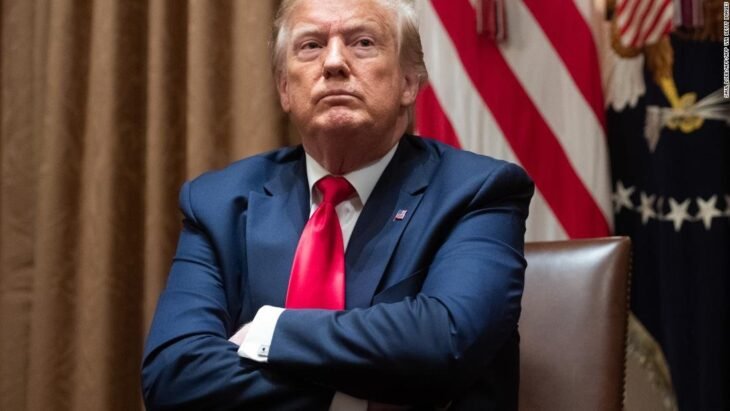
In the past year, this push has been spearheaded by Massad Boulos, U.S. President Donald Trump’s senior adviser for Arab and African affairs.

After rounds of shuttle diplomacy, Boulos announced an apparent breakthrough earlier this month: the two rival governments had agreed on a unified budget for the first time in years. Boulos hailed the deal on social media as “a milestone for cooperation that offers many benefits for the economy and for Libyans across all regions.”

The agreement is certainly a step in the right direction. But Washington should not imagine that what is essentially a financial deal between two dynasties constitutes a major advance toward political unification.

The April 11 agreement does not address the deeper drivers of Libya’s crisis and raises the risk of renewed destabilization.

Although Libya has not seen major armed hostilities since 2020—when a nearly two-year-long civil war sparked by Haftar’s attack on the Tripoli government came to an end—the continued extraction of state resources for personal gain by both ruling factions has left Libya in a profound fiscal crisis and without a unified executive.

Successive efforts to deal with these challenges have failed. In 2020, the UN launched an initiative aimed at unifying the banking sector, ensuring greater transparency in the oil sector, and encouraging local governance reforms.

These measures were supposed to pave the way for a unified government with restructured political institutions and, within a year, national elections. Partly because of halfhearted support from the Biden administration, the elections never materialized, and the UN push fell apart.

In 2022, the United Arab Emirates, with U.S. acquiescence, brokered a deal behind closed doors that saw the Dabaiba family install a Haftar-aligned chair at the helm of the National Oil Corporation, Libya’s sole wealth generator. By 2025, that formula had averted further civil war but done little else. Libya was mired in economic crisis and political paralysis.

A key reason for the failure of the 2022 deal was its transactionalism—the errant belief that Libya’s political gridlock could be broken by appealing to the commercial interests of competing elites rather than by addressing the needs of the Libyan people.

But this exact logic underlies the current approach of the Trump administration. Instead of striving for a flashy diplomatic breakthrough and an economic deal with unelected elites, Washington needs to pursue a broader and more inclusive path in Libya.

It must support existing UN efforts to bolster the independence of Libya’s financial and administrative institutions and lay the groundwork for national elections. And it must do more to rein in the disruptions caused by Turkey, the single most consequential foreign actor in the country. Only then will the United States truly help prevent Libya from slipping into greater disarray.

GILDED STATE

Libya’s relative peace in recent years is often taken as a sign of stability. This is a dangerously complacent view. Both the Dabaibas and the Haftars have used their financial gains to acquire advanced weapons and bolster their own military coalitions, a development that increases the risk of violent confrontation.

While the main factions have grown rich, the division of the country has lowered living standards nationwide, especially in peripheral areas. In the remote south, the Haftars’ focus on illicit revenue over local needs has lately stoked violence.

The divisions in Libya’s governing structure also make the country susceptible to manipulation by foreign actors, chief among them Turkey.

Ankara’s Libya policy has lately been dominated by the pursuit of a maritime deal, originally struck in 2019, that would give Turkey unprecedented regional control and connect it to Libya’s eastern shores.

After years of quiet entrenchment in the northwest, Ankara spent much of 2025 courting the Haftar family in the east in an effort to secure parliamentary ratification of the maritime deal—a shift from its traditional alliance with the Dabaibas. Turkey is now an ambitious, revisionist actor in Libya, playing both sides and disturbing Libya’s already fragile power balances.

After the collapse of the UN-backed election initiative in 2021, the Biden administration retreated from the notion that promoting democracy would stabilize Libya and instead followed the Emirati impulse to cut deals.

The July 2022 appointment of a Haftar loyalist at the helm of the National Oil Corporation encouraged Libya’s leaders to further interfere in the economy. Both factions and their associates scrambled to claim piecemeal ownership of state revenues, exert influence over the central bank, and spend public funds on infrastructure at their own discretion.

Some of these expenditures have addressed genuine needs, but a huge amount of money has been devoted to prestige construction projects—stadiums and luxury hotels, for instance—designed to generate contracts for cronies and not to serve the population.​​​​​​​​​​​​​​​​ The Haftars possess certain advantages over the Dabaibas.

Their territory is markedly bigger, encompassing Libya’s major oil fields and export terminals. The scale of the Haftar domain leads foreign governments, such as the United Arab Emirates, to try to woo the potentate in Benghazi without exerting any pressure for reform.

The blurry power-sharing arrangements that were intended to stabilize Libya’s institutions have only accelerated their erosion, as was evident with the central bank in the summer of 2024.

The Dabaibas, reacting to the ever-growing tilt of the National Oil Corporation toward the Haftars, forced out the central bank’s governor in the hopes of installing a loyalist. The Haftars responded by imposing an oil blockade, shutting down most of the country’s routine exports for more than six weeks and costing Libya nearly $3 billion.

The international community refrained from condemning the action, effectively signaling that the Haftars could repeat such coercion with impunity in the future, no matter the costs to ordinary Libyans.

***

Jalel Harchaoui is a Libya specialist with the Royal United Services Institute.

Frederic Wehrey is Senior Fellow in the Middle East Program at the Carnegie Endowment for International Peace.

___________________

The Libyan paradox

Salah El Houni

There is need for a domestic political conviction that the cost of continuing to use oil to fuel conflict has come to outweigh any gains reaped by all parties involved.

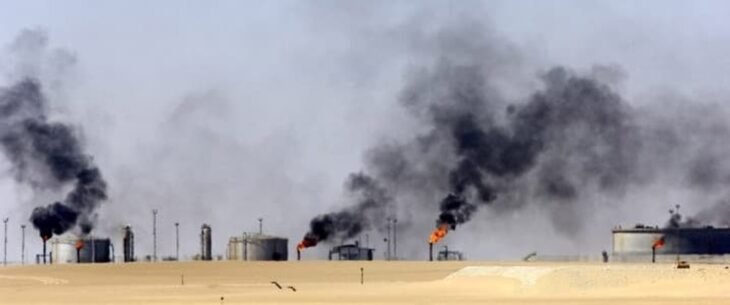
There is a stark paradox that encapsulates the entire Libyan predicament: this is a country that possesses the largest proven oil reserves in Africa while being unable to finance its regular budget. Its national oil company has even accumulated a debt exceeding 31 billion dinars in just three years. These figures, revealed in official documents submitted by the National Oil Corporation as part of its 2026 financial report, do not merely point to a budget crisis. They are rather a symptom of a deeper malaise that has plagued the Libyan state for over a decade, and which consists in the misuse of oil resources to fuel division.

At first glance there may seem there is reason to hope. After years of repeated shutdowns and losses exceeding $100 billion since 2011, Libya recorded its highest oil production level in a decade in 2025, averaging nearly 1.4 million barrels per day.

In February 2026, the National Oil Corporation announced its first bidding round in nearly two decades, which was won by companies like Chevron, Eni, Qatar Energy, and Repsol—an undeniable sign of renewed international confidence in Libya’s oil wealth.

But behind this statistical veneer lies a harsher reality: the relative stability which the sector enjoys today is not the fruit of institutional reform, but rather a fragile equilibrium born of a temporary convergence of interests among competing powers—a equilibrium that could collapse after a single decision or a single security incident.

The true nature of the crisis is now documented in international testimonies with undeniable credibility. A report by the UN Security Council’s Panel of Experts revealed a systematic looting activity taking pace through Libyan ports, where the Arkenu Oil Company was, for instance, used as a front to divert more than three billion dollars outside official channels between January 2024 and November 2025 alone. The report explicitly states that both Tripoli and Benghazi rely on smuggling networks as a strategic means to finance arms purchases, in blatant violation of an international embargo that has found no effective enforcement.

What makes the situation even more painful is that Libya does possess adequate technical oil knowhow. The National Oil Corporation (NOC) boasts genuine engineering and management expertise, its international partners believe in its production capacity, and figures prove that operational efficiency is not the problem. The problem lies in who controls the revenues and where the oil income goes. When oil revenues are systematically diverted to armed groups and militias instead of the national treasury, the NOC is transformed from a backbone of national development into an instrument of division.

As part of this paradox, the very same enormous oil revenues that are supposed to finance reconstruction and modernisation of infrastructure are now helping each side cling to its political position hence perpetuating chronic division. In other words, oil is not funding stability; it is funding instability.

The impact of this odd situation is not confined to within Libya’s borders. The rise and volatility of Libyan production directly impact global oil markets, particularly Europe, which imports a significant portion of its light, low-sulfur crude from Libya. In the context of the current energy crisis gripping Europe due to disruptions in the Strait of Hormuz, the strategic importance of Libyan oil is greater than ever. This means that the interest of European partners in ensuring the institutional stability of the Libyan oil sector has never been clearer. However, this interest does not appear to have translated into genuine political pressure beyond the usual diplomatic pronouncements.

A fundamental solution does hinge on new investments or more advanced technology. What Libya needs is what it has lacked so far: a unified governance institution to oversee oil revenues and their distribution transparently while transcending political divisions. It needs a joint account into which revenues flow away from existing regional alignments. This is not a new idea.  This notion was floated in numerous negotiations and was included in successive roadmaps, but was never implemented because those who control the oil do not want to be held accountable.

There are a few indications, however, showing that change is possible. Drawing major international companies like Chevron and BP to Libya brings to the table international stakeholders with direct interest in institutional stability, and wielding the type of influence that Arab governments and the international community involved in the negotiations have lacked. When Chevron invests billions of dollars it does not do so without genuine institutional guarantees.

However, this optimistic scenario remains contingent on one fundamental condition: that the will of local actors shifts from exploiting division to investing in oil. This condition cannot be met by external pressure or foreign investment alone; rather, it requires a domestic political conviction that the cost of continuing to use oil to fuel conflict has come to outweigh any gains reaped by all parties involved. All indications suggest that this conviction has not yet matured. Until it does, Libyan oil will remain a squandered resource instead of a tool for construction.

___________________

Eastern Libya’s Top Money Man: Spotlight on Ahmed Gadalla (5)

The Sentry

Undue Influence Over Commercial Banks

Exploiting The Weakness of Dinar Banking

In eastern Libya’s commercial banks, where Gadalla holds sway, standard banking procedures are often subverted. Behind Gadalla stands the Haftar family’s political and coercive power, while the CBL in Tripoli has tended to quietly absorb the resulting financial abuses.

Two scandals that illustrate this trend burst into public view in the spring of 2024. In May 2024, Wahda Bank experienced a large and unusual disruption amid what commentators called the “zero-clearing incidents.”

In a scheme that involved 151 accounts, including 10 corporate accounts, Wahda Bank issued certified checks—totaling about 300 million dinars ($55 million)—through manual processing, meaning the CBL’s electronic clearing system was not used.

Later, when the transactions were processed through the CBL’s central system, it turned out that the Wahda Bank accounts behind the checks lacked sufficient funds.

The CBL suspended the suspicious accounts at Wahda Bank but maintained a low-disclosure posture, neither publicly denouncing nor explaining the incident.

Forcing the Benghazi bank to absorb the 300 million dinars would have destabilized the institution and threatened salary payments to innocent families in eastern Libya.

Beyond the archaic character of the CBL’s checks and balances, the May 2024 Wahda Bank incident reflects Gadalla’s influence over eastern Libya’s banking sector.

Indeed, multiple sources interviewed by The Sentry mentioned Gadalla’s tacit control over the institution at the time of the “zero-clearing incidents.”

Gadalla also sits on Wahda Bank’s board of directors. Wahda Bank did not respond to The Sentry’s request for comment.

Another irregularity, which occurred in April 2024, involved letters of credit. A whistle‑blower from the National Commercial Bank sent a file to the CBL in Tripoli proving that letters of credit worth 400 million dinars (about $88 million at the time) had been approved, even though the applicants never lodged the matching dinar balances.

The paperwork featured the Turkish-based company of Zliten-native and businessman Fauzi “Abudaghel” al-Muqla, who is married to the sister of Saddam Haftar’s wife.

Muqla’s privileged standing within the Field Marshal’s family let him skip key safeguards: the bank ignored the missing dinar deposit.

This letter-of-credit abuse took place against a backdrop in which the National Commercial Bank was already under Gadalla’s sway, according to several sources familiar with eastern Libya’s banking sector.

As millions of dollars flowed to the Turkish entity’s dollar accounts at al-Masraf in the UAE, Saddam Haftar’s circle reaped foreign currency without even having to put up the corresponding dinar amount upfront. Neither Muqla nor the National Commercial Bank responded to The Sentry’s requests for comment.

Both Ends of the Wire

The abuse of letters of credit—a persistent feature of Libya’s financial landscape for more than a decade—has intensified since 2022. The deterioration has affected commercial banks in both eastern and western Libya, but those headquartered in the northeast present a distinct concern.

Gadalla exerts control on both ends of the letter-of-credit circuit. In addition to his authority over eastern Libya’s main banks, he reportedly requires foreign-based entities seeking letter-of-credit proceeds from Libya to open U.S. dollar accounts at al-Masraf.

Straddling Benghazi and Dubai, Gadalla extracts informal commissions on dollar outflows originating from the CBL to the UAE.

Such concentration of power in the hands of a single individual represents a threat of a different order. It contributes to accelerating the depletion of Libya’s dollar reserves and obstructs legitimate trade, as lawful importers are forced either to pay the informal commissions or to exit the market entirely.

It also weakens anti-money laundering enforcement. With both the previous and current CBL governor reluctant to denounce banking scams in eastern Libya, the boundary between legitimate and illicit finance has grown blurrier, leaving Haftar’s faction wealthier and the dinar ever more vulnerable.

Chinese Drones Scandal

Gadalla’s illicit activities extend beyond the banking sector and beyond Libya, with companies under his control also serving as vehicles for arms smuggling and other questionable transnational endeavors.

In April 2024, Canadian authorities revealed a conspiracy involving at least two Libyan employees of the International Civil Aviation Organization (ICAO), a UN agency based in Montreal. The investigation found that the two individuals had participated in a broader scheme meant to facilitate the procurement of Chinese-manufactured combat drones for the Haftar family in Benghazi.

Stages of the acquisition program were financed not through monetary payments but through illicit oil schemes such as deliberate discounts on NOC crude sales to Chinese oil firms.

Notably, one of Gadalla’s Dubai‑registered companies paid for the sea transport of the drones, tying him to the operation. The breadth of this maneuvering was made clearer in January 2025, when the Canadian press revealed that the Federal Bureau of Investigation (FBI) had quietly arrested Chinese national James “Kuang Chi” Wan, a former ICAO employee with suspected links to Beijing, as early as January 2023. Although Wan was detained at Seattle-Tacoma International Airport two years earlier, his case remained under seal until reporting established that he was suspected of participating in the same attempted sale of more than $1 billion worth of armed drones and other materiel from China to eastern Libya.

According to the FBI complaint attached to the arrest paperwork, Wan told investigators that one of the co-conspirators was a special advisor to Chinese President Xi Jinping.

Even if that claim remains unproven, the mechanics of the scheme point to senior-level coordination in both Beijing and Benghazi: Libya’s NOC sold crude oil to Unipec in August 2022 at an abnormal discount, creating a de facto transfer of wealth from Libya to a Chinese state-linked buyer.

As for the drone supplier, FL-1 drones manufactured by state-linked Zhongtian Guide Control Technology Co., were shipped from Qingdao to Benghazi in March and April 2024 as part of the same arrangement.

This coordination is consistent with what Canadian prosecutors described as an illicit “commercial entente” in which senior LAAF commanders sought to exchange NOC oil for Chinese military technology.290 Such a transaction could not have proceeded without the approval of the Haftar family, above all Saddam Haftar.

The LAAF did not respond to The Sentry’s request for comment. The large FL-1 combat drones, disguised as wind turbines, were intercepted in southern Italy in June 2024.

Under UN Security Council Resolution (UNSCR) 1970, any transfer of arms, related materiel, or military-use equipment to Libya without prior approval from the 1970 Libya Sanctions Committee is a violation of the UN arms embargo and international law.

The FL-1 transfer attempt appears to have violated that embargo. The co-option of the NOC to facilitate the circumvention of the UN arms embargo was not an isolated occurrence during Benqdara’s NOC chairmanship from 2022 to 2025.

In a separate episode, the Haftar family utilized the NOC to secure the services of an Irish private military contractor.

Spanish Drones Scandal

In 2023, Spain’s Guardia Civil and French police intercepted illicit arms shipments valued at 14 million euros ($16.4 million). The materiel—comprising 44 drones, thermal cameras, helmets, and other military equipment from Spanish manufacturers Shadow Lynx, Aeronáutica DTS, and DUMA Engineering—was intended for Saddam Haftar in Benghazi.

The Spanish authorities later made it publicly known that they had arrested a Libyan national and four Spaniards involved in a plan to violate the UN arms embargo. Yusef al-Ubeidi, the Madrid-based individual suspected of having helped coordinate the arms purchase, told investigators that Gadalla, acting for Saddam Haftar, was involved. According to the Spanish press and a senior Spanish official with knowledge of the scheme, one of Gadalla’s Dubai firms played a role in the scheme, which included wiring 14 million euros to the Spanish firms as part of a documented plan to ship the equipment to eastern Libya.

Maritime Smuggling

In 2025, an arms smuggling incident off Greece implicated Gadalla and UDS Shipping Services, a Dubai maritime company under his control. The episode was tied to the weapons pipeline Saddam Haftar established after the outbreak of civil war in Sudan in April 2023, turning Benghazi into a major transit hub for weapons supplied by the UAE and destined for the RSF in western Sudan’s Darfur region.

In late July 2025, the Alushibe Group’s 475-foot container ship, the Aya 1, lifted 350 containers filled with ammunition and about 200 large military-use vehicles from the UAE and headed for Benghazi.

The maritime transfer, ultimately intended for the RSF in Sudan, was intercepted off Crete by Greek and Italian patrol boats enforcing the UN arms embargo on Libya. A search at a Greek port revealed the military-use vehicles despite a manifest claiming the ship was carrying cosmetics and electronics to the Netherlands.

Still, the maritime officers released the Aya 1 without confiscating the thousands of tons of military-use hardware. One possible explanation for Greece’s leniency is that, in the summer of 2025, Crete was facing a surge in irregular migrant arrivals from eastern Libya, an area under Haftar family control.

In the months following the Greek government’s decision not to seize the entire shipment, its relations with eastern Libya’s leaders improved. Gadalla didn’t respond to The Sentry’s request for comment. EU authorities documented the incident, which likely violated UN arms embargoes on Libya and Darfur.

_____________

The EU’s Technocratic Trap in Libya: How Brussels Is Ceding the Mediterranean (1)

Andrea Cellino

How EU technocratic policy in Libya erodes influence, enabling rival powers to shape the country’s political and security landscape

Fifteen years after the fall of Muammar Gaddafi, the European Union remains Libya’s largest donor — but a marginal political actor. By prioritizing technocratic interventions over strategic engagement, Brussels has ceded ground to actors like Russia, Turkey, and the United Arab Emirates, who now shape realities on the ground.

This commentary examines how EU migration policies, fragmented assistance, and diplomatic retreat have undermined its leverage while reinforcing problematic local power structures. It argues that without a decisive shift toward a coordinated political strategy, the EU risks permanent irrelevance in a region central to Mediterranean stability.

Fifteen years after the fall of Gaddafi, the European Union finds itself in a paradox of its own making in Libya. It is the country’s largest donor, having channeled hundreds of millions of euros through the EU Emergency Trust Fund for Africa (EUTFA) and the NDICI-Global Europe instrument, and yet it wields almost no political influence over Libya’s future.

Brussels has a naval mission in the Mediterranean, trains coastguard forces, funds rule-of-law programs, and finances skills development schemes — and yet Russia maintains a permanent military footprint in the country’s east, Turkey retains troops and bases in the west, and the UAE continues to back Khalifa Haftar’s Libyan National Army with arms and political support. The EU, in short, has traded geopolitical relevance for the comforting illusion of technical manageability.

From Mediator to Manager

The turning point came gradually. After the Berlin Conference of January 2020 — the last instance when the EU genuinely tried to convene the major actors around a common roadmap — Brussels allowed its diplomatic ambitions to wither. The UN-brokered Government of National Unity (GNU) that emerged from the Libyan Political Dialogue Forum in February 2021 offered a convenient exit: Responsibility for the political process was handed entirely to UNSMIL, while the EU settled into the role of a supporter and service provider.

The Russian invasion of Ukraine in February 2022 sealed this retreat, dramatically reshuffling the EU’s strategic priorities and providing institutional cover for what had already become a policy of deliberate depoliticization. EU officials with direct responsibility for the Libyan file have since confirmed that the step back from political engagement was a conscious choice, driven by persistent divisions among member states that made any common political position effectively impossible to agree upon.

What followed was an acceleration of the technocratic turn. The EU’s assistance, channeled through UN agencies (UNDP, IOM) or national cooperation managers (GIZ, Expertise France), concentrated on high-visibility, rapidly measurable interventions: de-mining, infrastructure rehabilitation, local governance support, civil society hubs in municipalities.

The most recent Special Measure for 2024 — the latest iteration of this approach — allocates €7.15 million to a private-sector skills program and €8 million to a justice and rule-of-law project, which the High Representative Kaja Kallas described as targeting “juvenile justice, rule of law institutions, and the fight against corruption.”

These are not trivial activities. But they are also not a strategy. The European Court of Auditors noted in 2024 that EU support to Libya had remained “not sufficiently targeted,” distributed across too wide a range of actions without a clear hierarchy of priorities. The head of the audit, Bettina Jakobsen, was more blunt: The result was “fragmented support with little focus on strategic priorities” that “fails to produce an impact.”

Migration Externalization and

Its Political Costs

Nowhere is the technocratic evasion more consequential — or more contradictory — than in the field of migration management. The EU has, since 2017, built an elaborate architecture of border externalization: It funds, trains, and equips the Libyan Coast Guard (LCG) in exchange for intercepting migrants before they reach European waters. This arrangement has been dressed in the neutral language of “capacity-building,” “integrated border management,” and “SAR coordination,” obscuring the political choices it entails.

The humanitarian costs of this approach are now beyond reasonable dispute. The UN Human Rights Council’s Independent Fact-Finding Mission on Libya concluded in March 2023 that there are “reasonable grounds to believe” that systematic abuses in detention centers — including torture, sexual violence, forced labor and extortion — reach the threshold of crimes against humanity, and that the EU’s support for interceptions has indirectly contributed to these crimes.

The LCG units that EU resources help equip are linked to militias that profit from the detention system through embezzlement of state funds, release payments, and forced labor. Far from dismantling this system, EU cooperation has strengthened its actors, providing them with institutional cover and resources that enhance their bargaining power vis-à-vis both the Libyan governments and European partners.

The geopolitical costs are less discussed but equally serious. By subordinating every other interest to migration containment, the EU has progressively legitimized actors it previously kept at arm’s length. The most striking recent example concerns Haftar’s forces in eastern Libya. From mid-2022 onwards, thousands of migrants began departing from eastern Libya, with Haftar’s forces actively orchestrating the embarkments. Italy and Greece responded by opening political channels to the Haftar clan and initiating training programs for the Libyan National Army.

In July 2025, EU Commissioner for Migration Magnus Brunner led a high-level delegation to Benghazi — only for Haftar to expel it when his demand to include ministers of his parallel, unrecognized government was refused. Rather than marking a clean break, the incident was followed by a Frontex and Commission visit to Warsaw and Brussels of Libyan officials from both governments in October 2025 — the first time Haftar’s representatives had been formally received by EU institutions. And in January 2026, it emerged that the EU is planning a maritime rescue coordination center in Benghazi, with initial funding of €3 million, which would provide Haftar’s coastguard with an operational base and, crucially, significant international legitimacy.

***

Andrea Cellino is Vice President at MEIS, the Middle East Institute Switzerland, and Non-Resident Executive Fellow at GCSP, the Geneva Centre for Security Policy. 

_______________

Inflation in Libya: Oil Revenues, Subsidies, and Hidden Pressures

Rawad M. Shalabi

Inflation may be a global phenomenon, but in Libya its drivers and consequences are uniquely shaped by oil revenues, import dependence, and state spending. While many economies have struggled with rising prices since the COVID-19 pandemic and the war in Ukraine, Libya’s official inflation figures have remained relatively low. Yet beneath this apparent stability lies a more complex reality, one where exchange rates, subsidies, and hydrocarbon income play a decisive role in shaping price dynamics.

Understanding inflation in Libya therefore requires looking beyond headline figures. It is not only a question of global shocks, but of how oil revenues are managed, how heavily the country relies on imports, and how fiscal policy responds to external pressures. In this context, inflation becomes more than an economic indicator, it becomes a reflection of Libya’s broader economic structure and policy choices.

Libya’s inflation story, however, doesn’t follow the same pattern as many other countries. Official figures placed inflation at around 2 percent in 2024, with the IMF later adjusting it to 2.4 percent for the first quarter of 2025 after addressing measurement gaps. Meanwhile, the Central Bank of Libya maintained relatively low rates: a rediscount rate of 3 percent, 91-day deposit certificates at 1 percent, and an overnight facility at 0.25 percent in early 2025. On paper, inflation appears contained, but beneath the surface, pressures remain.

This is where Libya’s dependence on oil becomes critical. According to the IMF, the economy remains highly exposed to global shocks because of its reliance on hydrocarbon exports and its large import bill. The current account shifted from a strong surplus in 2023 to a deficit in 2024, as export revenues declined while imports stayed broadly steady. Fuel imports alone surged dramatically, from an average of $3 billion between 2016 and 2019 to $9 billion in 2024, based on data from the Libyan Audit Bureau cited by the IMF.

For Libya, inflation is not simply a matter of consumer prices. It is deeply tied to oil revenue cycles, subsidy policies, and broader fiscal pressures. By late 2024, fuel subsidies had reached 12.8 billion Libyan dinars between January and November, even as gasoline remained priced at just 0.150 dinars per liter, among the lowest globally. The IMF estimates that energy subsidies account for roughly a quarter of GDP, underlining the significant strain they place on public finances.

The political dimension of inflation is just as significant. When prices rise, the impact is immediate and visible, and governments face pressure to respond. That response often comes in the form of increased subsidies, cash transfers, or tax relief. While such measures can ease short-term pressure, they also risk widening fiscal deficits over time. In Libya, where political divisions already complicate spending control and reform efforts, the link between inflation and fiscal policy becomes even more pronounced.

Central banks around the world have been navigating a delicate balance: reducing inflation without stifling growth. In many cases, this has meant raising interest rates to cool demand, even though higher borrowing costs affect governments, businesses, and households alike. Libya’s situation differs in structure, but the underlying reality is similar, monetary policy cannot be separated from fiscal constraints and political dynamics.

Exchange rates add another layer to the picture. In April 2025, Libya devalued its currency by 13.3 percent, setting the official rate at 5.5677 dinars to the dollar. For an economy heavily reliant on imports—from food to fuel to consumer goods—such a move has direct consequences. A weaker currency can quickly translate into higher local prices, even when headline inflation figures appear stable.

Globally, energy prices remain central to the inflation story. Brent crude averaged around $80.12 per barrel in 2024, according to the U.S. Energy Information Administration. For oil exporters like Libya, this directly shapes government revenues. For import-dependent economies, it drives inflation. The same market dynamic can therefore strengthen public finances in one country while deepening the cost-of-living crisis in another.

What makes inflation particularly sensitive politically is its uneven impact. Lower-income households are hit hardest, as they spend a larger share of their income on essentials such as food and energy. As a result, inflation often becomes less about macroeconomic indicators and more about fairness, trust, and social stability. When governments fail to cushion the impact, economic strain can quickly evolve into political pressure.

Ultimately, the recent inflation wave has done more than push prices upward. It has exposed structural weaknesses in the global economy, forced countries to rethink energy and food security, and highlighted the risks of overdependence. For Libya, the lesson is clear: inflation is not only driven by global forces but also by domestic choices—how oil revenues are managed, how reliant the country remains on imports, and how resilient its public finances are. Today, more than ever, the line between economics and politics is impossible to ignore.

__________________

Warlord Haftar is tightening his grip on Libya, with a US imprimatur

Khaled Mahmoud

This month, the United States launched its annual “Flintlock” military exercises in Libya for the first time. For the U.S., these multinational drills represent an opportunity to limit Chinese and Russian influence in the country and a “significant step forward for military integration in Libya,” which has been divided into dueling governments in the east and west for the past decade.

Field Marshal Khalifa Haftar, the strongman of eastern Libya and a former CIA asset, is hoping to use this moment to cement his grip on power. The military leader has over the past decade become a leading figure in Libyan politics, owing in large part to his control over military and energy infrastructure throughout the country.

But, at the advanced age of 82, he has been relegated to the role of kingmaker behind the curtain, positioning his sons to carry on his legacy and solidify the family’s control over Libya. If he succeeds, he could well reproduce the experience of his predecessor and rival, the late Col. Muammar Gaddafi, who led the country for more than 40 years before being unseated and killed in 2011.

Flintlock 2026

Earlier this month, Massad Boulos, senior adviser to President Donald Trump for Arab and Middle East affairs, persuaded the Libyans to put a temporary end to their east-west rivalry through an agreement on unified spending between the two competing governments: the Government of National Unity based in the capital Tripoli under Prime Minister Abdul Hamid Dbeibah, and the parallel Government of National Stability led by Osama Hammad, which is backed by Haftar.

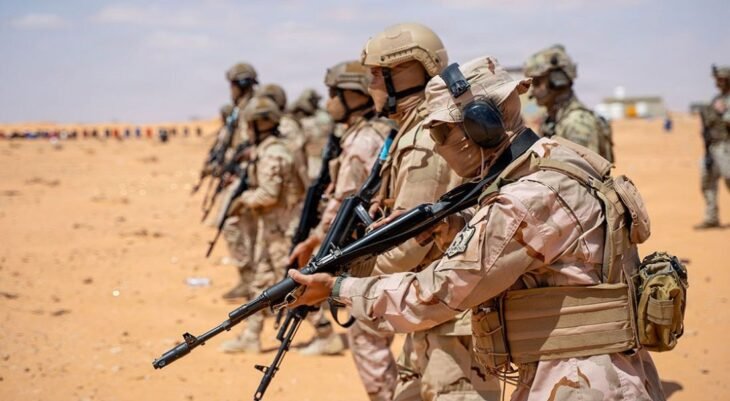
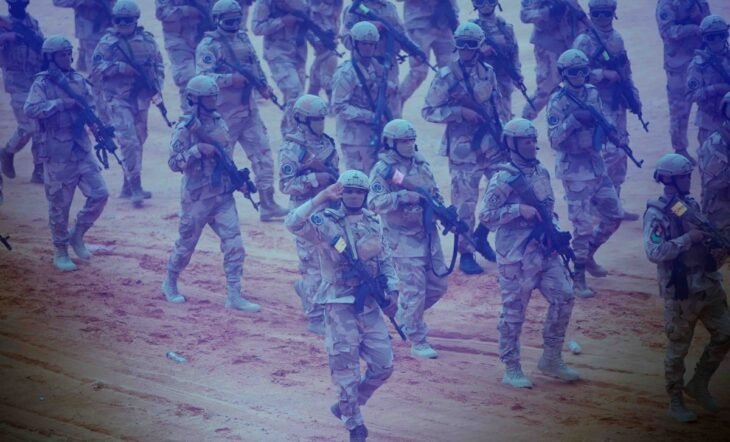
The “Flintlock 2026” maneuvers, which are sponsored by AFRICOM and involve about 1,500 troops from 30 countries, are bringing together forces from eastern and western Libya for the first time. Boulos placed the exercises at the heart of the political process, describing them as an opportunity to “raise the professionalism of Libyan officers.”

In practice, this represents an American imprimatur for entrenching Haftar’s dominant role in Libyan politics and elevating his family from warlords to international security partners. Saddam Haftar, Khalifa Haftar’s son and deputy, was, after all, seated next to Lt. Gen. John Brennan, the deputy commander of AFRICOM, during the exercises.

Many Libyans question the usefulness of these initiatives, seeing them as nothing more than a temporary painkiller, proof that American efforts are not a solution to the crisis but merely a way of managing it. While the effort to unify the state budget brought a temporary reprieve, it did not resolve the root causes of the power struggle.

It seems that the debt of history still governs Washington’s view of Libya. After the phrase “to the shores of Tripoli” that echoes in the U.S. Marine Corps hymn, American forces have returned once again to the Gulf of Sirte.

Sirte: Former ‘line of death’

Sirte, which the Reagan administration bombed in 1986 under the pretext of dismantling Gaddafi’s regime, is now welcoming AFRICOM officers there to bless the birth of a new military dynasty led by Haftar’s sons.

For the first time, Libya appears as the official host of these joint operations. Brennan described the step as embodying “the vision of leaders from both sides.” Yet the irony lies in transforming Sirte from a geopolitical “line of death” for the former Libyan regime into an attempt to reproduce the “strongman” model that Washington has long claimed it seeks to dismantle.

Former Libyan Defense Minister Mohammed al-Barghathi believes the scene carries many contradictions. In an interview, he said: “As much as it pleases us to see Libyan officers meeting together, it hurts in our souls that this invitation is taking place on their own soil and under the management of an external party, under the pretext of unifying the military institution.”

In the same conversation, al-Barghathi questioned Washington’s credibility, recalling previous promises by U.S. defense secretaries to install electronic surveillance systems on the southern borders and to hand over four Libyan aircraft held by the United States since the 1969 coup that brought Gaddafi to power. “Those aircraft have today become military scrap after decades beyond their operational life,” he added bitterly, “and American promises never went beyond words that were never fulfilled on the ground.”

The return from exile

Haftar emerged as one of Libya’s most important political actors since he launched Operation Dignity in 2014, launching a military offensive that unseated an Islamist government in Benghazi, the largest city in eastern Libya.

Hafter allied himself with the House of Representatives, a body elected in a national vote in 2014 that would later endorse the Government of National Stability. This relationship helped his military ascent and made him the commander of the National Army with the rank of Field Marshal — the first of its kind in Libya – as a reward for his efforts to “purify the country from the filth of extremists and the Muslim Brotherhood,” as he once told me.

But now, 12 years after his rise and six years after his failure to capture the capital Tripoli, Haftar and his family’s ambitions for power and wealth have mixed together through a model of indirect control.

Militarization of the economy

Haftar’s influence is not limited to military affairs; it also relies on an economic network linked to the army and the family in ways designed to enhance both his political and military influence.

He also benefits from informal exports through companies linked to his son Saddam, which exported about 7.6 million barrels of oil, worth $600 million, outside official channels between May and December 2024. In 2025, average production reached 1.37–1.375 million barrels per day, the highest level in 12 years, with oil revenues amounting to about $22 billion — a 15% increase from the previous year.

Haftar uses his control to threaten the closure of oil fields in order to obtain a larger share of revenues or political concessions, as his economic power depends heavily on his control of the Sirte Basin.

Family ambition

Studies indicate that Haftar’s forces form a broad alliance of armed groups also linked to economic interests in eastern Libya.

Saddam became his father’s deputy after leading military units that play a central role in the power structure and exert influence over economic deals related to reconstruction.

A senior commander in Haftar’s forces said the elevation of Haftar’s sons represented an effort to consolidate power between senior and junior leadership in the army. Another officer who preferred not to be named said that the situation appears stable inside the army for now, but it could change quickly if Haftar’s influence diminishes in one way or another.

A UN Panel of Experts report accused Saddam, in partnership with Ibrahim Dbeibah (the son-in-law of Prime Minister Dbeibah), of managing an unprecedented system of “institutional corruption” in the energy sector by exploiting his influence to provide political and security cover that enabled criminal networks to escape punishment entirely.

Khaled Haftar holds the position of Chief of Staff of the army, which numbers about 90,000 fighters, with an unofficial budget estimated at 5

billion dinars ($800 million) for salaries and operations, not to mention the value of weapons and their secret deals, which far exceed that amount.

But the most important of Haftar’s sons is the undeclared one: the eldest, al-Siddiq, who most resembles his father in appearance and character. He has gone beyond the role of loyal assistant to become the keeper of his father’s secrets and his de facto foreign minister.

Al-Siddiq once told me in a private conversation in Cairo that he dreams of heading the government. But he bristles at allegations that his family will become like the Gaddafis. “We are a different family and necessarily our experience does not represent others,” he told me in 2024. He was the only one who accompanied Haftar when he entered the military hospital in Paris for treatment following a health crisis he suffered during a visit to Cairo years ago.

Washington and a new dictatorship

The path the Haftar family is taking today goes beyond traditional military ambition; it is an attempt to legitimize family influence through parallel institutions that guarantee financial and security sustainability.

With presidential elections indefinitely postponed, Haftar is no longer able to claim the throne of the country. But he has now necessarily become the maker of new kings who bear his name.

Will Washington repeat its classic mistake of supporting the “strongman” to preserve temporary stability, only to wake up later to a more complex and corrupt family dictatorship?

Talk of “unifying institutions” risks becoming the wholesale privatization of the army and oil in favor of a single family — with American blessing.

***

Khaled Mahmoud Ramadan is an Egyptian journalist and Cairo University graduate. Specialized in Arab and political affairs, his reports are widely cited by global news agencies. His career includes roles at Al-Arab, the Libyan News Agency, and Radio Canada. Since 1999, he has written for Asharq Al-Awsat, while also contributing to Egypt’s Al-Dustour and Lebanon’s Al-Akhbar.

_____________

Libya oscillates between cooperation and illusion

Kersten Knipp

For the first time, representatives from both sides of Libya’s political divide are participating in Flintlock, a multinational military exercise under US leadership. Is this a tentative sign of hope for reunification?

Soldiers from around 30 nations are training to fight terrorism, practicing international cooperation and seeking to strengthen the region’s fragile stability in Flintlock, a joint military exercise under US leadership. The training takes place in Libya and Ivory Coast through the end of April.

For Libya, which has been split into east and west administrations following years of civil war, it is particularly significant that representatives from both parts of the country are participating in the exercise for the first time.

‘Visible rapprochement’

“All things considered, this is a truly remarkable political signal,” Hager Ali, a political scientist at the German think tank GIGA Institute in Hamburg, told DW. Flintlock is part of an established US-led military exercise format; however, the location and participants make a difference this time, she said.

“The fact that the exercise is taking place in Libya for the first time and that both rival camps are represented is certainly a special feature,” she added, noting that it is evidently part of the longer-term efforts to reunite the armed forces that have been fragmented since the fall of Gaddafi in 2011.

Michael Bauer, head of the Konrad Adenauer Foundation (KAS) office in Tunis, agrees. “The publicly staged handshake between the two rival camps represents a rare, visible sign of rapprochement,” he said. This demonstrates that cooperation is possible, at least at the operational level — albeit still under external mediation, particularly by the US, he told DW.

Dysfunctional state

This cautious rapprochement under American pressure involves a country that still barely functions as a state. “The country lacks a unified, functional government structure with a clear delineation between the executive, legislative and judicial branches,” the recently published Bertelsmann Transformation Index 2026 states.

In other words, political and economic power is divided between rival governments, armed groups and other regional actors, resulting in a fragmented political environment that hinders the establishment of effective democratic rule.

Libya has been divided since 2014 between two rival governments. In the west, the UN-recognized Government of National Unity in Tripoli. In the east, the Government of National Stability in Tobruk is backed by General Khalifa Haftar’s Libyan National Army.

Against this backdrop, any form of cooperation is remarkable — and the military exercise is not the only example. Recently, for the first time in many years, a joint national budget was adopted. North Africa expert Bauer views this as a “tangible sign of institutional rapprochement,” but warns against unrealistic expectations.

Hager Ali, too, considers this to be only one possible step in a longer process. “The joint budget could help rebalance economic power structures — particularly vis-à-vis influential actors such as General Khalifa Haftar, who rules the eastern part of the country and whose network is deeply embedded in Libya’s economic structures,” she said, adding that at least, it represents an attempt to centralize political and economic leverage more strongly.

Other factors at play

Both analysts emphasize that the motives behind theUS-led military exercise extend far beyond Libya. The focus is on counterterrorism across the entire Sahel region, the increasing spread of weapons there — for example as a result of the war in Sudan — and efforts to push back Russian influence. Hager Ali points in particular to Moscow’s presence in eastern Libya, noting that “the US in particular is clearly seeking to counter this more strongly.” 

Libya is increasingly become a stage for international strategic competition due to its geographical location in North Africa and oil resources.

“Libya’s oil production, stable for now under informal arrangements but structurally fragile, matters more than usual,” the Washington-based think tank Middle East Institute (MEI) recently stated. 

This could present an opportunity for Libya, however, domestic political dynamics remain unpredictable, and key questions regarding the distribution of power and resources continue to be disputed among rival centers of power. “Succession in Libya is unlikely to be resolved solely through formal legal mechanisms,” the MEI analysis says. Isolated signs of cooperation are unlikely to make much of a difference in addressing this structural problem.

Economic tensions

“Libya’s current fiscal path is unsustainable. Persistently large fiscal deficits are intensifying pressures on the exchange rate, international reserves and inflation,” the International Monetary Fund assessed in a recent study. High public spending, inflation, and currency pressures are placing pressure on the population and exacerbating social tensions. Reforms have long been considered urgently necessary but remain politically difficult to implement.

Despite the recent signs of cooperation, North Africa analyst Michael Bauer sees likttle chance in the near future of substantial progress between the conflicting parties and their leaders. “The division gives them access to resources and ensures their influence,” he told DW. “The tentative attempts at cooperation have so far been little more than collaboration deemed useful by both sides,” the Libya expert added.

For Libyans, this means that cooperation on military exercises and the national budget could indeed be a first step. However, as long as the key political actors continue to profit from Libya’s division and maintain their power structures, a strong and united Libya is likely to remain an illusion.

***

Kersten Knipp – Political editor with a focus on the Middle East

_________________
Eastern Libya’s Top Money Man: Spotlight on Ahmed Gadalla (4)

The Sentry

Gadalla Now: The Haftars’ Fixer for Money and Arms

A Convenient Playbook

In 2020, the Haftar family carried out its first significant move into Benghazi’s private sector. They set their sights on Berniq Airways, a private airline co-founded in 2018 by Fayez Bushnaf.

The entrepreneur is the nephew of Ibrahim Bushnaf, who served as interior minister in Abdullah al-Thani’s eastern-based government from 2018 until 2021 before being appointed Libya’s national security advisor by the eastern-based House of Representatives, a post he still held at the time of publication.

In addition to being the relative of a senior pro-Haftar official, Fayez Bushnaf used his commercial success to fund the Haftar family’s war effort starting in 2014.

In 2020, however, tides shifted, and armed pressure from Saddam Haftar and his allies forced Fayez Bushnaf to surrender his shares in the airline and leave Libya.

A distinct structural shift occurred that year. As the Haftar family deepened their territorial and military hegemony in northeastern Libya, the existence of independent commercial entities seemed to become unacceptable.

They initiated a campaign to subjugate almost every viable enterprise in the private sector, demanding total subservience. This policy meant the end of Berniq’s autonomy. Despite Bushnaf’s record of support for the Haftars, they turned against him and took over his airline.

The move was not precipitated by defiance or insurrection on the part of the entrepreneur but was rather an extension of absolute power. Indeed, across almost all sectors of eastern Libya’s economy, a clear pattern has emerged in recent years: no business is allowed to succeed unless it comes under the Haftars’ sway.

The Haftar family installed loyal proxies to take over Bushnaf’s surrendered shares.

This modus operandi, which is central to the family’s stranglehold over eastern Libya’s economy, creates a layered power structure in which formal ownership is largely cosmetic.

The Haftar-appointed shareholders who appear in corporate registries do not, in practice, exercise meaningful authority; they can be replaced at will and serve primarily as figureheads.

At the same time, the Haftars themselves set strategic priorities but do not run day-to-day affairs. The result is an operational vacuum that is filled by a distinct class of intermediaries whose names seldom appear in the official paperwork.

These intermediaries handle business operations, master the financial details, and arrange the more controversial transactions requested by the Haftars. Gadalla is the archetype of this category.

His authority did not derive from any equity stake or formal corporate title but from the Haftars’ need for a trusted operator capable of managing daily affairs on their behalf. Within such an opaque and informal dynamic, second-tier actors like Gadalla enjoy a degree of leeway that also allows them to enrich themselves.

Capturing the Bank of Commerce and Development

This arrangement was in force with the Haftar takeover of Benghazi’s BCD in 2022. Employing the same tactics used against Bushnaf and his airline, the Haftars turned on an ally and compelled the BCD founder, Jamal Tayeb Abdel Malek, to surrender his shares.

On paper the BCD chair passed to Haftar loyalist Wassim al‑Zway—genuine authority, however, flowed to Saddam Haftar’s circle. Concretely, this has meant that Gadalla influenced the day-to-day operations of BCD, the inner workings of which he would have already been exposed to thanks to several years serving as BCD founder Abdel Malek’s protégé.

The Haftars’ protection enabled Gadalla to handle sensitive financial decisions for the bank,184 and he rose to become BCD’s de facto chief. Although modest in size, BCD’s status as a Benghazi‑headquartered private bank turned it into a bellwether, enabling Gadalla to grow into a powerful mogul in his own right.

The BCD did not respond to The Sentry’s request for comment.

Circulating Russian Counterfeit Dinars

As early as May 2016, the Russian state firm Goznak had begun shipping billions in dinar banknotes to Haftar’s camp, just after the eastern government lost UN recognition.

Roughly 14 billion dinars entered circulation in this fashion.

The Haftar family handed the cash out as LAAF salaries and other payouts; many of the Russian-printed banknotes were sold on the parallel market for dollars used to buy military resources, including Russian mercenary services, causing the dinar to depreciate.

In 2020, US pressure helped block further Goznak deliveries from Russia. However, the influx of Russian-printed dinars to eastern Libya resumed in the autumn of 2022, after Gadalla took control of the BCD for the Haftar family.

Then CBL governor Kabir, who was drifting toward a pro-Haftar stance while feuding with Prime Minister Dabaiba, limited himself to muted complaints.

Because Washington heightened US military surveillance of Russian cargo flights over the Mediterranean in the spring of 2023, the Haftar family adopted a two‑track approach: Goznak occasionally smuggled pallets of high‑grade banknotes into Libya, while it also helped set up a less advanced press in eastern Benghazi, within the Tocra area.

Quality was inferior, but overall injections of unauthorized dinars had reached about 10 billion in circulation as of October 2025, mainly in two categories of new 50‑dinar notes.

Based on The Sentry’s interviews with banking officials and others in the banking sector, Gadalla was the main person overseeing the distribution of these counterfeit dinars.

First, the BCD processed all deposits of such notes as legitimate, boxing the Tripoli CBL into accepting them. Second, Gadalla’s network sold hundreds of millions of Russian-printed dinars against dollars on the black market in combination with assurance that Benghazi commercial banks would accept those dinar notes, a practice that further weakened the Libyan dinar.

Gadalla didn’t respond to The Sentry’s request for comment. In April 2025, after more than a year of efforts, the Tripoli CBL retired all 50‑dinar notes—including its own official print runs—and even implied that 20‑dinar bills were affected too, suggesting that Russian counterfeiting spread beyond the fifties.

____________

Under the guise of exercises: the United States is trying to gain a foothold in Libya

Washington is seeking to strengthen its position in North Africa and weaken Moscow’s influence.

Libya may become a new point of confrontation between Russia and the United States. This week, for the first time, the republic hosts the Flintlock 2026 exercises under the auspices of the African Command of the US Armed Forces, in which more than 30 states participate. Formally, we are talking about combating terrorism and strengthening security. In fact, Washington is trying to gain a foothold in one of the key countries in North Africa. Whether the United States will be able to strengthen its influence and oust Russia in the region is in the Izvestia article.

Under the cover of exercises

Flintlock is an annual exercise that the United States has been conducting in Africa since 2005. They are usually devoted to the fight against terrorism, border protection and coordination between the armies of different countries. This year, more than 30 countries from Africa, Europe and the Middle East are participating in the maneuvers.

The peculiarity of the current “Flintlock” is that for the first time part of the exercises is taking place in Libya. Since 2014, the country has actually been divided into two parts. In the east, in Tobruk and Benghazi, the forces of the military commander Khalifa Haftar have gained a foothold. In the west, in Tripoli, there is a government recognized by the United Nations, which has been led by Abdel Hamid al-Dbeiba since 2021.

The venue chosen is the city of Sirte, which is considered the conditional border between the two Libyan centers of power. It was here that the Americans decided to bring together representatives of both camps.

“These exercises are not just military training. These are overcoming differences, building capacity, and supporting Libya’s sovereign right to determine its own future. By working side by side with Libyans from the west and east, we are directly contributing to Libya’s efforts to unify their military institutions,” said John Brennan, Deputy commander of the US Africa Command last year.

Thus, Washington is trying to present the exercises as an attempt to promote the unification of the country. However, according to The Wall Street Journal, the main goal of the United States is to weaken Russia’s position in the country. According to the newspaper, participation in the “Flintlock” will allow the Libyan forces to gain access to American equipment and training, which should reduce their dependence on the Russian Federation.

“Libya is gradually becoming a more orderly country. More traditional Western players are ready to interact with both the West and the east of Libya, so Russia finds itself on the sidelines,” Jeff Porter, president of North Africa Risk Consulting in New York, was quoted as saying by the newspaper.

The Russian Defense Ministry has not officially confirmed the presence of military personnel in Libya, but some media reported on the transfer of Russian military and equipment to the region. In particular, after the change of power in Syria, part of the Russian forces first withdrew to the Khmeimim airbase and the fleet base in Tartus, and then allegedly could be transferred to the east of Libya.

A tasty morsel

Libya remains one of the most attractive countries in Africa for external players. It has the largest proven oil reserves on the continent — about 48.4 billion barrels. Natural gas reserves are estimated at about 2 trillion cubic meters. It is the extraction and export of hydrocarbons that form the basis of the Libyan economy.

Russia also retains economic interests in the country. In October 2021, Tatneft announced the resumption of exploration in Libya, and the authorities in Tripoli said they were interested in a full-fledged return of the company. In the same year, Gazprom started producing oil again as part of a project in the Sirte basin. And Russian President Vladimir Putin met with Haftar in the Kremlin in 2025.

There is still great interest in this country. I cannot say that it has been fully realized: the potential of Russian-Libyan cooperation is very great, and it has a lot to develop. But this is complicated by the fact that after the events of 2011, Libya actually turned out to be fragmented,” Andrei Yashlavsky, a leading researcher at the Primakov Institute of the Russian Academy of Sciences, said in an interview with Izvestia.

However, the US attention to Libya is not only due to its natural resources. The country has access to the Mediterranean Sea, and one of the main routes of illegal migration from Africa to the European Union passes through its territory. Therefore, the geographical location of the republic is of great strategic importance.

After the change of power in Syria, Libya’s importance for Moscow has also grown. The Kremlin cooperates with some states in the region. The Russian Defense Ministry reported on the work of instructors in the Central African Republic, and Russian Foreign Minister Sergei Lavrov said in 2021 that the Malian authorities had turned to a “private military company from Russia” to fight terrorism. In this regard, Tripoli can become a link for Moscow with the Sahel countries.

Despite all the drama of what is happening, Libya remains a very tasty morsel both in geopolitical and geo-economic terms. In addition to hydrocarbons, Libya is rich in rare earth resources. Influence in the country means influence on North Africa, the Sahel region, and the Mediterranean,” the expert emphasized.

The true motives

Washington has been systematically trying to establish relations with the east of Libya in recent years, primarily through the 5+5 format. His task is to promote reconciliation and unification of the country. In practice, most 5+5 statements remain declarative. A real unification of Haftar’s army with the security forces of western Libya still looks unlikely, RIAC expert Anton Mardasov told Izvestia.

At the same time, Khalifa Haftar’s sons, primarily Belkacem, maintain close contacts with the United States both on military and political lines, as well as economically. Because of this, rumors periodically appear that different representatives of the Haftar family are oriented towards different external players, and that in the future this may lead to internal conflicts in eastern Libya.

However, this balancing is probably intentional and allows the East not to lock itself into traditional allies: Russia, Saudi Arabia, the United Arab Emirates and Egypt. And at the same time, to develop relations with Turkey, as well as with European and Asian countries,” the specialist explained.

At the same time, the possible Russian presence in eastern Libya remains an important part of the existing balance of power. According to the source, the network of Russian military facilities can serve Benghazi as an additional guarantee of stability. Therefore, the contacts of the Haftar family with the Americans are most likely related not to the desire to dramatically change the status quo, but to an attempt to obtain more economic benefits and other preferences from different partners.

At the same time, the United States is unlikely to have positive feelings about Libya and wants to see it strong and prosperous, Yashlavsky points out.

“For them, this is another “cage” on the big geopolitical board — an opportunity to gain a foothold in North Africa, the Mediterranean, in fact, in the “underbelly” of Southern Europe, and at the same time an attempt to oust Russia from there,” he believes.

At the same time, according to the expert, Russia’s role in Libya is often exaggerated in the Western media. Even after the events in Syria, the country has hardly become a priority for Moscow. However, the United States, according to him, is trying to take advantage of the situation.

But do not forget that at some point Muammar Gaddafi tried to establish relations with the West. Libya has defiantly abandoned programs related to weapons of mass destruction and has moved closer to the United States and Europe. However, this did not end with the normalization of relations, but with the events of 2011: first, the uprising within the framework of the “Arab Spring”, and then the direct military intervention of NATO countries. As a result, Gaddafi himself was killed, and Libya effectively ceased to exist as a single state. A decade and a half has passed, but the country still remains fragmented,” the expert concluded.

__________________
US military in Libya: Pursuing unity and pressuring Russia

Alexandra von Nahmen

For the first time, Libya is hosting the Flintlock military exercise and soldiers from both sides of the divided country are taking part. It’s due to security concerns, economic interests and competition with Russia.

An exercise to unify Libyan forces

After years of fighting, rival factions agreed to a ceasefire in 2020. But the oil-rich nation has remained divided between two administrations since 2014.

Now Libya’s west is controlled by the Government of National Unity (GNU), an internationally recognized UN-brokered provisional government based in Tripoli under Prime Minister Abdul-Hamid Dbeibah. The eastern administration is based in Tobruk and led by Osama Hammad, who is backed by the warlord-turned-politician Khalifah Haftar. 

General John Brennan arrives for the opening ceremony of Flintlock 2026 in SirteImage: Special Operations Command Africa

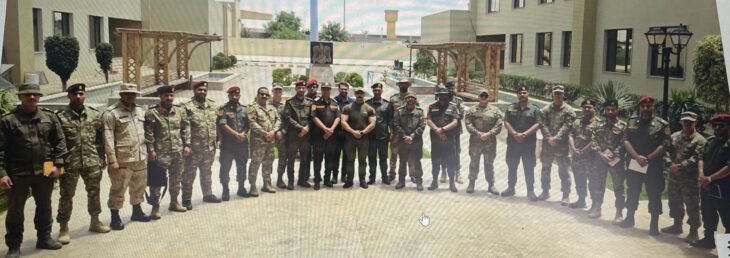
This week, Flintlock 2026, a US-led special operations exercise with 30 nations participating, kicked off in Sirte. The Flintlock event has been held around the continent since 2005, with European and African countries participating. But this year, for the very first time, Libyan forces from both sides of the country are taking part in the exercises and Libya is hosting parts of the exercise. 

Back on board the Dash 8, the VIP of the day is Lieutenant General John Brennan. The deputy commander of the US Africa Command is on his way to observe the training exercise. Speaking with the press, he repeatedly makes clear how remarkable it is that this exercise is bringing together Libyan forces from the eastern and western parts of the country.

“The Libyan people deserve unified security forces to protect them and their interests,” Brennan says. “Security breeds prosperity.”

Why does it matter for the US?

Having soldiers from the two sides train together, wearing the same uniform during Flintlock 2026, is considered a major achievement.

Libya is de-facto split between two competing power centers, but both their representatives were present at the opening ceremony of a joint military drillImage: Special Operations Command Africa

When asked about the purpose of US engagement in the region, Brennan says, “Libya is a critical key terrain for NATO’s southern neighborhood.” 

Western intelligence agencies are highly concerned about activities by terrorist groups like the “Islamic State” and al-Qaeda in the region. They seem to be expanding quickly in Africa, especially in the Sahel, kidnapping civilians and conducting major attacks against militaries and civilians alike. From the US perspective, stabilizing Libya is also about preventing such threats from potentially going global, one official explains.

Prioritizing economic security

However this exercise is also about economic opportunities. The goal is to factor in “where the security and economic interests of the US overlap,” according to a US defense official DW spoke with. This is in line with the US national security strategy, which defines economic security, including securing access to critical supply chains and materials, as one of its priorities. Indeed, the administration under US President Donald Trump is eager to gain access to resources in the region.

But so are other actors. 

Russia, for example, has interest in Libya’s oil and gold reserves. Its former Wagner Group mercenaries, now rebranded as the Africa Corps, have been active in the country since 2019, delivering military equipment and collaborating with forces alinged with Haftar. Meanwhile China’s strategy for Africa focuses on securing long-term access to critical minerals, for instance by acquiring major mining assets. Wagner’s presence in Africa and what it gets in return

A whole region at stake

After a five-hour flight, we’re finally in Sirte. A seemingly endless convoy of SUVs takes us to the designated training site. Every few hundred meters, we see soldiers, police and armored vehicles along the route.

The training scenario is simple: Terrorists have kidnapped migrants and are holding them hostage. Libyan and US special forces must free the hostages and eliminate the terrorist threat. The forces move quickly under the supervision of visiting generals and other dignitaries. Among them is Gianluca Alberini, Italy’s ambassador to Libya.

“For Italy, Europe and the US, a united Libya will be able to provide stability to the whole region,” he tells us. Asked about doubts as to whether the competing factions in Libya are really committed to a united country, he acknowledges that, “it is a process” and calls “a bigger engagement of the US in this region a big factor.”

Incentives for reunification

Two years ago, a military drill like this one, with a new joint operation center for all Libyan forces, was almost unimaginable. Now Libyan military chiefs from competing factions in the country’s east and west hold speeches in Sirte, describing the path to Libya’s reunification as “not a choice but a must.”

Brennan says the magnitude of potential economic investment “is an incentive for a reunification” for Libya’s rival administrations. Other officials gathered in Sirte seem to believe that too. Many point out that unifying the Libyan military could also minimize Russia’s influence. Africa’s critical minerals dilemma explained

Russia doubles its deployment

Following military coups in Mali, Burkina Faso and Niger, Western forces were largely expelled from the Sahel region as successive governments opened their doors to Russia instead. Neither the US nor Europeans want this scenario to repeat in other nearby countries.

Since 2024, Russia has doubled its military deployment in West Africa and is actively seeking to enhance its presence and influence in Libya as well. It reopened an embassy in Tripoli in 2024 and reportedly transferred personnel and military equipment to an abandoned base near the border with Chad and Sudan.

“The significant Russian military presence in Libya on the southern flank of NATO is obviously a concern for us,” British Ambassador Martin Reynolds says in Sirte. 

“We would like to see a government we can work closely with,” Reynolds adds, one “which does not see the need to bring in foreign powers in the way it is currently happening.”

***

Alexandra von Nahmen – Head of DW’s Russia, Ukraine and Eastern Europe department

__________________
Libya could supply the oil the world needs while conflict with Iran seethes

Christopher Harvin and James Durso

A defining pillar of President Trump’s America First agenda has been national energy security. Paired with the diplomatic momentum of the Abraham Accords, that strategy has reshaped regional alliances, strengthened U.S. partnerships and reinforced economic stability at home. 

Today, both pillars are under strain. The widening war with Iran has triggered one of the most severe energy shocks in decades. Oil prices have surged above $115 per barrel as markets react to escalating tensions and the risk of prolonged disruption. 

At the center of the crisis is the Strait of Hormuz, a chokepoint through which roughly one-fifth of global oil supply flows. With shipping constrained, the effects are cascading across the global economy, raising fuel costs, fueling inflation, and increasing the risk of economic slowdown in the U.S. and among its allies. 

Washington has responded with extraordinary measures. As of March, the U.S. had released approximately 172 million barrels from the Strategic Petroleum Reserve as part of a coordinated 400-million-barrel drawdown with members of the International Energy Agency. Although this has helped blunt immediate price spikes, it has depressed U.S. reserves to roughly 243 million barrels — the lowest level since the early 1980s.

At the same time, policymakers have cautiously adjusted sanctions policy to stabilize supply. While maintaining core restrictions on major Russian energy firms such as Lukoil and Rosneft, the U.S. has temporarily eased certain measures. A 30-day waiver for stranded Russian and Iranian oil cargoes and a more flexible approach to shipments involving Cuba reflect a pragmatic effort to ease market pressure amid the Hormuz disruption.

These steps underscore the urgency of the moment, but also their limits. Strategic reserves are finite, and sanctions flexibility carries geopolitical trade-offs. Together, they buy time, but they do not address the underlying constraint: insufficient global supply and supply chain instability.

While Trump looks for options to stabilize markets in a durable way, a more strategic opportunity is right in front of him: Libya. 

Libya holds more than 48 billion barrels of proven oil reserves, the largest in Africa. It also produces precisely the kind of light, sweet crude most sought after by European refiners.

Before years of instability caused by the NATO attack on the Gadhafi regime, Libya generated roughly 1.6 million barrels per day. With political stability and renewed investment, production could exceed 2 million barrels per day, providing a meaningful buffer against Gulf disruptions.

In today’s market, that incremental supply matters. Energy markets are driven as much by expectations as by actual output. The credible prospect of increased Libyan production could restore confidence, reduce volatility, and place downward pressure on global energy prices. 

The challenge is governance,

not geology. 

Since the fall of Moammar Gadhafi in 2011, following NATO’s intervention led by the Obama administration, Libya has remained fragmented. Rival governments and militia control over infrastructure have repeatedly disrupted production and deterred investment. That failure now presents a unique and important opportunity for Trump.  

A durable political settlement in Libya would unlock suppressed production, attract investment and provide Europe with a reliable, proximate alternative to Middle Eastern supply routes. At a moment when the Strait of Hormuz remains a chokepoint, Libya offers a Mediterranean corridor largely insulated from Gulf volatility. 

The benefits extend beyond energy. Libya’s instability has created space for extremist organizations to operate, including ISIS and al-Qaeda. Stabilization would strengthen counterterrorism coordination with the U.S. and Europe and enhance regional security. It would also counter growing influence from China and Russia, both of which are expanding their presence across Africa’s energy sector. Libya, given its reserves and location, is a strategic prize. 

For Trump, Libya offers a rare convergence of opportunity and feasibility. Unlike Iran, it is not an entrenched adversary. Unlike Venezuela, it is not defined by ideological opposition to U.S. engagement. Instead, it is a fragmented state whose competing factions share a common incentive: restoring oil production and revenue. 

That shared interest creates the foundation for a pragmatic diplomatic breakthrough. Emergency reserve releases and temporary sanctions relief are stopgap measures. A successful diplomatic initiative in Libya would expand global supply, reduce long-term price volatility, and deliver a clear geopolitical win. 

At a moment of historic disruption driven by the Iran conflict, Libya is not simply another foreign policy challenge. It is a strategic solution hiding in plain sight. 

***

Christopher Harvin is managing partner of GlobalPoint International, a Washington-based strategic communications and government affairs firm. He is a former adviser to the secretary of Defense and has more than 25 years of experience in the Middle East and Africa. 

James Durso is a regular commentator on foreign policy and national security matters. He served in the U.S. Navy for 20 years and has worked in Kuwait, Saudi Arabia, Iraq and Central Asia.

_______________
Ukrainian forces operating in western Libya as covert war grows

Houda Ibrahim

Ukrainian military forces are operating in western Libya and were behind a recent attack on a Russian tanker in the Mediterranean, an RFI investigation has found. The findings point to a largely covert confrontation between Kyiv and Moscow as they compete for influence on Libyan territory, four years into their conflict.

On 4 March, Moscow accused Ukraine, with support from British intelligence, of attacking the Russian tanker Arctic Metagaz from the Libyan coast. The vessel is part of Russia’s so-called “shadow fleet”, used to bypass US and European sanctions imposed in December 2022 after Russia’s invasion of Ukraine on 24 February that year. The ship was sailing through the Mediterranean towards Port Said in Egypt, transporting liquefied natural gas.

On Thursday, Libya’s Ports and Maritime Transport Authority warned that the wreck of the Arctic Metagaz is adrift and out of control. RFI can confirm that Ukrainian forces carried out the attack and have an active presence in western Libya.

Ukrainian presence

More than 200 Ukrainian officers and military experts are deployed in Libya, according to two Libyan sources who spoke on condition of anonymity. They have the agreement of the Tripoli-based government led by Abdelhamid Dbeibah, which is recognised by the United Nations.

The personnel are based at three sites. One is the air force academy in Misrata – a large facility that also hosts Turkish and Italian forces and the United States Africa Command. A British intelligence centre is also located there. A second base is in Zawiya, about 50 kilometres north of Tripoli, near the Mellitah oil and gas complex. It is equipped to launch aerial and naval drones.

Ukrainian personnel also occupy a coastal site granted by the Tripoli authorities. Construction work in October and November last year strengthened defences and installed runways and antenna systems.

Training and deals

A third location is used for coordination meetings between Ukrainian personnel and Libyan forces at the headquarters of the 111th Brigade on the road to Tripoli airport. Western Libyan forces are represented by Abdul Salam al-Zoubi, undersecretary at the Ministry of Defence.

The deployment follows an agreement signed in October between Tripoli and a Ukrainian military adviser, at the request of Ukraine’s military attaché in Algiers, General Andriy Bayouk, RFI’s sources said. In return, Libyan forces receive training, including in the use of drones. The agreement also provides for future arms sales and Ukrainian investment in Libya’s oil sector.

Oil revenues for 2025 reached $21.9 billion, a 15 percent increase compared to 2024, the Libyan National Oil Corporation (NOC) said. Ukrainian authorities did not respond to RFI’s requests for comment. The Dbeibah government has also remained silent after questions from the Libyan parliament based in Benghazi.

Drone strike

In October 2025, Moscow accused Dbeibah of supporting “Ukrainian groups” and granting them “logistical facilities”, with “direct support” from British intelligence, Libyan media reported. Military analysts said the available evidence suggests the Arctic Metagaz was most likely struck by a naval drone.

RFI’s sources said the vessel was hit by an autonomous surface drone of the Magura V5 type, manufactured in Ukraine and previously used in the Black Sea. The drone was launched from the Mellitah base and struck the engine room, causing rapid flooding and disabling the ship, the sources said.

Fears of a proxy conflict

The incident has raised concerns in Libya about violations of sovereignty and the presence of foreign forces. Some political figures said the situation amounts to a proxy war between Moscow and Kyiv, extending to Libyan territory and waters.

The 4 March attack was not the first such incident. On 19 December 2025, a source within Ukraine’s security services said it had struck a Russian “shadow fleet” oil tanker in “neutral waters” in the Mediterranean. The tanker Qendil was sailing between Greece and Libya, about 250 kilometres off the Libyan coast, when it was hit.

According to RFI’s information, the drone used was launched from Misrata, although the Ukrainian statement gave no details of the launch point or country of origin. Kyiv released a short video showing the vessel on fire. At the time, the strike was described as unprecedented in the Mediterranean, although Ukrainian forces had previously used maritime drones in the Black Sea.

__________________

Eastern Libya’s Top Money Man: Spotlight on Ahmed Gadalla (3)

The Sentry

Gadalla’s Ubiquity

Ventures controlled by Gadalla span an extensive range of sectors, including oil refining, food, steel, telecommunications, aviation, maritime shipping, consulting, and cement, the last of which is through the scandal surrounding Jan Marsalek, a Moscow-linked Austrian fugitive wanted in Germany in connection with the $2.1 billion accounting fraud that drove Wirecard’s 2020 collapse.

In 2024, Gadalla established an information technology company in the UK and bought a Malta-based seaport services company. Yet none of these official undertakings seem able to explain the extent of his wealth. His wife frequents Milan’s luxury boutiques, while he flaunts a $500,000 Richard Mille watch.

He carries a St. Kitts passport and flies on private jets. He stays at premium hotels like the Bvlgari Hotel London in Knightsbridge, where he spent Boxing Day 2024. Gadalla owns eight real estate properties in the UAE worth a total of about $1.7 million, not to mention a $3.7 million condominium in one of Toronto’s poshest neighborhoods.

Gadalla, who maintains permanent residency in Canada, is even a donor to Toronto’s prestigious Sinai Health Foundation. Through his numerous activities, Gadalla has both enjoyed the protection of the Haftar family and played an essential role in expanding their influence in eastern Libya.

He has consolidated a startling array of roles, enabled by his sponsors’ grip on territory and infrastructure—leverage used to intimidate bankers and shuttle goods and cash across borders.

Fundamentally, Gadalla’s success rests on privilege underwritten by the coercive reach of Haftar’s armed network. particularly coveted given the reconstruction drive underway in eastern Libya since 2023. Gadalla’s operations extend across multiple jurisdictions, including Libya, the UAE, Malta, and the UK.

Toward Conflict: A Plan, a Bank, and

a Financier

By October 2018, the Emirati government and the Haftar family had agreed to launch a full‑scale land and air campaign against Tripoli. Russia’s Wagner Group, which was already deployed to Libya for Haftar’s assault on the eastern Libyan city of Derna in May 2018, was willing to fulfill a combat function but demanded steady cash. Financing the Tripoli operation, of which the Wagner Group was only a partial component, necessitated dependable offshore channels to move dollars.

The UAE and, to a lesser extent, Saudi Arabia are suspected to have supplied the bulk of the funding required for Haftar’s offensive on the Libyan capital. An economic advisor to the Haftar family, Farhat Benqdara, had recently become chairman of al-Masraf, the commercial bank headquartered in Abu Dhabi. Jointly owned by the UAE, Libya, and Algeria, the bank offered precisely what the Haftars needed: the means to move dollars discretely, away from Libyan regulators. To reinforce this external funding of the military operation, Haftar’s network called on Gadalla, thus giving a prominent role to a younger financier who had operated in Dubai since 2008.

Gadalla had run afoul of Emirati state security sometime between 2016 and 2018 owing to suspected money transactions involving high risk entities. However, ahead of the attack on Tripoli, intervention by Field Marshal Haftar convinced Abu Dhabi to rehabilitate Gadalla. Allowed to resume business through his three Dubai-based companies, he became a key operative for war financing.106 By early 2019, Gadalla stood ready to act.

Haftar’s forces receive $300 million via the UAE With Benqdara as chairman, al-Masraf extended $300 million in loans to three obscure companies controlled by Gadalla in 2019: JTA General Trading LLC, al-Mored Oasis General Trading LLC, and AMAA General Trading LLC. According to a senior LFB official and several other sources, the money, which left Gadalla’s companies almost immediately, funded Haftar’s LAAF operations and most likely bankrolled Wagner mercenaries’ deployment in the context of the April 2019 Tripoli offensive.

Officially, al-Masraf serves corporations, government bodies, and small and medium-sized enterprises. Its traditional lending is anchored in trade finance, including letters of credit and guarantees, short-term working-capital facilities, and term loans. Gadalla’s three Dubai-based entities present themselves as general trading firms engaged in import-export and wholesale distribution across everyday commodities and supplies, including foodstuffs and construction-related materials, as well as office or industrial goods.

It is under this official framework that al-Masraf extended $300 million to Gadalla’s three companies. Yet before extending the loans, al-Masraf secured a precaution difficult to reconcile with routine commercial lending to creditworthy borrowers: a guarantee deposit from the LFB equal to the full loan amount.

Through this arrangement, the LFB absorbed 100% of the risk. If the three borrowers failed to repay and al-Masraf declared the loans a permanent loss, the Abu Dhabi bank could execute the guarantee and seize the LFB’s $300 million deposit outright. Put differently, public funds from Tripoli underwrote the loans to companies that channeled cash into Haftar’s war on Tripoli.

According to a senior LFB official, al-Masraf’s demand for a guarantee deposit from the LFB suggests the Abu Dhabi-based bank understood the hazards of lending a large sum to Gadalla’s entities, given their meager assets, business records, and revenue streams. JTA General Trading LLC, alMored Oasis General Trading LLC, and AMAA General Trading LLC did not respond to The Sentry’s requests for comment.

The UAE has frequently served as a hub in Wagner-linked revenue chains; moreover, a US government assessment found that the UAE may have specifically funded the Wagner Group’s 2019–2020 operations in Libya. Gadalla’s three Dubai-based entities later appeared on a blacklist issued by the CBL owing to suspected letter-of-credit fraud, with an investigation by the Libyan attorney general pending.

These elements—combined with the Wagner Group’s extensive combat role in the 2019–2020 assault on Tripoli and the Russian mercenary firm’s well-documented practice of routing payments through channels designed to obscure their origin—reinforce the allegation of The Sentry’s sources that at least part of the $300 million in loaned funds went to Wagner.

Gadalla did not respond to The Sentry’s request for comment. When launching his offensive on the Libyan capital, Field Marshal Haftar vowed to achieve a lightning victory. Such a military win would have handed the Haftar family the CBL, the LFB, and the NOC, along with the contracting power of government ministries—enough leverage to funnel public money back to the three Dubai-based companies through sweetheart deals and erase all traces of the fraud.

Instead, the offensive lingered for 14 months and ended in ruin after Turkey intervened. A tacit Russian– Turkish agreement ordered Wagner Group combatants to pull back in late May 2020, which compelled Haftar’s fighters to abruptly abandon the outskirts of the capital in disarray a few days later.

During the long stalemate that followed the civil war’s end on June 6, 2020, the Wagner Group continued to demand payment, even as Haftar’s finances dried up. In 2020, Gadalla’s companies did not repay the $300 million they received in 2019. When al-Masraf closed its 2020 accounting, it posted a net annual loss of $240 million, resulting from “impairment charges” of about $375 million, which Chairman Benqdara blamed on the COVID-19 pandemic.

The hit was likely the only annual net loss al-Masraf had posted in its recent history.139 Ernst & Young, al-Masraf’s auditor for Fiscal Year 2020, issued a standard audit opinion, stating that al-Masraf’s 2020 financial statements were free from material misstatements. But Benqdara’s COVID-19 explanation masked the truth: out of the $375 million loss, a significant portion seems to have had little to do with the coronavirus. The $300 million principal paid out in 2019 was funneled into a failed war of aggression, and for the most part, remains unpaid.

Ernst & Young did not respond to The Sentry’s request for comment. After the LAAF’s mid-2020 defeat in northwestern Libya, Russian personnel became permanently entrenched in air bases across central and southern Libya, still drawing recurring payments from the Haftar family for a static, non-combat function—costly, but less so than the offensive that preceded it.

Gadalla continued to operate businesses in Dubai and other locales. Benqdara retained his role as chairman of al-Masraf even after he returned to Libya in 2022 to head the NOC, a move that further politicized the institution, increased the opacity of its operations, and brought it more firmly under the Haftar family’s sway.

In April 2021, the LFB, as a major shareholder of al-Masraf, sent a letter to Benqdara demanding clarification about the exceptional losses recorded the previous year. The LFB faced the risk that al-Masraf could move to enforce its claim on the guarantee deposits posted in 2019 as collateral to protect al-Masraf against default by the three UAE-based companies. But al-Masraf did not crystallize the loss; it continued marking the loans as non-performing rather than unrecoverable.

Also in 2021, the borrowers made a $70 million partial principal repayment, reducing al-Masraf’s outstanding loan balance from $300 million to $230 million. This $230 million balance remained outstanding as of January 2025. In late 2025, a source told The Sentry the borrowers may have made another small repayment, but those claims could not be independently verified. In 2024, the LFB presented documentation to the Libyan Attorney General’s Office, seeking a formal inquiry, which was launched that year.

A senior LFB official told The Sentry that the 2019 al-Masraf loans of constitute one of the most sensitive and controversial cases in Libyan banking, alluding to the powerful leaders they implicate. At the time of publication, nobody, including Gadalla, has been held accountable, and the Libyan Attorney General’s inquiry, which seems to focus on former LFB general manager Jamal, remains ongoing. None of the parties involved in the $300 million transaction, including Gadalla and his three Dubai-based companies, al-Masraf, or the LFB, responded to The Sentry’s requests for comment.

_______________________

Oil, militias, and illicit trafficking: this is how Libya is held together.

The accusations emerge from the draft report of the UN Panel of Experts which will be released in full in a few days.

The rift between West and East, between Tripoli and Benghazi, is no longer sufficient to explain what’s happening in the country. Control of energy resources fuels not only tensions, but also shady cohabitations, exchanges of favors, and a parallel power market that transcends the official lines of conflict.

In Libya, oil fuels not only the economy, but also militias, power, and illicit trafficking. This is the picture that emerges from a draft of the final report of the United Nations Panel of Experts on Libya – expected on April 9 – which has been circulating since the end of March.

The 288-page document depicts a reality in which the boundaries between political power, military structures, and criminal networks are systematically dissolved.

The Haftar family and the

Arkenu company

The most significant point of the report concerns Arkenu , described as Libya’s first private oil company. According to the document, it is indirectly controlled by Saddam Haftar, son of Khalifa Haftar and deputy commander of the Libyan National Army.

Control would be held by two key figures: Rafat al-Abbar, former deputy oil minister, and Belqacem Shengeer, a former member of the board of directors of the National Oil Corporation (NOC).

Money stolen from institutional channels

Between May and December 2024, Arkenu reportedly exported approximately 7.6 million barrels of oil, worth an estimated $600 million . Part of the revenue was diverted to the Central Bank of Libya (CBL).

Over a longer timeframe—between October 2024 and February 2026—the funds diverted from institutional channels would amount to over $3 billion, transferred to foreign accounts. The contract between Arkenu and the NOC, according to the report, does not comply with Libyan law: unpaid taxes, breached contractual terms.

Control over the NOC and the shadow

decision-making structure

The report devotes ample space to the systematic infiltration of the National Oil Corporation. Armed groups linked to Saddam Haftar and Ibrahim Dbeibah—national security advisor and nephew of Tripoli Prime Minister Abdul Hamid Dbeibah—have apparently developed, over time, a growing ability to influence Haftar’s decisions at every level of decision-making.

The parallel structure

Al-Abbar, in particular, is said to have built a parallel structure within the organization. Exploiting his ties to Saddam Haftar, he allegedly exerted internal pressure and directed financial flows. The NOC’s budget was allegedly used as a cover to channel resources to networks linked to armed groups, compromising its managerial independence.

The former governor of the BCL

The report also cites Farhat Bengdara, former governor of the Libyan Central Bank. He is accused of facilitating the transfer of $300 million in 2019 to support Haftar’s offensive on Tripoli. He then allegedly directed oil contracts to entities linked to both Haftar and those close to Dbeibah, pressuring NOC subsidiaries to open accounts in his private bank.

Fuel smuggling and port networks

The draft appears to reveal an organized fuel smuggling network along the ports of eastern Libya. The port of Benghazi is identified as the main departure point . Dedicated illicit trafficking infrastructure has also been built in Ras Lanuf, while Tobruk is emerging as a strategic hub for illegal exports. According to the draft, this system would be coordinated by a criminal network led by Moein Sharif Al-Deen, who would manage the entire smuggling chain, while also ensuring legal cover for the operations.

Violations of the arms embargo

The report also highlights a series of violations of the international embargo. Among the cases cited is Italy , accused of allegedly providing military training to cadets in Tripoli in December 2024, potentially in violation of UN resolutions. Similar violations are attributed to Belarus, Turkey, and the United Arab Emirates.

On the regional front, the Subul al-Salam militia – affiliated with Khalifa Haftar’s forces – is said to have facilitated the supply of weapons to the Sudanese Rapid Support Forces, inserting eastern Libya into a trafficking network that crosses the Sahelian borders.

The Zawiyya protests

The draft’s advances had immediate consequences. On March 13, 2026, hundreds of people took to the streets of Zawiyya to protest what protesters called the corrupt management of public wealth.

The targets included Saddam Haftar, Prime Minister Abdul Hamid Dbeibah, his advisor Ibrahim Dbeibah, and Minister Walid al-Lafi. The protesters called for investigations and prosecutions, specifically expressing their rejection of Arkenu’s involvement in the national oil sector.

Collaborations, not oppositions

The draft report appears to paint a picture of a country where energy resources have become a competitive arena between parallel networks. Not a clash between two opposing blocs, East versus West, but rather a system of intersecting interests in which actors from both sides collaborate, overlap, and compete for control of the country’s economic levers.

_________________
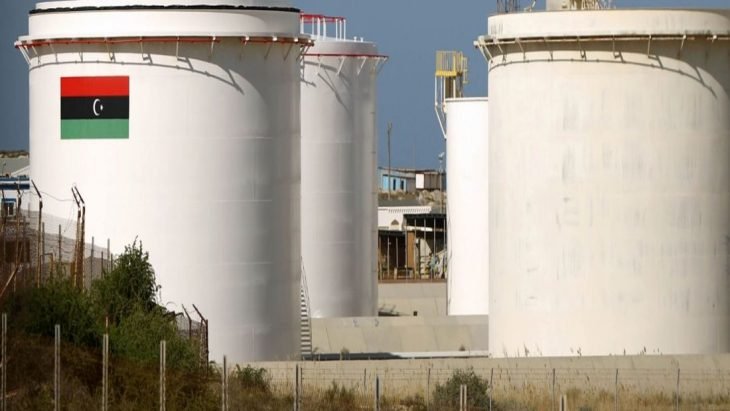
Eastern Libya’s Top Money Man: Spotlight on Ahmed Gadalla (2)

The Sentry

How Western Libya Paved the Way for an Eastern Libyan Scheme

In the months leading up to the 2019 offensive against Tripoli, Sadiq al-Kabir, governor of the CBL from 2011–2024, took strategic steps to contain his adversaries in western Libya while accommodating those in eastern Libya. Indeed, Kabir seemed to hedge against a potential Haftar victory.

In 2018, he overhauled the leadership at the LFB—the CBL’s wholly owned subsidiary through which most of Libya’s daily dollar operations flow, from letters of credit to direct transfers.

In doing so, he consolidated his control over state funds while working against the UN-recognized government in Tripoli, which sought to undermine him. Kabir also promoted Farhat Benqdara, a banker closely aligned with the Haftar family in Benghazi, to chairman of al-Masraf. These maneuvers would prove instrumental in enabling the $300 million scheme on the eve of Haftar’s attack.

For Kabir, 2018 was a year of vulnerability, marked by the dinar’s weakness, criticisms from the Haftar family, and attempts from the eastern-based House of Representatives to replace him.

Among other self-preservation maneuvers, Kabir dismissed the entire LFB leadership in August 2018, ostensibly to prevent financial losses. Whatever Kabir’s motives, this restructuring resulted in a consolidation of his personal control over Libya’s oil revenues and eliminated influence from the then-GNA, a political adversary.

Indeed, GNA leader Fayez al-Sarraj and several of his ministers resented Kabir’s habit of treating state liquidity as a political lever, disbursing funds to the Tripoli government selectively and on his own terms.

In October 2018, Tripoli militias aligned with Kabir forcibly removed Mohammed Bin Yusuf, the incumbent managing director of the LFB, from office, instead installing loyalist Mohammed Najib al-Jamal at that strategic post.

Soon afterward, it was Jamal, then known for his subservience to Kabir, who transferred $300 million from the LFB to al-Masraf as a guarantee deposit backing the conflict-financing scheme.

Given the strict hierarchy between the two men, it is implausible that Jamal could have granted such a critical financial transaction to al-Masraf without Kabir’s assent. The CBL did not respond to The Sentry’s request for comment.

In parallel with the 2018 changes at the LFB, Kabir pursued a rapprochement with Farhat Benqdara, a fellow Libyan banker known for his proximity to the very Eastern factions seeking to undermine Kabir. Benqdara, a Benghazi native, was the final CBL governor under the Qadhafi regime, a role he held until the 2011 uprisings.

After fleeing to Turkey in February 2011 and relocating to the UAE where he acquired Emirati citizenship, Benqdara became aligned with the Haftar family. In 2018, he became a key economic advisor to the field marshal and his sons.

Despite these ties to Kabir’s adversaries, the Tripoli based governor cleared the path for Benqdara to become chairman of al-Masraf in 2018.

The Libyan state’s equity state in al-Masraf is held through the LFB, which gave Kabir enough votes to help secure the chairmanship for Benqdara. Kabir’s move appears driven by self-interest.

First, by promoting a Haftar ally to a senior banking post in Dubai, Kabir bought time and reduced immediate threats from eastern groups who were seeking to remove him as CBL governor.

Second, the two bankers shared a history. In the late 1990s, when Kabir faced legal troubles, then-CBL governor Benqdara helped rehabilitate him professionally.59, 60 In some respects, the appointment appeared to serve as repayment for that earlier assistance.

Third, facing pressure from eastern Libya, Kabir likely sought to hedge his bets by facilitating the rise of a Benghazi figure who could bridge the gap between Kabir and his main adversaries, should those actors succeed in capturing the Libyan capital.

This history serves as a reminder that Libya’s east-west divide is seldom absolute. In illicit finance, political adversaries often cooperate for mutual profit.

By the same token, Prime Minister Abdelhamid al-Dabaiba’s government in Tripoli has yet to denounce Gadalla, thus maintaining connections between the country’s main rival networks.

Why Gadalla Matters Today

Between militia power and finance

Despite the LAAF’s collapse on the outskirts of Tripoli in 2020, the Haftar family has since consolidated power in eastern Libya, capturing most social and economic life.

Within this environment, Gadalla has become a pivotal figure in the illicit networks the Haftar family runs in eastern Libya and beyond.

Gadalla is a meaningful case study not because he is an outlier but rather because his trajectory exposes the systemic vulnerabilities in present-day Libya. With increasing sophistication, Libyan leaders leverage their physical might and territorial dominance to facilitate bold transnational endeavors.

These include money laundering schemes, various forms of trafficking, and routine imports of advanced weapons in contravention of international law. Other activities include the opaque funding of infrastructure projects in various sectors, such as telecommunication, construction, and aviation.

Present-day Libya’s warlords hold leverage over banking, hydrocarbons, telecom, electricity, customs, and other critical arenas. They subject almost every sector of the economy to intimidation, undue influence, and the co-option of mid-level officials.

Such contamination affects even ostensibly legitimate institutions, turning substantial portions of the economy into active nodes in predatory networks.

The country’s ruling elites rely on shadowy operatives who help them manage ill-gotten funds, stealing ever-larger volumes of public wealth, laundering it, and reinvesting portions of said profits into strengthening their military capabilities in contravention of international law. This creates a self-reinforcing cycle that benefits the handful of warlords who also function as political leaders.

This investigation, which focuses on Gadalla’s growing role in eastern Libya, documents a broader phenomenon that is not confined to his person or the Benghazi area. Even if Gadalla were held accountable, similar patterns would likely persist due to structural deficiencies in the Libyan system, which require continued vigilance and action to ameliorate.

Although he now presents himself as a legitimate businessman, Gadalla’s portfolio of official activities conceals a broad range of questionable financial operations executed on behalf of the Haftars. Gadalla’s ascent, which has unfolded at the very nexus between Libya’s militia rule and hollowed‑out economic institutions, shows how kleptocratic networks loot Libya’s public wealth on an immense scale.

Gadalla’s frenetic business history spans countless countries and domains of activity, often with dizzying ubiquity. The 46-year-old Benghazi-area native makes no attempt to maintain a low profile.

Before the anti-Qadhafi uprisings, Gadalla studied engineering and earned a master’s degree in the US at Indiana University Southeast. In 2008, he became a resident of Dubai. During the 2011 civil war, he sold automotive and household cleaning products in Libya for a US company.

As eastern Libya began to open up following Qadhafi’s fall, Gadalla utilized his Emirati footprint to expand his cross-border profile, starting with a 2012 trip to the Chinese manufacturing hub of Guangzhou, likely for sourcing.

Today, quite publicly, Gadalla boasts about leading the Alushibe Group, a loose set of private companies he controls in Dubai.76 At the same time, he leads several Benghazi-based companies while also being active in the public sector, serving as chairman of a Libyan state-owned steel company.

Separately, in 2023, Gadalla purchased Benghazi’s Libyan Cement Company, which had become notorious.

___________________

Smuggling Sovereignty: What Arkenu Reveals About Libya’s Fragmented Oil State

Hafed Al Ghwell

How Libya’s fragmented governance enables oil revenue diversion through hybrid networks and what recent interventions signal for restoring state control.

Libya’s oil wealth is not just mismanaged but is being systematically diverted through networks that blur the line between state authority and illicit activity. The so-called “Arkenu affair” reveals how these hybrid structures operate within official systems, quietly draining billions while preserving a façade of legality.

At stake is more than lost revenue: This dynamic entrenches political fragmentation and weakens any path toward stable governance. Yet recent moves by Mohamed al-Menfi suggest a potential shift toward accountability, raising the question of whether Libya can begin to reclaim control over its most critical resource.

What began as a technical anomaly has metastasized into something far more revealing: a case study in how parallel power structures can capture a state’s most vital asset while maintaining a veneer of legality.

The “Arkenu affair” is a window into how Libya’s oil economy has been re-engineered, piece by piece, into a hybrid system where official institutions coexist with, and often serve, illicit networks.

At its core, Arkenu was not an outlier. It was an evolution.

Founded in 2021, the company emerged at a moment when Libya’s post-war political settlement prioritized stability over accountability. That trade-off created the perfect environment for hybrid entities — commercial on paper, political in function — to embed themselves within the oil value chain. 

Arkenu’s significance was in how it did not operate outside the system, but through it, leveraging contracts, access, and institutional blind spots to channel oil revenues away from the state.

The mechanics were neither novel nor crude.

Libya’s oil and fuel economy has long been vulnerable to arbitrage. Subsidized fuel priced at a few cents per liter domestically can fetch over a dollar once smuggled across borders.

That price differential, sometimes exceeding 40 times the official rate, has sustained a sprawling illicit economy for decades. What changed after 2021 was scale and coordination.

By 2024, Libya was importing roughly 37 million liters of fuel per day while domestic consumption needs hovered closer to 24 million. The missing fuel did not just vanish into thin air. It was diverted.

At prevailing market values, this translates into approximately $6.7 billion annually in lost fuel alone. Overlay this with crude oil diversions, opaque swap arrangements, and underreported exports, and the cumulative leakage becomes staggering.

Arkenu fit seamlessly into this architecture.

It reportedly handled millions of barrels within months of operation, generating hundreds of millions in export value. Yet a significant portion of these revenues bypassed the Central Bank.

Between late 2024 and early 2026, estimates suggest that over $3 billion may have been diverted through channels linked to its operations. This was not theft in the conventional sense. It was extraction — systematic, institutionalized, and shielded by layers of formal legitimacy.

The enabling conditions for this level of control were territorial, bureaucratic, and financial. In eastern and southern Libya, networks aligned with the Haftar family consolidated authority over ports, transport corridors, and key nodes of part of Libya’s oil distribution. This allowed them to operate a dual system. Officially, they oversaw fuel distribution and security. Unofficially, they taxed, redirected, and re-exported fuel flows at scale.

Maritime routes saw entire tanker shipments re-exported, sometimes via ship-to-ship transfers in international waters, obscuring origin and ownership. A single vessel could carry tens of millions of liters, making maritime smuggling the backbone of large-scale diversion.

On land, the system was more granular but equally effective. Checkpoints imposed informal taxes, distribution quotas were manipulated, and artificial shortages were engineered to push fuel into black markets.

This is where Arkenu’s role becomes clearer, not just as a participant in this system, but also a facilitator of its financial layer. By operating as a private entity with privileged access, it created a bridge between state-controlled production and private offshore revenue channels. In doing so, it helped transform a fragmented smuggling ecosystem into something closer to an integrated shadow economy.

The question then is not why this persisted, but why it took so long to confront.

That answer lies in Libya’s political equilibrium. Since 2021, governance has rested on a tacit bargain: distribute rents widely enough to prevent renewed conflict. Thus, it meant tolerating, and at times enabling, illicit revenue streams that sustained armed groups and political coalitions.

Efforts to disrupt these flows risked upsetting a very fragile balance.

Prime Minister Abdul Hamid Dbeibeh operated within these constraints. His administration oscillated between rhetorical commitments to reform and selective enforcement actions that stopped short of dismantling entrenched networks. In some cases, enforcement was reversed altogether, reinforcing perceptions of complicity or, at best, political caution.

Against this backdrop, the intervention by Mohamed al-Menfi, the Chairman of Libya’s Presidential Council, increasingly stands out, not as a reaction to crisis, but as part of efforts to reassert institutional coherence in a fragmented political landscape. In a system long defined by competing centers of power and transactional governance, his approach seeks to reposition the presidency as a guarantor of accountability and national balance.

By early 2026, the Arkenu issue had crossed a critical threshold. Public scrutiny intensified, fiscal losses became harder to obscure, and international attention raised the stakes.

Yet what distinguishes al-Menfi’s role is not simply that he acted, but how he framed the intervention. Rather than allowing the issue to remain confined to technical or bureaucratic channels, he elevated it into a question of sovereignty, public trust, and the integrity of Libya’s economic governance.

It is a remarkable shift as al-Menfi increasingly positions himself as a convening figure willing to engage across Libya’s political divides while also signaling that certain lines, particularly around the management of national wealth, cannot be crossed.

In doing so, he has begun to carve out space for a more assertive presidency, one that does not compete with other institutions so much as it seeks to anchor them.

His earlier decision to initiate a comprehensive audit of contracts across the oil and electricity sectors dovetails rather well with his handling of the Arkenu affair.

Rather than a narrow administrative measure, these were early strategic steps in building the institutional tools required to confront entrenched practices. In a context where opacity has often been the norm, such deliberate moves toward transparency carry outsized political weight.

The pressure exerted on the executive authority, including Prime Minister Abdul Hamid Dbeibeh, must also be understood within this framework. What might once have endured as a managed controversy was instead pushed toward resolution. It sparks a much-needed recalibration driven by the growing expectation that major economic files cannot be indefinitely deferred or politically contained.

Beyond the suspension of Arkenu’s operations, al-Menfi’s maneuvering also fired off new political signaling. Simply put, such high-level interventions — when anchored in institutional legitimacy and public accountability — can alter the trajectory of even deeply embedded systems.

Importantly, al-Menfi’s approach has avoided the pitfalls of overt confrontation in an already polarized environment. Rather than framing the issue in factional terms, he has emphasized principles: transparency, legality, and the protection of Libya’s shared resources.

This has allowed him to engage the issue without further entrenching divisions, an approach that aligns with his parallel efforts on national reconciliation.

In this sense, whether through quiet diplomacy between rival factions or through institutional initiatives aimed at restoring oversight, al-Menfi appears to be advancing a model of leadership that prioritizes gradual consolidation over abrupt disruption.

It is not a dramatic break from Libya’s past, but it does represent a departure from the inertia that has often characterized Libya’s notoriously flawed governance.

There are limits, of course. The structures that enabled Arkenu remain resilient, and attempts at circumvention, such as the emergence of new entities seeking to replicate its role, tease the swift adaptability of entrenched networks. Yet even here, the significance of al-Menfi’s intervention lies in raising the political cost of such maneuvers. What once operated in relative obscurity is now subject to heightened scrutiny at the highest levels of the state.

This matters for a country navigating overlapping transitions — political, economic, and institutional. Leadership in Libya has often been defined by short-term balancing acts. What is beginning to emerge is an effort to pair that balancing with boundary-setting: to maintain stability while gradually reclaiming the authority of the state.

The Arkenu affair, then, is not only a test of governance. It is also an early indicator of whether Libya’s leadership can move beyond reactive crisis management toward a more deliberate, reform-oriented posture.

In this regard, al-Menfi’s actions, measured, but increasingly assertive, offer a signal that such a shift, while far from guaranteed, is at least underway.

______________________
Game Of Drones And Fighter Jets In Eastern Libya

Paul Iddon

For years, the Libyan National Army, led by Field Marshal Khalifa Haftar, has acquired military-grade drones to both project force against its adversaries and reinforce its hold over eastern and southern Libya. Satellite images indicate it continues to do so. And a newly released investigative report also summarizes previous attempts by the LNA to import drones in violation of the United Nations arms embargo on the country.

Recent satellite imagery indicates that at least three new drones have appeared at eastern Libya’s LNA-controlled Al Khadim airbase, Reuters reported on April 2. Experts cited in the report believe the drones are Chinese-made Feilong-1 (FL-1), a surveillance and attack drone, and Turkey’s widely exported Bayraktar TB2.

A new report published on Tuesday by The Sentry, an American non-profit investigative and policy organization focused on multinational networks benefitting from violent conflicts, covers prior LNA drone acquisitions as part of its investigation of Ahmed Gadalla. The report describes Gadalla as a “key enabler for the Haftar family’s transnational arms smuggling” in violation of that longstanding but ineffective UN arms embargo. He was notably involved in schemes such as the LNA’s attempted importation of Chinese drones disguised as wind turbines in 2024 and another acquisition of smaller Spanish drones in 2023, both of which were discovered and confiscated before reaching the LNA-controlled half of Libya.

The Chinese drones disguised as wind turbines were FL-1s manufactured by China’s Zhongtian Guide Control Technology Co., and were on the way to the LNA’s Benghazi stronghold from China’s Qingdao when they were intercepted in southern Italy. The Sentry report also included a satellite image showing what appears to be an FL-1 at Al Khadim near Benghazi, suggesting the LNA did import advanced drones despite the Italian interdiction and other incidents.

The Sentry report illustrates the crucial role financiers like Gadalla play in building the LNA’s military arsenal. While Libya has had a cold peace since 2020, factions like the LNA have consistently sought to import arms and reinforce their arsenals. While 2023 and 2024 saw notable disruptions of drone deliveries, FL-1s and possibly TB2s still managed to make it to eastern Libya, again flouting the UN embargo.

The United Arab Emirates previously provided the LNA with Chinese-made Wing Loong II drones armed with Blue Arrow 7 air-to-surface missiles in the 2010s. The Wing Loong II is similar to the American MQ-1 Predator drone and its Hellfire missiles.

When Haftar’s LNA made the ill-fated move to capture Libya’s capital, Tripoli, from his main opponent, the UN-recognized Government of National Accord, these drones were deployed in support of his forces. The UAE not only supplied the drones but also actively piloted them throughout the siege.

Notably, the latest Reuters report on new deliveries of FL-1s and TB2s also states that it’s unclear who is flying them, suggesting that the LNA fleet remains reliant on foreign backers for both operating and supplying advanced drones.

Reports by rights groups in 2019-20 highlighted the role of LNA drones in causing civilian casualties. In one infamous case in January 2020, a UAE-piloted LNA Wing Loong II drone killed 26 unarmed cadets at a Tripoli military academy with a Blue Arrow 7.

Turkey’s decisive intervention in that war saw it deploy TB2s on the side of the GNA, which proved decisive in breaking the LNA siege on Tripoli and repelling its forces. Libya remains divided between the LNA and the Tripoli government to this day.

While Turkey has long favored Tripoli, ties with the LNA in Benghazi have significantly thawed in the years since that conflict. In June-July 2025, cargo flights between Turkey and Benghazi were recorded, which is most likely when Ankara discreetly supplied the LNA with TB2 drones for the first time. The flights coincided with a Turkish charm offensive as Ankara sought legislative ratification of the maritime border memorandum it signed with Tripoli in November 2019 and needed approval from eastern Libya’s House of Representatives. As of writing, no such ratification has happened.

Turkey may have proved willing to sell a small number of TB2s to the LNA to improve relations. Ankara has sold drones to rival powers in the past. For example, after it sold TB2s to Morocco, it sought to ease Algeria’s objections by selling it armed Anka-S drones.

It’s possible something like this has been at play with the two main factions in Libya as well. Since 2024, there have been indications that Turkey has sold at least one of its larger and more advanced Bayraktar Akinci drones to Tripoli. It’s possible that the LNA has concurrently sought that more sophisticated drone, too. However, no images of the type in eastern Libya have emerged to date.

The purported inclusion of kill switches in exported Turkish drones hinted at by the head of Turkey’s Presidency of Defense Industry, Ismail Demir, in a December 2021 television interview, may also factor into any renewed Libyan conflict. It’s conceivable that the LNA cannot count on using its TB2s in any future war with Tripoli, as it did with its UAE-operated Wing Loong IIs six years ago. Regardless of the existence of any secretive kill switches, the LNA will most likely remain heavily reliant on foreigners to fly its drones.

The same may well prove true for future fighter jets it manages to acquire. In May 2020, after the Turkish-backed GNA went on a counteroffensive against the LNA, 14 unmarked Russian-made fourth-generation MiG-29 Fulcrum fighter jets and Su-24 Fencer bombers suddenly showed up on the tarmac of central Libya’s strategic, LNA-controlled Al Jufra airbase. From the moment they arrived, it was widely believed that they were piloted by Russian Wagner mercenaries.

Flash-forward to December 2025. The LNA was reportedly negotiating a multi-billion-dollar deal with Pakistan for 16 Sino-Pakistani JF-17 Thunder fighter jets and 12 Super Mushak trainer aircraft, according to another Reuters report. These JF-17s may reinforce or replace the strategic role previously played by those unmarked Russian MiG-29s. They could also see Pakistan ultimately take on a leading role as an arms supplier to the LNA. While Reuters indicates that the group also discussed a defense cooperation pact with Pakistan which includes joint training, it’s unclear who will pilot any batch of JF-17s that ultimately touchdown in eastern Libya.

So again, while these deliveries and deals seemingly suggest the LNA has made headway in strengthening its arsenal, it is still likely to suffer from many of the debilitating deficiencies it had the last time it went to war.

___________________
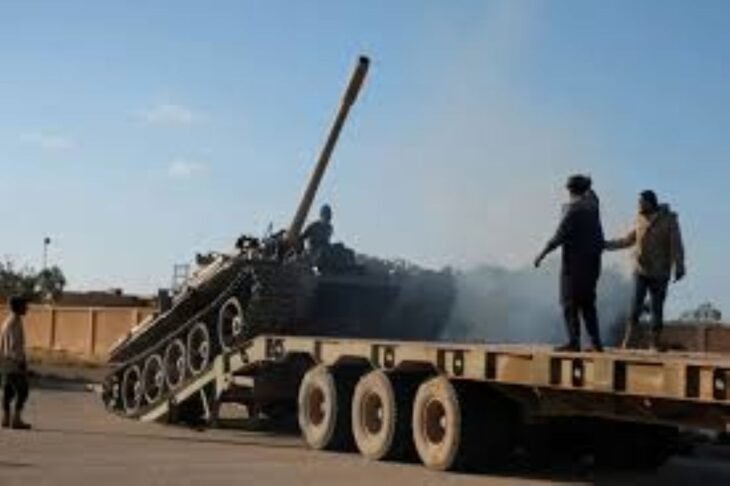
Eastern Libya’s Top Money Man: Spotlight on Ahmed Gadalla (1)

The Sentry

Executive Summary

This investigation exposes the financial machinery that underwrote a significant part of Field Marshal Khalifa Haftar’s failed 2019–2020 offensive on Tripoli and documents the subsequent rise of a key enabler of the Haftar family’s kleptocratic activities: Ahmed Gadalla, also known as Ahmed Alushibe or Ahmed al-Aashibi.

Prior to the April 2019 assault, Gadalla utilized a set of companies based in the United Arab Emirates (UAE) to secure $300 million in loans from the Abu Dhabi-based Arab Bank for Foreign Investment and Trade, commonly known as al-Masraf bank.

These funds, backed by a guarantee deposit from the Libyan Foreign Bank (LFB), were funneled by Gadalla’s companies into the war effort, likely including payments to Russia’s Wagner Group. After Haftar’s offensive collapsed, the loans have remained largely unpaid, leaving the Libyan public to bear the financial burden while Gadalla has faced no accountability.

In the years since, Gadalla has transitioned from an obscure financier to a dominant force in eastern Libya’s economy, operating under the protection of Saddam Haftar, the field marshal’s son.

Gadalla has wielded control over the Bank of Commerce and Development (BCD) and other financial institutions in eastern Libya, such as Wahda Bank and National Commercial Bank, using them to facilitate large-scale letter-of-credit fraud and to launder illicit profits.

Through his control of BCD, Gadalla is also involved in the circulation of counterfeit Russian-printed dinars, a scheme that has helped undermine Libya’s local currency. Beyond financial abuses, Gadalla has served as a key enabler for the Haftar family’s transnational arms smuggling in apparent violation of the United Nations (UN) arms embargo on Libya.

Gadalla helped orchestrate several recent high-profile schemes, playing an active role in arranging the intricate payment structures and logistical routes necessary to illicitly transfer military equipment to Benghazi.

Incidents include the Haftars’ attempted importation of Chinese combat drones disguised as wind turbines in 2024 and their failed procurement of Spanish drones the prior year, not to mention the July 2025 shipment of armored vehicles and ammunition from the UAE intended for the Rapid Support Forces (RSF) militia in Sudan.

The Sentry sought comment from Gadalla and his companies, as well as from al-Masraf bank and the LFB on the allegations set forth in this report before publication. None of these parties responded to The Sentry’s requests for comment.

The scrutiny applied to Gadalla in this investigation serves a broader purpose: his prolific, multi-domain operations provide evidence of the profound structural deficiencies plaguing Libyan economic institutions. Rather than an isolated anomaly, Gadalla exemplifies the country’s systemic vulnerability and the unchecked rise of “enablers” who take advantage of institutional weakness and armed protection to help powerful figures loot state wealth.

By bridging the gap between militia violence and finance, figures like Gadalla assist warlords in translating territorial control into formidable economic sway. The impunity of such second-tier operators is sustained by the fragmentation of Libyan state institutions and the diplomatic hesitation of foreign governments, which remain reluctant to anger warlords perceived as essential to energy flows and migration control.

To dismantle this cycle, The Sentry recommends that the United States, Canada, the United Kingdom, and the European Union (EU) impose targeted network sanctions on Ahmed Gadalla, his companies, and his associates. Without concerted international action to hold enablers like Gadalla accountable, Libya faces the continued erosion of its economic foundations and the entrenchment of large-scale kleptocracy.

How Libyan Money Funded Haftar’s

Failed Offensive on Tripoli

On April 4, 2019, the Libyan Arab Armed Forces (LAAF) launched an offensive on the country’s capital, Tripoli. Field Marshal Haftar, based in eastern Libya, led the operation with Abu Dhabi as the primary foreign backer.

The offensive required a roughly $700 million effort mobilized upfront. While the operation’s stated aim was to cleanse the western province of “terrorist groups [that] spread corruption,” Tripoli was then the seat of the UN-recognized Government of National Accord (GNA).

The Haftar family’s plan was to penetrate the city center, topple GNA Prime Minister Fayez al-Sarraj, and place all major state institutions—including the Central Bank of Libya (CBL) and the National Oil Corporation (NOC)—under their authority.

The offensive quickly stalled as thousands of Haftar-aligned fighters reached the city’s outskirts, followed by a prolonged and lethal stalemate. As the war dragged on, the involvement of foreign mercenaries, advanced weaponry, and large-scale logistics made clear that vast sums had been funneled into the campaign—underscoring the financial engineering behind Haftar’s April 2019 push, which drew military support not only from the UAE but also from Russia, France, and Egypt, as well as diplomatic acquiescence from the United States.

Despite the participation of Russian combatants from the Wagner Group and Abu Dhabi’s direct involvement, which included more than 1,000 Emirati airstrikes across greater Tripoli in the following months, Haftar’s forces failed to capture the capital. Though ultimately ineffective, the war effort proved exceedingly costly.

Just before the attack began, the Haftar coalition, with the help of key enablers, secured $300 million in loans.

The Arab Bank for Investment and Foreign Trade, a minor Abu Dhabi-based bank often referred to as al-Masraf, disbursed loans backed by a guarantee deposit from the LFB, a strategic CBL subsidiary.

The Emirates Investment Authority and the LFB each held 42.28% of al-Masraf at the time, allowing the two to supersede the bank’s other shareholder—Banque Extérieure d’Algérie. The funds helped sustain the armed offensive, and part of the money likely went toward remunerating Russia’s Wagner Group, which engaged on the front lines of the assault between September 2019 and May. Ultimately, Haftar withdrew from the greater Tripoli area following the collapse of his forces on June 4, 2020.

The campaign left broad swathes of the Libyan capital’s southern outskirts in ruins and displaced approximately 149,000 residents. The bulk of the $300 million had not been repaid as of the date of this report’s publication, saddling the LFB—and thus the Libyan public—with the financial burden. Details of how the $300 million in loans came to finance the Haftar campaign were never publicly disclosed.

Through interviews, research, and analysis of numerous financial and other documents, The Sentry has found that Libyan businessman and financier Ahmed “Alushibe” Gadalla’s Dubai-based entities helped secure the loans and divert the money to fund the conflict.

Since the Haftar family’s military debacle on the edges of Tripoli six years ago, neither Gadalla nor anyone else has been held accountable for redirecting ostensibly civilian transactions toward the procurement of military equipment and foreign mercenaries, potentially violating the UN arms embargo on Libya.

Since 2019, Gadalla has only risen in prominence within Haftar’s inner circle. He continues to operate with impunity, facilitating arms smuggling, money laundering, and a host of other illicit activities that exploit state institutions to further the country’s kleptocratic boom.

Gadalla was featured several times in a UN Panel of Experts on Libya report posted on the internet on March 29, 2026. In that document, Gadalla—referred to as Ahmed Alushibe—is identified as the person who controls a network of shipping companies, several banks in eastern Libya, and shell companies, including in Dubai, that were used to circumvent the UN arms embargo, fraudulently obtain letters of credit from the Central Bank of Libya, and illicitly export refined petroleum products from the country. Before publication of this report, The Sentry sent requests for comment to Mr. Gadalla. He did not respond.

______________________

Libya’s Fragile Equilibrium: Succession Risk and Energy Stability (2)

Jonathan M. Winer

Parallel Tracks

Diplomatic efforts to reduce Libya’s fragmentation through negotiated arrangements among its political and security actors are ongoing.

The United Nations continues to press for its long-stalled political roadmap toward elections, while the approach associated with US Special Envoy Massad Boulos has focused on executive unification through the distribution of ministerial portfolios between western and eastern authorities as a stabilizing mechanism.

These efforts reflect a pragmatic recognition that Libya’s principal centers of power must be accommodated in any durable arrangement, and they may offer a pathway to near-term de-escalation.

But their viability in practice depends on how they connect to Libya’s formal institutional framework. The LPA does not authorize a bilateral executive bargain as a substitute for the consultative process involving the House of Representatives and the High Council of State.

To the extent that arrangements are perceived as bypassing those bodies, they risk lacking the legal and political grounding necessary for durability. In particular, absent recourse to mechanisms such as Article 64 of the agreement, which allows for broader political dialogue in certain circumstances, a narrowly constructed executive understanding may not resolve underlying questions of legitimacy.

The challenge, therefore, is not whether such arrangements can contribute to stabilization, but whether they can be integrated into a process that is recognizable under Libyan law and acceptable to the formal institutions, notably the House of Representatives and the High Council of State, whose role cannot be supplanted by executive-level agreements without rendering the outcome legally and politically unsustainable.

The Risk of Unilateralism

The most immediate institutional risk would arise if the House of Representatives under Speaker Saleh were to act unilaterally to designate a new prime minister, as he has previously sought to do. That Tobruk-based body retains both a legal argument to do this under the LPA and a political constituency for doing so again. Such a move would likely be rejected in Tripoli and by key western Libyan actors, as Saleh’s previous efforts were.

The result would not be resolution, but the re-emergence of parallel executive authorities, each claiming legitimacy. Under those conditions, control over ministries, financial institutions, and energy infrastructure would become contested. Oil production and export, which depend on coordination across institutions that span Libya’s geographic divide, would once again be vulnerable to interruption.

This is the scenario Article 4 was intended to avoid. In present circumstances, it could inadvertently enable it.

The Case for a Structured Process

Avoiding that outcome requires treating Article 4 not as self-executing law, but as a framework requiring agreed implementation.

The core objective should be to convert a potentially destabilizing vacancy into a controlled, time-limited transition that preserves continuity while enabling a legitimate replacement process.

A credible approach would rest on a small number of elements.

First, a clear and agreed protocol for determining vacancy or incapacity. 

Because Article 4 is silent on this point, the threshold question must be resolved politically, not litigated in real time.

A practical solution would involve a combination of medical attestation, acknowledgment by the Presidential Council acting as the LPA’s collective head of state and a domestic guarantor of continuity, and formal notification by the House of Representatives, with immediate communication to the High Council of State and the United Nations.

Second, immediate transition to a tightly constrained caretaker government. 

The outgoing government, deemed resigned under Article 4, would continue only to perform essential functions.

One of the existing deputy prime ministers could be designated as acting head for this limited purpose. The caretaker’s authority would need to be explicitly bounded: no major security appointments, no long-term financial or energy commitments, and no structural institutional changes. The narrower the interim mandate, the lower the incentive to contest it.

Third, a time-bound, joint selection process anchored in the agreement’s requirement for consultation between the House of Representatives and the High Council of State. 

A small joint committee, operating under agreed criteria and timelines, could produce a shortlist of candidates for prime minister within a defined period. The aim would be to force convergence, or at least structured negotiation, rather than unilateral designation.

Fourth, a visible but limited role for the Presidential Council and the United Nations Support Mission in Libya (UNSMIL). 

Neither can impose a solution, but both can help structure one. The Presidential Council can act as a domestic guarantor of continuity, while the United Nations can provide procedural support and reinforce expectations regarding legitimacy.

Finally, a defined fallback mechanism in the event of deadlock. 

If the House-High Council process fails, a narrowly scoped political dialogue mechanism, drawing on existing UN frameworks and potentially anchored in Article 64 of the agreement, could be convened with a limited mandate to resolve the impasse on executive formation.

None of these steps are likely to emerge organically from Libya’s current political dynamics. They would require external alignment and active facilitation.

In practice, that means re-engagement by key European and regional actors, in alignment with the United States, to coalesce around a common approach using their diplomatic and economic leverage to support a UN-convened process.

UNSMIL remains the only forum capable of structuring such an effort, but it can do so effectively only with coordinated backing. Under current conditions, such a process is unlikely to produce agreement in advance of a crisis.

Its value lies in doing the work ahead of time: identifying what a transition would require, establishing how it could proceed, and making clear that the House of Representatives and High Council of State will shape any outcome, whether as participants or as obstacles.

Without that groundwork, when a succession moment comes, events are likely to be driven by high-risk competition on the ground rather than any agreed process.

Conclusion

Libya does not face an imminent succession crisis, but it faces a plausible one, in a context where the stakes are even higher than usual. The combination of leadership uncertainty, legal ambiguity, economic strain, and geopolitical pressure creates a narrow window in which preparation can make the difference between controlled transition and renewed fragmentation.

Article 4 of the LPA provides a starting point. On its own, it is insufficient. With a modest but deliberate implementing framework that aligns external diplomatic efforts with Libya’s formal institutional requirements, the LPA can still serve its intended purpose: not to decide who governs Libya next, but to ensure that the question is answered without destabilizing the country in the process.

***

Jonathan M. Winer is a Distinguished Diplomatic Fellow at the Middle East Institute.

______________
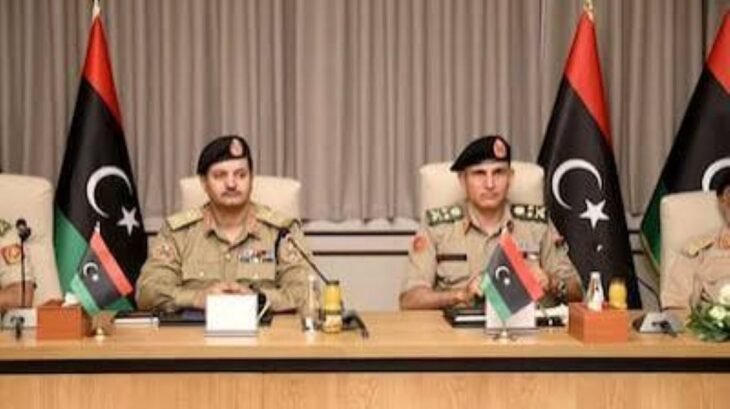
Egypt Scrambles for Oil, Turns to Libya

Ahmed Elimy

Developments in the Middle East are casting heavy shadows over Egypt’s energy market, at a time when Cairo is seeking to achieve a degree of relative stability after mounting economic pressures—most notably disruptions in Suez Canal revenues and escalating threats in the Strait of Hormuz.

In this context, Bloomberg News reported on Sunday that Egypt is moving to import at least one million barrels per month of Libyan crude oil, in a step aimed at compensating for the halt in oil supplies from Kuwait. This follows the Kuwait Petroleum Corporation’s declaration of “force majeure” on crude sales—meaning the suspension of contractual obligations due to exceptional circumstances beyond control that make fulfillment impossible.

Egypt had been importing between one and two million barrels per month of Kuwaiti oil, in addition to about one million barrels from Saudi Aramco, under credit facilities that have helped support the stability of the domestic energy market in recent years.

On the sidelines of the Libya Energy and Economy Summit, held in Tripoli on January 24, Egypt and Libya signed a memorandum of understanding for cooperation in the fields of petroleum, natural gas, and mining. The signing was attended by Libyan Prime Minister Abdul Hamid Dbeibeh, Egyptian Minister of Petroleum Karim Badawi, and Libyan Minister of Oil and Gas Khalifa Abdel Sadiq.

The memorandum aims to launch a new phase of cooperation between the two countries in the petroleum sector, covering exploration and research, oil refining, refinery development, as well as studying the transportation of crude oil and natural gas between the two countries.

Jamal Al-Qalyoubi, a professor of petroleum and energy, said that “the coming period may witness additional challenges related to the Strait of Hormuz, along with potential tensions in the Bab al-Mandab region, which has necessitated the search for quick and secure solutions away from conflict zones.” He explained that the agreement between Egypt and Libya includes importing crude via tankers from the port of Sirte.

Al-Qalyoubi also noted, in remarks to Alhurra, the possibility of expanding requests for additional quantities of crude oil within the framework of this cooperation.

He added that the instability previously witnessed in Libya affected its economic relations with several countries, and that “Egypt enjoys flexibility in dealing with various parties, making these agreements a positive factor that supports its economic and strategic interests.”

As part of its plan to secure domestic market needs, the Egyptian government is seeking to import between 3.5 million and 4 million barrels of oil monthly from Arab countries and European markets.

Estimates indicate that more than 3 million barrels of crude oil will be supplied through Arab countries connected to Egypt via the SUMED pipeline, in addition to other shipments delivered directly to Egyptian ports.

In this context, the acceleration of implementing the agreement with Libya comes as Libya joins the list of countries that the Egyptian General Petroleum Corporation aims to contract with during the second quarter of the current year. The goal is to bridge the gap in local refining capacity and provide the petroleum products required for various sectors, which are expected to represent about 20% of total market needs.

Egypt’s crude oil production stands at around 500,000 barrels per day, while refineries operate at rates ranging between 620,000 and 650,000 barrels per day, reflecting a relative gap between production and consumption.

Medhat Youssef, former vice chairman of the Petroleum Authority, said that Libyan oil is of the light waxy type, which partially resembles Egypt’s Western Desert crude. However, it requires heating during storage and handling, which explains why it was not previously imported. He told Alhurra that this type is not suitable for refining in Egyptian refineries unless blended with other appropriate crudes, noting that the conclusion of this agreement represents the first actual supplies of this type to the Egyptian market.

In a related context, Egyptian President Abdel Fattah el-Sisi warned, during the ninth edition of the Egypt International Energy Conference and Exhibition “EGYPES 2026,” that the continuation of war in Iran could lead to a broad shock in oil supplies, potentially pushing prices to unprecedented levels. He explained that the world is facing two simultaneous shocks: the first is a shortage of energy supply, and the second is a sharp rise in prices, noting that oil reaching $200 per barrel remains a possible scenario given the current developments.

For his part, Libyan economic expert Ali Al-Solh told Alhurra that this step represents a practical model of economic diplomacy, whereby Egypt is leveraging its energy needs to enhance its political influence and reinforce stability in Libya. He explained that Cairo’s reliance on Libyan oil creates cross-border shared interests, making the stability of production and export in Libya directly linked to Egyptian national security.

Meanwhile, energy researcher Yasser Hilal sees Egypt’s current situation as an emergency case tied to fears of supply disruption, particularly amid ongoing debate over the Strait of Hormuz. He stressed that talk of closing the strait may be exaggerated and is more related to security factors and rising shipping costs.

He explained that “Egypt partially relies on supplies from Saudi Aramco, with the possibility of increasing them through the port of Yanbu, in addition to imports from Kuwait under facilitation agreements.” He added that importing Libyan oil is not merely a temporary solution but a strategic step to strengthen regional relations, alongside the importance of expanding Egypt’s role in resolving the Libyan crisis and proposing future projects, including pipelines.

Amid geopolitical pressures and technical challenges, Egypt’s westward move appears to be a strategic option aimed at securing its energy needs and reducing dependence on conflict-prone regions.

______________________

Libya’s Fragile Equilibrium: Succession Risk and Energy Stability (1)

Jonathan M. Winer

Libya’s stability has taken on renewed strategic importance as the impact of the United States and Israel’s war with Iran reverberates through global energy markets, pushing Brent crude prices to a three-year high as of mid-March.

Disruptions to shipping, heightened risk premiums, and constrained spare capacity have sharpened attention on every marginal barrel. In that environment, Libya’s oil production, stable for now under informal arrangements but structurally fragile, matters more than usual.

Sustaining existing Libyan production, and potentially increasing it, depends on a governing arrangement capable of keeping ports open, pipelines flowing, and revenues distributed without triggering conflict.

The arrangements that have been maintaining Libyan oil production at 1.2-1.3 million barrels per day, roughly 1% of global supply, are under growing strain as the North African country’s economic situation deteriorates. 

Liquidity shortages in dinars, limited access to foreign currency, and periodic fuel constraints are increasingly affecting daily life. At the same time, the Libyan dinar continues to weaken against the hard currencies required to import food and refined fuel.

Since early 2025, the official exchange rate has moved from roughly 5.6 dinars per US dollar to approximately 6.3-6.4 following successive devaluations, while the parallel black market rate has at times reached 9-10 dinars per dollar, putting increasing stress on Libyan consumers in a country heavily dependent on imports for food and fuel.

The gap between official and parallel exchange rates is not simply a monetary distortion. It is a mechanism that Libyan elites employ to manipulate access to and distribution of state resources, enrich themselves by arbitrage, and compete for political power.

These dynamics are increasingly manifesting in heightened friction among Libya’s diverse security actors. While large-scale conflict has not resumed, armed groups linked to state institutions are again jockeying for position, particularly around access to revenue streams, fuel distribution, and territorial control. In Libya’s recent history, such patterns have often preceded more overt confrontation.

Questions Surrounding Leadership Successions

Adding to the potential for renewed conflict, there are important questions emerging about the longevity of the principal figures leading Libya’s eastern and western power structures.

Abdul Hamid Dbeibeh, prime minister of the internationally recognized Government of National Unity in Tripoli, has experienced publicly reported and acknowledged health issues in recent months. While the official characterization has been of routine or manageable medical events, the pattern of recurrence has raised questions among Libyan insiders about continuity of leadership.

At the same time, Khalifa Hifter, who dominates the military and political structure in eastern Libya and exerts influence across much of the south, is 82 years old and has a history of health problems.

Both men may remain in place for the foreseeable future. But if either were to become unable to govern, or if uncertainty about their capacity were to become widely accepted among elite actors, Libya would face a familiar but still unresolved question: not only who succeeds, but how succession occurs in a system that lacks a single, uncontested constitutional chain of authority.

Libya’s political trajectory is shaped not only by formal institutions but by evolving patterns of de facto authority. In eastern Libya, the consolidation of power within the Hifter family has raised the prospect of a managed succession that may not align with formal political processes, while in Tripoli, governance is widely understood to depend on members of the Dbeibeh family operating within a narrow inner circle.

These dynamics do not predetermine outcomes, and they may be subject to negotiation or accommodation. But they underscore a central reality: Succession in Libya is unlikely to be resolved solely through formal legal mechanisms, and any durable process will need to account for the underlying distribution of power as well as the requirements of law.

The consequences of getting that question wrong are not abstract. Libya’s recent history demonstrates that disputes over executive legitimacy translate quickly into disruptions in oil production, fragmentation of fiscal authority, and localized or national conflict.

While oil production in Libya has been comparatively stable in recent years, it is still subject to politically driven disruption, as reflected in a late March attack on the Sharara field, where authorities recovered Russian-made munitions from a damaged crude pipeline.

In past conflicts, output has fallen to a few hundred thousand barrels per day, and at times far lower. A disruption of that magnitude would remove on the order of 1 million barrels per day from global supply at a time when the global economy can least afford it.

Oil markets are structurally sensitive to supply shocks: Historical analysis suggests that a disruption of roughly 10% of global supply can produce price increases on the order of 35-40%, reflecting the low short-term elasticity of both supply and demand.

Under this framework, a 1% decline in global supply would ordinarily increase prices by only a few percentage points.

In the current environment, however, with commercial shipping through the Strait of Hormuz effectively halted, additional risk to Red Sea transit as the Houthis have entered the conflict, and energy markets already under acute strain, a collapse of Libyan oil production could plausibly push global prices significantly higher and amplify existing volatility.

The Legal Framework and Its Limits

On paper, Libya does possess a governing framework for executive transition. The 2015 Libyan Political Agreement (LPA), still embedded in the country’s constitutional architecture, addresses any vacancy at the top of government.

Article 4 of the agreement provides that if the office of prime minister becomes vacant “for any reason whatsoever,” the entire government is deemed to have resigned. The outgoing government continues only in a caretaker capacity, while a new prime minister is to be selected through a consultative process involving the House of Representatives, controlled by its 82-year-old speaker, Aguila Saleh, and the consultative body established by the LPA, the High Council of State.

This provision is often cited as a mechanism for orderly transition. In practice, it is better understood as a trigger for institutional reset without a clear mechanism to execute it.

In such a situation, Tripoli-based actors would have strong incentives to control and maintain the caretaker government in Libya’s west and to slow, if possible, any action by the House of Representatives, based in the eastern coastal city of Tobruk and aligned with eastern authorities operating from Benghazi, to appoint a successor, including by asserting that required consultations with the Tripoli-based High Council of State had not been properly conducted and that any such appointment would therefore lack legal validity.

That divergence has the potential to reignite divisions left by Hifter’s April 2019 offensive to seize western Libya, which ended in 2020 after Turkish drone and air-defense support shifted the battlefield balance and halted his advance on Tripoli, following a conflict that killed more than 2,000 Libyans.

In the absence of a clear and accepted mechanism for succession, disputes over process risk becoming vehicles for broader contests over power within Libya’s rival political and security structures.

***

Jonathan M. Winer is a Distinguished Diplomatic Fellow at the Middle East Institute.

_____________________

Leaked UN report reveals Haftar family is smuggling oil and arms in Libya

Oscar Rickett

MEE Panel of experts’ report seen by MEE says Arkenu, Libya’s first privately owned oil company, is ‘indirectly controlled’ by Saddam Haftar.

***

A leaked UN panel of experts’ report obtained by Middle East Eye has revealed details of the Haftar family’s connections to oil, fuel and arms smuggling networks in eastern Libya.

The 288-page report, scheduled to be released on 9 April, links eastern commander Khalifa Haftar and his son Saddam’s Libyan Arab Armed Forces (LAAF) to illicit oil smuggling, capital flight, the management of financial and criminal networks, and the provision of arms to Sudan’s Rapid Support Forces (RSF).

As previously reported by Middle East Eye and noted by the UN report, Subul al-Salam, a Libyan militia affiliated with Haftar’s forces, has facilitated the supply of weapons and other goods to the RSF, the paramilitary force that is backed by the United Arab Emirates and has been widely accused of genocide in Darfur.

The report also uncovered an expansion in illicit fuel smuggling operations from the port of Benghazi to other ports in eastern Libya, along with the development of smuggling infrastructure in both Benghazi port and Ras Lanuf port. 

It reveals, too, an array of activity and shared enterprise in the oil sector between the Haftars’ eastern Libyan administration and its rival, the internationally recognised Government of National Unity in Tripoli.

The UN panel’s investigations found that armed groups linked to Ibrahim Dbeibah and Saddam Haftar “have developed and honed their capability to exert control over the National Oil Corporation (NOC) at every level of the decision-making process”.

Dbeibah is a national security adviser to his uncle, Libyan Prime Minister Abdul Hamid Dbeibah.

Libya is highly dependent on oil, with hydrocarbons making up more than 90 percent of the state’s income.

In 2025, the panel said, the amount of oil revenue entering Libya reached $18.78bn, almost $10bn less than it should have been, based on expected revenues.

The NOC’s budget was used, the report said, as a cover to channel funds to networks linked to the armed groups, undermining the company’s independence.

Arkenu Oil Company

The UN report concluded that Libya’s first private oil company, Arkenu, is “indirectly controlled” by Saddam Haftar “through his proxies, in particular Rafat al-Abbar”, a former deputy oil minister in Libya’s internationally recognised government.

According to the report, from October 2024 to February 2026, Arkenu actively diverted over $3bn in oil revenue to bank accounts outside Libya.

Between May and December 2024, Arkenu, which was established the year before, exported approximately 7.6m barrels of oil, with an estimated value of around $600m, diverting part of the revenue away from the Central Bank of Libya.

The contractual relationship between Arkenu and Libya’s NOC was “not in accordance with the relevant Libyan laws”, the panel said. Taxes that were owed were not paid to the Libyan state and the key terms of the contract were “not implemented by Arkenu”.

The report identifies Abbar and Belqacem Shengeer, a former member of the NOC’s board of directors, as key figures for Saddam Haftar, the 35-year-old deputy to his father.

Abbar is described as having played an “instrumental role” in the NOC, ensuring that, “at key levels of the institution, pressure was exerted to further the interests of Saddam Haftar and his close associates”.

The former deputy oil minister reportedly forged a “shadow decision-making structure” within Libya’s national oil company “by leveraging his alliance with Saddam Haftar”. In turn, Khalifa’s favoured son “relied primarily” on Abbar to “exercise his influence and advance his interests within the oil sector”.

Shengeer, the report states, “was the technical architect behind the creation of Arkenu”. Despite formally representing the NOC, based in Tripoli along with Libya’s internationally recognized government, he lives in Benghazi, where Haftar’s eastern government is based.

Arkenu exported large quantities of crude oil by, the report said, relying on subsidiaries of well-established and large traders, such as the UAE’s BGN Energy.

Elsewhere, the UN panel reports on LAAF training exercises in Belarus, the presentation of Eye weapons systems to Khalifa and Saddam Haftar by Pakistan’s chief of army staff, and the well-established air bridge from the UAE to areas under the control of the Haftars.

The report confirms that the LAAF “was involved in coordinating overland fuel smuggling operations, which were routed through ports and delivery logistics under their control”.

________________

Weighing the Cost of Libya’s Smuggling Racket (2)

The Fuel Import Racket

Libya’s soaring fuel import bill is a central piece of the new political setup. Available data indicate that, since 2022, Libya has nearly doubled its annual spending on imported diesel and gasoline. Most of it comes from Europe, around 50 per cent of it from EU member states and 25 per cent from Russia (though imports from Moscow have reportedly declined significantly in 2026 to date).

The Libyan state pays for the fuel in full, before selling it at a heavily subsidised price on the domestic market. These imports far exceed the needs of a country with a small population and minimal industrial activity, especially one that has refineries of its own. According to official Libyan sources, including from the Audit Bureau, between 2022 and 2024 roughly 40 per cent of the imported fuel was eventually smuggled abroad, primarily across the Mediterranean.

Subsidies sustain this trade: gasoline costs about $0.02 per litre in Libya, compared to roughly $2 per litre in Europe, creating enormous profit margins for traffickers. Foreign analysts and Libyan sources believe that most of the trafficked fuel departs from Benghazi with coordination by people tied to the Haftars. Most is sold in international waters in ship-to-ship transfers, but cargo is known to have reached Italy, Albania, Türkiye and Greece. 

Estimates of the racket’s total cost to Libya vary enormously. According to the Audit Bureau, in 2024 fuel import costs exceeded $9 billion, equivalent to roughly 30 per cent of the country’s gross hydrocarbon revenues, or about the same proportion of total annual state expenditure.

Other sources point to lower figures. As for fuel trafficking, some Libyan and foreign analysts suggest that it generated $6-7 billion annually between 2022 and 2024, while the public prosecutor has offered a more conservative estimate of $1.5 billion per year. 

These multi-billion-dollar sums suggest that fuel smuggling has become a vital component of the arrangement between eastern and western authorities. Libya’s leaders tolerate and, in some cases, encourage these illicit financial schemes because they are a means of cultivating patronage networks and funding off-budget expenses, especially in the east.

Foreign capitals are aware of this racket and other parallel funding schemes that cost the state billions of dollars, but they have so far preferred to keep quiet about the matter. Their belief is that this money will ensure that Libya’s peace does not unravel and that crude oil exports from areas under Haftar’s control will continue.

What is at Stake for the EU

Libya is strategically important to the EU. Its location in the centre of the Mediterranean basin, just across the water from Italy and Greece, make it a potential security liability. A number of countries at odds with various European states, including Russia and Türkiye, have forces stationed in the country, at at least half a dozen bases and airfields, under the umbrella of one Libyan military coalition or the other.

Libya also remains the main transit point for migrants seeking to enter Europe via the central Mediterranean route. Lastly, the country is still a major hydrocarbon supplier. Though the EU’s dependence on Libyan oil and gas has diminished in recent years, imports from Libya still help offset the fall in imports from Russia after its all-out invasion of Ukraine.

The EU has certainly not been inactive. In March 2025, it expanded the mandate of its Common Security and Defence Policy naval mission EUNAVFOR MED IRINI (hereafter, Irini) to address illicit trafficking of items other than arms, including monitoring, surveillance and information gathering related to illegal exports of oil and refined fuel products from Libya.

Both Irini and the EU’s border assistance mission in Libya, EUBAM, have trained Libyan border control agencies, including the coast guard, and they are considering stepping up joint training of law enforcement personnel from Libya’s east and west, in the hope that an integrated, nationwide security apparatus might foster a greater spirit of political compromise. 

But the EU and its member states have otherwise struggled to translate their priorities into tangible results. Libya’s persistent institutional divides and the Europeans’ limited leverage vis-à-vis other, more assertive players, such as Egypt, Türkiye and the UAE, have reduced the impact of EU policy in Libya.

Tackling migration flows has been especially complex, not least because of domestic political considerations in EU member states and because Libyan authorities have exploited migrants as a form of coercive diplomacy, leveraging control of routes to extract bilateral concessions.

As a result, EU member states have had to make difficult policy compromises. They have generally found it easier to focus on bilateral relations with Libyan authorities rather than work together through Brussels. For example, they were forced to seek the cooperation of Khalifa Haftar and his sons after 2024, when it became apparent that a growing number of migrants heading to Italy were coming from the east. Following demands from the Haftar camp, Italy began offering military training in Italy to his security personnel, breaking with previous policy under which they would only train forces affiliated with Tripoli. 

Europe’s struggles to establish an effective policy toward Libya continue. As it reconsiders its priorities, it should consider turning its focus to stopping fuel smuggling and the haemorrhaging of Libyan public funds, which pose long-term risks of political instability and rising public discontent. Compared with the U.S. Treasury, which plays a central role in overseeing dollar-denominated transactions in the oil sector, the EU has limited leverage over financial decision-making in Libya.

But the EU and its member states have repeatedly reaffirmed that they are committed to stopping fuel smuggling in Libya: the 2017 Memorandum of Understanding between Italy and Libya on fighting illegal migration puts cooperation against fuel smuggling among its objectives, while the Irini naval mission lists countering fuel smuggling as its secondary mandate.

Until now, however, the conditions under which the mission works have militated against efforts to combat fuel smuggling. In particular, its mandate does not allow for interception of vessels on mere suspicion of smuggling fuel.

Additional Security Council sanctions measures do permit interdiction if the designated Libyan government contact signals that the cargo is suspect. But no such signal has arrived in recent years, despite the massive smuggling of subsidised fuel, largely because of the complicity of government agencies and their political bosses. 

At the same time, the bloc and its member states should act only when they are prepared for the likely consequences of trying to stymie the racket. One possible type of backlash could be a resurgence of migration flows under the watch of eastern Libyan authorities aggrieved by Europe’s interference in its funding streams. Eastern authorities might also be provoked into reigniting hostilities with Tripoli.

For these reasons, any stronger EU push to curb fuel trafficking should be part of a comprehensive and internationally coordinated approach that would ideally bring together UN- and U.S.-led mediation efforts to put Libya’s state finances in order.

Simultaneously, the EU could also seek to coax both rival Libyan governments into cooperating by helping improve the country’s paltry maritime security infrastructure, complementing U.S.-backed efforts to promote joint military training of Libyan forces from the east and west of the country. This assistance would also be in line with the EU’s view that the Mediterranean is a strategic maritime domain that requires sustained European attention. 

The EU and its member states should:

Increase policy coherence. The EU and its member states should work more consistently through EU structures in Brussels and in coordination with the UN to push for progress in the governance, economy, security and reconciliation/human rights tracks of any UN-led initiative, be it the Structured Dialogue or other future talks.

Holding nationwide elections should not be the immediate goal of these initiatives. Instead, the priority should be to achieve incremental successes, especially in matters of financial governance and security cooperation, so as to create the conditions for a future political transition. 

Work with others to encourage economic governance reform. In coordination with regional powers like Egypt, Türkiye and the UAE, and relevant international financial institutions, such as the IMF and the World Bank, the EU and its member states should ask the UN mission in Libya to work more proactively on improving Libya’s public financial management with the aim of curbing the haemorrhaging of state funds and bolstering economic governance.

They should also encourage the U.S., which is already playing a role in overseeing and convening discussions on Libyan finance-related matters, to coordinate more with the above countries and institutions, including the EU. 

Counter fuel smuggling. As part of these coordinated efforts to improve Libya’s economic governance, the EU and its member states should also advocate for changing the UN Security Council resolution on Libya to permit interception of vessels suspected of smuggling fuel in international waters, even in the absence of notification by Libyan officials.

With such licence from the Council, the EU could take a more proactive role in countering fuel smuggling across the Mediterranean by expanding Irini’s mandate and placing greater resources at its disposal.

____________________

What Sharara’s pipeline fire reveals about Libya’s oil infrastructure

Safiyah Nassif

Although Libya avoided a full shutdown at Sharara, the pipeline fire has renewed attention on a quieter economic risk facing the oil sector: the strength of the network that keeps crude moving.

The fire that broke out on Sharara’s export pipeline this week did not produce the kind of dramatic shutdown headline that often defines Libya’s oil story. According to the National Oil Corporation, the blaze was caused by a valve leak, there were no casualties, and flows were redirected through alternative pipelines so production could continue while maintenance and damage assessments were carried out. For a field with capacity of roughly 300,000 to 320,000 barrels per day, that distinction matters.

In one sense, this is reassuring news. Libya avoided a full outage at its largest oil field, and NOC’s ability to reroute crude through the El Feel line to Mellitah and via Hamada to storage in Zawiya suggests that parts of the system still remain operational. At a time when oil is trading near the $100 Brentmark, that is more than a technical success. At 300,000 barrels per day, a full shutdown would imply around $30 million a day in gross crude value before costs and discounts, which shows how quickly even a short disruption at Sharara can become economically impactful.

But the deeper significance of the incident lies elsewhere. What happened at Sharara is a reminder that Libya’s oil vulnerability is not only political, and not only visible when production collapses outright, but also infrastructural. This means the real risk can sit quietly in the transport system itself, only becoming obvious when a leak, a fire, or a weak point suddenly interrupts the normal movement of crude.

That is an important shift in perspective. Observers usually explain Libya’s oil disruptions through protests, blockades, and force majeure, and Sharara has experienced each of them. Reuters reported in January 2024 that protests in Fezzan shut the field completely and led NOC to declare force majeure, while renewed unrest in the south cut production again later that year. Those episodes were clearly political in nature and easy to identify as such.

This week’s fire belongs to a different category. It does not point first to a standoff on the ground or to a closure imposed from outside. Instead, it draws attention to the quieter economics of infrastructure integrity. A field can remain productive, open, and commercially valuable, yet still become vulnerable if the network of pipelines, valves, and storage links that carries its crude is under strain. In oil producing countries, those midstream assets rarely receive the same attention as output figures, licensing rounds, or export revenues, but they are what turn production capacity into reliable supply.

Libya has experienced signs of all this before. In May 2025, an oil leak forced the shutdown of a pipeline south of Zawiya, where the country’s largest functioning refinery, with capacity of 120,000 barrels per day, is linked to crude flows from Sharara and Hamada. NOC moved quickly to stop the leak and contain the environmental damage, but the event still served as a reminder that technical failures can create economic risk even when they do not become full scale national crises.

Taken together, these incidents suggest that Libya’s oil challenge is broader than the headline cycle often implies. The country is not only managing the risk of sudden stoppages. It is also managing the slower, less dramatic problem of continuity, which in many ways is just as important. Buyers care about barrels, but they also care about confidence. Even when output continues, repeated infrastructure incidents can still shape perceptions of reliability, raise questions about maintenance and monitoring, and remind the market that resilience depends on more than what the field itself can pump.

None of this means the Sharara fire should be read as evidence of systemic failure. In fact, the opposite reading is partly true as well. Libya did not lose full production, and that says something useful about the adaptability of the current network. The country was able to limit the immediate damage through rerouting, which is exactly what redundancy is meant to do. That is worth emphasizing, particularly in a sector where even temporary outages can unsettle revenue expectations and export schedules.

Still, the episode leaves behind a clear economic lesson. Libya’s oil future will depend on more than the size of its reserves or the headline level of its output. It will depend just as much on whether crude can move safely, consistently, and at low enough operational risk from field to terminal. New exploration rounds and fresh upstream ambitions can attract attention, but they sit on top of a more basic requirement: the physical network has to keep working under pressure.

That is what makes the Sharara incident more than a one day operational update. The field stayed online, and that is the immediate good news. Yet the fire also highlighted a quieter truth about Libya’s oil economy. Its greatest vulnerabilities may not always arrive in the form of dramatic shutdowns. Sometimes they appear in the technical weak points that do not stop the system outright, but still reveal how much depends on infrastructure that must work flawlessly every day.

Sharara did not go offline, and that is precisely why this story deserves attention. Libya’s oil resilience depends not only on how much the country can produce, but on how well the system absorbs disruption before a technical incident turns into a wider economic loss.

____________________

Between legitimacy and division, the Constitutional Court’s ruling disrupts the judicial scene in Libya

Libya Update

The Supreme Court’s Constitutional Circuit in Tripoli issued a ruling. It declared four parliamentary laws unconstitutional. These laws relate to the judicial authority system. This ruling continues to impact Libya’s judicial and political scenes. Debate is growing over the limits of jurisdiction. It also concerns the unity of the judicial institution. The decision’s implications for justice in the country are also being discussed.

The decision was issued on January 29. Legal and judicial circles did not view it merely as a constitutional ruling in a legal dispute. They saw it as a critical juncture. It concerns one of Libya’s most complex issues. This is the judiciary’s position within the political division. It also addresses the impact of judicial rulings on institutional balance.

The Supreme Court announced details of the ruling. It included the unconstitutionality of four parliamentary laws. It also covered their resulting legal implications. These included amendments to parts of the Judicial System Law. The ruling also impacted decisions made in previous years. These decisions were part of reorganizing the judicial authority.

Judicial Reactions

The ruling did not pass quietly within judicial circles. In the days following its issuance, there were rejecting or reserved reactions. This was especially true from some judicial bodies. They believed the decision’s repercussions could create more confusion. This confusion could affect the judicial institution.

In this context, heads and members of judicial bodies issued a statement. This statement came from various appeals courts. They affirmed their commitment to the judiciary’s unity and independence. They rejected any arrangements that could harm its unity. They also rejected dragging it into division.

The statement emphasized the judiciary’s complete independence. It said this is a cornerstone of the rule of law. It stressed the need to preserve the judiciary’s unity. It also highlighted the importance of working according to current laws.

The signatories also confirmed the Supreme Judicial Council, in its current formation. They stated it is the sole authority for judicial body members’ affairs. They called for postponing any constitutional matters. These should wait until a permanent constitution for the country is approved.

Observers believe this statement clearly reflected reservations. These existed within part of the judiciary regarding the ruling’s practical impact. This applies especially to reordering references. It also concerns opening the door to varying interpretations of the Supreme Judicial Council’s powers.

A Decision at the Heart of an Institutional

Crisis

The debate surrounding the ruling is linked to Libya’s institutional division. This division has persisted for years. Observers believe any change to the judiciary’s structure or references now could be seen beyond a purely legal context. It could be part of more complex balances. Legal and political considerations intertwine within these balances.

Hanan Al-Sharif, head of the Libyan Organization for Human Rights, commented. She said events within the Libyan judiciary are not a normal legal dispute. Instead, she described it as a dangerous division. This division threatens the remaining idea of justice in the country.

Al-Sharif told the Libyan News Agency that recent rulings invalidated fundamental laws. These laws had regulated the judiciary for years after being frozen. However, she noted the outcome was not the unification of the judicial path. Instead, it was an increase in division and a deepening of legal confusion.

She explained one of the most serious repercussions. Libyan citizens might face different legal applications. This would depend on their region, not a unified legal standard. She considered this to undermine the principle of equality before justice. It also weakens public trust in the judiciary.

Al-Sharif warned against involving the judiciary in political conflict. She said this transforms the institution from an arbiter of law into a party in the crisis. She stressed that continuing this path could lead to divided justice. It could also create contested references and more fragile institutions.

Political Interpretation

Political analyst Mohamed Motairid offered his perspective. He stated that the Libyan judicial scene today faces one of its most serious tests in modern history. This is especially true amid debates over the legitimacy of the Supreme Judicial Council’s presidency. Disputes also arise over jurisdictions and locations. Motairid told the Libyan News Agency that the judiciary served as a safety valve for state unity for years. However, he noted current events place it at the heart of a crisis. This crisis could affect the country’s remaining institutional cohesion.

He added that judicial intervention leads to two interpretations or references within the institution itself. This cannot be separated from the broader political division. He believed that rulings, regardless of their legal strength, must also be viewed from the perspective of their impact on stability. This also applies to the unity of institutions.

He suggested this issue should not be addressed by dominance or imposing a fait accompli. Instead, a legal and institutional approach is needed. This would preserve the judiciary’s prestige. It would also prevent it from becoming a new arena of conflict.

Consequences

The dispute appears to be confined within the judicial institution. However, its effects extend beyond the judiciary to citizens and the state. Continued divergence in references could lead to confusion in implementing rulings. It could also cause conflicting procedures. Unifying legal standards across regions would become difficult.

Any crack within the judicial authority would directly impact Libyans’ trust in justice. It would also affect their trust in state institutions. The country needs institutions capable of managing disputes. This must be done according to unified rules. It must be free from political pulls and divisions.

Observers believe the most dangerous outcome of this crisis is not just the legal debate. It is the potential for the dispute to become a permanent institutional division. This would happen within a body meant to be the country’s highest judicial authority.

Calls to Neutralize the Judiciary and

Freeze Escalation

Meanwhile, calls are escalating to neutralize the judiciary from political maneuvering. There is also a renewed emphasis on its natural role. It should be an authority for resolving disputes, not a party to them.

The Libyan Organization for Human Rights called for an end to using constitutional justice in political conflict. It urged efforts to protect the judiciary’s unity. This is crucial before internal division expands further.

Observers also believe moving past this stage requires legal and institutional de-escalation. It demands freezing any confrontational steps. A formula must be sought to preserve the Supreme Judicial Council’s unity. This is needed until a comprehensive political settlement is reached. Such a settlement would end the country’s current division.

Judicial Crisis: A Reflection of

the State’s Crisis

Ultimately, the debate surrounding the Constitutional Circuit’s ruling appears more than an isolated legal dispute. It reflects a deeper crisis. This crisis concerns the nature of the Libyan state and its institutions. It exists amidst ongoing political division.

Some see the ruling as correcting a previous legal course. Others consider it a decision that further complicated the scene. What remains constant is that the Libyan judiciary faces a delicate test today. This test concerns its unity and independence. It also concerns its ability to remain outside political conflict equations.

____________________

Weighing the Cost of Libya’s Smuggling Racket (1)

Fuel smuggling helps maintain peace between Libya’s rival elites but drains the treasury. In this excerpt from the Watch List 2026 – Spring Edition, Crisis Group illustrates how the EU and member states can staunch the hemorrhaging of public funds and strengthen economic governance.

***

Though Libya’s deadly civil war ended in 2020, the country remains divided between two rival governments, based in Tripoli and Benghazi, respectively, and each backed by its own military coalition. The post-2020 peace is fragile, but it holds, relying largely for its survival on the willingness of both sides to share revenue from oil sales as well as turn a blind eye to other sources of unofficial income that both tap into.

These include the smuggling of imported fuel, which is purchased by Libyan authorities at international prices, sold at heavily subsidized prices locally and then resold on the black market abroad.

While these practices shore up the peace in Libya, they come at huge cost to the country’s coffers, stunt economic growth and entrench the two competing sets of elites by removing all incentives for reunification. The fuel smuggling racket, along with other embezzlement schemes, also indirectly undermines international mediation initiatives aimed at ending the country’s longstanding division. 

Given its geographical proximity to Europe, and its dual role as a transit country for migrants heading across the Mediterranean and a hydrocarbons supplier, Libya remains strategically important for the European Union. Brussels and EU member state capitals should strive to help improve management of Libya’s public finances and create the conditions for eventual political reunification by reinforcing efforts to stop fuel smuggling and train Libya’s maritime security forces. To achieve these goals, the EU and its member states should aim to strengthen the EU’s naval mission in the Mediterranean. 

A Nation Split in Two

Fifteen years after Muammar al-Qadhafi’s fall, Libya remains divided between an internationally recognised government in Tripoli, headed by Prime Minister Abdelhamid Dabaiba, and a rival executive based in Benghazi, led by Osama Hamad. In practice, however, power in the east rests with Field Marshal Khalifa Haftar and his sons.

Though the two camps present themselves as adversaries, behind closed doors they maintain a transactional relationship based on shared oil revenue and, especially in the country’s east, off-the-books funding schemes.

These financial flows allow them to bankroll their administrations, pay salaries, buy political loyalty and consolidate authority in their respective zones. This arrangement appears to suit both sides well. It also removes any real urgency from the pursuit of difficult compromises on elections and reunification.

While large-scale war has not resumed and, for now, Libya’s rival leaders appear reluctant to rekindle violence, insecurity remains widespread. In western Libya, the Tripoli-based government has gradually brought more armed groups under its control, yet deadly clashes between rival militias competing for local influence and resources still erupt.

In the east, forces led by Haftar, now known as the Libyan Arab Armed Forces, govern with a heavy hand, as reports of arbitrary arrests and extrajudicial killings have shown. In the south, armed groups loosely affiliated with either side periodically confront one another, while criminal networks involved in drug and fuel trafficking, as well as migrant smuggling, operate with total impunity.

The lingering insecurity has combined with economic mismanagement to worsen living conditions. Misallocation of public funds and gross overspending are draining the state treasury, which depends almost entirely on hydrocarbon revenue.

Parallel financing mechanisms established by the eastern authorities, who have issued unauthorized treasury bills to cover their expenses, are depleting hard currency reserves, forcing the Central Bank to devalue the dinar.

Devaluation has in turn driven up living costs and eroded purchasing power in Libya’s import-dependent economy. Roughly one third of the population in this oil-rich country struggles to make ends meet.

Prospects for change appear slim. The UN-led political mediation process, supported by the EU and its member states, seeks to unify the country through nationwide elections, but has made no meaningful progress in five years.

Elections were to have been held in 2021. But they were derailed by legal disputes over whether to appoint a new unified government before voting or wait for the results at the ballot box to form a new executive; and whether to hold both presidential and parliamentary elections, and, if so, in what sequence, or simply opt for a legislative ballot.

These same disagreements continue to block consensus. The eastern parliament’s July 2025 decision to establish a rival Supreme Constitutional Court in Benghazi, challenging the writ of the Supreme Court in Tripoli, is the latest in a long series of rifts that have dimmed the prospect of holding national polls. With no recognized high court covering the whole of Libya, credible judicial oversight of any vote would appear impossible.

Constitutional and judicial disputes benefit Libya’s current leaders by delaying elections and silencing calls for political renewal. Numerous rounds of UN-led mediation over the past decade have focused on laying the groundwork for nationwide polls, either by drafting a new constitution or agreeing on electoral laws.

Aside from a brief interlude in 2021 that saw Dabaiba appointed prime minister of a UN-mediated unity government – an arrangement that later collapsed – the emphasis has mainly been on preparing the ground for a national vote. The underlying assumption has been that Libya’s rival governments have lost legitimacy, either due to overstaying their mandates or lacking full recognition, and that only a popular vote can restore it. 

The UN has generally encouraged members of the rival assemblies to lead discussions in this direction, but to little avail. In its most recent initiative, the Structured Dialogue launched in late 2025, the UN attempted a novel approach, bringing together experts and representatives from different parts of the country to discuss four tracks: governance, economy, security and reconciliation/human rights.

Though it has produced recommendations, ruling elites have been indifferent to the initiative and little action has been taken. These developments have eroded the public’s confidence that polls will take place. Many Libyans have grown disillusioned with parliamentarians who seem primarily interested in preserving their positions.

Signs of fatigue with the long wait for elections are also emerging among foreign powers. Washington has lately pursued an approach putting security and the economy first, launching its own parallel mediation effort in the second half of 2025 that sidelined thorny political questions.

Washington’s envoy, Massad Boulos, convened members of Prime Minister Dabaiba and Khalifa Haftar’s families for closed-door talks, which reportedly led to agreement on joint military training initiatives and a unified development funding mechanism. 

Prolonged political deadlock presents dilemmas for Libya’s foreign partners, particularly European states. Elections no longer appear to be a realistic solution in the short to medium term to address Libya’s impasse, whereas less ambitious alternatives, such as agreements on budgetary issues or joint security training of rival forces, appear more feasible. Nor is it clear who should take part in future mediation between the sides: the rival legislative bodies (the House of Representatives in Benghazi and the Tripoli-based High State Council), current leaders Dabaiba and Haftar or their representatives, or independent experts less entangled in the political system but also less influential.

At the same time, removing the prospect of national reunification as an immediate goal sends a signal to ruling elites that they are free to remain in power and enrich themselves and allied interest groups. Official data from the Central Bank, Audit Bureau and National Oil Corporation point to systematic and large-scale waste of public funds over the past five years, with little tangible benefit for the Libyan people and no attempt to diversify the country’s oil-dependent economy.

The informal division of power between two corruption-prone administrations may have contributed to curbing violence in the short term, but it risks sowing the seeds of future instability as Libyans grow increasingly frustrated with the scale of graft as their own hardship deepens.

______________________

Airstrikes and Civilian Casualties in Libya Since the 2011 NATO Intervention (3)

Alyssa Sims & Peter Bergen

2011-2018: Revolution Turns to Civil War

Several leaders among the various rebel factions had begun to jockey for control over the direction of the revolution before Gaddafi’s death, so when the regime. finally collapsed, the stage was set for bitter disagreements between rebel camps.

The artillery and other weapons that had been funneled by Western and Arab states to the rebel coalition that defeated Gaddafi’s forces were now in the possession of a range of competing factions.

Interim government

Immediately following the end of the NATO intervention in October 2011, the National Transitional Council (NTC)—led by provisional prime minister Mahmoud Jibril, whom Secretary of State Hillary Clinton had met with in Paris earlier in the year—appointed itself as the interim government and set out to develop a road map for political transition.

The NTC had announced in August, when it was apparent that the regime would fall, its plan for an 18-month transition, which would commence promptly at the conflict’s end. There were several legislative hurdles to clear—appointing an interim government, establishing election law and an election commission, and holding congressional elections.

However, the NTC struggled to maintain the confidence of the public because of a lack of transparency in its appointments and decision-making; a cohort of the NTC leadership that included former Gaddafi regime officials; and an effort to placate disgruntled militia members pushing for representation in the transitional body that included granting them amnesty for war crimes committed during the revolution.

The NTC struggled to maintain the confidence of the public because of a lack of transparency in its appointments and decision-making. Also, former revolutionaries ignored calls to disarm or be absorbed into the national armed forces, and the NTC had no means to prevent rival militiamen from looting and fighting in violent late-night skirmishes.

“We are the ones who are holding the power there—the people with the force on the ground—and we are not going to give that up until we have a legitimate government that will emerge from free and fair elections,” Anwar Fekini, a leader of a coalition of militias in the western mountains, told the New York Times in November 2011, abandoning a previous pledge to disarm. Some armed groups took control of state buildings in the aftermath of the revolution, providing leverage over the NTC in negotiations for government jobs.

The Zintan militia, which led the final march on the Libyan capital, Tripoli, that had toppled the regime, took over Tripoli International Airport, and other militias controlled Tripoli’s port, in some of the first signs of post-Gaddafi chaos.

Parliamentary elections

On July 7, 2012, Libya held its first congressional elections since Gaddafi’s 1969 coup, for a body called the General National Congress (GNC), which was supposed to direct the drafting of a national constitution.

This legislative body was designed to govern for 18 months, until the implementation of a constitution, after which new parliamentary elections would take place. Ninety-four percent of polling locations opened, despite interference from armed protesters in the east of Libya who anticipated, and feared, the dominance of the west of Libya in the elections.

The GNC seats were allocated to proportionally represent three main voting blocs: Islamists, which included the Muslim Brotherhood and Salafists who sought to govern by sharia; the National Forces Alliance (NFA), Jibril’s party of moderates, which won the most seats; and independents.

On August 8, the NTC handed over power to the elected assembly. Despite the successful holding of elections, the GNC proved incapable of functioning, falling prey to factional infighting and pressure from militias.

This culminated in the passage of the Political Isolation Law in May 2013—a sweeping piece of legislation that excluded broad swaths of Libyans from future government employment on the basis of their affiliation with the Gaddafi regime —as militia power continued to grow through access to state funds.

In Benghazi and the east, the sense of marginalization was compounded by growing violence and a radical threat, exemplified most starkly by the 2012 attack on the U.S. diplomatic mission in Benghazi by Ansar al-Sharia. The first civilian casualty case in our database perhaps stems from this 2012 attack.

Several Libyans on Twitter on August 11, 2013, reported hearing explosions that might have been caused by U.S. airstrikes in retaliation against this group. Twitter account “@news_yemen” tweeted (in Arabic) that there was an airstrike targeting Ansar al-Sharia’s headquarters in Al-Dahir, a district in Sirte.

The tweet also stated that there was “death.” This possible report of casualties was echoed by a Libyan man named Hatem Ben Mussa, who wrote (in Arabic) on his Twitter account that evening, “Urgent…four killed and 15 wounded in the bombing of Sirte.”

Major Karl Wiest told our researchers that AFRICOM has conducted “post-strike assessments” of all U.S. military actions in the region and after investigating two allegations of civilian casualties in Libya, found both to be not credible. Wiest said in an email, “From the Fall of 2016, the command has assessed two recorded CIVCAS allegations related to operations in Libya.

After thorough investigations, both claims were deemed not credible.” Wiest did not specify which two claims were investigated. However, he also said, “with regards to the specific incidents you highlighted and asked our team to review, they are not assessed as credible with the information currently available.”

The August 11, 2013 strike was one of the highlighted cases sent to AFRICOM for review by New America and Airwars. Despite the successful holding of elections, the GNC proved incapable of functioning, falling prey to factional infighting and pressure from militias. Meanwhile, the GNC continued to clash with armed groups.

On January 19, 2014, the GNC reportedly bombed militias at the Qweira al-Mal gate at the northern entrance to Sabha, an oasis city about 400 miles south of Tripoli. A Middle East news blog, World Akhbar, posted to its Twitter account (in Arabic) about an “aerial bombardment” at the site, and another local account belonging to “@osama_targam” said three children were killed as a result of the air raid.

The strike may have killed Ramadan Faraj Khalifa, Ayman Massoud Ali, and Mu’tasim Mohammed, according to the February 17th Martyrs Brigade, a pro Gaddafi militia that posted the names of the alleged victims to its Facebook page, stating that they were killed. In the course of our research we’ve documented as many as 18 airstrikes that were attributed to the GNC from 2014 to 2015 in media reports and which resulted in four civilian deaths.

The original GNC term was set to conclude on February 7, 2014, but it extended its mandate despite its deep unpopularity in an effort to develop a new constitution. The extension sparked protests, and deadlock within the body led to calls for new elections. Amid this anger with the GNC’s extension, Gen. Khalifa Haftar of the Libyan National Army (LNA) announced the dissolution of the GNC in February 2014, presaging threats against the elected body.

In May 2014, supported by eastern tribes and disaffected military units, Haftar launched Operation Dignity to rid Benghazi of Islamist militias and restore security, as well as to press for elections. The result of those elections, held June 25, was unfavorable to Islamist parties.

The newly elected and Haftar-aligned House of Representatives (HOR) took power, but some members of the old GNC held out in partnership with Libya Dawn, a coalition of Islamist and Misratan militias, along with boycotting HOR members from western Libya who feared for their safety because of the HOR’s relationship with Haftar and its move to the eastern city of Tobruk. The end result was the fracturing of the country into two governments, each with its own parliament, militias and branches of the Central Bank.

_____________________

Why Oil Majors Are Quietly Betting Big on Libya Again

Simon Watkins 

  • Western companies like Eni, BP, and TotalEnergies are increasing investments, driven by the need for non-Russian energy and Libya’s goal to boost production to 2 million bpd by 2028.
  • Recent gas discoveries, field restarts, and infrastructure projects signal growing confidence, with potential for increased exports and domestic supply.
  • Ongoing instability, disputes over oil revenue distribution, and lack of governance reforms could still derail long-term progress despite rising foreign investment.

***

It comes to something when Libya looks like a relative beacon of stability compared to key Middle Eastern states, such as Saudi Arabia, the UAE, and Qatar, but here we are, nevertheless. Of course, the recent fire at Libya’s largest oil field, Sharara, caused by a pipeline leak, may have been the product of another attack by one of the many warring factions there, so it is not exactly Switzerland in terms of the global peace rankings table. However, Libya’s appeal to international oil companies (IOCs) has been on the rise again since Russia’s unprovoked invasion of Ukraine on 24 February 2022, as Western countries looked to new oil and gas supply sources to compensate for those controlled by the Kremlin.

This resurgence of Western interest coincides with Libya’s re-energised plan to boost crude oil production to at least 2 million barrels per day (bpd) by 2028, and the announcement last year that 22 offshore and onshore blocks would be licensed in the initial bidding round to this effect. Recent news underscores how positively these initiatives are currently playing out.

One of the Western companies that has been among the trailblazers to secure non-Russian energy supplies from as diversified a portfolio as possible is Italy’s Eni, and it announced last week new offshore gas discoveries in Libya. The European oil and gas giant said these were made following exploration activities near the Bahr Essalam field, Libya’s largest producing offshore gas field. Both locations — Bahr Essalam South 2 (BESS-2) and Bahr Essalam South 3 (BESS-3) — are located about 85 kilometres (km) offshore in water depth of around 650 feet, according to Eni. It added that its preliminary estimates are that the two structures contain more than 1 trillion cubic feet (Tcf) of gas in place.

As the two sites are positioned only around 16 km south of the existing Bahr Essalam facilities, the company expects to be able to develop them on a fast-track development trajectory, through tie-ins to the Bahr Essalam facilities. Eni highlighted that the resulting gas will partly go to Libya’s domestic market and partly to Italy, supporting both local energy supply and export revenues.

This deepwater drilling is a testament to Western firms’ confidence in their ability to continue their business in Libya over many years, as it requires long-term capital and security guarantees that IOCs do not commit to unless they believe Libya is entering a more stable, Western-aligned phase. Indeed, it was also Eni that recently started drilling the first deepwater offshore well seen in Libya for nearly two decades, in its energy-rich Sirte basin.

This exploration work continues in the basin’s Matsola exploration prospect in Contract Area 38/3 in the Mediterranean Sea, according to Eni. The project also marks the first major new operation between it and Great Britain’s BP — with the joint venture comprising a 42.5% stake each for the two firms, with the remaining 15% held by the country’s sovereign wealth fund — the Libyan Investment Authority. The joint venture is committed to drilling a further 16 wells in Libya, across onshore and offshore areas.

Moreover, BP also recently signed a memorandum of understanding to evaluate options for redeveloping the giant Sarir and Messla onshore fields in the Sirte basin, and to assess potential unconventional oil and gas development. The firm’s executive vice president for gas and low carbon, William Lin, stated that the agreement “reflects our strong interest in deepening our partnership with Libya’s NOC [National Oil Corporation] and supporting the future of Libya’s energy sector.”

In a similar vein, last week also saw another of the West’s vanguard firms engaged in sourcing new non-Russian energy supplies — France’s TotalEnergies — announce the restart of production at Libya’s Mabruk oil field in Libya, in which the firm holds a 37.5% stake. Again, this marks a major turnaround in Libya’s fortunes, as the onshore field, positioned around 130 km south of Sirte, saw production stopped in 2015. “This restart illustrates our long-term commitment in Libya,” said Julien Pouget, Middle East and North Africa director for TotalEnergies’ exploration & production business.

“This project, which follows TotalEnergies’ recent announcements regarding the extension of the Waha concessions, brings low-cost, low-emissions oil production in line with the company’s strategy, and contributes to our objective of 3 per cent annual production growth per year until 2030.” The French energy giant agreed more broadly back in to continue its efforts to increase oil production from the giant Waha, Sharara, Al Jurf, and Mabruk oil fields by at least 175,000 bpd. It also agreed with the NOC to make the development of the Waha-concession North Gialo and NC-98 oil fields a priority.

These fields have a combined estimated capacity of at least 350,000 bpd. At the same time, improvements in Libya’s refinery operations look likely over time, beginning with the announcement last week that U.S.-based technology and engineering giant KBR was awarded
a contract to provide project management and technical services for the South Refinery Project (SRP) in Ubari, southwest Libya. The SRP is in line with KBR’s efforts to advance key oil and gas infrastructure across the country.

In broad terms, none of this interest is that surprising, as before the removal of Muammar Gaddafi as leader of Libya in 2011 and the civil war that ensued, the country was producing around 1.65 million bpd of mostly high-quality light, sweet crude oil, particularly in demand in the Mediterranean and Northwest Europe. It also remained the holder of Africa’s largest proved crude oil reserves, of 48 billion barrels.

Moreover, in the years leading up to Gaddafi’s forced exit, oil production had been on a rising trajectory, up from about 1.4 million bpd in 2000, albeit well below the peak levels of more than 3 million bpd achieved in the late 1960s, as analysed in my latest book on the new global oil market order.

Positively as well, Libya’s NOC was advancing plans at that point to roll out enhanced oil recovery (EOR) techniques to increase crude oil production at maturing oil fields, and its predictions of being able to increase capacity by around 775,000 bpd through EOR at existing oil fields looked well-founded. However, in the depths of the civil war, crude oil output fell to around 20,000 bpd, and although it has recovered now to just under 1.3 million bpd — the highest level since mid-2013 — various politically-motivated shutdowns in recent years pushed this down to just over 500,000 bpd for prolonged periods.

Having said all of this, there remain deep-seated issues that may derail Libya’s progress unless they are finally resolved. At the time of signing the interim peace agreement with Tripoli’s U.N.-recognised Government of National Accord (GNA) on 18 September 2020, the Commander of the rebel Libyan National Army (LNA), General Khalifa Haftar, made it very clear that enduring peace would depend on a solution being reached on how the country’s oil revenues would be distributed over the long term.

The key to this in his view — and supported by the GNA back then — would be the formation of a joint technical committee, which would: “Oversee oil revenues and ensure the fair distribution of resources… and control the implementation of the terms of the agreement during the next three months, provided that its work is evaluated at the end of 2020 and a plan is defined for the next year.”

To address the fact that the then-GNA effectively held sway over the NOC and, by extension, the Central Bank of Libya (in which the revenues are physically held), the committee would also “prepare a unified budget that meets the needs of each party… and the reconciliation of any dispute over budget allocations… and will require the Central Bank [in Tripoli] to cover the monthly or quarterly payments approved in the budget without any delay, and as soon as the joint technical committee requests the transfer.”

None of these measures has yet been put into place, and there are no ongoing discussions aimed at resolving them. It may be that the bolstered presence of Western interests in Libya may affect such changes, but until they do, the country’s long-term stability remains in question.

***

Simon Watkins is a former senior FX trader and salesman, financial journalist, and best-selling author. He was Head of Forex Institutional Sales and Trading for Credit Lyonnais, and later Director of Forex at Bank of Montreal.

____________________

The evolving route of Bangladeshi migration to Italy through Libya (3)

MMC Research Report

Medium risk/deception

Debt-driven reroute

This profile captures migrants whose irregular journey to Europe originates in financial distress and unmet expectations from earlier labour migration experiences elsewhere. Many first migrate legally to the Gulf, investing heavily in recruitment, documentation, and travel.

Once abroad, they often discover that promised salaries or conditions fall far short of expectations, leaving them unable to recover their costs. Debt then becomes a key driver of onward migration, turning economic frustration into renewed mobility.

While still abroad, particularly in cities such as Dubai, some of these migrants are approached by intermediaries offering “European jobs.” Disillusioned by low wages and restrictive contracts, they see these offers as their only chance to escape debt and achieve the prosperity they originally sought.

Smugglers exploit this vulnerability, marketing onward movement to Libya as a legitimate or inevitable next step toward Europe. Others return to Bangladesh after multiple unsuccessful migration attempts, determined to try again but this time to Europe directly.

In both cases, the decision to move irregularly arises less from aspiration than from economic compulsion—a final attempt to resolve debts and meet family expectations after years of unfulfilled regular migration.

Across this profile, the boundary between voluntary choice and coercion is blurred. Migration decisions occur under severe financial pressure, and brokers deliberately frame Libya as the “next stage” in an otherwise familiar migration cycle, transforming vulnerability itself into a profitable market.

Deceived migrant

This profile encompasses those who embark on their journey from Bangladesh under false pretenses. Several respondents reported being told they were traveling to Kuwait or Malaysia for legitimate employment, only to discover mid-journey, or even upon arrival, that their destination was Libya.

In some cases, migrants only realized this after landing in Egypt or during transit in Dubai, when facilitators confiscated their documents. In each case, deception began at the recruitment stage, by facilitators who exploited migrants’ trust and limited knowledge of geography and travel procedures.

These migrants rarely have the intention to reach Europe at the outset. Their journeys to Libya are the product of misinformation and manipulation, exposing them to both debt and coercion. By the time they realize the deception, they are often already in transit; without valid visas for the countries they are passing through, without their passports, and fully embedded within the smuggling network. At that point, there is little possibility of withdrawal or seeking assistance.

Continuing the journey becomes the only viable option, both because of practical constraints and the fear of financial ruin or social disgrace if they return home empty-handed.

While these journeys involve two of the constitutive elements of trafficking under the Palermo Protocol (the Act of transport and the Means of deception or abuse of vulnerability), they do not involve the third element, which is a purpose of exploitation.

In this profile, the intent behind the deception is primarily to extract migration fees or transport migrants into Libya for onward smuggling, rather than to exploit their labour or body once in Libya.

As such, although these migrants experience clear violations of their rights and significant coercion, their experiences do not constitute trafficking unless or until a purpose of exploitation emerges later along the route. This distinction is important, as many migrants who begin as deceived travelers only become trafficked once they fall into situations of forced labour, debt bondage, or other exploitative arrangements inside Libya, as described in the subsequent profile.

High risk/exploitation

Trafficked migrant

This profile reflects migrants who fall into debt bondage and labour exploitation once in Libya. Many enter without paying the full cost upfront, being told that they can settle the remainder after arrival or once they begin working.

Instead, when they arrive, they are forced to work under the control of brokers or employers to repay inflated travel debts. Wages are withheld, movement restricted, and identity documents confiscated.

Others are promised specific jobs and salaries in Libya but are placed in exploitative conditions upon arrival: lower-paid, irregular work, or no pay at all. Some are even sold to other brokers or employers, illustrating the commodification of labour within Libya’s broker-controlled economy.

These dynamics meet all three elements of the Palermo Protocol definition of trafficking: recruitment through deception, transport across borders under false promises, and exploitation through abuse of vulnerability and control of labour.

Physical violence may not always be visible, but control is maintained through indebtedness, dependency, and fear. The full spectrum of trafficking risks is explored further in section.

Returnee/escapee

This final profile represents those who leave Libya, either towards Italy or back to Bangladesh, after enduring violence, insecurity, or repeated exploitation. Many arrived in Libya for work but faced continuous extortion by security forces, including arbitrary detention and ransom demands by police or militias.

One respondent described being arrested multiple times by police and forced to pay for release until he was destitute. Unable to return home due to debt and shame, he decided to attempt the sea crossing to Italy as an escape route rather than a planned migration.

Others who manage to return to Bangladesh often do so through brokers after prolonged hardship, sometimes after contacting the same intermediaries who arranged their initial migration.

For these migrants, onward or return movement is not an act of opportunity but of survival: an attempt to flee a cycle of violence, exploitation, and debt from which formal protection mechanisms offer no relief.

___________________

Firm with ties to Trump officials signs deal to lobby for Libyan warlord

Maegan Vazquez

Ballard Partners, a firm with ties to Trump’s orbit, has agreed to lobby for Khalifa Hifter and his armed forces, who have been accused of numerous human rights violations.

*** 

A lobbying firm with ties to top Trump administration officials has signed a contract to represent the leaders of the Libyan Arab Armed Forces, agreeing to advance the interests of military commanders who have been accused of brutality and atrocities by human rights groups.

Lobbying disclosure documents published this week show that Ballard Partners recently signed the $2 million services agreement and is “engaging” with Khalifa Hifter, general commander of the Libyan Arab Armed Forces — a hodgepodge of militias once known as the Libyan National Army — and his son Saddam Hifter, chief of staff for the army’s ground forces.

The elder Hifter, 82, a longtime militia commander and former CIA asset who spent years in exile in Virginia, has amassed significant power since the 2011 ouster and killing of former Libyan leader Moammar Gaddafi, emerging as the de facto leader of large swaths of the country. Hifter has attacked the government in Tripoli — which is recognized by the United Nations and European nations — and is strongly linked to a rival government in Benghazi.

President Donald Trump has long promised to “drain the swamp” of Washington, suggesting he would rid the capital of the influence-peddling and profiteering that is deeply unpopular with voters. But as with previous presidents, well-connected lobbyists and industries have thrived during Trump’s second term. Ballard Partners declined to comment for this article.

Military forces under Hifter’s command have faced a slew of human rights allegations, from torture to kidnapping. Hanan Salah, associate director in the Middle East and North Africa division at Human Rights Watch, said the group has documented numerous abuses by Hifter’s forces, notably in the detention centers they run.

More broadly, Human Rights Watch has reported that “people who disagree with the Hifter clan have been unlawfully killed, arbitrarily detained, tortured, ill-treated and forcibly displaced” by Hifter, his forces and those associated with them.

Several cases against Hifter brought in the United States for such misdeeds have been dismissed, and at least one is pending. One of Hifter’s attorneys, Paul Kamenar, told The Washington Post that Hifter denies all of the allegations.

Ballard Partners, founded by Republican fundraiser and Trump ally Brian Ballard, has rapidly emerged as one of the most influential lobby shops in Trump’s Washington. Originally based in Florida, the firm — which has formerly employed White House Chief of Staff Susie Wiles and Attorney General Pam Bondi — has more than quadrupled its revenue since Trump’s election to a second term.

The elder Hifter has hired Washington lobbyists before, but the contract with Ballard Partners comes amid recent moves that could signal a potential power shift in Libya. Hifter has given each of his five sons powerful positions in his operation, an apparent effort to cement his family as an ongoing dynasty in the country’s fractious military and political landscape.

Last year, Hifter appointed his youngest son, Saddam, to serve as his deputy, and he is widely seen as his father’s heir apparent. Since his appointment, the younger Hifter has participated in high-level meetings with several U.S. officials. That includes a meeting in January with Massad Boulos, Trump’s senior adviser for Arab and African affairs, and Jeremy Brent, the chargé d’affaires at the U.S. Embassy to Libya, the embassy confirmed on X.

Salah said Saddam Hifter’s contact with Boulos and other Western government officials is “very problematic.” “Instead of ensuring that these people are held accountable first for any violations that may have been committed, we’re seeing that they’re being brought in and that they’re being sort of presented as … the future political elite of this country,” she said.

Khalifa Hifter faces a federal lawsuit claiming he “intentionally and deliberately tortured” a plaintiff and killed family members. Wagner Group head Pavel Prigozhin, the son of former Russian mercenary leader Yevgeniy Prigozhin, is also named as a defendant in the case in D.C. federal court. Court records indicate that the plaintiffs have not been able to serve either Hifter or Prigozhin.

Several other cases in the U.S. against Khalifa Hifter have been dismissed. Most recently, in late February, a U.S. District Court in Alexandria, Virginia, dismissed a case brought by plaintiffs who claimed that Hifter and his forces wounded or killed the plaintiffs’ relatives in battle. Kamenar, who assisted Hifter’s defense team in the case, said last month’s ruling, which marked the third dismissal of cases against Hifter, “puts an end to these harassing lawsuits.”

As part of its work, the disclosure forms say, Ballard Partners “will provide government relations and strategic advisory services” to the Libyan Arab Armed Forces. Those services could include “monitoring and analyzing legislative, regulatory, and policy developments within the U.S. that may affect the foreign principal’s interests, and providing advice regarding the U.S. political and regulatory environment.” The firm’s services may also include communicating with the U.S. executive branch, the documents say.

In his first term, Trump appeared to signal a shift toward greater support for Khalifa Hifter. For years, the U.S. had backed Libya’s Government of National Accord, or GNA, an authority based in Tripoli that is recognized by the U.N. and many Western countries.

But Trump showed an interest in Hifter’s cause, telling him by phone in April 2019 that he “recognized Hifter’s significant role in fighting terrorism and securing Libya’s oil resources,” according to a White House statement at the time. It added that “the two discussed a shared vision for Libya’s transition to a stable, democratic political system.”

The call appeared to rankle Sen. Lindsey Graham (R-South Carolina), a longtime foreign policy hawk and Trump ally, who said at the time that it had an “unnerving” effect on the region. That November, however, Trump officials urged Hifter to forgo his military incursion, and a senior administration official told The Post that such an attack “would be disastrous.” A White House official contacted for this article, speaking on background, said the U.S. encourages “all Libyan stakeholders to advance a Libyan-led political process towards unified governance and elections.”

The official added, “We welcome Libyan efforts to integrate Libya’s security forces and urge Libyan leaders to take further steps to expand and institutionalize east-west military coordination and unification.” The Benghazi government and Hifter’s power base are in the country’s east, while Tripoli and the GNA are situated in Libya’s western region.

Ballard Partners, which describes itself as having a deep bench of bipartisan lobbyists, has emerged as one of the highest-profile lobbying shops in Washington during the second Trump presidency. The firm was founded in Florida and had no presence in Washington before Trump was elected in 2016, but it has rapidly expanded its D.C. operations since. In an interview with “The Deciders” podcast this week, Ballard emphasized that he rarely lobbies Trump directly.

“I think what we can provide [our clients] is access to the entirety of the government, the agency heads and all the bureaucracy — all the things that really drive things,” Ballard said on the podcast. “Eventually, if there’s something that needs a higher review, we try to provide that if possible.”

Ballard’s lobbying team representing the Hifters includes Micah Ketchel, a former Trump State Department official, and former congressman Robert Wexler (D-Florida), who nominated Trump for the 2026 Nobel Peace Prize..

***

Maegan Vazquez is a politics breaking news reporter based in Washington. She previously worked at CNN for five years, writing for CNN as a breaking news reporter and then a White House reporter.

_____________________

The Future of Digital Payments in Libya: Are We at the Beginning of a Real Transformation?

Assad Ounalla

For years, public debate in Libya has focused on cash liquidity. Yet experience has shown that the deeper problem was never simply a shortage of cash. It was the lack of reliable and efficient digital alternatives capable of reducing dependence on it.

Today, that picture is beginning to change.

In recent years, Libya’s electronic payments ecosystem has expanded noticeably. Mobile banking applications and point of sale, or POS, devices are becoming a more visible part of daily life across many cities.

According to data from the Central Bank of Libya, the number of POS devices nationwide has surpassed 165,000, up from around 150,000 a year earlier. Transactions processed through these devices exceeded 288 million, with a total value of nearly LYD 37.8 billion in 2025.

On the digital banking side, more than 4.3 million users are now registered on mobile banking applications, with transaction values reaching approximately LYD 47.9 billion. In addition, the number of active bank cards has exceeded 5.5 million.

These figures suggest that Libya’s shift toward digital payments is no longer theoretical. It is already underway. Still, this shift should be assessed with caution.

Beyond the numbers: a limited

digital shift

Despite these strong growth indicators, Libya’s banking sector is not yet undergoing a full digital transformation. What is taking place today is closer to digitization than genuine transformation.

Banks have made visible progress in launching mobile applications, expanding POS networks, and issuing payment cards. But in most cases, these efforts amount to a digital layer placed on top of traditional systems rather than a fundamental redesign of banking operations, customer journeys, or decision making processes. In other words, the interface has evolved, while the core remains largely unchanged.

Infrastructure expansion versus

operational efficiency

The rapid growth of payment infrastructure does not automatically translate into dependable performance or stronger user confidence.

Challenges remain clear, including network instability, system outages, and limited interoperability between banks. As a result, the key question is no longer how many devices have been deployed, but whether they work reliably when customers need them most.

Customer experience: the critical

weak point

One of the most pressing, and often overlooked, challenges lies in user experience.

Many digital banking services still suffer from cumbersome onboarding, technical disruptions, and weak customer support. This friction discourages regular use and often pushes customers back toward cash.

Digital adoption is not driven by availability alone. It depends on simplicity, reliability, and consistency.

Trust: the invisible barrier

Beyond technology, trust remains a decisive factor in shaping user behavior.

For many Libyans, cash still represents certainty and control, while digital payments are often seen as carrying greater risk. Concerns about transaction errors, delayed resolutions, and limited transparency in handling disputes reinforce this perception.

Unless this trust gap is addressed, growth in digital payments may remain fragile and reversible.

A fragmented ecosystem

Another structural constraint is the fragmented nature of the banking ecosystem.

Banks continue to operate largely in silos, each developing its own digital platforms with limited interoperability. This lack of integration creates inconsistent user experiences and slows the emergence of a seamless national payment environment.

True digital transformation requires a system wide approach, not isolated institutional efforts.

Growth driven by necessity,

not preference

A critical point is that much of the recent growth in digital payments appears to have been driven by necessity rather than genuine consumer preference.

Cash liquidity pressures have pushed users toward digital channels as an alternative, not necessarily because they see them as a better option. This raises an important strategic question: if cash availability improves, will users remain digitally engaged?

Without delivering clear and lasting value, current growth trends may prove difficult to sustain.

A window of opportunity

Despite these challenges, Libya still has significant potential to accelerate its digital transformation.

The country has a young and tech aware population, high smartphone penetration, and growing demand for e commerce and digital services. Together, these factors provide a strong foundation for future progress.

To make the most of this opportunity, banks should focus on four priorities: improving customer experience before adding more features, building trust through transparency and efficient dispute resolution, strengthening interoperability across the financial system, and turning POS usage from a substitute for cash into a genuine payment habit.

Conclusion: a transition in progress,

not yet a transformation

Libya’s banking sector has made meaningful progress in expanding digital tools and payment infrastructure, but it has not yet achieved a fundamental shift in customer behavior or in the structure of the financial system itself.

The real test now is whether banks can move beyond simply digitizing traditional services and begin building solutions that are reliable, integrated, and trusted enough to reduce the economy’s dependence on cash over the next five years. That is what will ultimately determine whether Libya’s current momentum becomes a genuine digital transformation or remains only a partial transition.

_____________________

Airstrikes and Civilian Casualties in Libya Since the 2011 NATO Intervention (2)

Alyssa Sims & Peter Bergen

An Overview of the Air Campaigns

in Libya since 2012

A poem about the “suffering” of Sirte, Libya, accompanied a photo of two dead children that Khaled Alkhwaildi uploaded to his Facebook page. Hamad al-Sayeh Hambali’s home was flattened by airstrikes on Zafaran, a district in eastern Sirte, on March 9, 2016, and local Facebook accounts like Alkhwaildi’s contained the only reporting of the incident. Hambali’s young daughters, Isra and Wafaa, lay side by side in the graphic photo, their Minnie Mouse and Hello Kitty pajamas dusted with rubble, one covered in a pool of blood.

Photographic evidence shows that a strike occurred on Hambali’s home that day, but there were no Western media reports of the event, and no country or local militia claimed responsibility for the strike. The deaths of Hambali’s children weren’t acknowledged outside of social media. This is characteristic of the aerial conflict in Libya.

New America and Airwars have documented more than 2,000 airstrikes that were reportedly conducted between September 2012 and June 10, 2018 in Libya, which resulted in at least 242 civilian deaths using the low-end estimate, and as many as 395 civilian deaths using the high-end estimate.

In 2011, during a national uprising in Libya, NATO intervened to protect civilians from the forces of Libyan leader Muammar al-Gaddafi, a military action that significantly contributed to the regime’s defeat. Though the United Nations sanctioned campaign ended on October 31, 2011, several countries and local militias have continued to conduct airstrikes and drone strikes intermittently with scant accountability. New America and Airwars have documented more than 2,000 airstrikes that were reportedly conducted between September 2012 and June 10, 2018 in Libya, which resulted in at least 242 civilian deaths using the low-end estimate, and as many as 395 civilian deaths using the high-end estimate.

Some organizations have attempted to produce an accurate death toll of civilians in Libya and identify the responsible parties. However, a lack of reporting and self-reporting of strikes has enabled those responsible to go largely unnoticed. The United Nations Support Mission in Libya (UNSMIL) consistently provides figures for civilian casualties of the hostilities in Libya. However, according to its press releases, UNSMIL is usually unable to “determine with certainty” which parties contributed to the casualties, with the exception of the Libyan National Army.

Human Rights Watch also reports casualties from “unidentified aircraft,” due to an inability to identify the country or militia group responsible. With some exceptions, no party typically claims responsibility for these airstrikes or their outcomes. With the aid of a team of Libyan researchers, New America and Airwars have found 2,158 reported airstrikes in Libya from September 2012 to June 10, 2018.

As outlined in the methodology section, those reports were collected from wide variety of sources. Because this study seeks to fill gaps in English-language reporting on civilian casualties in Libya, the vast majority of our sources are in Arabic.

Some of the strikes in the database include allegations of civilian casualties against the following parties: Libya’s Government of National Accord (GNA), which is recognized by the United Nations; the Libyan National Army (LNA), a rival military force led by Gen. Khalifa Haftar; the air force of the first post Gaddafi Libyan government, the General National Congress (GNC); as well as Egypt, the United Arab Emirates, France and the United States.

Meanwhile, on March 10, Nicolas Sarkozy, the French president at the time, met in Paris with Libyan rebel group representatives Mahmoud Jibril and Ali al-Esawi. The same day, France became the first Western nation to recognize a ragtag organization of Libyan rebels—dubbed the National Transitional Council—as the only legitimate government in Libya.

On March 15, President Barack Obama met with his National Security Council, and intelligence officials warned him that Benghazi would fall to the regime in 24 hours. Convinced by his chairman of the Joint Chiefs of Staff, Adm. Michael Mullen, that a no-fly zone would make little difference to this outcome, President Obama directed U.N. Ambassador Susan Rice to strengthen the language of the proposed French-British resolution on Libya at the Security Council, which would give member states latitude to bomb Gaddafi’s forces.

The Security Council on March 17 authorized Resolution 1973 to protect Libyan civilians and for the first time in history invoked the U.N.’s Responsibility to Protect to authorize military action. French aircraft struck Gaddafi’s columns advancing on Benghazi late in the afternoon of March 19, followed by British and American cruise missile attacks on air defense sites and Libyan government targets along the Mediterranean coast.

Out of a desire not to “own” the Libyan conflict, the U.S. strategy was to use air power to cripple Gaddafi’s air defenses. The United States, chastened by the failure of the Iraq occupation, elected to pursue an aerial campaign in Libya without significant political or diplomatic engagement with the rebel factions on the ground. This created gaps in U.S. understanding of the internal dynamics of the rebellion.

The relationships between the loose factions of the anti-regime rebels were fraught, even before the uprising, creating the foundations for the predictable postwar power struggle that ensued. French aircraft, directed by surveillance from U.S. Predator drones, on October 21 struck a convoy of regime vehicles as Gaddafi was spotted trying to flee his hometown of Sirte. He was removed from his vehicle and killed shortly after by rebel fighters on the ground.

On October 27, the U.N. voted to end foreign intervention in Libya, just a week after the dictator’s death, ignoring a request from the interim government to extend the NATO presence to the year’s end. NATO officially ended its mission in Libya on October 31, 2011.

Much like after the toppling of Saddam Hussein in Iraq, militant jihadist groups moved into the vacuum left by the fall of the Gaddafi regime.

________________

US lobby firm secures $2m contract to whitewash image of Libya’s Haftar

Ballard Partners has close ties to the Trump administration, which is reportedly working on a power-sharing deal in Libya bypassing elections.

A US lobbying firm closely connected to the Trump administration has been handed a $2m contract to represent Khalifa Haftar, a Libyan warlord and de facto leader of large swaths of the country who faces multiple allegations of human rights abuses.

Lobbying disclosure agreements reported by the Washington Post revealed that Ballard Partners, which is staffed by former Trump administration officials, has agreed to advance the interests of Haftar, general commander of his self-styled Libyan Arab Armed Forces (LAAF), and his son Sadddam, chief of staff of the ground forces.

Haftar and his forces face allegations of human rights abuses, which are reportedly perpetrated in the detention centers they run.

Human Rights Watch (HRW) has called on the leader to investigate these allegations, including torture, summary execution, and the desecration of the corpses of enemy fighters.

The rights group reported that “people who disagree with the Hafter clan have been unlawfully killed, arbitrarily detained, tortured, ill-treated and forcibly displaced”.

Haftar has faced multiple US lawsuits filed by Libyan families, including an ongoing case that alleges he “intentionally and deliberately tortured” family members of the plaintiff.

In 2022, a US court found Haftar liable for war crimes against several Libyan families who have accused him of extrajudicial killings and torture. Haftar’s legal team denies all allegations – some cases have been dismissed, but at least one is pending.

Libya has endured years of violence since a Nato-backed uprising toppled and killed longtime autocrat Muammar Gaddafi in 2011, with rival administrations and scores of militias battling for power. 

Haftar has emerged as the de-facto leader of the country’s east and south, and has attacked the UN-recognised Government of National Accord (GNA) which controls the west, including the capital Tripoli.

‘Highly problematic’

The signing of the lobbying contract comes amid moves by Haftar to solidify his family’s control over eastern Libya. Each of Haftar’s five sons holds powerful positions, with his youngest, Saddam, likely to succeed him.

Saddam recently met with several US officials, including Trump’s advisor on Arab and African affairs, Massad Boulos, and the US charge d’affaires in Libya, Jeremy Brent, according to a statement by the US embassy on X.

HRW assistant director for the Middle East and North Africa, Hanan Salah, warned that engagement with Haftar and other figures implicated in the alleged abuses is “highly problematic”.

“Instead of ensuring that these people are held accountable first for any violations that may have been committed, we’re seeing that they’re being brought in and that they’re being sort of presented as … the future political elite of this country,” she said.

According to a report by Africa Intelligence last week, Boulos is considering a power-sharing deal between Haftar and GNA Prime Minister Abdul Hamid Dbeibah, and bypassing elections.

Under the proposed arrangement, Haftar would retain control over security and military forces, while Dbeibah would continue to head the civilian executive.

_________________

Libya’s FX Gap: The Structural Arithmetic Behind Dinar Instability

Mohammed Elgrj

When the Libyan dinar weakens in the parallel market, public debate often attributes the movement to speculation, seasonal liquidity shortages, or political noise. These factors can shape short term mood in the market, yet the deeper driver is longer lasting and easier to measure.

In this context, the instability of the dinar is structural. At the heart of the issue lies a foreign exchange gap, a sustained imbalance between the country’s external earnings and its demand for foreign currency.

The Numbers Behind the Pressure

According to official data published by the Central Bank of Libya, total foreign exchange usage in 2025 reached approximately $31.1 billion, while oil revenues, as reported by the National Oil Corporation, amounted to roughly $22.1 billion. This resulted in an annual shortfall of nearly: $9 billion

On a monthly basis, the imbalance becomes even clearer:

  • Average FX demand: approximately $2.6 billion
  • Average oil inflow: approximately $1.8 billion
  • Monthly gap: roughly $700–800 million

This gap is grounded in simple arithmetic. A deficit of that size steadily translates into exchange rate pressure under virtually any regime.

Where the Dollars Go

Central Bank breakdowns of foreign exchange allocations show heavy concentration:

  • Letters of Credit account for roughly 50% of total FX usage.
  • Personal transfers account for approximately 25%.

Nearly three-quarters of foreign currency demand is therefore concentrated in two channels. This concentration matters. Measures that do not meaningfully influence these segments may calm to day volatility, yet the overall path remains largely unchanged.

Recent allocations, including approximately $600 million in personal transfer settlements, represent around one quarter of typical monthly FX demand. Steps like these can support confidence and reduce stress temporarily, especially when markets feel tight.

Reserves: Stock Is Not Flow

The Central Bank reports net foreign assets exceeding $100 billion, while total external assets across state institutions are often cited above $150 billion. Reserves play an important role as a buffer. At the same time, exchange rate stability is ultimately shaped by ongoing inflows and outflows.

Between Q3 2024 and Q3 2025, Central Bank balance sheet data indicate that net foreign assets improved by roughly $8–9 billion. Yet gold revaluation accounted for approximately $5.3 billion of that increase. The improvement in non-gold assets was significantly smaller.

Valuation effects can lift the balance sheet and strengthen headline metrics. Trade settlement capacity, however, depends on liquid and recurring inflows. In a flow constrained economy, accounting gains offer reassurance, while sustained inflows provide the durable anchor. Markets recognize this distinction. That is why the parallel premium persists despite large headline reserve figures.

Liquidity Expansion and Exchange

Pressure

Monetary statistics published by the Central Bank show that broad money (M2) expanded by over 20% year-on-year during the same period.

When domestic liquidity grows at double digit rates while foreign currency inflows remain constrained, exchange pressure tends to build and the exchange rate becomes the adjustment point. This dynamic also aligns with straightforward portfolio choices, as households and firms seek to protect purchasing power.

The widening premium between the official rate (6.30 LYD/USD) and the parallel rate (hovering near 10 LYD/USD) — a divergence exceeding 50% — signals:

  • Fiscal pressure on monetary policy,
  • Excess domestic liquidity,
  • Persistent FX mismatch,
  • Weak coordination between fiscal and monetary authorities.

Exchange rate instability is therefore a reflection of governance constraints, not merely market sentiment.

The Institutional Constraint

The Central Bank operates within a politically fragmented environment, facing competing fiscal demands. Aggregate public expenditure exceeds 130 billion dinars annually, while non-oil revenues remain structurally weak. Under such conditions, monetary policy becomes reactive rather than strategic.

The Central Bank can smooth volatility. It cannot eliminate structural imbalance without fiscal consolidation and institutional alignment.

2026 Outlook: Three Scenarios

The trajectory of the dinar in 2026 depends on whether the FX gap narrows.

Controlled Adjustment: If foreign currency usage declines by 15–20%, through disciplined import management, fuel subsidy reform, and tighter liquidity control, the annual gap could shrink by $4–6 billion. In this case, the parallel premium would likely compress gradually.

Status Quo Persistence: If usage remains near $28–30 billion while oil inflows fluctuate between $16–20 billion depending on price and production, the structural gap remains embedded. Volatility continues, and depreciation risk persists.

External Shock: A sustained oil price decline below $60 per barrel would widen the gap significantly, prompting rapid repricing in the parallel market.

Stability Requires Alignment, Not

Intervention

Libya has meaningful resources, and the key variable is how effectively fiscal policy, monetary management, and external earning capacity move together. As long as annual dollar demand exceeds annual supply by billions, the exchange rate will keep reflecting that balance.

Reserve draw-downs, valuation gains, and episodic interventions can buy time and reduce stress. Structural correction, however, comes from materially narrowing the foreign exchange gap. Exchange rate stability in Libya will emerge when the foreign exchange gap narrows materially. Until then, the dinar will continue to reflect arithmetic rather than rhetoric.

____________________

What being held hostage in Libya taught me about war

John Ray

ITV News Correspondent John Ray was sent to Libya in 2011 to capture the dramatic fall of Gaddafi in the Arab Spring.

***

Here are some lessons from

recent history.

How it can all go horribly wrong. How luck and fine margins mark the boundary between triumph and disaster. How so often you don’t see that boundary until you’ve stepped over it.

The setting is Libya. It’s 2011. Western warplanes are trying to bomb out of business an autocratic regime that’s just turned its guns on thousands of its own citizens. Sound familiar?

Specifically, it’s the early hours of August 22. I’m in a cramped little car that stinks of the fumes from several jerry cans of petrol, part of the unwieldy kit of cameras, body armour, and generators needed to carry the ITV News team through this chaos.

I am a very nervous correspondent, wondering whether I will hear the burst of machine gun fire I expect any moment to finish us. Or whether I’ll be dead before the sound of the bullets reaches me.

But my team is top rate: cameraman Rob Bowles, editor Patrick O’Ryan-Roeder, our security man Garry Curtis and two very brave local drivers.

We believe we’re heading to a safe haven for the night. But, we’re about to hand ourselves over to the regime of Colonel Gaddafi, to check into a gilded prison.

We’ve been told the Rixos Hotel, home throughout the crisis to the world’s media, has been liberated. We’ve been promised this by two separate sources. Unfortunately, their source is the same man … and he is wrong.

At the hotel’s grand entrance, we’re greeted by two impressive sights. The portrait, intact, of a haughty Gaddafi adorning a reception.

And then, a group of journalists, moving like dazed extras in the final reel of a disaster movie, who mistake us for a force come to free them. “Can you get me a ticket to Paris?” one asks me.

Within moments, a group of gun-toting regime fighters turns up. There will be no tickets to Paris, or to anywhere, for the hotel’s inmates.

This was the dispiriting climax to several days of great excitement and great fear as we witnessed and, as this ITV News series says, reported history.

We’d followed the rebels’ advance into the capital. I’d seen fighters shot in front of me. We were trapped for a while at the front line and came under mortar fire.

I learned, as we fled the scene lying flat on the back of a speeding truck, the difference between the sound of outgoing gunfire and the whizz of bullets flying just above our heads.

Then, disaster. As we drove down a tree-lined road parallel to the battle, I remember seeing ahead that one, a blackened stump, was still burning.

At the precise moment we passed, it toppled, smashing the windscreen of our pick-up and then bouncing over the roof.

On the back of the truck, as ever and by choice, as if leading us into battle, had stood our fixer. A Mancunian Libyan named Essam. An enthusiast for the uprising, our only Arabic speaker, and an integral part of the team.

Now he lay motionless. For a horrifying moment, we were convinced he was dead. But Garry, a trained medic, found breath in his body. His helmet had saved his life.

Still, the injuries were significant. We spent the rest of the morning finding a field hospital. ITN arranged safe passage back to the UK.

But by now the story had raced ahead of us. The rebels had reached the capital. That night, we felt under huge pressure to follow them into Tripoli.

So after much discussion and against the initial judgment of more experienced members of the team – and with two new cars and two young drivers from the village that had been at our base – we set off into the darkness.

We reached Green Square as the victory party ended. When I look back on the report we filed, I can see I share some of the joy and optimism of the moment. I think – or at least hope – it’s all over.

But it wasn’t. We were warned that regime soldiers were coming. We needed to find somewhere to spend the night.

I woke the next morning in the Rixos to the oppressive reality of the catastrophic blunder I’d made to put the team into the hands of the regime.

Up to that point, even at the front line, if in doubt, we could get out. In the hotel, we felt trapped like rats.

There followed two or three surreal days. The battle for Tripoli raged around us. A round came through our window. We worked, we reported, we filed stories. It helped keep our minds off recurring and uncomfortable questions.

What happens when the rebels come?

Is this where the regime will make its last stand?

What will they do to the hostages? Release us, or kill us?

Escape seemed the best option. Our first attempt didn’t go well. We loaded up our cars with a simple plan to style it out down the hotel’s wide driveway.

But we were stopped and then held at gunpoint by a very twitchy group of young regime loyalists. They were armed with AK47s. They shouted and pointed their guns at us. A lot. Then they took our passports. Worse, they accused us of being Israeli spies.

These were anxious hours, in which our fate seemed to depend on the whims of a gang of jumpy teenagers. And yet, after a while, inexplicably, they seemed to lose interest in us. I don’t know why.

Eventually, we headed back to our rooms. There, I retrieved from my bag a tube of toothpaste that had Hebrew writing on the side. I put it above in the ceiling tiles. It might still be there.

For the next attempt to bust out – a plan hatched by Rob and Patrick – we abandoned the cars and headed for a fire door at the rear of the hotel. We ran as fast as middle-aged men in flak jackets can across tennis courts and then shimmied over a low wall.

A van was passing. We flagged it down. The driver took us in – and then to our horror, headed straight to the sound of fierce battle close by. He stopped only when he came to a bullet-ridden car slewed across the lane ahead. A corpse lay next to it.

The moment of liberation was sweet but undramatic. A U-turn, a short drive, at pace, down the wrong side of the highway, and then a turn into an area held by rebels. A call to the news desk in London that we were out and safe. There was one last act to return to the hotel for our two drivers. More than anyone, their lives had been in peril.

If they’d been caught by our guards, as two young men from an opposition town helping “foreign spies” … we could all work out the likely consequences. Patrick and Garry went back to the Rixos and arrived just as the real Red Crescent turned up.

What happened to our captors, I never found out. The siege of the Rixos ended peacefully, and a couple of days later, I was heading out of Libya with a story to tell my wife. It is not a story of journalistic triumph but is one of survival; of disaster, just about averted.

Perhaps it’s the same for Libya. Gaddafi was tracked down and butchered. But the uprising did not result in the kind of future that the West had promised.

Today, it is divided between two rival governments and is best known as a key jumping-off point for migrants headed to Europe.

All this is fresh in my mind as I watch Iran and wonder about the laws of unintended consequences and whether the world has already stepped over one of those invisible borders between triumph and disaster.

***

John Ray is a Correspondent for ITV News. He was formerly Africa Correspondent, Middle East Correspondent and was the first Western TV journalist to report from inside Syria’s borders at the start of the war.

_________________

What the Central Bank’s FX shift could mean for Libya’s economy

Younis Moussa

One dollar, one price?

Libya’s Central Bank is reportedly preparing to cancel the commodity tax and apply a unified exchange rate of 6.37 dinars to the dollar across all uses, including personal transactions, imports, education, and medical expenses. On paper, the move looks like a technical adjustment. In practice, it could become one of the most meaningful changes to Libya’s economic framework in recent months.

That is because the issue goes well beyond tax policy. At stake is whether Libya can begin to simplify a foreign exchange system that has long operated through multiple prices, uneven access, and persistent uncertainty. In an economy as import dependent as Libya’s, the dollar is not just a financial instrument. It is a daily economic fact. It helps shape the price of food, medicine, tuition, consumer goods, and the cost structure facing nearly every trader and importer in the market.

This is what makes the Central Bank’s reported plan important. For years, Libya has lived with a fragmented currency reality. There has been the official rate, the effective rate citizens and businesses actually face through formal channels, and the price signaled by the parallel market. When one economy runs on several prices for the same dollar, confusion is inevitable. So are distortions. Businesses struggle to price accurately, consumers lose confidence in the formal system, and the gap between policy and lived economic reality grows wider.

The appeal of a unified exchange rate is therefore easy to understand. One clear rate would, in theory, make the system easier to navigate. Importers would be able to estimate costs more accurately. Families paying for treatment or studies abroad would face less confusion. Retailers and wholesalers would have a more stable benchmark for pricing goods. In a country where uncertainty often becomes an added cost in itself, clarity carries real value.

This point matters because Libya’s economy can absorb a difficult price more easily than a confusing one. Markets can adapt to a more expensive dollar when that price is transparent and consistently available. Businesses can revise margins, negotiate with suppliers, or pass on part of the cost over time. What is much harder to manage is a market where access to foreign currency is unpredictable and where official pricing does not always align with economic behavior on the ground. In such an environment, businesses do not merely price goods. They price risk, delay, and uncertainty.

Removing the commodity tax could help reduce some of that distortion. The tax has acted as an added burden on access to foreign currency, raising the effective cost of dollars even when the official rate appeared lower on paper. In that sense, scrapping it could make formal access more straightforward and potentially lower some of the hidden costs embedded in the import cycle. For an economy already facing inflationary pressure and strained household purchasing power, that would be a welcome step.

But the real test lies elsewhere. A unified exchange rate is only useful if the market believes it. That may sound obvious, yet it is the central issue. Exchange rate policy does not succeed because a new number is announced. Exchange rate succeeds when traders, households, and firms begin to treat that number as credible. In Libya, that means the official market must offer not only the right rate, but also reliable access, reasonable speed, and enough consistency to pull demand away from informal channels.

If that does not happen, the parallel market will continue to act as the economy’s shadow benchmark. Importers will still hedge against shortages. Consumers will still assume that official channels cannot fully meet demand. Businesses will continue to price goods with one eye on the banking system and another on the street. In that case, the reform may simplify the formal framework without changing the deeper logic of the market.

This is why credibility matters more than design. Libya’s foreign exchange problem has never been purely about arithmetic. It has also been about trust. When people lose confidence that dollars can be obtained smoothly through official channels, they stop treating the official rate as the real one. Once that happens, the state may still set a rate, but the market quietly chooses another. Closing that credibility gap requires more than a cleaner policy structure. It requires implementation that is broad, timely, and dependable.

There is also a larger macroeconomic context that should not be overlooked. Libya’s foreign exchange pressures reflect deeper structural imbalances, including dependence on oil revenues, high public spending, and recurring mismatches between the supply of foreign currency and demand for it. A unified rate may reduce distortion, but it cannot by itself solve those underlying pressures. It can make pricing more transparent. It cannot eliminate the broader vulnerabilities that keep the currency under strain.

Still, that should not diminish the potential importance of the move. Simplification has economic value of its own. So does transparency. For too long, Libya’s exchange rate system has asked households and firms to navigate too many layers of uncertainty. One dollar has not always carried one meaning. That has weakened planning, inflated risk, and given the informal market too large a role in shaping expectations.

Seen in that light, the Central Bank’s reported shift is not just a technical reform. It is an attempt to restore a basic principle to economic life: that a currency should have a clear and trusted price. Whether this effort succeeds will depend not on the announcement alone, but on what follows it. If official foreign currency access becomes smoother and more credible, the move could help narrow distortions and improve confidence in the formal market. If not, Libya may end up with a cleaner policy on paper while the real economy continues to take its cues from elsewhere.

The question, then, is not simply whether the country can move to one dollar and one price. It is whether Libya’s institutions can make that price believable enough for the market to follow.

___________________